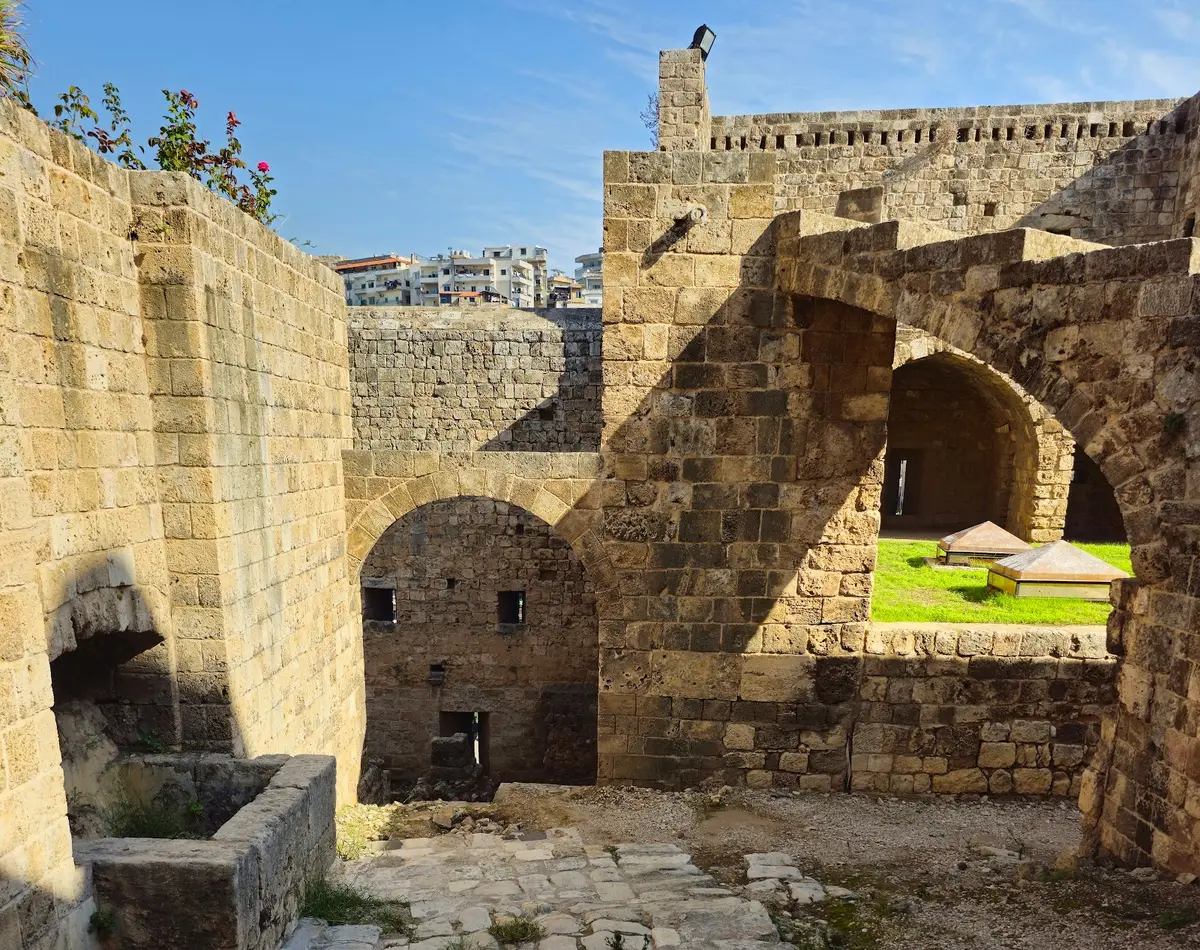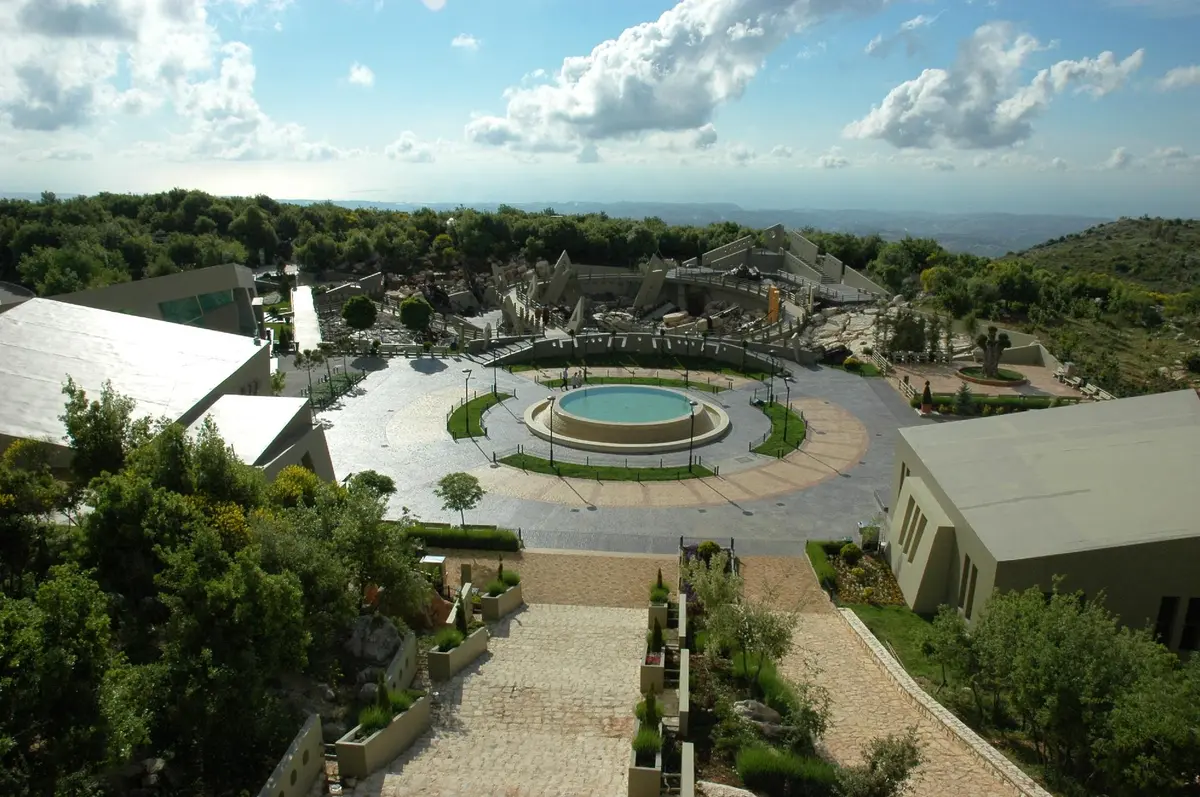
The Akkar hiking trails run through the one corner of Lebanon most travelers never see — massive oak forests, a 1,450 m plateau that feels more Montana than Middle East, and a canyon trek into a 6,000-year-old necropolis. This guide covers five routes worth the long drive from Beirut, with honest logistics and the safety context you need before you book.
Are the Akkar hiking trails safe to visit right now?
The US State Department has Lebanon at Level 4 — Do Not Travel — as of 23 February 2026, and specifically flags the entire Lebanon–Syria border zone (which is exactly where the Akkar hiking trails sit) as Level 4 “Depart If You Are There.” Cross-border military activity, unexploded ordnance off-trail, and sudden-escalation risk are all real. Most travel insurance for Lebanon now voids hiking claims in this region.
This is not the same country it was five years ago. The trails themselves are not the threat — geopolitics is. If you are still set on going, the practical implications are concrete:
- Most US and European travel insurers will not cover you in a Level 4 zone. Read the war-exclusion clause before you pay.
- The US Embassy in Beirut has suspended routine consular services, a key factor in whether Lebanon is safe for American tourists right now. You are largely on your own if something goes wrong.
- Never hike near the northern ridges above Qammouaa or the Nahr el-Kabir river without a local guide — these ridgelines sit within sight of Syrian military positions.
- Carry your passport on every hike. Expect military checkpoints on the drive up from Halba, especially north of Qobbayat.
Pro Tip: Check the US Embassy Beirut security alerts page the morning you drive north, not the week before. Advisories in this region change on a day-scale, not a month-scale.
My honest take: the Akkar hiking trails are some of the most rewarding terrain I have walked in the eastern Mediterranean, and Lebanese friends who grew up here will tell you the same. But recommending a casual visit right now would be dishonest. The information below assumes you have read the advisory, accepted the risk, and are traveling with a local guide.
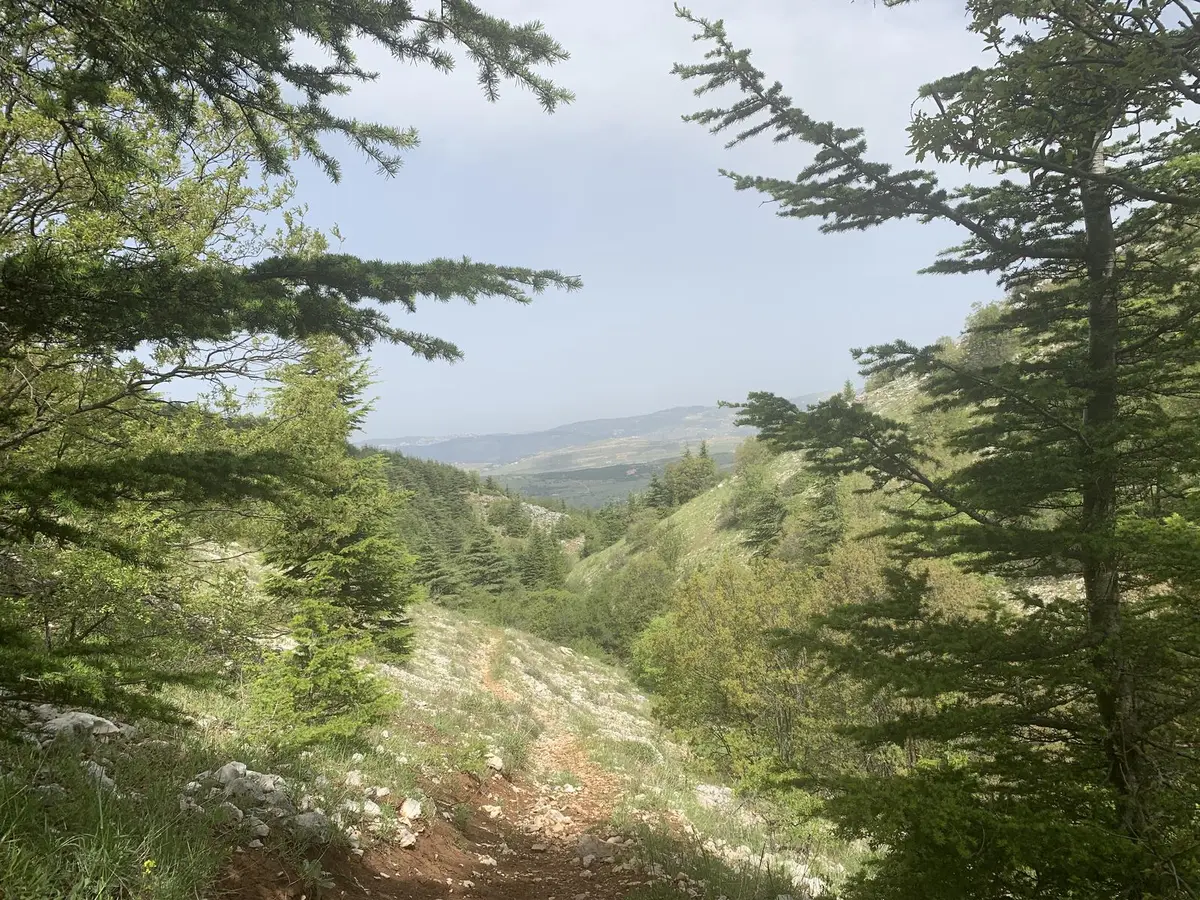
LMT Section 1 — Qobbayat to the Qammouaa Plateau
This is the northernmost section of the Lebanon Mountain Trail (LMT) and the route most Akkar hiking trails lists start with for good reason. You leave from Mar Challita Monastery in Qobbayat, sitting around 600 m (1,970 ft), and climb through shifting forest zones to the open grasslands of the Qammouaa plain at roughly 1,450 m (4,760 ft). The monastery is built on the footprint of a Roman temple, which gives the first 10 minutes of walking a layered feel you don’t get on most trails.
This one earns its reputation. It is also a full-day commitment that chews up less-prepared hikers by the mid-section climb. Do not try it without water purification gear, proper boots, and someone who has done it before. The path is signed with the LMT’s purple-and-white blazes, but livestock trails and logging roads branch off constantly, and signage in the Black Forest stretch is patchy.
- Location: Starts at Mar Challita Monastery, Qobbayat; ends on the Qammouaa plain, Fnaidek
- Distance: 14–16 km (8.7–10 miles)
- Elevation gain: ~1,200 m (3,940 ft)
- Time needed: 6 hours hiking, plus 6 hours round-trip driving from Beirut
- Best for: Experienced day-hikers with a local guide
- Cost: Free trail; guide fees via Akkar Trail NGO run around $50–$80 per person for a small group
Climbing through the pine zone
The first 90 minutes follow old aqueduct canals that contour the hills on the flat — a strange, almost cinematic start before any real climbing begins. You pass the ruins of Mar Sarkis and Bakhos, then the path thickens into pine. The air cools noticeably, the resin smell kicks in, and you lose village sounds inside maybe 20 minutes of walking. On my last trip the shift was dramatic enough that my guide stopped and told me to just listen for a minute. All you hear is wind in the canopy.
Into the Black Forest
The crux comes as you climb toward the Nabaa Zabboud spring. Locals call this patch the “Black Forest” — a dense stand of Cilician fir that blocks so much light the trail feels like walking under a low ceiling even at noon. The grade steepens and the surface turns to loose stone and exposed root. Nabaa Zabboud itself is the reward: ice-cold water straight from the rock, and the only reliable refill point on the route. Filter or treat anyway.
Pro Tip: Refill every bottle you’re carrying at Nabaa Zabboud. There is no water between here and the plateau, and the exposed final climb in summer afternoon sun is where most hikers bonk.
Breaking out onto the plateau
The final 30 minutes break out of the fir canopy onto the Qammouaa plain, and the contrast is the whole reason people do this hike. You go from a closed dark forest to a 1,450 m rolling grassland ringed by ridges. The silence is loud. Tour groups rarely make it this far, so on a weekday you can easily walk 20 minutes across the plain without seeing another person.
Wadi Jahannam — The “Valley of Hell” canyon trek
Wadi Jahannam translates as “Valley of Hell,” which refers to the steep canyon walls and the brutal climb back out, not the scenery. Among all the Akkar hiking trails this one has the most dramatic vertical. You start fresh at Hrar village around 900 m (2,950 ft), drop 300 m (980 ft) fast to a river at 600 m (1,970 ft), walk along the water to the El Jenniyat waterfalls, then reverse the whole thing when you are already cooked. It is an inverted profile — the hardest section is the return leg.
The river at the bottom literally marks the boundary between Akkar and Danniyeh districts, well away from the better-known trails like the Qadisha Valley hike. Expect wet feet: there are several shallow crossings, rocks are mossy, and boot grip matters more than usual. The waterfalls themselves aren’t enormous, but the pools are deep, turquoise, and cold enough to steal your breath for the first 30 seconds. Skip the swim if the river is running high — late winter and early spring crossings turn sketchy fast.
- Location: Trailhead at Hrar village, roughly 45 minutes from Halba
- Distance: ~10 km (6.2 miles) round trip
- Elevation change: 300 m (980 ft) down, then back up
- Time needed: 5–6 hours including a swim stop
- Best for: Fit hikers who don’t mind river crossings
- Cost: Free; plan $60–$100 for a local guide who knows the safest crossings after recent rain
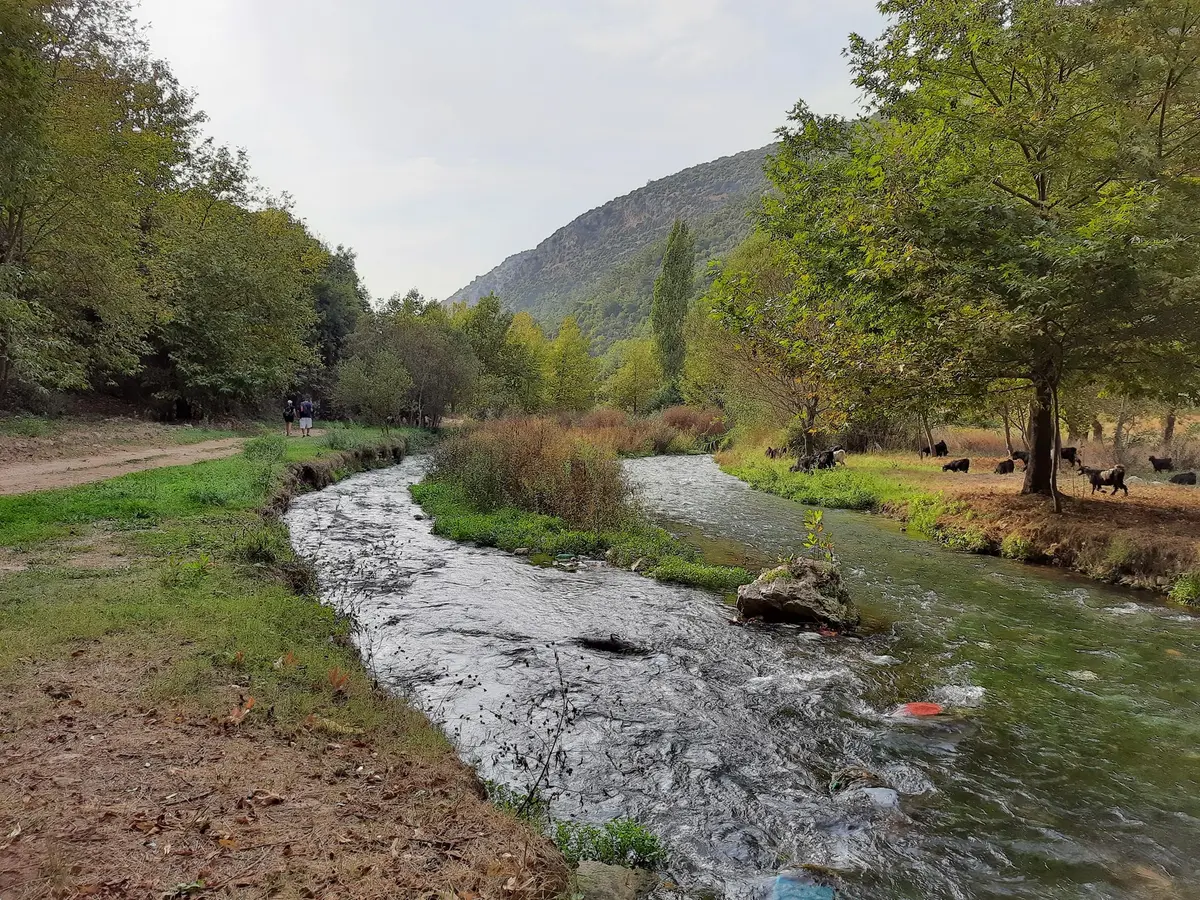
Dropping to the river and waterfalls
The descent from Hrar is immediately knee-jarring — 300 m dropped over roughly 2 km of switchbacks. The vegetation shifts quickly from dry scrub oak up top to moisture-loving plane trees and fern stands as you get closer to the water. By the time you reach the riverbank the sound of rushing water swallows everything else.
The El Jenniyat waterfalls sit about 30 minutes downstream from where the path first hits the river. The falls come in a series of tiered drops into pools maybe 3–4 m deep. On a July afternoon the water temperature is probably in the low 60s°F (16–18°C), which sounds fine until you’re in it.
The brutal climb out
This is where the “Hell” naming earns itself. You gain back all 300 m of elevation on an exposed south-facing slope with almost no shade. Summer hikers regularly take twice as long on the ascent as on the descent. Budget extra water, start the return leg no later than 2 p.m., and expect the last 30 minutes to be all quads and willpower.
Pro Tip: Do Wadi Jahannam in October or late April, not July. The canyon traps heat, and the afternoon climb out in summer has taken down hikers who were perfectly fit at sea level.
Iron Oak Forest near Fneidek — the autumn blaze
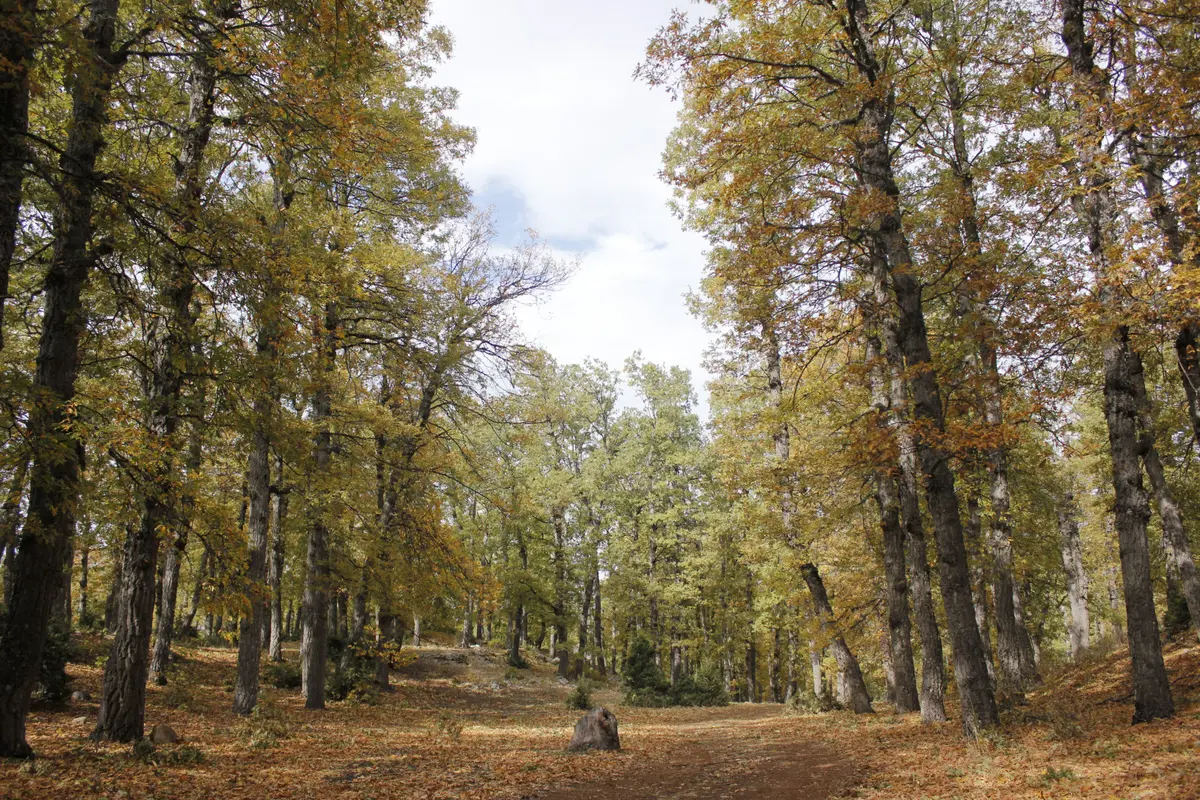
This is the unexpected highlight for most visitors. The Iron Oak (غابة العذر, ghabat el-ozor) forest near Fneidek holds roughly 4,000 hairy/iron oak trees reaching 20–30 m (65–100 ft) tall, at about 1,600 m (5,250 ft) elevation. It sits inside the broader Qammouaa forest complex — the largest contiguous forest cover in the Middle East, with some 10 million trees across 46 species according to Akkar municipality figures.
What makes it worth planning your trip around is the fall foliage. For about three weeks in late October through mid-November, the leaves turn a fiery copper-gold before dropping, and the understory fills with crunching leaf litter. It is the one landscape in Lebanon that will make a first-time visitor think they are in Vermont. Photographers should plan the trip for this window specifically, widely considered the best time to visit Lebanon for landscape work — the rest of the year the forest is still beautiful but visually less urgent.
The historical footnote is real but often overstated: British forces during the Second World War did purchase timber from these forests for regional railway construction. The popular telling that the wood “built the Orient Express” is embellished — the Orient Express line was built decades earlier, from European timber.
- Location: Above Fneidek village, Akkar
- Distance: Flexible loop options from 4 km to 12 km (2.5–7.5 miles)
- Elevation: 1,600 m (5,250 ft)
- Time needed: 2–4 hours for a loop
- Best for: Photographers, families with capable kids, first-time Akkar visitors
- Cost: Free; organized group hikes from Beirut run $40–$60 per person including transport
Qammouaa Plateau — Lebanon’s high-altitude water tower
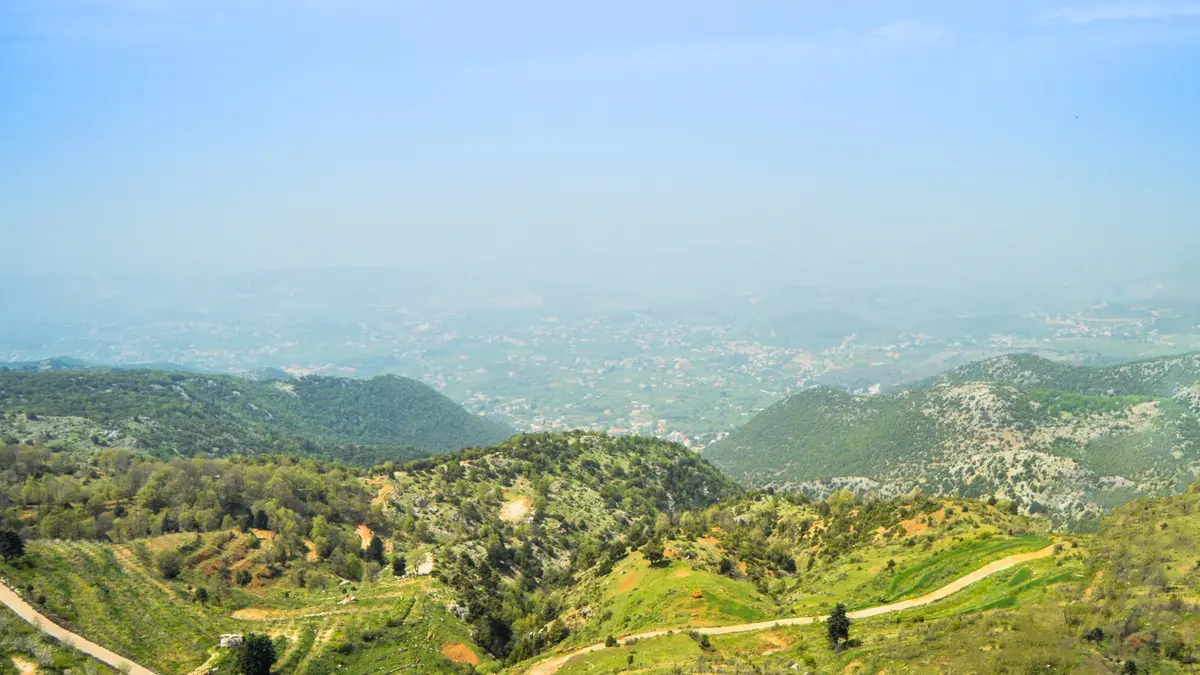
If the forested valleys are the intimate side of the region, Qammouaa is the open one. This high-altitude grassland sits at roughly 1,450 m (4,760 ft) in Lebanon’s northern mountains, acting as the region’s primary water catchment — locals call it the water tower of northern Lebanon. The plain stretches roughly 30 km by 25 km at its widest, encompassing forest, grassland, and seasonal wetlands.
The first time you emerge from the treeline onto the plateau, the sky opens in a way that feels off for the Middle East. Big sky, low horizon, a silence you can actually feel in your ears. Cell coverage dies here, which is both the appeal and the practical problem — tell someone your route and your expected return before you start.
Development is creeping in. LMT Association executive director Martine Btaich has been on record about paved roads cutting new lines across the plateau and shell casings from hunters littering the edges. Hiking here and spending locally is an active vote for keeping it intact.
- Location: Fneidek / Akkar el-Atiqa access points
- Elevation: 1,450–1,600 m (4,760–5,250 ft)
- Best for: Solo hikers, sunrise/sunset photography, sound-of-nothing seekers
- Time needed: Half day minimum; full day to do it justice
- Camping: Permitted but strictly primitive — no water, no toilets, no bins
Pro Tip: Drive or hike up for sunset, then stay for the stars. Akkar has some of the lowest light pollution of any accessible area in Lebanon. Bring a fleece — plateau nights drop 30°F (17°C) below daytime highs even in summer.
Menjez Megalithic Trail — 6,000-year-old tombs on black basalt
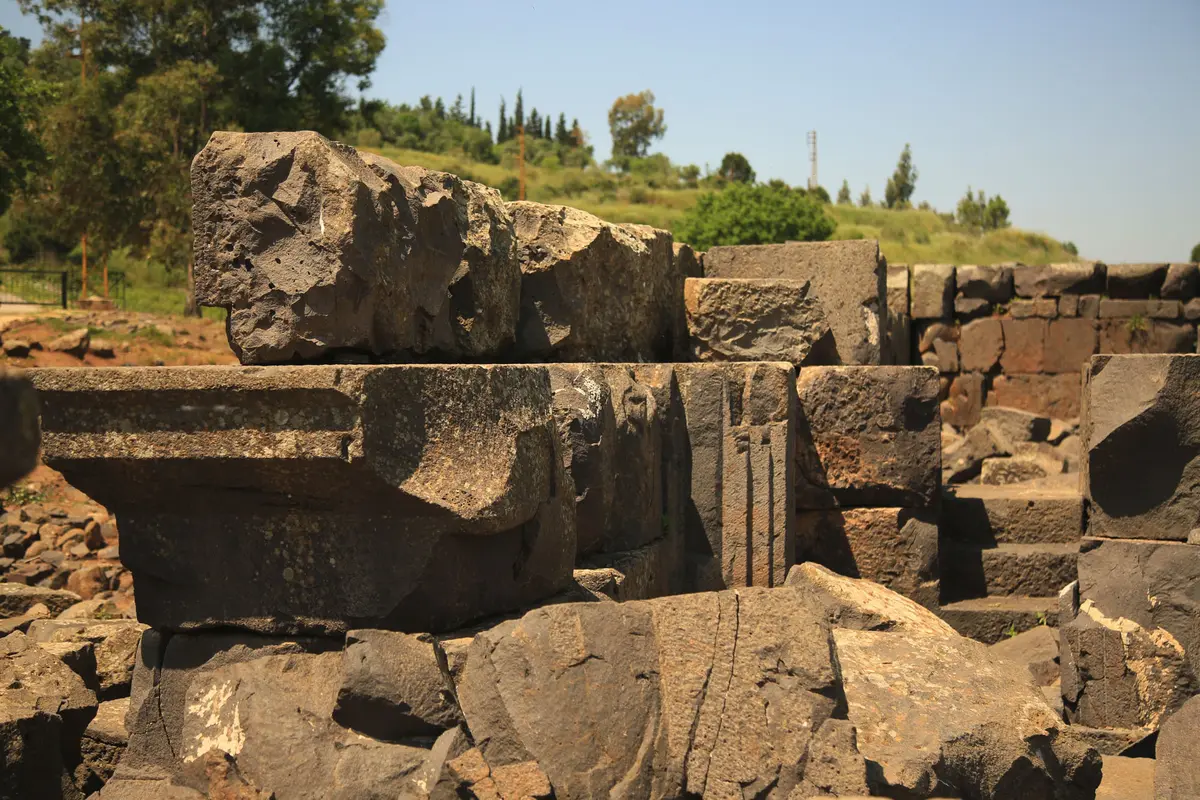
For travelers who want archaeology woven into their hike, Menjez is the standout. The area sits on black basalt volcanic rock — a sharp visual break from the white limestone that dominates the rest of Lebanon. The palette is black stone against green grass, with the Nahr el-Kabir river and the Syrian border visible in the middle distance.
Maurice Tallon’s 1960s survey catalogued 87 megalithic tombs (dolmens), among the oldest archaeological sites in Lebanon, dating to roughly 4000 BC — older than the pyramids by about 500 years. Current status matters: the ongoing MEG-A project (University of Geneva and the Polish Academy of Sciences) has been able to identify only 45 of those original 87 on the ground. The rest have been lost to village expansion, agriculture, and stone reuse in modern construction over the last 60 years. Of those remaining, 11 have been restored and are the core of a guided dolmen tour managed locally via the municipality’s Heritage House.
Walking a field where basalt tombs the size of small cars sit in knee-high grass, with Syria visible over the next ridge, has a quiet weight to it. The tombs aren’t dramatic — mostly chamber-sized structures of flat basalt slabs set on edge — but the cumulative effect of seeing them distributed across the landscape is what sticks.
- Location: Menjez village, approximately 20 minutes from Halba
- Distance: 3–5 km guided loop (2–3 miles)
- Elevation: Mostly flat; suitable for older walkers and kids
- Time needed: 2–3 hours with a local guide
- Best for: History-minded travelers, families, anyone who can’t do full mountain routes
- Cost: $15–$25 per person for a guided tour through the Heritage House
Pro Tip: Book the Heritage House tour through the Menjez municipality rather than showing up cold. Half the tombs are on private farmland, and access depends on which farmer is around that day.
How do you get to Akkar from Beirut?
From Beirut to the main Akkar hiking trails trailheads is 2.5 to 3 hours of driving in Lebanon, covering roughly 112 km (70 miles) to Halba, then another 45 minutes to an hour into the mountains. The route heads north on the coastal highway past Byblos and Tripoli, then cuts inland at Abdeh toward Halba, then climbs east into the hills. This is not a same-day trip — plan 2 to 3 nights minimum.
The practical transport options break down clearly:
- Private driver from Beirut: $120–$180 for a full day. This is what most international visitors use, and it removes the real pain of navigating unmarked rural roads.
- Rental car with 4×4: A high-clearance vehicle is not optional once you leave the main Halba road. Secondary roads to trailheads are potholed, often unsigned, and regularly washed out after rain.
- Taxi from Tripoli: Cheaper option — $40–$60 one-way from Tripoli to Halba — if you are already based on the coast.
- Public transport: Shared vans (service) run from Tripoli to Halba for a few dollars, but onward transport to trailheads is effectively nonexistent without a local contact.
Pro Tip: Download offline maps for the whole Akkar governorate before you leave Beirut. Cell signal dies in the mountains, and Google Maps often routes you onto “roads” that are actually farm tracks.
Where should you stay near the Akkar hiking trails?
Accommodation near the Akkar hiking trails is small-scale and personal — there are no chain hotels and no resort properties. Most options are guesthouses in the Lebanese mountains, family-run inns, or monastery stays in the villages of Qobbayat, Fneidek, and Andqet. Expect room rates of $40–$90 per night including breakfast, cash-only payment, and wifi that works most of the time.
- Village guesthouses in Qobbayat: Small family-run places with 3–8 rooms. Breakfast of local labneh, fresh bread, olives, and strong coffee is usually included.
- Carmelite Monastery in Qobbayat: Offers simple rooms at donation-based or low fixed rates. Minimal amenities, early quiet hours, but an experience you won’t get elsewhere.
- Fneidek guesthouses: Closer to the Iron Oak forest trailheads. Quality varies — ask the Akkar Trail NGO which are currently operating.
- Camping on the plateau: Legal but strictly primitive. Zero facilities, pack everything in and out, and do not build open fires — the region lost massive forest to wildfires in recent years.
The Akkar Trail NGO (akkartrail.com) is the single best resource for current guesthouse contacts, guide bookings, and trail conditions. They run a volunteer-based forest firefighting team that has responded to more than 100 missions since 2020, and hiring guides through them channels money directly into local conservation work.
Before you book
TL;DR: The Akkar hiking trails deliver the biggest contiguous forest cover in the Middle East, a 6,000-year-old dolmen field, and a high-altitude plateau that feels nothing like the rest of Lebanon — but the region sits on an active border and currently carries a Level 4 “Do Not Travel” advisory. Go only with a local guide, only after reading current security advisories, and only with travel insurance you have personally confirmed covers the area.
If the situation stabilizes and you get up there, what you get back is worth the effort: a day of hiking in Lebanon without seeing another foreigner, golden oak canopy in late October, and a version of Lebanon almost no travel guide covers properly.
Have you hiked any of these Akkar routes — or are you watching to see when the advisory lifts? Drop the trail you’re eyeing in the comments.