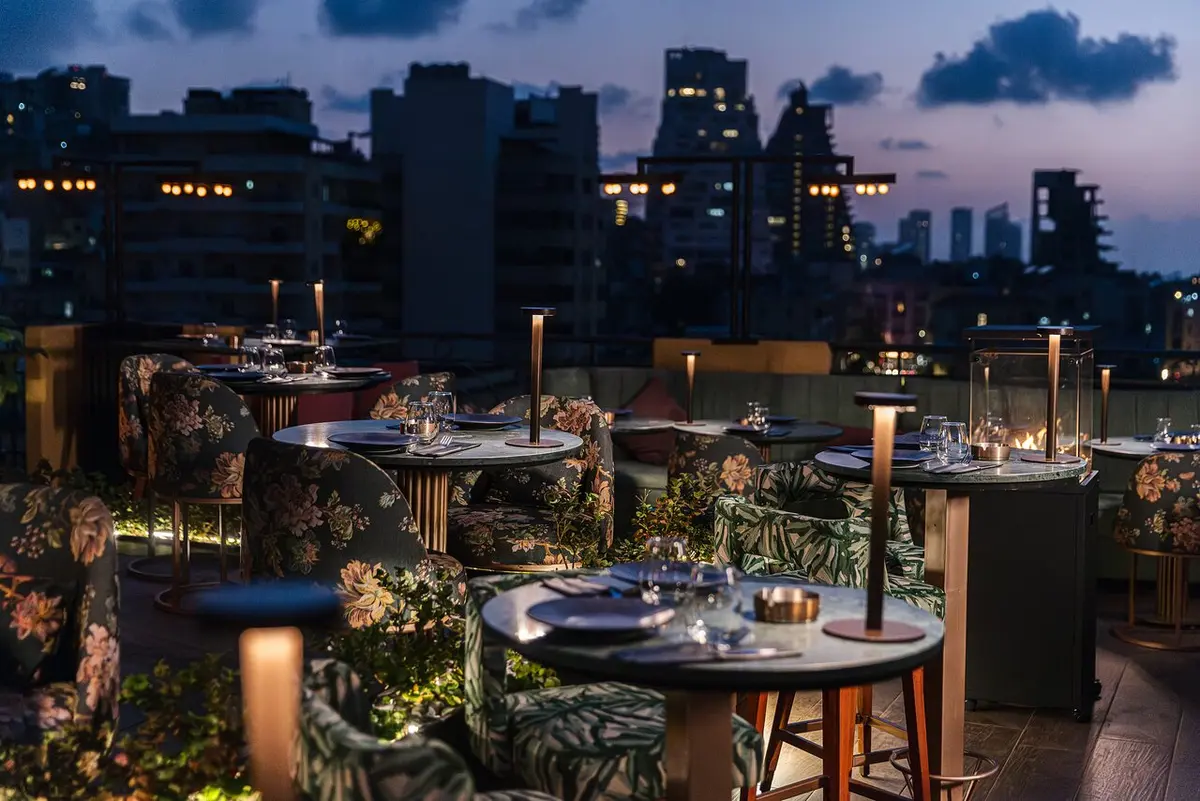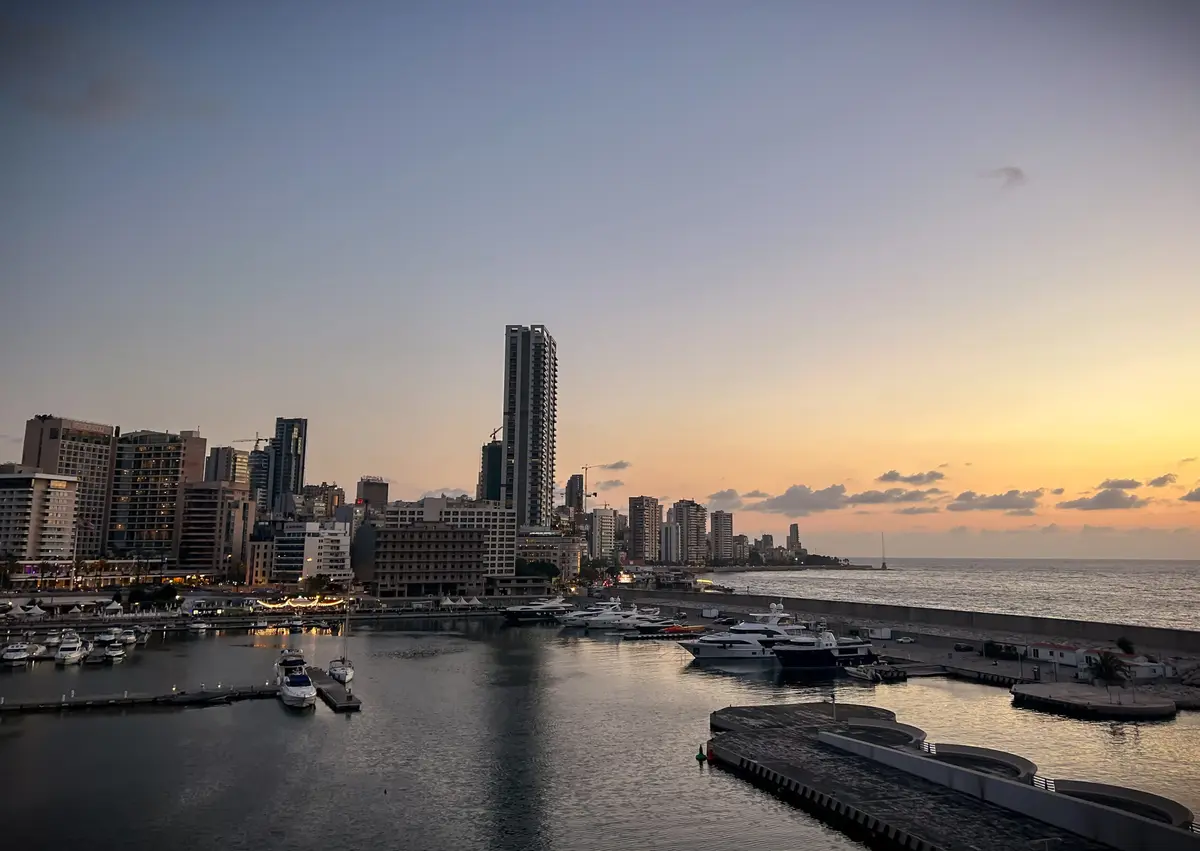
Lebanese food hits you before your fork does — charcoal smoke from kafta skewers in a Beirut side street, za’atar and sesame steaming off a fresh manakish, a table crowded with twenty small plates you’re expected to finish together. This guide walks through what to order, where to find it in the US, and where most tourist-facing menus fall short.
Lebanese cuisine currently ranks 20th globally and first in the Arab world on TasteAtlas’s list of the top 100 cuisines, based on hundreds of thousands of user ratings. The ranking tracks what anyone who has sat through a three-hour mezze in Achrafieh already knows: this is traditional Lebanese food built for sharing, not for photographing.
What is a Lebanese mezze, and how does it work?
A Lebanese mezze is a multi-course spread of 10 to 30 small cold and hot plates served simultaneously at the center of the table, meant to be shared and eaten slowly over one to three hours. It is the structural backbone of Lebanese dining. You don’t order an entrée — the mezze is the meal, followed optionally by a grill platter.
The logistics are simple once you know them:
- Typical size: 8-15 plates for 2 people, 20+ for a group of 6
- Price range (Beirut): $25-45 per person at mid-range spots like Em Sherif Café or Tawlet
- Time needed: 90 minutes minimum; two hours is normal
- Order: cold plates first, hot plates second, grill last, then coffee
Pro Tip: At traditional spots, don’t order everything at once. Start with 5-6 cold mezze and add hot plates as the table clears — otherwise food stacks up cold and you waste half of it.
One honest warning: mezze is designed for groups. Solo travelers get hit with a minimum-plate policy at some Lebanese restaurants, or pay group prices for food they can’t finish. If you’re alone, a manakish bakery or shawarma counter is a better lunch than a full mezze house.
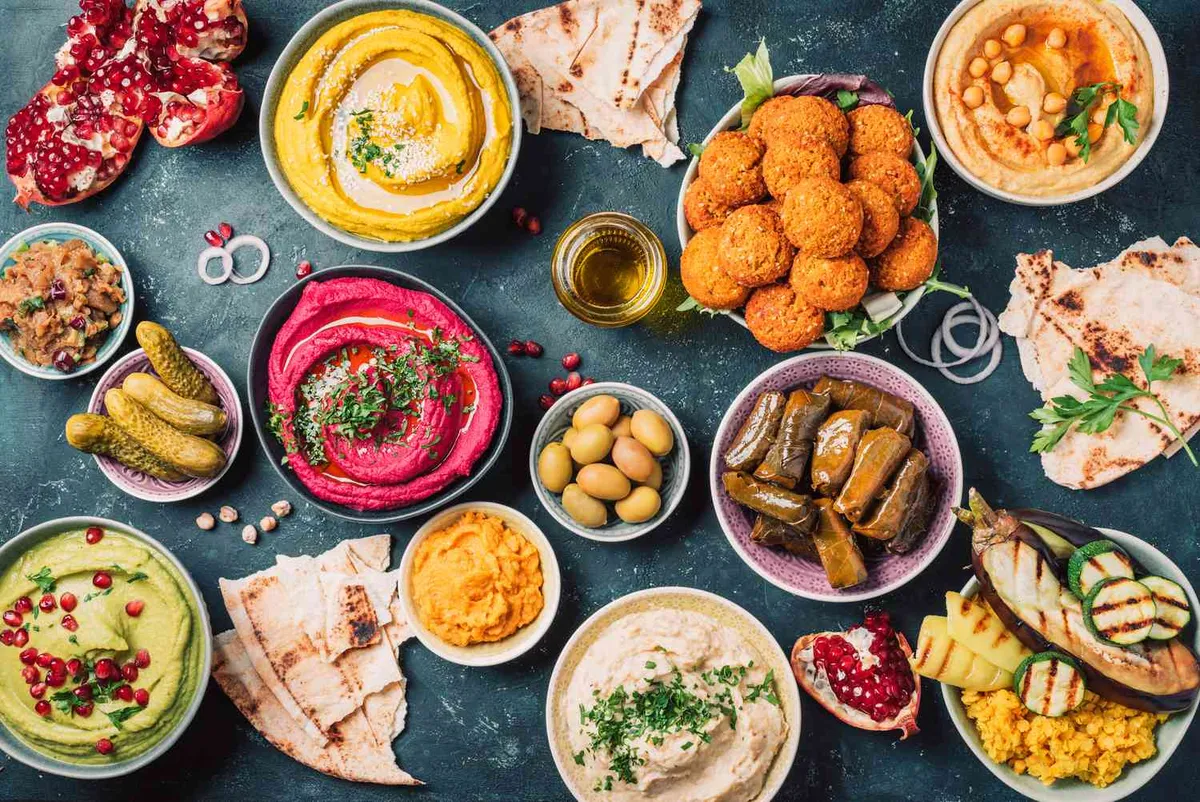
The cold mezze plates worth ordering
1. Hummus — and why the Beirut version tastes different
The chickpea-and-tahini dip most Americans know from the grocery aisle barely resembles what arrives at a Hamra restaurant: looser, lemon-forward, warm in the center, a pool of olive oil on top. Order Hummus Beiruti if it’s on the menu — same base, more garlic, parsley folded in, sometimes a hit of chili.
- Best for: First plate of the meal; scooping with warm pita
- What to skip: Hummus with sun-dried tomato, avocado, or any “fusion” topping — not traditional
2. Tabbouleh — the parsley salad, not the grain salad
American tabbouleh is mostly bulgur. Lebanese tabbouleh is mostly parsley — finely chopped flat-leaf parsley with diced tomato, mint, onion, and just enough fine bulgur to add texture. Dressed with olive oil and lemon. If the bowl that arrives is brown-ish and grain-heavy, you’re not in a serious Lebanese kitchen.
3. Fattoush — the bread salad with the sumac kick
Mixed greens, cucumber, tomato, radish, crisped pita shards, tossed with olive oil, lemon, sumac, and pomegranate molasses. The pomegranate molasses is what separates a real fattoush from a generic house salad — tangy, slightly sweet, deeply red on the plate.
4. Moutabal (smoky eggplant dip)
Whole eggplants charred over open flame until the skin blisters, then peeled, mashed with tahini, garlic, and lemon. The smoke is the whole point. If it tastes like baba ghanoush from a supermarket tub, the cook used an oven — skip it.
5. Warak Enab (stuffed grape leaves)
Hand-rolled grape leaves the width of a pencil, stuffed with rice, tomato, parsley, and mint. Two versions: the cold bi-zeit (vegetarian, olive-oil-based) and a hot version with minced lamb. The cold one is better for mezze; the hot one usually comes as part of a mixed grill platter. For more meat-free options across the country, the vegetarian and vegan scene in Lebanon is deeper than most visitors expect.
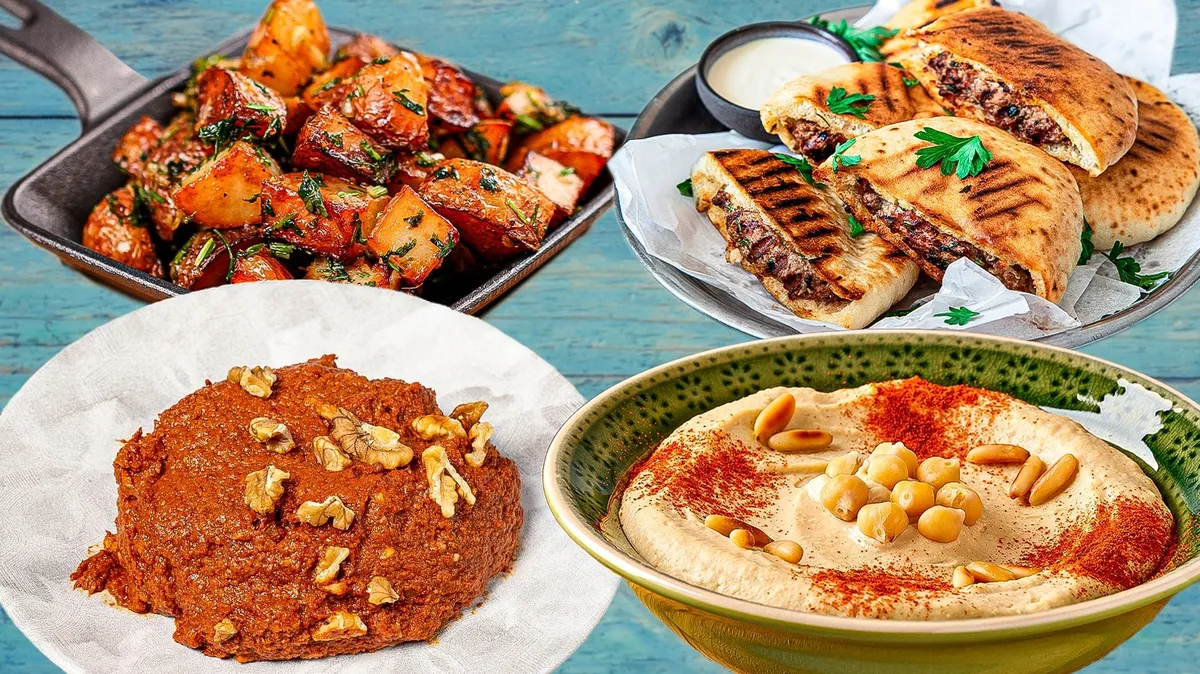
The hot mezze plates worth ordering
6. Kibbeh — the national dish, three ways
Kibbeh is bulgur and finely ground lamb, seasoned with onion, cinnamon, and allspice. You’ll see it three ways:
- Kibbeh Nayeh — raw, served like tartare with olive oil and mint. Order only at busy, reputable restaurants with fast meat turnover.
- Kibbeh Rass — the football-shaped fried croquettes, stuffed with spiced meat and pine nuts
- Kibbeh bel Sayniye — the tray-baked home version, cut into diamonds
The fried kibbeh rass travels best; Nayeh is the one worth the trip.
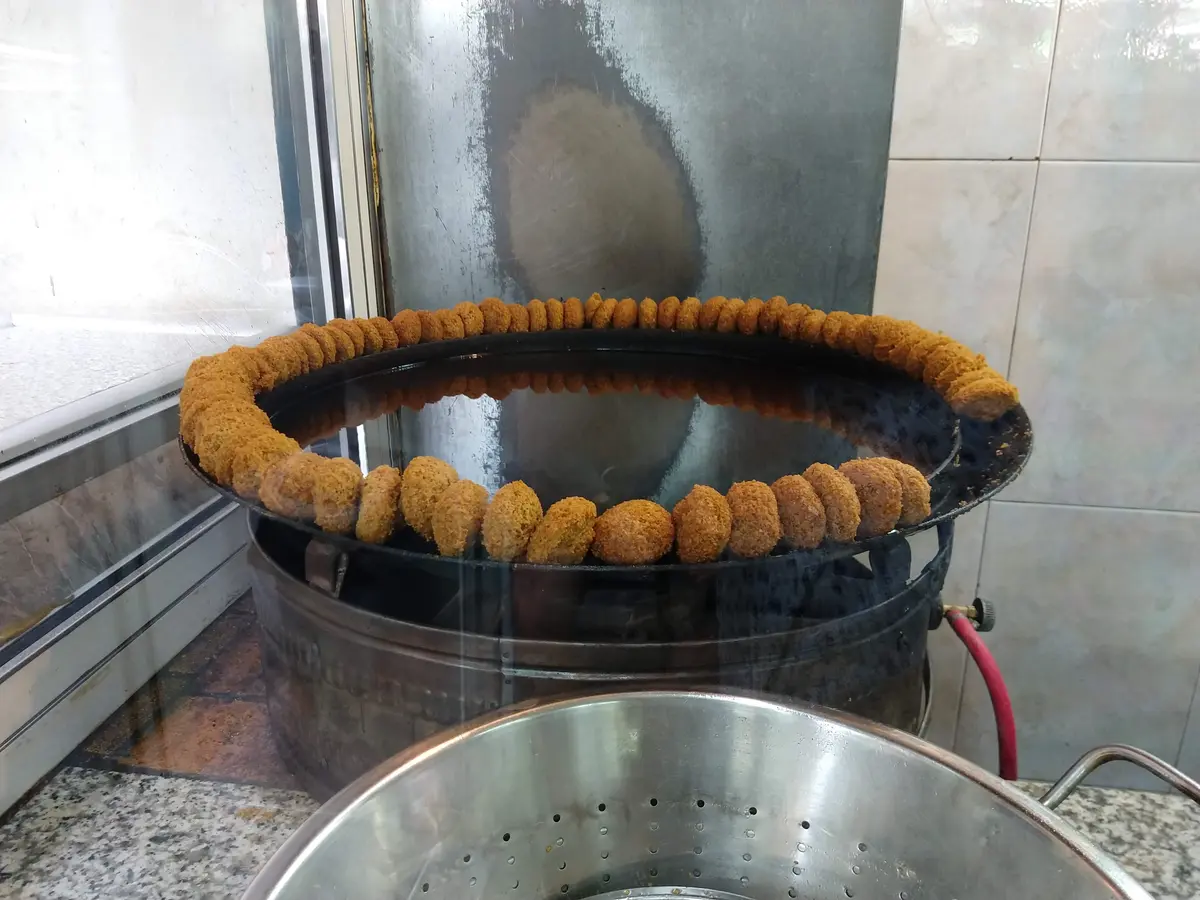
7. Falafel — shaped like donuts, not balls
Real Lebanese falafel is flattened into a disc with a hole in the middle, which maximizes crust-to-interior ratio. The standard round ball is Egyptian-style. If you’re in Beirut, go to Falafel Sahyoun on Damascus Road — two brothers, two competing shops ten feet apart, a 60-year family feud, and the same recipe at both. For a wider ranking of spots across the capital, see our guide to the best falafel in Beirut.
- Price (Beirut): around $2-3 for a full sandwich
- Best for: Lunch on the move, not a sit-down meal
8. Fatayer and Sambousek (savory pies)
Fatayer are triangular pies most often filled with spinach, onion, sumac, and lemon — the acid is what makes them. Sambousek are half-moon turnovers with meat or cheese. Both freeze well, which is how most US restaurants serve them; if the pastry tastes like cardboard, they weren’t baked that day.
9. Batata Harra (spicy potatoes)
Fried potato cubes tossed with garlic, cilantro, chili, and lemon. Sounds plain. Isn’t. On a good table, this is the plate that empties first.

What are the main courses worth ordering beyond mezze?
Beyond mezze, the Lebanese main courses worth ordering are shawarma, kafta, and shish taouk — all grilled meats with regional spice blends — plus mixed grill platters that layer all three. Main courses typically arrive after the mezze has been cleared and are meant to be shared, not plated individually.
10. Shawarma
Shaved off a vertical spit, wrapped in thin markouk bread with tahini (for lamb) or garlic toum (for chicken), pickles, and tomato. The marinade runs allspice, cumin, coriander, turmeric, paprika. A good shawarma sandwich in Beirut runs $4-6; in Dearborn, Michigan, it’s $8-12. A proper Lebanese street food tour will usually start here.
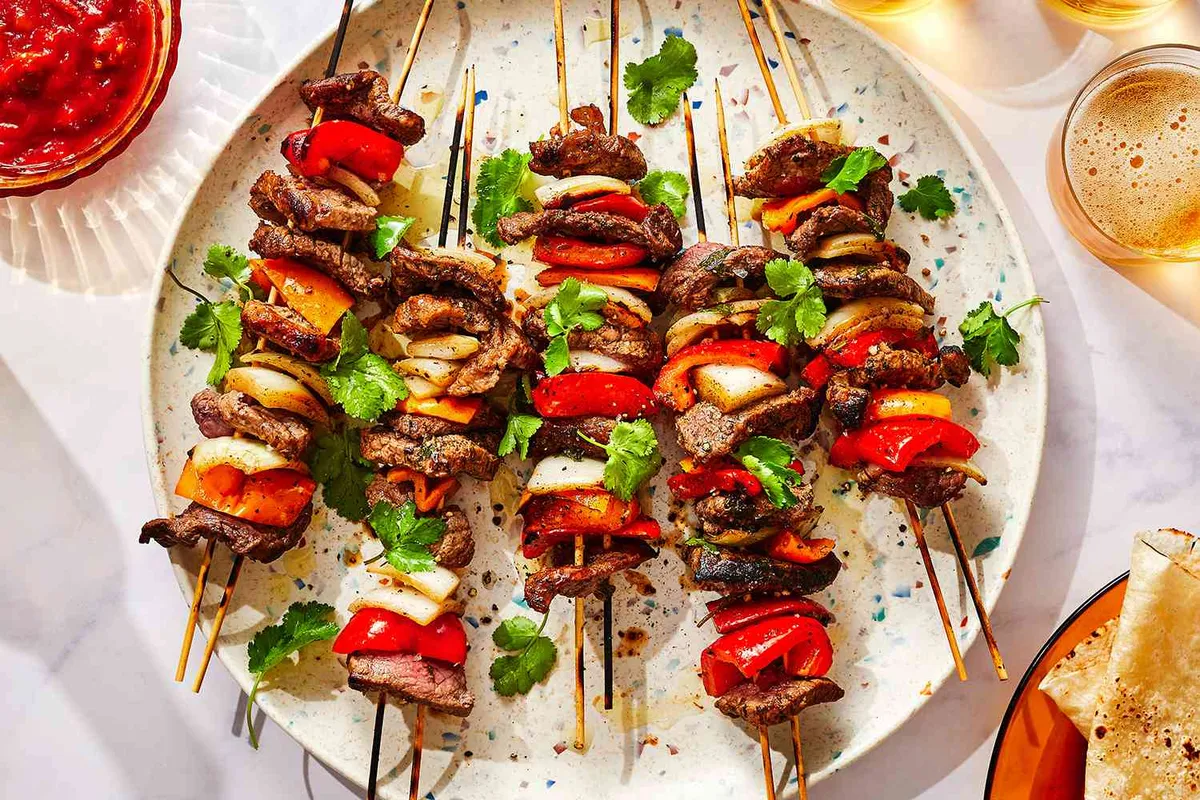
11. Kafta
Ground lamb or beef mixed with parsley, onion, allspice, and cinnamon, shaped around flat metal skewers, grilled over charcoal. The warm-spice profile is what distinguishes Lebanese kafta from Turkish or Egyptian versions — cinnamon is the tell.
12. Shish Taouk
Chicken breast cubes marinated overnight in yogurt, garlic, lemon, and white pepper, then grilled. The yogurt is the tenderizer — without it, you get dry chicken on a stick. Served with toum (whipped garlic sauce) that will destroy your breath for two days and be worth it.
What do the Lebanese eat for breakfast?
Lebanese breakfast is savory, not sweet — flatbreads, strained yogurt, fava beans, and chickpea-yogurt layers, usually eaten between 8 and 11 a.m. with strong tea or Turkish coffee. It’s closer to a Turkish or Greek breakfast than to anything American. If you’re looking for pancakes, you’re in the wrong country.
13. Manakish
Flatbread baked to order in a hot stone oven, topped with za’atar and olive oil, or melting akkawi cheese, or kishk (fermented bulgur-yogurt). Folded in half and eaten by hand. A za’atar manakish from a neighborhood furn (bakery) runs around $1.50 in Beirut — one of the great cheap breakfasts anywhere, and the anchor of any list of the best breakfast spots in Beirut.
14. Labneh
Yogurt strained until it’s the texture of soft cream cheese, spread on a plate, drizzled with olive oil, dusted with dried mint, eaten with pita and cucumber slices. Keep the olive oil generous — skimpy labneh is a red flag for a skimpy kitchen.
15. Foul Mudammas
Slow-simmered fava beans crushed at the table with lemon, olive oil, garlic, and cumin. Heavy, earthy, filling. Pairs with raw onion and pita.
16. Fatteh
Toasted pita on the bottom, warm chickpeas and garlicky yogurt on top, finished with toasted pine nuts and paprika butter. The most indulgent breakfast on the list. Share it — a full bowl will put you back to sleep.
Lebanese desserts and drinks worth ordering
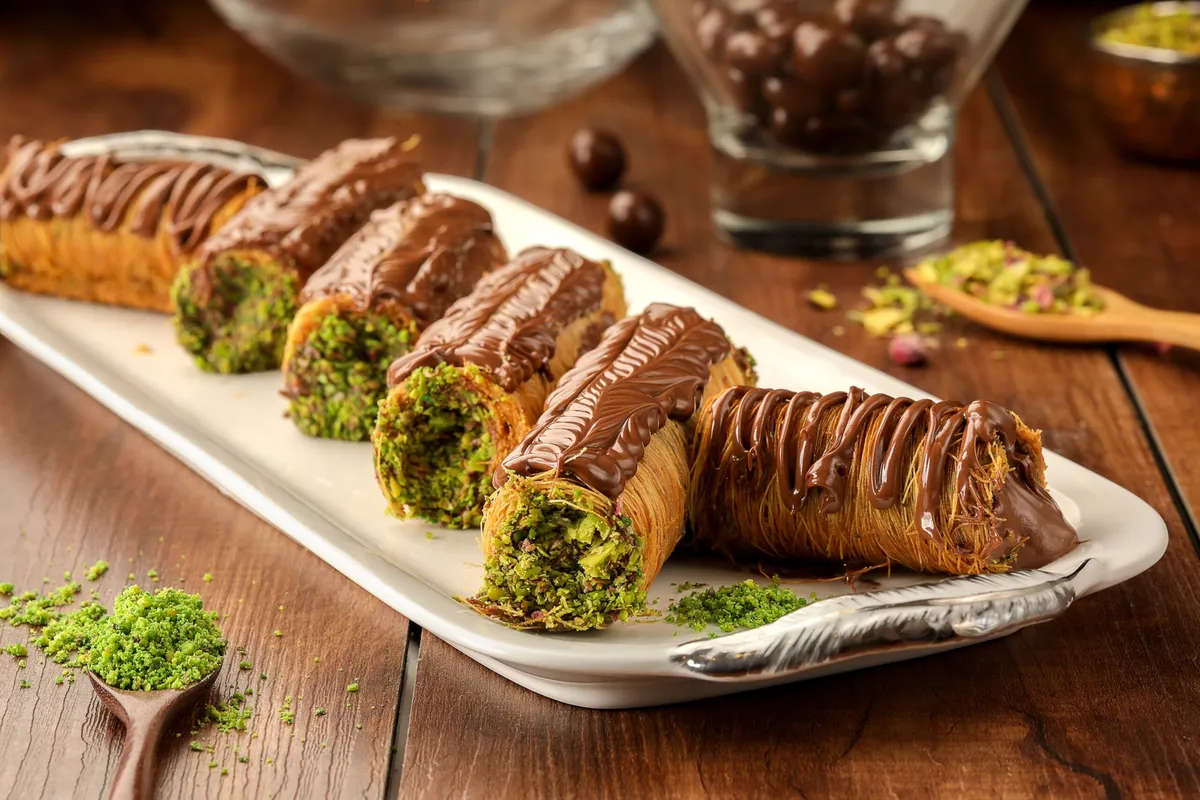
17. Baklava
Layers of paper-thin phyllo, chopped pistachios or walnuts, baked, then drenched in rosewater-orange-blossom syrup. The Lebanese version leans less sweet than the Turkish and uses more nut than pastry. Look for it at Abdul Rahman Hallab in Tripoli if you’re traveling — fourth-generation bakery, since the late 1800s.
18. Knafeh
Shredded phyllo or semolina dough over soft akkawi cheese, baked, soaked in syrup, served warm with a sesame roll on the side for breakfast-dessert. Yes, for breakfast. Yes, with the bread. Don’t argue.
19. Maamoul
Shortbread cookies stamped with wooden molds, filled with dates, pistachios, or walnuts, scented with rosewater or orange blossom. Made in huge batches for Easter and Eid — you’ll see them stacked in every bakery window in March and April.
20. Arabic coffee and Arak
Arabic coffee arrives in a tiny cup, unfiltered, cardamom-heavy. Don’t drain it — the grounds collect at the bottom.
Arak is the national spirit: anise-forward, 40-53% ABV, served in a small glass with cold water and ice. Add the water first, ice last — reversing the order makes it cloud incorrectly and locals will notice. One bottle to know: Massaya, from the Bekaa Valley wine country.
Pro Tip: Yes, you can drink alcohol in Lebanon — it’s widely available in cities and the Christian mountain villages. Muslim-majority areas like Tripoli’s old city are drier; check before ordering.
Where do you find real Lebanese food in the US?
The most authentic Lebanese food in the US is concentrated in Dearborn, Michigan — home to the largest Lebanese-American community in the country — with strong secondary scenes in Los Angeles, Brooklyn, and the DC suburbs. Chain Mediterranean fast-casual is widely available but rarely hits the mark for mezze or grill.
Why Dearborn, Michigan is the capital
Large-scale Lebanese migration to Detroit began in the early 1900s around the auto industry. Today, Warren Avenue in Dearborn runs for miles with Lebanese bakeries, grill houses, and grocers side by side. A few names worth the drive:
- Al-Ameer — James Beard America’s Classics winner; grill and mezze
- Shatila Bakery — for baklava, maamoul, and knafeh
- New Yasmeen Bakery — manakish out of a stone oven all day
Solid Lebanese outside Dearborn
- Los Angeles, CA: Marouch (East Hollywood) — Armenian-Lebanese, old-school, no frills
- New York, NY: Ilili (Flatiron) for upscale mezze; Tanoreen (Bay Ridge, Brooklyn) for home-style
- Washington, DC area: Lebanese Taverna (multiple locations) — reliable if not cutting-edge
- Houston, TX: Mary’z Mediterranean Cuisine — strong grill menu
Pro Tip: If you want to gauge a US Lebanese restaurant in 30 seconds, order the hummus and the tabbouleh. If the hummus is bright-white and stiff, and the tabbouleh is brown-green and grain-heavy, keep driving.
Lebanese dining etiquette you should actually know
Hospitality in Lebanon is a structured performance, not a vibe. A few rules that will keep you from being the American at the table:
- Refuse once, accept the second time — offering food multiple times is the host’s job, politely declining the first is the guest’s
- Eat and pass with the right hand in traditional or older households; urban Beirut is relaxed about this
- Finish what’s on your plate, but don’t finish the communal plates — leaving food on shared dishes signals the host was generous
- Compliment the cook directly, by name, not the restaurant in general
- Tipping: 10% is standard in Beirut restaurants (see our full tipping etiquette guide for Lebanon); rounding up is fine at casual spots. In Dearborn, tip 18-20% as you would anywhere else in the US.
The bottom line on Lebanese food
TL;DR: Lebanese food is a communal mezze culture, not a single-plate cuisine — order 8-15 small plates instead of a main, lead with hummus and tabbouleh, and save room for kibbeh and grilled kafta. In the US, Dearborn, Michigan is the one destination that matches Beirut for range and quality; most other cities have one or two solid restaurants worth the detour. If food is the reason you’re going, pair this guide with our broader Lebanon travel guide to plan the rest of the trip around it.
The one thing every guide underrates: the bread. A Lebanese meal without fresh, warm markouk or pita is just a collection of dips. Find a restaurant with its own oven, and the rest of the menu will almost always deliver.
What’s the one Lebanese dish you’d order first — and where did you have the best version of it?