Picking where to stay in Beirut is less about thread count and more about which neighborhood keeps the lights on, the Wi-Fi up, and the street noise at a level you can sleep through. This is a city of extreme contrasts — old-money hillsides sitting a 10-minute walk from bar streets that pulse until 4 a.m. — so the neighborhood you choose will shape your trip more than the hotel inside it.
Before you book: the current US travel advisory
The U.S. Department of State has Lebanon at Level 4 — Do Not Travel — citing crime, terrorism, civil unrest, kidnapping, and the risk of armed conflict. A security alert issued from U.S. Embassy Beirut reports airstrikes, drones, and rocket attacks occurring throughout the country, including parts of Beirut. Routine consular services are suspended, and the Embassy has limited ability to assist U.S. citizens.
Pro Tip: Before any decision on where to stay in Beirut, read the full advisory at travel.state.gov and enroll in the Smart Traveler Enrollment Program (STEP). The Dahiyeh neighborhood (southern suburbs) is specifically flagged for immediate departure, alongside southern Lebanon, the Beqaa, and areas near the Syrian border.
The neighborhoods below remain the areas where tourism infrastructure operates when travel is possible. None of that overrides the US government’s current travel advisory for Lebanon. Read the rest of this guide as a planning reference — not a recommendation to book tomorrow.
Achrafieh: the quiet hillside base
Achrafieh sits on a hill in East Beirut and behaves nothing like the rest of the city. Ottoman-era mansions share blocks with French-language bookstores and patisseries. Generator coverage is among the best in the capital, which matters more than any rooftop pool when the state grid only supplies a few hours a day.
This is the right pick for first-timers, couples, and solo travelers who want a low-friction base. The trade-off is that Achrafieh can feel sealed off from the messier street life that defines the rest of the city. Nights are quiet to the point of being dull if you came for energy.
- Location: East Beirut, hillside
- Price range: $150-250/night mid-range, $350-600/night luxury
- Best for: Couples, solo travelers, first-time visitors
- Airport transfer: 15-20 minutes by taxi
Hotel Albergo
The only Relais & Châteaux property in the Middle East, open since 1998, with 33 individually designed suites inside an ochre-façade 1930s mansion on a quiet Achrafieh side street. Each suite has different furniture, different fabric choices, different art — staying in two different rooms on two different nights feels like two different hotels. The rooftop pool is small (about 52 feet / 16 meters long) and ringed with fig and orange trees, with a sightline to the Mediterranean and Mount Lebanon on clear days.
The Verdict: The character is unmatched in the city, but the building is almost 100 years old and shows it. Elevators are small and slow, hallways are narrow, and light sleepers near the rooftop terrace will hear the bar close down. If you need new-build polish, book elsewhere.
- Location: Achrafieh, walking distance from Monot Street
- Cost: from $350/night
- Best for: Couples, design-minded travelers
- Time needed: 2-4 nights to appreciate the property
Villa Clara
A 7-room guesthouse in a blue-façade 1920s villa on the Achrafieh / Mar Mikhael border, run by a French-Lebanese couple who also operate the ground-floor French restaurant. Walls are hung with Lebanese art the owners actually know the stories behind.
The Verdict: It feels like staying in the spare room of a well-traveled friend. Breakfast downstairs is the best hotel breakfast I’ve had in the city. The room count means availability disappears fast in spring.
- Location: Mar Mikhael edge, walkable to Gemmayzeh bars
- Cost: from $180/night
- Best for: Travelers who want a guesthouse feel near nightlife
- Time needed: 2-3 nights
Citea Apart-Hotel
Serviced apartments near Hotel-Dieu de France hospital, with kitchenettes, separate living areas, and workspace. The clientele skews heavily toward NGO staff, journalists, and consultants on multi-week rotations — which tells you everything you need to know about working remotely from Beirut.
- Location: Achrafieh, near Hotel-Dieu
- Cost: from $130/night
- Best for: Long stays, remote workers, families
- Time needed: 5+ nights makes the most sense
Gemmayzeh and Mar Mikhael: the nightlife corridor
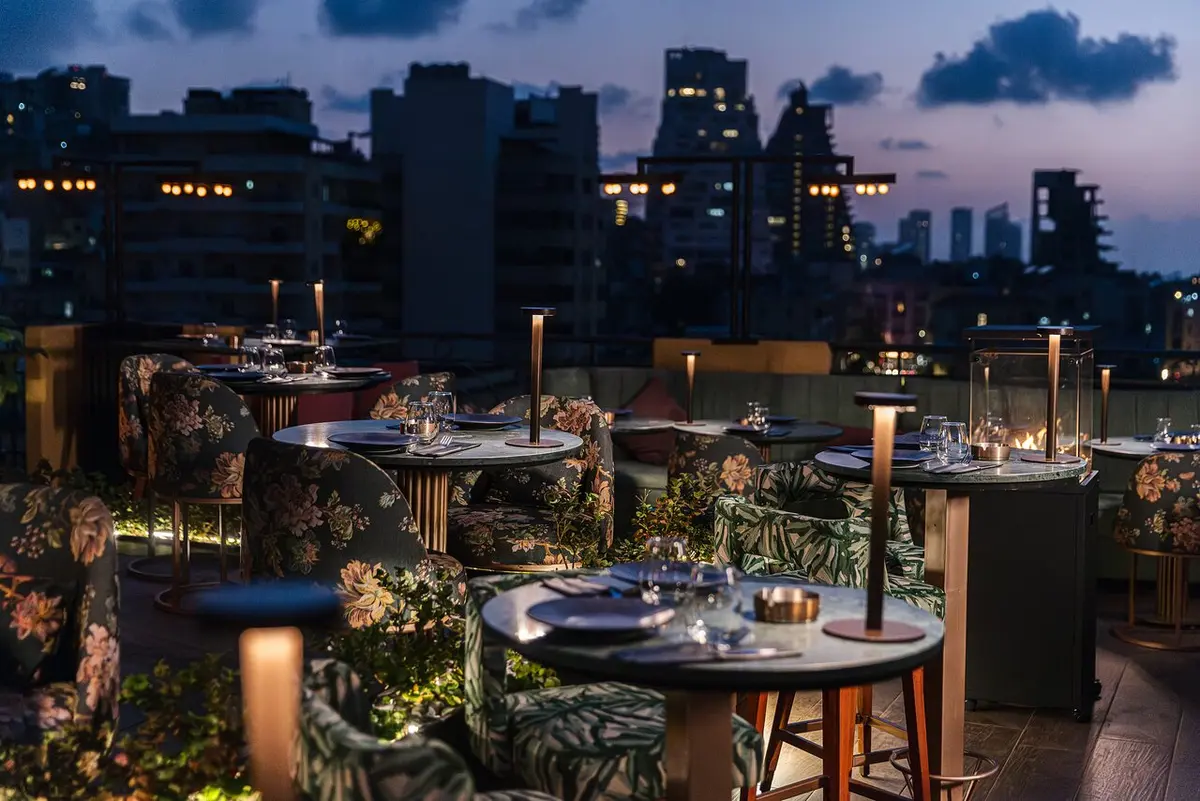
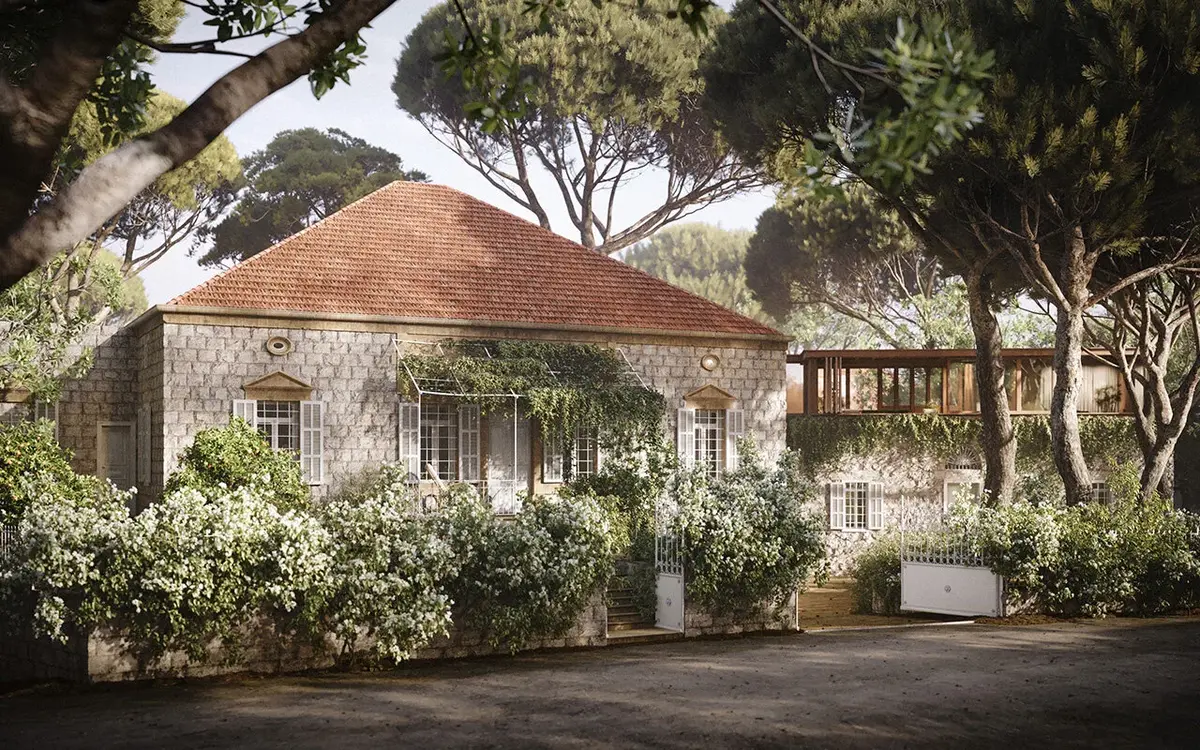
These two adjoining neighborhoods run east from Downtown along Gouraud and Armenia streets. By day, the area is heritage stone houses, rebuilt post-explosion, with street art filling every gap. By night, it’s the densest concentration of bars in the country, with the best rooftop bars in Mar Mikhael setting the tone — which is the attraction and the problem.
Street-facing rooms here pick up bass from the bars below until 3 or 4 a.m. on weekends. Every honest review mentions this. If you book here, request a room on the 4th floor or higher, facing the back. Earplugs are not optional.
- Location: East of Downtown along Gouraud and Armenia streets
- Price range: $120-400/night
- Best for: Travelers whose priority is nightlife and walkability
- Airport transfer: 10-15 minutes by taxi
Arthaus Beirut
Built from three connected heritage homes with glass panels in the floor revealing a Byzantine well and Roman masonry below. The owner’s private art collection fills the hallways and common rooms — the curation is serious enough that guests treat the lobby like a gallery.
The Verdict: The setting is unlike anything else in the city. Rooms toward the courtyard are significantly quieter than those facing the street, and the breakfast spread leans hard into Lebanese produce rather than the usual hotel buffet.
- Location: Mar Mikhael, off Armenia Street
- Cost: from $280/night
- Best for: Design travelers, art lovers
- Time needed: 2-3 nights
Hotel Lost
Enters the Gemmayzeh strip right at the base of the Saint Nicolas Stairs. The aesthetic leans into the bones of the building rather than covering them — exposed stone, original tile, and period details sit next to espresso machines and split-unit AC. The ground-floor bar is genuinely a locals’ spot.
The Verdict: Fun, distinct, and central to everything. The flip side is noise — this hotel is on top of the party, not next to it. Light sleepers should look elsewhere.
- Location: Gemmayzeh, base of the Saint Nicolas Stairs
- Cost: from $160/night
- Best for: Travelers whose social life defines the trip
- Time needed: 2-3 nights
The Grand Meshmosh Hotel
A hybrid hostel-hotel perched on the Saint Nicolas Stairs themselves — which means about 125 steps between the entrance and the main road. It runs dorm beds alongside private rooms, and the rooftop terrace is where backpackers, NGO staff, and locals actually mix. The Lebanese breakfast is the best value of any accommodation on this list.
- Location: Saint Nicolas Stairs, Gemmayzeh
- Cost: Dorms from $25/night, privates from $80/night
- Best for: Solo travelers, budget travelers, people who want to meet other people
- Time needed: 2-4 nights
Pro Tip: The climb to The Grand Meshmosh is serious. Do a dry run with a carry-on before committing to a week here with a checked bag.
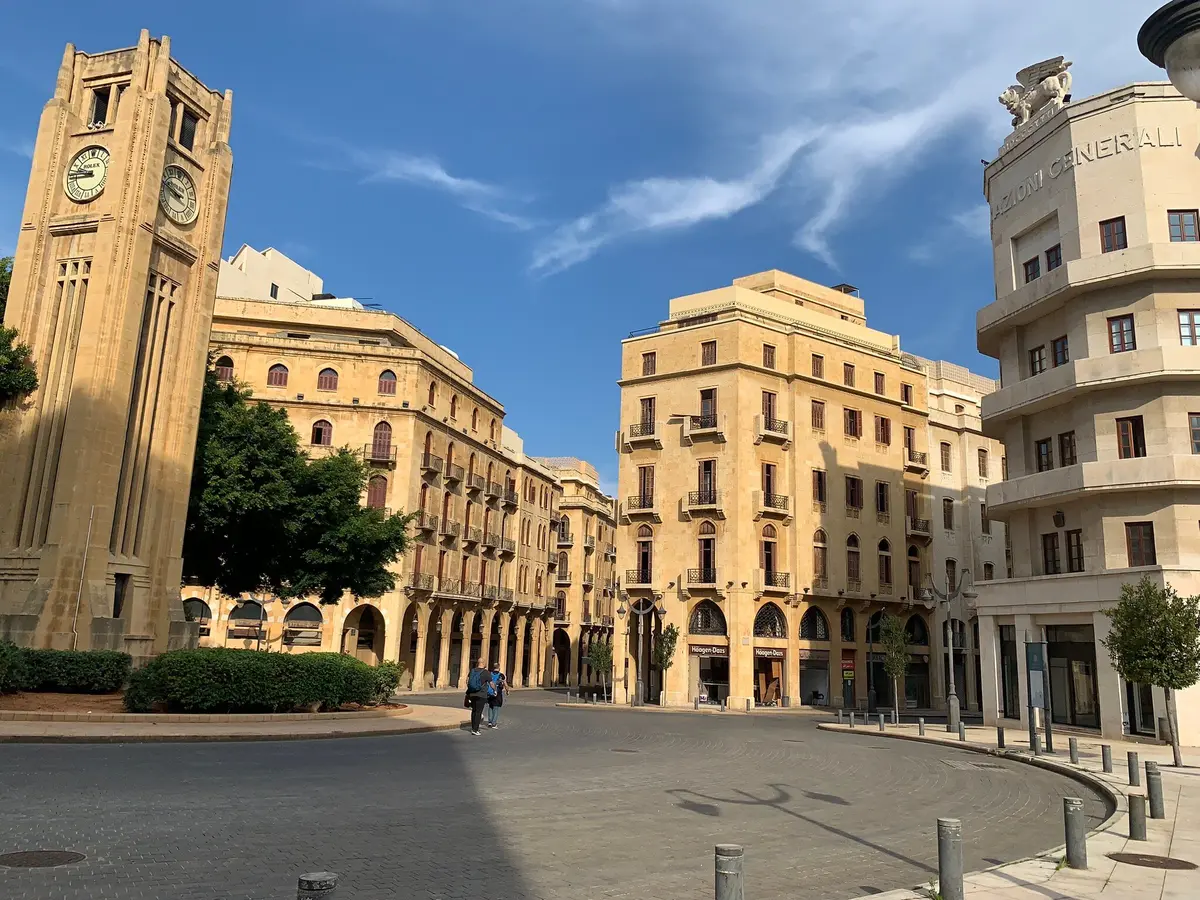
Downtown (Beirut Central District): the controlled option
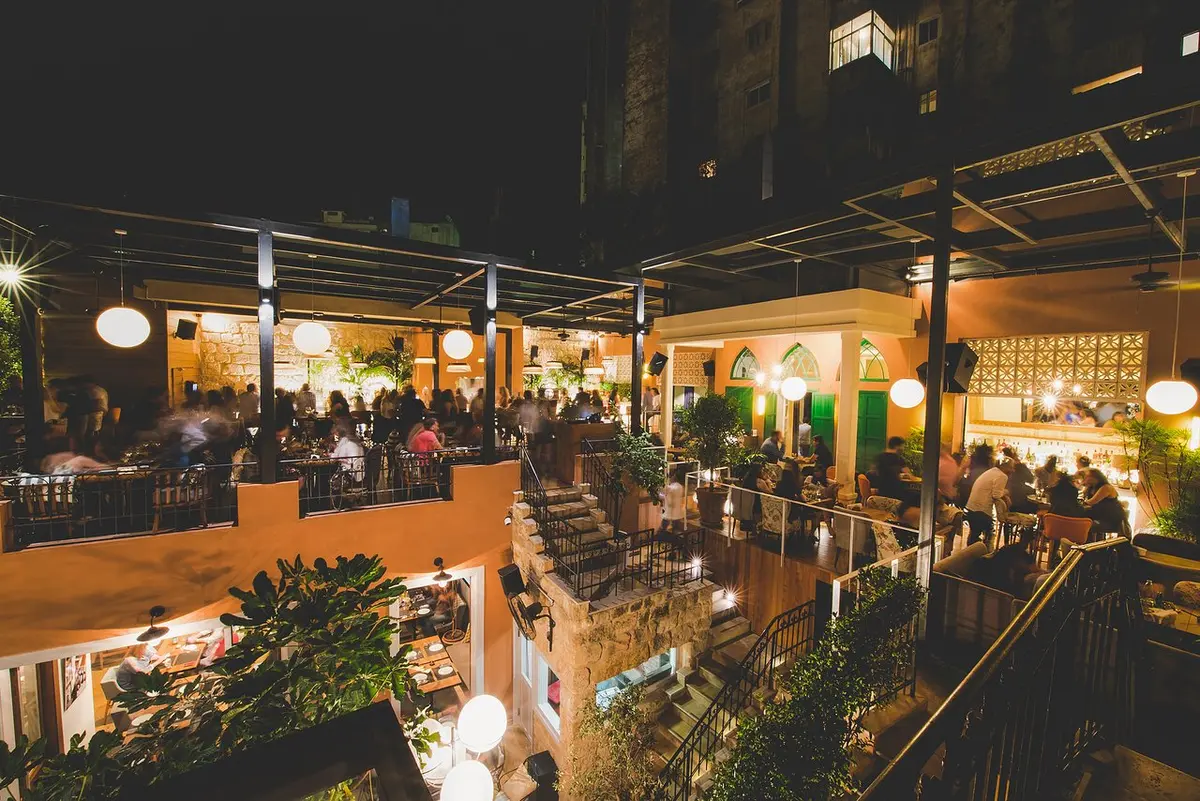
Downtown was rebuilt after the Civil War by the real estate company Solidere to look like a sanitized European capital — limestone façades, wide empty boulevards, and high-end shops. Critics called it a ghost town for years, and they weren’t wrong. Things are slowly returning, but the area still feels more like a stage set than a neighborhood.
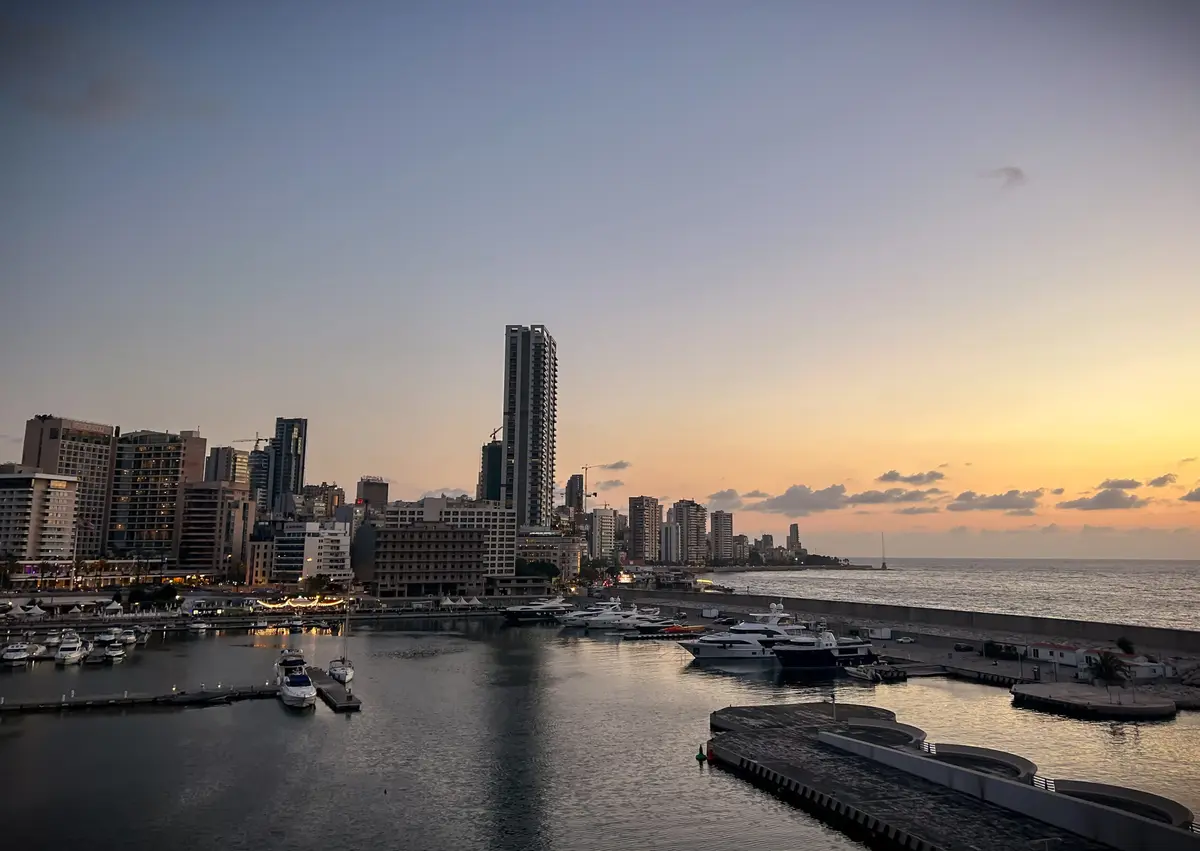
What Downtown delivers is the most predictable experience in the city. Power infrastructure is industrial-grade. Security presence is visible. Walking access to the Beirut Souks and Zaitunay Bay Marina is immediate. The price you pay — literally and experientially — is that you’re removed from the street life that is the actual reason to be in Lebanon.
- Location: Central Beirut, between Martyrs’ Square and the marina
- Price range: $300-600/night
- Best for: Families, business travelers, risk-averse first-timers
- Airport transfer: 20 minutes by taxi
Le Gray Beirut
Le Gray shut after the 2020 port explosion and spent more than four years in renovation before reopening as a member of The Leading Hotels of the World, with 104 redesigned rooms and suites under the creative direction of architect Galal Mahmoud. Dining is led by Alan Geaam, the first and only Lebanese chef to hold a Michelin star, who runs two concepts inside the hotel: Qasti (Lebanese) and Padam (French-Mediterranean). The rooftop bar looks out over Martyrs’ Square, the Mediterranean, and Mount Lebanon on clear days.
The Verdict: For a city whose last few years have been defined by what closed rather than what opened, Le Gray’s return is the signal event in the luxury segment. The service is calibrated to the Leading Hotels of the World standard, which means it reads as more corporate than Albergo’s bohemian edge — whether that’s a plus or a minus depends on what you’re after.
- Location: Downtown, facing Martyrs’ Square
- Cost: from $400/night
- Best for: Luxury travelers who want modern amenities over heritage charm
- Time needed: 2-4 nights
InterContinental Phoenicia
Anchors the western edge of Downtown. Survived wars, the economic collapse, and the port explosion with the same 1960s glamour intact. This is where diplomatic delegations stay, which means the security posture is the most fortress-like in the city. Immediate Corniche access for morning walks or runs is a real advantage — the Corniche is one of the few places in Beirut where the city exhales, and it delivers some of the best sunset spots in Beirut at the end of the day.
- Location: Minet El Hosn, edge of Downtown
- Cost: from $300/night
- Best for: Business travelers, security-focused guests
- Time needed: 2-5 nights
Hamra: the intellectual district
Once called the Champs-Élysées of the East — this is the stretch most guidebooks still open with, and it’s the one that shows the most wear. Hamra is home to the American University of Beirut (AUB), which keeps it young, loud, and academic. Historic cafes like Cafe Younes (roasting since 1935) and Urbanista stay full of students, journalists, and writers working on laptops from 10 a.m. to midnight — a de facto network of coworking spaces in Beirut that predates the term.
Hamra is where you come to see the actual, working city. Sidewalks are crowded, traffic is relentless, and the infrastructure shows crisis wear more than Achrafieh does. Prices are the best in this guide.
- Location: West Beirut, around Hamra Street and AUB
- Price range: $40-130/night
- Best for: Budget travelers, academics, long-stay remote workers
- Airport transfer: 15-20 minutes by taxi
Hamra Urban Gardens (HUG)
HUG combines a hotel, a hostel, a gym, and a rooftop pool bar inside one building off Hamra Street. The rooftop is the social center — locals mix with foreigners over $5 beers most nights. Power is backed up 24/7, and the Wi-Fi is good enough to run video calls.
The Verdict: The easiest place in the city to meet people if you’re traveling solo. The design of the central atrium means noise travels — rooms on floors facing the courtyard can be loud until the rooftop closes.
- Location: Hamra, off the main street
- Cost: Dorms from $30/night, privates from $90/night
- Best for: Solo travelers, budget travelers
- Time needed: 2-4 nights
Three O Nine Hotel
A straightforward 4-star option steps from Bliss Street and AUB’s main gate. No heritage charm, just a clean room, a rooftop pool, a rooftop bar, and reliable backup power. The clientele is heavy with visiting academics, parents of AUB students, and regional journalists.
- Location: Hamra, steps from AUB
- Cost: from $110/night
- Best for: AUB visitors, practical mid-range travelers
- Time needed: 3-5 nights
Badaro: the grown-up alternative
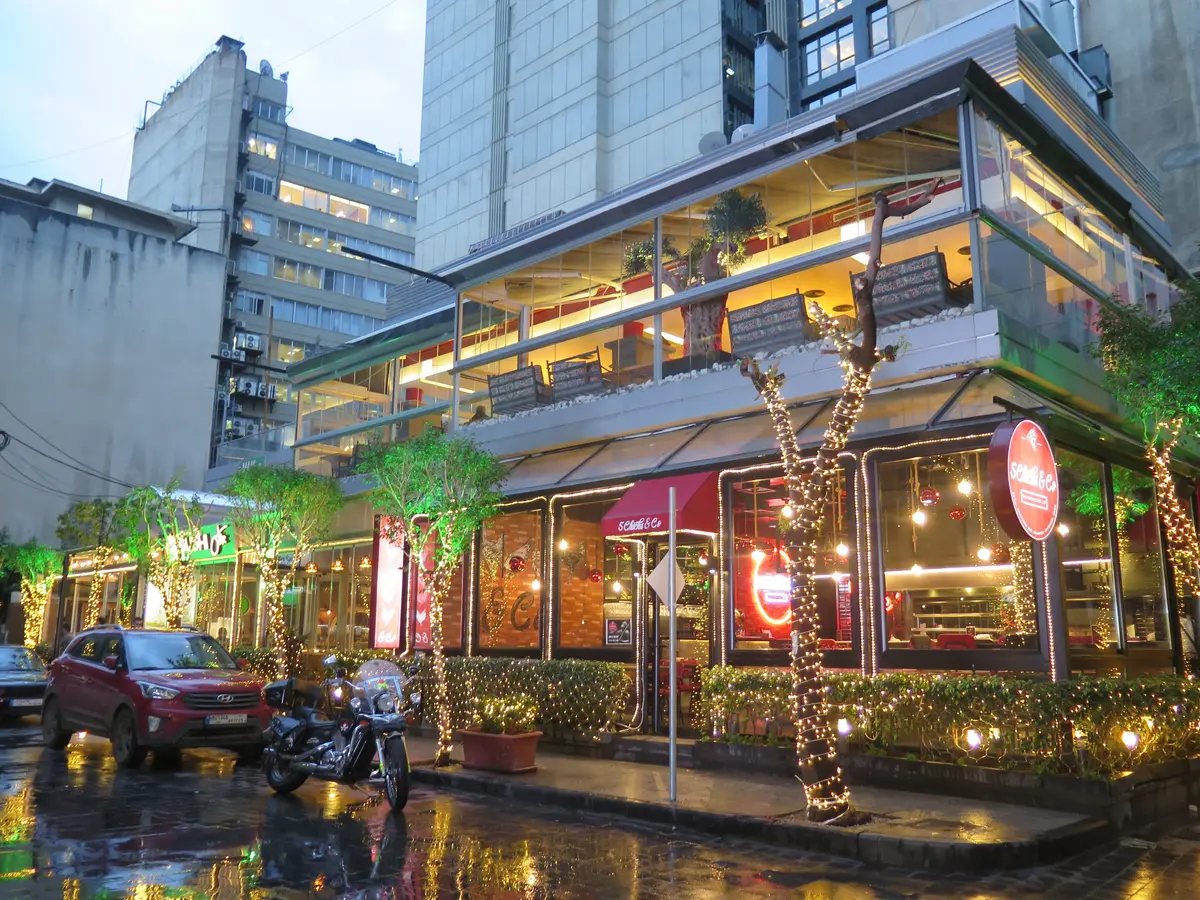
Badaro is what happens when the Mar Mikhael crowd turns 35 and wants to hear the person they’re having dinner with. Tree-lined streets sit between the National Museum and Horsh Beirut — one of the only real green spaces in a city that has almost none. Bars here focus on the drink rather than the volume.
It doesn’t have the architectural weight of Achrafieh or the edge of Mar Mikhael’s corner of Lebanon’s nightlife scene, but it’s the most well-rounded base in the city for travelers who don’t want to pick one tradeoff over the other.
- Location: Central Beirut, near the National Museum
- Price range: $150-220/night
- Best for: Professionals, expats, travelers who want balance
- Airport transfer: 15 minutes by taxi
The Smallville Hotel
The superhero design theme — there’s a Superman statue at the entrance — is played straight rather than as a joke, which somehow works. The rooftop pool bar is one of the most established nightlife venues in this part of the city. Fiber internet runs fast enough that I’ve seen consultants file full reports from the restaurant.
- Location: Badaro, across from Horsh Beirut
- Cost: from $170/night
- Best for: Design travelers, business travelers avoiding Downtown
- Time needed: 2-4 nights
What should you actually know before booking a hotel in Beirut?
Hotel choice matters less than understanding four operational realities: power, cash, safety, and transport. These determine whether your trip works at all. The state electricity grid supplies only a few hours of power a day; the rest comes from private diesel generators that luxury hotels run industrially and budget hotels run with visible seams. Cash runs the country. The U.S. dollar runs the cash.
How does the electricity situation actually work?
Lebanon’s state electric utility, Électricité du Liban (EDL), has provided as little as 1-3 hours of daily power since the economic collapse began in 2019, making power cuts in Lebanon a defining feature of daily life. Every functioning hotel runs on private diesel generators. Luxury hotels in Downtown, Achrafieh, and Badaro synchronize these transitions so you never notice. Budget hotels drop power briefly during switchovers.
Pro Tip: Ask the hotel directly before booking: “Do you have 24/7 power with no amperage limits?” Amperage limits mean you can’t run the AC and a hair dryer at the same time — a real issue in summer heat.
For remote workers: fiber internet has been deployed through most of Achrafieh, Badaro, and central Hamra. Buy a tourist SIM from Alfa or Touch before arrival if possible, or at the airport counter immediately on landing — the kiosk queues inside the terminal are short if you take the first one you see.
How should you handle money in Beirut?
Bring U.S. dollars in cash, in pristine condition, in mixed denominations. Lebanon operates on a fully dollarized cash economy. The Lebanese lira (LBP) lost more than 95% of its value during the economic collapse, and most pricing — hotels, restaurants, taxis, grocery stores — is now quoted in USD and paid in USD cash.
- Bill condition: Tears, ink marks, pen stamps, or older bill designs will be refused by most exchangers and shops. Get fresh bills from your U.S. bank branch before flying.
- Denominations: Carry plenty of $20s and $50s. Vendors often can’t break a $100 for a $15 purchase.
- Cards: International Visa and Mastercard work at luxury hotels, upmarket restaurants, and some chain stores. Everywhere else is cash-only.
- ATMs: Many dispense only small USD amounts per transaction, with fees. Don’t rely on them as your main cash source.
Pro Tip: Split your cash between two or three locations — hotel safe, day bag, and a hidden reserve. The country has seen rising petty crime alongside the economic crisis, and replacement options are limited.
Is it safe to walk around Beirut right now?
Under normal conditions, central tourist districts (Achrafieh, Downtown, Hamra, Badaro, Gemmayzeh, Mar Mikhael) are generally safe to walk during the day and early evening. The current situation is not normal. The U.S. Embassy has issued security alerts reporting airstrikes, drones, and rocket attacks in parts of Beirut, and has specifically urged U.S. citizens to depart the Dahiyeh area immediately.
Even setting aside the current advisory, a few rules apply at all times:
- Avoid Dahiyeh (the southern suburbs) and anywhere south of the airport highway.
- Do not photograph military checkpoints, soldiers, or government buildings. This is enforced.
- If a protest or demonstration forms, leave the neighborhood. They can escalate fast.
- Avoid the Lebanon-Syria border area entirely.
- Refugee settlements are off-limits and explicitly flagged by the Embassy.
Pro Tip: Register with STEP (Smart Traveler Enrollment Program) at step.state.gov before arrival. It’s how the Embassy reaches you during an emergency. Keep a copy of your passport separately from the original and save the Embassy emergency contact in your phone.
Should you use Uber or a local taxi?
Uber in Beirut operates as the safer default for tourists — set fares, GPS-tracked rides, no negotiation. Local red-plate taxis (servees) operate on a fixed shared-route system for about $2-3 per person, but the routes take practice to read. White-plate private taxis will take you anywhere, but drivers sometimes quote inflated “tourist” fares; agree on the price before getting in.
- Uber: $8-15 for most intra-Beirut trips
- Red-plate servees: $2-3 per person, shared routes
- Airport to Downtown by taxi: roughly $25-35
- Airport to Achrafieh or Hamra: roughly $20-30
The bottom line
TL;DR: If you’re coming to Beirut despite the Level 4 advisory, Achrafieh is the safest and most comfortable base, Gemmayzeh and Mar Mikhael put you on top of the nightlife (at the cost of sleep), Downtown is predictable but sterile, Hamra is authentic and cheap but rough around the edges, and Badaro is the balanced middle ground. Bring clean USD bills, verify power backup before booking, and read the State Department advisory before anything else.
Beirut rewards travelers who plan carefully — and punishes those who don’t. The warmth of Lebanese hospitality is real, but so is the complexity of the country right now — both reasons to pair this guide with our complete Lebanon travel guide before finalizing plans. Pick the neighborhood that matches your appetite for that complexity.
Which of these neighborhoods sounds like your kind of base — or does the current advisory change your plans entirely? Share your thinking in the comments.