
Portugal’s entry requirements for US citizens are manageable — but the EU’s new biometric border system has made arrival at Lisbon genuinely unpredictable right now. This guide covers every requirement in order: from passport validity traps to the medication rules most travelers don’t read until they’re standing at customs.
Do US citizens need a visa for Portugal?
No. US citizens do not need a visa to enter Portugal for stays under 90 days. Portugal is part of the Schengen Area, which grants Americans visa-free access for tourism, family visits, and short business trips. No application, no fee, no embassy appointment required.
What you do need is a clear understanding of the rules surrounding that privilege. Getting them wrong can mean denied boarding or a ban from the EU. If you’re still deciding when to travel, our guide on the best time to visit Portugal covers seasonal crowds and weather patterns before you lock in flights.
What passport rules do most US travelers get wrong?
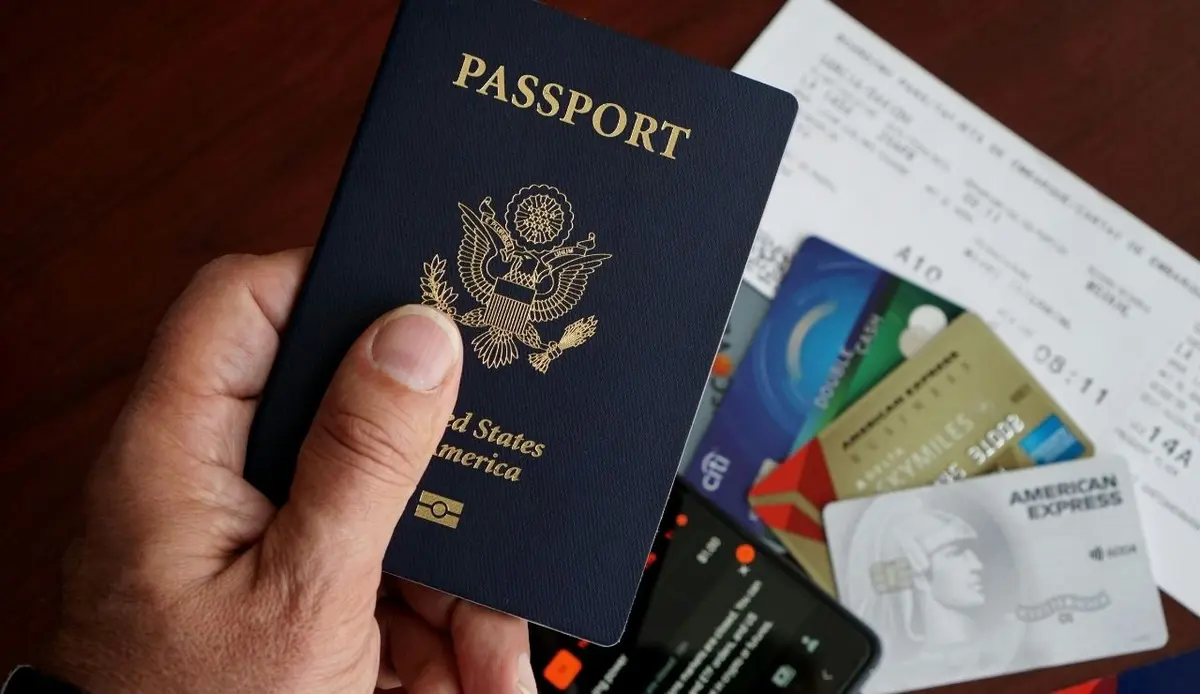
Your passport must be valid for at least 3 months beyond your planned exit date from Portugal — that’s the legal Schengen minimum. But many airlines enforce a 6-month validity rule using automated compliance databases. A passport with 4 months remaining might satisfy border control but get you denied at the gate in New York.
Pro Tip: Renew your passport if it has less than 6 months of validity past your return date. Don’t gamble on airline discretion.
Your passport also must have been issued within the last 10 years. This rarely affects standard US passports, but if you’re carrying an emergency passport, check the issuance date carefully.
How does the 90/180-day Schengen rule actually work?
US citizens can stay in the Schengen Area for up to 90 days within any rolling 180-day period. That rolling window — not a fixed calendar block — is what most people miss. Every time you plan to enter, look back 180 days from your exit date and count every day spent in any Schengen country.
Portugal, Spain, France, Italy, Germany — all of it counts together. For a broader overview of what to do and where to go once you clear immigration, our Portugal travel guide covers the full picture.
Example: if you spent 3 months in Spain earlier in the year, those days may still fall within the rolling window. Trying to enter Portugal too soon could make you inadmissible until enough days “fall off” the back of the window.
Pro Tip: Use the Schengen Calculator before every trip. It’s free and can save you from a nightmare at the border.
What is ETIAS and do you need it before flying?
ETIAS (European Travel Information and Authorisation System) is the EU’s pre-travel screening program for visa-exempt visitors, similar to the US ESTA. It is not yet operational — no application portal exists, and no fee is being collected. ETIAS is expected to launch in the last quarter of the year, pending formal confirmation. Check travel-europe.europa.eu/etias for the official launch announcement before your trip.
Once live, you’ll need to apply online at least 96 hours before departure. The fee is confirmed at €20 (~$23 USD), valid for 3 years. Travelers under 18 or over 70 are exempt from the fee.
Pro Tip: Any third-party website claiming to process ETIAS applications right now is a scam designed to harvest your credit card data. There is one official site: travel-europe.europa.eu/etias, and it is not yet accepting applications.
What is EES and how does it affect arrival at Lisbon?
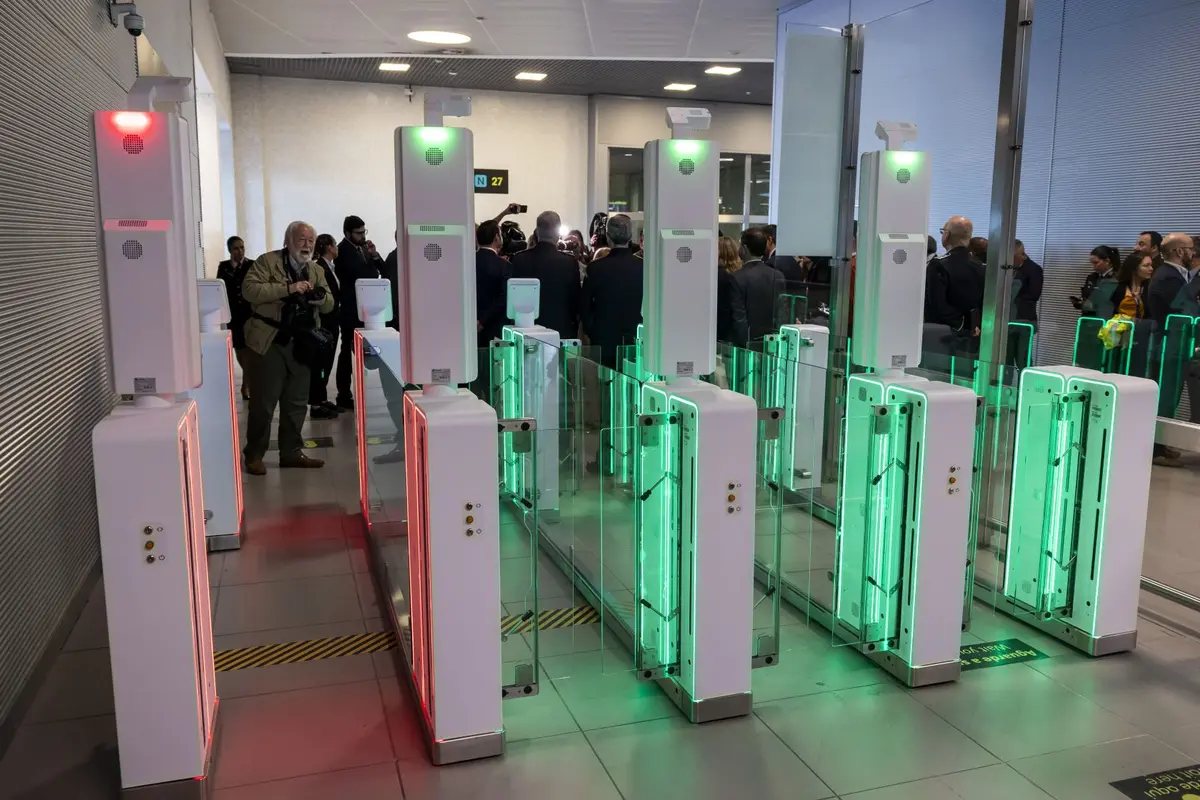
The Entry/Exit System (EES) is the EU’s biometric border technology that replaces passport stamping for every non-EU arrival across 29 Schengen countries. After a phased rollout starting October 2025, the system reached full mandatory implementation in April. Under EES, your entry and exit dates are recorded digitally — fingerprints and a facial scan — linked to your passport. There is no physical ink stamp.
Lisbon’s rollout has been the most chaotic of any major European gateway. After queues at Lisbon Airport hit 7 hours for arriving US passengers, a European Commission assessment identified “serious deficiencies” at the airport, and Portugal suspended EES at Lisbon entirely for three months starting late December. The airport deployed 24 officers from the National Republican Guard (GNR) and boosted border processing capacity by approximately 30% during that window.
With EES now fully reactivated at Lisbon alongside the EU-wide mandatory rollout, Portuguese authorities are warning of 2-hour waits at Lisbon and Porto for non-EU arrivals. Industry groups are warning of potential 4-6 hour queue scenarios during peak summer travel across Schengen airports. The Lisbon immigration hall remains a high-variability environment — build buffer time into any onward connection or timed transfer.
Under the old stamping system, the risk was walking away without an ink stamp. On a previous trip through Lisbon, I watched the couple ahead of me leave the passport booth without a stamp and get called back five minutes later — still passport in hand, while a supervisor searched for an officer to correct it. Under EES, the risk has shifted: if your biometric registration doesn’t complete properly, you have no physical backup. Confirm with the officer before you step away that your entry is registered in the system.
Pro Tip: Download the official “Travel to Europe” app — developed by Frontex, the EU’s border agency, available on the App Store and Google Play — and pre-register your passport data and facial image up to 72 hours before arrival. Available at Lisbon Airport and expanding across Portuguese airports, it cuts average processing time nearly in half. If you pass through a manual booth during any temporary EES suspension, ask for a passport stamp before walking away — it remains your only physical proof of entry date.
Depending on when you arrive, you may encounter:
- Fully automated kiosks with biometric capture
- Manual passport booths staffed by the Public Security Police (PSP)
- A hybrid of both, applied inconsistently across lanes
Porto (OPO) and Faro (FAO) handle lower non-EU volumes and have experienced far less disruption than Lisbon. If your itinerary is flexible and you’re entering Portugal from outside the Schengen Area, both are lower-risk arrival points.
Do you need to file a declaration of entry in Portugal?
Most tourists flying directly from the US to Portugal satisfy their entry reporting obligation automatically — the airport biometric registration does the work. A specific group of travelers has a separate legal obligation that rarely appears in standard travel guides: those who enter via an internal Schengen route and stay in private accommodation must file a Declaração de Entrada within 3 working days of arrival.
You must file if you:
- Enter Portugal via an internal Schengen route — by train from Spain, driving in across a land border, or flying from Paris to Lisbon — AND
- Stay in private accommodation — with friends, family, or an unregistered short-term rental
Hotels, hostels, and licensed tourist accommodations report guest data to authorities automatically. If you’re in one of those, you’re covered.
How to comply:
- Download the Declaration of Entry form from the AIMA website
- Bring it, your passport, and proof of entry (boarding pass, toll receipt) to a PSP station in cities or a GNR station in rural areas
- Submit in person within 3 working days of arrival
Skipping this step can mean fines between roughly $65–$175 USD and, worse, gaps in your immigration record that complicate future visa applications.

How much money do you need to show at the Portuguese border?
Portuguese border authorities can ask you to demonstrate sufficient funds for your stay. The requirement is almost never raised against travelers arriving on direct flights from the US, but it exists in law and is worth knowing before you board.
The formula is:
- $86 USD (~€75) flat fee per person
- Plus $46 USD (~€40) per day of your stay
A solo traveler on a 10-day trip needs to show access to roughly $546 USD (€475). A family of four for the same trip: approximately $2,185 USD (€1,900).
Acceptable proof includes a banking app showing your balance, a credit card with a visible limit, or — if you’re staying with a Portuguese resident — a notarized Termo de Responsabilidade signed by your host, which substitutes for liquid funds entirely. If you’re planning to rent a car in Portugal, keep in mind that hire companies place a deposit hold on your credit card — often €200–€1,000 (~$230–$1,150 USD) — which temporarily reduces your available balance. Book the rental before you travel and take your balance screenshot before the hold posts.
Can you bring prescription medications into Portugal?
This is where things get serious. Medications that are routine prescriptions in the US can land you in legal trouble at a Portuguese airport. Carry the wrong documentation and you’re not just inconvenienced — you’re looking at confiscation and potential criminal exposure.
Adderall and Vyvanse
Portugal follows strict EU law on psychotropic substances. Amphetamine-based ADHD medications like Adderall and Vyvanse are controlled narcotics. Carrying them without documentation is illegal.
What you must have:
- A doctor’s letter dated within 90 days, stating your name, the drug’s generic chemical name, dosage, total quantity, and your diagnosis
- The medication in its original pharmacy packaging with a label matching your passport and the letter
- A quantity matching the exact length of your stay — bringing a 3-month supply for a 10-day trip signals trafficking
Pseudoephedrine (Sudafed)
Standard US cold medicine containing pseudoephedrine is restricted in the EU due to its role as a methamphetamine precursor. Bring the same documentation (doctor’s note, original packaging), or switch to a phenylephrine-based alternative before you leave.
Pro Tip: Pack all medications in carry-on luggage with documentation on top. If stopped at customs, you want everything accessible immediately.

How do you bring a pet into Portugal from the US?
Getting a dog or cat into Portugal from the US requires the kind of precision that rewards obsessive list-makers. One wrong date in the sequence — particularly a vaccine given before the microchip — invalidates the entire process.
The mandatory sequence (order matters):
- Microchip first: your pet must have an ISO-compliant 15-digit microchip implanted before the rabies vaccine. A vaccine given before the chip is legally invalid.
- Rabies vaccination: administered at least 21 days before arrival in Portugal, and still current on travel day.
- EU Health Certificate (Annex IV): completed by a USDA-accredited vet within 10 days of travel.
- USDA APHIS endorsement: the certificate must be officially endorsed by a USDA office. Without the raised seal or digital signature, the document is worthless at the border.
Restricted breeds — Rottweilers, Pit Bull Terriers, American Staffordshire Terriers, Staffordshire Bull Terriers, and Dogo Argentinos — must be muzzled and on a leash no longer than 3 feet (1 meter) in all public spaces. Liability insurance for the animal is also required.
What can (and can’t) you bring through Portuguese customs?
The rules around cash, food, and professional gear catch a surprising number of travelers who assume customs is just about duty-free limits.
Cash over €10,000 (~$11,500 USD) must be declared at customs. Undeclared funds can be seized pending investigation. This includes bonds, traveler’s checks, and equivalent instruments.
Food from the US is where it gets counterintuitive. Meat, meat products (yes, including beef jerky), milk, and dairy are banned from entering the EU. Exceptions exist for powdered infant formula and medical food under 4.4 lbs (2 kg).
Photographers, videographers, and musicians carrying expensive equipment should bring an inventory list with serial numbers and receipts. Without documentation, customs may classify the gear as intended for import and charge VAT on the spot.
Is travel insurance required for Portugal?
Travel insurance is not legally required for a short US visit to Portugal, but the math almost always favors buying it. Portugal’s National Health Service (SNS) provides solid care — and it is not free for tourists. Emergency care without coverage can generate bills that dwarf the cost of any reasonable travel insurance for Portugal plan.
- Emergency number: 112 (universal EU)
- Non-emergency health line: SNS 24 at 808 24 24 24 (English-speaking operators available)
Do the Azores and Madeira have different entry rules?
Both regions are part of Portugal and the Schengen Area — the same entry requirements apply, with no separate visa process. The logistical distinction is where you clear immigration. Direct flights from the US to Ponta Delgada (PDL) or Funchal (FNC) clear on arrival at those airports. Connections through Lisbon clear at LIS, EES situation included.
The Lisbon connection detail matters more than most guides admit. The onward leg to the islands is a domestic flight with no passport control upon landing — which means the Lisbon immigration hall is your problem even if your final destination is the Azores. If you want to sidestep Lisbon’s border entirely, book a direct transatlantic flight to PDL or FNC.

What to check before you board
- Passport valid for 6+ months past return date, issued within the last 10 years
- Check the rolling 90/180-day window — count all Schengen days, not just Portugal
- Verify ETIAS status at travel-europe.europa.eu/etias before departure (not currently required)
- Download the “Travel to Europe” app (Frontex) and pre-register up to 72 hours before your Lisbon arrival; expect EES biometric capture at all Portuguese airports — confirm your entry is registered before leaving the border area
- File a Declaração de Entrada if entering via land or intra-Schengen flight and staying in private accommodation
- Carry proof of funds ($86 USD flat per person + $46 USD per day)
- Doctor’s letter and original packaging for any controlled medications
- Complete the ISO chip → rabies → USDA endorsement sequence for pets (in that order)
- Declare cash over ~$11,500 USD at customs
The bottom line
Portugal’s entry requirements are manageable once you know the full picture. The EES biometric rollout at Lisbon is the single biggest practical risk for US travelers right now — more immediate than ETIAS, more consequential than the proof-of-funds rules. Under EES, your proof of entry is a digital biometric record, not an ink stamp. Confirm your registration is complete before leaving the border area.
TL;DR: Check your passport validity (6 months past your return date), run the 90/180-day math on all Schengen days — not just Portugal — and confirm your EES biometric registration is complete at every Portuguese airport. Everything else in this guide is secondary.
What part of your Portugal trip are you planning — Lisbon, the Algarve, or are you going straight for the Azores?