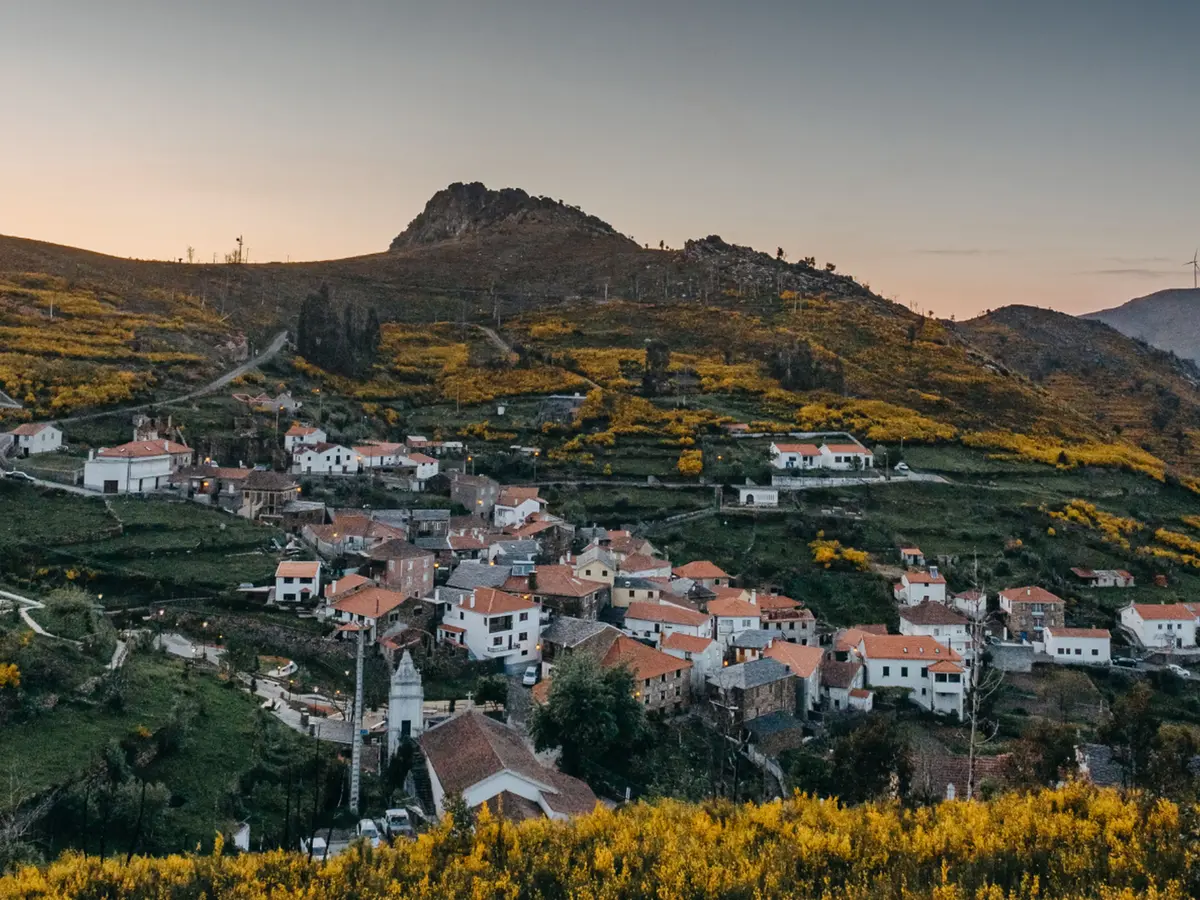
Central Portugal‘s Schist Villages — the Aldeias do Xisto — are 27 mountain settlements built entirely from dark metamorphic rock, spread across four mountain zones most tourists never reach. This guide covers the six best villages to visit, the honest road conditions, what to eat, and exactly how long you need.
What makes the Schist Villages different from other Portuguese destinations?
The Aldeias do Xisto are not a themed attraction or an open-air museum. They are active communities — some with fewer than a dozen permanent residents — where families share communal ovens, old women still weave linen on medieval looms, and village restaurants close when the owner goes fishing. The defining feature is the building material: schist, a dark slate-like metamorphic rock split into thin sheets and stacked without mortar. The result is houses that look grown from the mountain rather than placed on it.
The network spans four territorial zones across central Portugal — Serra da Lousã, Serra do Açor, the Zêzere River valley, and Tejo-Ocreza — each with different terrain, character, and food culture. That range is what separates the Schist Villages from the single-stop destinations that dominate most Portugal travel guides.
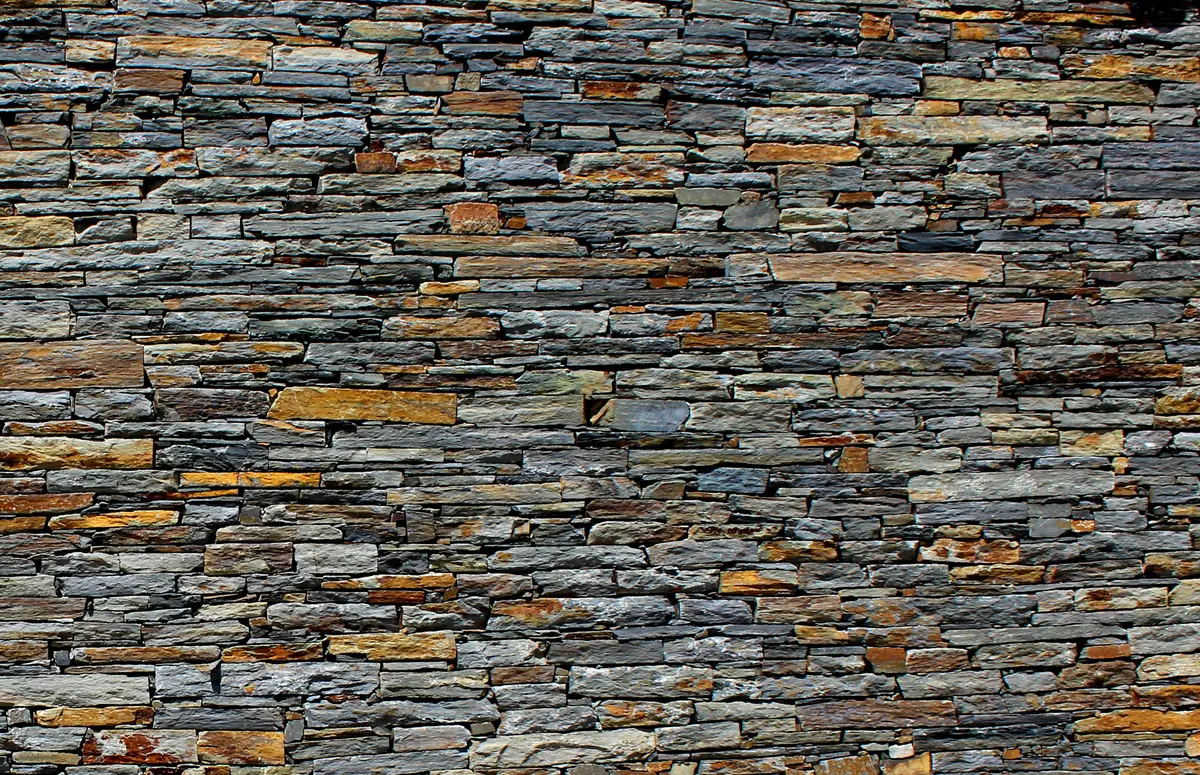
The 6 best Schist Villages to visit
1. Talasnal — where the village climbs into the mountain
Talasnal is where most first visits start. The village climbs so steeply up the Serra da Lousã that one house’s roof sits level with the neighbor’s front door. The alleys between buildings are barely wide enough for two people, and they carry wood smoke year-round from chimneys you cannot always see. Water channels that once powered grain mills still trickle through the walls.
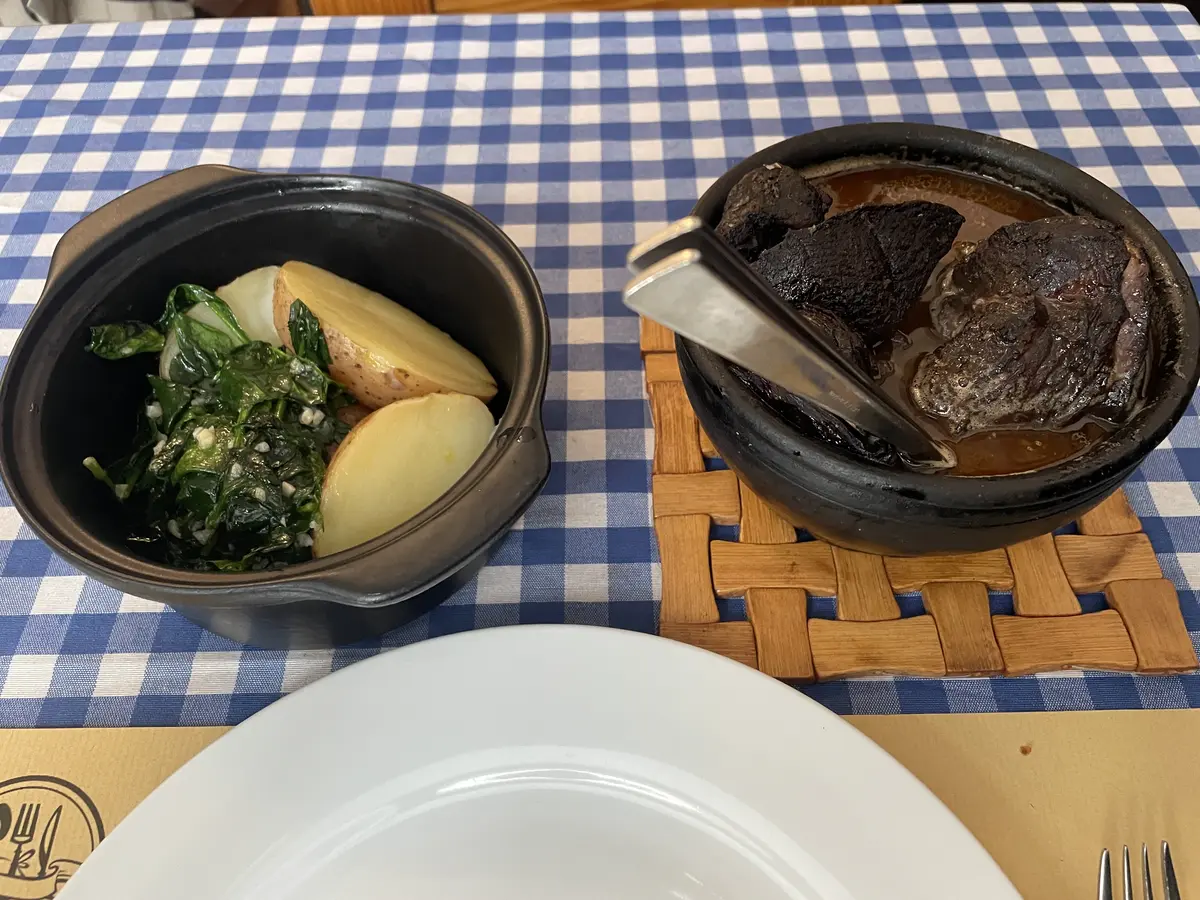
The main draw is Ti Lena, a restaurant that seats 28 people inside, where chanfana — one of the defining dishes in traditional Portuguese food — arrives in black clay pots alongside roasted Serra da Lousã chestnuts and corn bread. You order before you arrive — call ahead or book through Bookinxisto. Show up without a reservation and you will be eating in your car.
After dark, the bar O Curral becomes the village social center. The terrace faces the full width of the Serra da Lousã range, and locals mix with visitors over house wine and medronho shots. On my last visit, the chocolate cake with honey sold out by 9 p.m. Order it with your drinks.
- Location: Serra da Lousã, 7.5 miles (12 km) from Lousã town
- Cost: restaurant mains $12-18, accommodation from $80/night
- Best for: first-time visitors, food travelers, photographers
- Time needed: half day minimum; overnight to catch the evening atmosphere
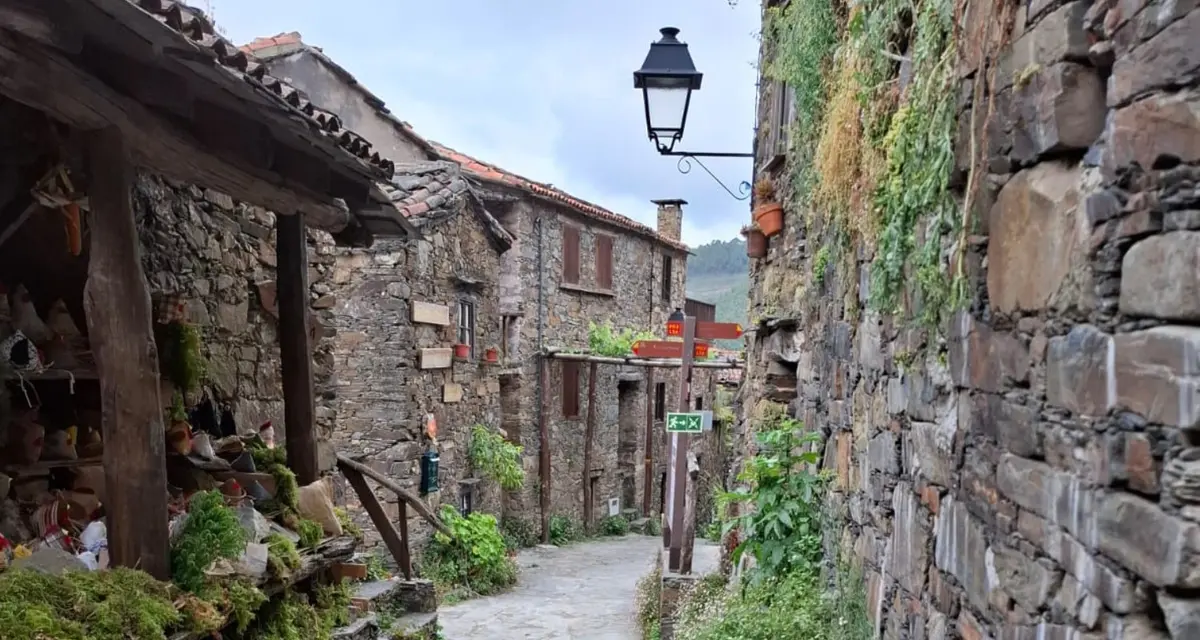
2. Cerdeira — the arts collective that saved a hamlet
A group of friends bought and restored the entire hamlet and turned it into an arts residency. Cerdeira now hosts potters, woodcarvers, painters, and textile artists — a living gallery of Portuguese crafts — with international residency programs running across most of the year. On any given morning, you might share coffee with a ceramicist from Belgium who has been here for three months.
The accommodation runs resort-style with breakfast service — not the usual self-catering schist house — making it the right choice for travelers who want some structure. The Levada trail starts at the village edge and follows an ancient water channel through oak and chestnut forest. It is an easy 3-mile (5 km) loop with no technical difficulty and a genuinely old watermill at the turnaround point.
Pro Tip: If you visit during an active artist residency, the workshops are often open to drop-in visitors for the afternoon. Ask at reception rather than assuming — you do not need to book a formal slot in advance.
- Location: Serra da Lousã, 6 miles (10 km) from Lousã town
- Cost: workshops from $25-40, accommodation from $90/night
- Best for: couples, creative travelers, anyone wanting structured programming
- Time needed: half day for the walk and a coffee; full day if joining a workshop
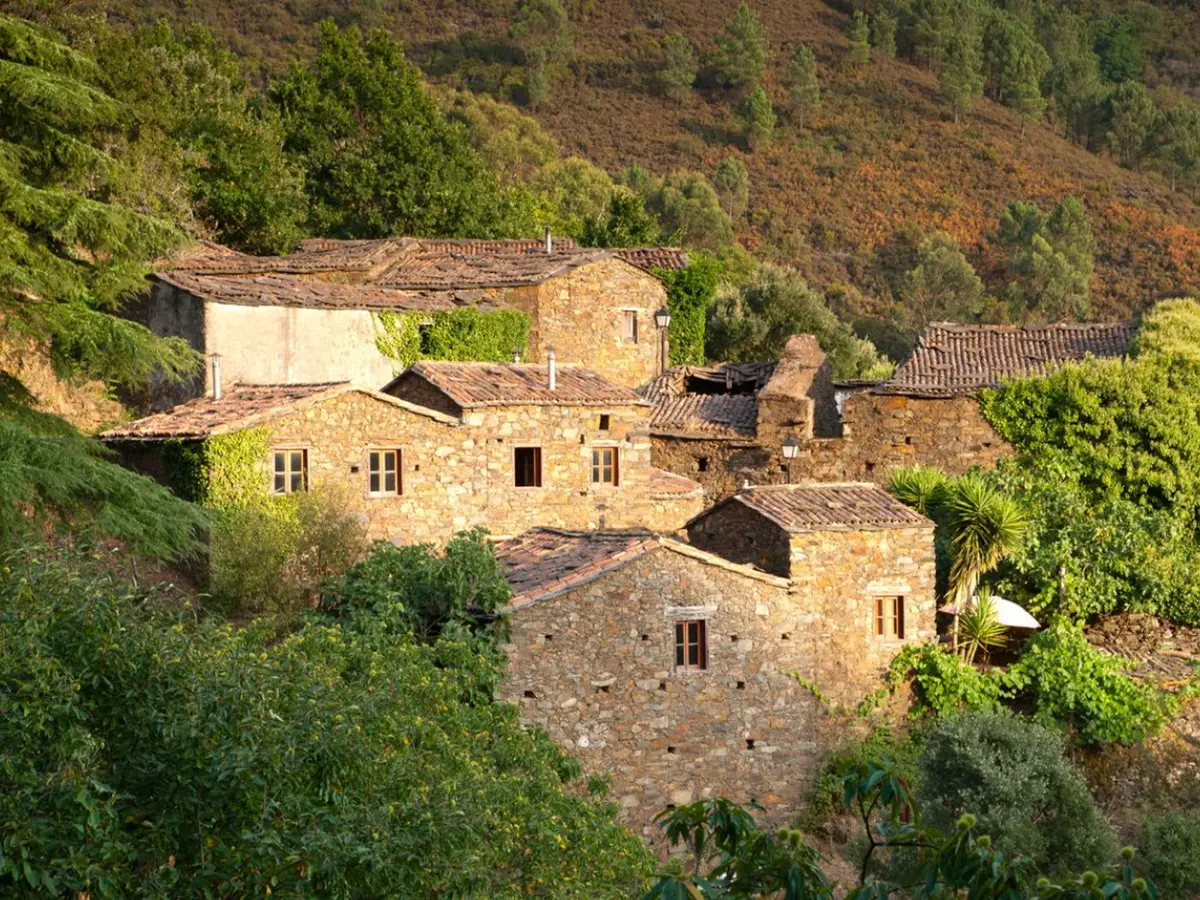
3. Gondramaz — mountain biking and mountain poetry
Poems by Miguel Torga, Portugal’s best-known mountain poet, are carved into schist plaques along the village walls. You read them on the way up, which is the only direction the streets go — the gradient from the parking area to the summit is relentless, and sandals are a mistake.
The main reason most people come is the downhill mountain biking. Professional teams train on these trails in winter. The technical tracks drop 2,600 feet (800 m) from the village through forest switchbacks to Miranda do Corvo, with exposed root sections and off-camber corners that punish lazy riding. This is not beginner terrain.
The panoramic swing near the summit is free, requires zero fitness, and delivers a straight-line view across the full Lousã range — a legitimate option if biking is not your plan.
- Location: Serra da Lousã, 13 miles (22 km) from Lousã town
- Cost: bike park day pass approximately $15, swing access free
- Best for: mountain bikers, hikers, poetry enthusiasts
- Time needed: 2-3 hours for non-bikers; full day for bikers doing multiple runs
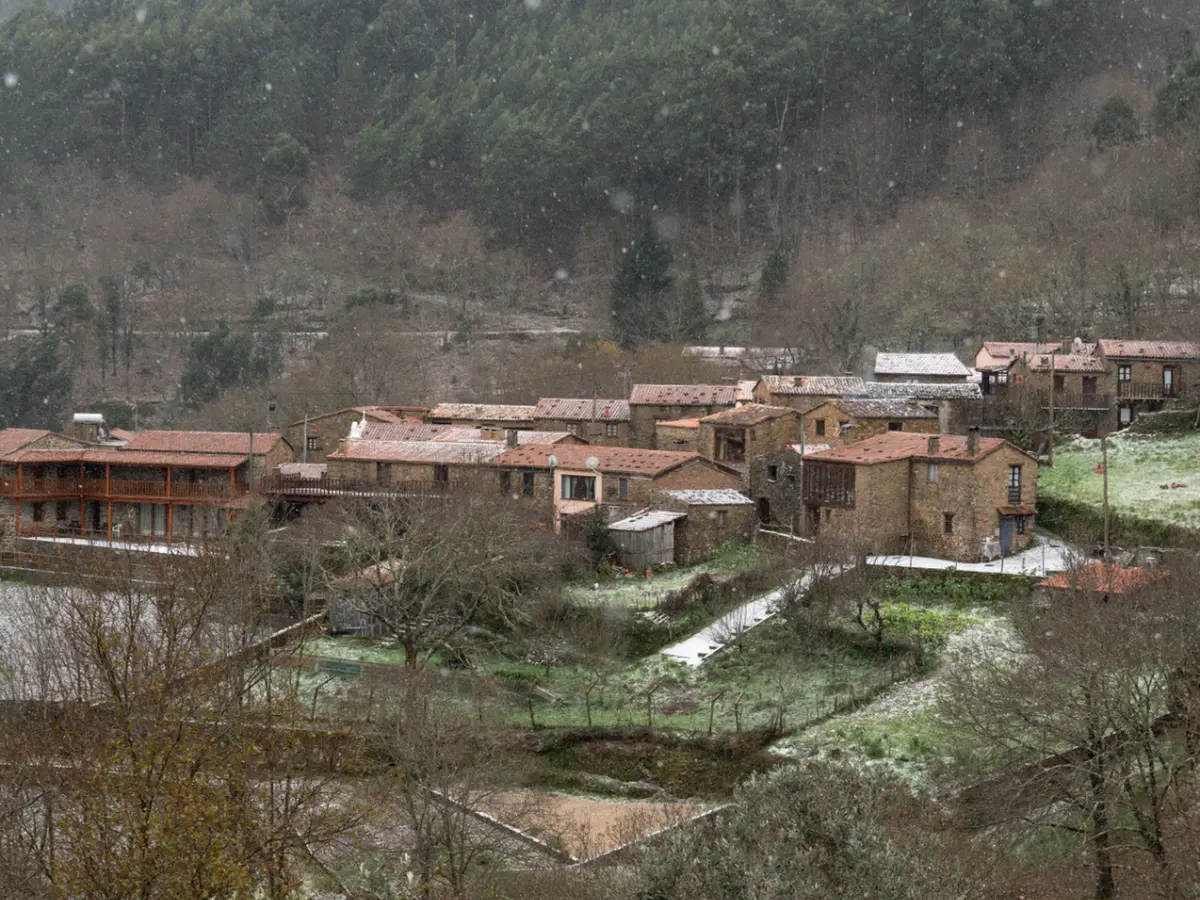
4. Fajão — the most isolated village in the network
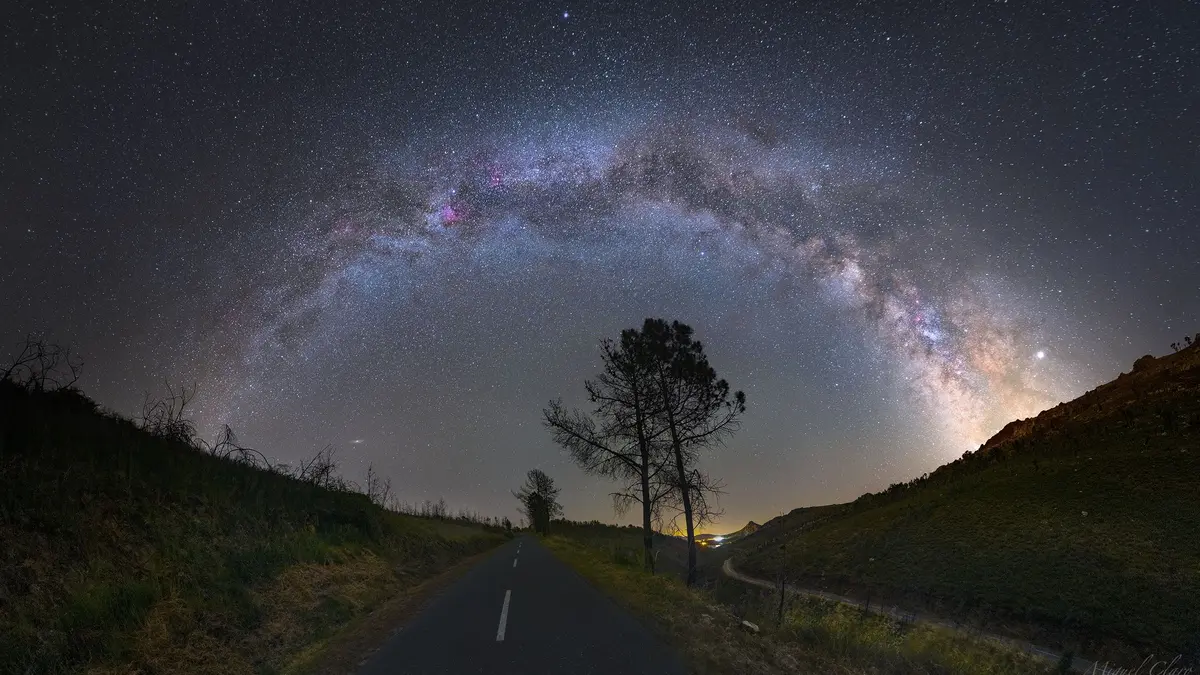
Fajão sits in a natural amphitheater of quartzite crags in the Serra do Açor. Historically significant enough to have its own judge and jail — the stone structures still stand — it is now the best Dark Sky location in the entire network. The Geoscope observation platform above the village has lounger chairs and interpretation panels. On a moonless night, the Milky Way casts actual shadows on the path and the Andromeda Galaxy resolves with naked eyes.
Getting here demands commitment. The drive from Coimbra winds for 1.5 hours through 56 miles (90 km) of increasingly narrow mountain passes. Cell service drops before you reach the village. Download offline maps before leaving Coimbra — this is not optional.
There are no gas stations in Fajão. Running low means a 37-mile (60 km) round trip to the nearest pump. Fill up in Arganil before heading in.
- Location: Serra do Açor, Pampilhosa da Serra municipality
- Cost: Geoscope access free, accommodation from $70/night in the surrounding area
- Best for: astrophotography, solo travelers, anyone who wants genuine isolation
- Time needed: overnight — the drive alone makes a day trip a poor trade
5. Janeiro de Cima — where you cross the river by shouting
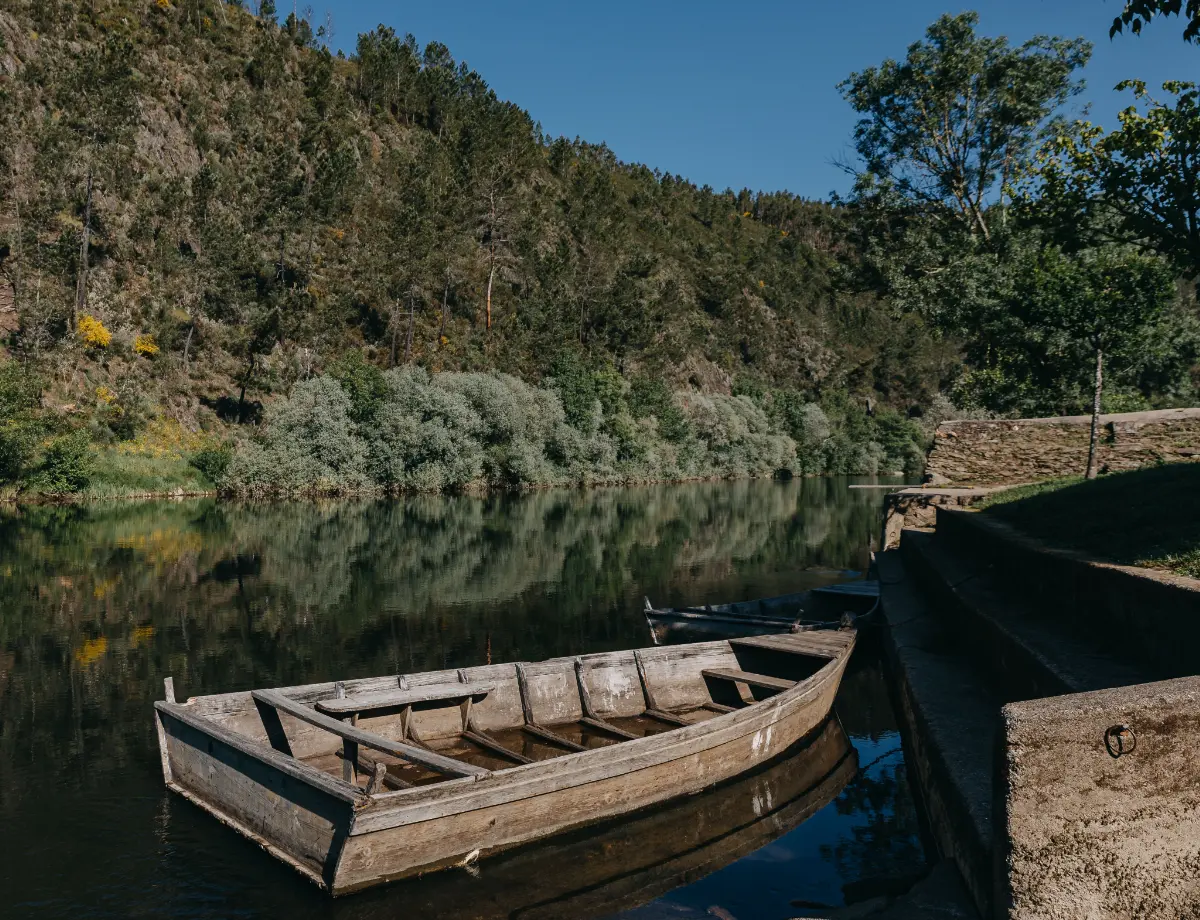
The Zêzere River splits Janeiro de Cima from Janeiro de Baixo on the opposite bank. The traditional crossing is still operating: shout “Ó da barca!” toward the water and the ferryman brings a flat-bottomed traditional boat. This is not theater for tourists — it was the functional transport link between the two communities for centuries, and local families still use it.
The architecture here differs from other schist villages because builders mixed white river quartz pebbles with dark schist, creating speckled facades that catch afternoon light differently than the solid-dark walls of Talasnal or Gondramaz.
Casa das Tecedeiras (Weavers’ House) keeps traditional linen weaving alive through daily demonstrations. The looms are the same design that operated here for generations. Watch for fifteen minutes and you understand why this craft nearly disappeared.
- Location: Zêzere River valley, 16 miles (26 km) from Pedrógão Pequeno
- Cost: boat crossing approximately $5, weaving demonstrations free
- Best for: families, cultural heritage travelers, river swimming
- Time needed: half day; add an hour for the river beach at Janeiro de Baixo
6. Figueira — bread, community ovens and medieval wolf gates
The community oven is still in active use. Families rotate access through a wooden tally stick system that dates back centuries. Bread-making workshops let you join the process: shape the dough, manage the fire, wait the 45 minutes it takes for a wood-fired loaf to develop a crust that a domestic oven cannot replicate.
The village layout still shows its defensive logic. Gates at street ends — structurally intact but no longer locked — once closed at night to protect livestock from mountain wolves. Walking the streets in order reveals the strategy without a single sign explaining it.
Dinner at the village restaurant means eating vegetables from gardens visible through the window. The corn bread comes from the oven next door.
- Location: Tejo-Ocreza region, southern network
- Cost: bread workshops $20-30, meals $10-15
- Best for: families with children, hands-on cultural experiences
- Time needed: 3-4 hours, or a full day with a workshop and dinner
How do you get to the Schist Villages, and do you need a car?
You need a car — and car rental in Portugal requires booking an automatic transmission months in advance. There is no way around this. Coimbra is the gateway city, 2.25 hours (130 miles / 210 km) north of Lisbon by highway, and it is the end of the public transport line. The Metrobus connects Coimbra to Lousã town, but the villages sit 7.5 to 56 miles further up roads with hairpin turns, no guardrails, and grades exceeding 10%. No bus serves them.
Pro Tip: Book an automatic transmission rental car months in advance. Portuguese rental fleets are heavily manual, and stalling on a 10% uphill grade with traffic behind you is not recoverable if you are not practiced with hill starts. Expect to pay $20-30/day extra for automatic — it is worth every dollar.
On single-track mountain roads, the vehicle going uphill has right of way. Be ready to reverse to a passing point. These roads were built for donkeys, not SUVs. Locals move fast because they have driven these curves thousands of times. You have not.
GPS cuts out mid-instruction. Download offline maps before leaving Coimbra. The app needs to work without any signal at all, which it will need to do for the last 15-20 minutes of most drives.
When is the best time to visit the Schist Villages?
Spring (March-May) and autumn (September-November) are the most practical seasons — the same windows that hold true for the best time to visit Portugal across the interior generally. Temperatures run 60-75°F (15-24°C), trails are in good condition, and midday hiking is comfortable. Most short-route trails are walkable from 8 a.m. to 6 p.m. without heat concerns.
Summer (July-August) turns the interior into a furnace — midday temperatures regularly hit 95-104°F (35-40°C), and hiking during these hours is genuinely dangerous. This becomes river beach season, when families crowd the cold-water swimming holes in the Zêzere valley. Hiking is workable before 9 a.m. and after 6 p.m.
Winter brings cold, damp conditions and frequent fog. Villages smell of woodsmoke, fireplaces run all day, and you will have the trails entirely to yourself. Pack serious rain gear.
Pro Tip: Visit in November during the Magusto festivals — roasting chestnuts and drinking new wine alongside locals is one of the few tourist experiences here that feels completely unperformed. Families open doors that stay shut the rest of the year.
Where should you stay in the Schist Villages?
The network operates Bookinxisto, a fair-trade booking platform that sends your entire payment directly to the local partner — no commission, no intermediary. You rent whole village houses rather than hotel rooms: full kitchens, fireplaces, private terraces, sleeping arrangements for 2-8 people. Many now have fiber-optic internet despite stone walls and medieval architecture.
Prices run $80-180 per night depending on size and village. Groups of four or more will find this significantly cheaper per person than hotel rooms in Coimbra or the broader range of accommodation across Portugal.
Properties worth booking:
- Casa do Talasnal (Talasnal): village center location, original stone walls, fireplace
- Mountain Whisper (Gondramaz): panoramic views, boutique finish
- Cerdeira Home for Creativity: resort-style service in the arts village
Book months ahead for weekends and Portuguese national holidays. Families claim the same houses year after year, and the network’s inventory is genuinely limited.
What is chanfana, and where should you eat it in the Schist Villages?
Chanfana is slow-cooked goat stew born from necessity. Old female goats past milk production were too tough for standard roasting, so cooks marinated the meat for hours in red wine, garlic, bay leaves, and piri-piri, then slow-cooked it in black clay pots inside wood-fired ovens. The wine tenderizes the meat until it separates at the touch of a spoon. The clay caçoila gives a mineral earthiness that metal cookware does not replicate. This dish originated in these villages and spread outward through Portuguese food culture — eating it here means eating it at the source.
Where to eat it:
- Ti Lena (Talasnal): the benchmark; served family-style in clay pots, book ahead or go hungry
- O Burgo (Lousã town): more polished presentation, easier to get a same-day table
- Fiado (Janeiro de Cima): river valley interpretation, somewhat lighter on the wine
Other dishes to order:
- Tigelada: baked custard in clay bowls with a blistered top from the heat shock when it hits a hot oven
- Maranho: goat stomach stuffed with rice and mint — not for the cautious, worth ordering once
- Medronho: firewater distilled from strawberry-tree fruit; it runs at roughly 50% alcohol, so sip carefully
The Gastronomic Charter of the Schist Villages certifies restaurants using traditional recipes and local sourcing. Look for the charter seal before ordering at an unfamiliar spot.
What activities are worth doing beyond the village walks?
Hiking the Caminhos do Xisto
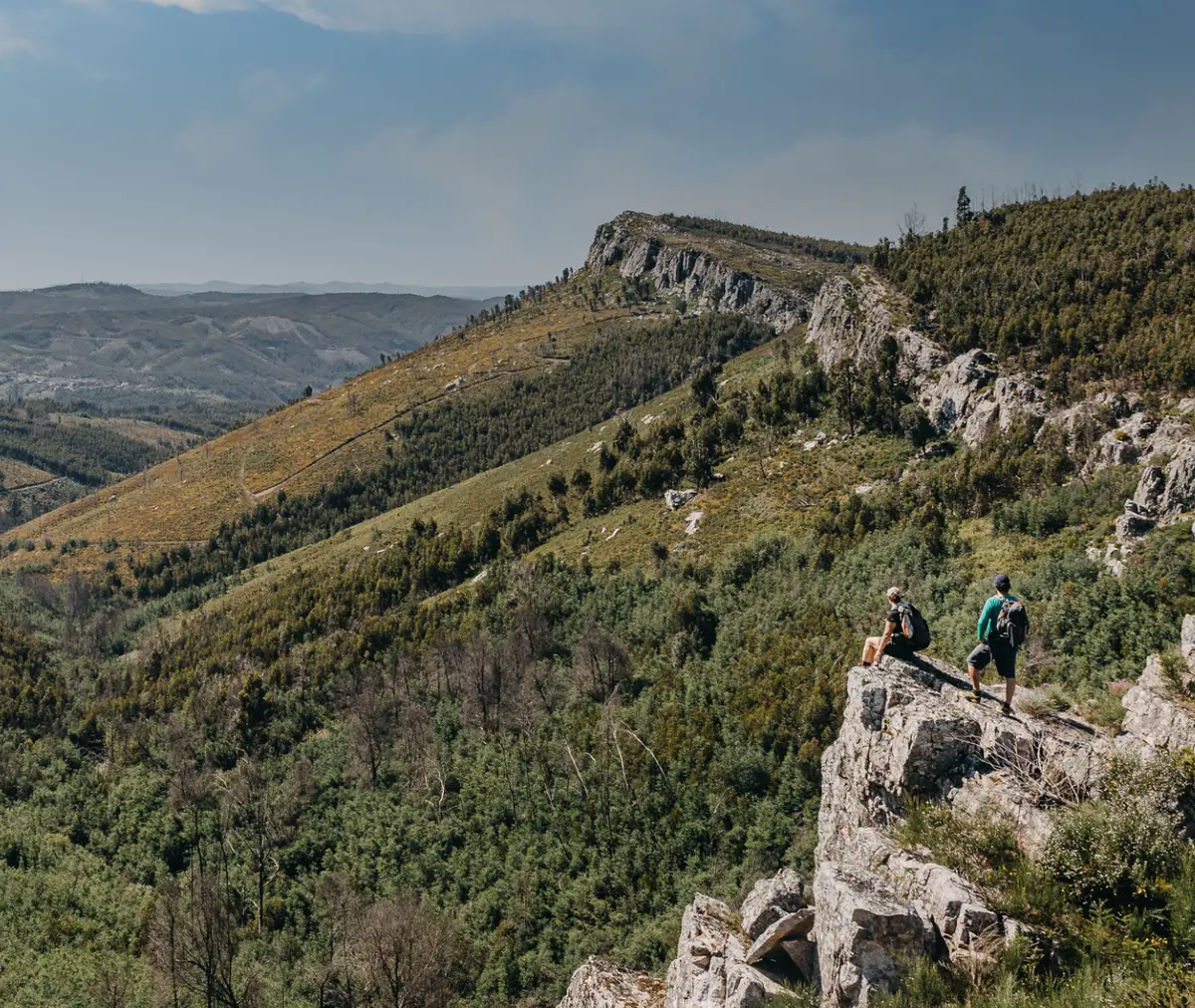
The Caminhos do Xisto rank among the most historically layered hiking in Portugal — marked small-route trails (PR — Pequena Rota) that connect villages through specific narratives rather than generic forest loops.
The Miller’s Route follows ancient water channels (levadas) to ruined watermills, tracing the grain-processing infrastructure that sustained these communities before roads existed. The Wolf’s Path in Figueira follows the defensive architecture built against mountain predators. Each route tells you something about how people survived here.
For long-distance walkers, the GR33 (Grande Rota do Zêzere) runs 230 miles (370 km) from Serra da Estrela to the Tagus River at Constância, threading through schist villages along the Zêzere. The route is multimodal: it can be walked, cycled by mountain bike, or paddled by canoe in river-appropriate sections. Thirteen intermodal stations along the route allow switching between disciplines.
Most villages have at least one easy loop under 4 miles (6 km) suitable for families and casual walkers.
Mountain biking
The Lousã Bike Park draws professional teams for winter training. The downhill tracks from Gondramaz are steep and technical enough that casual riders will be in over their heads — this is not a skills park.
The Centro de BTT in Ferraria de São João is the better starting point for most visitors. Cross-country loops range from family-friendly green routes through olive groves to black-grade technical singletracks. Bike washing stations and tool rentals are on-site.
Dark sky stargazing
Depopulation created an unexpected benefit: essentially zero light pollution across the entire network. The Aldeias do Xisto hold Starlight Tourist Destination certification for night sky quality.
The Geoscope at Fajão has lounger chairs and interpretation panels. Designated viewing spots in Pampilhosa da Serra offer similar infrastructure. On any clear moonless night between June and August, the Milky Way is visible without any equipment, detailed enough to see the dust lanes separating the spiral arms.
Download a star chart app before you enter the mountains. Cell service is too unreliable to do this once you arrive.
Which of the four regions should you visit first?
The four zones differ enough that the right starting point depends entirely on what you want. Serra da Lousã (northwest) is the most accessible, has the heaviest tourist infrastructure, the best restaurant options, and the most manageable road conditions — the right entry point for first-time visitors. Serra do Açor (northeast) is wilder, more isolated, and the road conditions are harder. Fajão and Benfeita dominate here. The Zêzere River valley (central) is defined by water — swimming holes, the ferryman crossing at Janeiro de Cima, and the GR33 long-distance route. Tejo-Ocreza (south) is warmer, drier, and more agricultural, with olive groves replacing mountain peaks.
You cannot see all 27 villages in a long weekend — treat each zone as a self-contained chapter when planning your broader driving route. Pick one or two zones:
- Artistic, accessible, easiest roads: Serra da Lousã
- Extreme isolation, Dark Sky viewing: Serra do Açor
- River activities, long-distance walking or cycling: Zêzere valley
- Cultural immersion, warmer climate: Tejo-Ocreza
How should you plan 3 days or 7 days here?
The Lousã weekend (3 days)
Day 1: Drive to Lousã town, visit the castle ruins, then continue up to Talasnal. Lunch at Ti Lena — book this before you leave home, not from the parking area. Walk the village maze. Overnight in Talasnal or Lousã.
Day 2: Drive to Candal (buy honey at the shop near the entrance). Continue to Cerdeira for a pottery or woodcarving workshop. Hike the Levada trail. Dinner in Cerdeira.
Day 3: Visit Gondramaz. Walk the village streets or climb to the panoramic swing. Return via Lousã for farewell chanfana at O Burgo, where you can walk in without a reservation.
The grand Schist tour (7 days)
Days 1-2: Serra da Lousã — Talasnal, Cerdeira, Gondramaz.
Day 3: Drive east to the Zêzere. Stop at the Cabril Dam viewpoint. Visit Pedrógão Pequeno’s bridge. Overnight in Álvaro.
Day 4: The Janeiro villages. Take the ferry crossing. Visit Casa das Tecedeiras. Swim at the Janeiro de Baixo river beach.
Day 5: Serra do Açor. Drive to Barroca to see Paleolithic rock art. Continue to Fajão for Dark Sky viewing. Stay overnight in the area.
Day 6: Benfeita and the Fraga da Pena waterfall trail. Visit Aldeia das Dez for its panoramic platform.
Day 7: Tejo-Ocreza. Bread-making workshop in Figueira. Visit the Sarzedas pillory. Depart through Castelo Branco — or extend the trip by folding this into a 7-day Portugal itinerary that continues north toward Coimbra and Porto.
What are the road conditions actually like in the Schist Villages?
These mountain roads require more skill than a standard rental car experience assumes. Expect single-track sections with sheer drops and no guardrails. Locals drive fast on these roads because they have memorized every curve — you have not, and that gap is dangerous.
The road to Talasnal involves 25 minutes of constant switchbacks with grades exceeding 10%. In a manual transmission car on a cold morning, stalling on these grades is easy. Rolling backward into oncoming traffic is the consequence.
GPS cuts out mid-instruction at the worst moments. Cell coverage disappears before the summit on most of these approaches. Download offline maps — specifically the segment from Lousã or Arganil to whichever village you are targeting — before you leave town.
Fuel strategy: fill up in Lousã, Arganil, or Pedrógão Pequeno before entering the mountains — standard practice for driving in Portugal in any mountain zone without roadside services. Villages have no gas stations. Running low in Fajão means a 37-mile (60 km) drive to the nearest pump.
What is the wildfire risk, and what do visitors need to know?
Wildfire is an existential threat to these villages, not a background statistic. Catastrophic fires swept through this region in living memory and permanently changed how communities think about forest management. You will see cleared protection zones around settlements where highly flammable eucalyptus has been replaced with fire-resistant native oak and chestnut — this is not landscaping, it is survival planning.
Visitor rules are not negotiable:
- No discarded cigarettes, ever — particularly between June and October
- No portable grills or open fires during fire season
- Respect any posted fire bans without exception
Locals will not tolerate carelessness on this. This is not a rule-following exercise — this is the difference between a village surviving the summer and burning.
The bottom line on Portugal’s Schist Villages
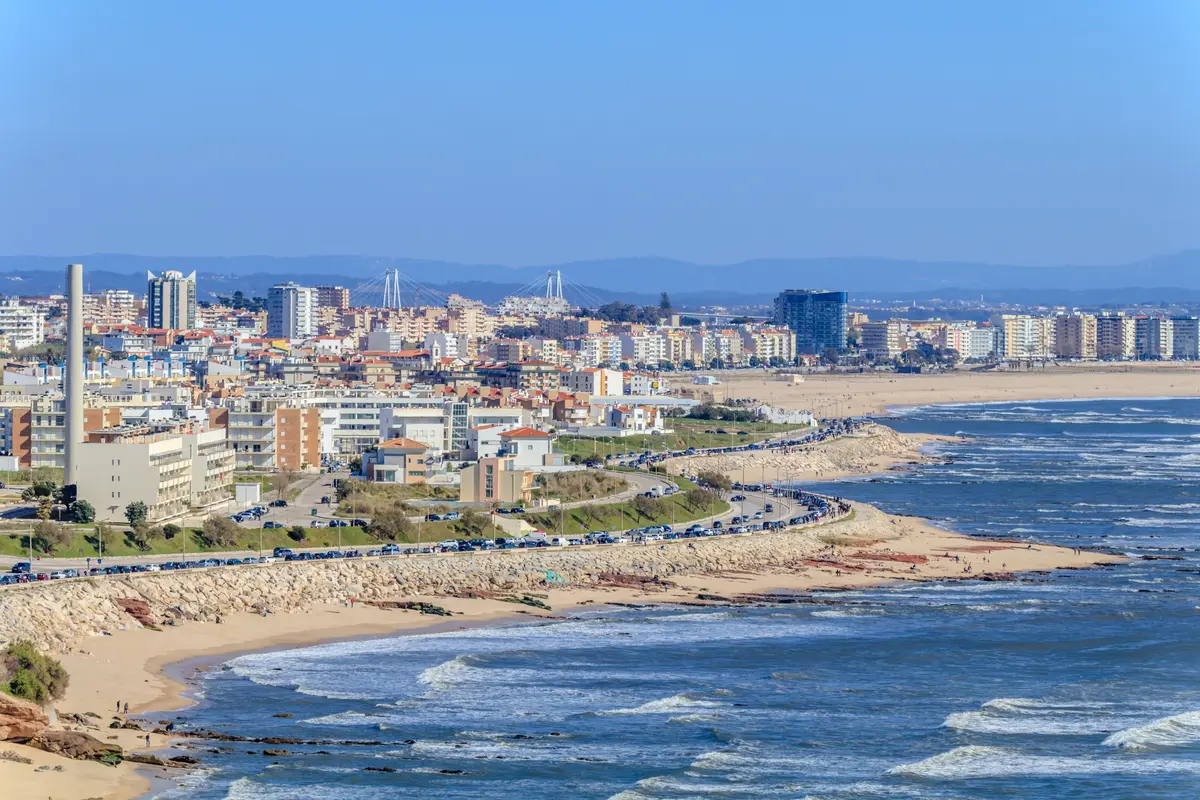
Skip this destination if you need consistent cell service, smooth roads, urban nightlife, chain hotels, or English at every stop. Village restaurants close without warning. Your stone house will have floors that stay cold year-round. The nearest pharmacy can be 30 minutes away.
But if you want Portugal beyond the beach resorts — where you eat goat stew slow-cooked in red wine using a recipe unchanged for 300 years, where the night sky looks the way it did before electricity, where you sleep in a house built from the mountain itself — this network is the genuine article.
TL;DR: The Schist Villages work best as a 3-7 day road trip from Coimbra, with a rental car, at least one overnight in Talasnal, chanfana at Ti Lena booked in advance, and realistic expectations about roads and internet access.
Which region calls to you first — the arts colony at Cerdeira, the river crossing at Janeiro de Cima, the stargazing platform at Fajão, or the chanfana shrine at Talasnal?