The Ceiba ferry is the cheapest way to reach Puerto Rico’s outer islands, and one of the most logistically unforgiving transit experiences you will face on the island. This guide cuts through every ticket trap, vessel choice, cargo fee, and canceled-crossing scenario so you board with a plan instead of a prayer.
Why does the app say “sold out”?
A “sold out” notification on the Puerto Rico Ferry app does not mean the vessel is full. The online allocation is algorithmically capped at roughly 20% of total vessel capacity. The remaining 80% of seats are held for in-person sales at the Terminal de Lanchas de Ceiba window. If the app shows nothing, drive to the terminal and buy at the counter.
The operator is Hornblower, running the route under a public-private partnership with Puerto Rico’s Integrated Transportation Authority (ATI). The booking platform is the Puerto Rico Ferry app (still branded City Experiences in some app stores).
Pro Tip: During peak seasons, the physical ticket lines begin forming at dawn well before the windows open. If you do not have a digital reservation, treat ticket acquisition as its own mission and plan your morning around it.
Essential booking facts
- Operator: Hornblower / Puerto Rico Ferry
- Online allocation: ~20% of vessel capacity
- Walk-up allocation: ~80%, sold only at Terminal de Lanchas de Ceiba
- Terminal address: Marina Dr., Roosevelt Roads, Ceiba, PR 00735
How do you navigate Roosevelt Roads to the terminal?
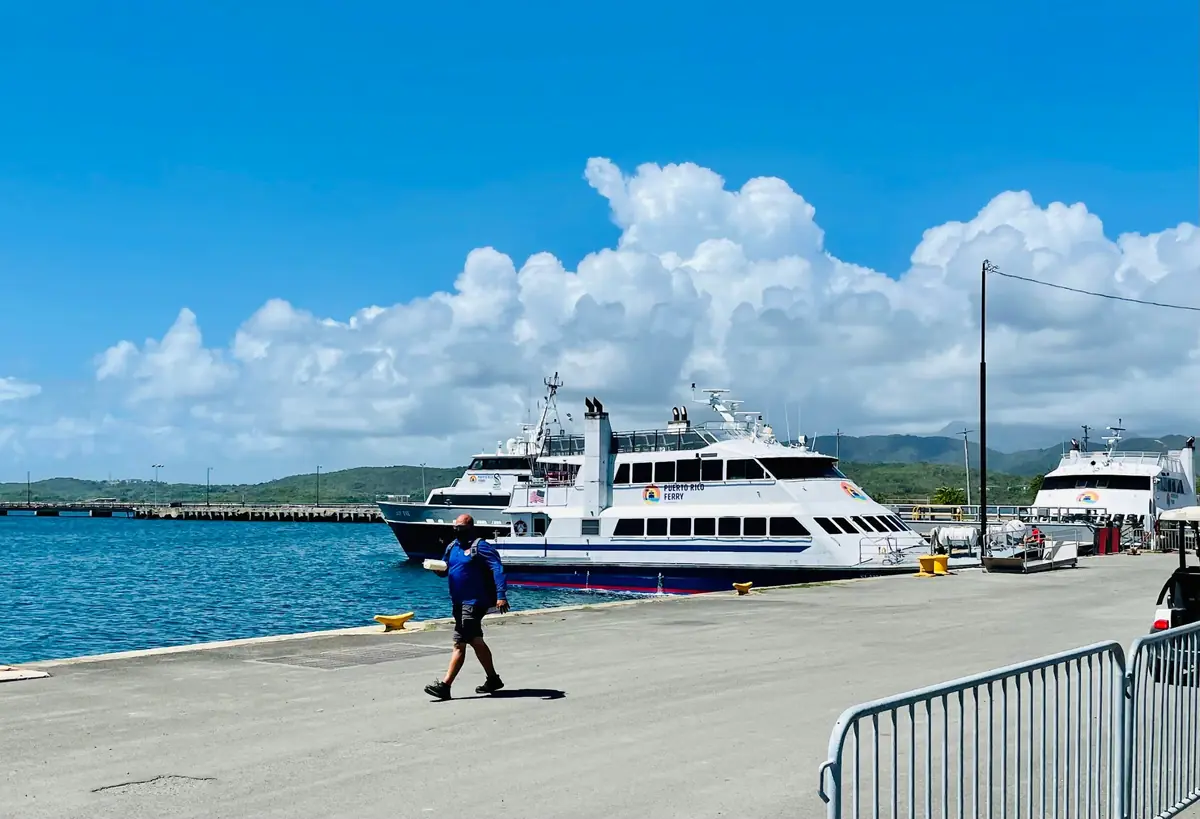
Standard GPS frequently fails inside the former Roosevelt Roads Naval Base, routing drivers to locked military gates or dead ends. Landmark navigation beats digital pins here. From San Juan, head east on Route 66, transition to Route 3, then exit at KM 1.4 onto Route 53. Drive time from the SJU airport runs 75–90 minutes.
You will navigate three “V” intersections. Turn left onto Forrestal Drive, bear left at the curve, then take a right followed by a left onto Marina Drive. Watch for a large solar farm on your right, followed by the blue facade of the DTOP ATM building.
That blue building signals the official parking zone. Do not park on the street. Municipal tickets are issued routinely, and a parking violation is the last thing you want before a Ceiba ferry crossing.
Pro Tip: The official parking lot runs about $15 per day and sits directly adjacent to the terminal. Pay it. Chasing a municipal ticket in the heat can cost you your boarding window.
Parking and boarding rules
- Parking: Official lot, around $15 per day
- Mandatory arrival: 1 hour before departure
- Boarding cutoff: Closes 10 minutes before departure, no exceptions
- ID: Photo ID required at boarding, name must match ticket

Which Ceiba ferry should you take — catamaran or cargo?
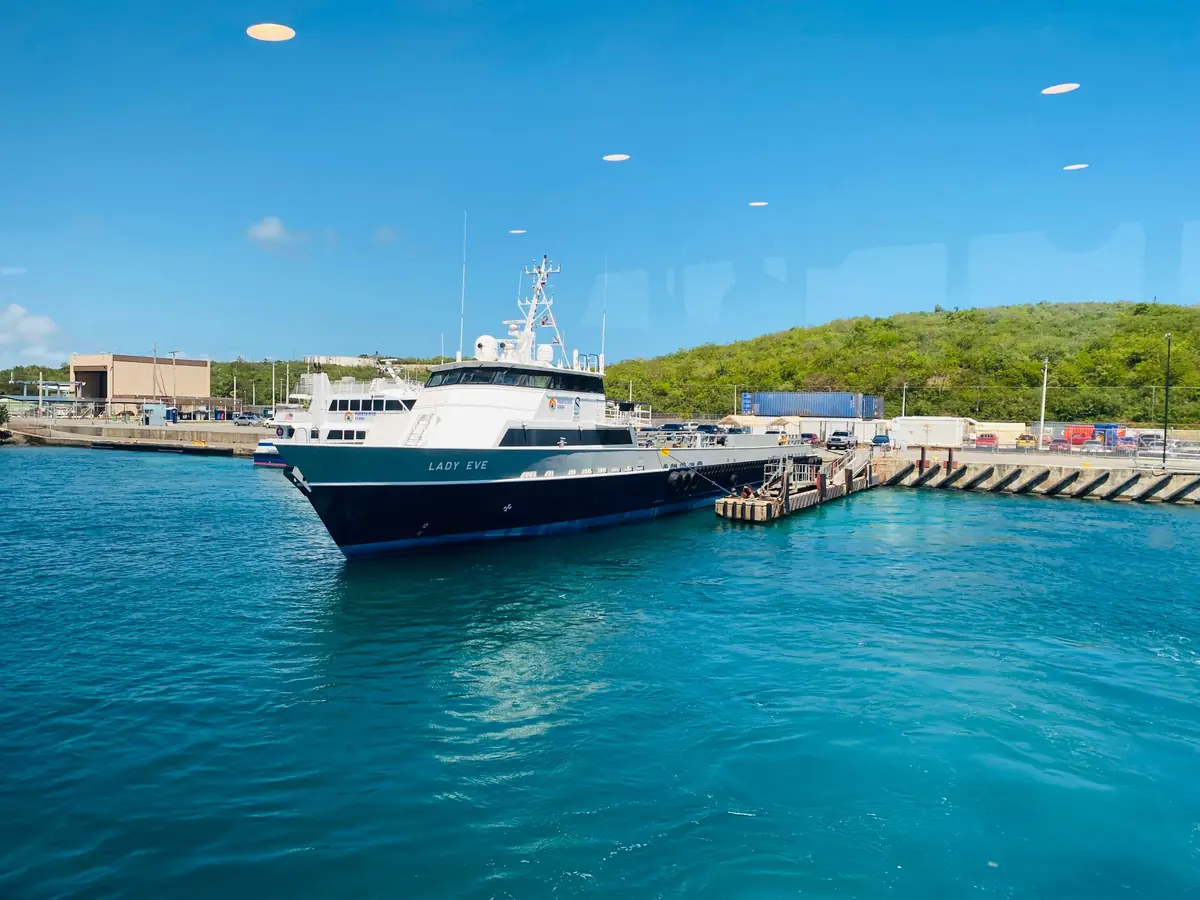
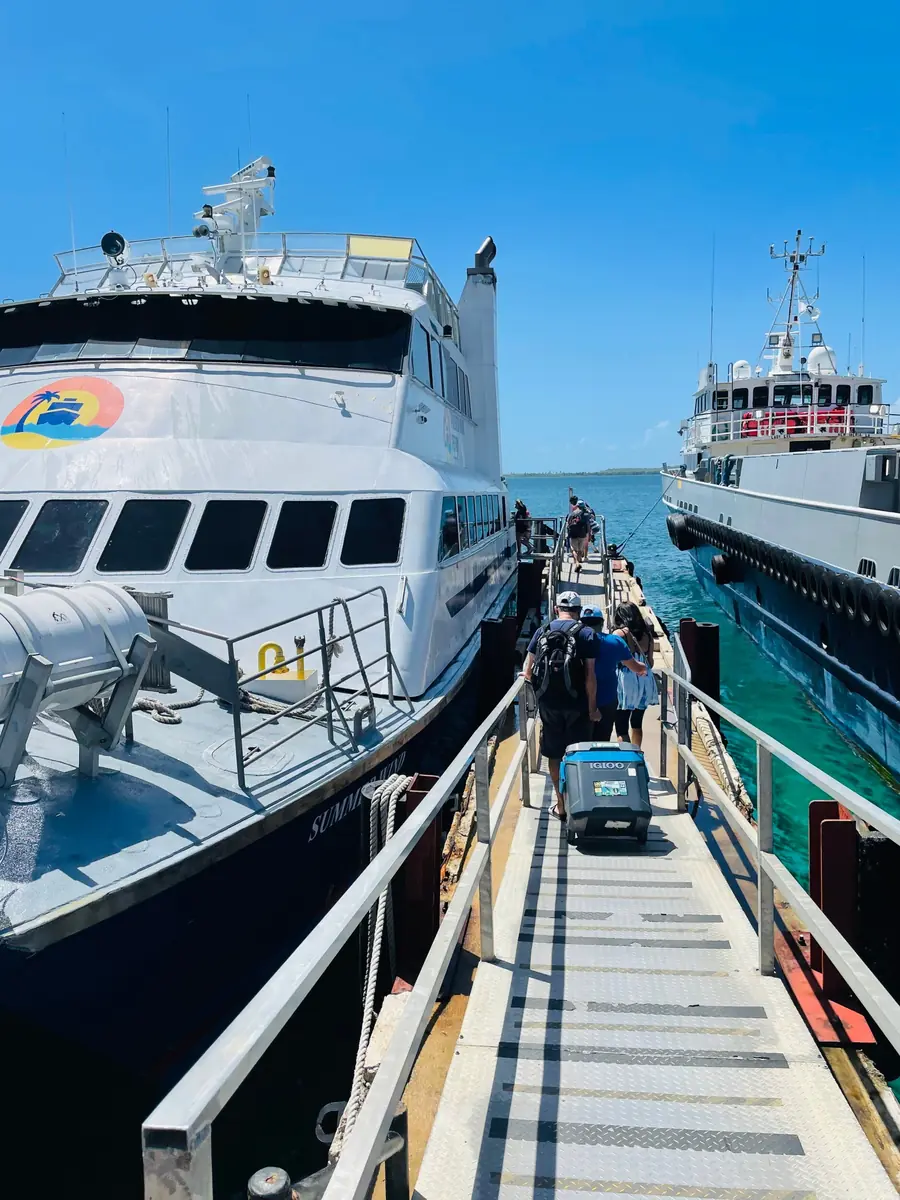
Choosing the right vessel is the single most consequential decision on this route. The faster boat is not always the better boat. The passenger catamaran reaches Culebra in about 45–55 minutes. The heavy cargo-passenger vessel takes roughly 90 minutes but rides dramatically more stably. If you are even mildly prone to motion sickness, pick the cargo boat.
The catamaran’s dual hulls lift sharply over Atlantic swells, offer a moment of near-weightlessness at the crest, then deliver an audible crash into the trough. On winter swells you can see it on every first-time passenger’s face within the first 10 minutes.
The cargo monohull plows through the same swells at about 15 mph (24 km/h) with a deep displacement hull. Slower, heavier, calmer.
| Vessel class | Transit time | Hull type | Motion sickness risk |
|---|---|---|---|
| Passenger catamaran | 45–55 min | Catamaran (surface-riding) | Very high |
| Cargo/passenger | ~90 min | Heavy monohull (displacement) | Low to moderate |
Pro Tip: If you are stuck on the catamaran, claim seating at the absolute aft (rear). The lifting arc is minimized there. Never sit at the bow or midship.
How does the resident priority boarding system work?
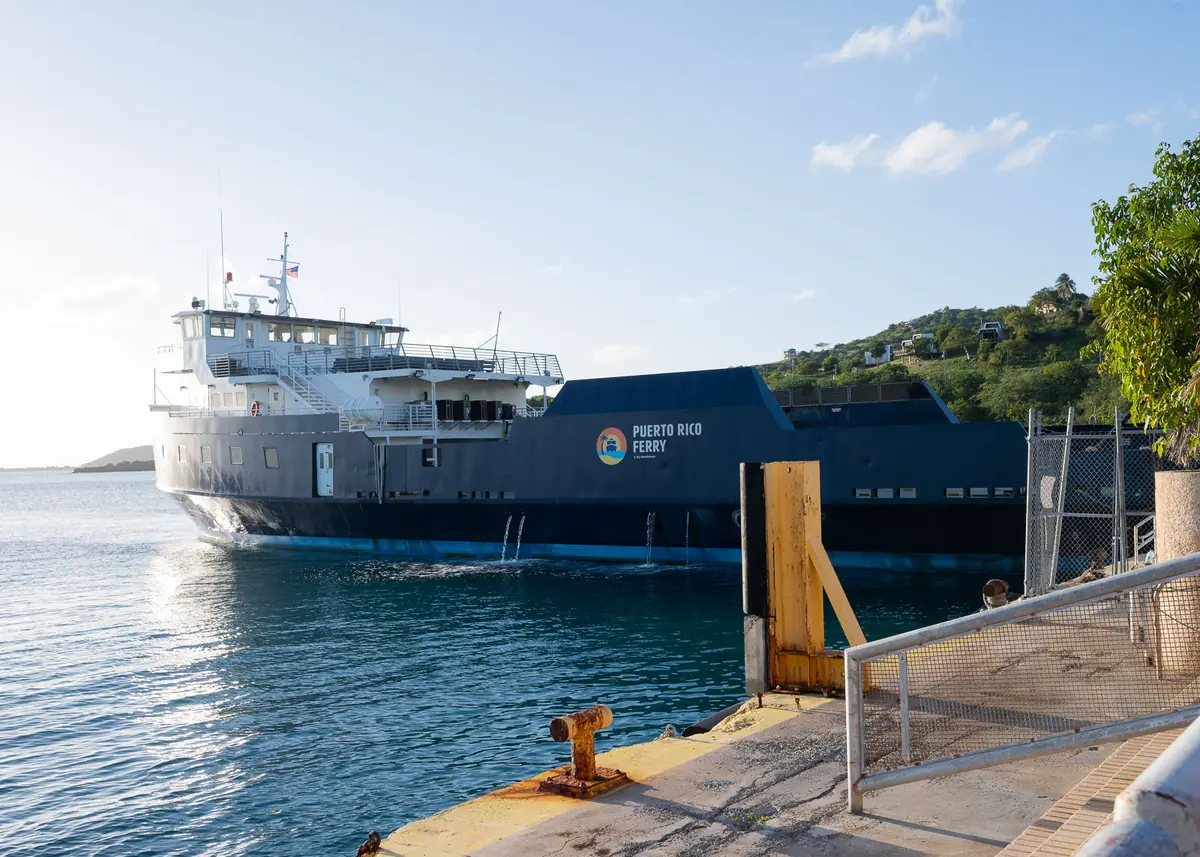
A confirmed digital ticket does not guarantee you board the next ferry. These vessels are the primary lifeline for island residents, not a tourist shuttle, and the hierarchy reflects that. Residents of Culebra and Vieques have dedicated priority queues and board before general tourist passengers. If a cargo ferry has to move fuel trucks, construction materials, or medical supplies, passenger capacity is cut on the spot.
Tourists and their vehicles can be bumped entirely regardless of reservation status. This is policy, not malfunction. Never schedule same-day onward travel on the day you cross.
What do the tickets actually cost?
As of April 1, 2026, the full non-resident adult one-way fare is $11.25 to both Culebra and Vieques, following Regulation 9682 passed by Puerto Rico’s ATI. Culebra adds a $2.00 Environmental Preservation Fee per person per trip on top of that. The old $2.00 / $2.25 base fares now apply only to registered residents of the two islands.
- Non-resident adult one-way (Culebra): $11.25 + $2.00 environmental fee = $13.25
- Non-resident adult one-way (Vieques): $11.25
- Children under 11: $6.00
- Seniors 60–74: $1.00
- Seniors 75+: Free
- Registered residents: $2.00 Vieques / $2.25 Culebra one-way
Price discrepancies across booking sites almost always come down to whether the environmental fee and updated non-resident fare are already baked in.
What does the cargo fee tariff look like?
One small carry-on is free. Everything else pays a supplemental tariff that is enforced at the boarding line. Undeclared items get you pulled from the queue, so buy all cargo vouchers with your ticket.
| Item | Round-trip fee | Vessel restriction |
|---|---|---|
| Beach umbrella | $2.00 | None |
| Beach chair | $2.00 | None |
| Small beach cooler | $2.00 | None |
| Large beach cooler | $4.00 | None |
| Bodyboard | $4.00 | None |
| Small surfboard | $6.00 | None |
| Bicycle | $4.00 | Cargo vessels only |
| Longboard surfboard | $12.00 | Cargo vessels only |
Pro Tip: Longboards and bicycles are prohibited on passenger catamarans. If you are traveling with either, the cargo vessel is your only option — book accordingly.
Can you bring a pet on the Ceiba ferry?
Yes, with strict rules. Certified service animals travel free with a vest and supporting documentation. All other pets must stay in a rigid, approved travel crate for the entire boarding and crossing. Round-trip pet tariffs are $3.00 for a caged small animal and $6.00 for a dog in a cage. Arriving with a pet in a soft carrier, on a leash, or in any non-rigid enclosure is grounds for immediate boarding denial.
What do you do when the ferry is canceled?
When Atlantic swells exceed 6 feet (1.8 m), passenger ferries face severe delays or outright cancellation, and the schedule collapses more often than official channels suggest. Two backups work. Regional aviation from Ceiba International Airport (RVR) — minutes from the terminal on the same former base — is the fastest fallback. Private water taxis cover the rest.
Air Flamenco and Vieques Air Link run scheduled and charter flights roughly 6:00 AM to 6:00 PM. Private water taxis like Island Breeze PR operate as advance-booking premium services, not dockside walk-ups.
| Contingency | Operators | Estimated cost | Transit time |
|---|---|---|---|
| Regional flight | Air Flamenco, Vieques Air Link | ~$90–$100 round-trip | 10–15 min |
| Private water taxi | Island Breeze PR and others | $50–$190+ per person | 45–60 min |
Pro Tip: If you get bumped, drive 5 minutes to Ceiba International Airport (RVR) before making any other calls. A $90 flight can save a non-refundable hotel booking inside 20 minutes.

Why can’t your rental car come with you?
Nearly every major rental agency in Puerto Rico contractually prohibits taking a mainland rental to Culebra or Vieques, and it is logistically near-impossible even when allowed. Passenger catamarans have no vehicle deck. Cargo vessels do, but that space is prioritized for commercial supply trucks and residents’ vehicles. Even with a cargo reservation, your car gets bumped if a supply truck shows up.
The correct approach: park at the $15/day lot in Ceiba and book island-side transport — jeeps, golf carts, or scooters — in advance from Culebra or Vieques operators. Local rental inventory is scarce. Book ground transportation before you book the ferry.
Is the return crossing different?
Yes, and most guides skip it entirely. The outbound run to Culebra pushes directly into prevailing easterly trade winds and open Atlantic swells — the rough direction. The westbound return runs with a following sea and is demonstrably smoother in typical conditions. More tactically important: buy round-trip tickets in a single transaction. Returning residents fill westbound capacity quickly, and travelers who land on the island without a return booked sometimes cannot leave on their chosen day.
Return booking rules
- Outbound: Into the trade winds, expect chop
- Return (westbound): Following sea, noticeably calmer
- Booking rule: Always buy round-trip in one transaction
How do you beat motion sickness on the Ceiba ferry?
Timing matters as much as vessel choice. Taking medication once you are already in open swells is almost useless — the absorption window has closed. Take meclizine or dimenhydrinate at least 1 hour before boarding, pick the cargo vessel if you have any susceptibility, and if you are stuck on the catamaran, sit at the aft to minimize the bow’s lifting arc. Vessel choice, seat position, and pre-boarding medication are the three variables in your control.
What does “arrive early” actually mean?
The official mandate is 1 hour before departure, but during peak travel that baseline is inadequate for walk-up passengers. On low-season weekdays, 1 hour is usually enough for the in-person window. On weekends, holidays, and summer peaks, the walk-up line for the unreserved 80% of inventory starts forming at dawn. Show up when the windows open an hour before the first morning sailing — that lets you buy tickets for a later crossing while holding your place in line.
Pro Tip: The terminal waiting room is aggressively air-conditioned. After the humid walk through the old base, the cold inside is a shock. Bring a light layer.
How do you get around once you land?
The journey does not end at the dock. In Culebra, a fleet of shared transit vans waits at the pier to shuttle passengers directly to Flamenco Beach. Seats fill fast and vans leave on their own schedule, so move quickly off the vessel. In Vieques, dockside taxis and pre-booked rentals carry most of the load.
Book your jeeps and golf carts before you leave the mainland. Same-day availability during peak season is close to zero. For the wider picture of getting around Puerto Rico — buses, públicos, rentals, and inter-island options — it helps to map the whole network before you commit to a single leg.

Before you book
The Ceiba ferry is cheap, functional, and genuinely worth the effort — but only if you treat the logistics as seriously as the destination. Know your vessel, declare your cargo, arrive before the line forms, and keep a flight number in your back pocket as a fallback.
TL;DR: Non-resident adults now pay $11.25 one-way ($13.25 to Culebra with the environmental fee), book round-trip in one transaction, pick the cargo boat if you get seasick, and have Ceiba airport as your plan B when swells exceed 6 feet. Culebra’s Flamenco Beach and Vieques’s bioluminescent bay are not going anywhere — the only question is whether your itinerary can absorb the system that delivers you there.
What part of the Ceiba ferry run tripped you up most — the ticketing, the vessel choice, or the cancellations? Drop your experience in the comments.