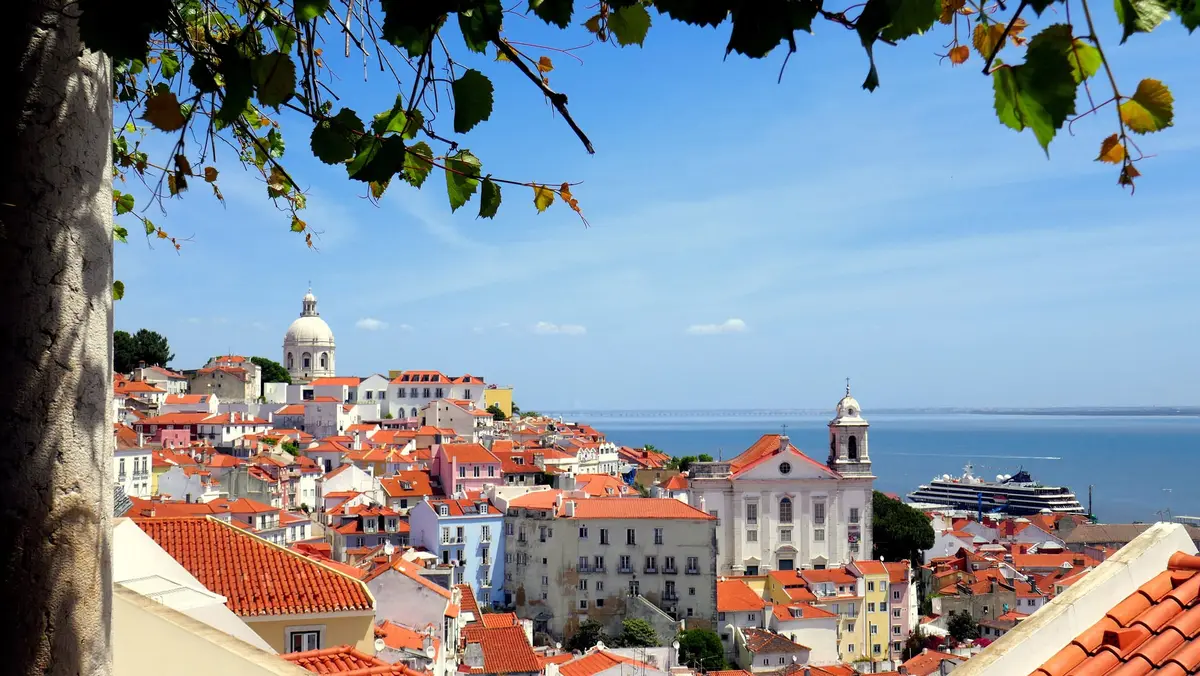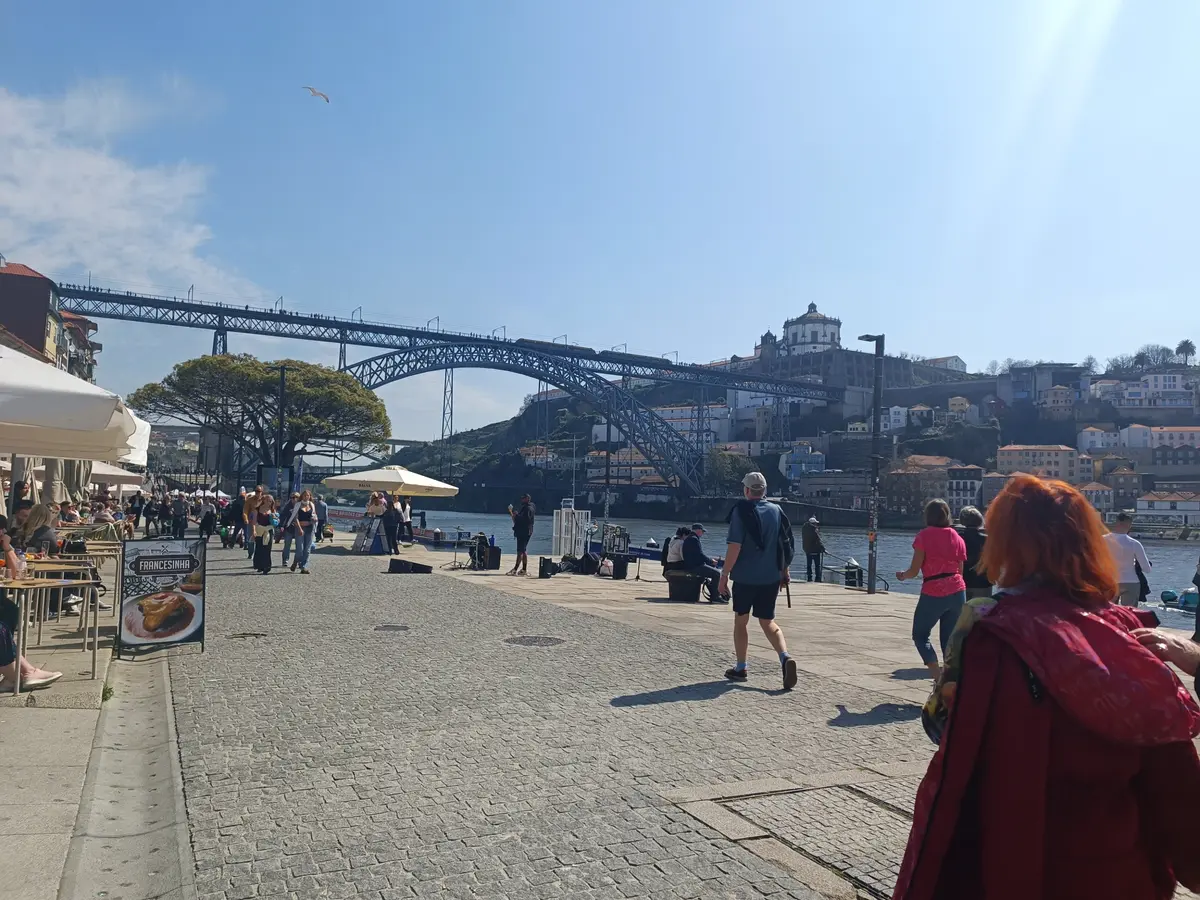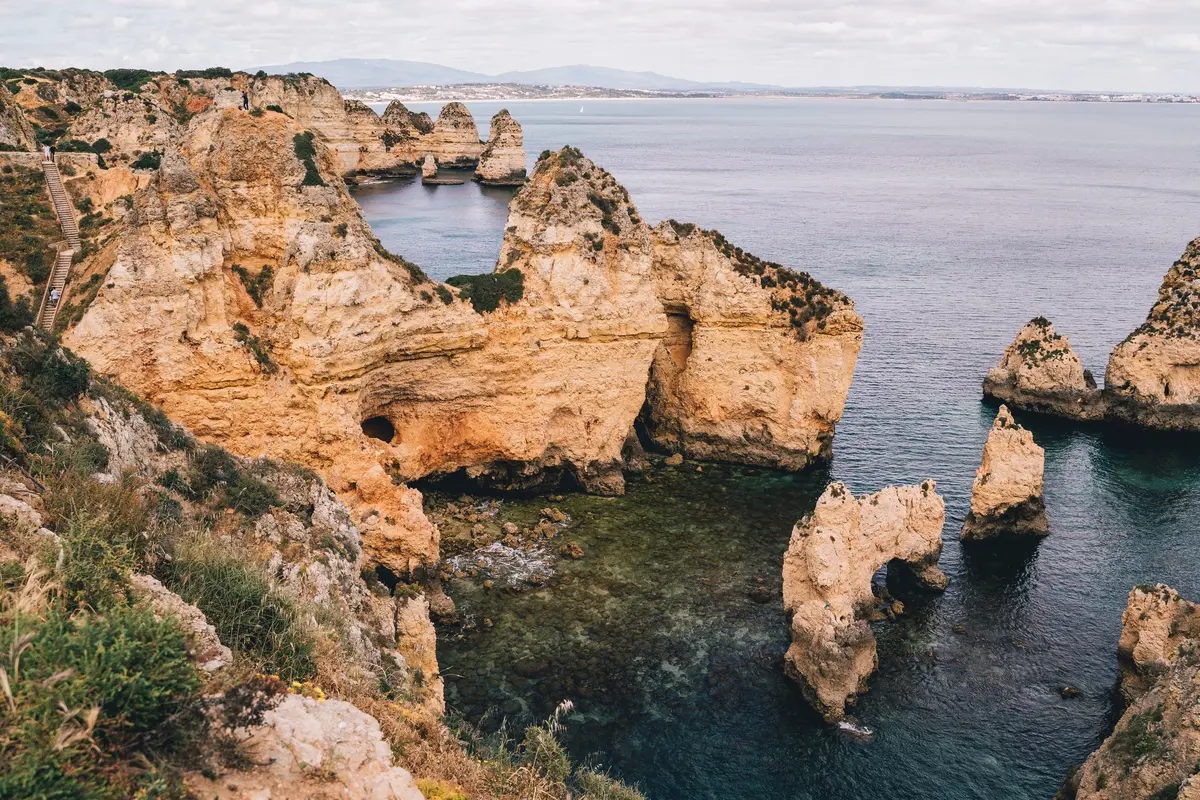
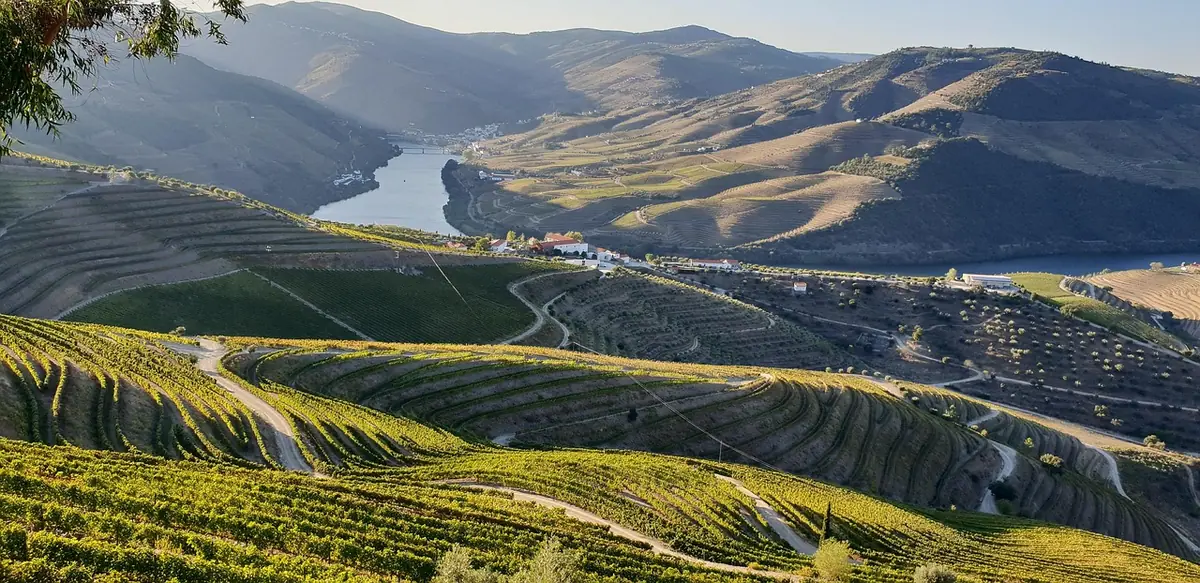
A Portugal road trip itinerary is the most efficient way to see a country this small — Porto’s port cellars, the Douro’s terraced vineyards, Lisbon’s tiled hills and the Algarve’s cliffs all sit a few hours from each other. Below: three routes, real drive times in miles, the toll math that changed, and a dollar cost breakdown.
What’s the Best Portugal Road Trip Route and Length?
Drive Portugal north to south: Porto, the Douro Valley, Coimbra, Óbidos and Nazaré, Lisbon and Sintra, Évora, then the Algarve from Lagos to Faro. Ten days is the sweet spot for first-timers; seven covers Lisbon–Porto or the Algarve, not both; fourteen lets you slow down. Rent a car and accept the Via Verde toll tag.
The whole country runs about 460 miles (740 km) tip to toe, so distances stay short. Lisbon to Porto is 195 miles (314 km), roughly 3 hours on the A1. The cleanest version flies into Porto (OPO) and out of Faro (FAO), so you never backtrack.
Pro Tip: Take the 25 de Abril bridge out of Lisbon, not the Vasco da Gama. The river-and-Christ-statue view is the better goodbye, and it costs nothing extra.
How Many Days Do You Need for a Portugal Road Trip?
Ten days is the sweet spot for a first Portugal road trip — enough for Lisbon, Porto, the Douro and the Algarve without rushing. Seven days forces a choice between the Lisbon–Porto corridor or the Algarve, not both. Two weeks adds the Alentejo villages and slow vineyard time. Under five days, base in one city and skip the car.
Give Lisbon and Porto two to three nights each — they reward slow walking, and you’ll lose half a day to logistics every time you change base. The math is simple: fewer bases, more nights per base, less time spent packing the trunk.
Travelers who bolt Porto onto a seven-day southern loop keep reporting the same result — a long drive north, one afternoon in the city, check-out the next morning. If you only have a week, save Porto for its own trip.
The 7-Day Route: Lisbon, Sintra, Coimbra and Porto
This seven-day Portugal itinerary sticks to the Lisbon–Porto corridor: two nights in Lisbon plus a Sintra day, then north through Óbidos and Nazaré to Coimbra, and two nights in Porto with a Douro Valley day. Skip the Algarve on this trip — the southern detour costs you a full day each way and leaves you eating miles instead of pastéis.
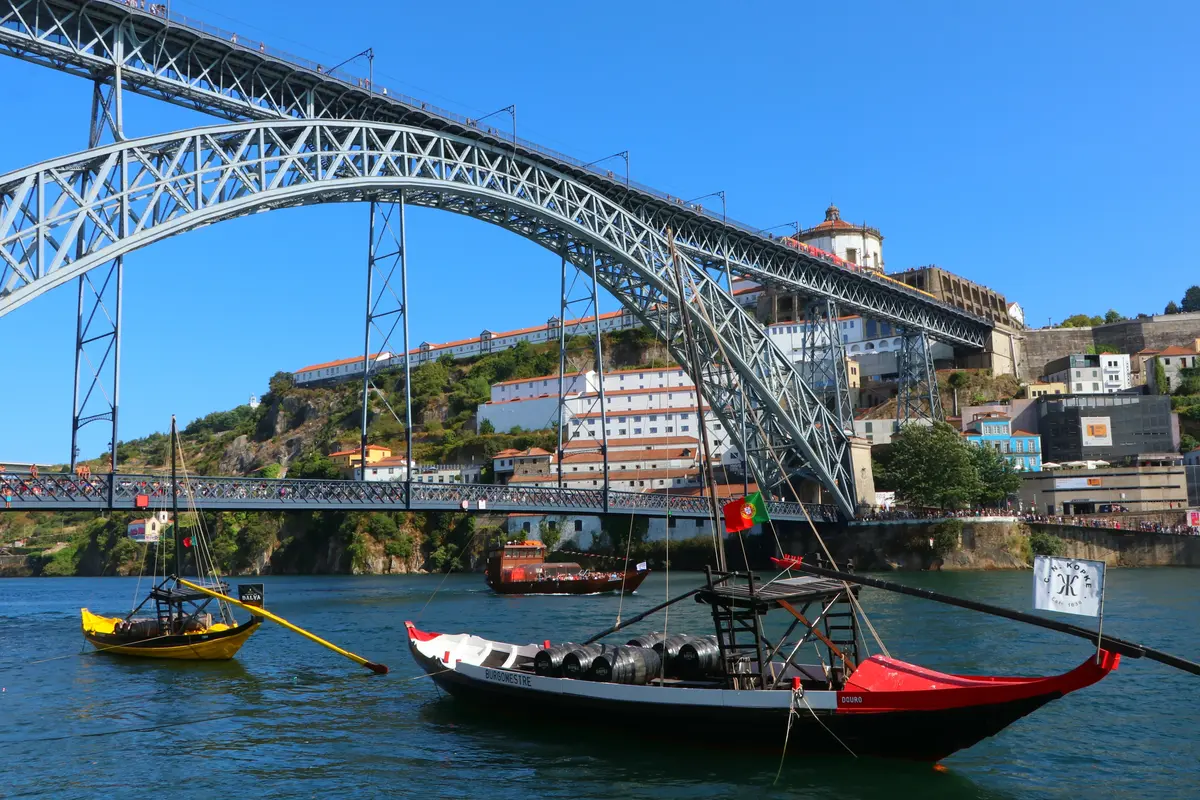
Here’s how the week breaks down:
- Days 1–2: Lisbon (no car) — Alfama, Belém, Jerónimos Monastery, a day trip to Sintra by train
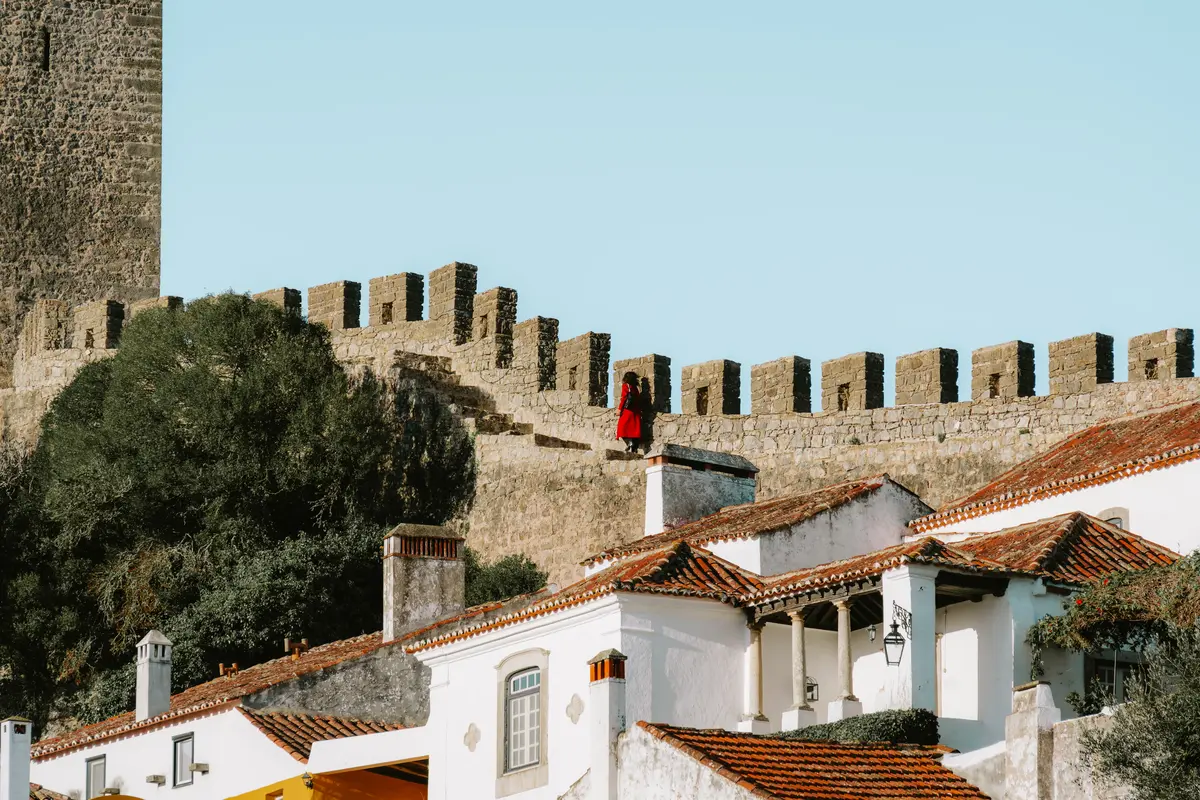
- Day 3: Pick up the car leaving Lisbon. Drive to Óbidos, 50 miles (80 km), about 1 hour. Walk the medieval wall, then continue to Nazaré, 25 miles (40 km), about 35 minutes
- Day 4: Nazaré to Coimbra, the old university town, then on toward Porto
- Days 5–6: Porto — Ribeira, the Ponte Luís I, a port cellar tasting in Vila Nova de Gaia
- Day 7: Douro Valley day trip from Porto, then return the car
Pro Tip: Stop on Óbidos’s wall for a ginjinha — sour-cherry liqueur served in a small chocolate cup. It’s touristy, costs about $1.50, and is worth it.
The 10-Day Portugal Road Trip Itinerary (The Sweet Spot)
This ten-day Portugal itinerary covers the whole country. Start in Porto and the Douro for three nights, drive south through Coimbra and Nazaré to Lisbon and Sintra for three nights, then cut inland to Évora before dropping down to the Algarve coast — Lagos, Benagil and Faro — for the final three nights. Pick the car up leaving Porto and drop it at Faro airport.
The day-by-day:
- Days 1–3: Porto (two nights) plus a Douro Valley night near Pinhão for the vineyards
- Day 4: Drive south to Coimbra, then Nazaré or Óbidos on the way down
- Days 5–7: Lisbon (two nights) with a full Sintra day for Pena Palace and Quinta da Regaleira
- Day 8: Lisbon to Évora, the walled UNESCO town in the Alentejo, with its Roman temple and Chapel of Bones
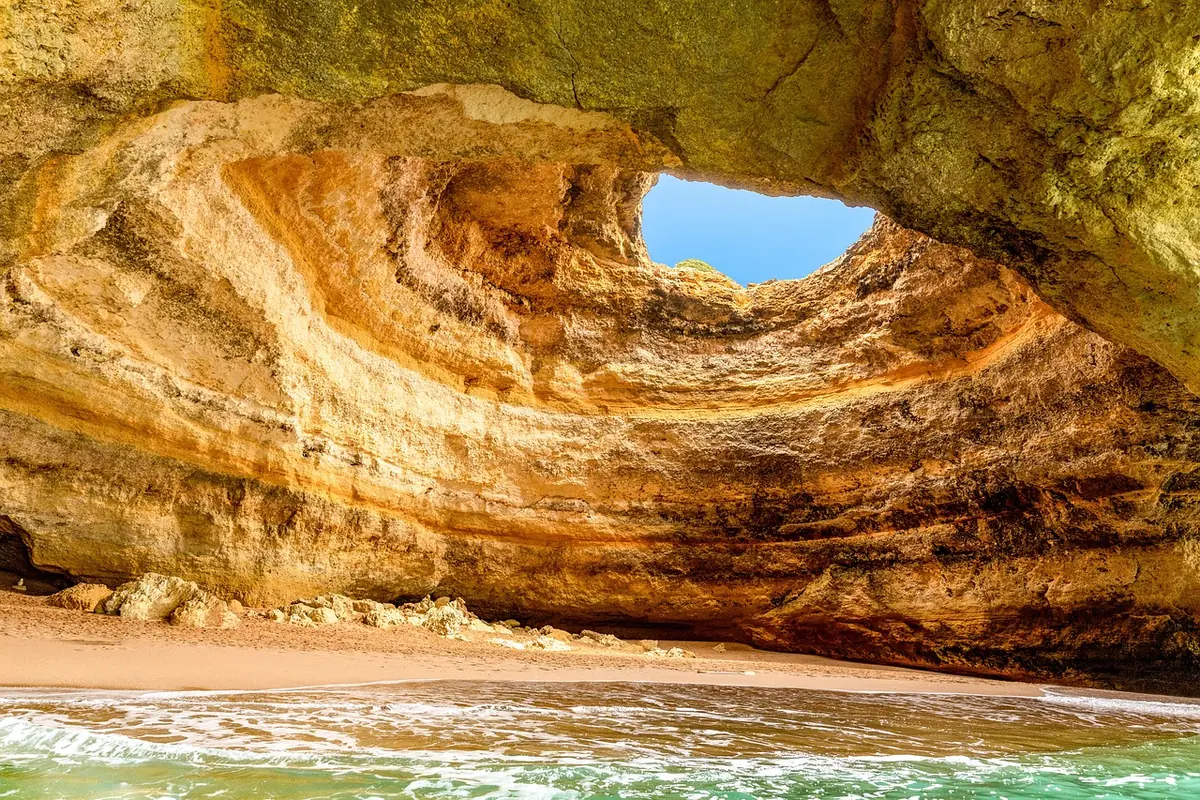
- Days 9–10: Évora down to the Algarve. Lisbon to the coast is 174 miles (280 km), about 2.5 hours on the A2. Base in Lagos for Ponta da Piedade and the Benagil sea cave, finish at Faro
Pro Tip: The Costa Vicentina back roads between Lisbon and the Algarve beat the A2 motorway. Wild, empty beaches like Zambujeira do Mar are worth the extra hour.

Two Weeks: The North, the Alentejo and Slow Douro Days
A two-week Portugal itinerary lets you add the north — Guimarães, Braga and Peneda-Gerês National Park — plus extra Douro vineyard nights and Alentejo villages like Monsaraz before the Algarve. The real gift of 14 days isn’t more stops; it’s three nights per major base instead of racing between them, so you finally get to linger.
What the extra week buys you:
- The far north: Braga and its Bom Jesus do Monte staircase, Guimarães (Portugal’s “birthplace”), and the wild trails of Peneda-Gerês
- More Douro: A second vineyard night so the hairpin wine roads stop feeling rushed
- Inland Alentejo: Monsaraz, a hilltop village above a reservoir, and the cork-oak plains
- Eastern Algarve: Tavira, quieter and more Portuguese than the package resorts around Albufeira
Braga surprises people more than Porto does. The Bom Jesus do Monte staircase draws almost no crowds at dusk, and the climb earns the view.

Is Portugal Good for a Road Trip?
Yes — Portugal is one of Europe’s best road-trip countries. It’s compact at about 460 miles (740 km) end to end, the motorways are modern, and the variety per mile is high: cities, vineyards, mountains and cliffs sit within short drives. The caveats are electronic tolls that confuse tourists, tight cobbled historic centers, and a road-fatality rate well above the EU average.
To put a number on that last point: Portugal’s road-death rate runs around 58 per million residents against an EU average near 44, among the highest in the bloc. Here’s the part that actually changes how you drive. Roughly 55% of those deaths happen inside built-up areas, against about 39% across the EU — the worst urban profile in Europe. The A1 is not the dangerous part of this trip. Town streets, roundabouts and cobbled centers are, which is one more argument for staying safe on Portugal’s roads by keeping the car out of the cities entirely.
Pro Tip: Portuguese drivers rarely use indicators and cut across lanes for exits. Treat every roundabout as a contact sport, hold your line, and you’ll be fine.
Do You Need a Car in Portugal — and Where You Don’t
You don’t need a car in Lisbon or Porto. Both are walkable, the metro and Uber are cheap, and parking in the historic core is a genuine headache. You absolutely need one for the Alentejo villages, the Douro Valley and the Algarve coast, where public transport thins out fast. The smart move is renting a car for the rural legs only.
Trains link Lisbon and Porto in about 3 hours on Comboios de Portugal, so you don’t need to drive that corridor either if a city-to-city hop is all you want.
The most expensive rookie move in Portugal is a rental car parked in a Lisbon garage while you walk the city: garage parking runs about $17–$29 (€15–€25) a day, on top of the rental you’re not using. Pick the car up on the way out of town, not the day you land.
Is It Hard or Stressful to Drive in Portugal?
Driving in Portugal is straightforward on the motorways — good surfaces, clear signage with English-friendly symbols, and right-hand driving just like the US. The stress comes from three things: electronic tolls with no booths, narrow cobbled city centers, and aggressive overtaking. Avoid driving inside Lisbon and Porto, get the Via Verde tag, and the rest is relaxed.
The rules that matter for a US driver:
- Drive on the right, same as home
- Speed limits: 75 mph (120 km/h) motorway, 62 mph (100 km/h) main roads, 56 mph (90 km/h) rural, 31 mph (50 km/h) in towns
- Cars already in a roundabout have priority
- Blood-alcohol limit is 0.5 g/L, lower than most US states (0.2 for newer drivers)
Pro Tip: The classic tourist panic is committing to a Via Verde-only lane with no transponder. Reversing is illegal and dangerous. Read the overhead lane signs a hundred yards out, before you’re boxed in.
How Do Portugal’s Tolls and Via Verde Work?
Portugal runs two toll systems: traditional booths where you pay by card or cash, and electronic-only roads with no booths that simply photograph your plate. Rental cars must come with a Via Verde transponder that bills tolls automatically. Take it. The alternative is surprise invoices months later with handling fees stacked on top.
Which Motorways Are Now Toll-Free
This is where older guides get Portugal backwards. The A22 (Via do Infante) along the Algarve is now free for cars, as are the A23, A24, A25, sections of the A28, the A4 Transmontana with the Marão Tunnel, and the A13. The camera gantries still stand over these roads — they just don’t charge passenger cars anymore.
So the cheap driving is in the south and the interior. The money is on the two big Brisa corridors:
- Lisbon to Porto on the A1: about $29 (€25.05)
- Lisbon to the Algarve on the A2: about $27 (€23.80)
- Along the Algarve coast on the A22: $0
What the Via Verde Tag Actually Costs
The transponder itself is a daily rental, not a toll. Expect about $1.70–$2.50 (€1.50–€2.21) per day plus VAT, capped at roughly $21–$25 (€18.50–€22) per rental, and refunded by some companies if you never pass a toll. Watch the second charge: several rental firms add an admin fee of about $1.15–$3.40 (€1–€3) per toll transaction, which is how a $27 drive quietly becomes a $35 one.
If you’re driving your own foreign-plated car rather than a rental, EASYToll (card linked to your plate) and the prepaid TollCard cover the electronic roads instead. Both are explained on the official Portugal tolls portal.
Ignore the white box on the windshield and the bill still finds you. The rental company pays the toll penalty first, then charges your card with a markup — travelers report invoices in the hundreds of dollars landing months after the trip ended.
How Much Does a Portugal Road Trip Cost?
Budget roughly $150–$250 per person per day for a mid-range Portugal road trip. The heavy line items are the rental, fuel at around $8.20 a gallon equivalent, motorway tolls of $27 and up per long leg, mid-range hotels at $100–$200 a night, and restaurant mains of $9–$27. Lisbon’s tourist tax adds about $4.60 (€4) per person, per night.
Where the Money Actually Goes
Here’s a mid-range daily Portugal travel cost breakdown for two people sharing a car:
| Line item | Mid-range cost (USD) | Notes |
|---|---|---|
| Rental car | $25–$40/day off-peak | High-season automatics run $90–$150/day |
| Fuel | ~$8.20/gallon equiv. | Gasolina 95; diesel (gasóleo) slightly cheaper |
| Tolls | $27–$29 per long leg | A1 and A2 only; the Algarve’s A22 is free |
| Hotel (double) | $100–$200/night | Quintas and city boutiques at the top end |
| Restaurant main | $9–$27 | The prato do dia lunch runs $9–$13 |
| Lisbon tourist tax | ~$4.60/person/night | Capped at 7 nights; Porto charges less |
The Line Items Most Guides Forget
- The automatic surcharge: Automatics cost 30–50% more than a manual and sell out first in summer
- The Via Verde daily fee: $1.70–$2.50 a day plus a possible per-toll admin fee
- The one-way drop fee: Charged when you collect and return at different airports
- City parking: $17–$29 (€15–€25) a day in a Lisbon or Porto garage
- The tourist-tax ceiling: Lisbon’s tax stops after seven consecutive nights, so a solo traveler pays about $32 (€28) maximum, a couple about $64 (€56) — a long base costs you nothing extra
Pro Tip: Fill up at supermarket pumps (Continente, Pingo Doce) or Prio stations, never the motorway service areas. And if your route runs near the Spanish border — the eastern Algarve, the Alentejo — cross and fill up there. Spanish gas runs roughly 40 cents a liter cheaper, which is $20 or more on a single tank.
When Is the Best Time for a Portugal Road Trip?
The best season to road-trip Portugal is late April through June and September through October — warm, dry, and quieter than peak summer. July and August bring beach-perfect heat but packed Algarve towns, top prices and tiring Lisbon crowds, with inland Alentejo highs that can top 100°F (38°C). Spring brings wildflowers; fall brings the Douro grape harvest.
What each window gives you:
- Spring (April–June): Mild driving weather, green hills, Algarve ocean still cool at about 68°F (20°C)
- Summer (July–August): Hottest and busiest; book everything months ahead
- Fall (September–October): Douro harvest, warm sea, thinning crowds — the best all-rounder for most travelers
- Winter: Quiet and cheap, but Atlantic storms and short days make long coastal drives less rewarding
Pro Tip: Pena Palace now runs on mandatory timed entry — your slot is for the palace interior, not the park, and summer slots sell out weeks ahead. A combined park-and-palace ticket runs about $23 (€20) direct from Parques de Sintra. No ticket, no entry, no matter how early you show up.
Should You Start in Lisbon, Porto, or Faro?
Start wherever flights are cheapest — Portugal works in either direction. Flying into Porto (OPO) and out of Faro (FAO) gives the cleanest north-to-south one-way loop with no backtracking. Lisbon (LIS) is the most-connected hub for US flights but forces a circular route. Starting at Faro suits a beach-first trip that ends in the cities.
One-way drop-off fees apply when you collect and return at different airports, but they’re usually small next to the day you’d waste doubling back. All three airports have rental desks on arrival.
US fares into Porto often undercut Lisbon by enough to matter. Check both before you fix the direction of the loop — running the route in reverse costs nothing and saves you the backtrack.
Can You Drive in Portugal With a US License?
Yes. US visitors can drive in Portugal on a valid US license for stays under six months. An International Driving Permit isn’t legally required here, though some rental desks ask for it and it smooths any roadside conversation with police. AAA issues one for about $20. Carry your passport too.
The IDP Question — and Why Spain Changes the Answer
Skip the IDP for Portugal alone and you’ll almost certainly be fine. Cross into Spain and the calculus flips: Spain does require an IDP alongside a non-EU license. Since the eastern Algarve sits minutes from the Guadiana bridge to Ayamonte — and since Spanish fuel is markedly cheaper — a lot of Portugal road trips end up briefly being Spain road trips. Twenty dollars is cheap insurance against that.
Rental Rules for Americans
- Minimum rental age is 21, with a young-driver surcharge under 25
- You’ll need a credit card in the main driver’s name
- Most cars are manual — reserve an automatic the day you book the flight
The New Border Check at Lisbon, Porto and Faro
Europe’s biometric Entry/Exit System is now live at Schengen borders, so arriving Americans give fingerprints and a facial scan instead of collecting a passport stamp. Build in extra time at passport control, especially on a summer morning at Lisbon. A separate pre-travel authorization, ETIAS, costs about $23 (€20) and is being phased in with a transition period — check the official EU travel page before you book, because the requirement date has moved more than once.
Pro Tip: Automatic cars sell out fast and cost 30–50% more than a stick. If you can’t drive manual, book the automatic the moment your flights are confirmed — not on arrival, when the counter has three left and knows it.
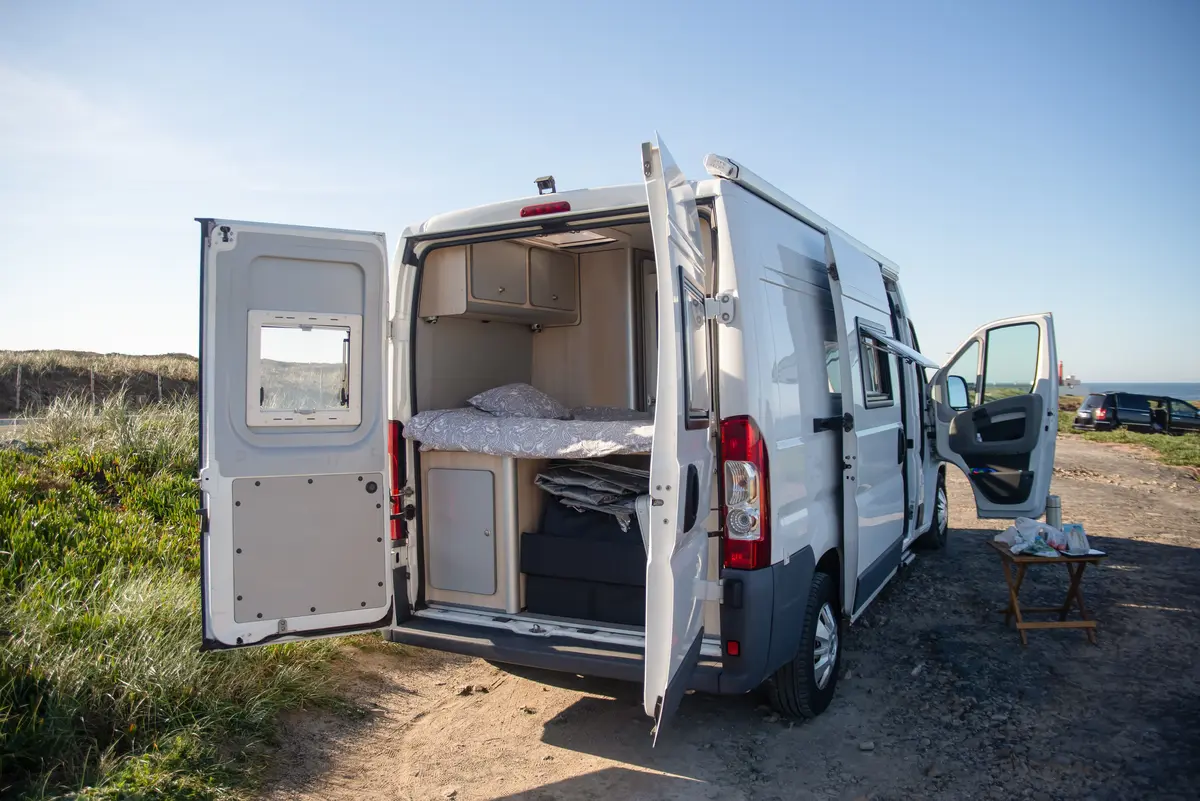
Portugal by Campervan or Motorhome
The rule that governs everything: you may overnight an IMT-approved motorhome in legal public parking for up to 48 hours per municipality — parked, nothing more. Chairs, tables, awnings, outdoor cooking, or sleeping on a beach or inside a protected area are all banned.
- Standard fine: about $70–$345 (€60–€300)
- Inside protected or coastal zones (Natura 2000, POOC): about $135–$685 (€120–€600)
- Legal alternative: ASA municipal motorhome areas, roughly $9–$17 (€8–€15) a night
- Rental: from around $85 (€75) a day in low season with operators like Siesta Campers and Soul Campers
Use the Park4Night app to filter legal spots, and read the recent comments rather than the photos. Enforcement is strictest along the Algarve and around Lisbon — exactly where the scenic cliff-top pitches are. The official line on where you can and can’t park is on Visit Portugal’s campervanning page.
Pro Tip: The cliff-top pitches you see on Instagram are mostly illegal now. Rangers patrol the Algarve coast, and one fine erases the savings of a week of free nights.
Doing the Road Trip in an Electric Vehicle
Portugal suits EV road trips because the distances are short — Lisbon to Porto is about 195 miles (314 km), Lisbon to the Algarve 174 miles (280 km). The national MOBI.E network links every public charger, but foreign drivers need an app such as Miio to start a session. Budget for expensive electrons: DC fast charging is among the pricier in Europe.
Fast-charge rates run roughly $0.51–$0.90 (€0.45–€0.79) per kWh, with a national median around $0.74 (€0.65) — above the European median. Ionity, which covers the A1 and A2 corridors, sits near the top of that range.
The quirk that catches visitors: a Portuguese charging session is billed in three layers — your mobility supplier, the station operator, and tax — so two chargers standing side by side can legitimately show completely different prices. The official MOBI.E cost page explains the split. Most points use Type 2 and CCS2. The Alentejo interior is the thin spot; charge before you leave the coast.
Pro Tip: Apps sometimes show chargers as “available” that are broken or blocked by parked cars. Always pin a backup charger before committing to a long leg.
Portugal Road Trip With Kids or as a Family
Portugal is a family-friendly road trip destination: locals adore children, and restaurants and hotels go out of their way to help. By law, children under 12 and shorter than 4 feet 5 inches (1.35 m) ride in the back in an approved car seat — reserve seats with your rental rather than trusting the desk to have them. Keep daily drives short, which the compact distances make easy, and base in fewer towns to cut the packing grind.
Easy family wins along the route include the striped fishermen’s houses of Costa Nova near Aveiro and the gentle Algarve beaches around Lagos and Tavira.
Pro Tip: Cobblestones make strollers nearly useless in Lisbon and Porto — parents say the same thing every time. Pack a carrier even if you normally wouldn’t.
Accessibility on a Portugal Road Trip
Portugal is improving on accessibility, though hilly cobbled centers and step-filled historic interiors stay genuinely tough. The country marks more than 240 accessible bathing areas — coastal and riverside — with a white flag carrying the blue-and-yellow Accessible Beach symbol, and most offer amphibious bathing equipment. Adapted taxis operate in Lisbon, Porto and Faro.
EU disabled parking cards are recognized, and the Tur4all platform maps accessible venues. Be realistic about the old towns: Pena Palace’s park is reachable by its electric shuttle, but the palace interior is not step-free, and many castle interiors are brutal on wheels. Wheelchair users report the same thing about Óbidos — the castle interior is rough going on cobbles, while the view from the accessible parking spot at the entrance is the photo you actually wanted.
The Drives Worth Slowing Down For
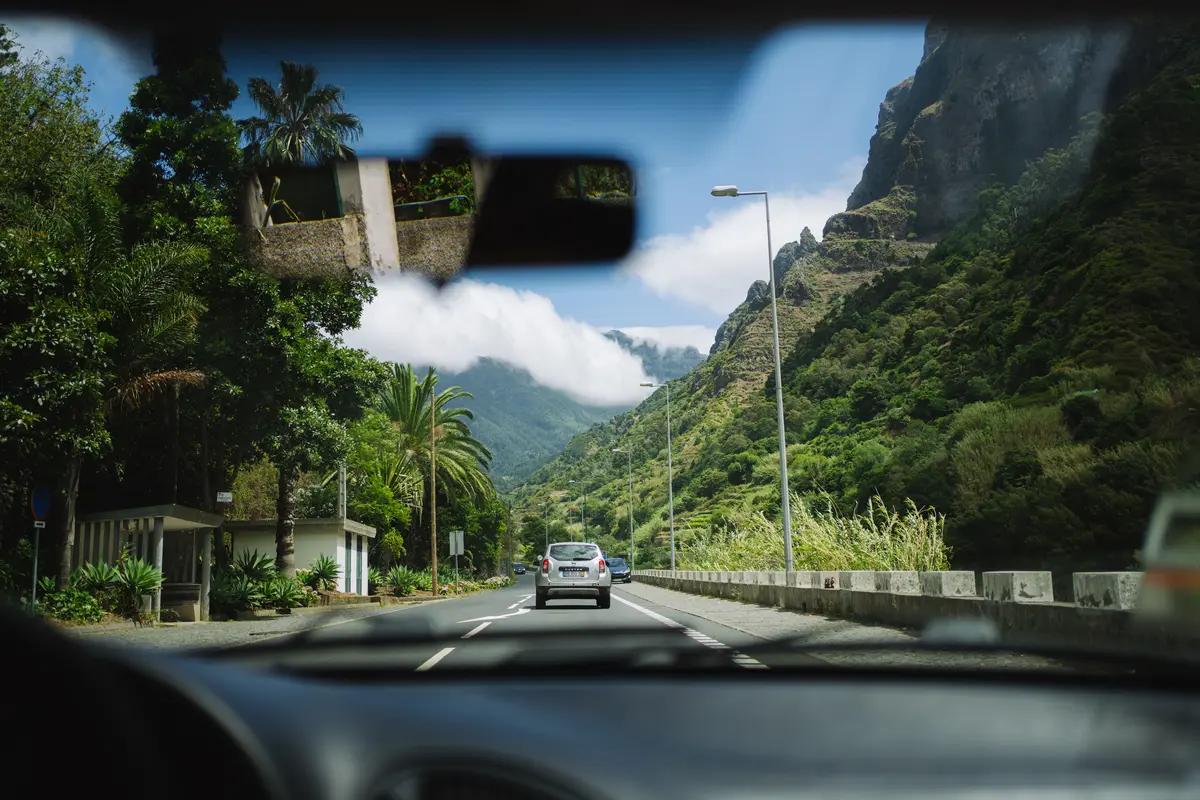
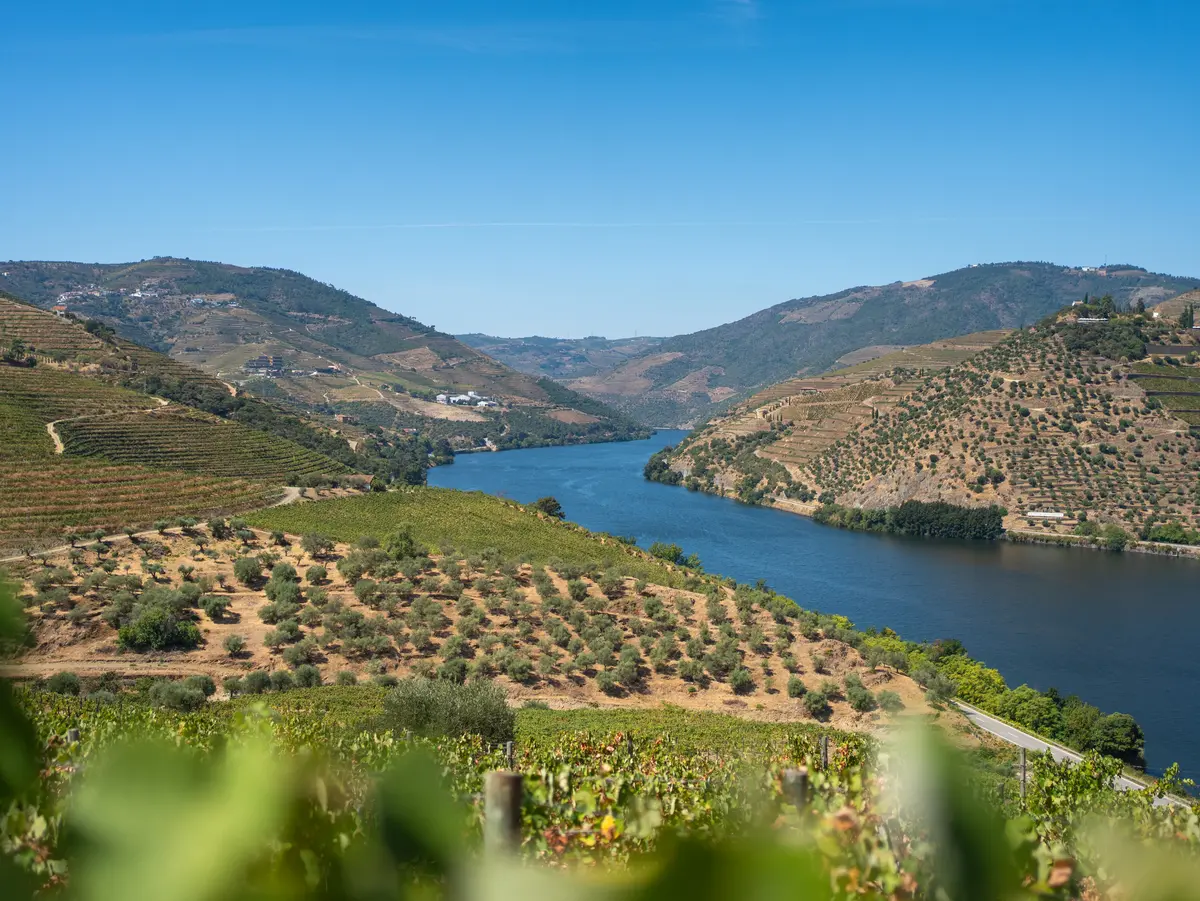
Some Portuguese drives are the destination, not the connector. The winding Douro roads above Pinhão, the wild Costa Vicentina coast between the Alentejo and the Algarve, and the N2 — Portugal’s answer to Route 66, running 459 miles (738 km) from Chaves in the north to Faro in the south — all reward taking the national roads instead of the toll motorways.
Three to build in deliberately:
- The N2: The full Chaves-to-Faro run, or a scenic segment of it
- Douro N-roads: The hairpins to Provesende and Valença do Douro above the river
- N120 coastal: A slower, prettier alternative to the A2 toward the Algarve
Pro Tip: Leave the hire car at the Douro hotel and taxi between wineries. Those hairpin vineyard roads and port tastings do not mix, and a Douro cellar tour runs around $95 (€88) anyway.
Before You Book the Car
Rent for the rural legs, not the cities. Drive Porto to Faro, north to south, over about ten days, take the Via Verde tag, go in spring or fall, and expect $150–$250 per person per day. The two bookings that can’t wait are the automatic car and your Pena Palace time slot.
The trip people regret is the rushed one. If you’re short on time, cut a city before you cut nights per stop — a slower three-base loop beats a frantic six-base sprint every time. And if the idea of a car at all makes you tense, take the train between Lisbon and Porto and rent only for the Douro or the Algarve. Portugal is small enough to forgive that.