This Sintra Portugal travel guide is really a logistics puzzle dressed up as a fairytale. The misty, palace-studded UNESCO town sits 18 miles (29 km) from Lisbon and rewards planners while punishing improvisers. Book a timed Pena Palace ticket, catch a train before 9 a.m., and the day falls into place.
How Do You Visit Sintra the Smart Way?
Take the 40-minute CP train from Lisbon’s Rossio station to Sintra — about $2.80 (€2.45) one way — and arrive before 9 a.m. Pre-book a timed Pena Palace ticket online for around $23 (€20). Ride the Scotturb 434 bus uphill; a 24-hour pass runs about $16–$17 (€13.50–€15). Budget one full day for the highlights, two to do it justice.
The whole trip hinges on two decisions: which train you catch and whether you booked Pena ahead. Get those right and Sintra is one of the best days you’ll have in Portugal. Get them wrong and you’ll spend it in queues.
Pro Tip: The 8:40 train from Rossio is half-empty. By the 10:10 it’s standing-room-only with day-trip tour groups, and you’ll be behind every one of them at the Pena gate.

Is Sintra Worth Visiting?
Yes — Sintra is one of Europe’s most extraordinary day trips: a forested mountain topped with a candy-colored royal palace, a riddle-filled Gothic estate, and thousand-year-old Moorish ramparts, all UNESCO-listed. The catch is crowds. Arrive early and pre-book tickets, or the queues and bus jams can swamp the magic. Plan it well and it’s hard to top.
Sintra earned the first cultural-landscape listing UNESCO ever granted, recognized for the way Romantic-era palaces, gardens, and forest grew together across the Serra de Sintra. The protected core covers roughly 2,300 acres (946 hectares). Lord Byron passed through and called it “Cintra’s glorious Eden” in his poem Childe Harold’s Pilgrimage. Pena Palace is Portugal’s most-visited monument, and on a clear morning you understand why.
The honest caveat: this is no secret. Tour buses from Lisbon and cruise passengers from nearby ports unload thousands of day-trippers, and by late morning the popular sites feel like a theme park at capacity. The fix isn’t skipping Sintra — it’s out-timing the crowd.
Pro Tip: Locals say the mist that often “helmets” Pena in the morning clears after lunch. If you want the painted towers sharp against blue sky, don’t book the very first slot.
How Do You Get From Lisbon to Sintra?
The easiest route for getting from Lisbon to Sintra is the CP train from Rossio station — about 40 minutes and $2.80 (€2.45) one way, loaded onto a reusable Navegante card (around $0.60 / €0.50). Trains run roughly every 20 to 30 minutes. From Oriente station it’s about 47 minutes. Skip driving: Sintra’s narrow streets and near-zero parking make a car a liability.
A few things the ticket machines won’t tell you:
- Cheapest fare: Load the “Zapping” balance at a Lisbon metro machine and the same ride drops to about $2.35 (€2.05) instead of the standard $2.80 (€2.45).
- Navegante card: The reusable card costs around $0.60 (€0.50) once; you top it up and tap in. It replaced the old Viva Viagem card.
- No round-trip discount: A return costs the same as two singles, so don’t hunt for a deal.
- Last train back: Service runs late, with the final return around 12:50 a.m. — handy if you stay for dinner.
- You can’t pre-book the train: It’s turn-up-and-go, which is exactly why the early departure matters.
The bottleneck isn’t the train — it’s the Rossio ticket hall. By mid-morning the machine line can spill out the door and eat 30 minutes. Buy your Navegante card the day before, or load Zapping in advance, and walk straight to the platform.

Getting Around Sintra: The 434 Bus, Tuk-Tuks, and Rideshare
Sintra’s sights sit high on the Serra de Sintra, too steep to walk between comfortably. The Scotturb 434 bus loops from the train station up to the Moorish Castle and Pena Palace; a 24-hour pass runs about $16–$17 (€13.50–€15). It’s the cheapest option but jams up by mid-morning. A Bolt, Uber, or tuk-tuk is faster but pricier.
Here’s how the options actually shake out:
- 434 bus (Circuito da Pena): Runs station → São Pedro → Moorish Castle → Pena → Sintra-Vila → back. The loop is about 10 km even though Pena is barely a half-mile uphill in a straight line. Buses come every 10 to 15 minutes.
- 435 bus: A separate circuit serving Monserrate, Regaleira, and Seteais. The 24-hour pass covers both lines.
- Single fares: Around $4.70–$5.20 (€4.10–€4.55), and often not sold at peak times — drivers push the day pass instead.
- Bolt / Uber: Roughly $5–7 (€4–6) door-to-door, and frequently faster than waiting for a bus with space.
- Tuk-tuks: Negotiable and the priciest per ride — fine for one short uphill hop.
Here’s the contrarian truth: the celebrated 434 is overrated at peak times. I’ve watched three full buses sail past a stop near the station without opening their doors. For a group of three or four, splitting a $6 (€5) Bolt straight to the Pena gate is often faster and barely costs more per head.
How Much Does It Cost to Visit Sintra’s Palaces?
Sintra’s monuments are ticketed individually, and prices have climbed past the figures many blogs still quote. The Pena Palace combined ticket is about $23 (€20), Quinta da Regaleira about $23 (€20), the Moorish Castle about $14 (€12), Monserrate about $14 (€12), and the National Palace about $15 (€13). Book Pena online with a timed slot; the Lisboa Card does not cover Sintra’s monuments.
This is where outdated guides cost you. Plenty still list Pena at $16 (€14) and Regaleira at $9 (€8); the real adult prices are about $23 (€20) each. Here’s the current breakdown:
- Pena (Park + Palace): about $23 (€20) adult, $21 (€18) youth (6–17) and senior (65+), $75 (€65) family; park-only about $14 (€12).
- Quinta da Regaleira: about $23 (€20) adult, $17 (€15) youth and senior, $69 (€60) family; free for under-6s; audio guide about $6 (€5).
- Moorish Castle: about $14 (€12).
- Monserrate: about $14 (€12).
- National Palace of Sintra: about $15 (€13); its gardens are free.
- Convent of the Capuchos: about $13 (€11).
- Pena park shuttle: about $5 (€4.50) round trip, for ages 6 and up.
Two money facts worth knowing: booking Pena online shaves roughly 5% off, and the Lisboa Card gives only small discounts (about 10% off Pena, 15% off the Moorish Castle) plus the free Lisbon–Sintra train — not free entry to the palaces, which trips up a lot of first-timers. Prices do drift, so re-check the official Parques de Sintra and Regaleira sites before you book.
Pro Tip: A 24-hour bus pass plus two $23 (€20) palaces already puts you near $80 to $90 before a single travesseiro. Decide which two palaces you actually want before you tap your card at the gate.
| Palace | Adult Price (US$ / €) | Time Needed | Timed Entry? | Wheelchair-Friendly? | Best For | Skip If Rushed? |
|---|---|---|---|---|---|---|
| Pena (Park + Palace) | ~$23 (€20) | 2–3 hrs | Yes (strict, interior) | Park yes; interior no | First-timers, the “wow” shot | No — the headline |
| Quinta da Regaleira | ~$23 (€20) | 2–3 hrs | Entry slot | No (stairs, tunnels) | Atmosphere, mystery, gardens | No |
| Moorish Castle | ~$14 (€12) | 1–1.5 hrs | No | Partial (uneven) | Views, history, fewer crowds | Optional |
| Monserrate | ~$14 (€12) | 1.5–2 hrs | No | Partial | Gardens, quiet, second day | Yes (day 2) |
| National Palace | ~$15 (€13) | ~1 hr | No | Partial | History buffs, town center | Yes |
| Convent of the Capuchos | ~$13 (€11) | ~1 hr | No | No | Off-beat forest hermitage | Yes (day 2) |
Here’s roughly what a day costs, set against travel costs across Portugal overall, before flights and lodging:
| Traveler Type | Daily Budget (US$) | What It Covers |
|---|---|---|
| Backpacker | $50–80 | Train, 434 day pass, one or two palaces, a bakery lunch |
| Mid-range | $100–200 | Train or rideshare, two to three palace tickets, a sit-down lunch, treats |
| Family of four | $180–260 | Family palace tickets, transport, a casual lunch (lodging extra) |
How Does Pena Palace Timed Entry Actually Work?
Pena Palace’s interior requires a timed-entry ticket booked for a specific window, and it’s strictly enforced — show up late and you can be turned away with no refund. The catch most visitors miss: the gate-to-palace walk is itself about 15 to 25 minutes uphill, so enter the park well before your slot. The park and terraces have no time limit.
The wording on your Pena Palace ticket matters. The time printed on it is when you enter the palace interior, not when you enter the park. After you scan in at the park gate, you still have to climb to the palace door — and the bus drops you at the gate, not the entrance.
What that means in practice:
- The climb: About a 15-minute walk uphill, plus 15 minutes or more in the interior queue once you arrive. Build 30 minutes of buffer into your slot.
- The shuttle: The $5 (€4.50) round-trip shuttle skips most of the climb — worth it for tired legs, kids, or anyone short on time.
- Slots sell out: Morning windows (10 a.m. to noon) book out days ahead in peak season. Walk-up queues can stretch past three hours.
- Free rescheduling: Online tickets can usually be moved at no charge up to 6 p.m. the day before — your insurance against a foggy forecast.
- Capacity: Each interior slot admits up to around 300 people, so “skip-the-line” tickets only skip the ticket-buying queue, not the crowd inside.
And here’s the counterintuitive part, straight from the people who run it: the palace interior is generally least crowded in the afternoon, not at opening.
Pro Tip: The 434 drops you at Pena’s park gate, not the palace. Factor in the 15-to-25-minute uphill walk (or the $5 / €4.50 shuttle) when you choose your timed slot, or you’ll be climbing while the window you paid for ticks away.
Which Palaces in Sintra Are Worth Your Time?
If you have one day, prioritize Pena Palace (the candy-colored Romantic showpiece) and Quinta da Regaleira (the riddle-filled estate with the Initiation Well). Add the Moorish Castle for the best views. Skip the National Palace if you’re rushed, and save Monserrate and the Convent of the Capuchos for a second day, when crowds thin and the gardens shine.
Five or six sites compete for your time, and you can’t do them all well in a day. Here’s how I’d rank them — and if I could keep only one, it would be Regaleira, not Pena.
Pena Palace: Portugal’s Fairytale on the Hill
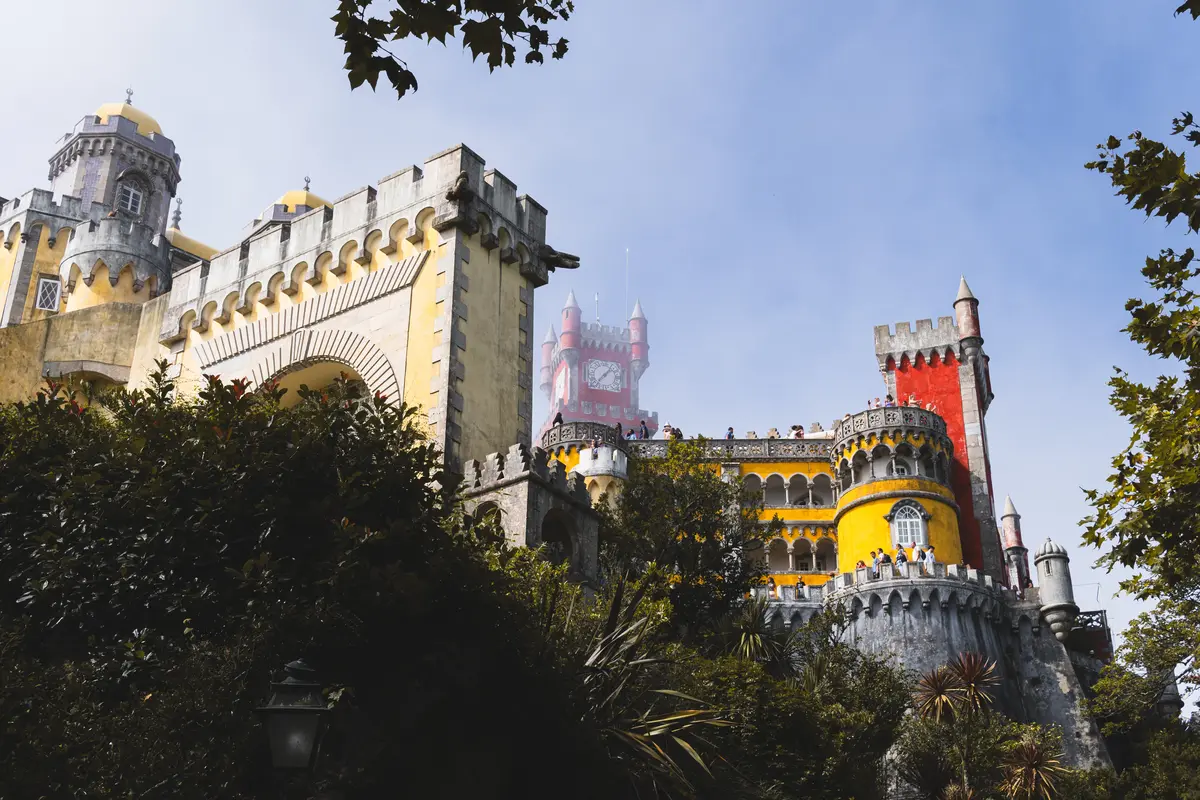
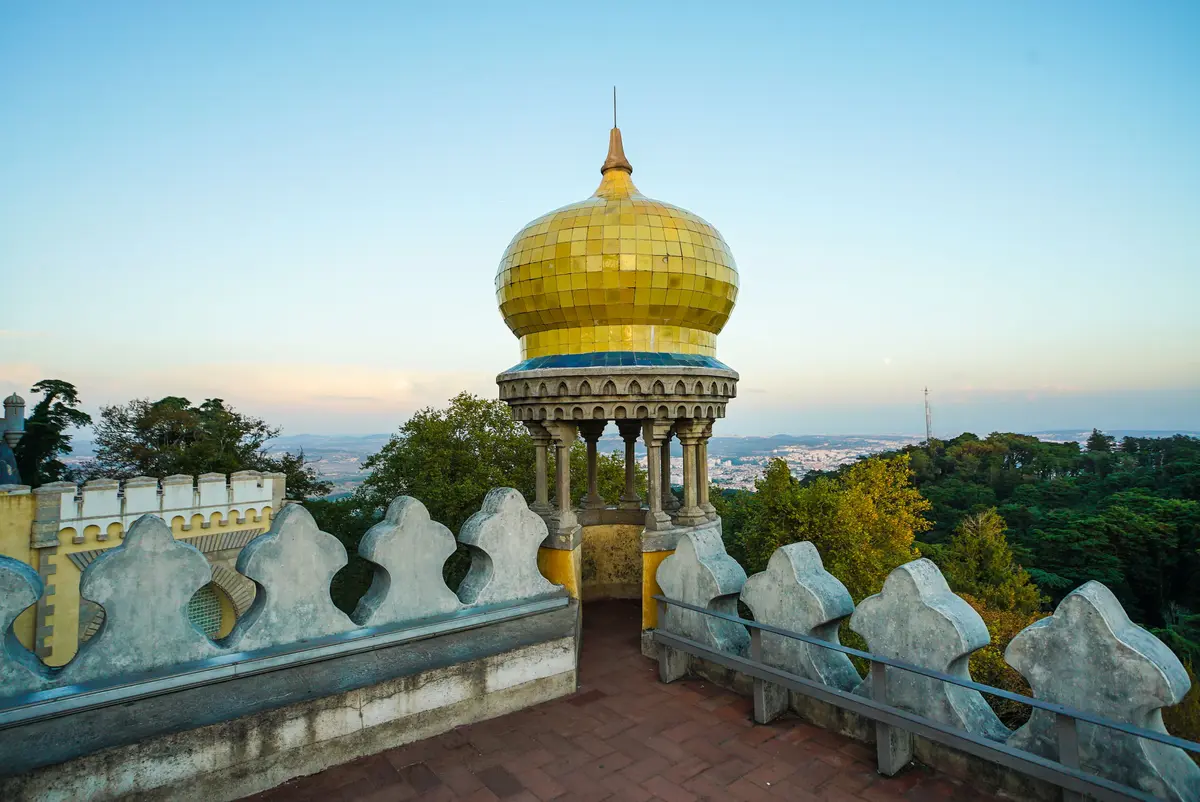
Pena Palace is a 19th-century Romantic fantasy of ochre and terracotta towers, built by King Ferdinand II from 1842 atop a 1,765-foot (538 m) peak and ringed by a 500-acre (200-hectare) park. It’s Portugal’s most-visited monument — magical at opening, mobbed by midday. The combined ticket is about $23 (€20), and the interior runs on a strict timed entry.
Ferdinand II built Pena on the ruins of a Hieronymite monastery, one of countless monasteries in Portugal repurposed over the centuries, with German architect Wilhelm Ludwig von Eschwege turning it into a mash-up of Moorish, Gothic, and Manueline styles painted in colors you can pick out from Lisbon on a clear day. Inside, the rooms are frozen at 1910 — the year the royal family fled into exile — down to Queen Amélia’s tea set and King Carlos’s studio. Don’t miss the Arab Room and the Queen’s Terrace.
The surrounding Park of Pena hides trails to Cruz Alta, the highest point in the Serra de Sintra, and the Alto do Chá tea house. Give the whole thing 2 to 3 hours.
- Location: Estrada da Pena, atop the Serra de Sintra
- Cost: about $23 (€20) adult combined ticket
- Best for: First-timers and the postcard shot
- Time needed: 2–3 hours
Quinta da Regaleira: The Initiation Well and Secret Tunnels
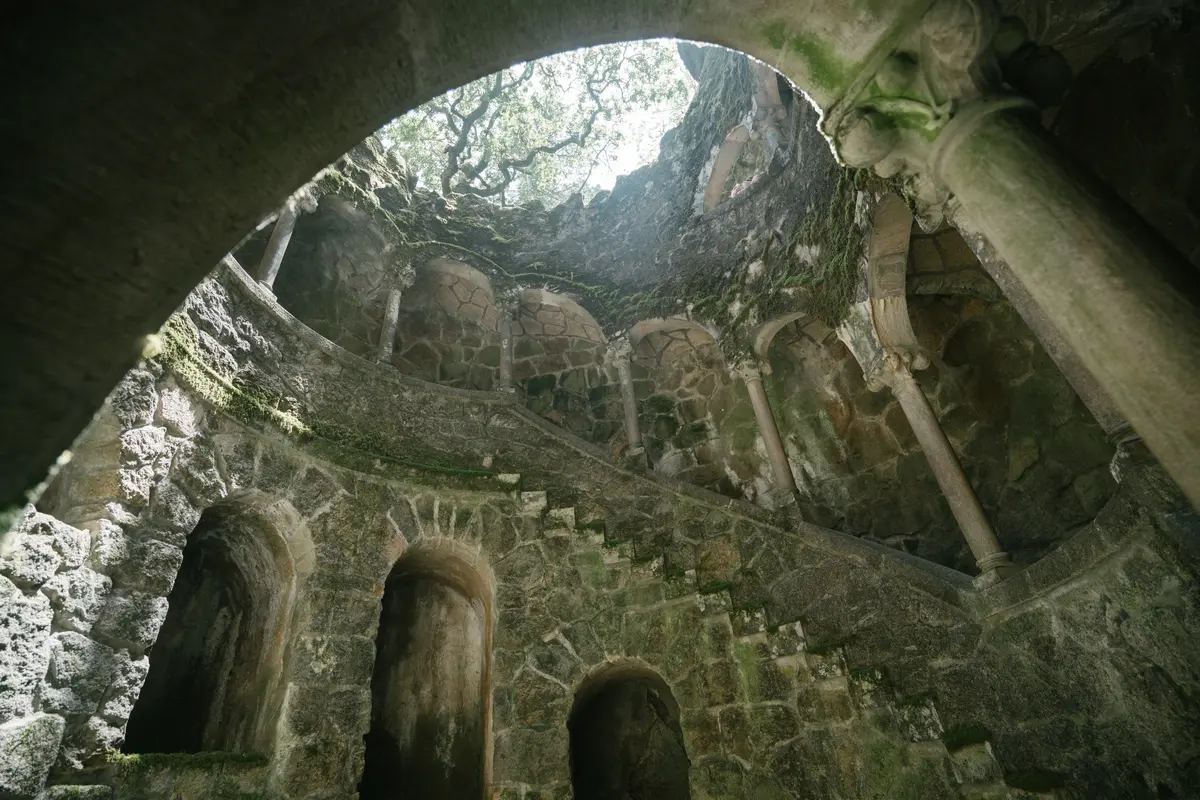
Quinta da Regaleira is a neo-Manueline estate built between 1898 and 1912 by millionaire António Carvalho Monteiro and set designer Luigi Manini, laced with Masonic, Templar, and Dante symbolism. Its centerpiece is the Initiation Well — an inverted stone tower dropping 89 feet (27 m) down nine spiraling levels into a tunnel network. Adult entry is about $23 (€20); arrive at opening to beat the crush.
Monteiro — nicknamed “Monteiro dos Milhões,” roughly “Moneybags Monteiro” — poured a fortune into about 10 acres (4 hectares) of grounds designed as a journey through alchemy and initiation. You descend the Initiation Well, then grope through dark tunnels that spit you out behind a waterfall or beside a hidden lake. It’s the most atmospheric place in Sintra, and the one that stole my heart over Pena’s Disney dazzle.
Two warnings: it’s run privately by Fundação Cultursintra, so the Lisboa Card gives you nothing here, and the stairs and tunnels make it genuinely hard for wheelchair users and strollers. The spiral well also funnels everyone onto one narrow staircase — expect a 15-to-20-minute queue to descend even in October. Give it 2 to 3 hours.
- Location: Rua Barbosa du Bocage, a 20-minute walk from Sintra-Vila
- Cost: about $23 (€20) adult
- Best for: Atmosphere, mystery, and garden wanderers
- Time needed: 2–3 hours
Moorish Castle, Monserrate, and the Other Palaces
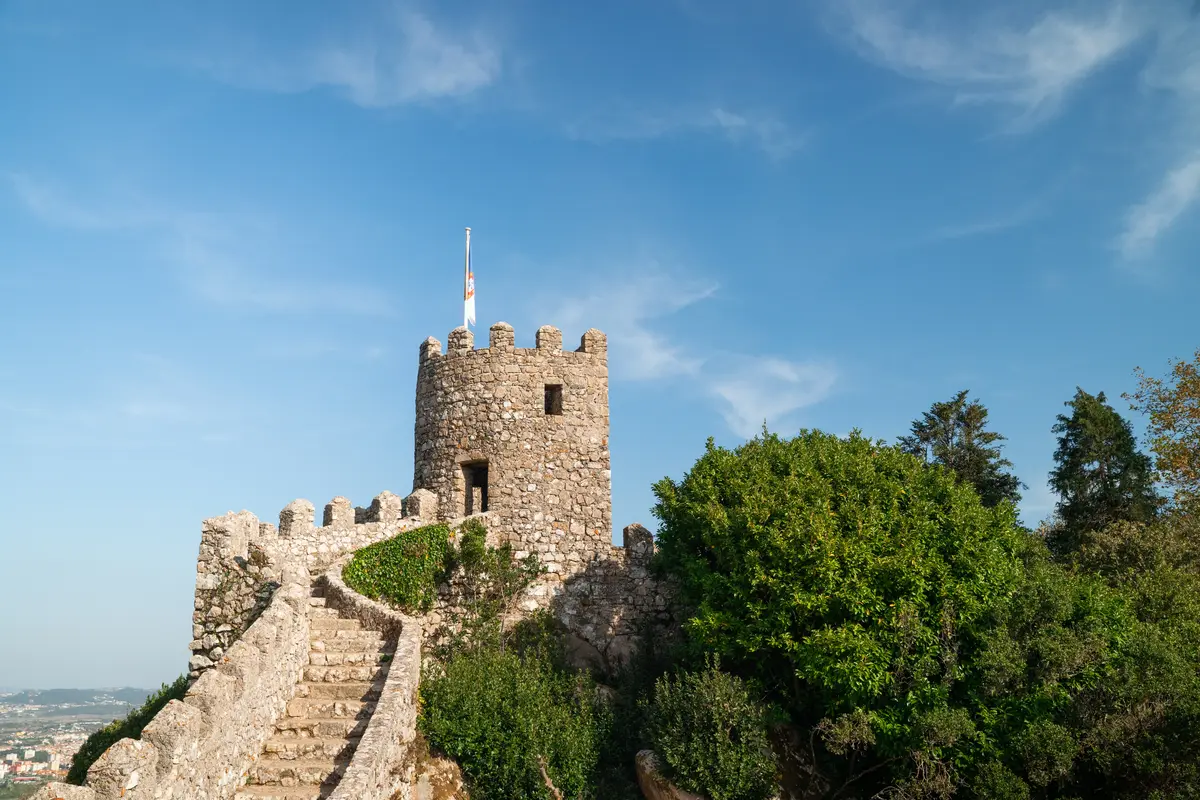
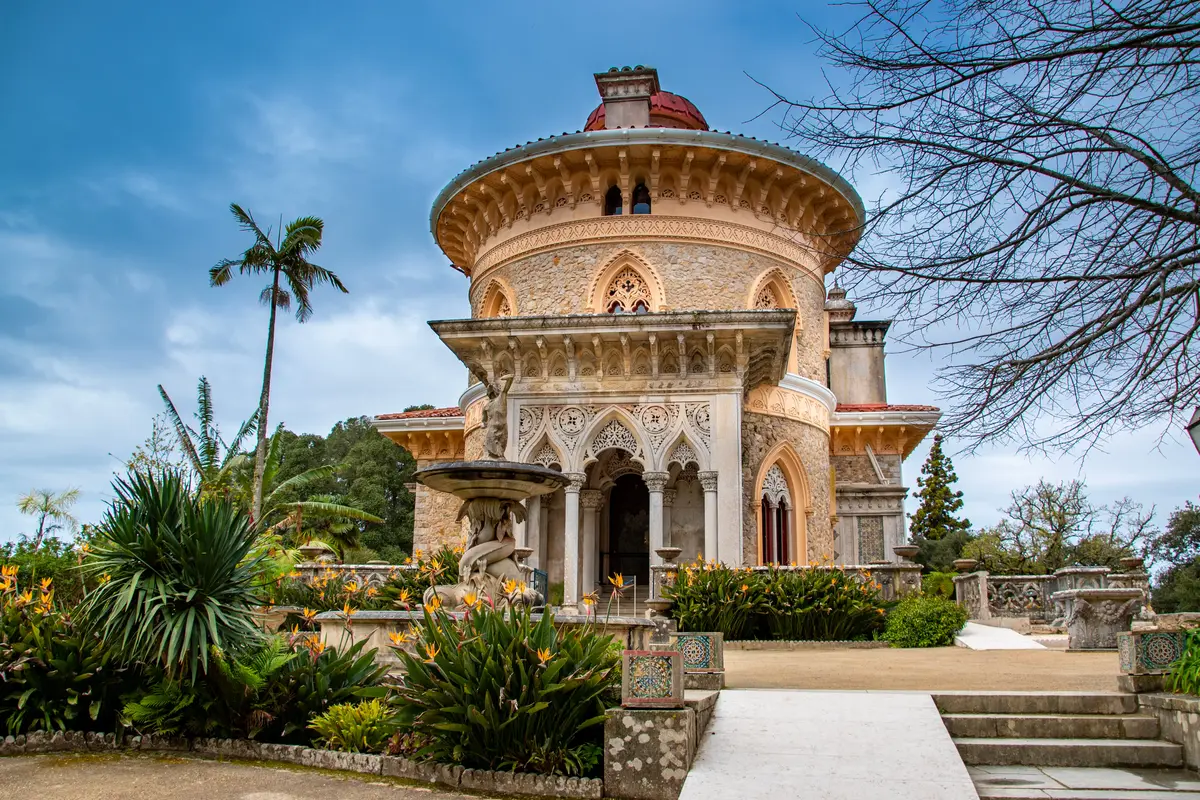
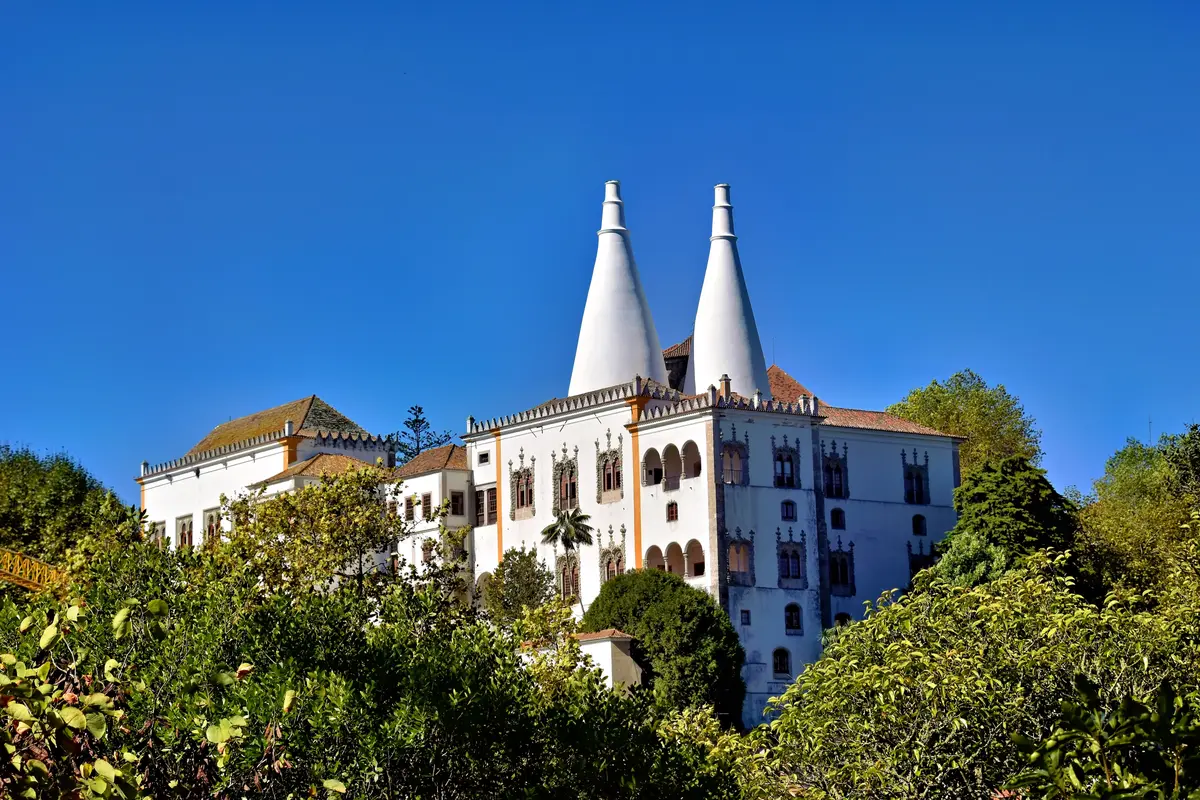
The 9th-century Moorish Castle (about $14 / €12) gives Sintra’s best 360-degree views from its serpentine ramparts — and far fewer crowds than Pena, a 10-minute walk away. For a quieter second day, Monserrate (about $14 / €12) pairs Mughal-Gothic architecture with botanical gardens, while the central National Palace (about $15 / €13) is known for its twin conical chimneys.
The Moorish Castle is the smart-money stop. Its walls snake along the ridge with barely a railing in places, the Atlantic wind whipping over the top, and you’ll share them with a fraction of Pena’s crowd. Ferdinand II partially restored the ruins, but the bones are a thousand years old — among the oldest of Portugal’s castles.
For a second day, three quieter sites reward the effort:
- Monserrate: A Mughal-Gothic confection with gardens that stay calm even when Pena is packed. Note that the palace roof has undergone restoration that can leave scaffolding on the exterior, so check before you go if the facade matters to you.
- National Palace of Sintra: Portugal’s best-preserved medieval royal residence, marked by the twin white chimneys over the old town. About an hour inside.
- Convent of the Capuchos: A cork-lined hermitage in the forest, eerie and tiny, at about $13 (€11). Off-beat and rarely crowded.
How Many Days Do You Need in Sintra?
One full day is enough for Sintra’s highlights — realistically two to three palaces if you start by 9 a.m. But two days let you slow down, add Monserrate and the coast at Cabo da Roca near Cascais, and enjoy the town once the day-trippers leave. Most visitors do Sintra as a Lisbon day trip; overnighting is the connoisseur’s move.
The day-trip-versus-overnight question really comes down to how much you hate crowds. A single day, run tightly, delivers the greatest hits. A second day buys you breathing room and an almost-empty town after about 7 p.m., when the tour buses are gone and Sintra-Vila goes quiet.
| One Day (Day Trip) | Two Days (Overnight) | |
|---|---|---|
| Sites | Pena + Regaleira (+ Moorish Castle if fast) | Day 1 highlights; Day 2 Monserrate, National Palace, Capuchos, Cabo da Roca |
| Pace | Brisk, crowd-managed | Relaxed; time for park trails |
| Best for | Time-pressed first-timers | Architecture and garden lovers, photographers, families |
| Crowd payoff | Must beat the crowds early | Evenings and early mornings nearly empty |
The Perfect One-Day Sintra Itinerary
Catch the 8:30 train from Rossio, take the 434 straight up to Pena Palace for a mid-morning interior slot, then walk 10 minutes to the Moorish Castle for the views. Bus back down for lunch and travesseiros in Sintra-Vila, then finish at Quinta da Regaleira mid-afternoon as the tour groups thin out. Train back to Lisbon by early evening.
The order matters, and it’s built around elevation and crowd flow:
- 8:30 a.m.: Train from Rossio. Aim for a seat on the left for forest views.
- 9:15 a.m.: Arrive Sintra, jump on the 434 (or a Bolt) straight to Pena’s gate.
- 9:45 a.m.–noon: Pena Palace — a mid-to-late-morning slot lets the fog burn off. Walk the park trails afterward.
- 12:15 p.m.: Moorish Castle, a 10-minute walk from Pena, for ramparts and views.
- 1:30 p.m.: Bus down to Sintra-Vila for lunch and a travesseiro.
- 3:00 p.m.: Quinta da Regaleira as tour groups fade. Descend the Initiation Well.
- 5:30 p.m.: Train back to Lisbon, beating the worst of the return rush.
Pro Tip: Beat the cruise crowds to Pena’s terraces and you’ll get the painted walls nearly to yourself for 20 minutes before the first big group arrives around 10:30 a.m.
When Is the Best Time to Visit Sintra?
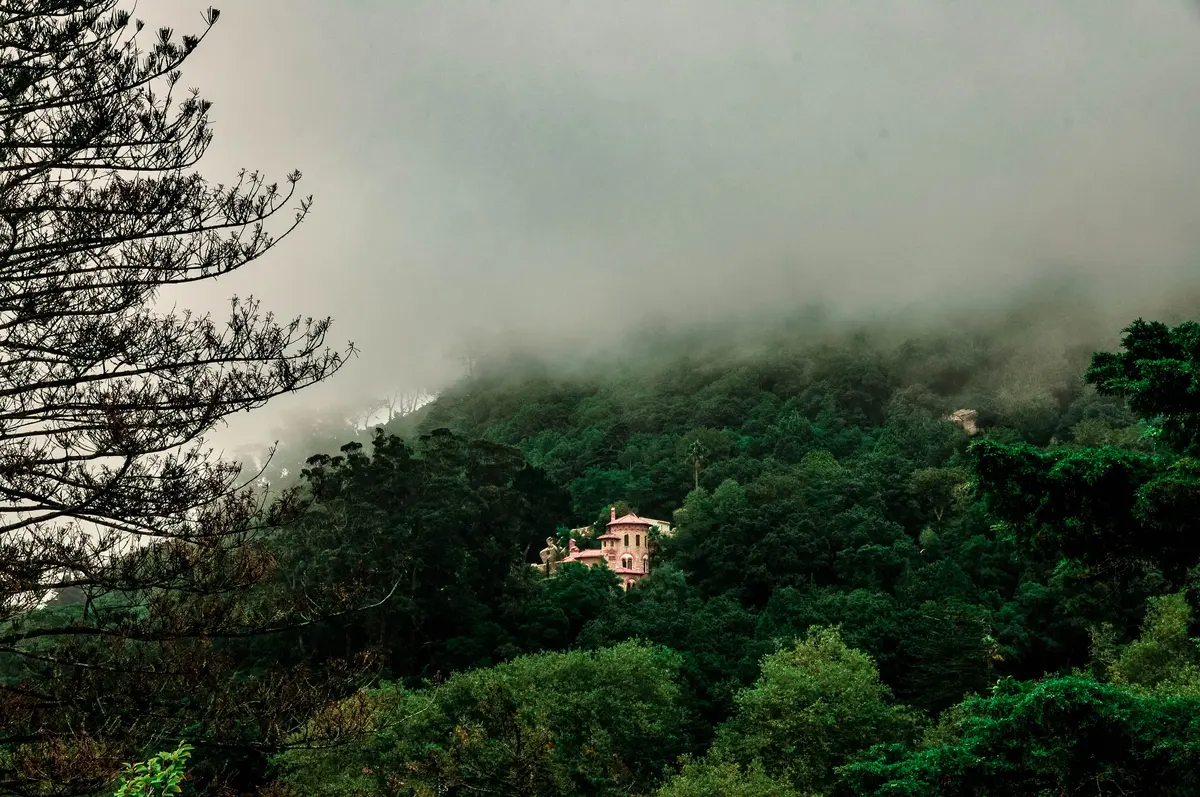
As with the best time to visit Portugal overall, aim for May, June, September, or October for warm, drier days without peak crowds; avoid July and August weekends, when queues and bus jams peak. Within any day, arrive by 9 a.m. And mind Sintra’s microclimate: it runs 4 to 9°F (2–5°C) cooler than Lisbon and often starts foggy, so the earliest palace views can be lost in mist — which locals say clears after lunch.
Sintra makes its own weather. The Serra traps Atlantic moisture, so mornings often open under “nevoeiro” — a thick fog that can sit on the 1,765-foot (538 m) summit until midday. Summer highs hover around 77°F (25°C); winters stay mild at 50 to 59°F (10–15°C); the annual average is about 60°F (15.7°C).
This is where I made the classic mistake: I booked the 9:30 a.m. Pena slot “to beat the crowds” and spent the first hour photographing pure cloud. If clear views matter more to you than being first in line, book a late-morning slot and let the mist lift.
| Season | Typical High °F (°C) | Crowds | Verdict |
|---|---|---|---|
| Spring (Apr–Jun) | 63–77°F (17–25°C) | Building | Best overall; some morning mist |
| Summer (Jul–Aug) | ~77°F (25°C) | Heaviest | Go midweek and very early, or skip |
| Autumn (Sep–Oct) | 63–77°F (17–25°C) | Moderate | Best clarity, fewer crowds |
| Winter (Nov–Mar) | 50–59°F (10–15°C) | Lightest | Quiet but wet and foggy; pick a dry day |
Can You Visit Sintra Without a Car?
Absolutely — and you should. Take the train from Lisbon, then use the 434 bus, tuk-tuks, or rideshare between palaces. Driving is actively discouraged: the historic center is closed to non-resident cars, the mountain roads are narrow and gridlock in peak season, and parking near Pena and the Moorish Castle is barred for private vehicles.
The “should I rent a car in Portugal” instinct is the single most common Sintra mistake. The historic center is residents-only, private cars are banned from the Pena and Moorish Castle access roads, and summer parking near the train station fills before mid-morning.
I’ve watched the Estrada da Pena turn into a slow-motion parking lot, drivers crawling uphill hunting spaces that don’t exist while bus riders roll past them. Save yourself the stress: train in, then 434 and rideshare around.
Where to Eat in Sintra: Travesseiros and Beyond
Sintra’s signature treat is the travesseiro — a flaky pillow of puff pastry filled with almond-and-egg cream and a standout of traditional Portuguese food — best at Casa Piriquita, baking since 1862. Pair it with a queijada, a small cinnamon-cheese tart. For lunch, Tascantiga (tapas) and Incomum by Luís Santos (modern Portuguese) are reliable. Expect a line at Piriquita.
The food scene is small but specific:
- Casa Piriquita & Piriquita II: Rua das Padarias. The travesseiro runs about $2 (€2) and is best warm.
- Queijadas da Sapa: Baking queijadas since 1756 — older than the United States.
- Incomum by Luís Santos: A modern-Portuguese lunch prix-fixe that’s strong value for the quality.
- Tascantiga: Portuguese tapas and petiscos, good for a shared, low-key lunch.
- Colares wine: The nearby Colares region, one of Portugal’s wine regions worth seeking out, grows the rare Ramisco grape in sandy coastal soil — worth a bottle if you overnight.
Pro Tip: At Piriquita, the queue runs on a deli-counter ticket system. Grab a number the moment you step in; the line looks worse than the wait actually is.
Sintra Travel FAQ
Quick answers to the questions travelers ask most — each is a self-contained, schema-ready pair.
- Q: Is Sintra worth visiting?
- A: Yes. Sintra is a UNESCO World Heritage town near Lisbon famous for fairytale palaces like Pena Palace and Quinta da Regaleira. The main drawback is heavy crowds, so arrive before 9 a.m. and pre-book timed tickets to enjoy it fully.
- Q: How many days do you need in Sintra?
- A: One full day covers the highlights — realistically two to three palaces if you start early. Two days let you add Monserrate, the National Palace, and the coast at Cabo da Roca, and enjoy the town after day-trippers leave.
- Q: How do you get from Lisbon to Sintra?
- A: Take the CP train from Lisbon’s Rossio station — about 40 minutes and $2.80 (€2.45) one way on a reusable Navegante card. Trains run roughly every 20 to 30 minutes. Avoid driving, as Sintra has severe parking and traffic restrictions.
- Q: How much does it cost to visit Pena Palace?
- A: The combined Park and Palace ticket is about $23 (€20) for adults, with a park-only option around $14 (€12). The palace interior requires a strictly enforced timed slot, so book online in advance, especially in peak season.
- Q: Can you visit Sintra without a car?
- A: Yes, easily. Take the train from Lisbon, then the Scotturb 434 bus (24-hour pass about $16–$17 / €13.50–€15), tuk-tuks, or rideshare between palaces. Driving is discouraged — the historic center is closed to non-resident cars and parking near Pena is prohibited.
Bottom Line: Is Sintra Right for Your Trip?
TL;DR: Sintra is the best day trip from Lisbon — if you plan it. Book a timed Pena Palace ticket, take an early train, and prioritize Pena plus Quinta da Regaleira. Give it two days if you can, to add Monserrate and the coast and to catch the town after the crowds leave.
So what’s your move — one tightly run day, or two slow ones with the coast thrown in? Drop a comment with the palaces that made your list, and I’ll tell you which one you’re about to regret skipping.