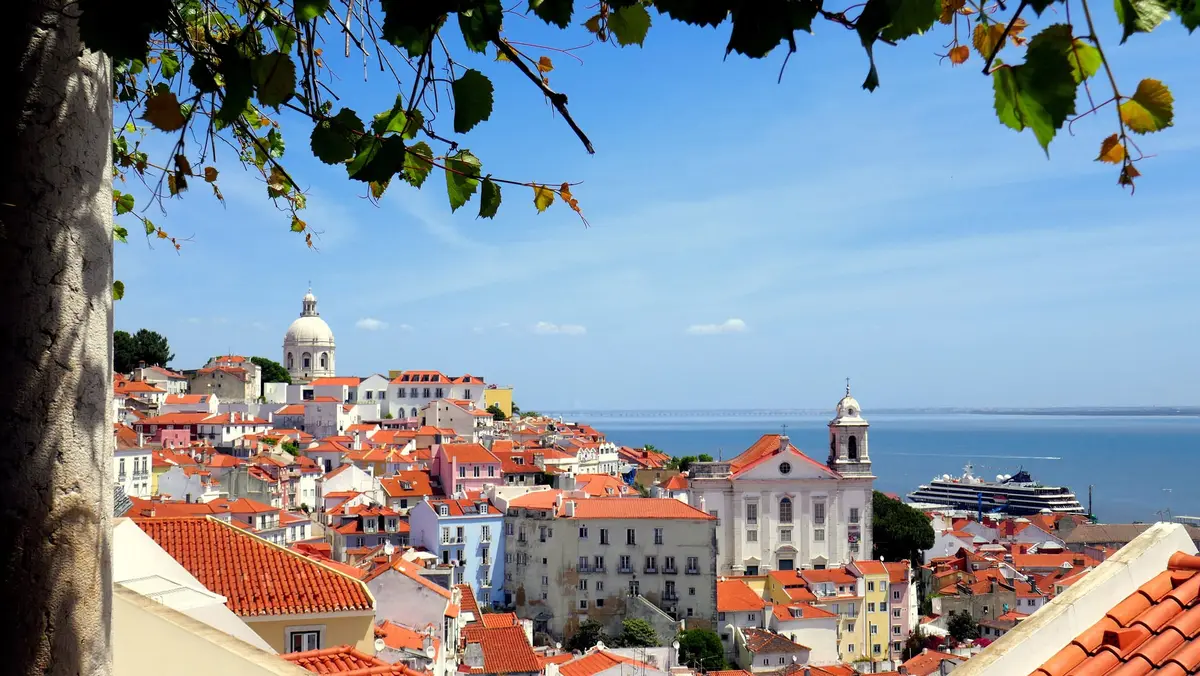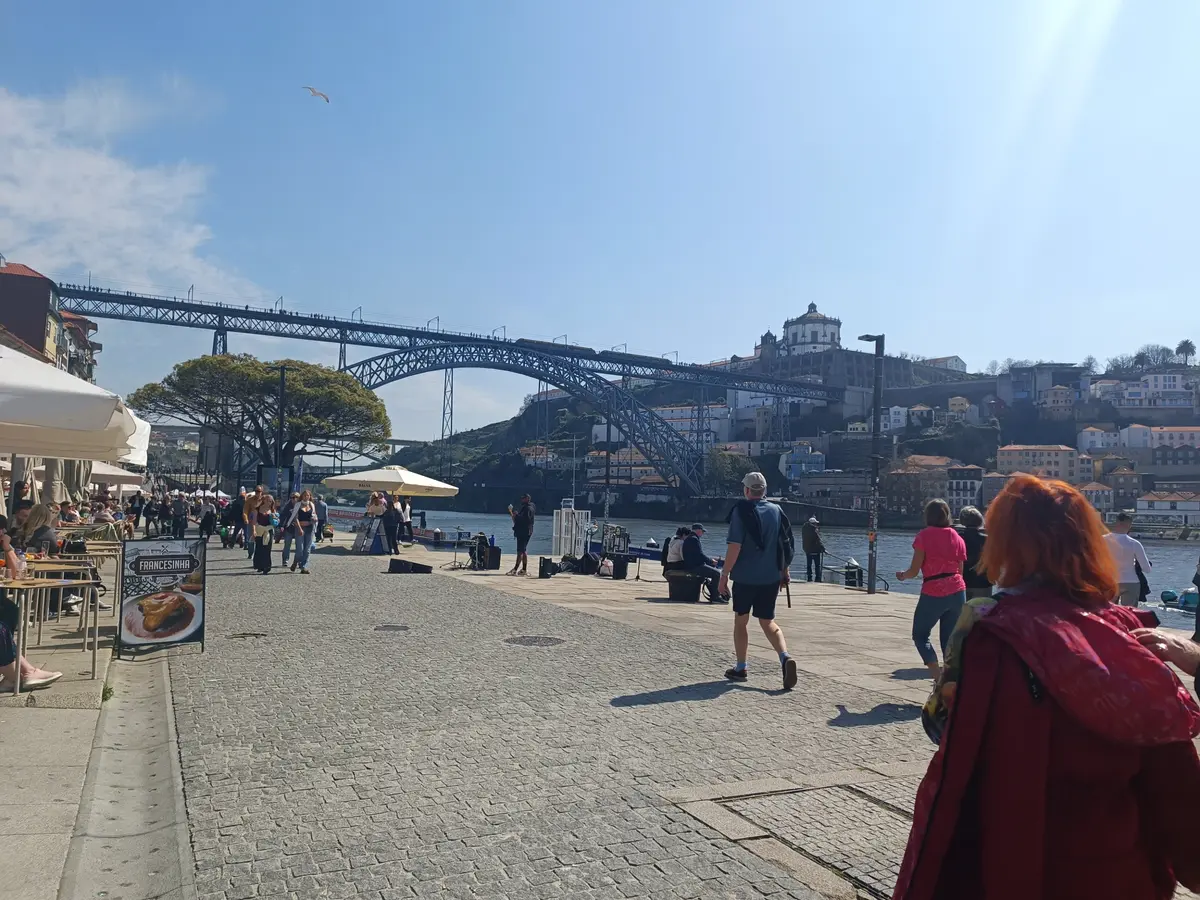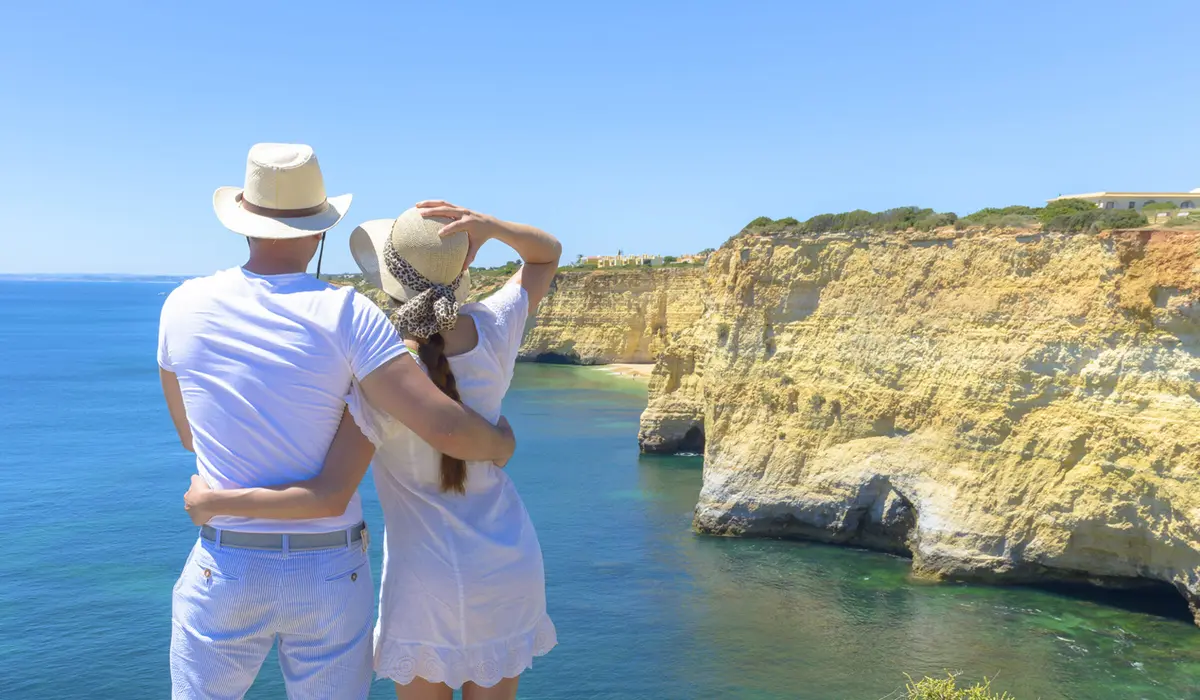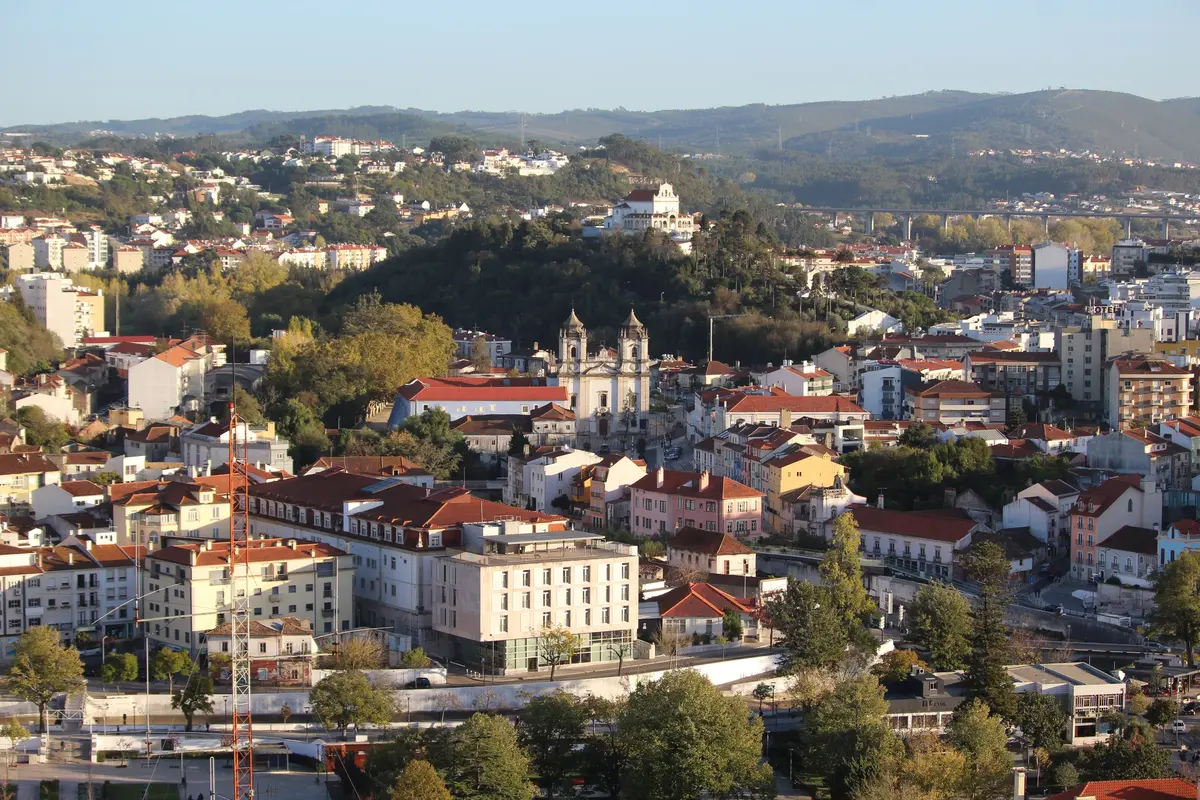
Central Portugal is the stretch between Lisbon and Porto that most itineraries blow straight through, and that’s the mistake. In one compact region you get UNESCO monasteries, the planet’s biggest surfable waves, a mountain range that gets snow, and a wine country almost no American has heard of. Here’s how to plan it as part of a wider Portugal trip.
Central Portugal, the Centro region, runs from the Atlantic Silver Coast east to the Serra da Estrela mountains on the Spanish border. Base yourself in Coimbra, give it five to seven days, and rent a car for the interior. It’s cheaper and quieter than the Algarve, with history the south can’t match.
Where Is Central Portugal, Exactly?
Central Portugal is the country’s Centro region, one of mainland Portugal’s statistical regions, bordered by Northern Portugal, Spain, the Alentejo, the Lisbon area, and the Atlantic. Its administrative cities are Coimbra, Aveiro, Viseu, Leiria, Castelo Branco, and Guarda. Travelers use the term loosely for almost everything between Lisbon and Porto.
That looseness is the source of most confusion online, so here’s the clean version:
- Borders: Northern Portugal, Spain, the Alentejo, the Lisbon area, and the Atlantic coast
- Main cities: Coimbra (regional capital), Aveiro, Viseu, Leiria, Castelo Branco, Guarda
- Size: about 10,989 sq mi (28,462 km²), home to roughly 2.3 million people
- Subregions: Beira Litoral along the coast, Beira Alta and Beira Baixa inland
- Coastline: around 173 miles (279 km) of Atlantic shore
One nuance worth knowing: the touristic shorthand for “Central Portugal” often sweeps in Óbidos, Nazaré, and Fátima, which now sit administratively in the newer Oeste e Vale do Tejo region rather than Centro. For trip-planning purposes nobody cares about the statistical lines, and this guide treats them as part of the same swing.
What makes the geography fun is the compression. You can stand on an Atlantic beach in the morning and reach a 6,539-foot (1,993 m) granite peak by afternoon, watching the terrain shift from lagoon flatlands to vineyards to bare mountain rock in a single day’s drive.
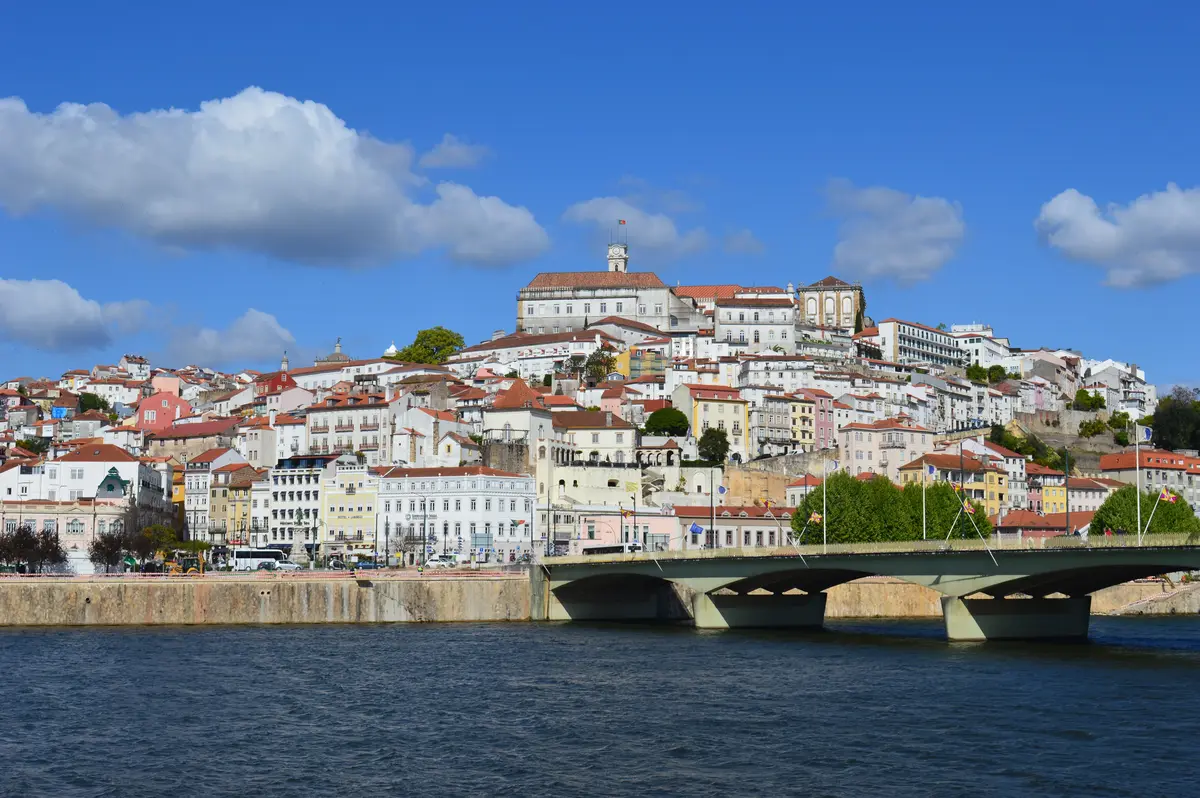
Is Central Portugal Worth Visiting?
Yes, if you want fewer crowds, lower prices, and a more authentic Portugal than the Algarve or the Lisbon–Sintra circuit. The region trades beach-resort polish for UNESCO history, big-wave drama, mountains, and underrated wine. Skip it only if your trip is purely about southern beaches and golf.
It remains one of the least-visited regions by foreign tourists, which is exactly why it still feels like the real thing. Travel writers consistently describe getting more for their money here than in Lisbon, Porto, or the Algarve, and frame the Centro as the authentic heart of the country.
How empty does it get? Half an hour from Coimbra you can canoe the Mondego between steep wooded slopes with eagles overhead and almost no other people on the water. That kind of silence is hard to find in southern Portugal in season.
The honest trade-off: tourist infrastructure is patchier than the Algarve’s. Fewer staff default to English, some attractions feel sleepy off-season, and you’ll do real driving to reach the best inland spots. If your idea of a trip is a beach club and a swim-up bar, the south will serve you better. For everything else, this is the better pick.
How Many Days Do You Need, and Where Should You Base Yourself?
Two to three days covers the headline cities; five to seven days is the sweet spot to add the mountains and villages; ten or more lets you slow down across wine country and the coast. Base in the university city of Coimbra for its central position and transit links, then add Tomar and a Serra da Estrela village for a second and third base.
Distances are short. Only about 87 miles (140 km) separates the region’s far north from its far south, so almost nothing is more than a couple of hours’ drive. Coimbra wins as a first base for practical reasons: good services, cheaper accommodation than the big cities, fast train links in both directions, and easy reach to Aveiro and the coast.
| Base | Best For | Watch-Outs |
|---|---|---|
| Coimbra | First-timers, no car, central position | Steep, hilly old town; busy in university term |
| Tomar | Templar history, quiet evenings | Smaller; fewer late dining options |
| Manteigas (Serra da Estrela) | Mountains, hiking, snow | Winding mountain roads; a car is essential |
Pro Tip: Book a room in Coimbra’s lower town near the river if you want flat walking. The university and the old quarter sit up a genuinely steep hill, and the climb gets old after day one.
Getting There and Around: Do You Actually Need a Car?
Reach the main cities by fast train: Lisbon to Coimbra takes about 1 hour 36 minutes, Porto to Coimbra about 1 hour 14 minutes. But the schist villages, Serra da Estrela, the Dão wineries, and remote towns like Monsanto have almost no public transport, so rent a car if you’re heading inland.
Here’s the gateway-by-gateway breakdown competitors tend to scatter across five pages. Fares move, so treat these as ballpark and check current prices before you book.
| Route | Train | Bus | Drive |
|---|---|---|---|
| Lisbon → Coimbra | Alfa Pendular ~1h36, around $28 (2nd class) | Rede Expressos ~2h15, from around $5.50 | ~1h50, ~125 mi (200 km), tolls around $15 |
| Porto → Coimbra | Alfa Pendular ~1h14, around $19 | — | ~71 mi (115 km) |
One quirk that catches first-timers: fast trains stop at Coimbra-B, about 1.2 miles (2 km) from the old center, not downtown. A free connecting urban train runs the short hop to Coimbra-A, right in the heart of the city, so don’t grab a taxi out of confusion.
For the interior, a car isn’t a luxury. Public transport thins out fast once you leave the cities, and the mountain roads to the Serra da Estrela and the schist villages are narrow, steep, and full of switchbacks. Budget more time than the map suggests, especially in fog or after rain.
- Cities only (Coimbra, Aveiro): the train is plenty
- Interior (Serra da Estrela, schist villages, Dão wineries): rent a car
- With a US license, carry an International Driving Permit
- Airports: Lisbon (LIS) and Porto (OPO) both flank the region
The Silver Coast and Nazaré’s Giant Waves
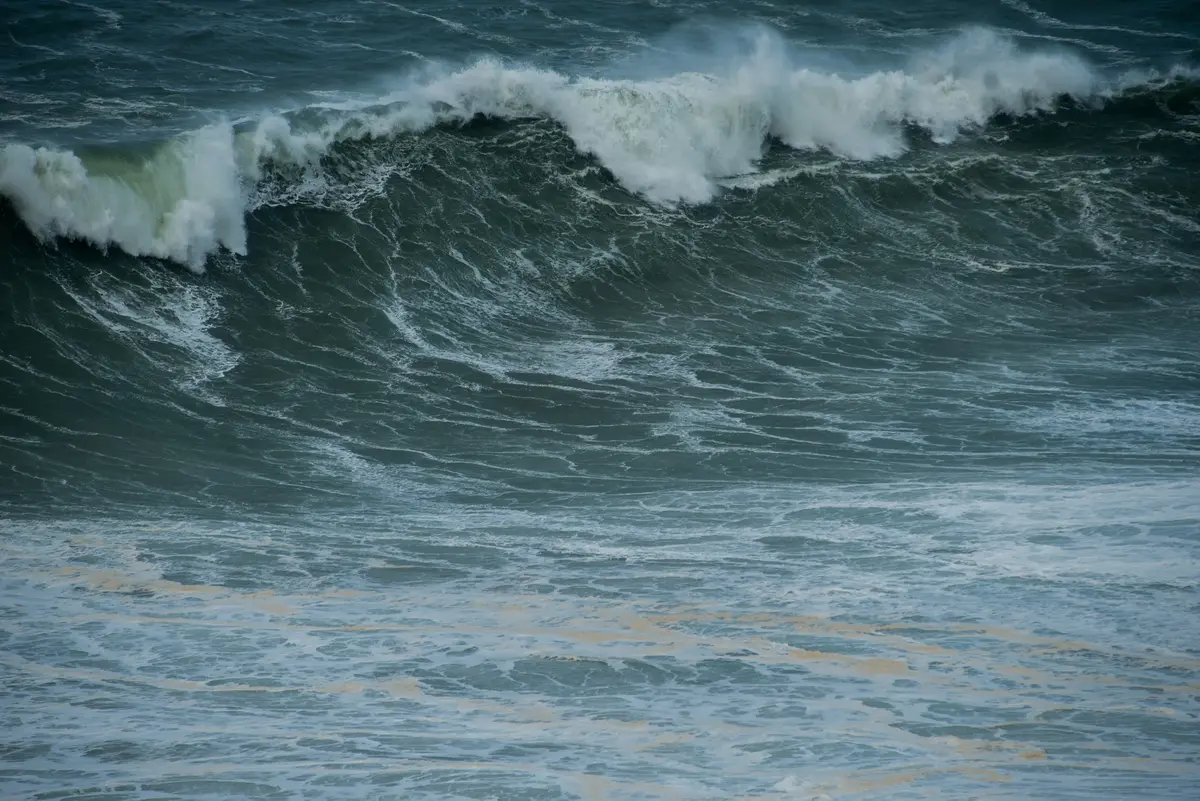
When a big Atlantic swell hits, Nazaré’s giant waves stop looking real. The underwater Nazaré Canyon — deeper than 16,000 feet (4,880 m) and running almost straight at the shore — funnels and stacks the swell into walls of water you can watch from the clifftop.
Nazaré is worth the trip from roughly October to March, when those canyon-fed swells can top 50 feet. Outside that window it’s a pleasant fishing town and not much more, so time your visit if the waves are the point. Watch from the Fort of São Miguel Arcanjo up in Sítio, the cliff-top old town.
The numbers behind the legend are real. The Guinness-validated record for the largest wave ever surfed is 86 feet (26.2 m), ridden by Sebastian Steudtner off Praia do Norte on 29 October 2020 and measured by the World Surf League. Garrett McNamara’s 78-foot ride first put the break on the global map. On a big-swell day, spray carries all the way up to the Sítio clifftop, around 200 feet above the water, and you can taste salt on your lips standing well back from the edge.
Pro Tip: Watch from the fort terrace, not the rocks below. Rogue waves at Praia do Norte have swept tourists off the lower shelves. Stay back from the edge even when the sea looks calm.
- Best season: October to March for the big waves
- Where to watch: Fort of São Miguel Arcanjo, Sítio (upper town)
- Cost: free to watch; the lighthouse surf exhibit runs a few dollars
- Time needed: half a day with the fort and the beach
Beyond Nazaré: Aveiro, Costa Nova, and Figueira da Foz
The rest of the Silver Coast is gentler. Aveiro spreads along a lagoon laced with canals, where flat-bottomed moliceiro boats — built to haul seaweed, now repurposed for sightseeing — run roughly 45-minute tours every half hour or so through the day. A few minutes away, Costa Nova lines its seafront with candy-striped houses, originally fishing-gear sheds painted in bold bands so crews could spot their own from the water. Figueira da Foz adds one of the widest beaches in the country, and Peniche is the jumping-off point for the wild Berlengas Islands.
UNESCO Monasteries and the University City of Coimbra
Coimbra’s University and its golden Joanina Library are the region’s cultural heart; nearby, the “ABT” monasteries — Alcobaça, Batalha, and Tomar’s Convent of Christ — form one of Europe’s great circuits of medieval monasteries. See the library plus at least one monastery. If time is tight, make the one the Templar Convent of Christ in Tomar.
Coimbra and the Joanina Library
The University of Coimbra dates to 1290 and carries a UNESCO listing, but the moment everyone comes for is the Biblioteca Joanina: a baroque hall of gilded woodwork and tens of thousands of volumes. Entry runs in 20-minute timed slots with only 60 people inside at a time, so the visit can feel rushed if you don’t plan it.
The library’s strangest feature is also its smartest. Two small bat colonies live in the hall and eat the insects that would otherwise eat the books, which is why staff drape the antique tables in leather sheets each night to protect them from droppings. Below the library you pass through the old academic prison, where unruly students were once locked up.
- Ticket: around $15 for an adult (university complex plus Joanina Library)
- Access: 20-minute timed slots, 60 people maximum — book ahead
- Time needed: 2 to 3 hours for the full complex
The “ABT” Monasteries: Alcobaça, Batalha, and Tomar
The Convent of Christ in Tomar is the showstopper, built and expanded by the Knights Templar and the later Order of Christ. Its core is the Charola, a 16-sided rotunda modeled on Jerusalem’s Holy Sepulchre, all cold stone and a damp, mineral, centuries-deep smell. Don’t miss the famous Manueline Window writhing with carved ropes, coral, and rigging.
Alcobaça holds the most human story in the region: the foot-to-foot tombs of King Pedro I and Inês de Castro, his murdered lover, placed so that at the Resurrection the two will rise and see each other first. Batalha counters with the soaring Founder’s Chapel, home to Henry the Navigator’s tomb, and a roofless set of “unfinished chapels” left open to the sky.
- Convent of Christ (Tomar): around $6.50
- Alcobaça cloisters and kitchen: around $6.50 (the church itself is free)
- Batalha: around $6.50 (one combined-route ticket runs higher — verify on site)
- Combined Heritage Route (all three monasteries): around $16
- Free entry: Sunday and holiday mornings until 2 PM
Pro Tip: A guided tour of the Convent of Christ costs roughly $16 on top of entry and roughly doubles what you take away from it — the Charola and the Templar symbolism reward a guide. If I had to send you to one monastery, I’d pick this one.
Fátima: What to Expect at One of the World’s Great Pilgrimage Sites
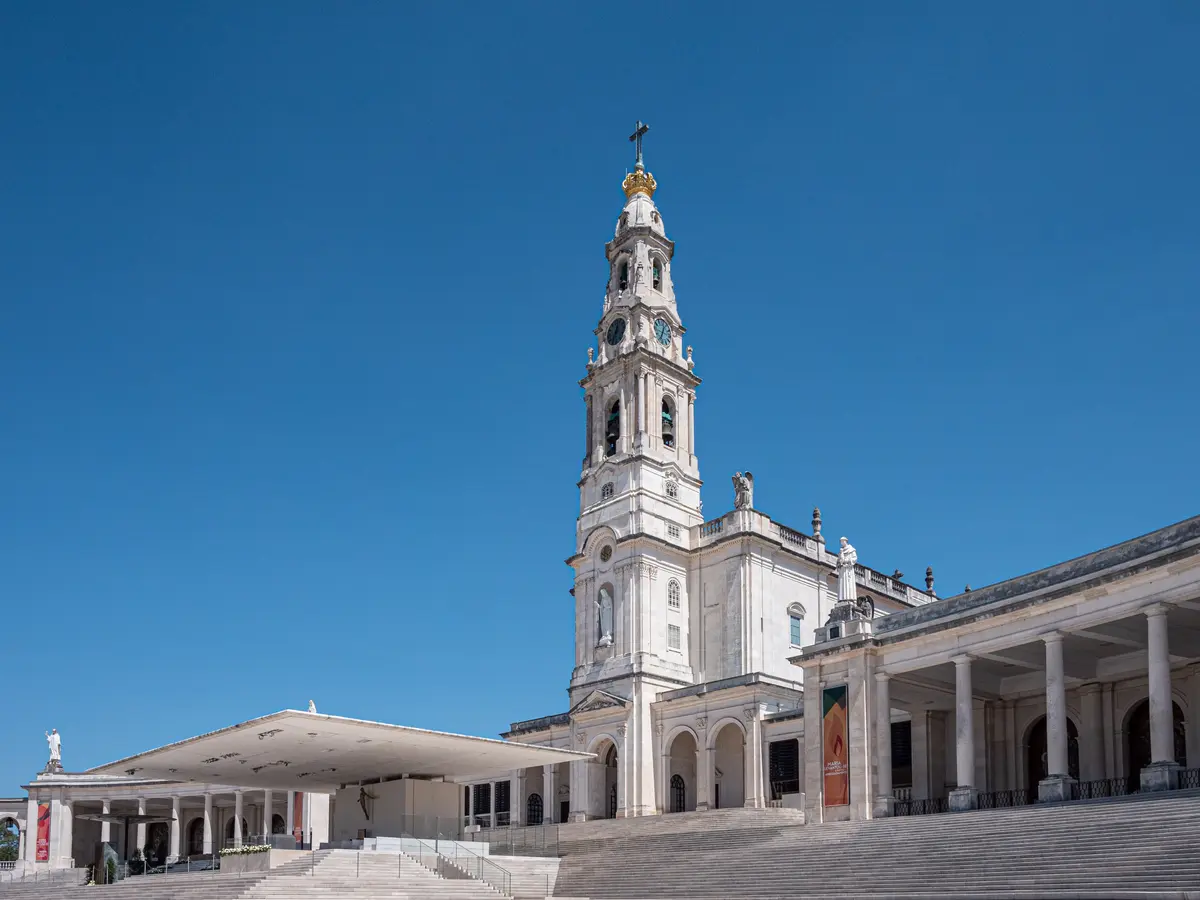
Fátima draws 6 to 8 million pilgrims a year to the spot where three shepherd children reported apparitions of the Virgin Mary in 1917. The sanctuary is calm most days but overwhelming on the 12th and 13th of each month from May to October, when candlelight processions fill the esplanade. Budget about three hours for a visit.
The story anchors everything here. The final apparition, on 13 October 1917, drew a crowd of around 70,000 who reported the “Miracle of the Sun.” On the two great monthly dates the numbers can approach a million, and the vast Basilica of the Holy Trinity alone seats about 8,600. The two youngest visionaries, Francisco and Jacinta, have since been canonized.
For secular visitors, honesty helps. Outside the big dates, Fátima can feel quiet and frankly commercial — long rows of stalls selling candles and souvenirs around a huge modern plaza. What transforms it is the evening of the 12th into the 13th, when thousands of candles move across the esplanade in procession. If you can time a visit to that, do; if not, it’s a short stop rather than a half-day.
- From Lisbon: about 1h10 by car, about 1h30 by bus (Rede Expressos)
- Time needed: roughly 3 hours
- Biggest dates: the 12th and 13th of each month, May to October
Serra da Estrela: Mainland Portugal’s Roof, With Snow in Winter
The Serra da Estrela is mainland Portugal’s highest range, topping out at Torre — 6,539 feet (1,993 m) — and home to the country’s only ski resort, open roughly December to March. In warmer months it’s for hiking glacial valleys and eating Queijo Serra da Estrela. The drive down the Zêzere Valley to Manteigas is one of Portugal’s best.
A small piece of trivia tells you a lot about the place: Torre’s true height fell just short of a round 2,000 meters, so a short tower was built on the summit to push it over. Most people come up for a selfie beside the retro radar domes — giant white “golf balls” that look beamed in from the 1950s — but the real payoff sits a couple of miles below, along the Zêzere Valley road. It’s best driven in spring and summer, when the route is clear of ice.
Winter flips the script. The Serra da Estrela Ski Resort near Torre runs about nine pistes and four lifts across roughly 4.8 miles (7.7 km) of runs — modest by Alpine standards, but the only lift-served snow in the country. Summit roads can close or require chains, so check conditions before you commit to the drive up.
Whatever the season, the local cheese is the edible souvenir. Queijo Serra da Estrela is a protected DOP cheese set with thistle flower instead of rennet, so soft at its peak that you cut off the top and scoop the center with a spoon.
- Highest point: Torre, 6,539 feet (1,993 m)
- Ski season: roughly December to March
- Best base: Manteigas, with the Burel Factory’s wool goods nearby
- Drive from Coimbra: about 2 hours
- Don’t miss: the Zêzere Valley road and a wedge of Queijo Serra da Estrela
The Schist Villages and Historic Stone Towns
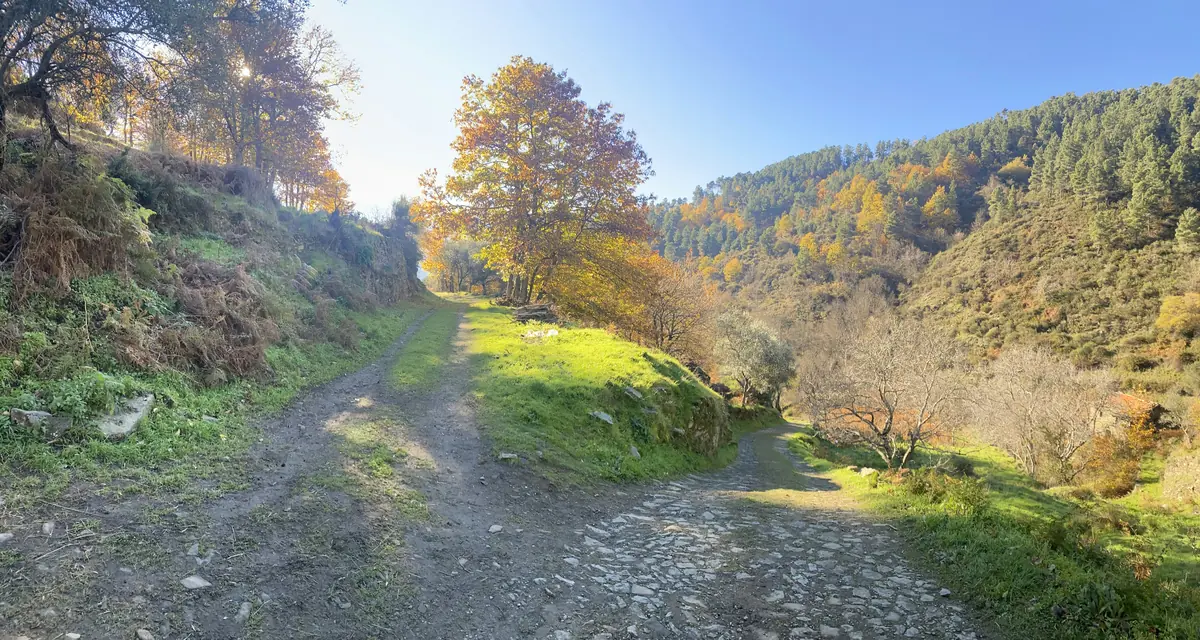
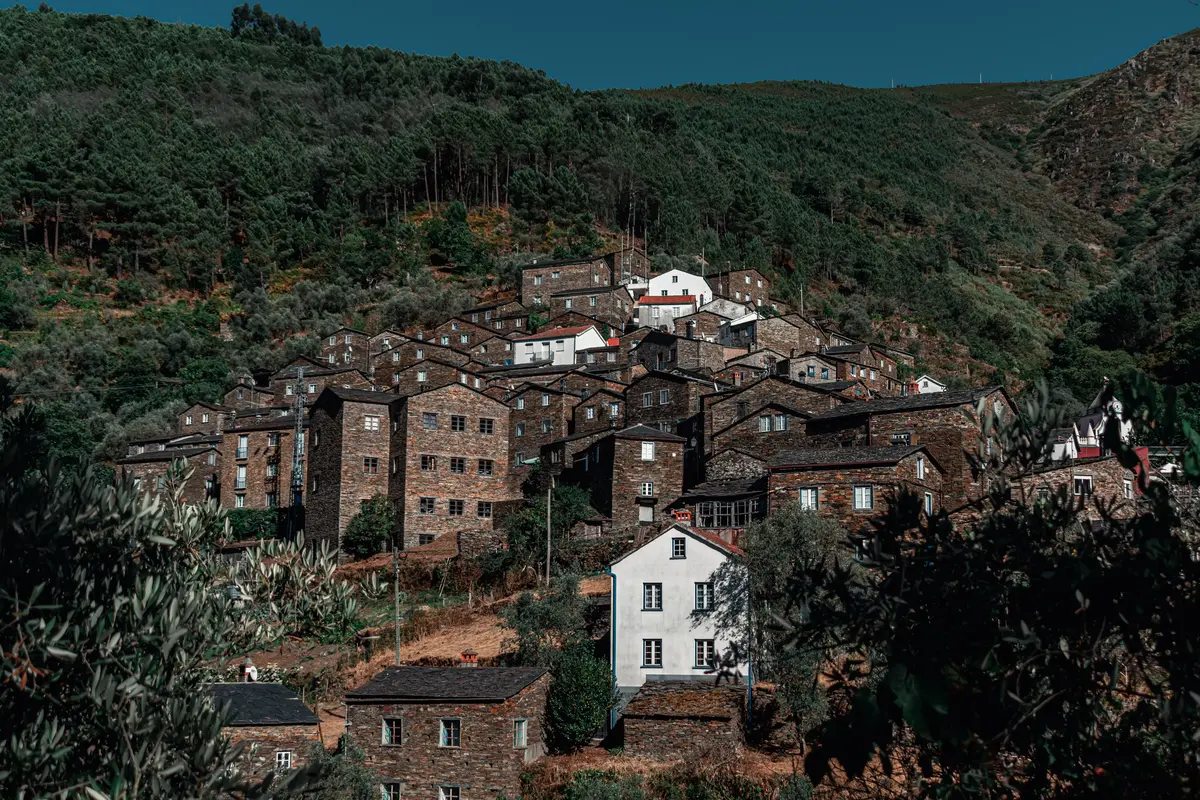
The Aldeias do Xisto are 27 restored schist villages tucked into the Lousã and Açor mountains; Piódão and Talasnal are the standouts. Most have no roads inside and little public transport, so you park on the approach and walk in. Pair them with the boulder-strewn fortress village of Monsanto and medieval Sortelha and Belmonte.
The network spreads across four clusters — a dozen villages in the Serra da Lousã, five in the Serra do Açor, six around the Zêzere, and four in the Tejo-Ocreza area. Talasnal sits about 25 miles (40 km) from Coimbra; you leave the car on the approach road and walk in along stone paths, since vehicles can’t thread the inner lanes. Piódão is the photogenic one, a stack of schist houses with blue-trimmed doors climbing a hillside in the Serra do Açor.
Then there’s a separate set worth weaving in: the 12 Aldeias Históricas, including Belmonte with its secret-Jewish heritage, walled Sortelha, and Linhares da Beira. The strangest of all is Monsanto, where granite boulders the size of cars sit on, under, and between the houses — the village was crowned the “most Portuguese village” in a famous national contest.
Pro Tip: Wear real shoes and drive to the upper car park where one exists. The lanes in Talasnal and Piódão are uneven, steep schist, and the little home-restaurant Ti Lena in Talasnal seats only about 28 people, so book ahead on weekends.
- Standouts: Piódão and Talasnal (schist); Monsanto (granite boulders)
- Access: drive in, park, and walk; minimal public transport
- Talasnal from Coimbra: about 25 miles (40 km)
- Road-trip add-ons: Belmonte, Sortelha, Linhares da Beira
What to Eat and Drink: Leitão, Mountain Cheese, Ovos Moles, and Dão Wine
Central Portugal eats by sub-region, and planning a route around its traditional Portuguese food is a legitimate strategy. Roast suckling pig (leitão) rules in the Bairrada around Mealhada; gooey Queijo Serra da Estrela comes from the mountains; egg-yolk ovos moles are an Aveiro specialty; sour-cherry ginjinha is poured in Óbidos; and chanfana goat stew turns up near Coimbra.
The headliner is leitão da Bairrada — a young pig spit-roasted for about two hours over a wood fire until the skin shatters like glass. The heartland is Mealhada, where restaurants line the old N1 road and a sit-down meal runs around $28 a head with the region’s sparkling red. Up in Aveiro, ovos moles fill thin wafer shells, often molded into shapes, with a sweet egg-yolk custard. Over in Óbidos, ginja sour-cherry liqueur arrives in an edible chocolate cup for about $1.50 to $2 on the main street, somewhere around 17 to 20 percent alcohol.
The Dão vs the Douro: Which Wine Region Wins?
For wine travelers, the Dão is the quiet upset. Where the Douro Valley runs to scale and river-cruise crowds, Dão estates are mostly small and family-run, open by appointment, with tastings often under $22 that feel like conversations rather than performances. Aged Dão reds, given 10 to 15 years, develop dried-cherry, iron, and forest-floor notes that hold their own against far pricier bottles. For terraced scenery and big-name port houses, the Douro still wins; for intimacy and value, the Dão takes it.
Central Portugal vs the Algarve, Lisbon, Porto and the Douro
Choose Central Portugal over the Algarve if you want history and authenticity over beach resorts; over Lisbon or Porto if you want countryside and road-tripping over a city break; and over the Douro if you want variety — coast, mountains, and heritage — rather than a single wine valley. Many travelers simply fold it into a Lisbon–Porto road trip.
| Region | Best For | Crowds | Relative Cost | Beaches | Signature Draw |
|---|---|---|---|---|---|
| Central Portugal | History, mountains, road trips | Low | $ | Cold, wild Atlantic | Monasteries, Nazaré, Serra da Estrela |
| Algarve | Beach resorts, golf | High | $$$ | Warm and sandy | Cliffs and warm-water beaches |
| Lisbon | City break, day trips | High | $$ | Nearby (Cascais) | Capital culture and food |
| Porto | City break, port wine | Medium-high | $$ | Limited | Port lodges and the riverfront |
| Douro | Wine cruising, scenery | Medium | $$$ | None (river) | Terraced wine valley |
The practical move for many first-timers is not to choose at all: drive Lisbon to Porto with three or four nights in the middle, and Central Portugal becomes the best part of the trip rather than a region you skipped.
A Sample Five to Seven Day Central Portugal Route
A balanced week: Days 1–2 in Coimbra and Aveiro, Day 3 the ABT monasteries, Day 4 Nazaré and Óbidos, Days 5–6 the Serra da Estrela and a schist village, Day 7 Viseu and the Dão. Start from Lisbon or Porto, and pick up a rental car on Day 3 when the cities give way to the interior.
- Days 1–2: Coimbra — the university, the Joanina Library, the old town — plus a day in Aveiro and Costa Nova
- Day 3: the ABT monasteries — Alcobaça, Batalha, and Tomar’s Convent of Christ (collect the car)
- Day 4: Nazaré from the Sítio fort, then Óbidos after the day-trip buses leave
- Days 5–6: the Serra da Estrela — Manteigas, the Zêzere Valley, Torre — and a schist village such as Piódão or Talasnal
- Day 7: Viseu and a Dão winery tasting before heading on to Porto or back to Lisbon
Two honest notes. Many monasteries and museums close on Mondays, so check before you build a day around one. And Óbidos is a crowded postcard by day — a 90-minute shuffle through shoulder-to-shoulder crowds — that turns genuinely lovely after the buses pull out around dinnertime. If I were rebuilding this route, I’d give the mountains an extra night; the Zêzere Valley deserves a slow morning, not a drive-through.
Best Time to Visit, and What to Pack
For the best time to visit, spring (April–May) and early autumn (September) are the sweet spot: warm days, thinner crowds, lower prices. Summer is best for beaches and river swimming but can push into the high 80s°F inland. Winter is quiet and cool, good for cities — and the only season for snow and skiing in the Serra da Estrela.
| Season | Coimbra Highs | Crowds | What’s On |
|---|---|---|---|
| Spring (Apr–May) | ~70°F (21°C) | Low | Wildflowers, ideal touring weather |
| Summer (Jun–Aug) | ~84°F (29°C) | High on the coast | Beaches, river swimming, festivals |
| Autumn (Sep–Oct) | ~75°F (24°C) | Moderate | Wine harvest, fewer crowds |
| Winter (Dec–Feb) | ~58°F (14°C) | Low | Cities and Serra da Estrela skiing |
Coimbra has a Mediterranean climate with around 2,800 hours of sun a year; the wettest stretch runs October to December, and winter lows hover near 41°F (5°C). The broad best window is April to October.
For packing, plan for two climates at once: layers and a light jacket for the interior, where the mountains stay cool even in summer, and a windbreaker for the coast, since the Atlantic breeze bites at Nazaré and Figueira da Foz regardless of the month. Bring real walking shoes for cobbled old towns and schist lanes, and add warm gear and tire chains if the snow is part of the plan.
The Bottom Line on Central Portugal
TL;DR: Central Portugal rewards travelers willing to slow down — UNESCO history, giant waves, mountains, and underrated wine, with fewer crowds and lower prices than the Algarve. Base in Coimbra, give it five to seven days, and rent a car for the interior. Fold it into a Lisbon–Porto trip and it may end up your favorite stretch of the whole journey.
So which corner would you build your week around — Nazaré’s waves, the monasteries of Tomar and Alcobaça, or a quiet Dão tasting? Drop your plan in the comments and tell me what you’d add or cut.