Closer to Canada than to Lisbon, the Azores are nine green volcanic islands sitting in the middle of the Atlantic — and one of the few corners of Europe you can reach nonstop from the US East Coast in about five hours. Here is what the Azores Portugal really are, who should go, and exactly how to get there.
Here are the essentials before we go deeper:
- What: Nine volcanic islands, an autonomous region of Portugal
- Where: Mid-Atlantic, about 900 miles (1,400 km) west of Lisbon
- Getting there: Nonstop in roughly 5 hours from Boston to Ponta Delgada (PDL)
- When to go: Late spring through early fall
- Currency: Euro (€)
- Rental car: Yes — you’ll need one
- How long: 5 to 7 days minimum
What and Where Are the Azores?
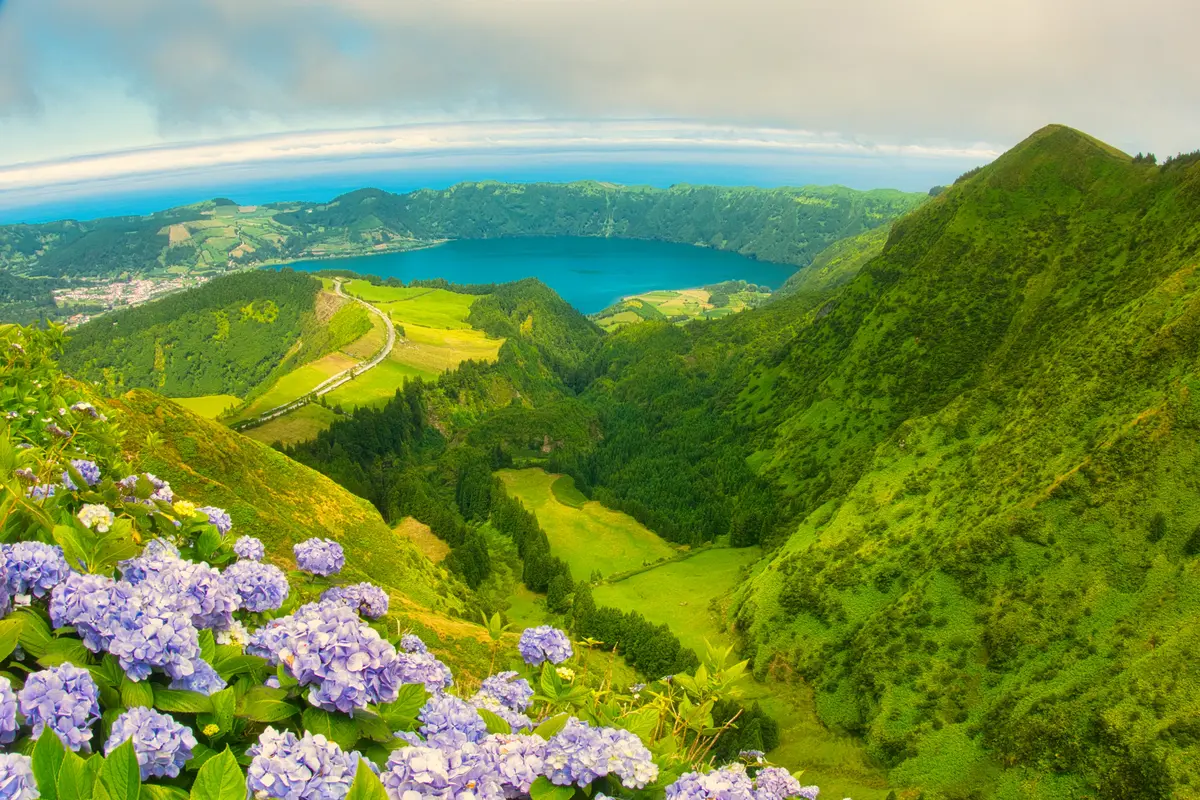
The Azores are an autonomous region of Portugal — an archipelago of nine volcanic islands in the North Atlantic, about 900 miles (1,400 km) west of mainland Portugal. They fall into three groups: Eastern (São Miguel, Santa Maria), Central (Terceira, Graciosa, São Jorge, Pico, Faial), and Western (Flores, Corvo).
That distance is worth pinning down, because the encyclopedias disagree on it. Some sources cite roughly 1,000 miles, others closer to 870 miles to the nearest point of the mainland. Measured to Lisbon, the practical answer most travelers care about is around 900 miles — far enough out that the islands keep their own weather, their own time zone, and a culture that feels distinct from the Portugal of postcards.
São Miguel is the largest and most populated island, and it dominates tourism. It accounts for roughly 71% of all hotel and local-accommodation overnight stays in the region, which tells you how lopsided the visitor map really is. Ponta Delgada, on São Miguel’s south coast, is the capital and the main point of arrival.
The whole archipelago is home to about 236,657 residents at the last census, with the regional government putting the figure closer to 250,000. The islands sit at a geological crossroads where three tectonic plates meet, which is why the landscape is all calderas, hot springs, and steaming fumaroles. The “Hawaii of Europe” nickname gets overused, but the volcanic-island shorthand is fair.
How Do You Get to the Azores From the US?
From the US East Coast, the Azores are surprisingly close. Azores Airlines flies nonstop from Boston to Ponta Delgada in about five hours, covering roughly 2,400 miles (3,900 km). If you can’t find a nonstop, connect through Lisbon or Porto on the Portuguese mainland, or route via Newark.
The hard numbers, for the feasibility-checkers:
- Nonstop time: About 5 hours 5 minutes, Boston (BOS) to Ponta Delgada (PDL)
- Distance: Roughly 2,403 miles (3,866 km)
- Carrier: Azores Airlines (SATA) is the only nonstop operator on this route, with around 6 weekly departures
- One-stop options: Via Newark on United, or via Lisbon on TAP
- Main hub: João Paulo II Airport (PDL) in Ponta Delgada; Terceira also takes some international flights
This route is busier than most Americans realize. Americans are the largest single group of foreign visitors to the Azores — just over a fifth of the foreign total, narrowly ahead of Spain and Germany. The demand is there; the page that helped you find it usually isn’t.
Is the Azores Worth Visiting? An Honest Take
Yes — but not for everyone, and not for the reasons the “Hawaii of Europe” label suggests. This is a nature-and-hiking destination with cool seas and fast-moving weather, not a beach-resort holiday. Get that straight before you book and you’ll love it.
Go if this sounds like your kind of trip:
- Volcanic scenery: crater lakes, calderas, black-sand coves, steaming geothermal fields
- Whale watching, hiking, and natural hot springs as the main events
- Low crowds compared with most of Western Europe, and strong value for the money
- A genuinely safe, low-stress place to drive and explore
Think twice if you want any of these:
- Warm swimming — the ocean hovers around 73°F (23°C) even at the height of summer, over dark volcanic sand
- Reliable sunshine — locals joke about “four seasons in a day,” and they mean it
- Nightlife or a buzzy resort scene — there isn’t much, and that’s the point for most visitors
One honest caveat on the “undiscovered” framing you’ll see everywhere: it’s overstated. Visitor numbers are climbing, and São Miguel’s headline spots get genuinely busy in summer. The Azores are quieter than the Algarve, not empty.
A Quick Tour of the Nine Islands
You don’t have to see all nine. Most first-timers pick one or two and go deep. Here’s the one-line identity of each so you can self-select:
| Island | Group / Nickname | Known For | Days to Allow |
|---|---|---|---|
| São Miguel | Eastern, “the Green Island” | Sete Cidades, Furnas, the gateway | 4+ |
| Santa Maria | Eastern | Beaches, sun, the warmest and driest weather | 2-3 |
| Terceira | Central | UNESCO-listed Angra do Heroísmo, street bull runs | 2-3 |
| Graciosa | Central | UNESCO Biosphere Reserve, a sulfur cavern | 1-2 |
| São Jorge | Central | São Jorge cheese, dramatic coastal fajãs, hiking | 2-3 |
| Pico | Central | Portugal’s highest mountain, UNESCO wine country | 2-3 |
| Faial | Central, “the Blue Island” | Horta marina, the Capelinhos volcano | 2 |
| Flores | Western | The most dramatic scenery and waterfalls | 2-3 |
| Corvo | Western | Tiny (about 400 residents), serious birding | 1 |
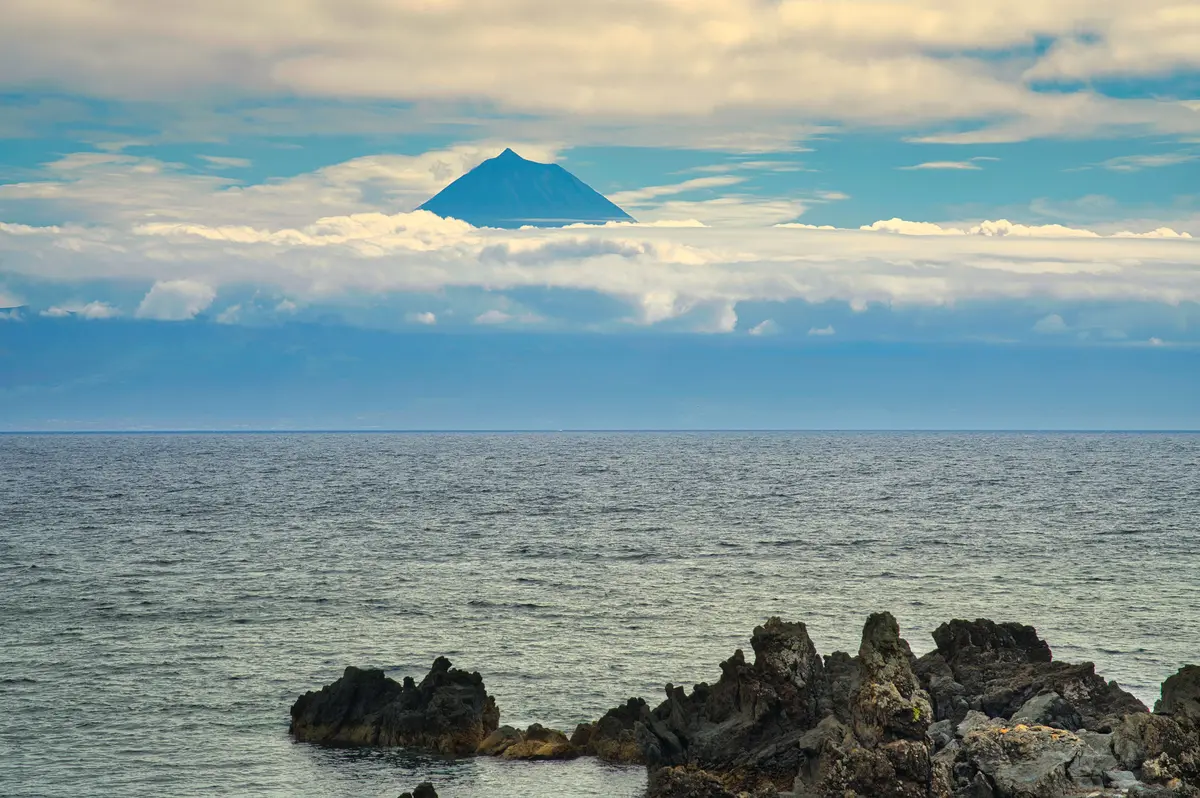
Three of the Central islands — Pico, Faial, and São Jorge — sit close enough to form what locals call the Triangle, linked by short ferries. That makes them the natural choice if you actually want to island-hop. Pico is also home to the namesake mountain, the highest point in all of Portugal at 7,713 feet (2,351 m).
When Is the Best Time to Visit the Azores?
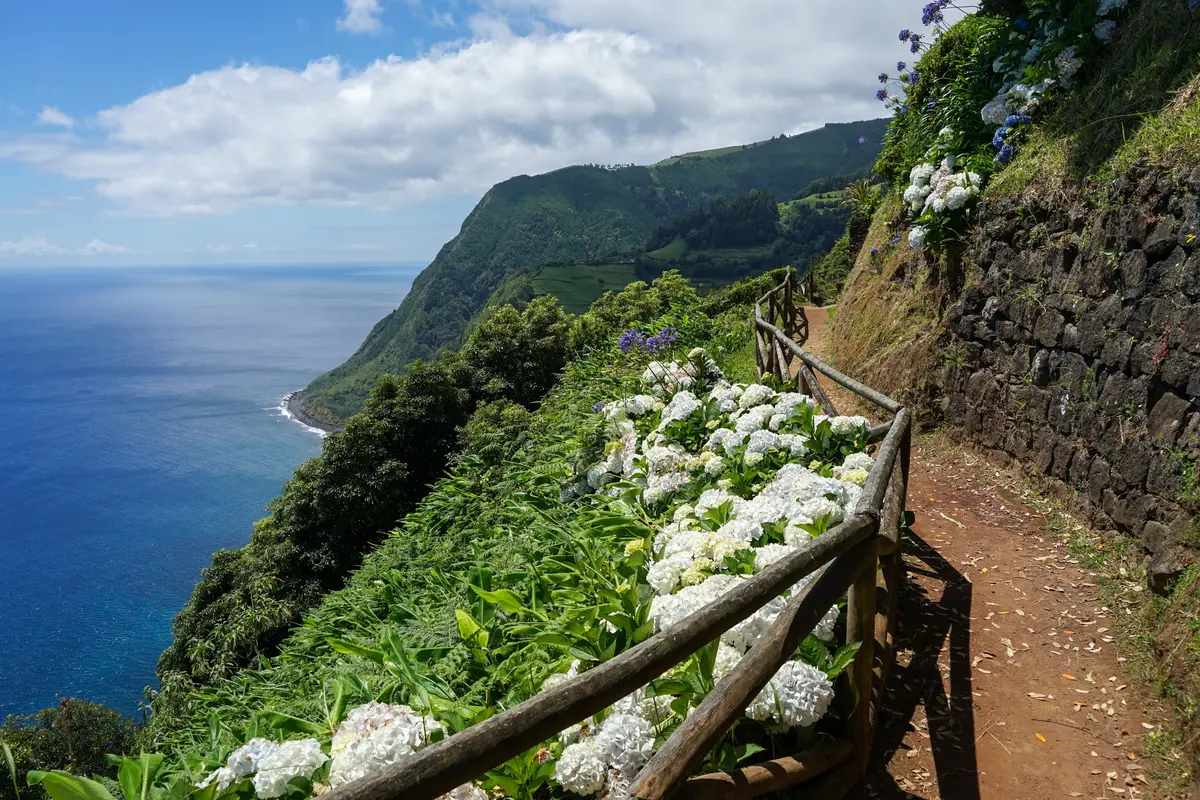
The best time to visit the Azores is roughly late spring through early fall, when seas calm down and rain eases. Summer is warmest and busiest, spring is prime for whale watching, and mid-summer brings the blue hydrangeas the islands are known for. Whatever month you pick, pack layers and a rain jacket.
Match the month to what you came for:
- Year-round daytime temps: Mostly between 57°F and 77°F (14-25°C)
- Whale watching peak: April and May, when migrating blue and fin whales pass through
- Hydrangea bloom: June through August, peaking in mid-to-late July
- Warmest sea: About 73-75°F (23-24°C) at the height of summer
Here’s a trick repeat visitors and locals use: the SpotAzores network of live webcams. Before driving up to a viewpoint like Sete Cidades or Lagoa do Fogo, they check the camera feed, because a spot that’s socked in with fog at 9 a.m. can be clear by noon. It saves a wasted drive on a four-seasons-in-a-day kind of morning.
How Many Days Do You Need, and Should You Island-Hop?
Give the Azores at least 5 to 7 days. Spend four full days on São Miguel alone for the widest range of scenery, or split a week between two nearby islands. With ten or more days, add a third island such as Pico or Faial. Resist cramming islands — the logistics will wear you out.
This is the call most guides won’t make, so here it is plainly: go deep before you hop. São Miguel alone holds Sete Cidades, the Furnas geothermal valley, and Lagoa do Fogo, and you can fill four unhurried days without repeating yourself. Every island you add means another transfer, another car rental, another weather gamble.
The practical shape of a trip:
- São Miguel: About 4 days minimum to do it justice
- One or two islands: 5 to 7 days total
- The Triangle (Pico, Faial, São Jorge): Ferry-linked and built for hopping
- Inter-island travel: Flights run on Azores Airlines; ferries run on Atlânticoline
- Faial to Pico ferry: Around 30 minutes across the channel
One warning the brochures skip: inter-island flights are small propeller planes, and they get cancelled or delayed by weather. Build a buffer day before any onward international flight so a fogged-in transfer doesn’t cost you your trip home.
The Experiences That Define an Azores Trip
A handful of experiences are genuinely hard to replicate anywhere else, and they’re what most people remember. Here are the ones worth planning around, each with the detail that matters.
Sete Cidades and the Twin Crater Lakes
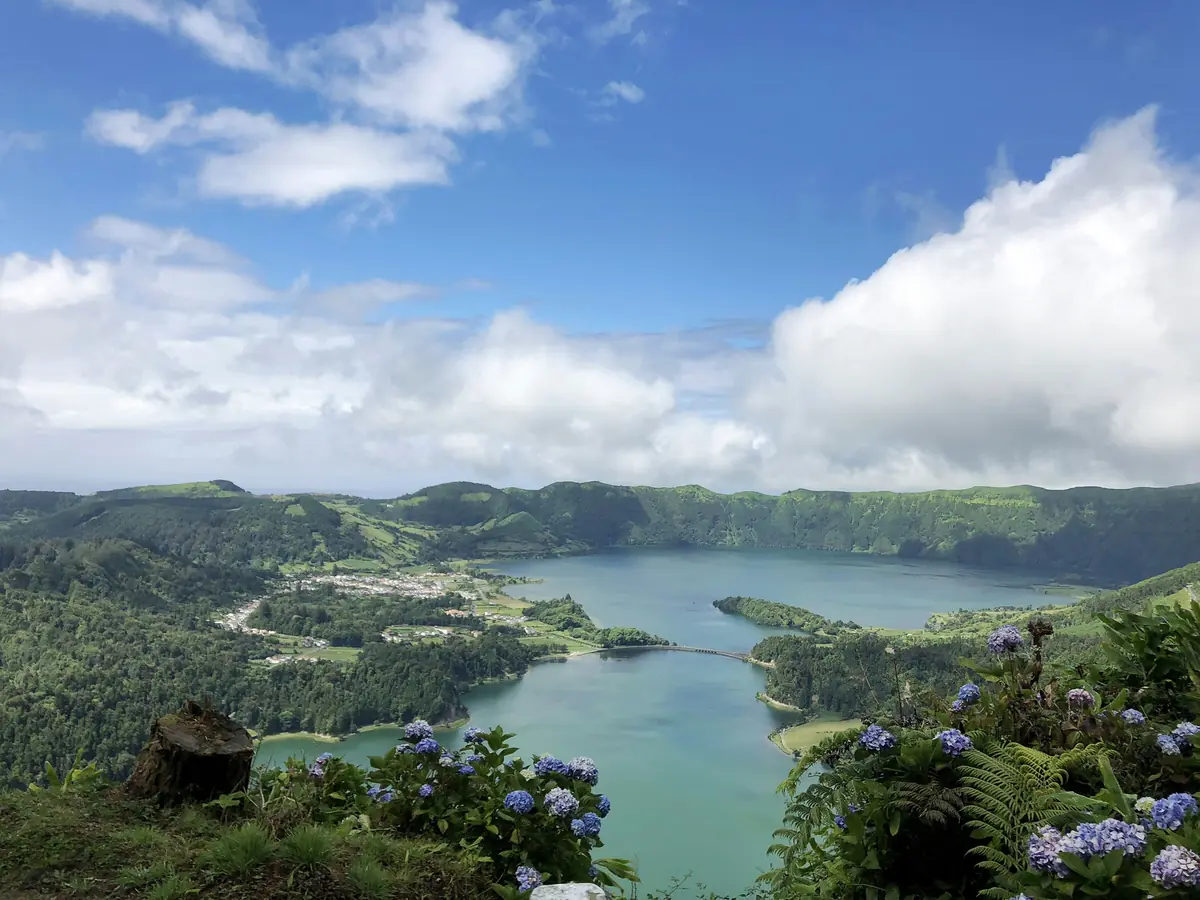
Two lakes share a single collapsed crater on São Miguel’s west end: Lagoa Azul, which reads blue, and Lagoa Verde, which reads green. It’s counted among Portugal’s seven natural wonders, and it sits roughly 16 miles from Ponta Delgada. The classic overlook is Vista do Rei, though the view depends entirely on whether the crater is clear or buried in cloud.
Cozido das Furnas, Cooked in the Ground
In the village of Furnas, restaurants lower sealed pots of meat and vegetables into holes in the volcanic earth and let geothermal heat slow-cook the stew — the islands’ version of a classic Portuguese dish — for six to seven hours. A portion typically runs about $16-27 (€15-25) per person, and most places want the order placed a day ahead.

The Furnas Hot Springs
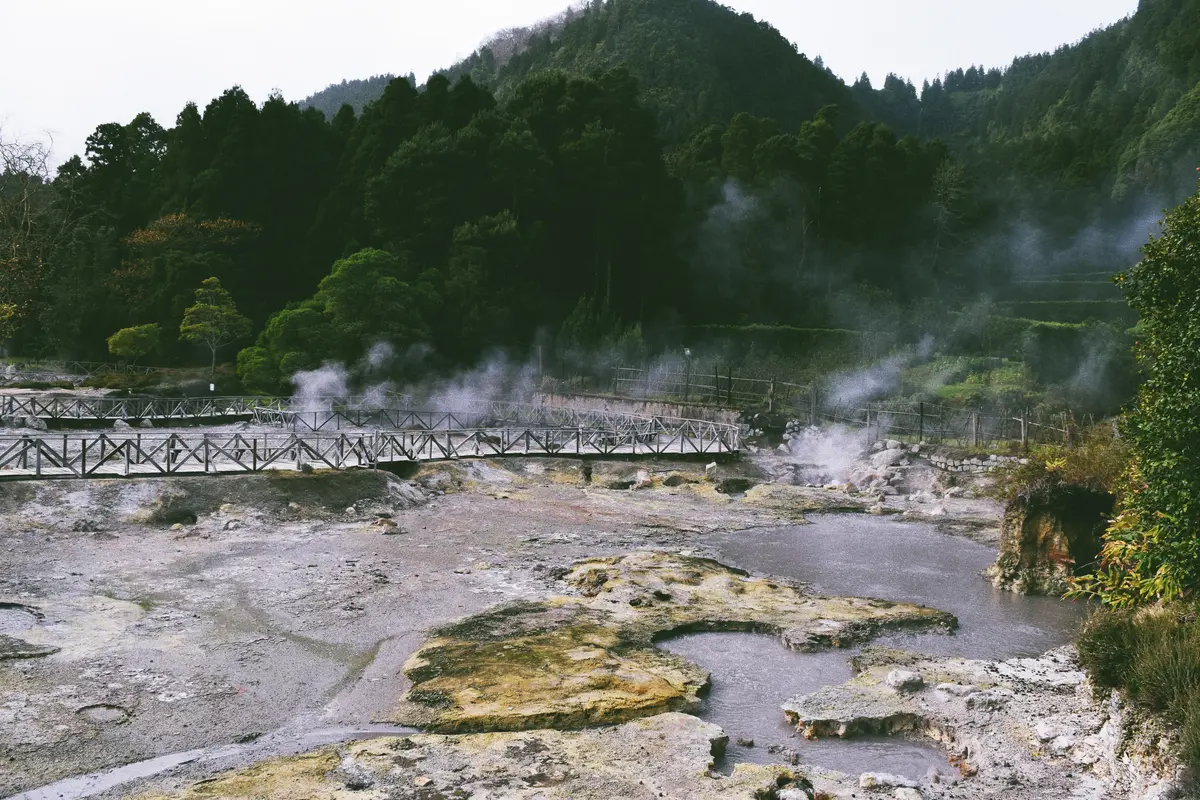
Furnas is one of the few places where you can soak in a natural geothermal pool with iron-rich water. The headline soak is the Terra Nostra thermal pool, which sits around 104°F (40°C). Fair warning that’s not a trade secret: the iron stains light-colored swimsuits a rusty orange, so wear something dark. Poça da Dona Beija and Caldeira Velha are smaller alternatives nearby.
Gorreana, Europe’s Oldest Tea Plantation
São Miguel grows tea — the only place in Europe that does so commercially at any scale. Gorreana, founded in 1883, is described as the oldest surviving tea plantation in Europe, producing roughly 30 to 40 tons a year. Factory entry and tastings are free, which makes it an easy stop on a north-coast drive.
Whale Watching in the Atlantic
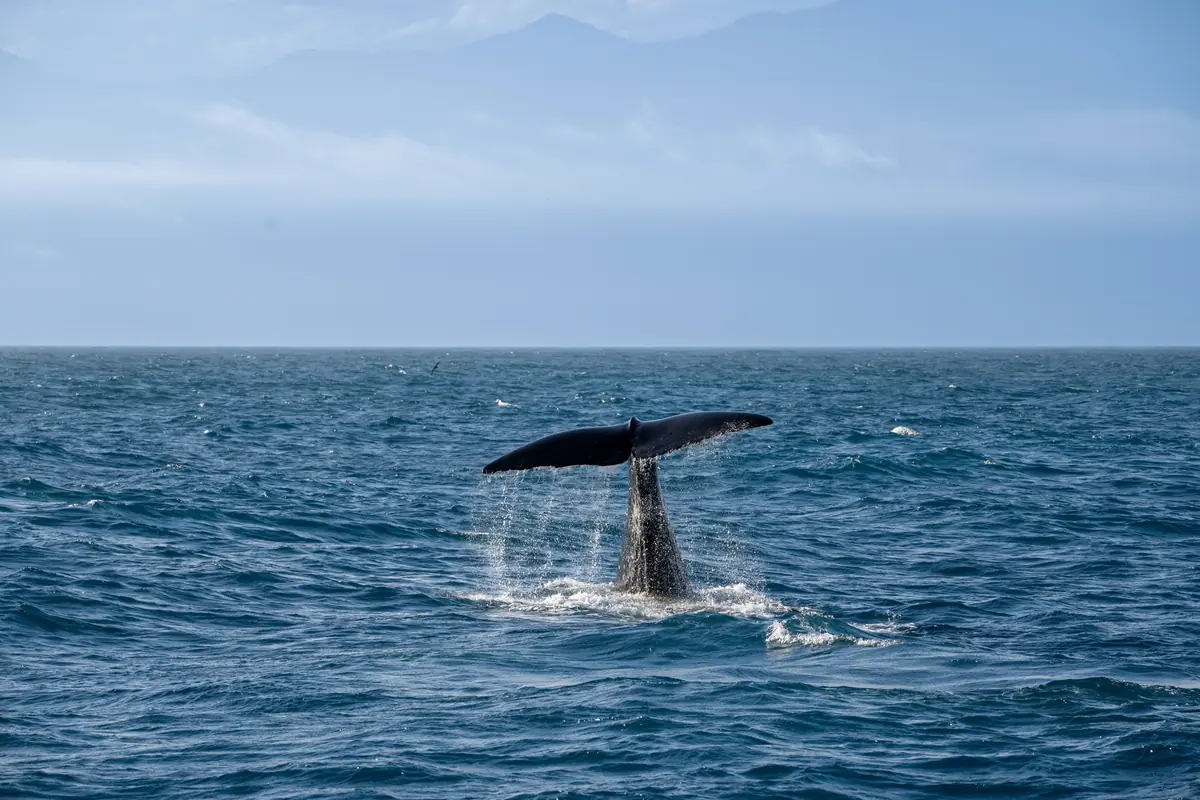
The waters around the Azores have recorded 28 cetacean species — about a third of all the whale and dolphin species known worldwide. Resident sperm whales are around much of the year, while spring brings the migrating giants, the blue and fin whales. Trips run from several harbors, with Ponta Delgada the most common base.
Climbing Mount Pico
Pico is a serious half-day-plus undertaking, not a stroll. The trail climbs to 7,713 feet (2,351 m), check-in at the Casa da Montanha base hut is mandatory, and you carry a GPS tracker for safety. The descent over loose volcanic rock is harder on the knees than the climb is on the lungs.
What Does an Azores Trip Cost?
The Azores are good value by Western European standards. Outside peak summer, a mid-range traveler can plan on roughly $150 to $240 a day for a hotel, meals, and a rental car — and many of the best sights, from calderas to waterfalls to hot-spring fields, are free or cost only a few dollars. Flights are usually the biggest single expense.
| Travel style | Roughly per day |
|---|---|
| Budget | About $155 |
| Mid-range | About $240 |
| Luxury | About $460 |
The per-item anchors most guides leave out:
- Compact rental car: About $27-49 a day (€25-45)
- Inter-island flight: Around $43-87 each way (€40-80)
- Inter-island ferry: Around $11-32 (€10-30)
- Cozido das Furnas: About $16-27 per person (€15-25)
- A main dish in a village restaurant: About $11-16 (€10-15)
- Most natural attractions: Free, or about $5-11 (€5-10)
Because flights swing the budget more than anything on the ground, that’s where to spend your planning energy. The islands themselves are cheap to enjoy once you’re there.
Before You Go: Entry, Money, and Getting Around
A few practical points that stale guides tend to get wrong:
- Currency: The euro. Cards work almost everywhere, but carry some cash for rural cafes and small attractions.
- Language: Portuguese, with English widely spoken in anything tourism-facing.
- Getting around: A rental car is effectively essential. Public buses are built for commuters, not for crater lakes and trailheads.
- Time zone: The Azores keep their own zone (UTC+0), one hour behind mainland Portugal.
On entry rules, here’s the honest version, because this is the part most likely to change. US citizens can visit the Azores on a valid passport for short tourist stays — no visa required. The EU is introducing two border systems that affect non-EU visitors: the Entry/Exit System (EES), which logs entries and exits electronically, and ETIAS, a travel authorization that visa-exempt travelers like Americans will buy online for about $22 (€20), valid for up to three years. The rollout dates for ETIAS have moved more than once, so confirm what applies to your dates on the official EU travel site before you book rather than trusting any single guide.
Frequently Asked Questions
How Long Is the Flight to the Azores From the US?
From Boston, Azores Airlines flies nonstop to Ponta Delgada in about five hours and five minutes, covering roughly 2,403 miles — making the Azores one of the closest slices of Europe to the US East Coast. If no nonstop is available, travelers typically connect through Newark or through Lisbon on mainland Portugal.
How Many Days Do You Need in the Azores?
Plan for at least five to seven days. Four full days on São Miguel alone covers the widest range of scenery — Sete Cidades, the Furnas geothermal valley, and Lagoa do Fogo. With ten or more days you can comfortably add a second or third island, such as Pico or Faial, linked by a roughly 30-minute ferry.
What Is the Best Time to Visit the Azores?
Late spring through early fall offers the calmest seas and least rain, with daytime temperatures generally between 57°F and 77°F. Spring is best for whale watching as blue and fin whales migrate through, and the blue hydrangeas peak in mid-to-late July. Pack layers year-round, because the weather shifts quickly.
Do You Need a Car in the Azores?
Yes, on nearly every island. Public buses are infrequent and built for commuters, not for the viewpoints, crater lakes, hot springs, and trailheads that make the islands worth visiting. A compact rental car runs roughly $27-49 a day (€25-45) outside peak summer, and the quiet, well-maintained roads are easy to drive.
Is the Azores Expensive?
By Western European standards, the Azores are good value. A mid-range traveler can plan on roughly $240 a day for a hotel, meals, and a rental car, while budget travelers manage closer to $155. Many headline attractions — calderas, waterfalls, and volcanic hot-spring fields — are free or cost only a few dollars.
Before You Book the Flight
TL;DR: The Azores are a five-hour nonstop from Boston, good value, and built for hikers and nature travelers rather than beach loungers. Give yourself at least 5 to 7 days, rent a car, go deep on São Miguel before you island-hop, and pack for four seasons in a day.
The thing to hold onto about the Azores Portugal is that the hard part isn’t getting there — it’s resisting the urge to see everything. Pick one or two islands, slow down, and let the weather do what it wants.
Which island are you eyeing first — São Miguel for the crater lakes and hot springs, or Pico for the climb and the wine? Tell me in the comments.