Most visitors to Puerto Rico see Old San Juan, a beach, and call it a trip. They miss the better island: a wet, mountainous interior where rivers carve plunge pools you can actually swim in. This guide covers the seven waterfalls in Puerto Rico worth a rental car and a wet pair of sneakers — what they cost, how hard they are, and which one to skip.
Which waterfalls in Puerto Rico are actually worth visiting?
The seven waterfalls in Puerto Rico worth your time split roughly into three buckets: roadside photo stops you can see in 10 minutes, easy private-land swims with parking attendants and a fee, and rough hikes that filter out the cruise-ship crowds. The chart below sorts them by effort versus payoff so you can match a fall to your day.
| Waterfall | Region | Best for | Hike difficulty | Swimming |
|---|---|---|---|---|
| La Coca Falls | East (El Yunque) | Photos, accessibility | Roadside | No |
| Juan Diego Falls | East (El Yunque) | Two-tier swim | Easy to moderate | Yes |
| Gozalandia Falls | West (San Sebastián) | Families, rope swings | Easy | Yes |
| Salto Curet | West (Maricao) | Seclusion, real adventure | Strenuous | Yes |
| Chorro de Doña Juana | Central (Orocovis) | Scenic drive, photos | Roadside (scramble to swim) | Yes |
| Las Tinajas | East (Ceiba/Fajardo) | Rope swing, rock slide | Moderate | Yes |
| Charco El Hippie | East (Naguabo) | Local vibe, petroglyphs | Moderate | Yes |
What’s the deal with El Yunque — do you still need a reservation?
You do not. The timed-entry reservation system on road PR-191 North was suspended in August 2023. Entry to El Yunque National Forest‘s main recreational corridor is now free and first-come, first-served, with the gate opening at 8 a.m. and a hard cap of 200 cars. When the lot fills, the gate closes and lets in one car for every car that leaves.
A few things the old guides still get wrong:
- The PR-191 corridor is free. There is no longer any vehicle fee or Recreation.gov booking.
- The recreation corridor closes at 5 p.m. — start exiting by 4:45 p.m.
- El Portal Visitor Center, just before the main gate, is a separate paid site: $8 for visitors 16 and older, free for kids 15 and under, open 8 a.m. to 4 p.m. You don’t need to stop here to access the falls.
- There’s no potable water in the forest right now during ongoing reconstruction. Bring your own.
Pro Tip: Be at the PR-191 gate by 7:45 a.m. on weekends. The lot routinely fills before 10 a.m. between December and April, and once you’re stuck in the first-out, first-in queue, you can lose 90 minutes of your day to the parking dance.
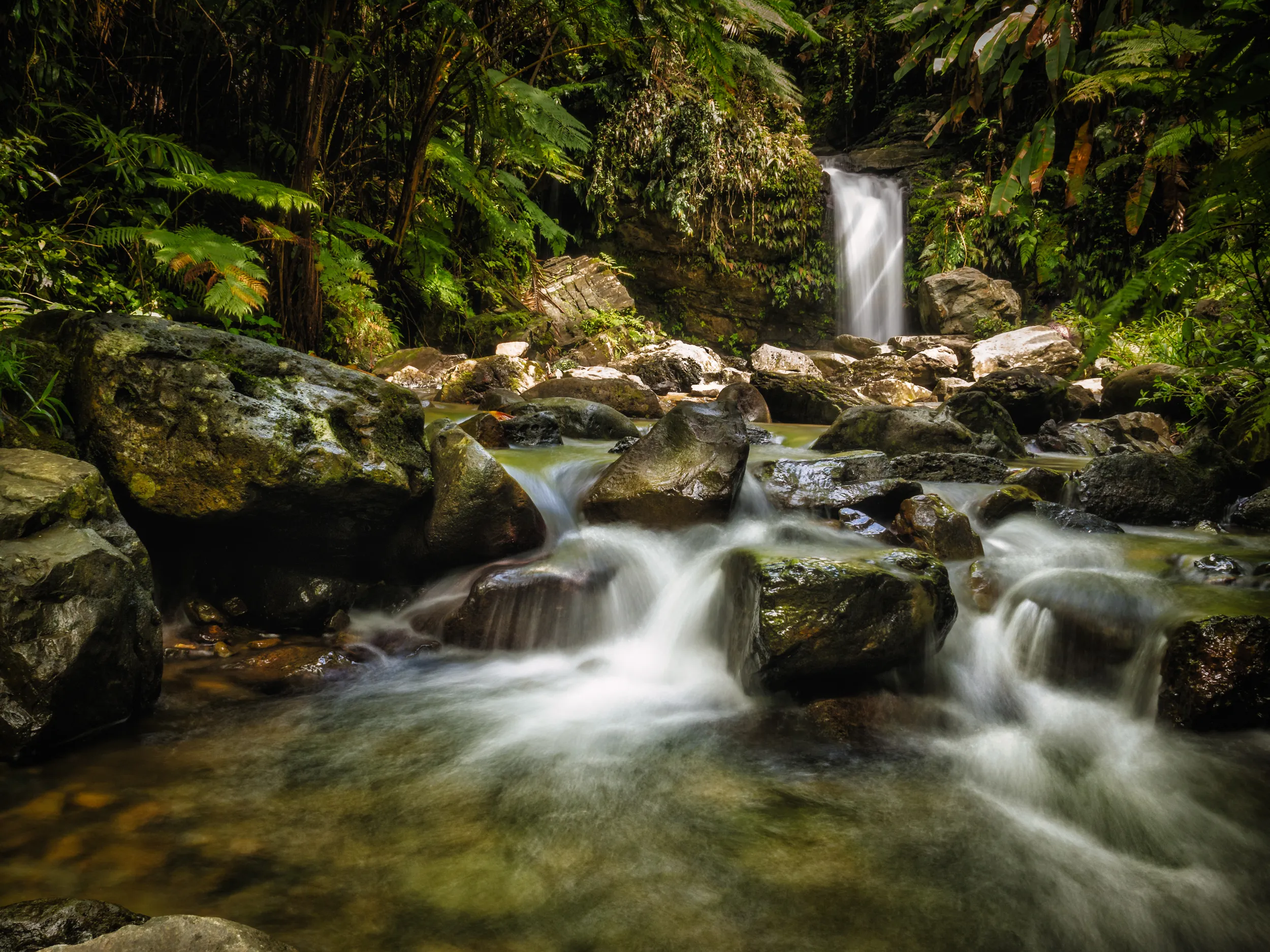
El Yunque is roughly 29,000 acres and the only tropical rainforest in Puerto Rico — and the only one in the U.S. National Forest System, which is why it’s the most-visited and most-photographed waterfall zone on the island. Two cascades inside the corridor are worth your time. A third — La Mina Falls, the famous one — is still closed.
Juan Diego Falls — the two-for-one swim spot
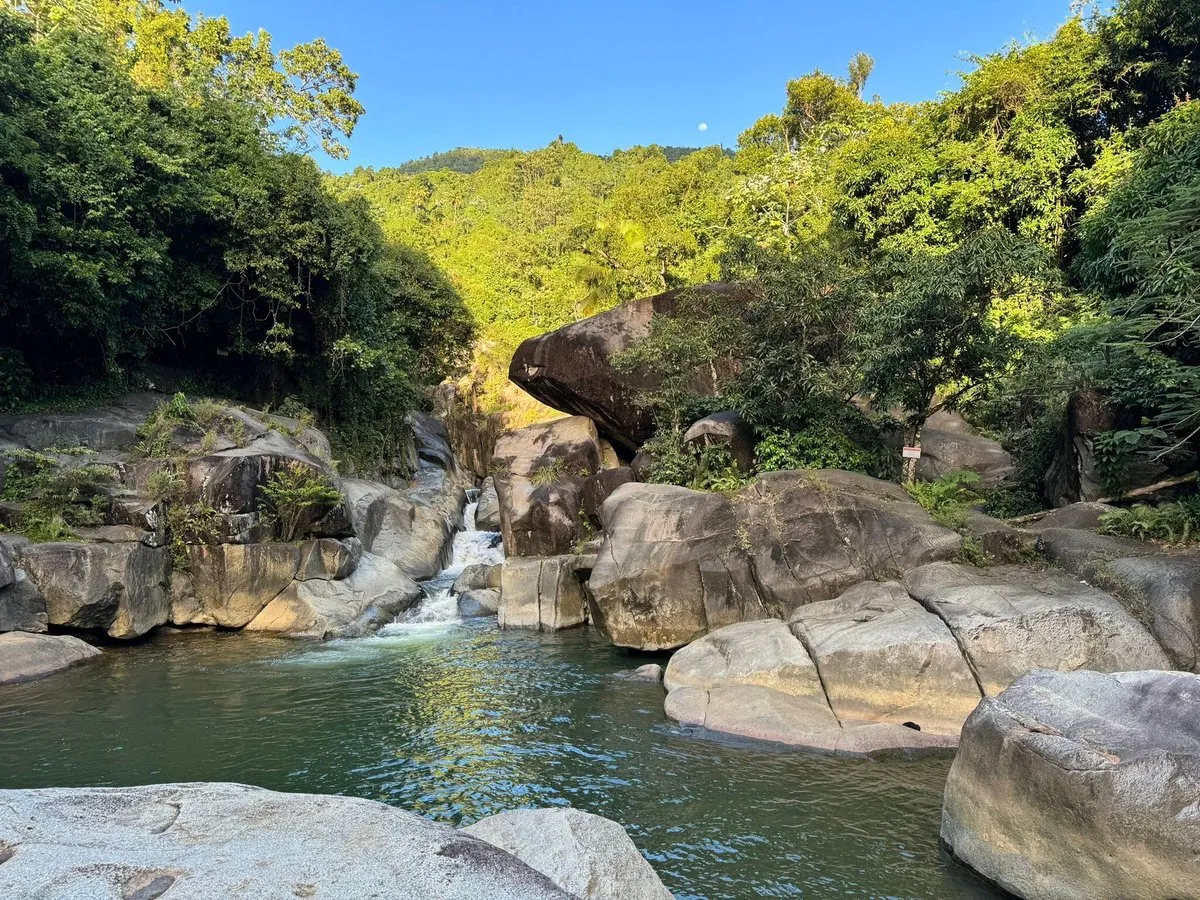
The trailhead sits near kilometer 9.8 on PR-191. From the small pull-off, an easy five-minute path drops you at the lower falls: a 15-to-20-foot cascade dropping into a shallow, shin-deep pool that families park kids in for an hour. Water temperature hovers around 72°F (22°C) year-round — refreshing, not punishing.
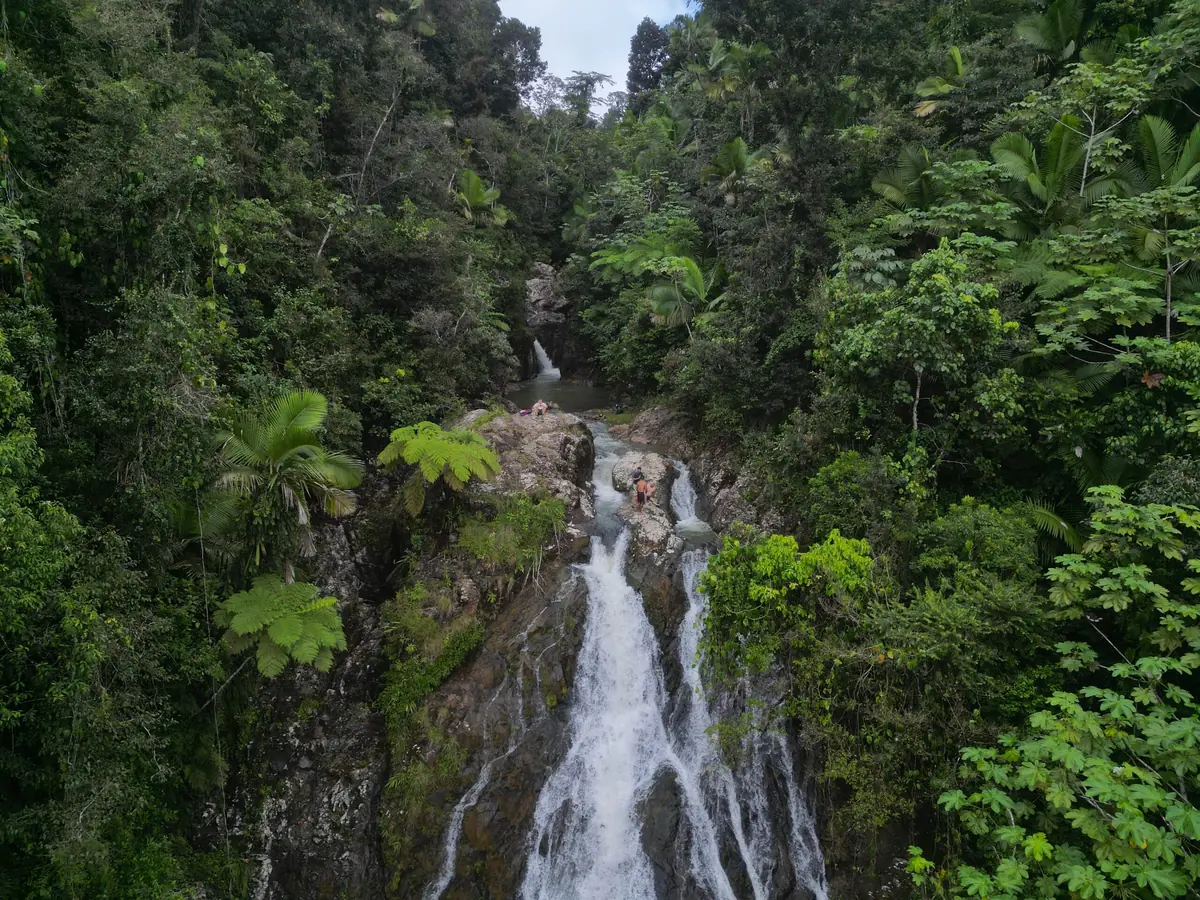
The reason to come is the upper falls. To the right of the lower pool, a worn dirt scramble heads steeply up through tree roots and slick clay. It’s maybe 10 minutes of climbing, but in flip-flops you will fall. At the top: a 40-foot drop into a chest-deep plunge pool that most day-trippers never see. On a Wednesday morning I had it to myself for 20 minutes.
Pro Tip: Wear shoes with real tread. The Juan Diego upper trail is the most consistently injured spot in the forest and there is no handrail.
- Location: Km 9.8, PR-191 North, El Yunque National Forest, Río Grande
- Cost: Free
- Best for: Families wanting an easy dip plus one ambitious adult willing to scramble for the upper pool
- Time needed: 30 minutes for the lower falls, 90 minutes round-trip if you do the upper
La Coca Falls — the roadside photo stop
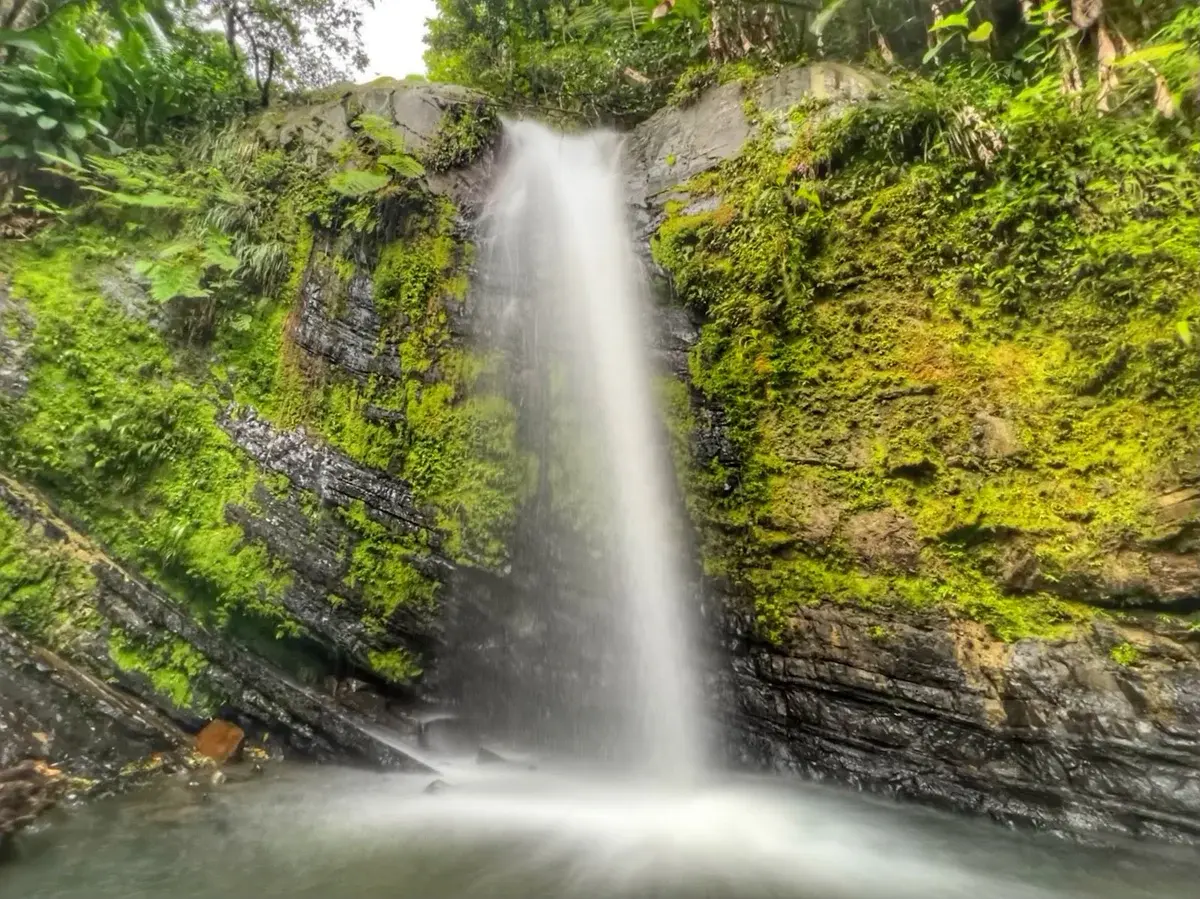
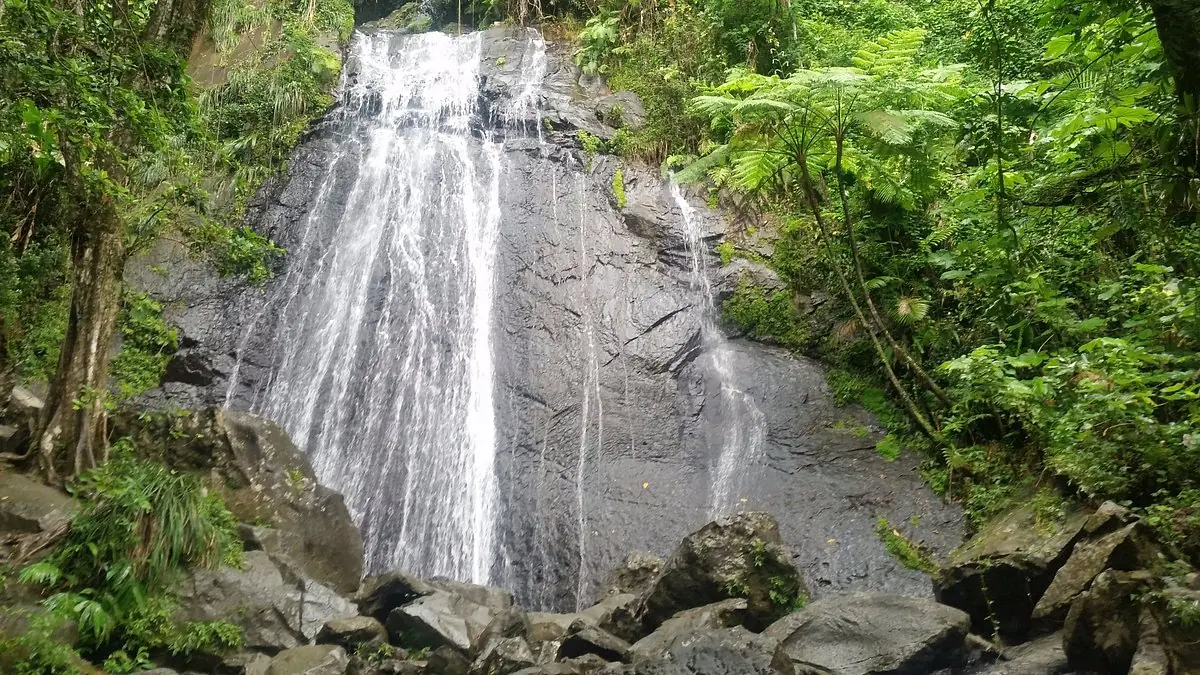
You cannot miss La Coca. It’s the first major cascade after the gate, an 85-foot wide curtain pouring down a smooth, blackened rock face right beside the road. There’s a small pull-off across the street and a viewing platform. Total time investment: 10 minutes.
You cannot swim here, and the prohibition is not bureaucratic theater. The rock face is coated in algae, the landing zone is shallow, and people get hurt every year trying. Take the photo, look up at the canopy, and keep driving.
Pro Tip: Hit La Coca at 8:15 a.m. on your way in. By 11 a.m. there are 30 people jostling for the same shot, and the road shoulder fills with double-parked rentals.
- Location: Km 8.1, PR-191 North, El Yunque National Forest, Río Grande
- Cost: Free
- Best for: A 10-minute photo stop on the drive deeper into the forest
- Time needed: 10–15 minutes
What happened to La Mina Falls?
La Mina Falls — the 35-foot cascade with the perfect jungle swimming hole that anchored every El Yunque guide for 30 years — has been closed since Hurricane Maria in 2017. Both the La Mina Trail and the Big Tree Trail remain closed for reconstruction. The USDA Forest Service has not announced a reopening date. If a blog post or YouTube video shows La Mina as an active swim spot, it’s old footage. Check the official El Yunque current conditions page before any trip.
Which waterfalls are worth the drive to western Puerto Rico?
The two best waterfalls in western Puerto Rico — Gozalandia Falls in San Sebastián and Salto Curet in Maricao — are 30 minutes apart but feel like different planets. Gozalandia is a managed natural waterpark with a parking attendant and a bar. Salto Curet is a 4×4 access road, two river fords, and a 20-minute upstream wade. Pick based on whether you want a piña colada at the trailhead.
Gozalandia Falls — the family playground in San Sebastián
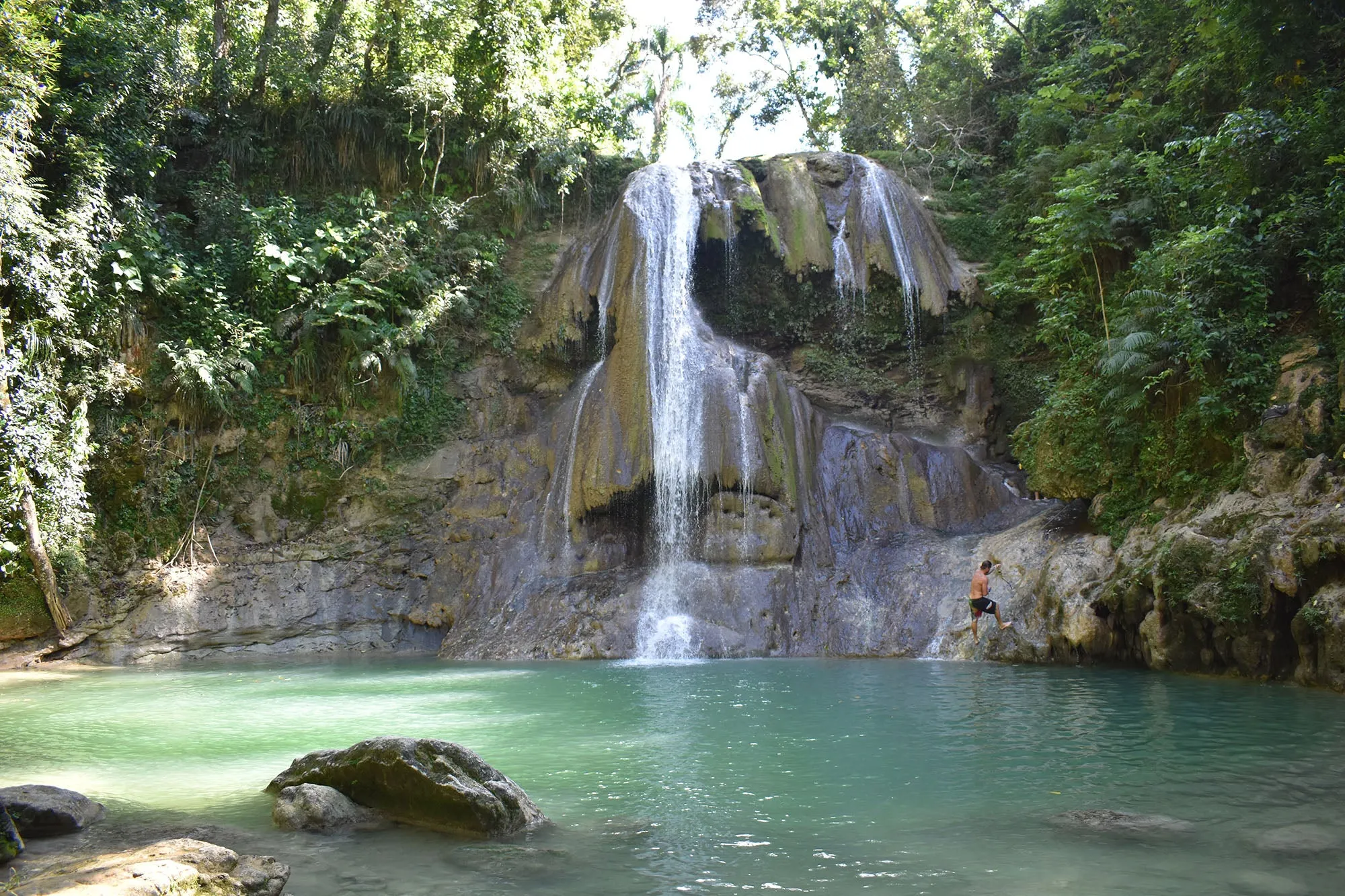
Gozalandia is the most popular waterfall in western Puerto Rico, and it earns it. You pay $10 cash to park on private property, walk a paved five-minute path with handrails and wooden steps, and arrive at a 60-foot cascade pouring into a wide, deep plunge pool. There’s a half-submerged cave at the side of the main falls that you can swim into. Past the lower falls, a 15-to-20-minute upstream walk leads to a smaller upper waterfall with a rope swing.
There’s a restaurant called Sha’s at the parking area for cold drinks and food after, plus restrooms — a rarity in Puerto Rico’s waterfall network. No coolers allowed, and the staff enforces it.
The honest take: Gozalandia gets crowded. By noon on a Saturday the lower pool looks like a public swimming pool with 60 people in it. Go on a weekday, arrive when the gate opens around 9 a.m., and you’ll get an hour of near-solitude before the tour vans show up.
Pro Tip: Bring small bills. The parking attendant takes cash only and “I’ll grab change” rarely ends well.
- Location: Off PR-446, San Sebastián (turn off PR-111 onto PR-446 north, then right over the bridge onto Sec Lechuza for 0.8 miles)
- Cost: $10 per car for parking; entry is free
- Best for: Families, first-time waterfall-chasers, anyone who wants a real meal after the swim
- Time needed: 2–3 hours
Salto Curet — the off-the-beaten-path Maricao swim
If Gozalandia is the party, Salto Curet is the antidote. The fall sits deep in the Maricao mountains, and getting there is genuinely part of the work. The last stretch of road is unpaved, rutted, and crosses two shallow river fords. A 4×4 makes it manageable; a standard rental car parks early and walks the last three-quarters of a mile.
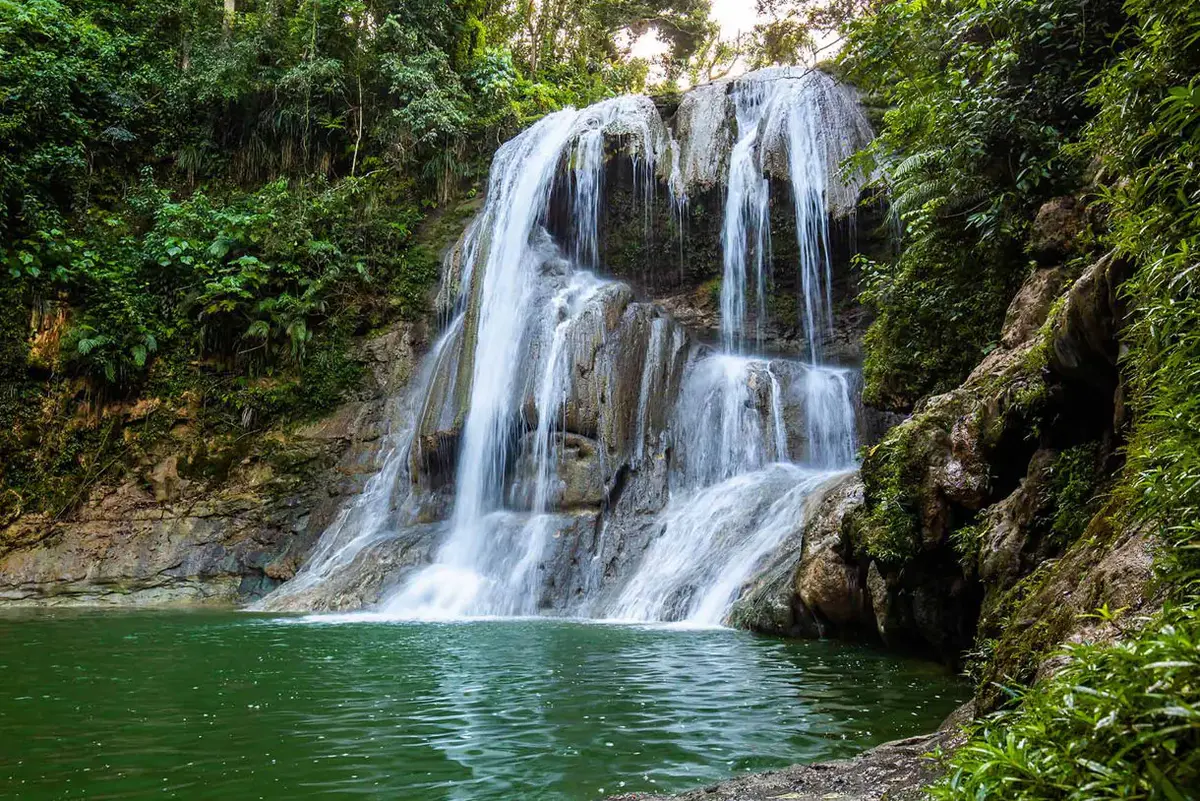
From the end of the road, you wade upstream in the Río Lajas for 15 to 20 minutes. The water is clear enough to see your feet, the river is rarely above the knee in dry conditions, and the canyon walls close in as you go. The reward: a roughly 100-foot two-tiered cascade pouring into a deep plunge pool surrounded by dense forest. On a weekday in shoulder season I saw two other people the entire morning.
This is the only waterfall on this list where I’d argue the journey is the experience. Skip it if you’re squeamish about wet shoes for two hours.
Pro Tip: Do not attempt Salto Curet within 24 hours of heavy rain. The Río Lajas rises fast, and the upstream wade becomes the actual flash flood zone you want to avoid. Check the radar that morning.
- Location: Off PR-105, Maricao (downstream from Barrio Indiera Alta)
- Cost: Free
- Best for: Experienced hikers, solo travelers chasing solitude, photographers
- Time needed: 3–4 hours including the drive in
What’s the best waterfall in Puerto Rico’s central mountains?
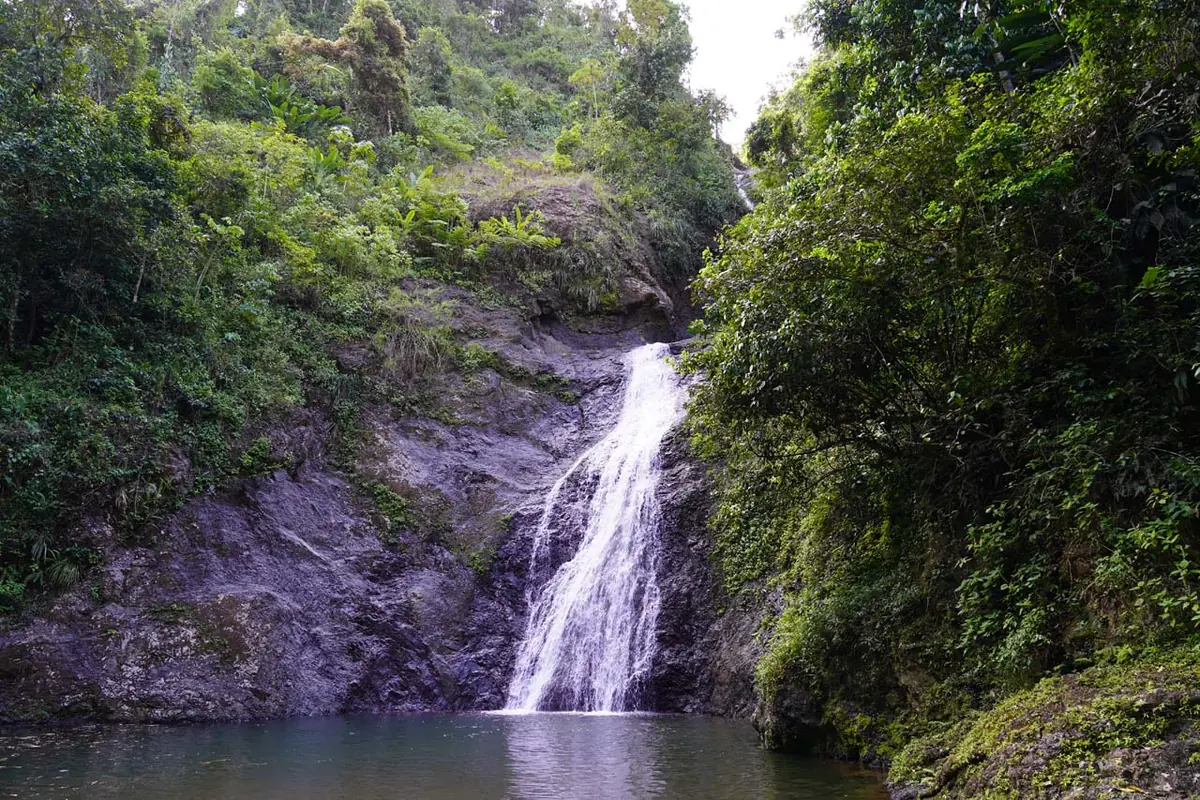
The Cordillera Central runs the spine of the island and hides dozens of cascades, but only one is worth the detour for most travelers: Chorro de Doña Juana, on the Ruta Panorámica in Orocovis. It’s a roadside stop with a 100-plus-foot drop, and you can be in and out in 30 minutes — or scramble down to swim if you have an hour.
Chorro de Doña Juana — the roadside giant in Orocovis
You’ll find Chorro de Doña Juana at km 41.5 on road PR-149. You hear it before you see it — water hits the canyon and the sound carries up the road. From the bridge you get a clean side-on view of the multi-tiered drop. Parking is the catch: there are maybe four small unmarked pull-offs on a winding mountain road with blind corners, and weekend traffic does not slow down for tourists.
Most people take the photo and leave. If you want to swim, you carefully scramble down the rocky bank below the bridge to reach the base pool. The water is colder up here in the mountains — closer to 68°F (20°C) — and the pool is invigorating rather than relaxing.
- Location: Km 41.5, PR-149, Orocovis
- Cost: Free
- Best for: Drivers doing the Ruta Panorámica who want one big payoff
- Time needed: 20 minutes for the photo, 60–90 minutes if you swim
Which eastern Puerto Rico waterfalls are best for adventure swimmers?
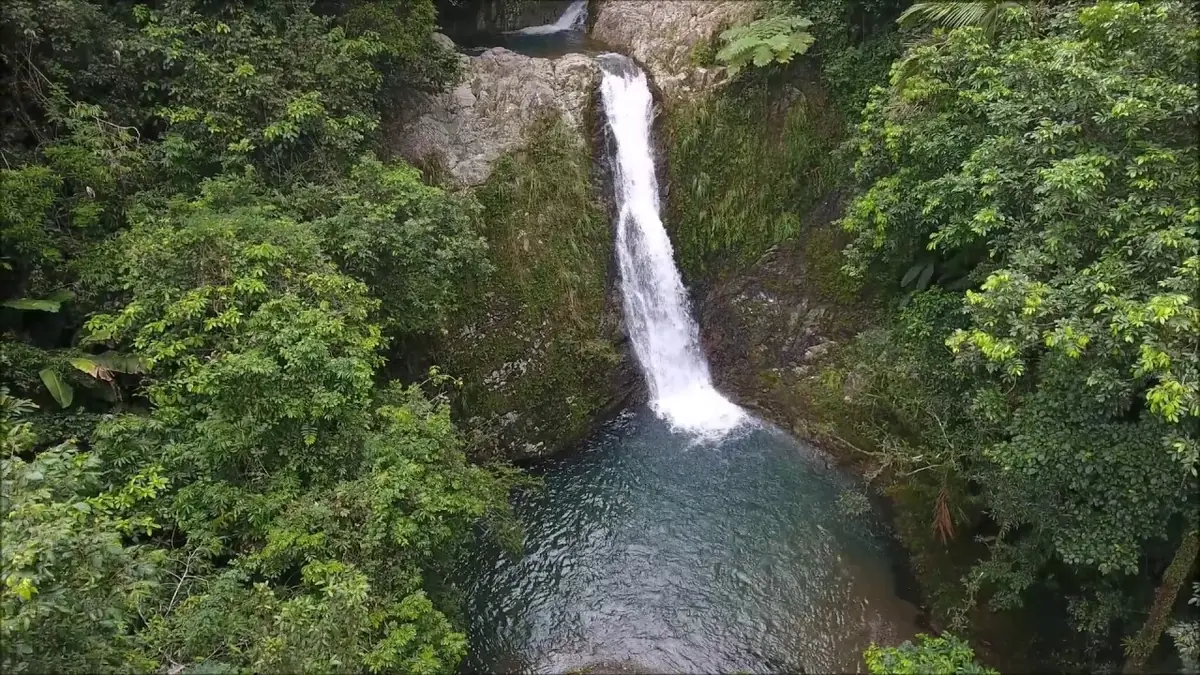
The two best adventure waterfalls outside El Yunque are Las Tinajas in Ceiba and Charco El Hippie in Naguabo. Both reward people who don’t mind muddy trails, both have cultural extras most visitors miss, and both are within 45 minutes of the El Yunque corridor — which means you can pair them with a morning at Juan Diego Falls.
Las Tinajas — the natural waterslide near Fajardo
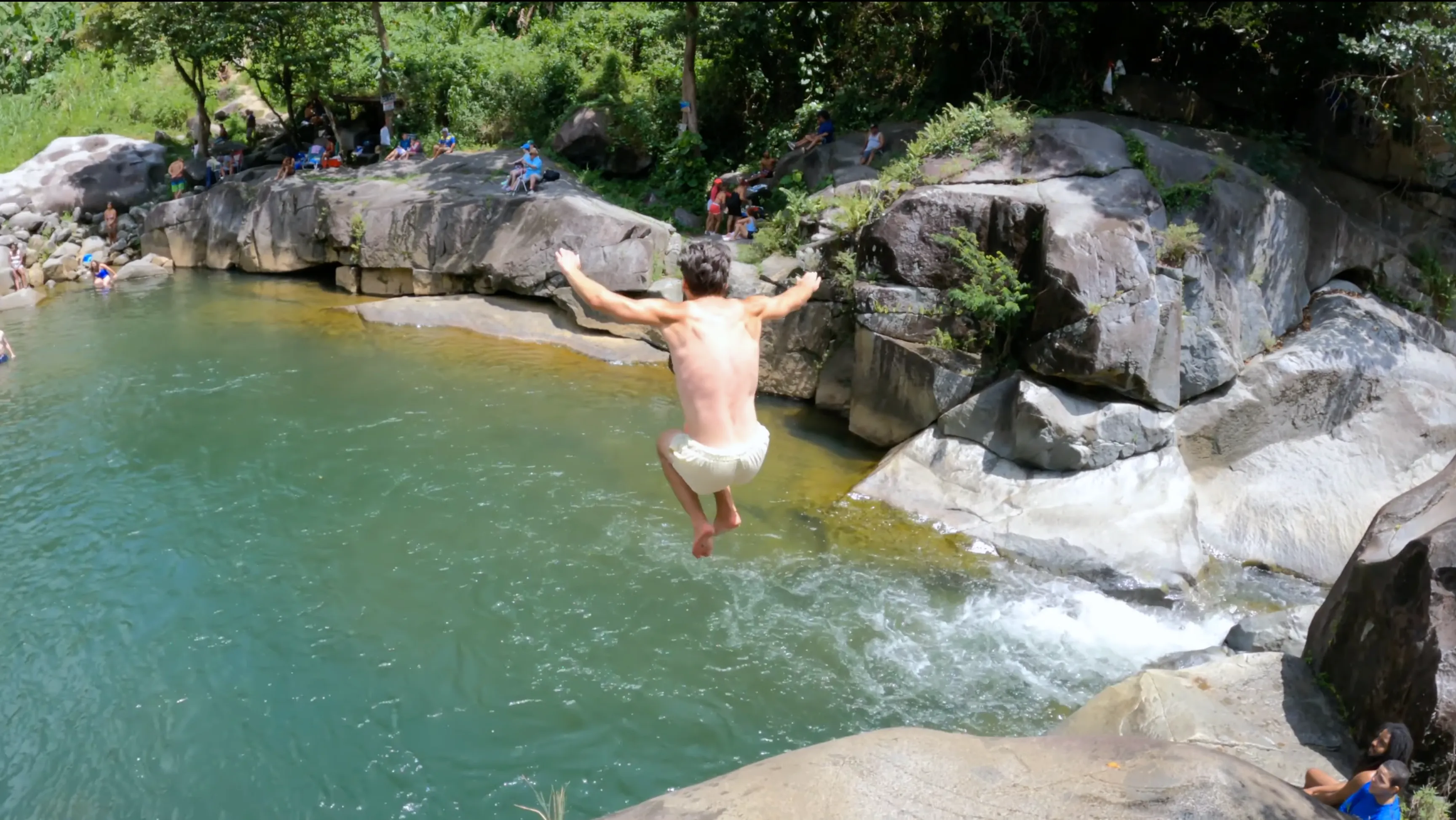
Las Tinajas is a series of pools in the Río Fajardo, with a deep swimming hole, a famous rope swing usually flying a Puerto Rican flag, and — the main draw — a natural rock waterslide upstream that drops you into another pool. It is a blast and it is filthy. The trail is slippery, root-tangled, and chaotic in any weather, and after rain it becomes a mud chute.
You have two options to get in. A local resident charges $5–$10 cash for a more direct trail through their property. The free route is longer, harder to follow, and involves scrambling along the riverbank. I’ve done both and the paid route is worth the money on a hot day.
Pro Tip: Do not test the rope swing without watching three people in front of you do it first. The pool depth shifts after every storm, and the safe landing window is narrower than it looks.
- Location: Río Fajardo area, near the border of Ceiba and Naguabo (off PR-3)
- Cost: Free via the long trail; $5–$10 per car for the shortcut through private land
- Best for: Adventurous swimmers, groups, anyone who’s had it with manicured tourist sites
- Time needed: 3–4 hours
Charco El Hippie — petroglyphs and a 70-foot cascade in Naguabo
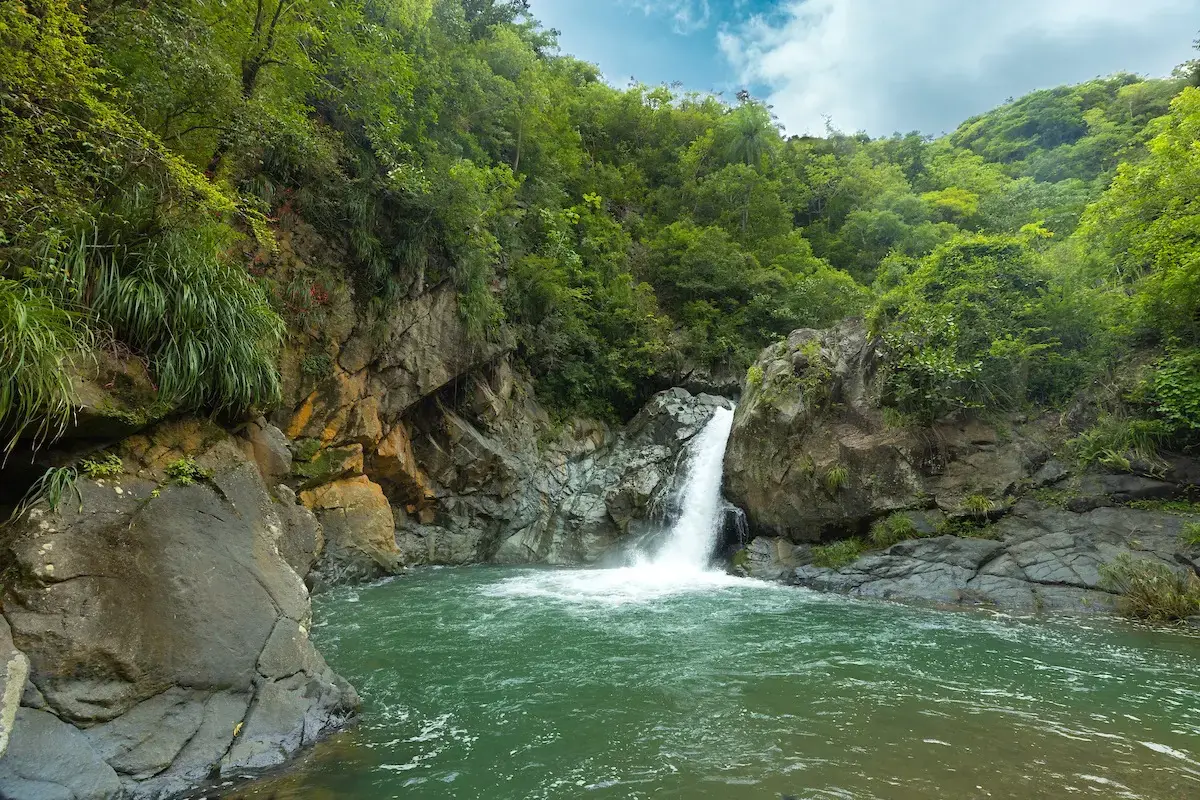
Just outside El Yunque’s southern border in Naguabo, Charco El Hippie is where locals come to cool off when the El Yunque corridor is too crowded. The main pool is fed by La Canoa Falls, a 70-foot drop, and the water sits in a wide, deep basin big enough that you don’t crowd the other groups.
What makes this spot different: pre-Columbian petroglyphs carved by the Taíno people on large boulders downstream from the main pool. They’re not roped off, signposted, or commercialized. You walk past them. On my first visit I missed them entirely; the second time a fisherman pointed them out. Standing in front of a thousand-year-old carved face after a swim is one of the most quietly powerful moments you can have on this island.
- Location: Río Blanco area, Naguabo (off PR-191 South — note this is the south side of El Yunque, not the closed PR-191 North corridor)
- Cost: Free
- Best for: History-curious travelers, anyone who wants to see Puerto Rico without other Americans in the frame
- Time needed: 3 hours
When is the best time to visit Puerto Rico for waterfalls?
The best time for waterfalls in Puerto Rico is the shoulder months — late April, May, and early December — when Puerto Rico’s weather hits a sweet spot. Crowds thin out, prices on flights and rentals drop 20–30 percent compared to peak winter, the rivers still have enough volume to look impressive, and the flash flood risk is meaningfully lower than in the August-to-October peak of hurricane season.
The full breakdown by season:
- December–April (dry season): Peak tourism. Sunnier, calmer rivers, clearer pools, less mud. Expect 70–82°F (21–28°C). Downsides: full parking lots by 10 a.m., higher hotel prices, harder reservations at the better restaurants.
- June–November (wet season): Fewer tourists, lower prices, the most powerful and photogenic falls of the year. Downsides: muddy trails, real flash flood danger, and the heart of hurricane season runs August through October.
- Late April / May / early December (shoulder): The sweet spot. Rain showers are usually short and afternoon-only, mornings are reliably clear, and the falls still flow well from the wet-season runoff.
What should you pack for waterfall hiking in Puerto Rico?
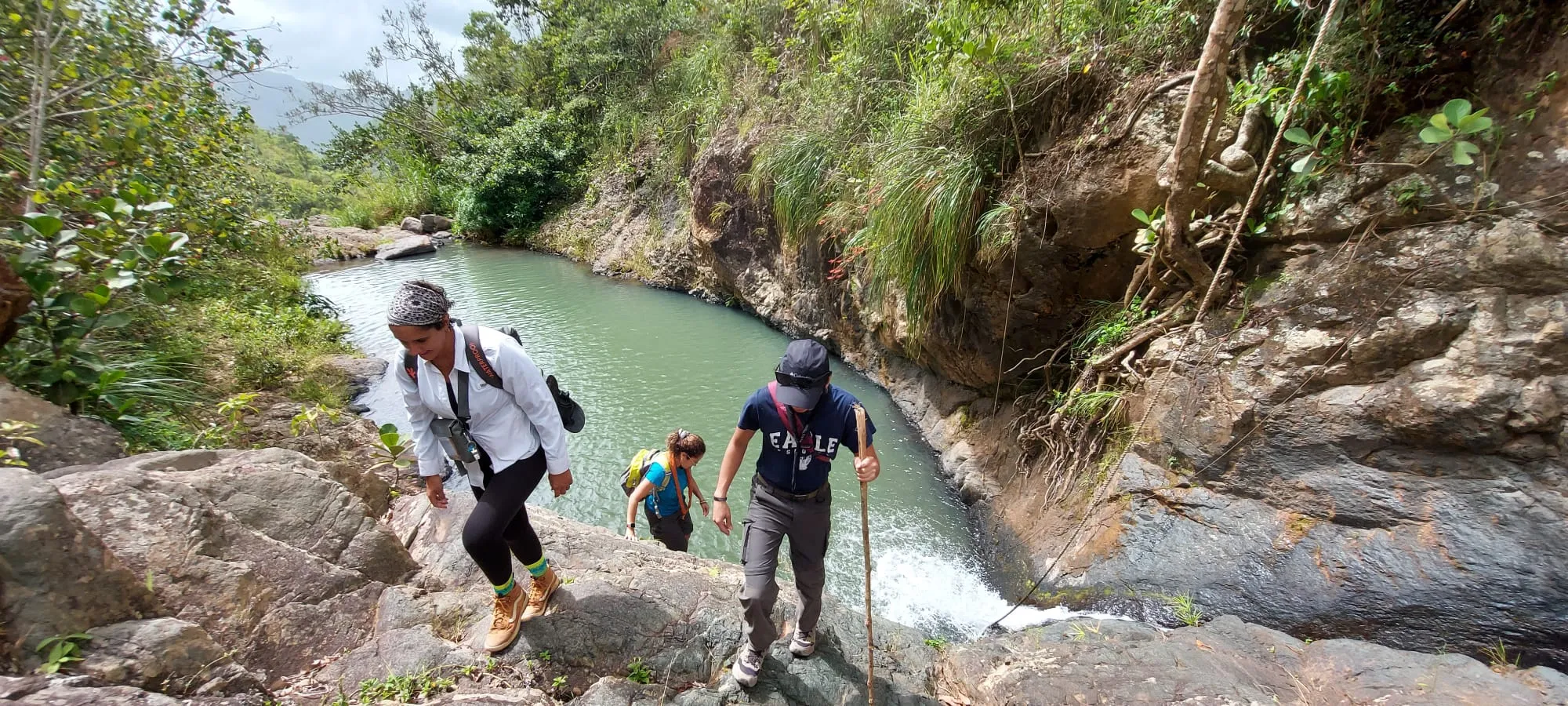
Most people pack for Puerto Rico like they’re going to a beach and regret it within 30 minutes of the first muddy descent. The non-negotiables, in order of how much you’ll resent skipping them:
- Footwear: Closed-toe shoes with real grip. Old sneakers you don’t mind soaking, dedicated hiking sandals with rubber tread, or proper water shoes. Flip-flops will hurt you.
- Clothing: Swimsuit under quick-dry shorts and a lightweight synthetic top. No cotton — it stays wet for hours.
- Dry bag: A 5-to-10-liter waterproof bag for phone, car keys, wallet, and a backup shirt. Worth every dollar.
- Microfiber towel: Compact, dries faster than terry cloth.
- Water: At least 1 liter per person per fall. There is no potable water in El Yunque right now.
- Snacks: Energy bars or fruit. Nothing on the island sells food at the trailheads except Gozalandia.
- Reef-safe sunscreen and DEET-free insect repellent: Mosquitoes get aggressive after rain.
- Small first-aid kit: Bandages and antiseptic wipes. Slips happen.
How do you get around Puerto Rico to reach the waterfalls?
A rental car is mandatory. Public transportation does not reach any of the seven waterfalls in this guide, and rideshare apps like Uber operate spottily once you leave the San Juan metro area — and not at all inside El Yunque. Budget $40–$70 per day for an economy car at SJU airport, and book at least two weeks ahead in winter.
A few realities of driving here that no rental clerk will tell you:
- Mountain roads are narrow, often shoulderless, and pothole-strewn. The Ruta Panorámica through the central mountains takes twice as long as Google Maps says.
- Tap your horn lightly before blind corners. Locals do, and it’s how you avoid head-on surprises.
- Cell service in Puerto Rico drops the second you leave PR-3 for the interior. Download Google Maps offline coverage for the entire island before you leave your hotel.
- Gas stations get sparse in the mountains. Fill up in the nearest coastal town before heading inland.
How can you stay safe at Puerto Rico’s waterfalls?
Flash floods are the actual risk. Slippery rocks come second. Most accidents at Puerto Rico waterfalls happen in the same way: someone enters a narrow river canyon during or shortly after upstream rain, the water rises three feet in 10 minutes, and there’s nowhere to climb. The rule is simple — if dark clouds are forming over the mountains upstream, you exit the river. No exceptions.
The other safety basics:
- Assume every wet rock is slippery, including the dry-looking ones with algae underneath.
- Maintain three points of contact when scrambling.
- Never jump or use a rope swing without watching someone else go first and confirming the depth.
- Pack out everything you bring in. None of these sites have garbage service.
- Tell someone your itinerary. Cell service in the mountains is unreliable enough that “I’ll text when I’m done” can mean “you’ll hear from me in six hours.”
Before you book
The seven waterfalls in this guide cover the full range of effort and reward. Pick one El Yunque stop (Juan Diego for swimming, La Coca for the photo), one swimmable adventure (Gozalandia for ease, Salto Curet for solitude, Las Tinajas for the rope swing), and one wildcard (Charco El Hippie for the petroglyphs). Three falls is a real day. Five is a forced march.
TL;DR: El Yunque no longer requires reservations and the corridor is free — get there by 8 a.m. La Mina is still closed, so do Juan Diego instead. Gozalandia ($10 to park) is the best easy swim, Salto Curet is the best hard one, and Charco El Hippie has the petroglyphs nobody mentions. If you’re still mapping the broader trip, our Puerto Rico travel guide handles the rest, and travelers basing themselves in the capital should also see our shortlist of waterfalls near San Juan.
What’s the one waterfall you’d add to this list — and which one would you pull off it?