
You are packing your bags and dreading a $300 roaming bill the second you step off the plane. For most travelers, US cell service in Puerto Rico works exactly like it does at home. But for a significant number of prepaid and budget carrier users, the island is a logistical minefield. Many competitors simply refuse to document these massive coverage gaps.
This guide breaks down every major carrier, names the ones that fail on arrival, and tells you exactly how to fix your phone if it lands in SOS mode at Luis Muñoz Marín International Airport.
Does US cell service work in Puerto Rico?
Yes, US cell service in Puerto Rico operates as a domestic coverage zone for most major postpaid plans. As our Puerto Rico travel guide explains, the island is a US territory, so international roaming fees generally do not apply. The island is not Japan or Europe, meaning your phone will not trigger a surprise $10-per-day travel pass.
But the blanket assurance from travel blogs that all mainland phones work flawlessly is flat-out wrong. Verizon Prepaid users face severe data limitations upon arrival. Certain MVNOs land straight in SOS-only mode. AT&T users suddenly see Liberty on their status bar and enter a state of justified confusion.
The detailed carrier breakdown below is built to prevent exactly that scenario.
Which carrier has the best US cell service in Puerto Rico?
T-Mobile has the best US cell service in Puerto Rico due to its dominant island-wide 5G infrastructure. The local telecom environment does not mirror the mainland US. A corporate acquisition, prepaid fine print, and aggressive mountain topography have fractured the network into a patchwork of winners and losers.
Find your specific carrier below to see exactly how your signal will hold up.
T-Mobile — the dominant network on the island
T-Mobile treats Puerto Rico as a core domestic market rather than a roaming afterthought. Independent data from Ookla Speedtest and JD Power consistently ranks it as the top-performing network on the island, and its 5G covers roughly 98% of the population. You will find strong signal availability across the North Coast, Condado, Viejo San Juan, and Fajardo.
The frequency infrastructure here is seriously impressive. Low-band 5G n71 (600 MHz) carries signal across long distances and easily penetrates buildings. Meanwhile, mid-band 5G n41 (2,500 MHz) delivers raw speed in urban corridors.
In practical terms, you can stream, navigate, and upload from the beach without any throttling anxiety. On my last trip, I pulled consistent downloads above 100 Mbps sitting on the sand in Isla Verde — faster than my hotel Wi-Fi.
Pro Tip: T-Mobile users do not need to change a single setting. Land at SJU, turn off Airplane Mode, and your domestic plan picks up right where it left off.
- Location: Island-wide coverage
- Cost: No additional fees beyond your existing plan
- Best for: Anyone who wants maximum reliability without configuration headaches
- Time needed: Zero setup time
AT&T — the Liberty network handoff explained
Here is the truth that no mainstream travel blog tells you about your network. AT&T no longer operates its own native infrastructure on the island. The company sold its local and US Virgin Islands operations to Liberty Latin America.
When you land at SJU and disable Airplane Mode, your phone will send you an automated text message. It will acknowledge that Liberty is now providing your service. This is a legitimate network handoff and not a phishing attempt or an unauthorized billing alert.
For most postpaid AT&T users, the practical impact is manageable with no extra fees. But you should expect your device to cycle between 5G and LTE while occasionally flashing SOS during network handshake friction. Liberty’s mobile segment still has persistent weakness in some areas, so dropped calls are a real possibility where infrastructure is thin.
Pro Tip: If you lose data connectivity after landing, manually select Liberty in your cellular network settings rather than leaving it on automatic. This single step fixes 90% of the “No Service” panic at baggage claim.
- Location: Primary coverage in urban areas and the coast
- Cost: No additional fees for postpaid users
- Best for: Postpaid AT&T subscribers who set realistic speed expectations
- Time needed: 2-3 minutes for network authentication
Verizon — postpaid works, prepaid hits a wall
For Verizon Postpaid customers, getting US cell service in Puerto Rico is a smooth domestic roaming experience. Your device will display Extended on the network status bar, calls connect cleanly, and you will not see any added charges on your bill.
Verizon Prepaid is a completely different story. Prepaid customers do not get the same seamless domestic roaming treatment. Verizon now offers a Prepaid TravelPass for Puerto Rico at $6 per line per day, which gives you 5 GB of high-speed data per 24-hour session. Without purchasing the TravelPass, your data connectivity will be severely limited or nonexistent.
The $6/day cost adds up fast on a week-long trip. That is $42 in extra fees — a significant hit to your Puerto Rico travel budget — that T-Mobile and Mint Mobile users never have to think about.
Pro Tip: If you use Verizon Prepaid, download all Google Maps regions for offline use before your flight and consider purchasing an eSIM as a backup. A week of Airalo data costs less than two days of Verizon’s TravelPass.
- Location: Island-wide for postpaid, limited for prepaid without TravelPass
- Cost: No fees for postpaid; $6/day TravelPass for prepaid
- Best for: Postpaid subscribers, while prepaid users should plan around Wi-Fi or an eSIM alternative
- Time needed: Zero for postpaid; 5 minutes to activate TravelPass for prepaid
Mint Mobile and Google Fi — reliable budget options
Both Mint Mobile and Google Fi run on the T-Mobile backbone. This means Puerto Rico is effectively domestic territory for both of these budget-friendly carriers.
Mint Mobile users do not need to purchase Minternational day passes. Your plan activates on the island exactly as it does at home, delivering typical download speeds of 30 to 75 Mbps in urban centers. Google Fi similarly maintains high-speed connectivity on the T-Mobile network without triggering international data limits. Google Fi users also benefit from no data traffic deprioritization, which means you will not experience slowed speeds during high network congestion.
Pro Tip: Mint and Google Fi users enjoy the best value-to-connectivity ratio on the island. There is no setup required, no add-ons, and no billing surprises.
- Cost: No additional fees
- Best for: Cost-conscious travelers who want solid coverage
- Time needed: Zero setup time
Xfinity Mobile — the Global Travel Pass myth
A persistent rumor circulates online that Xfinity Mobile requires a $10-per-day Global Travel Pass for this destination. This is completely false. Official Xfinity support documentation and employee confirmations state that data usage in Puerto Rico and the US Virgin Islands is treated identically to mainland US service.
The international pay-as-you-go rate does not apply here. However, you may see a “Select Roaming” message on your phone when you arrive. This is normal. Enable roaming in your settings and your service will connect through Verizon’s domestic roaming partners on the island, primarily Claro.
Pro Tip: If an Xfinity chatbot or customer service rep quotes you a Global Travel Pass for this trip, escalate the issue. The territory is domestic under Xfinity’s billing structure. If coverage is spotty, toggle airplane mode on and off to force a reconnection to Claro’s network.
- Cost: No additional fees
- Best for: Xfinity Internet subscribers already using their mobile plan
- Time needed: 1-2 minutes to enable roaming if prompted
US Mobile — select the right network profile
US Mobile utilizes a multi-network architecture. This means your US cell service in Puerto Rico is determined entirely by which internal network profile you selected at signup.
- Light Speed (T-Mobile): This offers native domestic coverage and is the best option by a significant margin. No roaming needed, full 5G access.
- Warp (Verizon): This uses the Verizon backbone for domestic roaming. It is generally consistent in urban areas but subject to Verizon’s data limitations in Puerto Rico.
- Dark Star (AT&T): This is the most unpredictable option. Users report that unlimited data is not available in Puerto Rico on Dark Star — the territory counts as roaming. You get a limited data allotment instead of your full plan, and some users report delayed text messages and data failures.
Pro Tip: Switch your US Mobile line to Light Speed before your flight. The in-app Teleport feature lets you transfer networks in minutes and guarantees native 5G coverage. Premium plan holders can switch as often as they want at no charge.
- Cost: No additional fees on Light Speed; roaming data limits on Dark Star
- Best for: Light Speed users, while Dark Star users should transfer before departure
- Time needed: 5 minutes for a network transfer via the app
Boost Mobile — no longer available in Puerto Rico
Boost Mobile exited the Puerto Rico market entirely at the end of December 2025. If you still carry a Boost Mobile plan from the mainland, here is what you need to know.
Boost shut down its own wireless network in November 2025 and transitioned to operating as an MVNO on AT&T’s network. On the mainland, your Boost service now rides on AT&T infrastructure. But in Puerto Rico, where AT&T sold its operations to Liberty, the situation is more complicated.
Former Boost Puerto Rico customers were migrated to Liberty. Mainland Boost subscribers traveling to the island may experience limited roaming through the AT&T/Liberty handoff, but coverage is not guaranteed. User reports from early testing suggest connectivity is unreliable and data may not work at all.
Pro Tip: If you have Boost Mobile, purchase an eSIM from a provider like Airalo (plans start at $4.50) before departure. It activates independently of your Boost SIM and saves you from arriving with a dead phone.
- Cost: Unknown — Boost’s Puerto Rico roaming policies are unclear following the network transition
- Best for: Nobody traveling to Puerto Rico. Use an eSIM backup or switch to a T-Mobile-based carrier before your trip.
- Time needed: 10-15 minutes to set up an eSIM alternative

Cricket Wireless, Straight Talk, and Tracfone
Cricket Wireless treats Puerto Rico exactly like domestic territory. Talk, text, and data operate without surcharges, and no plan modifications are required. Cricket runs on AT&T’s network, which in Puerto Rico means you connect through Liberty’s infrastructure.
Straight Talk and Tracfone are both fully owned by Verizon and operate on the Verizon network. Their terms explicitly state that calls must originate from the US or Puerto Rico, but no international roaming is allowed. In practice, this means you can make calls and send texts from the island, but your data speeds will be subject to the same limitations Verizon applies to its prepaid tiers.
You should expect noticeable data deprioritization during peak hours in tourist-heavy areas like Old San Juan. High-speed 5G requires a compatible device, and network congestion will throttle your speeds aggressively when cruise ships are docked.
Pro Tip: Cricket delivers the most consistent experience in this group because it rides on Liberty’s 5G network in Puerto Rico. Straight Talk and Tracfone users should temper their speed expectations and download offline maps as a precaution.
- Cost: No added fees for Cricket; no added fees for Straight Talk and Tracfone, but variable data performance
- Best for: Cricket users, while Straight Talk and Tracfone users need patience with data speeds
Where will you lose US cell service in Puerto Rico?
You will inevitably lose US cell service in Puerto Rico when traveling through the central mountains, the dense rainforests, and the remote eastern islands. No matter how you are getting around Puerto Rico, even T-Mobile’s dominant network cannot defeat the aggressive local terrain. The island’s geography creates specific dead zones that generic coverage maps refuse to acknowledge.
El Yunque National Forest — the island’s biggest signal killer
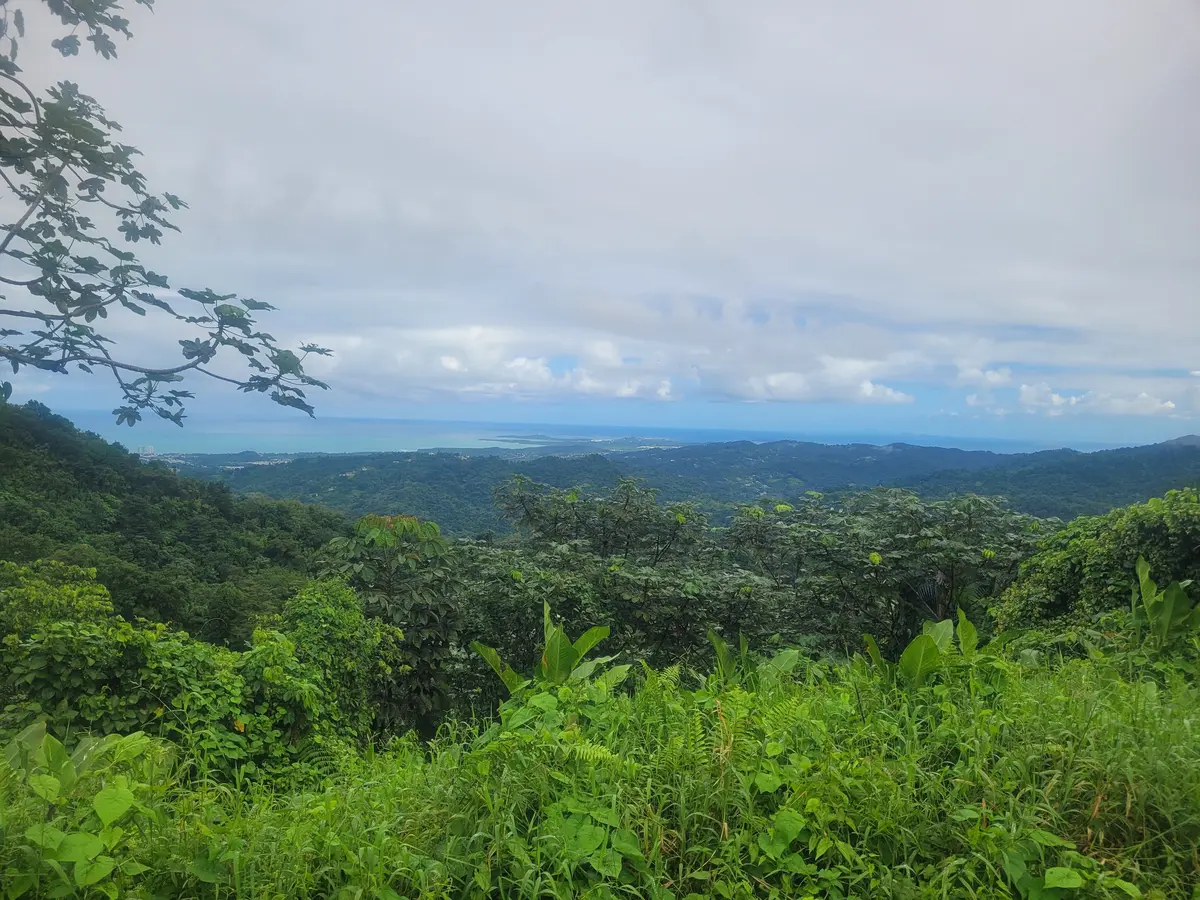
El Yunque is the most visited natural attraction and its most reliable cell signal killer. T-Mobile users maintain relatively solid connectivity through the lower trails, but coverage deteriorates sharply past the main visitor center toward Charco El Hippie. Verizon users frequently drop to No Service long before reaching the Yokahú Observation Tower.
The exact moment your signal vanishes is when the damp rainforest humidity sets in around a blind mountain curve. The canopy gets thick enough to block GPS satellites, and that is exactly the wrong time to discover your navigation has stopped working.
In the Cordillera Central mountain range, winding interior roads and steep elevation shifts block radio frequencies across all carriers. Getting separated from a travel companion on a canopy-covered mountain road with zero cellular signal is not a hypothetical. It happens to unprepared travelers regularly.
Pro Tip: Download the entire regional map for offline use before leaving your hotel’s Wi-Fi. In El Yunque and the central mountains, offline navigation is not optional — it is mandatory safety equipment.
Vieques and Culebra — connectivity on the outer islands
Both eastern islands present connectivity challenges that are completely distinct from the main island.
Vieques maintains generally acceptable signal across most of the island, averaging 51% to 74% availability depending on carrier. You will find stronger connectivity near Isabel Segunda and Esperanza, but remote beaches on the Bioluminescent Bay circuit drop to inconsistent service.
Culebra is a much harder destination for maintaining a connection. The main town center of Dewey has usable signal across most carriers, but coverage degrades rapidly once you head toward Flamenco Beach or Zoni Beach. At Flamenco, you may find yourself with absolutely zero cellular signal despite standing on one of the most photographed beaches in Puerto Rico.
Pro Tip: Coordinate your return transportation from Culebra’s remote beaches while you are still in Dewey town center. Do not assume you can hail a taxi or rideshare from Flamenco Beach, because you likely cannot.

How do you fix your phone if it shows no service?
If your phone shows No Service or SOS at the airport, you need to manually force a radio reset and verify your roaming settings before assuming a hardware failure. Run this specific sequence in order to get your US cell service in Puerto Rico working again.
Step-by-step radio reset
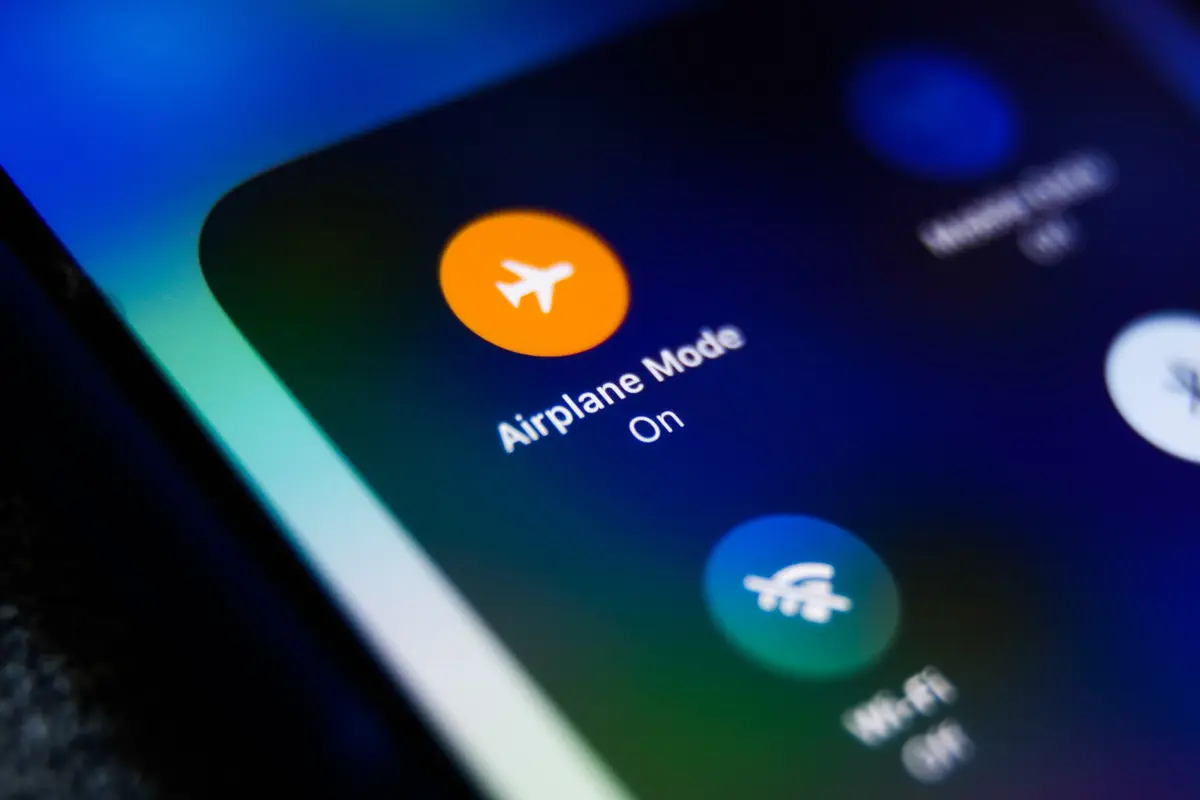
- Toggle Airplane Mode on, wait 15 seconds, then toggle it off. This forces a hard radio reset and allows the device to scan for local tower signals from scratch.
- Navigate to your cellular settings and confirm both Mobile Data and Data Roaming are toggled on. Roaming must be enabled even for domestic US territories on some carriers.
- If you use an MVNO, disable your automatic network selection. Tap the search function and manually select Liberty or Claro, as automatic selection sometimes locks onto a weak signal and refuses to re-scan.
- In low-signal areas, disable background app refresh. This preserves both your battery life and the available bandwidth for active navigation.
Pro Tip: If none of the above resolves connectivity for AT&T users, check your text messages. Your phone may simply need 2 to 3 minutes to complete authentication after the automated Liberty handshake SMS.
What LTE and 5G bands do you need for Puerto Rico?
For travelers bringing older or internationally purchased smartphones, verifying band compatibility prevents a massive headache at baggage claim. The local network infrastructure relies heavily on LTE Band 4 (1,700/2,100 MHz) as the primary urban workhorse, supplemented by Band 66 for expanded capacity and Band 71 (600 MHz) for rural signal propagation.
For true 5G performance, the key bands are n41, n71, and mmWave bands like n260 and n261 for ultra-fast connectivity in dense San Juan corridors. Any flagship smartphone purchased in the US within the last four years will support all of these bands natively.
If you plan to bypass your mainland carrier by using a local SIM or eSIM, your device must be fully unlocked by your home carrier first. A carrier-locked phone will automatically reject foreign SIM profiles and refuse to authenticate.
Always verify your device’s unlock status through your carrier’s official app or support line before purchasing any local data plan.
Before you book your flight
TL;DR: For T-Mobile, Google Fi, Mint Mobile, Cricket, and Verizon Postpaid users, US cell service in Puerto Rico is a domestic experience. You have no settings to change, no passes to buy, and no bill surprises to dread. For Verizon Prepaid users, expect to pay $6/day for the TravelPass or pack an eSIM. For Boost Mobile users, do not rely on your carrier at all — buy a separate eSIM before departure. And for everyone heading into El Yunque or the outer islands, download your offline maps — an essential item on any Puerto Rico packing list — like your trip depends on it, because it does.
Which carrier gave you trouble in Puerto Rico? Drop your experience below — the more data points, the fewer travelers land at SJU with a useless phone.