A Mid Atlantic road trip packs Atlantic beaches, Appalachian ridgelines, Civil War battlefields, and crab-shack towns into one compact region. Across Delaware, Maryland, Virginia, Pennsylvania, West Virginia, and Washington DC, you can drive from a foggy mountain overlook to a wild-pony beach in under three hours. Here’s how to pick your route.
A Mid Atlantic road trip threads Delaware, Maryland, Virginia, Pennsylvania, West Virginia, and Washington DC. Most travelers pick one of four themes — coastal beaches, Blue Ridge mountains, Civil War history, or food-and-wine towns — and drive it in three to seven days. Allow 10 to 14 days to combine the mountain and coastal routes without living in the car.
Here are the four routes at a glance:
| Route | Best For | Days | Best Season | Signature Stop |
|---|---|---|---|---|
| Coastal | Families, beach lovers | 3–5 | Summer | Assateague wild ponies |
| Mountain | Hikers, leaf-peepers | 3–7 | Fall | Skyline Drive overlooks |
| History | History buffs, school-age kids | 5–7 | Spring or fall | Gettysburg battlefield |
| Food & Wine | Couples, foodies | 2–4 | Year-round | Virginia wine country |

Before You Go: Safety and Driving the Region
The Mid Atlantic’s biggest driving hazards are mountain fog and city crowds, not distance. Skyline Drive holds a 35 mph limit for all 105 miles (169 km) with frequent stops, mountain roads drop cell signal and gas stations for long stretches, and I-95 with the DC Beltway grinds to a halt at rush hour. Drive cities midweek and mountains early.
The drives here are short — rarely more than a few hours between stops — so the trip rewards planning around conditions rather than mileage. A few realities worth knowing before you set out:
- Skyline Drive speed limit: 35 mph the entire length, with deer crossing constantly at dawn and dusk
- Marys Rock Tunnel clearance: 12 feet 8 inches (check this if you drive anything tall)
- In-park gas on Skyline Drive: only at Big Meadows Wayside, around milepost 51.2
- Cell signal: spotty to nonexistent across most of Shenandoah and the Blue Ridge
- Black bears: active in spring and fall, especially near Big Meadows
- DC and I-95 rush hour: starts before 7 a.m. and runs past 7 p.m. on weekdays
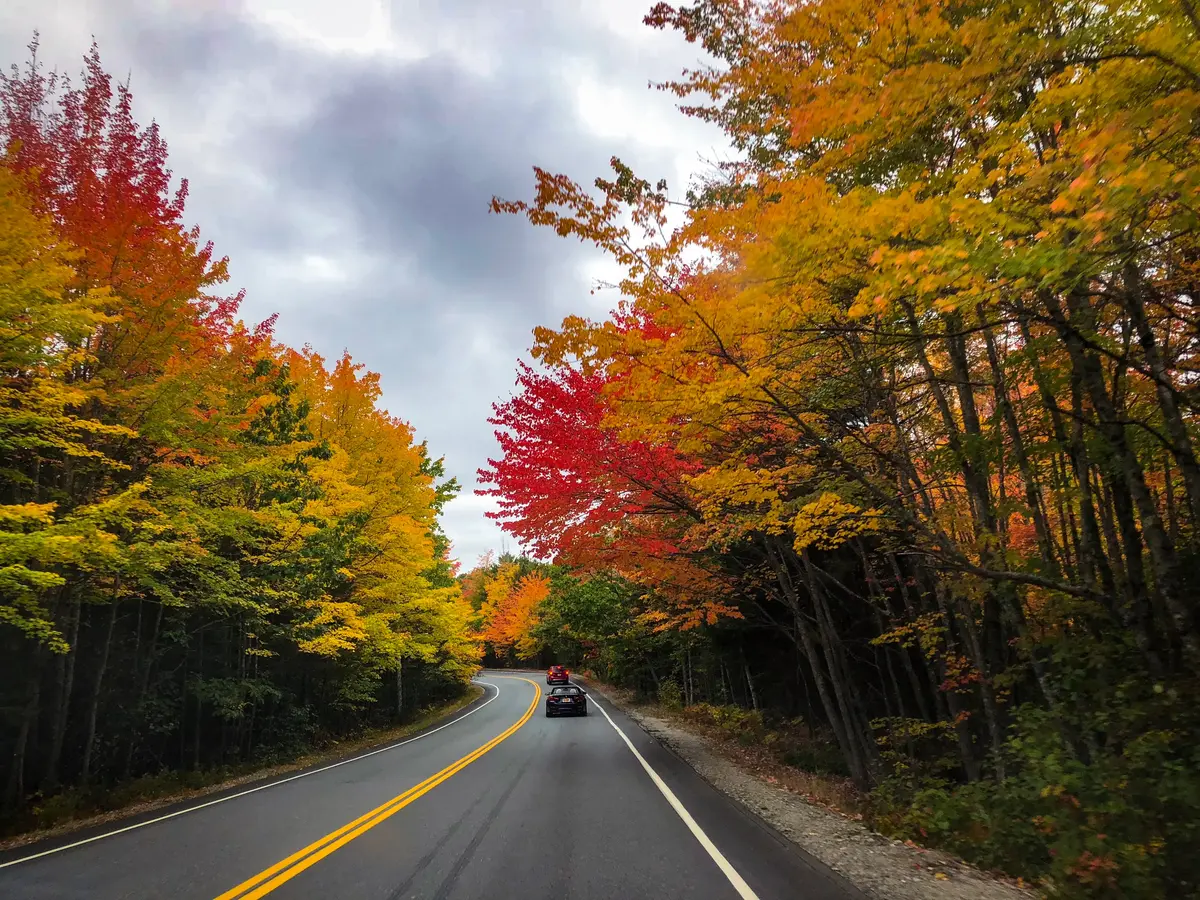
Start over Skyline at dawn and you may hit fog thick enough to blank the overlooks. Drivers regularly report white-out valleys where you can’t see much past the hood until the sun burns through, often around 9 a.m. Plan scenic mornings with that in mind.
Pro Tip: Download offline maps before you leave a town with signal. Once you’re on the Blue Ridge, your phone will show a blank screen and no rerouting for miles.
How Much Does a Mid Atlantic Road Trip Cost?
Budget roughly $150 to $300 per day for two people. The big fixed costs are tolls and park fees: the Chesapeake Bay Bridge-Tunnel runs $16 off-peak or $21 peak one-way by car, Shenandoah National Park charges around $30 per vehicle for seven days, Assateague is about $25 per vehicle, and the Cape May–Lewes Ferry charges separate vehicle and passenger fares.
Daily spending varies more by lodging style than anything else:
| Traveler Type | Daily Range (Two People) | What It Covers |
|---|---|---|
| Budget | $90–150 | Campgrounds or motels, some self-catered meals |
| Mid-range | $150–300 | Mix of hotels and inns, eating out most nights |
| Luxury | $300–600+ | Cape May inns, resorts, wine tastings, fine dining |
The fixed tolls and entry fees are the line items competitors leave out. Here’s what you actually pay:
- Chesapeake Bay Bridge-Tunnel: $16 off-peak / $21 peak one-way by car (peak runs Friday through Sunday, mid-May to mid-September); see the CBBT toll schedule for current rates
- CBBT E-ZPass return discount: roughly $6 off-peak / $1 peak back if you cross again within 24 hours on the same tag
- Shenandoah National Park: around $30 per vehicle, $25 motorcycle, $15 per person, valid 7 days; $55 for the park’s own annual pass (current fees)
- Old Rag day-use ticket: $2 per person, required March 1 through November 30, sold only on Recreation.gov in advance (800 tickets a day, released 30 and 5 days out) — this is on top of the park entrance fee
- Assateague Island National Seashore: about $25 per vehicle, $20 motorcycle; the pass also covers Chincoteague National Wildlife Refuge
- Cape May–Lewes Ferry: separate vehicle and per-person fares, priced by demand (the fare climbs as the boat fills); children 6–13 ride free October through May (fare details)
- America the Beautiful pass: $80 per year for US residents, $250 for non-residents under the new two-tier system, covering all national parks; neither Shenandoah nor Assateague carries the added $100 nonresident park surcharge
Shenandoah’s entrance station does not take cash — only credit or debit. The Cape May–Lewes Ferry now runs a formal demand-based “staircase” model, with base fares stepping up as the boat fills to 50%, 75%, and 90% capacity, so there’s no single fixed number to quote; the vehicle and each passenger, driver included, are ticketed separately. Book ahead in summer to lock the lower tier.
Pro Tip: The E-ZPass return discount on the Bridge-Tunnel only applies if you keep the same tag for both crossings within 24 hours. If you’re looping through the Eastern Shore and back, time it so the second crossing falls inside that window.
Which States Are in the Mid Atlantic, and Where Does the Route Go?
For road-trip purposes the Mid Atlantic covers Delaware, Maryland, Virginia, Pennsylvania, West Virginia, and Washington DC, with New Jersey and parts of New York often included. Definitions vary — the US Census Bureau counts only New Jersey, New York, and Pennsylvania — but the drivable core for scenery and history sits around the Chesapeake Bay.
The label means different things depending on who you ask:
- Census Bureau: New Jersey, New York, and Pennsylvania only
- AAA travel: adds Delaware, Maryland, North Carolina, Virginia, West Virginia, and DC
- Travel writers (this guide): the road-trip core of Delaware, Maryland, Virginia, Pennsylvania, West Virginia, and DC
One term you’ll see constantly is Delmarva — the peninsula shared by Delaware, Maryland, and Virginia that holds most of the coastal route’s beaches and pony country. The whole region clusters tight around the Chesapeake, which is why drive times stay short.
How Many Days Do You Need for a Mid Atlantic Road Trip?
Plan 3 to 4 days for one focused theme, like a coastal loop or a Gettysburg-to-Harpers Ferry history run. Give it 5 to 7 days for a full coastal or mountain route with proper stops. Set aside 10 to 14 days to combine the Blue Ridge Parkway with Colonial Virginia and the coast without rushing every morning.
The single biggest mistake travelers make here is over-scheduling. Because the region is compact, it’s tempting to chain beaches, mountains, and battlefields into one week — and then spend the whole trip behind the wheel. Match the days to the route:
- 3-4 days: One theme, one region (a coastal beach loop, or the northern history cluster)
- 5-7 days: A complete coastal route or a full Skyline Drive plus Blue Ridge Parkway run
- 10-14 days: Mountains plus Colonial Virginia plus the coast, with breathing room
When Is the Best Time for a Mid Atlantic Road Trip?
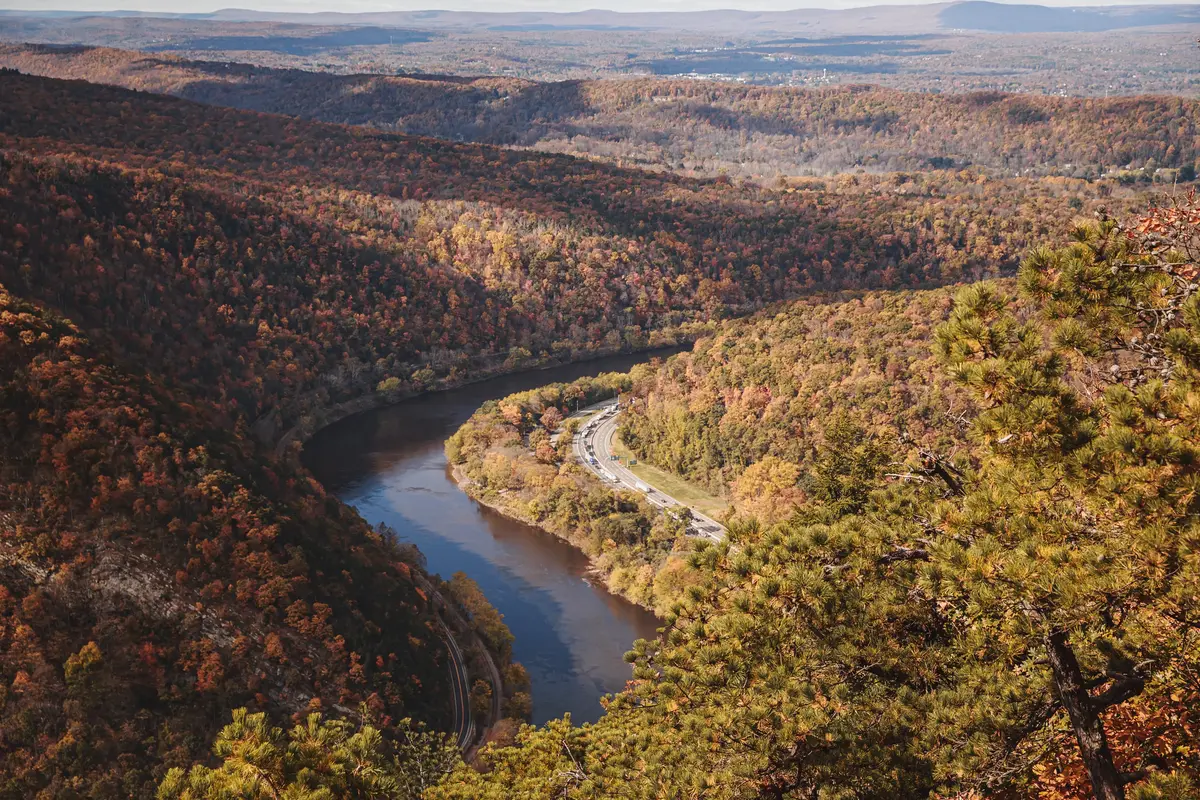
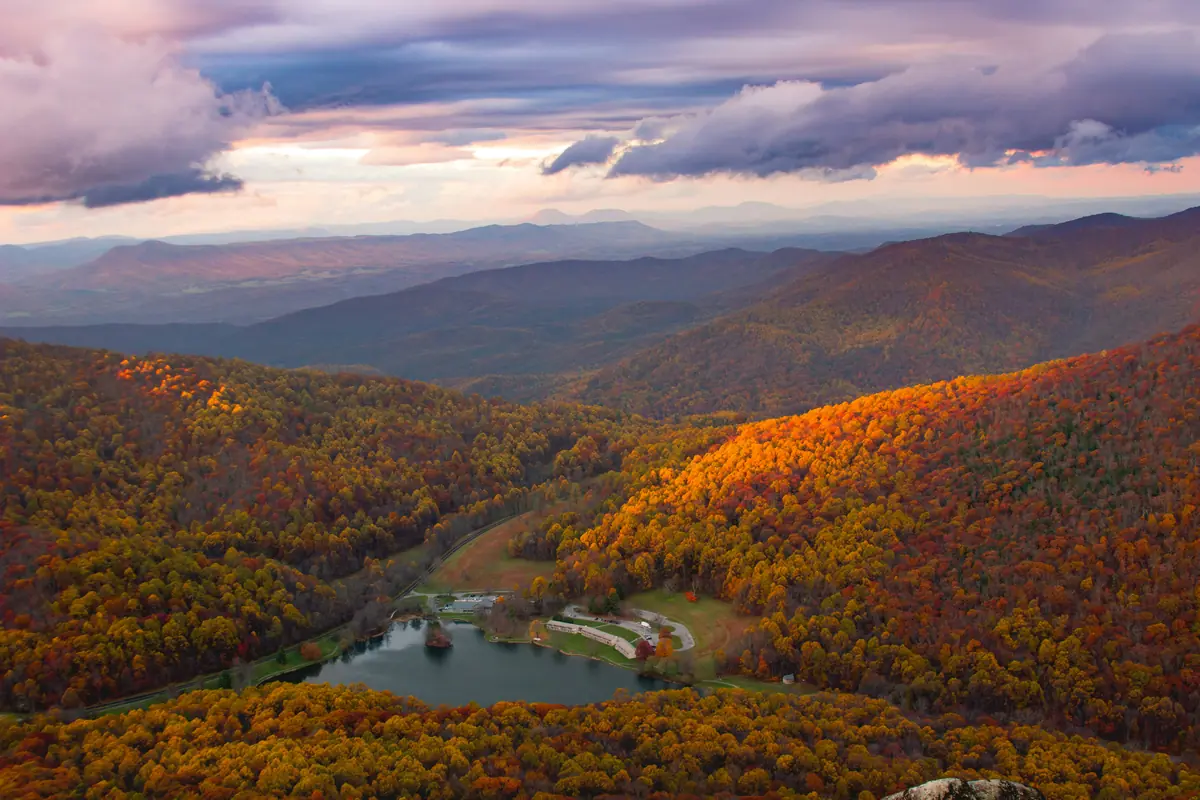
Fall, from late September to late October, is the best overall window: Blue Ridge foliage peaks, humidity drops, and skies clear. Summer suits the beaches but roughly doubles coastal hotel rates. Spring brings wildflowers and comfortable history-route weather. Winter is cheapest for cities but closes parts of Skyline Drive when ice forms.
Each season rewards a different route:
| Season | Conditions | Crowds | Pricing Note |
|---|---|---|---|
| Spring | Wildflowers, mild, some rain | Moderate | Shoulder rates |
| Summer | Hot, humid; beach prime time | High at the coast | Coastal rates roughly double |
| Fall | Crisp, clear, peak foliage | High on Skyline | Mountain lodges book out |
| Winter | Cold; partial Skyline closures | Low | DC hotels at their cheapest |
A few specifics worth planning around:
- Foliage peaks early to late October, with the highest elevations turning first
- Shenandoah temperatures: roughly 75°F (24°C) high in July, around 18°F (-8°C) low in January
- Skyline Drive closes during ice and at night during the deer-hunt season (mid-November into early January)
- DC hotels bottom out in January and February
Through October, roadside cider and pumpkin stands appear all along the Appalachian foothills — a good excuse to pull over between overlooks.
Skyline Drive vs the Blue Ridge Parkway — Which Scenic Drive?
Skyline Drive runs 105 miles (169 km) through Shenandoah National Park with a 35 mph limit, 75 overlooks, and an entrance fee around $30. The Blue Ridge Parkway continues 469 miles (755 km) south from Rockfish Gap toward the Great Smokies, charges no fee, and posts a 45 mph limit. They connect end to end at Rockfish Gap, so you can drive both as one continuous ridge route.
Here’s the head-to-head:
| Feature | Skyline Drive | Blue Ridge Parkway |
|---|---|---|
| Length | 105 mi (169 km) | 469 mi (755 km) |
| Speed limit | 35 mph | 45 mph |
| Fee | ~$30/vehicle | Free |
| Overlooks | 75 | Dozens, spaced out |
| Highlight | Old Rag, in-park lodges | Mabry Mill (milepost 176) |
If you only have time for one, Skyline Drive gives you the most scenery per mile and the in-park lodges; the Parkway rewards a longer, slower trip. Note that Old Rag Mountain, Shenandoah’s most popular hike, requires a $2 day-use ticket booked on Recreation.gov in advance, required March 1 through November 30, on top of the park entrance pass.
A nearly empty Mabry Mill on a Tuesday morning beats any crowded weekend overlook — the tour buses and weekend traffic don’t reach the southern Parkway mileposts until later in the day, so an early-week start buys you the pond reflection to yourself.

The Coastal Route — Beaches, Boardwalks, and Wild Ponies
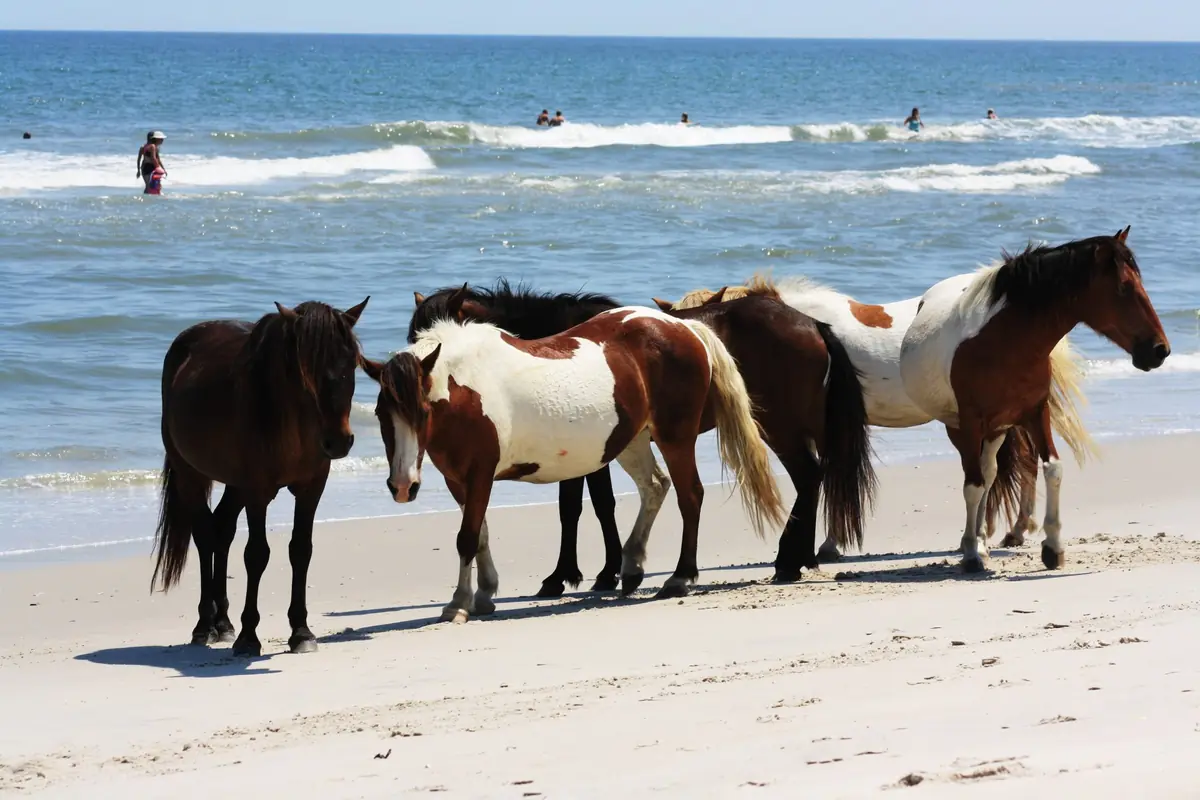
The coastal route runs from Victorian Cape May, across the Delaware Bay on the Cape May–Lewes Ferry, down Delaware’s Route 1 through Rehoboth and Ocean City, to the wild ponies of Assateague and Chincoteague. It covers 3 to 5 days, peaks in summer, and is the most family-friendly Mid Atlantic option.
The ferry is the route’s quiet highlight. The Cape May–Lewes crossing covers about 17 miles (27 km) in roughly 85 minutes, and on a clear day dolphins work the wake — a real break from the I-95 grind. Driving around the bay instead can take about the same time without the view, which is why the ferry is worth the fare.
Key logistics for the beach loop:
- Cape May–Lewes Ferry: ~17 mi (27 km), about 85 minutes, vehicle plus passenger fares
- Assateague Island: about $25 per vehicle; there’s no road between the Maryland and Virginia sides
- Pony viewing: best from late April through October, when the herds graze near the road
- Ocean City boardwalk food: Thrasher’s fries, Fisher’s popcorn, and Kohr Bros frozen custard are the classics
The famous Chincoteague Pony Swim happens on the last Wednesday of July, when the Saltwater Cowboys guide the herd across the channel at slack tide (roughly a 7 a.m. to 1 p.m. window), with the foal auction the next morning. Confirm the exact date the year you go, since it shifts with the calendar.
On Assateague itself, the best moment isn’t the swim at all — it’s a pony wading through the marsh channel toward you at low tide, close enough to hear it breathe. Keep your distance; they bite and kick, and the rangers will fine you for feeding them.
Pro Tip: Thrasher’s fries on the Ocean City boardwalk come with vinegar only — ask for ketchup and you’ll get a look. Grab a cup of malt vinegar and lean in.
The History Route — Battlefields and the Founding of America
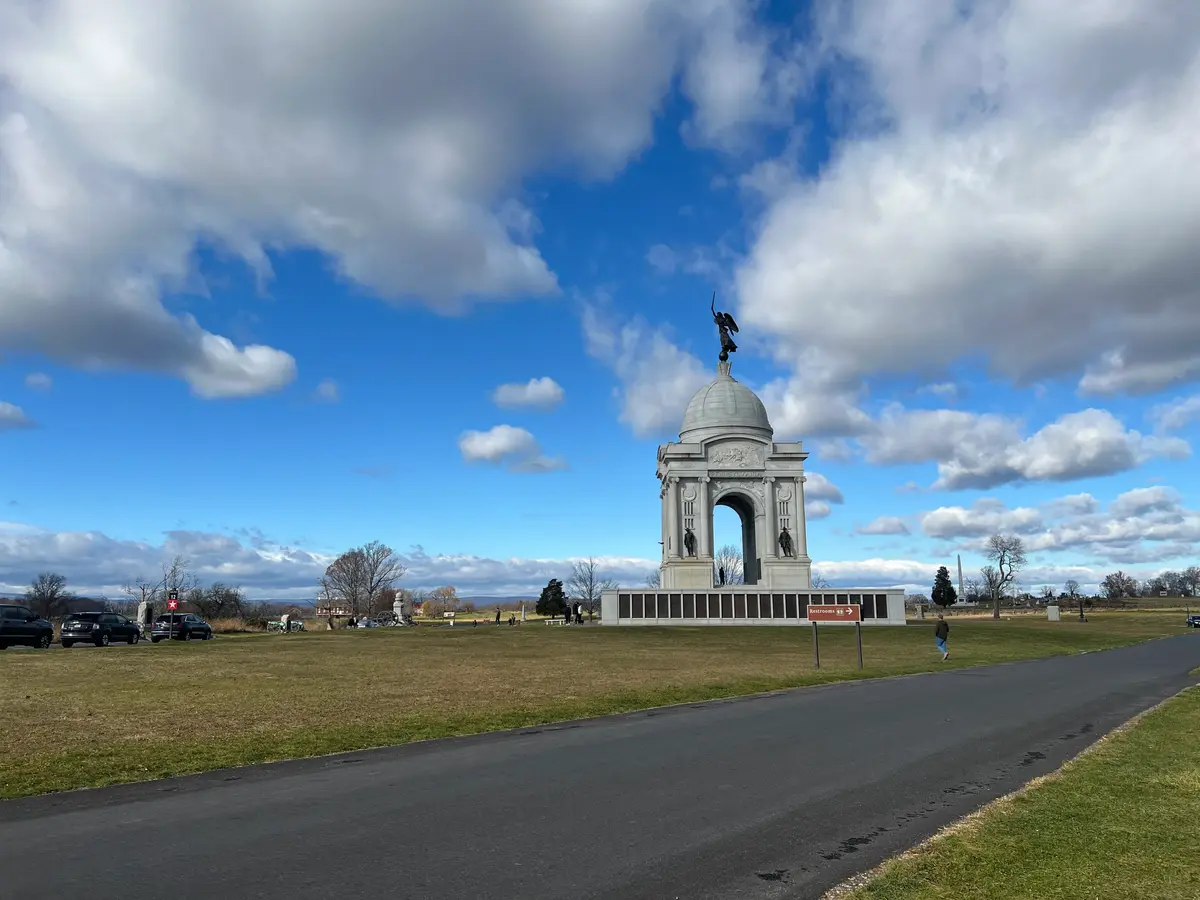
The history route links Gettysburg, Antietam, and Harpers Ferry with Washington DC, Annapolis, and Colonial Virginia — Williamsburg, Jamestown, Yorktown, and Monticello. Distances are short: Gettysburg to Harpers Ferry is about 55 miles (89 km), under 90 minutes, which makes 5 to 7 days enough to cover the founding-to-Civil-War arc.
What makes this route work is how tightly the sites cluster. You can stand on the open Gettysburg field where the Union line held in the morning and reach Harpers Ferry — where John Brown’s raid lit the fuse — by lunch. The stops, roughly south to north:
- Gettysburg: the turning-point battlefield; walk it early before the auto-tour fills
- Antietam: the single bloodiest day of the Civil War, quieter and more contemplative
- Harpers Ferry: John Brown’s raid site, where three states and two rivers meet
- Washington DC: the free Smithsonian museums on the National Mall
- Annapolis: the Naval Academy and colonial waterfront, with schooner sails on the bay
- Colonial Virginia: the Historic Triangle (Williamsburg, Jamestown, Yorktown) fits in a full day; Monticello takes a half-day
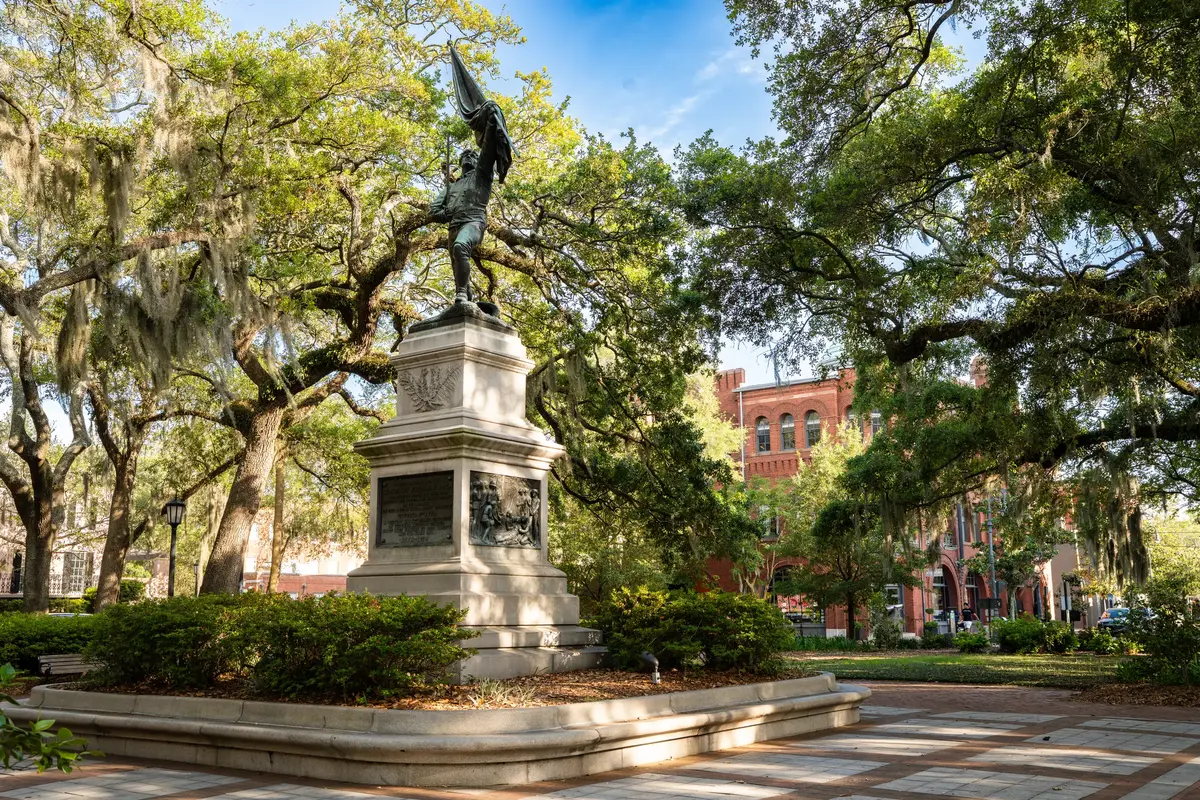
Williamsburg served as Virginia’s colonial capital from 1699 to 1780, and the living-history Historic Triangle packs the founding story into one walkable area. Washington DC’s free Smithsonians give you a full day inside major national museums without paying a cent of admission.
The Food-and-Wine Route — Virginia Wine Country and Middleburg
Virginia’s wine route splits between two hubs. Loudoun County, branded DC’s Wine Country and sitting about 25 miles (40 km) west of Washington, holds more than 40 wineries across horse-country villages like Middleburg and Aldie. Two hours south, the Monticello AVA around Charlottesville — Virginia’s first AVA and Wine Enthusiast’s 2023 Wine Region of the Year — spreads another 40-plus wineries beneath the Blue Ridge. It runs year-round and folds neatly into the history route.
Both hubs are close enough to the DC and Colonial Virginia stops that you can bolt a wine leg onto the history route without a separate trip. The practical shape of a wine day:
- Loudoun County (DC’s Wine Country): 40+ wineries clustered around Middleburg and Leesburg, roughly 25 mi (40 km) from DC
- Monticello Wine Trail: 40+ wineries within about 25 mi (40 km) of Charlottesville, near Jefferson’s Monticello
- Tasting-room hours: most open around 11 a.m. and close by 5 or 6 p.m.
- Realistic pace: three to four wineries in a day, with lunch in between — more than that and the pours blur
- Tasting fees: most estates charge for a flight, often waived with a bottle purchase
- Getting around: pick a designated driver or book a tour van; the back roads are narrow and unlit after dark
Barboursville Vineyards makes the strongest history-and-wine pairing on the route: you taste beside the brick ruins of a mansion Thomas Jefferson designed, on an estate that’s been bottling wine since 1976. For the scenic drive itself, the Nelson 151 corridor south of Charlottesville strings wineries, cideries, and breweries along one Blue Ridge-flanked road.
Pro Tip: Virginia’s signature grapes are Viognier (white) and Cabernet Franc (red), not the Chardonnay-and-Cabernet lineup you’d default to in California. Ask for those two by name and you’ll drink what the region actually does best.
Is the Mid Atlantic Good for a Family Road Trip?
Yes — the Mid Atlantic is one of the best US family road trip regions because drives between stops are short and the attractions vary widely. Wild ponies, Ocean City’s boardwalk, Hersheypark, Busch Gardens Williamsburg, and the free Smithsonian museums all sit within a few hours of each other, so no single day demands too much car time from restless kids.
What makes it work for families specifically:
- Short hops: most legs run under three hours, with frequent stops
- Free museums: the Smithsonians on the National Mall cost nothing and the Mall is stroller-friendly
- Theme parks: Hersheypark and Dutch Wonderland in Pennsylvania, Busch Gardens near Williamsburg
- Beach plus ponies: the coastal route pairs sand with wildlife kids actually remember
- Boardwalk towns: Ocean City and Rehoboth deliver food, rides, and arcades in one stretch
Pro Tip: For toddlers, base yourself near one beach town for two or three nights instead of changing hotels nightly. The pack-and-load cycle is what wears young kids (and parents) down, not the destinations.
Where to Stay and How to Plan by Traveler Type
Lodging ranges from in-park lodges like Skyland and Big Meadows on Skyline Drive to Cape May’s Victorian inns and DC business hotels. Budget travelers should target cities in winter and beaches midweek; RV travelers must check the 12-foot-8-inch Marys Rock Tunnel clearance before driving Skyline Drive.
Where to stay shifts by who you are:
- In-park / mountain: Skyland and Big Meadows on Skyline Drive, Peaks of Otter Lodge on the Parkway — book months ahead for fall
- Coastal charm: Cape May’s Victorian inns, plus rentals in Rehoboth and Chincoteague
- City base: DC hotels are cheapest in January and February, well off summer rates
- Budget: campgrounds at Assateague and inside Shenandoah; cities midweek, beaches midweek
- RV / van: Skyline Drive’s Marys Rock Tunnel clears 12 feet 8 inches — measure before you commit, and have a reroute ready
- Accessibility: the National Mall and most Skyline overlooks have paved, near-level access; battlefields rely on auto-tour routes you can drive
If you want to cut costs, the trade-off is clear: staying in a smaller inland town can save $40 or more a night over a beachfront room, but you’ll spend it back on the drive and parking each day you go to the shore. Decide whether you value the walk-to-sand convenience or the savings.
Bottom Line — Which Mid Atlantic Route Should You Drive?
Pick one theme and drive it well. Choose the coastal route for families and summer, the mountain route for fall foliage and hikers, the history route for spring or fall, and the food-and-wine route year-round. With 10 to 14 days, pair the Blue Ridge Parkway with Colonial Virginia for the most complete version of the trip.
The short version: a Mid Atlantic road trip works best as one focused route, not a sampler of all four. Budget $150 to $300 a day for two, plan around mountain fog and city rush hours rather than distance, and go in fall if you can — the foliage, the clear skies, and the thinner crowds make the whole region better.
The one rule that saves every trip here is to resist the urge to do it all. The region is small enough to tempt you into cramming beaches, mountains, and battlefields into a single week, and that’s exactly how you end up watching it all through a windshield.
Still torn between the ponies and boardwalks and the foggy ridgelines? Pick the one that matches your season, block the days for it, and leave the rest for next year — that single decision does more for the trip than any packing list.