The best East Coast cities sit close enough to chain by train: centuries of history, serious food, and coastline packed into one drivable corridor. I’ve walked the core of each on foot. This guide ranks them honestly — which to visit first, which the guidebooks oversell, what each costs, and when to go.
Which East Coast Cities Are the Best?
The best East Coast cities are New York City, Boston, Washington DC, Charleston, and Savannah, followed by Philadelphia, Miami, and Portland, Maine. New York and Washington carry the landmark density. Boston, Philadelphia, and Charleston reward travelers who eat like locals. The smaller coastal towns are slow, seafood-focused escapes.
What makes this corridor unusual is how tight it is. You can have breakfast in Boston, catch the train south, and eat dinner in New York the same evening. The five core cities link by Amtrak’s Northeast Corridor without a single rental car — the main reason the East Coast beats the West for a first US trip.
The list below ranks them, then breaks down cost, timing, and the friction points most guides leave out.

How I Ranked These Cities
These rankings weigh four things travelers actually decide on: landmark and cultural density, food-scene depth, walkability and transit access, and value for money. Cities that reward a repeat visit and stand on their own — not just as road-trip pit stops — rank highest.
I walked the core of every city here rather than driving through it, which is the only honest way to judge walkability. A city that looks compact on a map can still eat an hour of your day in transit between its best blocks. The ranking reflects what the streets feel like underfoot, not what a tourism board claims.
1. New York City — the One City to See First
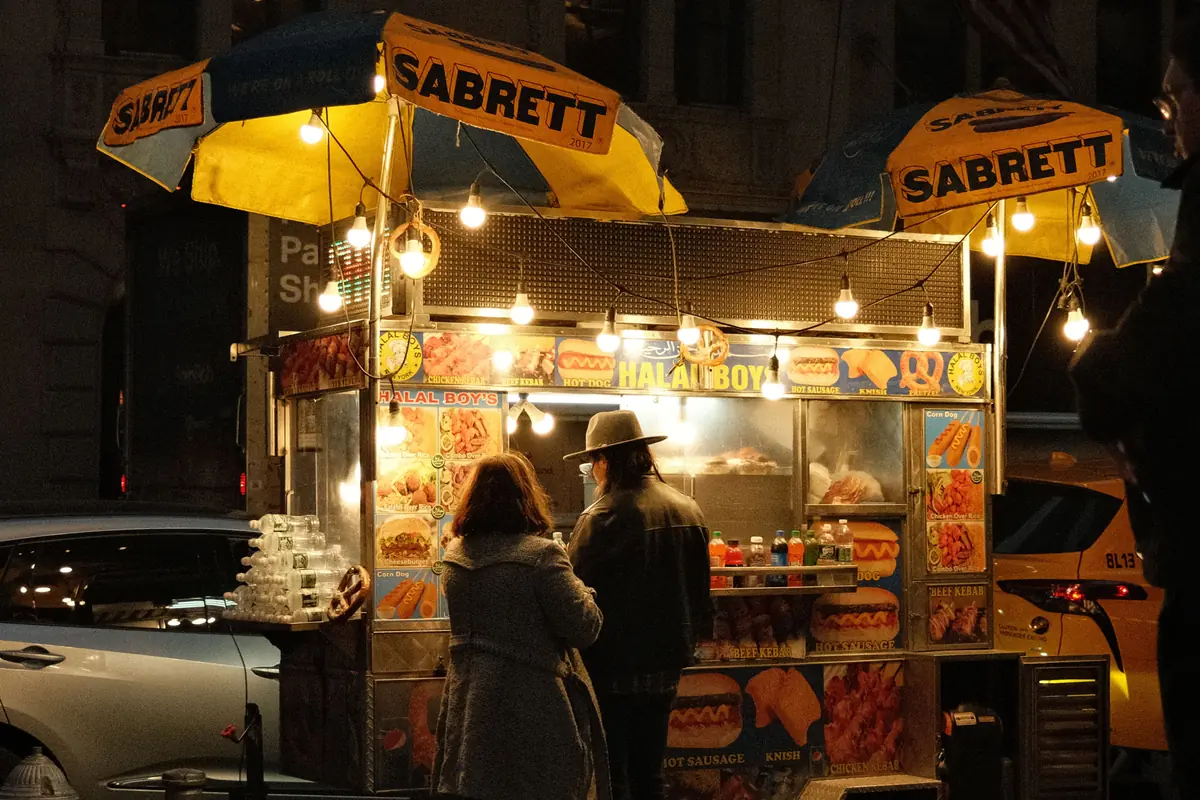
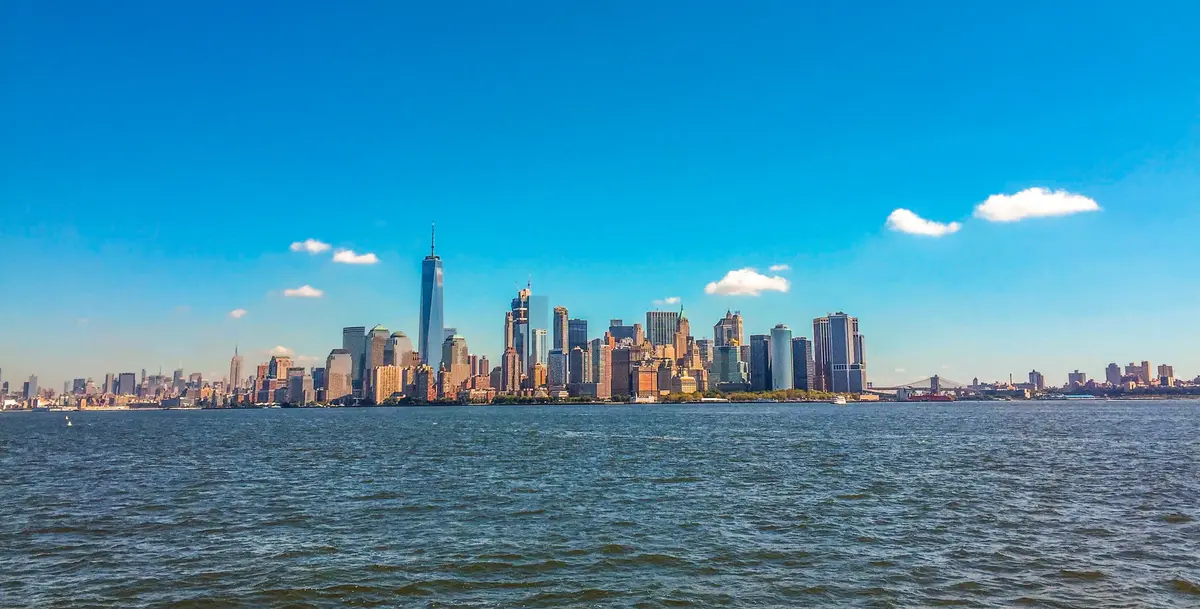
New York City is the East Coast’s essential first stop: Central Park, the Met, Broadway, and the Brooklyn Bridge in one dense, walkable grid. Pick one obsession per day instead of racing the whole island, and the city rewards you rather than wearing you down.
The rookie mistake is trying to “do” Manhattan in two days. You can’t, and chasing it leaves you with sore feet and no memories. Anchor each day around one neighborhood — the Met and Central Park one morning, the West Village and the High Line another — and the city stops feeling like a treadmill.
For the skyline shot everyone wants, go to Top of the Rock over the Empire State Building. The wait is usually shorter, and the view actually includes the Empire State Building in the frame instead of leaving you standing on it.
One money note most guides skip: New York room rates don’t just rise in summer, they spike around specific September events. A roughly $347 baseline jumps past $500 during Fashion Week and above $650 while the UN General Assembly is in session, then drops again days later. Dodge those weeks and you save more than you’d ever save by switching neighborhoods.
Pro Tip: The line outside Joe’s Pizza on Carmine Street wraps the corner by mid-afternoon on a weekday. Go before noon and you walk straight to the counter for a roughly $4 plain slice.
- Hotels: from the low-to-mid $100s/night; luxury rooms average above $300, and spike sharply during September events
- Food: a slice runs a few dollars; a serious dinner runs $60–$100+ per person
- Best for: first-time visitors who want landmark density
- Time needed: 3 days minimum
- Getting around: subway and on foot; skip cabs in Midtown traffic

2. Boston — Walkable History With a Real Food Scene
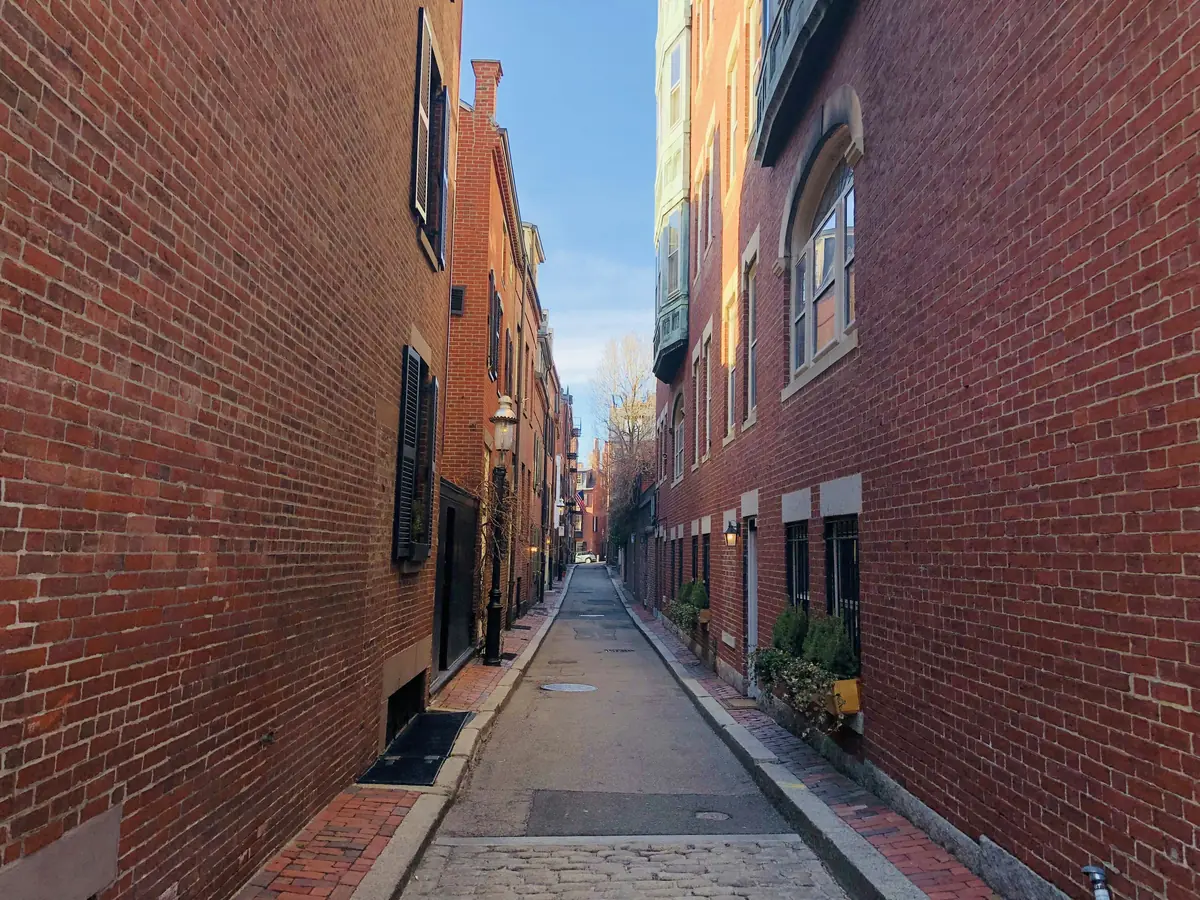
Boston is the most walkable big city on the East Coast. The Freedom Trail links 16 nationally significant historic sites along a 2.5-mile (4 km) red line you can cover in half a day. Add the North End’s cannoli, Beacon Hill’s brownstones, and Fenway Park, and three days fills easily.
The Freedom Trail draws more than 4 million people a year, and it’s the rare tourist route worth following — the red line in the pavement does the navigating for you. Pair it with the MBTA, the subway locals call “the T,” and you’ll never touch a car. Driving in Boston is a punishment, not a convenience.
The North End is where Boston eats, and the cannoli debate there is real. Most tour groups march into Mike’s Pastry on Hanover Street. Walk a couple blocks up the same street to Modern Pastry, where the shells are filled to order so they stay crisp instead of going soft under the counter glass.
- Hotels: from the low $100s/night
- Best for: walkers, history travelers, and serious eaters
- Time needed: 3 to 4 days
- Getting around: the MBTA (“the T”) and on foot; no car needed
- Don’t miss: Modern Pastry over Mike’s for cannoli filled to order
3. Washington DC — the Free-Museum Capital
Washington DC offers the best value of any major East Coast city: every Smithsonian museum in the city is free, and the National Mall lines up the Lincoln Memorial, the Capitol, and the monuments within an easy walk. Georgetown adds cobblestones and waterfront dining.
The Smithsonian runs 21 museums plus the National Zoo, and every one is free to enter except Cooper Hewitt up in New York City. A full day of culture can cost you nothing but lunch. The Mall museums sit within roughly a mile of each other, and Metro stops drop you right at the edge.
The catch is timed entry. The National Air and Space Museum, the National Museum of African American History and Culture, and the National Zoo all require free timed passes you reserve online. The African American History museum allows weekday walk-ups, but on weekends and during the March-through-August peak you need a pass to get in the door.
Pro Tip: Air and Space passes drop online in weekly batches, usually on Thursdays for slots about two weeks out. Set a reminder for the release — same-day passes vanish in seconds, and there’s no standby line worth counting on.
- Hotels: mid-range; book within a few blocks of a Metro stop
- Cost: every Smithsonian museum in the city is free
- Best for: museum-goers, families, and value seekers
- Time needed: 3 to 4 days
- Getting around: Metro plus walking the Mall

4. Charleston — the South’s Best Food City
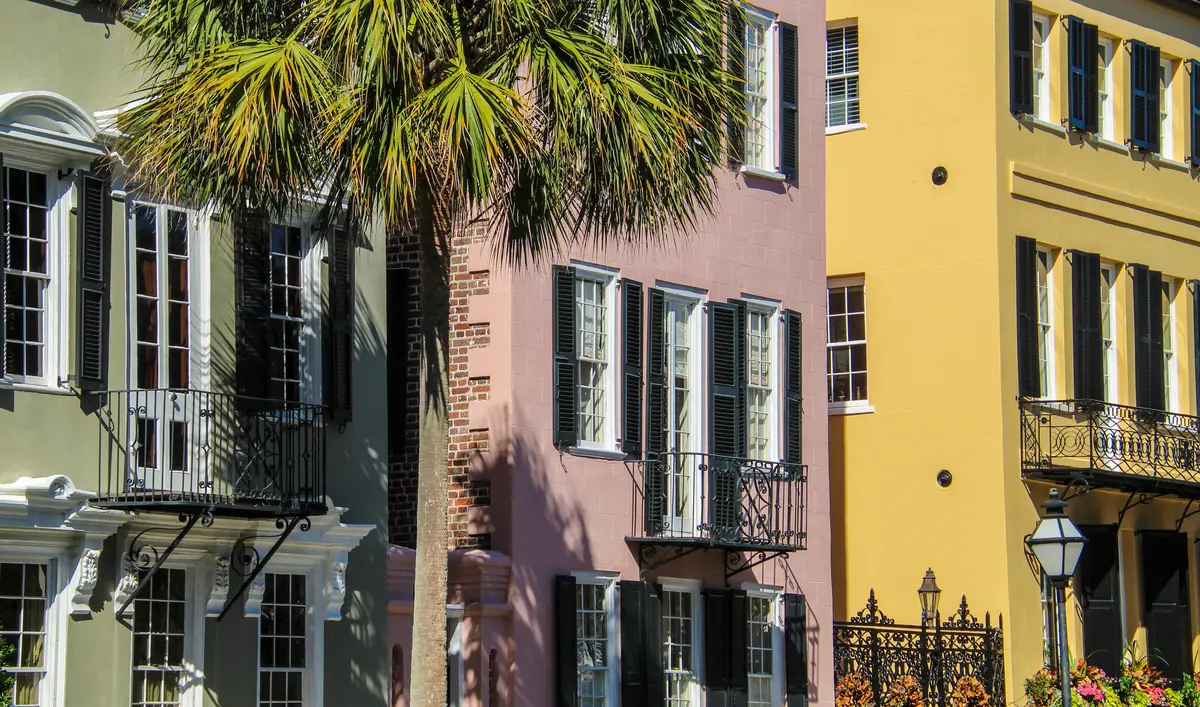
Charleston is the most beautiful small city on the East Coast and a serious contender for its best place to eat. Rainbow Row’s pastel Georgian houses, the Battery seawall, and King Street’s shops sit on a flat, walkable peninsula you can cover on foot in an afternoon.
Rainbow Row is 13 Georgian row houses at 79–107 East Bay Street — the longest intact stretch of 18th-century Georgian row houses in the country. The whole historic peninsula is flat and easy to walk, with one exception: the cobblestones near the Battery are uneven enough to roll an ankle. Wear flat shoes, not the heels Instagram suggests.
The food is the real reason to come, though one big name has gone quiet. Husk built its reputation on Lowcountry cooking and is still going strong on Queen Street. Rodney Scott’s, the whole-hog institution that helped make Charleston a barbecue destination, closed its King Street location amid a pile of lawsuits against its parent restaurant group; Scott has been running pop-ups and hopes to reopen, with no firm date set. For barbecue you can actually walk into today, Lewis Barbecue on Nassau Street is the reliable pick — Texas-style brisket from a pitmaster who takes it as seriously as anyone in town.
Spring and fall are peak. Spring highs average around 72°F (22°C), while summer pushes past 90°F (32°C) with humidity to match.
- Location: historic peninsula; Charleston International Airport sits about 12 miles (19 km) northwest of downtown
- Best for: food travelers, couples, and walkers
- Time needed: 2 to 3 days
- Getting around: on foot downtown; a car or rideshare from the airport
5. Savannah — Historic Squares and Southern Charm
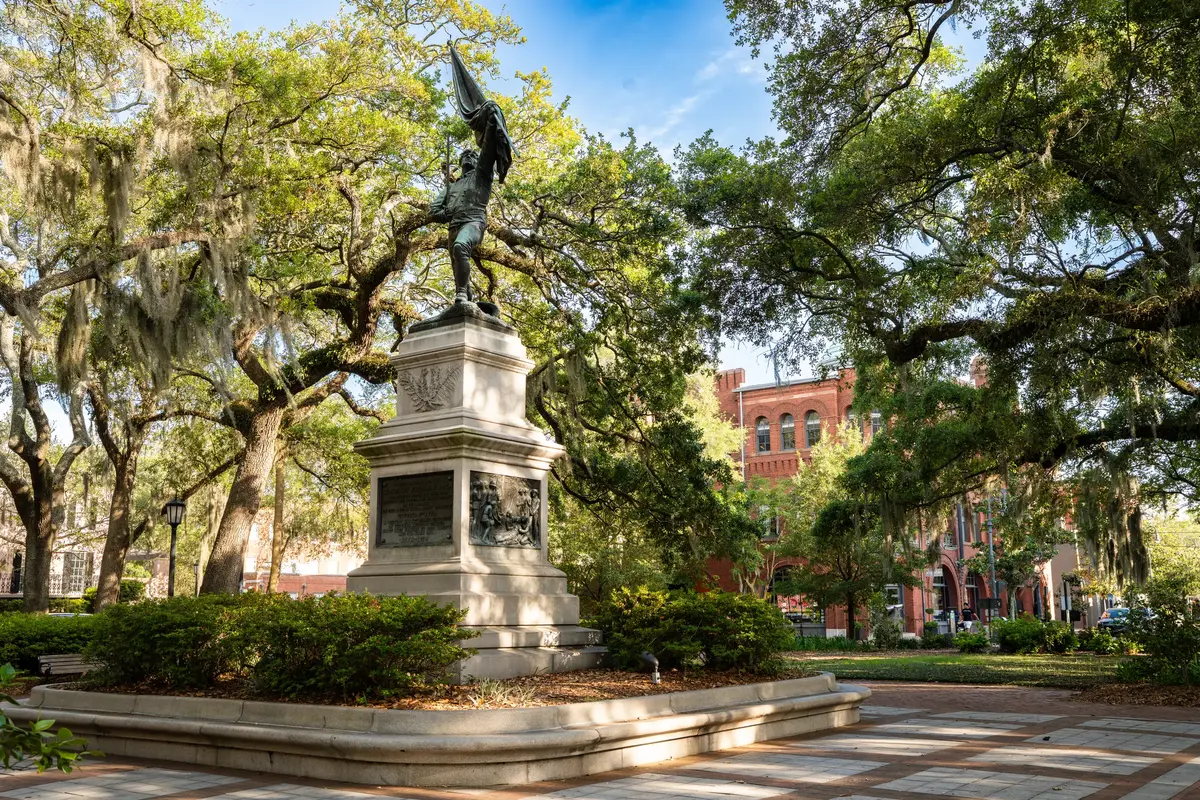
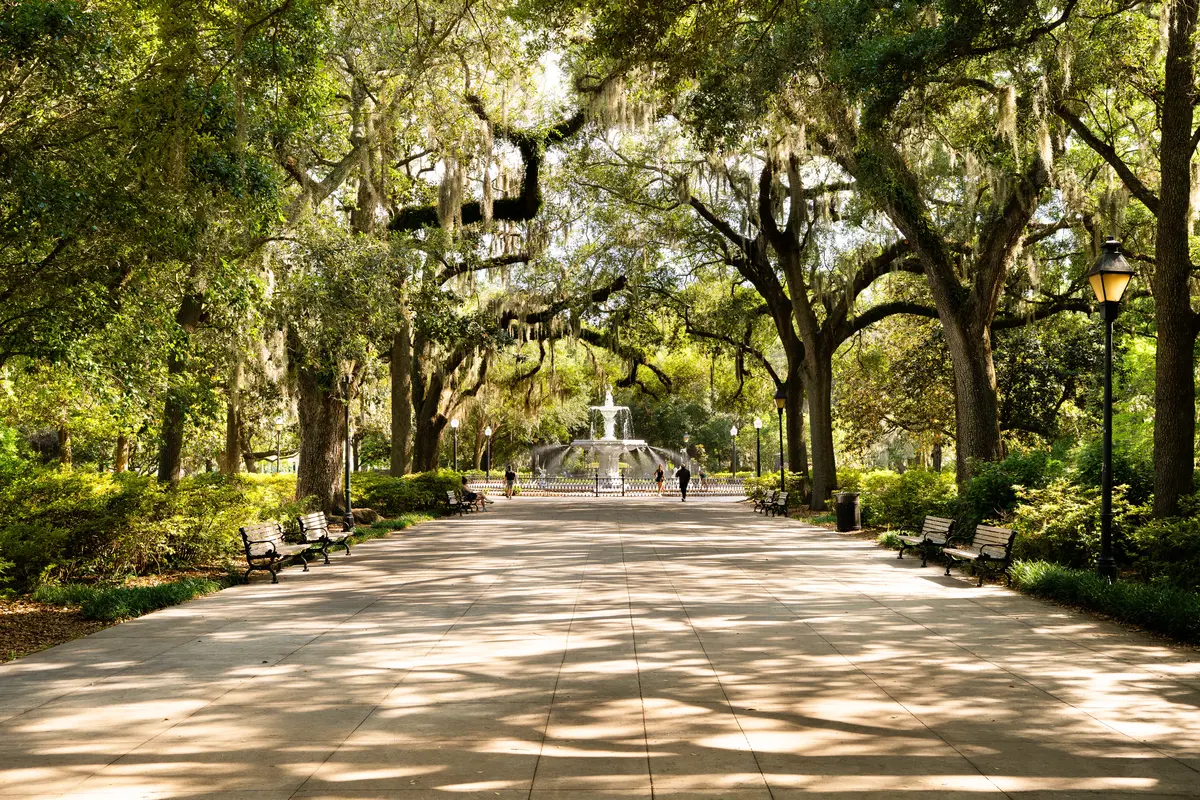
Savannah’s historic district packs 22 oak-shaded squares, River Street’s cobblestones, and Forsyth Park into roughly two square miles you can walk without a car. Founded in 1733, it pairs Southern hospitality with a famously haunted, atmospheric core that rewards slow days over packed itineraries.
Of the original 24 squares, 22 survive, laid out on General James Oglethorpe’s 1733 grid (Ellis Square was rebuilt after a stint as a parking garage). The historic district covers about 2.03 square miles and stays flat, so it’s built for wandering. Leopold’s Ice Cream is worth the line, and the live oaks dripping Spanish moss do most of the atmospheric heavy lifting.
Savannah pairs naturally with Charleston, about 106 miles (171 km) northeast via U.S. 17 and I-95 — roughly a two-hour drive. Do the two together and you’ve covered the best of the Lowcountry in under a week.
Pro Tip: Savannah’s historic district has an open-container law, so you can legally carry a drink from a bar through the squares. It changes the whole rhythm of an evening stroll.
- Best for: slow travelers, history, and atmosphere
- Time needed: 2 to 3 days
- Pair with: Charleston, about 106 miles (171 km) / a two-hour drive
- Getting around: the walkable historic district covers about 2 square miles
6. Philadelphia — Cheaper Than New York, Nearly as Rich
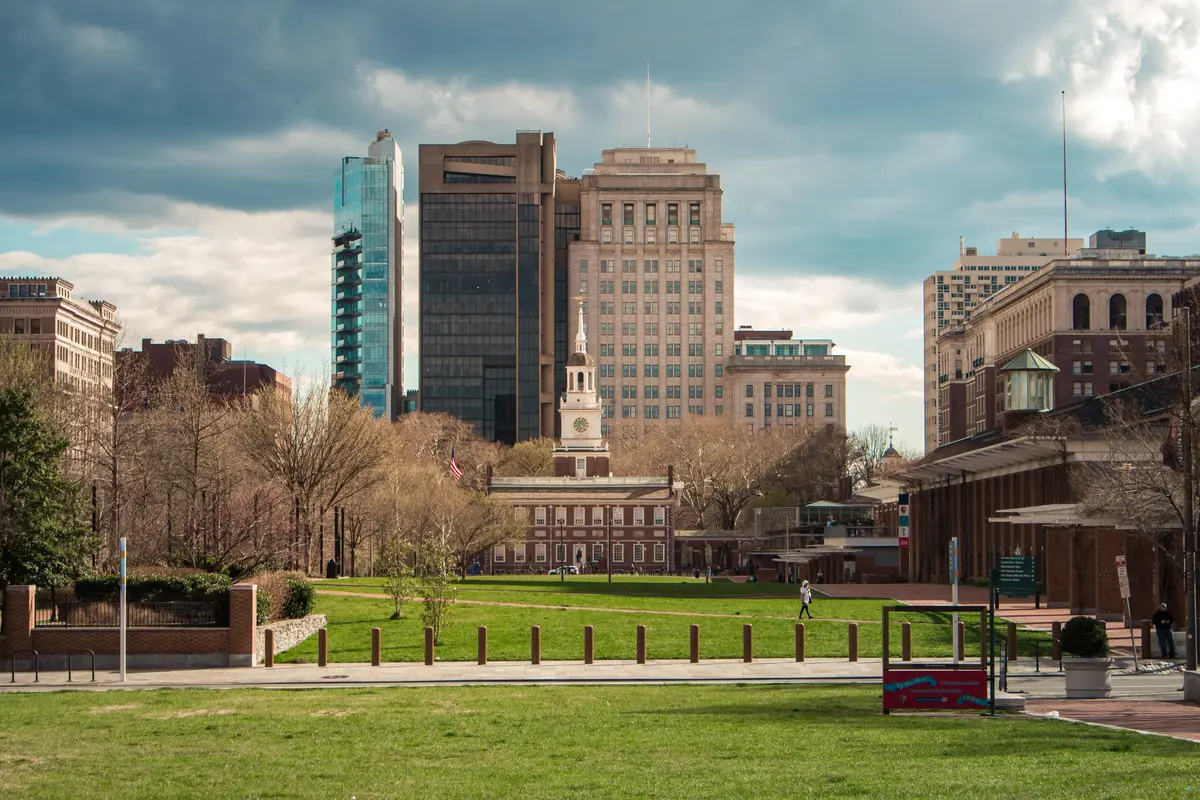
Philadelphia delivers founding-era history and a top-tier food scene at a real discount to New York, with comparable hotel rooms running noticeably less. The Liberty Bell and Independence Hall are free, and Reading Terminal Market is a full meal in itself.
This is the most underrated city on the corridor. The common advice to prioritize only New York and Boston skips the city that gives you nearly as much for far less. The Liberty Bell and Independence Hall cost nothing, the Rocky Steps at the Philadelphia Museum of Art are free to run, and Eastern State Penitentiary is one of the better historic-site tours on the East Coast.
Reading Terminal Market is where to eat — a covered market of stalls where you graze rather than sit down for one big meal.
Pro Tip: The line at the Liberty Bell moves fast right at opening, before the mid-morning bus tours roll in. Get there when the doors open and you’re through in minutes.
- Hotels: noticeably below New York for a comparable room
- Cost: Liberty Bell and Independence Hall are free
- Best for: value seekers, history travelers, and eaters
- Time needed: 2 to 3 days
- Getting around: walkable core plus SEPTA transit
7. Portland, Newport, and Bar Harbor — the Coastal Escapes
Portland, Maine, Newport, Rhode Island, and Bar Harbor, Maine aren’t cities in the usual sense. They’re walkable, water-focused getaways built around eating well and slowing down. Treat them as stops on a New England coastal drive rather than standalone sightseeing destinations.
Portland’s Old Port is the food anchor, and Eventide Oyster Co.’s brown-butter lobster roll is the dish people drive for. Newport pairs its Cliff Walk with Gilded Age mansions you can tour. Bar Harbor is mainly the gateway to Acadia National Park — most people use it as a base, not a destination.
Pro Tip: The wait at Eventide Oyster Co. stretches long at peak hours. Show up right at opening and you can usually grab a walk-in seat at the bar instead of standing on the sidewalk.
- Best for: seafood, slow coastal drives, and quiet over crowds
- Time needed: 1 to 2 days each
- Best as: stops on a New England coastal road trip
- Getting around: a car helps; the town cores are walkable once parked

8. Miami — the Warm-Weather Anchor
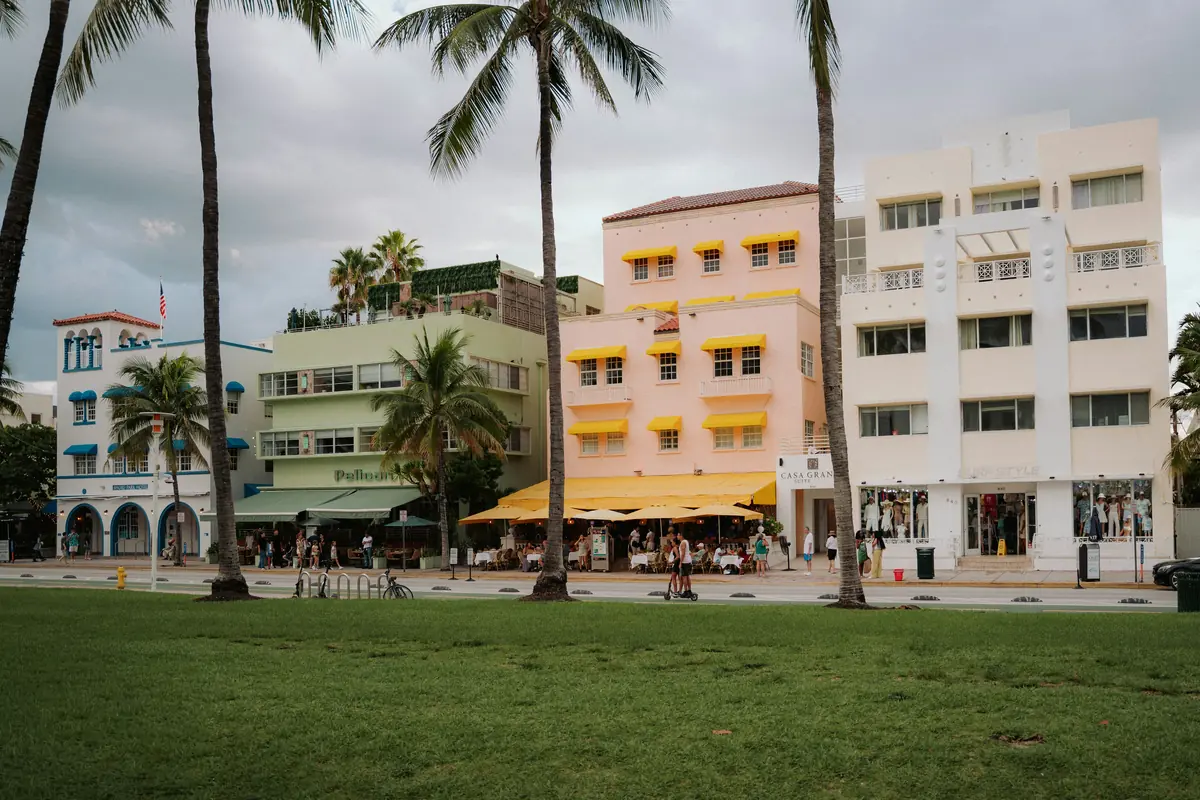
Miami is the East Coast’s warm-weather anchor, best in winter when the northern cities freeze. South Beach’s Art Deco district, Little Havana’s Cuban coffee windows, and Wynwood’s murals give it a culture mix unlike anywhere else on the seaboard.
Miami runs on an inverted price calendar most guides skip: room rates peak December through March, exactly when northern cities are cold and cheap. That’s the trade-off — you pay for the sun when everyone else wants it too. South Beach delivers the Art Deco strip, Little Havana the Cuban coffee culture, and Wynwood the street art.
If you want history with your warm weather, St. Augustine, Florida sits a few hours north and claims the oldest continuously occupied European-founded settlement in the country, with the Castillo de San Marcos fort anchoring its old town.
Pro Tip: A cortadito from a Little Havana coffee window costs a few dollars and sets the local rhythm. It’s the cheapest way to feel like you’re in Miami rather than just visiting it.
- Hotels: rates peak December through March
- Best for: winter sun, beaches, nightlife, and Latin culture
- Time needed: 3 to 4 days
- Getting around: a car or rideshare helps; the city is spread out
Best East Coast Cities Compared at a Glance
This table compares the top East Coast cities on the four factors that drive the decision: typical hotel price, ideal length of stay, best season, and transit access. Use it to match a city to your budget and calendar before you book.
| City | Hotel Price (Typical) | Days Needed | Best Season | Main Access |
|---|---|---|---|---|
| New York City | From low-mid $100s; luxury $300+ | 3+ | Spring, fall | Three airports; Amtrak Northeast Corridor |
| Boston | From the low $100s | 3–4 | Fall, late spring | Logan Airport; Amtrak; the T |
| Washington DC | Mid-range | 3–4 | Spring, fall | Three airports; Amtrak; Metro |
| Charleston | Mid-to-upper hundreds in peak | 2–3 | Spring, fall | Charleston Intl., ~12 mi (19 km) out |
| Savannah | Moderate | 2–3 | Spring, fall | Savannah/Hilton Head; drive from Charleston |
| Philadelphia | Below New York | 2–3 | Spring, fall | Amtrak; PHL Airport; SEPTA |
| Portland, ME | Moderate | 1–2 | Summer, early fall | Drive; PWM Airport |
| Miami | Peaks Dec–Mar | 3–4 | Winter | MIA Airport; drive |
The pattern worth noticing: between the northern cities, the train beats flying once you count airport security, transfers, and the ride from the airport into town. Amtrak drops you in the city center; the airport drops you forty minutes out.
When Is the Best Time to Visit the East Coast?
Spring and fall are the best times to visit the East Coast. Fall, from September through November, brings foliage and mild temperatures across the north; spring, from March through May, brings blossoms and lower pre-summer prices. Winter favors the southern cities, where Miami and the Georgia coast stay warm.
The north-versus-south split is the part most guides flatten. Northern foliage peaks around mid-October in New England, then rolls south, reaching the Rhode Island coast by late October. Summer below the Mid-Atlantic turns hot and humid, and the southern coast sits inside hurricane season from June through November, so a late-summer Charleston or Savannah trip carries real weather risk.
How Many Days Do You Need on the East Coast?
Plan at least 10 to 14 days to combine New York City, Washington DC, and Boston with real time in each. For single cities, budget three days minimum for New York, three to four for Washington and Boston, and two to three for Charleston or Savannah.
The good news is that the northern cities sit close enough to chain by rail, so you lose almost no time to transit between them. Boston in particular is so compact that little of your day disappears moving between sights — you can cover the Freedom Trail, the North End, and Beacon Hill on foot in a single stretch.
How Do You Road-Trip the East Coast Cities by Car?
The classic East Coast road trip runs Interstate 95 from New England to Florida, chaining Boston, New York, Philadelphia, Washington, Charleston, Savannah, and Miami. The full New York to Miami stretch covers about 1,280 miles (2,060 km) and is best split across several days, not driven in one push.
That non-stop drive runs roughly 18 to 20 hours, which is why nobody sane does it in one go. The common overnight stops are Savannah, Georgia, or Jacksonville, Florida, both of which break the southern leg cleanly.
If you’d rather skip the wheel, the train still covers the whole corridor — with one change worth knowing. Amtrak’s Silver Meteor runs daily from New York’s Penn Station to Miami in about 28 hours, stopping at Washington, Charleston, Savannah, and Orlando along the way. Its old sister train, the Silver Star, no longer makes the New York run: Amtrak folded it into the Chicago–Washington–Miami Floridian, leaving the Meteor as the only one-seat train between New York and Miami. Coach is the cheapest fare and runs well below flying, but prices are dynamic, so book early. For the northern cities, the Northeast Corridor is the rail spine — Boston to Washington, with stops at every major city in between.
Pro Tip: Leave New York before the early-morning rush to clear the metro area cleanly. Get caught in it and you can lose an hour before you’ve even reached New Jersey.
What Are the Cheapest East Coast Cities to Visit?
Washington DC and Philadelphia are the best-value major East Coast cities. DC’s Smithsonian museums are all free, and Philadelphia’s hotels run well below New York’s for a comparable room. Savannah and the smaller Southern cities also stretch a budget further than the northern megacities.
The math is simple in DC: when every museum is free, a full day of culture costs you only what you spend on lunch. Philadelphia’s value comes from the hotel gap with New York plus its free founding-era sites. South of New York generally, off-season rates drop and the dollar goes further, so a Southern leg can subsidize a pricier northern one.
Is the East Coast or West Coast Better to Visit?
For first-time US visitors, the East Coast is usually the easier choice: its marquee cities sit close together, connect by Amtrak, and are walkable without a car. The West Coast wins for dramatic scenery and long road trips. Pick the East Coast for history, museums, and city-hopping.
The deciding factor is how you like to travel. The West Coast asks you to drive long distances between its highlights — national parks, coastline, and cities spread hundreds of miles apart. The East Coast lets you breakfast in Boston and dine in New York the same day by train. If you want city density over open road, the East Coast delivers it with less effort.
Pick the Trip, Not the Map
Choose New York City for a first visit, Washington DC for value and free museums, Charleston or Savannah for Southern food and charm, Boston for walkable history, and Miami for winter sun. Most travelers fall hard for one of these East Coast cities and come back for the rest, so don’t agonize over the single “best” one — pick the one that matches the trip already in your head. A founding-history weekend points to Philadelphia or Boston. A food pilgrimage points to Charleston. A first-ever US trip points to New York. Sort out the city, and the corridor makes the rest of the trip easy.