You could sleep in a 12th-century monastery cloister, eat dinner under stone vaults, and walk the same corridors as medieval monks — for roughly the same rate as a standard four-star hotel in Lisbon. The Pousadas of Portugal are a government-founded network of heritage properties converted from the country’s most significant castles, convents, palaces, and monasteries in Portugal. This guide covers seven of the best, with the room-selection advice that booking sites never give you.
What are the Pousadas of Portugal?
The Pousadas of Portugal are a network of luxury heritage hotels housed inside historic monuments — Portugal’s historic castles, monasteries, convents, and palaces — spread across the country. Founded in 1942 as modest regional inns, the network now operates more than 30 properties under the Pestana Hotel Group, classified as either “Historic” (original monument conversions) or “Historic Design” (modern additions within a historic shell).
The distinction from a standard luxury hotel is straightforward: you are not staying near a historic building. You are staying inside one. Rooms occupy former monk cells, royal chambers, and convent wings. That authenticity works in both directions — atmosphere is real, but so are size constraints — which is why room selection matters more here than at almost any other hotel group in Europe.
1. Pousada Mosteiro de Guimarães — Europa Nostra Prize Winner
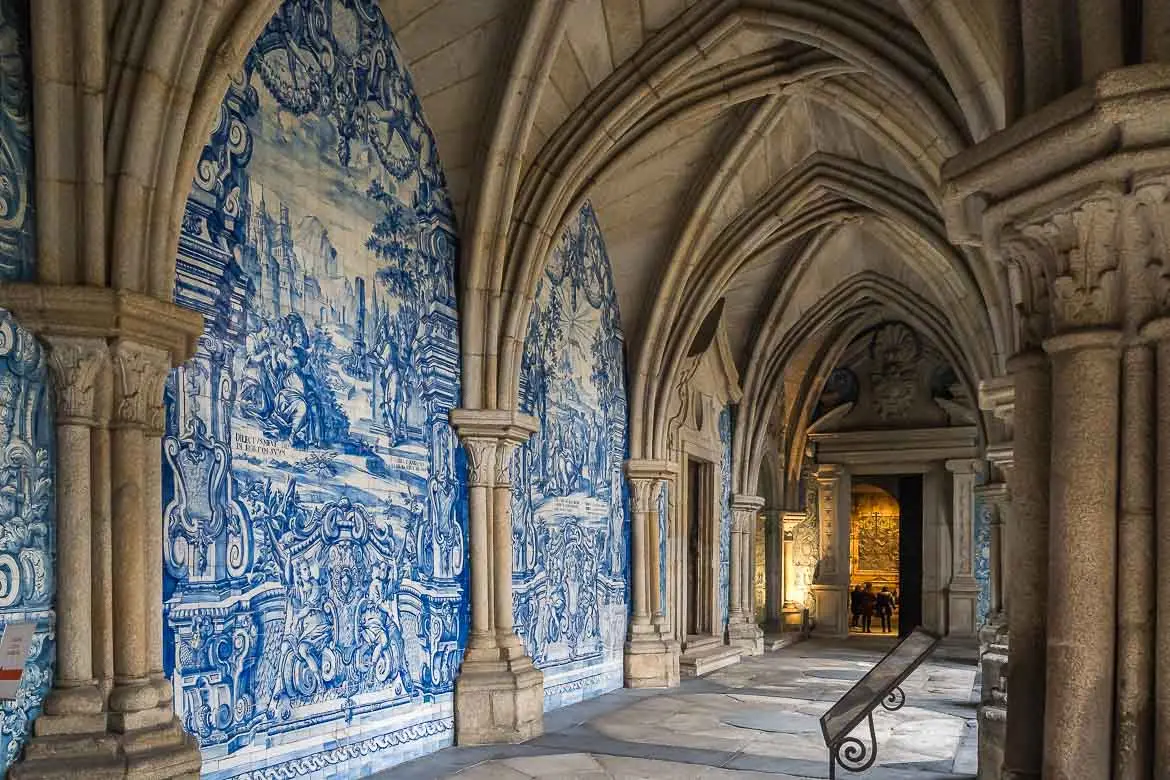
This 12th-century Augustinian monastery sits on a hill above Guimarães, the birthplace of the Portuguese nation and a UNESCO World Heritage city. It won the Europa Nostra prize for its restoration — and walking through corridors lined with azulejos hand-painted in 1747 makes clear why the prize was deserved.
The gardens spread across 22 acres (9 hectares), with a private lake, granite fountains, and a grotto that feels genuinely removed from the modern world. Dinner in the D. Mafalda restaurant happens under stone vaults in the former cellars. The Pudim Abade de Priscos — a baroque bacon-and-egg-yolk pudding that sounds wrong and tastes right — is the dish worth ordering. Roast kid goat is the other one.
The friction point is honest: Cell rooms are original monastic cells with atmospheric stone walls and no room to maneuver a large suitcase. Book Superior rooms in the converted monastic wings if you travel with real luggage — they are significantly larger and get more natural light.
- Location: Largo Domingos Leite de Castro, Guimarães — about 1.2 miles (2 km) uphill from the historic center
- Cost: from $165/night
- Best for: History travelers, couples, northern Portugal itineraries
- Time needed: Minimum 2 nights to cover the property and the town
Pro Tip: The Teleferico de Guimarães cable car station is 400 meters from the front door — a short ride gives you panoramic views of the city without the uphill climb. Go before 9 a.m. to beat the tour groups.
When to visit Guimarães
April–May or September–October brings mild temperatures without the summer coach traffic — the same windows that make for the best time to visit Portugal generally. June is high season — rooms fill fast and the D. Mafalda restaurant books out most evenings.
2. Pousada de Lisboa — Prime Lisbon Location, No Monastery Atmosphere
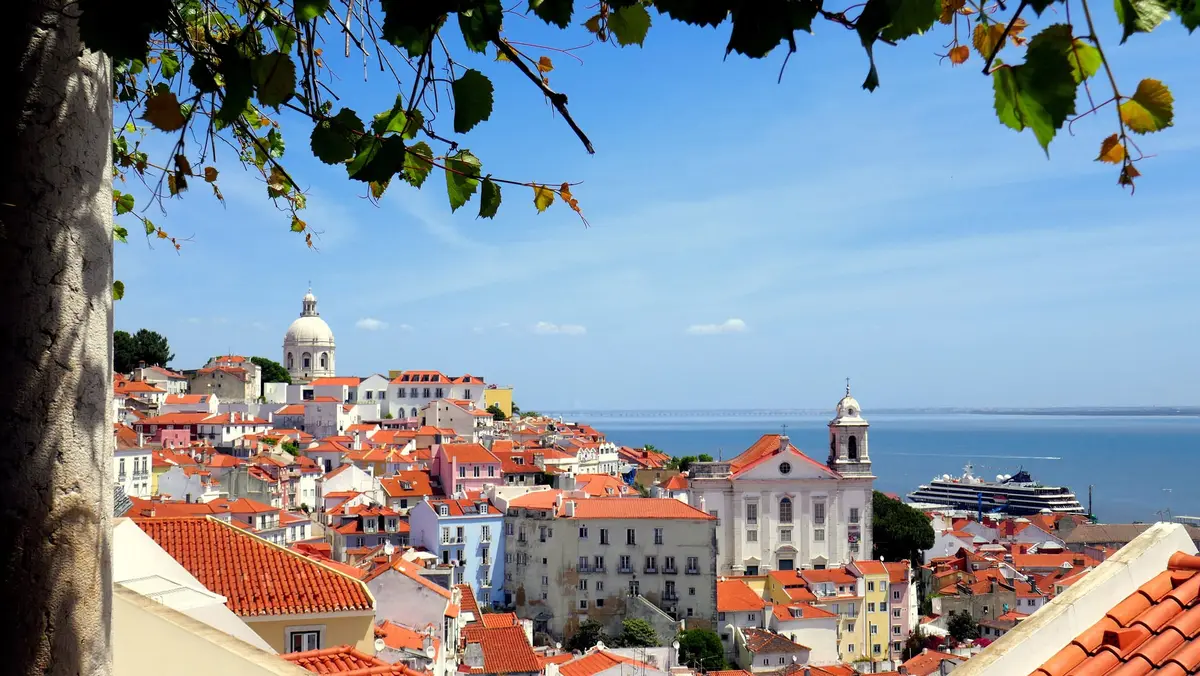
Pousada de Lisboa occupies the corner of Praça do Comércio, the riverside square where the Tagus opens toward the Atlantic. The building has defined the square’s edge for centuries; it now operates as a 90-room luxury hotel with an indoor pool, a sauna, and a ballroom where Portuguese government ministries once operated.
This is the most polished property in the network. The RIB Beef & Wine restaurant runs under vaulted ceilings. Every room gets Molton Brown amenities. The staff-to-guest ratio makes requests feel frictionless. Soundproofing is exceptional for a city-center hotel — you won’t hear Praça do Comércio’s evening crowds from your room, which is a genuine achievement given the location.
The honest caveat: this is luxury hotel in a historic building, not sleeping in a medieval fortress. If you came for the experience of aged stone and narrow corridors, book Óbidos or Évora instead. If you want a flawless base for aggressive sightseeing with five-star service at the end of each day, this is it.
- Location: Praça do Comércio 31-34, Lisbon — Baixa-Chiado metro is a 3-minute walk
- Cost: from $275/night
- Best for: First-time Lisbon visitors, urban travelers, business trips
- Time needed: 3–5 nights as a city base
Pro Tip: Request a room facing Praça do Comércio. Morning light off the river at 7 a.m. is worth the occasional weekend noise from below. Rooms on the Áurea Street side are quieter but darker.
When to visit Lisbon
March–May or September–November — the same shoulder-season logic applies across Lisbon. August fills the hotel at peak rates and the square below gets overwhelmed by 10 a.m.
3. Pousada Castelo de Óbidos — The One That Delivers the Castle Fantasy
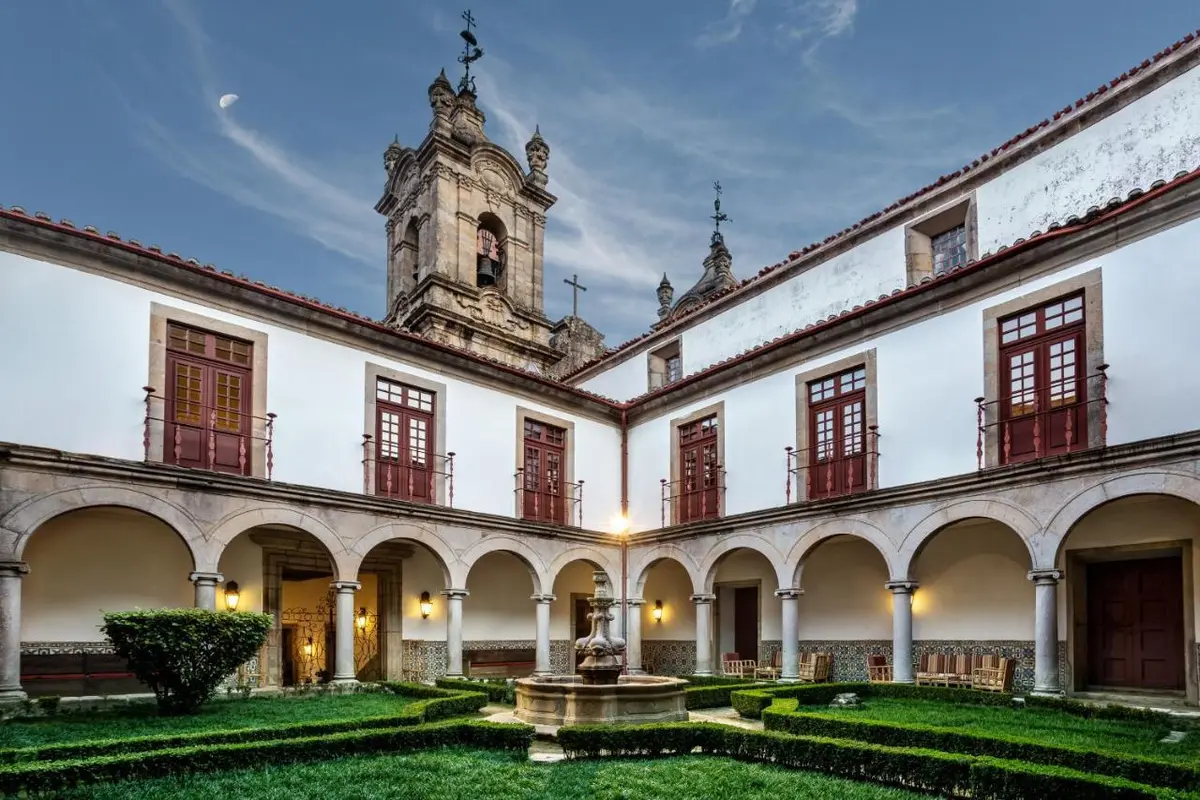
The first “monument” property in the network when it opened in 1951, Pousada Castelo de Óbidos sits directly inside the walled village of Óbidos — officially designated one of Portugal’s “7 Wonders.” This is the castle stay American travelers picture when they start planning a European trip, and for once the reality matches the expectation.
The village is a 15-minute walk from one end to the other. Whitewashed houses, cobblestone lanes, and stalls selling ginja — a sour cherry liqueur served in edible chocolate cups — line every street. Standing on the town walls at dusk, with rolling Estremadura countryside on all sides and no highway in sight, the view looks unchanged from the 13th century.
The critical decision before you book: Castle Rooms sit inside the fortress proper, with original stone walls, low ceilings, and tight spiral staircases that make hauling luggage a real workout. Cottage Rooms are in village houses adjacent to the castle — more space, ground-level access, but you are not technically sleeping inside the main structure. For the full experience, Castle Rooms. For families or anyone with mobility concerns, Cottages.
- Location: Rua Direita, Óbidos — 56 miles (90 km) north of Lisbon, about 1 hour by car
- Cost: from $200/night
- Best for: Couples, history travelers, first-time Portugal visitors
- Time needed: 1–2 nights (the village covers in a day)
Pro Tip: The hotel runs a golf cart shuttle for luggage — use it. Castle Room stairs are steep and uneven and the stone floors get slippery with humidity. Ask at check-in rather than discovering this at midnight with two bags.
4. Pousada Convento de Évora — Monk Cells and a Roman Temple Next Door
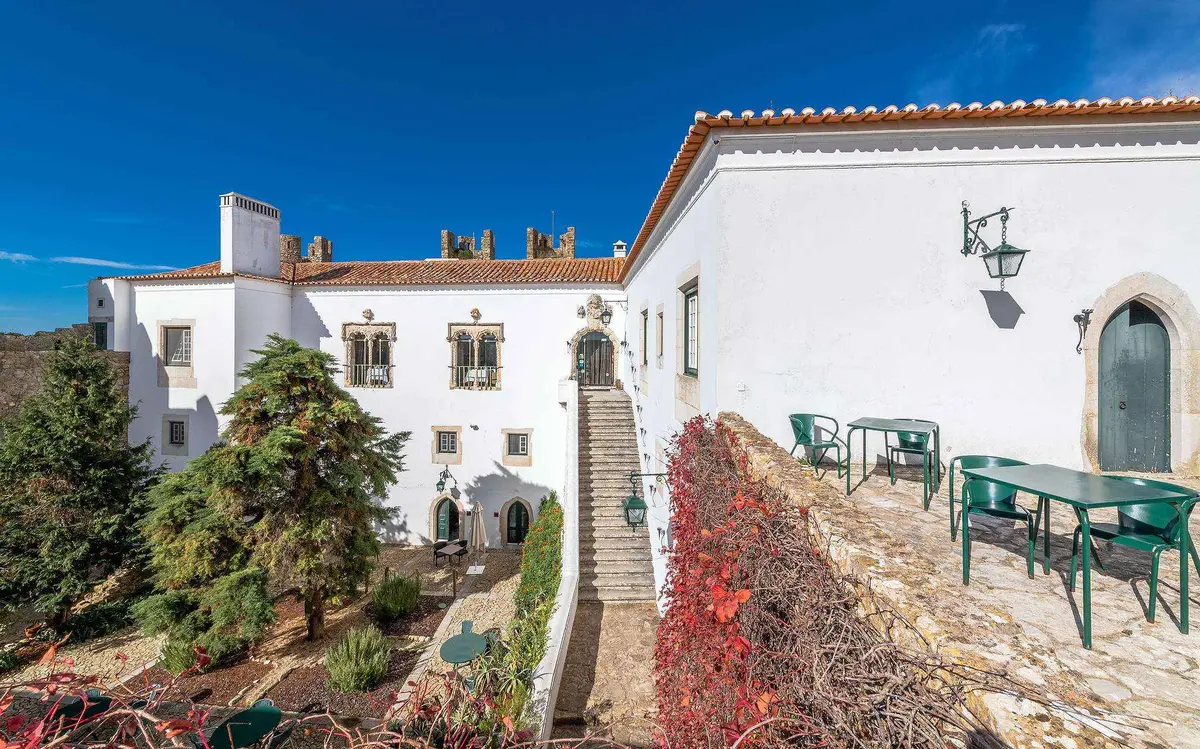
The 15th-century convent sits directly beside the Roman Temple of Diana in Évora‘s historic center — a UNESCO World Heritage city in the Alentejo. Dinner and evening drinks happen in the original cloisters; the arched walkways around the open courtyard create an atmosphere that no hotel designer can replicate from scratch.
The restaurant earns its reputation. Porco Preto — acorn-fed black pork from pigs that spend their lives in cork oak forests — has a fat distribution and depth of flavor that makes standard pork taste like a different animal. The Pão de Rala, a traditional almond pastry from Évora, is worth ordering at breakfast even if you are not normally a pastry person.
The bone chapel is a 5-minute walk from the front door. Évora’s cathedral is 3 minutes in the other direction. You do not need a car to reach any of the city’s main sites.
One warning that the brochure skips: Cell rooms are former monastic cells. They are not just “cozy European small” — they are genuinely compact by any standard. If you are claustrophobic or traveling with more than one carry-on, book a suite before you arrive, not after.
- Location: Largo Conde de Vila Flor, Évora — 90 miles (144 km) east of Lisbon, about 1.5 hours by car
- Cost: from $130/night
- Best for: Foodies, cultural travelers, Alentejo wine itineraries
- Time needed: 2 nights minimum to cover Évora’s major sites
Pro Tip: Peak summer heat in Évora reaches 104°F (40°C). The cloister stays cooler than the surrounding streets, but Cell rooms have limited airflow. March–May or October–November is the window where the place is both comfortable and quiet.
5. Pousada Mosteiro de Amares — Pritzker Architecture in a Ruined Monastery
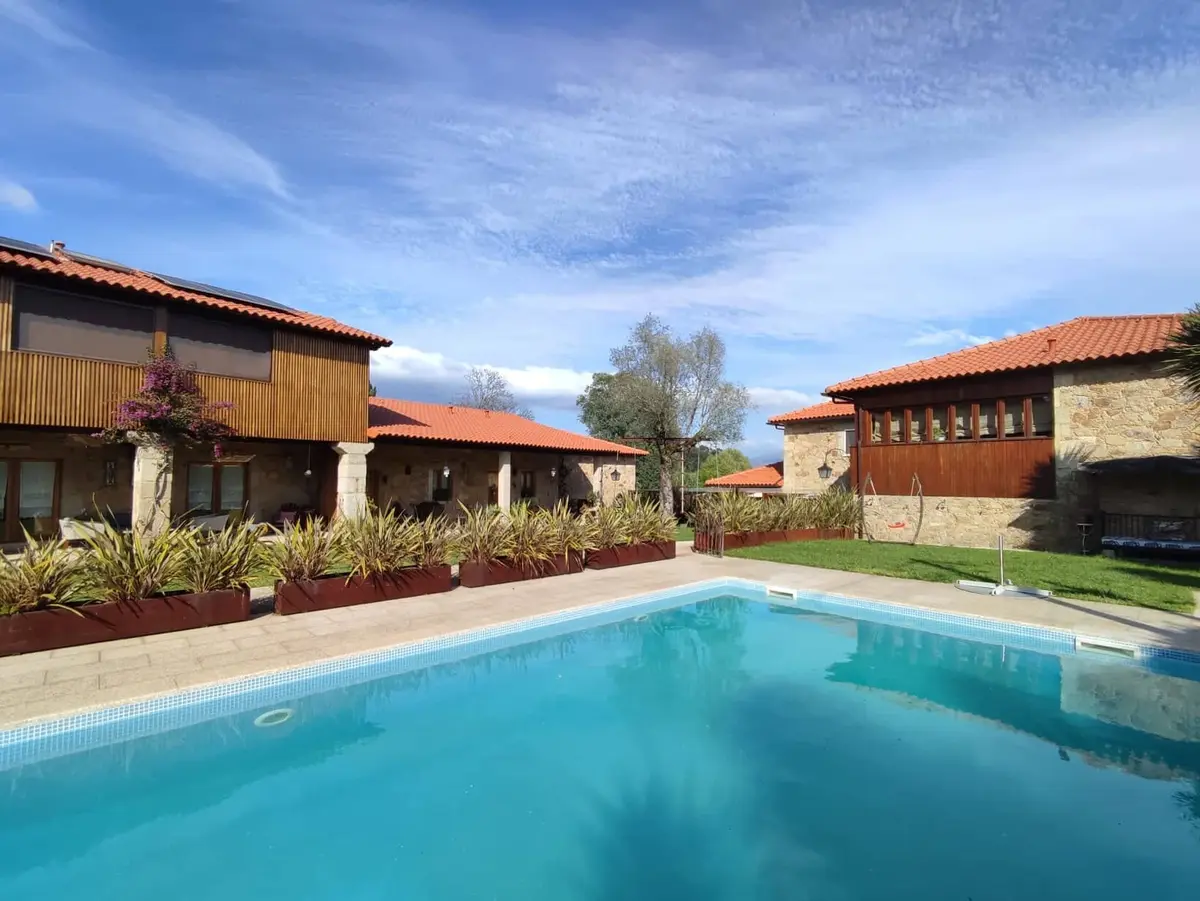
This 12th-century Cistercian monastery in the Vale do Bouro valley — between Braga and Peneda-Gerês National Park — was in structural ruin before Pritzker Prize–winning architect Eduardo Souto de Moura stepped in. His approach was not to restore but to excavate: raw medieval stone meets poured concrete, brass fittings, and floor-to-ceiling glass in a design that treats the building’s damage as part of the material.
The swimming pool sits in a grassed inner courtyard surrounded by partial ruins and standing walls. It is one of the most photographed hotel pools in Portugal, and unlike most photogenic hotel pools, it is genuinely enjoyable to swim in — with a view of the surrounding hills rising above the old monastery walls.
The stripped-back aesthetic is not for everyone. There are no velvet drapes, no gilded ceilings. On my last visit, a couple at the next table said they wished the space felt “warmer.” They were not wrong — this is an architect’s hotel and it makes no apology for it. Guests who find conventional heritage hotel decor cloying will love it; guests who want drama and ornament should book Óbidos instead.
- Location: Vale do Bouro, Amares — 10 miles (16 km) from Braga; best reached by car
- Cost: from $145/night
- Best for: Architecture enthusiasts, hikers, travelers who find standard hotel decor tiresome
- Time needed: 2 nights, with a day in Peneda-Gerês
Pro Tip: The trailhead for the Gerês waterfall circuit is 15 minutes by car. The hotel can provide trail maps; no guide is needed for the main route, but go early — the path gets muddy by midday in spring.
When to visit Amares
April–October for pool use and hiking conditions. The valley gets cold and damp from November to March, which suits the architecture but limits most outdoor activity.
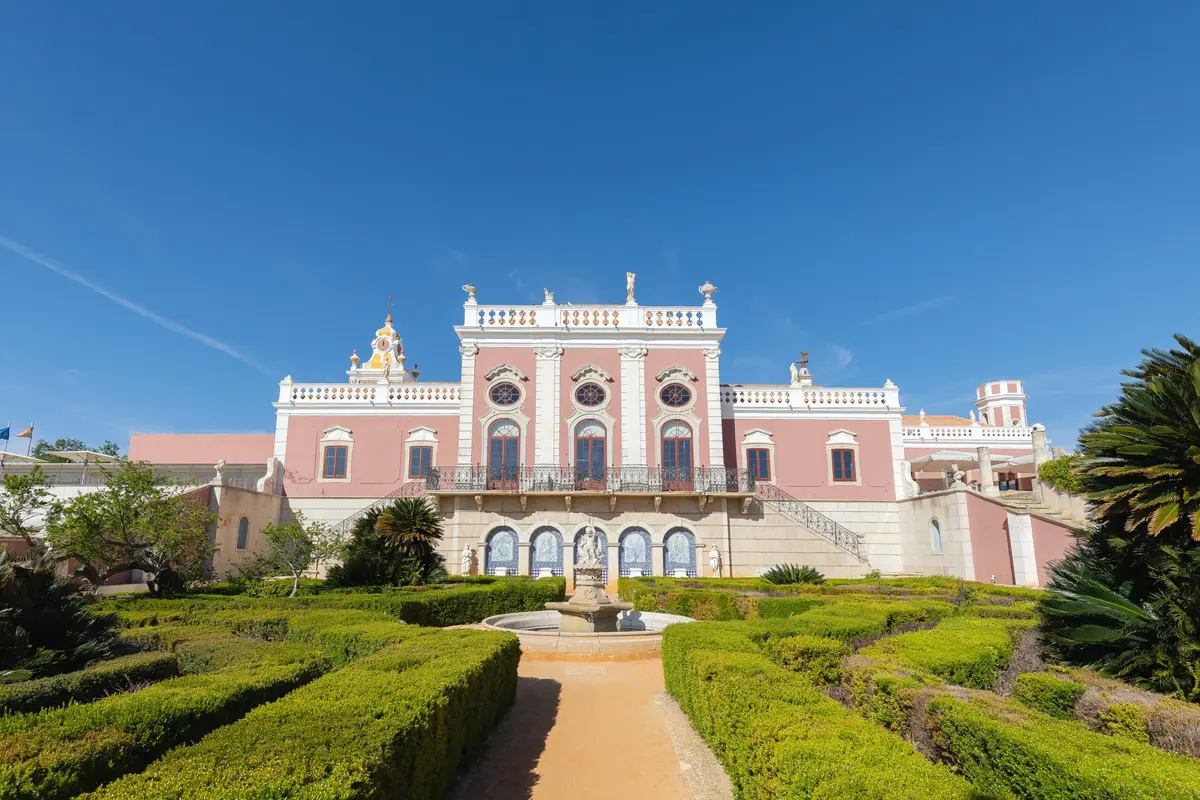
6. Pousada Palácio de Estoi — Rococo Gardens Meet Modern Glass
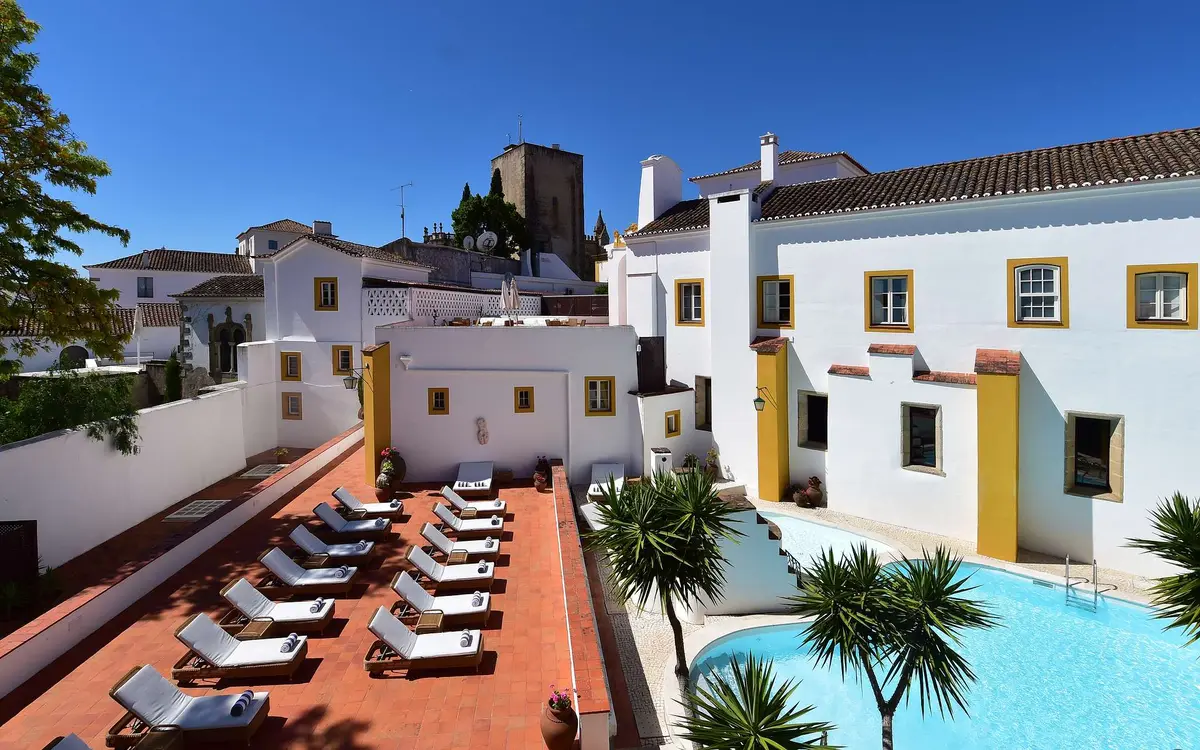
Located 6 miles (10 km) inland from Faro in the Algarve, this 19th-century Rococo palace features gardens styled loosely after Versailles — terraced lawns, tiled fountains, and ornamental hedgerows that run up to the main façade. Breakfast happens in antique-furnished tea salons beneath original chapel frescoes.
The modern accommodation wing, designed by architect Gonçalo Byrne, sits behind the palace in a glass-fronted addition that looks like it belongs to a different century — because it does. Walking from the baroque public rooms into the clean-lined bedrooms with floor-to-ceiling windows takes 30 seconds and spans roughly 200 years of design philosophy. It works, largely because the rooms look over the gardens and, on clear days, toward the coast.
The village of Estoi is genuinely quiet. This is the right Algarve base if you want access to Faro‘s airport and the region’s beaches without the Albufeira resort energy. The Milreu Roman ruins are a 5-minute walk from the front door.
- Location: Rua de São José, Estoi — 25 minutes by car from Faro Airport
- Cost: from $155/night
- Best for: Couples seeking quiet over beach activity, architecture travelers, shoulder-season Algarve visits
- Time needed: 2–3 nights as a base for the eastern Algarve
Pro Tip: The outdoor pool deck faces southwest. Afternoon light from 3–6 p.m. is the best time to be there — but it fills quickly in July and August. Go at 8 a.m. and you have it completely to yourself.
7. Pousada de Viana do Castelo — Belle Époque Views Above the Lima Estuary
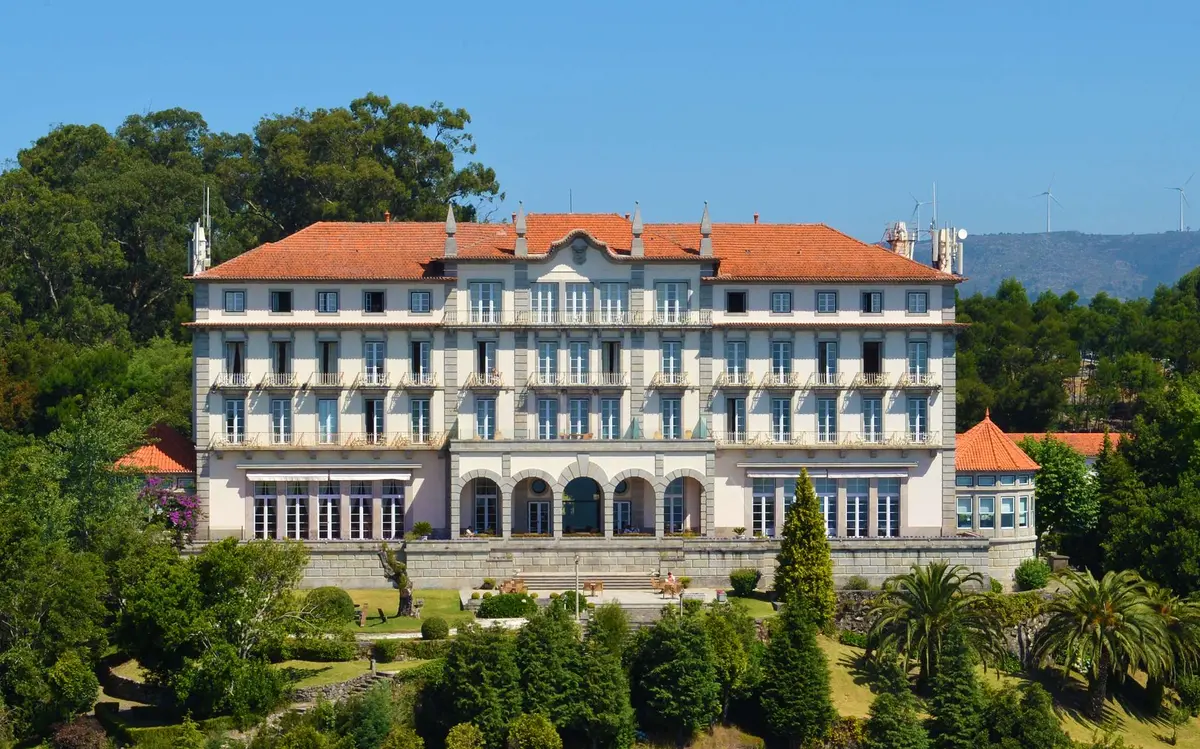
Perched on Monte de Santa Luzia, 600 feet (183 meters) above the Lima River estuary, this is the standout property for any northern Portugal itinerary — and the one on this list that was built to be a grand hotel, not converted from a monastery. Opened in 1918 as a Belle Époque showpiece, it has soaring ceilings, crystal chandeliers, and a terrace that National Geographic once cited as one of the best viewpoints in the world — a description that holds up.
From that terrace you see the Lima River meeting the Atlantic, the red tile rooftops of Viana do Castelo below, and on clear days the hills of Galicia across the Spanish border. Sunset drinks here is the kind of experience that makes a case for adding a night you were not planning.
Room selection matters more here than at almost any other property: Sea View rooms with private balconies deliver what the hotel’s reputation promises. Standard rooms facing inland offer the same building at a lower price but none of the view. The gap in experience between these two categories is wide enough to justify the upgrade cost without debate.
The isolation is real. You are on top of a steep hill, 20 minutes on foot from the city center. There is a funicular, but it stops running in the early evening. After dinner, you are committed to a taxi or rideshare back up.
- Location: Monte de Santa Luzia, Viana do Castelo — 2 miles (3.5 km) from the city center
- Cost: from $120/night
- Best for: View-seekers, couples, Minho region itineraries
- Time needed: 1–2 nights
Pro Tip: Specify “Sea View” or “River View” explicitly when booking — do not leave it to the standard room assignment. The front desk allocates unspecified rooms based on availability, and a standard room here misses the entire point of the property.
How do you choose the right Pousada for your trip?
The most important decision is matching property type to your expectations before you book, not after you arrive. “Historic” properties are authentic monument conversions where you sleep in original rooms — monk cells, convent chambers — with genuine atmosphere and genuine size constraints. “Historic Design” properties like Amares and Lisboa blend the historic shell with modern architecture and more comfortable room footprints.
For a first Pousadas visit, Guimarães or Évora offer the best combination of atmosphere, location, and accessible pricing. For pure castle experience, Óbidos. For design and architecture, Amares. For the best food-to-experience ratio in the Alentejo, Évora. For panoramic views without monastery aesthetics, Viana do Castelo.
One rule applies across all seven: book the best room category you can afford and specify what you want in writing. Historic properties have wider variation between room types than the best Portugal hotels in the conventional sense, and the default room assignment rarely delivers the experience that brought you there.
Before you book
TL;DR: The Pousadas of Portugal give you access to the country’s most significant historic buildings at prices competitive with standard four-star hotels. The network covers northern Portugal (Guimarães, Viana do Castelo, Amares), central Portugal (Óbidos, Lisbon), and the south (Évora, Estoi). Prices run from $120/night at Viana do Castelo to $275/night and up at Pousada de Lisboa. Room selection is the single most important decision — the gap between a standard room and the right room in these properties is wider than at almost any other hotel group in Europe.
Which Pousada has given you the best night’s sleep in a medieval building — and which one didn’t live up to the name? Drop a comment below, or start with our Portugal travel guide if you are still in the planning stage.