Fatima Portugal sits at a rare intersection of spiritual history, Cold War geopolitics, and traditional Portuguese culture. Whether you’re making a pilgrimage or building a Portugal itinerary from scratch, this guide covers what to see, how to get there without getting stranded, and which restaurants are worth sitting down for.
Why do millions of people visit Fatima Portugal?
People visit Fatima for three reasons: religious pilgrimage, historical curiosity, and bucket-list tourism. Some arrive seeking a profound experience at the Sanctuary. Others come drawn by one of the 20th century’s most thoroughly documented mass phenomena. All three motivations are valid — the key is knowing what you’re walking into before you book your bus ticket.
What is the history behind Fatima Portugal?
Fatima’s story begins in 1917, when three shepherd children reported six apparitions of a “Lady in White” in the village of Cova da Iria. Without the political and religious context of that era, you are just looking at churches. Fatima was the product of a country in crisis, and understanding that backdrop is what separates a visit from an experience.
In 1917, Portugal was a young, unstable republic. The government had recently expelled religious orders and secularized schools to break the Church’s influence. This turbulent period is one of the most consequential chapters in Portugal history, and its echoes are still visible across the country today.
It was in this charged environment that Lúcia dos Santos, then 10 years old, along with Francisco and Jacinta Marto, reported being visited six times between May and October of that year. The Lady’s message was not purely spiritual — it was intensely political, promising peace if humanity ceased offending God and linking the world’s chaos directly to World War I.
What was the Miracle of the Sun?
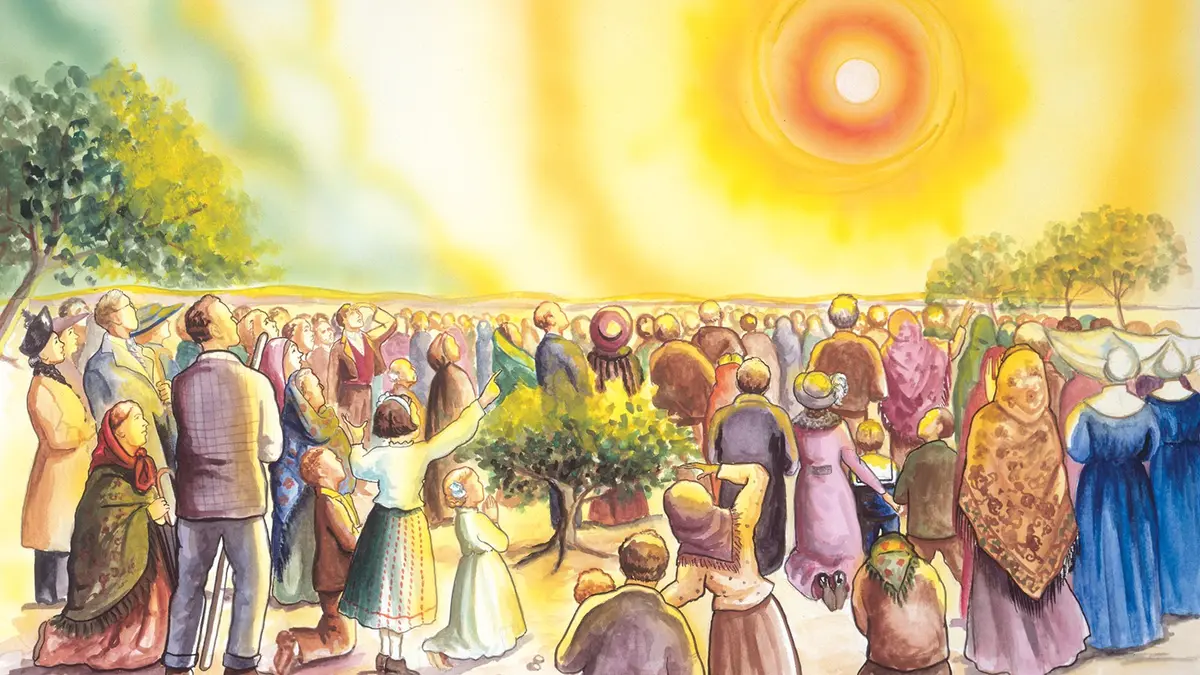
On October 13, 1917, an estimated 70,000 witnesses reported seeing the sun spin, change colors, and appear to plunge toward the earth — drying the ground beneath their feet instantly. This is the event at the center of everything you will see in Fatima, and it is the reason the site exists at all.
Scientists have proposed explanations ranging from atmospheric optics to mass retinal distortion. What remains undeniable is the scale of it. Even Portugal’s anti-clerical newspaper, O Século, ran a front-page account that day — inadvertently validating the occurrence for the skeptical urban elite in Lisbon. It remains the defining event in the history of Fatima.
How did Fatima get tangled in Cold War geopolitics?
Fatima’s July 1917 apparition included a prophecy about Russia spreading “her errors throughout the world” — a direct reference to Communism that turned the shrine into a Cold War spiritual flashpoint. This layer is the one most visitors miss entirely. It adds a completely different dimension to the site and changes how you read every monument on the grounds.
The local administrator imprisoned the children in an attempt to force them to recant. That only deepened the intrigue. The Third Secret was kept sealed until the year 2000, when it was revealed to describe a “Bishop in White” being shot. Pope John Paul II, who survived an assassination attempt in 1981, believed Fatima had directly saved his life. He donated the bullet to the shrine, where it remains today.
What can you see at the Sanctuary of Fatima?
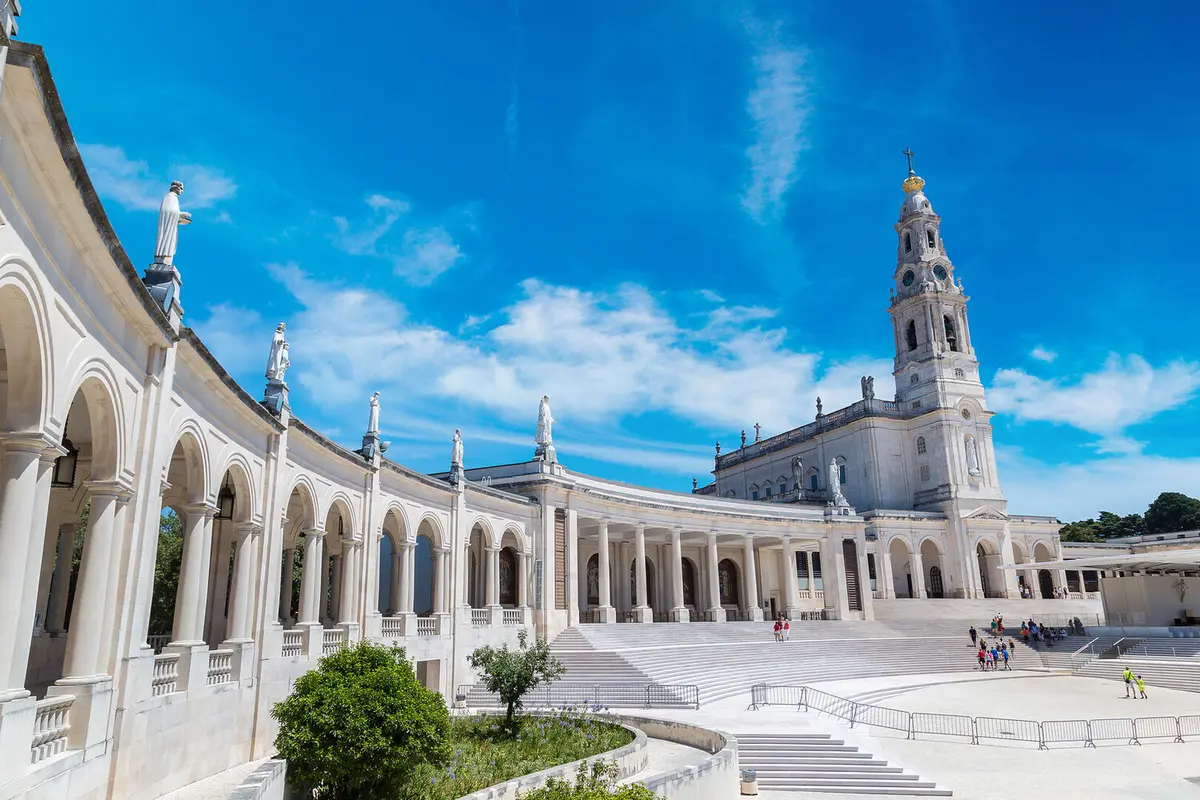
The Sanctuary complex includes two basilicas, the Chapel of the Apparitions, a massive esplanade twice the size of St. Peter’s Square in the Vatican, and a monument made from a slab of the Berlin Wall. That combination of sacred architecture, folk devotion, and Cold War history separates this site from any other pilgrimage destination in Europe. Plan at least a half day; a full day is better if you intend to reach the village of Aljustrel.
The Basilica of Our Lady of the Rosary
The Basilica of Our Lady of the Rosary is the visual anchor of the entire complex — a Neo-Baroque limestone structure built between 1928 and 1953 that dominates the northern end of the esplanade. It houses the tombs of Francisco, Jacinta, and Lúcia. Lines to visit the tombs can stretch 45 minutes by mid-morning. Arriving before 9 a.m. cuts that wait to under 10 minutes.
The colonnade surrounding the square features 14 altars and statues of saints, creating a classical religious atmosphere that ranks among the most visually striking Portugal attractions you can visit outside Lisbon.
Pro Tip: The tombs are inside the Basilica, not in a side chapel. Go there first — tour buses typically arrive between 10 and 11 a.m. and the line triples fast.
The Basilica of the Most Holy Trinity
At the southern end sits the Basilica of the Most Holy Trinity, inaugurated in 2007. Seating nearly 9,000 people, it ranks among the largest churches in the world. Its design is deliberately brutalist — a sharp visual contrast to its older neighbor across the esplanade.
The interior deliberately lacks columns, representing equality among all believers. The acoustics are engineered for mass participation, making large services feel immersive and communal. The main door and crucifix are striking examples of modern sacred art worth examining up close. Most visitors walk past them without stopping.
The Chapel of the Apparitions
The Chapel of the Apparitions — known locally as the Capelinha — is the true heart of the site. It is a small, open-air structure built to protect the exact spot where the holm oak tree once stood. The original tree was destroyed by early souvenir hunters.
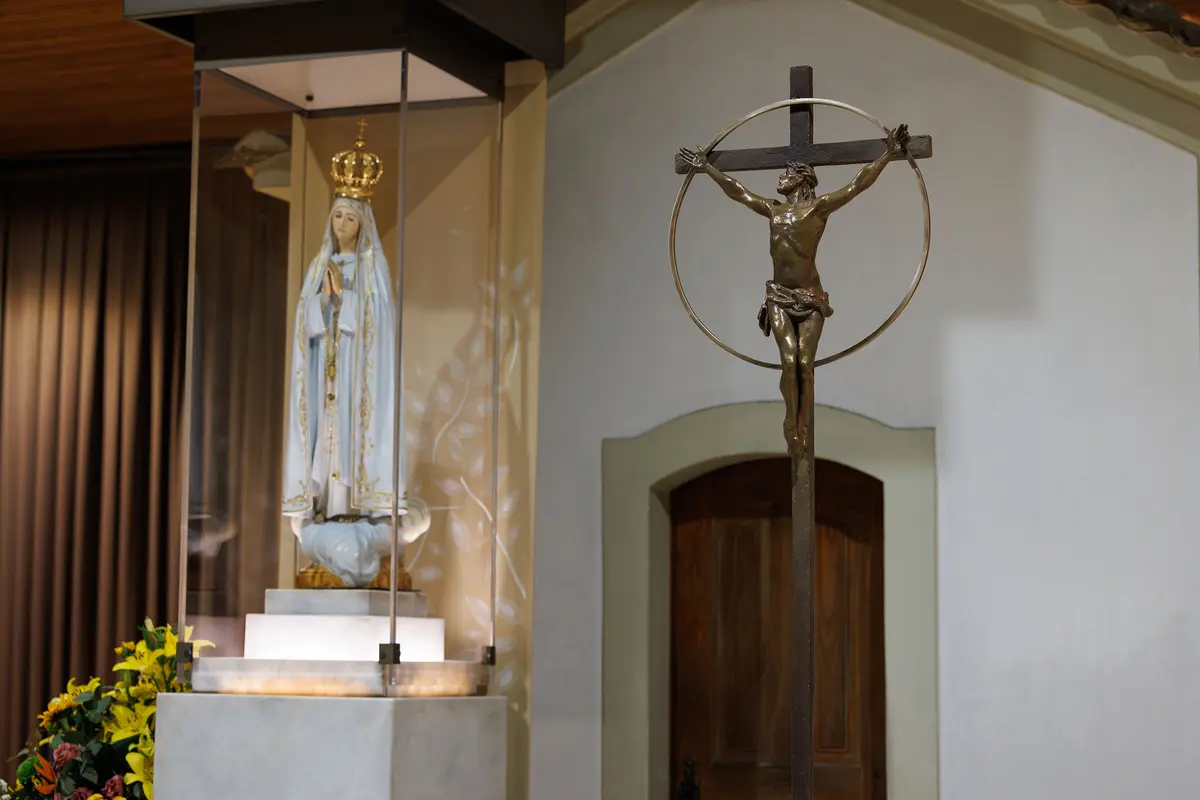
A marble pillar now marks the precise location of the apparitions. The statue of Our Lady, which houses the bullet from the 1981 assassination attempt on Pope John Paul II, resides here. This is also where the perpetual Rosary recitation takes place throughout the day.
While the basilicas are built for mass gatherings, the Capelinha is built for quiet, personal devotion. The atmosphere is noticeably more intimate and emotionally resonant than anywhere else on the grounds. Think of it as the zero point for the entire complex.
Pro Tip: On weekday mornings before 10 a.m., the Capelinha draws mostly individual pilgrims, not tour groups. That window before the crowds arrive is worth planning your whole morning around.
The Berlin Wall Monument
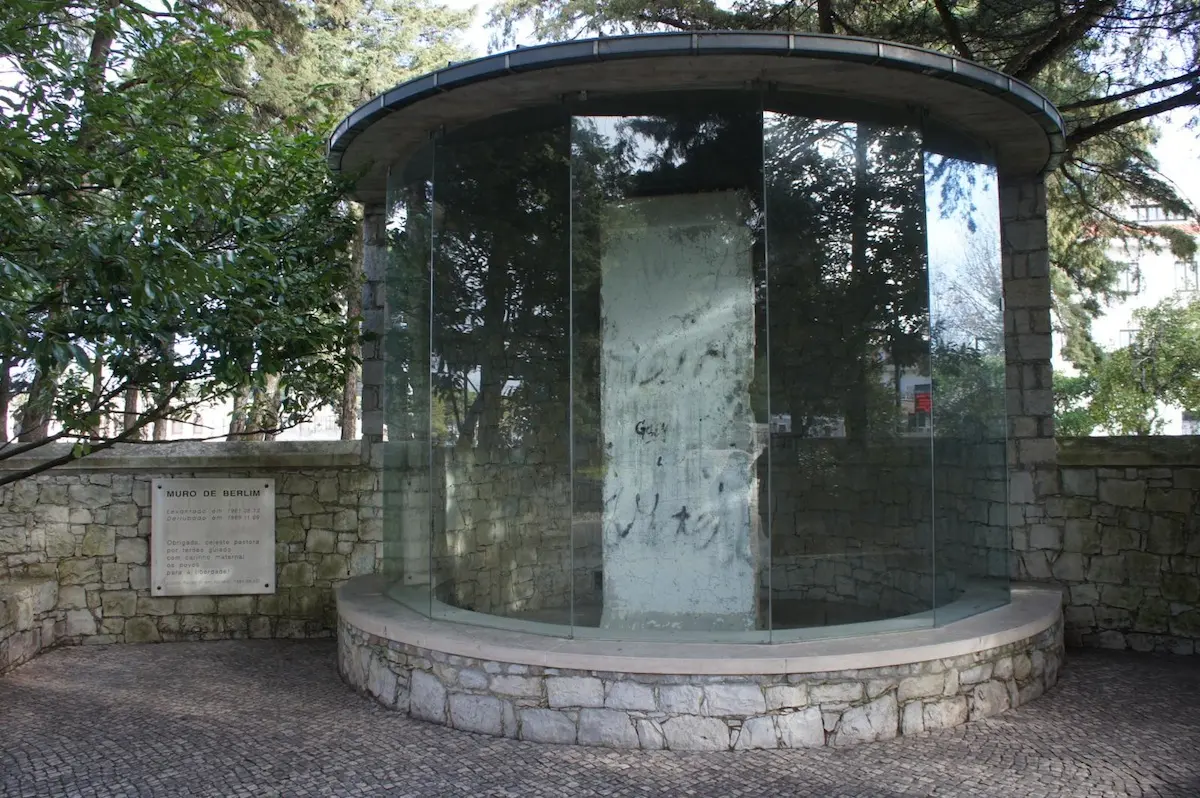
One spot that most tourists miss entirely is the Berlin Wall Monument near the south entrance — a 2.6-ton slab of the Berlin Wall donated by a Portuguese immigrant, standing as a tangible reminder of the fall of Communism.
This connects directly to the Second Secret’s prophecy regarding Russia and its errors. For any visitor with an interest in Cold War history, it is a thought-provoking place for reflection, and completely distinct from the purely religious sites surrounding it. That contrast is exactly what makes it worth seeking out.
What is the pilgrim experience like in Fatima Portugal?
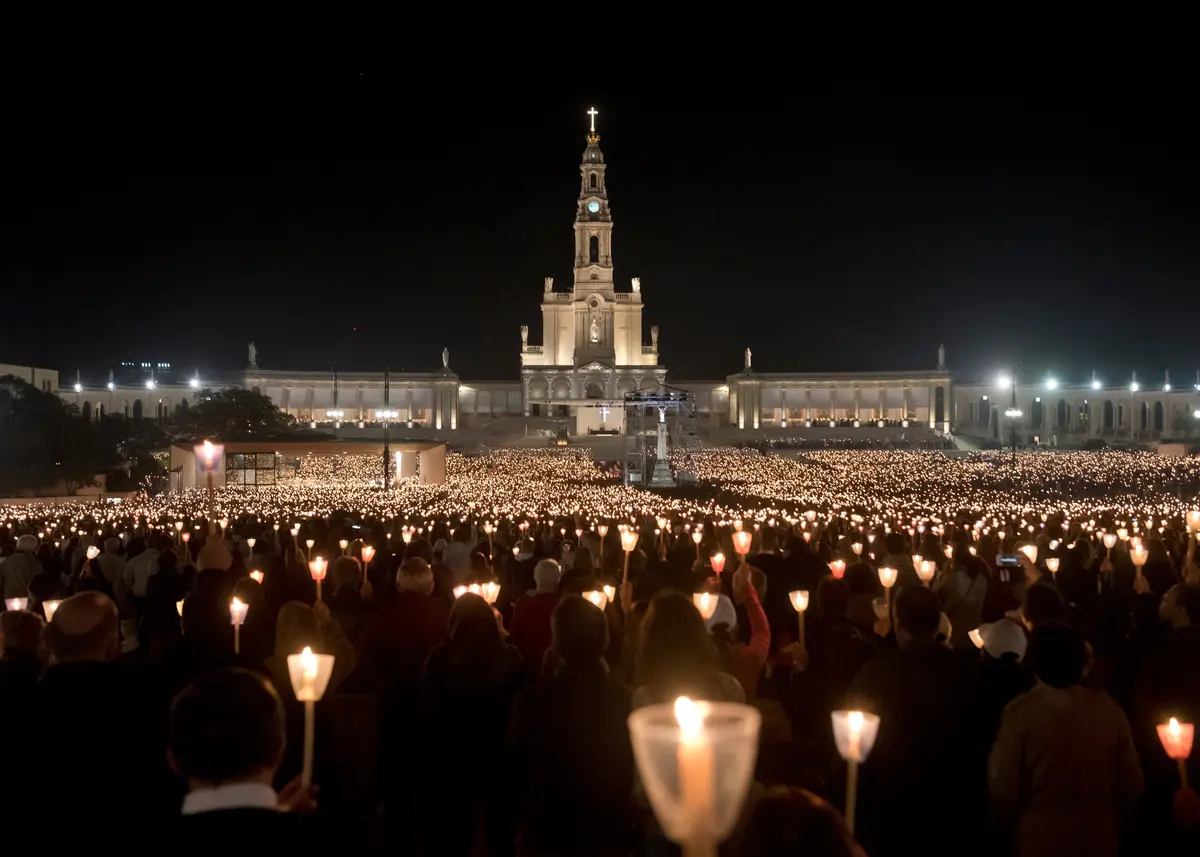
The defining pilgrim experience in Fatima is the candlelight procession, held nightly at 9:30 PM, where thousands of candles accompany the Rosary in multiple languages across the main esplanade. Processions now occur daily throughout the year, not only on pilgrimage dates. Even non-religious visitors consistently report being moved by the scale of it.
The statue is carried through the square as thousands of candles lift into the night sky. The singing of “Ave Maria” unites the crowd across language barriers — sociologists call this “collective effervescence,” a rare moment of genuine human synchronization.
You will also notice a smooth marble path cutting through the sanctuary, designed for pilgrims who traverse it on their knees as an act of promessa — a physical sacrifice offered in exchange for divine intervention. Do not photograph pilgrims’ faces. Do not obstruct the path. This is not a performance for tourists — it is a deeply personal act of faith.
Near the sanctuary, you will find pilgrims purchasing wax effigies of body parts — hands, legs, organs — which are burned in a massive furnace as offerings for healing. It is a folk-Catholic tradition rooted in the fabric of Portugal culture and rural identity. Approach it with curiosity, not judgment.
What’s beyond the Sanctuary of Fatima?
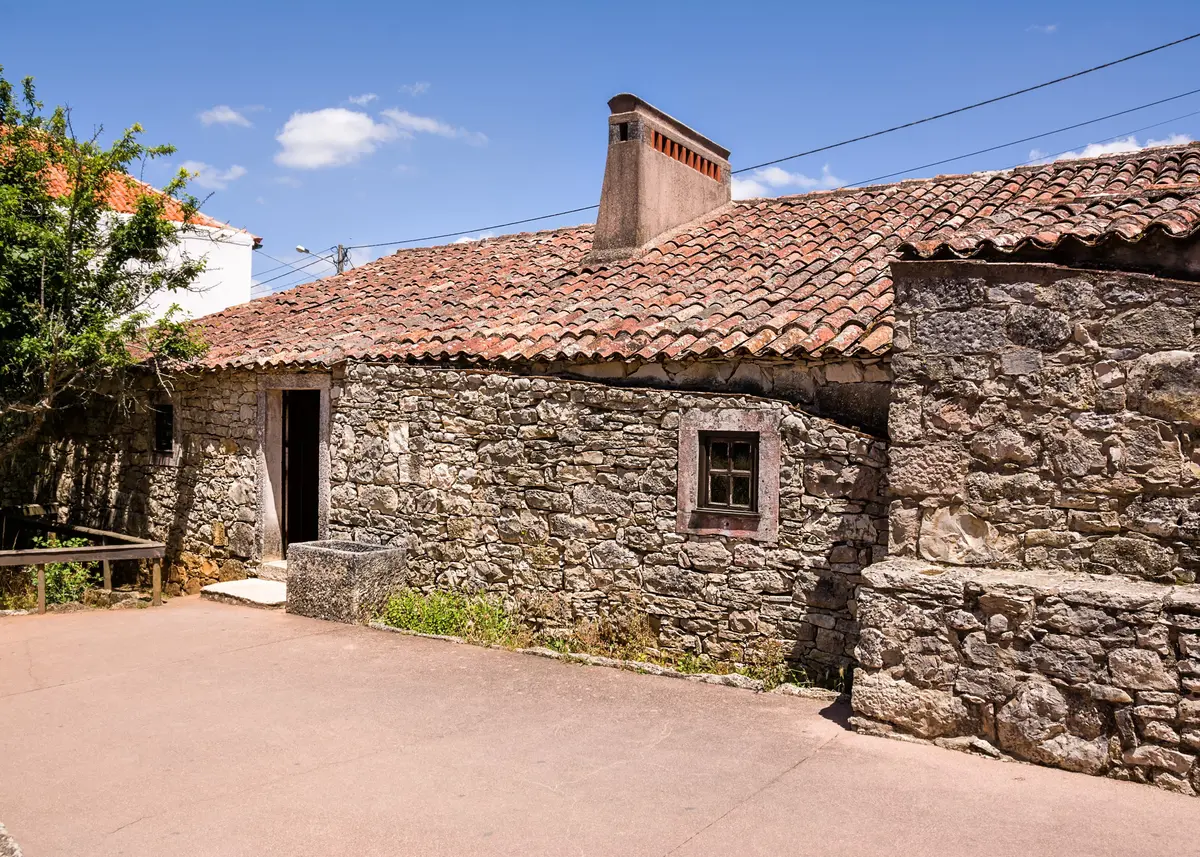
About 1.9 miles (3 km) from the sanctuary, the village of Aljustrel preserves the childhood world of the seers, with trails, a museum, and sacred sites largely untouched by commercial tourism. Stepping into Aljustrel feels like stepping back to 1917 without the gift shop energy of the main town.
The Casa de Lúcia museum preserves the simple agrarian life of the seer’s family. The well in the garden — known as Poço do Arneiro — is said to be where the “Angel of Peace” appeared in 1916. A tourist train runs between the Sanctuary and Aljustrel for easy access, worth taking if you want to save your legs for the trails.
For those seeking silence, the path between Aljustrel and the Sanctuary — known as Valinhos — passes through an area shaded by olive trees with views completely removed from the concrete of the main complex. Along this route, you will find the Hungarian Calvary, which ends at the Chapel of St. Stephen.
Loca do Cabeço is a rock shelter further along where the Angel appeared before the children. It is quiet, historically layered, and removed from the commercialized streets near the Basilica. On my last visit, I had the site entirely to myself for nearly 20 minutes — a contrast that is impossible to replicate once you return to the esplanade.
How do you reach Fatima from Lisbon? Not by train.
The best way to reach Fatima from Lisbon is by Rede Expressos bus from Sete Rios or Oriente stations. The journey takes about 1 hour 20 minutes. Do not take the train — the station labeled “Fátima” sits 12.5 miles (20 km) from the sanctuary, with no reliable public transport connection. Unsuspecting travelers who take the train end up stranded, paying €25-30 in taxi fares to cover the gap. It is the number one mistake first-time visitors make.
The Rede Expressos buses run hourly, with the fare starting at around €12.80 (~$14) one-way. The terminal in Fatima is a short walk from the Sanctuary entrance.
- From: Sete Rios or Oriente bus stations, Lisbon
- Frequency: Hourly departures
- Journey time: 1 hour 20 minutes
- One-way fare: from ~€12.80 (~$14)
- Book at: rede-expressos.pt — popular departures sell out on weekends
Pro Tip: Buy directly on the Rede Expressos website rather than third-party booking platforms. The price is the same, there are no added fees, and any schedule changes are easier to handle.
If you are driving, take the A1 Highway from Lisbon and budget around €8.20 in tolls each way. Parking behind the Basilica of the Holy Trinity is free. Those who rent a car gain the flexibility to combine the visit with the Golden Triangle day trips below — an option the bus simply does not offer.
When is the best time to visit Fatima Portugal?
April, June, and September offer the strongest combination of good weather and manageable crowds, letting you move through the Chapel of the Apparitions without navigating a stadium-scale queue. Avoid May 12-13 and October 12-13 entirely — these are the peak pilgrimage dates, and the town becomes genuinely difficult to move through.
During those peak dates, accommodation prices triple and infrastructure is stretched past its limits. For a broader look at seasonal weather and festivals across the country, consult our guide on the best time to visit Portugal.
If you visit in summer, bring a hat and carry water. There is almost no natural shade across the esplanade, and the white limestone reflects heat intensely during afternoon hours.
Where should you stay in Fatima Portugal?
Accommodation in Fatima runs cheaper than Lisbon year-round, which makes the town a useful base for the region. The catch is that prices triple on the 12th and 13th of each month during major pilgrimage dates. Book well ahead or schedule your stay around those windows. You can compare all options across the country in our Portugal hotels guide.
Hotel Santa Maria
A 4-star property steps from the Sanctuary, Hotel Santa Maria offers a quieter atmosphere than its location suggests. Rooms on the upper floors facing away from the esplanade get very little street noise — worth requesting at check-in.
- Location: Adjacent to the Sanctuary of Fatima
- Cost: Mid-to-upper range; prices spike on pilgrimage dates
- Best for: Couples, solo travelers wanting a true retreat from the crowds
- Time needed: Base for 1-2 nights
Mercure Fatima
A modern, design-forward option for travelers who want reliable international-chain standards without surprises.
- Location: Central Fatima
- Cost: Mid-range
- Best for: Business travelers, couples wanting predictability
- Time needed: Overnight base
Luz Charming Houses
A village-style property outside the center — the right choice if you want space, quiet, and none of the esplanade noise.
- Location: Outside central Fatima
- Cost: Competitive mid-range; varies by season
- Best for: Couples, small groups wanting privacy
- Time needed: 1-2 nights
Hotel Aleluia
A budget-friendly, historic, family-run property with a sense of place that larger hotels in the area lack.
- Location: Central Fatima
- Cost: Budget-to-mid-range
- Best for: Budget travelers, solo pilgrims
- Time needed: Overnight base
Hotel Cinquentenario
A large-capacity property well-suited to tour groups or families needing multiple rooms under one roof.
- Location: Central Fatima
- Cost: Mid-range
- Best for: Groups, families
- Time needed: 1-2 nights
Where should you eat in Fatima? Walk away from the esplanade.
For the best dining in Fatima Portugal, walk at least 10 minutes from the esplanade before sitting down. The restaurants facing the Sanctuary display faded photos of food in plastic-covered menus and serve overpriced, often frozen dishes. Turn any corner away from the crowds and quality improves immediately.
Tia Alice
The undisputed standout for dining in the area. Tia Alice serves high-end Ribatejo cuisine — roast lamb, duck rice — in a sophisticated atmosphere that feels like a completely different world from the tourist strip.
- Location: Fatima town, away from the esplanade (call ahead for exact address)
- Cost: Higher-end; comparable to a solid Lisbon restaurant
- Best for: Couples, food-focused travelers
- Time needed: 1.5-2 hours; reserve in advance — do not walk in on a weekend
O Convite
An excellent wine list paired with modern dishes worth lingering over.
- Location: Central Fatima
- Cost: Mid-range
- Best for: Wine lovers, those wanting a slower meal
- Time needed: 1-1.5 hours
Arcos de Fatima
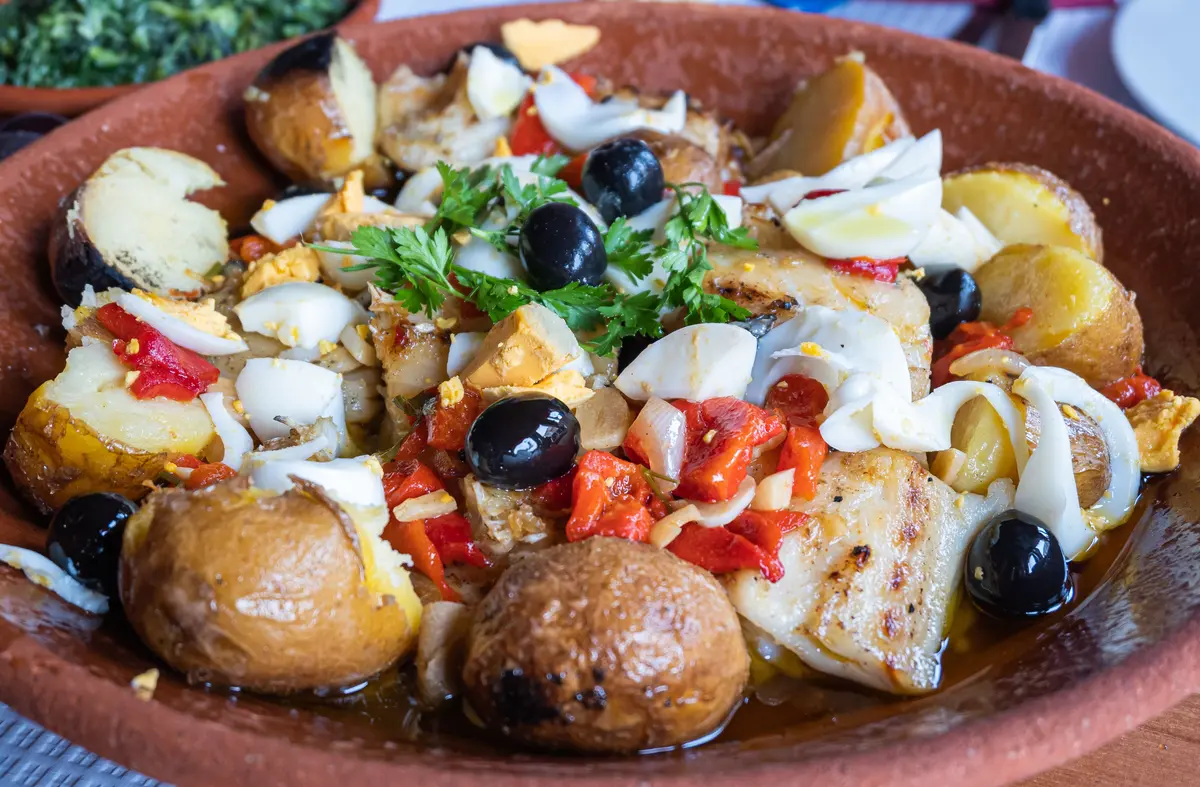
Known for generous portions of Bacalhau — one of the most beloved dishes in Portuguese cuisine and a good introduction for first-time visitors.
- Location: Central Fatima
- Cost: Budget-to-mid-range
- Best for: First-time visitors to Portuguese food
- Time needed: 45 minutes to 1 hour
Grelha
A simple, honest spot for grilled meats and fish with no pretension and no tourist markup.
- Location: Central Fatima
- Cost: Budget
- Best for: Solo travelers, quick lunches
- Time needed: 30-45 minutes
One thing that consistently catches American visitors off guard is the couvert rule. Bread, olives, and cheese brought to your table without being ordered are not free. If you eat them, you pay for them — it is standard Portuguese dining practice, not a scam.
What should you know before you go?
Fatima is an active religious shrine with strictly enforced dress rules: shoulders and knees must be covered to enter the Capelinha and Basilicas. Security guards will turn you away at the door. There are no exceptions and no workarounds — carry a light scarf or a change of shirt if you are touring other sites on the same day.
The pavement throughout the town is traditional Portuguese cobblestone. It becomes dangerously slippery when wet and is significantly uneven in places. Rubber-soled walking shoes are non-negotiable. Leave the heels at the hotel.
A specific scam circulates across Portuguese tourist areas: street sellers offer what appears to be hashish but is almost always bay leaves or bouillon cubes. Ignore them and keep walking.
Portugal uses 230V power. American devices need a voltage converter and the correct electrical adapters for Portugal. Carry cash — many small shops do not accept US cards. Avoid Euronet ATMs, which charge inflated fees. Use Multibanco machines instead.
What day trips can you take from Fatima Portugal?
Fatima sits at the center of a UNESCO-rich region often called the “Golden Triangle,” with three exceptional day trips all within 40 minutes’ drive: the monasteries of Batalha and Alcobaça, and the surf village of Nazaré. Most travelers treat Fatima as a standalone stop, which is a missed opportunity. A little planning turns it into one of the most rewarding two-day regions in Portugal.
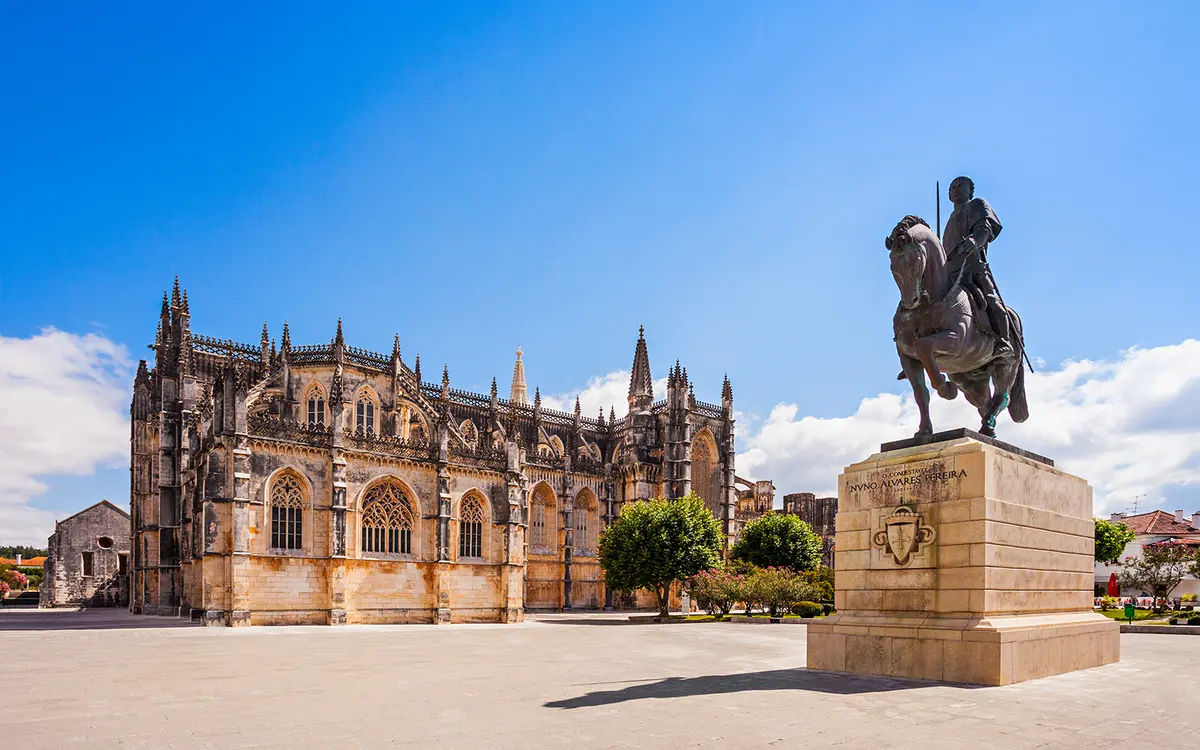
Just 20 minutes away is Batalha, home to the Monastery of Batalha — a Gothic masterpiece where the Unfinished Chapels stop you mid-stride. Thirty-five minutes out is the Monastery of Alcobaça, the burial place of King Pedro I and Inês de Castro: a story of tragic romance set against austere, proportioned medieval architecture.
About 40 minutes from Fatima, the fishing village of Nazaré offers a complete sensory change of pace after a heavy day of historical touring. It is famous for producing some of the world’s biggest waves and is the right way to end a long day before the drive back.
Suggested day itinerary
Head to Fatima in time for the Morning Mass. Drive to Batalha afterward for lunch and a walk through the monastery. Finish in Nazaré for sunset and dinner before heading back to Lisbon.
Before you book your Fatima trip
Fatima Portugal is the kind of place that exceeds expectations precisely because most visitors arrive without fully understanding what it is. You might sit in silence at the Chapel of the Apparitions. You might watch thousands of candles lift into the night sky during the evening procession. Or you might stand in front of a slab of the Berlin Wall and consider how a shepherd village in central Portugal became tangled in some of the most consequential events of the 20th century.
TL;DR: Take the bus from Lisbon, not the train. Avoid the restaurants facing the esplanade. Stay at least one night to see the candlelight procession at 9:30 PM — the day-trip version leaves before the best part starts. The logistics are easy once you know the traps. The visit itself is hard to forget.
What surprised you most about Fatima, or what do you still want to know before booking? Leave it in the comments.