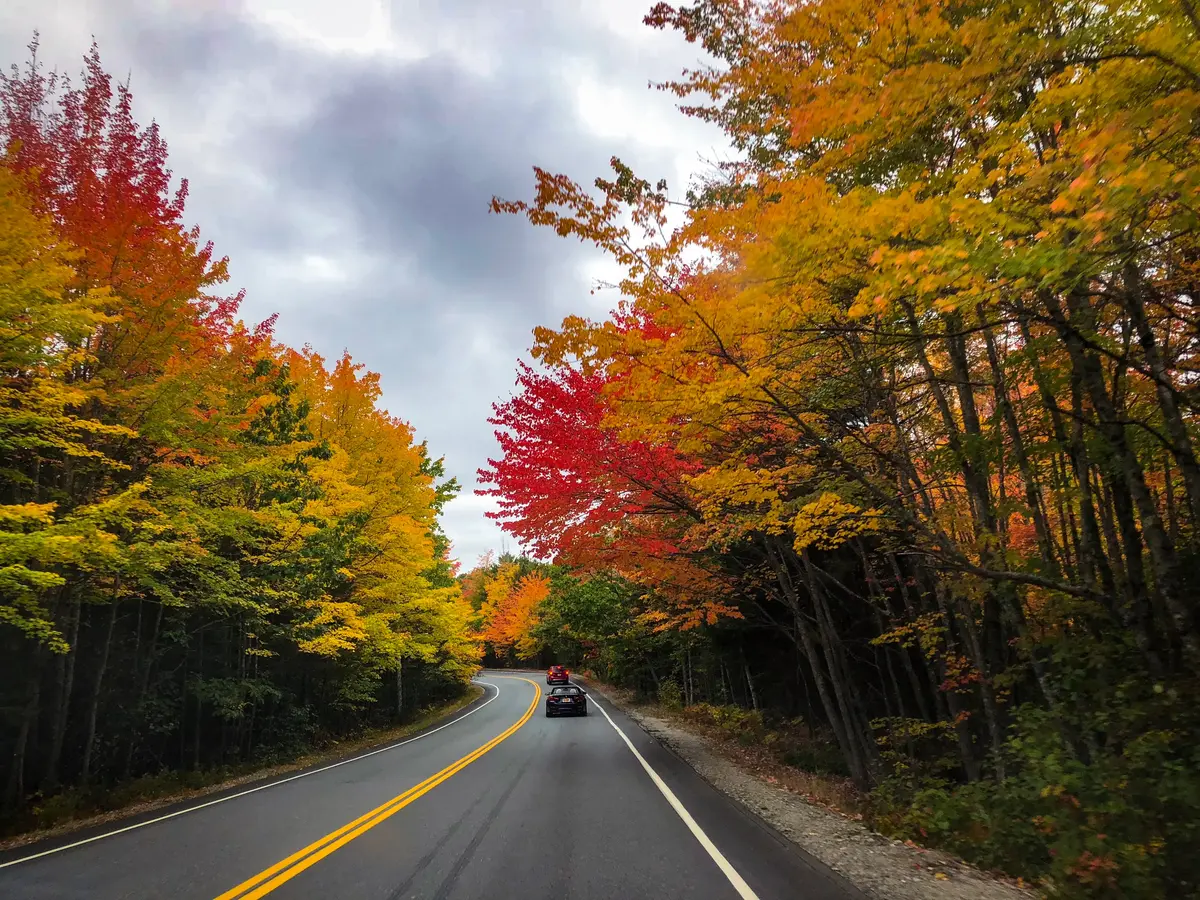
East coast fall foliage is a moving target. Color sweeps from Maine’s north woods and New Hampshire’s White Mountains in late September down to Virginia’s Blue Ridge by early November. This guide gives you the peak weeks by region, the drives worth taking, verified prices, and the road closure most guides still ignore.
The short version: color peaks north to south and high to low elevation. Northern Maine, the White Mountains, and northern Vermont turn first, in the last week of September and the first week of October. Southern New England and the mid-Atlantic follow in mid-to-late October, and the Blue Ridge and Smokies hold color into early November. Two things drive the change — shortening daylight and cooling temperature. Drive 40 minutes north and you can jump nearly a full week ahead in the cycle.
When Does East Coast Fall Foliage Peak, Region by Region?
Peak color starts in northern Maine, the White Mountains, and northern Vermont in the last week of September and the first week of October. It reaches southern New England, the Adirondacks, and the Catskills by mid-October, the Berkshires and Shenandoah in mid-to-late October, and the Blue Ridge valleys into early November.
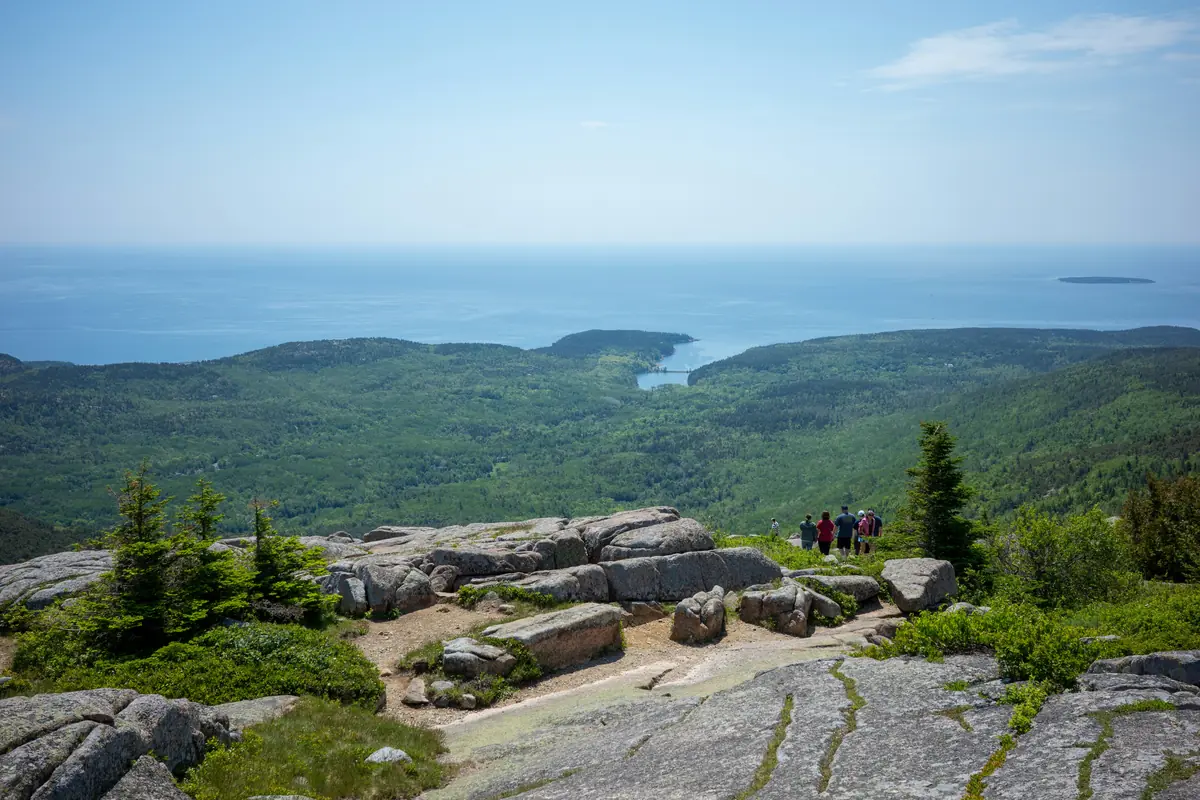
The progression follows latitude and elevation almost like a tide. Higher ground turns before the valley floor below it, and inland mountains turn well before the coast at the same latitude. In a typical early-October week, northern Vermont is already blazing while the Maine coast near Acadia is still half-green.
That lag is the single most useful thing to understand when you plan. If you miss peak up north, you can often catch it again two or three hours south a week later.
Here is how the window typically falls across the corridor:
| Region | Typical Peak Window | Signature Spot |
|---|---|---|
| Northern Maine / Baxter | Late September | Baxter State Park |
| Northern Vermont and New Hampshire | Late September – early October | Stowe, Kancamagus Highway |
| Coastal Maine (Acadia) | Mid-October | Park Loop Road, Bar Harbor |
| Adirondacks and Catskills (NY) | Mid-October | Lake Placid, Hudson Valley |
| Berkshires (MA) | Mid-to-late October | Mohawk Trail, Mount Greylock |
| Shenandoah (VA) | Mid-to-late October | Skyline Drive |
| Blue Ridge high elevations | Early-to-mid October | Craggy Gardens |
| Blue Ridge valleys near Asheville | Late October – early November | Blue Ridge Parkway |
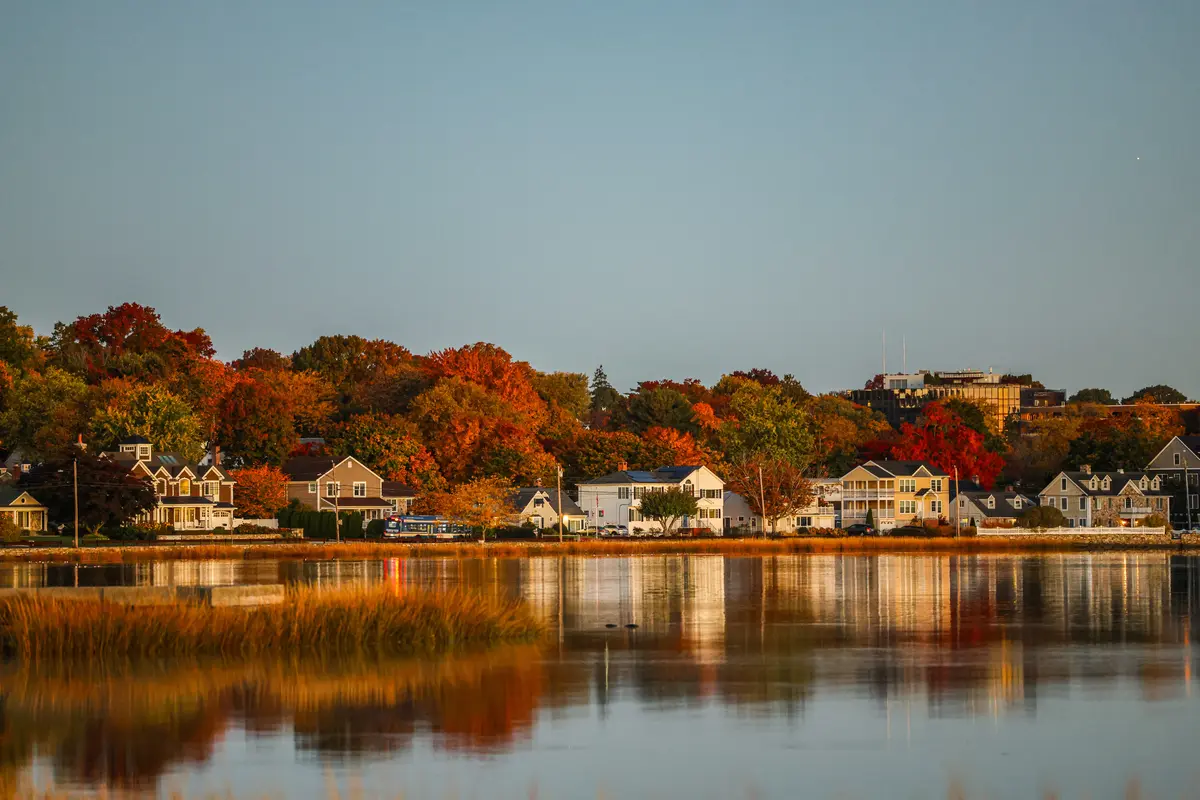
| Coastal CT and RI | Late October – early November | Litchfield Hills |
One note on Baxter, because it is not a drive-up park. Out-of-state vehicles pay $20 to enter, a season pass runs $50, and Maine plates get in free. If you want to hike Katahdin, you need a $10 day-use parking reservation for the trailhead lots, and non-residents can only book those a few weeks out. There is no cell service, no store, and no gas inside the park.
Pro Tip: Build a two-week buffer into any foliage trip. Weather can pull peak forward or push it back by a full week, and a flexible window is the difference between brown leaves and the best display of the year.
How Do You Use a Foliage Prediction Map Without Getting Burned?
Use a prediction map to set a baseline, then confirm about two weeks out. SmokyMountains.com builds county-level, week-by-week forecasts from NOAA temperature and precipitation data, daylight hours, and historical peak trends. Yankee’s newengland.com map, Explore Fall, and individual state trackers add local nuance on top of that.
The maps are a planning tool, not a guarantee. A warm, wet stretch can delay color. An early cold snap can rush it.
State forest-health agencies post real-time foliage reports through the season, and those are often more current than any national map. Check the timestamp on whatever you’re reading — a two-week-old map during peak season is close to useless.
The practical rule: don’t lock lodging until you’re roughly two weeks out. The forecast shifts every season, and the deposit you save covers a lot of cider donuts.
What Are the Best Scenic Drives for East Coast Fall Foliage?
The signature drives are New Hampshire’s Kancamagus Highway (34.5 miles, about an hour without stops), Vermont’s Route 100, Virginia’s Skyline Drive (105 miles, 75 overlooks), and the Blue Ridge Parkway across Virginia and North Carolina. Massachusetts’s Mohawk Trail rounds out the classics.
Each drive suits a different kind of trip. The Kancamagus is a half-day showpiece you can fold into a New England long weekend. The Parkway is a multi-day commitment that rewards patience.
Match the road to the time you actually have, and don’t try to drive the whole Parkway in a day. At a 45 mph limit it runs roughly 12 to 15 hours end to end without a single stop — and right now, as the next section explains, you can’t drive it end to end at all.
| Drive | Distance | Time (No Stops) | Speed Limit | Fee |
|---|---|---|---|---|
| Kancamagus Highway (NH) | 34.5 mi (55.5 km) | Under 1 hour | 35–45 mph | Free; parking pass for trailheads |
| Vermont Route 100 | ~200 mi (322 km) end to end | Half to full day | Varies | Free |
| Mohawk Trail (MA Route 2) | 63 mi (101 km) | ~1.5 hours | Varies | Free |
| Skyline Drive (VA) | 105 mi (169 km) | ~3 hours | 35 mph | $30/vehicle (7 days) |
| Blue Ridge Parkway (VA/NC) | 469 mi (755 km) | 12–15 hours | 45 mph | Free |
Pro Tip: The Kancamagus has no gas stations along its full 34.5 miles. Fill the tank in Lincoln or Conway before you start, because running low while circling for a parking spot at an overlook is a miserable way to spend peak weekend.
The Kancamagus Highway (New Hampshire)
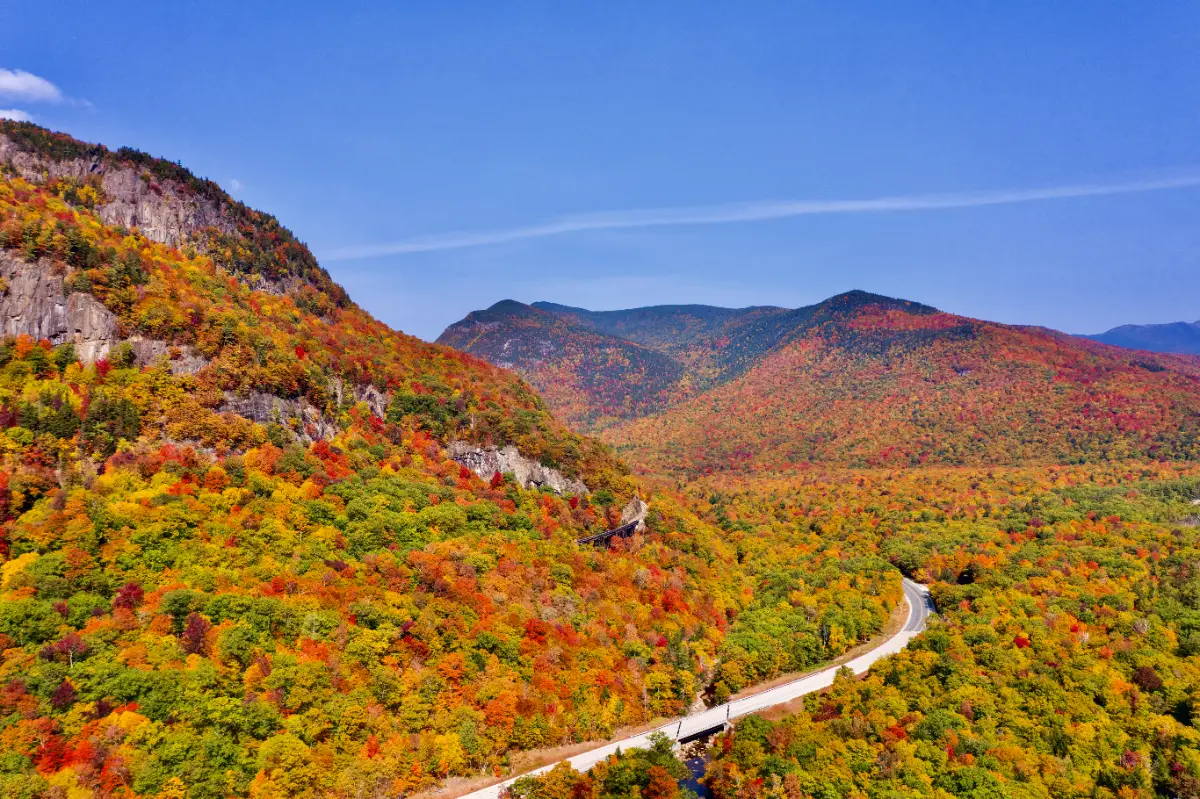
The Kancamagus runs 34.5 miles along NH Route 112 between Lincoln and Conway through White Mountain National Forest. A no-stop drive takes under an hour, but plan a half to full day for Sabbaday Falls (a 0.7-mile round-trip walk), Rocky Gorge, the Albany Covered Bridge, and the Hancock and Pemigewasset overlooks.
The road peaks early-to-mid October and gets genuinely jammed on the Columbus Day holiday weekend. On the Kanc, the Hancock Overlook hairpin is the money shot — get there before 9 a.m. or you’ll circle the lot for twenty minutes. Sabbaday Falls’ gravel path is near-flat with boardwalks, a rare stroller-friendly and mobility-friendly trail in the Whites.
Here’s the parking detail nobody spells out. The recreation pass applies at developed day-use sites — the trailhead lots at Sabbaday Falls, Lower Falls, Rocky Gorge — and not at the roadside overlooks, which are free. So the Hancock and Pemigewasset pullouts cost nothing. Pull into a trailhead lot without a pass and you’ll find an envelope on your windshield.
- Location: NH Route 112, Lincoln to Conway, White Mountain National Forest
- Cost: Free to drive; day pass around $5 at trailhead lots, or a $30 White Mountain annual pass ($40 household). An America the Beautiful pass also covers it.
- Best for: Travelers who want maximum color in a half day
- Time needed: 3–6 hours with stops
Skyline Drive and the Blue Ridge Parkway (Virginia and North Carolina)
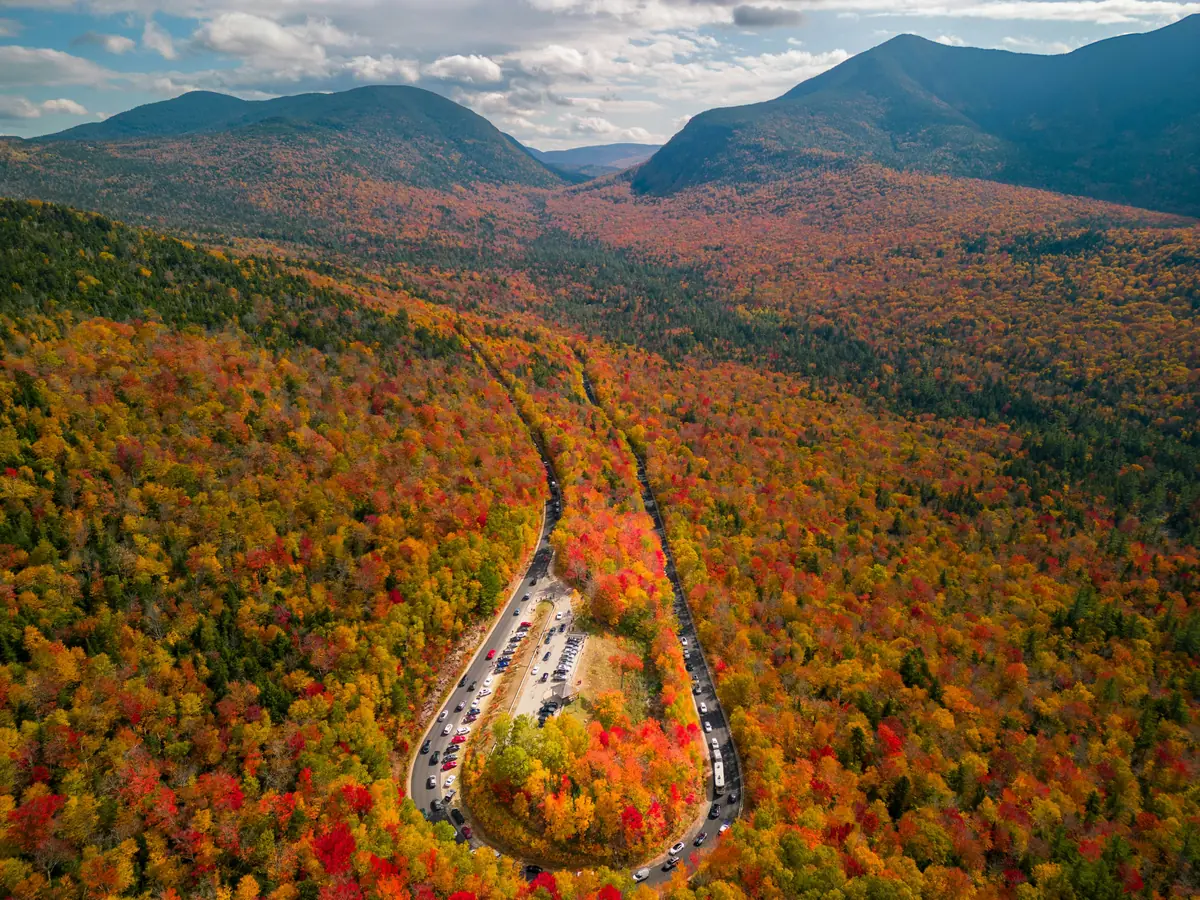
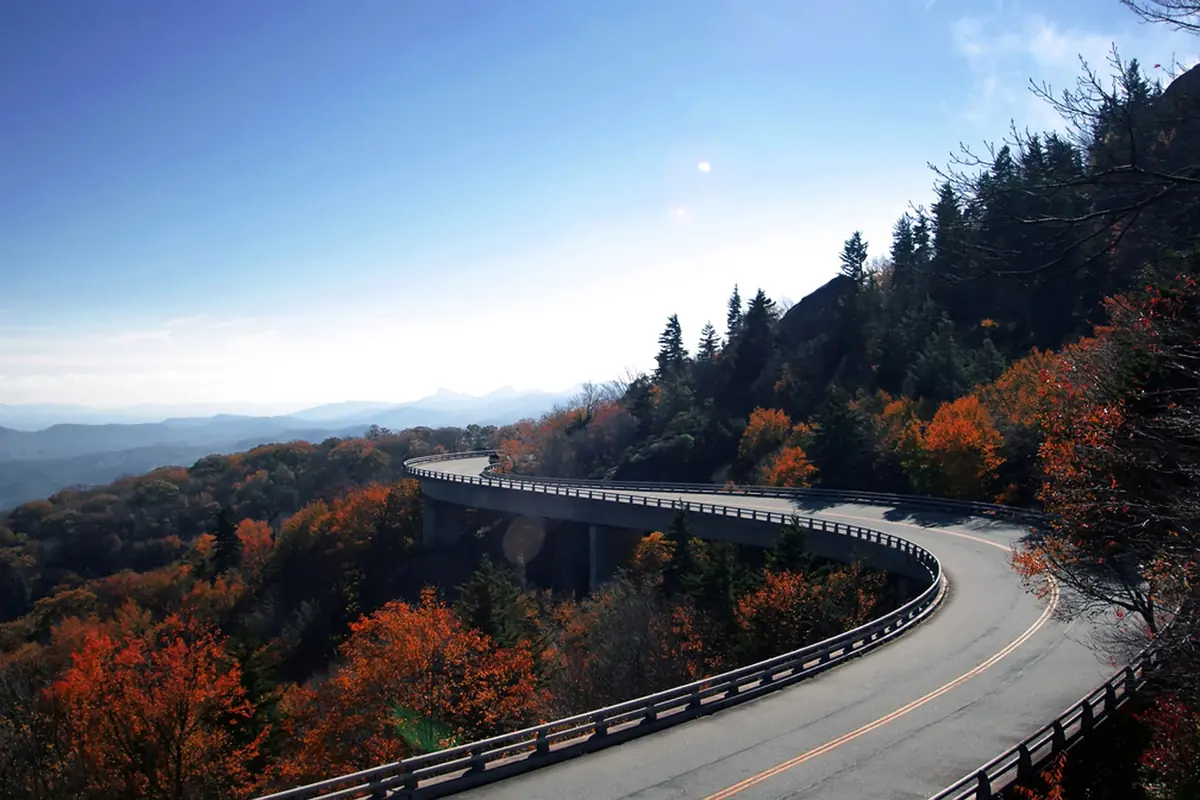
Skyline Drive runs 105 miles through Shenandoah National Park with 75 overlooks, then flows directly into the 469-mile Blue Ridge Parkway. Skyline Drive’s high points peak mid-to-late October. On the Parkway, high elevations like Craggy Gardens turn in early October, while the valleys near Asheville hold color from late October into early November.
That elevation spread is the real advantage of the mid-Atlantic. You can chase peak for nearly a month by adjusting your altitude rather than your latitude.
Mabry Mill at Milepost 176 is the Parkway’s most-photographed spot, and the breakfast pancakes at the mill restaurant are worth the wait. Allow four to seven days for the full Parkway if you want to actually stop and look.
Two logistics worth knowing before you arrive. Shenandoah is fully cashless — card or mobile payment only, at every entrance station. And the drive’s 35 mph limit is not a suggestion; those 105 miles genuinely take three hours with no stops.
- Location: Shenandoah NP (VA) into NC; Parkway runs Waynesboro, VA to Cherokee, NC
- Cost: Shenandoah $30/vehicle (7 days), $25 motorcycle, $15 per person on foot or bike; Blue Ridge Parkway free
- Best for: Travelers with a week and a love of long, slow roads
- Time needed: 1 day for Skyline Drive; 4–7 days for the full Parkway
The Parkway Miles Still Closed in North Carolina
This is the thing to check before you book anything around Asheville. Hurricane Helene triggered more than 50 landslides on the Blue Ridge Parkway, and roughly 40 miles in North Carolina remain closed while crews finish repairs. The National Park Service is targeting a late-in-the-year reopening for the last sections, which means a foliage trip may or may not catch them open.
The closed stretch runs from around Linville Falls to Mount Mitchell:
- Linville Falls Spur Road (MP 316.5): Closed
- MP 317.5 – 324.7 (US 221 to Bear Den): Closed
- MP 324.7 – 327.5: Closed; open again from MP 327.5 to 330.9, with Orchard at Altapass reachable from the south
- MP 333.9 – 355.3 (Little Switzerland to Mount Mitchell State Park): Closed, apart from a short open pocket at Little Switzerland
- Access: Recreation of any kind is prohibited in the closed sections, including walking or biking the empty road
What still works: Mount Mitchell State Park and the Craggy Gardens Visitor Center are open, but you reach them from the Asheville side, driving north. Expect dump trucks, one-lane traffic controls, and a reduced 35 mph limit on the open stretch between Asheville (MP 382.5) and Mount Mitchell (MP 355.3), which is exactly the road you take to Craggy Gardens.
Check the official road status page the week you travel. It’s updated daily and it is the only source that will tell you what’s actually open.
Which States and Destinations Deliver the Best Color?
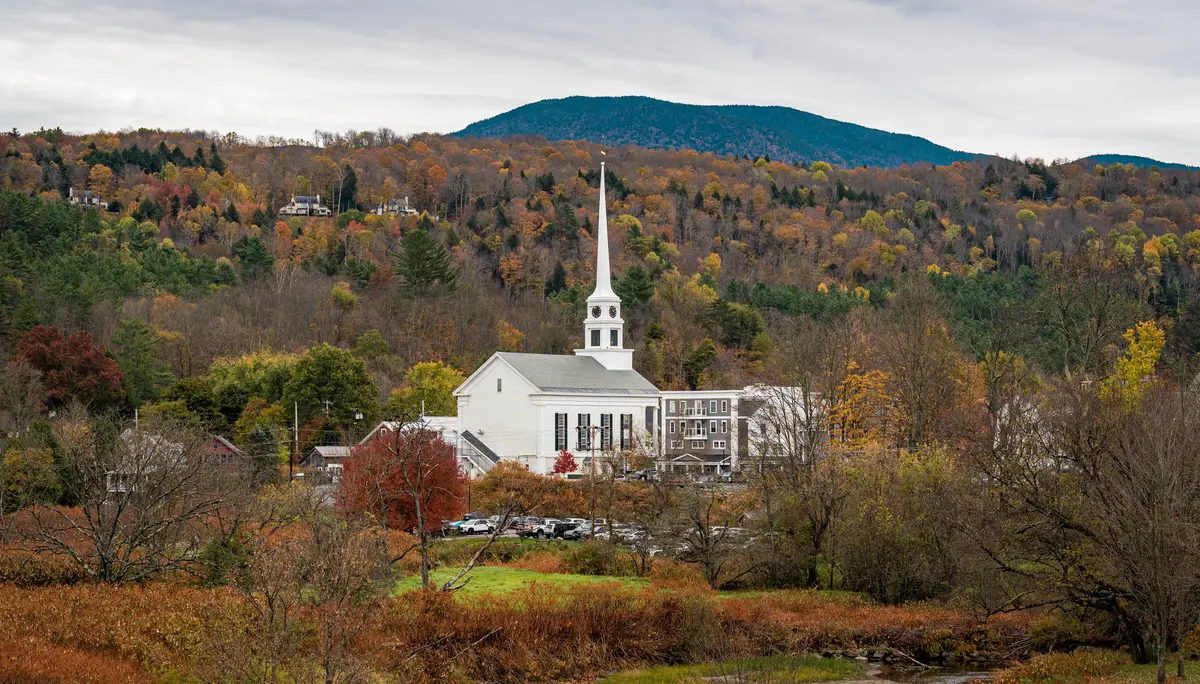
Vermont (Stowe, Woodstock, Route 100) is the classic for covered-bridge color. New Hampshire’s White Mountains deliver the most dramatic peaks. Maine’s Acadia pairs foliage with rugged coast, New York’s Adirondacks and Catskills suit city-based trips, and Virginia’s Shenandoah extends the season into late October and November.
The right pick depends on what you want around the leaves. Stowe sits below 4,395-foot Mount Mansfield and packs in cider mills, covered bridges, and a walkable village. Acadia’s 27-mile Park Loop Road gives you ocean and granite alongside the maples.
The Adirondacks and the Catskills are the easiest reach from New York City. One caution there: the Cloudsplitter Gondola at Whiteface gets recommended constantly as a lift straight into the color, but its fall schedule is short, weekend-dependent, and can wrap up before peak arrives. Confirm the operating calendar before you build a day around it. The Whiteface Veterans’ Memorial Highway, which drives you most of the way to the summit, is the more reliable backup.
Pro Tip: The Stowe community church framed by maples is the calendar shot everyone wants. It’s photographed from a small public lot just off Main Street, not from private property — no fence-hopping required.
Where Can You See East Coast Fall Foliage Without a Car?
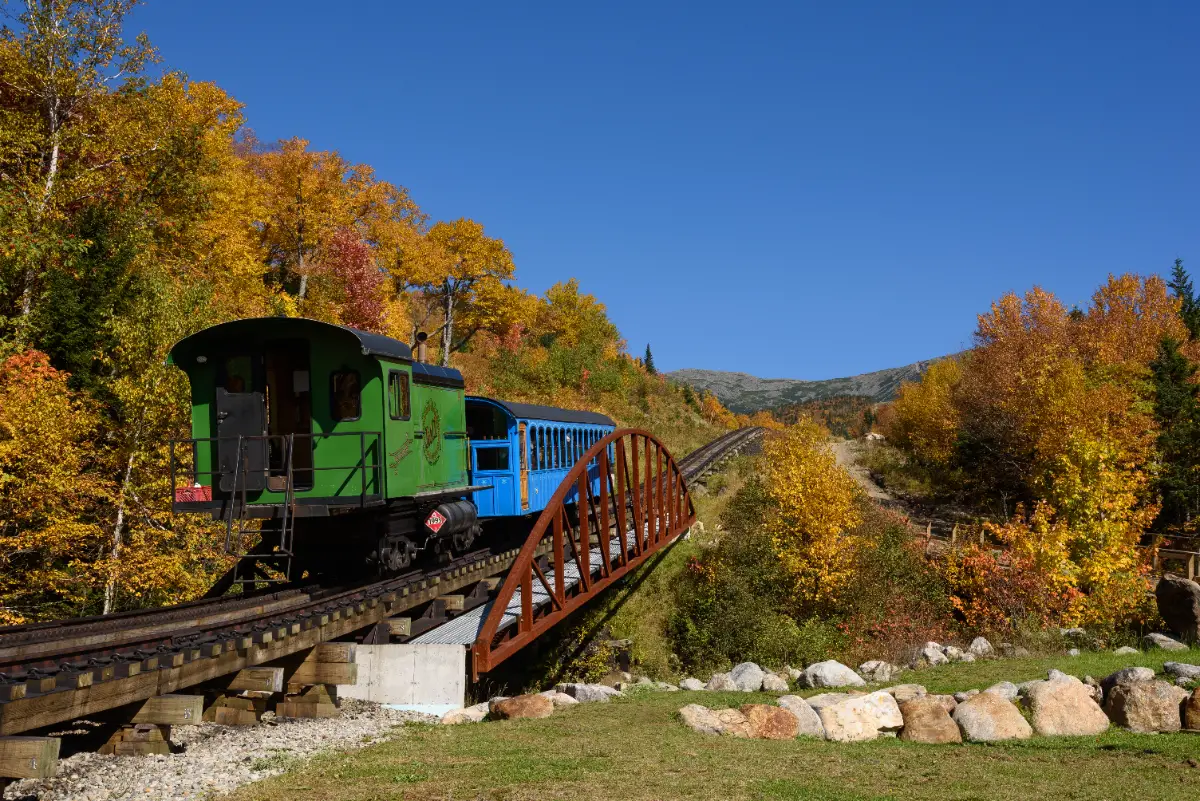
You don’t need a car. Scenic railroads like New Hampshire’s Conway Scenic Railroad and the Mount Washington Cog Railway, Connecticut’s Essex Steam Train, and the Adirondack Scenic Railroad all run foliage trips. Canada–New England cruises and Amtrak’s Downeaster and Adirondack routes deliver color too, and guided tours bundle transport with lodging.
This is the gap most foliage guides skip entirely, and it’s a shame, because some of the best vantage points are from a train climbing where the road can’t go.
From the Cog’s slanted wooden seats, you climb out of the colored forest into bare alpine zone in under 45 minutes — the color line drops away below you like a tide going out. It’s the only ride on this list where you watch the foliage from above instead of inside it. But read the fine print: during peak foliage the Cog adds extra steam departures, and those steam trains only run as far as Waumbek Station at 4,000 feet. If you want the 6,288-foot summit, book a biodiesel train.
The Conway Scenic Mountaineer is a four to four-and-a-half-hour round trip over Crawford Notch, crossing the Frankenstein Trestle and Willey Brook Bridge. There’s also a Hiker’s Special that most people never notice: ride the morning train up, get roughly four and a half hours at Crawford Notch, and catch the 3:15 p.m. train back.
Connecticut’s Essex Steam Train is the budget pick, and it has one trap. In October it runs Thursday through Monday only. Show up on a Tuesday or Wednesday and you’ll find a closed station.
- Mount Washington Cog Railway: roughly $75–$100 adult round trip, dynamically priced, about a 3-hour round trip to a 6,288-foot summit. Arrive 45 minutes early; missed-train fees hit $30 during foliage season. Fares and policies
- Conway Scenic Railroad Mountaineer: coach from around $75; Comfort and Observation Dome classes cost more. 4–4.5 hours.
- Essex Steam Train (CT): $29 coach for the 1-hour train, $49 for the 2.5-hour train-and-riverboat combination, $65 first class. Closed Tuesdays and Wednesdays in October.
- Best for: Travelers without a car, families, anyone who’d rather watch than drive
How Much Does a Leaf-Peeping Trip Actually Cost?
Budget for park fees, lodging, and activities. Acadia and most national parks charge $35 per vehicle for seven days, Shenandoah runs $30, and the Blue Ridge Parkway is free. Scenic railroads run roughly $29 to $100 per person. Peak-week lodging in towns like Stowe spikes hard, so book months ahead and consider midweek nights.
Two fee changes catch travelers out, and both are recent enough that most guides haven’t caught up.
First, the America the Beautiful annual pass is now two-tier: $80 for US citizens and residents, $250 for non-residents. Second, every non-US resident aged 16 and over now pays a $100 surcharge on top of the standard entrance fee at parks that charge one. If you’re visiting from abroad and hitting more than one park, the $250 pass is the cheaper route by a wide margin.
Acadia adds one more line item that has nothing to do with entry. Driving up Cadillac Summit Road requires a separate $6 vehicle reservation, required through late October — right through peak coastal color. Thirty percent of slots release 90 days out; the other 70 percent drop at 10 a.m. ET two days ahead, which is the realistic play if you missed the first window. You can hike, bike, or taxi up without one.
Lodging is where the real money goes. Stowe runs near full occupancy in mid-October, often with two- to three-night minimums on the Columbus Day holiday weekend. Booking late and hoping for a walk-in rate is a bad plan during peak; the honest trade-off is to stay off the main strip and drive in, which typically saves real money at the cost of 15 to 25 minutes each way.
- Acadia and most national parks: $35/vehicle (7 days). Cashless — card or mobile only
- Cadillac Summit Road reservation (Acadia): $6/vehicle, separate from entry
- Shenandoah National Park: $30/vehicle (7 days). Also cashless
- Blue Ridge Parkway: Free
- America the Beautiful annual pass: $80 residents / $250 non-residents
- Non-resident park surcharge: $100 per person, age 16+, on top of entry
- Baxter State Park: $20 per out-of-state vehicle; $10 day-use parking reservation for Katahdin trailheads
- Scenic railroads: roughly $29–$100 per person
- Peak-week lodging in marquee towns: book months out; expect minimum-night stays on holiday weekends
When Is the Best Weather, and What Should You Pack?
Autumn temperatures vary sharply by latitude and elevation. The White Mountains and Stowe see October highs near 55°F (13°C) and lows around 38°F (3°C). Shenandoah runs warmer, with highs near 70°F (21°C) and lows in the mid-40s°F (around 7°C). Layer a base, a fleece, and a windproof shell, and expect at least one rainy day.
Mountain summits sit far colder and windier than the valleys below them, and first snow is possible up north before the leaves have finished. Mount Washington can run 30°F (17°C) colder than the trailhead — hikers routinely start in a t-shirt at the base and summit in a hat and gloves.
Weekdays are dramatically less crowded than weekends across every destination here.
- Northern mountains (White Mountains, Stowe) in October: highs ~55°F (13°C), lows ~38°F (3°C)
- Shenandoah in October: highs ~70°F (21°C), lows mid-40s°F (~7°C)
- Pack: base layer, fleece, windproof and waterproof shell, hat, gloves for summits
- Timing: plan around weekdays to dodge the worst crowds and traffic
How Do You Photograph Fall Foliage for Richer Color?
Shoot the golden hour after sunrise and before sunset for warm, dimensional light — but don’t skip overcast days. Soft, even light saturates color and kills glare. Use a circular polarizer to cut leaf reflections and deepen color; it’s the one effect you can’t fully replicate in editing. Wet leaves after rain look most vivid of all.
This runs against the common advice to wait for a blue-sky day. Photographers who shoot the Kancamagus every season keep reporting the same thing: the best frames come on drizzly gray mornings, when the wet maples look lit from within and the crowds have stayed home.
Backlighting makes individual leaves glow when you shoot toward the sun through them, and a telephoto lens lets you isolate a single blazing tree from a messy hillside. Calm days avoid the motion blur that wind brings to long exposures.
Pro Tip: A circular polarizer is the highest-value piece of gear for foliage and costs far less than a new lens. Rotate it until reflections drop off the leaves, and the same hillside goes from washed-out to saturated in a single twist.
How Long Should a Foliage Road Trip Be?
Most travelers spend five to seven days to mix mountains, small towns, and a scenic drive or two. A focused New England loop works in a long weekend if you start in the north. A full Maine-to-North Carolina run deserves at least 14 days. Build in buffer days so you can chase peak color if it shifts.
The smartest move is to start north and work south, tracking the color wave as it moves rather than fighting it. One-way car rentals save you from backtracking across the same ground.
Your gateway airports are Boston (BOS), Manchester (MHT), Portland (PWM), and Burlington (BTV) for New England, and Charlottesville, Asheville (AVL), or Charlotte (CLT) for the mid-Atlantic. Flying into Manchester instead of Boston can save a couple of hours of day-one traffic, and it puts you 90 minutes closer to the Kancamagus.
Where to Point the Car First
East coast fall foliage peaks north to south, from late September through early November. Lock your region to its peak window, pick one scenic drive rather than three, book lodging months out for anything near Stowe or North Conway, and keep a two-week buffer so you can move if the forecast shifts. If you don’t drive, the railroads and cruises deliver the color just as well as any road — and from the Cog, better.
If you’re heading for the Blue Ridge, check the Parkway’s road status before you commit to a route. Roughly 40 miles through North Carolina are still closed, and the detour is real.
This trip rewards flexible travelers who can move dates on a week’s notice. If you need to book a specific weekend six months out and have it be perfect, the mountains will disappoint you at least half the time. Go midweek, go north first, and let the leaves set the schedule.