The best east coast scenic drives run from a 469-mile mountain parkway to a 113-mile highway that hops across open ocean to Key West. This guide ranks six routes by what each one actually delivers — mileage, cost, closures, and the reservations that quietly sell out before you get there.
Which East Coast Scenic Drive Should You Pick?
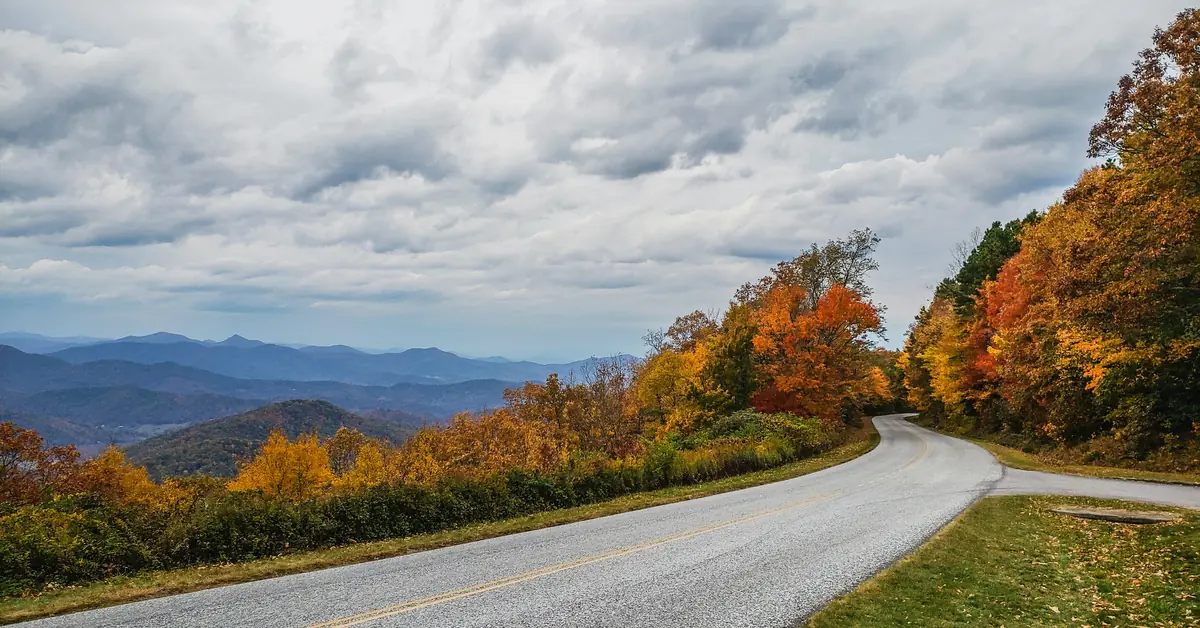
The Blue Ridge Parkway is the best scenic drive on the East Coast: 469 miles of Appalachian ridgeline from Virginia to North Carolina, free to drive, capped at 45 mph. Landslide repairs still close roughly 40 miles in North Carolina, so check the road status first. Short on time? Skyline Drive.
The 45 mph limit stops feeling like a rule by about the third overlook. These roads are built for stopping, not for covering ground, and the rankings below are built the same way.
How Do You Match a Route to Your Time and Season?
Match the route to the calendar first, then to the clock. The Kancamagus is a one-day foliage hit. Skyline Drive is a Washington-area weekend. The Blue Ridge Parkway wants three to five days. Maine’s US-1 and the Overseas Highway are multi-day coastal drives. The full Maine-to-Florida run needs 10 to 14 days.
One thing the mileage hides: several of these routes feel far longer than their length suggests, because the speed limits are low and you will stop constantly. A 105-mile drive can eat a full day once you start pulling over.
| Route | Length | Nonstop time | Recommended days | Cost | Best season | Vehicle notes |
|---|---|---|---|---|---|---|
| Blue Ridge Parkway | 469 mi (755 km) | ~10 hrs | 3–5 days | Free | Mid-Oct to mid-Nov | No commercial vehicles; 26 tunnels; ~40 mi closed in NC |
| Skyline Drive | 105 mi (169 km) | ~3 hrs | Weekend | $30/vehicle | October | Cashless park; Marys Rock Tunnel clears 12 ft 8 in |
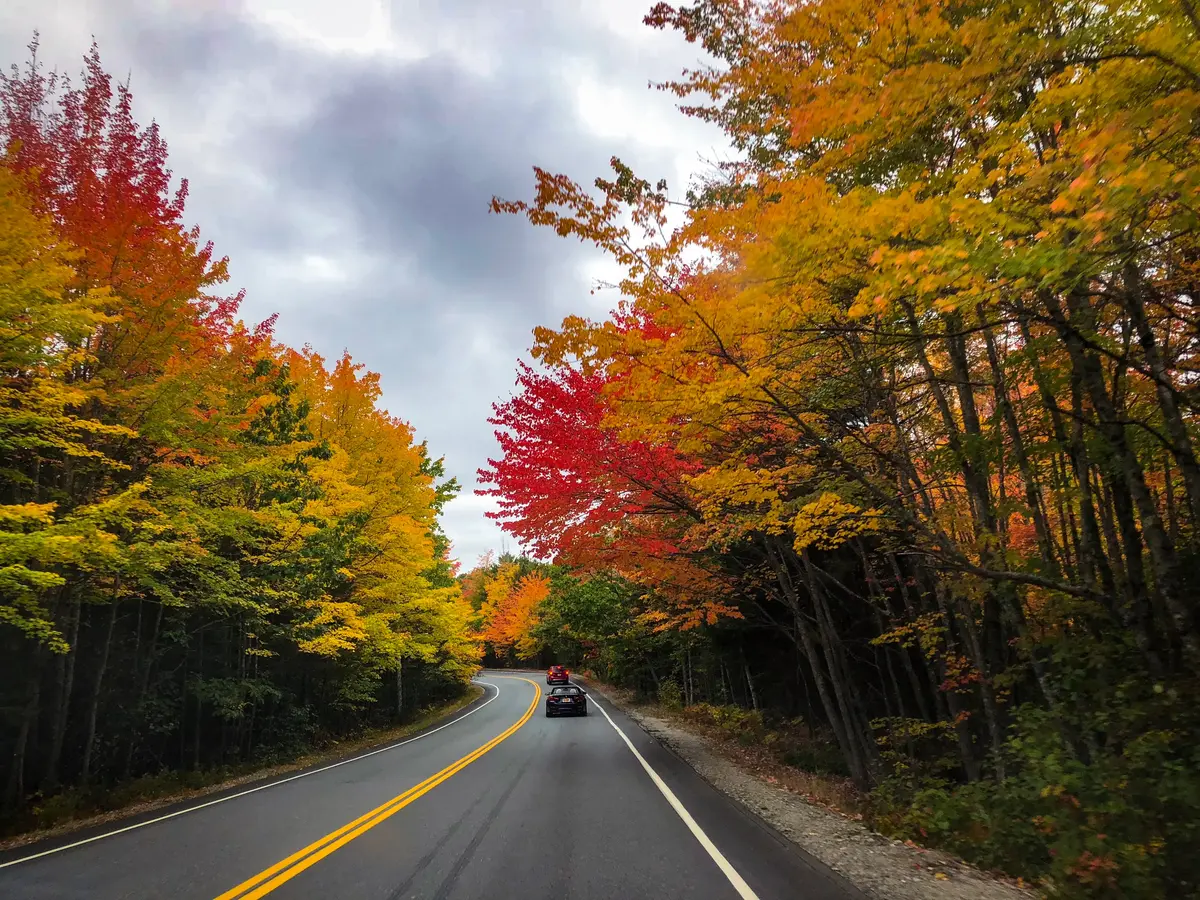
| Kancamagus Highway | 34.5 mi (55 km) | <1 hr | Half-day | Free; $5 parking | First two weeks of October | No gas or services the whole way |
| Overseas Highway | 113 mi (182 km) | ~3.5–4 hrs | 1–2 days | Free, no tolls on US-1 | December to May | 65-ft (20 m) bridge clearance |
| Maine US-1 + Acadia | ~160 mi (257 km) | ~3.25 hrs | 3–5 days | $35/vehicle + $6 summit slot | September to October | Cadillac summit bans RVs and vehicles over 21 ft |
| Outer Banks Byway | ~138 mi (222 km) + ferries | ~4 hrs + ferries | 2–3 days | Free + $15 ferry | April to October | Two ferries; storm closures common on NC-12 |
Blue Ridge Parkway — Why It’s Still the One to Drive First
The Blue Ridge Parkway runs 469 miles (755 km) along the Appalachian crest from Shenandoah National Park in Virginia to Great Smoky Mountains National Park in North Carolina. No entry fee. Speed limit 45 mph. Commercial vehicles banned. Plan three to five days, and expect peak foliage from mid-October into mid-November depending on elevation.
It is the longest linear park in the country, and the engineering shows. Twenty-six tunnels — one in Virginia, 25 in North Carolina — and several have low clearances that catch tall vehicles out. The high point sits at 6,053 feet (1,845 m) near Milepost 431, where a warm valley afternoon lands cool enough to want a jacket.
Here is what most guides still get wrong. Landslide repairs have kept roughly 40 miles of the North Carolina section closed, and the closures are not a driving inconvenience — recreation of any kind is prohibited inside them, so the trailheads and overlooks in those miles are off-limits too. The official road status page lists them milepost by milepost, and the closed stretches are reopening in phases as the slide work finishes.
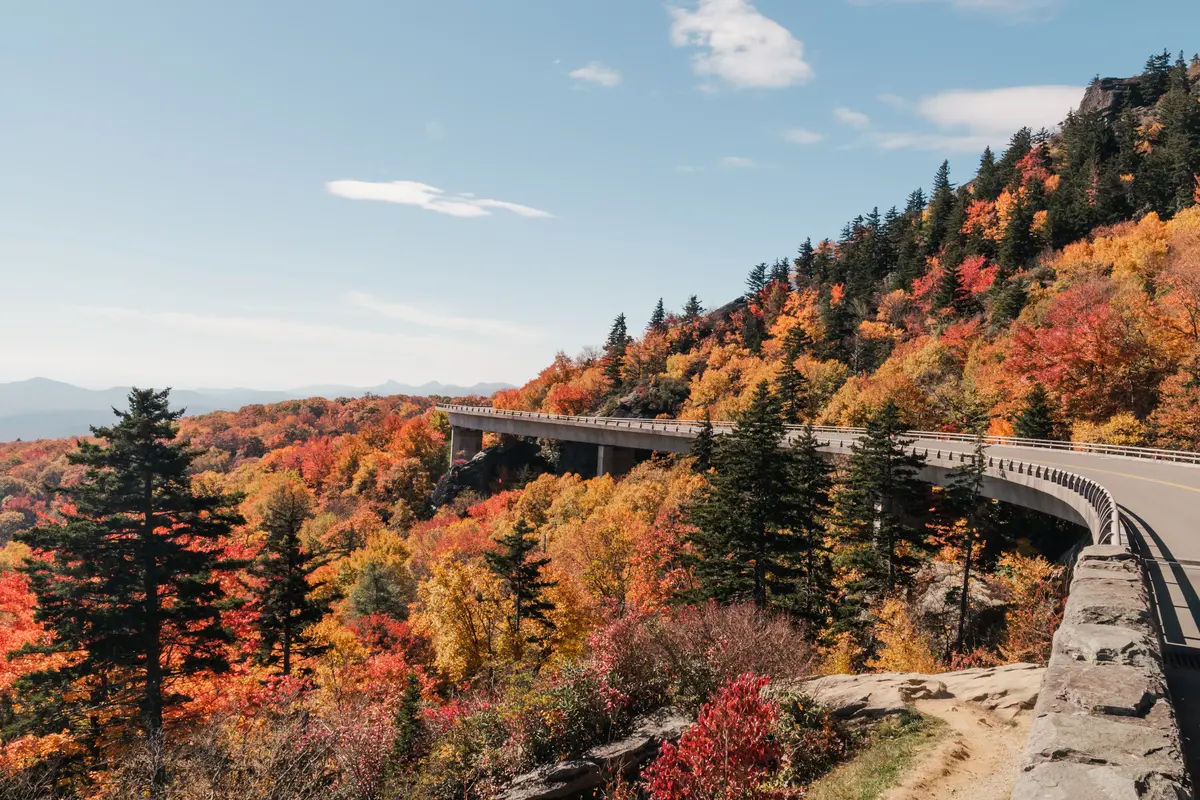
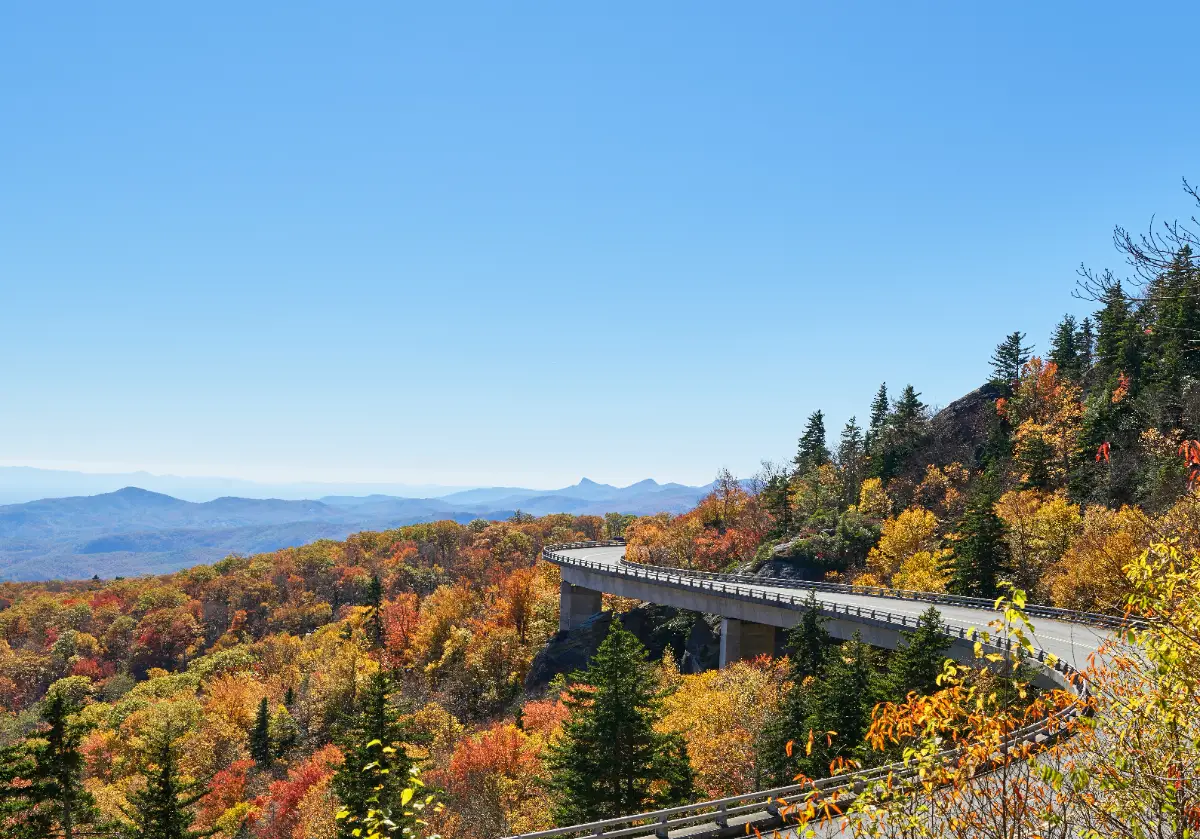
The Linn Cove Viaduct, the curving bridge that hugs Grandfather Mountain near Milepost 304, is still the single best piece of road on the route. But the paving project just north of it closes the road between Mileposts 299.9 and 302.8, and the Linn Cove Visitor Center is shut. Come at the viaduct from the south, off US-221 at Beacon Heights, and you skip the detour entirely.
Virginia is in better shape. Mabry Mill at Milepost 176 — the old gristmill that is among the most photographed spots on the whole road — is open and reachable, and the Virginia mileposts run almost uninterrupted.
Pro Tip: Check the road-status map the morning you drive, not the night before. Status is updated during the day, and a closed segment near Mount Mitchell can force a two-hour detour off the ridge and back.
- Route: Shenandoah NP (VA) to Great Smoky Mountains NP (NC)
- Length: 469 miles (755 km)
- Cost: Free, no entry fee
- Best for: Travelers with three or more days who want the full mountain drive
- Time needed: 3 to 5 days to do it right; about 10 hours nonstop
- Check first: Roughly 40 miles in North Carolina remain closed for landslide repair
Skyline Drive — The Best East Coast Weekend Drive
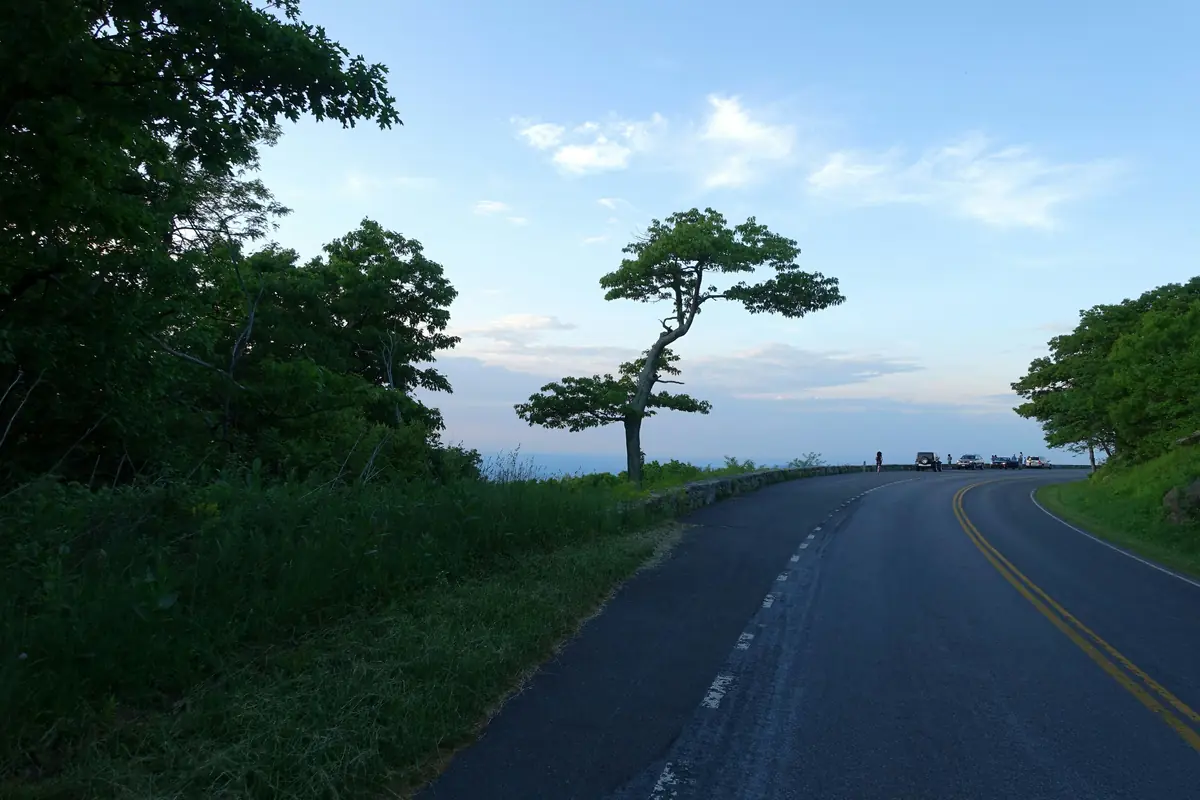
Skyline Drive is a 105-mile (169 km) road running the length of Shenandoah National Park from Front Royal to Rockfish Gap, where it becomes the Blue Ridge Parkway. It has 75 overlooks, a 35 mph speed limit, and takes about three hours nonstop. Entry is $30 per vehicle, good for seven days.
Seventy-five overlooks across 105 miles works out to one every mile and a half. You are never far from the next pull-off, which is exactly why the three-hour drive turns into a full day.
It sits about 75 miles from Washington, DC — the obvious pick when you have a Saturday and a tank of gas rather than a full week.
Two practical things. The park is now cashless: entrance stations take cards and mobile payment only, and if you are carrying cash you have to buy your pass in advance on recreation.gov or from one of a handful of third-party vendors in Front Royal, Luray and Waynesboro. And the Marys Rock Tunnel clears 12 feet 8 inches — measure your roof box before you commit, because there is no turnaround inside it.
The short hike to Dark Hollow Falls at Milepost 50.7 is the most popular stop on the road, and it shows. Fall weekends are packed by 9 a.m.; arrive at the Front Royal gate at opening or come midweek.
- Route: Front Royal to Rockfish Gap, Shenandoah National Park (VA)
- Length: 105 miles (169 km)
- Cost: $30 per vehicle, $25 motorcycle, $15 per person on foot or bike (7-day pass); fee details
- Payment: Cards and mobile only — no cash at the gate
- Best for: A Washington-area weekend or a fall day trip
- Time needed: About 3 hours nonstop; a full day with stops
Kancamagus Highway — The Most Foliage per Mile in New England
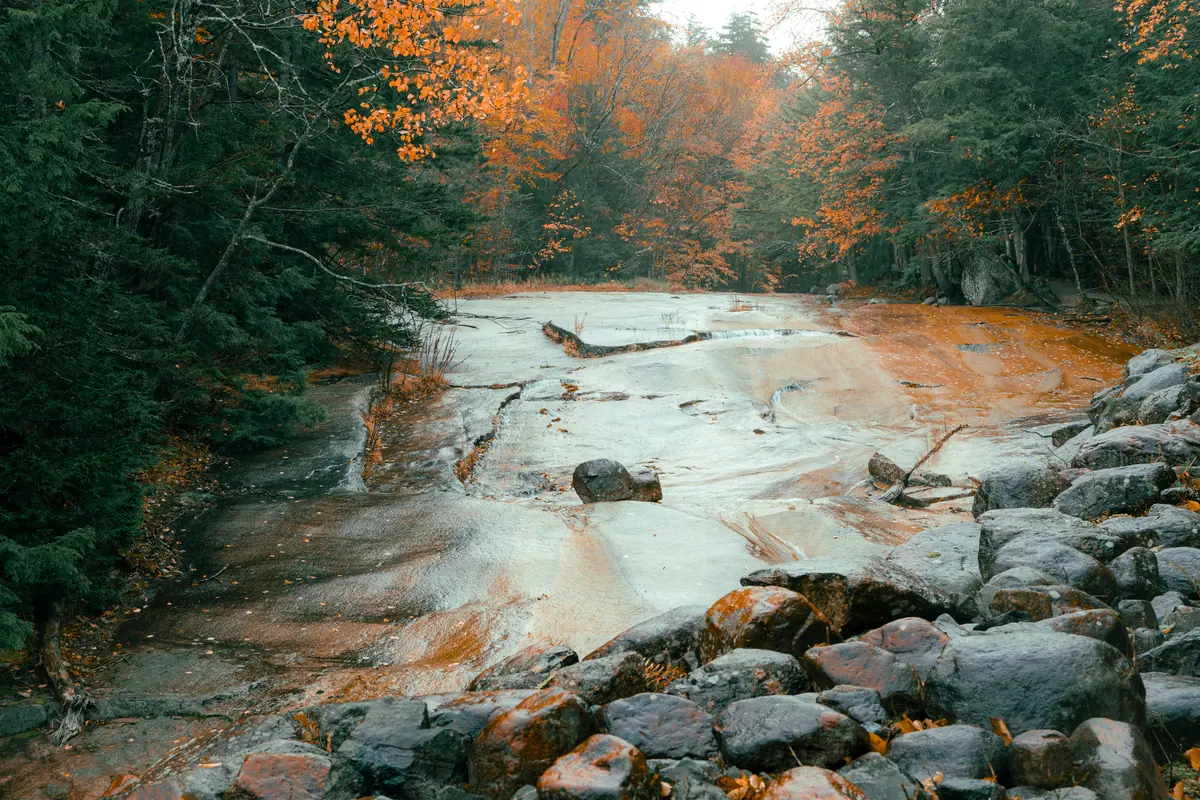
The Kancamagus Highway, “the Kanc,” is a 34.5-mile stretch of New Hampshire Route 112 through the White Mountain National Forest between Lincoln and Conway. Under an hour nonstop. Half a day if you drive it properly. There is no gas station, no restaurant and no reliable cell service along the entire road, so fuel up before you turn onto it.
The road climbs to about 3,000 feet (914 m), and the color turns earlier up high than in the valleys below. Marked stops are few — Sabbaday Falls and Rocky Gorge are the two worth your time — which is part of why drivers underestimate how empty the road really is.
Parking is the thing people get wrong. Most trailheads and the developed lots at Rocky Gorge and Lower Falls need a White Mountain recreation pass, around $5 for the day. What almost nobody realizes: that one day pass covers every fee site in the forest for the rest of the day. Pay once at your first stop, leave it on the dash, and the other lots are already covered. An America the Beautiful pass covers them all too, if you have one.
At peak, the road gridlocks on weekends and the trailhead lots fill by mid-morning. Dawn light is better than midday anyway, and you can have Rocky Gorge to yourself if you start early.
Pro Tip: Fill the tank in Lincoln or Conway before you start. Drivers run low between the two towns every single fall, and there is nowhere to stop for help.
- Route: Lincoln to Conway via NH Route 112 (White Mountain National Forest)
- Length: 34.5 miles (55 km)
- Cost: Free to drive; around $5 per day to park at fee sites
- Best for: A one-day foliage hit from Boston or Portland
- Time needed: Half a day with stops; under an hour nonstop
- No services: Zero gas, food or reliable cell coverage for the full stretch
Overseas Highway — Driving US-1 Across the Ocean to Key West
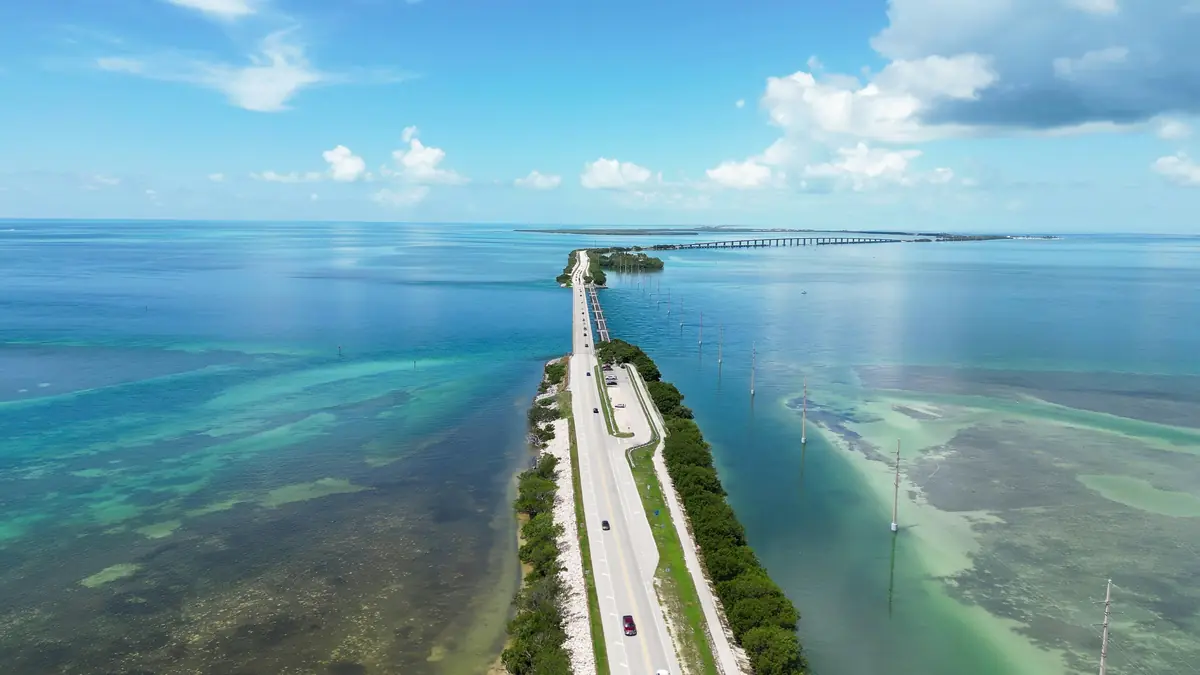
The Overseas Highway carries US-1 for 113 miles from Key Largo to Key West across 42 bridges, including the Seven Mile Bridge. Miami to Key West is about 3.5 to 4 hours nonstop, but plan five or six with stops. December through May is the season. There are no tolls on the highway itself.
Addresses out here run by mile marker, counting down from MM 126 near the mainland to MM 0 in Key West. Speed limits — 55 mph on the bridges, 45 mph through the island towns — are enforced hard, and the fines are not cheap.
The Seven Mile Bridge is the centerpiece: roughly 6.8 miles long with 65 feet (20 m) of clearance at its high point. Its predecessor is better. A 2.2-mile section of the Old Seven Mile Bridge has been restored for walkers and cyclists and runs out to Pigeon Key, and you get the same water on both sides at a pace that lets you actually look at it.
Just past the bridge is Bahia Honda State Park at MM 37, which has the best swimming beach on the drive. Entry is $8 per vehicle, but it drops to $4.50 if you are the only person in the car and $2.50 if you walk or ride in — a distinction almost no guide mentions. The park is open from 8 a.m. to sundown.
One toll worth knowing about. The Card Sound Road shortcut into North Key Largo, the one locals use to skip traffic on the 18-Mile Stretch, carries a $2.13 toll for a two-axle vehicle, and it is all-electronic. No cash lane. In a rental car that means toll-by-plate, and the administrative fee your rental company tacks on can cost more than the toll did.
Reality check: Watch the mile markers, not your map app. Businesses, turn-offs and even emergency directions in the Keys are given as MM numbers, and locals navigate entirely by them.
- Route: Key Largo to Key West via US-1 (Florida Keys)
- Length: 113 miles (182 km), 42 bridges
- Cost: Free to drive; Bahia Honda $8 per vehicle ($4.50 solo)
- Best for: Warm-weather drivers who want ocean over mountains
- Time needed: 1 to 2 days; about 4 hours nonstop from Miami
Maine’s US-1 and Acadia — The Coast Worth the Detours
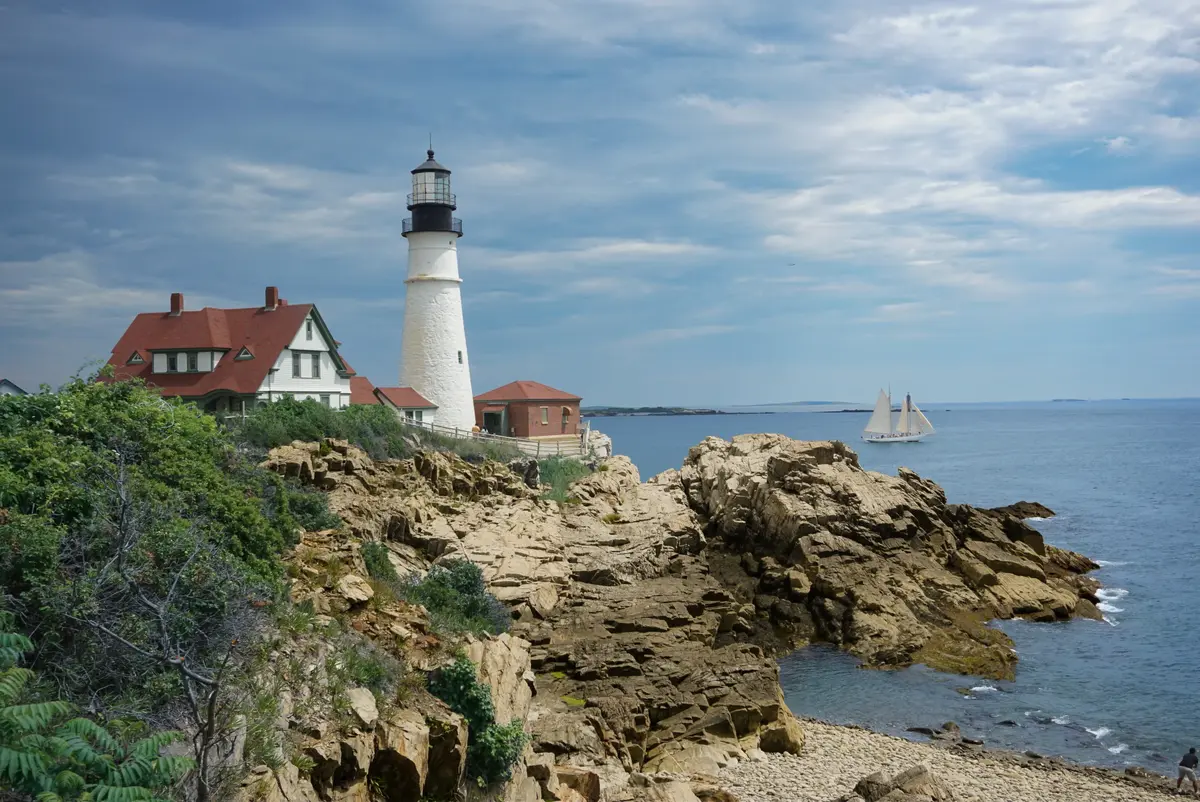
Maine’s US-1 runs about 160 miles from Portland north to Bar Harbor, finishing with Acadia National Park’s 27-mile Park Loop Road. Roughly 3.25 hours nonstop — but the nonstop time is meaningless here, because the harbor-town detours are the entire point.
Here is the catch most guides skip: US-1 itself is misleadingly inland. The ocean views are down the peninsulas — Boothbay Harbor, Rockland, Camden — not from the main road. If you drive it end to end without turning off, you will wonder what everyone was talking about. Budget a day for the detours alone.
Acadia’s entrance fee is $35 per vehicle for seven days, and the park is cashless. Non-US residents aged 16 and over now pay a $100 surcharge per person on top of that, one of eleven parks where the surcharge applies — worth checking against the park’s fee page before you build a family budget around it. Shenandoah, for what it’s worth, is not on that list.
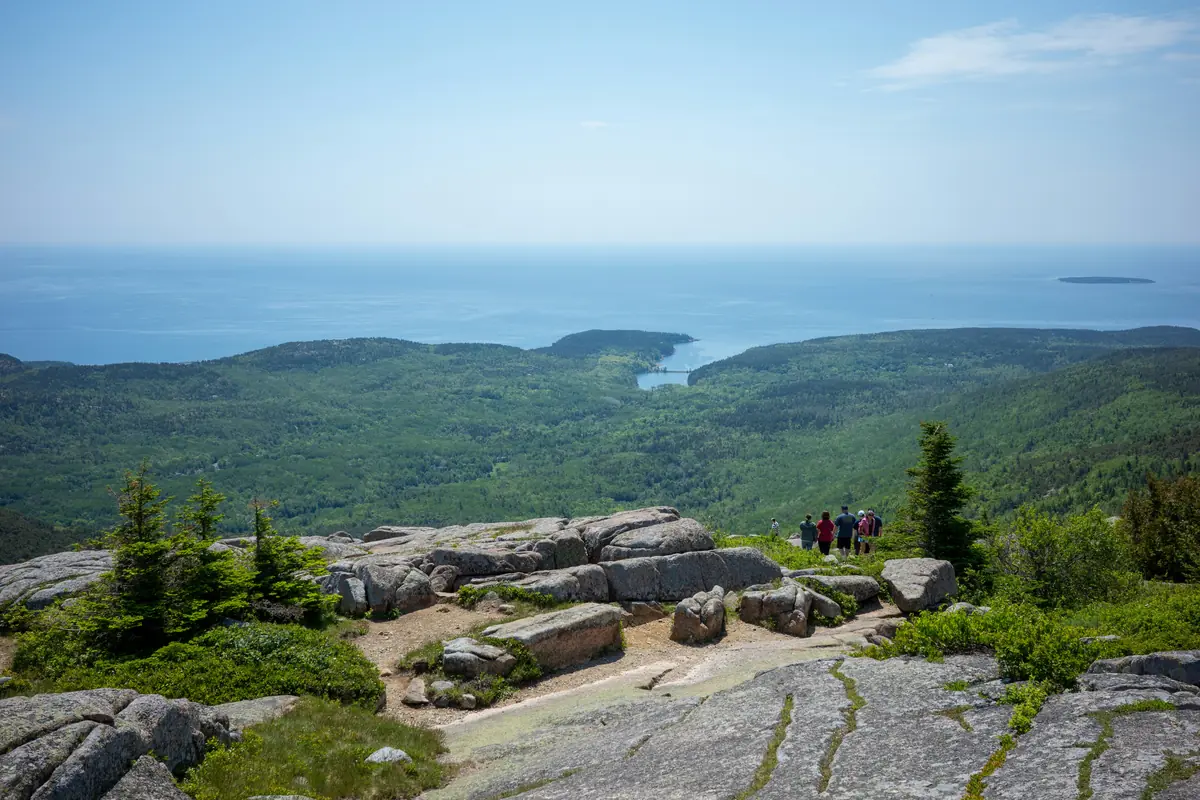
The Cadillac Summit Road is a 3-mile (4.8 km) climb to the 1,530-foot summit, the highest point along the North Atlantic Seaboard. Driving it needs a separate timed-entry vehicle reservation — about $6, required from late May through late October, on top of park entry. Hiking, biking or taking a taxi up needs no reservation. Vehicles over 21 feet, RVs and trailers are banned outright.
The reservation system is where trips fall apart. Thirty percent of slots are released 90 days ahead; the other 70 percent drop at 10 a.m. Eastern exactly two days before. Miss both windows and there is no walk-up option. A reservation admits you once — no re-entry — and sunrise slots are limited to one per vehicle per week.
Pro Tip: Screenshot the QR code on your Cadillac reservation before you leave Bar Harbor. A ranger scans it at the gate and there is no cell service up there, which is where a good chunk of the turned-around cars come from.
- Route: Portland to Bar Harbor via US-1, plus Acadia’s Park Loop Road
- Length: ~160 miles (257 km); Park Loop Road adds 27 miles
- Cost: $35 per vehicle (7-day pass); ~$6 Cadillac reservation in season
- Reserve: Cadillac Summit Road, at 90 days out or 10 a.m. ET two days out
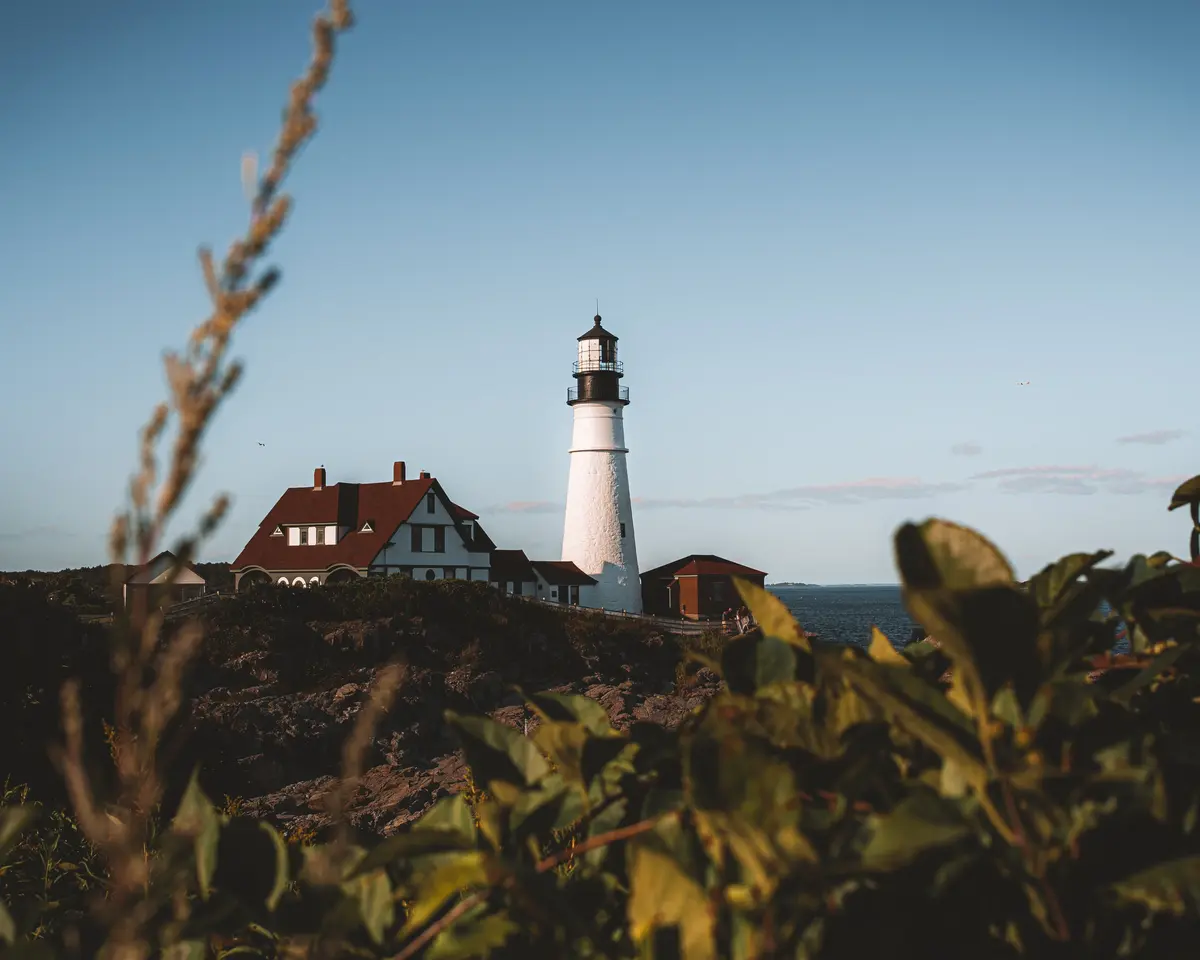
- Best for: Travelers who want lobster, lighthouses and harbor towns
- Time needed: 3 to 5 days to work in the peninsula detours
Outer Banks Scenic Byway — The Most Underrated Drive, With Ferries
The Outer Banks Scenic Byway follows NC-12 down North Carolina’s barrier islands with the Atlantic on one side and Pamlico Sound on the other. About 138 driving miles, plus two ferries that are officially part of the byway itself.
The ferry logistics scare people off, and they shouldn’t. The Hatteras–Ocracoke crossing is free, first-come, first-served, and takes 70 minutes — it does not take reservations at all, so on a busy summer weekend you simply drive to the dock early and wait your turn. The Ocracoke–Cedar Island run is the other one, and it is the one that turns a long dead-end peninsula into a real loop.
That crossing is 2 hours 15 minutes and costs $15 for a standard car under 20 feet, $1 per walk-on passenger, $3 for a bicycle, and $30 to $45 for anything longer. Reservations open 90 days out through NCDOT, and this is the detail that catches people: an unclaimed reservation is cancelled 30 minutes before departure. Roll up at fifteen minutes out and you can watch your own booking sail without you.
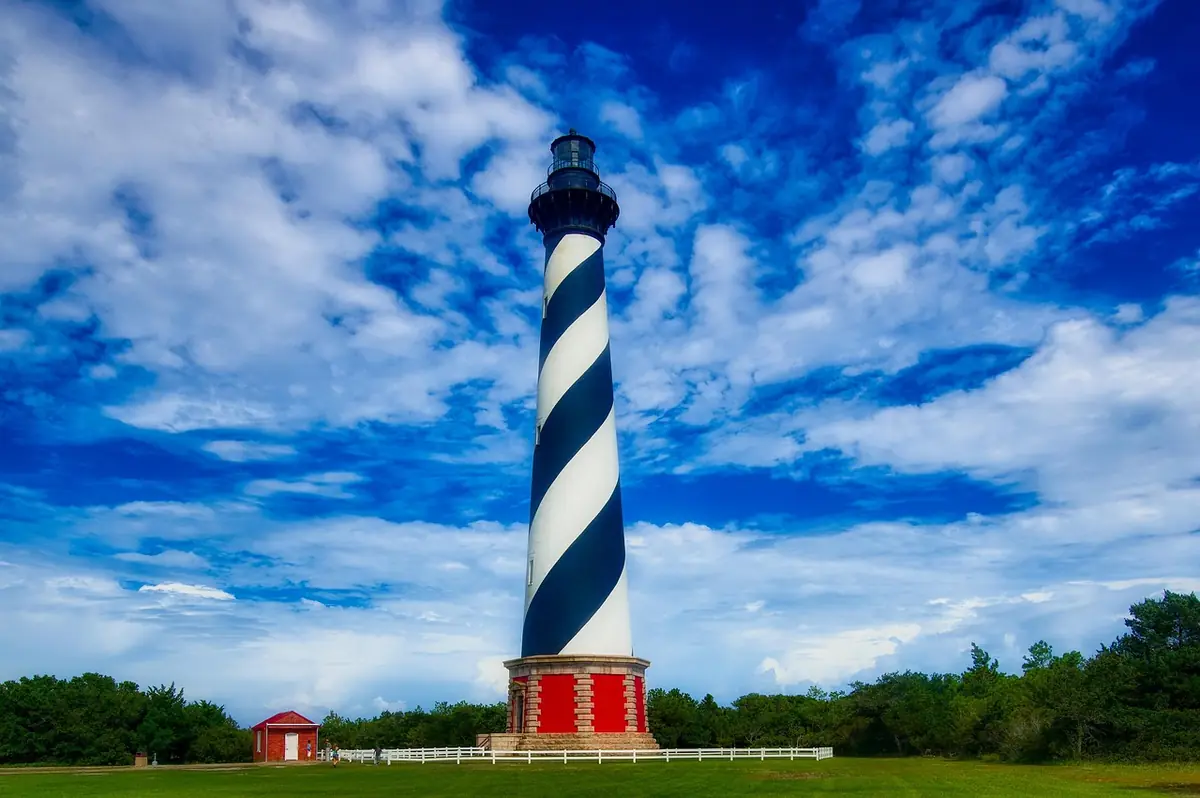
Cape Hatteras Lighthouse, the tallest brick lighthouse in the country, is the landmark midway down — and it is currently wrapped head to foot in scaffolding for a multi-year restoration, its black-and-white stripes hidden and the tower closed to climbers. The grounds stay open, and you can still walk them. If you came for the climb, go north instead: Bodie Island Lighthouse, near Oregon Inlet, is open for climbing and sells tickets through the park service.
NC-12 closes during storms and after ocean overwash, sometimes with little warning, so check conditions before you commit to a Hatteras run. And spend the 70-minute crossing on deck rather than in the car — dolphins work the ferry wake most of the year.
- Route: Whalebone Junction down NC-12 to Cedar Island (NC barrier islands)
- Length: ~138 driving miles (222 km) plus ~25 ferry miles
- Cost: Free to drive; Hatteras–Ocracoke ferry free; Cedar Island ferry $15 per car
- Reserve: Cedar Island ferry in summer — and claim it 30 minutes before departure
- Best for: Travelers who want empty beaches and a ferry novelty
- Time needed: 2 to 3 days with the ferry timing
Three Shorter East Coast Drives Worth a Day
Beyond the marquee routes, three short drives reward a single day: Cape Cod’s Route 6A through America’s largest historic district, Newport’s 10-mile Ocean Drive past Gilded Age mansions, and Massachusetts’ Mohawk Trail through the Berkshires, a reliable fall-foliage run. None needs more than an afternoon, and all three suit a weekend base.
Cape Cod’s Route 6A — The Old King’s Highway
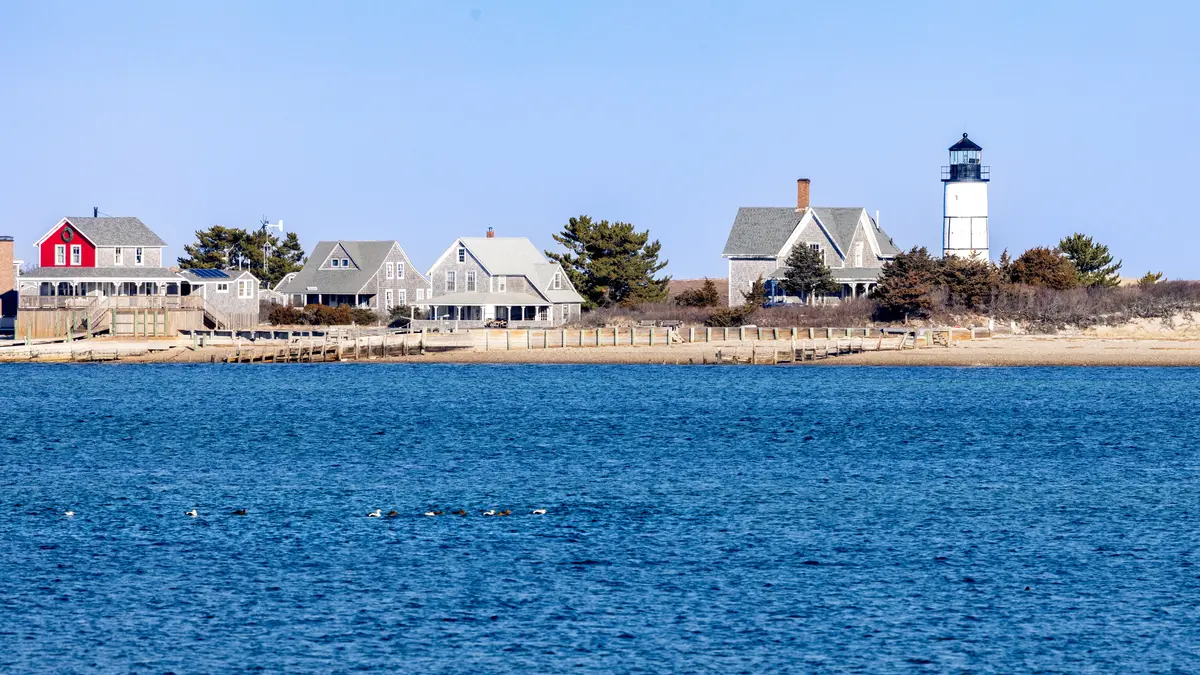
Route 6A, the Old King’s Highway, runs about 62 miles along Cape Cod’s bay side, a National Scenic Byway lined with sea captains’ homes and antique shops. The tree canopy closes overhead between Sandwich and Brewster, and traffic moves slow enough that you can actually look at what you are passing. It is the antidote to the fast, charmless Route 6 that most people take.
Newport Ocean Drive — Gilded Age Mansions in 10 Miles
Newport’s Ocean Drive, sometimes called Ten Mile Drive, is a free 10-mile loop past Gilded Age mansions and open Atlantic coastline. You can do the whole thing in under an hour. Then walk the Cliff Walk behind the mansions, which delivers the views the road only hints at.
Mohawk Trail — Berkshire Foliage on Route 2
The Mohawk Trail follows Route 2 about 70 miles across the Berkshires in western Massachusetts. One of New England’s oldest scenic roads and a dependable fall-color run, with the hairpin turn above North Adams as its signature view.
When Is the Best Time for an East Coast Road Trip?
The best time depends on latitude. Northern New England peaks for fall foliage from late September into early October. The mid-Atlantic and southern Appalachians peak mid-to-late October. The Blue Ridge Parkway runs mid-October into mid-November depending on elevation. For Florida and the Carolina coast, December through May is mildest.
The practical move is to follow the color north to south. Start in the White Mountains in late September and you can chase peak foliage for nearly a month as it rolls down the Appalachians.
| Region | Peak window | Notes |
|---|---|---|
| Northern New England (ME, NH, VT) | Late September to early October | Higher elevations turn first |
| Southern New England / Berkshires | Early to mid-October | Mohawk Trail, Route 6A |
| Mid-Atlantic / Shenandoah | Mid-to-late October | Skyline Drive at its best |
| Southern Appalachians / Blue Ridge | Mid-October to mid-November | Varies sharply by elevation |
| Carolina and Florida coast | December to May | Mildest driving, not foliage |
Spring is the underrated season for the southern routes and for Washington, DC’s cherry blossoms — warm enough for the coast, before the summer heat and the crowds arrive.
How Long Does It Take to Drive the East Coast End to End?
Driving the East Coast from Maine to Florida covers roughly 1,545 miles and 23 to 29 hours of pure driving on I-95. To actually enjoy the scenic routes, plan 10 to 14 days minimum — or two to three weeks for a relaxed pace that links the Blue Ridge Parkway, the Maine coast and the Florida Keys.
The mistake is planning by map time. An eight-hour planned day becomes twelve once you start pulling over for overlooks, lobster shacks and lighthouses. Budget for it, or you will spend the trip rushing past the reason you came.
- Maine to Florida distance: ~1,545 miles (2,486 km)
- Nonstop driving time on I-95: 23 to 29 hours
- Realistic scenic itinerary: 10 to 14 days minimum
- Relaxed pace linking the best routes: 2 to 3 weeks
What Do East Coast Scenic Drives Cost, and What Must You Reserve?
Most east coast scenic drives are free. The national-park routes are the exception: Skyline Drive costs $30 per vehicle and Acadia $35, each good for seven days. The Blue Ridge Parkway and the Overseas Highway charge nothing. Acadia’s Cadillac Summit Road needs a $6 timed-entry slot in season, and the Kancamagus charges about $5 to park.
If you are hitting more than one park, the America the Beautiful pass pays for itself in two visits. It runs $80 a year for US citizens and residents, and $250 for non-residents. Two related changes matter if you are planning around them: fee-free days now apply only to US citizens and residents, and Acadia adds a $100 per-person surcharge for non-US residents aged 16 and up.
| Route or pass | Cost | What you need to reserve |
|---|---|---|
| Blue Ridge Parkway | Free | Nothing — but check road status |
| Skyline Drive (Shenandoah) | $30/vehicle, $25 motorcycle (7-day) | Nothing; cards only, no cash |
| Kancamagus Highway | Free; ~$5 daily parking pass | Nothing |
| Overseas Highway | Free; Bahia Honda $8/vehicle | Nothing |
| Acadia National Park | $35/vehicle (7-day) | Cadillac Summit Road, ~$6 timed entry |
| Outer Banks ferries | Hatteras–Ocracoke free; Cedar Island $15/car | Cedar Island ferry, up to 90 days ahead |
| America the Beautiful pass | $80/year residents; $250 non-residents | Covers all NPS entry fees above |
If You Only Drive One
Drive the Blue Ridge Parkway in October, over at least three days, and check the road status before you go — the North Carolina closures are real and they are not small. If you have a weekend rather than a week, Skyline Drive gives you most of the same ridgeline for a $30 pass. If you want water instead of mountains, the Overseas Highway between December and May is the one. And if you want the road mostly to yourself, take the Outer Banks byway and its ferries, which stay the most underrated drive on this coast.
The thread running through every one of these is the same: give the route more days than the map says it needs, or don’t bother. The low speed limits and constant pull-offs are the product, not the friction.
Who this isn’t for: anyone who measures a good driving day in miles covered. On these roads, that number is going to disappoint you, and it is supposed to.