Christmas in Lisbon rewards the prepared and punishes everyone else. From December 24 through 26, the city essentially stops — metro out at 10 p.m. on the 24th, supermarkets locked by evening, and most restaurants dark on the 25th. If you are still planning the broader trip around the holidays, our Lisbon travel guide has you covered on year-round logistics. This guide focuses on transport survival first, then the culture, food, and day trips that make the season worth navigating.
How does Lisbon’s public transport shut down over Christmas?
The Lisbon Metro closes at 10 p.m. on December 24 and reopens at 8 a.m. on December 25, running reduced frequencies through Christmas Day. Most bus lines wind down by 8 p.m. on Christmas Eve, leaving only skeleton night routes. If you have late dinner plans on the 24th, you need a transport strategy before you leave your hotel — not after dessert.
The metro’s normal operating hours run from 6:30 a.m. to 1 a.m. Travelers who rely on a Lisbon Card for unlimited metro access should note that even this pass cannot override the reduced holiday schedule. Losing those three final hours matters more than it sounds: finish a late Consoada dinner in Baixa at 10:30 p.m. and you will walk out to locked gates. Christmas Day service resumes at 8 a.m. but trains run 10 to 15 minutes apart — long waits on a cold morning when you are trying to get anywhere.
The bus network shuts down even earlier. Most major lines wind down around 8 p.m. on the 24th. The skeleton night network routes that remain — including lines 201, 202, 206, 207, 208, 210, and specific routes like 703, 708, 717, 735, 736, 742, 750, 751, 755, 758, 760, and 767 — are unreliable at best.
Pro Tip: If you are staying in Belém or Parque das Nações and have Christmas Eve dinner reservations in Baixa, book a private transfer for the return journey now, not the morning of. Pre-arrangement is the only way to guarantee a fixed price; apps will surge.
With public transport offline, Uber in Lisbon and Bolt surge pricing kicks in hard between 6 p.m. on December 24 and 2 a.m. on December 25. Expect 2x to 4x multipliers — and that assumes you can find a driver. Many clock off to celebrate with family, turning a usual 10-minute wait into “no cars available.”
The food situation is equally precarious. Major supermarkets — Continente, Pingo Doce, Aldi — close between 6 p.m. and 7 p.m. on December 24 and stay shut through the 25th. If you are in an apartment, stock up on water, breakfast supplies, and snacks by lunchtime on the 24th. There is no running out for milk on Christmas morning.
The one lifeline: small mini-markets run by South Asian communities in neighborhoods like Martim Moniz and Arroios often stay open on Christmas Day and become emergency supply points for forgotten essentials, though the selection is limited.
What’s the weather actually like — and why does it matter for safety?
Lisbon in December sits between 48°F and 59°F (9°C and 15°C), but humidity routinely exceeds 80%, which makes those temperatures penetrate straight through denim and cotton. December is one of the rainiest months — a pattern consistent with winter across Portugal, with Atlantic squalls rolling in regularly. The rain is not the real hazard: what the rain does to the cobblestones is.
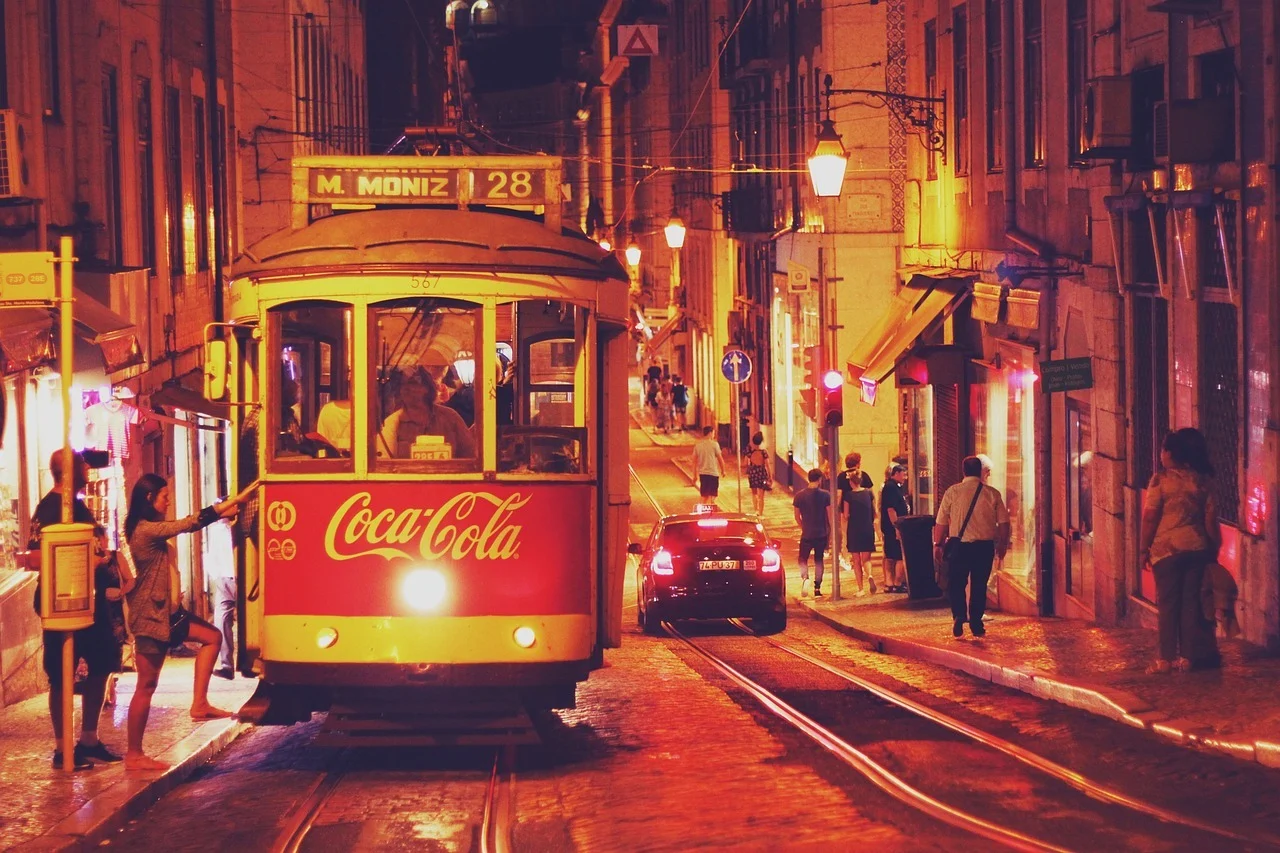
The limestone calçada portuguesa that gives Lisbon its character transforms into something approaching a skating rink when wet, particularly on steep gradients. Walking down a 15% slope near Alfama or Bairro Alto in smooth-soled shoes after a squall is asking for injury. High heels are functionally impossible. Leather-soled dress shoes are dangerous.
The most critical item on any Portugal packing list for a winter visit is waterproof boots with soft, gum-rubber lug soles. Brands like Blundstone, Timberland, or Merrell will serve you better than any fashion boot in your bag. Once you have proper footwear, the hills are navigable. Without it, you will spend Christmas Eve watching your step instead of watching the lights.
Pro Tip: Leave hard-shell suitcases at the hotel when exploring on foot. Wheeling luggage over cobblestones is deafening at 7 a.m. and announces your tourist status to every pickpocket on the route. A backpack changes everything.
There is another quirk most guides miss: Portuguese buildings — restaurants, museums, older Airbnbs — typically lack central heating or have poor insulation. It is common to feel warmer outside in December sunshine than inside a 200-year-old stone apartment. Layer accordingly: a merino wool base to manage humidity, a fleece or light down mid-layer you can strip off in crowded restaurants, and a dedicated rain shell as your outer layer. Skip the umbrella — the narrow streets create wind tunnels that will turn it inside-out within minutes.
What Christmas markets in Lisbon are worth your time?
Lisbon runs two flagship Christmas markets — Wonderland Lisboa at Parque Eduardo VII and the Rossio Christmas Market in the city center — plus a lights corridor that connects them on foot. They serve completely different audiences, and the right answer depends on whether you are traveling with children or looking for authentic Portuguese atmosphere.
Wonderland Lisboa at Parque Eduardo VII
Wonderland Lisboa is Lisbon’s largest Christmas event, running from late November through early January at Parque Eduardo VII. The Ferris wheel at its center offers one of the better elevated views of the city — a straight-line sightline down Avenida da Liberdade to the Tagus River, which reads particularly well at night when the boulevard lights form a glowing corridor below.
The ice rink uses an eco-friendly synthetic surface, not true ice, and the market stalls sell everything from churros to mulled wine. The atmosphere is entertainment-complex energy: loud, family-centric, mobbed with teenagers on weekend evenings. It is not intimate or particularly Portuguese in feeling. What it delivers reliably is spectacle and scale.
- Location: Parque Eduardo VII, Avenidas Novas (Metro: Parque or Marquês de Pombal)
- Cost: Free entry; individual rides and ice rink €5–8 ($5.50–$8.80)
- Best for: Families with children, couples who want the city panorama from the wheel
- Time needed: 2–3 hours
Pro Tip: Visit on a weekday afternoon before 5 p.m. when crowds are thinnest. Weekend evenings become difficult to navigate, and the lines for rides double.
Rossio Christmas Market
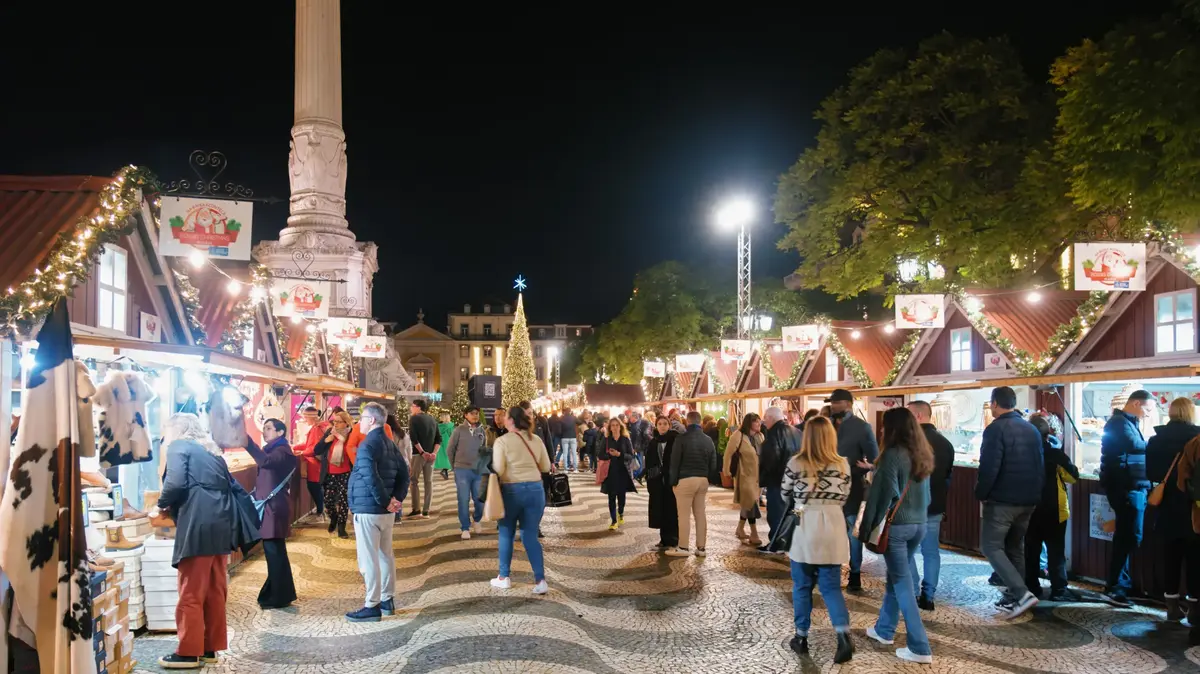
The Rossio market at Praça do Rossio runs from mid-November through approximately December 22 — note that it typically closes before Christmas Day itself. The wooden stalls carry cork products, ceramics, azulejo tiles, and regional foods — exactly the kind of handmade goods you find across authentic Portuguese markets. This is the right spot for ginjinha served from barrels and for buying gifts that were actually made in Portugal.
The advantage is that you are surrounded by locals doing their Christmas shopping alongside tourists, which produces a different energy from Wonderland’s manufactured spectacle. The disadvantage is location: Praça do Rossio sits at a major transport nexus, and evening crowds become suffocating. Pickpockets work the dense masses here — keep bags in front of you.
- Location: Praça do Rossio, Baixa (Metro: Rossio or Restauradores)
- Cost: Free entry; market purchases vary
- Best for: First-time visitors wanting authentic Portuguese crafts and local atmosphere
- Time needed: 1–2 hours
Christmas Lights Corridor
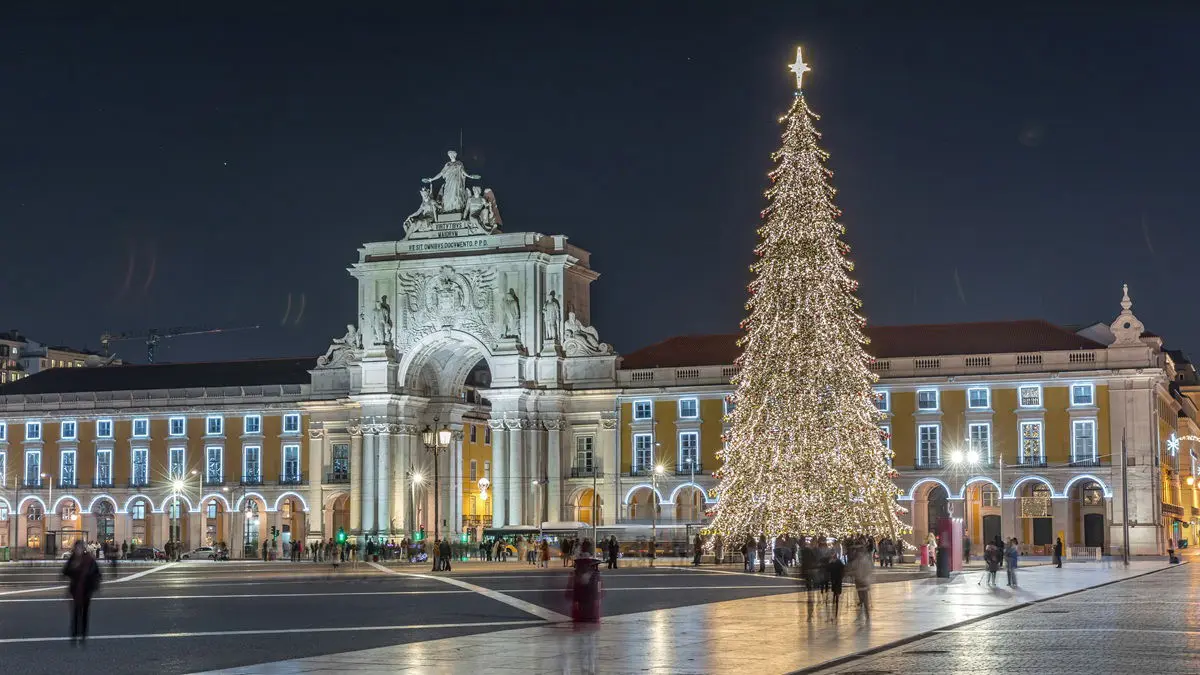
Lisbon’s lights route typically switches on in late November or early December. The path begins at Marquês de Pombal, flows down Avenida da Liberdade where high-end fashion brands install elaborate displays, cuts through the Baixa grid with archways spanning Rua Augusta, and ends at Praça do Comércio where Portugal’s largest Christmas tree stands at the riverside. The tree is walk-through — you can enter the base for photos.
Many visitors book Christmas lights tours on yellow buses or tuk-tuk tours in Lisbon. Skip them. December traffic in Baixa moves slower than walking, and you will sit in gridlock while pedestrians outpace your vehicle. Walking the full route takes 45–60 minutes at a relaxed pace, costs nothing, and lets you duck into cafés.
What cultural events happen during Christmas in Lisbon?
Beyond markets, Lisbon offers midnight Mass at churches dating to the 1500s and a series of free baroque choral concerts in historically significant venues. These are the events that put distance between Christmas in Lisbon and Christmas anywhere else in Europe, and both are grounded in Portuguese culture stretching back centuries. Neither is widely advertised in English.
Missa do Galo at Sé de Lisboa
Midnight Mass (Missa do Galo) takes place at Sé de Lisboa and Igreja de São Roque on December 24, starting at midnight. These are genuine Catholic services attended by devoted parishioners, with traditional hymns and incense ceremonies. The churches are cold stone without heating — bring your warmest layer.
If you want a seat rather than standing at the back, arrive by 10:30 p.m. On my last visit, the Sé was full by 11:15 p.m. and latecomers were standing in the aisles. The service runs over 90 minutes, entirely in Portuguese.
EGEAC Natal em Lisboa Concerts
EGEAC, Lisbon’s municipal cultural agency, organizes a series of free concerts in baroque churches throughout December. These typically take place at São Vicente de Fora and the National Pantheon, featuring conservatory-trained choirs and baroque ensembles in spaces purpose-built for acoustic performance.
The quality is several levels above anything happening at the markets. Arrive 30 minutes early — the local classical music crowd knows about these, and good seats fill quickly.
What do Portuguese people actually eat at Christmas?
Portuguese Christmas food is grounded in traditional Portuguese food staples that have not changed in generations, centered on bacalhau (salted cod) on Christmas Eve and goat or turkey the following day. To a first-time visitor, the centerpiece of fasting-era Catholic tradition can read as underwhelming — until the olive oil, potatoes, and cabbage are actually on the plate.
Consoada — the Christmas Eve dinner
The Christmas Eve dinner is called Consoada, built around bacalhau com todos (salted cod with everything). The flavor comes from the quality of Portuguese olive oil poured over boiled cod, cabbage, potatoes, carrots, and hard-boiled eggs. Roupa velha — “old clothes” — is what happens on Christmas morning with the leftovers: a stir-fry that many Portuguese argue is better than the original because the flavors have melded and the frying adds texture.
Christmas Day lunch pivots to cabrito assado (roast kid goat) or turkey. The goat is traditional, gamy, and polarizing — most American and British travelers find the turkey a safer starting point, but if you have eaten goat before and liked it, order the cabrito.
Bolo rei and the pastry wars
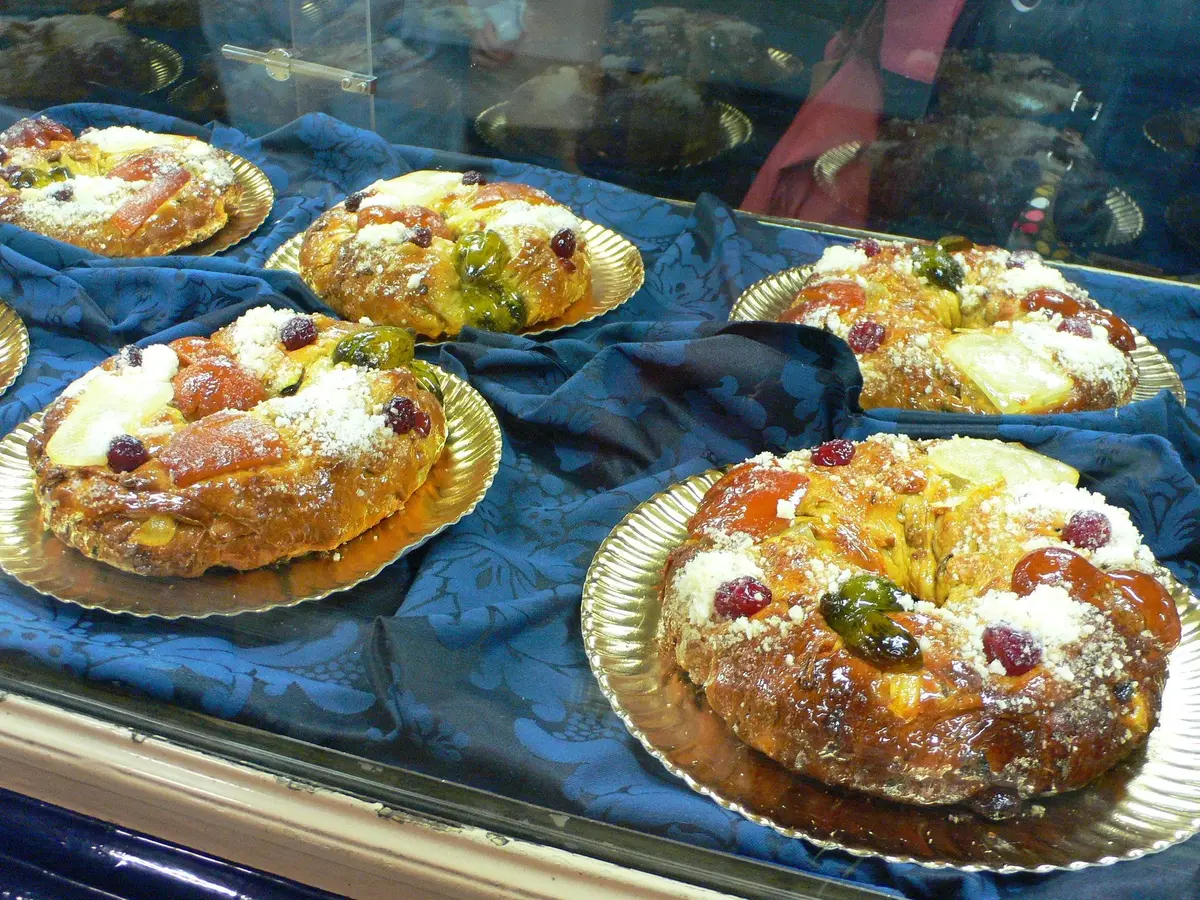
The Christmas pastry battle centers on bolo rei (king cake), a brioche ring loaded with crystallized fruits and nuts. The controversy is real: bolo rei divides Portuguese households. Those who dislike the crystallized fruit lean toward bolo rainha (queen cake), which replaces the fruit with almonds and walnuts.
Confeitaria Nacional at Praça da Figueira is the reference address — the shop has been operating since 1829 and introduced the bolo rei recipe from France in 1850. Lines snake out the door on December 23 and 24. If the queue is too long, Pastelaria Aloma and Garrett are both credible alternatives.
Ginjinha — the Christmas Eve ritual
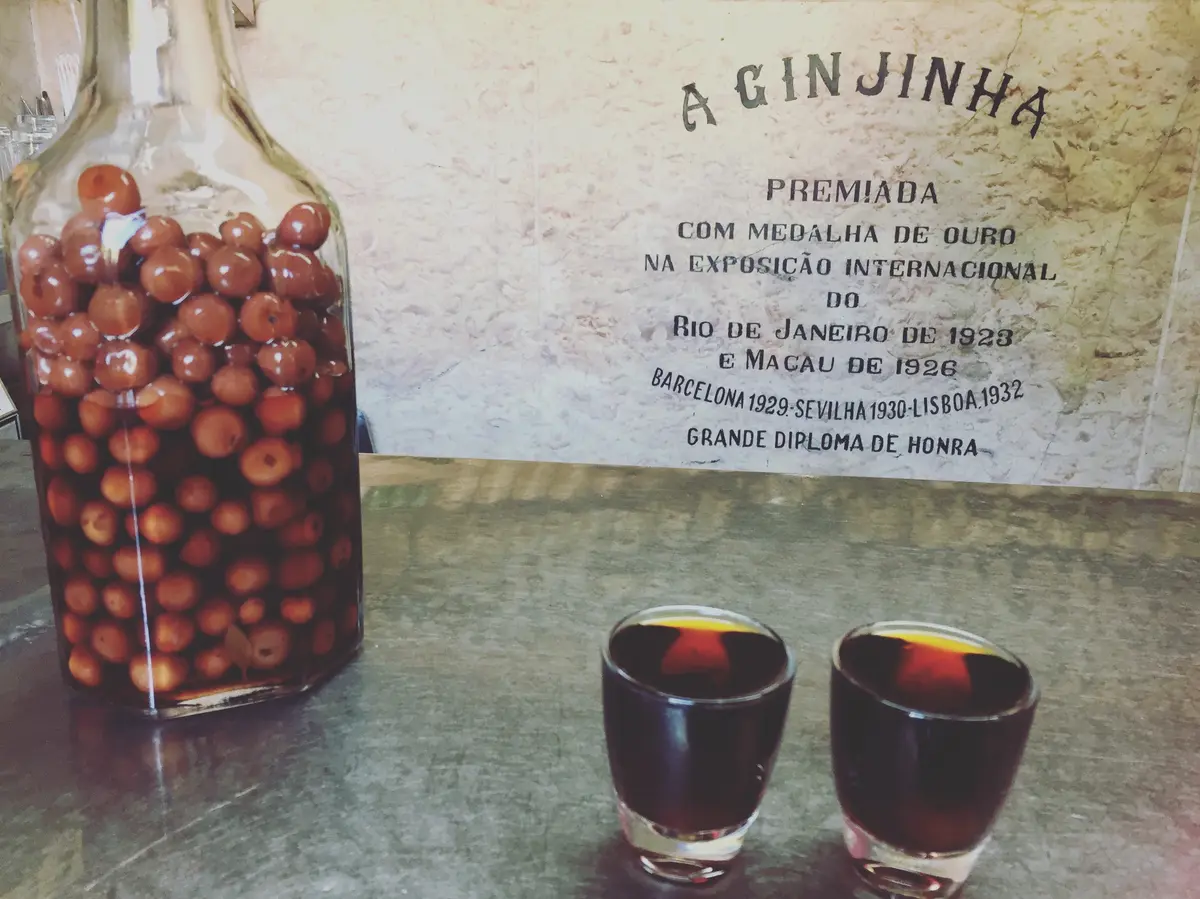
No Christmas in Lisbon is complete without ginjinha, the sour cherry liqueur served in tiny cups at standing-room bars with sticky floors and walls yellowed by decades of splashes. The ritual is specific: order “com elas” (with whole cherries in the cup) or “sem elas” (without). Most locals go “com.”
A Ginjinha in Rossio has been serving since 1840 and is the original reference point. Ginjinha Sem Rival sits around the corner with a slightly smoother blend. Ginjinha do Carmo serves the liqueur in edible chocolate cups — delicious, triple the price, and stripped of the bar’s authentic atmosphere.
Where can you eat on Christmas Day in Lisbon?
Most traditional tascas and family-run restaurants close on December 25 so owners can celebrate at home. This is the logistics challenge that catches travelers off guard, and solving it requires a decision well before you arrive in Lisbon.
Hotel restaurants (high end)
Five-star hotels stay open because their clientele expects it. Flor-de-Lis at Epic Sana Marquês Hotel runs an extensive Christmas buffet covering both Portuguese traditions and international options — expect €80–120 ($88–132) per person. Varanda de Lisboa at Hotel Mundial offers panoramic views of São Jorge Castle alongside a traditional Portuguese buffet for roughly €60–80 ($66–88).
The pros are guaranteed availability and refined cuisine. The cons are the prices and an atmosphere that feels more international hotel than Lisbon neighborhood.
International and ethnic cuisine (budget to mid-range)
Communities that do not observe Christmas keep their restaurants open. The neighborhoods around Anjos and Martim Moniz have high concentrations of Nepalese and Indian restaurants — Lumbini and Gundappa among them — which often operate normal hours on December 25, serving curries for €10–20 ($11–22) per person. Chinese restaurants, particularly Sichuan-focused spots in Parque das Nações, frequently open for both lunch and dinner.
The booking rule
Regardless of which direction you go, reservations for Christmas Day must be secured well in advance — the handful of restaurants that do open fill weeks before December 25. Use TheFork to browse options, but call the restaurant directly to confirm holiday hours. Online systems do not always reflect accurate Christmas schedules.
Pro Tip: When you call, ask specifically: “Are you open for lunch and dinner on December 25?” Not just “Are you open on Christmas?” Some restaurants open for one service only, and showing up for the wrong one leaves you stranded.
Which Lisbon neighborhood should you stay in for Christmas?
The proximity question at Christmas is more important than at any other time of year. The dead zone from December 24–26 makes getting around far harder than on a normal December trip. The right neighborhood depends almost entirely on whether you prioritize access to the markets or quality of atmosphere.
Our full guide to where to stay in Lisbon covers all accommodation options in detail, but three neighborhoods stand out for Christmas specifically.
Baixa and Chiado — best access to everything
Baixa is Lisbon’s downtown grid, rebuilt after the 1755 earthquake in rational straight lines. Chiado is the adjacent cultural district. Staying here puts you within walking distance of Rossio market, the Rua Augusta lights, and three metro lines. You can reach virtually every major Christmas attraction within 20 minutes on foot, which matters enormously when transport is reduced.
The downsides are real: December crowds make Baixa claustrophobic, street noise is constant, and accommodation peaks in price. This is the right choice for first-time visitors who want sightseeing efficiency.
Alfama — most atmosphere, least convenience
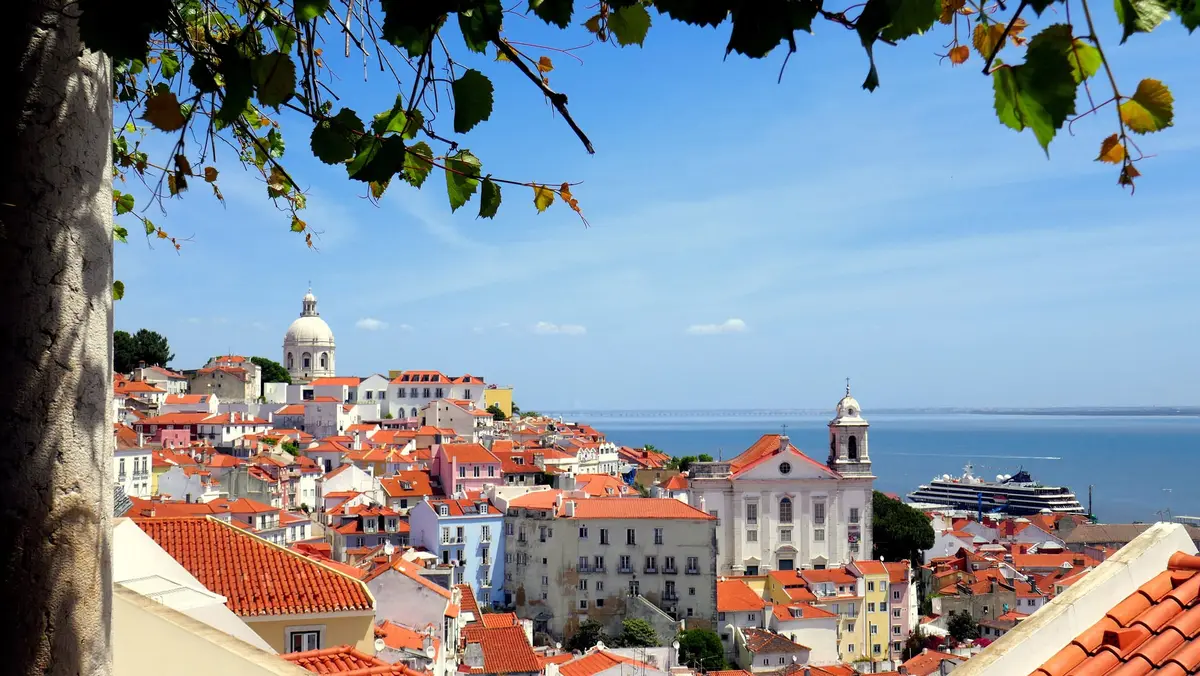
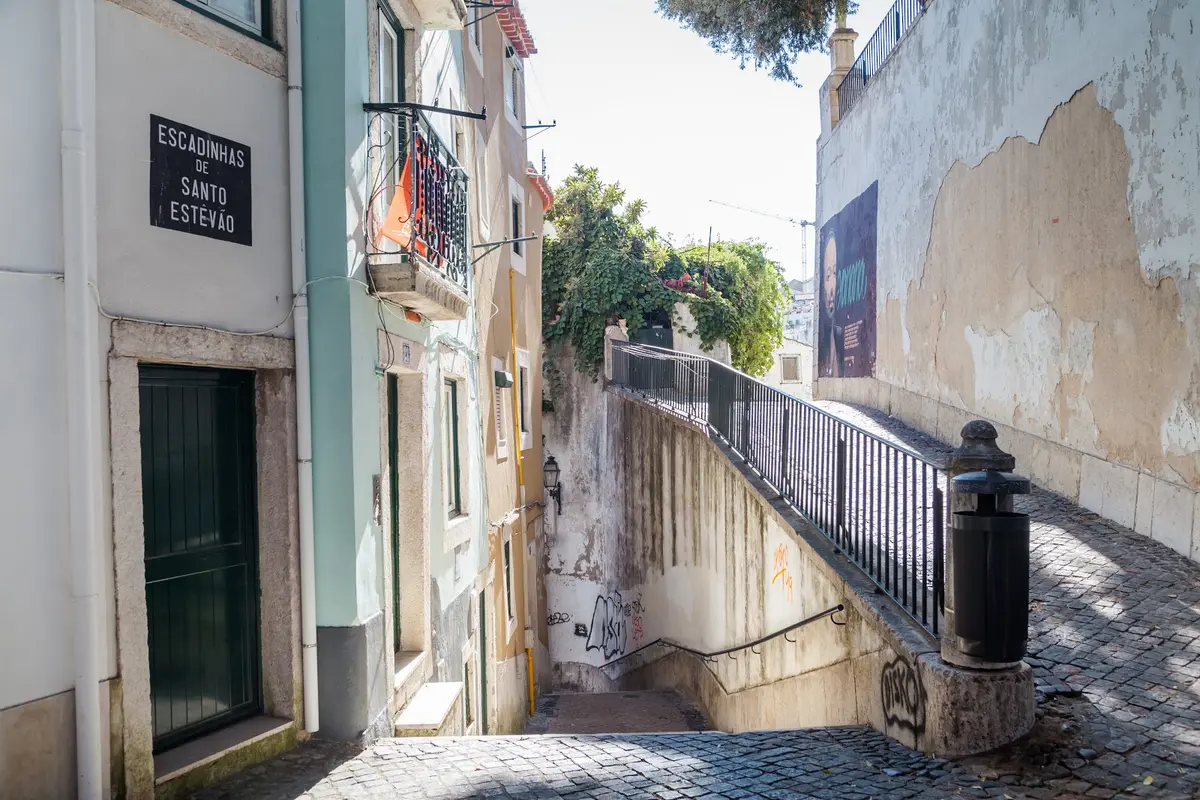
Alfama is Lisbon’s oldest surviving neighborhood, the medieval maze that escaped the earthquake. Its lanes climb steep hillsides, and authentic Fado drifts from tavern doorways after dark. Staying here gives you proximity to São Jorge Castle and an atmosphere that no other neighborhood replicates.
The practical challenges are significant: the steep lanes that provide the atmosphere become treacherous when wet, hauling luggage up 100 steps from the taxi drop-off is a real physical effort, and large supermarkets do not penetrate these streets. Alfama works best for couples who will trade convenience for character and pack light enough to carry their own bags.
Parque das Nações — the best base for families
Parque das Nações is Lisbon’s newest district, built for Expo 98. It is flat — genuinely flat, a rarity in this city — with Oriente Station, the Oceanário, and the Vasco da Gama shopping mall providing practical infrastructure for rainy days. Twenty minutes by metro from the center, it has none of the historic character but all of the convenience.
For anyone planning a Christmas visit with children, this is the strongest base. The Oceanário stays open on December 25, providing a genuine rescue plan for parents with restless kids on the quietest day of the year.
Should you take a day trip from Lisbon at Christmas?
Day trips from Lisbon over Christmas require careful sequencing. Two of the most popular nearby destinations are effectively unusable on December 25 itself, but both work well on December 26 — a regular working day in Portugal with noticeably lighter tourist crowds.
Sintra — go on December 26, not December 25
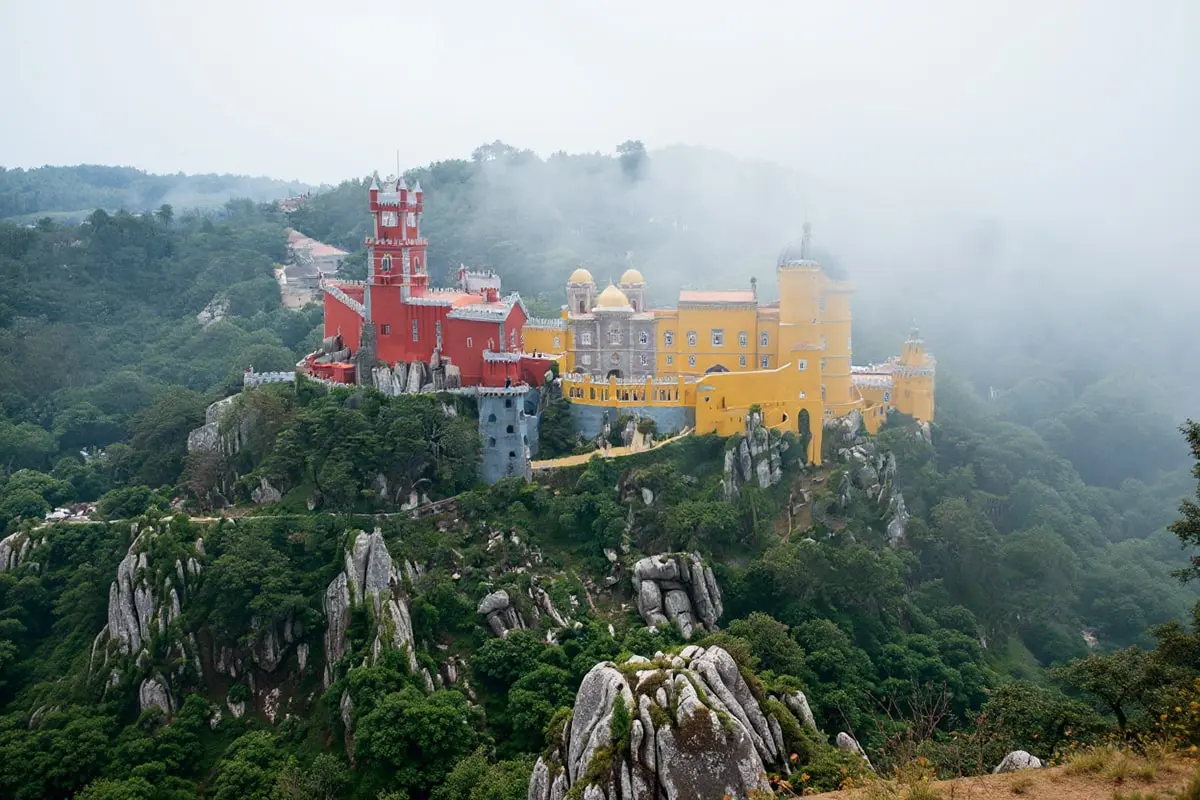
Sintra is Portugal’s mountain town 40 minutes by train from Rossio Station — our Sintra Portugal travel guide covers it in full, but the essential Christmas timing warning is to avoid December 25 and January 1. Visiting on either of those days is a mistake: the National Palace of Pena, Sintra National Palace, and the Moorish Castle all close. You will ride out, hike uphill, and arrive at locked gates.
December 26 is a regular working day — palaces open normal hours and the crowds that pack Sintra in summer are nowhere in evidence. Sintra runs cooler and foggier than Lisbon in December, which suits the Gothic architecture well. Pack a waterproof jacket regardless of the morning forecast.
Óbidos Vila Natal — also closed December 25
Óbidos is a medieval walled town about an hour north of Lisbon that transforms into a dedicated Christmas Village (Vila Natal) each December. The entire historic center becomes a winter theme park with shows, rides, artisan markets, and ginjinha served in chocolate cups.
Important: Vila Natal is closed on December 25 and January 1. This catches many travelers off guard who plan it as the Christmas Day activity. Schedule it for any other day in December.
Buses from Rodoviária do Oeste depart from Lisbon’s Campo Grande station (Metro: Campo Grande, Green or Yellow Line) approximately every hour. The journey takes one hour with a single stop in Bombarral.
- Cost: €10 ($11) adults, €8 ($9) children (entry to Vila Natal); individual activities cost extra
- Best for: Families with children under 12; couples who enjoy medieval settings
- Time needed: Half day minimum, full day if combining with the town itself
Pro Tip: Visit on a weekday between 11 a.m. and 2 p.m. for shorter queues on rides and ice skating. Weekend afternoons become genuinely crowded.
Cascais — the Christmas Day alternative
Cascais is the wealthy beach town 30 minutes west of Lisbon by train from Cais do Sodré Station. The Cascais Christmas Village operates in Marechal Carmona Park with markets and lights, smaller in scale than Óbidos but without the same crowds.
The real benefit over Christmas: if Lisbon’s Christmas Day restaurants are fully booked, Cascais often has availability because fewer travelers think to look there. The train runs on a reduced Christmas Day schedule — check departure times before going.
What do you do in Lisbon when it rains in December?
December in Lisbon means rain, sometimes for days at a stretch — a reality familiar to anyone traveling during winter in Portugal. The backup plan matters as much as the main itinerary. Most major museums close on December 25, so verify hours before leaving your hotel on any holiday day.
On other rainy days in December, the Calouste Gulbenkian Museum houses one of Europe’s finest private art collections in a serene modernist building. The National Tile Museum showcases azulejo tiles — Portugal’s distinctive ceramic tile art — in a former convent. The Coach Museum in Belém displays gilded royal carriages in a massive indoor hall.
Oceanário de Lisboa — the Christmas Day rescue plan
The Oceanário is Lisbon’s best Christmas Day contingency. It opens on December 25 from 11 a.m. to 8 p.m. (last entry 7 p.m.) when almost everything else in the city is shuttered. The aquarium is built around a massive central ocean tank — 5,000 cubic meters containing sharks, rays, sunfish, and more than 100 species — with additional themed zones recreating North Atlantic, Antarctic, Pacific, and Indian Ocean ecosystems. Plan two to three hours inside comfortably.
- Location: Esplanada Dom Carlos I, Parque das Nações (Metro: Oriente, Red Line — 10-minute walk)
- Cost: Adults €25 ($27.50); children (3–12) €15 ($16.50); under 3 free
- Best for: Families, anyone needing a Christmas Day rescue plan, rainy-day alternative
- Time needed: 2–3 hours
The Tram 28 mistake and the Carris Museum fix
When it rains, tourists crowd Tram 28 assuming it functions as a covered sightseeing tour. It becomes a steam-filled sardine can with wet passengers pressed against wet glass and pickpockets working the crowd. The ride that was supposed to be scenic turns into an endurance test.
The alternative is the Carris Museum (Museu da Carris). It is indoors, uncrowded, and contains vintage trams you can actually board and explore without being elbowed. The engineering behind Lisbon’s funicular network becomes genuinely interesting when you can walk through the vehicles rather than watch them pass.
- Location: R. 1º de Maio 101, Alcântara
- Cost: Adults €3 ($3.30); reduced admission available
- Best for: History enthusiasts, anyone fleeing Tram 28 crowds
- Time needed: 1–2 hours
On non-holiday rainy days, Colombo and Vasco da Gama — Lisbon’s mega-malls — provide dry territory for walking, eating at food courts, and shopping. Their cinemas frequently run afternoon and evening showings through the holiday period.
The bottom line
TL;DR: Christmas in Lisbon delivers authentic Portuguese traditions, empty streets, and an atmosphere most tourists never find — but only if you plan for the December 24–26 transport shutdown, book Christmas Day dining weeks in advance, and pack waterproof boots with actual grip. Miss any one of those three and the dead zone becomes a real problem.
The one thing most guides will not tell you: December 26 is secretly the best day of the trip. Transport is back, Sintra is open and quiet, restaurants are full, and the Christmas lights are still running. If your schedule allows it, structure your visit so you have a full day on the 26th.
What surprised you most about Lisbon at Christmas — or what are you most nervous about before going?