Leaving Puerto Rico sounds simple until the federal agriculture checkpoint stops you cold. The USDA inspection Puerto Rico airport process is mandatory for every departing passenger at Luis Muñoz Marín International Airport, and skipping a single step can cost you your flight and up to $1,000 in fines. Whether you are wrapping up a short getaway or a full Puerto Rico 4 day itinerary, this guide walks you through the exact sequence, what you can and cannot pack, and how to clear the checkpoint without breaking a sweat.
What is the USDA inspection at Puerto Rico’s airport?
The USDA agriculture inspection is a federal checkpoint that every passenger must clear before checking luggage for a flight from Puerto Rico to the U.S. mainland. It screens bags for prohibited agricultural items — primarily fresh produce, plants, and pork products — that could introduce invasive pests or diseases to the continental United States.
The single most expensive mistake travelers make is walking past the agriculture scanner and heading straight to the airline counter. The USDA checkpoint always comes first. No sticker on your bag, no checked luggage. It is that simple.
What is the exact sequence at the USDA checkpoint?
The process at Luis Muñoz Marín International Airport follows a strict five-phase order. Doing these steps out of sequence — especially skipping Phase 1 — forces you to backtrack and risks missing your flight.
| Phase | What to do | Where | What goes wrong |
|---|---|---|---|
| Phase 1: Terminal entry | Locate the federal scanning station immediately upon entering. | Terminal A and Terminal B departures level — just inside the main sliding doors, upper level. | Bypassing the scanner and queuing at the airline counter. |
| Phase 2: Luggage scan | Place all checked bags on the x-ray belt and verbally declare any organic items. | Federal x-ray belt stations in the public concourse, before the airline counters. | Failure to declare restricted items triggers civil fines up to $1,000. |
| Phase 3: Visual verification | Confirm the agricultural specialist physically applies the clearance sticker to your bag. | At the end of the x-ray belt, before you walk away. | Leaving without the sticker attached. |
| Phase 4: Airline check-in | Proceed to your airline’s ticketing counter to check the cleared bag. | Airline desks deeper in the terminal (JetBlue in Terminal A; American, Delta, United, Frontier in Terminal B). | The gate agent will refuse your bag if the sticker is missing. |
| Phase 5: Security | Pass through standard TSA security with your carry-ons. | Concourse entry points to the sterile boarding area. | Secondary agricultural screening may confiscate undeclared carry-on items. |
Pro Tip: Tell your Uber or taxi driver which terminal your airline uses before you leave. JetBlue flies out of Terminal A. Most other U.S. carriers operate from Terminal B. Arriving at the correct door saves you from hauling heavy luggage across the departures level.
Where are the USDA scanners located at SJU?
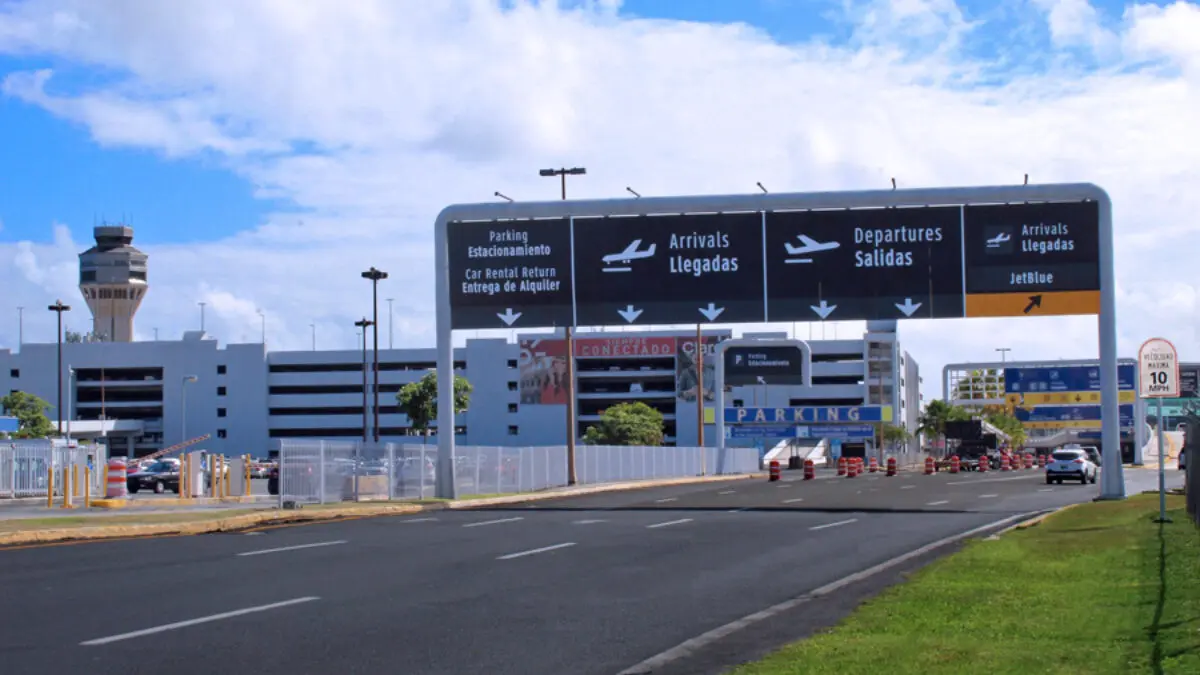
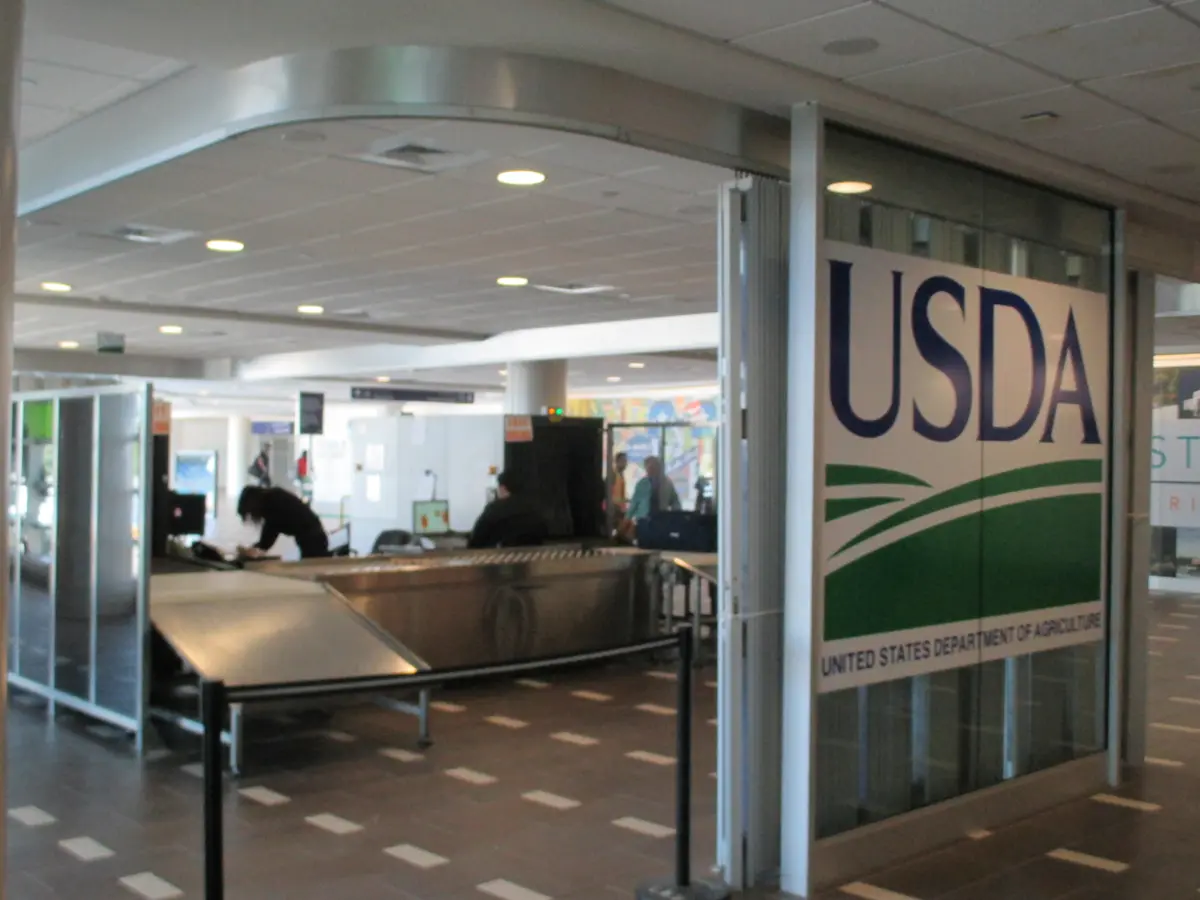
The USDA x-ray machines are positioned on the departures level (upper level) of Terminal A and Terminal B, directly inside the automatic sliding entrance doors. You will find them before you reach any airline check-in counter.
The moment you walk through the departures doors, you will hear the low hum of the scanner belt ahead. Confused travelers frequently halt near the entrance to feed their bags onto the stainless steel rollers. Factor this minor congestion into your timeline.
SJU has two terminals, and our San Juan Airport transfer guide covers the full terminal layout. Terminal A handles JetBlue flights (plus Air Canada and a few smaller carriers). Terminal B handles check-in for flights departing from Concourses B, C, and D — that covers American, Delta, United, Spirit, Frontier, Southwest, and most international carriers. Each terminal has its own USDA screening area, so use the one matching your airline.
How early should you arrive for the agriculture inspection?
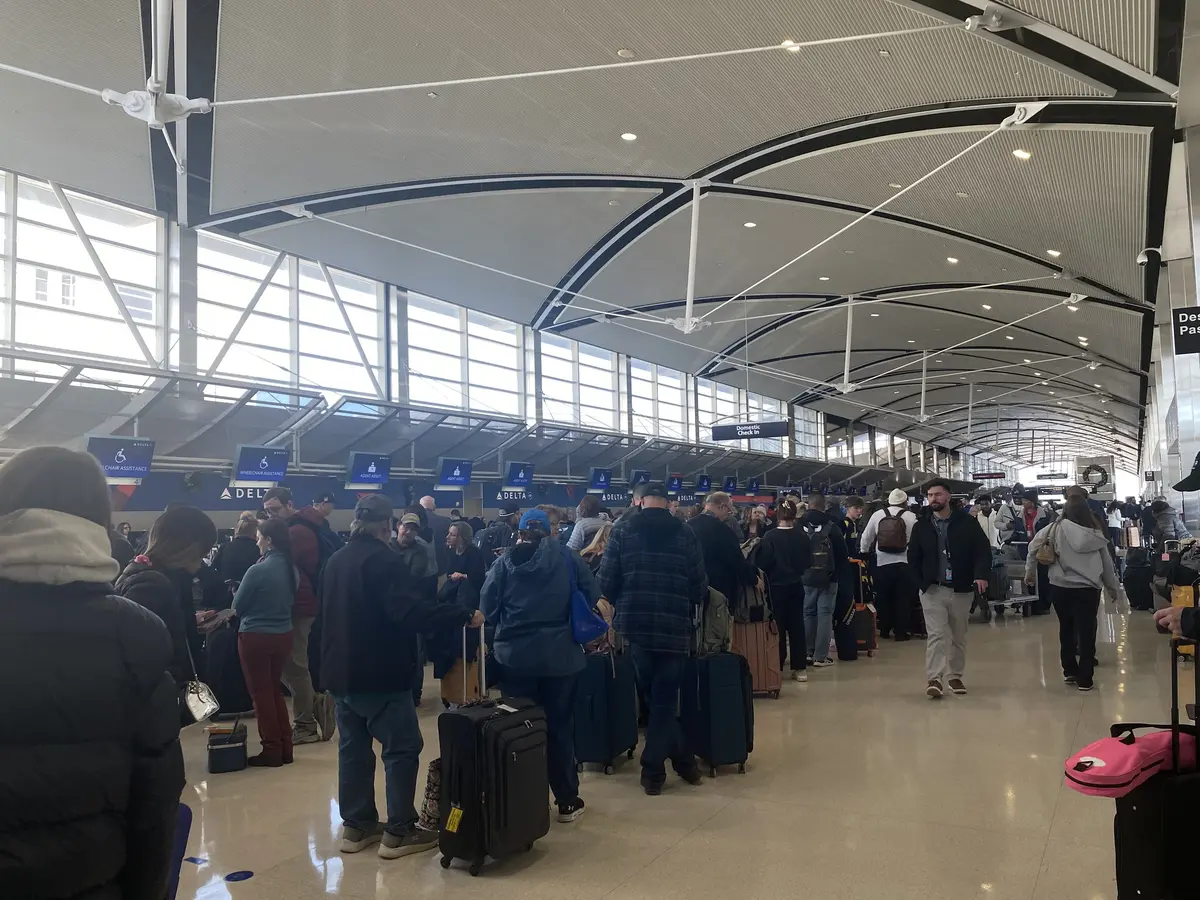
Whether you are getting around Puerto Rico by rental car or rideshare, arrive at least 2.5 hours before your flight to comfortably clear the agriculture checkpoint. Standard domestic flight guidance recommends 2 hours, but that calculation ignores the agriculture queue entirely.
Early morning departure banks are the worst for queue bottlenecks. Flights around 6:00 AM suffer because staffing levels at the federal checkpoint may be reduced. On my last departure on a Tuesday morning, the agriculture line took under 10 minutes — but I have seen it stretch past 30 minutes on a Saturday afternoon.
The agriculture line operates independently of standard TSA wait times, so your airline app’s security forecast is irrelevant here.
Pro Tip: If you are traveling during peak summer or holiday periods, budget 3 hours. A 45-minute agriculture queue followed by a slow airline check-in counter is a real scenario that has caused travelers to miss flights.
Does the clearance sticker actually matter?
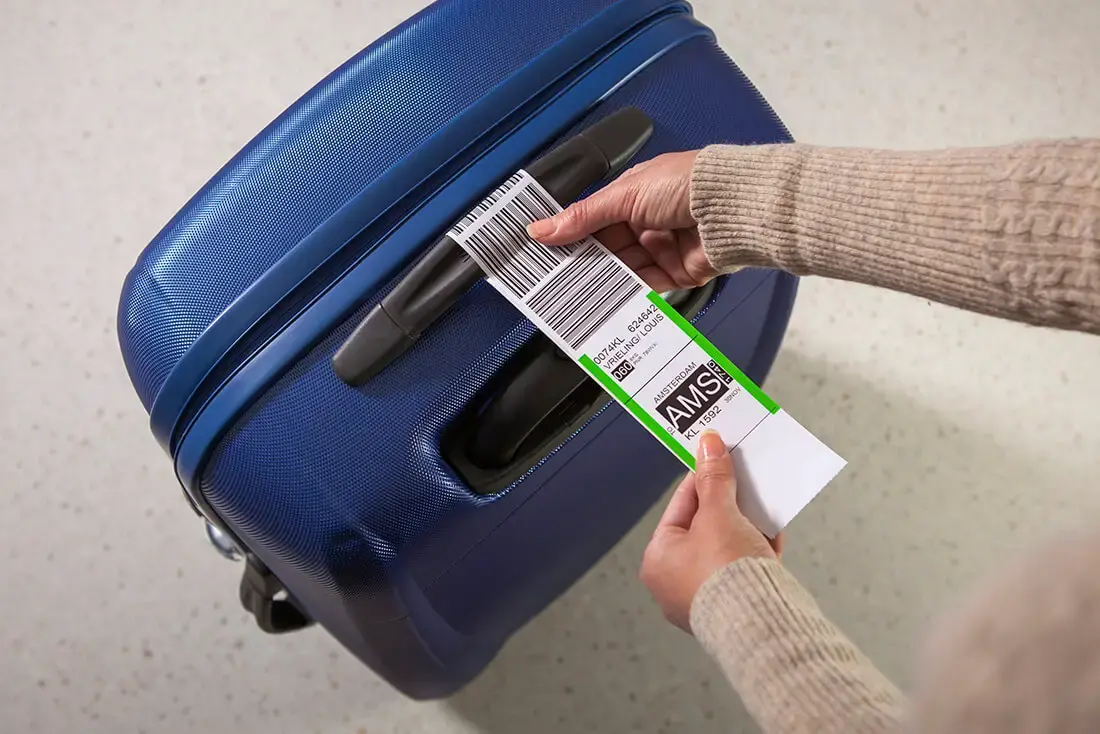
The USDA inspection produces one physical output: a brightly colored clearance sticker applied directly by a federal agricultural specialist to the exterior of your bag. They typically secure it around the handle or zipper pull.
This sticker is the item your airline agent is trained to look for from several yards away. Without it, they are federally prohibited from accepting your luggage for the cargo hold.
Do not leave the scanner area until you have personally confirmed the sticker is secured to your bag. Do not assume it was applied. Check it before you walk away. I have watched two travelers in the same line get turned back to the USDA station because the sticker fell off a slippery bag handle during the walk to the counter.
Do carry-on bags go through the USDA scanner too?
Officially, all checked and carry-on bags must pass through the federal agriculture scanner at the terminal entrance. That is the federal mandate.
In practice, enforcement for carry-on items at the front-door scanner is occasionally inconsistent. Some travelers with only a backpack are waved through or bypass the line entirely. This is not a policy exemption — it is a gap in enforcement.
Here is the part that catches people off guard: TSA security checkpoints serve as a secondary agricultural screening net, with federal agricultural personnel stationed nearby. Undeclared organic material found in carry-on bags at this stage will be confiscated without exception. Fines may also apply.
The travelers frantically unzipping duffel bags on the terminal floor to discard produce from Puerto Rico’s local markets or roadside stands are the ones who gambled on lax front-door enforcement and lost.
Pro Tip: Eat your local snacks before you reach the airport. Declare anything organic at the scanner. It takes 10 seconds and eliminates all risk.
What items are prohibited from leaving Puerto Rico?
The USDA prohibitions are extensive, but they follow a clear general rule: most fresh fruits and vegetables are prohibited unless they appear on a specific exceptions list. Pork products face the strictest restrictions of all due to the African swine fever threat in the Caribbean.
Items that will be confiscated
| Item | Why it is banned |
|---|---|
| Most fresh fruits not on the USDA exceptions list | Invasive pest quarantine |
| Most fresh vegetables not on the USDA exceptions list | Broad agricultural quarantine |
| Fresh pigeon peas | Specifically prohibited |
| Fresh sweet potatoes (tuber) | Specifically prohibited |
| All pork and pork products (fresh, cooked, processed) | African swine fever protocol — absolute prohibition |
| Plants in soil | Pest and disease prevention |
| Live insects | Quarantine regulation |
| Cactus and citrus plants (for planting) | Propagation restrictions |
The pork ban is the most aggressive restriction at the checkpoint. African swine fever has been detected in the Dominican Republic and Haiti, and the USDA maintains a foreign animal disease protection zone covering Puerto Rico and the U.S. Virgin Islands. The virus can survive in frozen, cooked, and processed pork — so pernil, pasteles, and even prosciutto are all prohibited. That means the famous lechón from Guavate Pork Highway cannot leave the island either.
Pro Tip: If it grew from the ground and has not been commercially processed, assume it cannot leave Puerto Rico unless you have checked the USDA’s specific exceptions list. Eat it, leave it at your hotel, or discard it before you enter the airport.
Items you can pack
Despite the broad prohibition, the USDA allows a surprisingly long list of specific fruits, vegetables, and other agricultural products. If you have been exploring the island’s cuisine, you will be glad to know that several popular ingredients are allowed:
| Item | Conditions |
|---|---|
| Fresh citrus (oranges, grapefruit, lemons, limes) | Must be free of pests and disease; subject to inspection |
| Fresh avocado | Clean, free of insects or visible disease |
| Fresh tomatoes | Subject to inspection |
| Pineapple, papaya, and mangosteen | Subject to inspection |
| Cantaloupe, honeydew, and watermelon | Subject to inspection |
| Strawberries | Subject to inspection |
| Coconut (with or without husk) | Subject to inspection |
| Onion, garlic, and chives | Clean, no soil |
| Peppers, eggplant, and squash | Subject to inspection |
| Commercially roasted or green coffee beans | No restrictions on quantity |
| Sealed commercial rum and spirits | Standard x-ray still applies |
| Dried herbs (bay leaves, oregano, thyme) | Commercially packaged preferred |
| Fresh-cut flowers (most varieties) | Subject to inspection |
| Plant cuttings without soil | Subject to inspection |
| Finished wood crafts and artificial trees | Generally exempt from biological quarantine |
If you fell in love with Puerto Rico coffee during your trip, you are in luck — commercially roasted and green beans clear inspection without any quantity restrictions. The full USDA list of allowed items includes over 100 specific fruits, vegetables, and herbs. For the complete list, check the USDA APHIS page for Puerto Rico travelers.
How much are the fines for non-compliance?
The USDA and Customs and Border Protection enforce civil penalties ranging from $100 to $1,000 per violation for failure to declare restricted agricultural items — a significant hit to any Puerto Rico travel budget. This is not a warning system.
Ignorance of the rules is never accepted as a defense at the scanner belt. If an agricultural specialist discovers an undeclared prohibited item in your bag, the fine process begins immediately. This applies whether you forgot the item was there or not.
One piece of undeclared fruit from a morning smoothie stop is a $100+ fine. A bag of roadside lechón packed as a souvenir is a significantly more serious problem — pork violations carry the heaviest scrutiny due to the African swine fever threat.
The USDA is clear on one point that works in your favor: as long as you declare all agricultural products you are carrying, you will not face penalties even if the inspector determines the items cannot enter the country. Declaration is free. Concealment is expensive.
Why does Puerto Rico have an agriculture inspection in the first place?
The checkpoint exists because Puerto Rico’s location in the Caribbean places it at a genuine frontline for agricultural biosecurity threats. The inspection prevents invasive pests, plant diseases, and animal illnesses from reaching the continental United States.
These agricultural threats could cause billions of dollars in damage to mainland farming. African swine fever has been confirmed in the Dominican Republic and Haiti, and over 70 countries worldwide have detected the virus in their domestic or wild pig populations. The USDA established a foreign animal disease protection zone covering Puerto Rico and the U.S. Virgin Islands to prevent the virus from reaching the mainland.
A single infected piece of meat transported through the airport and improperly discarded on the mainland represents a real threat to the U.S. pork industry. The inconvenience of the scanner line exists precisely because the alternative is catastrophically worse.
Before you head to the airport
TL;DR: Go to the USDA scanner first, get your sticker, then check your bags. Arrive 2.5 hours early. Eat your local snacks before the airport. Leave fresh produce behind unless it is on the USDA exceptions list, and double-check your Puerto Rico packing list before heading out. Declare everything organic — declaration is free, and fines start at $100 for concealment. The pork ban is absolute.
The travelers who miss flights or pay fines at the USDA inspection Puerto Rico airport checkpoint are almost always the ones who did not know these rules existed. Now you do.
What is the trickiest item you have had to decide whether to pack before leaving the island?