You have read the glowing reviews and seen the photos of cathedral-sized limestone chambers framing jungle valleys. What you have not read is why travelers show up at locked gates, get turned away for bringing a toddler, or leave a rental car stripped on a roadside shoulder. This unfiltered guide to the Puerto Rico caves fixes all of those blind spots, and it pairs well with a broader Puerto Rico travel guide if you are still building your itinerary.
What do you need to know before visiting Puerto Rico caves?
The major Puerto Rico caves sit in the Northern Karst Belt near Arecibo and Utuado, a 60 to 75-minute drive west of San Juan on PR-22. You will need a rental car, offline topographical maps, ankle-high hiking boots, an N95 respirator for bat-roost chambers, and small US cash bills for rural parking fees.
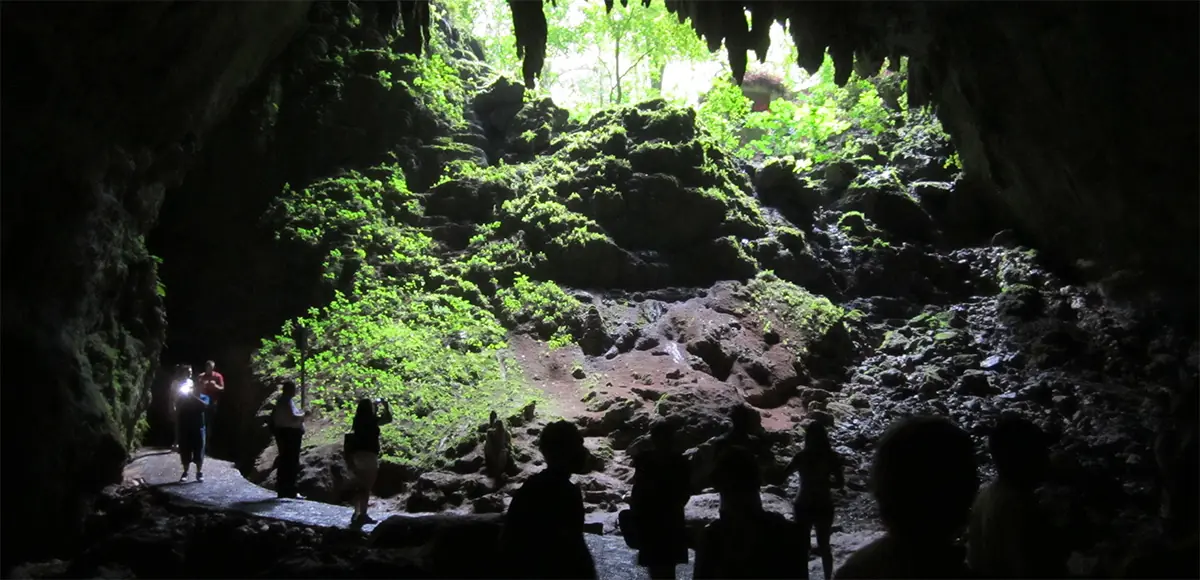
How do you get to the Northern Karst Belt?
Nearly every major cave system on the island sits within the Northern Karst Belt, a rugged corridor of dissolving limestone, sinkholes, and dense forest concentrated around Arecibo, Utuado, and Isabela. A rental car is non-negotiable because ride-share apps and public transit do not reach these areas. Budget for a mid-size sedan at minimum through a reputable outfit — our guide to renting a car in Puerto Rico breaks down insurance and ground-clearance trade-offs, though some access roads reward higher clearance.
From San Juan, take PR-22 westbound toward Arecibo. This is roughly 60 to 75 miles (97 to 120 km) and takes about a 60 to 75-minute drive under normal traffic. The moment you exit PR-22 onto interior routes like Route 10 toward Utuado, road conditions change dramatically.
Expect narrow mountain passes, blind switchbacks, steep drop-offs, and serious asphalt degradation. Download offline topographical maps before leaving the metro area. Dense forest canopy kills cellular signal entirely in many zones, and US cell service in Puerto Rico that depends on a live connection will fail you at the worst possible moment.
What biological hazards should cave visitors know about?
Two health risks define any serious Puerto Rico caves trip: histoplasmosis, a fungal respiratory infection from aerosolized bat-guano spores, and leptospirosis, a bacterial infection from water contaminated with animal urine. An N95 respirator and covered skin abrasions handle 95% of the exposure risk. This is the section most travel blogs skip. Do not ignore it.
Histoplasmosis spores thrive in soil enriched by bat and bird guano. Every footstep through a dry, unventilated chamber kicks the spores airborne. The risk is highest in heavily populated bat roosts, which is exactly the environment inside Cueva del Viento and the deeper sections of the Río Camuy network.
Pro Tip: Pack an N95 particulate respirator for any unventilated interior chamber. It weighs nothing and significantly reduces your risk of acute pulmonary illness.
Leptospirosis spreads through contact with water fouled by animal urine. Subterranean rivers and stagnant pools carry measurable risk, particularly after heavy rainfall. Avoid submerging open cuts in cave water and cover abrasions before wading.
What gear do you actually need?
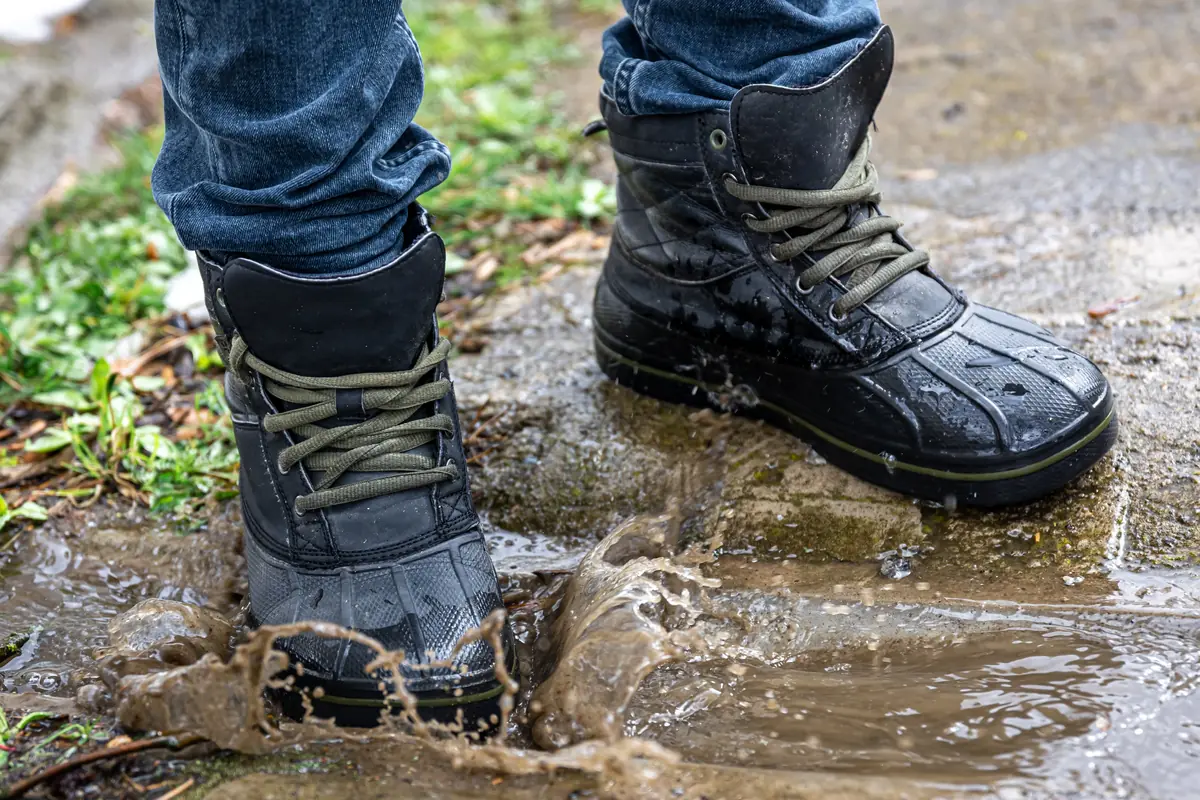
- Footwear: Ankle-high hiking boots with a heavy lug sole. Karst limestone coated in mud and guano is effectively frictionless, and a rubber-soled tennis shoe will go out from under you with no warning. Our complete Puerto Rico packing list covers the full kit.
- Illumination: A helmet-mounted headlamp plus two waterproof backups. Hand-held torches prevent three-point contact on slippery descents.
- Clothing: Synthetic moisture-wicking layers and knee pads. Subterranean temps drop sharply, and cotton becomes dangerously cold when wet.
- Respiratory: One N95 respirator per person for bat-roost chambers.
- Navigation: Downloaded offline maps. Cellular dead zones cover most of the karst interior.
How much do Puerto Rico cave tours cost?
The Puerto Rico caves exist in a confusing tangle of public reserves and private land. Limestone formations are often government-protected, but the only viable road in frequently crosses private property. Expect to pay between $0 and $130 depending on the site, and carry cash — see our broader Puerto Rico travel cost breakdown for how these fees stack against the rest of your trip.
- Río Camuy Cave Park: $15–$18 admission, guided trolley tour included, managed by DNER
- Cueva Ventana: $29 adults / $10 children ages 3–10 plus tax, guide strictly mandatory
- Cueva del Indio: $10 cash parking tariff, independent access, no guide required
- Tanamá River Caves: $75–$130 per expedition, certified guide strictly mandatory
- Cueva del Viento: Free, independent access inside Bosque Estatal de Guajataca
- Reserva Las Cabachuelas: Varies by tour operator, guide mandatory
Pro Tip: Carry physical US cash in small denominations for every cave visit outside of Cueva Ventana. Rural parking attendants and independent trail guides do not accept cards, Venmo, or any digital payment method.
Which Puerto Rico caves should you actually visit?
1. Río Camuy Cave Park — the geological heavyweight
The Parque Nacional de las Cavernas del Río Camuy spans a 300-acre (121-hectare) footprint across Camuy, Hatillo, and Lares. It encompasses over 220 documented caverns carved by the Río Camuy, the third-largest subterranean river on the planet.
The scale is genuinely disorienting. Inside Cueva Clara, the main public chamber, ceilings vault to 170 feet (52 m) above your head. Massive stalagmite formations crowd the edges, and the air carries a sharp scent from the 13 distinct bat species roosting in the upper darkness. The mechanized trolley descent ends at the Empalme Sinkhole, a vertiginous open pit where the river disappears into blackness.
This park has a history of sudden and prolonged closures after tropical weather events. Successive major hurricanes caused multi-year shutdowns, and intermittent unannounced closures due to flash flood risk remain a real pattern. Call the DNER administration at 787-898-3100 on the morning of your visit. Even moderate overnight rainfall can trigger an immediate lockdown. Build a full backup day into your itinerary.
- Location: PR-129, Camuy
- Cost: $15–$18 per adult
- Best for: First-time cave visitors, geology enthusiasts, families traveling Puerto Rico with kids (older children only)
- Time needed: 2.5 to 3 hours
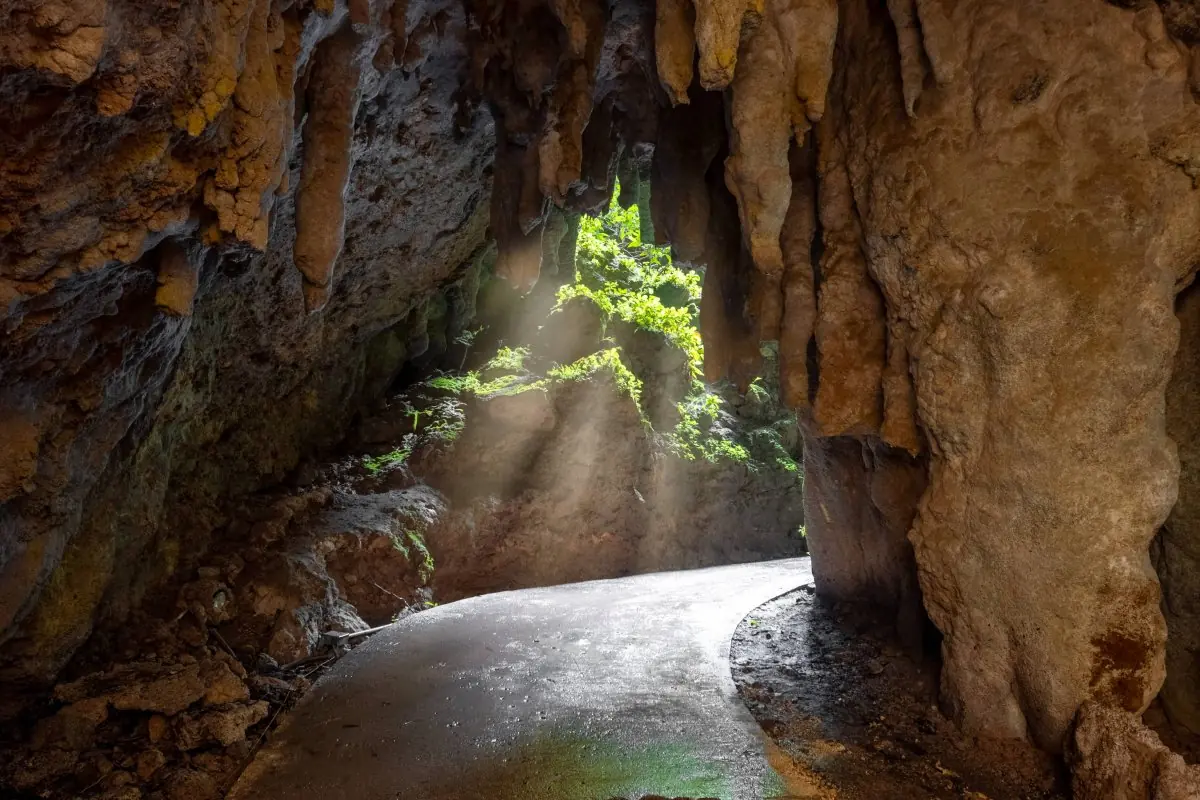
2. Cueva Ventana — the cliff-face window
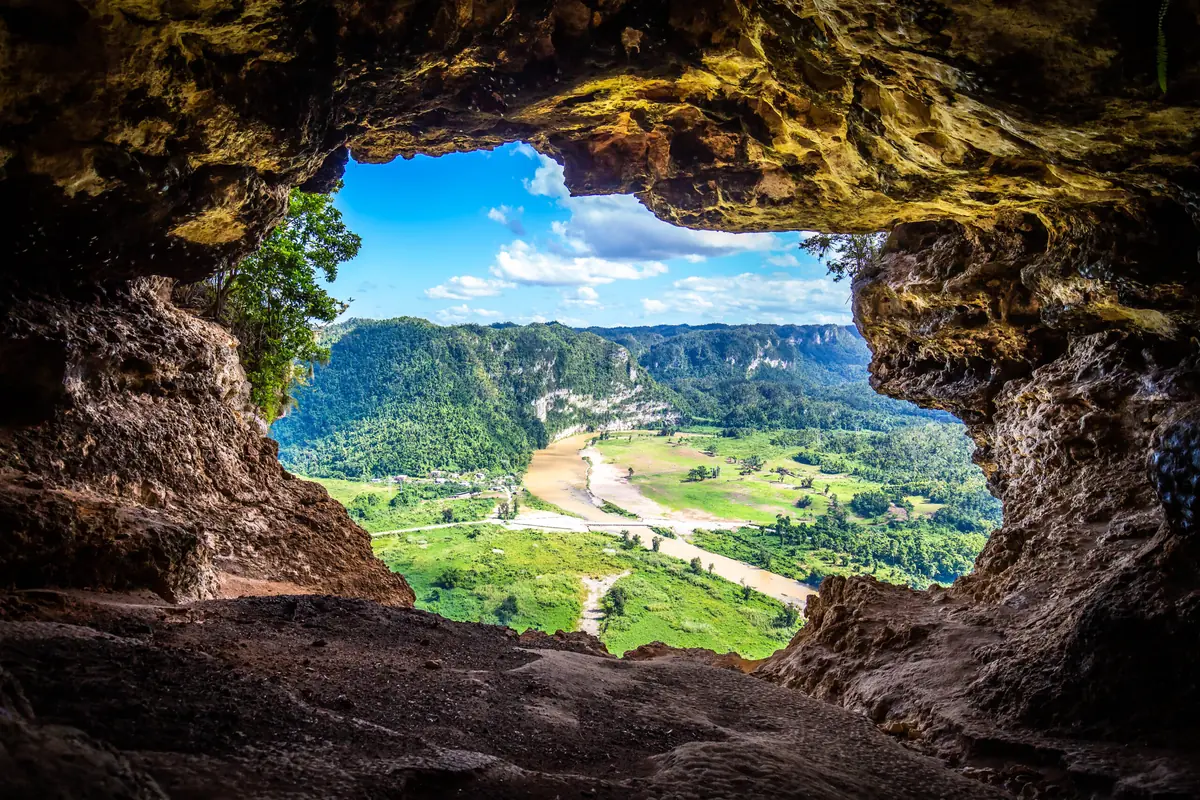
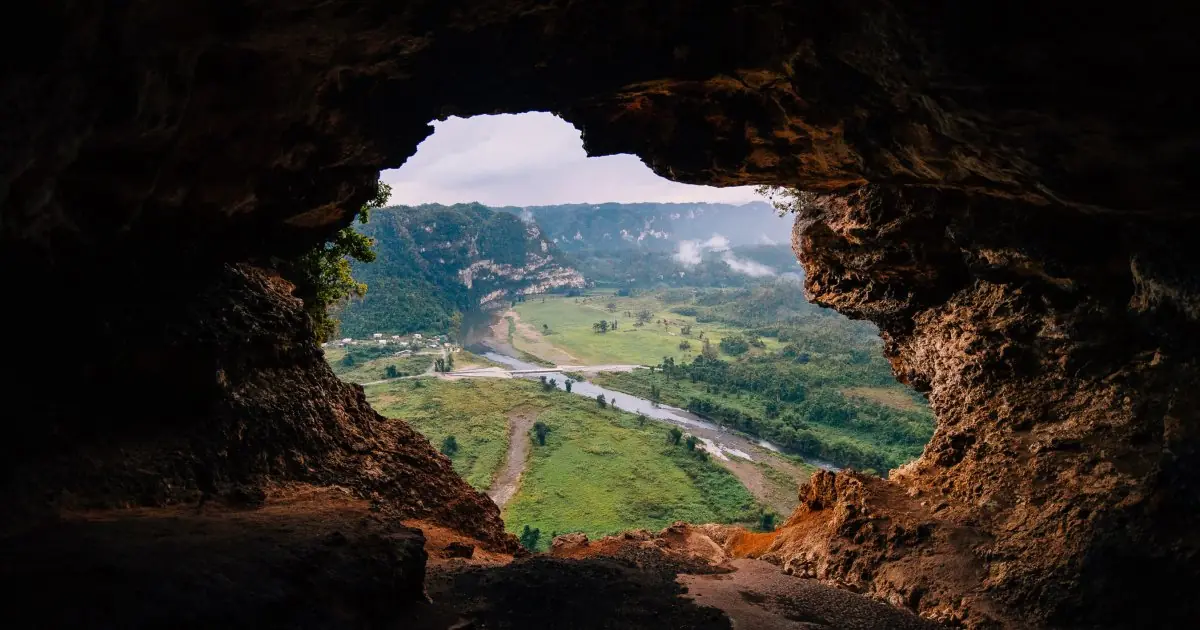
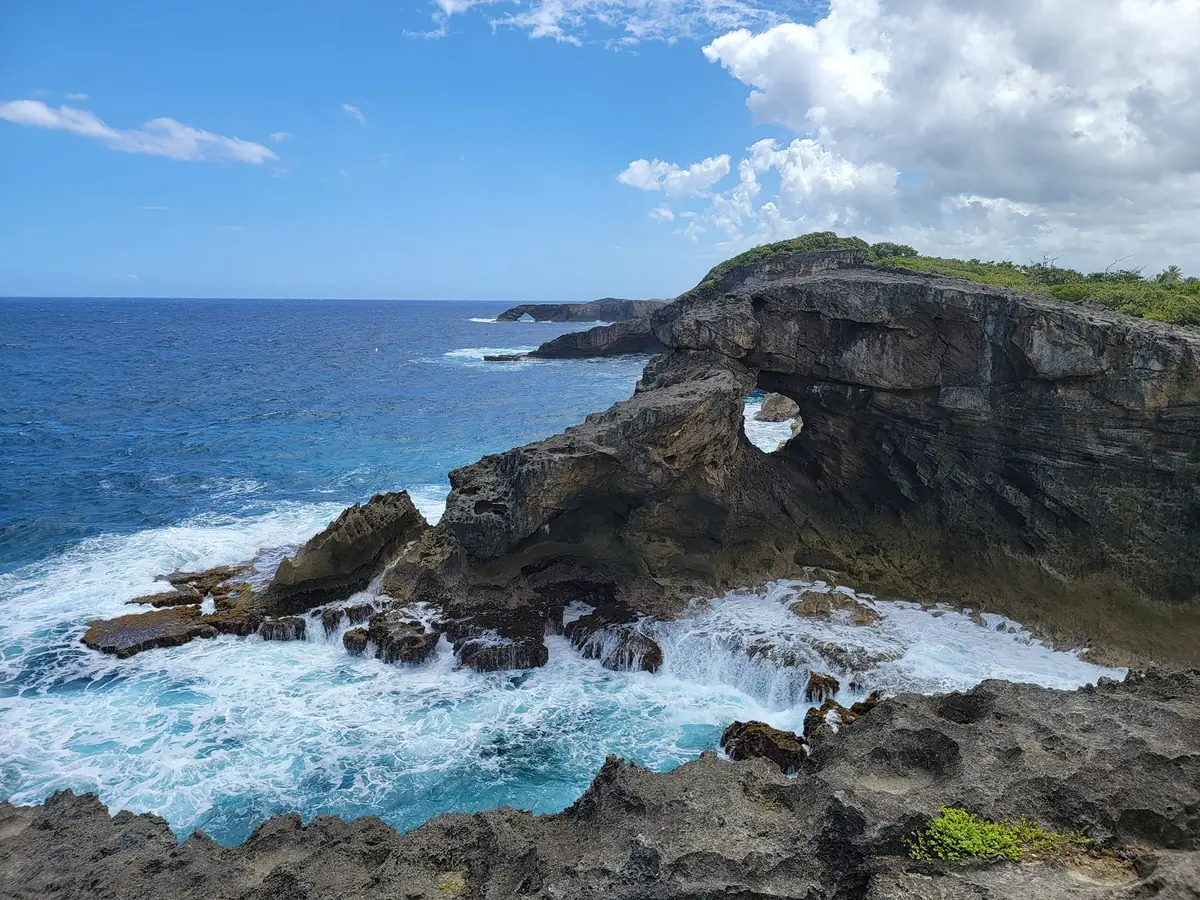
Perched on a sheer limestone cliff in the Hato Viejo sector of Arecibo, Cueva Ventana delivers one of the most photographed vistas in the Caribbean. A massive natural circular aperture in the rock face frames the entire Río Grande de Arecibo valley from a 700-foot (213-m) cliff.
Guides walk you through pitch-black interior chambers where they point out authentic pre-Columbian stone engravings and manage your proximity to the resident bat colony. The darkness in those inner passages is absolute, and the mandatory hard hat and flashlight are not theatrical props. The finale at the cliff’s edge earns this place its massive reputation.
The strict age policy is the number-one logistical trap here. Children under three are prohibited from entry due to insurance regulations. Do not drive an hour from San Juan with a toddler and assume you will figure it out at the gate. Book weekday morning slots online well in advance — weekend crowds are substantial and the experience suffers for it.
- Location: PR-10, KM 75, Hato Viejo, Arecibo
- Cost: $29 adults, $10 children ages 3–10 (plus tax)
- Best for: Couples, older families, history buffs seeking Taíno petroglyph access
- Time needed: 90 minutes including the 20-minute hike
3. Cueva del Indio — the Taíno coastal reserve
Cueva del Indio sits directly on the roaring Atlantic coast of Arecibo. This is a marine and nature reserve with a completely different personality from the jungle interior Puerto Rico caves. The jagged limestone corridors served as a ceremonial site for the indigenous Taíno civilization — a touchstone of Puerto Rico’s pre-Columbian history that you can actually touch.
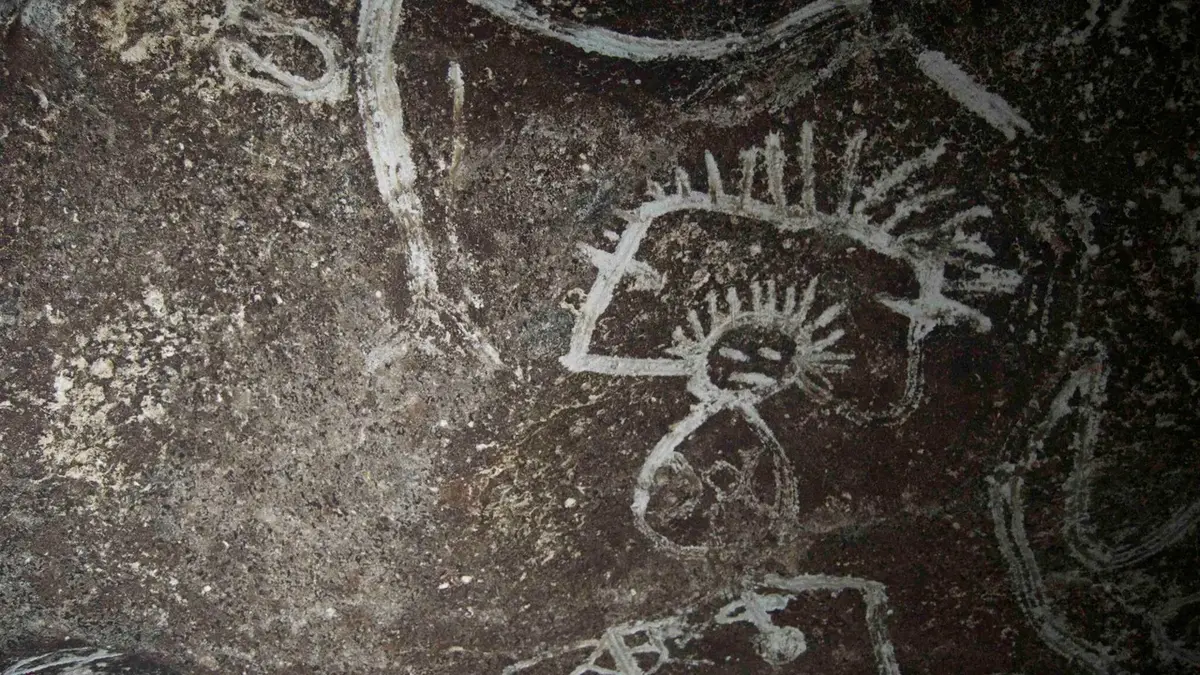
Over 80 pre-Columbian petroglyphs are etched into the cave walls, some dating back to the 13th century. The auditory experience alone sets this place apart from the silent inland forests. The Atlantic explodes against the basalt arches with a rhythmic roar that echoes through every passage. The Seven Arches are a sequence of natural rock bridges hammered into shape by the surf — visually dramatic and structurally wild, but the terrain is actively hostile.
The parking situation requires specific attention. The coastal reserve is technically public, but the only safe approach crosses private land where the landowner charges a $10-per-person cash parking fee. Budget travelers who skip this fee and park on adjacent public shoulders face a very high probability of targeted break-ins — a well-documented issue covered in our is Puerto Rico safe guide. Pay the fee. It is the only viable security measure for your rental vehicle.
Pro Tip: This site was used as a filming location for Pirates of the Caribbean because the geology is incredibly dramatic. Arrive before 9 a.m. to beat the tourist groups.
- Location: Arecibo Atlantic coast, PR-681
- Cost: $10 cash parking per person
- Best for: History seekers, photographers, active travelers comfortable with uneven terrain
- Time needed: 2 hours
What about serious spelunking and canyoning expeditions?
Tanamá River canyoning in Utuado
The Tanamá River in the isolated mountain municipality of Utuado has spent millions of years carving sheer vertical canyons and massive subterranean tunnels through the karst. This is not a tourist attraction in any conventional sense. It is an extreme physiological gauntlet that belongs on any shortlist of serious hiking in Puerto Rico.
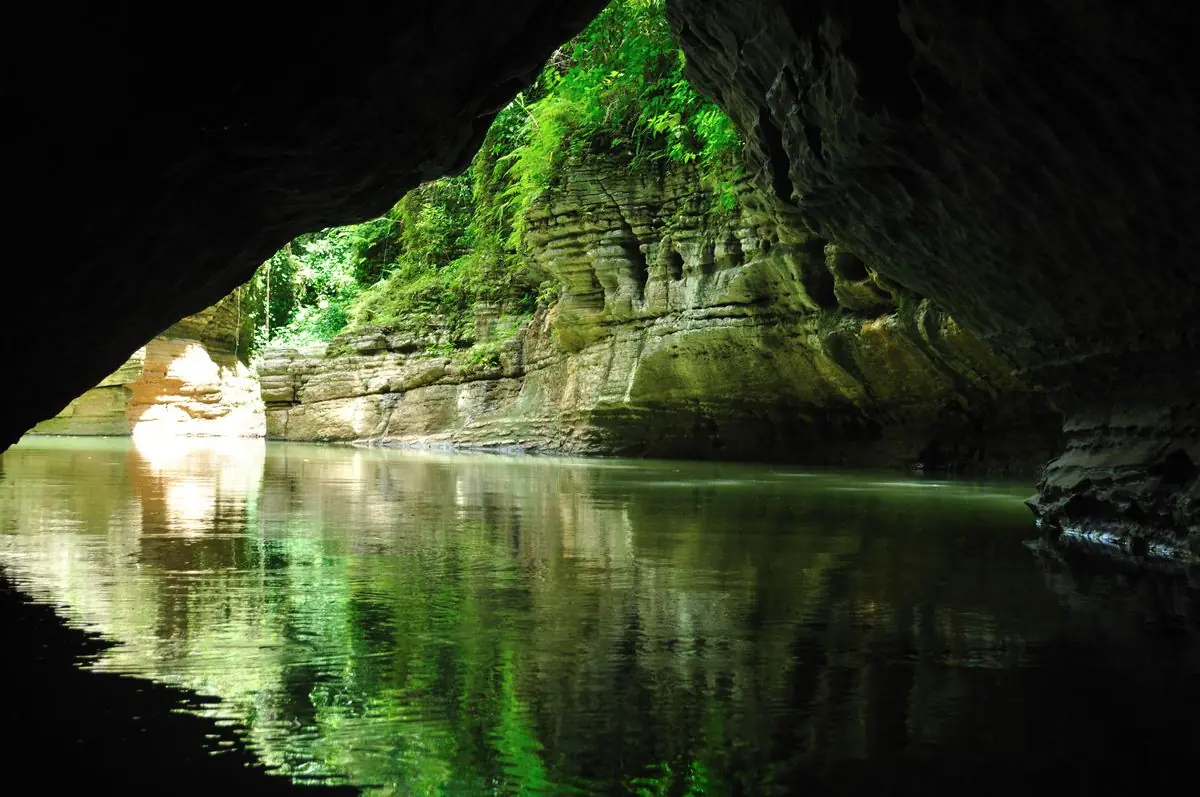
A standard licensed excursion runs 5 to 7 hours and involves intense forest trekking, scrambling over massive slippery river boulders, and plunging repeatedly into frigid spring-fed water. You will also navigate Portillo Cave, a 1,000-foot (300-m) subterranean river tunnel traversed entirely by kayak or inner tube in complete darkness. The instant your headlamp beam catches the stone ceiling just above the waterline, the scale of what you are doing registers physically.
Guides shout navigation instructions that echo and blur while cold water shocks your system. After the tunnel, Cueva del Arco opens into a massive open-air amphitheater with deep natural pools and waterfalls. The excursion typically ends with a 150-foot (46-m) suspension bridge crossing high above the roaring river. Independent access is not legal and not safe because flash floods in these canyons are unpredictable and fatal.
- Location: Utuado municipality, central interior
- Cost: $75–$130 per person (outfitter-arranged)
- Best for: Fit adults with no fear of enclosed spaces, dark water, or physical exertion
- Time needed: Full day, 5 to 7 hours in the field
Cueva del Viento — the purist’s unguided option
For travelers who want a completely uncommercialized subterranean experience, Cueva del Viento inside Bosque Estatal de Guajataca is the answer. Located in the northwestern municipality of Isabela — covered in our Aguadilla and Isabela travel guide — entry is free, with no guide, no paved path, no lighting, and no guardrails.
The approach is a 2.7-mile (4.3-km) round-trip hike along the Interpretative Trail from the KM 9 ranger station on Route 446. Cellular service disappears entirely under the forest canopy. The cave entrance requires a descent down a deteriorating wooden staircase with collapsed sections and algae-slicked boards. Past the threshold, the environment turns immediately hostile with zero artificial light and no pathways. Massive stalactite and stalagmite formations crowd every angle. The ammonia sharpness of thousands of roosting bats hits you before you hear a dense rustling overhead that becomes a screeching chorus when disturbed.
Behavioral rules are absolute. Use high-lumen primary and backup flashlights at all times, never direct your beam into the bat roost, and never touch the crystalline formations because skin oils destroy them permanently. Do not enter the deeper secondary tunnels — spatial disorientation in those passages is rapid and severe.
- Location: Bosque Estatal de Guajataca, Isabela (Route 446, KM 9)
- Cost: Free
- Best for: Experienced hikers, independent travelers, geology and wildlife enthusiasts
- Time needed: 3 to 4 hours including hike
Reserva Natural Las Cabachuelas in Morovis
In the central agricultural town of Morovis, a 1,000-acre (405-hectare) karst ecosystem protects a network of over 60 interconnected caves. This was designated a national preserve specifically to block the commercial exploitation that has transformed other cave systems into ticketed tourist products.
The cave walls hold authentic pre-Columbian rock art and petroglyphs used by the island’s indigenous populations for shelter and ceremonial practice. Mass bat colonies and rare avian species dominate the surrounding canopy. Access is strictly controlled, and independent wandering inside the chambers is illegal. Entry requires booking an educational ecotourism excursion with certified community-based interpreters. These guides decode the ancient visual language on the walls while simultaneously knowing exactly where the ceiling drops and where the bat density is highest.
- Location: Morovis, central Puerto Rico
- Cost: Varies by tour operator
- Best for: History enthusiasts, eco-conscious travelers, educational group trips
- Time needed: Half day
Are there coastal and marine caves in Puerto Rico?
Cuevas Convento and the Desecheo caves (maritime access)
For travelers arriving by yacht, catamaran, or sailboat, Puerto Rico offers a completely different exploration vector along its southern and western shorelines. Cuevas Convento is managed by the Para La Naturaleza conservation trust on the southern coast. It is heavily insulated from land-based tourism and far more accessible by sea than by road.
Take this navigational warning seriously before attempting to reach Cueva del Indio by dinghy from the north. Atlantic swells against those basalt arches are violent and unpredictable, and executing a landing requires serious small-boat seamanship. For certified SCUBA divers seeking submerged geological structures, the Desecheo Caves off the western coast and the Blue Hole at Shacks Beach in Isabela are the most demanding scuba diving in Puerto Rico sites on the island.
- Location: Southern coast (Cuevas Convento) and western coast (Desecheo)
- Cost: Varies by charter
- Best for: Sailors, SCUBA divers, yacht charter clients
- Time needed: Full-day charter
Cueva de Las Golondrinas and Survival Beach (low-intensity tidal caves)
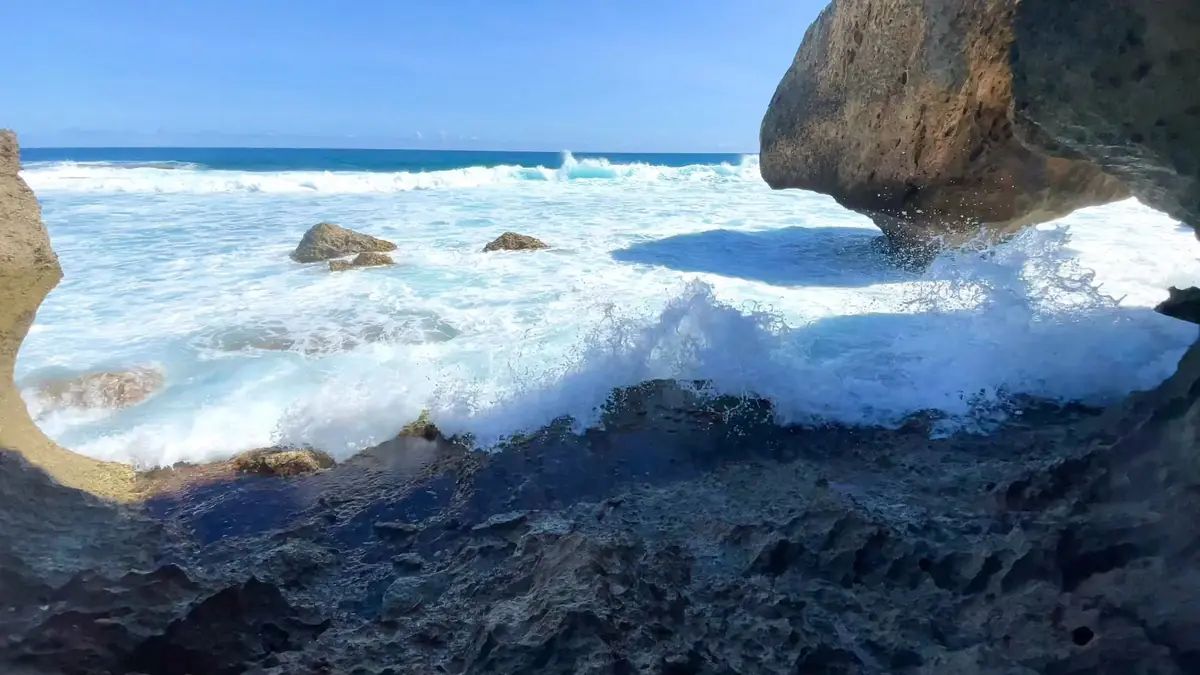
For travelers who want the dramatic coastal cave aesthetic without a five-hour river expedition, the northern and western coastlines deliver. Cueva de Las Golondrinas in Manatí and the similar formations at Playa El Pastillo in Isabela are wave-carved beach caves that require minimal physical effort to reach. Survival Beach in Aguadilla involves a 20 to 30-minute coastal hike to reach towering limestone sea cliffs and cavernous formations where the Caribbean surf crashes directly into the stone.
These coastal grottos are governed entirely by ocean tides, and entry is only safe at low tide. Lingering inside any coastal limestone cavity during an incoming tide creates an extreme risk of entrapment. Rising surges pin visitors against jagged interior walls with extraordinary speed. There is no leeway.
Pro Tip: Tidal apps like Tide Chart or the NOAA tide predictor provide free, accurate local tide schedules. Pull them the night before and identify your safe entry window.
- Location: Manatí (Golondrinas) and Aguadilla (Survival Beach)
- Cost: Free
- Best for: Casual explorers, beachgoers, families with older children
- Time needed: 1 to 2 hours
Where should you eat after exploring the Puerto Rico caves?
The cave systems are geographically isolated, with Arecibo and Utuado sitting well outside San Juan’s dense restaurant infrastructure. The post-hike hunger is real, so plan these Puerto Rico food stops before you go.
Salitre Mesón Costero sits directly on the Arecibo coastline along PR-681. If you just finished Cueva Ventana or Cueva del Indio and want air conditioning, ocean views, and fresh seafood prepared with care, this is your spot. Decompress here — you have earned it.
Gustitos Criollos along Highway 2 is the opposite experience. Expect fast, loud, enormous portions of roasted pork chop, rice, beans, and flawlessly fried tostones. If you emerged from the Tanamá River covered in mud and need immediate caloric recovery, this is the correct decision. Bocata Smokehouse & Restaurant in Islote offers proprietary smoked meats for a slightly longer post-cave detour. Tonny’s Pizza World provides a decades-old local alternative that the area’s regulars swear by.
Pro Tip: Carry snacks and water for any full-day interior expedition. There are no food vendors inside the Guajataca forest or along the Tanamá canyon routes.

Before you book
The Puerto Rico caves are among the most geographically and historically remarkable natural environments in the Caribbean. The Río Camuy river’s underground scale is genuinely humbling, the Taíno petroglyphs at Cueva del Indio carry centuries of weight, and the absolute darkness inside Cueva del Viento resets something fundamental in your brain.
The gap between a great trip and a wasted travel day always comes down to logistics. Call ahead to verify the park is open, carry cash in small bills, pack the right boots, and know the tide schedule before you step onto coastal limestone.
TL;DR: Rent a car, drive PR-22 west from San Juan, pay the $10 parking fee at Cueva del Indio, book Cueva Ventana in advance (no kids under 3), and call 787-898-3100 the morning of any Río Camuy visit. Bring cash, an N95, and real hiking boots.
Which of the Puerto Rico caves is calling you first — the cathedral scale of Río Camuy or the cliff-face window at Arecibo?