A good Porto travel guide saves you from the city’s two rookie mistakes: under-booking your days and overpaying on the riverfront. Portugal’s second city packs UNESCO-listed lanes, port cellars, and tile-covered churches into a walkable — if steeply hilly — core. Here’s how to plan two to four well-spent days, whether Porto is your whole trip or one stop on a wider Portugal trip.
Porto rewards two to four days. Fly into Francisco Sá Carneiro Airport and ride Metro Line E to the center for about $2.50, base yourself in Cedofeita or Baixa, and budget roughly $120 a day mid-range. Visit in May, June, or September for warm, drier weather and thinner crowds.
Is Porto Worth Visiting?
Yes — Porto is worth visiting. It pairs a UNESCO World Heritage riverfront, the world’s port-wine cellars, and some of Europe’s most detailed azulejo tilework with prices roughly 10–15% below Lisbon. It suits travelers who love walkable, atmospheric cities and good food; it’s a harder sell if you can’t manage steep cobbled hills.
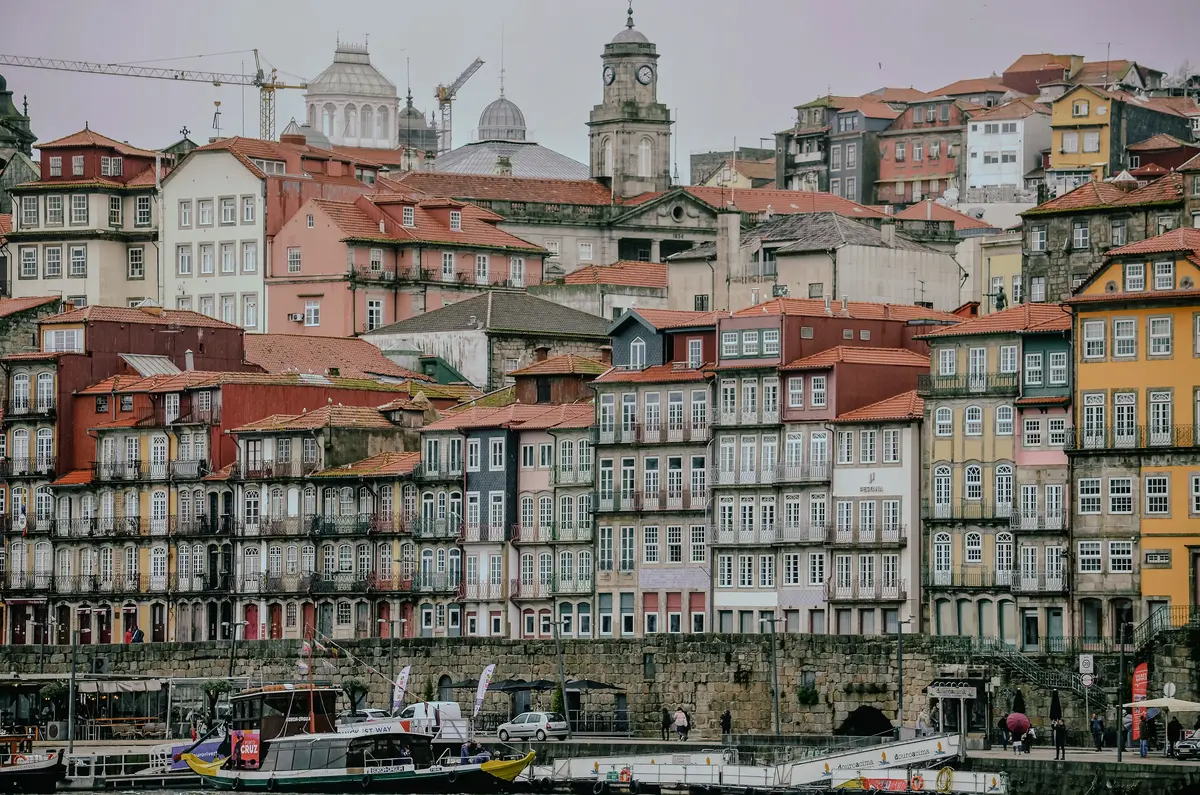
What you get is a city that feels lived-in rather than staged. The Ribeira’s tangle of medieval lanes drops down to the Douro, where rabelo boats that once hauled port barrels now bob for photos. Across the water, the lodges of Vila Nova de Gaia have been aging tawny and ruby for centuries.
This is also the city that gave Portugal its name and Henry the Navigator his birth. The food runs cheaper and heavier than Lisbon‘s, the crowds thin out beyond high summer, and the whole historic center is small enough to cross on foot in 30 minutes — if your knees are up for the gradient.
Pro Tip: Get to the Dom Luís I Bridge at dawn. Stand on the upper deck at 7 a.m. and you might share it with four other people and a thin mist over the Douro; by 11 it’s shoulder to shoulder.
Who should think twice? If steep, slick cobblestones are a real problem — bad knees, a stroller, limited mobility — Porto fights you. The hills are relentless and the polished calçada stone gets slippery in rain. Nightlife is lower-key than Lisbon too; this is a city for long dinners and river views, not megaclubs.
How Many Days Do You Need in Porto?
Most first-timers need two full days to see Porto’s core without rushing, and three if you want a port-cellar afternoon and a slower pace. Add a fourth or fifth day for a Douro Valley or Guimarães day trip. One day covers only the headline sights, and you’ll feel the sprint.
Here’s how the math works by trip length:
- One day: Ribeira, the Dom Luís I Bridge, São Bento, and one quick port tasting in Gaia. Doable, but you’ll be checking your watch.
- Two days: the full historic core plus a relaxed afternoon in the Gaia cellars. The sweet spot for most couples.
- Three days: add the museums (Serralves, Soares dos Reis), the Crystal Palace Gardens, and a tram out to Foz for the beach and sunset.
- Four to five days: keep one full day for the Douro Valley, Guimarães, or Aveiro.
Pro Tip: Don’t bolt a Douro Valley trip onto a two-day visit. The valley deserves a full day, and squeezing it in means you rush the city and the wine country both. Locals split the two — city first, region second.
How Do You Get to Porto and Get Around?
From Francisco Sá Carneiro Airport, Metro Line E (the purple line) reaches central Trindade in about 30 minutes for a Z4 fare of roughly $2.50, plus a one-time $0.65 for the reusable Andante card. Uber and Bolt run about $16–$27. In the center, you mostly walk — the core is compact but steeply hilly.
The airport metro is the obvious move. Trains on Line E run roughly every 20–30 minutes from early morning to past midnight, and the ride into town is straightforward once you’ve bought the Andante card from the machine.
Getting in from the airport, your options:
- Metro Line E: about 30 minutes to Trindade; Z4 fare around $2.50 plus a one-time $0.65 Andante card.
- Uber or Bolt: roughly $16–$27 depending on time and demand.
- Taxi: about $27–$38.
Two train stations trip people up:
- São Bento: central, beautiful, and the one you want for regional trains and the Douro line.
- Campanhã: the intercity hub for fast trains to Lisbon and beyond, a short metro or local-train hop east of the center.
Pro Tip: Don’t trust a flat-looking map. I once dragged a roller bag from São Bento up to my guesthouse — a “five-minute walk” turned into a sweaty fifteen on the cobbles and the grade. Now I ride one stop closer or call a Bolt for the last climb.
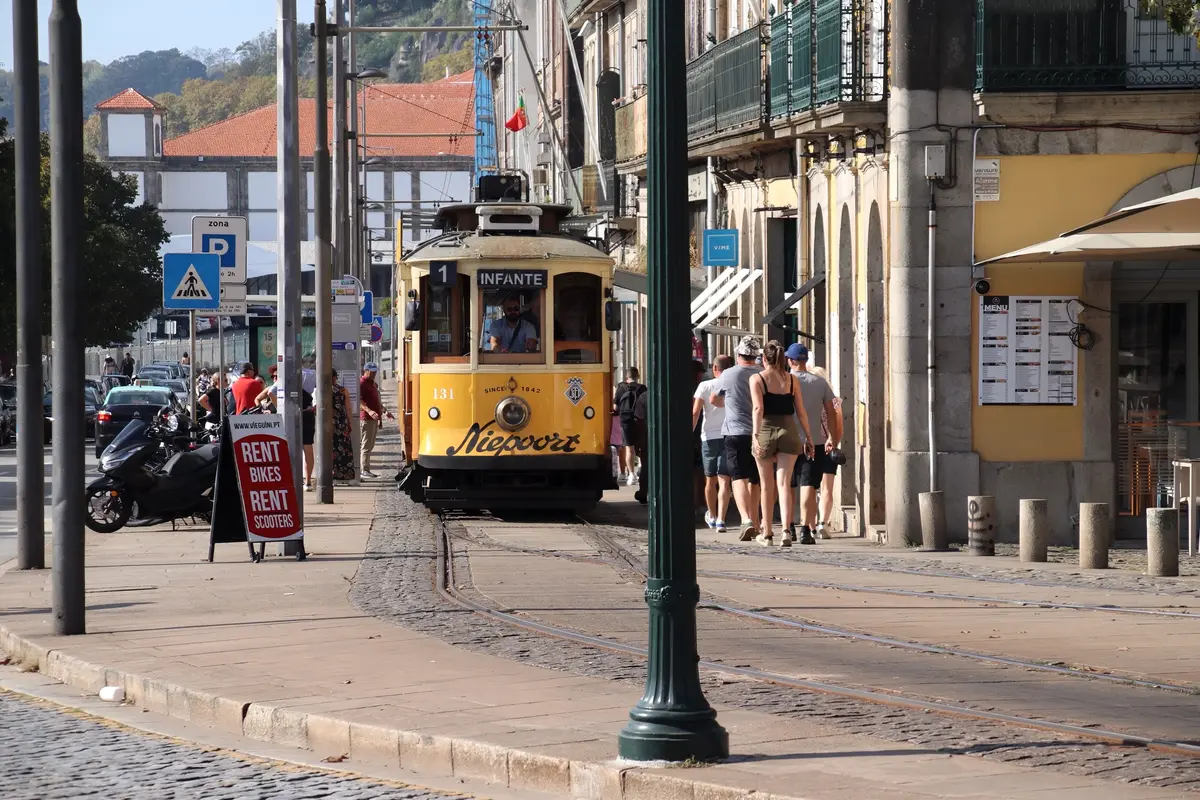
Inside the city, walking handles most of the center. The historic Tram 1 trundles along the river out to Foz for the coast, and the Funicular dos Guindais saves your legs on the steep haul between the riverfront and the Batalha area up top.
Where Should You Stay in Porto?
Where you base yourself shapes the trip: stay in Cedofeita or Baixa for the best mix of central and calm — both sit within a 10–15 minute walk of the main sights. Pick Ribeira for postcard river views (and crowds and noise), Vila Nova de Gaia for port cellars and skyline, or Foz do Douro for beaches if you don’t mind being out of the action.
Here’s the at-a-glance grid (mid-range hotel prices in USD, approximate):
| Neighborhood | Best for | The trade-off | Mid-range hotel |
|---|---|---|---|
| Cedofeita | Arty, local feel near galleries | A short uphill walk to the river | ~$105–$145 |
| Baixa | Downtown energy, restaurants, nightlife | Noisy on weekends | ~$110–$150 |
| Ribeira | Postcard river views | Crowds and late-night noise | ~$120–$160 |
| Vila Nova de Gaia | Port cellars and skyline views | You cross the bridge daily | ~$100–$140 |
| Bonfim | Best value, bohemian | Less polished, fewer sights | ~$85–$120 |
| Foz do Douro | Beaches and sea air | About 25 minutes from the center | ~$120–$170 |
My pick for a first trip is Cedofeita or Baixa — central enough to walk everywhere, calm enough to sleep. Rua de Miguel Bombarda in Cedofeita is the gallery row, with good coffee and a local crowd.
Ribeira is the one to be careful with. It photographs beautifully and you can roll out of bed onto the river, but those same lanes echo with revelers until the small hours, and prices carry a view premium.
Pro Tip: Staying in Gaia gets you cheaper rooms and the best skyline views — Porto’s whole tiled hill stacked across the river. The catch is you’ll cross the bridge every day, which is lovely once and a chore by day three if you’re hauling shopping bags.
What Are the Best Things to Do in Porto?
Porto’s essentials are the Ribeira riverfront and Dom Luís I Bridge, the Livraria Lello bookshop (an entry voucher around $11 that comes off the price of a book), the free azulejo hall at São Bento station, the 240-step climb up Clérigos Tower (about $11), and a port-cellar tasting across the river in Gaia.
Here are the sights that earn the hype, plus the practical catch most guides skip.
Dom Luís I Bridge and the Ribeira Riverfront
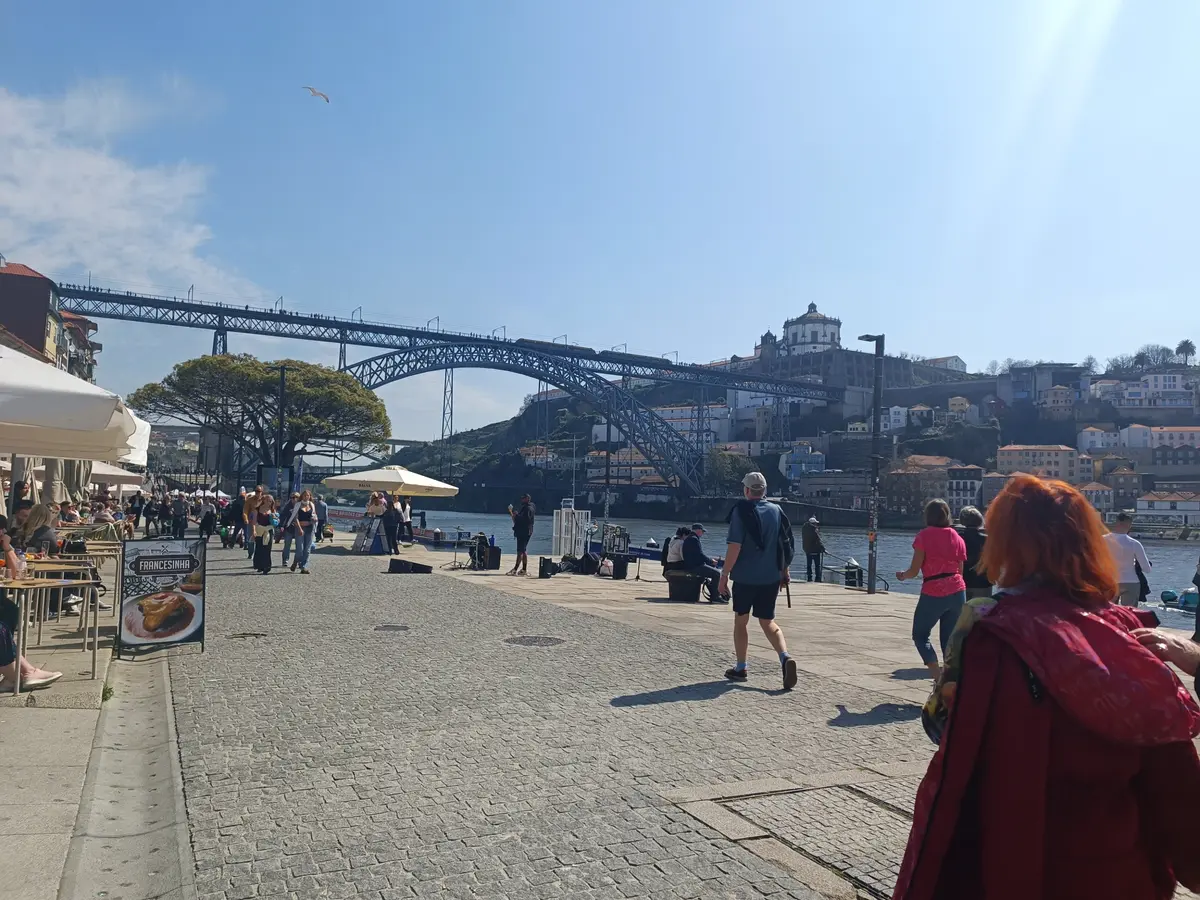
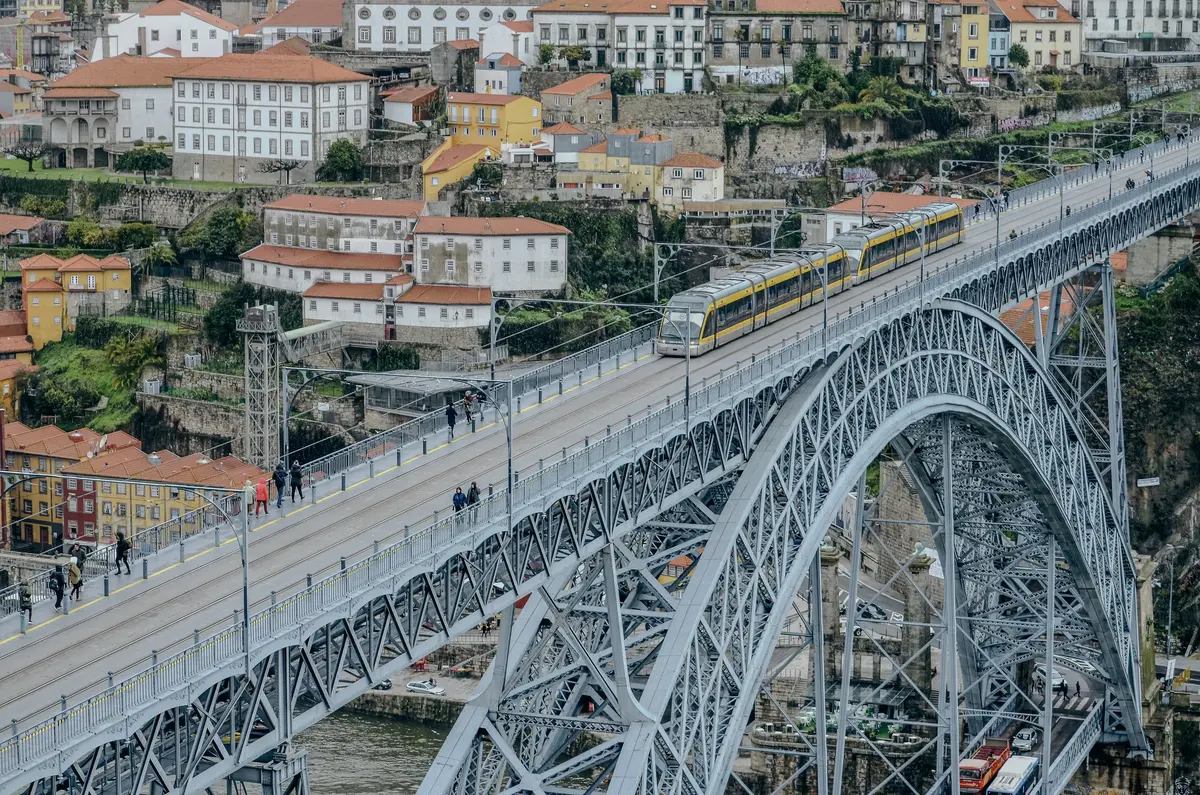
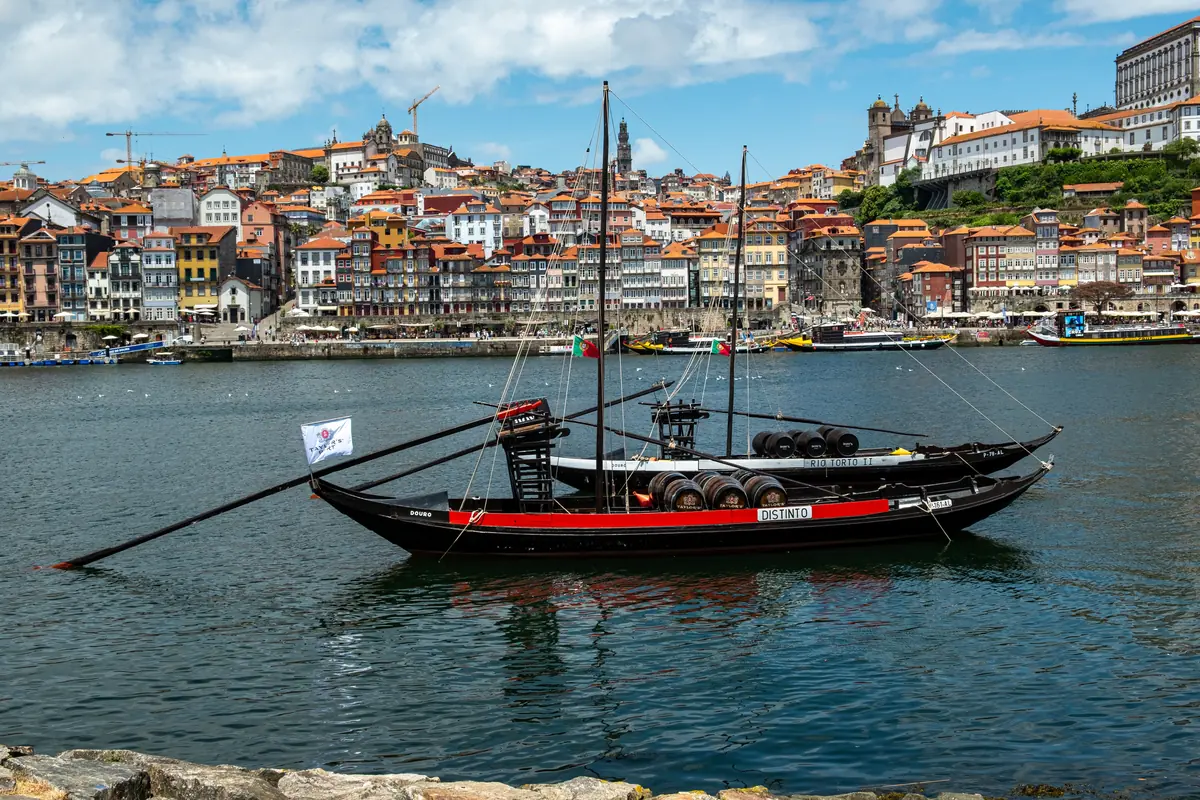
The double-deck iron bridge is the shot everyone wants, and walking the upper deck puts you level with the rooftops, about 200 feet (60 m) over the water. Designed by Téophile Seyrig, a former partner of Gustave Eiffel, the span runs about 1,300 feet (400 m) end to end. The Ribeira below is a crush of cafes, buskers, and barrel boats — touristy, but the light on the river at golden hour earns the cliché.
Walk the upper deck for the view and the metro-level crossing to Gaia; take the lower deck if heights bother you or you’re headed straight to the cellars. The riverfront restaurants are the city’s biggest tourist trap — eat a few blocks inland.
Pro Tip: On the upper deck, the metro slides by close enough that you instinctively step back. Hug the inner railing if you’re nervous, and don’t stop in the middle for photos at rush hour.
- Location: Connects Ribeira (Porto) to Vila Nova de Gaia
- Cost: Free to walk
- Best for: First-timers, photographers, anyone crossing to the cellars
- Time needed: 20–30 minutes to cross and linger
Livraria Lello — Worth It Only at Opening
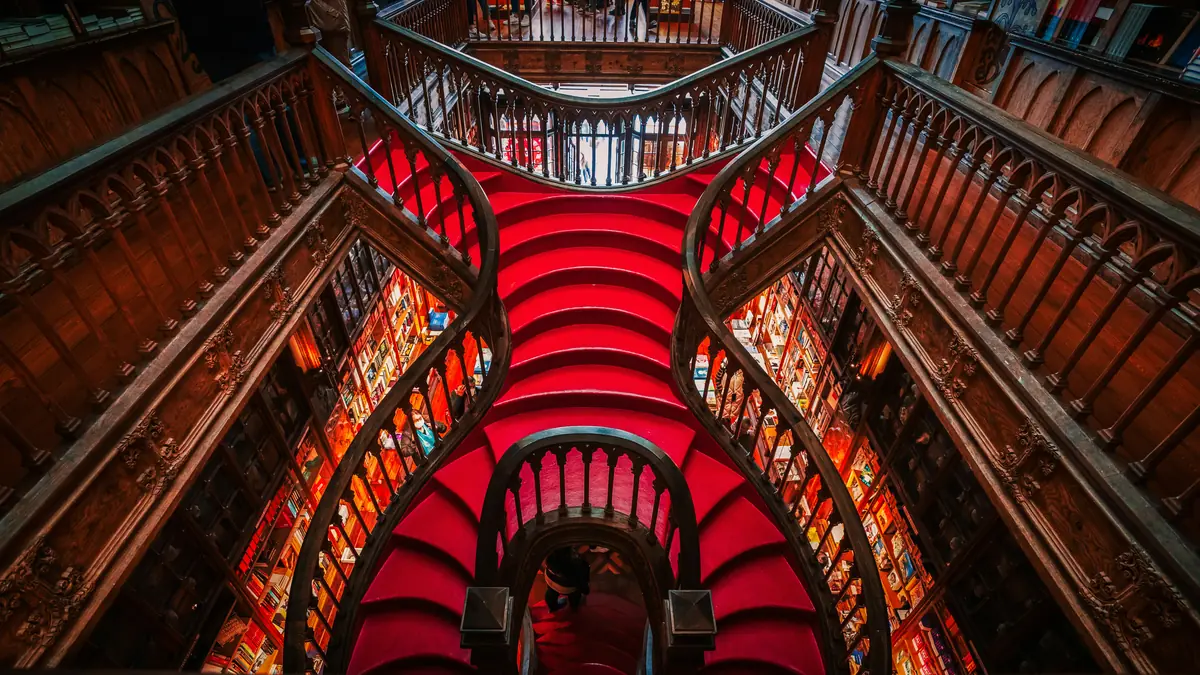
The crimson forked staircase, the carved wood, the stained-glass skylight — Lello is a genuinely beautiful bookshop, one of the oldest in Portugal. It’s also small and mobbed, with a line that can wrap the corner by mid-morning in summer.
The voucher (around $11) comes entirely off a book purchase, so if you buy something, the entry is effectively free. Go at opening or skip it. With roughly 1.2 million visitors a year funneling through a small space, the midday line can stretch past two or three hours in summer — not worth it.
Pro Tip: I redeemed my voucher against a Portuguese edition of a classic, so the fee effectively vanished — but only because I lined up at opening before the queue hit the street corner. Buy the timed ticket ahead and take the earliest slot.
And about that Harry Potter story: J.K. Rowling has said publicly that she never visited Lello and that it has nothing to do with Hogwarts. The shop is worth seeing on its own design merits — just treat the wizard connection as marketing lore, not history.
- Location: Rua das Carmelitas 144, central Porto
- Cost: Voucher around $11, deductible against a book
- Best for: Book lovers and design fans who arrive early
- Time needed: 30–45 minutes including the wait at opening
São Bento Station and Its Azulejo Hall
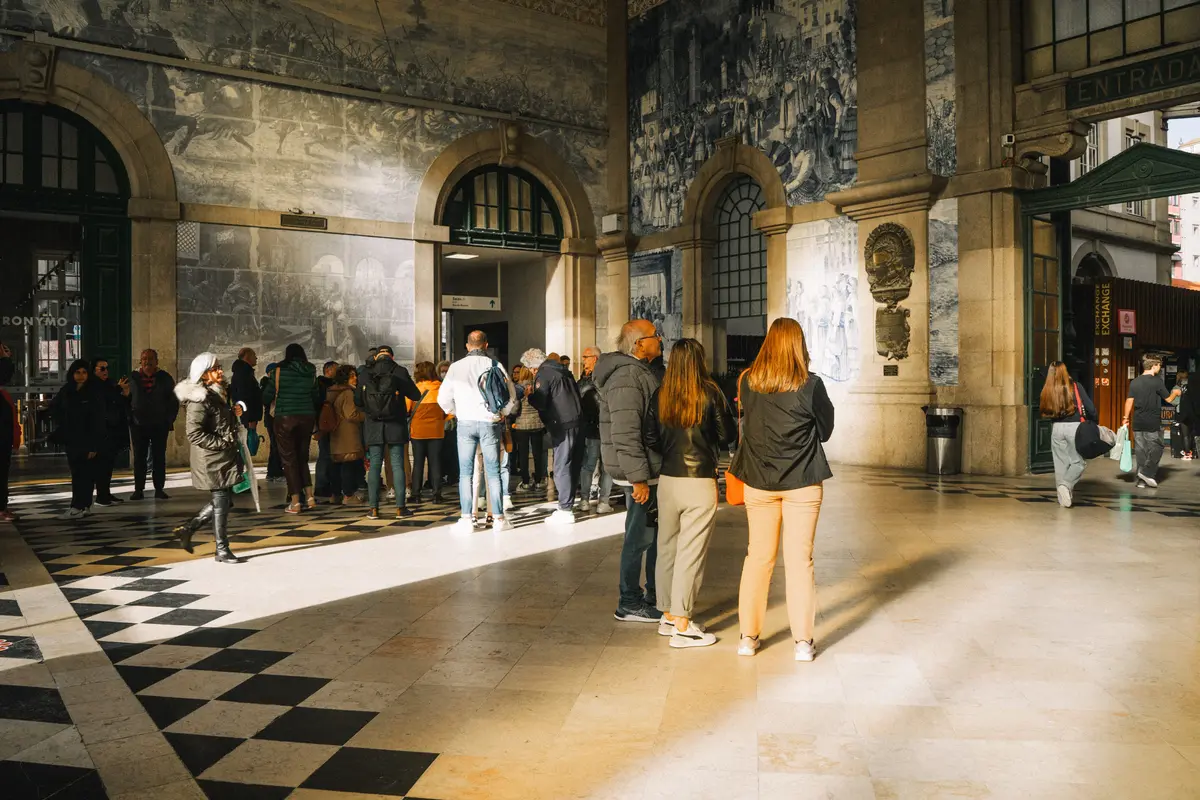
Step into the entrance hall and you’re surrounded by roughly 20,000 blue-and-white azulejo tiles by Jorge Colaço, mapping Portuguese battles and rural scenes across the walls. It’s a working train station, so commuters cut through while you crane your neck.
This is the best free sight in Porto, and the smart alternative to a long Lello queue. Five quiet minutes here beat an hour in line for a smaller, more crowded interior.
- Location: Praça de Almeida Garrett, central Porto
- Cost: Free
- Best for: Everyone — especially anyone skipping the Lello line
- Time needed: 10–15 minutes
Clérigos Tower and the 240-Step Climb
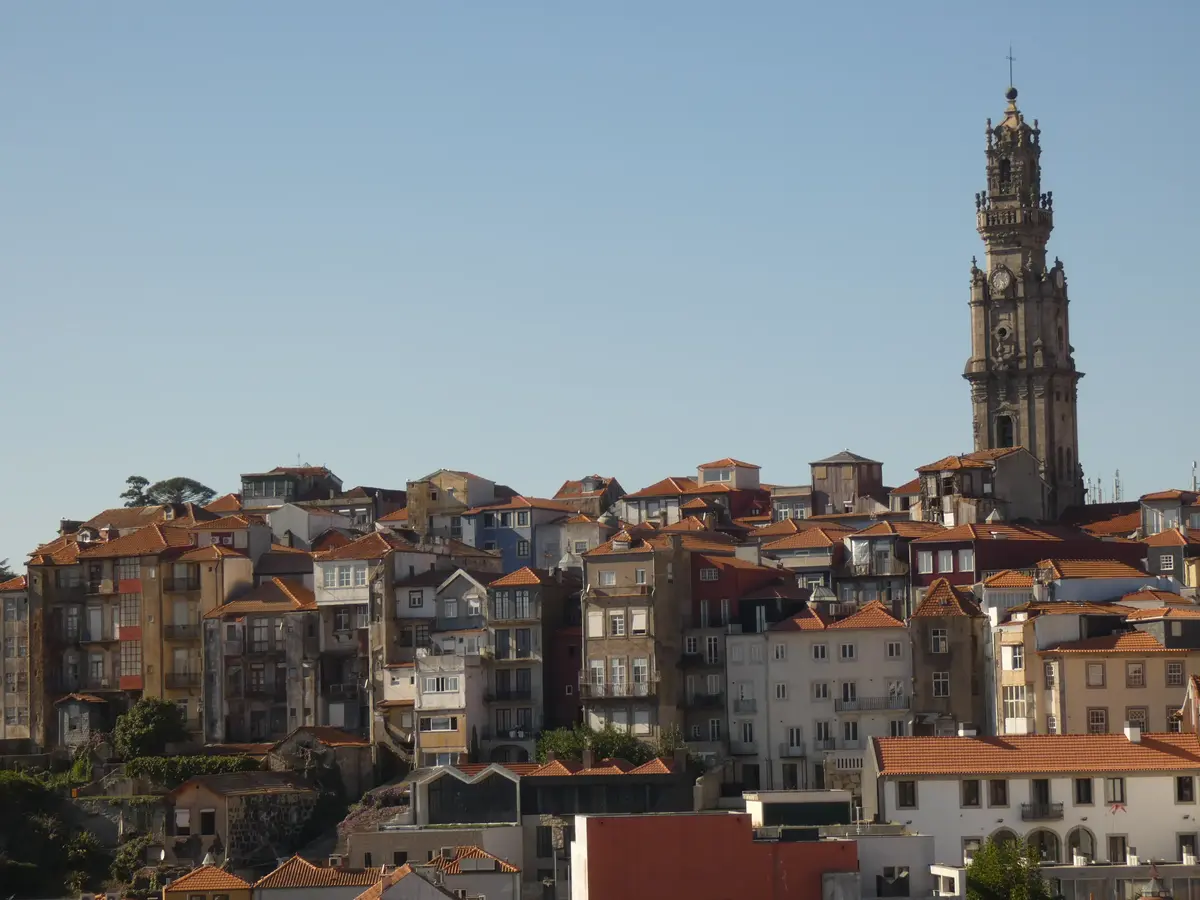
Nicolau Nasoni’s baroque bell tower rises about 250 feet (76 m) over the rooftops, and the roughly 240-step spiral climb gets tight and breathless near the top. The reward is a 360-degree view across the terracotta roofs to the river and the sea.
Worth the climb on a clear day for the best panorama in the center. Skip it if the weather’s socked in — you’re paying about $11 for a view you won’t get. The free noon organ concert in the church below is a quieter bonus.
- Location: Rua de São Filipe de Nery, central Porto
- Cost: About $11 to climb the tower
- Best for: View hunters with decent knees
- Time needed: 45 minutes including the climb
Palácio da Bolsa and a Few More Worth Your Time
The old stock exchange, the Palácio da Bolsa, is only seen on a guided tour, and the gilded Moorish-revival Arab Room is the payoff. A short list rounds out the center:
- Igreja do Carmo: the giant tiled side wall is the photo; the church is free to admire from outside.
- Igreja de São Francisco: a plain facade hiding a gold-smothered baroque interior.
- Sé do Porto (the cathedral): worth it mainly for the cloister and the hilltop view over the rooftops.
- Jardins do Palácio de Cristal: free gardens with peacocks and a river panorama, a calm escape from the center.
- Six-bridge river cruise: a 50-minute boat loop under the Douro’s bridges for around $20 — pleasant, if touristy.
Where Can You Taste Port Wine in Porto?
The port-wine cellars sit in Vila Nova de Gaia, across the Dom Luís I Bridge from the old town. A standard guided tour with a three-glass tasting runs about $22–$30. Sandeman and Cálem are the most tourist-friendly; Graham’s and Taylor’s have the best views; Ferreira feels the most Portuguese. Book ahead from spring through fall.
| Cellar | Tour + tasting (approx.) | The vibe | Book ahead? |
|---|---|---|---|
| Sandeman | from ~$24 | Tourist-friendly, caped guides | Yes in summer |
| Cálem | from ~$22 | Easy, central, often with a fado add-on | Yes in summer |
| Taylor’s | ~$25 (self-guided audio) | Hilltop terrace, peacocks, great views | Recommended |
| Graham’s | from ~$30 | Upper-lodge views, polished | Yes |
| Churchill’s | from ~$25 | Smaller, less crowded | Recommended |
| Ferreira | mid-range | The most Portuguese, less touristy | Yes |
The cellars cluster along the Gaia waterfront and up the hill behind it. The tourist-friendly names (Sandeman, Cálem) sit close to the river; the bigger views (Graham’s, Taylor’s, Cockburn’s) mean a climb.
Pro Tip: Go late afternoon. At Graham’s, the climb up the hill in the slanting light meant a cool cellar and a city glowing gold from the terrace — worth the calf-burn over the riverfront lodges. A tasting around 5 p.m. rolls straight into dinner.
If you’re new to it: ruby ports are younger, fruitier, and bolder; tawnies are barrel-aged, nuttier, and smoother. White port over tonic is the local summer aperitif most visitors miss.
The Teleférico de Gaia cable car links the bridge’s upper deck to the riverside cellars in about five minutes:
- Cost: around $6.50 one way, about $10 round trip
- Best for: Saving your legs on the Gaia side
- Time needed: a 5-minute ride
What Should You Eat and Drink in Porto?
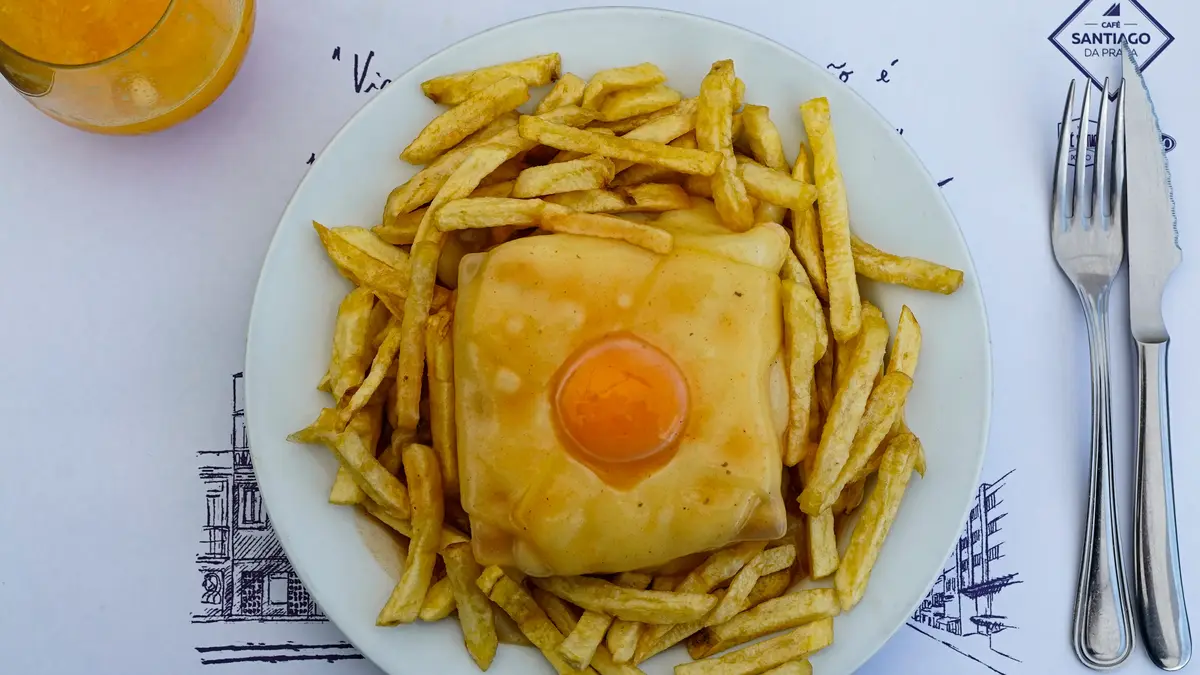
Porto’s signature dish is the francesinha, a stacked meat sandwich drowned in a spicy beer-and-tomato sauce (around $12 at Café Santiago). Also eat classic Portuguese dishes like the simmered-pork bifana (about $4), bacalhau (salt cod), tripas à moda do Porto, and a roughly $1.65 pastel de nata. Drink port and crisp, slightly fizzy vinho verde.
The francesinha is the dish you came for, and it’s a lot: bread, ham, sausage, and steak under melted cheese, flooded with a sauce that should be deep, glossy mahogany — not thin and bright red.
Pro Tip: That sauce color is the tell. The first riverfront francesinha I tried came out watery and bright red; three blocks inland, it was dark and glossy. If the photo on the menu looks like tomato soup, walk farther from the water.
What to order, and roughly what it costs:
- Francesinha: around $12, with Café Santiago the standard-bearer.
- Bifana (pork sandwich): about $4, classic at Conga.
- Pastel de nata: around $1.65, with Manteigaria a reliable bet.
- Prato do dia (daily lunch special): about $12 for soup, a main, a drink, and sometimes coffee.
- Mercado do Bolhão: the restored market for cheese, cured meats, and a casual lunch.
The local move is to eat big at lunch. The prato do dia — often soup, a main, a drink, and coffee for around $12 — is the best value in the city. Keep dinner light, and walk a few blocks inland from the Ribeira to roughly halve your bill.
To drink, port is obvious, but don’t sleep on vinho verde — a young, slightly sparkling white that’s crisp and cheap. A glass runs a few dollars in most local spots.
What Are the Best Day Trips From Porto?
The headline day trip is the Douro Valley wine region: take the scenic train from São Bento to Pinhão (about $13 each way, 2.5 hours) or a guided tour. Guimarães and Braga pair Portuguese history in one easy rail day (about $4 each way), and Aveiro, the canal town, is about 75 minutes by train.
Douro Valley — The Headline Trip
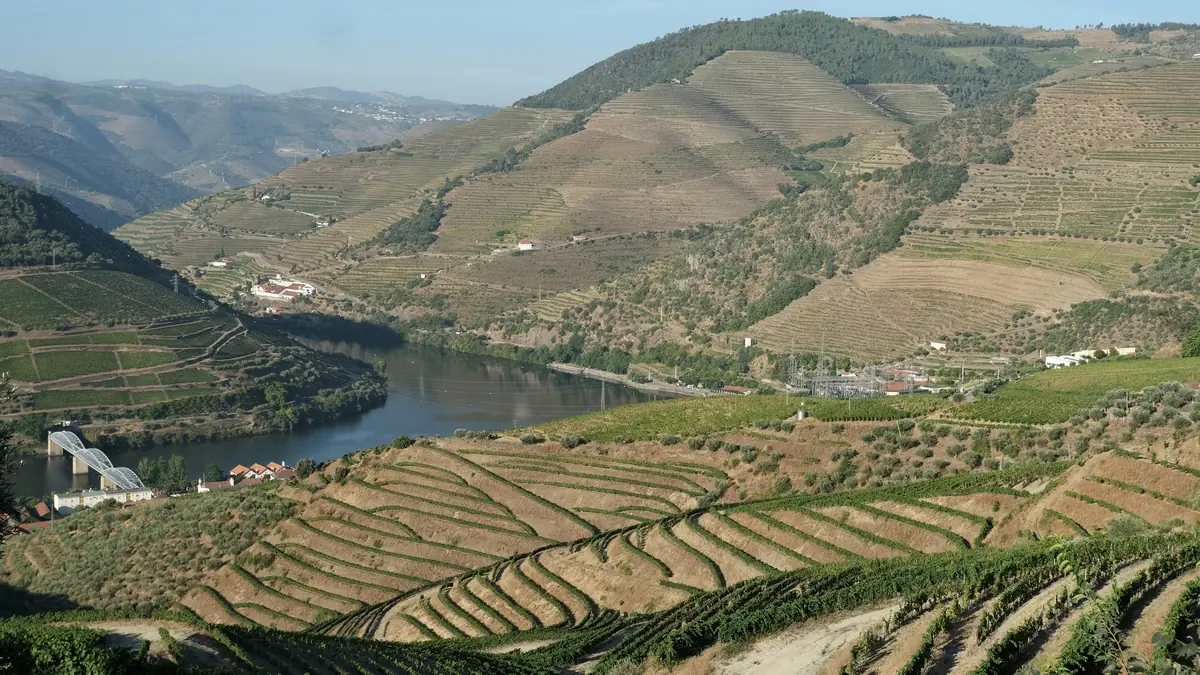
The Douro is the reason to add a day. The Douro Valley‘s terraced vineyards are the world’s oldest demarcated wine region, and the train from São Bento hugs the water for the back half of the ride.
- Cost: about $13 each way by train to Pinhão; guided tours run about $88–$185.
- Journey: roughly 2.5 hours by train; sit on the right for the river.
- Best for: Wine lovers and anyone who wants the scenery.
Pro Tip: If you can, ride past Pinhão toward Pocinho. That upriver stretch the day-cruise crowds never reach is the most dramatic part of the line — fewer people, steeper terraces, bigger river bends.
Guimarães and Braga in One Rail Day
Guimarães calls itself the birthplace of Portugal, and its medieval center and hilltop castle back the claim. Braga, 20 minutes farther, brings the Bom Jesus do Monte sanctuary and its baroque staircase.
- Cost: about $4 each way to either town by train.
- Journey: roughly 1 hour 10 minutes to Guimarães; about 1 hour to Braga.
- Best for: History fans pairing two towns in a day.
Aveiro and the Costa Nova Beach Houses
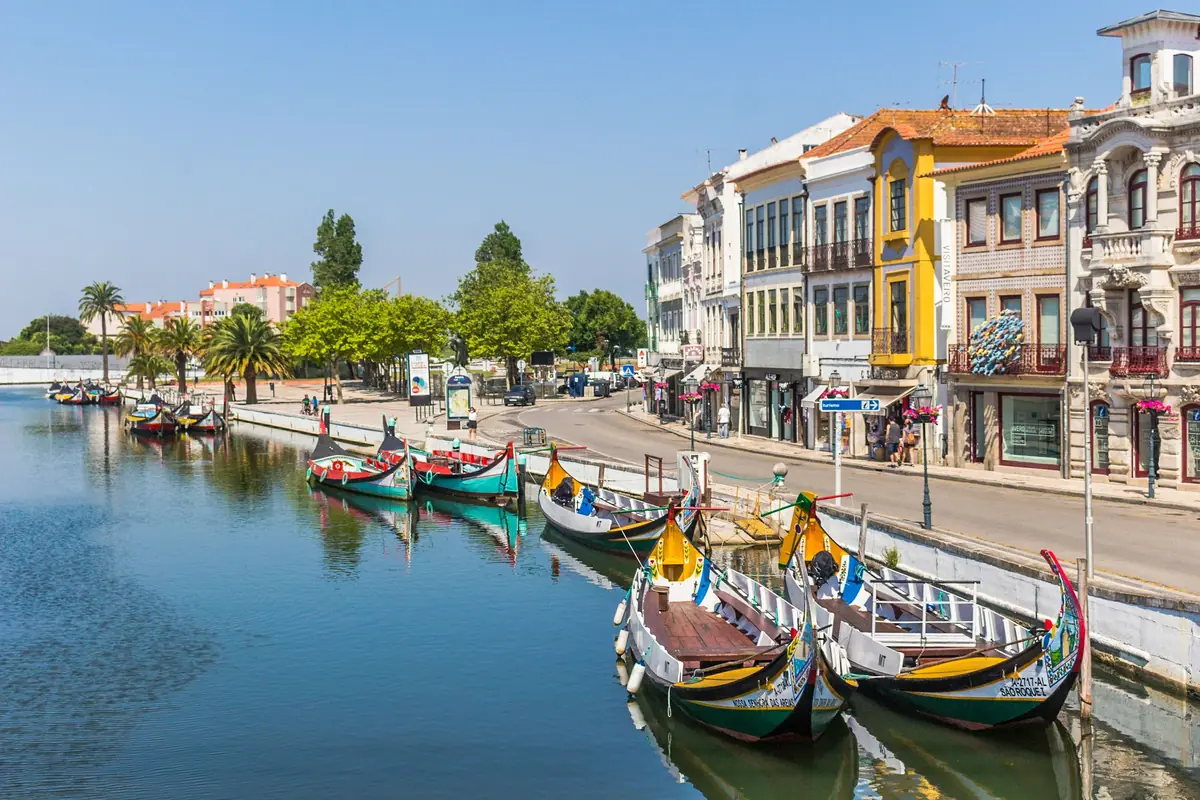
Aveiro gets called the “Venice of Portugal” for its canals and painted moliceiro boats — a stretch, but it’s a pleasant half-day, and the candy-striped beach houses at nearby Costa Nova are the real photo.
- Cost: about $4.30 each way by train.
- Journey: about 1 hour 15 minutes.
- Best for: A lighter, flatter day after Porto’s hills.
What Is the Best Time to Visit Porto?
The best time to visit Porto is May, June, or September, when highs sit around 68–77°F (20–25°C), the rain eases, and crowds thin. July and August are warmest (up to 86°F / 30°C) and busiest. Winter is mild (highs near 57°F / 14°C) but wet. For atmosphere, time it to the São João festival on June 23.
| Month(s) | High °F (°C) | Rain | Crowds | Notes |
|---|---|---|---|---|
| Mar–Apr | 59–68°F (15–20°C) | Showery | Light | Cool, green, low prices |
| May–Jun | 68–75°F (20–24°C) | Easing | Building | Best overall; São João on June 23 |
| Jul–Aug | 77–86°F (25–30°C) | Dry | Heaviest | Hot, peak prices, book ahead |
| Sep | ~75°F (24°C) | Low | Easing | Warm, harvest season, great value |
| Oct | ~70°F (21°C) | Rising | Light | Mild, atmospheric, fewer tourists |
| Nov–Feb | 57–59°F (14–15°C) | Wettest | Lightest | Mild but rainy; January wettest |
Porto sits on the Atlantic, so the weather is milder and wetter than inland Portugal. Even in summer the sea hovers around 64°F (18°C), so the beaches at Foz are more for strolling than swimming. The city gets roughly 44 inches (1,100 mm) of rain a year, most of it in winter.
Pro Tip: Pack a rain shell even in summer. Atlantic showers blow through fast and hard, then the sun’s back out — an umbrella is awkward on the narrow, crowded lanes, so a hood wins.
If you want the city at its loudest and best, come for São João on the night of June 23 — an all-night street party where, by tradition, people bonk each other on the head with squeaky plastic hammers. It’s chaotic and great, and rooms sell out, so plan early.
How Expensive Is Porto, and What Will It Cost?
Porto is one of Western Europe’s better-value city breaks for overall travel costs, running about 10–15% cheaper than Lisbon. Budget travelers manage around $52 a day, mid-range about $120, and comfort travel from roughly $320. A mid-range hotel runs about $105–$145 a night, and a daily-special lunch about $12. The currency is the euro.
| Category | Budget | Mid-range | Comfort |
|---|---|---|---|
| Daily total | ~$52 | ~$120 | $320+ |
| Lodging | Hostel dorm | Hotel ~$105–$145 | Boutique/luxury |
| Food | Bifanas, prato do dia | Casual meals + one nice dinner | Tasting menus, wine pairings |
| Getting around | Walk + metro | Walk + occasional Bolt | Taxis/private driver |
The big savings come from lodging and eating like a local — the prato do dia lunch and a light dinner keep food costs low. Most sights are cheap or free, and the city is walkable enough to skip most transport.
Two line items catch US travelers off guard:
- Couvert: the bread, olives, or sardine paste set on your table isn’t free — it runs about $1.70–$3.40 if you eat it.
- Tourist tax: a small per-night city tax added to your hotel bill.
Pro Tip: That little plate of bread and olives that appears unasked isn’t a gift. If you don’t want it, wave it away when it lands — you’ll be charged the couvert if you dig in.
Tipping is modest: round up or leave 5–10% for good service, not the 20% norm from home. Cards work nearly everywhere, but keep a few euros for small cafes and the market.
Is Porto Safe for Tourists?
Porto is generally very safe — among the safer places to travel in Portugal — with low violent crime and a Numbeo safety index around 67. The main risk is pickpocketing in crowds, on the metro, and at busy sights, so keep bags zipped and in front. Solo female travelers report feeling comfortable; stick to well-lit main streets after dark. The emergency number is 112.
The real hazards here aren’t criminal:
- Pickpockets: work the crowds on the metro, in markets, and along the Ribeira. Keep your bag zipped and in front, and don’t leave a phone on a cafe table.
- Cobblestones and hills: the genuine injury risk. The polished calçada stone gets slick in rain, and Porto is steep.
Pro Tip: Wear grippy shoes, not smooth-soled ones. The polished cobbles turn skating-rink slick in the rain, and the downhill stretches toward Ribeira are the worst — that’s where you’ll see people go down hard.
Solo female travelers generally report Porto as comfortable and easy, with the usual sensible precautions after dark. English is widely spoken in tourist-facing spots, the emergency number is 112, and the bigger daily challenge is the gradient, not safety.
Porto vs. Lisbon: Which Should You Visit?
Choose Porto for a compact, atmospheric, lower-cost trip built around port wine and river views; choose Lisbon for a bigger city with more sights, nightlife, and easy day trips like Sintra. They sit about 195 miles (314 km) apart, linked by a roughly 3-hour train. Many travelers do both, splitting time toward Lisbon.
| Porto | Lisbon | |
|---|---|---|
| Size and feel | Compact, walkable, intimate | Bigger, busier, more spread out |
| Cost | About 10–15% cheaper | Pricier |
| Signature | Port wine, azulejos, the river | Trams, fado, more nightlife |
| Day trips | Douro Valley | Sintra, Cascais |
| Best for | A slower food-and-wine trip | More to see and do |
If you’ve only got time for one, the Porto vs. Lisbon decision comes down to pace. Porto is the slower, more contained trip; Lisbon gives you more ground to cover and a livelier night scene. The Alfa Pendular train links them in about 3 hours, with fares from around $27.
For most first-timers doing both, a 60/40 split toward Lisbon works — say four to five days in Lisbon, two to three in Porto.
Pro Tip: Book a window seat on the Lisbon–Porto train and sit back. The countryside between the two cities — vineyards, hill towns, the odd castle — is a quiet highlight nobody tells you about.
The Bottom Line on Planning Porto
TL;DR: Give Porto two to four days, base in Cedofeita or Baixa, and ride Metro Line E from the airport for about $2.50. Book a port-cellar tasting (around $22–$30) and your Livraria Lello slot before you fly, and visit in May, June, or September. Budget roughly $120 a day mid-range, mind the hills and the pickpockets, and save a day for the Douro Valley.
Porto rewards travelers who slow down. Walk the hills, eat lunch like it’s the main meal, cross to Gaia for a tasting as the light goes gold, and give the Douro a full day if you can. The city’s two rookie mistakes — too few days and a riverfront dinner — are easy to avoid once you know them.
If you remember one thing: book Lello and your cellar slot before you fly.
What’s the one thing you’d want nailed down before a first trip to Porto — the itinerary, the budget, or where to stay? Tell me in the comments and I’ll help you sort it.