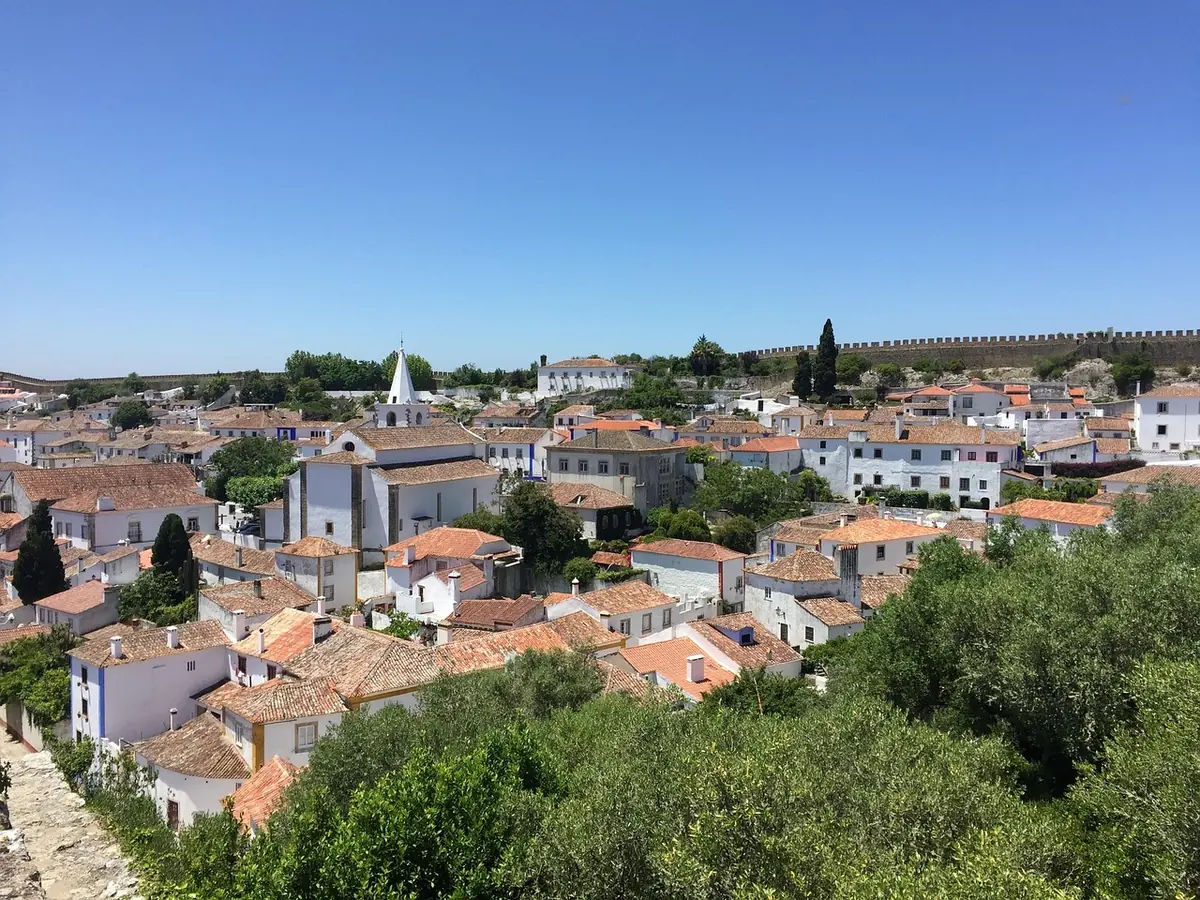
Óbidos, Portugal ruins other day trips from Lisbon. It’s a complete medieval walled town an hour north — free ramparts you can walk, a castle that’s now a hotel, ginjinha in edible chocolate cups. It’s small, it mobs up at midday, and most people leave too soon. Here’s how to do it right.
Is Óbidos Worth Visiting?
Yes — but know what you’re getting. Óbidos is one of Europe’s best-preserved medieval walled towns: cobbled lanes, whitewashed houses, a hilltop castle, and ginjinha in chocolate cups, about an hour north of Lisbon. It’s small, so two to four hours covers it. Come for atmosphere and timing, not a long checklist.
The town earns its place on most lists of the best places to visit in Portugal, and it’s one of the country’s official Seven Wonders. But set expectations honestly: roughly 3,000 people live here, only a fraction of them inside the walls, and there is no blockbuster museum or single big-ticket sight. The pleasure is the place itself.
It also has one of Portugal’s better stories. A king handed the whole town to Queen Isabel as a wedding gift in 1282, and Óbidos stayed a royal possession for centuries — which is why it still gets called the “town of queens.”
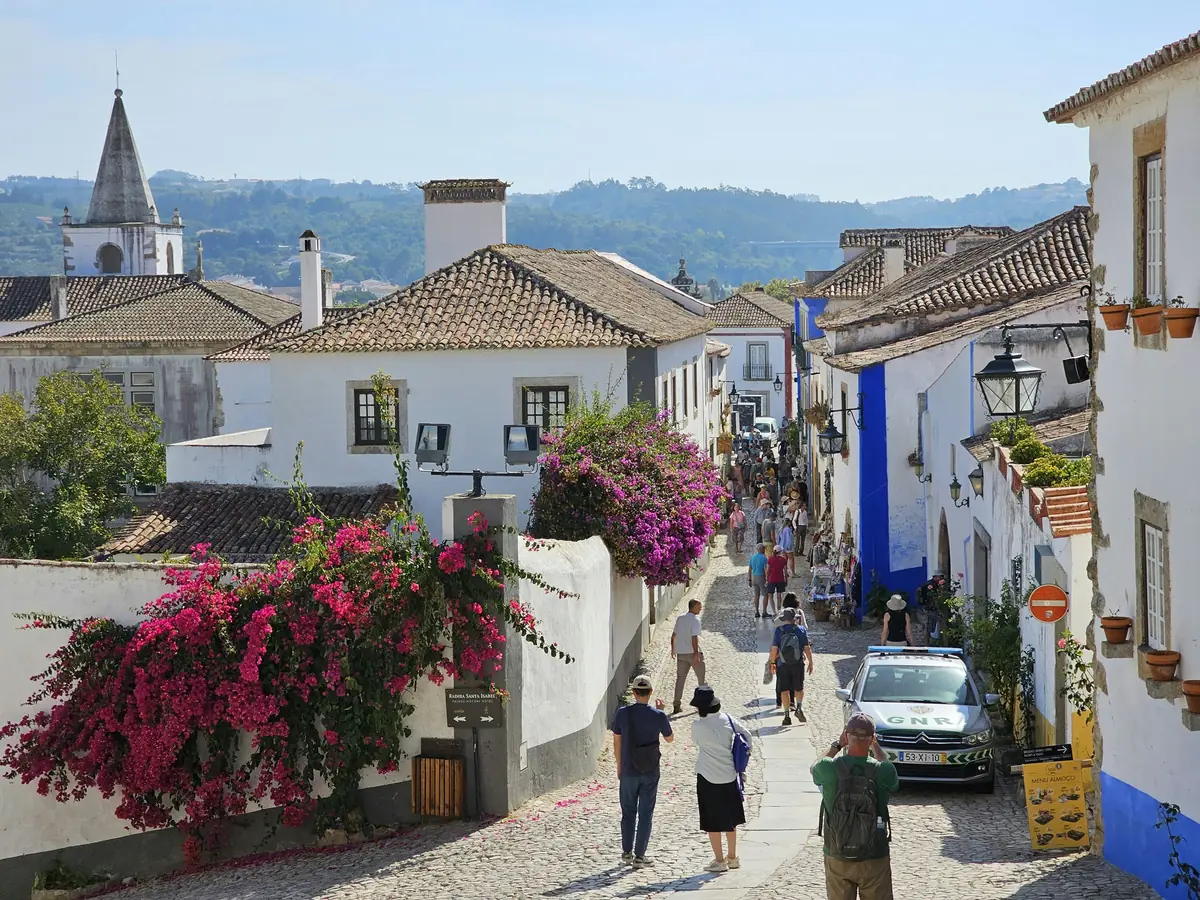
The honest catch is crowds. Tour coaches from Lisbon pour in late morning and fill the main street solid until mid-afternoon. Arrive before them or stay the night, and you get a different, quieter town.
Pro Tip: If your whole trip is a midday coach stop, you’ll see Óbidos at its worst. The town rewards early risers and overnighters far more than the 11 a.m.-to-3 p.m. crowd.
How Do You Get From Lisbon to Óbidos?
The simplest way is the Rodotejo “Rápida Verde” express bus from Lisbon’s Campo Grande terminal — about an hour to Óbidos for roughly €9.45 (about $10) one way. Driving the A8 takes 50 to 60 minutes. The regional train technically works but runs two-plus hours with few departures, so skip it.
A few things worth knowing before you go:
- Departure point: Campo Grande, bays 30 and 31, near the Estádio José Alvalade football stadium
- Frequency: about 26 departures on weekdays, dropping to roughly 16 on weekends and bank holidays
- Tickets: pay the driver onboard, buy at a Rodoviária do Oeste office, or use the MOOV-U app
- Drop-off: the central stop on Rua da Praça, beside the Porta da Vila gate, under a five-minute walk to the entrance
- Last bus back: around 9:45 p.m., so an overnight or an early return is the only safe plan for late festival visits
Campo Grande trips people up. It isn’t a single tidy station — it’s a ring of bus stops scattered around a metro hub, and first-timers regularly stand at the wrong one. Build in ten extra minutes to find bay 30 or 31.
If you drive, the A8 is fast but tolled at roughly €6 (about $6.50) each way. The payoff is flexibility: a car lets you fold in Caldas da Rainha, Buddha Eden, or the coast in a single day, which the bus can’t do.
Pro Tip: The bus drops you a two-minute walk from the main gate, so independent travelers rarely need a car for Óbidos alone. Rent one only if you’re chaining the town to other stops nearby.
Bus, Car, Train, or Tour: A Side-by-Side
| Option | Cost | Time | Best for | The catch |
|---|---|---|---|---|
| Rápida Verde bus | ~€9.45/$10 one way, €18.90/$20 return | ~1 hr | Independent visitors without a car | Departures drop from ~26 weekdays to ~16 on weekends and holidays |
| Car via A8 | ~€6/$6.50 tolls each way, plus fuel and parking | 50-60 min | Combining Óbidos with nearby towns | No cars inside the walls; rental break-ins reported in the lots |
| Regional train | A few euros | 2-2.5+ hr | Almost no one | Slow, few departures, station sits outside the old town |
| Organized tour | ~$60-100+ per person | Half or full day | Travelers who want zero planning | Usually lands you in the midday coach crush |
How Long Do You Need in Óbidos?
Plan two to three hours to walk the walls, wander Rua Direita, look inside the churches, and drink a ginjinha. A relaxed half-day, around four hours, adds a sit-down lunch. The real upgrade is staying overnight: once the day-trip coaches leave, the lanes empty out and the walls at sunset are something else.
The wall loop alone is about a mile and takes roughly an hour at a careful pace. The rest is unstructured — shops, viewpoints, a church or two, a drink. Most people overestimate how long they’ll want.
If you have a full day and a car, Óbidos pairs naturally with Caldas da Rainha (a short bus or drive away) or Bacalhôa Buddha Eden and Nazaré for a coastal swing. Treat the town as the morning anchor and let the afternoon roam.
What Is There to Do in Óbidos?
The short list: walk the free medieval walls, look up at the castle (now a hotel), pass through the tiled Porta da Vila gate, and step into the churches and book-filled shops along Rua Direita. None of it takes long. The town itself is the attraction, so the best plan is to wander and let the lanes pull you around.
Walk the Medieval Town Walls (Free — and Genuinely Risky)
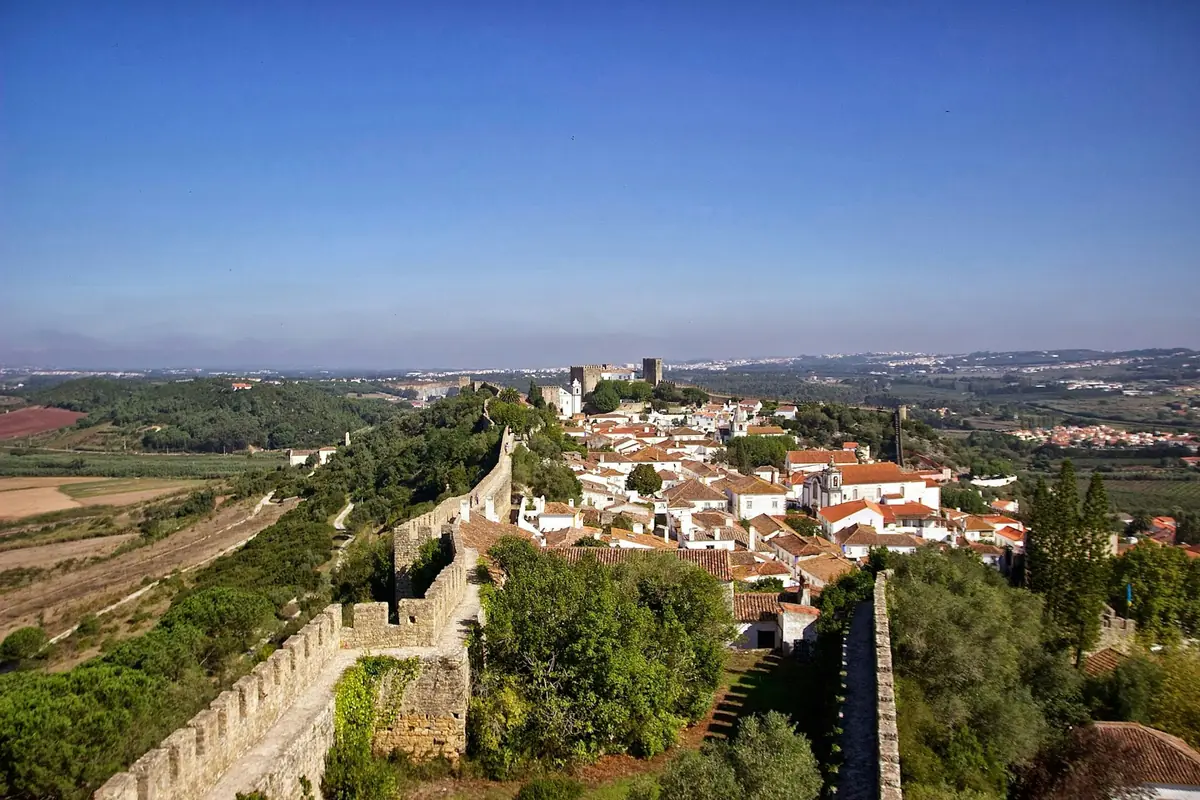
Walking the ramparts is the defining Óbidos experience, and it costs nothing. The circuit runs about 1,565 m (close to a mile) along walls that rise as high as 13 m (42 ft), with no handrails, uneven footing, and a long drop on one side. The views over terracotta roofs and farmland are the best in town — but this is not a casual stroll.
People do fall here. Locals and hotel staff mention it plainly, and the lack of any guardrail makes the danger real, especially when the stone is wet. Treat it like a hike, not a balcony.
- Location: Access stairways near Porta da Vila and on the quieter western side
- Cost: Free
- Best for: Sure-footed adults, photographers, early risers
- Time needed: About 1 hour for the full loop
- Skip if: You have toddlers, vertigo, or it’s raining
Pro Tip: Climb the walls from the quieter western stairs and save the busy Porta da Vila steps for last. You’ll get cleaner photos and fewer bottlenecks on the narrow sections.
See the Castelo de Óbidos (and Why You Can’t Go Inside)
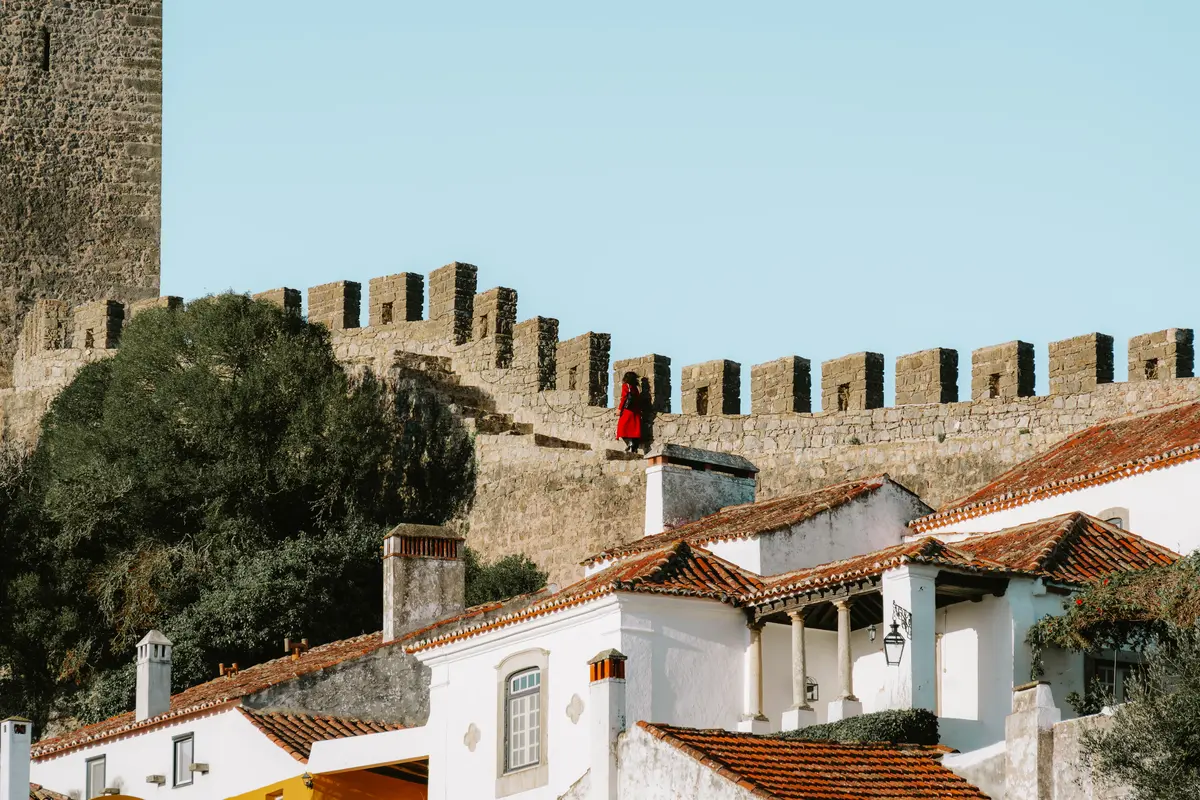
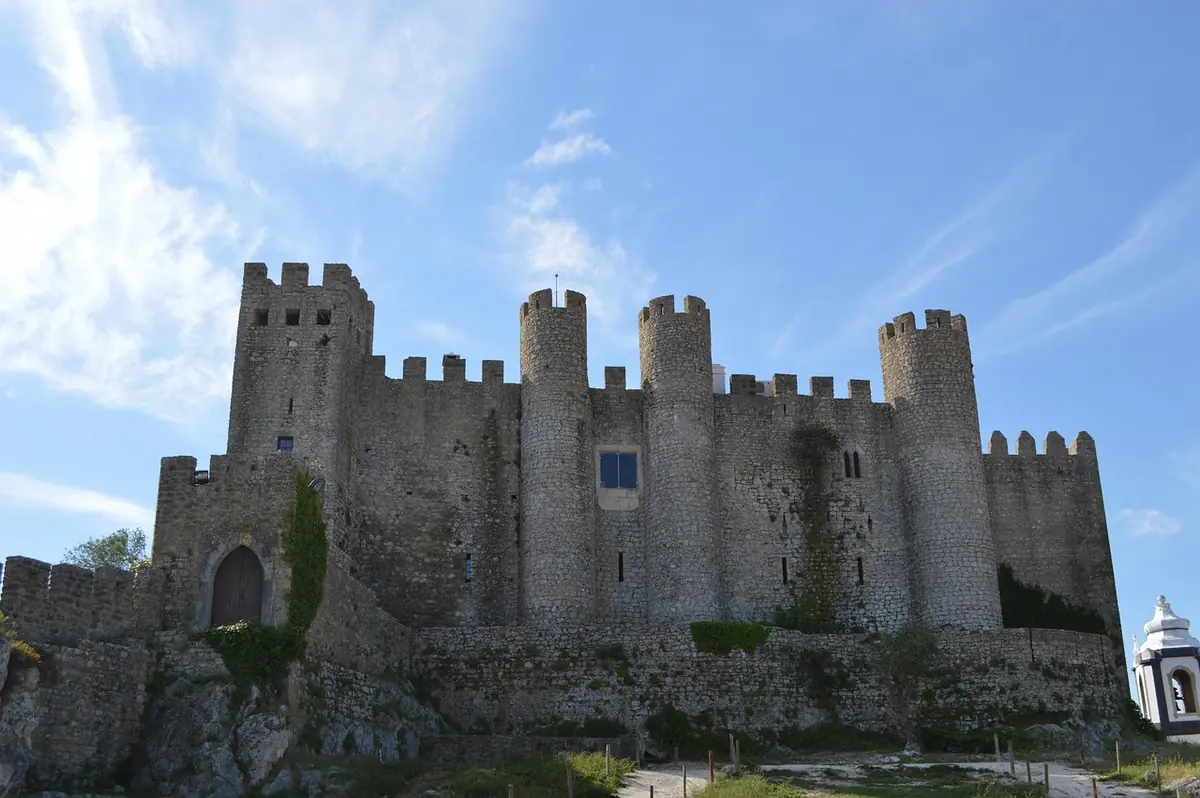
The hilltop Castelo de Óbidos looks every bit the storybook castle, but there’s a catch most guides bury: the main castle building has been a hotel since the mid-twentieth century, so there is no interior “castle tour.” It’s a working pousada. The only way inside the keep is to book a room or eat at the restaurant.
That’s not a loss, just a reset of expectations. Non-guests still get the courtyard, the terraces, the viewpoints, and the wall access for free — which is most of what people came up the hill for anyway.
- Location: Top of town, Largo do Castelo
- Cost: Free to enter the courtyard and viewpoints
- Inside access: Hotel guests and restaurant diners only
- Best for: Views and photos, not a museum visit
Porta da Vila, Rua Direita, and the Churches
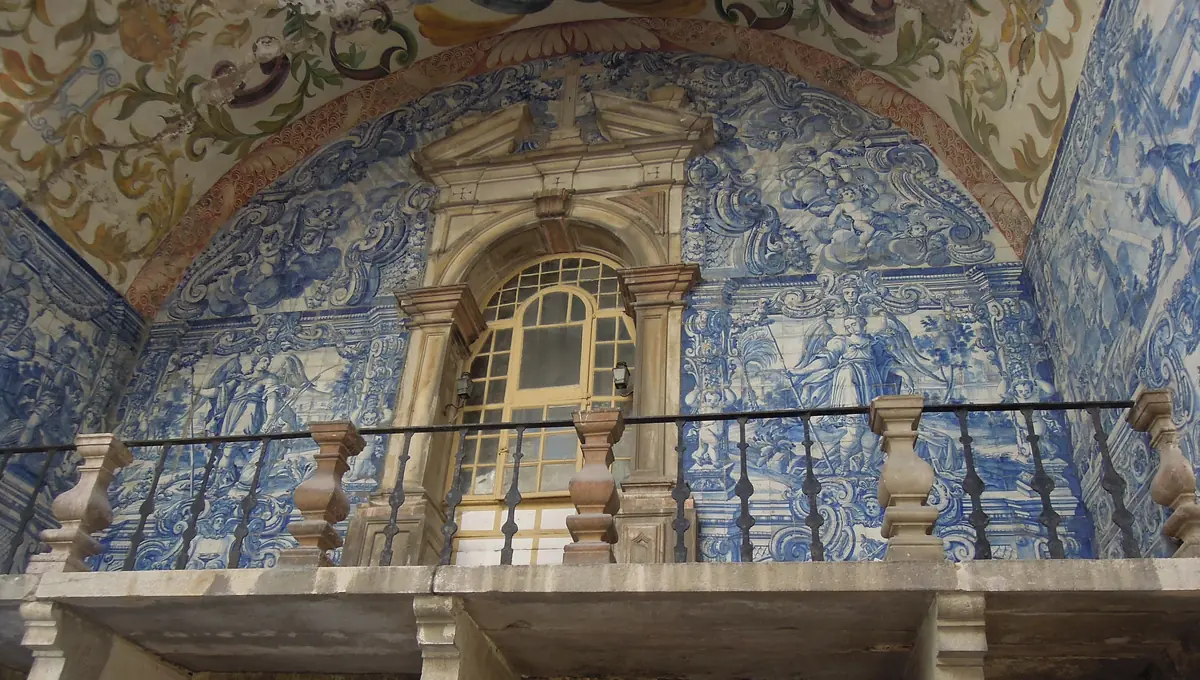
Most visitors walk straight through Porta da Vila without looking up. Don’t. The main gate bends through a double arch, and tucked into that bend is a small tiled chapel covered in blue azulejos depicting the Passion — one of the prettiest corners in town and easy to miss.
From there, Rua Direita runs the length of the old town from gate to castle. It’s the commercial spine: ginjinha vendors, ceramics, and souvenir shops, plus the side lanes worth peeling off into. Step into the Igreja de Santa Maria for its tiled interior and paintings by Josefa de Óbidos, the Baroque painter the town claims as its own.
Óbidos, a Town Built Around Books
Óbidos carries a UNESCO designation as a Creative City of Literature, and it shows up in an unusual way: bookstores built inside former churches, with shelves running between the columns. The Literary Man hotel doubles down on the theme with tens of thousands of books on its walls, and the FÓLIO literary festival fills the churches with authors each autumn.
It’s a quiet, low-effort highlight — duck into one church-bookshop even if you’re not buying.
Ginjinha and Where to Eat in Óbidos
Óbidos’s signature ritual is ginjinha: a sour-cherry liqueur poured into a small edible chocolate cup. You knock back the shot, then eat the cup — about €1.50 (roughly $1.50 to $2) a serving along Rua Direita. For real meals, head off the main street for traditional Portuguese dishes like bacalhau, grilled octopus, or eel stew from the nearby lagoon.
The drink itself sits around 17 to 20 percent alcohol, made from morello cherries, and the chocolate-cup version is the Óbidos twist — fun once, and genuinely good. Vendors line Rua Direita, and many add a soaked cherry to the bottom of the cup. Try a few; they’re cheap.
Food is where the main street fails you. The tables right on Rua Direita lean touristy and overpriced. The better cooking sits one or two streets back, in small tascas. For a real splurge, the Pousada’s restaurant inside the castle has carried serious culinary credentials.
Pro Tip: Skip the restaurants directly on Rua Direita and walk one block off it. The same bacalhau costs less and the room is full of locals instead of coach groups.
When Should You Visit Óbidos?
Óbidos runs four signature festivals: the International Chocolate Festival in spring, the Medieval Market in July, the FÓLIO literary festival in autumn, and the Vila Natal Christmas village from late November into early January. Spring and early autumn bring mild weather and thinner crowds. Whenever you go, a weekday beats a festival weekend.
| Festival | Season | Typical run | Ticket | Who it’s for |
|---|---|---|---|---|
| International Chocolate Festival | Spring | Several weekends | ~€10/$11 adult | Families, anyone with a sweet tooth |
| Mercado Medieval (Medieval Market) | Summer (July) | About two weeks | ~€10-15/$11-16 | Kids, history fans |
| FÓLIO literary festival | Autumn | Roughly two weeks | Many events free | Readers, book-town pilgrims |
| Óbidos Vila Natal (Christmas Village) | Late autumn to early winter | Late Nov to early Jan | €10/$11 adult, €8 child | Families with young kids |
On weather: August is the warmest stretch, with highs near 79°F (26°C), while winter days hover around 59°F (15°C). November is the wettest month — relevant, since wet stone makes the walls genuinely dangerous.
The Chocolate Festival is the big draw, pulling nearly 200,000 people over its run for chocolate sculptures and tastings. The Medieval Market brings costumed reenactments and jousting in July. Both are good fun and crowded; aim for a weekday afternoon.
Vila Natal deserves a budgeting warning. The roughly €10 (about $11) adult entry is a floor, not a ceiling: the ice rink, rides, and most kids’ activities cost extra once you’re inside, so a family can run up a real tab.
Pro Tip: For Vila Natal weekends, buy tickets online before you arrive — the gate lines get long, and weekday late afternoons are far calmer than weekend middays.
Where Should You Stay in Óbidos?
If you can swing it, sleep inside the walls. Day-trippers and coach tours pack Rua Direita from late morning to mid-afternoon, then vanish — and by evening Óbidos turns quiet and faintly unreal. The two standout stays are the Pousada Castelo de Óbidos, set in the castle itself, and The Literary Man, a former convent stuffed with books.
Guests at the castle pousada describe the same thing again and again: arriving as the day-trippers drift off, then having the lit, empty village more or less to themselves. That’s the whole case for staying. You’re not paying for the room so much as for the town after hours.
Pousada Castelo de Óbidos:
- Location: Inside the castle walls, top of town
- Cost: A clear splurge; rates swing with season
- Rooms: About 17, each named for a Portuguese monarch
- Best for: A once-a-trip castle night; couples
- Note: Park outside the walls; staff help haul luggage uphill by golf cart
The Literary Man Óbidos:
- Location: A former convent just inside the walls
- Cost: Mid-to-upper range
- Rooms: About 30, wrapped in a claimed 100,000 books
- Best for: Readers and slower evenings; dinner-inclusive stays
Rooms inside the walls are scarce — both places are small — so book well ahead, especially around festivals.
Here’s the money trade-off in plain terms:
- Day trip by bus, per person: bus return about €18.90 ($20), a ginjinha €1.50, lunch €12-18 ($13-20), walls free — roughly $40-50 all in
- Overnight: add one castle or convent room (a real premium) plus dinner, and you’re buying the empty town at night rather than just the sights
Parking, Cobblestones, and the Rental-Car Warning
No cars enter the walled town, so you park outside. The paved lots near the tourist office and the aqueduct cost about €0.60 (roughly $0.65) an hour; the big dirt lots farther out are free. Arrive early in peak season, wear real shoes for the cobblestones, and never leave anything visible in a rental car — break-ins happen here.
The parking lots southeast of town fill fast on festival days, and there’s a campervan spot behind the main lot. Bring coins for the paid machines.
One accessibility note worth being honest about: Óbidos is steep, cobbled, and uneven. Strollers fight the stones, wheelchairs struggle, and the unfenced walls are no place for toddlers or anyone with vertigo. The lower streets are manageable on foot; the ramparts are not for everyone.
Beyond the Walls: What to Pair With Óbidos
Óbidos sits in the Oeste region, within easy reach of a string of worthwhile stops. With a car, you can build a full day around it instead of turning around at lunch:
- Caldas da Rainha: a spa-and-ceramics town about 6 miles (10 km) away, linked by the same bus network
- Bacalhôa Buddha Eden: a huge Asian-style sculpture garden roughly 9 miles (15 km) off, near Bombarral
- Lagoa de Óbidos and Foz do Arelho: a calm lagoon and an open Atlantic beach for an afternoon swim
- Peniche and the Berlengas: a fishing town and a protected island reserve for boat trips and surf
- Nazaré: the big-wave beach town up the coast, dramatic even on a flat day
- Alcobaça and Batalha: two UNESCO-listed monasteries within a short drive
- Mira de Aire caves: an underground stop for a rainy afternoon
This is exactly where Óbidos shines as a base rather than a stop — the kind of region a longer Silver Coast or Lisbon day-trips plan should lean on.
Quick Answers Before You Go
Is there an entrance fee for Óbidos? No. The town and the walls are free to enter and walk. Only specific events are ticketed, such as Vila Natal and the Chocolate Festival, and the castle is a hotel rather than a paid attraction.
What is Óbidos famous for? Its intact medieval walls and hilltop castle, its “town of queens” royal history, and ginjinha served in an edible chocolate cup for about €1.50 (roughly $1.50) along Rua Direita.
What’s the best thing to bring home? A larger souvenir ginjinha cup (often around €2.50/$3) or local chocolate from the festival shops. The liqueur travels better than the chocolate cups, which are meant to be eaten on the spot.
Is Óbidos doable with kids or limited mobility? The lower streets, yes, with patience for cobblestones. The wall walk, no — there are no railings and a 42-foot drop, so it’s a hard skip for toddlers, strollers, and anyone uneasy with heights.
Before You Book
TL;DR: Take the Rápida Verde bus from Campo Grande (about an hour, roughly $10 each way), arrive before the late-morning coaches or stay the night, walk the free walls carefully, and drink your ginjinha out of the chocolate cup. Two to four hours covers the town; one night transforms it.
Óbidos, Portugal rewards the people who slow down, which is exactly what most day-trippers don’t do. So the real question is whether you treat it as a quick two-hour stop or give it an evening inside the walls. Which way are you leaning — and what’s the one thing you’d most want nailed down before you go?