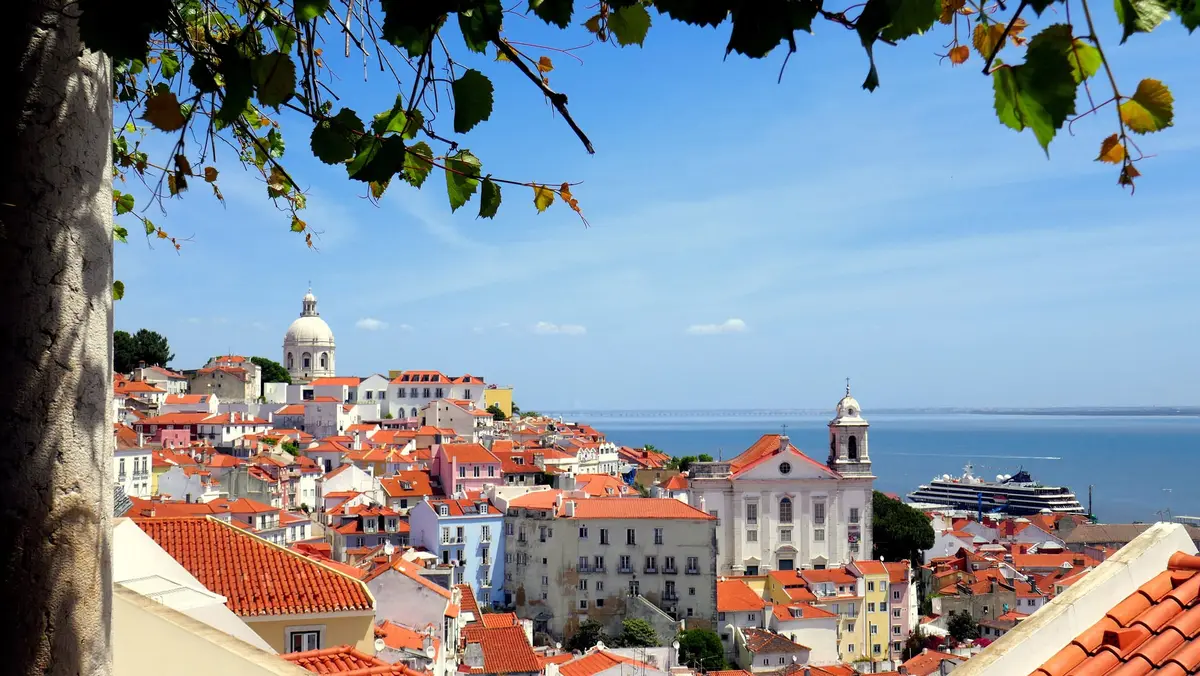
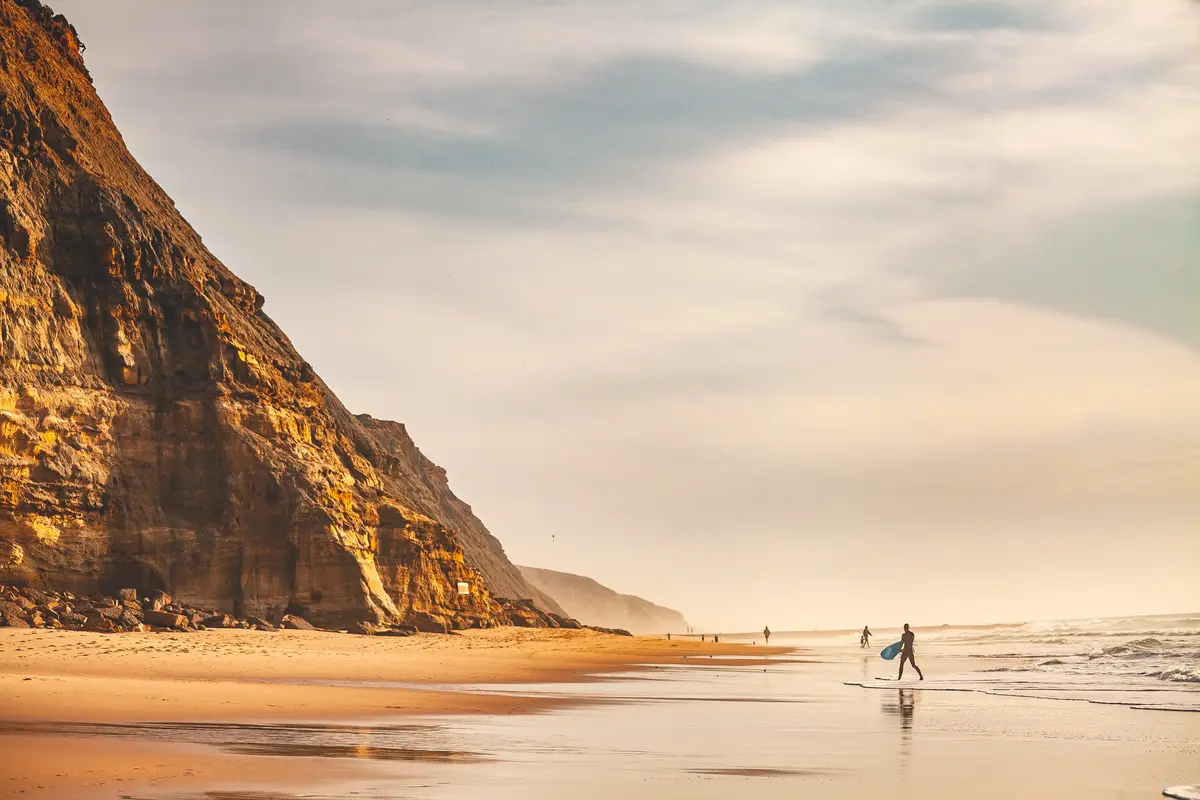
Portugal surfing hits differently when you’ve paddled out at Ericeira at dawn, reef three feet below, not a tourist in sight. After a decade driving 1,793 km (1,114 miles) of this Atlantic coast, here’s what every American surfer needs: the best breaks by skill level, the real costs, and the one decision that makes or breaks the trip.
Why does Portugal attract surfers from around the world?
Portugal surfing earns its reputation because the country’s position as Europe’s westernmost point turns its coastline into a year-round swell catcher. While other European surf destinations go flat in summer, Portugal almost always has something rideable — from gentle 1-foot (0.3 m) beginner waves to 80-foot (24 m) giants at Nazaré — making it the continent’s most complete surf destination.
I’ve surfed coastlines on four continents, and nowhere else have I found this combination: consistent swell, genuinely affordable costs, and enough variety to keep any ability level engaged from a single base.
A natural swell magnet: how the geography works
Portugal’s short continental shelf and complete Atlantic exposure funnel North Atlantic swells directly into the coast with almost no energy loss. That’s why Peniche picks up swell when the Canary Islands are flat, and why Ericeira’s reef breaks barrel cleanly on swells that barely register 50 miles to the south.
On a two-week trip, you will almost never be stuck with completely unsurfable conditions somewhere along this coast. That’s not marketing — it’s geography.
What your dollar gets you here vs. other surf destinations
Portugal remains one of the most affordable countries in Western Europe. A week in Ericeira costs roughly half what the same trip runs in Hossegor, France. A sit-down dinner with wine averages $15–25 per person. A surf lesson runs $35–50. That economic reality means you can stay longer, surf more, and eat at actual restaurants instead of gas stations.
The cultural depth between sessions — fairy-tale castles at Sintra, bacalhau at family-run tascas, a warm pastel de nata from the bakery down the street — makes this more than a wave-hunting mission.

What’s the best time to visit Portugal for surfing?
The honest answer — and the best time to visit Portugal guide covers this for non-surfers too — is that any season works, but for surfers, the right season depends entirely on your ability level. Summer delivers small, forgiving waves ideal for beginners; autumn brings the best conditions for everyone; winter is reserved for experienced surfers only; spring splits the difference.
Summer (June–August): mellow waves, busy lineups
Waves average 1–5 feet (0.3–1.5 m) with water temperatures at 65–71°F (18–22°C). The Atlantic settles into a consistent, manageable pattern that makes summer the easiest entry point for first-timers and early intermediates.
The catch: popular spots near Lisbon and throughout the Algarve get genuinely crowded. The strong northerly Nortada wind also turns exposed west-coast spots choppy by midday most days in July and August.
“The problem in August is having any kind of waves. Normally it’s super flat. You need some luck, but further north bigger chances of getting some waves.”
Pro Tip: If you’re traveling in July or August, plan your sessions at dawn. The Nortada doesn’t pick up in force until late morning, so the 6–10 a.m. window is almost always cleaner than anything you’ll find in the afternoon. Head north of Peniche for the most exposure to whatever swell is running.
Autumn (September–November): the season serious surfers plan around
Ask any regular on this coast and the answer is the same: autumn is when Portugal surfing hits its stride. The first powerful North Atlantic swells arrive in September, ocean temperatures still hold above 64°F (18°C), and the summer crowds have cleared out of the lineup and off the beach.
The MEO Rip Curl Pro Portugal WSL Championship Tour event runs in this window at Supertubos in Peniche each March — watching the world’s best dismantle that wave from the sand is worth building an itinerary around. Beginners can still find the goods in autumn by sticking to sheltered beach breaks like Baleal and Foz do Lizandro.
Winter (December–February): experts-only territory
Water drops to 57–61°F (14–16°C) and requires a 4/3mm wetsuit plus hood and booties. North Atlantic storms send almost non-stop swell, but many famous breaks become too big to safely surf without tow-in equipment.
What winter rewards: empty lineups populated almost entirely by local regulars and a handful of traveling experts. When a large swell aligns with a brief clean wind window, the sessions are the kind you talk about for years.
Spring (March–May): the underrated sweet spot
Spring is when I consistently score the best combination of solid surf, manageable crowds, and pleasant weather. Final winter swells hit Portugal in March and April before backing off. Water is cold — 59–64°F (15–18°C) — but daylight grows quickly, and the coast feels spacious in a way summer never does.
For exploring northern Portugal, spring is the only season that offers both decent waves and weather calm enough to actually enjoy the cliff roads and fishing villages between sessions.
Where are the best surf spots in Portugal?
Portugal’s Atlantic beach breaks divide into four main surf zones: the central coast (Ericeira, Peniche, Nazaré), the Algarve (Sagres), and the urban surf corridors around Lisbon and Porto. Each one delivers a different experience, and knowing which zone matches your level saves you a wasted day driving to the wrong break.
Ericeira — Europe’s only World Surfing Reserve
Ericeira holds a designation no other location in Europe can claim: World Surfing Reserve since 2011. Within 6 miles (10 km) of the town center, there are more quality reef breaks than in some entire countries. The cobblestone streets, the smell of low tide off the rocks at dawn, and the cluster of surf shops wedged between centuries-old buildings make Ericeira feel like exactly what it is — a place where surfing has been the organizing principle for decades.
“My favorite town in Portugal has earned its reputation as one of the top surf destinations in Europe, and for good reason… It is busy here pretty much all year, so I often had trouble finding parking, especially in the afternoon.”
For beginners, Foz do Lizandro offers a wide, sandy beach break 15 minutes south of town on foot. The kind of spot where you can take a lesson and be standing on a board by afternoon. São Julião, a 10-minute drive north, picks up swell from two directions and stays organized even when the main town breaks are messy.
For intermediates, Ribeira d’Ilhas is the signature wave — a right-hand reef break that peels for 200 meters (660 feet) and hosts WSL Qualifying Series events every year. Arrive before 8 a.m. to get your waves before the crowd fills in.
For experts, Coxos sits 5 miles (8 km) north of town. It’s a right-hand reef that has broken boards, fins, and the confidence of surfers who underestimated it. Come here only when you can comfortably handle 6-foot (1.8 m) reef breaks and know how to read a lineup where local regulars are watching every takeoff. Cave, nearby, is a right-hand slab breaking over razor-sharp reef — treat it as a spectator break until you’ve seen it on an average day and still want to paddle out.
- Location: 35 miles (56 km) northwest of Lisbon; 40-minute drive on the A8 motorway
- Cost: Surf lessons from $45/session; surf camp packages from $470/week
- Best for: All levels — Foz do Lizandro for beginners, Ribeira d’Ilhas for intermediates, Coxos for experts
- Time needed: 3–5 days minimum to work through the reserve’s full range
Pro Tip: Parking at Ribeira d’Ilhas fills by 9 a.m. on weekends. Arrive before sunrise or park on the road above the cliff and walk the 10 minutes down. The view from the top looking over the break is worth the extra steps even if you’re not surfing.
Peniche — two coastlines, always a rideable wave
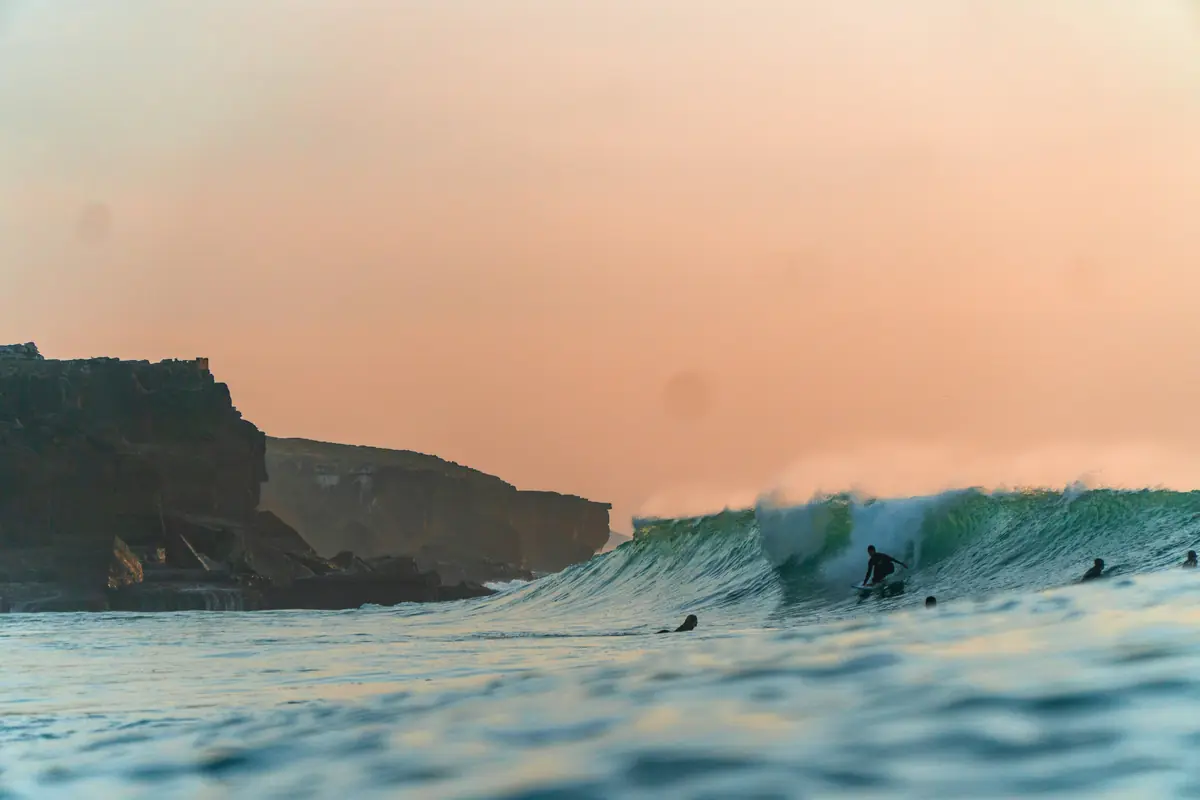
Peniche sits on a peninsula that juts into the Atlantic, which means it almost always has a clean side. When northwest swell and westerly winds turn the south-facing beaches into a washing machine, Baleal on the north side is glassy and organized. That physical setup — combined with the range from gentle beginner beach waves to the most powerful hollow beach break in Europe — makes Peniche the most consistently surfable destination on the coast.
Supertubos is the centerpiece. This left-hand beach break produces waves that tube at the lip and accelerate over a shifting sandbar — fast, hollow, and unforgiving. It hosts the MEO Rip Curl Pro Portugal WSL Championship Tour event each March, and watching the field compete there gives you an immediate sense of what this wave demands: short barrel rides that the world’s best surfers approach with visible respect.
Baleal and Cantinho da Baía face north and stay protected from the main Atlantic swells. Waves here break gently enough that you can spend an entire week learning the basics without feeling overwhelmed, and the cluster of surf schools around the bay means instruction is always close.
“Would definitely recommend going to Baleal beach 15 minutes by taxi from Peniche, loads of cheap surf rental… Waves are big but they were much more beginner friendly and the beach was big enough that crowds weren’t an issue.”
- Location: 55 miles (89 km) north of Lisbon; 1 hour 45 minutes by bus from Lisbon (Rede Expressos)
- Cost: Surf lessons from $35/session; surf camp packages from $470/week at Baleal
- Best for: Beginners (Baleal and Cantinho da Baía), intermediate/advanced (Supertubos)
- Time needed: 2–4 days
Nazaré — where the biggest surfable waves on earth break
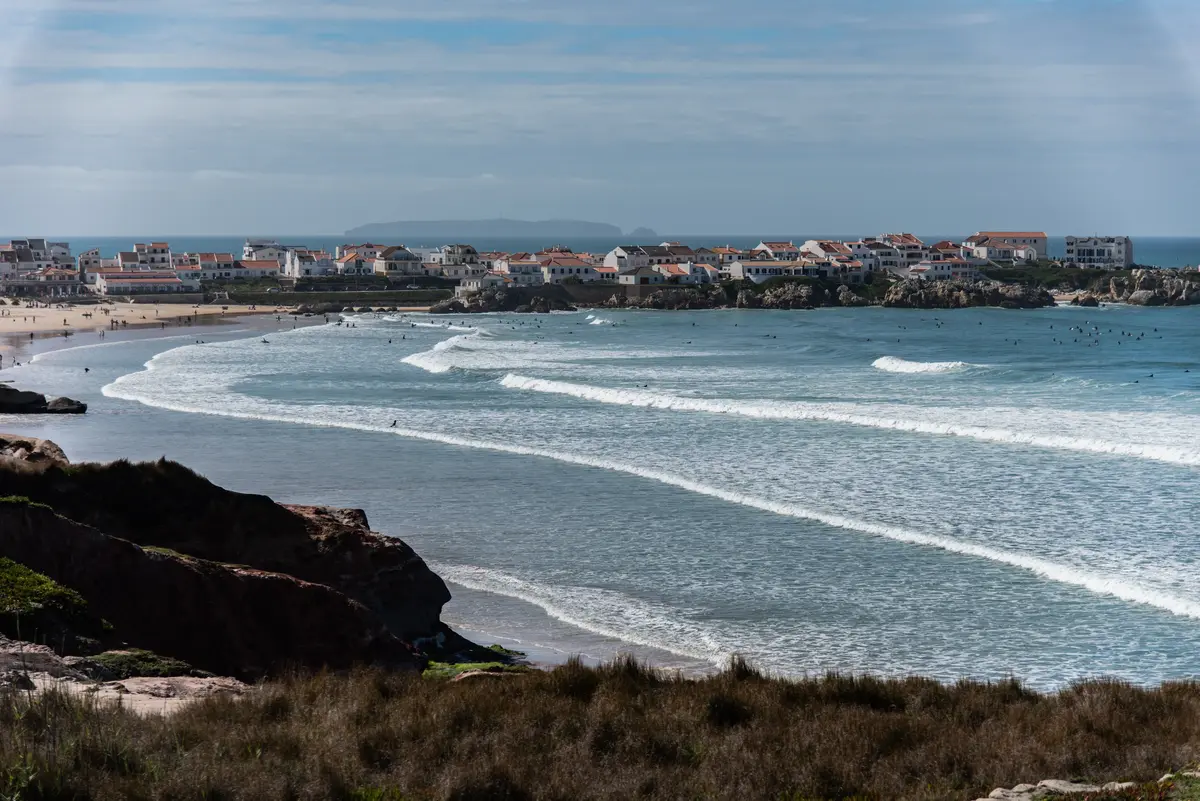
The Nazaré Canyon — one of Europe’s largest underwater canyons at 16,000 feet (4,876 m) deep — funnels Atlantic swells from deep ocean onto the shallow shelf north of the village with almost no energy loss. The result is waves that reach above 80 feet (24 m) at Praia do Norte. Tow-in equipment only. Elite athletes only.
For the other 99.9% of surfers, Nazaré works as a half-day spectator stop from the red lighthouse at the Fort of São Miguel Arcanjo, where you look straight down at waves breaking below. On large swell days in winter, the view is genuinely disorienting — the scale of the water doesn’t register the way it does on video.
Praia do Nazaré, the main village beach, offers powerful beach break that experienced surfers can ride when the giants at Praia do Norte aren’t firing.
- Location: 75 miles (120 km) north of Lisbon; 90 minutes by bus from Lisbon (Rede Expressos)
- Cost: Free to spectate; beach parking €1–2/hour (~$1.10–$2.20/hour)
- Best for: Spectators of all kinds; experienced surfers at Praia do Nazaré on moderate swell
- Time needed: Half-day to full day
Pro Tip: The best big-wave views are from the fort’s lower observation deck, not the upper walkway. Get there before 10 a.m. on large swell days — tour buses don’t arrive until midmorning, and the crowd on the viewing platform more than doubles by noon.
Sagres — the Algarve’s most reliable break
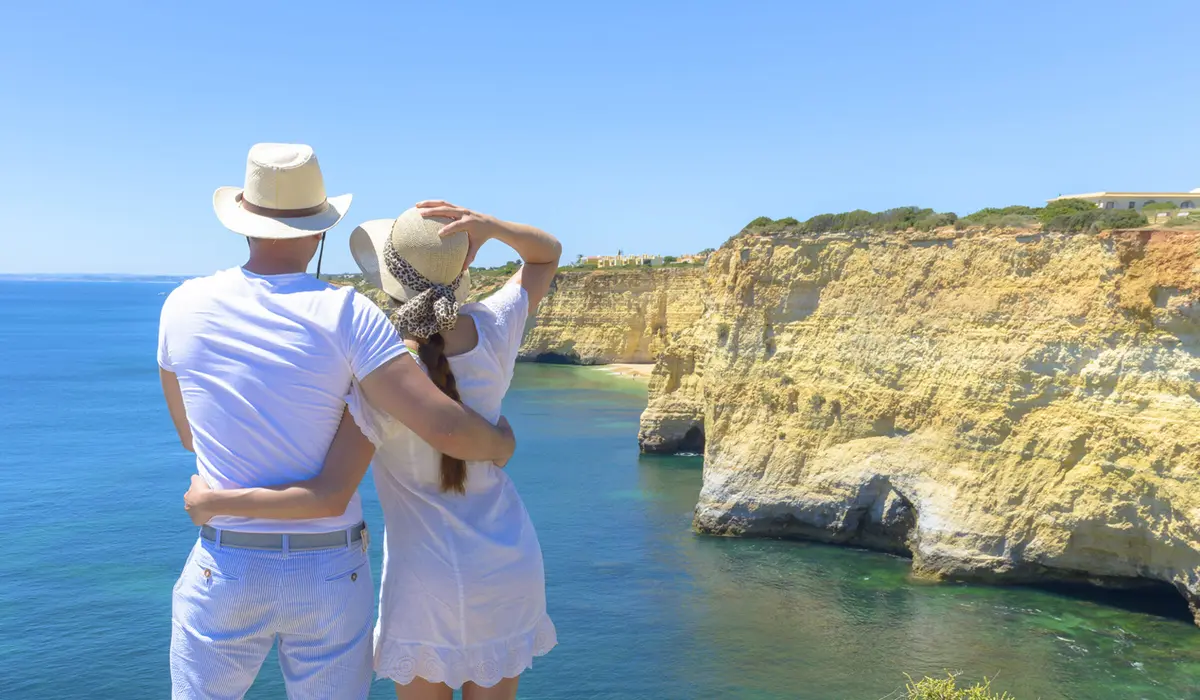
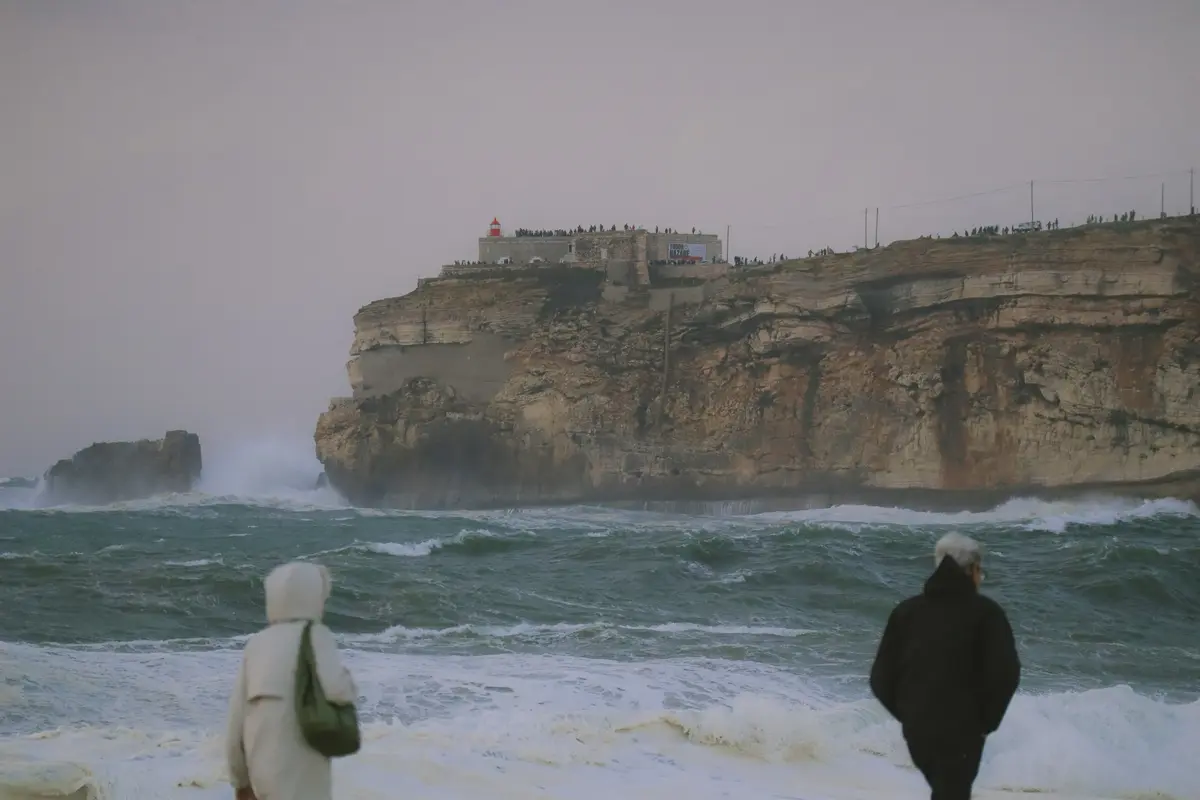
At Europe’s southwestern tip, Sagres sits where the Atlantic meets the south coast and where the wind switches from northerly to easterly offshore within a matter of miles. Tonel Beach, just west of the town center, breaks consistently on northwest and west swells with enough power to keep intermediates honest while staying manageable for adventurous beginners.
Around the corner, Praia da Mareta faces south and stays sheltered from everything except the biggest northwest swells wrapping the headland. When conditions line up, it’s a long, forgiving right with barely anyone out.
Skip the Algarve’s eastern resort strip entirely. Sagres feels like what Portugal must have looked like 30 years ago — raw cliffs, no crowds before 10 a.m., and a surf town atmosphere that hasn’t been smoothed out by mass tourism. The west coast around Aljezur and Vila do Bispo, accessible by car from Sagres in 30 minutes, adds consistent breaks like Praia do Amado and Arrifana for those wanting more variety.
“Sagres is honestly my favourite surf town in the world… Definitely give it a go, and enjoy. Great place to learn to surf! My friend and I were complete beginners but had a great time, the instructor gave a lot of individualized attention as needed.”
- Location: 30 miles (48 km) west of Lagos; 2 hours from Faro Airport by car
- Cost: Surf lessons from $40/session
- Best for: Beginners (Mareta and Tonel on small swell), intermediates (Tonel on medium swell)
- Time needed: 3–5 days
Carcavelos — Lisbon’s most accessible (and crowded) wave
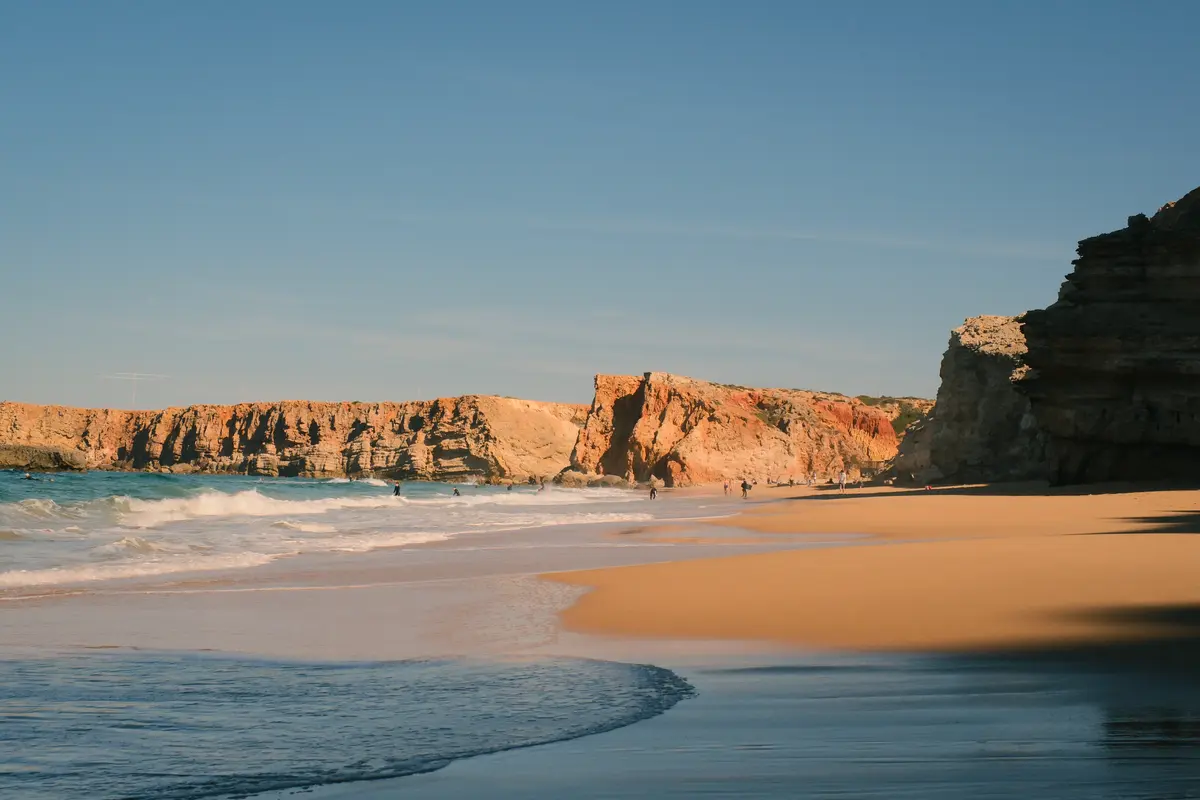
A 35-minute commuter train ride from Lisbon‘s Cais do Sodré station drops you 400 meters from the water. Carcavelos produces fast, hollow beach break that closes out aggressively in big swells but shapes into clean barrels when conditions cooperate. The wave is legitimately good — which explains why this stretch hosts one of Portugal’s oldest surf communities and one of its most competitive lineups.
On weekend afternoons the water at Carcavelos feels uncomfortably tight. Go on a Tuesday morning before 9 a.m. and the crowd thins considerably — same wave, a fraction of the people.
- Location: Cascais commuter train line, 15 miles (24 km) west of Lisbon; 35 minutes from Cais do Sodré
- Cost: Free beach; surf lessons from $40/session; gear rental from $25
- Best for: Intermediate-advanced surfers comfortable in competitive lineups
- Time needed: Half-day from Lisbon
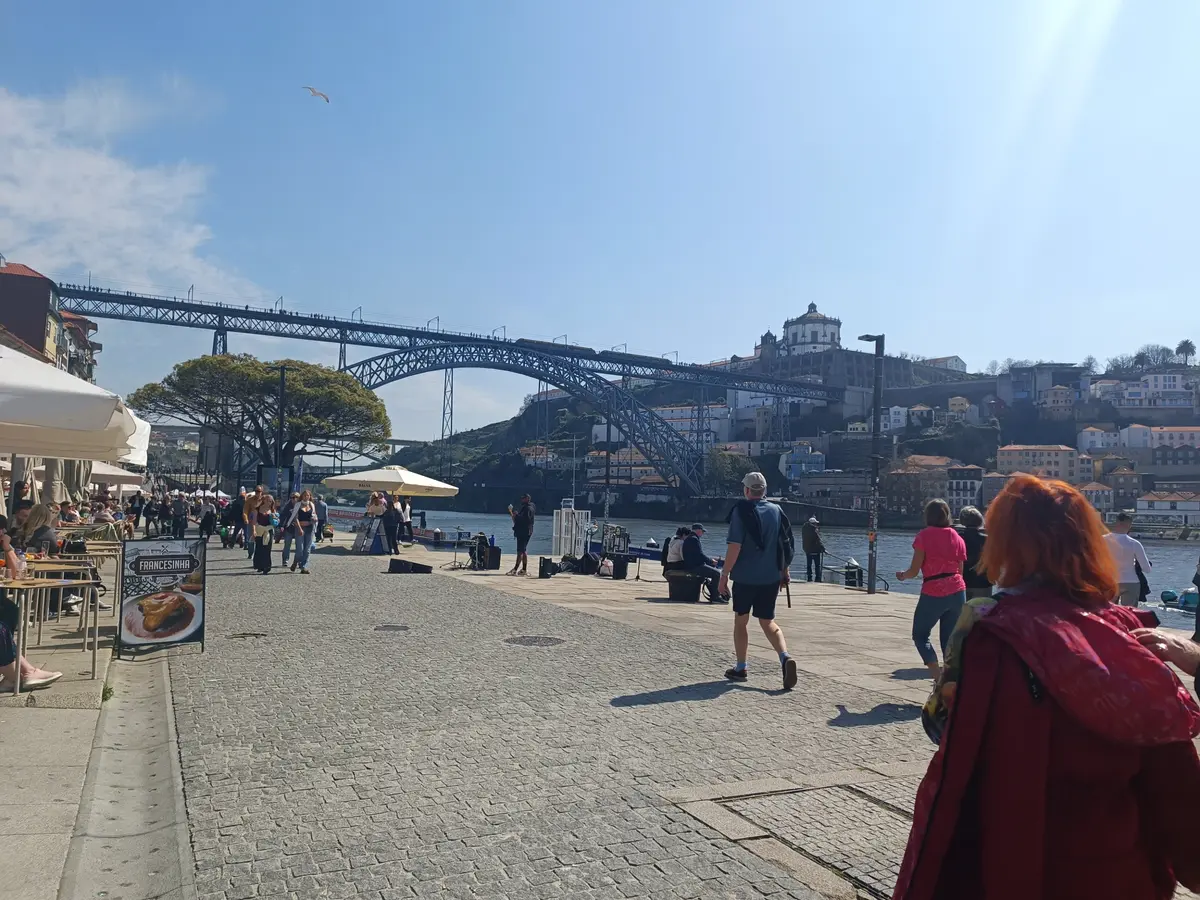
Matosinhos — Porto’s front door to the Atlantic
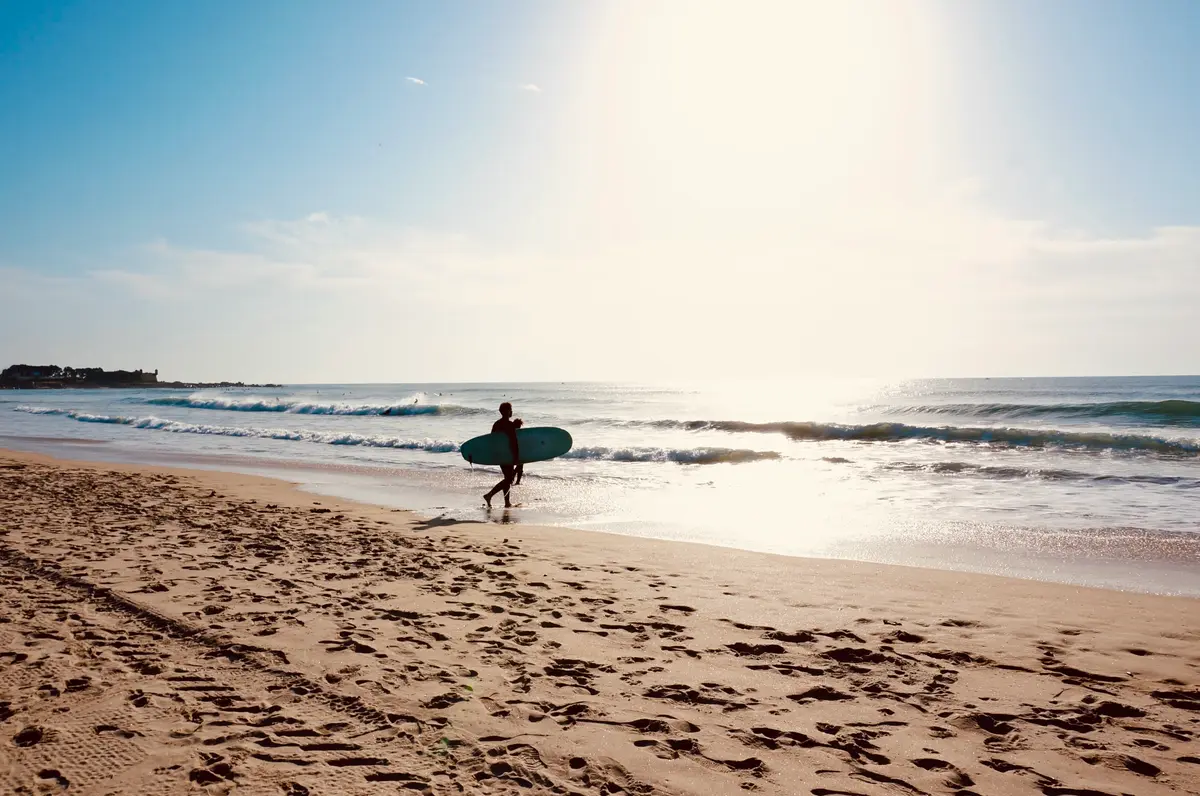
Porto is 2 miles (3 km) from the Atlantic, and Metro Line A gets you to Matosinhos Beach from São Bento station in about 20 minutes. The wave here is a mellow, forgiving beach break — by far the easiest urban surf access in Portugal. Water temperatures in the north run about 4°F (2°C) colder than Lisbon year-round, and the crowds are a fraction of what you’ll find at Carcavelos or Ribeira d’Ilhas.
- Location: Matosinhos, 2 miles (3 km) northwest of Porto; Metro Line A from central Porto
- Cost: Free beach; surf gear rentals from $20/session
- Best for: Beginners and intermediates; practical if your trip starts or ends in Porto
- Time needed: Half-day session
How do you plan a Portugal surfing trip from the USA?
Planning a surf trip from the US to Portugal is straightforward if you pick the right arrival city and accept one fundamental truth early: the best breaks are not reachable by public transport. Integrating this trip into a broader Portugal road trip itinerary — hitting multiple regions in sequence — is how you maximize both waves and value.
Which airport should you fly into?
Match your arrival airport to your primary surf region:
- Lisbon (LIS): The most central option — covers Ericeira (40 minutes), Peniche (75 minutes), and Nazaré (90 minutes)
- Faro (FAO): Ideal for the Algarve; Sagres is 2 hours west by car
- Porto (OPO): Best for the Green Coast and Matosinhos; 20 minutes from the city center
From the US, direct and one-stop service from New York, Boston, Miami, Chicago, and San Francisco connects to all three airports. TAP Air Portugal operates the most direct routes; United, Delta, and JetBlue also serve Lisbon.
Current budget reality for round-trip economy:
- East Coast: $380–$600, depending on airline and season
- West Coast: $550–$750
Why renting a car is non-negotiable
The single most important decision in planning a Portugal surfing trip is this: rent a car in Portugal. Public transport connects cities fine but does not reach the dirt roads above Coxos, the cliff access at Arrifana, or the exposed pull-offs that separate crowds from empty peaks.
A car lets you follow the swell and the wind in real time. When Ericeira goes onshore at noon, you drive 20 minutes south to Costa da Caparica. When Peniche closes out, you check the north side of the peninsula in 10 minutes. That flexibility is the core of the experience.
Book in advance for the high season — supply tightens quickly and rates climb.
Surf camps, hostels, or hotels: which makes sense for you?
Surf camps handle logistics, instruction, equipment, and often meals in a single package. They’re the right call for first-timers, solo travelers, and anyone who doesn’t want to spend a vacation making decisions. Packages typically include accommodation, daily lessons, gear, and beach transport.
Surf hostels work for experienced surfers or those on a strict budget who want to handle their own lessons and equipment separately. Expect dorm beds at $30–50/night and private rooms from $70/night — plus strong common areas for meeting other surfers.
Hotels and Airbnbs make more sense for couples, families, or groups who want quiet mornings and private space. If you’re based in the Algarve, position yourself within 20 minutes of your target breaks — the peninsula roads eat time.
How much does a Portugal surfing trip actually cost?
A one-week Portugal surfing trip runs $1,450–$2,700 per person depending on whether you go hostel-and-DIY or surf camp. The biggest variable isn’t the flight — it’s accommodation. Budget dorms run $35/night; mid-range surf camps with instruction start at $470 per week and climb from there.
Budget traveler (hostel + DIY), per person:
- Flight: $500
- Accommodation, 7 nights: $245 (~$35/night hostel dorm)
- Car rental, split 2 ways: $175
- Food and drink: $280
- Surf gear and lessons: $150
- Miscellaneous: $100
- Total: ~$1,450
Comfort traveler (surf camp or hotel), per person:
- Flight: $500
- Accommodation/surf camp, 7 nights: $750 (mid-range package from ~€650/week)
- Car rental: $280
- Food and drink: $490
- Lessons and gear: $450
- Miscellaneous: $200
- Total: ~$2,670
The honest comparison with other European surf destinations: a comparable comfort-traveler week in Hossegor or the Basque Country runs 30–40% more for similar accommodation quality. Portugal’s affordability advantage is real and it compounds across a longer trip. For the full breakdown of Portugal travel costs across trip types, the comparison guide is worth reviewing before you book.
What are the surf etiquette rules in Portugal?
Lineup etiquette in Portugal follows the same universal rules that apply at every break in the world, but knowing the unwritten hierarchy at competitive spots like Coxos and Supertubos is what separates visiting surfers who get waves from those who spend an hour paddling into conflicts. The core rule: the surfer nearest to the peak has right of way, no exceptions.
When paddling out, take a wide path through channels or whitewater. Cutting through the lineup during someone’s ride is the fastest way to become unwelcome. Wait your turn, communicate with nearby surfers before committing to a wave, and never drop in on a wave already being ridden.
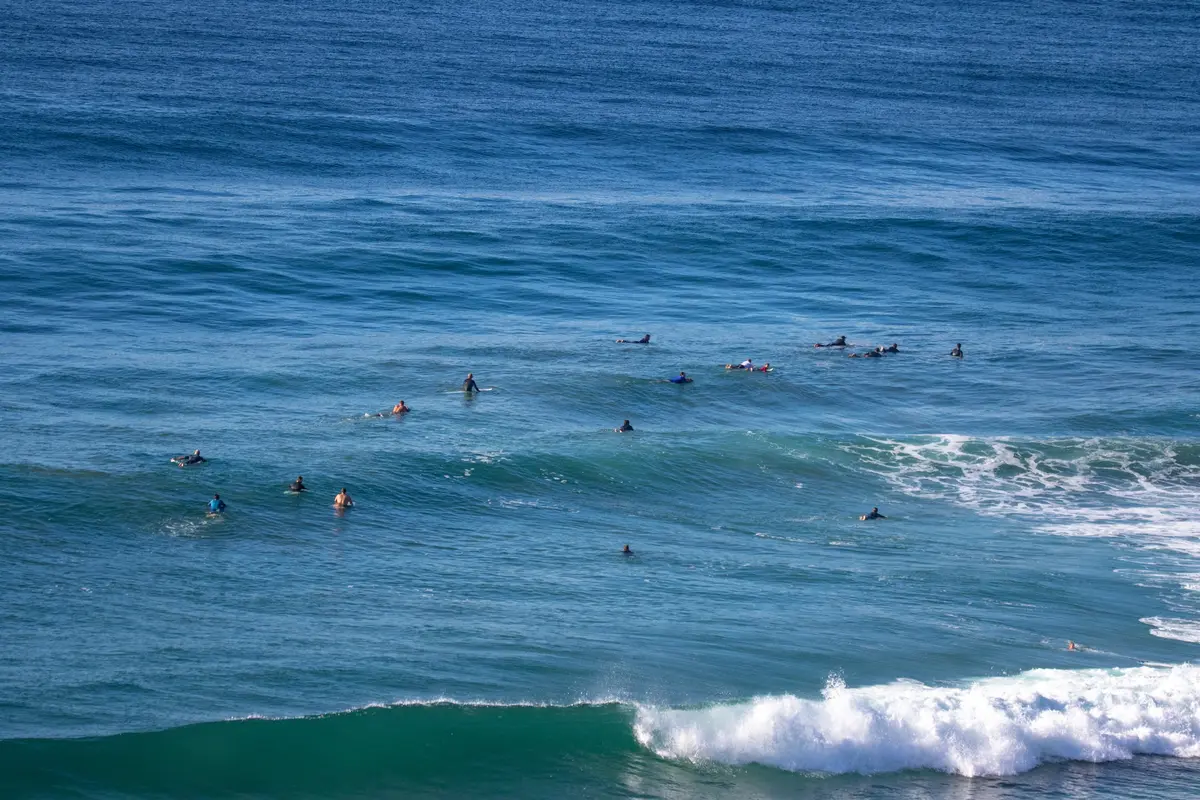
At spots like Coxos and Ribeira d’Ilhas, regulars know each other and the lineup runs with an informal hierarchy built over years of shared sessions. Visiting surfers who show patience, wait their turn, and acknowledge others with a nod tend to get far more waves than those who paddle aggressively into every gap.
The local surf culture and athletes who shaped it
Tiago “Saca” Pires became the first Portuguese surfer to compete on the WSL Championship Tour, opening the door for a generation of professionals from this coast. Frederico “Kikas” Morais followed, competing at the elite CT level and continuing to pursue it through the Challenger Series — with Supertubos, his home break, consistently one of the best performances of his season. In big waves, Nic Von Rupp has charged Nazaré’s giants with enough consistency to rank among the most respected big-wave athletes in the sport.
Understanding who these surfers are gives you context for why the lineups at Coxos and Ribeira d’Ilhas run competitive. These aren’t just famous breaks. They’re active training grounds for people who have spent their lives in these specific waves.
Universal etiquette rules matter more at spots with that kind of history — a depth rooted in Portugal culture that extends far beyond surfing. Show respect, be patient, and remember that a simple smile or nod from a stranger in a Portuguese lineup goes further than in most places I’ve surfed.
The bottom line
TL;DR: Portugal surfing delivers year-round waves across 1,793 km (1,114 miles) of Atlantic coast, with something for every skill level. Autumn is the peak season across all levels. Ericeira is the technical headquarters of European surfing; Peniche is the most reliable all-around destination for visitors. Rent a car — there is no alternative if you want the best of what this coast offers.
For castles, cities, food, and logistics beyond the surf, the Portugal travel guide covers it all.
If you had to pick one destination for a first trip, choose Peniche: the north-facing Baleal beach works for beginners, Supertubos keeps the experienced crowd engaged, and the peninsula’s geography means you almost never get completely skunked by the wind.
Have you found a spot on this coast that punched above its reputation — or one that didn’t live up to the hype?