Évora Portugal collects fewer visitors than Lisbon or the Algarve, and that is precisely why it works. This is where a Roman temple stands open to the street, a cathedral rooftop offers a 360-degree view of terracotta plains, and lunch still takes two hours by default. Here is everything you need to visit it well.
How do you get to Évora from Lisbon?
The journey from Lisbon to Évora takes roughly 90 minutes by train or bus. Both options are comfortable, though they differ sharply in departure frequency — and that difference matters more than price. A rental car makes sense only if your itinerary extends to wineries or megalithic sites outside the city; anyone considering this option should look at renting a car in Portugal before arrival rather than sourcing one locally. For a stay inside the walls, it adds more hassle than value.
By train
The CP Intercidades service departs from Lisboa Oriente, also stopping at Sete Rios and Entrecampos before heading south. Weekday trains run five times daily; weekend service drops to three. The train is a pleasant ride — spacious carriages, allocated seats, views of the Alentejo plains opening up after the Tagus crossing.
- Departs from: Lisboa Oriente (also stops at Sete Rios and Entrecampos)
- Journey time: 93 minutes
- Cost: €12.50 ($13.50) second class; €16.65 ($18) first class
- Frequency: 5 departures/day weekdays; 3 on weekends and holidays
Buy tickets at cp.pt before you travel — seats are allocated and trains sell out on summer weekends. The earlier you book, the more you can save on promotional fares.
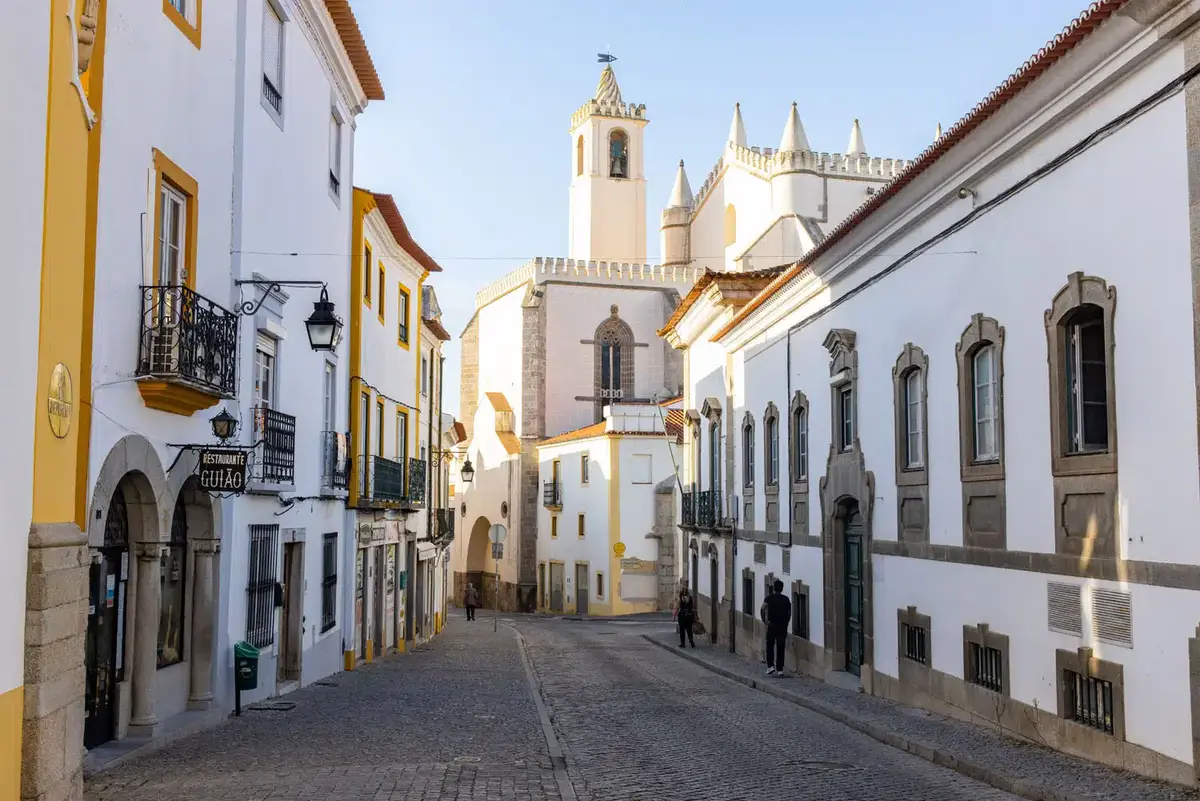
Pro Tip: The train station sits about 10 minutes south of the walled city. Exit the station, cross the road, and walk straight up Rua da República — you pass the Church of St. Blaise on the way and arrive at Praça do Giraldo without needing a map or a ride.
By bus
Rede Expressos departs from Sete Rios (Jardim Zoológico metro station, blue line) with up to 23 departures a day — far more than the train — and arrives at the bus terminal near the city center. FlixBus covers the same route at a lower price point when booked in advance.
- Departs from: Sete Rios, Lisbon
- Journey time: 80-90 minutes
- Cost: from ~€9 ($10) FlixBus; ~€12.50 ($13.50) Rede Expressos
- Frequency: up to 23 departures/day
The bus station in Évora sits closer to the historic center than the train station — a meaningful difference at the end of a travel day.
Pro Tip: On weekends, when the train drops to three daily runs, the bus is the smarter option. More departure windows, same journey time, and you are closer to your hotel when you arrive.
By car
The drive from central Lisbon takes 75-90 minutes (84 miles / 135 km). This option makes genuine sense if you plan to visit the Almendres Cromlech, rural wineries, or Monsaraz — none of which are reachable by public transport.
- Distance: 84 miles (135 km)
- Drive time: 75-90 minutes
- Cost: ~€30+ ($33+) in fuel and tolls
- Required: Via Verde transponder for the A6 highway (bills tolls automatically to your card; manual toll lanes are slow and confusing without Portuguese language skills)
Parking inside the walls
Do not drive inside the city walls unless you have bags to drop off. GPS signals are unreliable in the narrow medieval streets, and most lanes were not designed for vehicles wider than a cart.
The most practical parking option is the lot near the Agua de Prata Aqueduct. It is spacious, avoids the steep inclines at other entry points, and positions you for a flat, scenic walk into the city along the aqueduct.
When is the best time to visit Évora?
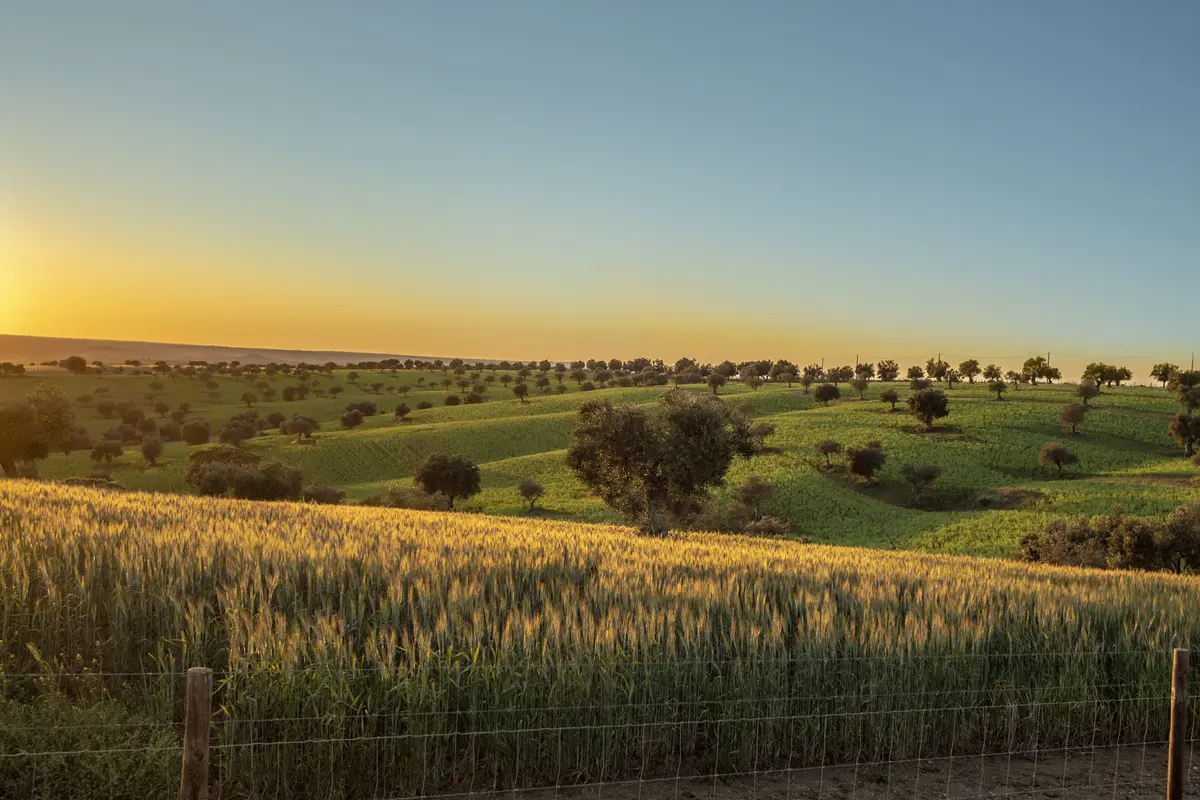
Spring — March through May — is the best time to visit Portugal and the Alentejo in particular, with temperatures sitting between 60-75°F (15-24°C), wildflowers covering the plains, and the light on the Roman Temple turning golden before the first tour group arrives. Autumn (September through November) is the second-best window: the grape harvest is underway, the heat has broken, and the city is quieter than summer.
Summer is workable only if you restructure your day around the heat. July and August regularly push past 104°F (40°C), making Évora one of the hottest cities in Portugal during those months. Locals do not walk around between noon and 5 p.m., and the streets reflect that — empty in a way that feels almost theatrical.
Pro Tip: Keep outdoor sightseeing to before 11 a.m. or after 6 p.m. in summer. The midday block is best used for museums, a long lunch, or the kind of siesta that makes the rest of the afternoon feel possible.
Where should you stay in Évora?
Évora’s best accommodation falls into two categories: converted historic buildings inside the walls (walkable to everything, limited parking) and larger properties outside the center (more space, require a car or short transfer). The four options below represent the strongest picks in each tier — for a wider selection, the guide to the best hotels across Portugal covers every major region.
Convento do Espinheiro
The most ambitious hotel near Évora sits just outside the city center — a 15th-century convent redesigned as a luxury property carrying the official Portuguese designation of Historic Hotel and Spa. Monk cells are now fully appointed suites. The cloister where Portuguese kings once walked is open to guests for unhurried morning visits, and the on-site church is still intact.
The pool and spa operate at genuine resort level. On my last visit, the outdoor terrace was quiet even in high season — a real contrast to the noise inside the walls at night.
- Location: Quinta do Espinheiro, just outside Évora’s walls
- Cost: from ~$250/night
- Best for: Couples, travelers wanting resort amenities inside authentic historical architecture
- Time needed: Best as a 2-night base
M’ar de Ar Aqueduto
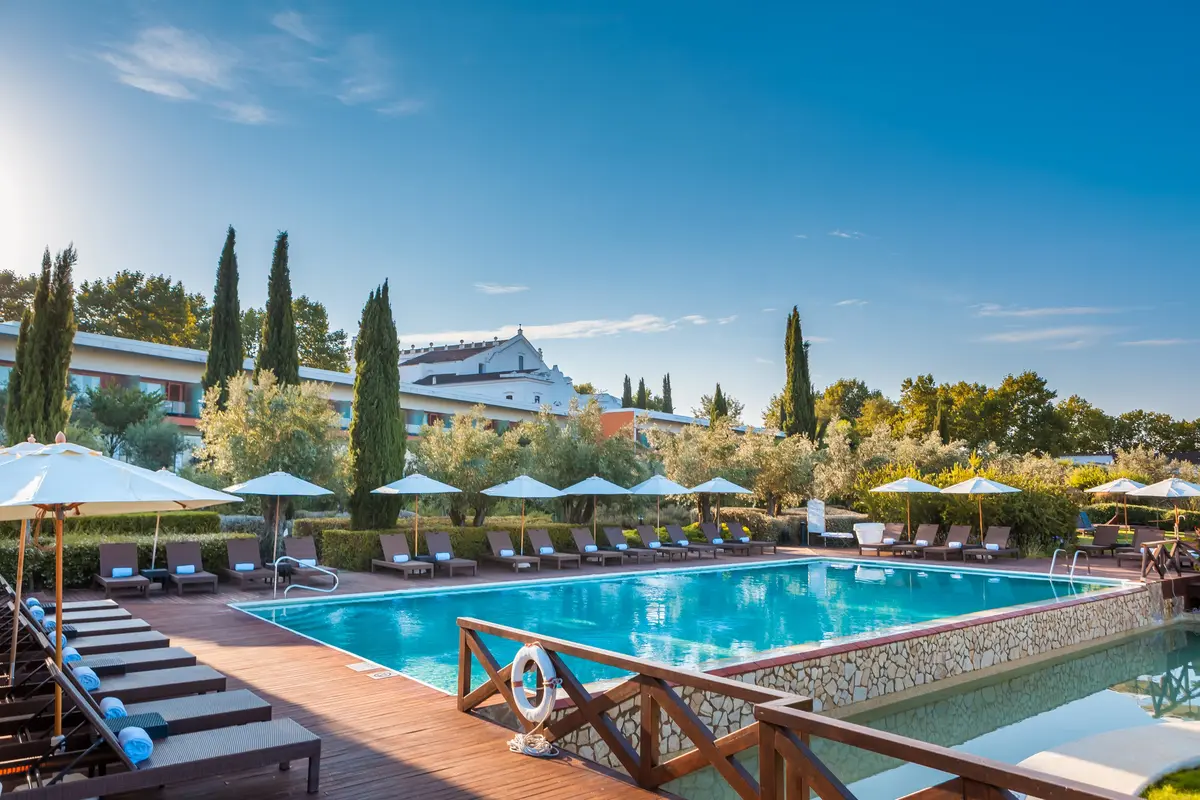
A five-star boutique hotel inside the walls, built around a contemporary design that gives the surrounding medieval architecture room to breathe. The pool looks directly onto the Agua de Prata Aqueduct — the most photogenic 20 square feet in Évora. Walkability is unmatched: the Roman Temple, the cathedral, and the Chapel of Bones are all within 10 minutes on foot.
Rooms facing the aqueduct justify the rate. Rooms on the street side pick up noise until around 11 p.m. The air conditioning interface is notably unintuitive — call the front desk rather than spending twenty minutes cycling through menus; the staff have fielded that call a thousand times.
- Location: Inside the historic walls, central Évora
- Cost: from ~$180/night
- Best for: Couples, design-focused travelers, first-time visitors who want everything walkable
- Time needed: 1-2 nights minimum
Albergaria do Calvário
A family-run property inside the walls that earns consistent high marks for hospitality without trying to be a design hotel. Breakfast uses fresh regional ingredients — the bread and cheese come from the Alentejo, not a hotel kitchen supplier. Staff members give real advice on logistics: where to book, what to skip, how early to arrive at the Chapel of Bones.
On-site parking is a practical advantage that sounds minor until you realize how actively the city discourages cars inside the walls.
- Location: Inside the historic walls
- Cost: from ~$120/night
- Best for: Solo travelers, couples who prefer character over polish
- Time needed: 2+ nights
Imani Country House
Located near the Almendres Cromlech, this rural property offers orange groves, total quiet, and the kind of Alentejo silence that takes a full morning to adjust to. The trade-off is real: you need a car, and you will spend €15-20 ($16-22) each way in fuel or rideshare to reach Évora’s center.
- Location: Rural Alentejo, near Almendres Cromlech — outside the city
- Cost: from ~$150/night
- Best for: Travelers wanting full disconnection, cork forest and winery itineraries
- Time needed: Minimum 2 nights to justify the distance
Which heritage sites in Évora are worth your time?
No other city in southern Portugal packs this much history into a footprint this compact. Évora was spared the destruction of the 1755 Lisbon earthquake — an accident of geography that left the medieval city largely intact. Roman, Moorish, and medieval architectures share the same blocks. You encounter history on working streets, not behind museum glass.
The Roman Temple
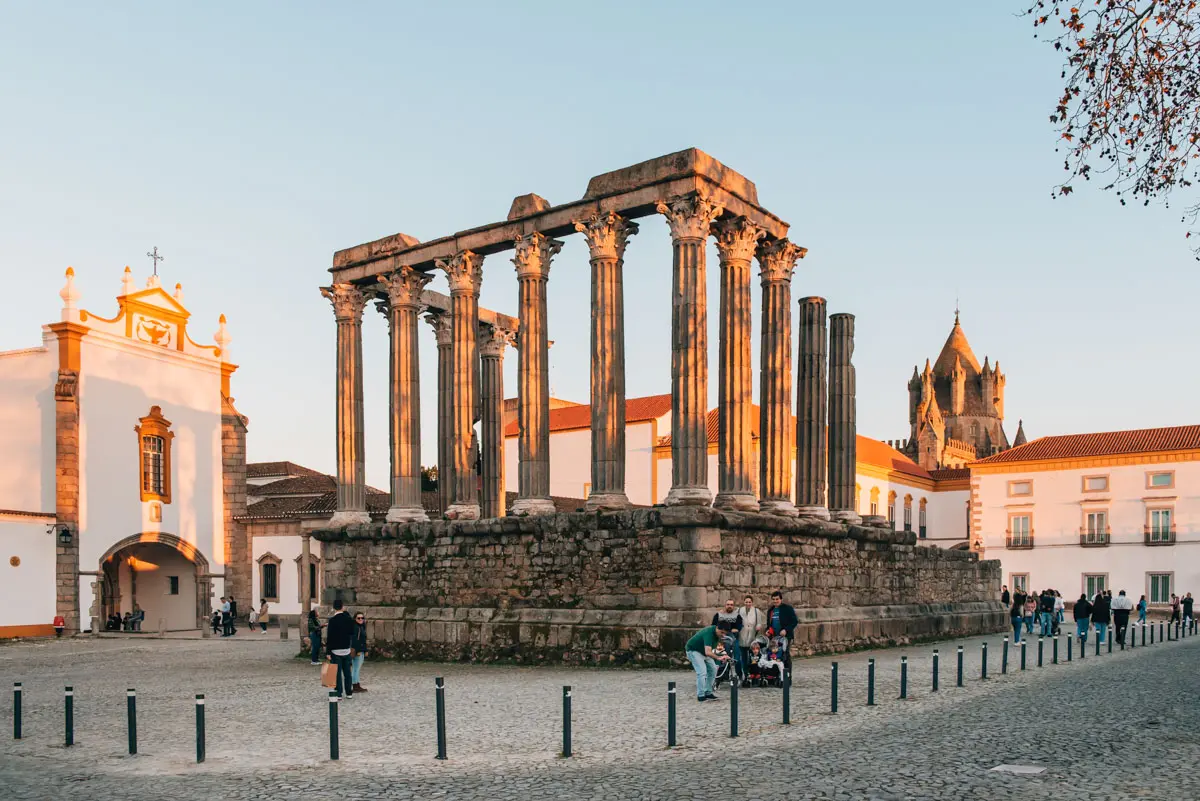
Built in the 1st century A.D. and dedicated to the Imperial Cult of Emperor Augustus, this is the most recognizable structure in Évora Portugal — and also the most accessible. There is no ticket gate between you and the columns; the temple stands open to the street, lit by the same sun it has been standing under for two thousand years.
Fourteen Corinthian columns survive. The reason they survived: the structure was converted into a butcher shop during the Middle Ages, which made it too useful to pull down. That mundane preservation story is more interesting than most official plaques admit. Photograph it at sunset, when the granite turns warm orange and the tourist flow drops.
The Cathedral (Sé)
The largest medieval cathedral in Portugal, built primarily between 1280 and 1340. The interior is worth entering, but the roof is the real reason to buy a ticket. Access to the rooftop gives you a 360-degree sweep over terracotta rooftops, church towers, and flat Alentejo plains running toward the horizon. The gothic cloister below the main nave is underrated — arrive before 9 a.m. and you may have it to yourself.
The Chapel of Bones (Capela dos Ossos)
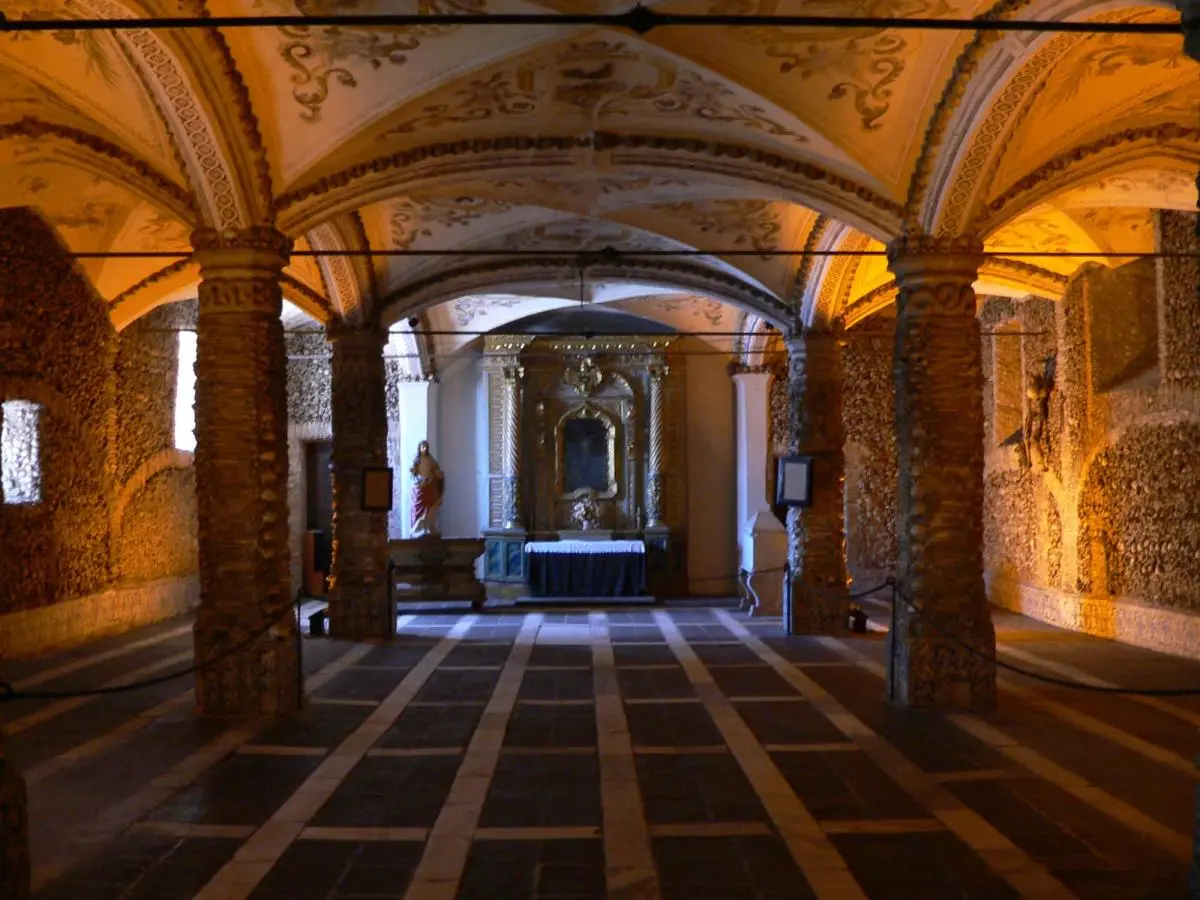
Franciscan monks built this chapel in the 17th century as a deliberate response to the secular trends of the era. The walls, columns, and ceiling are lined with the bones and skulls of approximately 5,000 people, arranged in deliberate decorative patterns rather than stored at random.
The inscription above the entrance translates to: “We bones that are here await yours.” It is genuinely unsettling, completely original, and sits inside the Church of St. Francis — included with your church entrance ticket.
Pro Tip: Arrive before 9 a.m. By 10 a.m., the small interior fills with tour groups and the experience shifts from something personal to something logistical. Thirty minutes in silence here is worth more than an hour with a crowd.
The Aqueduct Walk
The Agua de Prata (Silver Water) Aqueduct runs directly into the city and offers a free, flat walking path from the parking area into the historic center. No ticket, no queue — just a long, impressive piece of Roman-era infrastructure that doubles as a practical route into town for anyone arriving by car.
What should you eat in Évora?
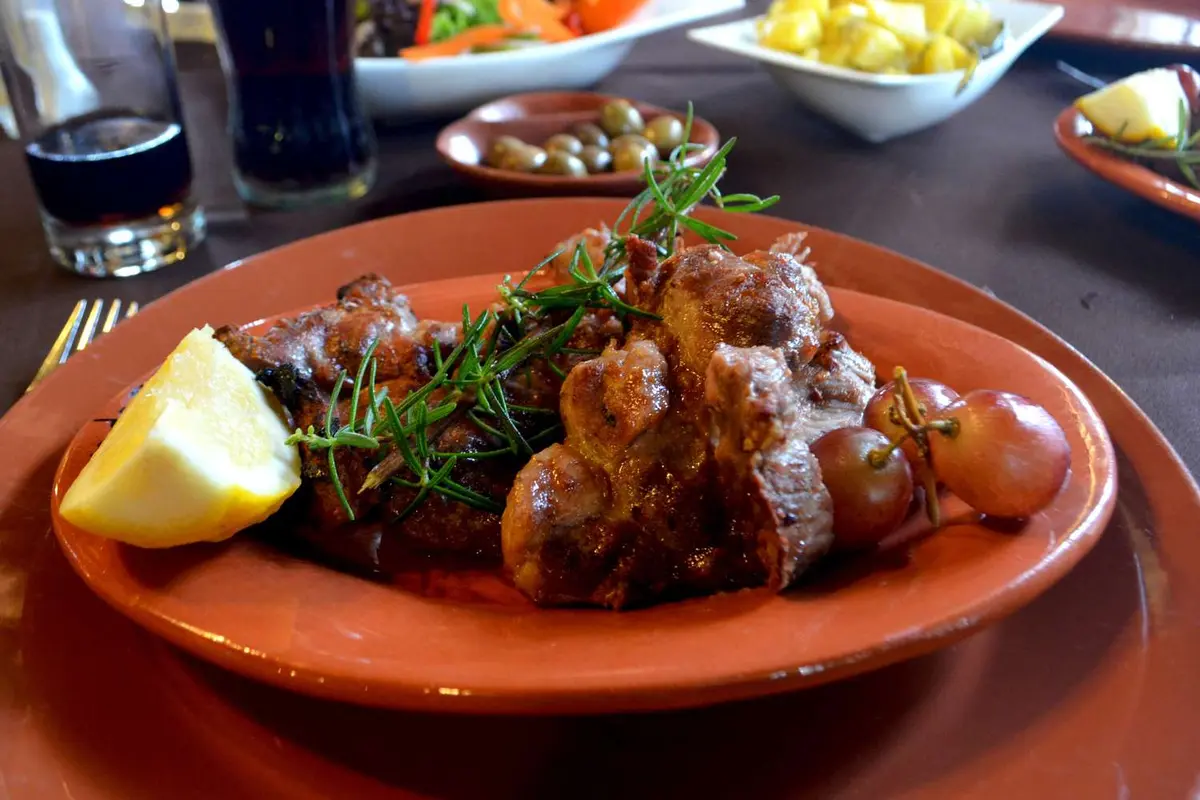
Alentejo cuisine sits apart from the seafood-heavy diet of the Portuguese coast; it belongs in a different chapter of any Portugal food guide. It is built on bread, olive oil, garlic, and coriander — food designed to sustain people through long days of agricultural labor in serious heat. What reads as peasant food on paper arrives on the plate with confidence and depth. This is some of the most honest cooking in the country.
Essential dishes to try
- Açorda Alentejana: A broth-based soup with garlic, coriander, olive oil, and a poached egg dropped in at the table. Deceptively simple. Order it as a starter in every restaurant that offers it.
- Porco Preto: Black pork from indigenous pigs raised on acorns in the cork forests. Richer and darker than standard pork — order it as a main course, not a sharing plate.
- Migas: Breadcrumbs fried with garlic, olive oil, and pork drippings, usually served as a side. Filling enough to anchor a meal by itself.
- Sopa de Cação: Dogfish shark soup with vinegar and coriander. The shark gives it a texture that divides opinion — worth ordering once.
- Sericaia: A soufflé-like egg pudding baked with cinnamon and served with Elvas plums. Order it even if you think you do not want dessert.
Where to eat in Évora
Fialho is the oldest and most formally set restaurant in Évora Portugal — silver service, game dishes, and recipes that have not changed in decades. Book well in advance; the kitchen is not interested in being fashionable, and the tables reflect that.
Taberna Típica Quarta-Feira operates without a printed menu: the chef sends out courses based on whatever arrived fresh that morning. You eat what Évora eats that day. Turning up without a reservation means being turned away — book as early as possible.
Botequim da Mouraria runs on eight seats and some of the best cured ham in the Alentejo. Tua Madre applies a lighter touch to the same regional ingredients, useful if you want the flavors without the traditional format.
Tipping and etiquette
Tipping norms in Évora follow broader tipping in Portugal conventions but differ sharply from US expectations.
- For casual meals: round up to the nearest euro — nothing more is expected
- For fine dining: 5-10 percent is genuinely generous
- Couvert items (olives, bread, cheese placed on the table): these cost money if you eat them; send them back if you do not want them
- Tap water is safe to drink, though it carries a faint chlorinated aftertaste; most locals order bottled water without a second thought
Is Alentejo wine worth building a day around?
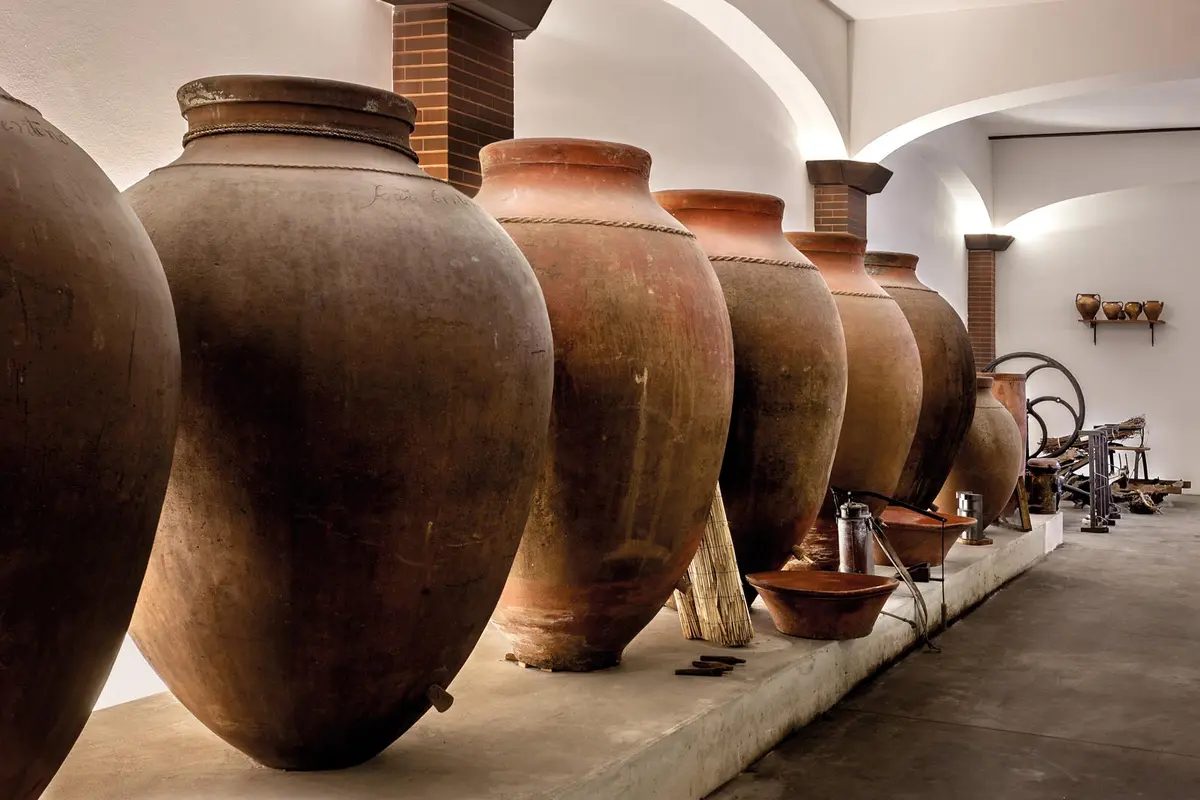
Alentejo produces some of the most well-regarded wines in Portugal — full-bodied reds with structure that outperforms their price point on the export market. What makes the region particularly worth visiting in person is the Talha wine revival: wines fermented in large clay amphoras using Roman-era methods, the results earthy, often unfiltered, and completely unlike the clean Alentejo reds you find in wine shops abroad.
Cartuxa is the closest estate to the city center — 10 minutes by car — and a reliable entry point. Fitapreta operates inside a 14th-century palace and integrates the architectural history into the tasting experience itself. Ervideira takes the most experimental position, aging certain wines submerged in the Alqueva reservoir; the unusual conditions are detectable in the finished bottles.
Pro Tip: Book morning tastings. Most estates open at 10 a.m. and the first tours of the day move slower and stay smaller. By early afternoon, groups from Lisbon tour buses dominate the schedule.
Which activities outside Évora are worth a half-day?
Cork trekking
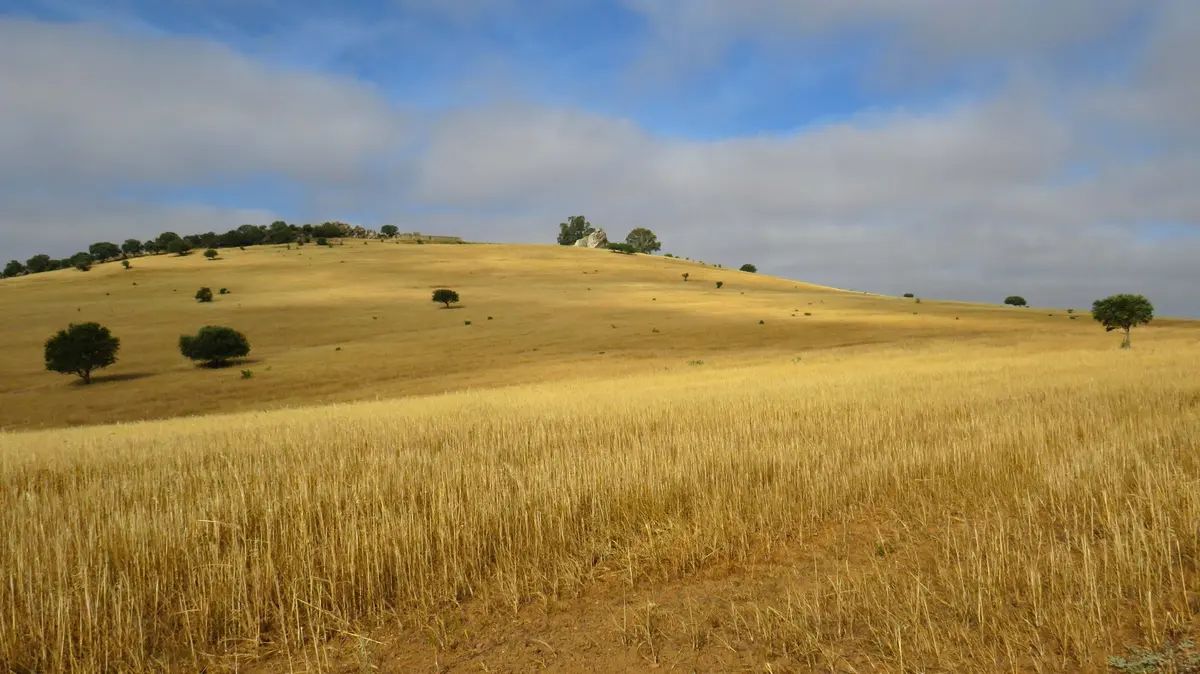
Portugal produces roughly half the world’s cork supply — the range of cork products in Portugal extends far beyond wine stoppers — and the forests around Évora are an active part of that system: working, managed, and almost never on a tourist itinerary. Trees in current harvest rotation are marked with their last stripping year, painted directly onto the trunk in white.
Maroteira runs jeep and walking tours through these forests, typically finishing with a lunch featuring black pork. The combination of a working landscape and a long Alentejo table is one of the stronger half-days in the region — educational in the way that actually holds your attention.
Megalithic tours
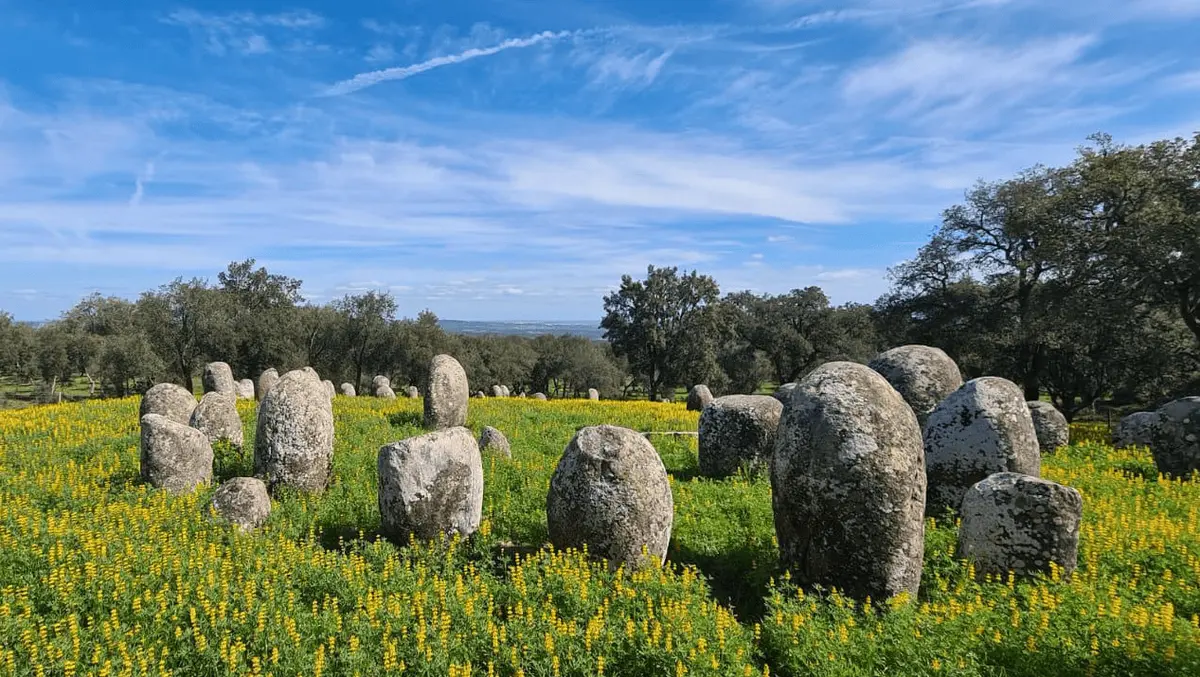
The Almendres Cromlech sits 9 miles (14 km) west of Évora and predates Stonehenge. Ninety-five standing stones are arranged across two connected ellipses on a low hillside, with astronomical alignments that track solstices and equinoxes built into the layout. It is the largest stone circle on the Iberian Peninsula and cannot be reached by public transport.
A guided tour earns its cost here. Without context, the site reads as a field of rocks. With a guide who understands the astronomical geometry, it becomes something precise and genuinely surprising.
Hot air ballooning
The flat Alentejo plains and consistent morning air make this one of the cleaner ballooning environments in Europe. Balonissimo flies small groups — typically four to five passengers maximum — at sunrise, with around an hour in the air before a field landing. Flights run approximately €160 ($173) per person and include a celebratory toast after landing.
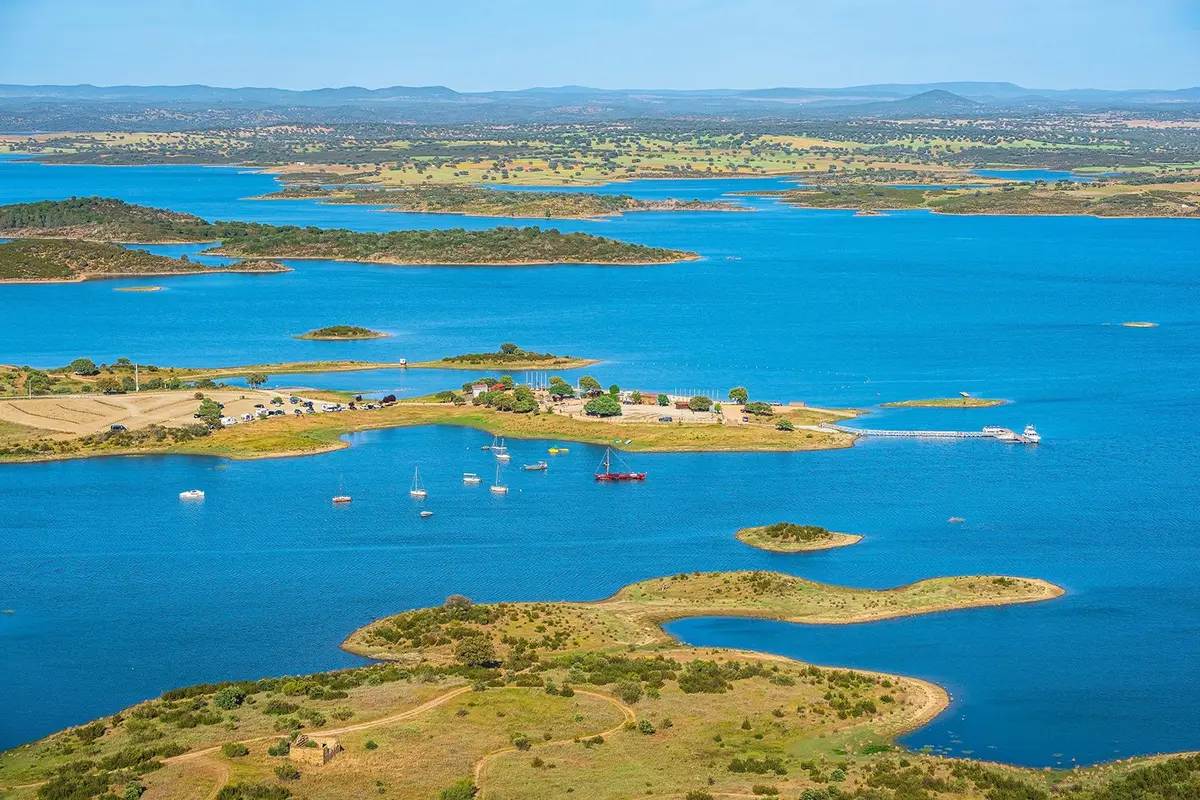
The views from 500 meters (1,640 feet) take in the city walls, the Roman Temple, cork forests, and the Alqueva reservoir on clear mornings. It is the only perspective that makes the city’s layout fully legible — the walls, the hilltop position, the plains stretching unbroken to Spain.
What day trips are worth making from Évora?
All three destinations below require a car. If you are planning a broader loop, a Portugal road trip itinerary that links Évora with the eastern Alentejo is the most logical framework; for excursion-specific rentals, booking in advance from Lisbon Airport or Évora’s city center is the most practical approach.
Monsaraz
About 30 miles (50 km) east, roughly 50 minutes by car. A fortified hilltop village with no visible concession to modernity — whitewashed houses, a medieval castle, and views down to Alqueva Lake that make the drive worth it on their own. The nearby village of São Pedro do Corval operates as the pottery center of the region, with working studios that stay open to visitors.
Estremoz
Famous for its white marble, which surfaces in the pavement, the building facades, and the market stalls. The Saturday market in Rossio square draws antique dealers, livestock, and vendors selling Serpa cheese — the runny, pungent variety that does not travel well but tastes exactly right on the spot. An easy half-day from Évora.
Arraiolos
This town has been producing hand-stitched wool rugs for centuries, the patterns drawing on Persian traditions adapted over generations of local craft. The rugs are expensive and meant to be — each takes months to make by hand. A worthwhile stop for anyone with genuine interest in textiles, and a quick detour that rounds out any Alentejo road loop.
What should first-time visitors know before arriving?
Évora Portugal is consistently one of the safest cities in the country for independent travel — a reputation that reflects the broader safety in Portugal picture. Violent crime is negligible, and solo female travelers rate it well. A few specifics make the experience smoother.
The “Rosemary Scam” runs near the historic center: women press sprigs of herbs into a visitor’s hand, then demand cash. The response is simple — keep your hands to yourself and walk past without engaging. Do not take anything handed to you on the street.
The University of Évora keeps the city active through the academic year, but streets go noticeably empty during summer afternoons. Plan outdoor sightseeing around that reality rather than against it.
English is spoken widely in hospitality settings. Addressing locals in Spanish reads as an offense here — more so than in Lisbon, where the tourism industry absorbs it. Do not do it.
The cobblestone streets are beautiful and legitimately uneven. Shoes with grip and a flat sole are not optional — heels or smooth-soled sneakers make the historic center harder than it needs to be.
The bottom line
Évora Portugal packs a millennium of history into a footprint you can cover on foot in two days. The Roman Temple, the Chapel of Bones, a proper Alentejo lunch at Taberna Quarta-Feira, cork forests, and one of Europe’s most significant prehistoric sites — all within easy reach of each other. With the European Capital of Culture designation arriving in 2027, the city is beginning to attract more attention than it has seen in years. Visit before that crowd fully materializes — and if Évora is part of a longer journey, the full Portugal travel guide is the best starting point for the rest of the country.
TL;DR: Two nights is the minimum — one day for heritage, one for food, wine, and a half-day outside the walls. Stay inside the walls, book Fialho and Taberna Quarta-Feira well in advance, and take the bus from Sete Rios if you are coming from Lisbon on a weekend when the train drops to three runs.
Have you been to Évora — and did you make it to the Chapel of Bones before the tour buses arrived?