Lebanon may be the only country in the Middle East where you’ll order coffee in Arabic, pay the bill in French and get directions in English — sometimes from the same person, in the same sentence. For US travelers, that’s the short answer on languages in Lebanon: communication is not your problem here. The longer answer — which dialect to learn, where French still opens doors and where English works better — is what this guide covers.
What languages are spoken in Lebanon?
Three languages are spoken in Lebanon on a daily basis: Lebanese Arabic (the everyday spoken dialect), French and English. Arabic is the sole official language under Article 11 of the Constitution, but around 40% of Lebanese are Francophone and roughly the same share speak English fluently. Code-switching between all three is the norm, not the exception.
The classic greeting you’ll hear in Beirut — “Hi, kifak, ça va?” — stitches all three together in four words. “Hi” is the English handshake, “kifak” is the Levantine Arabic “how are you,” and “ça va” is the French echo. Lebanese people don’t treat this as showing off. It’s just how sentences are built.
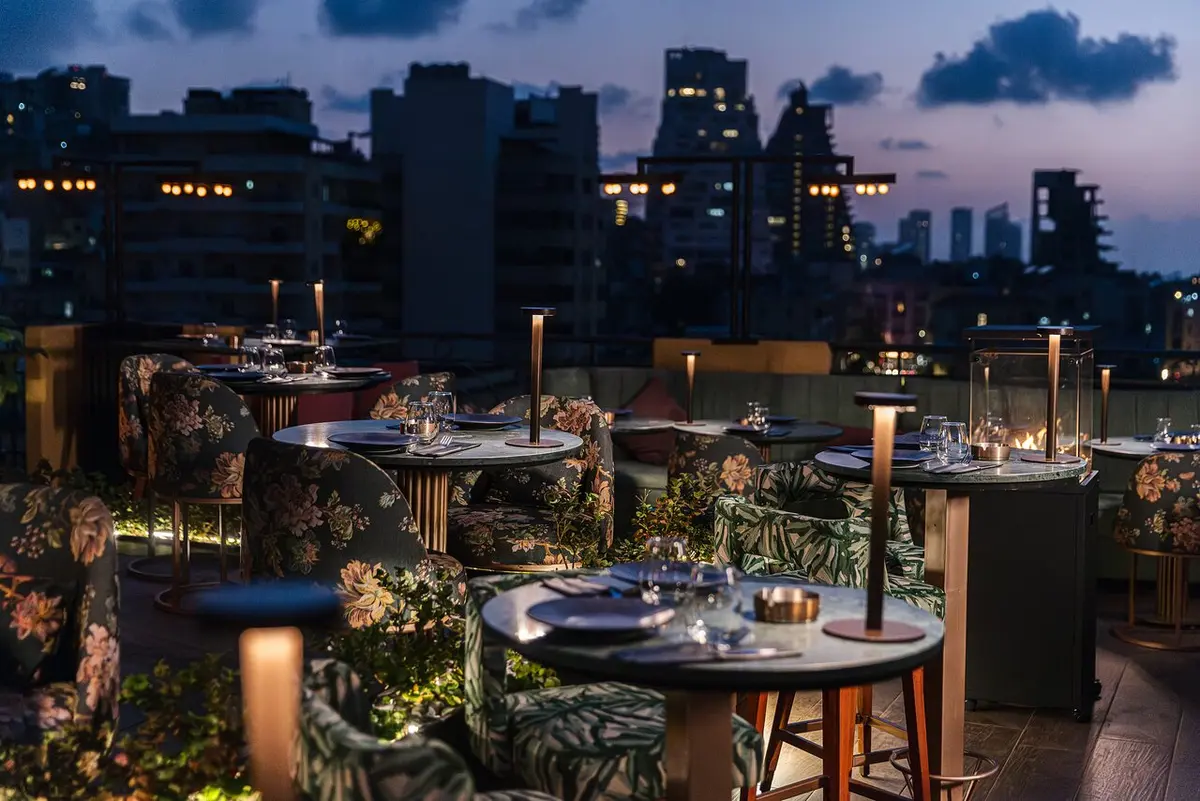
That said, the mix shifts depending on the neighborhood, the generation and the religious community. A 70-year-old in Achrafieh may lead with French. Her grandson at a Mar Mikhael rooftop bar will lead with English. A shopkeeper in Tripoli’s old souk may speak neither. This is deeply tied to Lebanon history, and it’s what makes the country unlike anywhere else in the Arab world. If you’re also weighing whether the country feels secure for a first trip, we cover that separately in our guide on whether Lebanon is safe for american tourists.
Pro Tip: Don’t open with Arabic unless you’re confident. In most of Beirut, a simple “Hi” or “Bonjour” gets a warmer response than a mangled “Marhaba,” because locals immediately code-switch to meet you.
Is Arabic in Lebanon the same as Arabic elsewhere?
No — and this trips up almost every first-time visitor. Lebanese Arabic is a dialect of Levantine Arabic, and it’s distinct enough from Modern Standard Arabic (MSA) and from Gulf or Egyptian Arabic that a Saudi tourist and a Lebanese taxi driver will sometimes switch to English to understand each other.
Modern Standard Arabic vs. Lebanese Arabic
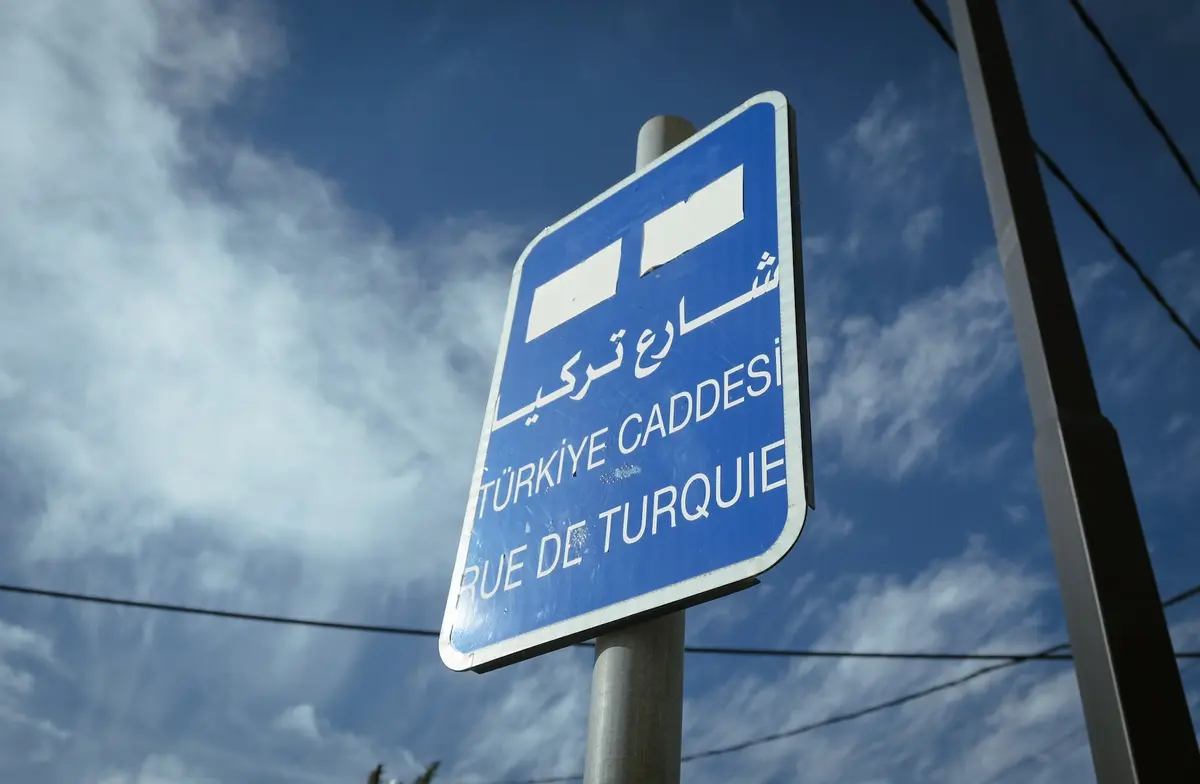
Modern Standard Arabic — Fusha — is what you’ll see on road signs, court documents, Al Jazeera news tickers and the printed side of the banknote. Nobody speaks it in daily life. Try ordering a shawarma in MSA and you’ll get the same reaction as asking for a hot dog in Shakespearean English.
The living spoken form is Lebanese Arabic, called Ammiya. It sits on an Arabic grammatical frame but carries:
- Aramaic and Syriac substrate: words and sounds from the languages spoken in the region for two millennia before Arabic arrived.
- Turkish loanwords: leftovers from 400 years of Ottoman rule (e.g., “oda” for room, “kundura” for shoes).
- French and English borrowings: dropped in casually, often mid-sentence.
Practical takeaway: if you’re going to learn phrases for the trip, learn Ammiya. Apps like Mango Languages and the Lebanese Arabic Institute teach the spoken dialect. Duolingo teaches MSA — which will make you sound like a newsreader in a bakery.
What Lebanese Arabic sounds different from
- Gulf Arabic: softer consonants, more French intonation.
- Egyptian Arabic: “j” is pronounced “j” (not “g” like Cairo).
- Classical Arabic: the “qaf” sound is usually dropped to a glottal stop — “Beirut” becomes “Beyrout,” “qahwa” (coffee) becomes “ahwe.”
How common is French in Lebanon?
French is widely spoken in Lebanon, with about 40% of the population considered Francophone and another 15% partially Francophone — roughly two million speakers in a country of six million. It’s a legacy of the French Mandate (1920–1943), and while it’s no longer an official language, French still dominates law, medicine, banking and elite education. Banknotes carry French alongside Arabic.
Where you’ll actually hear French the most:
- Private schools run by Jesuits, Maronites and other Catholic orders (about 70% of secondary schools teach French as a second language).
- Saint Joseph University and its affiliated hospitals.
- Achrafieh, Gemmayze, Jounieh, Byblos and most of Mount Lebanon.
- Banking, notaries, upmarket restaurants in East Beirut.
Where French is fading fast: younger Lebanese in business and tech overwhelmingly prefer English. One-third of Lebanese students educated in French for secondary school go on to English-language universities. On my last visit, I watched a grandmother and her 14-year-old granddaughter order at a Gemmayze café — the grandmother in French, the granddaughter in English, the waiter nodding along to both.
Pro Tip: If you speak decent French, lead with it in Achrafieh, Jounieh and Byblos. It’s a social cue that signals you’re not a Gulf tourist or a backpacker, and it often upgrades your service.
How widely is English spoken in Lebanon?
English is spoken fluently by around 40% of Lebanese and is the dominant second language among people under 30. You can get through an entire trip — Beirut airport, hotels, restaurants, ride-hailing, museums, wine tours in the Bekaa — using only English. The one place it drops off sharply is in the old souks of Tripoli and Saida, and with taxi drivers over 60.
English is now the default language of:
- Business and tech (startups in Beirut Digital District run in English).
- The American University of Beirut (AUB) and Lebanese American University (LAU).
- Beach clubs and nightlife in Batroun, Jiyeh and Mar Mikhael.
- Almost all menus in tourist-facing restaurants.
The “Hi, kifak, ça va?” greeting captures the generational shift: older Lebanese feel French in their bones, younger Lebanese feel English.
Which language should you use in each city?
The dominant second language changes dramatically across a country that’s only 135 miles (217 km) long. Knowing which one to lead with saves awkward fumbling.
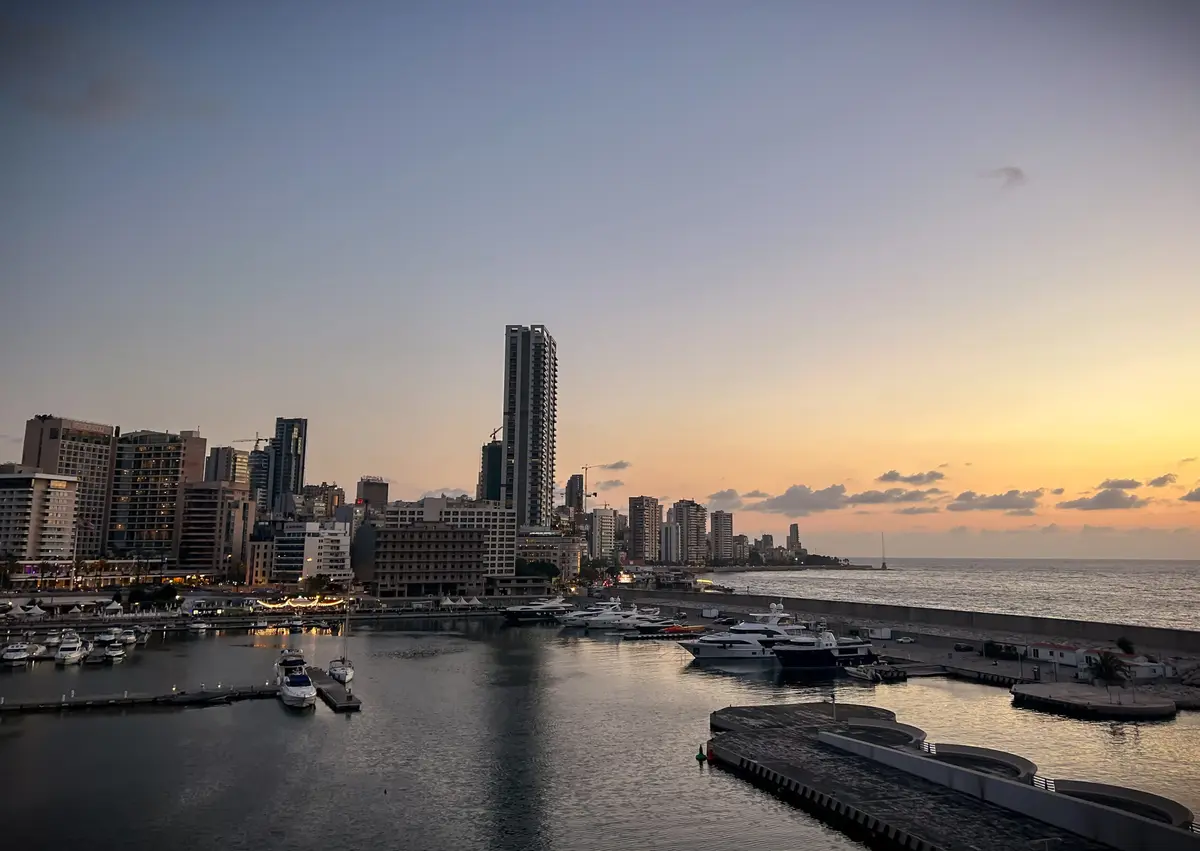
Beirut — split between French and English
East Beirut (Achrafieh, Gemmayze, Mar Mikhael, Badaro) leans Francophone and Christian. Street names are posted in French, bakeries are called “boulangeries,” and “Bonjour / Merci” gets a warmer reception than “Marhaba / Shukran.”
West Beirut (Hamra, Ras Beirut, Verdun) is the Anglophone hub, anchored by AUB. Students, expats and the mixed Sunni-Druze-Christian population use English as the shared shortcut. The southern suburbs (Dahieh) are more Arabic-dominant and conservative — English and French drop off.
For specific neighborhood breakdowns, our Beirut travel guide maps which areas fit which kind of trip.
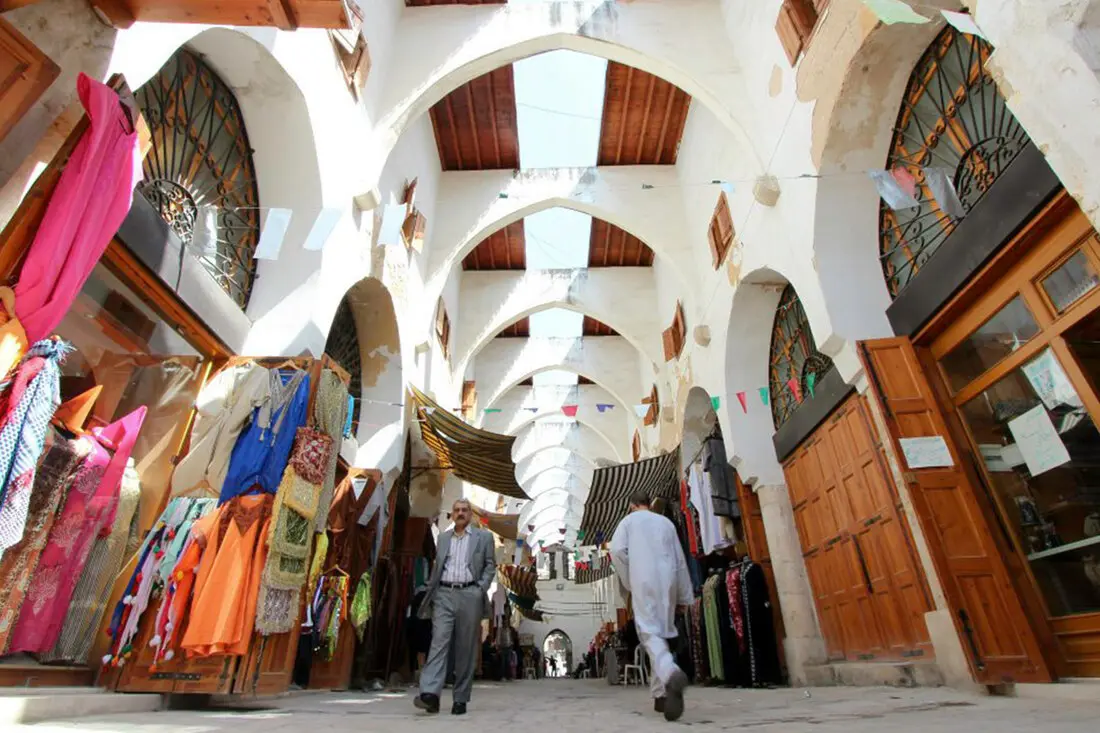
Tripoli — the most Arabic-only city
Tripoli Lebanon is where your language assumptions get reset. It’s predominantly Sunni Muslim, more traditional than Beirut, and the Arabic accent is noticeably heavier — “a” sounds round into “o,” and the “qaf” is sometimes pronounced rather than dropped. English proficiency falls off a cliff inside the old souk. Many artisans and food vendors in Khan al-Saboun and the Mamluk-era markets speak only Arabic.
That said, Tripolitans are genuinely the friendliest people I’ve met in the country. On a Saturday morning in the soap souk, a vendor I couldn’t understand walked me two blocks to find his English-speaking nephew to finish the sale.
Pro Tip: In Tripoli, download Google Translate’s Arabic offline pack before you go. Cell service is patchy in the souk’s covered alleys, and the translate camera function works on handwritten price tags.
Jounieh, Byblos and Batroun — the French-to-English gradient
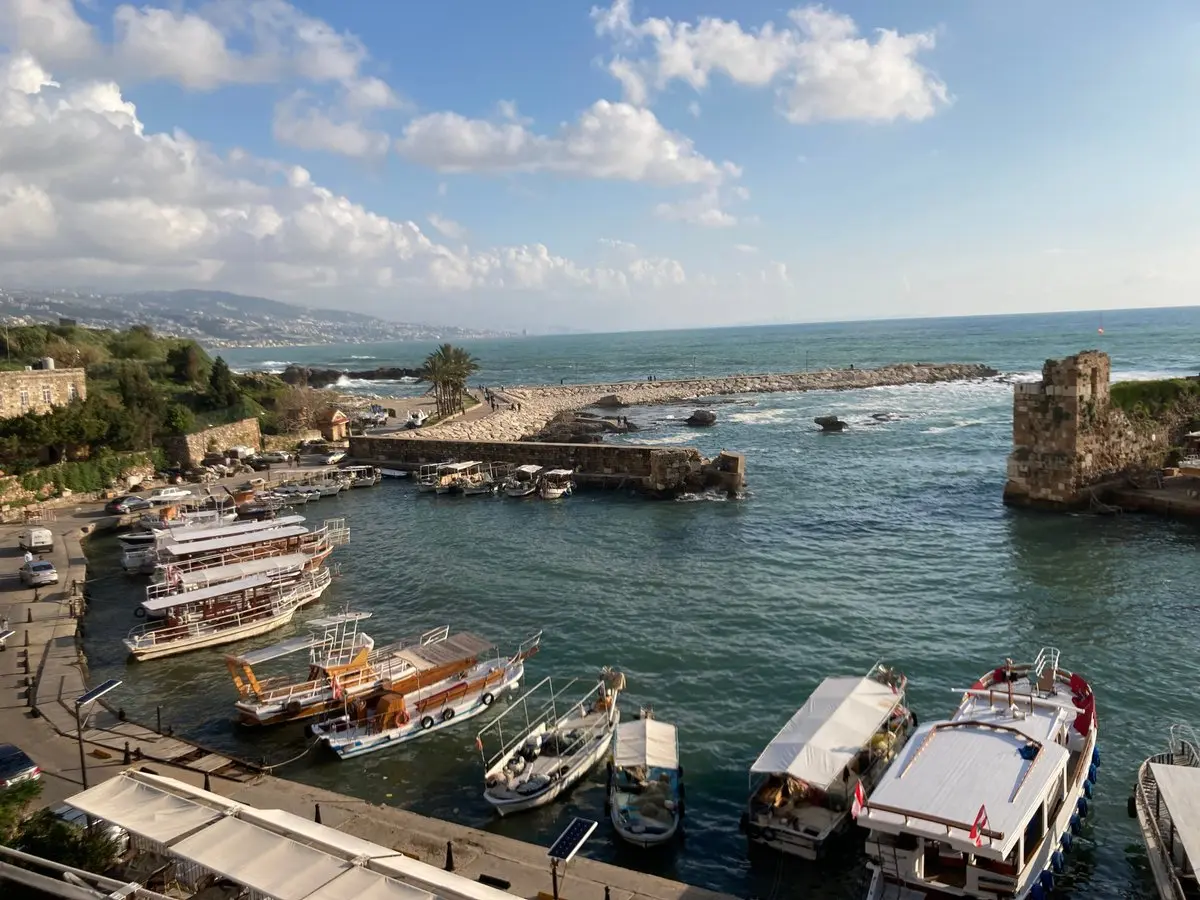
Jounieh and Byblos Lebanon are deeply Francophone. Signage, menus and small talk default to French in a way that feels more like Nice than the Middle East. Byblos, as the country’s busiest tourist hub, is trilingual and handles English without friction.
Batroun, 35 miles (56 km) north of Beirut, is the opposite — it’s pivoted almost entirely to English. Beach clubs like Pierre & Friends and Colonel Beer run in English, catering to returning diaspora and Gulf weekenders. If you’re building an itinerary there, see our roundup of things to do in Batroun.
Tyre and the south — mixed and multilingual
Tyre (Sour) has a mixed Shia-Christian population and a long UNIFIL (UN peacekeeping) presence that’s normalized both English and French among the locals who work in hospitality. The Tyre Lebanon beaches have a laid-back, Mediterranean feel — I’ve ordered in English, French and Arabic on the same beach in one afternoon, and nobody blinked.
What Arabic phrases do you actually need?
For a one- to two-week trip, about fifteen phrases cover 95% of interactions. Locals value effort more than accuracy — a mangled “shukran” earns more goodwill than a perfect English “thanks.”
Greetings and basics
- Marhaba: Hello (neutral, works everywhere).
- Kifak / Kifik: How are you (to a man / to a woman).
- Mnih / Tamam: Good / OK.
- Shukran: Thank you.
- Aafwan: You’re welcome.
- Eh / La: Yes / No.
- Min fadlak / fadlik: Please (to a man / to a woman).
The “service” vs. “taxi” script
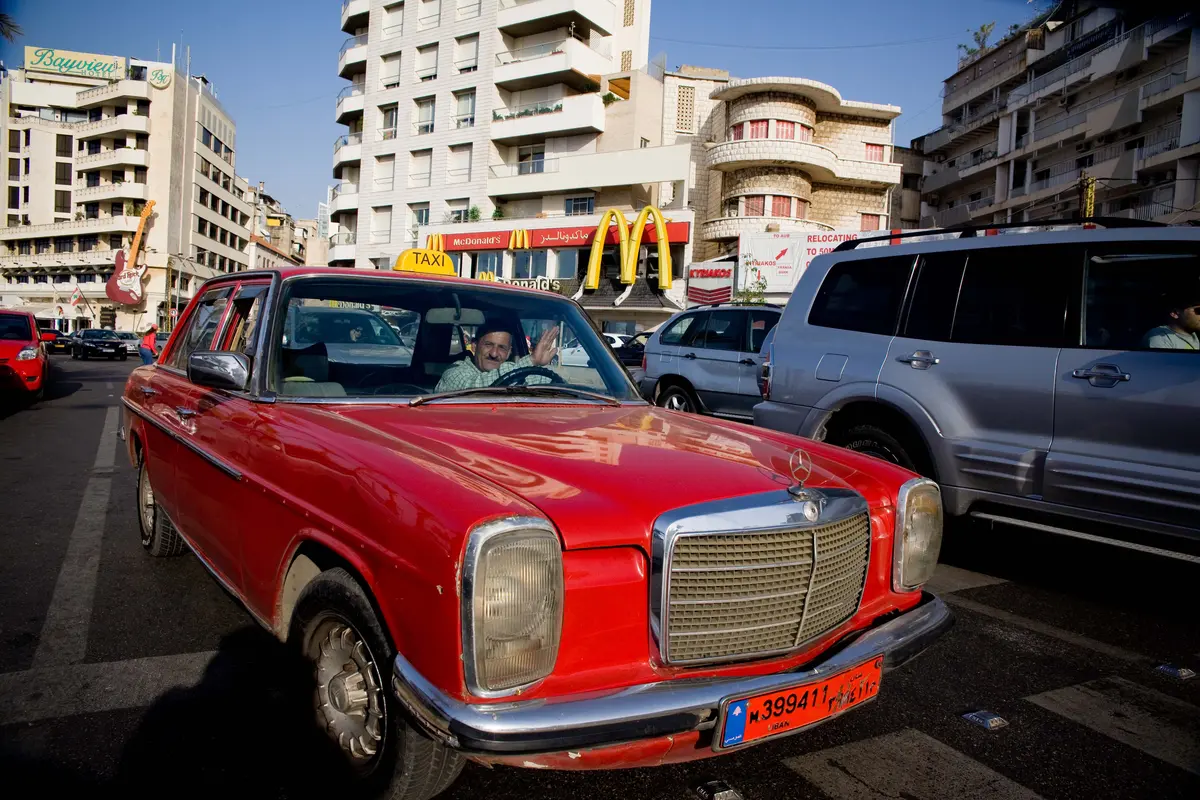
This one distinction will save you real money. A “service” (pronounced “servees”) is a shared taxi running an informal route for a fixed low fare; a “taxi” is private and costs three to five times more. Both use the same red plates. For a full comparison, see our breakdown of Uber in Lebanon vs Taxi.
- The hail: Don’t wave — just nod at a red-plated car slowing down near you.
- The pitch: State your destination clearly, nothing else. “Hamra.” “Dora.” “Achrafieh.”
- The key question: Say “Service?” with a rising tone. This is the whole negotiation.
- The outcome: If the driver nods or says “service,” you’re in for the shared rate (around 150,000–250,000 LBP, roughly $2–3). If he says “taxi” or names a price, it’s private — negotiate before getting in or wave him off.
- Building rapport: “Moallem” (teacher) or “Rayyis” (chief) works like “boss” in English — slightly formal, always welcome.
Dining and the coffee code
Lebanese coffee (ahwe) is ordered by sweetness level at the point of brewing, not after. Saying “no sugar, please” once it’s in the cup marks you as a tourist.
- Bade / Izza betreed: I want / If you please (use the second for politeness).
- Ahwe sada: Black coffee, no sugar.
- Ahwe wasat: Medium sweet.
- Ahwe helwe: Sweet.
- L-hseb, please / L’addition, please: The bill (Arabic / French — either works).
- Khaliya ma’ak: Keep the change.
Service is often included on the bill, but a small extra tip is normal. We cover the full tipping etiquette in Lebanon separately.
Shopping and bargaining
In the historic Lebanon markets — Tripoli’s souks, Saida’s old town, Beirut’s Souk al-Tayeb — bargaining is expected on souvenirs, spices and textiles, not on food or packaged goods.
- Addeh?: How much?
- Ghali!: Expensive!
- Akhir se’er?: Last price?
- Yalla: Come on / let’s go (universal filler word).
Rule of thumb: counter-offer at 50–60% of the asking price in tourist areas, and settle around 70–75%.
What non-verbal cues should you know?
Lebanon is a high-context culture, which means gestures often carry more weight than words. Missing these is the fastest way to look rude without realizing it.
The ones that matter most:
- The chin lift: A quick upward head movement with raised eyebrows, sometimes with a small tongue click. Americans read this as attitude. It just means “no.” You’ll see it constantly.
- The hand bunch: Fingertips pinched together, palm facing up, moved gently up and down. Means “wait” or “slow down,” not “what do you want?”
- Feet and soles: Don’t cross your legs so your sole points at someone, especially in a home or a mosque. It reads as contempt.
- Thumbs-up: Fine in Beirut and tourist areas. In some rural and conservative corners it still carries the older, cruder meaning it has across parts of the region — use a simple nod instead when in doubt.
- The right hand: Eat, hand things over and shake hands with your right. The left is considered unclean.
Pro Tip: When someone offers you coffee or food, decline once for form, accept the second offer. Accepting immediately reads as greedy; declining twice reads as a genuine “no” and the host will drop it.
Before you book
Languages in Lebanon are a feature, not a barrier. English will carry you anywhere a tourist needs to go. French opens social doors in Christian areas and with older generations. A dozen Arabic phrases will earn more smiles than any guidebook.
TL;DR: Arabic is official and universal, but the spoken dialect (Lebanese Arabic) is what you’ll hear — not MSA. Around 40% of Lebanese speak French, 40% speak English, and code-switching across all three is standard. Lead with English in most of Beirut, French in Achrafieh and Jounieh, and Arabic (plus a translator app) in Tripoli’s old souks.
What’s the phrase you’re most worried about using on your first day in Beirut? Drop it in the comments and I’ll tell you how it actually lands.