Lebanon history is not buried in museums — it is layered beneath your feet. Stand in the harbor of Byblos and you are touching stones laid by Neolithic fishermen, Phoenician shipbuilders, Roman governors, Crusader knights and Ottoman emirs, all in one place inhabited since 5000 B.C. This Connecticut-sized country holds the ports that gave us the alphabet and the bullet-scarred facades of Beirut’s recent past. Before planning a trip to Lebanon, read the safety section at the end — advisories are active.
1. Byblos (Jbeil) — where the alphabet was born
Byblos is ground zero for Lebanon history. A Neolithic fishing village that grew into a Phoenician port, it traded cedar wood to Egypt in exchange for papyrus — which the Greeks called “byblos,” the root of the word “Bible.” The city’s 22-letter Phoenician alphabet became the ancestor of the Latin script you are reading now. You enter through a 13th-century Crusader tower that houses a small museum, then walk past three temples, a Roman theater and a horseshoe-shaped Phoenician port.
The antique souks behind the site sell handcrafted souvenirs and local artwork in stone-vaulted alleys. Signage inside the ruins is limited, so a local guide is worth the $25-35 fee for 90 minutes. Summer heat by 11 a.m. is brutal, and tour buses start arriving around 10 a.m. from Beirut.
Pro Tip: Enter at opening time, walk the ruins first in under an hour, then reward yourself with coffee in the souks once the buses roll in.
- Location: Jbeil, 23 miles (37 km) north of Beirut
- Cost: around $6 site entry
- Best for: First-time visitors, history readers
- Time needed: 2-3 hours including the souks

2. Sidon (Saida) — the Crusader castle on the sea
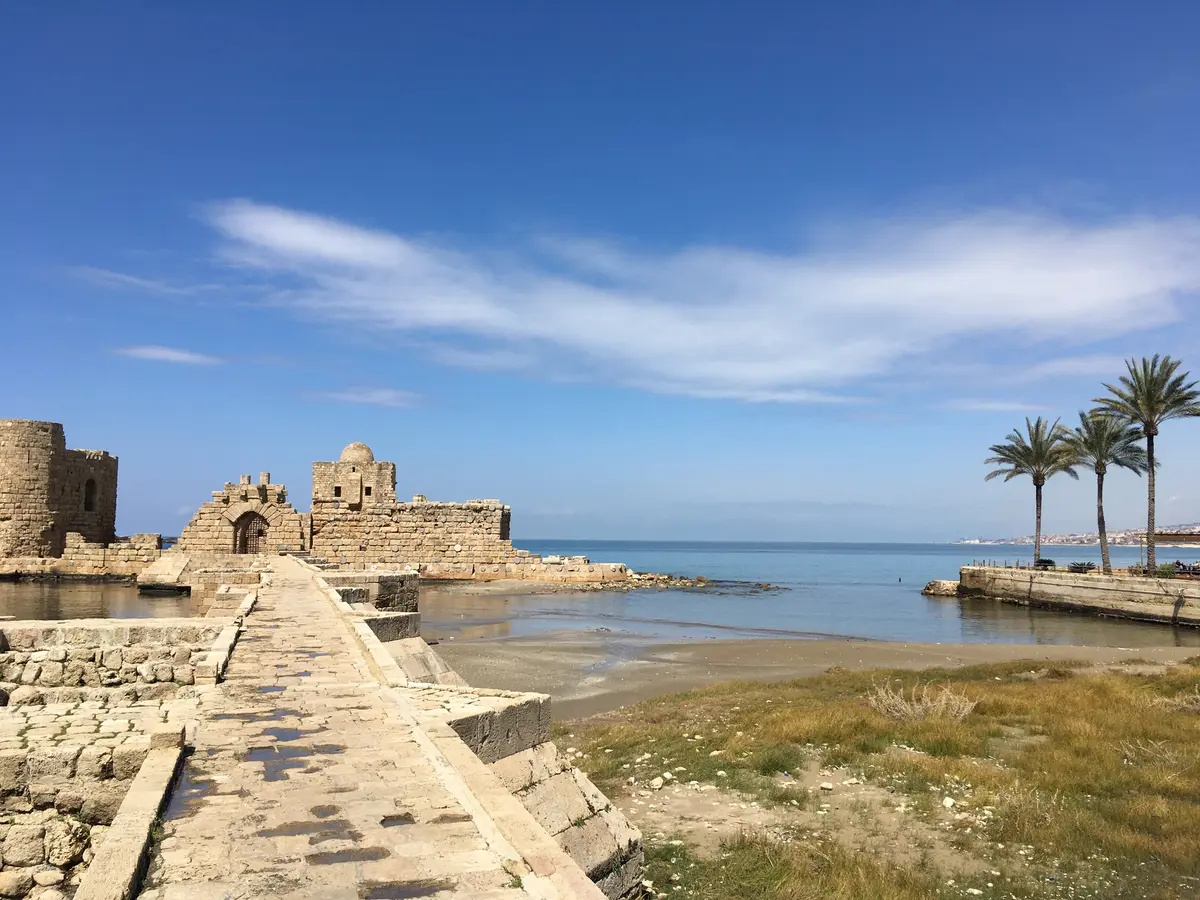
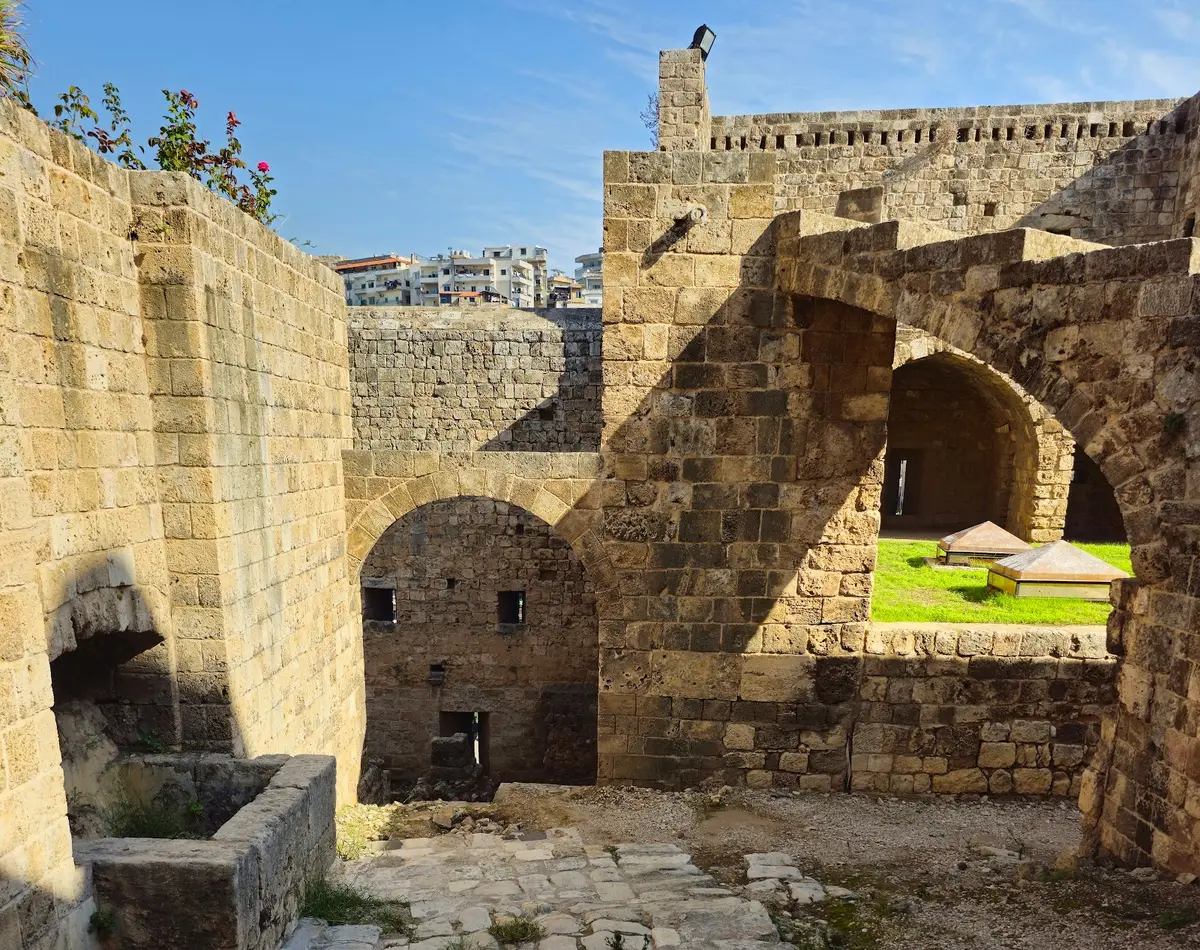
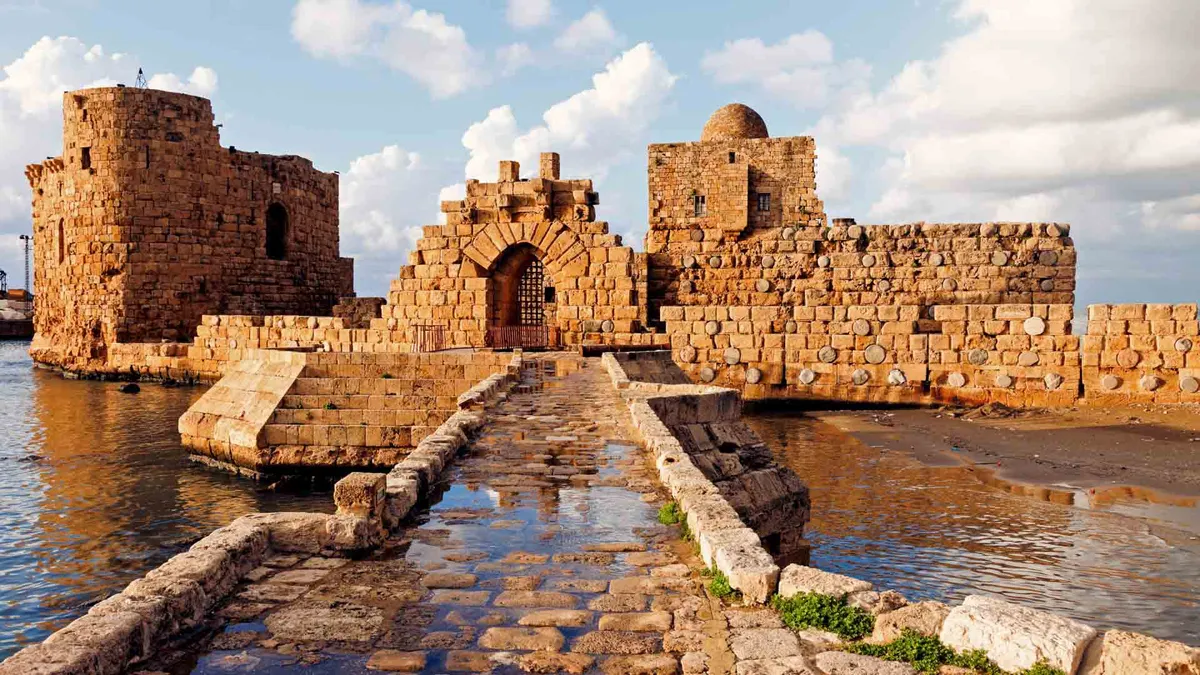
Sidon was such a dominant Phoenician city-state that the Hebrew Bible sometimes calls all Phoenicians “Sidonians.” It was the mother city of Tyre and a glassblowing center — an art the Phoenicians may have invented. The must-see is the Sidon Sea Castle, built by Crusaders in 1228 on a small island linked to the mainland by a stone causeway. You walk the same causeway, climb the walls and get a straight-line Mediterranean view with the old city behind you.
The nearby Temple of Eshmun, dedicated to the Phoenician god of healing, adds context on Phoenician religion in 20 minutes of walking. The trade-off: fewer restaurants and amenities than Byblos. The Audi Soap Museum in the old souk is a quick, free add-on showing 600 years of olive-oil soap production.
How safe is Sidon right now?
Sidon sits in Southern Lebanon. Canada advises using only the main coastal highway if you go, and many guides will not currently take foreign visitors past Saida because of proximity to the southern conflict zone. Check your government’s advisory the week of travel.
- Location: Sidon (Saida), 26 miles (42 km) south of Beirut
- Cost: around $5 for the Sea Castle
- Best for: Crusader history fans, photographers
- Time needed: 3 hours with Eshmun
3. Tyre (Sour) — a UNESCO city of ruins
Tyre was the mythical birthplace of Europa and Dido, and the source of Tyrian purple, the dye that made Phoenician merchants rich enough to alarm Rome. Alexander the Great spent seven months besieging the island in 332 B.C. before building a causeway from mainland rubble — which silted up and permanently connected Tyre to the coast. Ernest Renan called it “a city of ruins, built out of ruins.” The UNESCO site splits into Al-Mina and Al-Bass.
The Roman Hippodrome in Al-Bass is one of the largest ever excavated, at roughly 1,480 feet (450 m) long, with seating for 20,000. Here Lebanon history collides with the present: Tyre is south of the Litani River, an area under heavy advisories, airstrikes and landmine contamination. UN peacekeepers are visible on approach. Independent visits are not recommended.
- Location: Tyre (Sour), 52 miles (84 km) south of Beirut
- Cost: around $5 per archaeological site
- Best for: Roman-era specialists (only when advisories lift)
- Time needed: 4 hours for both sites
4. Baalbek — where Roman architecture peaked
Originally the Phoenician city of Heliopolis, Baalbek sits on a mound inhabited for 8,000 years. The Romans built their finest imperial sanctuary here, dedicated to Jupiter, Bacchus and Venus. The six surviving columns of the Temple of Jupiter stand 66 feet (20 m) high, each about 7.5 feet (2.3 m) across. They are the opening act.
The Temple of Bacchus
The Temple of Bacchus is larger and better preserved than the Parthenon in Athens. Walking inside, you are inside carved stone ceilings that make you feel small in the most useful way. The detail on the lintels — grapevines, lion heads — rewards a slow second lap.
Is Baalbek safe to visit?
Baalbek sits in Baalbek-Hermel Governorate, which the UK FCDO and Australia’s Smartraveller currently advise against visiting entirely. The site itself was targeted during recent airstrikes in the Bekaa Valley. When advisories permit, this is not a destination for independent travel — a vetted local operator who can read checkpoints and airstrike patterns is non-negotiable.
- Location: Bekaa Valley, 53 miles (85 km) northeast of Beirut
- Cost: around $10 entry
- Best for: Roman architecture obsessives
- Time needed: 3-4 hours on site

5. Roman Beirut (Berytus) — the forgotten law school
While Baalbek was Rome’s spiritual showpiece, Berytus was its intellectual hub. The School of Law of Berytus was the most influential in the empire, where the jurists Papinian and Ulpian taught. A 6th-century earthquake destroyed it, but the 2,000-year reputation seeded Beirut’s later nickname as the “Paris of the Middle East.”
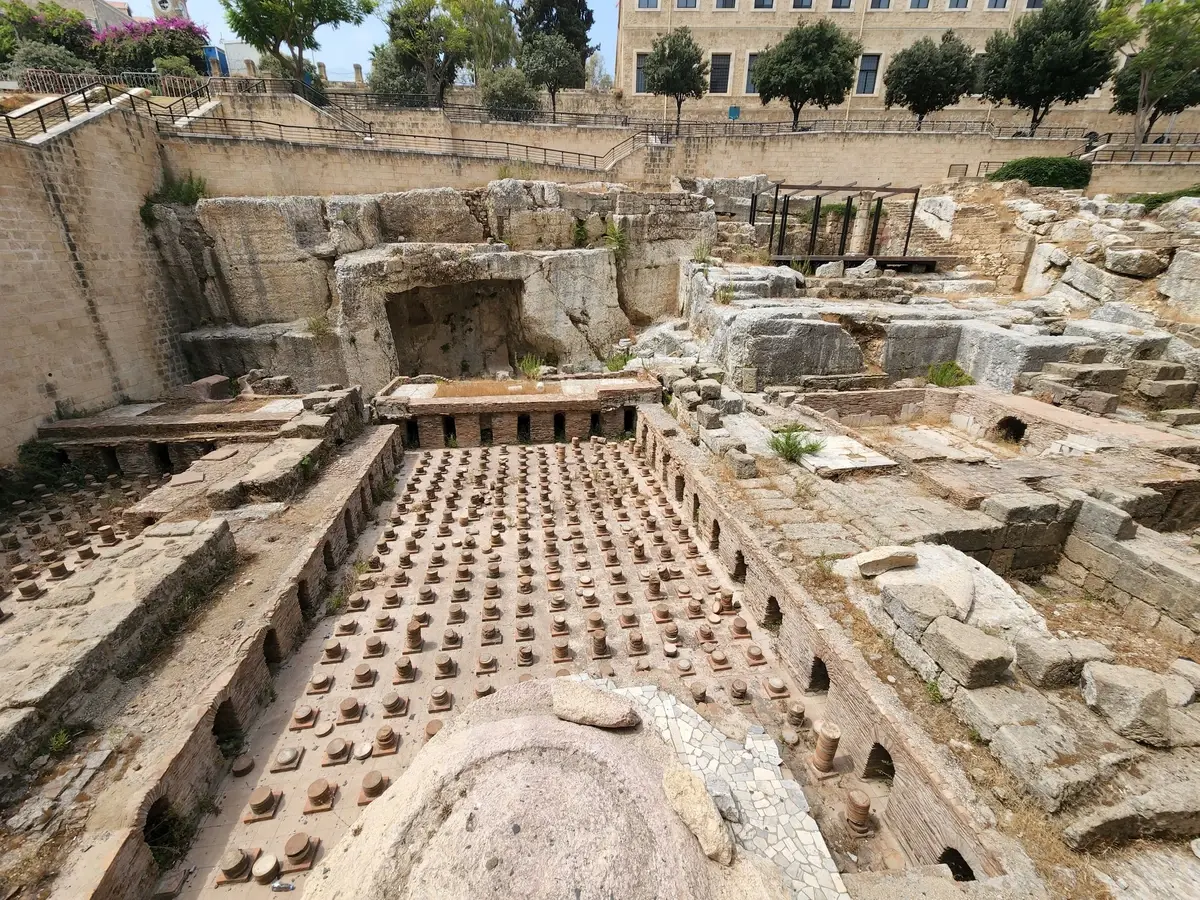
The Beirut Souks Archaeological Walk is free and winds through Roman baths and colonnades that sit directly beneath the rebuilt downtown. The ruins are scattered — expect 20 minutes of walking between fragments — but that scatter is the point: Lebanon history is woven into the sidewalk, not cordoned off.
Pro Tip: Pair this with the National Museum of Beirut (entry around $5). The museum’s Phoenician sarcophagi and the Ahiram inscription — one of the earliest known uses of the Phoenician alphabet — are the single best context for every other site on this list.
6. Anjar — the only Umayyad snapshot in the world
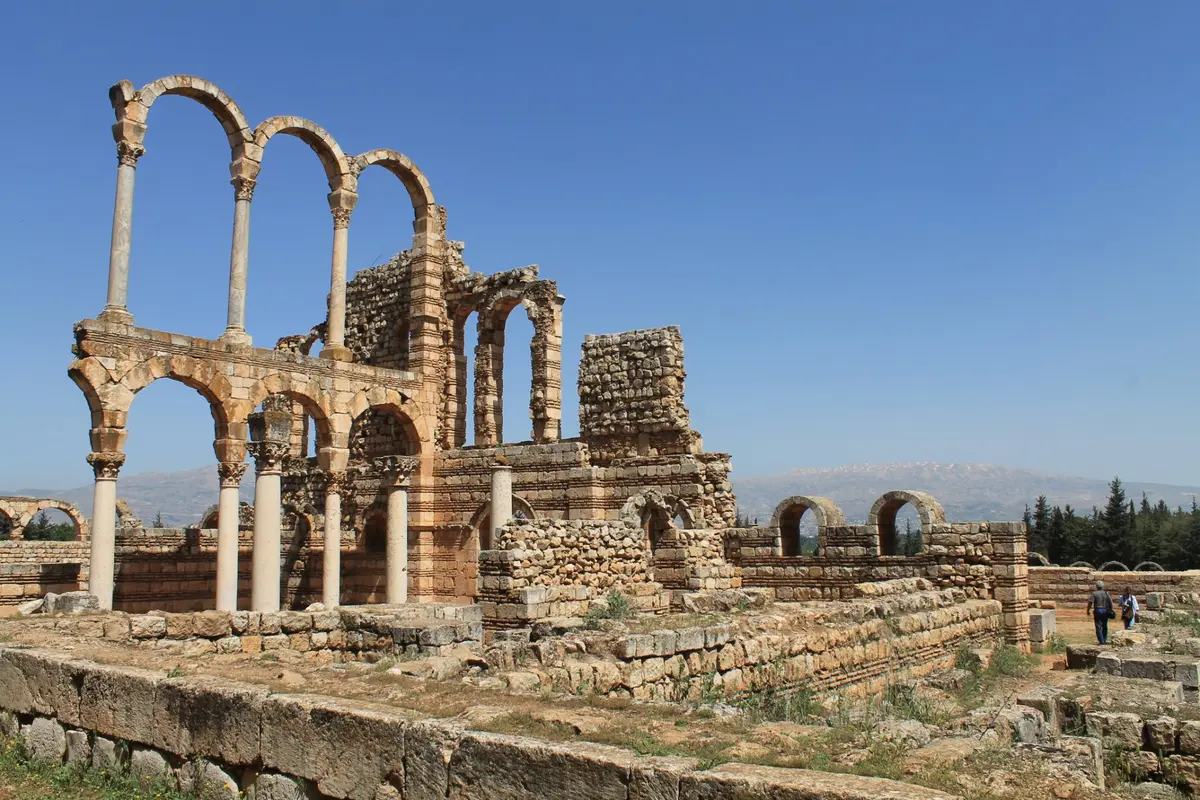
Founded around 714 A.D. by Caliph Walid I, Anjar was a trading hub at the crossroads of caravan routes. It was never completed, then abandoned after a dynastic defeat in 744 A.D. Because nothing was built on top for 1,200 years, it is the only surviving witness to 8th-century Umayyad urban planning — a Pompeii of the early Islamic world.
You can trace the fortified walls, the cardo and decumanus grid, the remains of over 600 shops, the 130-foot (40 m) courtyard of the Grand Palace and public baths with intact mosaics. The trade-off: no dramatic verticality like Baalbek, so it reads better to history buffs than casual visitors. It pairs naturally with Baalbek on a Bekaa day trip.
- Location: Bekaa Valley, 36 miles (58 km) east of Beirut
- Cost: around $6 entry
- Best for: Islamic history and urban-planning nerds
- Time needed: 90 minutes
7. Beiteddine Palace — Ottoman luxury in the Chouf
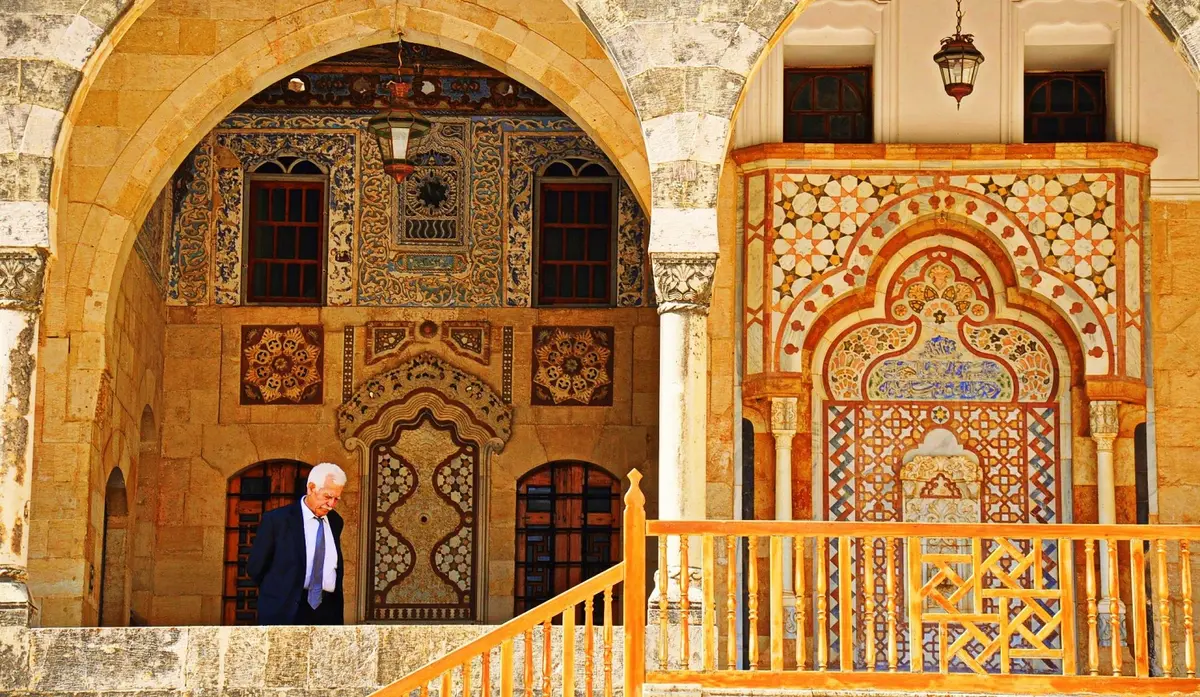
Emir Bashir Shihab II spent 30 years building Beiteddine Palace in the early 19th century. The name means “House of Faith,” after a hermitage that preceded it. You move through three courtyards, from public reception halls to the private Dar el Harim. The Byzantine mosaics in the former stables are the highlight — some of the finest mosaic floors in the Levant, relocated from Jiyeh on the coast.
The palace served as a French Mandate office, a presidential summer residence, was damaged during invasions and was held by militia until 1999. It now hosts the Beiteddine Festival. The Chouf location sits about 2,950 feet (900 m) above sea level, so summer temperatures run 10°F cooler than Beirut.
- Location: Chouf Mountains, 31 miles (50 km) southeast of Beirut
- Cost: around $5 entry
- Best for: Ottoman-era architecture, summer escapes
- Time needed: 2 hours
8. How did the 1943 National Pact shape modern Lebanon?
The 1943 National Pact is an unwritten agreement between Maronite, Sunni and Shi’a leaders that the president would always be Maronite Christian, the prime minister Sunni Muslim, and the parliament speaker Shi’a Muslim. It enabled independence from France. It was also based on a 1932 census that never reflected actual demographic shifts, which is why the pact hardened into the sectarian rigidity that eventually produced civil war.
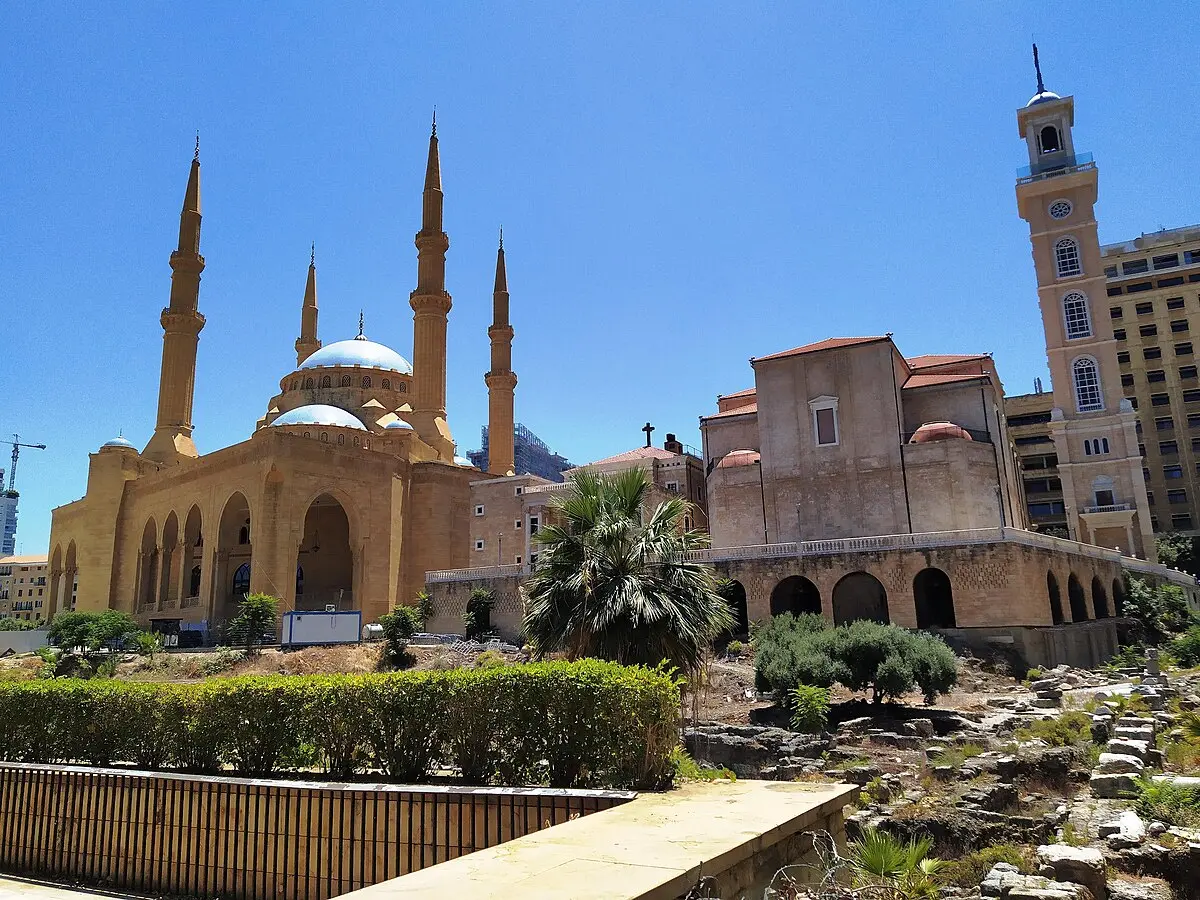
You can see the pact physically. In Martyrs’ Square in downtown Beirut, the Mohammad Al-Amin Mosque’s blue dome sits directly next to Saint George Maronite Cathedral — built shoulder-to-shoulder on purpose. That architectural adjacency is the founding idea of coexistence in stone form.
9. Harissa and Our Lady of Lebanon
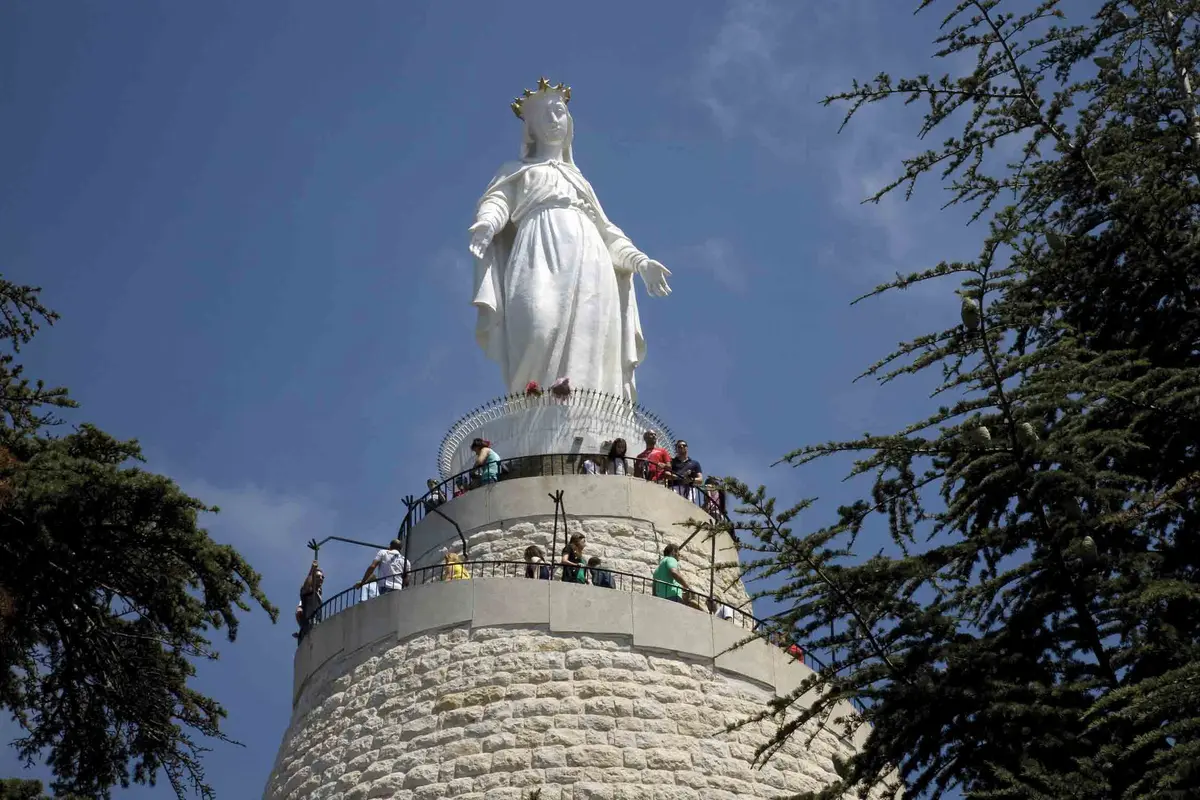
The Jounieh teleferique cable car to Harissa climbs 2,132 feet (650 m) from the coast in about nine minutes. At the top is the 15-ton white bronze statue of the Virgin Mary, visible from across the bay. The view down to Jounieh Bay is the payoff — not for people uneasy with heights, as the cable car swings noticeably in wind.
Harissa is a pilgrimage site for both Christians and Muslims, which is the part most guides skip over. That shared devotion is the theme that anchors Lebanon history as a whole. Weekday mornings are quiet; summer Sunday afternoons are packed with local families.
- Location: Harissa, above Jounieh, 14 miles (22 km) north of Beirut
- Cost: round-trip cable car around $8
- Best for: Families, first-time visitors wanting a view
- Time needed: 2 hours
10. Can you walk the Green Line in Beirut?
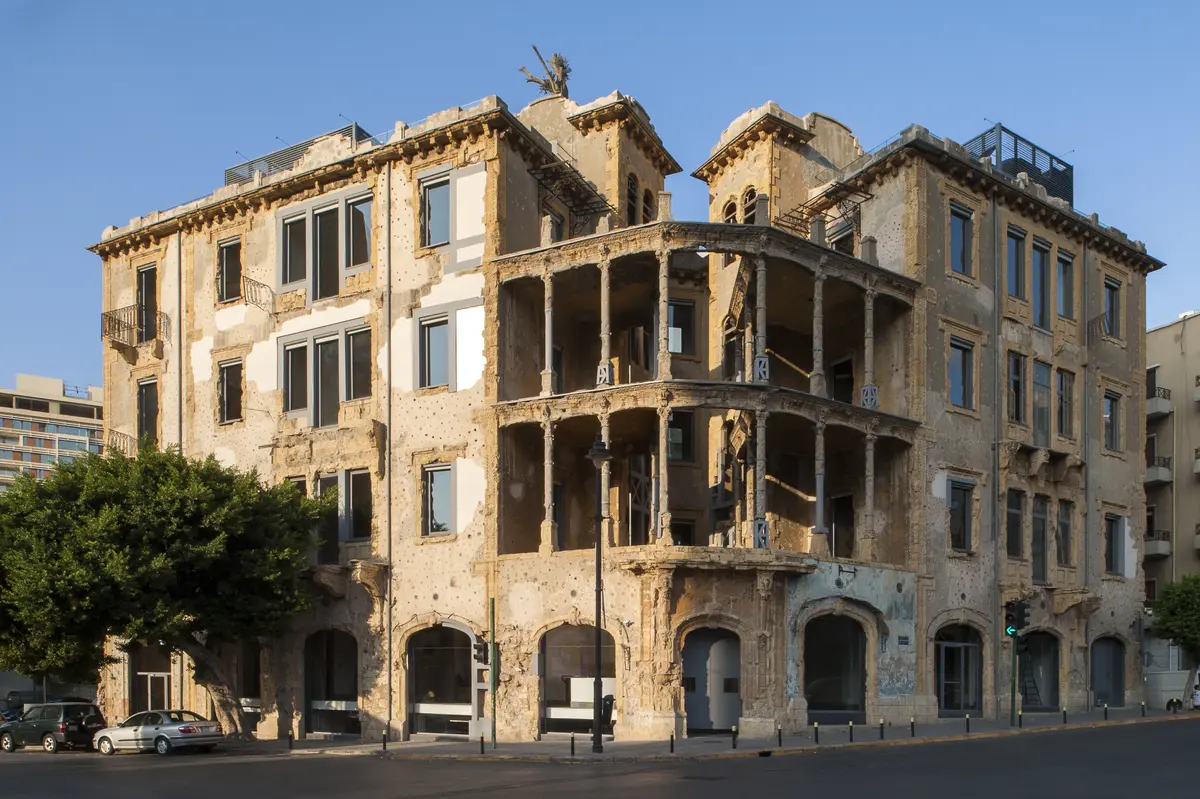
Yes, and it is the single most important thing you can do to understand Lebanon history after 1975. The Green Line was the demarcation that split Beirut into Muslim West and Christian East during a 15-year civil war that killed over 100,000 people and displaced nearly a million. It was a kill zone of no-man’s-land, collapsed buildings and sniper nests, not a wall. Local-led walking tours turn abstract history into family stories of checkpoints, silences and returns.
Beit Beirut — the Yellow House
Beit Beirut sits directly on the old Green Line. The building was preserved, not repaired, so its scarred facade is the exhibit. Inside are sniper perches, layers of wallpaper from decades of tenants, and thousands of bullet holes. Entry is free. It is an emotionally heavy 90 minutes, and essential. Beirut chose to memorialize rather than erase — that choice is the city’s most honest statement about itself.
How do you actually travel Lebanon for history?
Establish a base in Beirut and day-trip. The country is the size of Connecticut, and every site on this list is within a two-hour drive of the capital. Hire a vetted private guide-driver for anything outside central Beirut — rates run roughly $120-180 per day for a car plus English-speaking driver. Public minivans have no schedules. Rental cars work for confident drivers only.
Pro Tip: Check your government’s advisory the week you travel, not the month before. Conditions in the Bekaa, the south and Dahieh shift fast, and reputable operators will reroute itineraries the day of.
A 5-day history-focused itinerary from Beirut
- Day 1: Beirut — Green Line walking tour, Beit Beirut, National Museum, Martyrs’ Square
- Day 2: North coast — Byblos, antique souks, Harissa cable car
- Day 3: Bekaa — Baalbek and Anjar (only when advisories allow)
- Day 4: Chouf and coast — Beiteddine Palace, Sidon Sea Castle, Temple of Eshmun
- Day 5: Deep south — Tyre’s Hippodrome and Al-Mina (only when advisories allow)
Is Lebanon safe for American tourists right now?
No — not at the time this guide was updated. The US State Department has a Level 4 “Do Not Travel” advisory in place, the UK FCDO advises against all travel to Baalbek-Hermel and most of the north, and airstrikes have hit Beirut and the Bekaa. Southern Lebanon below the Litani River has heavy landmine and unexploded-ordnance contamination. When advisories ease, central Beirut, Byblos, Jounieh and the Chouf reopen first; Tyre, Baalbek and the south lag behind. Plan with that reality, not the one in older guidebooks.
Before you book
TL;DR: Lebanon packs 5,000 years of history into a country smaller than Connecticut. Base in Beirut, hire a private guide-driver, prioritize Byblos, Beit Beirut and the National Museum when travel is possible, and build Baalbek and Tyre into your plan only when current advisories allow. The country rewards presence over checklists — one site understood is worth three rushed.
Which layer of Lebanon history pulls you in hardest — the Phoenician ports, the Roman temples or the Civil War memory? Drop a comment.