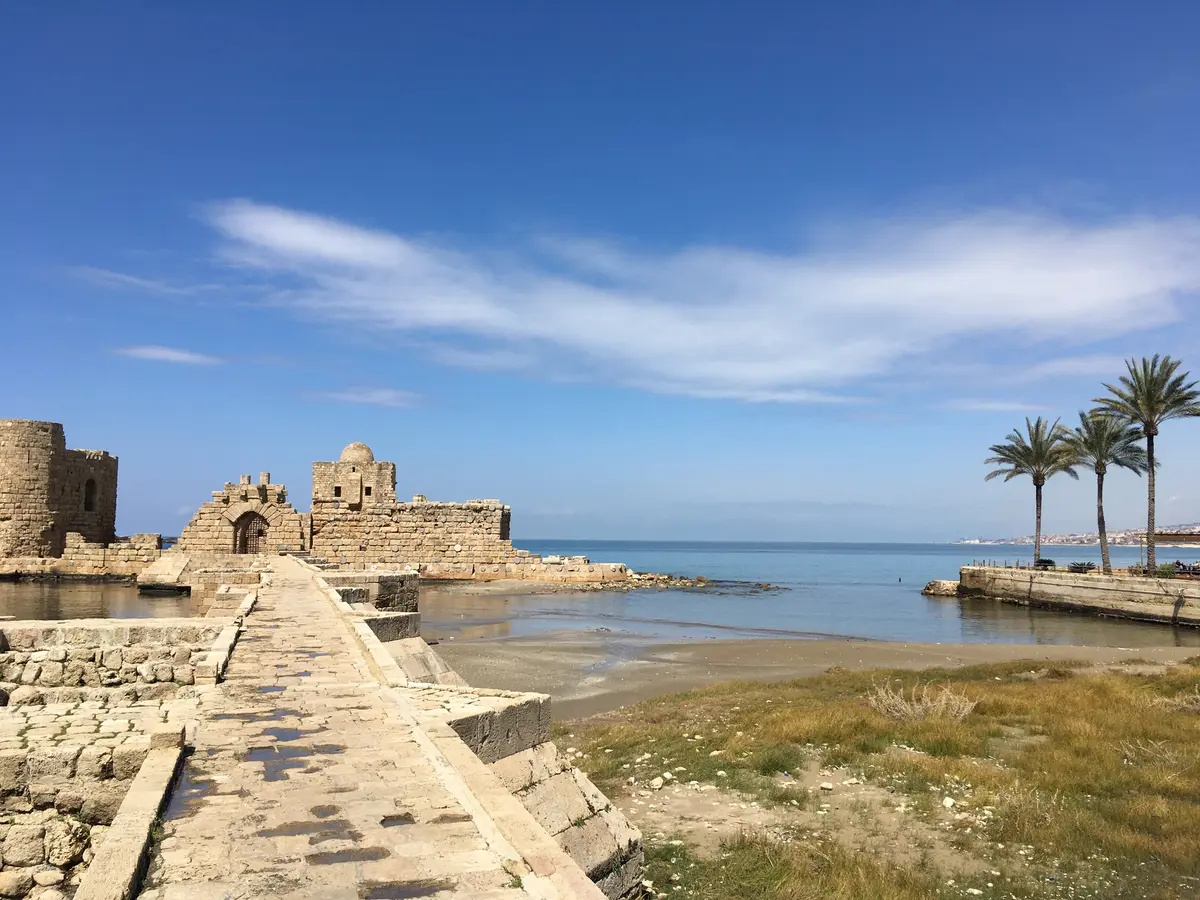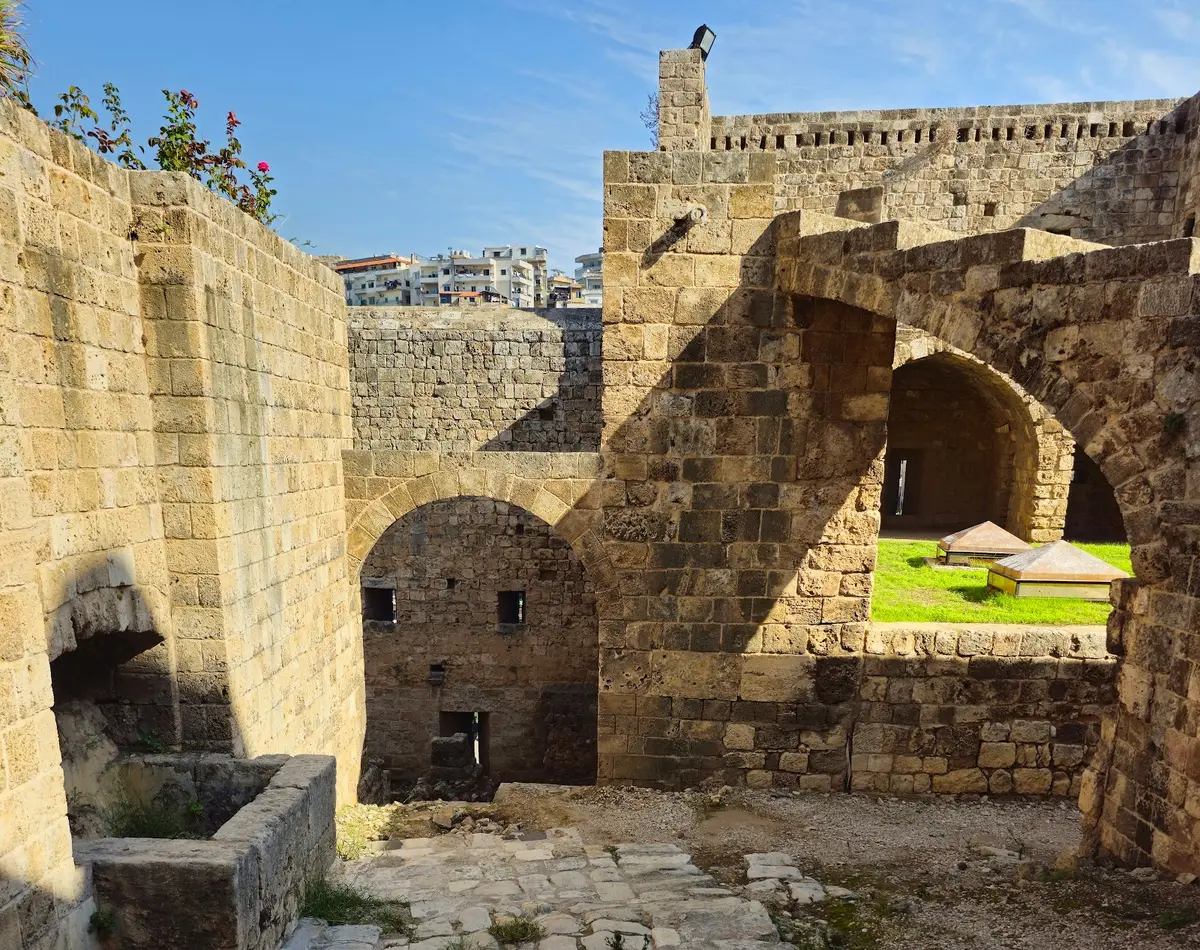
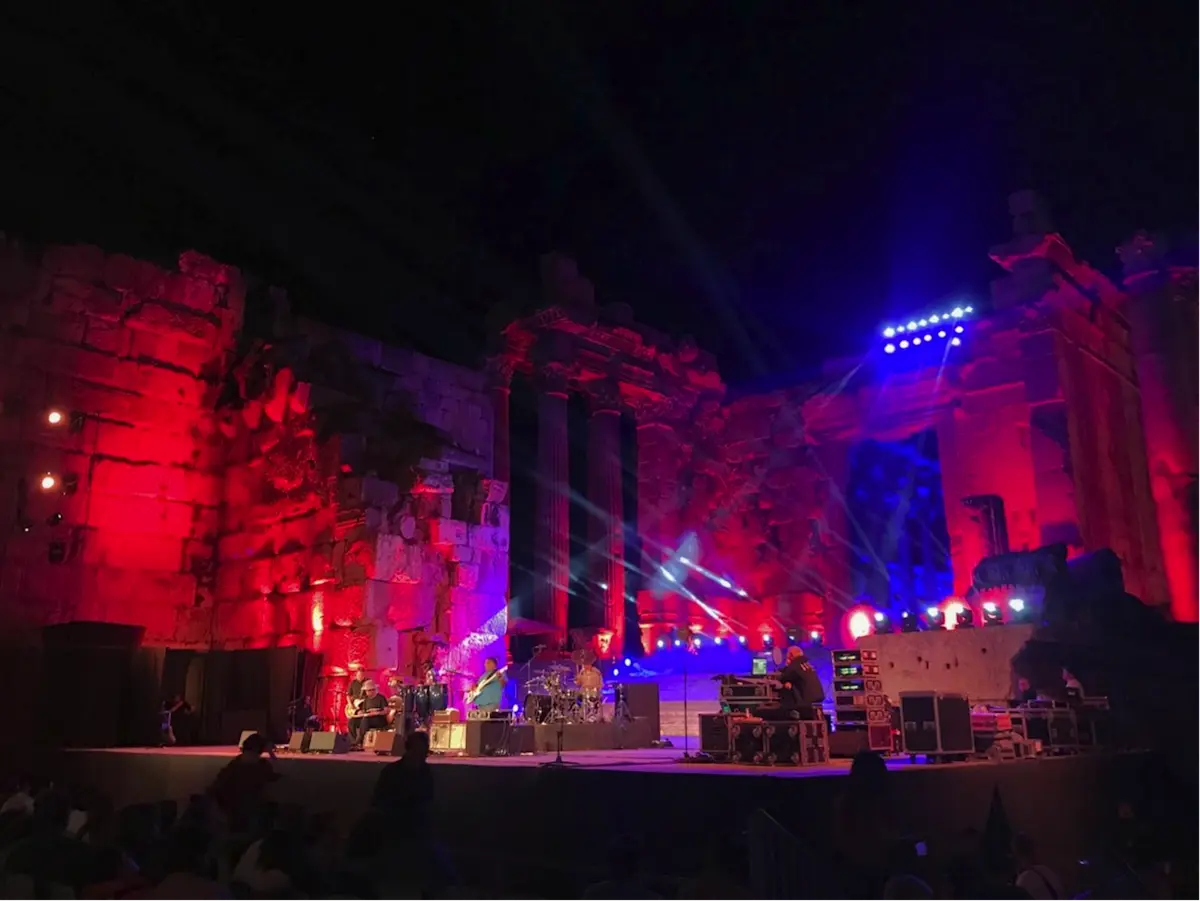
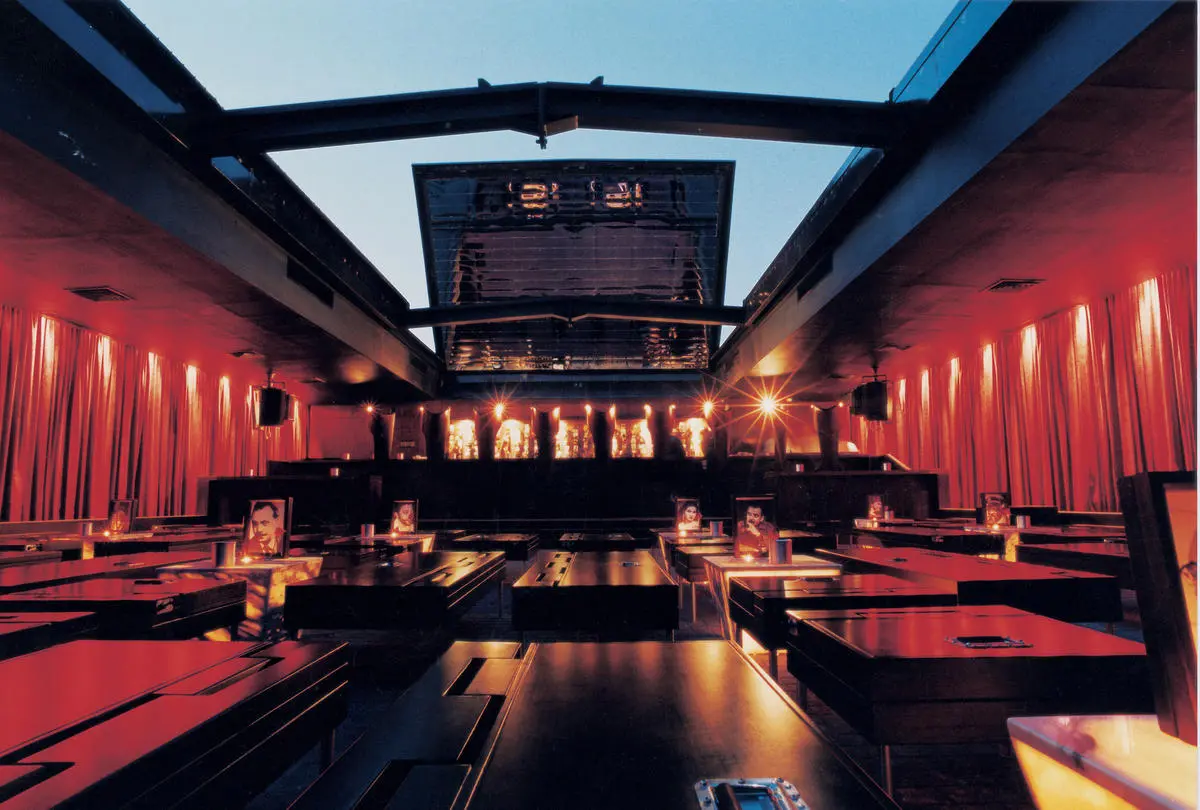
Roman temples that host full-scale operas. A retractable-roof bunker in Karantina that opens at sunrise over the port. A diva whose voice owns every morning between sunrise and 11 a.m. The Lebanon music scene is real, specific, and unlike anywhere else in the Mediterranean. It is also, right now, a scene most American travelers cannot responsibly visit in person.
Is it safe to travel for the Lebanon music scene right now?
No. The US State Department has Lebanon at Level 4: Do Not Travel as of the February 23, 2026 update, and a US Embassy Beirut security alert on April 3, 2026 warned of airstrikes, drones, and rocket attacks across the country, including parts of Beirut. Non-emergency US government personnel have been ordered to depart. The country is not open for normal tourism.
What this means for the reader: you can still follow the Lebanon music scene through livestreams, diaspora concerts, and festival broadcasts. This guide covers what the scene actually is, so when conditions change you know where to go, what to skip, and how to handle the cash economy that runs underneath all of it.
Pro Tip: If you are determined to travel anyway, enroll in the State Department’s Smart Traveler Enrollment Program (STEP) before you book a flight. Routine consular services at the US Embassy in Beirut are suspended, and emergency passport help is email-only.
For a detailed breakdown of security, you can read more about if Lebanon is safe for American tourists.
What does a Lebanese morning actually sound like?
Between sunrise and roughly 11 a.m., most of Lebanon listens to the same voice: Fairuz. Her morning monopoly is an unwritten social rule — taxis, balconies, bakeries, and corner grocers all tune in. Walk through Hamra or Zokak el-Blat in Beirut at 8 a.m. and you will hear the same soprano drifting out of three different windows on one block.
The neighborhood to feel this is Zokak el-Blat, just uphill from the Beirut Central District. Ottoman-era triple-arched mansions line the narrow streets, and the architecture alone explains why this district produced so much of the mid-century Lebanese songbook. The planned Fairuz museum is not fully operational yet, so the visit is about atmosphere, not exhibits.
- Best time to walk: 8:00–10:30 a.m.
- Neighborhood: Zokak el-Blat, West Beirut
- What to order at a cafe stop: Arabic coffee with cardamom, never filtered
- Time needed: 45 minutes to an hour
Pro Tip: Skip the Rafic Hariri memorial route that most walking tours push and go straight to the back streets off Wadi Abu Jamil. Quieter, older balconies, and you actually hear the music instead of traffic.
How does Dabke shape the nightlife?
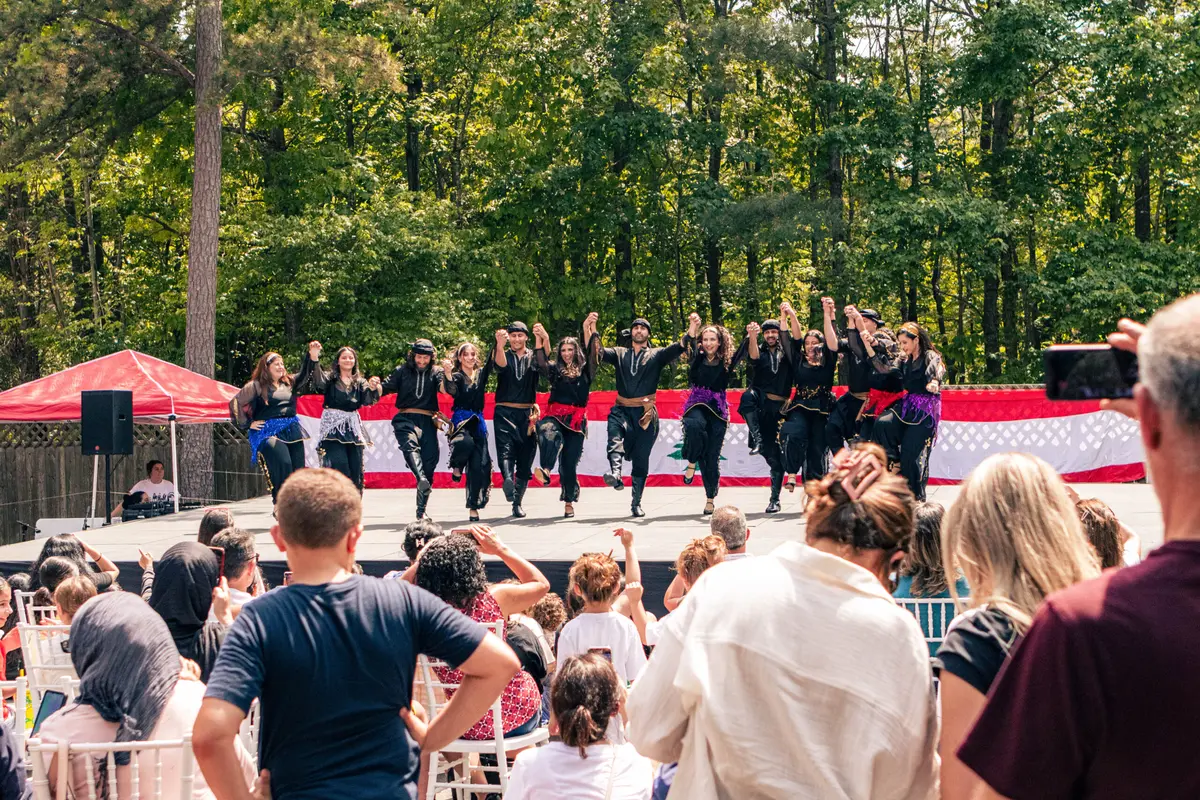
Dabke is the percussive line dance that anchors village weddings and festival closings. You will not spectate it for long — locals pull outsiders into the circle whether you know the footwork or not. The sound is a tabl drum (a two-headed hand drum) punching under a mijwiz, the droning twin-reed pipe that sounds somewhere between a bagpipe and a clarinet played through a garden hose.
Village festivals in the Chouf and Metn mountains program Dabke nights through July and August. For a cleaner introduction without the wedding-crasher energy, the Caracalla Dance Theatre in Sin el Fil runs drop-in workshops that fuse traditional Dabke with Martha Graham modern-dance technique and ballet fundamentals. It is the same company that performs at Baalbeck most summers.
- Caracalla Dance Theatre location: Sin el Fil, northeastern Beirut suburbs
- Workshop format: Drop-in, roughly 90 minutes
- Best for: Travelers who want to try Dabke without getting yanked into a village circle cold
- Pace: Faster than it looks on video — the stomp carries the beat, not the feet
Which summer festivals anchor the Lebanese music calendar?
Three festivals carry the bulk of international programming in Lebanon, and each one uses a heritage site as its stage. Between late June and late August, the Lebanese music calendar runs almost entirely through Baalbeck, Byblos, and Beiteddine. The settings do more work than any sound design — you are watching a concert framed by 2,000-year-old Roman columns, a Crusader castle, or a 19th-century Emir’s palace.
Baalbeck International Festival
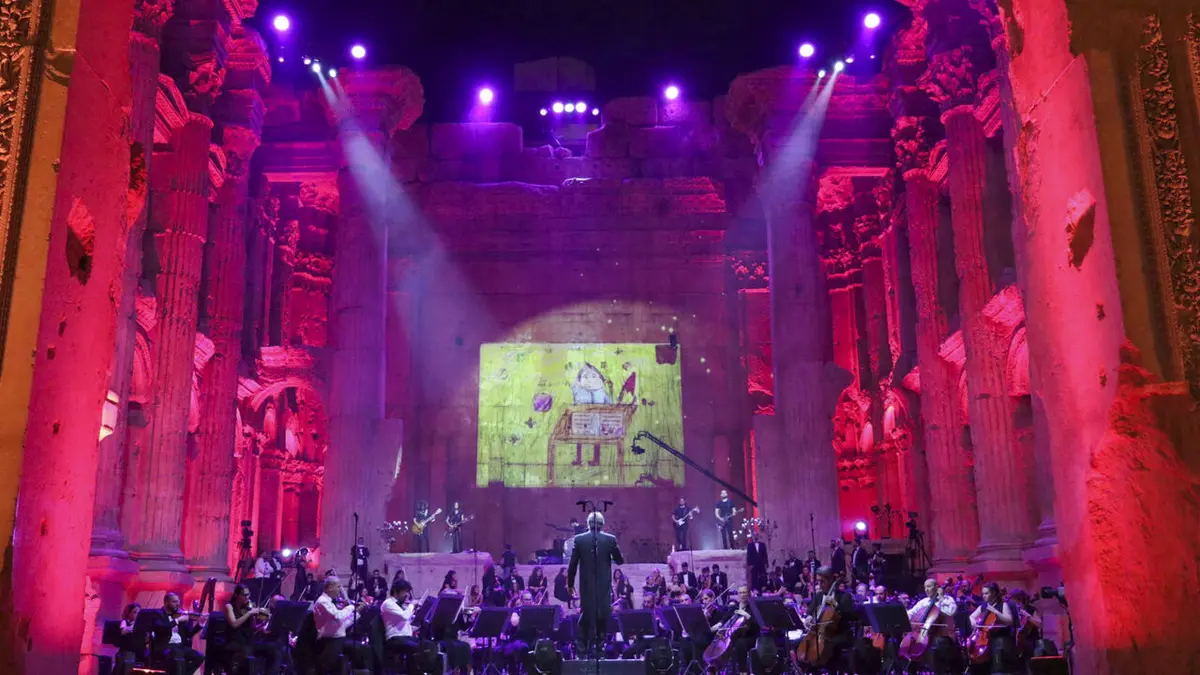
The Baalbeck International Festival stages concerts on the steps of the Temple of Bacchus, one of the best-preserved Roman structures in the world. The 2025 edition opened with a new production of Bizet’s Carmen on July 25–26 and closed on August 8 with Hiba Tawaji performing Stages, an Oussama Rahbani production honoring Mansour Rahbani’s centenary. The sound hits differently when it is bouncing off Corinthian columns that have been there since the 2nd century AD.
- Location: Baalbek, Beqaa Valley (85 miles / 137 km from Beirut)
- Season: Late July to early August
- Ticketing: Virgin Ticketing Box Office
- Cost: Roughly $35–$150 USD per show, depending on seating
- Time needed: Full day trip — shows start around 9 p.m. and end near midnight
- Transport: Official festival round-trip bus from Beirut (offered with tickets purchased before May 1 in past seasons)
Pro Tip: Always take the official festival bus to Baalbeck, never a private taxi or rideshare. The route passes through the Beqaa Valley, which the State Department lists under its “avoid” areas. The festival bus runs in a convoy with security.
Byblos International Festival
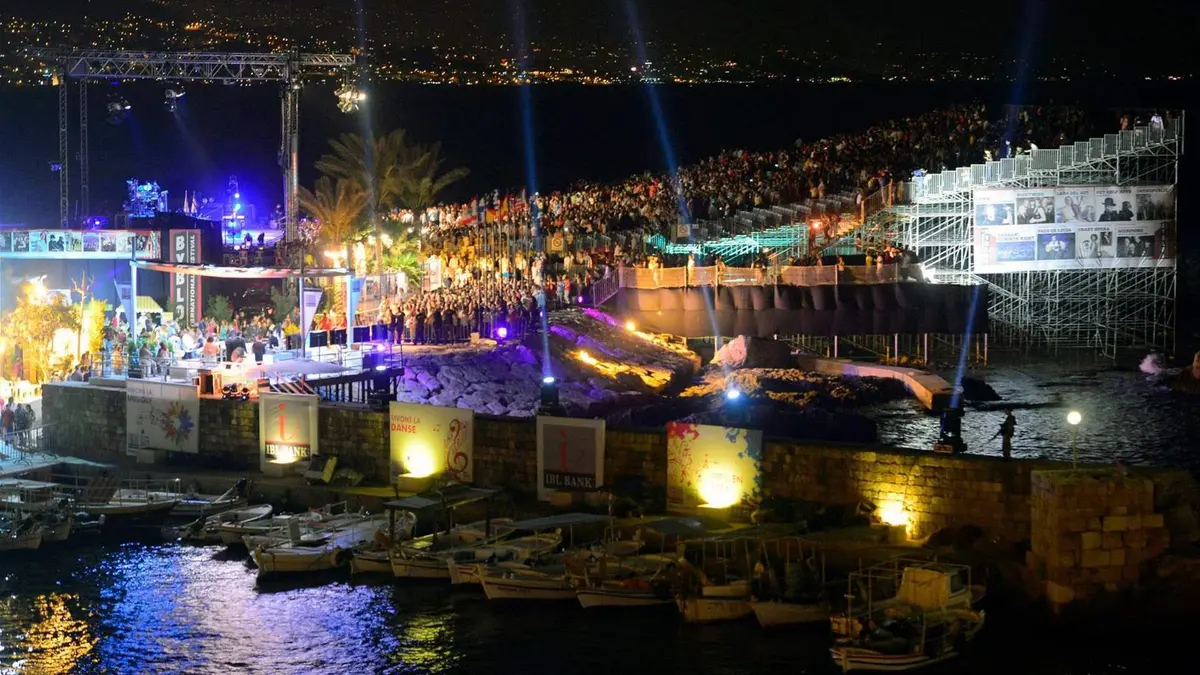
Byblos runs lighter and louder than Baalbeck. The stage is built out over the ancient harbor with the 12th-century Crusader castle lit up behind it, and the programming leans pop, rock, and global EDM. The crowd is 60% returning Lebanese diaspora — expats flying in from Paris, Montreal, and Los Angeles for one summer week — so the dance floor runs hot and the drinks line moves slow.
- Location: Jbeil (Byblos), 23 miles / 37 km north of Beirut
- Season: July
- Cost: $40–$120 USD for general admission; VIP tables run higher
- Best for: Travelers who want pop acts over opera and do not mind standing three hours in coastal humidity
- Time needed: Full evening, 8 p.m. to roughly 1 a.m.
Beiteddine Art Festival
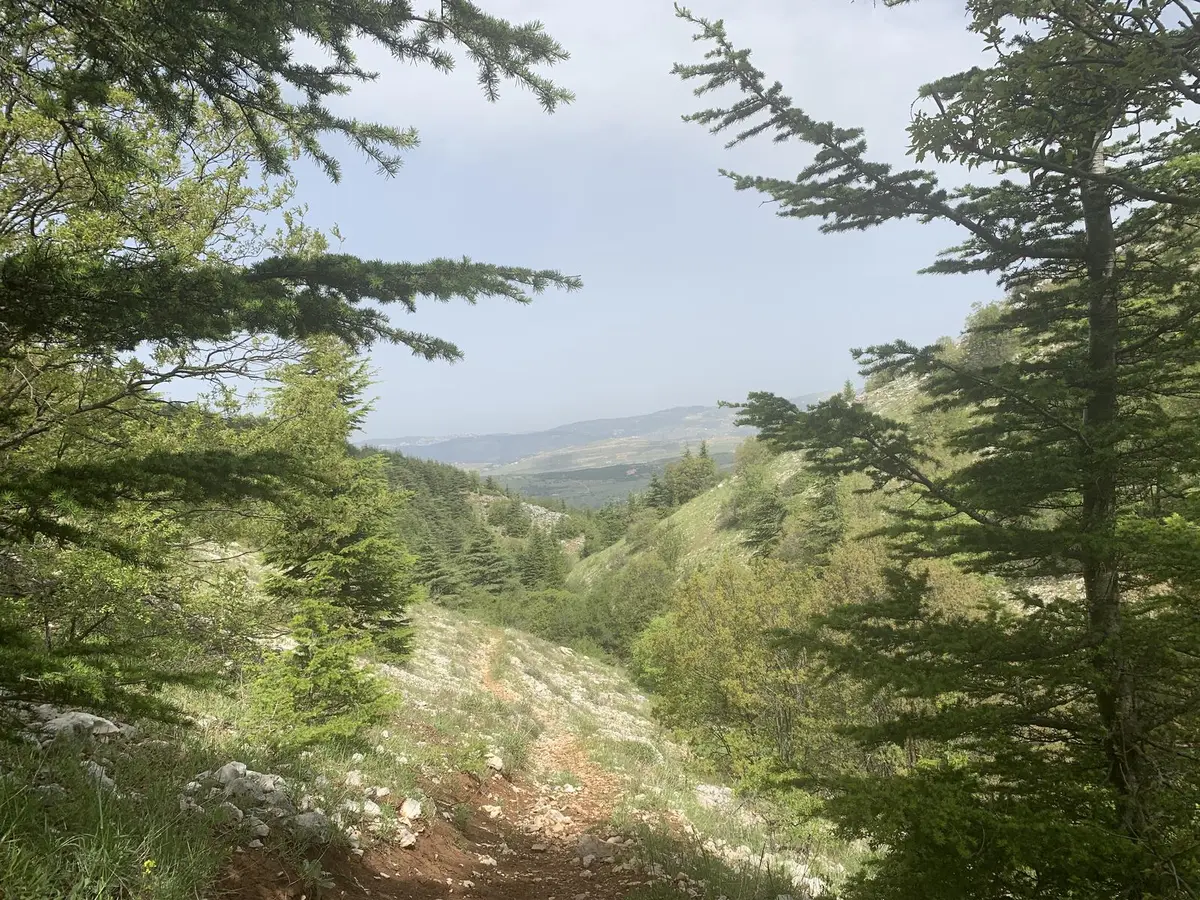
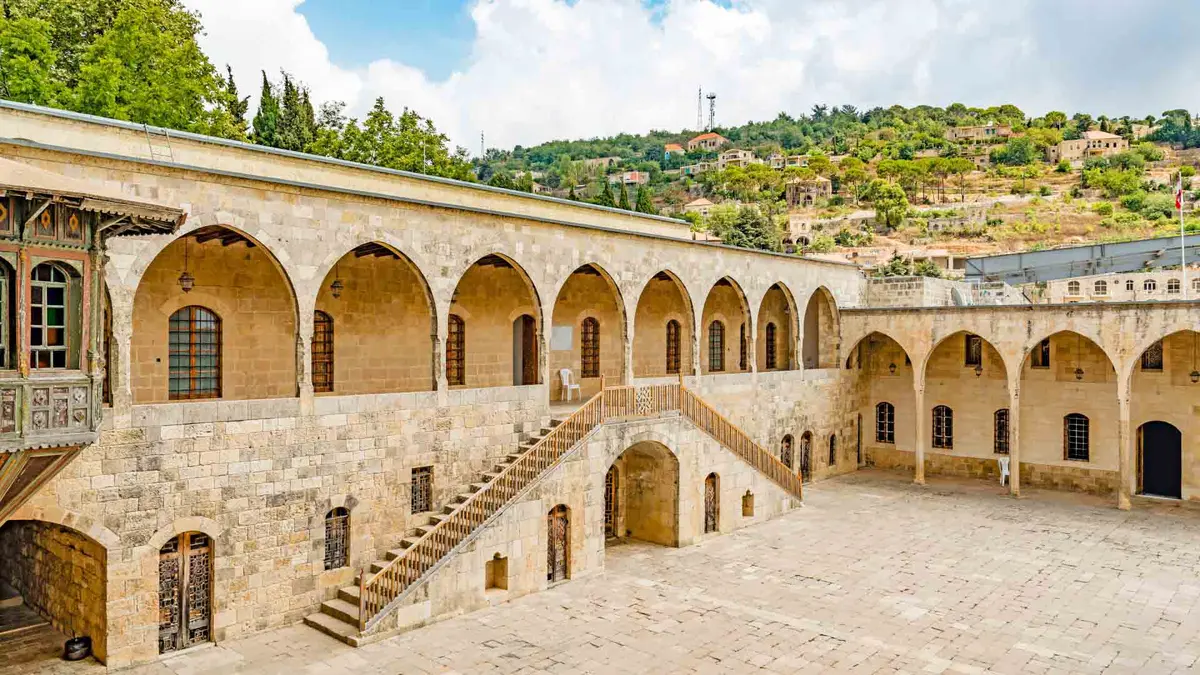
Beiteddine is the prettiest setting of the three and the most serious programming — jazz, classical, theater, and occasional ballet in the courtyard of a 19th-century palace in the Chouf Mountains. The Dar el-Wousta courtyard has natural acoustics that most purpose-built venues cannot match. The drive up from the coast climbs through the Chouf Cedar Reserve, which adds about an hour each way but is worth it for the temperature drop alone (roughly 15°F / 8°C cooler than Beirut in August).
- Location: Beiteddine Palace, Chouf Mountains (31 miles / 50 km southeast of Beirut)
- Season: Late July through August
- Cost: $40–$100 USD
- Best for: Jazz and classical; skip if you came for dance music
- What to wear: A light jacket — the mountain air drops fast after sunset
Pro Tip: Reserve a table at Mir Amin Palace hotel for dinner before the show. It is a 5-minute drive from Beiteddine, the view is straight down the valley, and you avoid the 45-minute post-show traffic crawl back to the main road.
Where do Beirut’s nightlife districts diverge?
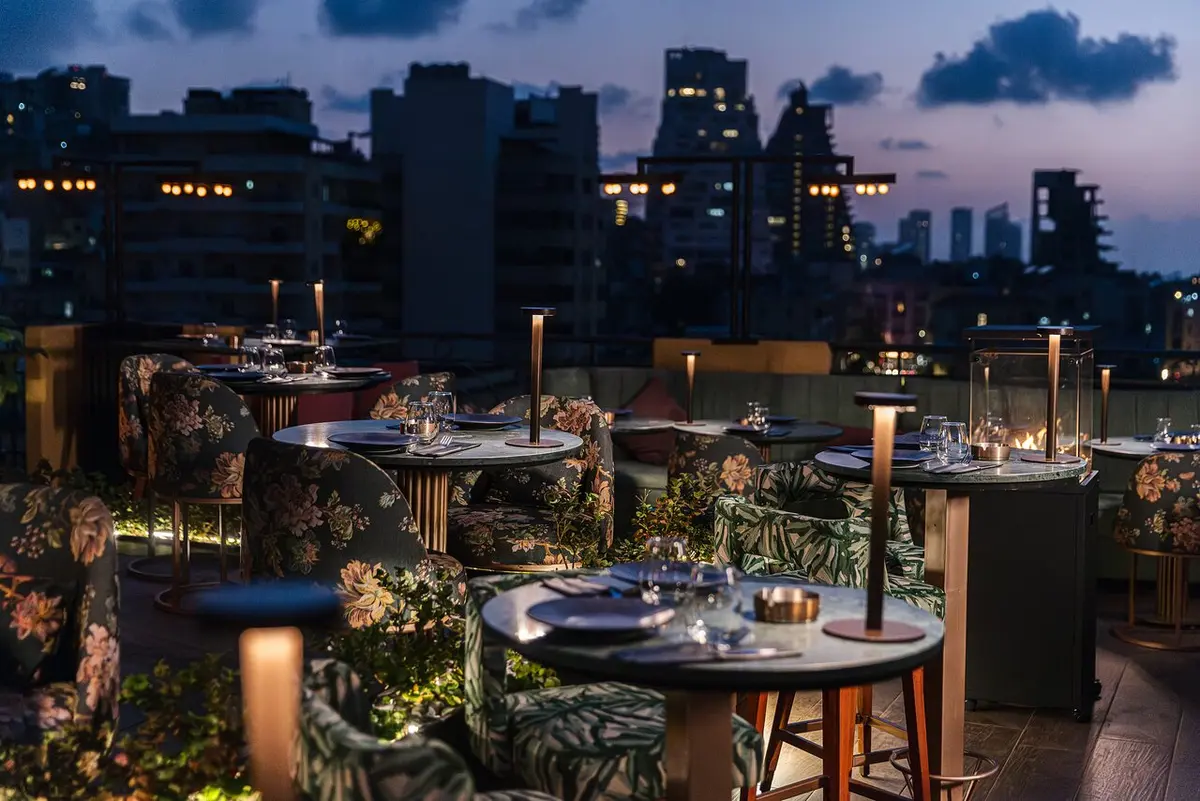
Beirut does not have one nightlife scene; it has two distinct ones separated by about two miles. Mar Mikhael runs bars, jazz lounges, and live-music pubs until roughly 2 a.m. Karantina runs the electronic clubs that book DJs from the same Resident Advisor tier as Berghain and Berlin’s Tresor — these rooms do not peak until 4 a.m. and often run through sunrise.
Mar Mikhael — bars, live jazz, and pub jam sessions
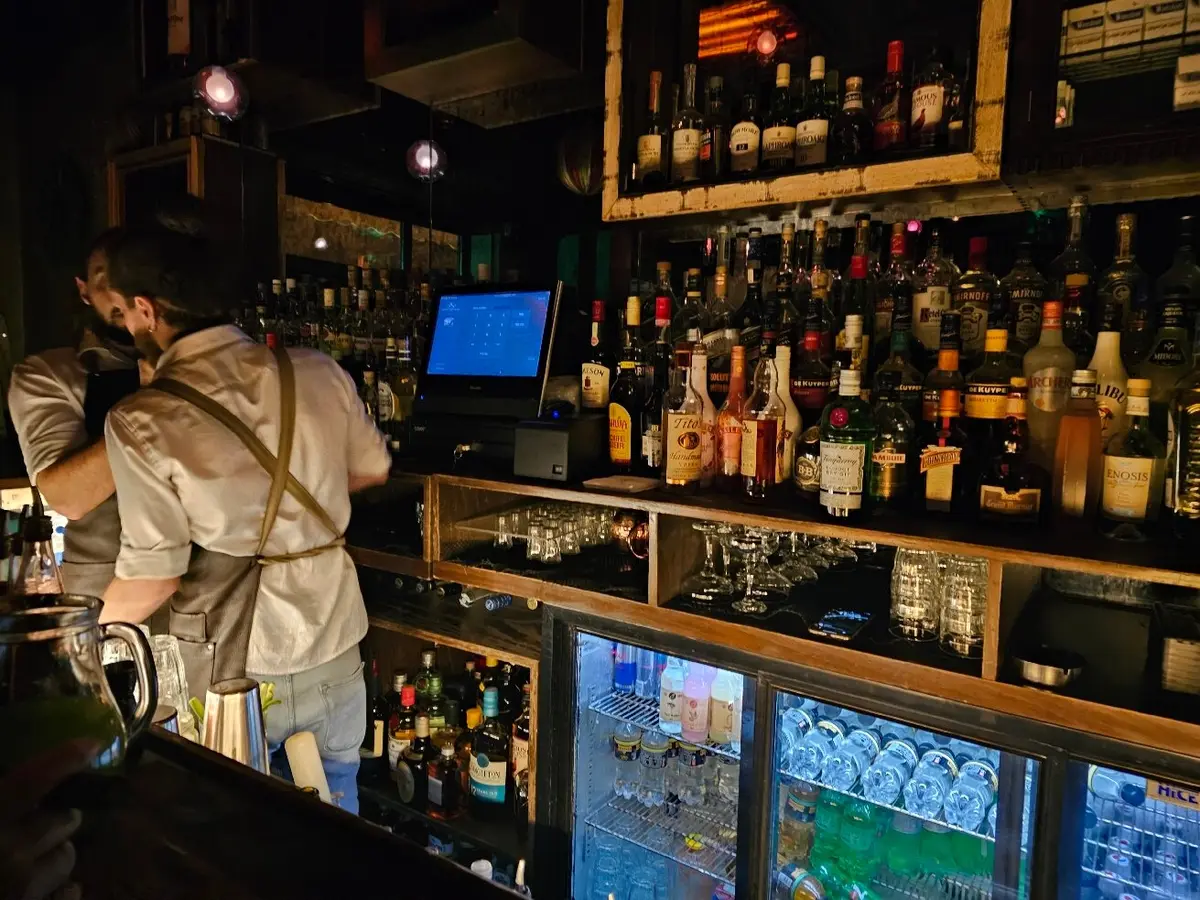
Mar Mikhael was an auto-repair district before it became Beirut’s live-music corridor. The whole strip runs along Armenia Street and Alexander Fleming Street. After the August 2020 port explosion leveled much of the area, the street rebuilt in roughly 18 months — the scars are still visible in patched facades and new glass, but the rooms are full again.
Anise on Alexander Fleming does cocktails with local herbs (the “Baladi” uses za’atar and arak) and programs jazz-blues most nights. Radio Beirut is a working radio station that also runs as a pub — Thursday jam sessions pull in whoever is around, including surprisingly high-caliber session players. Torino Express is a 30-seat bohemian bar that has been on the street since 2004 and anchors the whole vibe.
- Anise: Alexander Fleming Street, Mar Mikhael — jazz, blues, cocktails from $12 USD
- Radio Beirut: Armenia Street — live broadcasts and jam sessions, beer from $5 USD
- Torino Express: Armenia Street — no live music, but the best people-watching bar in the district
- Best night: Thursday or Friday; Saturday is tourist-heavy
Karantina — the electronic underground
The Grand Factory sits on top of a working mattress factory in industrial Karantina. You ride a freight elevator to a rooftop room with a view over the port and a sound system tuned by Funktion-One. Bookings run to names like Tale of Us, Jamie Jones, and Dixon on peak weekends. It is the club that put Beirut on the international electronic circuit.
B018 is the other legend — a half-buried bunker designed by Bernard Khoury, opened in 1998. The retractable roof cranks open around 5 a.m. and the crowd dances the last hour watching the sky turn pink. B018 survived the 2020 explosion largely intact because it is literally underground; the neighboring clubs were not as lucky.
Ballroom Blitz was heavily damaged in the 2020 blast and has since reopened. It runs three rooms — the Ballroom (main floor), the Goldroom (a hi-fi listening studio with a strict no-photos rule), and the Lobby (first-drink room). The Goldroom is where you go if you actually want to hear the kick drum the way the DJ intended it.
- The Grand Factory: Karantina industrial zone — cover $20–$40 USD, doors midnight, peak 3 a.m.
- B018: Karantina parking lot (look for the stairs descending into the concrete) — cover $15–$30 USD, open until sunrise
- Ballroom Blitz: Karantina — cover $20–$35 USD, Goldroom no-phones policy strictly enforced
- Best for: Serious electronic music heads; skip if you want Top 40
Pro Tip: Karantina clubs do not warm up until 2 a.m. on a weekend. If you arrive at midnight, you are paying cover to stand in an empty room. Eat dinner in Mar Mikhael at 10, go to a bar until 1:30, then move to the club.
How do you handle Lebanon’s cash economy?
Bring new US $100 bills printed in 2013 or later, and bring them in clean condition. This is the single most important logistical detail in Lebanon. Older “white dollar” $100 bills and any damaged, torn, or stained notes will be rejected by most bars, clubs, taxis, and festival vendors, even though the US Embassy has officially confirmed all designs remain legal tender.
The post-2013 $100 note, known locally as the “blue dollar,” has a blue 3D security ribbon woven vertically through the center of the bill. That ribbon is what shopkeepers look for. The country has been running on a dollarized cash economy since the 2019 financial collapse — the World Bank estimated cash transactions at around $10 billion in 2023, roughly half of Lebanon’s GDP.
- Required: US $100 bills dated 2013 or later, with the blue vertical ribbon
- Rejected: Pre-2013 “white” $100 bills, any torn, stained, or written-on notes
- Also bring: A mix of $20s and $50s for taxis and smaller purchases
- Card acceptance: Festival online ticketing and some restaurants; most bars, clubs, and taxis are cash-only
- ATMs: Unreliable — over a quarter of the country’s ATMs closed between 2022 and 2023
Pro Tip: Ask your US bank for fresh $100 bills when you order travel cash. Tellers often have a stack of brand-new 2017 and 2021 notes pulled from sealed Federal Reserve bricks. Those pass without a second look in Beirut.
The practical knock-on effect: budget more in cash than you think you need. A night that includes dinner in Mar Mikhael, two cocktails, a taxi to Karantina, club cover, and a rideshare home will run roughly $120–$180 USD per person. Festivals in Baalbeck or Byblos add $50–$150 for the ticket plus $40–$80 for bus transport and food on-site.
Before you book
TL;DR: The Lebanon music scene is one of the most specific in the Mediterranean — Fairuz mornings, Dabke evenings, Roman-temple opera, Karantina sunrise techno. But the US Travel Advisory is Level 4 and has been reinforced as recently as April 3, 2026. The honest play right now is to track the festivals from abroad, watch the Baalbeck livestreams, and save the trip for when the advisory changes. When it does, bring post-2013 $100 bills, skip the Beqaa Valley unless you are on an official festival bus, and plan your Karantina nights for 2 a.m. onward.
Which of these would you actually want to experience first when the country reopens — Baalbeck opera under the Roman columns, Karantina sunrise techno at B018, or a Thursday jam session in Mar Mikhael? Drop it in the comments.