SAFETY WARNING: Southern Lebanon, where the Mleeta Landmark sits, is under a U.S. State Department Level 4 Do Not Travel advisory and is an active combat zone. The museum is closed. This guide is an archival record — not an invitation to visit. Do not attempt to travel to this site under any circumstances.
The Mleeta Landmark is the strangest war museum most travelers to Lebanon will never see — a Hezbollah-run complex on a mountaintop in Southern Lebanon that packaged guerrilla warfare history with gift shops and multimedia theaters. It’s closed now, sitting inside an active war zone. This is what it contained, what it meant, and why the site itself may now be wreckage.
What is the Mleeta Landmark?
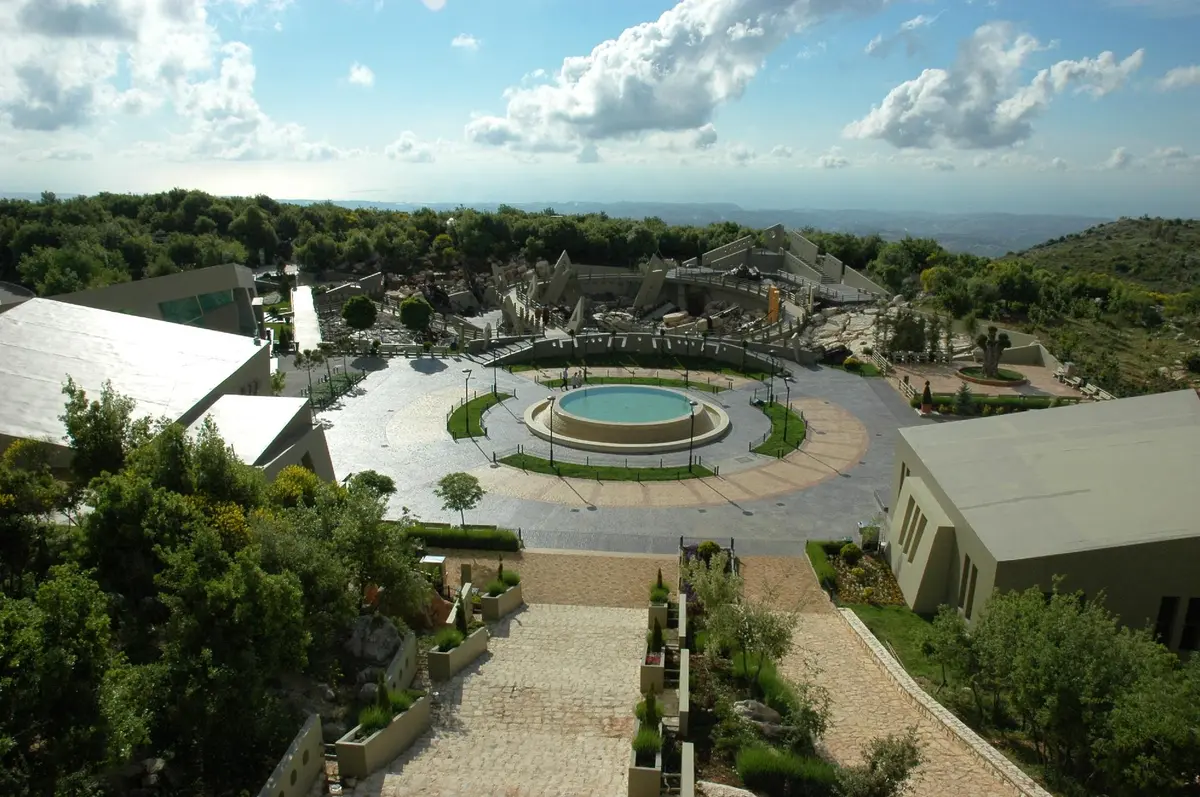
The Mleeta Landmark, officially called the Tourist Landmark of the Resistance, is a Hezbollah war museum in Southern Lebanon that opened on May 25, 2010, to mark the 10th anniversary of Israel’s withdrawal from Southern Lebanon. The complex sits on Mount A’mel at roughly 3,477 feet (1,060 m) elevation and covers about 15 acres (60,000 sq m) of forested mountainside. It is closed and inaccessible due to active conflict.
A few things set the site apart from other war museums. It was built by a group the United States, United Kingdom, Gulf Cooperation Council states, and others have designated as a terrorist organization — and it is openly, unapologetically partisan. The museum celebrates the fighters who operated from this spot during the 1982–2000 Israeli occupation, and it was expressly designed to shape how future generations remember that period. Unlike Auschwitz or Hiroshima, which carry a “never again” message, Mleeta’s tone is martial and triumphant.
Why was Mleeta Landmark built on this mountain?
The site was not chosen for its views. Mount A’mel, in the Iqlim al-Tuffah district (“Region of Apples”), was a frontline position during the Israeli occupation because its elevation gave fighters a straight-line view toward the Mediterranean coast to the west and the Israeli border roughly 25 to 31 miles (40–50 km) south. Every structural decision at the museum flows from that military geography.
The strategic value of Mount A’mel
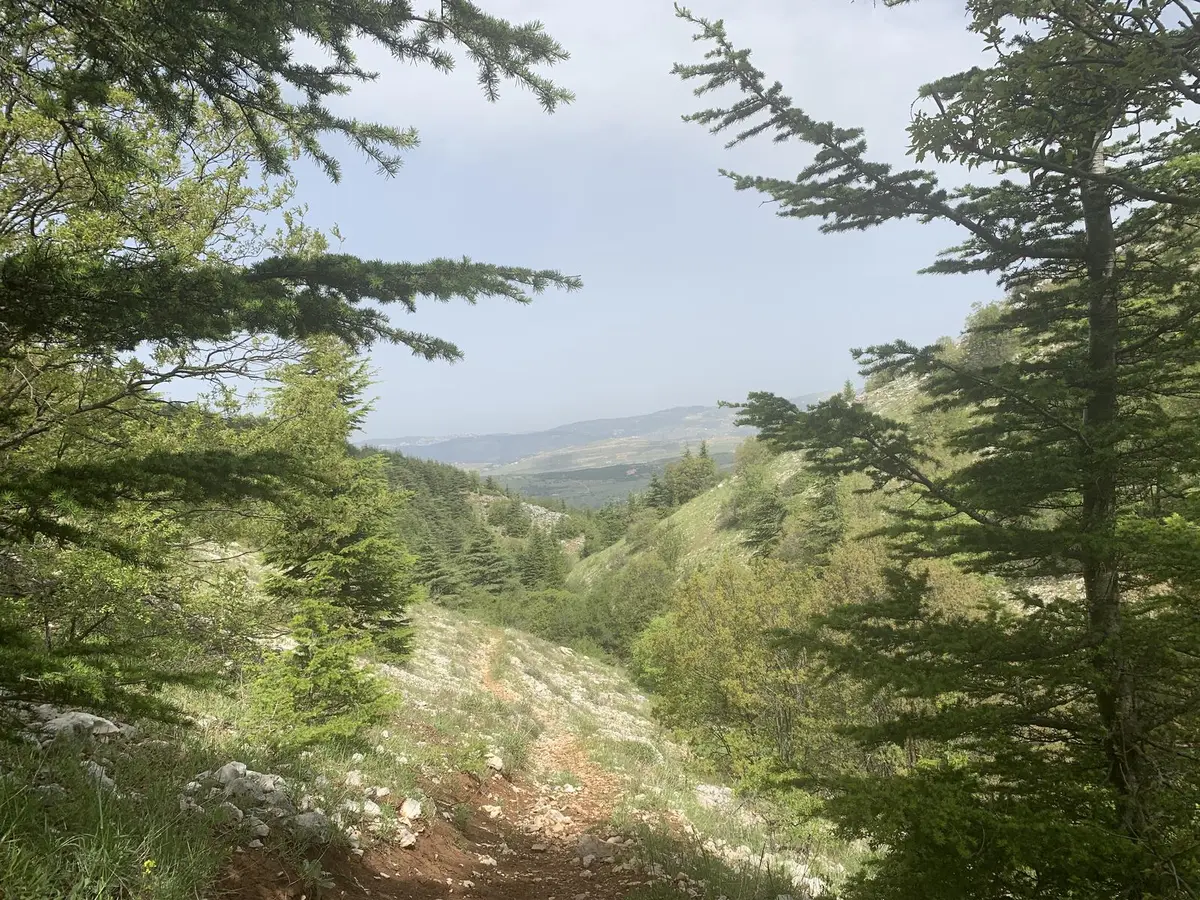
During the occupation years, Mleeta was a combat position, not a memorial. Fighters lived in the caves and tunnels carved into the limestone, sometimes for weeks at a stretch. The dense oak and birch canopy typical of Lebanon’s mountain terrain was the cover, not the décor — it hid the site from Israeli aircraft. The mountain was repeatedly shelled and bombed.
When the museum was built, the architects deliberately preserved the shrapnel scars and bomb craters. A visitor walking the forest paths is meant to read the physical damage as part of the exhibit. It’s one of the few war museums where the grounds themselves are a relic.
How the site changed from outpost to museum
After Israel’s May 2000 withdrawal, Hezbollah made a strategic decision to convert this former military base into a public-facing tourism site. The project reportedly involved about 50 architects and engineers and cost millions of dollars to build. The design brief was “natural museum” — low buildings tucked into the landscape, paths routed through the existing forest, the combat environment left visible.
The 2010 inauguration drew government officials and international allies of Hezbollah, and the site was openly positioned as a tool for transmitting a political narrative about what had happened in Southern Lebanon.
Pro Tip (archival): The most useful way to understand Mleeta is not as a museum about a war, but as a physical argument about who won that war and what it meant. Visitors during the operational years who missed that framing walked away thinking they’d seen a quirky outdoor attraction.
What did a visit to Mleeta actually look like?
During its operational years, a visit to Mleeta followed a prescribed route: a 12-minute introductory film featuring Hezbollah speeches, then a guided loop through the outdoor exhibits, the main pit, the tunnels, and a gift shop. The full tour took about two hours and was included in the entry fee, with guides available in Arabic, English, and French. Visitors were handed a specific version of events and walked through it in order.
Reviewers who went during the accessible years — including American and European travelers, back when Lebanon was safer for American tourists than it is today — consistently described two things. The production values were higher than they expected. And the guides pushed a hard political line that felt jarring against the theme-park surroundings.
The Abyss — a pit of twisted Israeli tanks
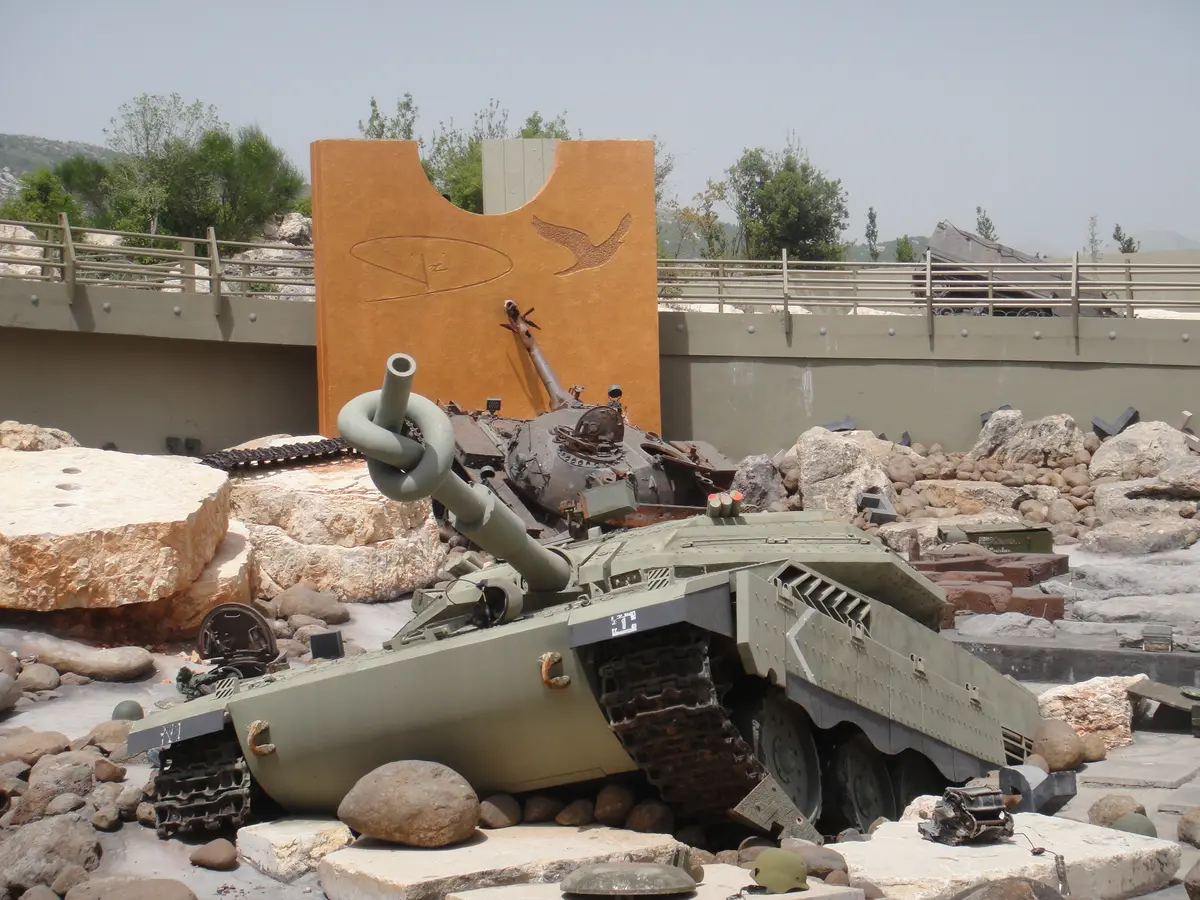
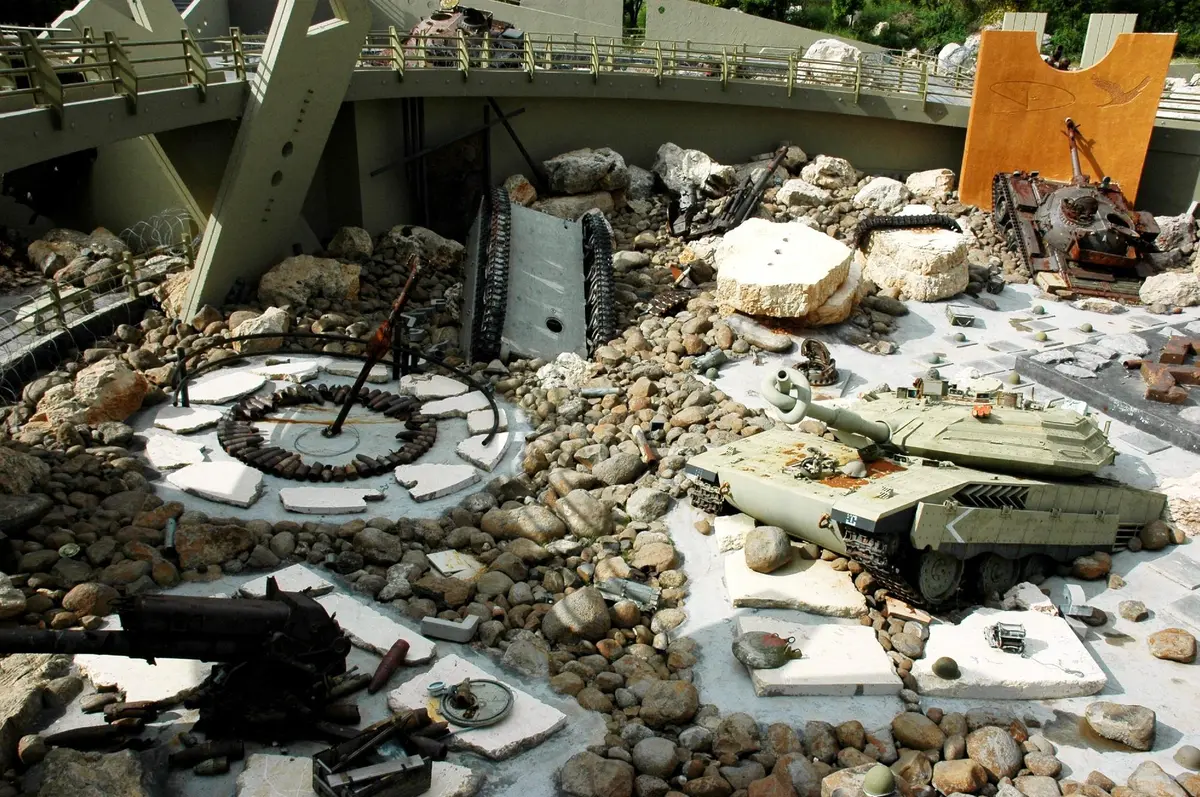
The defining image of Mleeta is “The Abyss.” It’s a concrete pit, nearly an acre in size (3,500 sq m), excavated into the earth and filled with the wreckage of Israeli armored vehicles captured during the 1982–2000 occupation and the 2006 Lebanon War. The centerpiece is a Merkava Mk 4 tank with its gun barrel bent into a knot — not damaged that way in battle, but deliberately twisted afterward as a visual statement.
The whole pit is laced with steel cables meant to evoke the “Spider’s Web” theory — the idea, borrowed from a speech by Hassan Nasrallah, that the adversary is socially fragile regardless of its military strength. A spiral walkway lets visitors descend partway in, looking down on the wreckage. The framing is not subtle.
- The pit: roughly an acre (3,500 sq m), concrete spiral structure
- Central exhibit: Merkava Mk 4 tank with knotted barrel
- Design reference: “Spider’s Web” speech by Hassan Nasrallah
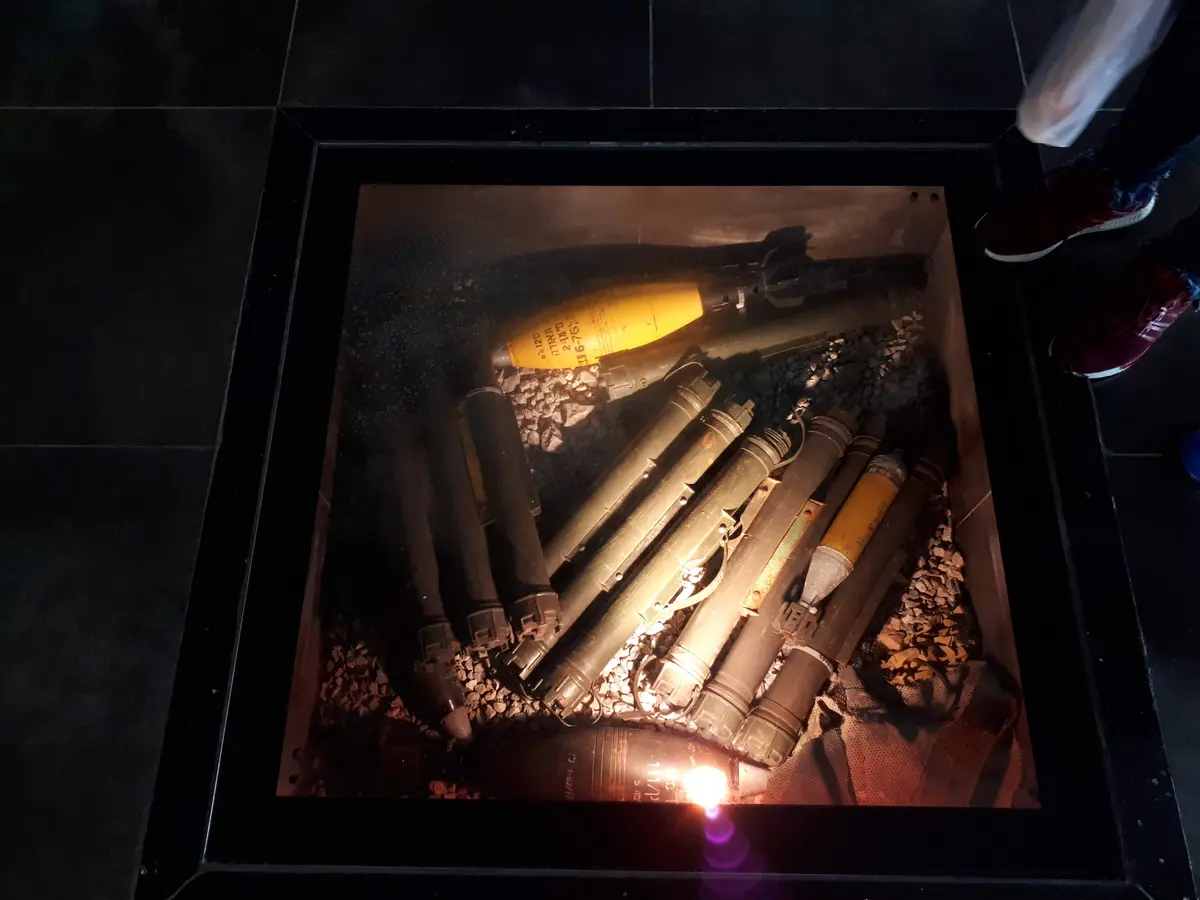
- Other wreckage: Israeli jeeps, helicopter parts, armored personnel carriers, unspent munitions
The underground tunnels where fighters lived
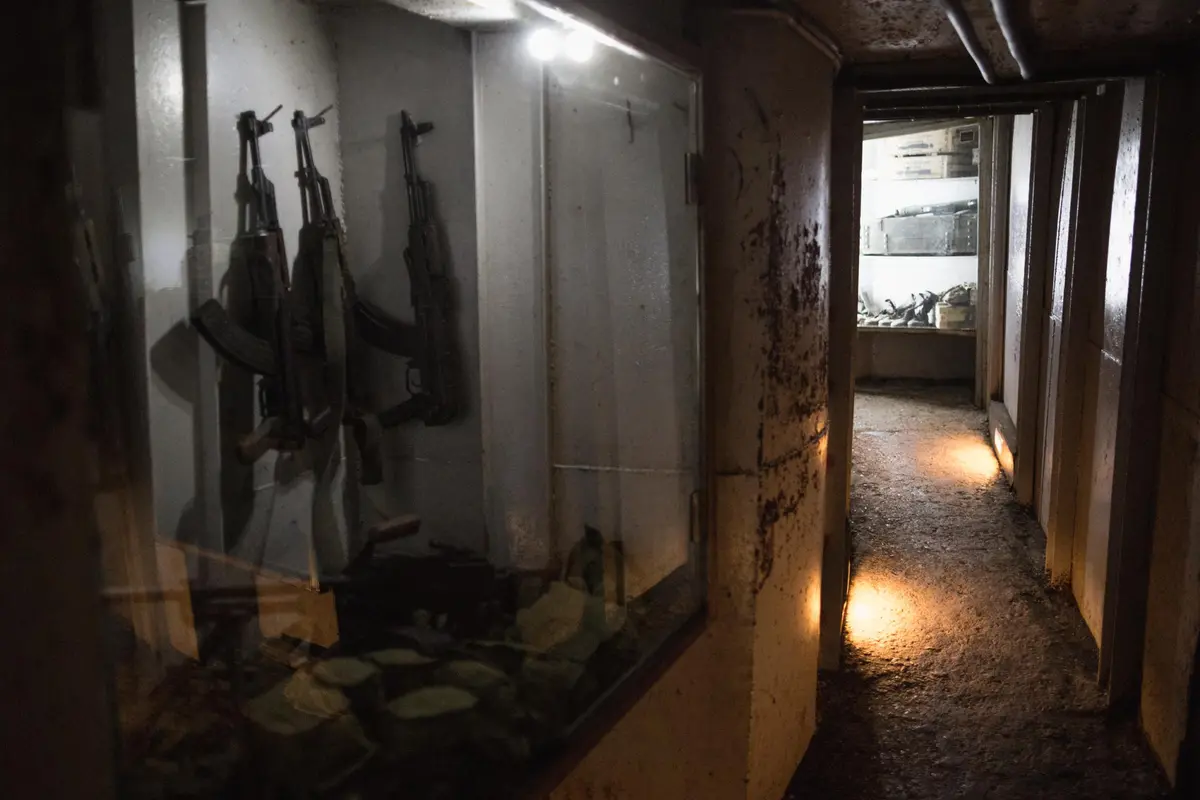
A 656-foot (200 m) section of original tunnel network was the most immersive part of the visit. The passages are cool, damp, dimly lit, and they smell of wet earth and concrete. At intervals they widen into chambers that have been kept — or restaged — to show how fighters actually lived down there: a kitchen with cookware, bunk rooms with metal cots and prayer rugs, a command room with old radios and computer terminals.
Honest friction point from past visitors: the tunnels are tight, the ceiling low, and the ventilation minimal. Anyone mildly claustrophobic hated it. The single-file layout also meant a tour group’s pace was set by its slowest walker, and in peak months the backup at the command-room chamber could eat 15 minutes.
- Length accessible to visitors: 656 ft (200 m)
- Conditions: Cool, damp, low ceilings
- Rooms staged inside: Kitchen, sleeping quarters, command center, prayer area
- Realistic time: 20–30 minutes, longer at peak
What was the museum’s real message?
Mleeta’s message was curated, single-sided, and deliberately sanitized. The site told one story — Hezbollah’s armed campaign against Israel — and buried or erased everything that complicated it, including the contributions of other Lebanese resistance groups, the Shia–Sunni and Christian–Muslim splits of the civil war that still run through modern Lebanese culture, and Hezbollah’s own controversial role in the Syrian civil war after 2011. Critics inside and outside Lebanon long said this narrative doubles as recruitment.
The museum’s slogan, translated as “Where the Land Speaks to the Heavens,” frames the site as spiritually charged ground. The inclusion of martyrs’ memorials, prayer spaces, and a video room that opens with Nasrallah speaking directly to the visitor was deliberate. The architecture itself was designed to echo the ideology: oblique walls, leaning concrete panels, exhibits half-hidden in the forest — a built environment meant to mimic the ethos of guerrilla warfare.
A one-sided version of Lebanese history
The Lebanese National Resistance Front — a largely secular, leftist coalition that also fought the Israeli occupation in the 1980s — appears nowhere in the story Mleeta tells. Neither does the Lebanese Communist Party’s role, nor the fact that early armed resistance in Southern Lebanon predated Hezbollah’s founding. The complexity of the 1975–1990 civil war is glossed over entirely, leaving only the external enemy in frame.
The late researcher Lokman Slim, a prominent Lebanese critic of Hezbollah assassinated in 2021, described the site as one that “sanitizes war.” That’s the most honest one-line summary of what the curation actually does.
Why Western journalists called it “Hezbollah’s Disneyland”
The nickname stuck because the dissonance is real. A designated terrorist group built a visitor attraction with clean bathrooms, souvenir mugs, branded lanyards, a snack bar, and interactive exhibits. On weekends during the accessible years, Mleeta filled with Lebanese families, school groups, and scout troops — functioning as a park for locals, with the ideology absorbed almost passively through the setting.
Here’s a contrarian take most “Hezbollahland” coverage misses: calling Mleeta a theme park undersells how architecturally sophisticated the place is. The landscape integration is better than most mainstream war memorials in the West. Dismissing it as kitsch makes it easier to ignore, which is exactly the wrong response to propaganda that works.
Why is Mleeta Landmark closed?
Mleeta is closed because Southern Lebanon is once again an active war zone. The region has cycled through major escalation since October 2023, a full Israeli ground invasion in late 2024, the November 2024 U.S.-brokered ceasefire, and the collapse of that ceasefire in early March 2026 amid the wider U.S.-Israel war on Iran. All areas south of Sidon, including Mleeta, are under a U.S. State Department Level 4 advisory — Do Not Travel, Depart If You Are There.
A former military base memorialized as a symbol of Hezbollah power is, by definition, a target. Airstrikes have hit the wider Iqlim al-Tuffah district repeatedly, and the road network leading to the site has been severed at multiple points — the Litani River bridges were blown up by the IDF in March 2026 to cut Southern Lebanon off from the rest of the country. Confirmed reports on the museum’s specific structural status are not publicly available, but the area is inaccessible to civilians and to most journalists.
There is an obvious irony here. A museum built to display the wreckage of one war may itself end up as wreckage from another. The Nasrallah videos that opened every visitor tour are also now a historical record of a figure killed in a September 2024 Israeli strike on Beirut. The site is frozen in time in a way its creators never intended.
Pro Tip: Ignore “current conditions” content about Mleeta from travel blogs that have not been updated since 2024. A lot of still-indexed guides treat the site as open because their publishers have not gone back to update them. Check the U.S. State Department Lebanon travel advisory for the actual current status before trusting any other source.
Mleeta Landmark logistics (archived — not currently accessible)
For archival reference only — these are the logistics that applied during the museum’s operational years. Do not use this as a current planning guide. The site is closed and the route is through an active war zone.
- Location: Mount A’mel, near Jarjouaa and Ain Bouswar villages, Iqlim al-Tuffah district, South Governorate, Lebanon
- Elevation: 3,477 ft (1,060 m) above sea level
- Site size: About 15 acres (60,000 sq m)
- Drive from Beirut: Roughly 51 miles (82 km) via Sidon and Nabatieh; approximately 90 minutes in normal conditions
- Historical entry fee: Nominal (a few U.S. dollars equivalent), though Lebanese pound collapse made LBP pricing unreliable
- Parking capacity: 200 vehicles
- Best for (historically): Journalists, researchers, dark-tourism travelers, Middle East policy students
- Languages offered: Arabic, English, French (free guides)
- Time needed (historically): 2 hours minimum, 3 for the full film, tunnels, and gift shop
- Opening date: May 25, 2010
- Current status: Closed indefinitely; access area is under a U.S. State Department Level 4 advisory
Before you close this tab
TL;DR: Mleeta Landmark is a Hezbollah-run war museum in Southern Lebanon that turned a former guerrilla base into a polished, partisan visitor attraction — complete with a pit of twisted Israeli tank barrels and 656 feet of underground tunnels. It is closed, sits inside an active combat zone, and is under a U.S. Level 4 Do Not Travel advisory. This is an archive of a site that may not survive its second war.
The uncomfortable truth about Mleeta is that whether it stood intact or not after the current conflict, the site was always more interesting as an artifact of how groups manufacture political memory than as a “Disneyland” curiosity. War museums are never neutral. Mleeta is just the rare one that stops pretending to be.
If you visited Mleeta during its operational years, perhaps as one stop on a Lebanon itinerary for history buffs, what stuck with you most — the Abyss, the tunnels, or the propaganda? Or, if you followed the museum from afar, do you think sites like this should be preserved, rebuilt, or left in ruins?