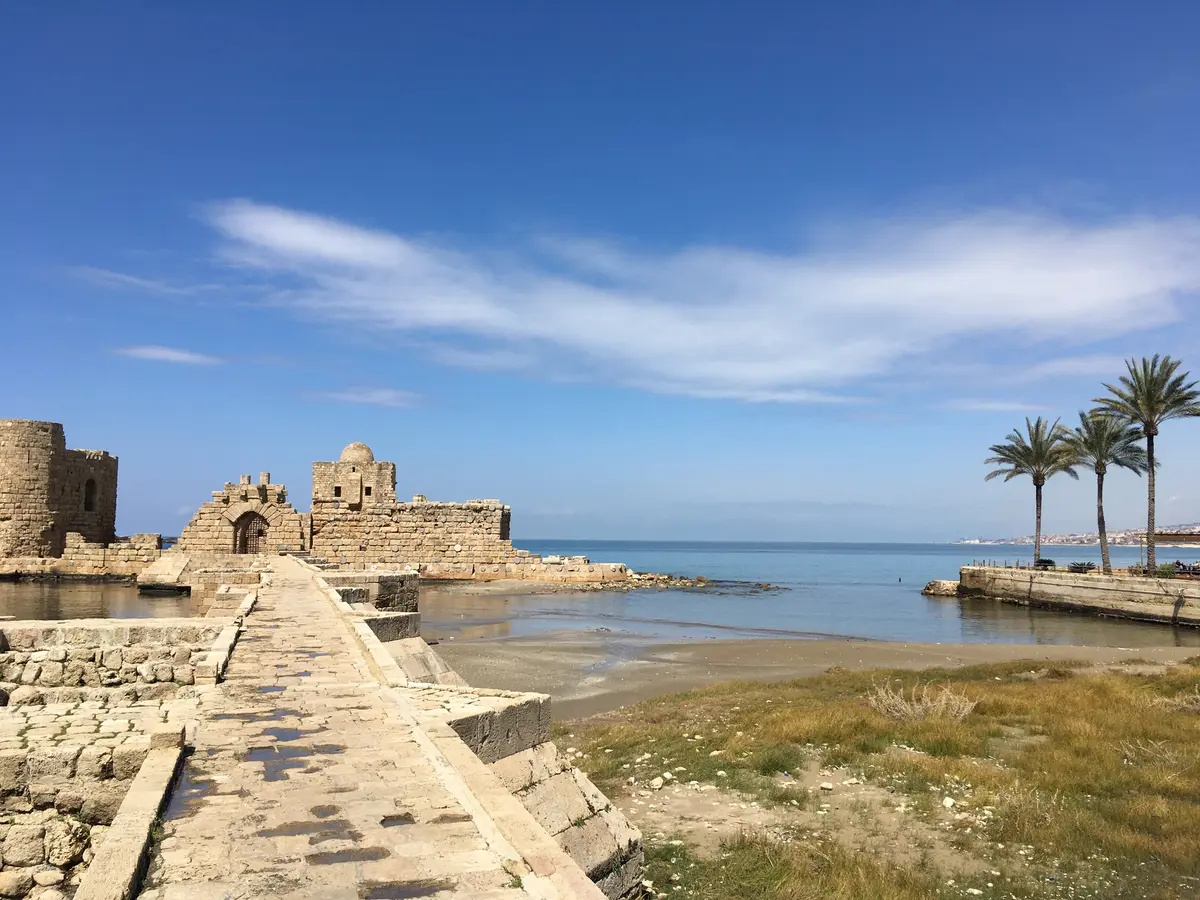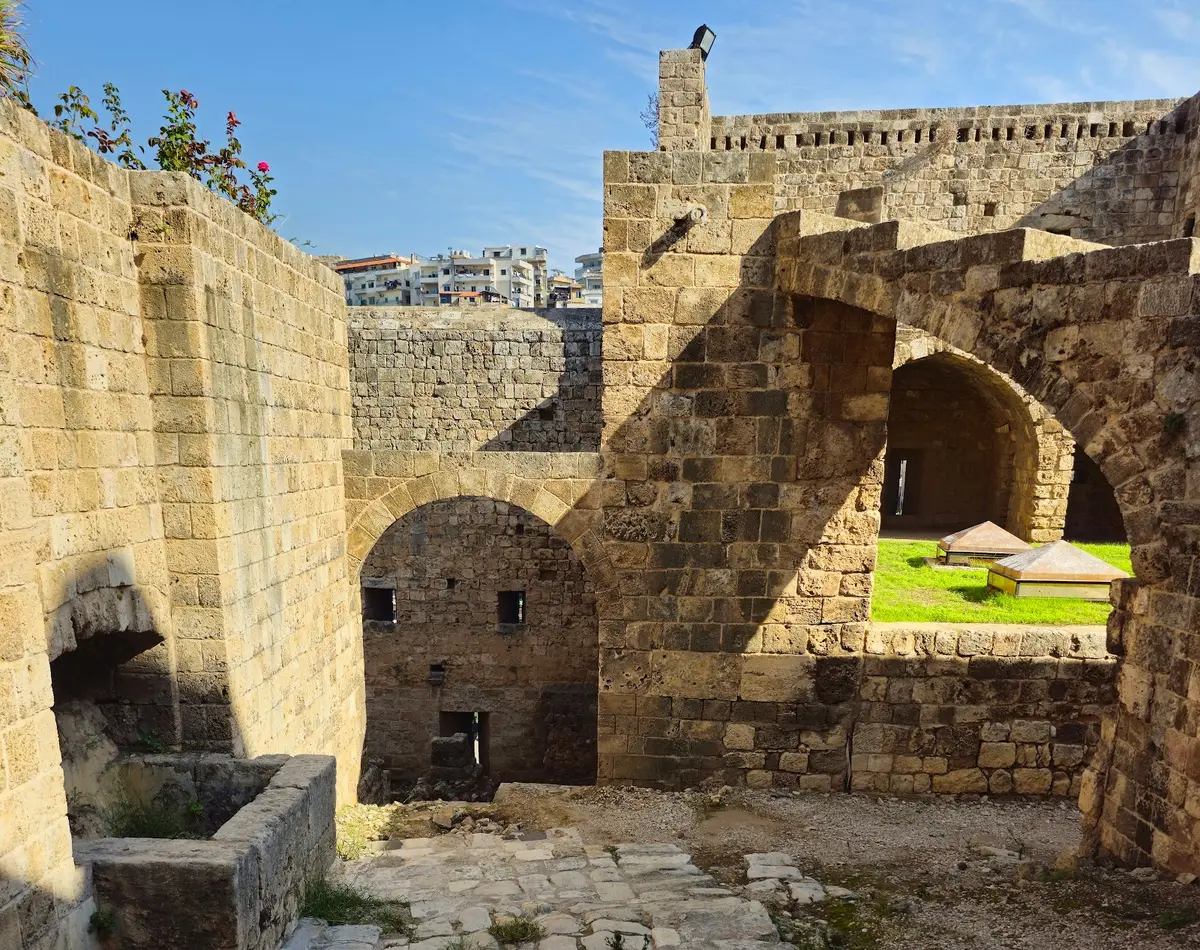
Lebanon’s strangest commute starts at sea level and ends at a 28-foot bronze Virgin Mary. The Our Lady of Lebanon teleferique glides nine minutes from the Jounieh coast to the Harissa shrine — past apartment balconies, over a pine-covered cliff, and into a sanctuary where Christians and Muslims pray side by side. Here’s what to expect, what it costs, and what to skip.
What is the Our Lady of Lebanon teleferique?
The Our Lady of Lebanon teleferique is a 0.9-mile (1.5 km) bicable gondola lift that connects Jounieh’s coastal Maameltein station to the Harissa Marian shrine, perched 2,130 feet (650 m) above the Mediterranean. Operating since 1965, the system makes the climb in nine minutes and feeds into a short funicular that delivers riders to the base of the statue.
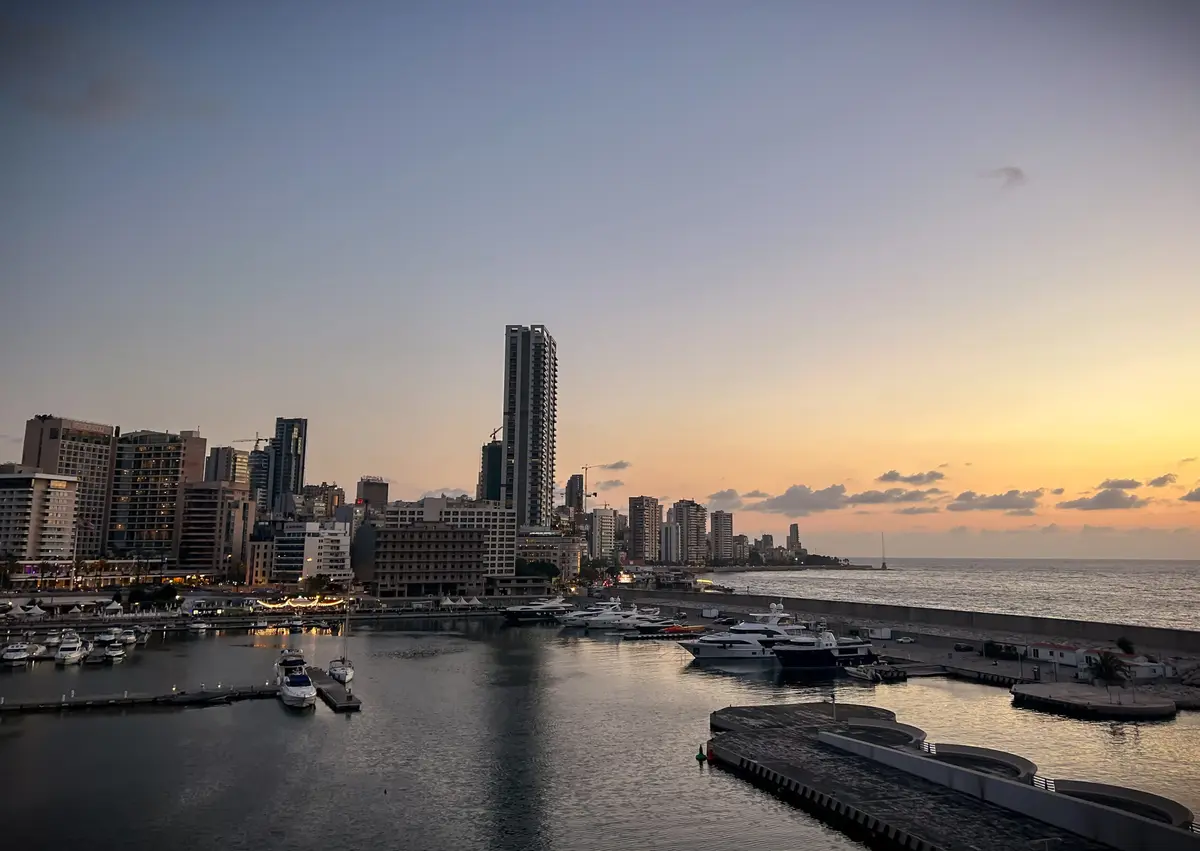
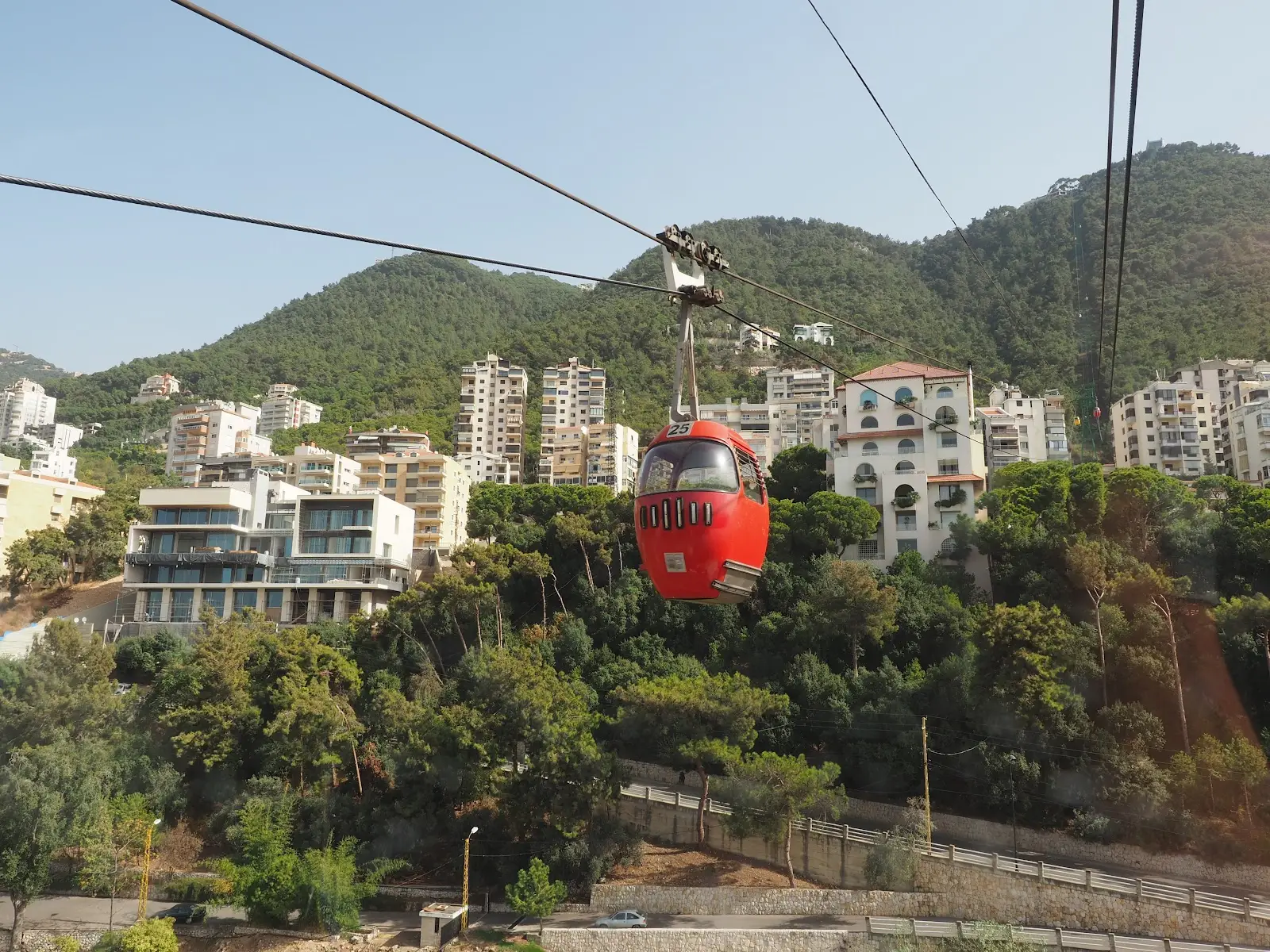
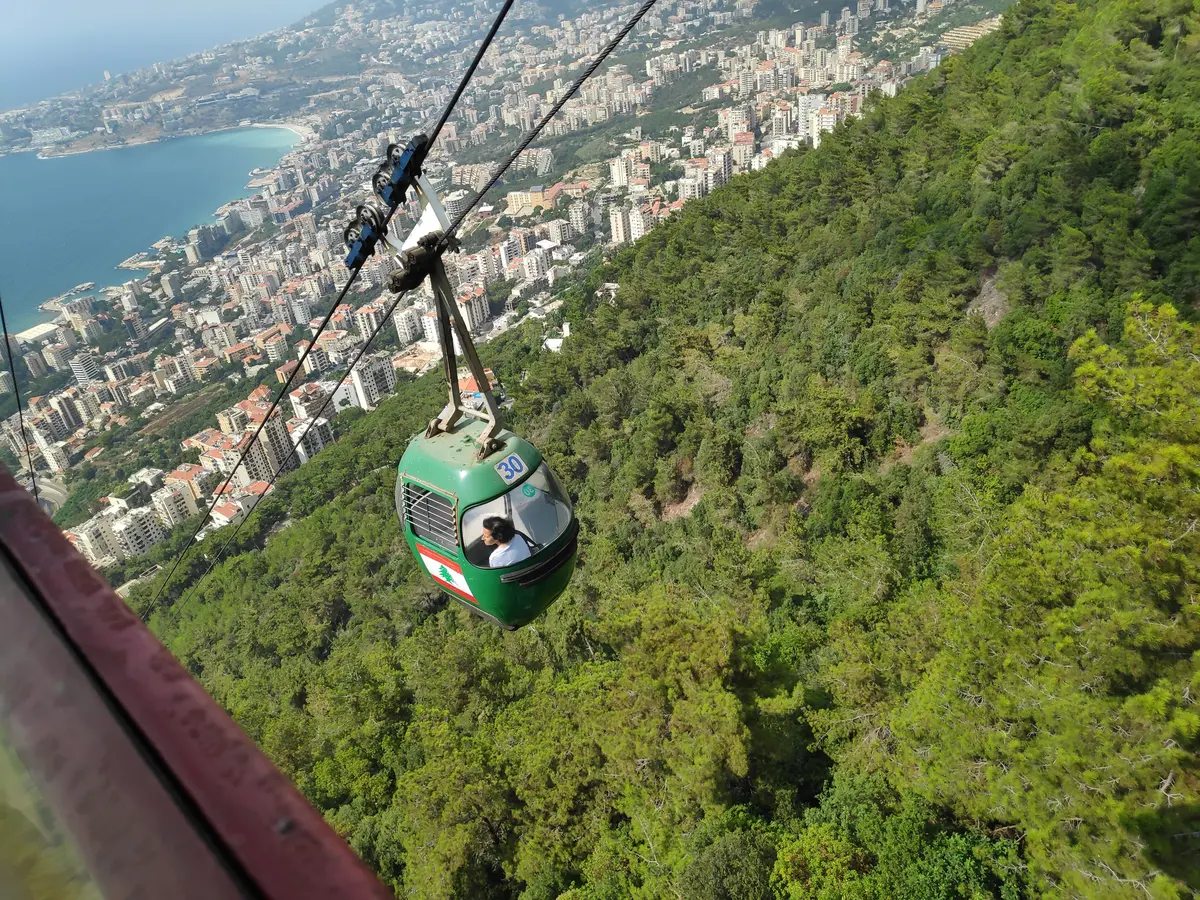
The line was built by the German firm Pohlig and uses a bicable configuration that holds steady when coastal winds pick up. The route does something rare for a cable car: it skims past residential high-rises so close that you can see what people are watching on TV. After about a minute of that, the cabin clears the highway and the full crescent of Jounieh Bay opens up below.
Pro Tip: Sit on the right side facing the mountain on the way up. The bay view is on your right, and you’ll catch the basilica’s silhouette as you approach the upper station.
How much does the Our Lady of Lebanon teleferique cost?
A round-trip adult ticket on the Our Lady of Lebanon teleferique runs about $9, and the price covers both the gondola and the funicular up to the shrine. Children pay roughly $5.30 round-trip, and one-way tickets are about $5.50 — the standard option for paragliders heading down. The system runs Tuesday through Sunday from 10 AM to 10 PM and closes Mondays for maintenance.
Quick stats:
- Adult round-trip: ~$9 USD (gondola + funicular included)
- Child round-trip: ~$5.30 USD
- One-way ticket: ~$5.50 USD
- Hours: Tuesday–Sunday, 10 AM to 10 PM
- Closed: Every Monday for preventative maintenance
- Ride time: 9 minutes (gondola) plus 3 minutes (funicular)
- Payment: USD cash preferred; carry small bills
After a mechanical incident a few years back, the operator brought in Bureau Veritas for a full safety audit and overhauled the system — replaced clamps, redundant backups, renewed main cable. The Monday closure is part of that ongoing maintenance regime.
What is the cable car ride actually like?
The ride takes nine minutes and feels like two trips in one. The first minute glides three or four meters from apartment windows — close enough to see laundry drying and someone making coffee. Then the cabin clears the highway and the perspective flips: instead of staring at a balcony, you’re looking down at a ribbon of headlights and out at the Mediterranean.
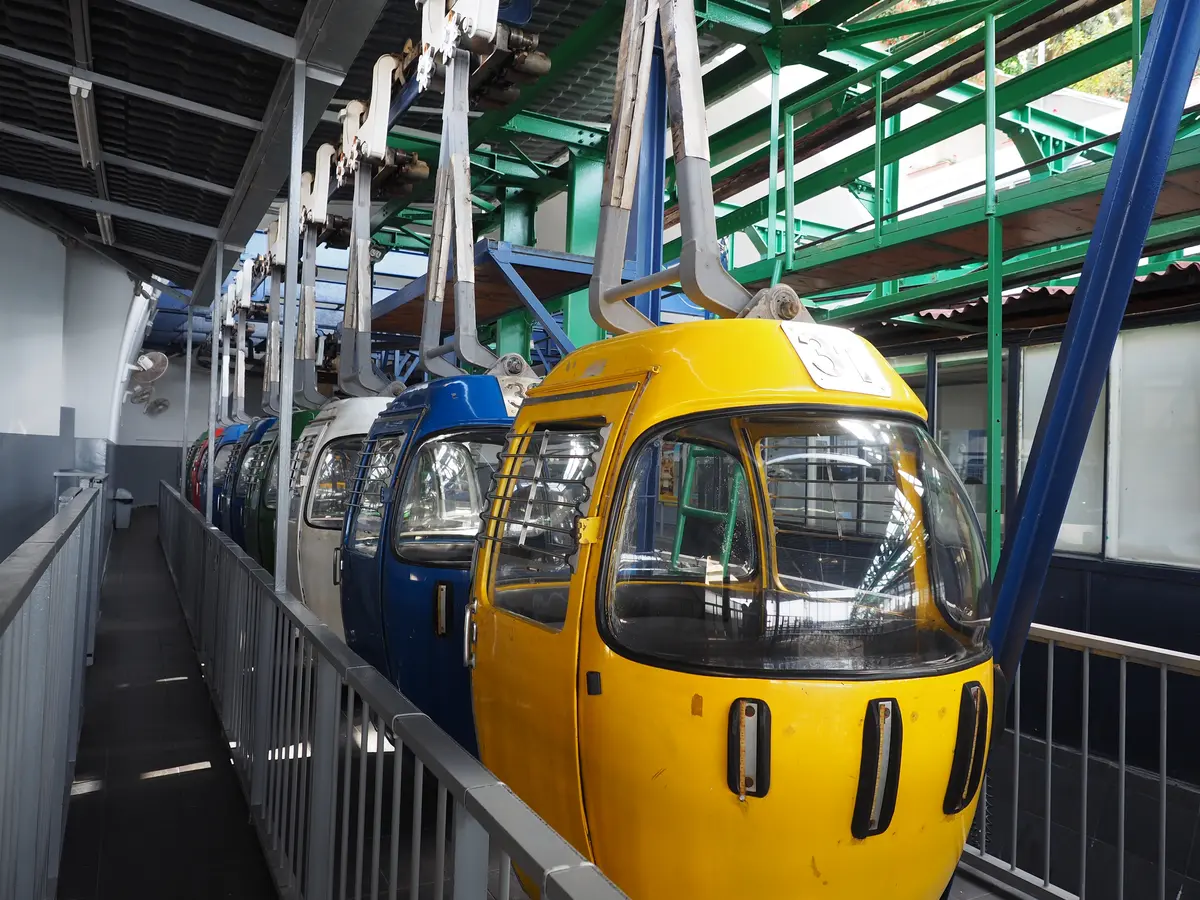
The four-person cabins are squat, brightly painted, and lovingly described in reviews as “retro.” Closer to the truth: they’re 1960s metal pods with sliding doors, a faint diesel-and-vinyl smell, and a slow, deliberate sway. None of that matters once you launch.
Pro Tip: Skip the gondola if you have severe vertigo. The drop to the highway is real, the cabins are not floor-to-ceiling glass, and the Pohlig-era windows are scuffed and don’t always close fully.
The transfer to the funicular
This catches almost every first-time visitor off guard. At the upper station, you don’t walk straight out to the shrine. You disembark, cross a short platform, and board a separate funicular — an inclined railway — that climbs the final stretch through pine forest to the shrine level. The transfer involves stairs.
That stair transfer is also why the Our Lady of Lebanon teleferique is not fully wheelchair accessible, even though the shrine grounds at the top are flat and ramped. If mobility is an issue, drive up the coastal road instead.
What will you find at the Our Lady of Lebanon shrine?
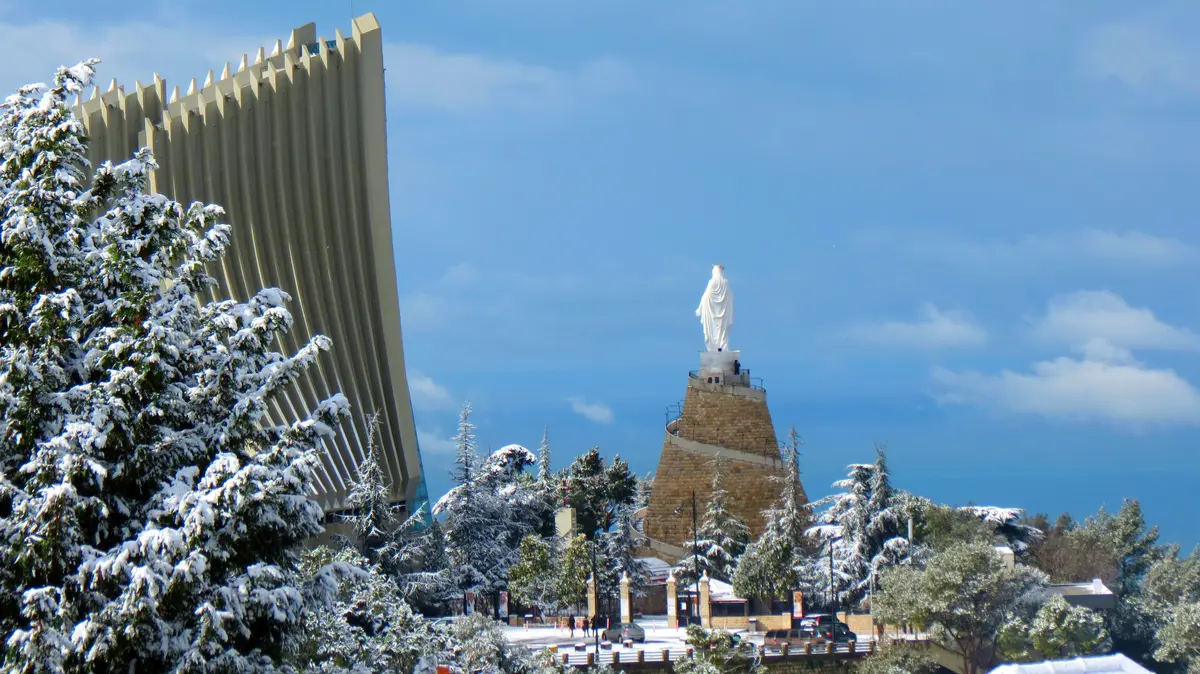
The Harissa shrine complex centers on a 13-ton white-painted bronze Virgin Mary, erected in 1907 and inaugurated in 1908. The site combines a small original chapel inside the statue’s pedestal, a massive modern basilica behind it, and several smaller chapels — all open to visitors of any faith, free of charge. Most visitors spend 60 to 90 minutes on the shrine grounds.
The 1908 statue and the spiral pedestal
The statue stands 28 feet (8.5 m) tall, weighs 13 tons, and was cast in seven sections in Lyon, France. It sits on a 66-foot (20 m) stone pedestal whose base perimeter is 210 feet (64 m) and tapers to a 39-foot (12 m) perimeter at the top. A spiral staircase wraps around the outside — about 110 steps — and pilgrims climb it to reach the platform at Mary’s feet, where her hands stretch out toward Beirut.
Inside the pedestal sits a small chapel that holds about 100 worshippers. It’s dim, smells like beeswax and old incense, and is where most locals actually light candles and pray quietly.
The modern basilica designed by Pierre el-Khoury
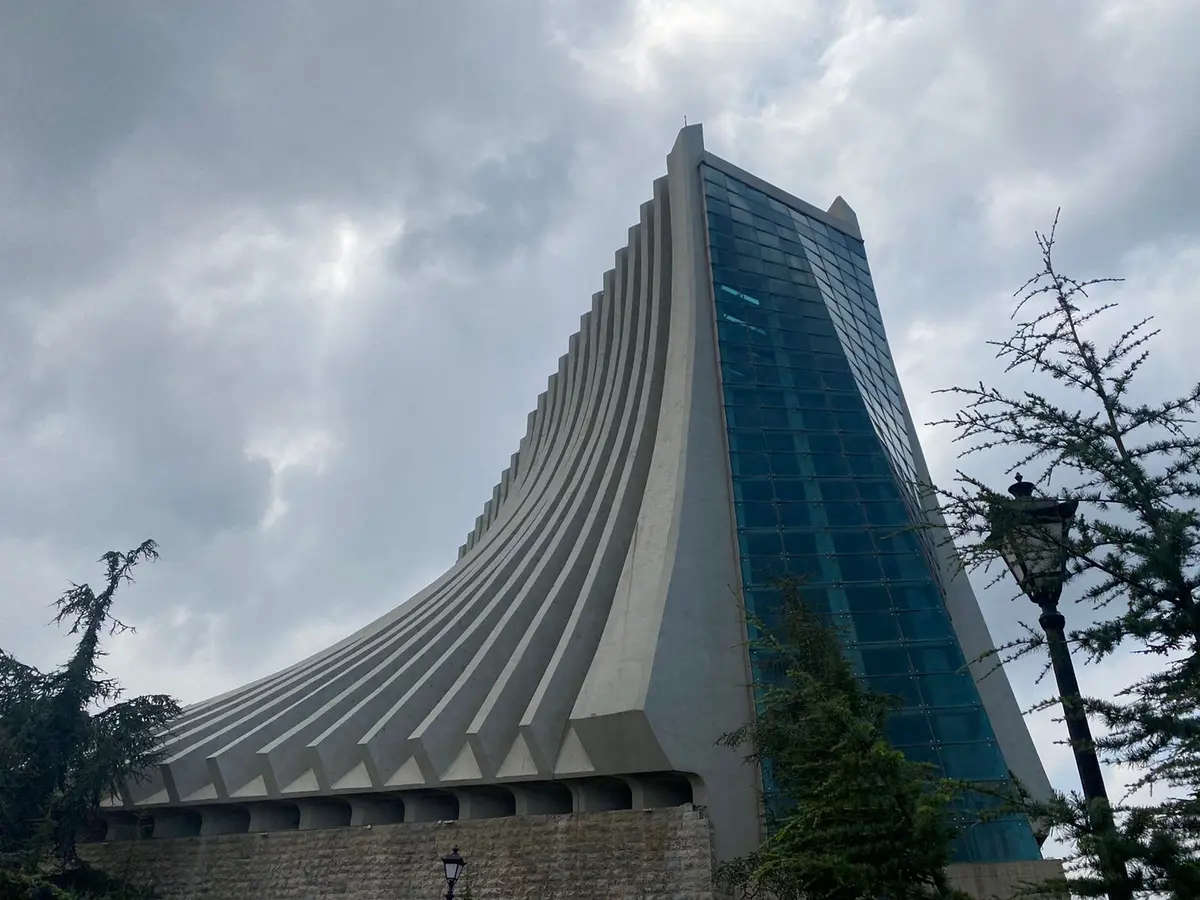
The newer basilica, designed by Lebanese architect Pierre el-Khoury and built starting in 1970, sits behind the statue like the prow of a ship — its inspiration was both the Lebanese cedar tree and the Phoenician trading vessel. The structure seats roughly 3,500, and a 138-foot (42 m) glass facade frames the original 1908 statue from inside the church, so during Mass the Virgin Mary becomes the altar’s backdrop.
Pro Tip: Walk up to the basilica’s upper terrace. The view of the bay is the same as from the statue platform, but you’ll usually have it to yourself while everyone else is queuing for the spiral steps.
An interfaith pilgrimage site
Mary holds a respected place in Islam, and on most weekends Muslim families visit the shrine alongside Maronite and Greek Catholic Christians. Pilgrims from Iran arrive by tour bus on certain weeks — sometimes 300 in a single day. For travelers used to seeing religious sites as single-faith spaces, the mix here is the most memorable part of the visit.
Can you go paragliding from the teleferique?
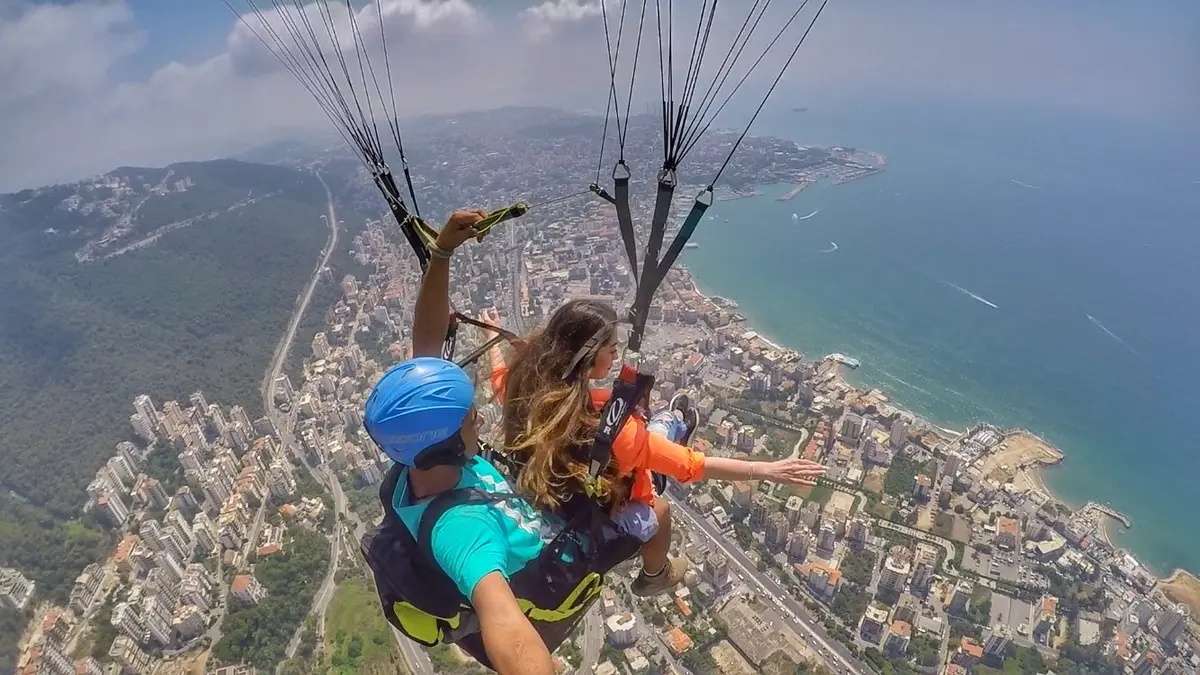
Yes — paragliding in Jounieh is the second-biggest tourist activity, and the teleferique is part of the standard package. Tandem flights take off from Ghosta, near the shrine, and land back near the Maameltein base after a 15-to-20-minute glide along the coastline. Most operators charge a flat $120 per person, with optional GoPro footage for an extra $30.
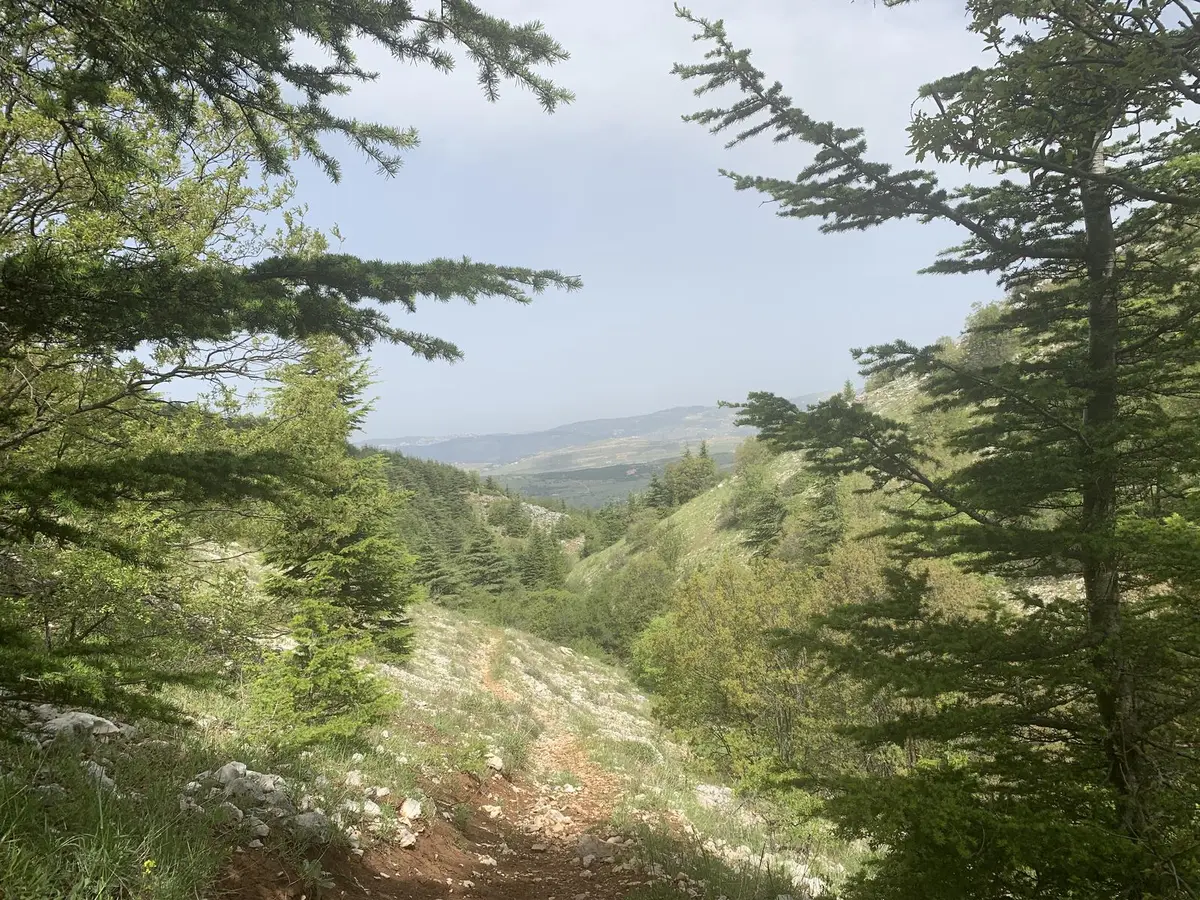
The Jounieh setup works because of geography. The cliff drops sharply into the sea, which produces consistent thermal and laminar airflow — smooth conditions even for first-time flyers. The flight path takes you within sight of the statue and directly above the cable car route you just rode.
How a typical paragliding day works
- Meet at the operator’s office near the Maameltein teleferique base
- Take the gondola and funicular up to Harissa
- Drive 10 minutes to the Ghosta launch site at 2,460 feet (750 m)
- Short safety briefing, harness fitted, then a running takeoff
- 15 to 20 minutes of flight along Jounieh Bay
- Land near the bay, with transport back to the meeting point
- Total experience: about 1 hour
Pro Tip: Book at least 4 days ahead in summer. Saturday and Sunday slots fill up fast, weather cancellations push everyone forward, and weekday mornings have the calmest air and the cleanest photos.
Where to eat near the Our Lady of Lebanon teleferique
The Harissa-Jounieh corridor runs on view dining. After the ride, you’ve got two solid options at very different price points — both within five minutes of the upper station.
1. Amar Harissa — the cliffside terrace worth dressing up for
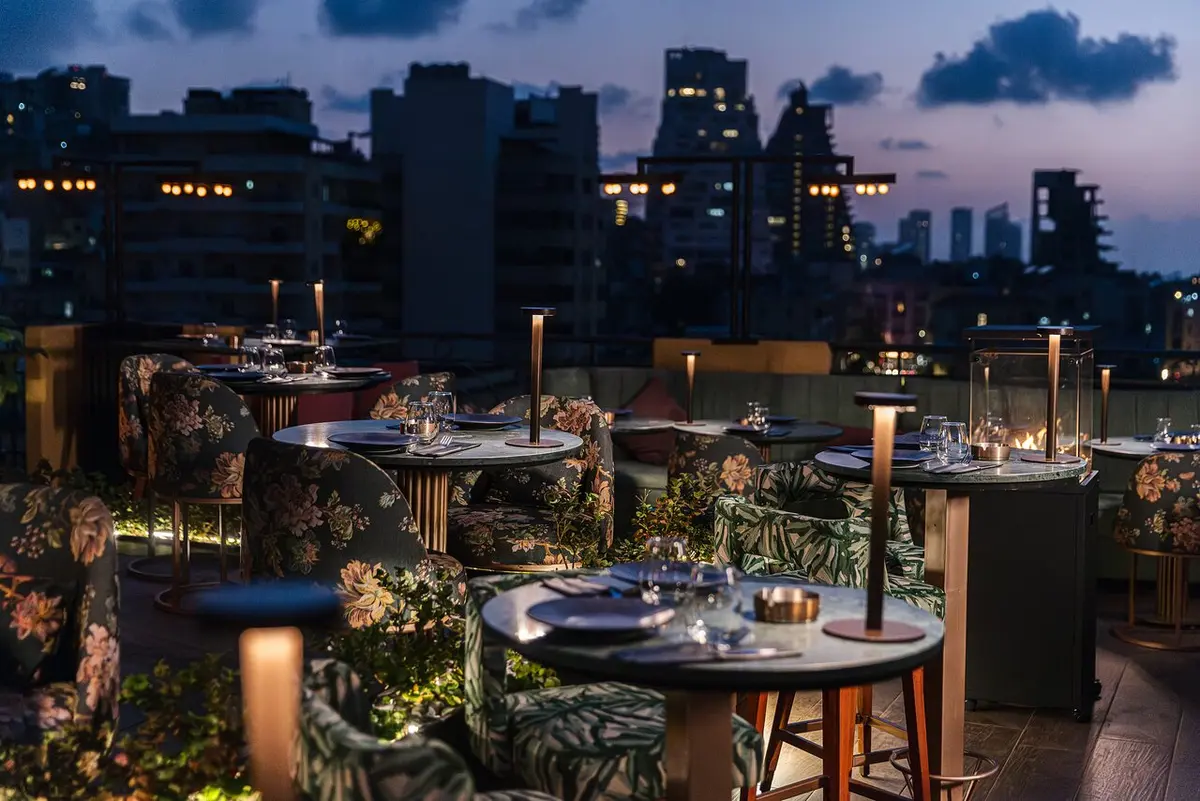
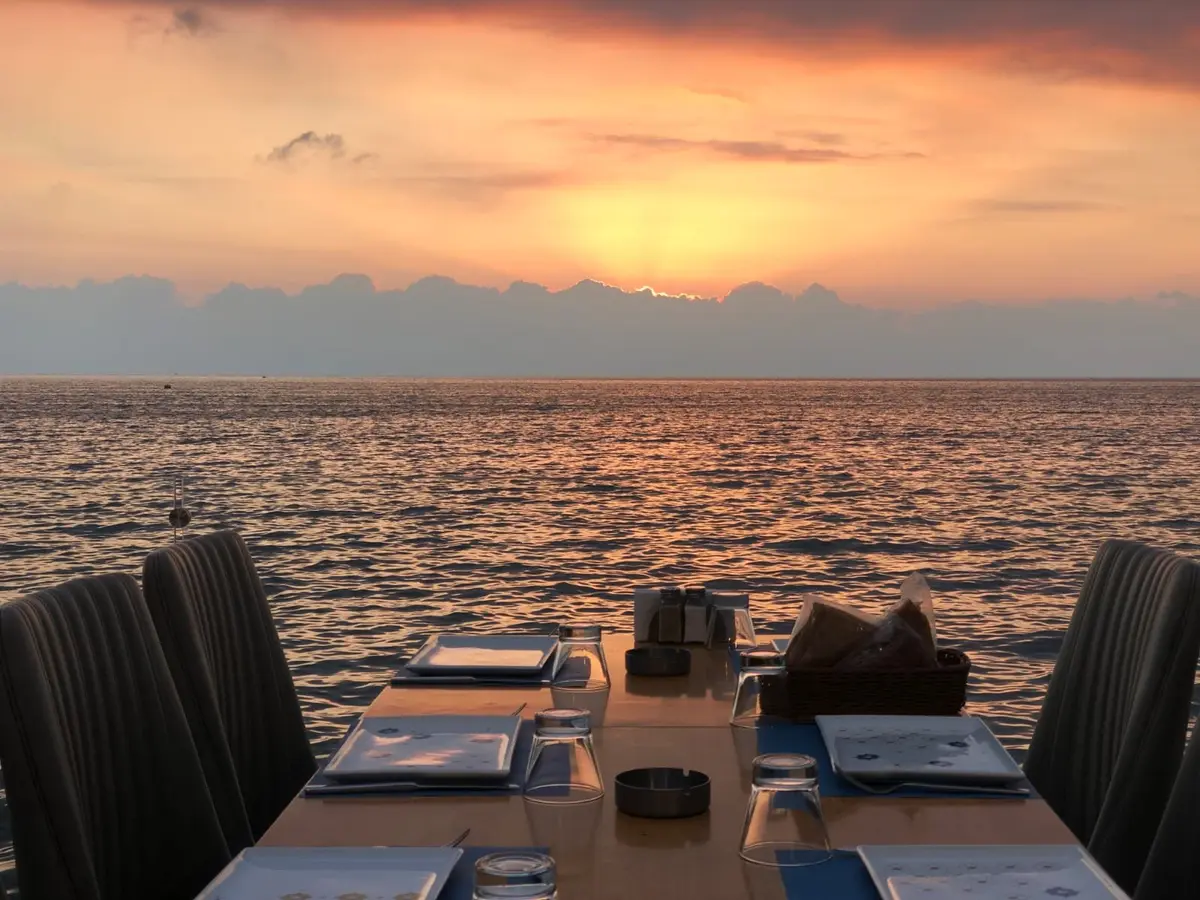
The terrace at Amar cantilevers out over the mountain edge, and the bay view from the outer tables holds its own against the cable car ride itself. The menu is built around classic Lebanese mezze and grills — pesto hummus, fattoush, grilled tawouk, ras asfour (sautéed beef cubes with pomegranate molasses) — with a sushi section thrown in. Service is attentive without hovering, and the setting works equally well for a long family lunch or an actual date.
The friction point: it’s the top-rated restaurant in Jounieh on Tripadvisor, and weekend evenings book out. Reserve at least a day ahead, especially for a sunset table.
- Location: Route Haret Sakhr, Harissa (5 minutes from the upper teleferique station)
- Cost: Set menu around $35/person; à la carte $25–$50
- Best for: Couples, family lunches, sunset dinners
- Time needed: 1.5 to 2 hours
- Reservations: Recommended, essential on weekends
2. Teleferique Food Court — same view, fraction of the price
Located at the upper teleferique station itself, the food court is the budget play. It’s not pretty — fluorescent lights, plastic trays, school-cafeteria seating — but the outdoor terrace shares the exact same bay panorama you’d pay $35 for next door. A coffee and a manakish (flatbread with thyme or cheese) costs $5 to $10. Add a kids’ playground in the same complex and you’ve got the cheapest family hour in Mount Lebanon.
- Location: Inside the upper Harissa station
- Cost: $5–$15 per person
- Best for: Families with kids, budget travelers, quick stops
- Time needed: 30–45 minutes
Where should you stay near the Our Lady of Lebanon teleferique?
Two hotels sit within walking distance of the Maameltein station: The Rooms Boutique Hotel (from $110/night, design-forward, polished) and Lamedina Hotel & Resort (from $50/night, a 4-star family resort with a private beach and pool, but dated and noisy on weekends). Staying here lets you ride the first cabin at 10 AM and beat both the tour buses and the heat.
1. The Rooms Boutique Hotel — the upgrade pick
A small, modern boutique on the Maameltein strip with bay-facing balconies and a polished, design-forward feel that’s rare in this stretch of coast. Reviews consistently rank it among the highest-rated stays in Jounieh, and the staff arranges teleferique tickets and paragliding bookings without markup.
- Location: Maameltein, ~650 ft (200 m) from teleferique base
- Cost: From $110/night
- Best for: Couples, design-conscious travelers
- Time needed: 1–2 night stay
2. Lamedina Hotel & Resort — the family-friendly choice
A 4-star resort right next to the teleferique base, with a private white-sand beach, two outdoor pools, a kids’ pool, and a beach bar. The buildings show their age — the property was last fully renovated in 2015 — and the Maameltein street outside is a busy nightlife strip where music runs late on weekends. Bring earplugs if you’re a light sleeper, and ask for a room facing the sea, not the road.
- Location: Sea Road, Maameltein (15-minute walk to teleferique)
- Cost: From $50–$90/night
- Best for: Families, beach lovers, budget travelers
- Time needed: 2–3 night stay
How do you get to the Our Lady of Lebanon teleferique from Beirut?
The Maameltein station is about 10 miles (16 km) north of central Beirut. A private taxi from downtown costs $20 to $30 each way depending on traffic, and rideshare apps like Bolt usually quote $10 to $18 for the same trip. The drive runs along the coastal highway and takes 25 to 45 minutes — with traffic at its worst from 4 PM to 7 PM on weekdays.
For a deeper breakdown of rideshare versus taxi pricing, see our guide on Uber in Lebanon vs Taxi.
If you’re doing a longer Lebanon itinerary, the smart move is to combine Harissa with Jeita Grotto (15 minutes north) and Byblos (30 minutes further) into a single day — locals call it the Keserwan Golden Triangle.
When is the best time to ride the Our Lady of Lebanon teleferique?
The best windows are weekday mornings between 10 and 11 AM for clear visibility and short lines, or 90 minutes before sunset for the most dramatic light over the bay. Spring (April through June) and fall (September through November) deliver mild temperatures around 70°F (21°C) and the cleanest skies. Summer at coast level is humid; winter can blanket the mountain in fog.
Days and times to avoid:
- The first Sunday of May (Our Lady of Lebanon’s feast day) — pilgrimage crowds
- All Mondays — closed for maintenance
- Weekend afternoons in summer — long queues, heavy haze
- Foggy or stormy days — the system runs but you’ll see nothing
Modest dress is required at the shrine itself: shoulders covered, no short skirts or short shorts. The teleferique cabin and the food court don’t care, but if the shrine is on your itinerary, plan accordingly. For a fuller breakdown, see our what to wear in Lebanon guide.
Before you board
The Our Lady of Lebanon teleferique is a rare thing in regional tourism: an attraction that delivers exactly what it promises and slightly more. For $9 you get a nine-minute ride that doubles as a cross-section of Lebanese life — apartment balconies, pine forest, Mediterranean coastline, an interfaith shrine — and you’re back at sea level in time for a long lunch on the beach.
TL;DR: Take the Our Lady of Lebanon teleferique on a weekday morning. Pay $9 for the round-trip, allow 2 to 3 hours including the shrine, and sit on the right side going up. Skip Mondays (closed) and the first Sunday of May (crowds). Pair with paragliding ($120) or a meal at Amar Harissa ($35) to make a half-day of it.
What’s the one detail about the Harissa teleferique that surprised you most when you visited — the apartment-balcony glide, the funicular transfer, or the interfaith crowd at the shrine? Drop it in the comments.