The Our Lady of Lebanon Harissa visit is the rare day trip that earns its hype. A nine-minute cable car lifts you from sea level in Jounieh to a 15-ton bronze Madonna perched 2,130 feet (650 m) above the Mediterranean — and the view from her feet covers the bay, the basilica, and most of the Keserwan coast in one sweep. Here’s how to do it well, in roughly four hours.
Why is the Our Lady of Lebanon Harissa visit worth your time?
Harissa is Lebanon’s most visited shrine and its single best half-day from Beirut. You get a heritage cable car ride, a hilltop statue inaugurated on May 3, 1908 — twenty-three years before Rio’s Christ the Redeemer — a brutalist basilica that seats 3,500, and a clifftop terrace lunch, all inside a 4-hour window from downtown.
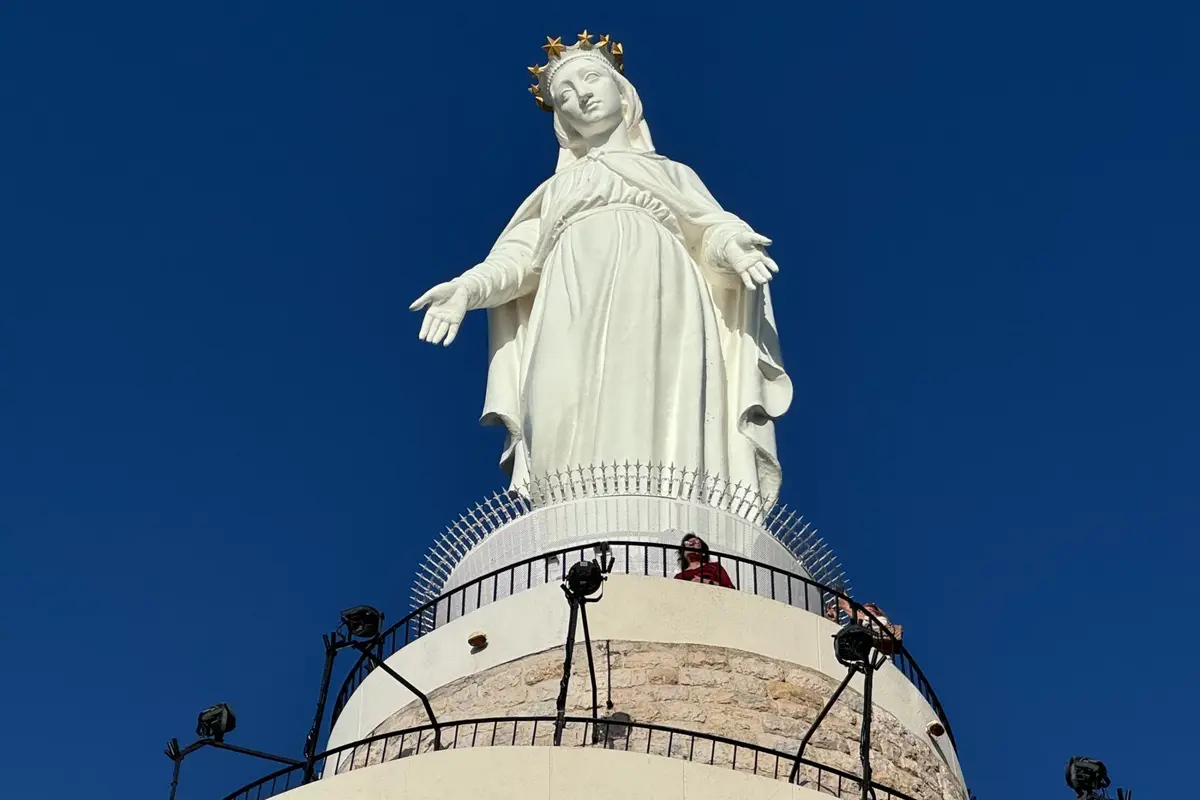
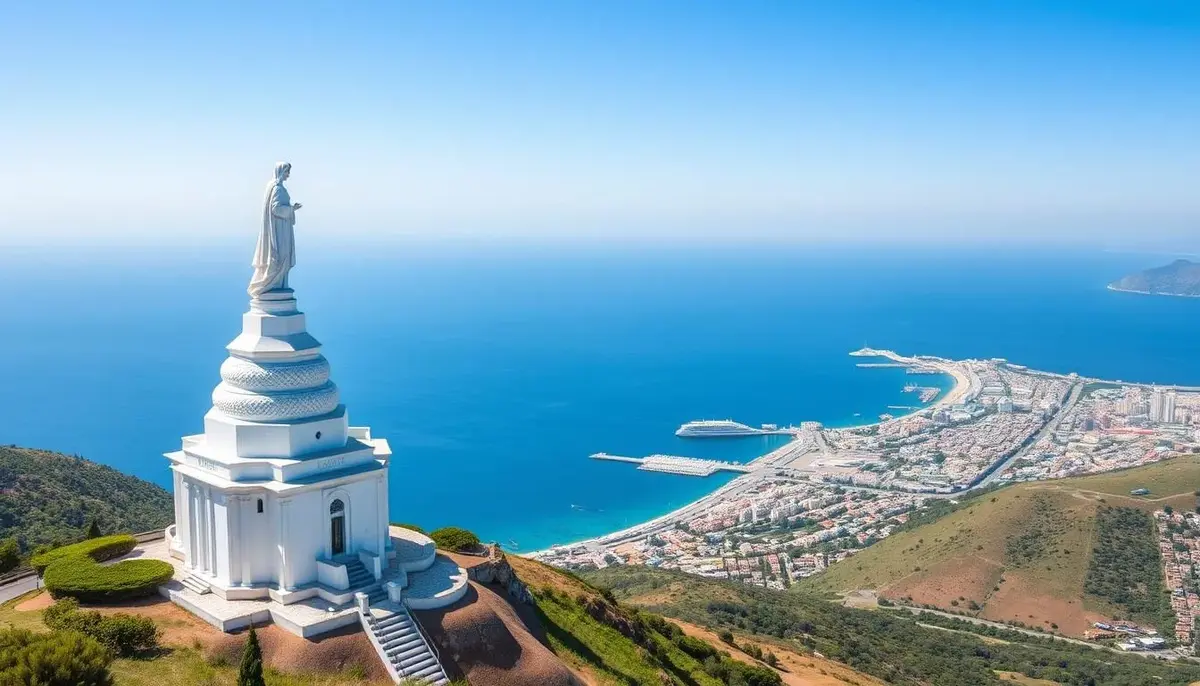
Locals will tell you their statue came first, and they’re right. The 8.5-meter Virgin Mary was cast in Lyon, France, shipped in seven sections, and assembled on a 65-foot stone pedestal designed in the shape of a cedar trunk. Christ the Redeemer was inaugurated in 1931.
What makes the site work as a tourist stop, though, is that the whole place is layered: an Ottoman-era statue, a 1960s cable car, a 1992 modernist basilica, and a small candlelit chapel inside the pedestal — all on one mountaintop. You don’t need to be religious to read it as a condensed lesson in Lebanese identity.
Pro Tip: Skip the tour-bus departures. Going up around 11:30 a.m. on a Tuesday or Wednesday means short funicular lines, an empty pedestal staircase, and an open table at Amar for lunch.
What’s the history behind the shrine and basilica?
The shrine was commissioned in 1904 by Maronite Patriarch Elias Hoyek and Apostolic Nuncio Carlos Duval to mark the 50th anniversary of the Catholic dogma of the Immaculate Conception. The statue was inaugurated on May 3, 1908; the modernist basilica next to it was begun in 1970 and largely finished in 1992.
A few details that get glossed over in most guides:
- The land was donated by the Khazen clan, one of Lebanon’s old Maronite noble families.
- An Ottoman sultan’s decree (faraman) was needed to build the shrine — Istanbul reportedly approved it within hours.
- The basilica was designed by Lebanese architect Pierre el-Khoury, who shaped it to evoke a Lebanese cedar tree and a Phoenician ship. It stands 203 feet (62 m) tall.
- Inside the pedestal sits the original “Mother of Light” (Oumm En-Nour) chapel — a small stone room with cedar-wood altar pieces, used for quiet prayer.
- Pope John Paul II said Mass here on May 10, 1997.
The mix of faiths showing up is real, not marketing. On any weekend you’ll see Maronite Christians, Sunni and Shia Muslims, and Druze visitors lighting candles in the same chapel. Mary is venerated in the Quran, which explains the steady Muslim presence.
When is the best time to visit Harissa?
If you’re weighing the best time to visit Lebanon more broadly, April through June is the sweet spot for Harissa specifically — daytime temperatures around 65–75°F (18–24°C), green hillsides, wildflowers on the slopes, and visibility good enough to see all the way to Beirut. September through November is the runner-up, with sharper sunset light and fewer cruise-ship crowds.
A month-by-month read from the ground:
- Spring (Apr–Jun): Best overall. Cool mornings, warm afternoons, clearest air.
- Summer (Jul–Aug): Beirut hits 90°F (32°C); Harissa stays around 80°F (27°C). Pleasant on the mountain but the cable car lines double on weekends and the funicular gets stuffy at midday.
- Fall (Sep–Nov): Quiet, golden light, occasional first rains.
- Winter (Dec–Feb): Fog can swallow the statue for days. Stunning when it clears, but a coin flip.
Avoid the first Sunday of May (the Feast of Our Lady of Lebanon) unless you specifically want the religious crowd — the patriarch leads Mass in the open air and the site sees up to 20,000 pilgrims.
How do you get to Harissa from Beirut?
You have two options: the historic Téléphérique cable car from Jounieh (the experience), or driving up the mountain road (the time-saver). Most visitors should take the cable car up and either a taxi or the cable car back down.
The Téléphérique cable car experience
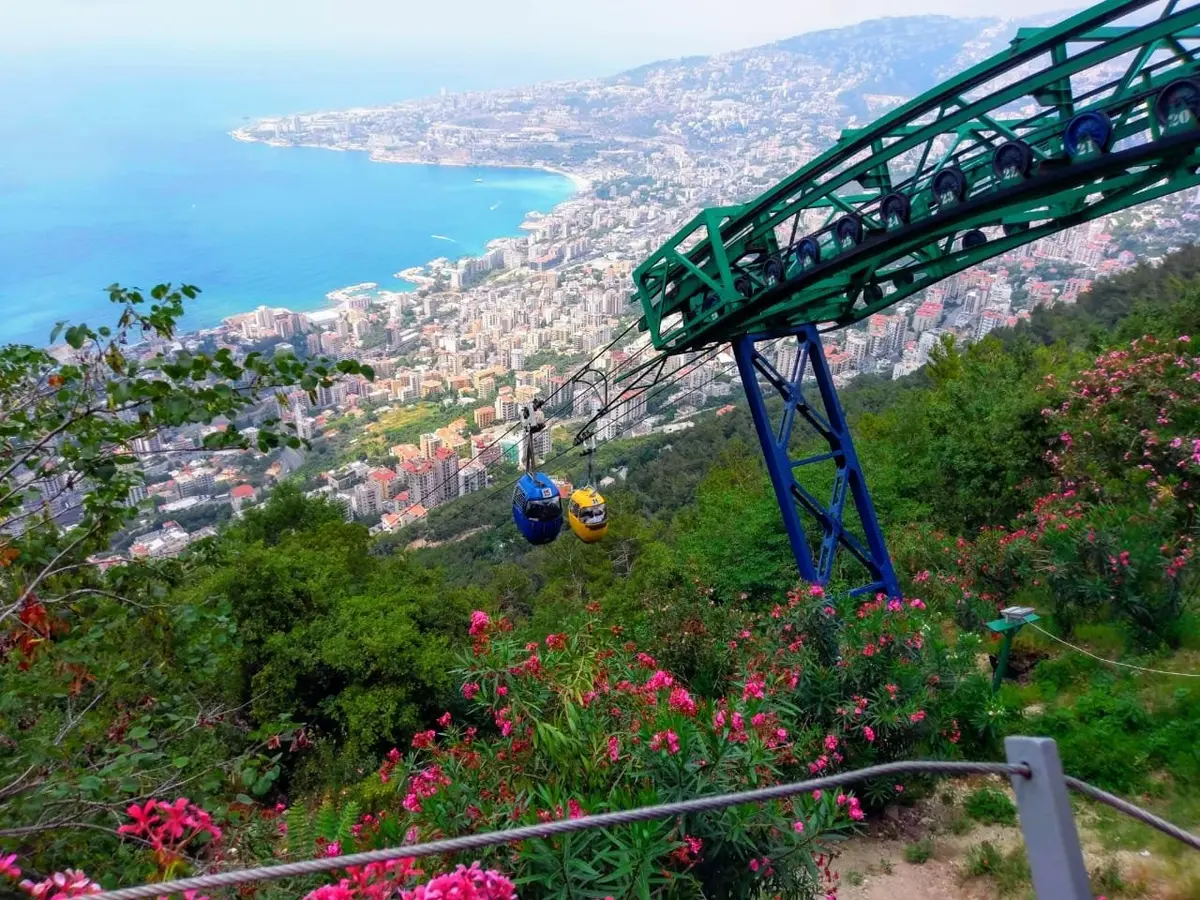
The Téléphérique opened in 1965 and feels exactly like that — four-person retro gondolas, wood-trim ticket windows, and a slightly creaky boarding platform that’s part of the charm. The 0.9-mile (1.5 km) ride climbs 2,130 feet (650 m) in nine minutes, gliding low over apartment rooftops and a pine-forested ridge. At the top you transfer to a short funicular that climbs the final stretch through the cedars to the shrine.
Quick stats:
- Location: Lower station, Haret Sakher, Jounieh seaside road — 10 miles (16 km) north of Beirut
- Cost: ~$5.50 one-way / ~$9 round trip for adults; ~$3.50 / ~$5.50 for kids; free under 4 (operator’s posted LBP rates converted to USD)
- Hours: Tuesday–Sunday, 11 a.m.–7 p.m. Closed Mondays year-round
- Time needed: 9 minutes up + funicular + 90 minutes at the shrine + 9 minutes down
The system was overhauled by French specialists from Bureau Veritas and ICC, who replaced clamps, added redundant backups, and renewed the main cable. Practically speaking: it’s a heritage system but a maintained one.
Pro Tip: The gondola windows are scratched and slightly cloudy — fine for the experience, frustrating for photos. Sit on the right side going up for the cleanest line of sight to the bay.
Driving up
The drive from downtown Beirut takes 30–45 minutes via the coastal highway, then a steep, switchbacked mountain road from Jounieh. Roads are paved but narrow, and Lebanese drivers treat lane markings as suggestions — if you’ve never tried driving in Lebanon before, this is not the road to start on. Driving yourself works if the cable car is closed, if you want to stay past sunset, or if you’re already with a private driver for the day.
A typical hired-driver setup costs about $80–$100 for six hours. If you’re not comfortable driving in Lebanon, having a car waiting for you after sunset at Harissa is worth every dollar — taxis don’t reliably linger up there once the cable car shuts.
What’s the climb to the statue actually like?
The main act is the spiral staircase wrapping the pedestal — 110 stone steps that narrow as you ascend. Every quarter-turn opens a new view: first the basilica’s geometric roof, then Jounieh’s marina, then the long curve of the Mediterranean. The crowd noise drops with each turn.
At the top platform you stand directly at the statue’s bronze feet, with a near-180-degree panorama from the outskirts of Beirut north toward Byblos. The wind is real up there — bring a layer even in summer.
Inside the hollow pedestal you’ll find the original “Mother of Light” chapel — a small, dim stone room that smells of beeswax and incense. There are only a handful of pews. Locals come here to light candles for specific intentions; tourists usually pause for thirty seconds and move on, which is a shame, because it’s the most peaceful spot on the whole hill.
Honest friction points worth knowing:
- The 110 steps are uneven and the iron handrail is the only thing to grab. Anyone with bad knees should stop at the basilica viewing terrace, which has nearly the same view without the climb.
- The site has a small museum, a souvenir shop, and a cafeteria — none of which is worth your time. Save your appetite for Amar.
- Bathroom facilities are basic. Use them at the lower cable car station before going up.
Where should you eat at Harissa?
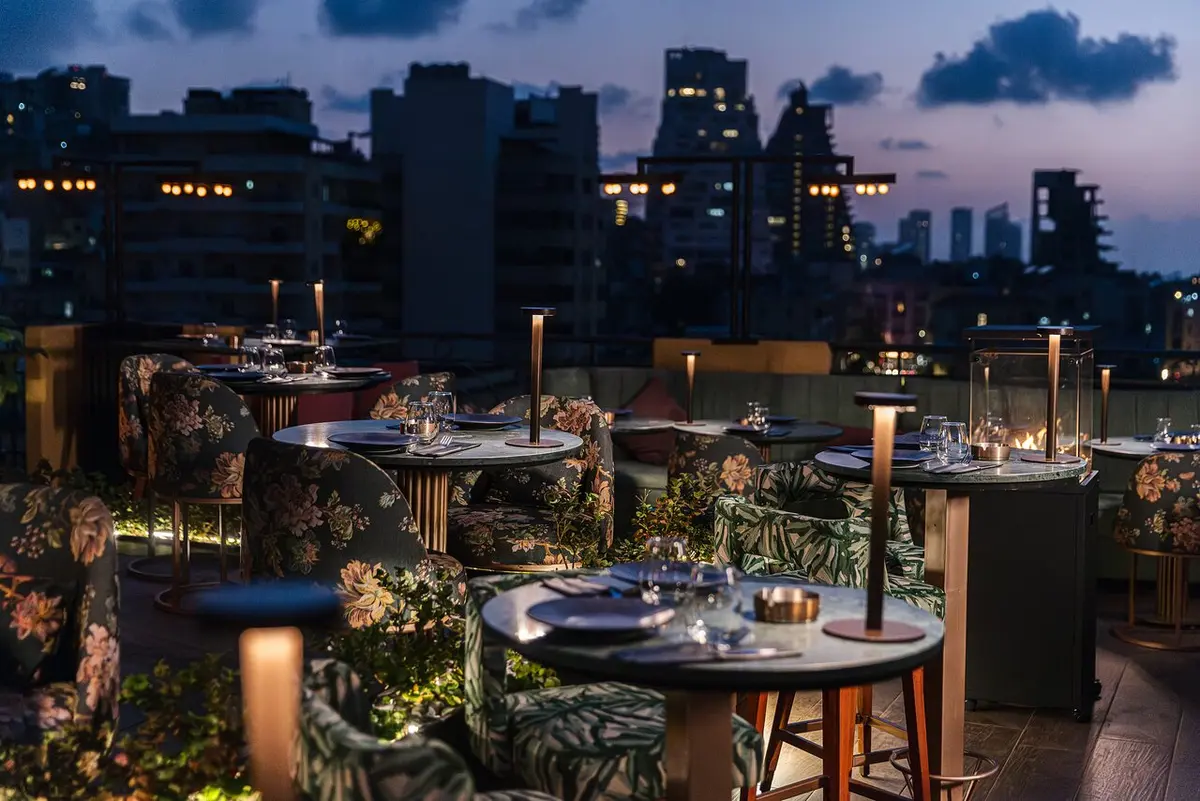
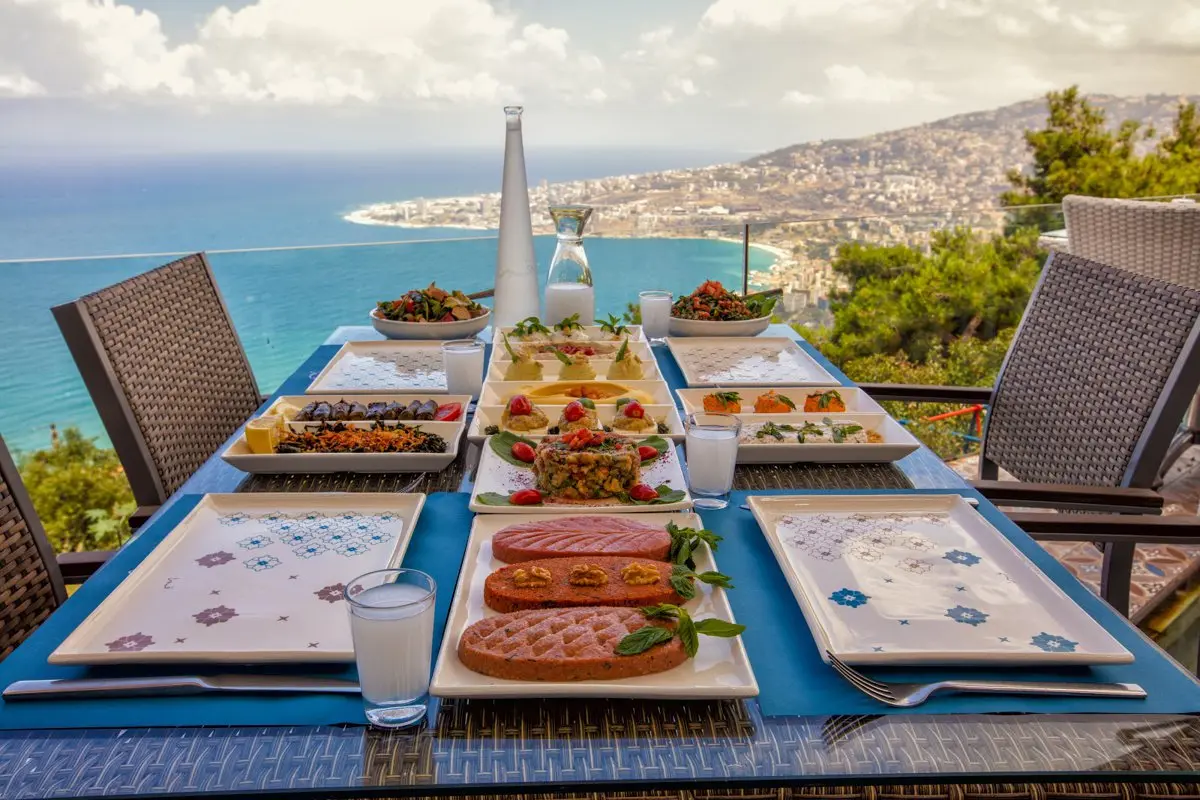
Amar Harissa is the only restaurant up here that’s actually worth planning around. It’s built into the cliffside a five-minute walk from the shrine, with terraced seating that delivers an unbroken view of Jounieh Bay from almost every table. Tripadvisor currently ranks it #1 of 69 restaurants in Jounieh, which matches what you’ll see on the ground: full at lunch, mostly Lebanese families, professional service.
The food is straightforward traditional Lebanese cuisine — a long mezze list, charcoal grills, and a few seafood specials brought up from the Seaside branch. The set menu is the easiest way to order if there are two of you.
What to try:
- Cold mezze: Hummus (their version with basil is the standout), fattoush, moutabbal
- Hot mezze: Fattet batenjen (eggplant with yogurt and pine nuts), kebbeh, batata harra
- Mains: The mixed grill platter — chicken taouk, lamb skewers, kafta — feeds two comfortably
- Dessert: Knefe au chocolat, or ashta ice cream with ghazel banet (Lebanese cotton candy)
Amar Harissa quick stats:
- Location: Route Haret Sakhr, Harissa — 5-minute walk from the shrine
- Cost: $30–$50 per person with mezze, mains, and a soft drink; more if you order arak or wine
- Best for: Couples, families, anyone wanting one proper meal with a view
- Time needed: 90 minutes minimum — this is not a rushed lunch
- Reservations: Recommended on weekends and for sunset (+961 9 264 111)
Pro Tip: Ask for a table on the lower terrace, not the indoor section. The view drops off a cliff and the breeze keeps it cooler than the upper deck.
How do you combine Harissa with Jeita Grotto and Byblos?
The smart move is the “Keserwan triangle” — Jeita Grotto in the morning, Harissa for lunch and the climb, Byblos for sunset. All three sit within a 25-mile (40 km) coastal corridor north of Beirut, and you can comfortably do them in a single day with a hired driver.
A realistic schedule:
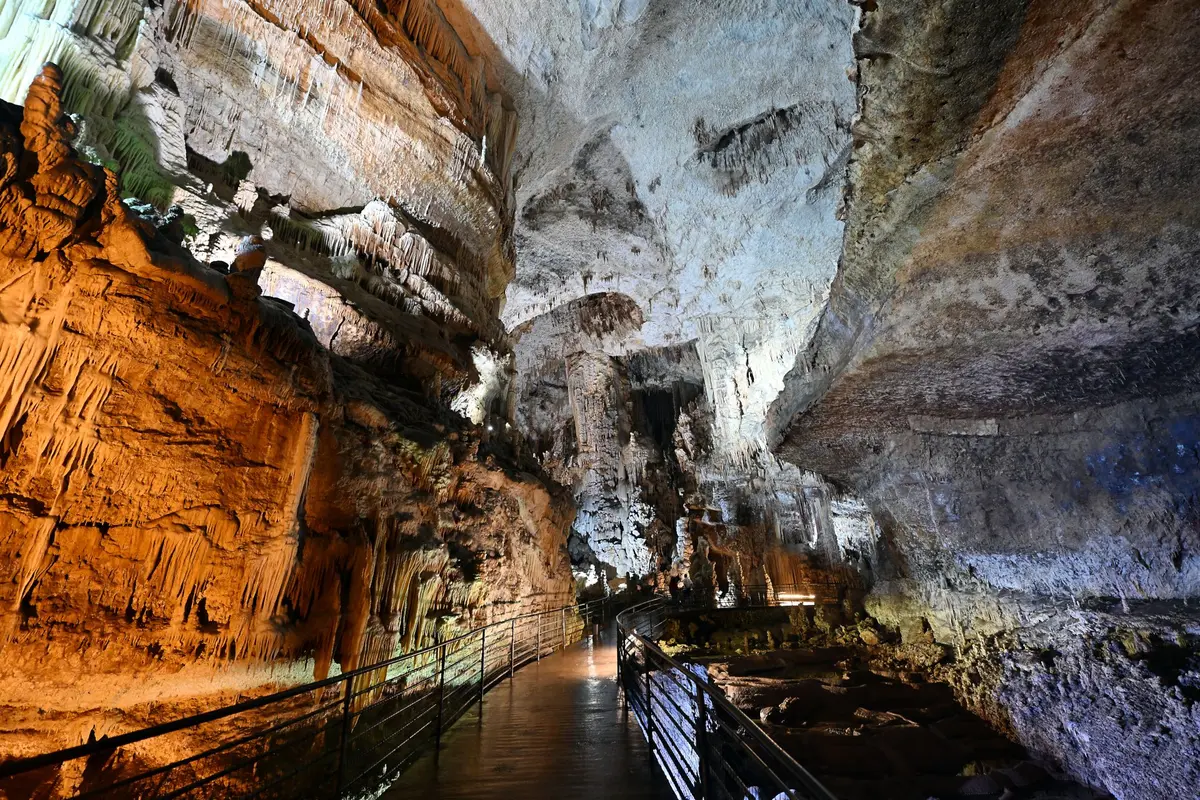
- 9:00 a.m. — Start at Jeita Grotto. Photography is banned and tickets are sold at the entrance; allow 90 minutes.
- 11:00 a.m. — Drive to Jounieh (15 minutes).
- 11:30 a.m. — Board the Téléphérique. Funicular up to the shrine.
- 12:00 p.m. — Climb the statue, visit the chapel, walk around the basilica.
- 1:30 p.m. — Lunch at Amar Harissa.
- 3:30 p.m. — Cable car down, then drive 25 minutes north to Byblos.
- 4:00 p.m. — Walk the Crusader castle and the old souk.
- 6:30 p.m. — Sunset drinks at the Byblos fishing harbor.
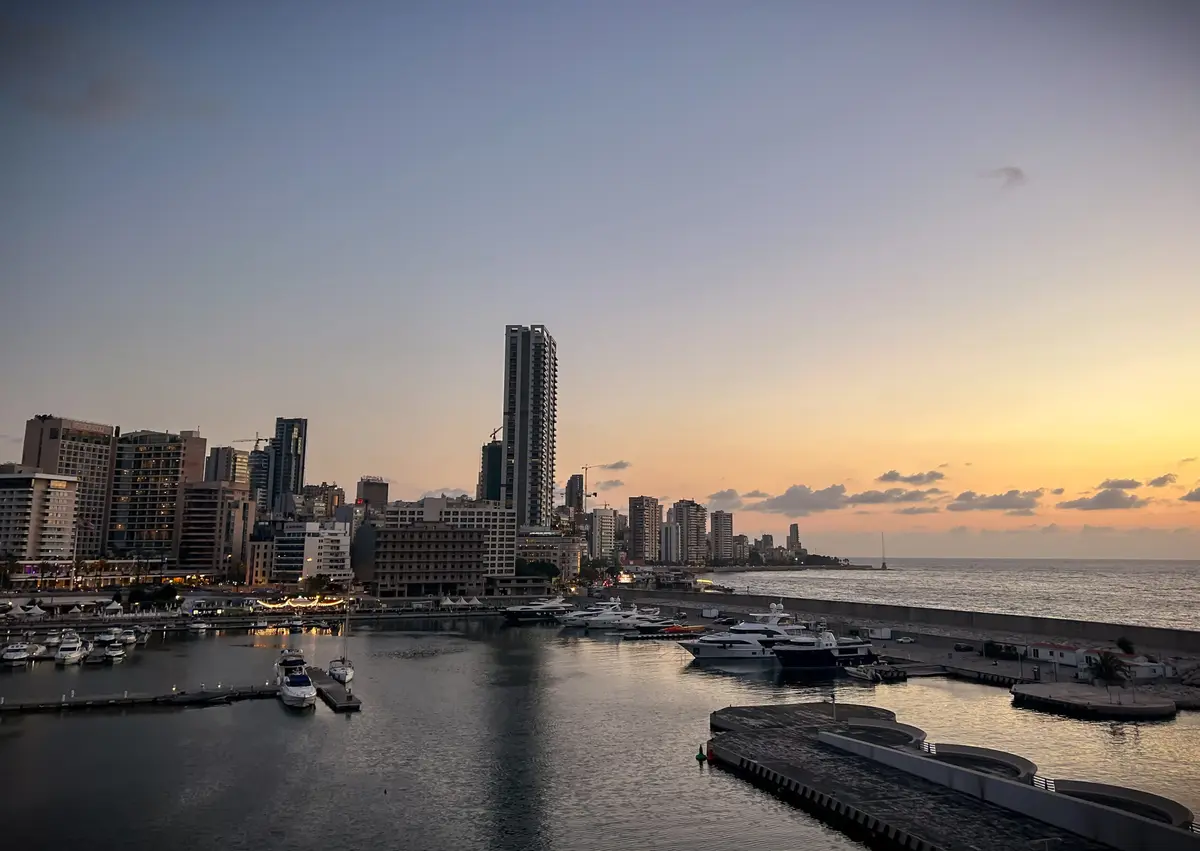
You can swap Jeita and Harissa if you want to be at the shrine for sunset — the light from the basilica terrace as the bay turns gold and Jounieh’s lights start blinking on is the single best 30 minutes of the day.
Is Lebanon safe for US travelers right now?
The US State Department currently rates Lebanon Level 4: Do Not Travel — the highest advisory level — citing crime, terrorism, civil unrest, kidnapping, unexploded ordnance, and the risk of armed conflict. The advisory was reaffirmed on February 23, 2026, when the State Department again ordered the departure of non-emergency US government personnel from Beirut. This is not a casual recommendation; routine consular services at Embassy Beirut have been suspended.
Practical reading:
- The State Department’s “do not travel” guidance applies to the entire country. Travel insurance often will not cover Level 4 destinations.
- The most acute warnings cover South Lebanon (south of Saida), the Bekaa Valley, the Beirut suburb of Dahieh, the Syrian border, and refugee settlements. Harissa and the Keserwan coast sit well outside these zones, but the country-wide advisory still applies.
- Petty theft and vehicle accidents are bigger day-to-day concerns for tourists than political violence.
- If you do go, enroll in the State Department’s Smart Traveler Enrollment Program (STEP), keep small USD bills (most vendors prefer cash), and have an evacuation plan that doesn’t depend on US government help.
This guide describes the experience for travelers who have decided to visit despite the advisory. Read the current safety guidance for American tourists and the State Department advisory in full before you book anything.
Practical tips for US travelers
Connectivity: 4G coverage at the shrine is excellent. US carrier roaming runs $10/day or more — picking up a tourist SIM card in Lebanon from Touch or Alfa at the airport is far cheaper for stays over three days.
Cash: Lebanon’s banking system is broken in ways that don’t show up in tourist guides. ATMs are unreliable, credit cards are accepted only at upper-end places, and pricing in Lebanese Lira changes weekly with the exchange rate. Bring more USD in small bills than you think you’ll need — twenties, tens, and fives.
Dress code: The shrine is a working pilgrimage site. Shoulders covered, no shorts above the knee — that’s the norm for what to wear in Lebanon‘s religious sites generally. Nobody will stop you at the gate, but it’s the local expectation.
Photography: Allowed everywhere on the site, including inside the chapel — but switch off the flash.
The bottom line
TL;DR: Take the Téléphérique up by late morning on a Tuesday or Wednesday, climb the 110 steps for the bay view, eat lunch at Amar’s lower terrace, and time your descent for the late-afternoon light. Budget four hours, $50–$70 per person all-in, and check the current US State Department advisory before you book the trip itself.
The Our Lady of Lebanon Harissa visit isn’t the kind of stop that needs to be sold to you — once you’re standing at the statue’s feet with the Mediterranean spread out below, it sells itself. The trick is not rushing through it.
Have you been up to Harissa, or are you weighing it against another half-day from Beirut? Tell me what you’re trying to decide between in the comments.