A 14-year-old boy gets told by his crush that he can talk to her once he owns a palace. Most kids would sulk for a week. Moussa Abdel Karim Al Maamari spent the next 60 years hand-carving one out of a Chouf mountainside. Moussa Castle Lebanon is the result — and it is one of the strangest, most personal buildings you will ever walk through.
What is the story behind Moussa Castle?
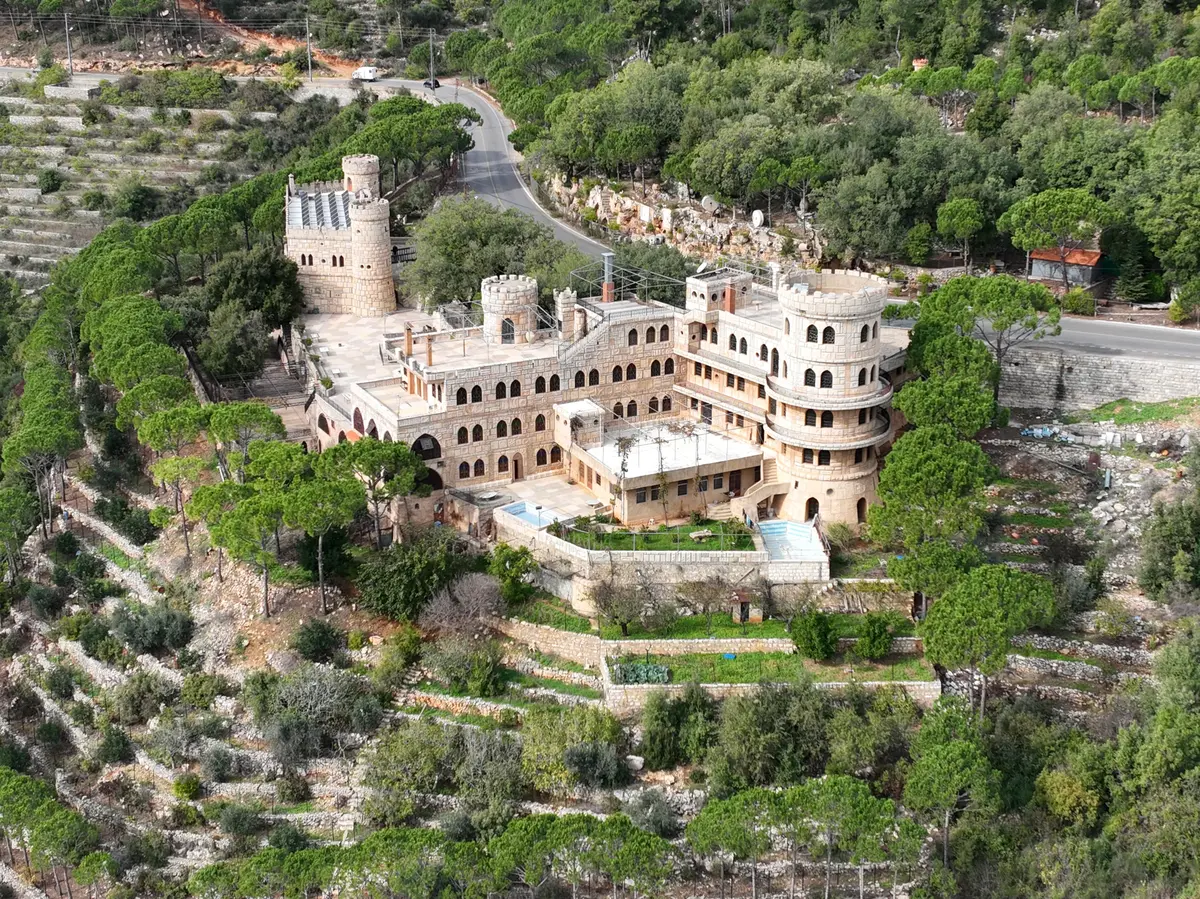
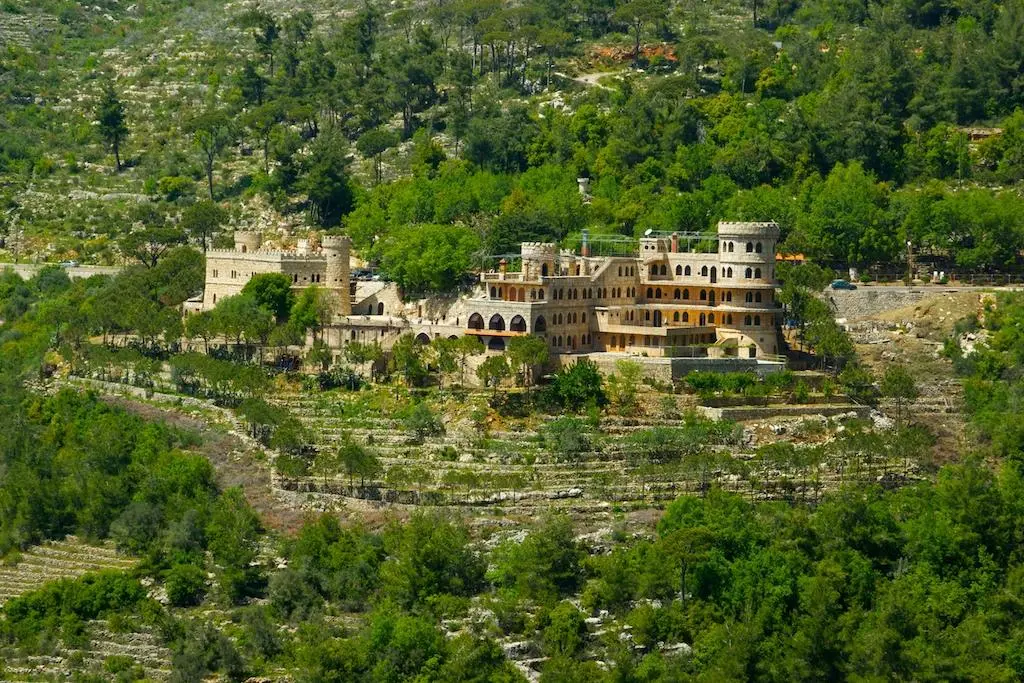
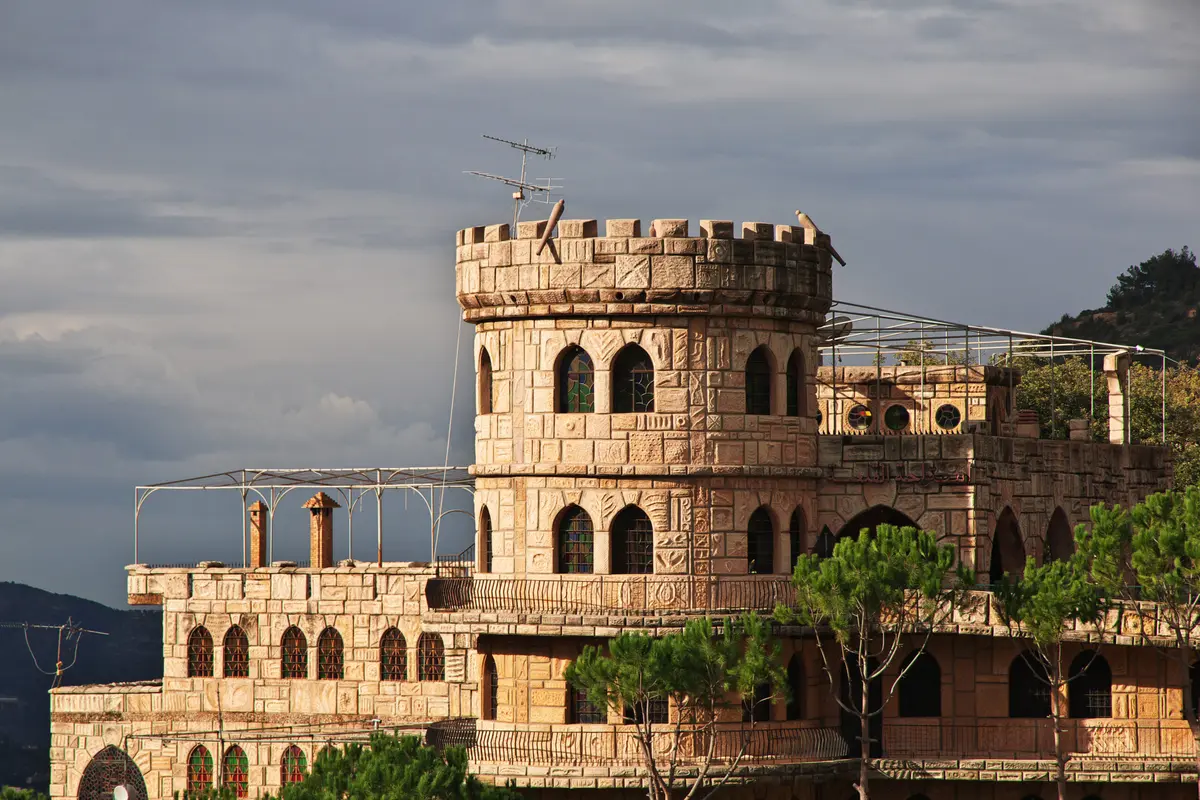
Moussa Castle is a 3,500-square-meter (37,673 sq ft) fortress between Deir el Qamar and Beiteddine, built single-handedly by Moussa Abdel Karim Al Maamari between 1962 and 2018 to avenge two childhood humiliations — a crush who rejected him and a teacher who beat him for drawing a castle in art class. It opened to the public in 1969 and still operates as a museum today.
The short version: in 1945, a boy falls for a girl from a wealthy family. She tells him to come back when he owns a palace. On the same bad stretch of school days, his art teacher Anwar canes him for sketching that palace instead of the assigned bird and tree, then rips the drawing up and sneers, “I didn’t ask you to draw your father’s castle” — a jab at his modest background as the son of a French army soldier.
Moussa gathers the torn pieces, walks out of school for good, and heads to Sidon on foot. He is not running away. He is starting a 60-year revenge arc.
Who was the man behind Moussa Castle Lebanon?
Moussa Abdel Karim Al Maamari (1931–2018) was a self-taught Lebanese stonemason who learned his craft restoring Crusader and Ottoman-era monuments before building his own castle from scratch. He was later awarded the Knight of the National Order of the Cedars — a state honor that retroactively validated the kid his teacher said would never amount to anything.
Apprenticeship at Sidon Sea Castle
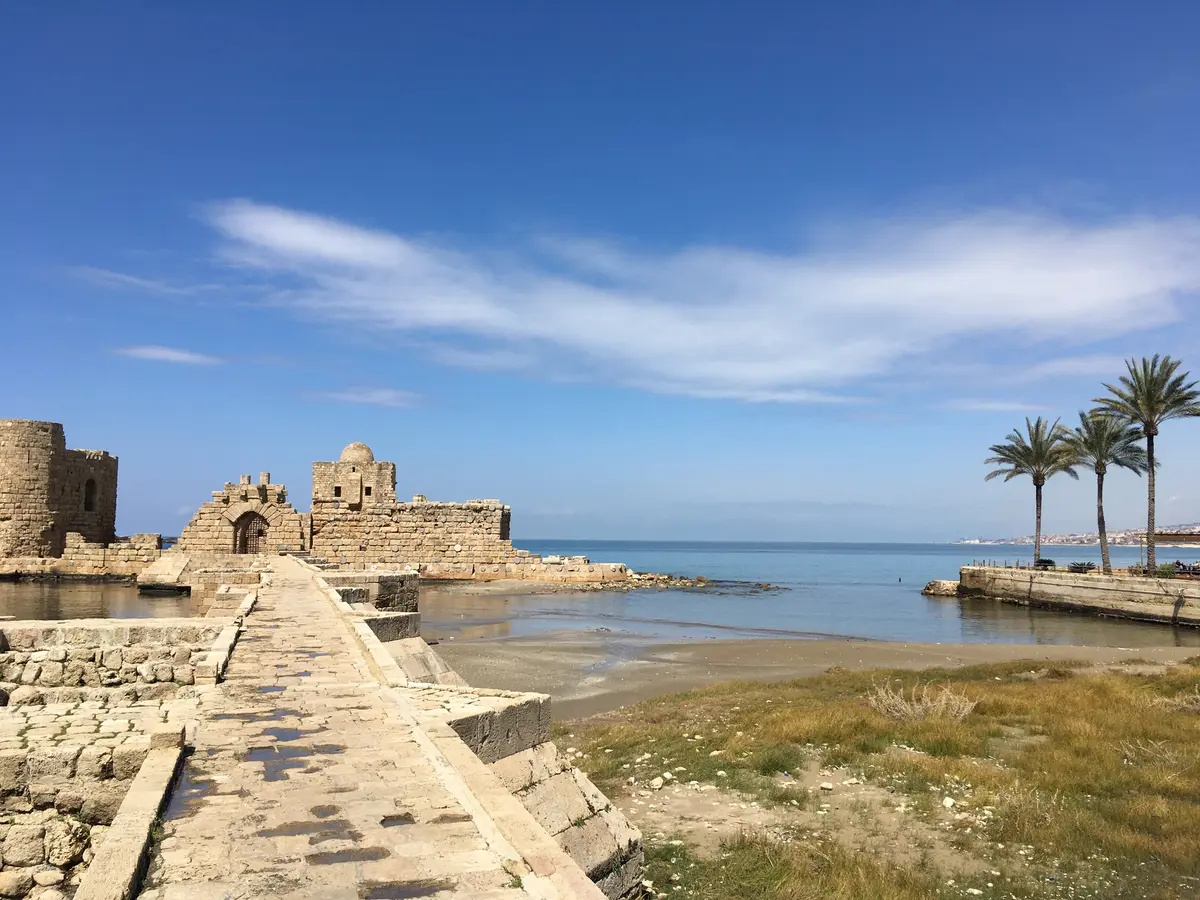
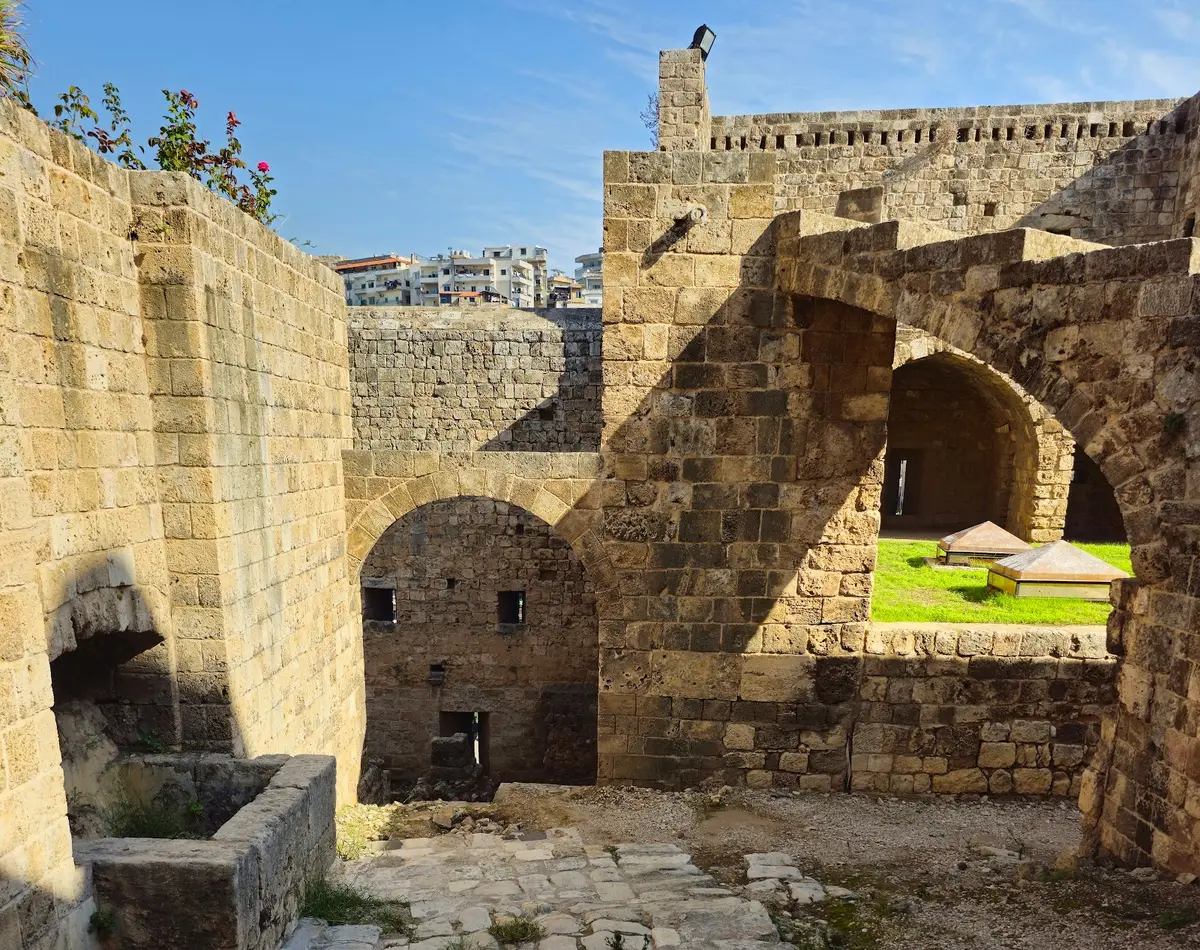
In Sidon, Moussa worked with his uncle on the Crusader-era Sea Castle. This was where he learned how to cut, lift, and fit massive stones — the physical vocabulary of medieval fortresses. His skill caught the eye of Emir Maurice Chehab, director of Lebanon’s National Museum of Beirut, who hired him in 1947 to work on archaeological restoration projects across the country.
The Beiteddine years
He was later moved to Beiteddine Palace, the 19th-century seat of the Chehab Emirs, to restore the museum dedicated to Emir Bashir Chehab II. This is the payoff detail: the kid who was mocked for drawing “his father’s castle” spent his twenties restoring the actual palaces of the aristocracy. Every arch, vault, and crenellation he repaired went into a mental blueprint he would later use on his own hillside.
Pro Tip: Visit Beiteddine Palace the same day you visit Moussa Castle — once you know the backstory, spotting the Beiteddine details Moussa lifted (the pointed arches, the courtyard layout) turns the Chouf loop into a kind of architectural detective game.
How was Moussa Castle built by one man?
Moussa bought the land between Deir el Qamar and Beiteddine in 1962 and laid the foundation stone that same year. Over the next 60 years he personally hand-carved and placed roughly 6,500 stones — some weighing up to 150 kg (330 lbs) — without heavy machinery, without a construction crew, and mostly without paid help. His wife Maria is the unsung second hand on the project.
Each block doubles as a diary entry. Moussa chiseled his beliefs, slogans, and ideas directly into the stones, so the walls themselves read as a three-dimensional manuscript.
The scale in plain numbers:
- Construction period: 1962–2018 (60 years)
- Total area: 3,500 square meters (37,673 sq ft)
- Stones placed: 6,500+ hand-carved blocks
- Heaviest stones: up to 150 kg (330 lbs), carried by Moussa himself
- Heavy machinery used: none
- Primary crew: one man
For perspective: a modern stonemason crew with cranes and power tools would quote this job at several years. Moussa did it over six decades, one block at a time, while the country went through a civil war and multiple economic collapses around him.
What’s inside Moussa Castle?
The interior is a heritage museum, a weapons armory, and a first-person autobiography, all wedged into the same building. You enter through a deliberately small, low door — more on that below — and the floor plan is a one-way loop, so you cannot backtrack. Plan roughly 75 minutes to see everything at a normal pace.
The wax figure tableaux
Moussa populated the castle with mechanical wax figures acting out scenes from traditional Lebanese village life — a woman grinding wheat, a blacksmith hammering iron, a café owner serving Arabic coffee to a seated audience. The mechanics are hydraulic and jerky, not Disney-smooth. Honestly, that is part of the charm. The figures lurch through their motions with the rhythm of something built by a man who was teaching himself everything as he went.
The single most loaded exhibit is a recreation of Moussa’s own classroom: young Moussa on a school bench, teacher Anwar mid-swing with a cane. The original torn drawing — the sketch that triggered the whole life project — is reportedly on display here. It is the only museum exhibit I have seen where the artist is also the protagonist and the victim.
The weapons collection
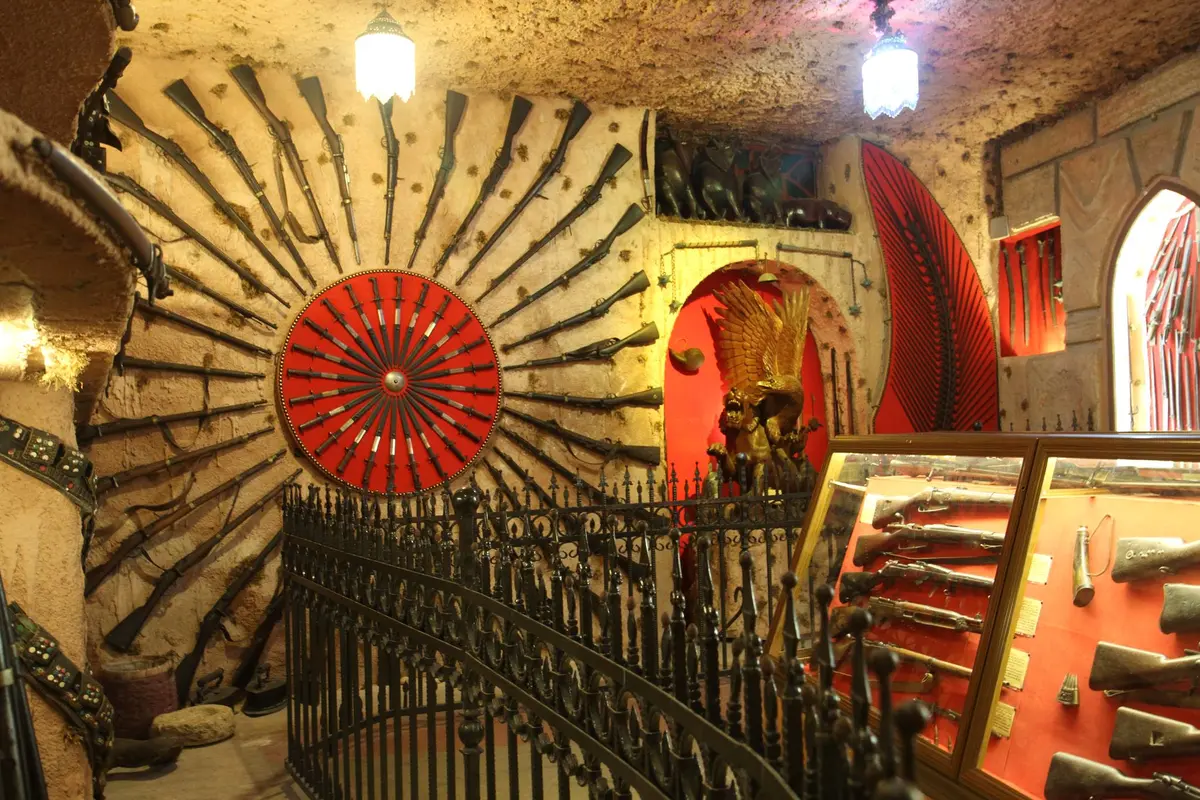
The armory holds more than 16,000 pieces spanning the Crusader era through World War I — rifles, sabers, daggers, Ottoman-era pistols, and cases of Bedouin jewelry and tools wedged in between. It is one of the largest private weapons collections in the Middle East, and if you are not into firearms, it is the section where the castle starts to feel repetitive. Walk through it anyway; Moussa’s personal workshop, with the actual chisels he used on the outer walls, sits just past it.
The door built for a grudge
Here the romance gets complicated. In 2009, 64 years after the classroom incident, Moussa tracked Sayyeda down through his cousin and invited her to visit. She had heard of “Moussa Castle” but did not know it belonged to the boy she had brushed off. At the gate, she put it together and wept.
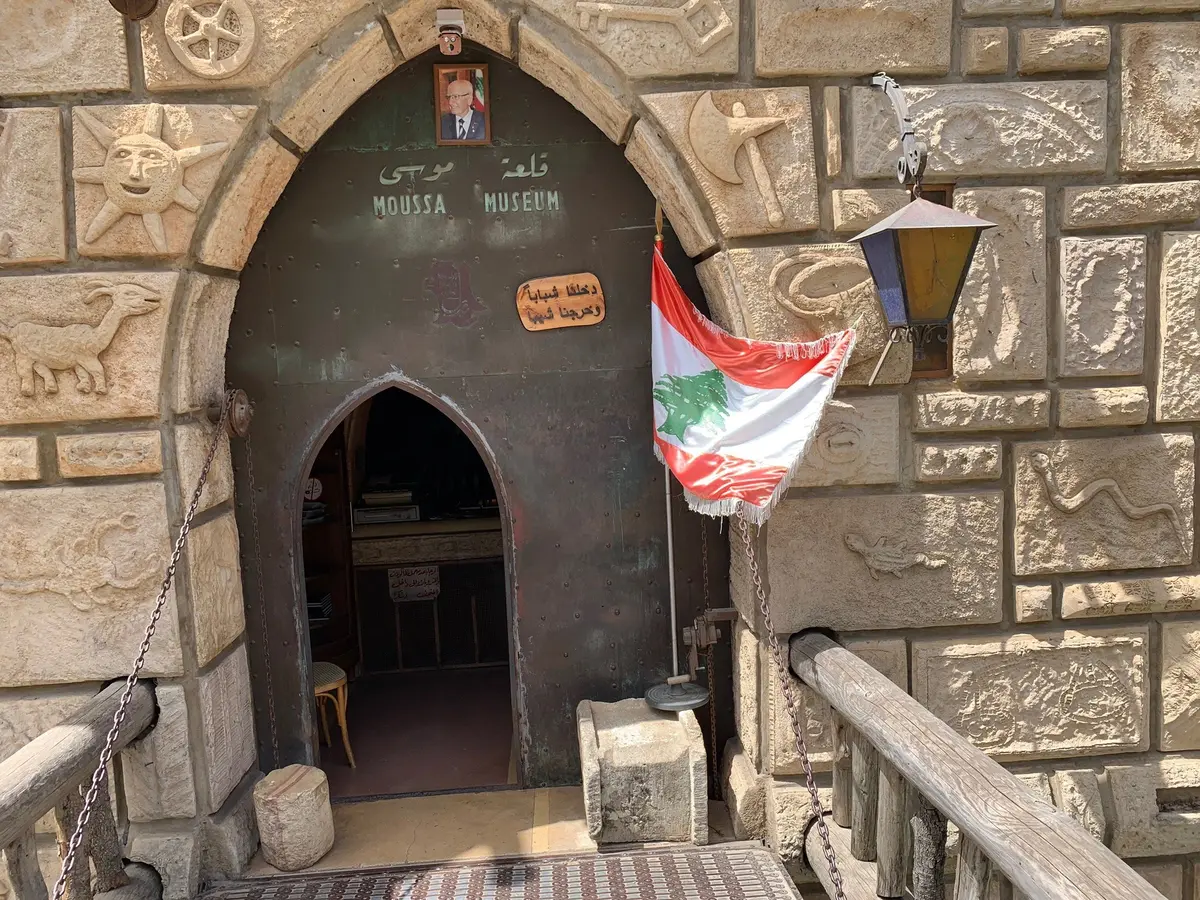
The detail that keeps this from being a straightforward love story: Moussa deliberately designed the entrance door small and low. In his own framing, he wanted her to stoop on the way in — a mirror of the moment he knelt as a child while his teacher beat him. You can read it as devotion or as a grudge rendered in limestone. Probably both. That ambiguity is exactly why Moussa Castle Lebanon sits in a different emotional register than any other castle you will visit in the region.
How do you get to Moussa Castle from Beirut?
Moussa Castle sits on the Damour–Beit el-Dine road in the Chouf Mountains, about 50 km (31 miles) southeast of Beirut. The drive takes 60–90 minutes depending on traffic out of the city, and the last 20 minutes are winding, paved mountain roads with steep inclines.
- By rental car: Most flexible option, but the Chouf climb is not fun if you dislike switchbacks.
- By hired driver: Expect roughly $60–100 USD for a half-day from Beirut, usually bundled with Beiteddine and Deir el Qamar.
- By shared van/service: Possible from Cola Bus Station to Beiteddine, then a short taxi to the castle, but logistics add up and the time savings evaporate.
Pro Tip: Skip morning rush out of Beirut. Leaving the city after 9:30 AM cuts the drive by 20–30 minutes and still gets you to the castle before the tour-bus groups from cruise ships arrive around 11 AM.
What does it cost to visit Moussa Castle?
Entry is approximately $10 USD per adult and about half that for children, with visitor reports consistently citing the $10 ticket in recent months. The price covers the full castle loop and the armory. There is no separate audio guide — the signage is in Arabic, English, and French.
- Adult ticket: approximately $10 USD
- Child ticket: approximately $5 USD
- Payment: cash in USD or Lebanese pounds (LBP); credit cards are not reliably accepted
- Opening hours (summer, May–October): daily, 9:00 AM – 6:00 PM
- Opening hours (winter, November–April): daily, 9:00 AM – 5:00 PM
- Open Mondays: yes (useful — Beiteddine Palace is closed Mondays)
Contrarian take: if you are short on time and have to pick one Chouf stop, Beiteddine Palace is the more historically significant building. But Moussa Castle is the one you will still be telling people about a year later. It is kitsch and obsession and heartbreak at the same time, and there is nothing else like it in Lebanon.
How do you combine Moussa Castle with other Chouf sights?
The Moussa Castle–Beiteddine–Deir el Qamar triangle fits easily into one day from Beirut, and skipping any one of the three makes the drive harder to justify.
- 9:30 AM — Leave Beirut. Head south on the coastal highway, then turn inland past Damour.
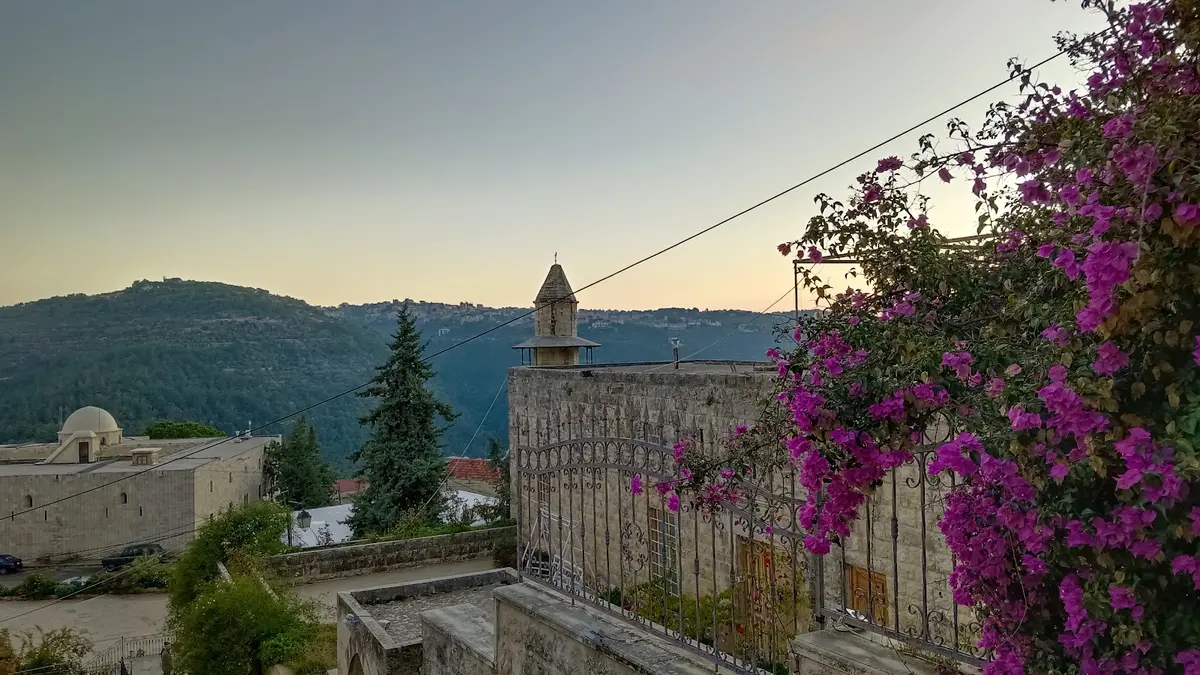
- 10:30 AM — Deir el Qamar. Walk the Ottoman-era town square, grab a coffee at one of the cafés on the square, and look at the 16th-century Fakhreddine Mosque.
- 12:30 PM — Lunch. The village restaurants along the Beiteddine road serve mezze, kibbeh, and fresh Lebanese flatbread for roughly $15–25 USD per person.
- 2:00 PM — Moussa Castle. Allow 75 minutes inside.
- 3:45 PM — Beiteddine Palace. The contrast is the whole point: a genuine 19th-century aristocratic palace 10 minutes up the road from a self-built revenge palace. Same stone, two very different stories.
- 6:00 PM — Drive back to Beirut.
Skip Moussa Castle if you came to Lebanon strictly for Roman and Phoenician history — it is not in that league. But if you came for stories about people, this place is the one every other guide is afraid to rank highly.
Before you book
TL;DR: Moussa Castle is a 3,500 sq m hand-built fortress in the Chouf Mountains, roughly 60–90 minutes from Beirut, with $10 entry and a backstory about rejection and revenge that is more memorable than the architecture itself. Pair it with Beiteddine and Deir el Qamar for a clean day trip. Bring USD cash.
It is not the prettiest castle in Lebanon. It is not the oldest, the most historic, or the most architecturally refined. It is something else — a monument to what a 14-year-old can do with a lifetime of being told he is nothing. Every stone in the place is the same sentence, repeated 6,500 times: I told you so.
Would you spend 60 years building a castle to prove a point? Tell me in the comments — and if you have already been, what did you think of that tiny entrance door?