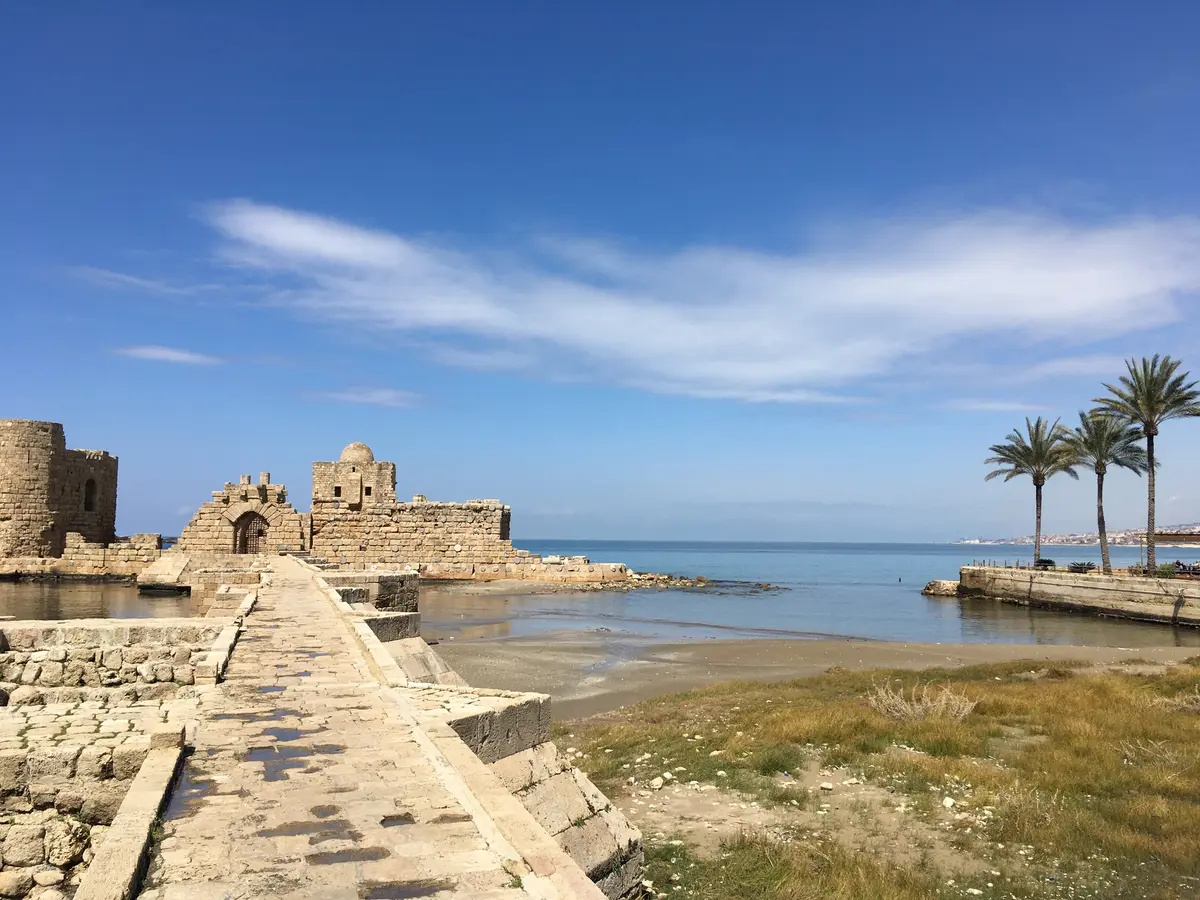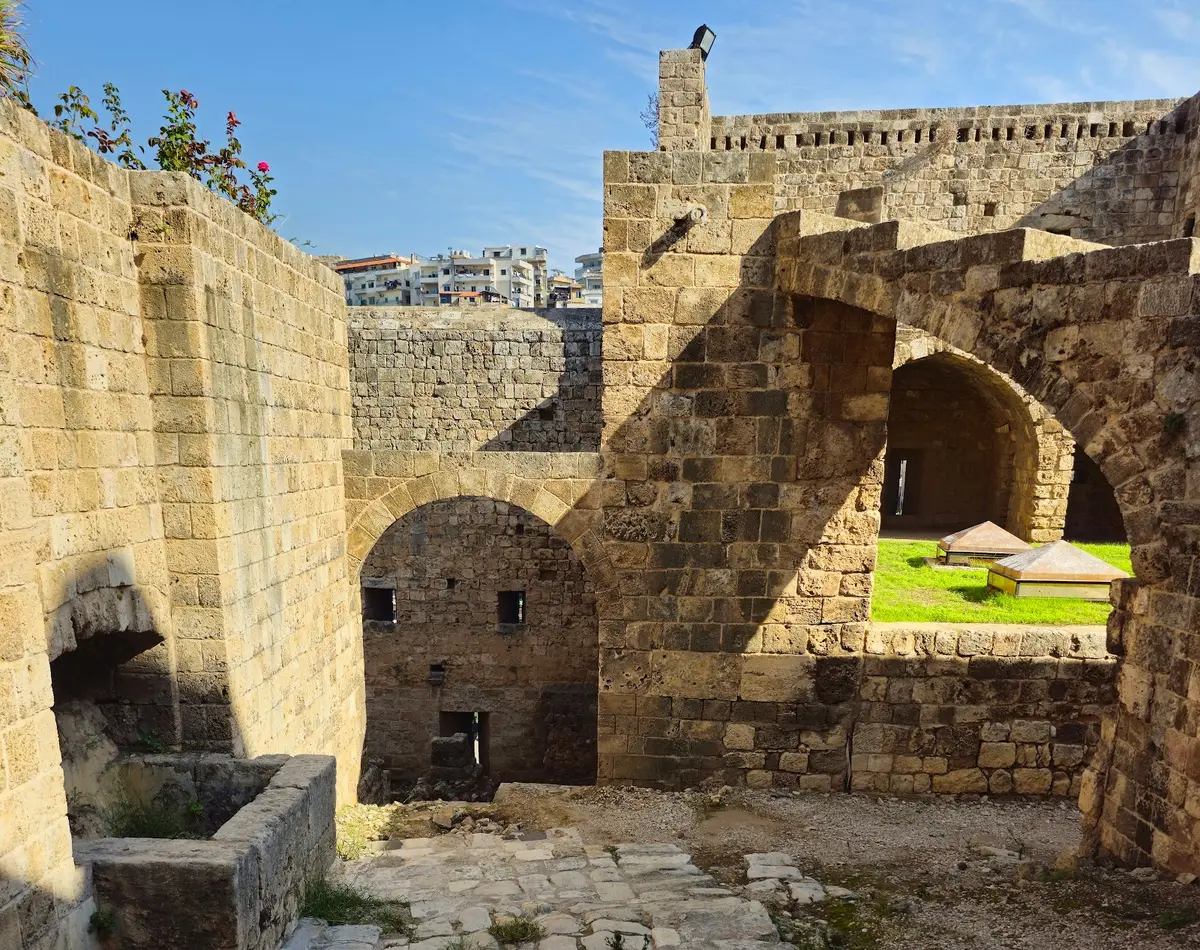
Deir el Qamar is the Lebanese mountain village most Lebanon travel itineraries skip — and the one that rewards you the most for going. Set 25 miles (40 km) southeast of Beirut at 2,788 feet (850 m), the former capital of Mount Lebanon preserves 17th-century Italian-Baroque-meets-Levantine architecture, three religions squeezed into a few hundred yards, and the best slow-food kitchen outside the coast. This Deir el Qamar village guide covers what to see, where to eat and sleep, and the practical stuff nobody warns you about.
Why Deir el Qamar belongs on your Lebanon itinerary
Deir el Qamar is worth a day (or a full weekend) because it preserves the architectural DNA of the 17th-century Maan dynasty while offering cool mountain air, walkable distances, and a food scene rooted in mouneh and slow cooking you will not find in Beirut. The village sits at 2,788 feet (850 m) in the Chouf Mountains, and peak-summer temperatures run 10–15°F (6–8°C) cooler than the coast.
The architecture is the real tell. When Emir Fakhreddine II was exiled to Tuscany in 1613, he spent five years at the Medici court in Florence. On his return in 1618, he brought Italian architects and engineers who fused Levantine function with Italian-Baroque form. The result: double-arched mandaloun windows, cross-vaulted ceilings, octagonal fountains in internal courtyards, and a village that reads more like a Tuscan hill town than a Levantine mountain settlement.
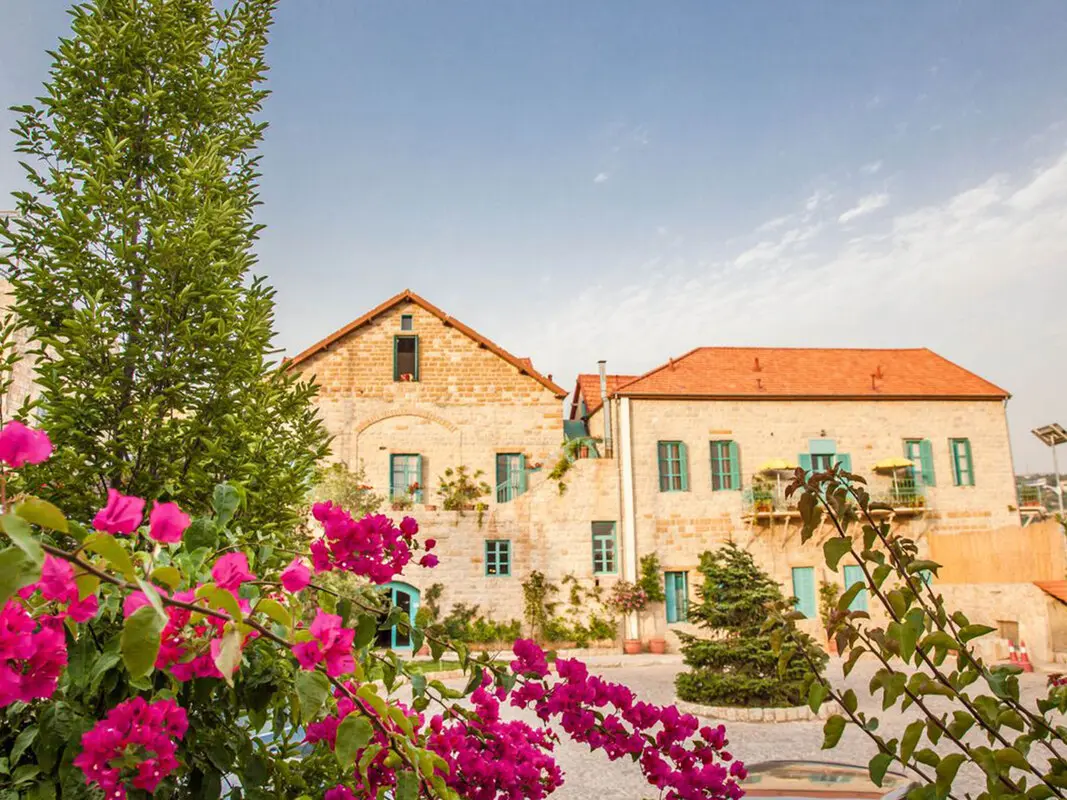
The village became capital of Mount Lebanon in 1590 and held political weight until the early 19th century. The Lebanese government declared the old quarter a historic monument in 1945, and a 1971 urban-planning code blocked the concrete sprawl that wrecked most Lebanese towns. Every new structure must use traditional limestone and red-tiled roofs. Walk 30 seconds from the central square and the cohesion is obvious.
The practical payoff for travelers: the whole center is pedestrian, the major sights cluster within a 10-minute walk of the main square, and you can sleep inside a restored 19th-century palace for under $100 a night.
Pro Tip: Treat Deir el Qamar as a one-night base, not a day trip. The village empties after the day-trip tour buses leave at 5 p.m., and the square at dusk — lit by lantern-style streetlights, with almost no traffic noise — is the whole reason to come.
What are the top things to do in Deir el Qamar?
The main attractions sit within a 10-minute walk of Dany Chamoun Square — the old jousting ground known locally as the Midane. Start there, hit the three religious buildings on the perimeter, then work outward to the Marie Baz Wax Museum, the Silk Khan, and the Shehab Serail. Moussa Castle and the Jahiliyeh river trail are a short drive away. A thorough visit runs four to six hours; an overnight lets you cover everything without rushing.
Walk Dany Chamoun Square and the Shalout Fountain
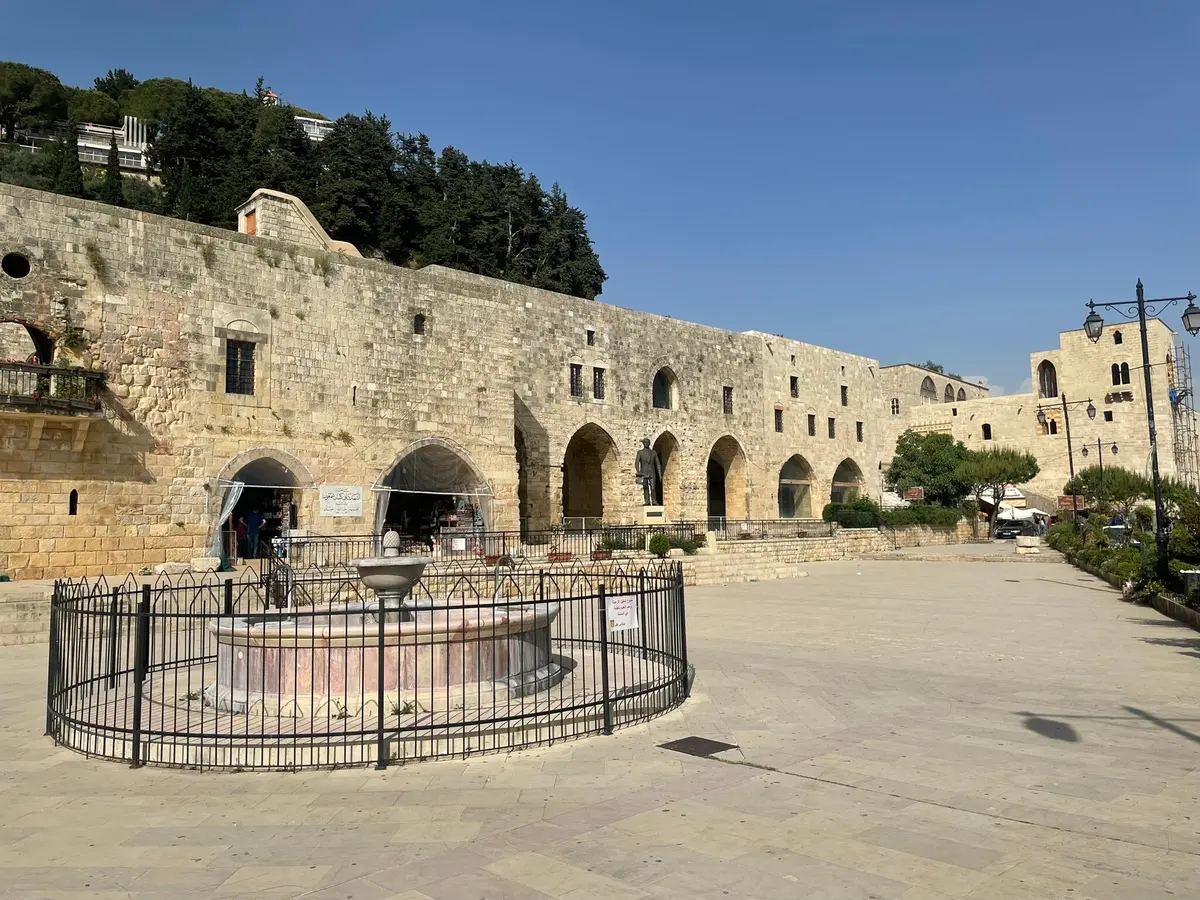
The heart of the village is the Dany Chamoun Square, historically called the Midane (The Field). The vast rectangular space was originally designed for jousting tournaments and equestrian displays during the Emirate period. In the days of the Emirs, the square sat level with the access roads so horses could enter directly.
The centerpiece is the 19th-century circular Shalout Fountain, and the legend behind it is the kind of detail locals will tell you if you ask. During a severe drought, a shepherd noticed his dog, Shalout, kept returning with a muddy muzzle and wet paws. He followed the dog and found it lapping water from a hole it had dug in the parched earth. The shepherd excavated further, uncovering a pure spring that saved the village. The fountain honors the dog — proof that sometimes the best Lebanon travel tips have four legs.
From the square you can reach every major attraction within a few minutes on foot.
Experience the triangle of coexistence
Within a few hundred yards of each other sit three religious buildings that embody the complex layers of Lebanon culture and sectarian history.
- Fakhreddine Maan Mosque (1493): The oldest mosque in Mount Lebanon, at the corner of the square. Built by Fakhreddine I for his Muslim mercenaries. The octagonal minaret leans slightly — not from poor craftsmanship, but from a severe 1630 earthquake that permanently displaced the structure.
- Saydet el Talle Church (Our Lady of the Hill): The spiritual anchor for the village’s Maronite Christians. The site is believed to have originally housed a Phoenician temple to Astarte, goddess of the moon. The church was destroyed and rebuilt repeatedly — by an 859 AD earthquake, by Crusaders, and later renovated by Fakhreddine I and Bechir II Chehab. Known for its miraculous icon of the Virgin Mary.
- The 17th-century Synagogue: Constructed for the Jewish community that was part of Fakhreddine II’s entourage. It is rarely open to the public, but its exterior presence validates the village’s long history as a sanctuary for minorities.
Pro Tip: Dress modestly for the mosque and church — covered shoulders and knees for both, and women should bring a scarf for the mosque. The caretaker at Saydet el Talle will sometimes let you in outside posted hours if you find him in the adjacent office and ask politely in Arabic or French.
Step into history at the Marie Baz Wax Museum
Housed in the Fakhreddine II Palace on the eastern side of the square, the Marie Baz Wax Museum is a visual-history textbook. The Baz family opened it in partnership with the prestigious Musée Grévin in Paris, and the collection includes more than 40 life-size wax figures of the pivotal characters of Lebanese history — Emirs, Pashas, Presidents, and artists — set in realistic dioramas. The palace itself exemplifies the Khan architectural style: a central courtyard surrounded by a residential upper floor.
The honest take: reviews are split. If you have read any Lebanese history, the figures land; if you have not, the labeling is thin and the experience feels short. The palace itself is worth the entrance fee even if the wax leaves you cold.
- Location: Palais de l’émir Fakhr El Din II, Dany Chamoun Square
- Hours: Daily, roughly 9:30 a.m. to 5:00 p.m.
- Entrance: around $5–10 per adult; cash (USD or LBP) only
- Time needed: 30–45 minutes
Marvel at Moussa Castle — a monument to unrequited love
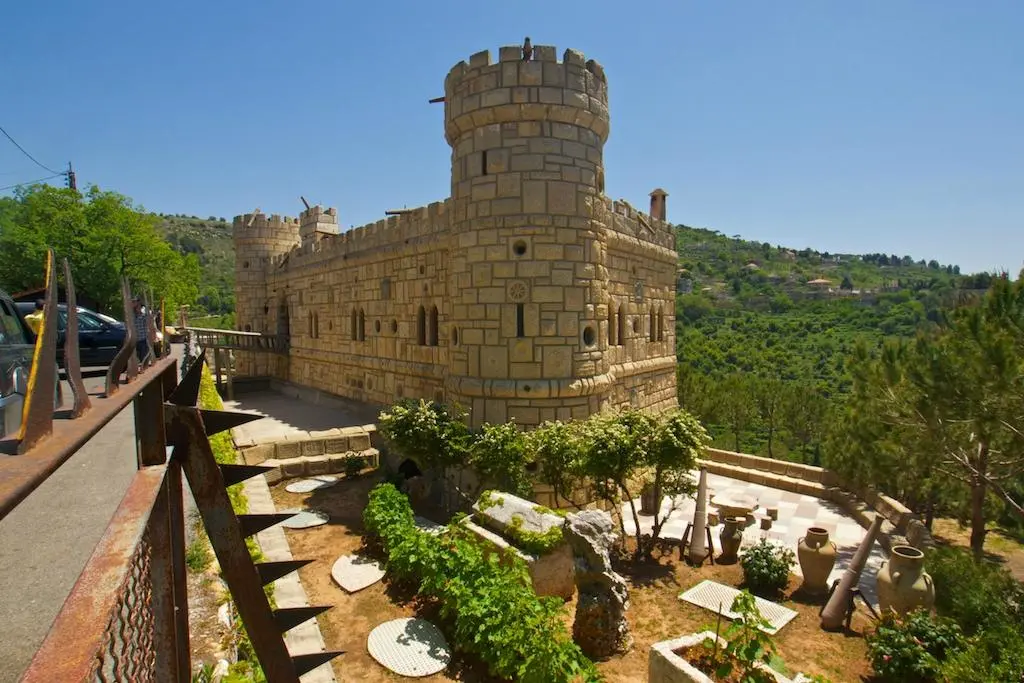
A few miles down the road toward Beiteddine Palace sits Moussa Castle, the life’s work of Moussa Abdel Karim Al-Maamari. As a boy, Moussa dreamed of building a castle. He was mocked by a girl he loved, who told him she would only marry a man who owned a palace. Crushed but determined, Moussa spent more than 60 years building this fortress stone by stone.
The result mixes medieval fantasy with ethnographic museum. It holds a large collection of ancient weaponry and elaborate dioramas of mechanical figures re-enacting scenes of traditional Lebanese village life. The honest assessment: for cultural purists, it reads as kitschy compared with the 17th-century authenticity of central Deir el Qamar. For families, kids, and anyone interested in the full backstory, it lands.
- Location: Deir el Qamar–Beiteddine road
- Hours: Daily
- Entrance: small fee in USD or LBP; cash only
- Time needed: 1–1.5 hours
Explore the Silk Khan and Youssef Shehab Serail
The Silk Khan (Qaissariyyeh), built in 1595, was the economic engine of the Maan dynasty. Designed as a public market for the silk trade — the backbone of Mount Lebanon’s economy — the architecture features classical vaulted arcades and a large open courtyard. Today it houses the French Cultural Center and hosts rotating art exhibitions.
The Youssef Shehab Serail, now the Municipality of Deir el Qamar, is an 18th-century palace with a monumental entrance flanked by two carved lions. The lions are depicted with chains, symbolizing the Emir’s authority over the beasts and his subjects.
Where should you eat in Deir el Qamar?
The village punches far above its weight for food. Beit El Qamar (Tawlet Deir el Qamar) delivers the most interesting traditional menu in Mount Lebanon. Deir al Oumara is the best formal mezze experience. Ammoun has the view. Paradise Four is where locals actually eat breakfast. Plan one sit-down dinner and one morning manouche stop at minimum.
Beit El Qamar — the Tawlet experience
This is the crown jewel of the village’s culinary scene. The concept, associated with Souk El Tayeb (Lebanon’s premier organization for promoting rural culinary heritage), brings in local cooks — mostly women from the village — to prepare a rotating buffet of traditional dishes. You will find plates rarely served in standard Lebanon restaurants: hriss (slow-cooked wheat and meat porridge), kibbeh with quince or pomegranate molasses, and seasonal wild greens like hindbeh (dandelion) sautéed in olive oil.
The honest reality check: the food consistently earns praise, but service pacing is uneven. Order everything you want at once and do not expect a second round of offers. The food remains exceptional.
Deir al Oumara — heritage dining in a historic courtyard
For a formal, à la carte Lebanese mezze experience, the restaurant at Deir al Oumara delivers. Regulars single out the sawdeh (chicken livers) — earthy, dense, with real iron depth — and the batata harra for its crisped edges. Dining in the historic courtyard under stone arches, lit at night by lanterns, is the closest Lebanon comes to a Tuscan trattoria atmosphere.
Ammoun Restaurant — sunset views over the Chouf
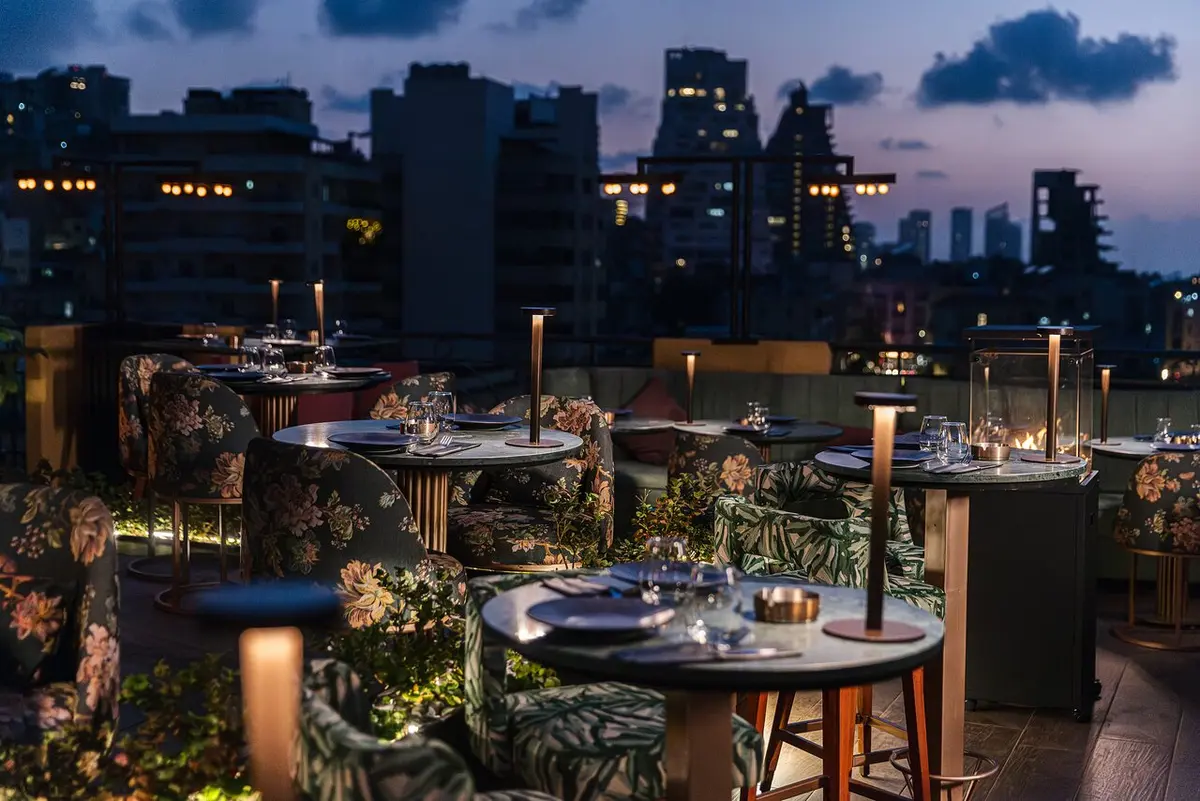
Just outside the dense center, Ammoun is the view restaurant. The terrace faces south over the Chouf ridges rolling down toward the Mediterranean. The menu fuses Lebanese classics with modern plating. It is a local favorite for weddings and celebrations, so weekend dinners have a loud, family-party atmosphere rather than a quiet one.
Paradise Four Manakish — where the locals eat breakfast
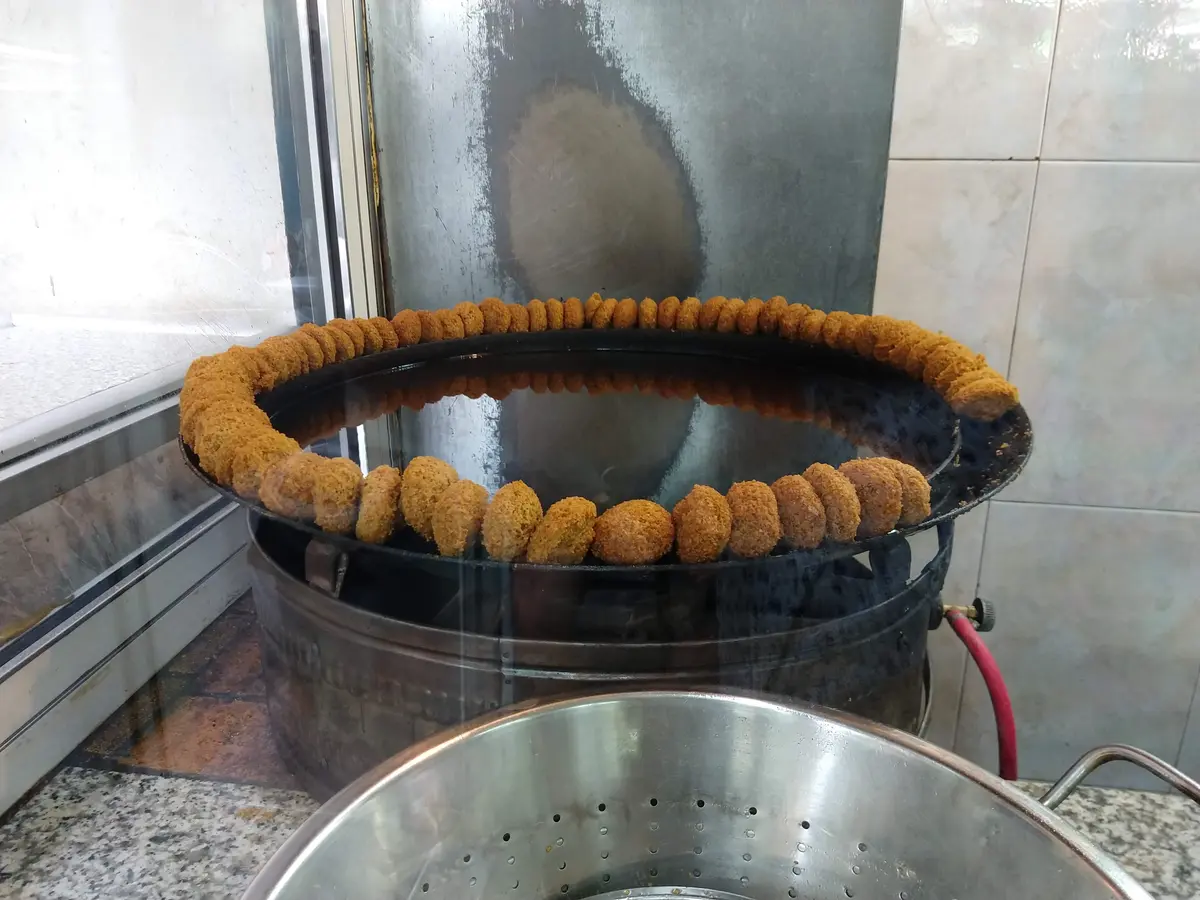
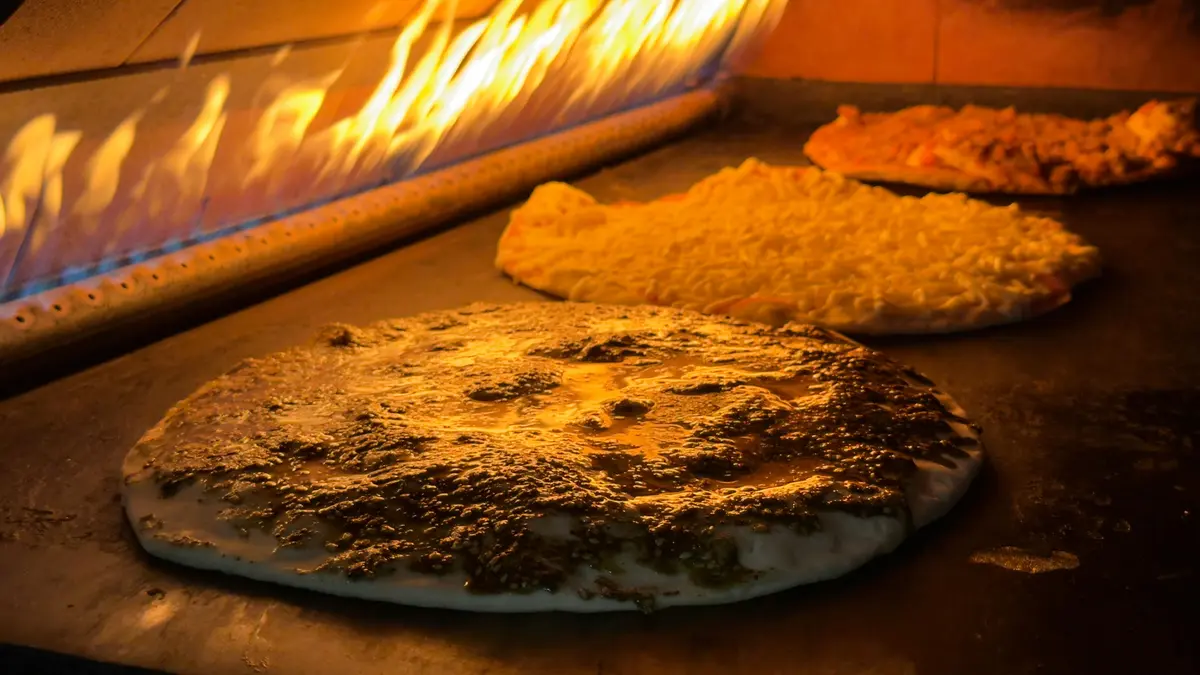
No Deir el Qamar village guide is complete without the wood-fired bakery residents actually go to. Paradise Four does kishk manouche (fermented yogurt and bulgur powder mixed with tomato and onion), classic za’atar, and a lahm baajin (meat pie) that is better than most sit-down versions in Beirut. If a broader food deep-dive interests you, consider booking a dedicated Lebanese street food tour guide.
Pro Tip: Get to Paradise Four before 10 a.m. on weekends. The wood-fired oven runs hardest in the first three hours of service, and the dough has more char and less oil than it does later in the day.
Where should you stay in Deir el Qamar?
For heritage atmosphere and walkable access to the square, book Deir al Oumara. For the best view in the village, book Beyt El Jabal. For food-led travelers, Beit El Qamar puts you three steps from the Tawlet kitchen. All three sit under $150 a night in shoulder season, with price jumps in summer.
Deir al Oumara — the heritage standard
A 4-star heritage hotel inside a restored 19th-century palace that previously served as a school. The central courtyard is the showpiece, and rooms feature high vaulted ceilings and stone walls. Location is excellent — a short walk from the square — and cleanliness ratings are consistent.
The catch: preservation laws limit air conditioning in standard rooms. If you are heat-sensitive, confirm AC availability in your specific category before booking, or travel in spring or autumn.
- Location: central Deir el Qamar, 2-minute walk to the square
- Cost: from around $100–160/night depending on season and room category
- Best for: couples, history-first travelers
- Time needed: minimum one night to use the property properly
Beyt El Jabal — scenic retreat with panoramic views
A boutique guesthouse complex made of traditional stone houses scattered along the hillside and connected by pedestrian stone paths. The defining feature is the view — a direct line across the Chouf valleys that Deir al Oumara cannot match from its courtyard.
The challenge: access requires stairs and uneven stone paths. Not suitable for guests with mobility issues or heavy luggage, but near-perfect for couples and solo travelers who want solitude.
- Location: hillside above the village center
- Cost: from around $90–140/night
- Best for: couples, solo travelers, hikers
- Time needed: two nights to justify the setting
Beit El Qamar — the culinary destination
Same ownership as the Tawlet restaurant below. The aesthetic is vintage Lebanese — eclectic furniture, colorful tiles, a garden setting. The breakfast buffet leans heavily on traditional mouneh. Factor in the same service variability as the restaurant when deciding whether to book a stay or just drop in for a meal. For more options, you can browse other Lebanon hotels in the region.
- Location: near the main square
- Cost: from around $85–130/night
- Best for: food-first travelers
- Time needed: one night
What nature escapes are near Deir el Qamar?
Two short drives cover the main nature add-ons: Jahiliyeh for a shaded river hike to swimmable pools, and the Ain Wazein Grotto for a one-hour limestone cave tour. Jahiliyeh is the better bet for a half-day detour; Ain Wazein is a one-hour cool-down on a hot afternoon.
Jahiliyeh — the hidden river trail
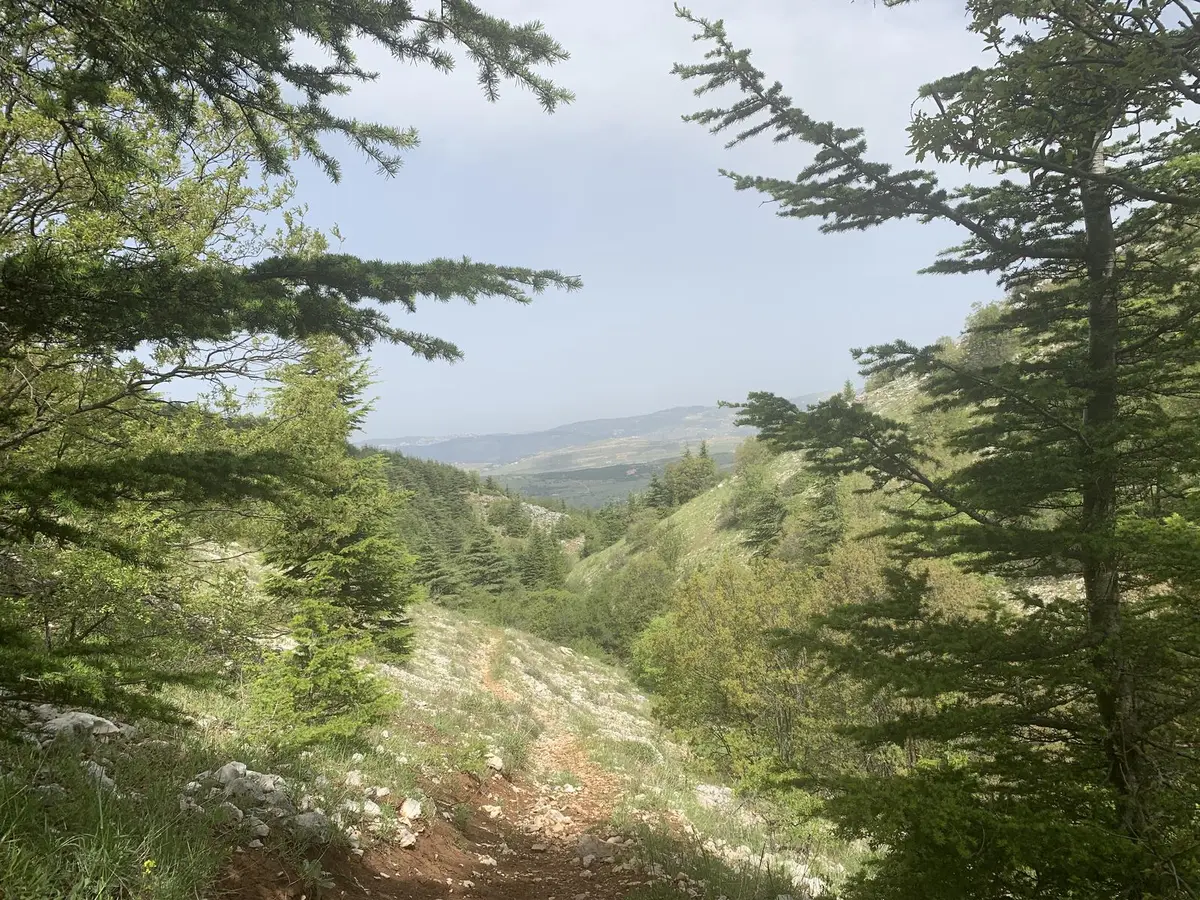
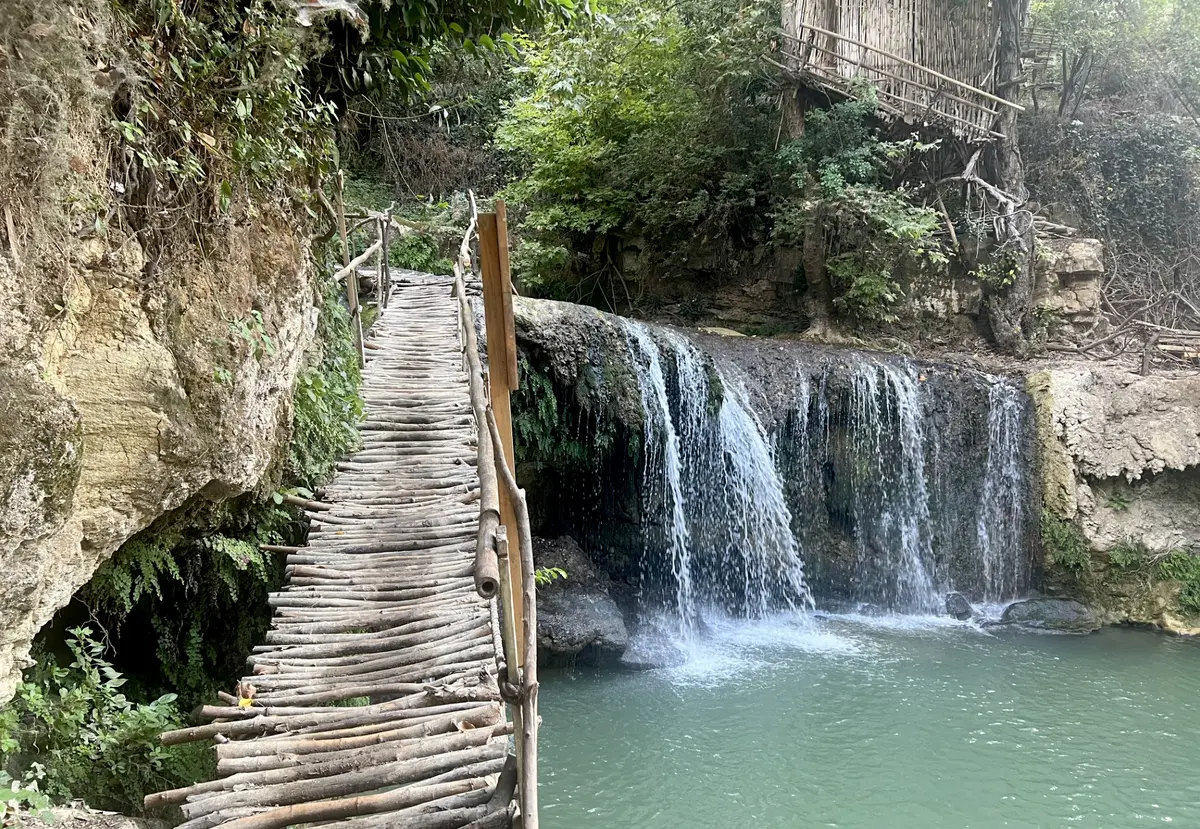
A 15-minute drive from the village, Jahiliyeh has exploded in popularity with local hikers. The Darb el Nahr (River Path) follows the Hammam River along a shaded trail with wooden bridges and walkways built into the cliffside. The trail leads to natural pools with turquoise water fed by small waterfalls — swimmable and genuinely refreshing in July and August. You will also pass abandoned Ottoman-era water mills. If the trail suits you, Barouk Cedar Forest hiking is just up the road in the same Chouf range for a longer outing.
- Difficulty: easy to moderate; family-friendly
- Trail surface: mixed — dirt, wooden bridges, some stone steps
- Time needed: 2–3 hours round trip
- Best for: hikers, families, heat-weary travelers
Ain Wazein Grotto — subterranean geology
A limestone cave system with intricate stalactites and stalagmites formed over thousands of years by water erosion. The tour runs about one hour and is more intimate than the massive Jeita Grotto experience closer to Beirut. Cave temperature holds around 61°F (16°C) regardless of the weather outside, which makes it a useful midday stop in summer.
Practical guide to visiting Deir el Qamar
What is the “fresh dollar” economy and how do you pay?
Lebanon runs on a dual-currency system, but cash USD dominates. Hotels, tours, restaurants, and reliable transport are quoted and paid in US dollars. The Lebanese pound (LBP) trades at roughly 89,500 LBP to 1 USD. Credit cards are accepted only at a handful of high-end Beirut hotels — plan on cash for essentially everything in Deir el Qamar.
The critical detail: bring cash USD, and the bills must be “fresh” — meaning the newer blue-design $100 bills, crisp, uncreased, and with zero ink marks or tears. Pre-2013 bills and damaged notes are frequently rejected. For a deeper rundown on the system, see the current Lebanon currency situation before you fly.
- Bring $50s and $20s alongside $100s for smaller transactions
- No ATM in Deir el Qamar can be relied on for USD — withdraw in Beirut
- Keep bills in a rigid wallet; wrinkled hundreds get refused at the register
How do you get from Beirut to Deir el Qamar?
Deir el Qamar sits 25 miles (40 km) from Beirut, but the drive takes 45 to 60 minutes because of traffic and winding mountain roads. Three options:
- Private taxi or driver (recommended): safest and most convenient. A round-trip with a few hours of waiting typically runs $60–100 depending on the operator. To compare options, review the guide on Uber in Lebanon vs Taxi.
- Rental car: possible but not recommended unless you are comfortable with narrow mountain roads, minimal street lighting, and aggressive local driving. If you choose this route, read the rules for renting a car in Lebanon carefully.
- Public van: vans leave from the Cola intersection in Beirut to the Chouf. Cheap ($2–3 one way) but crowded, no AC, no fixed schedule.
What about electricity and internet?
State electricity is effectively non-existent. Every business runs on a private diesel generator. When booking a guesthouse, ask directly whether they have 24/7 generator power — the answer is not always yes. If outages worry you, read about power cuts in Lebanon to prepare. For data, 4G on Touch or Alfa SIMs is more reliable than hotel Wi-Fi almost everywhere.
Pro Tip: Buy a local SIM or eSIM at Beirut Rafik Hariri Airport before you leave the arrivals hall. The booth prices are reasonable, setup takes 10 minutes, and you will have working data by the time your taxi hits the Chouf switchbacks — where GPS matters most.
Is it safe to visit Deir el Qamar?
The Chouf region — including Deir el Qamar — is one of the most stable areas in Lebanon, with strong community policing and no recent incidents targeting tourists. However, the U.S. Department of State maintains a Level 4 “Do Not Travel” advisory for Lebanon as a whole, with southern Lebanon and the Syrian border flagged as highest-risk zones. Chouf is neither of those, but the national advisory affects travel insurance, consular assistance, and risk tolerance.
- Check your government’s current travel advisory before booking — the situation shifts
- Most major travel insurers will not cover Lebanon while Level 4 is in force; you may need a specialist policy
- Avoid demonstrations and crowds, particularly in Beirut
- Keep your passport accessible at army and ISF checkpoints — they are routine in Mount Lebanon and polite
- Petty theft is the main street-level concern, not violent crime
For a broader read, check the latest updates on is Lebanon safe for American tourists.
When is the best time to visit Deir el Qamar?
Spring (April–May) and autumn (September–October) offer the most comfortable temperatures — highs around 68–77°F (20–25°C) and clear skies. Peak summer (July–August) stays cooler than Beirut but still hits the mid-80s°F (around 30°C) at midday; evenings drop to the low 60s°F (around 17°C). Winter is chilly with occasional snow above 3,300 feet (1,000 m) and frequent rain, but you will have the village almost to yourself. For a full monthly breakdown, see the Lebanon weather by month.
Before you book
Deir el Qamar rewards travelers who value depth over box-ticking. You will navigate the fresh-dollar system, eat slow food cooked by women who learned the recipes from their grandmothers, and sleep in a palace that has been continuously inhabited since the 17th century. That is the trade — and it is a good one.
TL;DR: Deir el Qamar is a walkable 17th-century mountain village 25 miles from Beirut, best as a one-night stay. Stay at Deir al Oumara or Beyt El Jabal, eat at Beit El Qamar (Tawlet) and Paradise Four, bring crisp fresh-dollar cash, and check your country’s current Lebanon advisory before booking.
Whether you are staying overnight in a restored palace, hiking to hidden waterfalls at Jahiliyeh, or sitting in the Midane watching the square empty out after the tour buses leave, this village rewards the slow traveler. What would you swap from your Lebanon itinerary to fit in a night in the “Tuscany of the East”?