Skip the airport souvenir aisle. The best spices in Beirut live in century-old Armenian roasteries, weekend farmers’ markets, and restaurant-supply shops where cumin is ground the same week you buy it. This guide covers six places I return to every visit, what to actually buy at each, and how to get it home without a customs problem.
Where should you buy the best spices in Beirut?
For the deepest selection and the best prices, head to Bourj Hammoud. For vacuum-sealed bags built for a suitcase, go to Al Rifai. For single-farm sumac and zaatar with traceability, hit Souk El Tayeb on a Saturday morning. Most serious cooks combine two or three of these in a single afternoon — the neighborhoods are under 20 minutes apart by taxi.
1. Bourj Hammoud — the Armenian spice quarter
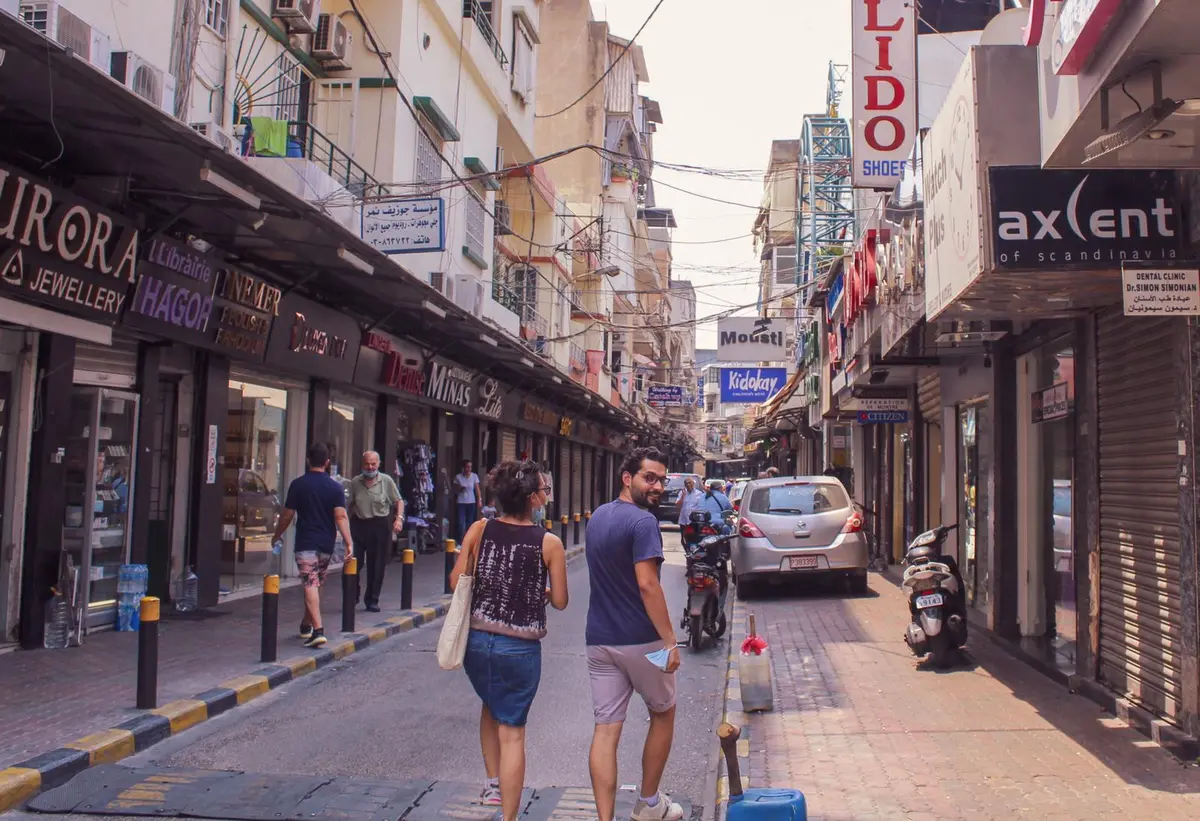
Bourj Hammoud is the single most important neighborhood on this list. It’s a dense Armenian district just east of the port, and the streets named Marash and Arax cluster dozens of specialty shops within a four-block walk. You’ll hear Western Armenian spoken at most counters and see sacks of Aleppo pepper open on the sidewalk. It’s not polished — floors are dusty, signage is inconsistent, and some shops only take cash — but this is where restaurant chefs from Beirut actually shop.
The contrarian take: skip the Downtown / Beirut Souks spice stands entirely. They charge two to three times Bourj Hammoud prices for the same product, often with worse freshness.
Pro Tip: Go on a weekday morning, not Saturday. Saturdays get packed with local families doing weekly shopping, and parking in Bourj Hammoud is already difficult on a calm day.
Tenbelian’s Spices & Co.
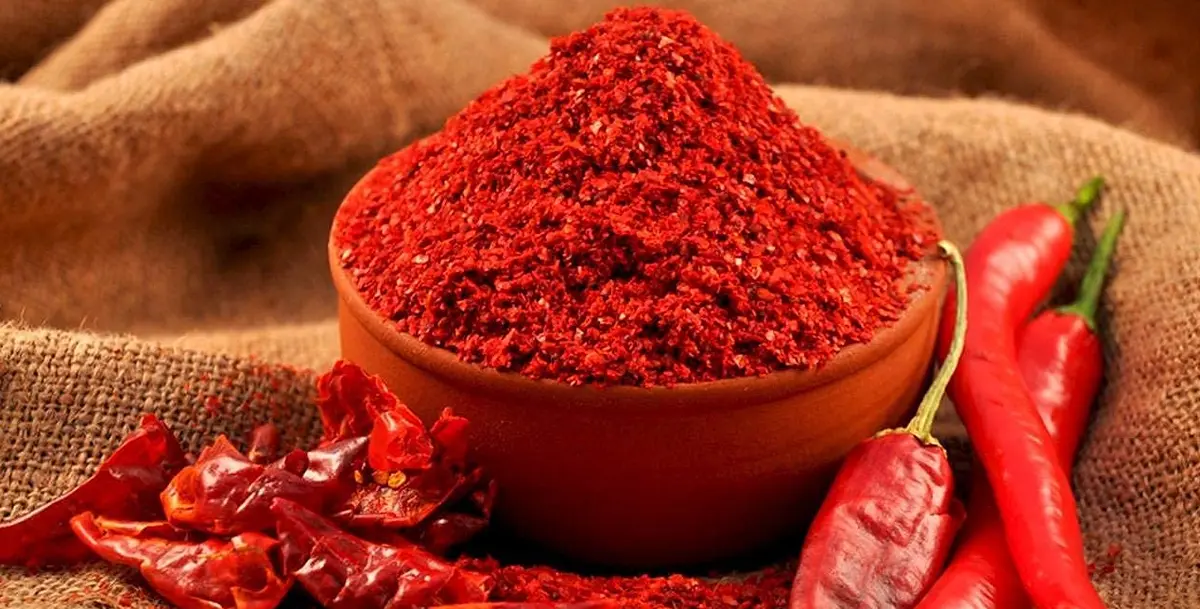
Tenbelian’s is a cornerstone shop stacked floor to ceiling with glass jars and burlap sacks. The signature product is Aleppo pepper, locally called Pul Biber, and they stock multiple grinds at different oil contents. Ask for the silk grind (Harir) — a fine, oily powder that’s ideal for pastes and marinades. The coarse grind is what you want for finishing grilled meat and eggs. One honest friction point: the shop is narrow, and if two customers are ordering at once the wait can stretch to 15 minutes.
- Location: Marash Street, Bourj Hammoud
- Cost: Aleppo pepper around $6–10 per 250g (half a pound)
- Best for: Serious home cooks and heat seekers who want grade control
- Time needed: 20–30 minutes
Nerses Halabi
Nerses Halabi sits near the municipality square and specializes in mouneh — the traditional Lebanese preserves that sit between a spice and a condiment. Their pepper paste (debs fleyfle) comes in both a sweet fermented version and a hot one, and it’s the non-negotiable ingredient for proper muhammara. Their walnuts preserved in grape molasses are a local favorite that won’t show up in any guidebook.
- Location: Near the municipality square, Bourj Hammoud
- Cost: Pepper paste around $7–12 per jar
- Best for: Traditional wet condiments you can’t get in supermarkets
- Time needed: 15–20 minutes
Bedo and Mano (the tasting stop)
Retail in Bourj Hammoud blurs with tasting, and the cured-meat shops Bedo and Mano are the cross-reference. They sell sujuk (spiced beef sausage) and basturma (air-cured beef coated in a fenugreek paste called chaman — fenugreek, cumin, paprika, garlic). Eat a slice of basturma at the counter, and you now have a reference point for what good fenugreek should smell like when you shop the spice stalls two blocks over.
- Location: Arax Street area, Bourj Hammoud
- Cost: Basturma around $25–35 per pound
- Best for: Calibrating your palate before you buy
- Time needed: 15 minutes
2. Al Rifai — the travel-friendly standard
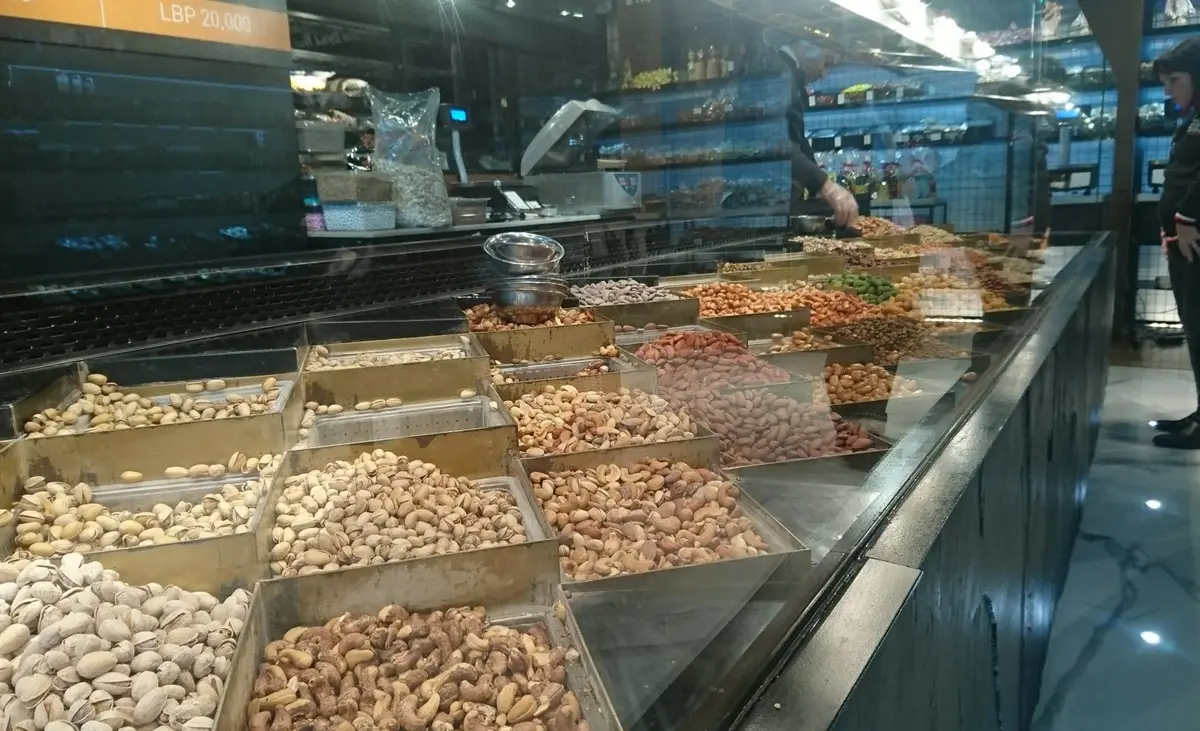
Founded in 1948 on Mazraa Road, Al Rifai is the most recognizable nut-and-spice brand in Lebanon, with branches across the city including Verdun, Hamra, and ABC Mall Achrafieh. It’s the modern evolution of the traditional Mahmas (roastery), and the one thing it does better than anyone else on this list is vacuum-seal your spices for flight. If you’ve ever opened a suitcase and had every sock smell like cumin for three weeks, you understand why this matters.
Pre-mixed blends like Seven Spices and Shawarma Spice are reliable here. The trade-off: you’ll pay 30–50% more than at a Bourj Hammoud shop for the same weight, and the blends are standardized rather than regional. Think of Al Rifai as the airport-pickup option — dependable, hygienic, predictable.
- Location: Multiple branches including Mazraa, Verdun, Hamra, ABC Mall
- Cost: Most blends $8–15 per 200g bag; vacuum sealing usually included
- Best for: Travelers who need sealed packaging and bulk buyers
- Time needed: 20 minutes
Pro Tip: Ask specifically for “vacuum” at checkout — not every employee offers it by default, but all branches have the machine behind the counter.
3. Souk El Tayeb — the Saturday ethical market
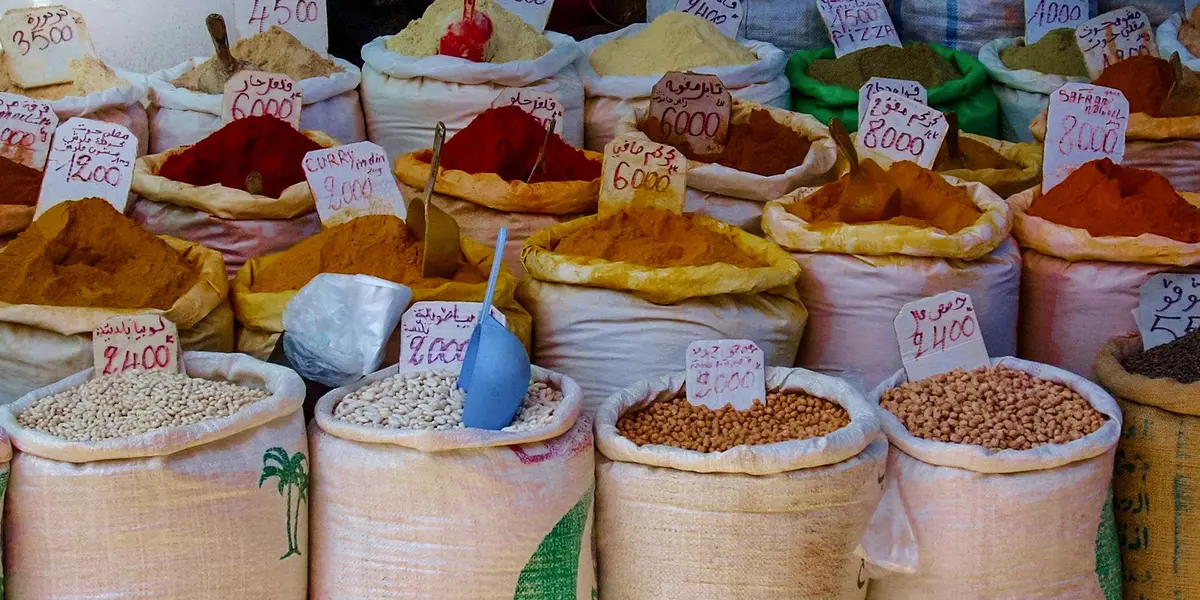
Souk El Tayeb is Lebanon’s first farmers’ market, and it’s the one you plan your week around. It now runs on Armenia Street in Mar Mikhael (not the old Downtown Beirut Souks location) every Saturday from 9 a.m. to 2 p.m. Come before 11 a.m. or the best zaatar sells out. When you shop here you’re meeting the person who dried the herb, and your money goes directly to producers in the Bekaa Valley and southern Lebanon rather than through a wholesale chain.
The sumac sold here is strictly “baladi” — wild, local, and dark purple with a moist texture. It’s the clearest benchmark you’ll find for what real sumac should look like after you’ve been fed the dyed commercial version at other shops. The orange blossom water and single-origin honey are also exceptional.
- Location: Armenia Street, Mar Mikhael (open-air, Saturday only)
- Cost: Premium — roughly 20–40% above supermarket pricing
- Best for: Ethical buyers, gift shoppers, and anyone who wants traceability
- Time needed: 60–90 minutes (bring an appetite — there’s hot food too)
Pro Tip: Bring small USD bills. Most farmers accept dollars but rarely have change for a $100 note.
4. The Good Thymes — modern zaatar innovation
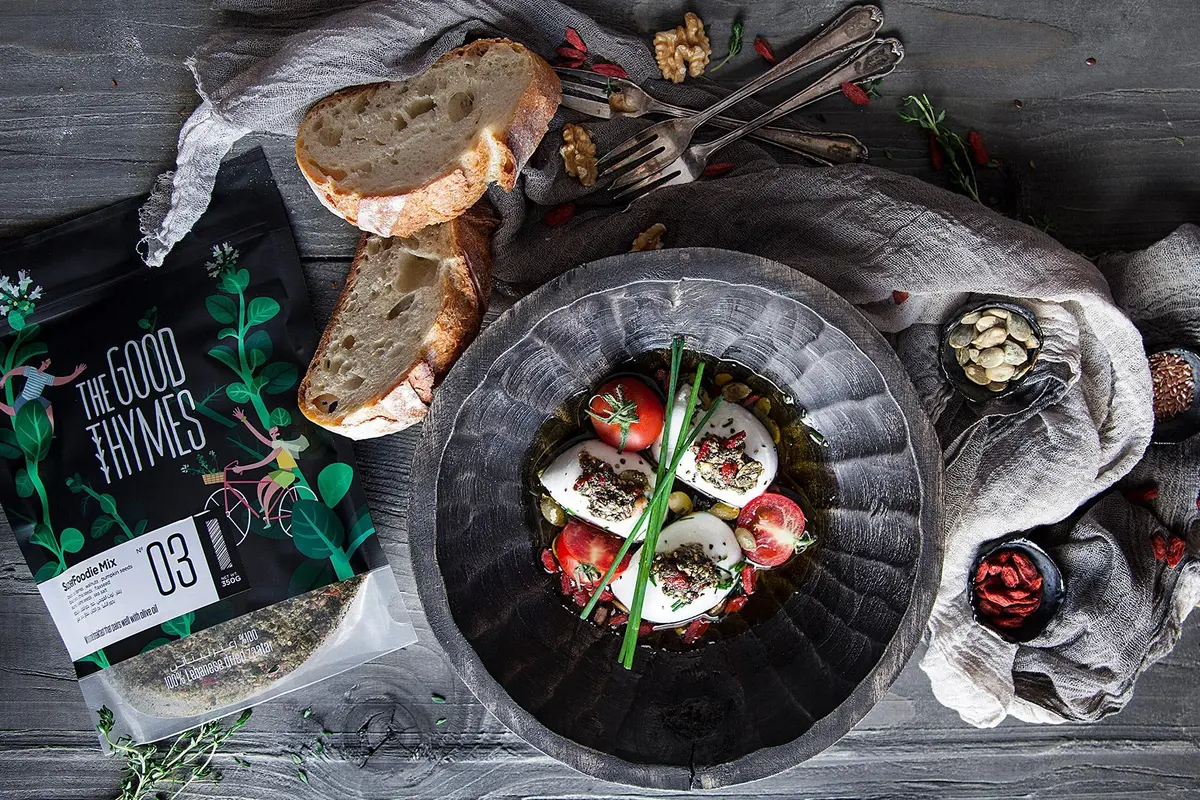
The Good Thymes is a contemporary artisanal brand that rebuilt zaatar for modern palates without faking it. They offer a nutty version with almonds and walnuts, a fruity version with dried fruits, and a spicy version. What actually matters for travelers: they list every ingredient on the label, offer salt-free options, and are transparent about whether the blend contains wheat bran (which is a common hidden filler in traditional zaatar and a real problem for travelers with gluten sensitivities).
The trade-off is price and purism. You’re paying for innovation and packaging rather than five generations of family recipe. If you want the taste of a 1970s village kitchen, this isn’t it — but for a gift or a dietary restriction, it’s the best option on the list.
- Location: Stocked at specialty grocers across Beirut including Wooden Bakery and some organic stores
- Cost: $9–14 per 200g jar
- Best for: Gluten-sensitive cooks, gift buyers, and modern palates
- Time needed: 15 minutes
5. Hawasli — two centuries of roasting
Hawasli claims the title of Lebanon’s oldest roastery, tracing its family trade back to 1820. Five generations is a long time to maintain supply relationships, and you can taste the result in their cumin and coriander seeds, which are notably more aromatic than the mass-market equivalents. Their Seven Spices blend has a heavier clove presence than most — a signature worth trying even if you have a preferred version already.
The honest friction point: Hawasli’s retail footprint has shifted over the years, and their current locations are best confirmed by phone or through a local before you head out. It’s not a shop you stumble onto.
- Location: Primarily Tripoli with a Beirut retail presence — confirm current address before visiting
- Cost: Moderate to premium — whole spices around $8–12 per 250g
- Best for: Purists who want provenance and institutional knowledge
- Time needed: 20–30 minutes
6. Al Hachem — the restaurant-supply secret
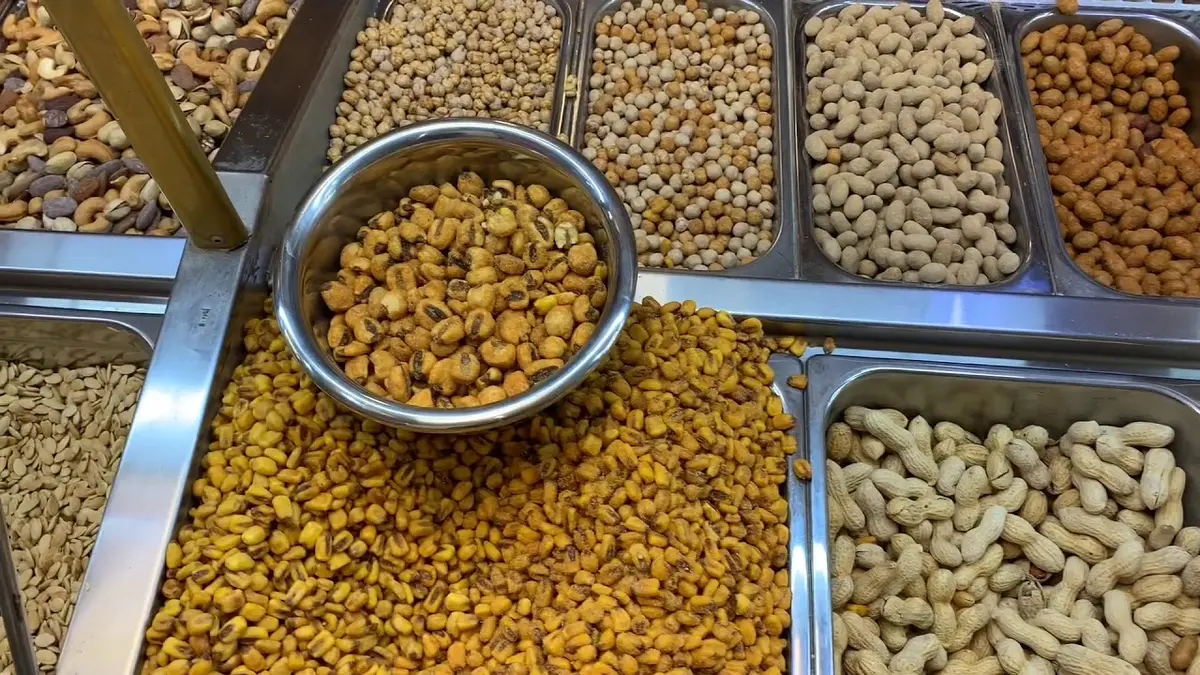
Founded in 1980, Al Hachem supplies restaurants across Beirut rather than tourists, and that’s exactly why it matters. Turnover is daily. The cumin you’re buying was probably ground within the last seven days, which is a meaningful difference for volatile oils. Side-by-side, a Hachem cumin against a grocery-store cumin will smell dramatically different the moment you open the bag.
The trade-off: minimum purchase sizes are aimed at kitchens, not home cooks. You may walk out with 500g of sumac when you wanted 200g. Bring a friend and split the bags.
- Location: Industrial wholesale district — ask your hotel to call ahead for the current branch
- Cost: Wholesale rates, often $4–7 per 250g (the best value on this list)
- Best for: Professional cooks, bulk buyers, and freshness purists
- Time needed: 20 minutes
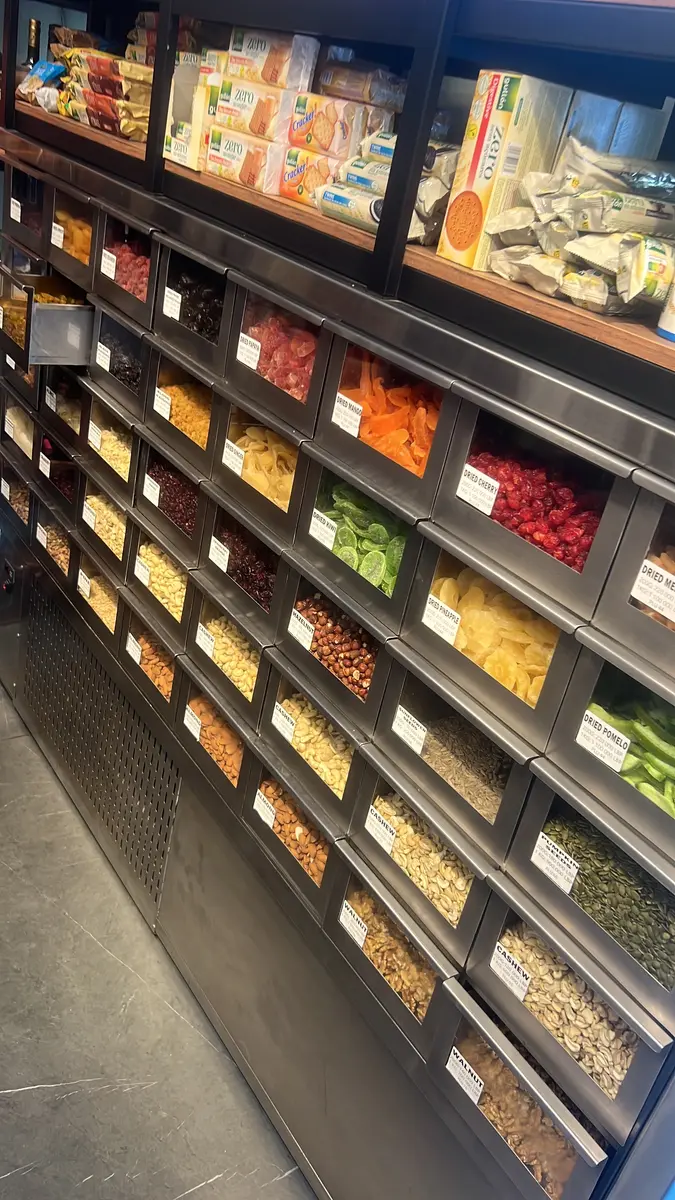
What are the essential Lebanese spices to actually buy?
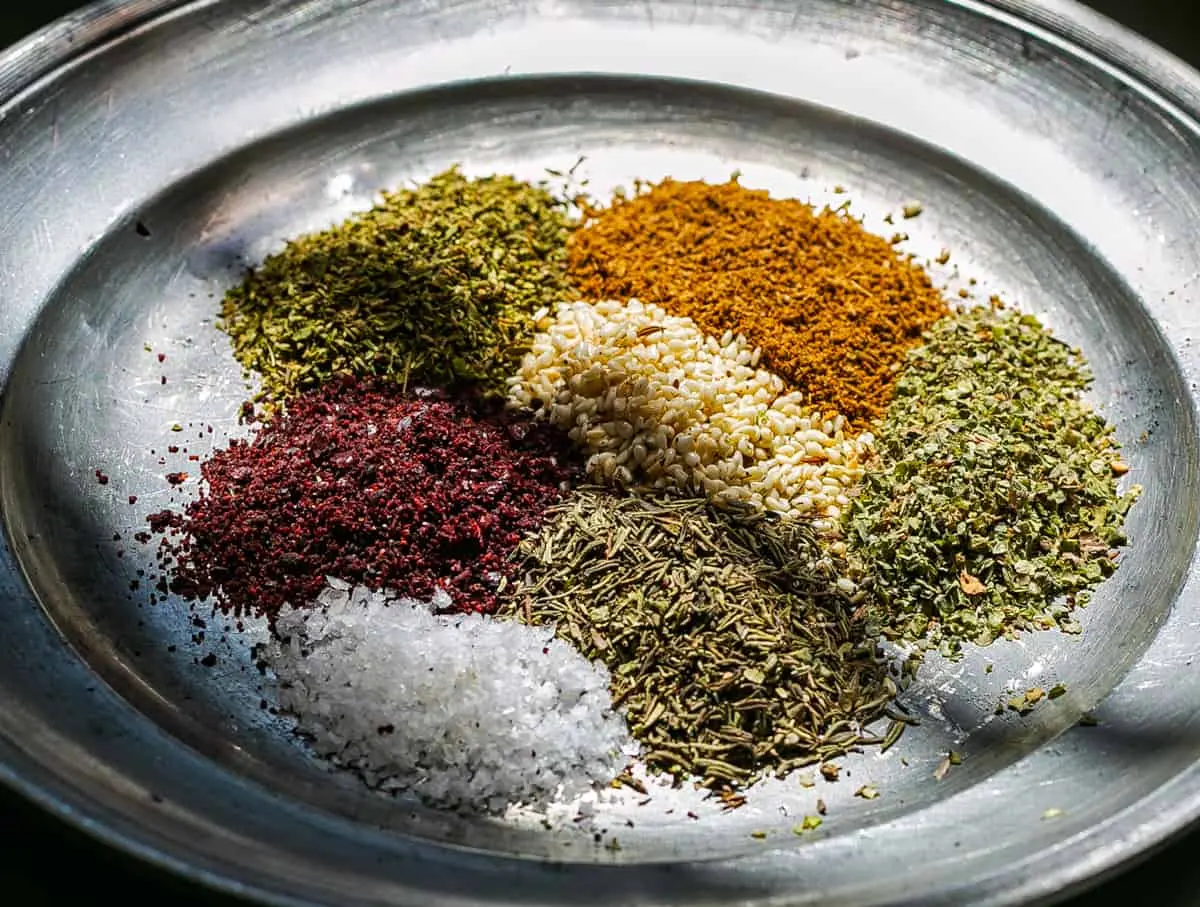
Four spices justify the trip on their own: zaatar, sumac, Seven Spices, and Aleppo pepper. Each one has a commercial fake version that dominates supermarket shelves, and knowing how to spot the real thing is what separates a generic Lebanese souvenir from an ingredient. Buy these four from any of the shops above, and your pantry is transformed.
Zaatar — not Western thyme
Real Lebanese zaatar is not what grows in an American herb garden. It’s primarily Origanum syriacum, known as Biblical hyssop, and the finished blend mixes the dried herb with sumac, sesame seeds, and salt.
- Commercial zaatar: Bright green, cheap, often padded with ground roasted wheat or bran and dyed to look fresher than it is
- Baladi zaatar: Deep olive-grey-green, no fillers, with a medicinal herbal aroma that hits you the moment you open the bag
Sumac — the mountain’s acid
Before lemons were cheap and everywhere, sumac was how Lebanese cooks added acidity. The real thing tastes tart and faintly fruity, not just sour.
- Authentic baladi sumac: Deep purple, slightly moist, tangy with a red-wine finish
- Commercial sumac: Bright brick-red (dyed), bone-dry, tastes only of citric acid
Seven Spices — the all-purpose backbone
This is the blend that seasons kafta, rice pilafs, and most Lebanese meat dishes. The consensus recipe: allspice, black pepper, cinnamon, cloves, nutmeg, fenugreek, and ginger. Because cloves and nutmeg fade fastest, buy Seven Spices in small quantities from high-turnover shops like Al Hachem or Al Rifai. A 100g bag that sits in your pantry for three years isn’t saving you money.
Aleppo pepper — the complex heat
Primarily found in Bourj Hammoud, good Aleppo pepper is moderately spicy with a raisin-like sweetness and visible oil content in the flakes. If the flakes look dry, dusty, and uniformly red, they’re stale or cut with paprika. Real Aleppo pepper leaves a faint oil stain on paper.
How do you pay for spices in Beirut?
Bring US dollars in cash, in small denominations — $1, $5, $10, and $20 bills. Lebanon has functionally dollarized since the 2019 banking crisis, and USD is accepted everywhere from spice stalls to taxis. Credit cards work only at high-end hotels and upscale malls, often with a surcharge. The Lebanese pound trades around 89,500 to the dollar and that rate has been stable for well over a year.
The practical rules I follow:
- Pay in USD at Al Rifai, The Good Thymes, and any shop in a mall — they price in dollars anyway
- Carry some pounds for street vendors, bakery stops, and tips — exchange $40–60 at a reputable sarraf (exchange shop), not a hotel
- Skip foreign-card ATMs — the exchange rate is severely unfavorable and many foreign cards are rejected outright
- Don’t accept change in pounds if you paid in dollars at a tourist-facing shop — they’ll often use a worse conversion rate than the street
Pro Tip: Break a $100 bill at a chain bakery like Wooden Bakery on the way in. Smaller shops rarely have change for large notes, and nothing kills a negotiation faster than pulling out a $100.
How do you get spices through US customs without a fine?
Dried, packaged spices, roasted nuts, commercial honey, and olive oil are all admissible under US Customs and Border Protection rules for personal use. The rule that matters most: declare everything. Check “Yes” on Question 11 of CBP Form 6059B (the agricultural question). Travelers who declare are never fined, even if an item turns out to be inadmissible — it’s simply confiscated. Travelers who don’t declare face penalties up to $10,000.
What’s allowed from Lebanon:
- Dried spices (zaatar, sumac, Seven Spices, Aleppo pepper, cumin, coriander)
- Roasted or cooked nuts (pistachios, almonds, walnuts — shelled)
- Commercial honey and olive oil in sealed original packaging
- Dried herbs and teas
- Pepper pastes and mouneh in sealed jars
What’s prohibited or risky:
- Fresh citrus, citrus leaves, and seeds of any fruit or vegetable
- Raw (unroasted) nuts in some cases — always ask for roasted
- Cured meats like basturma and sujuk (meat products are generally not admissible)
- Anything in a hand-labeled jar with no commercial packaging — keep receipts and original labels
Packing so your suitcase doesn’t smell like cumin
Fenugreek and cumin are the worst offenders. If Al Rifai vacuum-sealed your purchases, you’re already fine. For market buys, use a three-layer system: the original paper bag, then a heavy zip-top freezer bag, then a second one. Tape the lids of any pepper paste jars with packing tape — the vibration on a long-haul flight has cracked seals in my luggage twice. Label everything in English with the contents and the word “SPICES” to make the customs inspection take 30 seconds instead of 10 minutes.
The bottom line
TL;DR: The best spices in Beirut are in Bourj Hammoud for depth and price, at Souk El Tayeb on Saturdays for traceability, and at Al Rifai for anything you need vacuum-sealed for the flight home. Bring USD cash in small bills, buy the four essentials (zaatar, sumac, Seven Spices, Aleppo pepper), and declare everything on CBP Form 6059B to avoid fines.
If you only have half a day, pick two stops: Bourj Hammoud in the morning for serious shopping, Al Rifai on the way to the airport for sealed bags. That combination covers almost every use case.
What’s the one Lebanese spice you can’t find a decent version of at home? Drop it in the comments — there’s probably a specific shop on this list that solves it.