Forget the fridge magnets. What to buy in Lebanon comes down to nine categories of genuinely made-here Lebanese crafts — phoenix-handled cutlery, mouth-blown Phoenician glass, olive oil soap aged for a year — and the pricing quirks of a dollarized economy that rewards cash. Here is what to pack, where to find it and what will actually survive the flight.
Why your dollars matter more here than almost anywhere else
Lebanon runs on a dual economy. The Lebanese pound is stuck at roughly 89,500 LBP to the USD and barely moves anymore, but the country is heavily dollarized — most shops that sell to travelers price in “fresh” USD (crisp bills flown in post-2019, as opposed to the frozen “lollar” deposits in local bank accounts). When you hand over a clean hundred, that money goes straight to artisan families with no bank haircut in between.
Bring small bills. Twenties and tens move faster than hundreds at workshops, and a torn corner on a $50 will get it politely refused.
Pro Tip: Break your cash into three envelopes before you land — tips, daily spending and souvenir budget. Pulling a wad out of one pocket at a workshop will cost you negotiating room every time.
1. Jezzine cutlery — the phoenix from the south
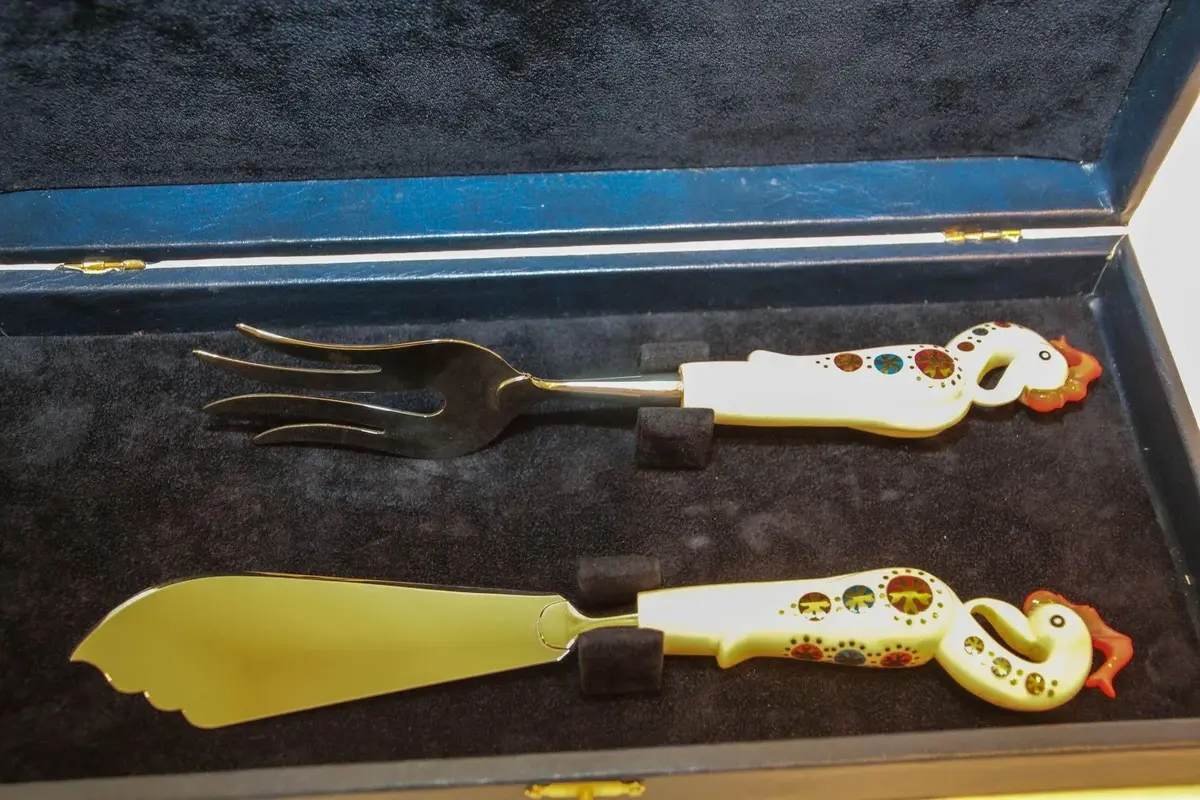
The headline souvenir. Each handle is hand-carved into the shape of a phoenix scratching its chest with its beak, inlaid with brass, copper and silver wire to form the wings. The Haddad family has been in Jezzine since 1770, first making Ottoman-era weapons and then pivoting to dining cutlery in the 1930s when the sword market collapsed — a reinvention story that Lebanese people will tell you about with obvious pride.
On my last visit to the Haddad workshop, a single carver was finishing seven handles across an eight-hour day. That output ceiling is why the prices look the way they do, and why you will never find authentic Jezzine cutlery in a tourist souk for $20.
How to spot the real thing
Authentic pieces carry flush inlays with no gaps, a stainless steel blade usually stamped Italian or French, and a maker’s mark of “S&S Haddad” with a small Lebanese cedar. Traditional handles use buffalo horn or camel bone; modern runs use a bone-powder-and-cellulose-acetate composite that is more durable for a dishwasher-era household. Skip anything with plastic seams along the handle — that is a bazaar knockoff.
- Where to buy: Haddad workshop in Jezzine, L’Artisan du Liban (Achrafieh and Clemenceau), Orient 499 in Mina El Hosn
- Cost: $50 to $150 for a single serving piece; $600 to $1,050+ for a full service set
- Best for: Wedding gifts, design-obsessed relatives, anyone with a dining room
- Packs for travel: Excellent — wrap the blades in clothing and it is carry-on friendly
2. Sarafand glass — Phoenician technique, recycled bottles
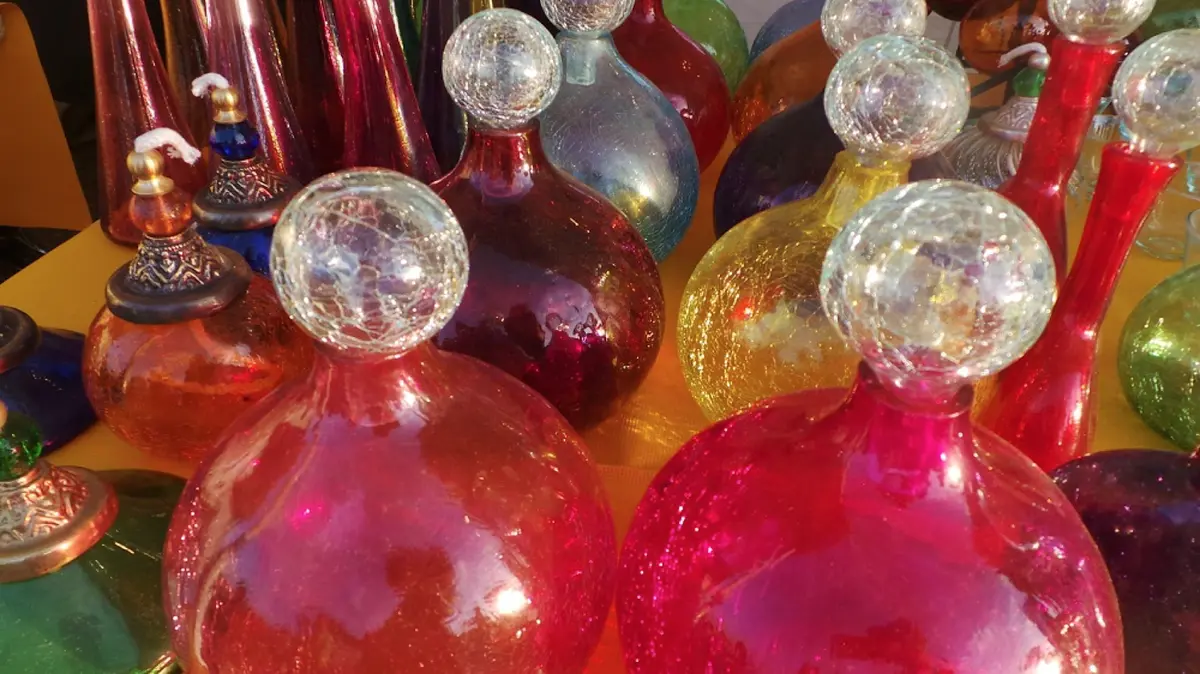
Sarafand, a fishing town 30 miles (48 km) south of Beirut, is where the Khalifeh family blows glass using methods Phoenicians were already using more than 2,000 years ago. The modern twist is what makes this worth buying: the raw material is now almost entirely recycled bottles collected through environmental partnerships. Heineken bottles become the signature “beer green.” Amber comes from whiskey. Cobalt blue comes from old pharmacy glass.
The workshop floor is loud, hot and smells of coal smoke. The small air bubbles and faint asymmetry in every piece are the tell that it was mouth-blown on the end of a rod, not pressed in a factory. The crackle-surface pieces get their texture from being dunked in cold water while still glowing.
Pro Tip: Buy the everyday pieces — a briq water pitcher, simple tumblers, a carafe. The ornamental replicas of ancient Phoenician vessels photograph better than they live with you.
- Where to buy: Direct from the Khalifeh workshop in Sarafand, or at Orient 499 and L’Artisan du Liban in Beirut
- Cost: $10 to $100
- Best for: Eco-conscious gifts, everyone on your list under $50
- Packs for travel: Risky — box each piece, pad with socks, and accept that one in ten will not make it
3. Tripoli soap — the Khan al-Saboun institution
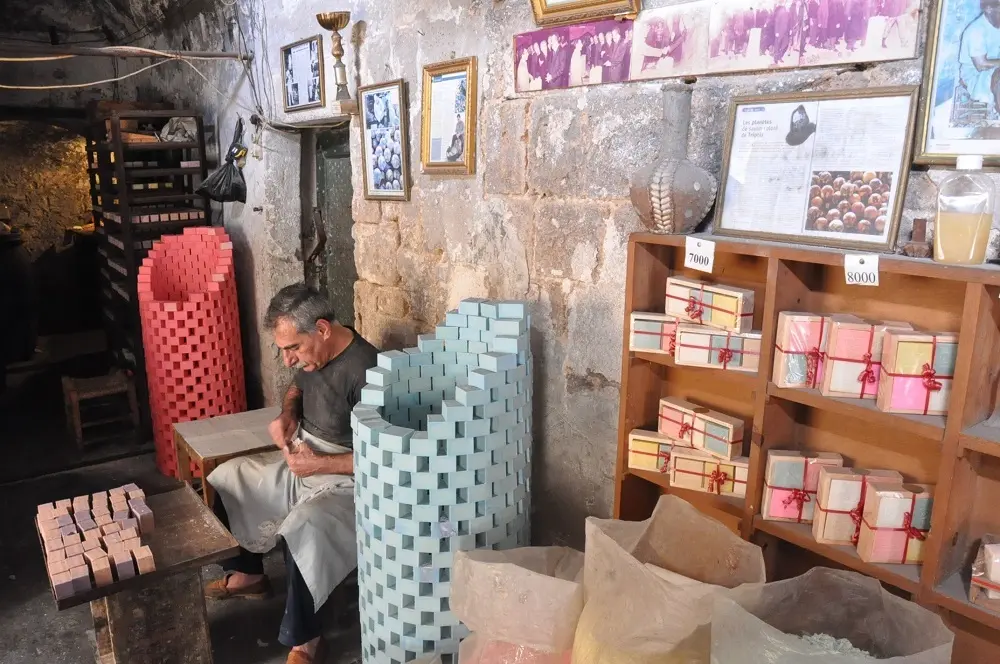
Tripoli has been cooking olive oil soap since at least the 14th century. The Khan al-Saboun in the old city still operates as a working production house and a shop, and a second branch sits in downtown Beirut. Two families dominate: Hassoun and Sharkas. Both start with pure olive oil cured for months until it hardens into pale green or beige bars that get stacked in pyramids in the souk.
The fragrance varieties are where it gets interesting — amber, musk, jasmine, and the two scents you will smell all over the Levant: louban (frankincense) and bakhour. Modern formulations fold in alum for skin toning, turmeric, honey or activated charcoal. The alum bars are unusually good for shaving, something the gift guides never mention.
Why soap is the most traveler-friendly souvenir in Lebanon
It does not break. It is TSA-compliant in solid form. It will not get flagged by customs. A $30 gift set covers five friends. If you are short on suitcase space and need a safe answer to what to buy in Lebanon for everyone at home, this is it.
- Where to buy: Khan al-Saboun (Tripoli and Beirut), Souk al-Saboun in Tripoli’s old city
- Cost: $5 to $50 for gift sets
- Best for: Office gifts, in-laws, anyone with sensitive skin
- Packs for travel: Ideal — put it in a ziplock so the fragrance does not saturate your clothes
4. Arak — the lion’s milk
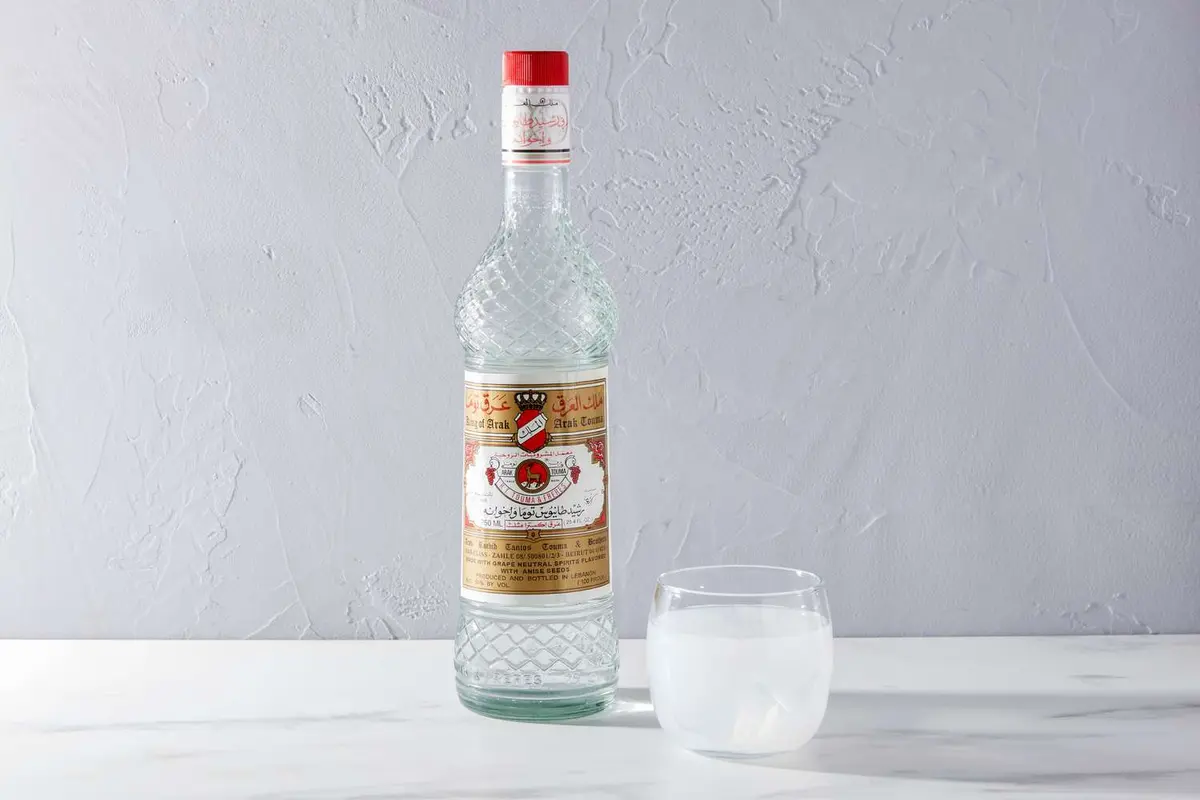
Arak is Lebanon’s national spirit: an anise-flavored grape distillate that turns cloudy white the moment you add water (the “ouzo effect,” from anethole droplets coming out of solution). It is bottled at 50 to 53% ABV, which puts it on the high end of what you can legally carry back in checked luggage.
The difference between a $15 bottle and a $40 bottle comes down to distillation and aging. Premium arak is triple-distilled in copper stills and aged in clay amphorae (called khabieh) for a year or two, which lets the harsher volatiles evaporate as the “angel’s share” and leaves something smooth enough to sip neat. Skip the supermarket plastic bottles — those are industrial and will give you a headache that lasts into the next day.
- Arak Brun — woody undertones, exceptionally smooth for the price
- Massaya — bright green anise, the most food-friendly option
- Ksara — classic, crisp, the baseline everyone compares against
- Touma — robust, widely available, good value
How much arak can a US visitor bring home?
US Customs allows one liter of alcohol duty-free per adult returning from abroad. You can legally bring more, but anything above the one-liter allowance is subject to duty and federal excise tax, plus whatever your destination state charges. In practice, two standard 750ml bottles in checked luggage is the sweet spot.
Pro Tip: Ask for arak aged at least two years (mou’atta) when you are standing in the shop. The word gets you a different shelf than the one pointed at tourists.
- Where to buy: Any mid-size grocery, duty-free at Beirut airport (BEY), Classic Wine Cellars in Achrafieh
- Cost: $15 to $60 per 750ml bottle
- Best for: Home bartenders, anyone who drinks ouzo or raki
- Packs for travel: Checked luggage only, double-bag in case of seal failure
5. Lebanese wine — the Bekaa Valley, properly aged
The Bekaa Valley has been producing wine for roughly 5,000 years, and modern Lebanese winemakers are cranking out bottles that hold up against anything from the southern Rhône. The altitude (around 3,300 feet / 1,000 meters), the limestone soil and the dry summers give the reds a particular structure — concentrated fruit without the jammy Californian softness.
The honest take most guides skip: Lebanese wine is overpriced domestically. A bottle that costs $18 at a Beirut restaurant sells for $14 at Chateau Ksara’s cellar door and $32 at a decent NYC wine shop. Buy it at the winery or the airport duty-free, not at a hotel minibar.
Four wineries worth the detour
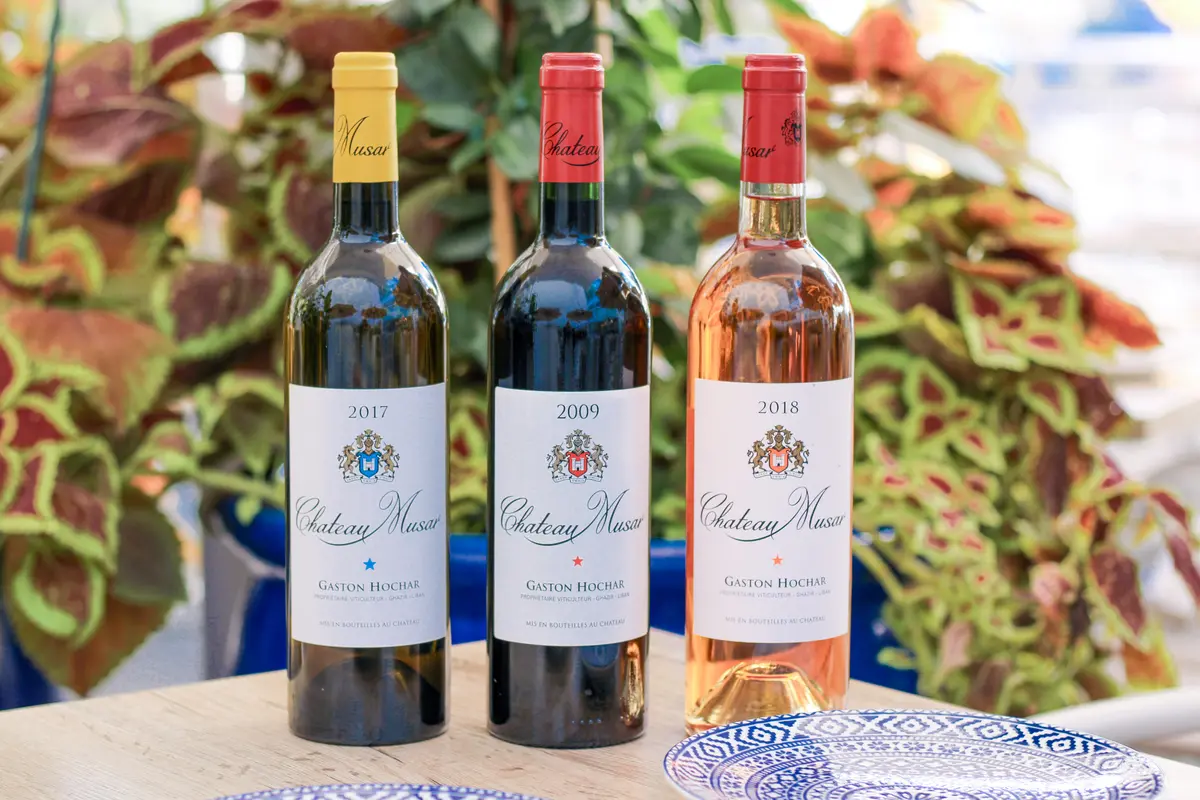
- Chateau Musar — the international name, ages for decades, polarizing oxidative style
- Chateau Ksara — the oldest (founded 1857 by Jesuits), Roman caves you can tour, reliable across the range
- Ixsir — the newer, sustainability-focused estate, pristine whites from north Lebanon
- Domaine des Tourelles — dry-farmed old vines, the insider pick
- Where to buy: Winery cellar doors in the Bekaa, Beirut duty-free, Classic Wine Cellars
- Cost: $15 to $100 per bottle; sweet spot around $30 to $40
- Best for: Dinner-party hosts, anyone who thinks they know French wine
- Packs for travel: Wine-shipper sleeves are worth the $8 at the airport
6. Olive oil and zaatar — the pantry staples that taste like home
Lebanese olive oil finishes peppery and grassy rather than buttery. Look for “cold-pressed” and “extra virgin” on the label, a harvest date (not just a bottling date) and an opaque or dark glass bottle. Zejd, Darmmess and Adonis Valley are reliable premium brands. Expect to pay $15 to $35 for a 500ml bottle of the good stuff.
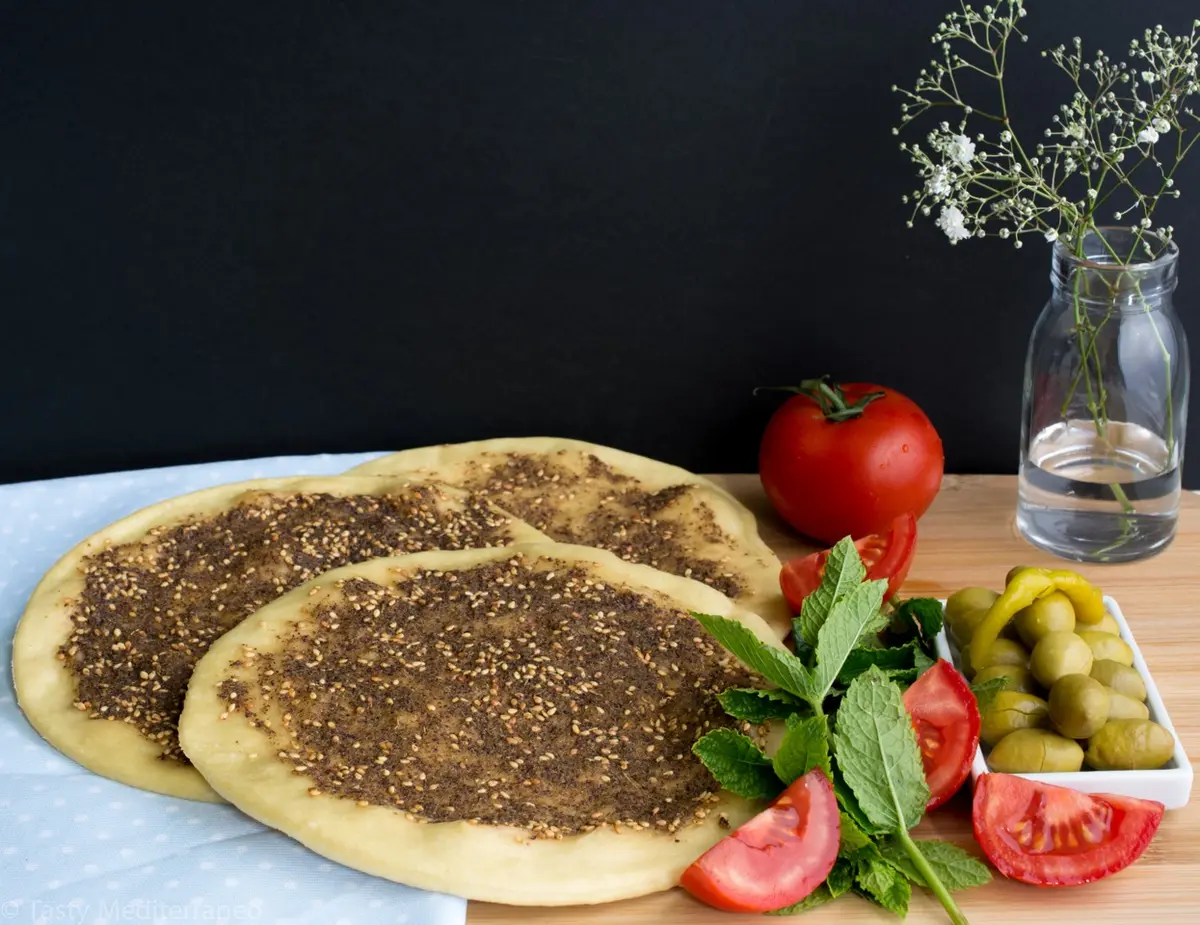
Zaatar is the non-negotiable pantry buy among traditional Lebanese foods — the authentic blend is dried wild thyme, sumac, sesame and salt, sometimes with a touch of marjoram. You will see “red zaatar” (cheaper, cut with more sumac) and “green zaatar” (higher thyme ratio, more fragrant). Green is the one you want.
What does US customs actually let through?
Dried herbs like zaatar are generally admissible to the US if they are commercially packaged with ingredient labels and you declare them on the CBP form. Bulk bags from the souk — the clear plastic ones weighed on a scale — are the category that gets confiscated by USDA agricultural specialists at the airport. Olive oil in sealed commercial bottles is fine. Fresh fruits, meats and dairy are not.
Pro Tip: If a vendor offers to repack zaatar into an unmarked bag “for cheaper,” say no. The $2 you save is not worth losing the whole bag to a beagle at JFK.
- Where to buy: Souk el Tayeb Saturday farmers market in Beirut, Tawlet, upscale supermarkets like TSC
- Cost: Olive oil $15 to $35; zaatar $6 to $15 per 250g
- Best for: Cooks, anyone who eats eggs on toast
- Packs for travel: Olive oil in checked luggage only, triple-bagged
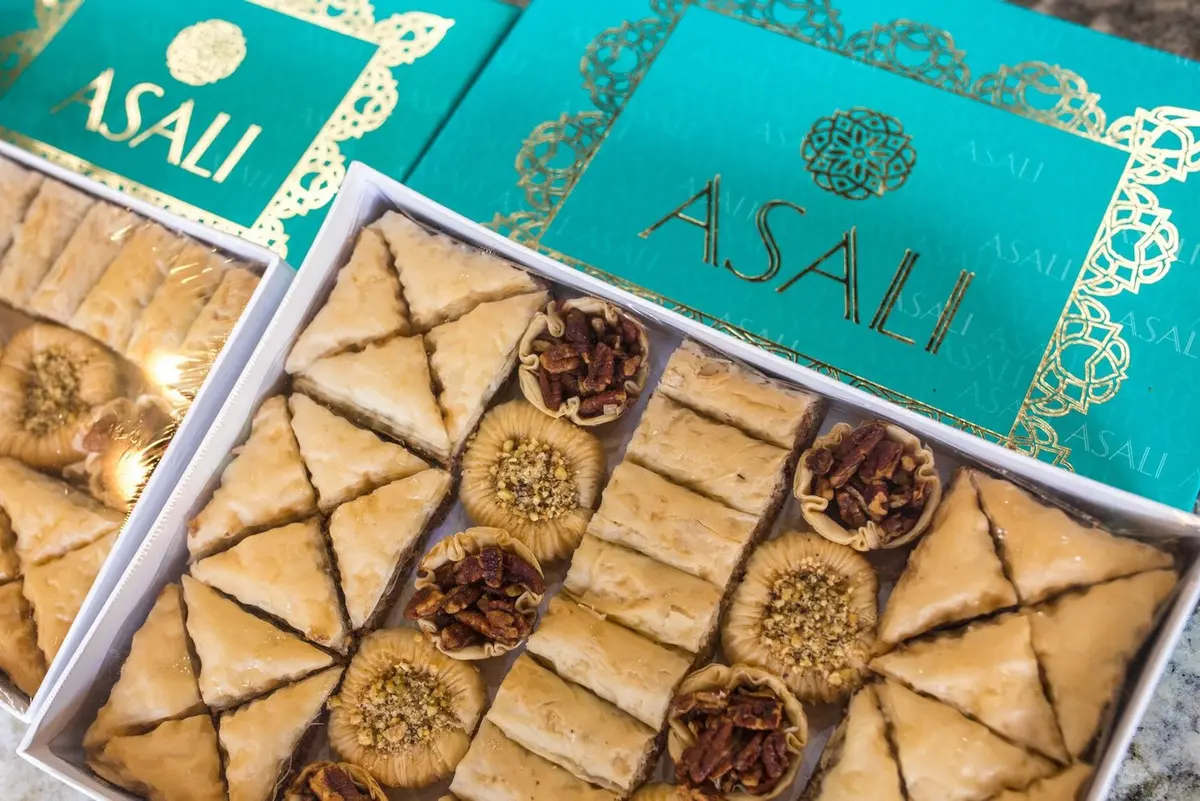
7. Sweets — the baklava that survives baggage handlers
Lebanese sweets travel better than you would expect, because the two dominant producers have engineered their packaging around travelers. Hallab 1881 (based in Tripoli) and Doueihy (Zgharta) both sell their baklava, maamoul and knefeh in vacuum-sealed tin boxes sized to fit in carry-on luggage. The seals hold for about 10 days at room temperature.
The contrarian take: Hallab is the famous one, but the baklava at Abdul Rahman Hallab’s original Tripoli shop is sweeter and wetter than what you get at the airport branch. If you are connecting through Tripoli, buy there.
- Baked goods, roasted nuts and vacuum-packed hard cheese are admissible to the US
- Fresh dairy, soft cheese, meat products and fresh fruit are not
- Declare everything on the CBP form — the fine for not declaring dwarfs the cost of a tin of maamoul
- Where to buy: Hallab 1881 (Tripoli, Beirut, Beirut airport), Doueihy, Rifai for nuts
- Cost: $20 to $60 per tin
- Best for: The colleague who covered for you while you were gone
- Packs for travel: Carry-on recommended so the tins do not get crushed
8. Textiles and fashion — where shopping becomes social impact
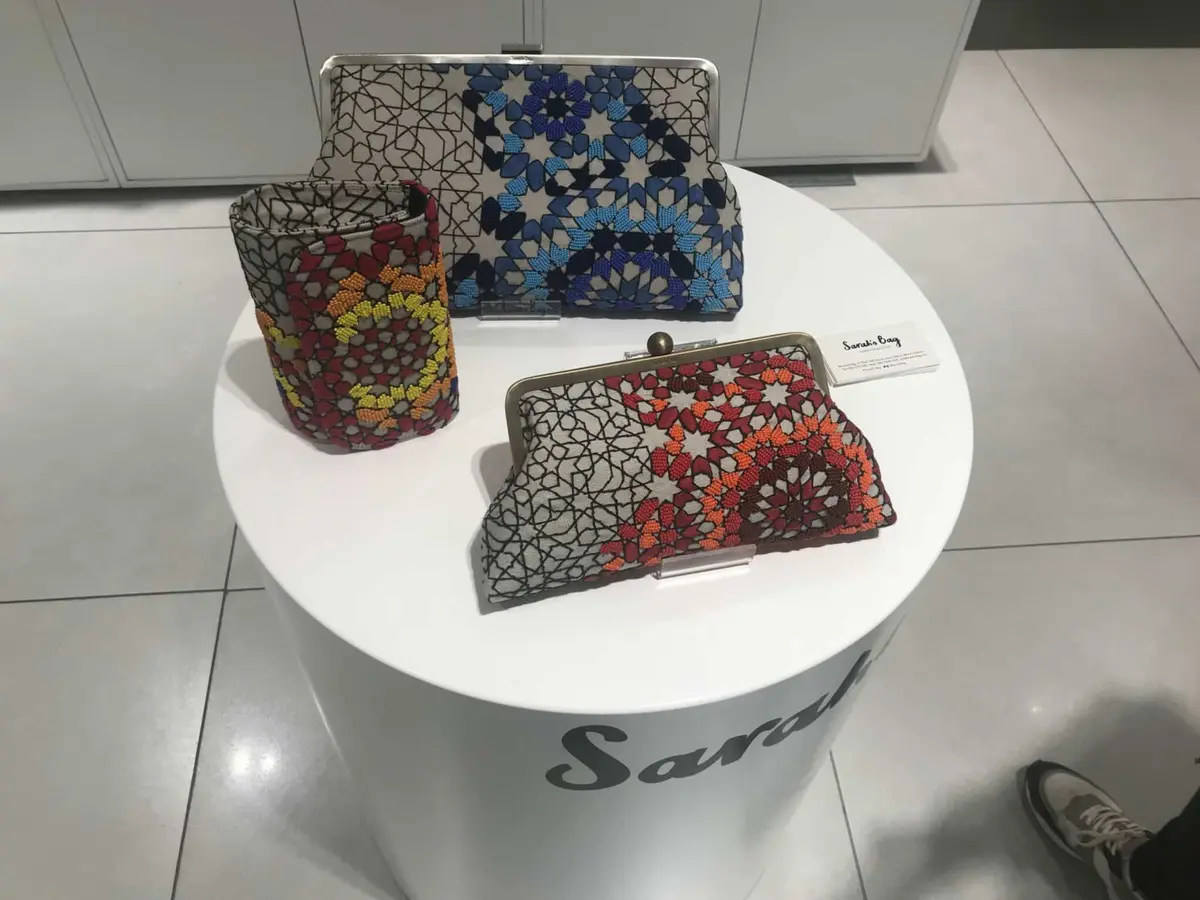
This is the category that separates travelers who care from travelers who check a box. Several Lebanese fashion houses employ marginalized communities to produce pieces that would hold their own on a Parisian shelf.
- Sarah’s Bag — employs female prisoners and at-risk women to produce hand-beaded bags sold in Selfridges and Bergdorf
- L’Artisan du Liban — a social enterprise founded in 1979 by the NGO Mouvement Social, now supporting over 1,000 artisans across the country
- Bokja — reworked vintage textiles into furniture and accessories, a Beirut design-world fixture
- Orient 499 — high-end kaftans, abayas and home goods with a single refined aesthetic
- Boshies — the tarboosh (the Ottoman fez) reinvented as a unisex modern accessory
Textiles are the smart packing play — they squish, they do not break, and they pass through customs without a second glance.
- Where to buy: Sarah’s Bag flagship in Gemmayze; L’Artisan du Liban in Achrafieh, Clemenceau and Tripoli; Orient 499 in Mina El Hosn
- Cost: $20 (silk scarf) to $800+ (bag or kaftan)
- Best for: Style-minded friends, gifts that come with a story
- Packs for travel: Ideal — fold flat
9. Art and prints — the lightweight answer
If your suitcase is already bursting, paper is the move. Plan Bey in Mar Mikhael collaborates with Lebanese illustrators on limited-edition prints — vintage-style Beirut travel posters, Arabic typography studies, reissued mid-century graphics. Halabi Bookshop in Hamra is a cultural institution for used books, vintage movie posters and old Arabic magazines worth framing.
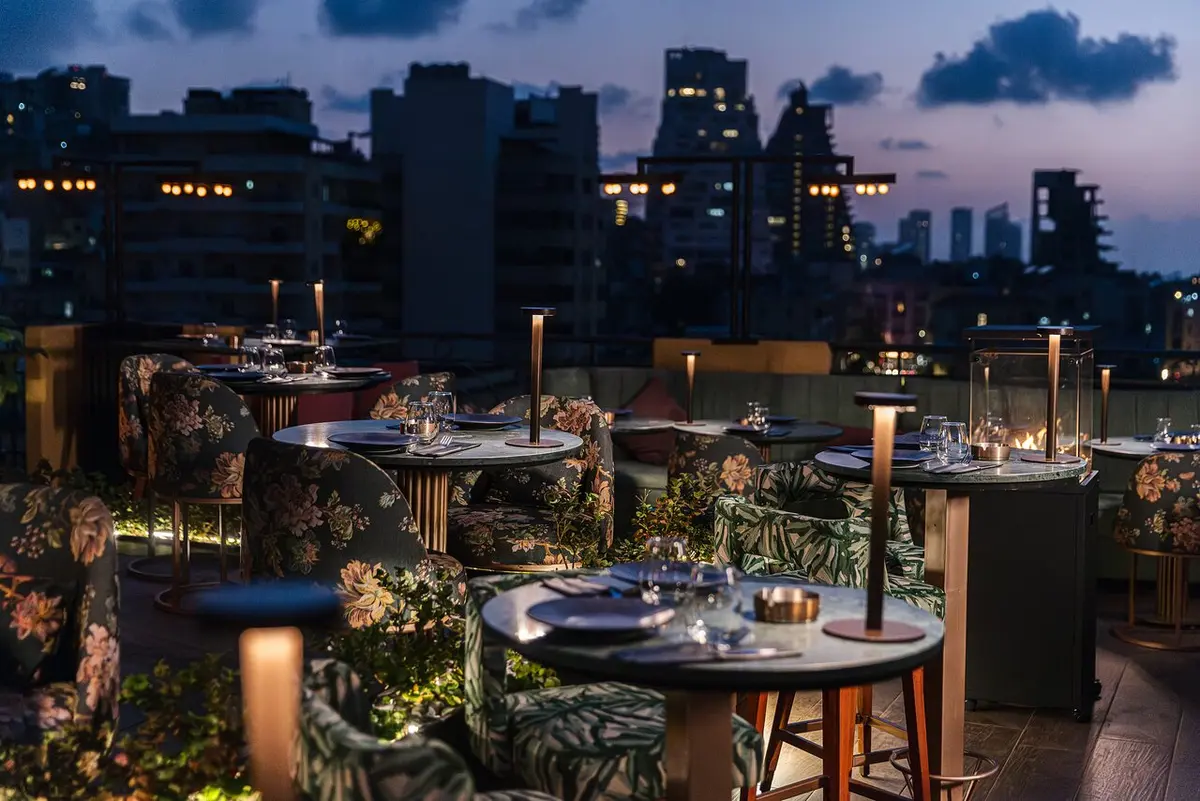
Prints roll up inside a shoe. They pass through any customs line. If you are walking out of Plan Bey at sunset, you are ten minutes from the best rooftop bars in Mar Mikhael — worth the detour.
- Where to buy: Plan Bey (Mar Mikhael), Halabi Bookshop (Hamra), Letitia Gallery (Clemenceau)
- Cost: $15 to $200 per print
- Best for: Anyone with blank apartment walls
- Packs for travel: Ask for a cardboard tube — most shops have one behind the counter

How does paying for anything in Lebanon actually work?
Cash in US dollars is the dominant currency for any transaction aimed at travelers. The Lebanese pound is still legal tender but priced at roughly 89,500 to the dollar, which means a coffee in pounds involves handing over banknotes in the hundreds of thousands. International credit cards work at hotels, larger restaurants and high-end shops, but many charge a 3 to 5% surcharge for card use and some refuse cards entirely. ATMs exist but dispense limited dollars at unfavorable rates.
- Bring crisp USD bills in $20s, $50s and $100s
- Do not accept change in local pounds unless you plan to spend it immediately
- Tipping etiquette in Lebanon at workshops runs in dollars — $5 for a demonstration, $10 for a detailed tour
- For sums over $200, most shops will accept a card but may ask to charge in USD
Pro Tip: A bill with even a small tear or ink mark will be politely declined. Inspect each note before you fly out and swap damaged ones at your home bank.
How should you ship bigger or fragile souvenirs home?
For anything fragile (Sarafand glass), heavy (a full cutlery set), or too large for a suitcase, ship through a commercial courier rather than the post office. Aramex is the regional leader, with reliable tracking and realistic delivery windows (7 to 14 days to the US, about $80 to $150 for a 5-pound / 2.3 kg package). DHL is faster and roughly 30% more expensive. LibanPost is cheaper on paper, but packages routinely go missing — skip it.
Most established shops (L’Artisan du Liban, Orient 499, the Haddad workshop) will pack and ship for you for a small handling fee. Have them ship the fragile pieces and carry the light, high-value items in your luggage.
Where are the best shopping neighborhoods in Beirut?
Beirut’s shopping is neighborhood-specific, and trying to cover it all in one day is a mistake. Each district has a different character and a different price bracket.
- Mar Mikhael — design studios, galleries, Plan Bey, neo-heritage brands; most interesting on weekday afternoons
- Gemmayze — boutiques, Sarah’s Bag flagship, antique dealers in restored Ottoman buildings
- Hamra — bookshops, Halabi, student-priced souvenirs, Ras Beirut’s mainland answer
- Achrafieh — L’Artisan du Liban, ABC mall, higher-end fashion, Centre Sofil
- Beirut Souks downtown — purpose-built retail complex, Souk el Tayeb Saturday farmers market
- Byblos old souk — fossil shops, traditional crafts, 40-minute drive north of Beirut
The walk from Mar Mikhael to Gemmayze takes 15 minutes and covers about 80% of what most travelers need.
Before you book a flight home
Shopping in Lebanon is not a brochure experience. The cutlery takes weeks to carve. The glass is blown from last week’s beer bottles. The soap was stirred in a cauldron by a man whose grandfather stirred it before him. Buying here is a direct transaction with families who have kept craft traditions alive through a civil war, a financial collapse and a port explosion — and your fresh dollars are the rent that keeps those workshops open another month.
TL;DR: The nine things worth bringing home are Jezzine cutlery, Sarafand glass, Tripoli soap, arak, Bekaa wine, olive oil with zaatar, vacuum-sealed sweets, socially conscious textiles and art prints. Pay in crisp USD, ship the fragile pieces with Aramex, and declare your food at US customs. Spend where the money goes to the people actually making things — L’Artisan du Liban, Orient 499, the Haddad workshop, Plan Bey — and skip the airport bazaar for the real shops.
What is the one souvenir from your travels that people ask about every time they visit your home? Drop it in the comments.