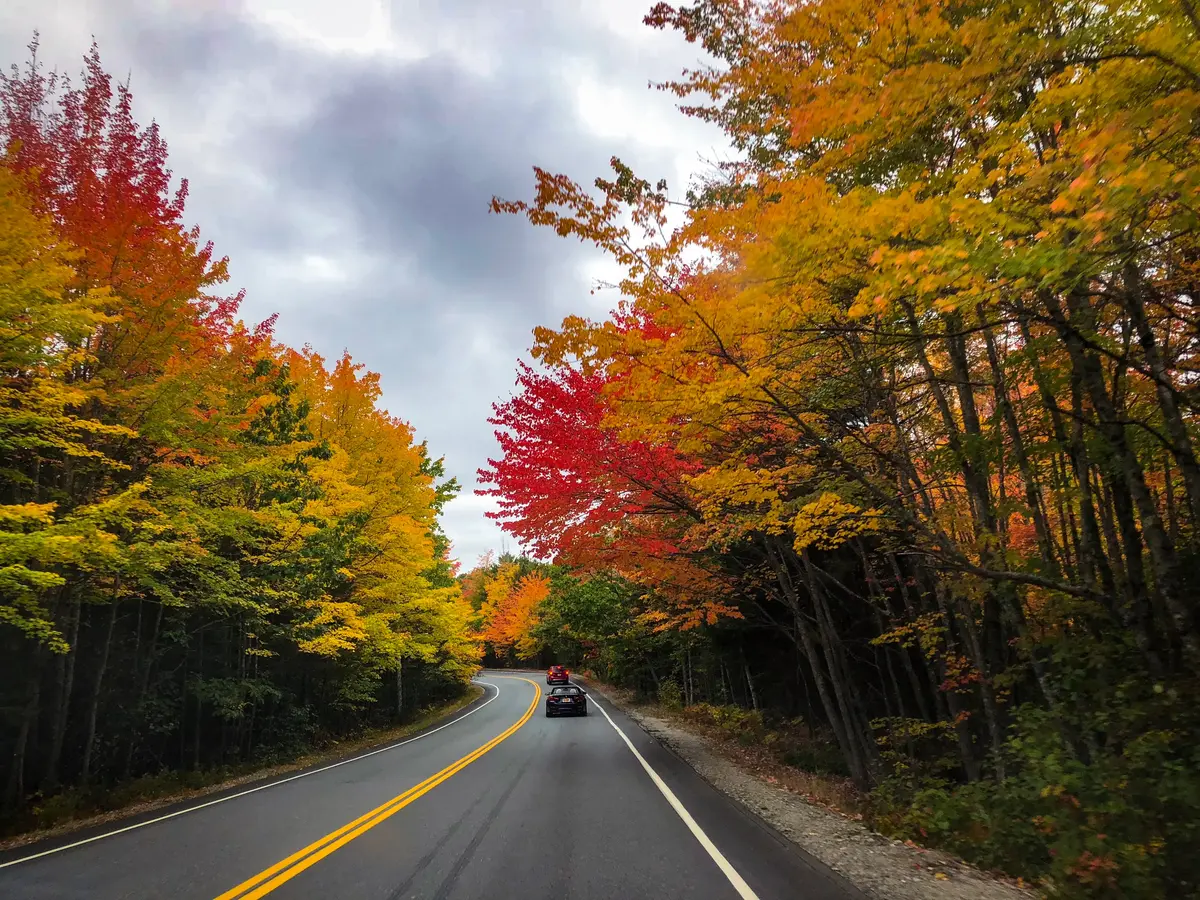
East Coast camping runs from foggy granite shorelines in Maine to wild-horse beaches in Maryland to Keys sites where you smell salt before you see water. The season flips at the Mid-Atlantic, the beach sites punish unprepared tents, and the best parks book a year out. Here is where to go, what it costs, and when to click.
Families and first-timers do well at Acadia or Assateague State Park. Tent campers and paddlers want the Adirondacks or Cape Hatteras. Beach sleepers should aim for Hunting Island or the Florida Keys. Budget campers head for National Forest land in the mountains.
Fee, Season, and Booking Window: The 10 at a Glance
Fees below are base nightly rates from each park’s own reservation system. Several states layer on reservation fees, utility fees, weekend surcharges, and out-of-state surcharges that the sticker price does not show — the individual entries flag which ones bite hardest.
| Campground | State | Type | Nightly Fee | Booking Window | Season | Hookups | Best For |
|---|---|---|---|---|---|---|---|
| Blackwoods (Acadia) | ME | Coast + forest | $30 ($60 group) | 6 months for 90% of sites; 14 days for the rest | May–mid-Oct | None | First-timers |
| Fish Creek Pond (Adirondacks) | NY | Lake + forest | $22 (+$5 out-of-state) | 6 months | Early May–mid-Oct | None | Paddlers, tents |
| Nickerson State Park (Cape Cod) | MA | Kettle ponds | $22 resident / $75 non-resident | 4 months | Spring–fall | None | Cape Cod families |
| Assateague State Park | MD | Beach | About $27.50–$40.50 base | 12 months | Late Apr–early Nov | Electric (43 sites) | Beach families |
| Cape Hatteras Seashore | NC | Beach | $28 ($35 electric) | 6 months; Cape Point same-day | Early Apr–late Nov | Oregon Inlet only | Outer Banks beach |
| Shenandoah | VA | Mountains | $30 ($75 group) | 6 months, released in batches | Late spring–fall | None | Hikers, Blue Ridge |
| Hunting Island | SC | Beach | About $50–$66 (demand-priced) | 13 months | Year-round | Water + electric | Beach + lighthouse |
| Cumberland Island | GA | Beach (primitive) | $9–$40, plus $44 ferry | 6 months | Year-round | None | Backpackers, solitude |
| Bahia Honda | FL | Beach (Keys) | $36 + fees | 11 months residents / 10 non-residents | Year-round (winter prime) | Some electric | Keys beach |
| Anastasia | FL | Beach | $28 + fees | 11 months residents / 10 non-residents | Year-round | Water + electric | St. Augustine beach |
What Makes East Coast Camping Different From the West?
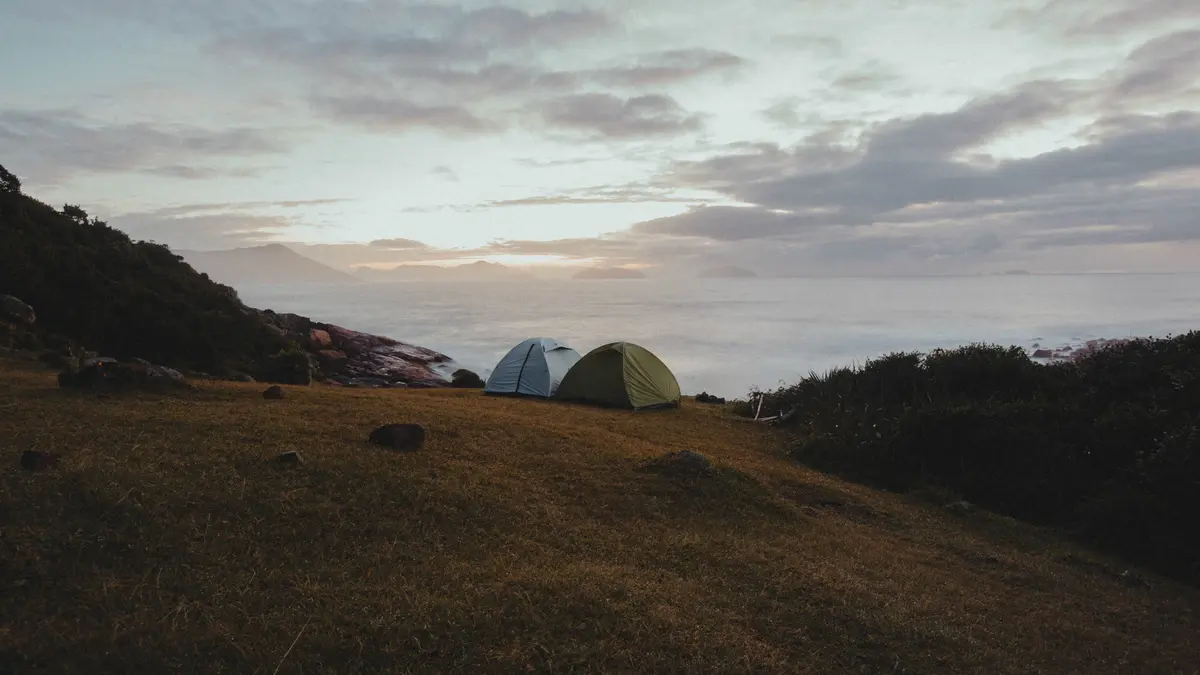
East Coast camping runs along a 1,500-to-2,000-mile (2,400–3,200 km) corridor from Maine to the Florida Keys, split between mountain camping in the Appalachians and barrier-island beach camping on the Atlantic. The season flips by latitude: summer is prime up north, winter is prime in the Southeast. Free dispersed camping is rare here compared with the West.
Why Free Camping Is Hard to Find Here
That last point trips up people who learned to camp out West. The East has far less federal land and far more people, so you cannot pull off a forest road and pitch a tent most places.
The free, sleep-anywhere camping that is routine in Utah or Montana happens here mostly on National Forest land in the mountains — and even that is shrinking. The Pisgah Ranger District in North Carolina bans camping within 1,000 feet (305 m) of any road open to public vehicles and permits it only at sites marked on the district map.
The Payoff: Mountains and Barrier Islands in One Drive
The compensation is variety packed into a short drive. Wake up to fog on a Maine cove, eat lunch on a Cape Cod kettle pond, and be on a Virginia barrier island by nightfall without leaving the coast. No comparable stretch of the West gives you alpine forest and subtropical beach in the same tank of gas.
The Best East Coast Campgrounds, Maine to Florida
These ten run north to south. Each earns its spot for a specific reason, and each entry names the friction point most guides skip.
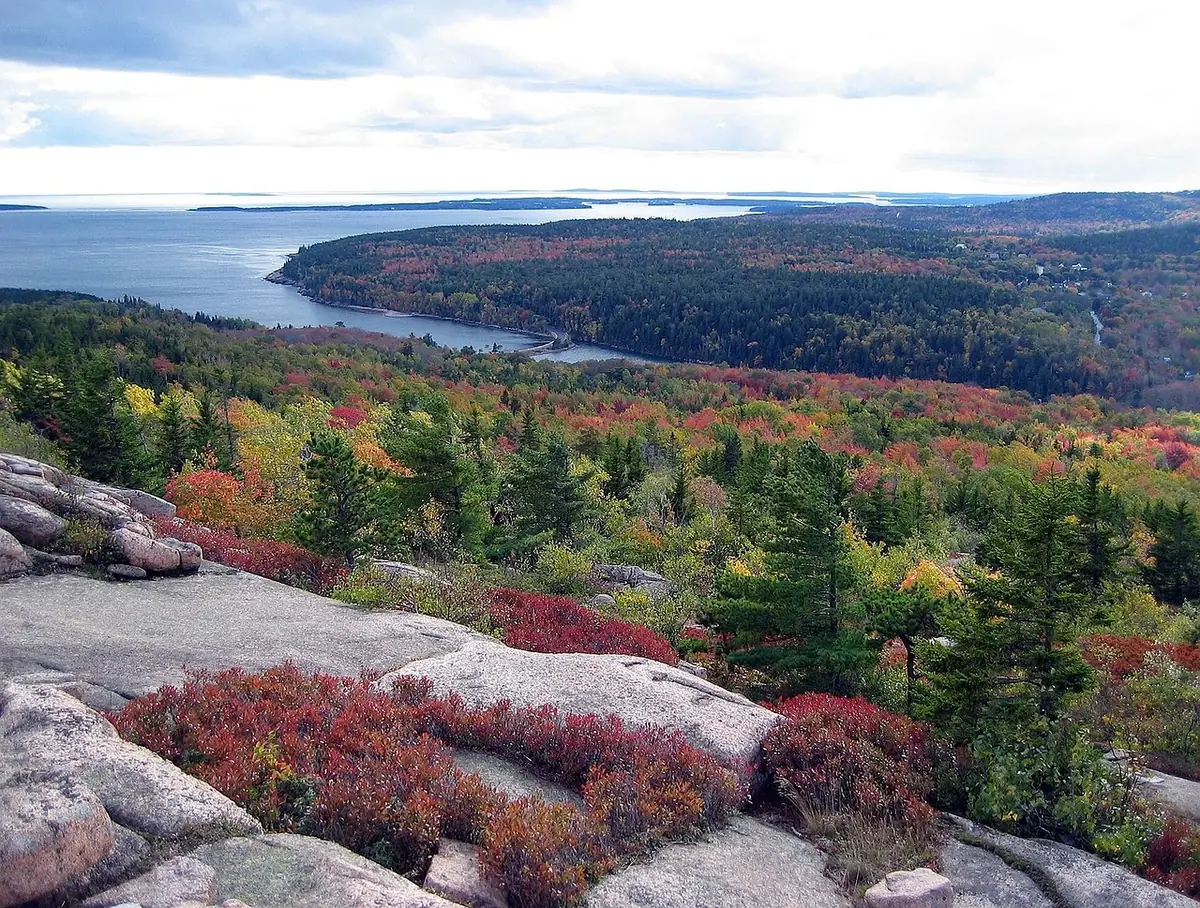
1. Blackwoods Campground, Acadia National Park (Maine)
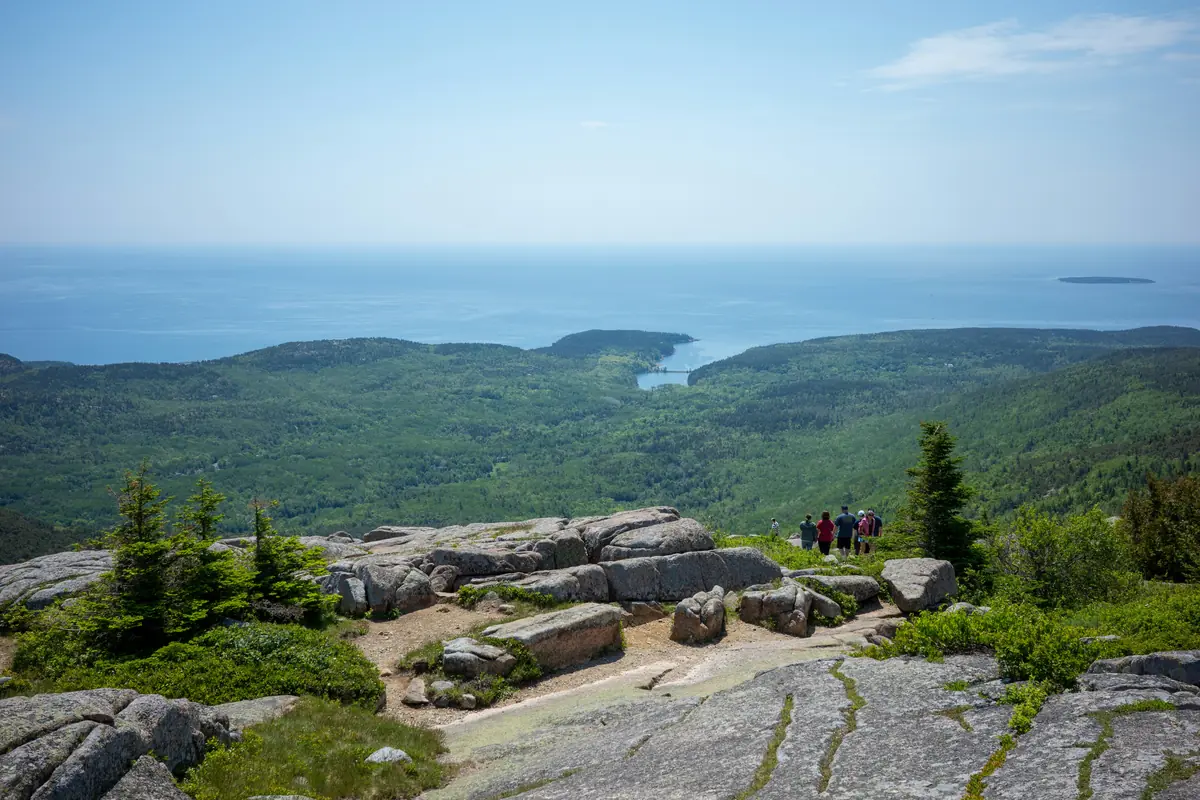
Blackwoods sits in spruce forest about a 10-minute walk from the granite shoreline. Salt fog rolls in most mornings before the sun burns it off, and at night you hear the foghorn and little else. Sites are tucked into the trees, so you get privacy and almost no ocean view from the tent itself.
This is the easiest base for a first Acadia trip — close to the Park Loop Road, Cadillac Mountain, and the free Island Explorer shuttle. The trade-offs: no hookups anywhere in the campground, and no showers either. The nearest are pay showers half a mile (0.8 km) away, and portable showers are prohibited. Loop A allows generators during limited hours and holds most of the RV sites. Loop B is quieter, with none.
The terrain is hilly and not all sites are level. Some pull-through RV sites sit on enough of a grade that leveling a trailer is not realistic — check the site photos on Recreation.gov before you commit.
One cost that catches international visitors: on top of the standard entrance fee, each non-US resident aged 16 and over pays a $100 nonresident fee unless they hold an annual or America the Beautiful pass. A family of four in a rental car pays more to drive through the entrance station than they will pay for three nights of camping.
Pro Tip: Book the minute your date opens. About 90% of sites release six months ahead on the first of each month at 10 a.m. Eastern, and the last 10% release 14 days out for anyone who missed the first wave.
- Location: Route 3, about 5 miles (8 km) south of Bar Harbor, Mount Desert Island, Maine
- Cost: $30/night individual, $60 group; park entrance $35/vehicle (7-day), $80 America the Beautiful annual
- Best for: First-time visitors who want to be near the main sights
- Time needed: 3–4 nights to see the park without rushing
2. Fish Creek Pond, Adirondacks (New York)
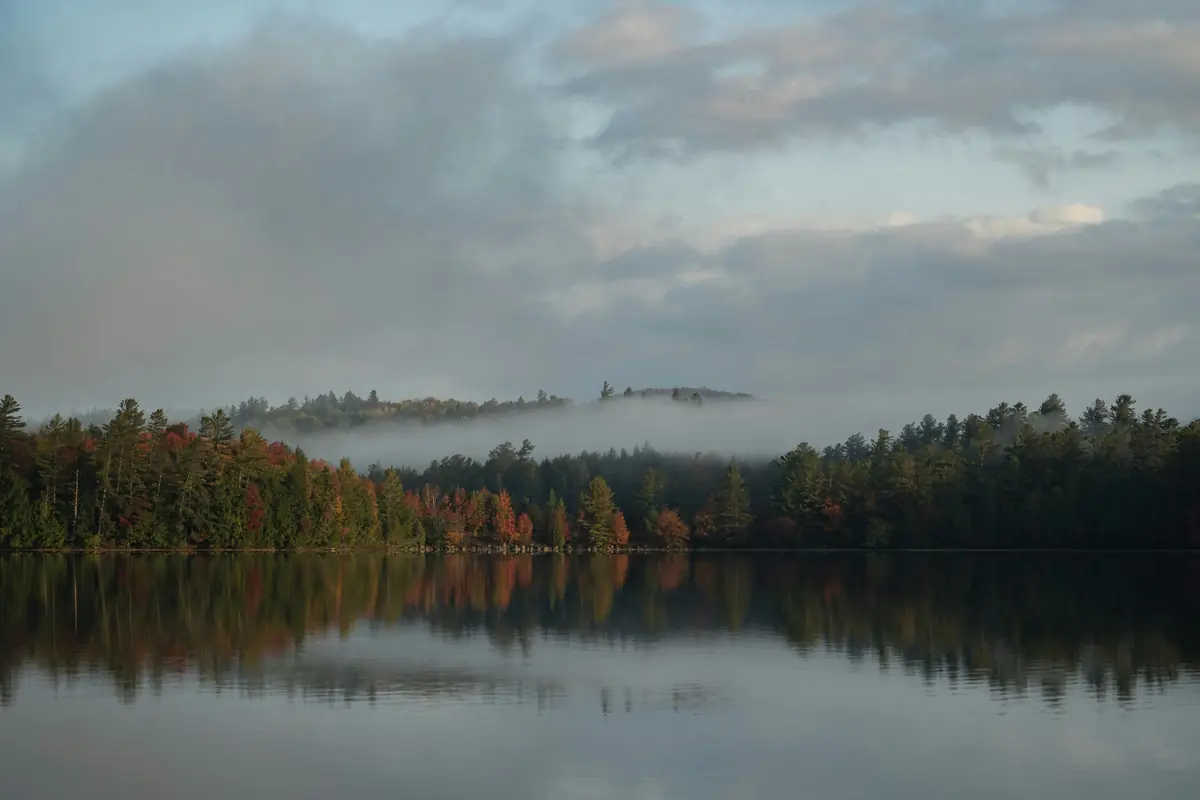
The Adirondack campgrounds run by New York’s DEC put you on the water, not just near it. Fish Creek Pond is a paddle-in-from-your-site kind of place, with loons calling across the water at dawn and big sites spread out under tall pines.
The draw is the price-to-wilderness ratio. State sites run $22 a night, and if you are willing to backpack, primitive camping on Forest Preserve land is free as long as you stay 150 feet (46 m) from any road, trail, or water. Stays over three nights or groups of ten-plus need a free permit from a Forest Ranger, and the Eastern High Peaks require bear canisters in the warmer months.
Two mechanics catch first-timers. There is a three-night minimum on reservations, so a quick weekend stopover is not an option. And Fish Creek stops taking reservations after Labor Day weekend — everything past that is first-come, first-served, which is either the best or the worst news depending on how far you are driving. Check the current season dates on the NYSDEC page before you plan around it.
- Location: 4523 State Route 30, near Saranac Lake, New York
- Cost: $22/night, plus $5/night out-of-state surcharge and a $9 reservation fee
- Best for: Paddlers, tent campers, budget backpackers
- Time needed: 3 nights minimum by rule; longer if you are island-hopping by canoe
3. Nickerson State Park, Cape Cod (Massachusetts)
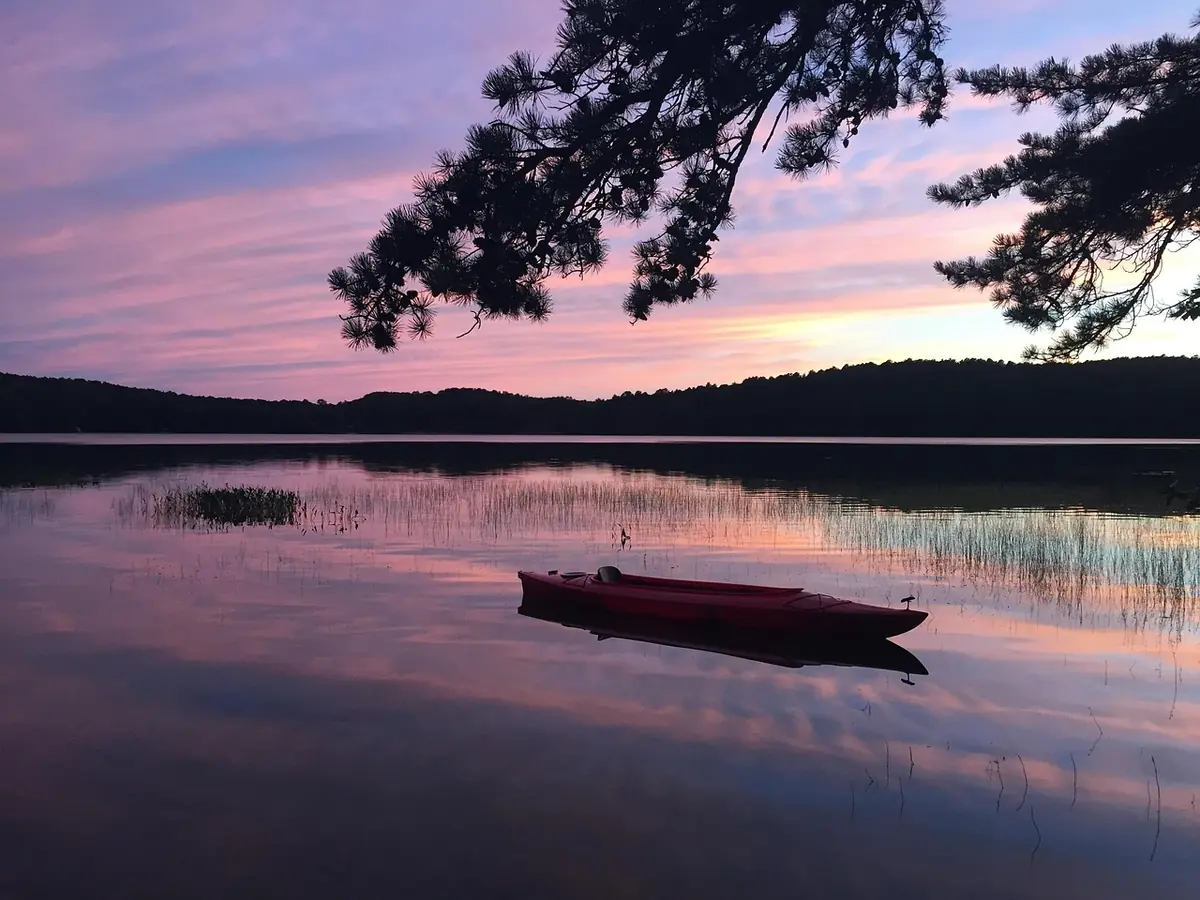
Here is the thing nobody warns you about Cape Cod: you cannot camp on the beach. The Cape Cod National Seashore has no campgrounds, and overnight beach sleeping is not allowed. Nickerson is where you actually go — 418 sites in a forest of glacial kettle ponds where you can swim, paddle, and ride onto the Cape Cod Rail Trail straight from your site.
It is family-friendly and huge. The pond water is calmer and warmer than the open Atlantic, which matters enormously with small kids. Summer weekends fill completely, and walk-in registration is not permitted, so a same-day arrival means booking online before 2 p.m.
Now the number that should decide your trip. Massachusetts residents pay $22 a night. Everyone else pays $70, plus a legislated $5-per-night non-resident surcharge that funds the park — $75 a night for a site with no water and no electricity. Verify it yourself on the Mass.gov park page, because most guides still quote the resident rate as though it applied to you. If you are driving in from out of state, a private Brewster campground with full hookups often costs less.
Pro Tip: The booking window is four months, not the six or twelve people assume from other states. New inventory opens at 8 a.m. Eastern daily from April through Labor Day, and at 9 a.m. on weekdays or 10 a.m. on weekends the rest of the year.
- Location: 3488 Main Street, Brewster, Cape Cod, Massachusetts
- Cost: $22/night Massachusetts residents; $70 plus $5/night surcharge for non-residents; $4.50 transaction fee
- Best for: Massachusetts families who want ponds, biking, and a 14-day limit
- Time needed: 3–5 nights to enjoy the Cape at a slow pace
4. Assateague Island (Maryland and Virginia)
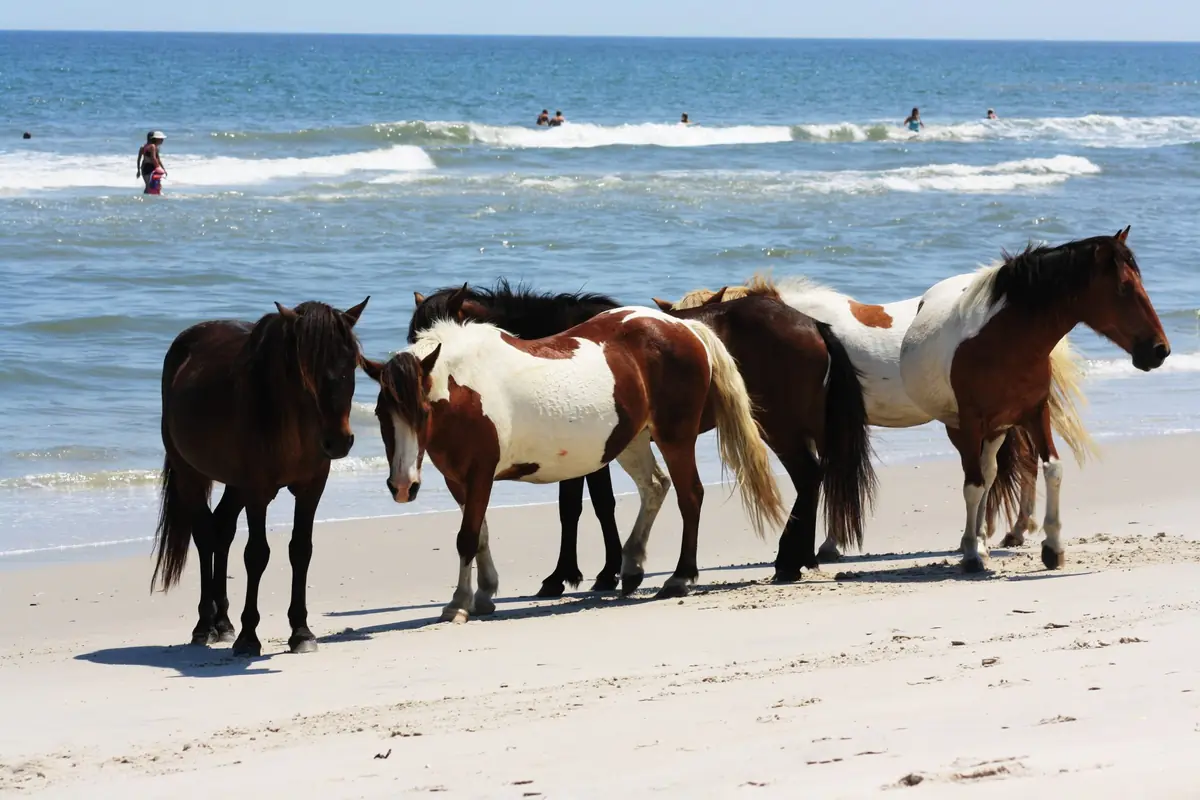
This is the wild-horse island, and the horses are real. They wander through the campground loops at dawn. You are required to stay 40 feet (12 m) away, roughly a school-bus length, and your food has to live in a hard-sided container or your vehicle, or the horses will help themselves.
Two systems share this barrier island, and the difference matters more than the map suggests. The National Seashore, run by the National Park Service, is more primitive: cold rinse showers, no hookups, booked on the standard six-month federal window. The Maryland State Park has around 350 sites, hot showers, and 43 sites with electric, bookable a full 365 days out through Maryland’s reservation portal.
Base state-park rates run roughly $27.50 to $29.50 for non-electric and up to about $40.50 with electric — but those are base rates. Weekend, holiday, and out-of-state surcharges stack on top and are not shown until checkout. The oceanside tent loops trade calm for the sound of surf. The bayside loops are quieter and draw marsh bugs.
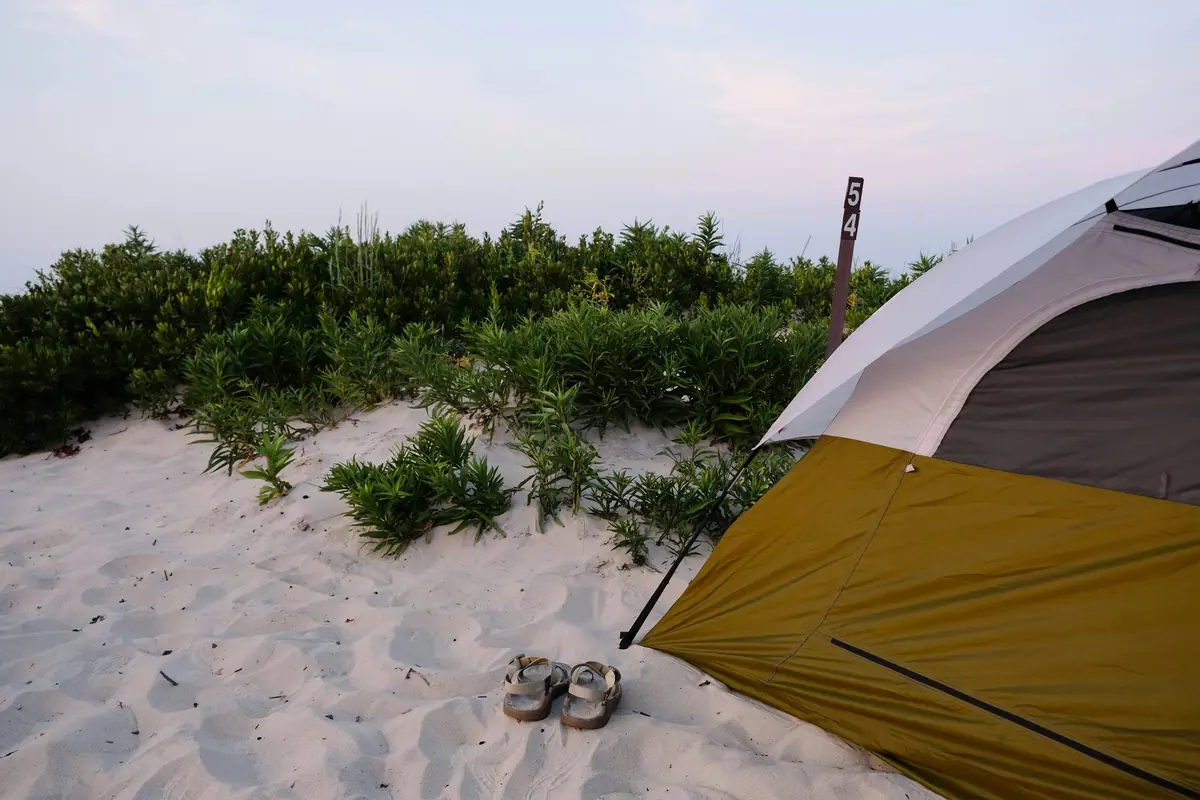
Pro Tip: The oceanside tent loops have no RVs and no wind protection whatsoever. Spring storms flatten tents here regularly, so bring extra-long sand stakes and a low-profile tent if you want the ocean sound.
- Location: Assateague Island, Maryland (state park) and Virginia (national seashore)
- Cost: State park about $27.50–$40.50 base before surcharges; seashore entrance $25/vehicle or an America the Beautiful pass
- Best for: Beach families and tent campers who want surf and wildlife
- Time needed: 2–3 nights
5. Cape Hatteras National Seashore (North Carolina)
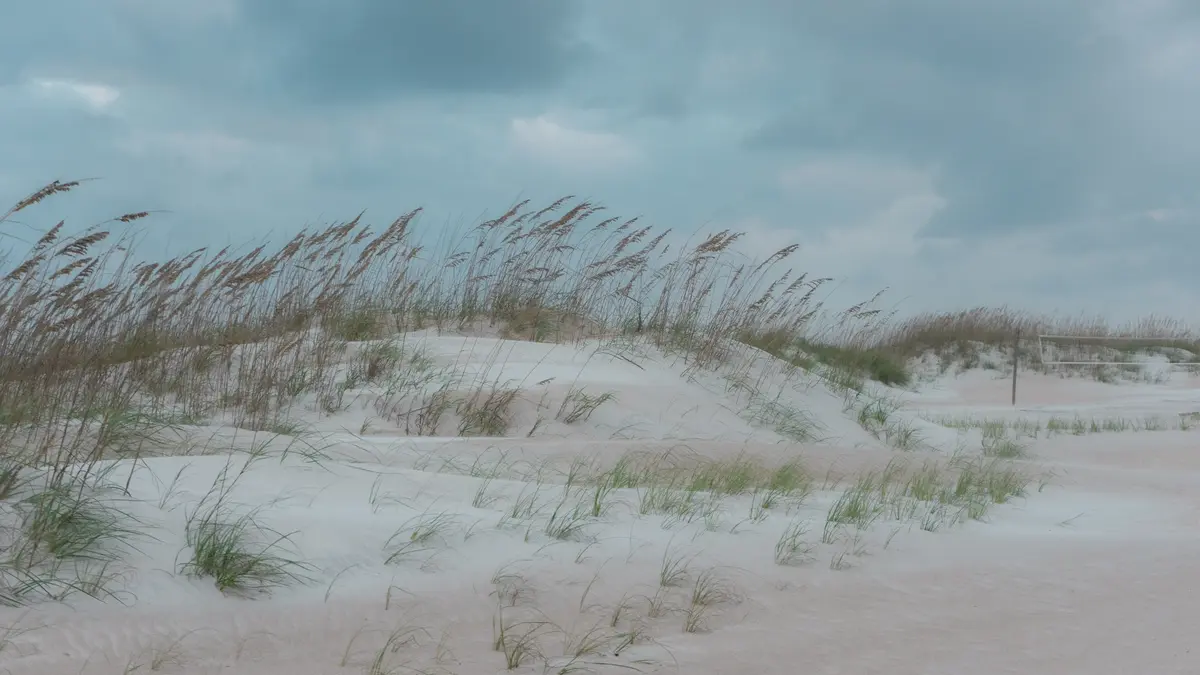
The Outer Banks deliver the most exposed beach camping on this list. Wide-open dunes, no shade, and wind that does not quit. Campers here report the same failure over and over: the flimsy stakes that came in the box pull straight out of sand, and the tent goes down around midnight.
There are four campgrounds — Oregon Inlet, Cape Point, Frisco, and Ocracoke — and only Oregon Inlet has hookups, at 47 of its sites. Frisco and Cape Point run from early April through late November. Ocracoke, reachable only by ferry, stays open year-round.
Cape Point books on a schedule unlike anywhere else in the system. Because the campground sits low and floods after heavy rain, the National Park Service has cut its reservation window down to same-day booking through Recreation.gov. You book it standing in the parking lot, on your phone, after you have looked at the site. Reservations can also be cancelled on short notice when water comes up.
Storm damage reshapes access here regularly, so confirm the current beach and ramp closures on the park’s campground page before you build a week around a specific stretch of sand.
Pro Tip: Pick an inner-loop site away from the dunes. They catch fewer biting insects and less of the sand-spur misery that comes with the front rows in summer.
- Location: NC-12, Outer Banks, North Carolina
- Cost: $28/night; $35 with electric at Oregon Inlet; $70 group site. Senior and Access pass holders get 50% off
- Best for: Beach campers who want raw, open Atlantic coastline
- Time needed: 3–4 nights to work down the barrier islands
6. Shenandoah National Park (Virginia)
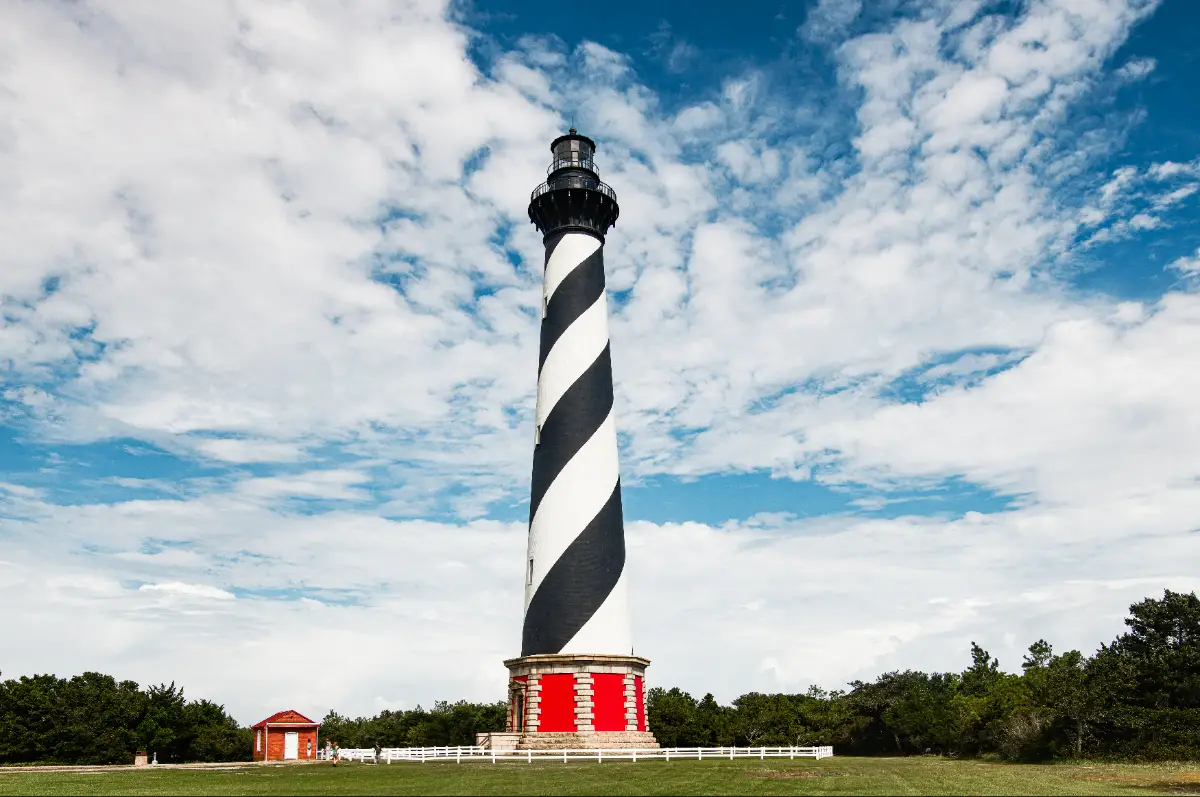
Shenandoah is the mountain break in an otherwise coastal list, strung along Skyline Drive in the Blue Ridge. Loft Mountain, the largest campground, sits atop Big Flat Mountain with long views and sites spread far enough apart that you do not hear your neighbors. Foliage peaks around mid-October.
This is black bear country, one of the densest populations on the East Coast, so every site has a bear box and you use it. Four campgrounds serve the park, plus backcountry permits for anyone sleeping along the 101 miles (163 km) of Appalachian Trail that run through it. Lewis Mountain is first-come, first-served and works as the quiet fallback when Big Meadows is full — it is self-registration, paid through the Recreation.gov app, so bring a charged phone.
The booking quirk worth knowing: Shenandoah does not dump all its inventory at once. Sites release in batches, some six months ahead and some as late as four days out. A campground that shows “sold out” in March is not necessarily sold out for June. Check the park’s campground page for which loops are reservable.
- Location: Skyline Drive, Blue Ridge Mountains, Virginia
- Cost: $30/night standard, $75 group; park entrance $30/vehicle (7-day)
- Best for: Hikers and anyone driving the Blue Ridge
- Time needed: 2–4 nights
7. Hunting Island State Park (South Carolina)
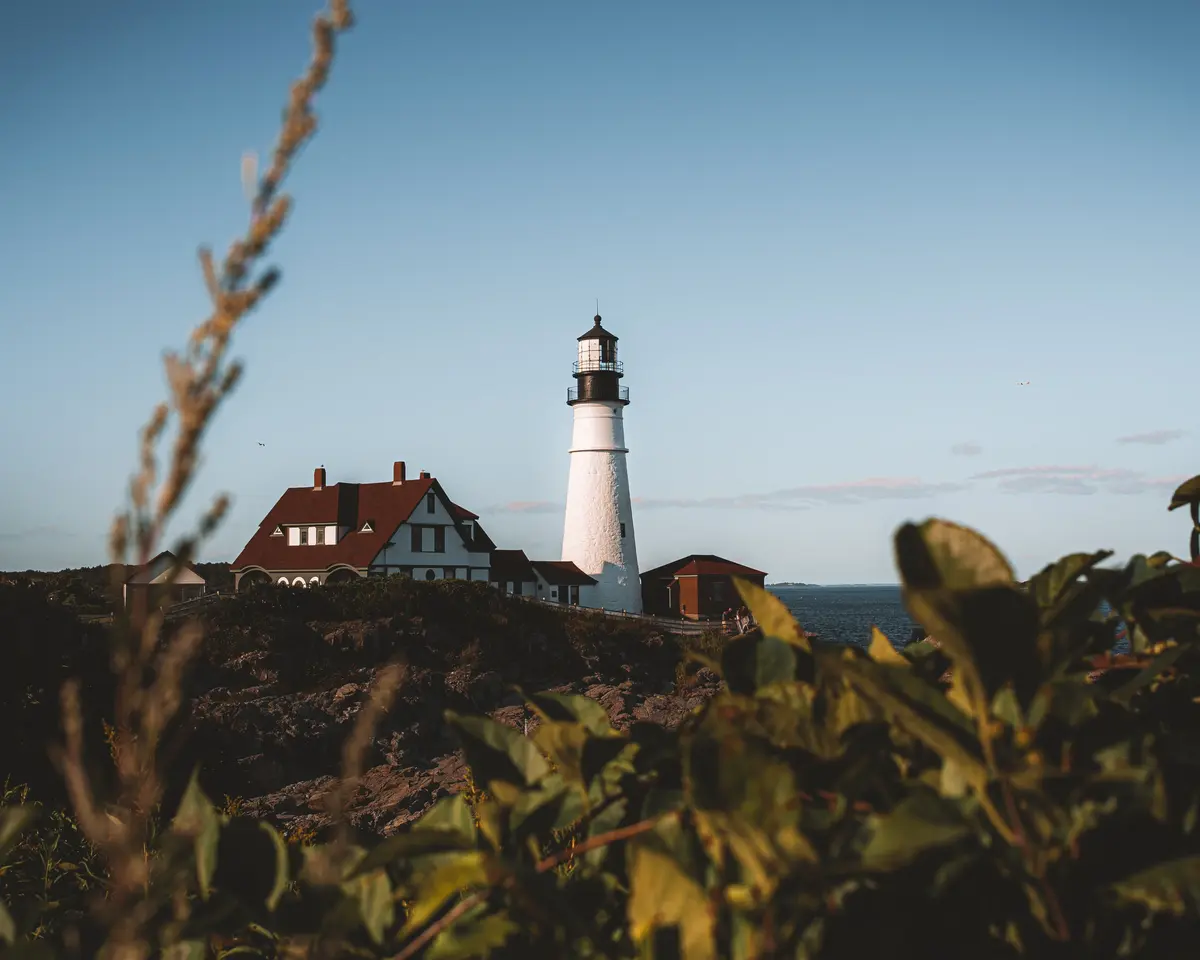
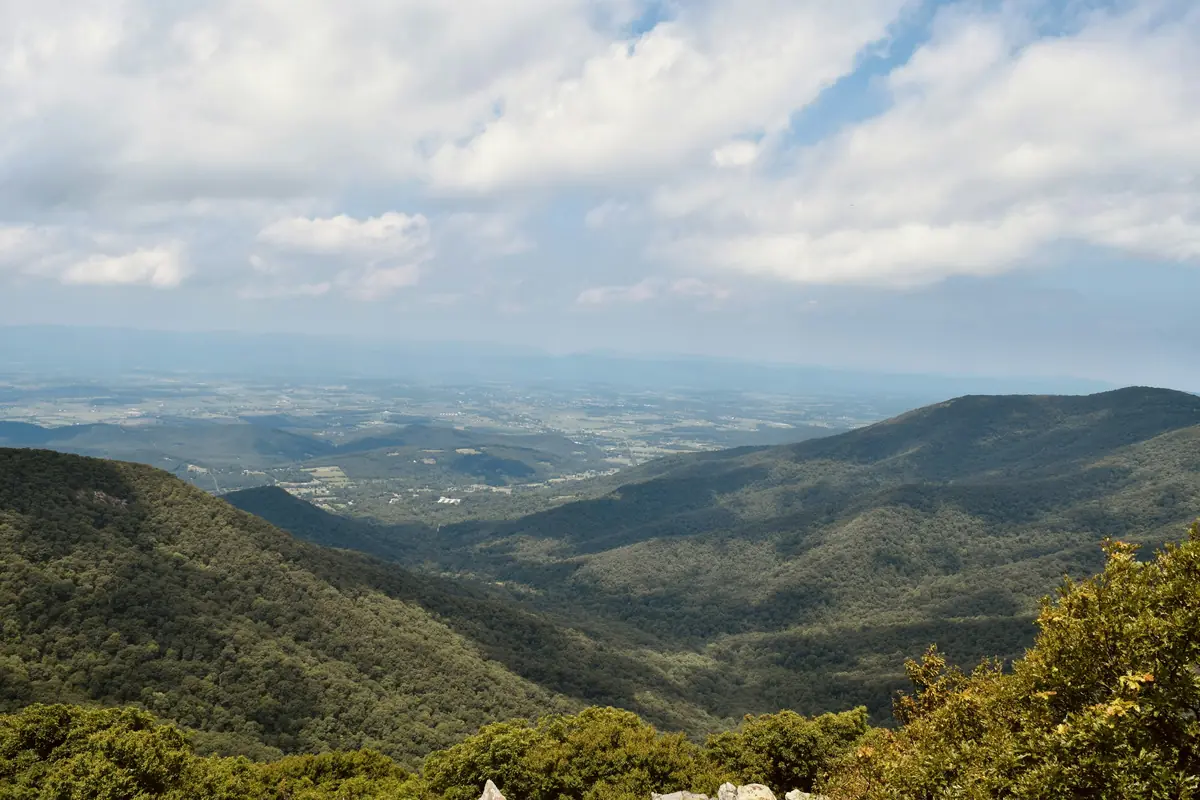
Hunting Island is the rare Southeast park where you camp behind 5 miles (8 km) of beach and climb a working lighthouse the same afternoon — 132 feet (40 m) and 167 steps to the top. The campground runs water and electric on every site, the loop is shaded by maritime forest, and it is dog-friendly, which is harder to find on protected beaches than you would expect.
The catch is demand, and South Carolina prices for it. The park’s own reservation system states plainly that nightly rates are set by location, demand, season, and amenities, so the “$17 to $25” figures still floating around the internet are long dead. Field reports put standard sites closer to $50 to $66 in peak season.
Two rules cost people trips. There is a two-night minimum, so no one-night stopovers on the drive south. And the booking window is thirteen months — the longest on this list — which means the site you want opened before you started planning. Confirm both on the South Carolina State Parks page.
The counterintuitive part: the primitive walk-in tent sites, which have no power and share a water spigot, average around $60 a night. Going without electricity here saves you almost nothing.
- Location: Hunting Island, near Beaufort, South Carolina
- Cost: About $50–$66/night, demand-based; golf cart $5/night; park admission separate
- Best for: Beach campers who want hookups, shade, and a dog-friendly stay
- Time needed: 3 nights (two-night minimum applies)
8. Cumberland Island National Seashore (Georgia)
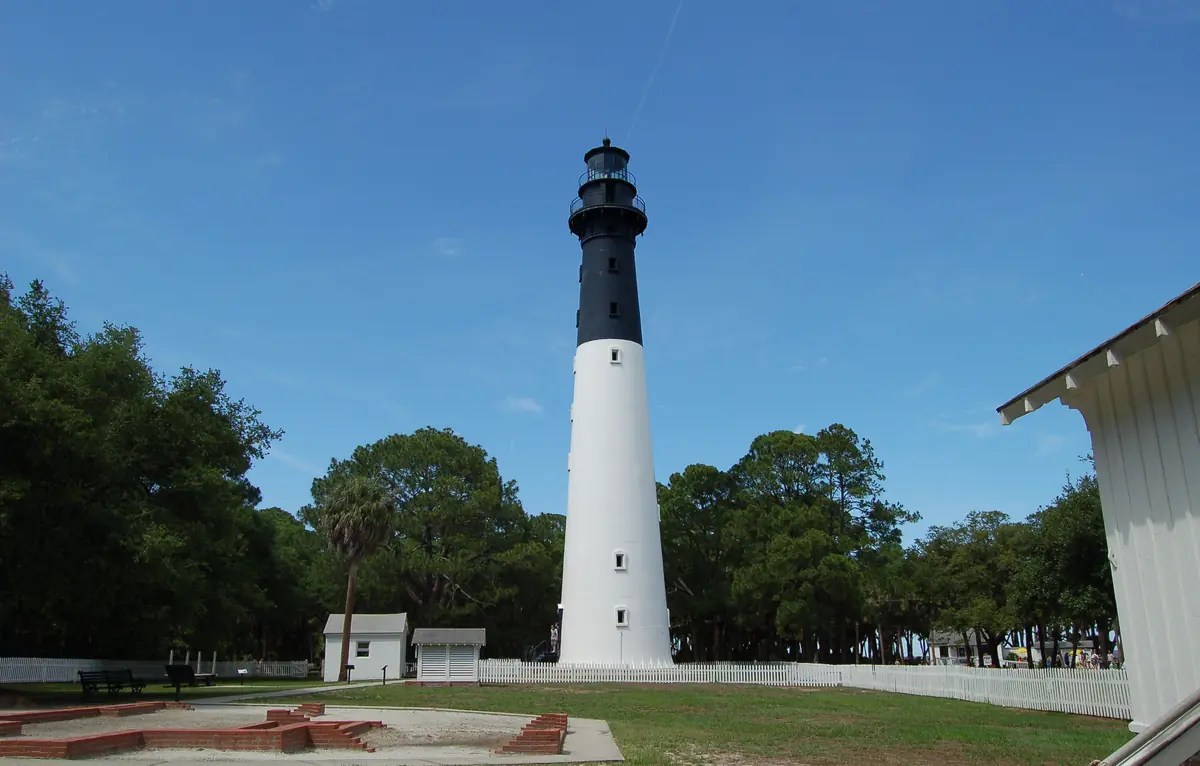
Cumberland is the trade you make when you want solitude over convenience. No bridge, no roads for your car. You arrive by passenger ferry, the island caps daily visitors at roughly 300, and the beach runs empty for miles under live oaks draped in Spanish moss.
Camping is primitive and the logistics are unforgiving. Sea Camp, the developed campground, has potable water and sits half a mile (0.8 km) from the dock. The wilderness sites — Hickory Hill, Yankee Paradise, Brickhill Bluff — have none, and Brickhill is 10.5 miles (17 km) from where the boat drops you. There is no transport service and there are no trash cans anywhere on the island. Everything you bring, you carry, and then you carry it back.
Three specifics that catch people, all confirmed on the park’s fees page and its camping permit listing:
- Sea Camp campers must leave on the 10:15 a.m. ferry on departure day. Not the afternoon boat. Plan your last morning around it.
- Propane cylinders larger than 1 gallon are not permitted on the ferry.
- The park is cashless. It does not take cash for anything, including entrance.
The real cost is not the campsite. Entrance is $15 per person for seven days, and the round-trip ferry is $44 for adults, $42 for seniors, and $34 for youth 6 to 15. Two adults are $118 in before a single night is booked.
- Location: Ferry departs the Mainland Visitor Center, St. Marys, Georgia
- Cost: Camping $9–$40/night depending on site; entrance $15/person; ferry $44 adult round trip
- Best for: Backpackers and anyone chasing solitude
- Time needed: 2–3 nights, planned around the ferry schedule (no ferry Tuesdays or Wednesdays in winter)
9. Bahia Honda State Park, Florida Keys
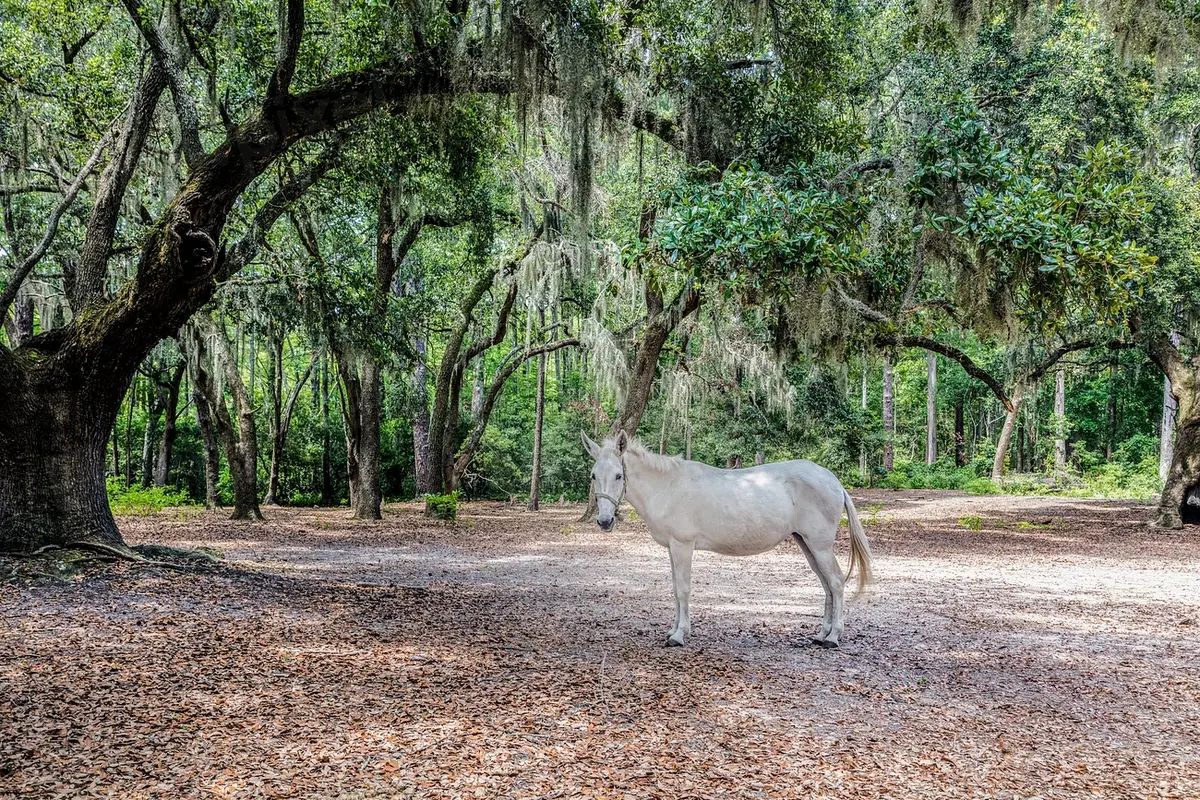
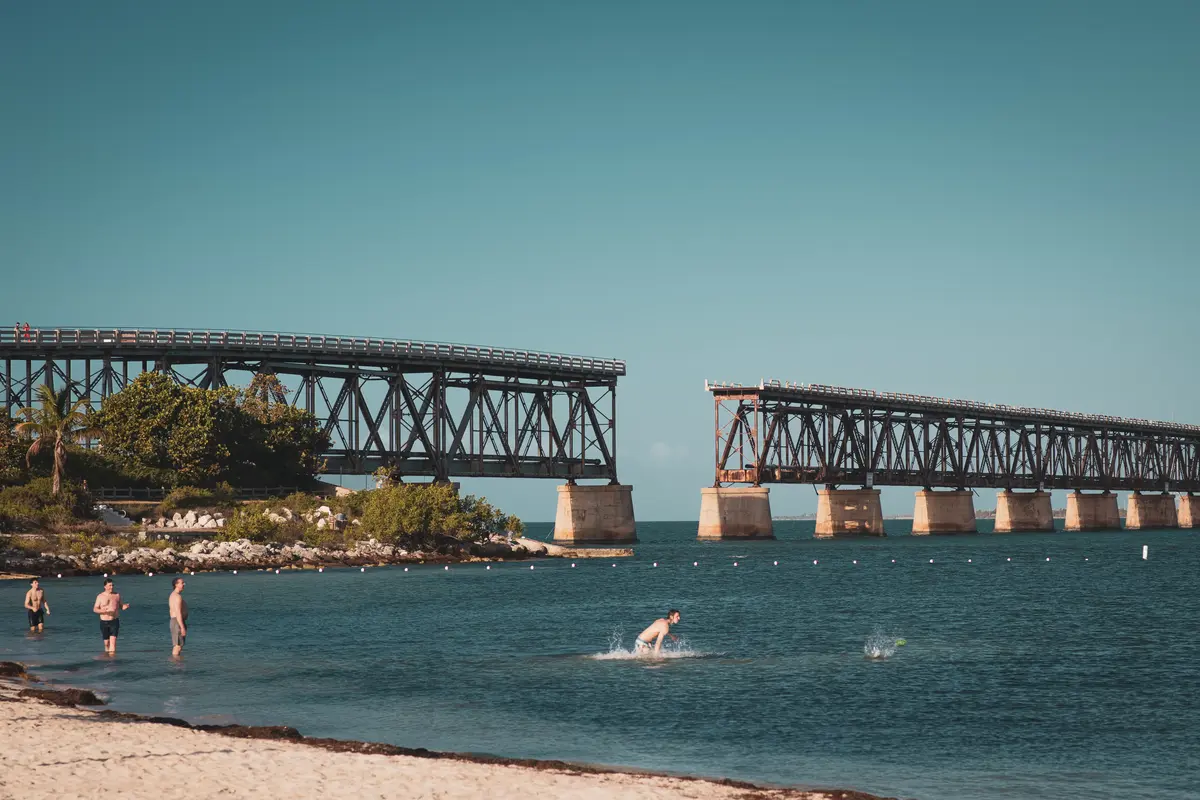
Bahia Honda has the best beach in the Keys and one of the hardest reservations in the state. The water glows pale Caribbean green and the ruined railroad bridge frames the view. Winter is prime — mild, dry, bug-light — which is exactly why sites vanish in seconds when the window opens.
One detail turns RVers away at the gate: the Bayside campground and the cabins sit under the Bahia Honda Bridge, which has 6 feet 8 inches (2 m) of overhead clearance. Rooftop carriers come off. Anything taller does not go through. Sandspur, the prettiest loop, has sites too small and turns too tight for RVs regardless.
Sandspur was closed for years after hurricane damage and appears again in the park’s current campground listings, though stale third-party pages still call it shut. Confirm which loops are operating on the official hours and fees page when you book.
Pro Tip: Florida releases new inventory at 8:00 a.m. Eastern, and it goes in seconds. Residents book 11 months out; out-of-state campers only get 10. If you are driving down from Ohio, your window opens a month later than the neighbor you are competing with.
- Location: Mile Marker 37, U.S. Highway 1, Florida Keys
- Cost: $36/night plus tax, a $6.70 reservation fee, and a $7/night RV utility fee; cabins $120 in summer, $160 in winter; entrance $8/vehicle
- Best for: Keys beach campers who plan a year ahead
- Time needed: 2–3 nights
10. Anastasia State Park, St. Augustine (Florida)
Anastasia gives you 4 miles (6.4 km) of Atlantic beach a short drive from the oldest city in the country. Paddle the tidal lagoon in the morning, walk the beach at low tide, and eat in St. Augustine’s old quarter by dinner. All 139 sites have water and electric and sit under maritime hammock shade, which matters more than you think in Florida heat.
The friction point is one the park itself admits: the St. Augustine Amphitheatre sits next door, and music from concerts carries into the campground. City ordinance requires it to stop by 10 p.m., which is either reassuring or not, depending on your bedtime. Check the venue’s calendar against your dates.
Six glamping bungalows have been added to the campground — three 16-foot units sleeping up to six at $145 a night, three 24-foot units sleeping up to eight at $165. They come with A/C, a fridge, and linens, but no towels, cookware, or dishes. Current rates are on the park’s hours and fees page.
- Location: 300 Anastasia Park Road, St. Augustine, Florida
- Cost: $28/night plus tax, a $6.70 reservation fee, and a $7/night utility fee for RVs; entrance $8/vehicle; bungalows $145–$165
- Best for: Beach campers who also want a historic-town base
- Time needed: 2–3 nights
When Is the Best Time to Camp on the East Coast?
The best time depends on latitude. North of Virginia, camp from late spring through early fall, with foliage season in October as a cooler bonus. South of Virginia, winter — roughly November through March — is prime: mild, dry, and nearly bug-free. Spring and fall are the safest shoulder seasons coast-wide, balancing weather, crowds, and price.
September is the quiet sweet spot up north. The water is still warm, the crowds thin the week school starts, and the mosquitoes fade with the humidity. Down south, that same month sits at the statistical center of hurricane season. The two calendars run exactly opposite each other, which is why a single “best time to camp on the East Coast” answer does not exist.
What to Expect by Region
- New England and Northern (ME, NH, VT, NY, MA): summer highs near 90°F (32°C) in Acadia; spring and fall run 10–20°F (6–11°C) cooler; snow can linger at elevation into May.
- Mid-Atlantic (MD, VA, DE): near year-round in spots, with spring and fall the most comfortable.
- Southeast (NC, SC, GA, FL): winter is prime; dry-season highs in the Florida region sit around 77°F (25°C) with lows near 53°F (12°C).
Pro Tip: Arrive on a weekday in shoulder season. Availability jumps and prices ease the moment you skip Friday and Saturday nights, especially at the demand-priced Southeast parks where the rate itself moves.
Where Can You Camp on the Beach on the East Coast?
True oceanfront or near-beach camping clusters in a handful of named parks: Assateague Island (MD/VA), Cape Hatteras and Cape Lookout (NC), Hunting Island (SC), Cumberland Island (GA), and Bahia Honda and Anastasia (FL). Cape Cod is the famous exception — no beach camping is allowed there at all, so you use Nickerson State Park inland instead.
The grittiest option is Cape Lookout in North Carolina, where there are no designated campgrounds and no reservations. You camp on open sand, for free, and no permit is required unless your group tops 25 people. The park’s beach camping page lists the exceptions, which shift with bird and turtle nesting closures. It is the closest the East Coast gets to Western-style dispersed beach camping, and it requires you to carry in every drop of water you will drink.
It is also miserable in summer, and campers who have done it say so bluntly. There is no shade anywhere on the Core Banks. You cannot retreat into the tent, because the tent is hotter than the beach. Fall and spring are the seasons that make it worth the boat ride.
Most beach sites on this coast share the same three hazards: no shade, hard wind, and biting insects from June through September. The tent that survives a backyard does not survive a barrier island. Plan for stakes and guy-lines built for sand.
How Far Ahead Do You Need to Book East Coast Campgrounds?
Federal campgrounds — national parks, forests, and seashores — book through Recreation.gov on a six-month rolling window, with most sites releasing at 10 a.m. Eastern exactly six months before arrival. State parks run their own systems on their own clocks: Massachusetts opens four months out, Florida eleven, Maryland twelve, South Carolina thirteen. High-demand sites sell out within minutes.
The Booking-Day Routine That Works
The window opens for a single arrival date, not your whole stay. So the strategy is to grab the first night the moment it releases, then extend into the nights that already opened on earlier days.
- Know your system: Recreation.gov for federal land; the state’s own portal for state parks. The two do not talk to each other, and neither shows the other’s inventory.
- Know your clock: federal sites drop at 10 a.m. Eastern. Florida drops at 8 a.m. Eastern. Massachusetts drops at 8 a.m. Eastern in season. Being an hour late means being sold out.
- Know your residency: Florida gives residents an eleven-month window and out-of-staters ten. Massachusetts charges non-residents triple. Check which tier you are in before you plan.
- Book the first night at release: reserve night one, then extend into already-released dates.
- Line up backups: identify three to five campgrounds within 60 miles (97 km) before the date opens.
Why Cancellation Scanning Beats the Scramble
Recreation.gov charges a $10 fee to cancel and a $20 no-show fee plus the first night’s rate, per its published reservation policies. That fee structure is low enough that people cancel constantly, and the cancellations cluster in the last two weeks before arrival.
Patient scanning in that ten-to-fourteen-day window lands “sold-out” sites more often than any booking-day scramble does. Recreation.gov runs its own availability alerts, and third-party scanners cover the state systems. Set them and stop refreshing.
Is Free or Dispersed Camping Allowed on the East Coast?
Free dispersed camping is allowed but limited, and it happens on National Forest land in the mountains rather than along the coast. The strongest regions are Pisgah and Nantahala (NC), Green Mountain (VT), White Mountain (NH/ME), George Washington and Jefferson (VA), Chattahoochee-Oconee (GA), and Ocala and Apalachicola (FL). The standard rule is a 14-day stay limit within any 30-day period.
The etiquette is consistent across forests: camp at least 150–200 feet (46–61 m) from water, roads, and trails, pack out everything, and check the Motor Vehicle Use Maps before you drive in.
The rules, though, tighten constantly, and a single forest order can close an area you read about last season. The Pisgah camping limitation is the clearest example: across four counties, camping is prohibited within 1,000 feet (305 m) of any road open to public vehicles, and permitted only at sites depicted on the district map. Those designated roadside sites are first-come, first-served, and regulars report them filling by Thursday for a weekend.
Storm recovery has added another layer in western North Carolina, where downed timber has raised fire risk and closed roads and drainages that were open a year earlier. Call the local ranger district before you drive. It is a five-minute call that saves a wasted evening.
Which East Coast Camping Trip Fits Your Travel Style?
The right trip depends on whether you prioritize amenities, wilderness, beach access, or budget. Families and RVers want hookups and bathhouses at state parks. Tent campers and backpackers want primitive forest and Appalachian Trail access. Beach sleepers want barrier islands. Budget campers want free National Forest land.
- Families: state parks with bathhouses, pools, and swimmable ponds — Nickerson (MA), Assateague State Park (MD), Anastasia (FL).
- RV campers: hookups, dump stations, and generous rig limits — Hunting Island (SC), Oregon Inlet at Cape Hatteras (NC), Assateague State Park (MD).
- Tent campers and backpackers: primitive forest and trail access — Adirondacks (NY), Shenandoah backcountry (VA), Cape Lookout (NC).
- Beach campers: oceanfront or near-beach sites — Bahia Honda (FL), Hunting Island (SC), Cape Hatteras (NC).
- Budget and dispersed campers: free National Forest land — Pisgah/Nantahala (NC), Green Mountain (VT), Adirondack Forest Preserve (NY).
- Road-trippers: anchor stops on a Maine-to-Florida route — Acadia, Cape Cod, Assateague, Outer Banks, Shenandoah, the Keys.
Driving the Whole Coast, Maine to the Keys
The full route runs about 1,500–2,000 miles (2,400–3,200 km). At a comfortable 300–400 miles (480–640 km) a day, that is two to four weeks end to end, though most people do it in regional segments instead.
Three route flavors: I-95 for speed, US-1 and A1A for the scenic coastal version, and Skyline Drive into the Blue Ridge Parkway if you want the mountains. Mixing them is the point — the coast and the ridge are never more than a half-day apart.
How Much Does It Cost to Camp on the East Coast?
East Coast camping runs roughly $22 to $66 a night at most public campgrounds, with primitive sites cheaper and demand-priced state-park beaches at the top. Add park entrance fees of $8 to $35 per vehicle, plus reservation and utility fees on nearly every booking. Out-of-state surcharges are the line item that wrecks budgets.
The pieces that add up:
- Site fees: $22–$66/night, depending on location, hookups, and demand pricing.
- Out-of-state surcharges: $5/night in New York; $5/night on top of a $70 base at Nickerson in Massachusetts. This is the single largest hidden variable on the coast.
- Park entrance fees: $8/vehicle at Florida state parks; $25–$35/vehicle at the big national parks and seashores; $15/person at Cumberland Island.
- Reservation and utility fees: $6.70 per booking in Florida plus $7/night for RV utilities; $9 in New York; $8 on Recreation.gov; $4.50 in Massachusetts.
- Cancellation and no-show fees: $10 to cancel on Recreation.gov, $20 for a no-show plus the first night.
- Ferry fares: $44 per adult round trip to Cumberland Island, plus $15 per person to enter.
- The America the Beautiful pass: $80 for US residents, $250 for non-residents. If your route hits three or more federal sites, it pays for itself.
A tent trip built around Adirondack and Shenandoah sites lands far below a hookup-RV swing through demand-priced Southeast beaches. But the biggest lever on cost is not the campground at all. It is whether you camp midweek, in shoulder season, and in a state that does not charge you double for your license plate.
What Should You Know About Hurricane Season?
Atlantic hurricane season runs June 1 through November 30, with peak risk from mid-August through mid-October and a statistical midpoint of September 10. An average season brings 14 named storms, 7 hurricanes, and 3 major hurricanes, according to NOAA’s tropical cyclone climatology. Southeast and Florida beach camping carries real closure risk in those months.
The season calendar works directly against you down south. The late-summer stretch that is miserably humid for camping is also the most dangerous for storms. And the peak date is not the finish line — roughly 60% of a season’s activity happens after September 10, which is precisely when people assume the risk has passed and start booking October beach trips.
Build flexibility into any Southeast trip in that window:
- Know the cancellation policy before you book, not after the forecast turns.
- If a park or campground closes for a storm, call Recreation.gov rather than cancelling online. An online cancellation triggers the standard fee schedule; a closure handled by phone usually does not.
- Keep an inland fallback within a few hours’ drive.
Damage also cuts the other way. Loops close on short notice and reopen after repairs, sometimes years later, as Bahia Honda’s Sandspur has. Confirm the current operating status of any storm-prone campground rather than trusting a guide — including this one — written before the last season.
Pack the Sand Stakes, Book the Weekday
Three things decide whether an East Coast camping trip works: whether you booked at the right hour on the right portal, whether your tent can survive sand and wind, and whether you checked what your license plate costs you. Get those right and the coast is generous.
Who this is for: anyone willing to plan six to thirteen months out, or to scan cancellations patiently in the final two weeks. Anyone who wants to sleep behind a dune and does not mind that there is no shade.
Who it is not for: anyone hoping to pull over and pitch a tent wherever the road ends. That is a Western trip. Out here, the good ground is spoken for, and it was spoken for a long time ago.