East Coast winter destinations split two ways: fly south for 75°F (24°C) beaches or drive north for 314 inches (798 cm) of snow. These 12 picks cover the whole range — real January temperatures, verified prices, and honest drive times from NYC, DC, and Boston.
How Do the 12 East Coast Winter Destinations Compare?
The fastest way to shortlist a winter trip is to see the numbers side by side. Every temperature below is a January average high and low; every cost is a rough signal, not a quote. Specific price ranges live in each destination’s stats further down.
Cost signal: $ budget · $$ moderate · $$$ higher · $$$$ priciest in winter.
| Destination | Jan High / Low | Best For | Cost | Drive From |
|---|---|---|---|---|
| Key West, FL | 75°F / 65°F (24°C / 18°C) | Warm beach escape | $$$$ | ~4 hr from Miami |
| Miami, FL | 76°F / 61°F (24°C / 16°C) | Reliable sun, city + beach | $$$ | Fly into MIA |
| Palm Beach, FL | ~75°F / ~57°F (~24°C / ~14°C) | Warm, upscale, quieter | $$$$ | ~1.5 hr from Miami |
| St. Augustine, FL | ~64°F / ~47°F (~18°C / ~8°C) | Holiday lights, mild | $$ | ~1 hr from Jacksonville |
| Savannah, GA | 60°F / 43°F (16°C / 6°C) | Historic squares, mild | $$ | ~2 hr from Charleston |
| Charleston, SC | 59°F / 44°F (15°C / 7°C) | Walkable history, value | $$ | ~8 hr from DC |
| Asheville, NC | 44°F / 27°F (7°C / −3°C) | Mountains, off-season deals | $$ | ~2 hr from Charlotte |
| Cape May, NJ | ~45°F / ~32°F (~7°C / ~0°C) | Quiet Victorian coast | $ | ~2.5 hr from Philadelphia |
| Newport, RI | ~42°F / ~30°F (~6°C / ~−1°C) | Gilded Age holidays | $$$ | ~1.5 hr from Boston |
| Lake Placid, NY | 26°F / ~10°F (−3°C / ~−12°C) | Olympic ice, family snow | $$$ | ~5 hr from NYC |
| White Mtns, NH | ~30°F / ~12°F (~−1°C / ~−11°C) | Ice Castles, family snow | $$ | ~2.5 hr from Boston |
| Stowe, VT | 24°F / 9°F (−4°C / −13°C) | Serious skiing | $$$$ | ~3 hr from Boston |
Not sure where to start? Pick by the kind of winter you want:
- Guaranteed warmth: Key West, Miami, Palm Beach
- Snow and skiing: Stowe, Lake Placid, the White Mountains
- Holiday lights: St. Augustine, Newport
- Mild and walkable: Charleston, Savannah, Cape May
- Best value: Charleston, Asheville
One planning note that shapes everything below: the two light shows that make Charleston and Newport worth a December trip both shut down within days of New Year’s. If your dates land in January or February, read those sections before you book.
Where Is the Warmest Place on the East Coast in Winter?
Key West, Florida, is the warmest reliable spot on the East Coast in winter, with January highs near 75°F (24°C) and ocean water around 74°F (23°C). Miami and Palm Beach run a close second. North of Orlando, beaches turn too cold to swim, so stay in South Florida if you want the water.
Key West, Florida — the Warmest, but Not a Sure Thing
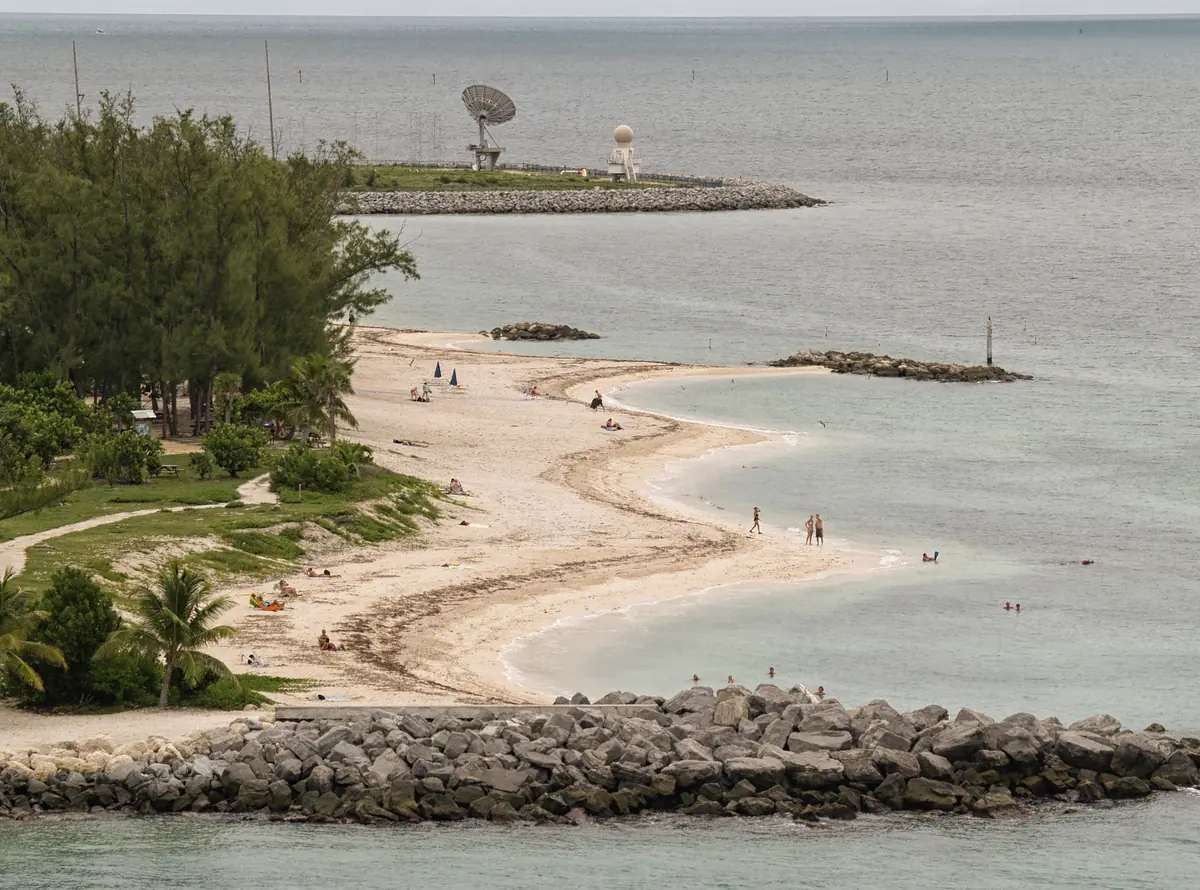
The drive in sets the tone. The Overseas Highway threads 42 bridges — including the long span of the Seven Mile Bridge — before Key West appears at the literal end of the road. Days here run warm enough for the beach at Fort Zachary Taylor and sunset crowds at Mallory Square.
The catch is that “warm” is an average, not a promise. Cold fronts can push January into the 60s, and sometimes the 50s, with wind that makes outdoor dining a bad bet — locals describe shops selling out of sweatshirts during a cold snap.
Winter is also peak cruise season, though the crowd math has changed. In practice, rarely more than one ship berths at a time now: the large vessels use the privately owned Pier B, while the city-owned Mallory Square dock takes only smaller ships. That still means real volume. A Carnival Conquest-class ship carries close to 3,800 passengers, and Old Town is a two-by-four-mile island. The crowds thin after about 1 p.m., once passengers head back to the boat.
And January and February are the priciest months to book. A room that runs $180 in September can climb past $450.
Pro Tip: Keep beach and outdoor-dining plans flexible in Key West. A single January cold front plus wind can drop the feel-like temperature into sweatshirt territory for two or three days straight.
- Location: Southern tip of the Florida Keys, end of the Overseas Highway (US-1)
- January temps: 75°F / 65°F high-low (24°C / 18°C); water ~74°F (23°C)
- Cost: peak-season hotels roughly $200–$600+/night
- Drive from Miami: ~160 miles (260 km), about 4 hours
- Best for: Warm-weather escapers who can stay flexible on cold-front days
Miami and Palm Beach — Reliable South Florida Sun
If you want the surest warmth without driving four hours past Miami, stop in Miami itself. January is one of its driest, lowest-humidity months, with highs around 76°F (24°C). South Beach delivers the Art Deco strip along Ocean Drive plus swimmable ocean. Palm Beach, about 90 minutes north, trades the party energy for a quieter, more upscale scene at similar temperatures.
- Miami: ~76°F (24°C) highs, driest stretch of the year, city plus beach; fly into MIA
- Palm Beach: ~75°F (24°C) highs, calmer and pricier, ~1.5 hours north of Miami
- Best for: Travelers who want warmth guaranteed and don’t need the end-of-the-road novelty of Key West
How Warm Do East Coast Beaches Actually Get in Winter?
Swimmable ocean is a South Florida thing in winter, full stop. Miami and Key West water sits around 70–75°F (21–24°C). Head north and it drops fast: Charleston runs about 63°F (17°C), Savannah closer to 57°F (14°C) — cold enough that “beach town” means walking the sand in a jacket, not swimming.
If getting in the water matters, draw your line at Orlando and stay south of it. Everything above that line is a coat-and-boardwalk trip, which is a fine trip — just not the one most people picture when they book a beach town in February.
Where Can You Ski or Play in Snow on the East Coast?
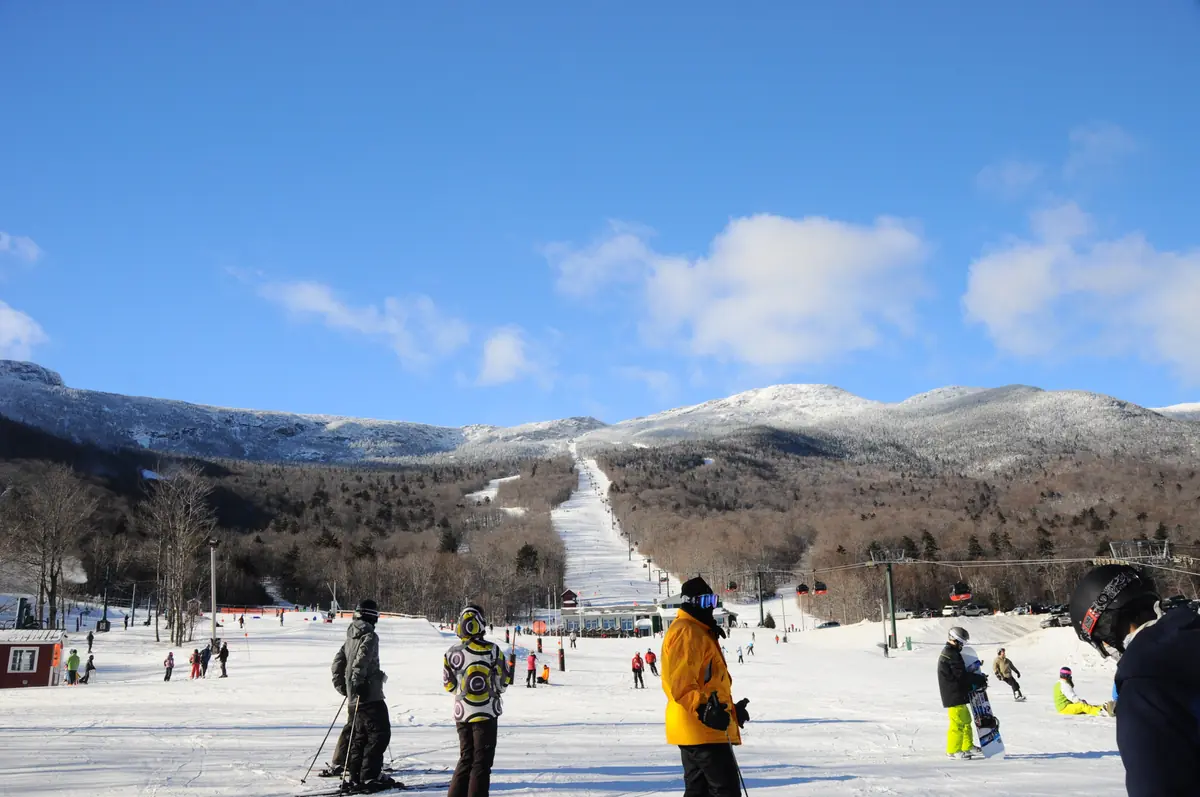
The best East Coast skiing is in northern New England and the Adirondacks. Stowe, Vermont, is the benchmark, with 485 acres and 314 inches (798 cm) of snow a year. Lake Placid, New York, pairs Whiteface Mountain — the greatest continuous vertical drop east of the Rockies — with two Olympics’ worth of ice venues. New Hampshire’s White Mountains round out the picks.
The choice between the two big mountains comes down to a trade-off nobody spells out: Whiteface has roughly 1,000 more feet of vertical than Stowe, but Stowe gets far more natural snow. Whiteface averages around 190 inches (483 cm) and leans on snowmaking across nearly all its trails to make up the difference. More vertical, less powder. Pick accordingly.
Stowe, Vermont — the Benchmark for Eastern Skiing
Start with the numbers, because Stowe’s are the ones other Eastern mountains get measured against. Stowe Mountain Resort spreads 485 acres across 116 trails on Mount Mansfield, Vermont’s highest peak at 4,395 feet (1,340 m). Snowmaking covers about 83 percent of the mountain when the sky doesn’t cooperate.
One figure worth getting right: Stowe’s vertical drop is nowhere near the roughly 3,000 feet some guides repeat. Ski databases put it at 2,360 feet (719 m), the fifth-largest in New England; Stowe’s own mountain stats list 2,160 feet (658 m). Either way, it’s a solid 600 feet short of the number floating around online — and still plenty of mountain.
Off the slopes, the town earns the trip on its own: The Alchemist brewery (home of Heady Topper), the Trapp Family Lodge, and the Ben & Jerry’s factory down the road in Waterbury.
Pro Tip: Stowe runs on the Epic Pass. If you plan to ski more than three days across a season, the pass usually beats buying single-day lift tickets at the window — where Stowe posts the highest walk-up rate in Vermont.
- Location: Stowe, VT, on Mount Mansfield (Route 108)
- The mountain: 485 acres, 116 trails, 314 in (798 cm) average snow, 12 lifts
- Lift tickets: roughly $169–$239/day at the window on the Epic Pass system; advance purchase runs well below that
- Lodging: about $150–$400+/night, plus lift costs
- Drive from Boston: ~199 miles (320 km), about 3 hours 10 minutes
- Best for: Skiers who want the most reliable snow in the East
Lake Placid, New York — Olympic Ice and Whiteface
Whiteface Mountain has the greatest continuous vertical drop east of the Rockies at 3,430 feet (1,046 m) — though that figure includes the hike-to Slides; the lift-served vertical is 3,166 feet (965 m). Adult day tickets run roughly $79–$109 depending on the date and how far ahead you book. The town itself is built around two Winter Olympics, so the mountain is only half the draw.
Two things travelers get wrong here.
First, the sliding track. The public winter ride at Mt. Van Hoevenberg is now the Skeleton Experience — face down, head first, solo, at about 30 mph, for $75 a run. It’s ages 13 and up, with a 52-inch minimum height and one rider per sled, and it’s weather-dependent even with a reservation. A public bobsled ride is not on the winter activity list. Do not arrive expecting to be strapped into a four-man sled.
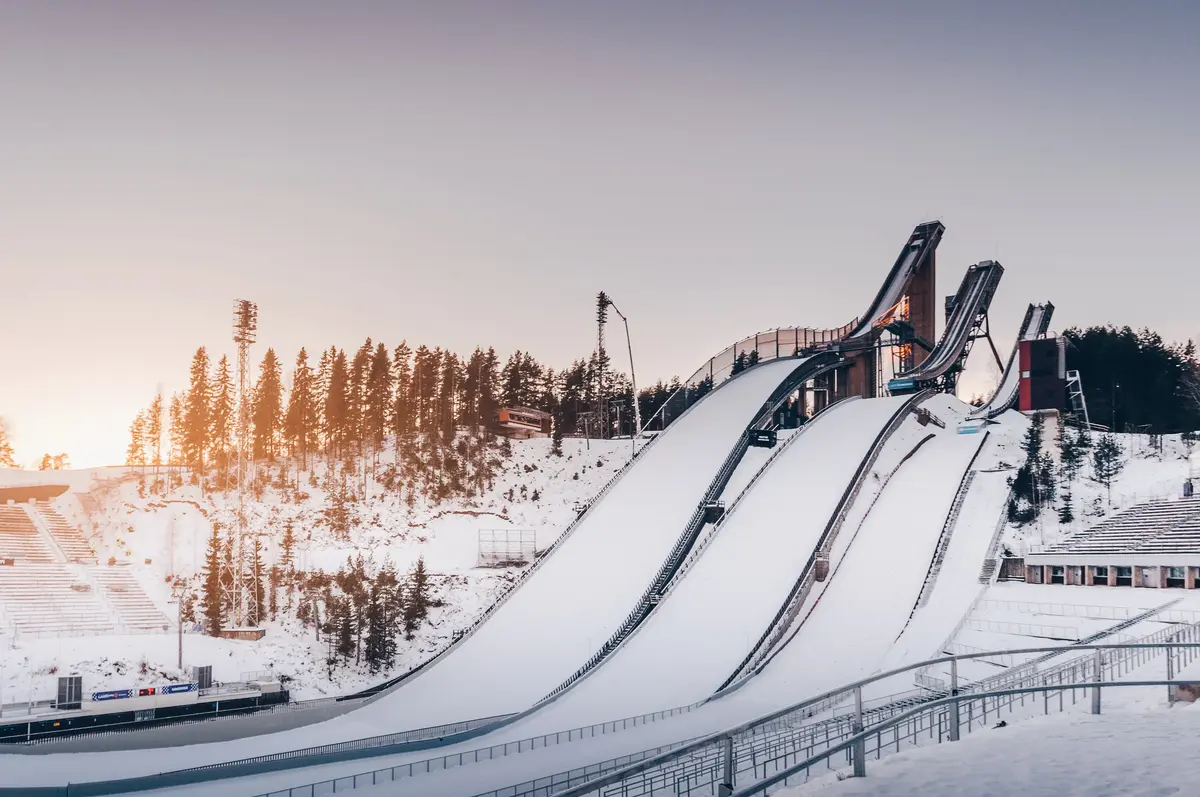
Second, the lake. The free two-mile skating loop the Parks Department clears on Mirror Lake and the toboggan chute that launches you onto it both depend on 10 to 12 inches (25–30 cm) of solid ice, which a warm winter may not deliver. The chute usually opens around the first full weekend in January; it has opened as early as December 26 and, in slow-freezing years, not until February.
When the ice does cooperate, the chute is the best cheap thrill in the Adirondacks: a 30-foot converted ski-jump trestle drops you onto the lake, where sleds coast more than 1,000 feet. Your ticket covers unlimited runs during the session, but bring a card — the chute doesn’t take cash. Over Presidents’ week, expect to wait 15 to 20 minutes between rides.
- Location: Lake Placid, NY, in the Adirondacks; Whiteface is about 15 minutes east
- January temps: ~26°F / ~10°F high-low (−3°C / ~−12°C)
- Whiteface: 3,430 ft (1,046 m) continuous vertical, 3,166 ft (965 m) lift-served; ~$79–$109/day
- Skeleton Experience: $75 per ride, ages 13+, 52-inch minimum
- Mirror Lake toboggan chute: $20 adult / $10 student, unlimited runs, ice permitting
- Skating on Mirror Lake: free; skate rentals available in the village
- Where to stay: Mirror Lake Inn Resort & Spa, roughly $279–$399/night in January
- Drive from NYC: ~288 miles (463 km), about 5 hours
- Best for: Families and travelers who want winter sport plus Olympic history
Which East Coast Towns Feel Most Festive in Winter?
For holiday lights, two towns stand out — and both have a hard end date. St. Augustine, Florida, strings some three million lights through its old town nightly from late November into mid-January, free to walk. Newport, Rhode Island, decorates its Gilded Age mansions through January 1, then strips them and runs a ten-day Winter Festival in mid-February instead.
St. Augustine, Florida — Nights of Lights
The oldest city in the country turns its whole historic core into a walkable light display. Nights of Lights drapes about three million white bulbs across roughly 20 blocks — over St. George Street, the plaza, and the buildings around the Castillo de San Marcos. Because it’s a free outdoor event in mild North Florida weather, you can spend a couple of hours strolling without paying admission or freezing.
The mistake visitors make is treating it like a drive-through. It isn’t one. The city runs a free park-and-ride shuttle from perimeter lots precisely because downtown parking collapses under the crowds. Park outside, ride in, walk.
One more thing, and it’s the kind of detail that only comes from people who’ve done this for years: somewhere among the three million white bulbs in the Plaza de la Constitución, there is a single red one. A worker put it there decades ago for his daughter to find, and the tradition stuck. Locals still hunt for it.
- Location: St. Augustine, FL, on the northeast coast near Jacksonville
- Weather: mild, highs around the mid-60s°F (upper teens °C)
- The event: Nights of Lights, late November to mid-January, free to walk, walking only
- Getting in: free park-and-ride shuttle on select nights; midweek is markedly quieter
- Also worth it: Castillo de San Marcos, the Lightner Museum, Flagler College
- Drive from Jacksonville: about 1 hour
- Best for: Holiday travelers who want lights without a cold-weather trip
Newport, Rhode Island — Gilded Age Mansions Decked Out
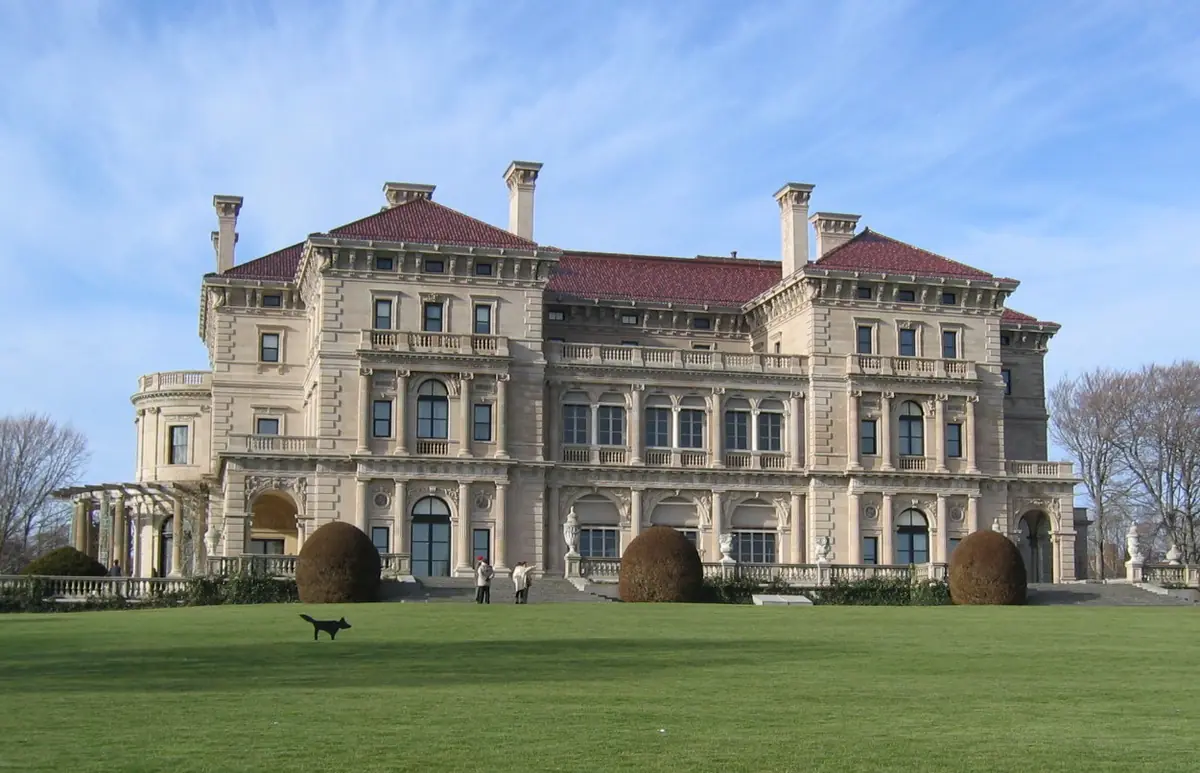
Newport in winter is about going inside. The Bellevue Avenue mansions — The Breakers chief among them — stay open through the cold months, so you get the marble halls and ocean-cliff views without the summer tour crowds. The cold is real here (highs around 42°F / 6°C), which makes the indoor mansion circuit and a fireplace at the White Horse Tavern the right kind of itinerary.
Timing matters more in Newport than anywhere else on this list. The holiday decorations — nearly 30 themed trees, a 15-foot poinsettia tree in the Great Hall of The Breakers built from 150 plants — go up in late November and come down on January 1. Show up on January 5 and you get the same houses, empty of decor. Show up in mid-February and you get the Winter Festival instead: ten days, more than 150 events, chili cook-offs and concerts scattered across the city.
Know also that winter thins the roster. The Breakers, Marble House, and The Elms stay open; several of the other Preservation Society houses do not.
- Location: Newport, RI, on Aquidneck Island
- January temps: ~42°F / ~30°F high-low (~6°C / ~−1°C)
- Mansion tickets: The Breakers about $32 adult, $14 ages 6–12; combination tickets from about $45
- Holiday decor: late November through January 1 only
- The big event: Newport Winter Festival, ten days in mid-February, 150+ events
- Drive from Boston: about 1.5 hours
- Best for: Couples and history travelers who don’t mind a cold, indoor-leaning trip
Where Should You Go for a Mild, Walkable Winter Trip?
Charleston, Savannah, and Cape May give you a winter trip built around walking, food, and history rather than beaches or slopes. Charleston is the value pick — mild days near 59°F (15°C), the cheapest hotels of this group, and oyster season. Savannah runs a few degrees warmer. Cape May is quiet and cheap, but be warned: half of it closes.
Charleston, South Carolina — Historic Walks and Oyster Season
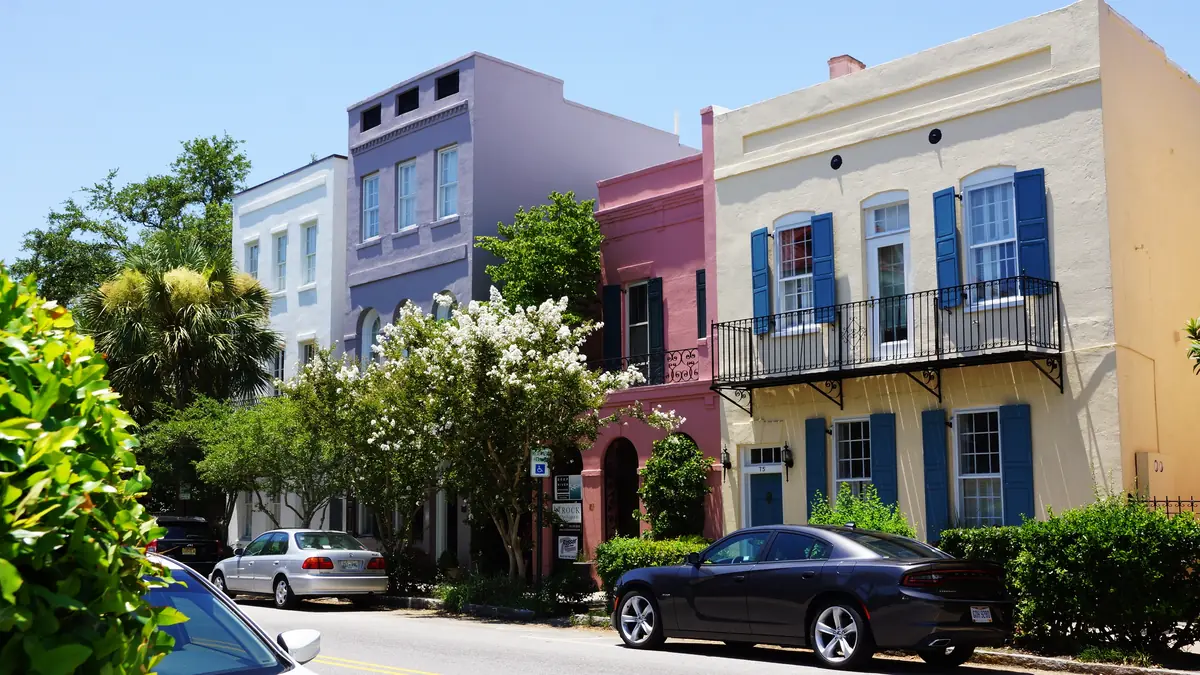
Charleston is the pick for a first-timer. Winter days sit near 59°F (15°C), warm enough to walk Rainbow Row, The Battery, and the market for hours, and hotel rates run lower than the Florida escapes. Oyster season peaks now, so a roast at a spot like Leon’s or a plate at The Ordinary is the move.
The thing to time carefully is the Fort Sumter ferry from Liberty Square, and not for the reason most guides give. Yes, it runs about 10°F colder out on the open water, the upper deck is fully exposed, and high winds can cancel the fort landing altogether. But the bigger trap is the schedule. From early January through late February, Liberty Square drops to two departures a day — 11 a.m. and 2 p.m. — instead of the usual three, and the Patriots Point boat drops to a single 12:30 p.m. run. Miss the 2 p.m. and your Fort Sumter day is gone. The round trip takes about 2.5 hours; adult tickets run roughly $35.
For lights, the Holiday Festival of Lights at James Island County Park is a three-mile drive-through loop with more than 750 illuminated displays. Two things to know: it ends on December 31, so a January trip misses it entirely, and admission is priced by how busy the night is. Buying at the gate instead of online costs you an extra $10 to $15 per car — the difference between $15 and $45 depending on the night.
Pro Tip: Book the Holiday Festival of Lights online for a Monday through Thursday night. Those are the cheapest tier at $15 per vehicle, and the entry queue on Riverland Drive is a fraction of what it is on a December weekend.
- Location: Charleston, SC, on the Lowcountry coast
- January temps: 59°F / 44°F high-low (15°C / 7°C); ocean ~63°F (17°C), too cold to swim
- Hotels: roughly $120–$200/night, the cheapest of the mild-winter group
- Fort Sumter ferry: ~$35 adult; two departures daily in deep winter
- Holiday Festival of Lights: $15–$30 per vehicle online, $25–$45 at the gate; ends December 31
- Drive from DC: ~531 miles (855 km), about 8 hours
- Time needed: 3 days to cover the peninsula without rushing
- Best for: First-time winter visitors who want history, food, and value
Savannah, Georgia — Squares, Oysters, and Mild Days
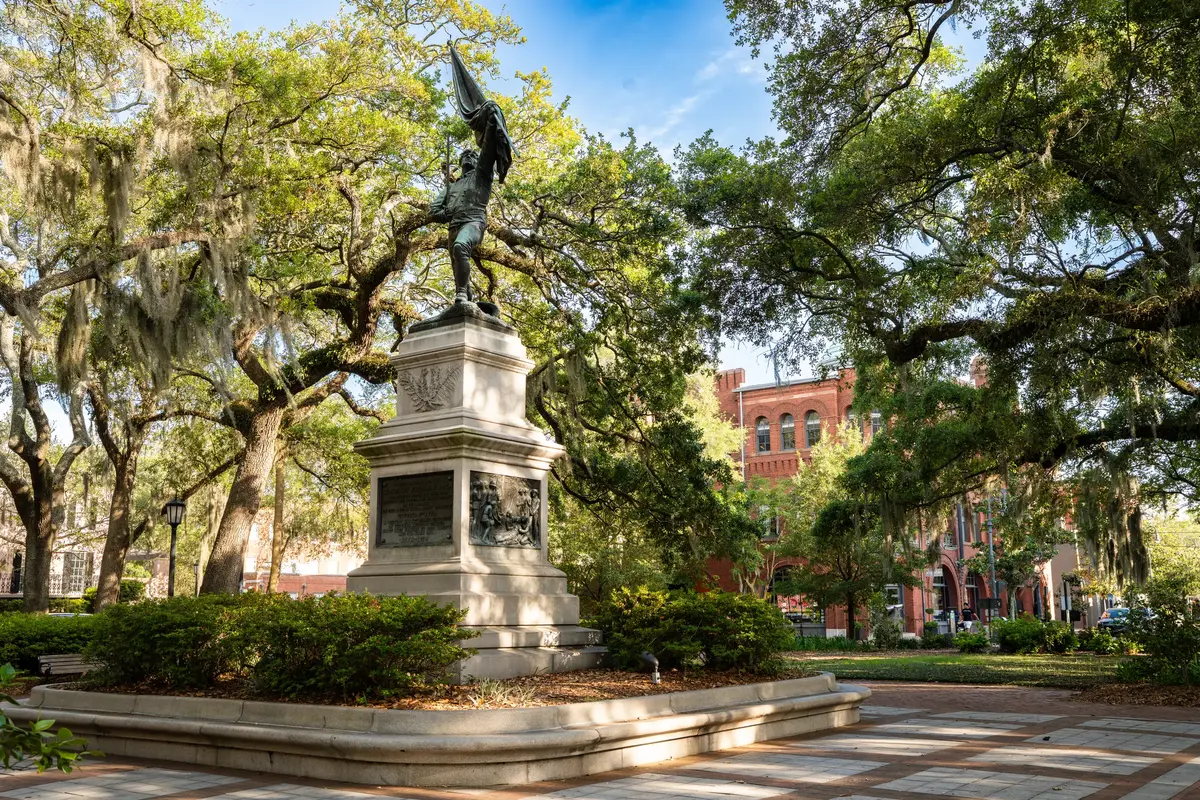
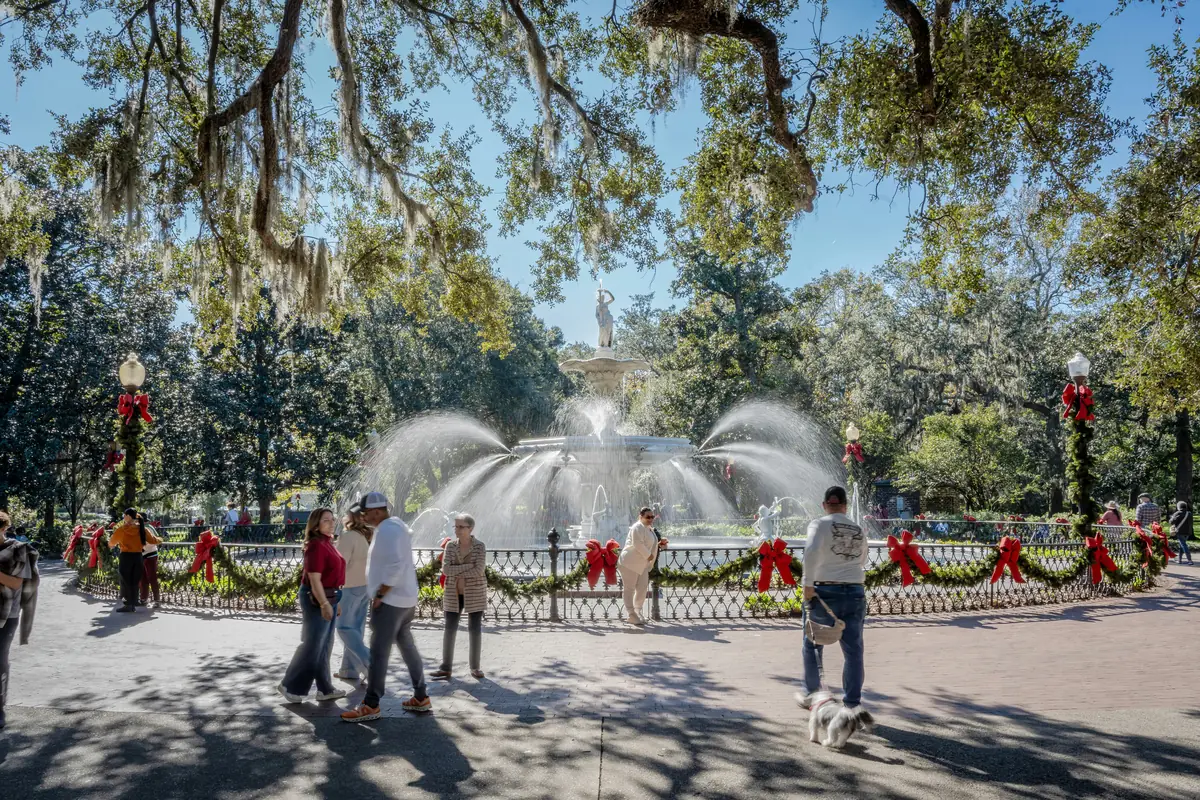
Savannah runs slightly warmer than Charleston — highs around 60°F (16°C) — and its 22 leafy squares make the historic district one long, easy walk. Forsyth Park, the Bonaventure Cemetery, and the riverfront fill a couple of unhurried days, and oyster season overlaps here too.
Pair it with Charleston if you have four or five days. Two hours of I-95 buys you a second city with the same weather, the same seafood calendar, and a different street grid.
- Location: Savannah, GA, about two hours south of Charleston
- January temps: 60°F / 43°F high-low (16°C / 6°C)
- Drive from Charleston: about 2 hours
- Best for: Slow-paced walkers who want mild weather and Southern food
Cape May, New Jersey — Quiet Victorian Coast (Half of It Closed)
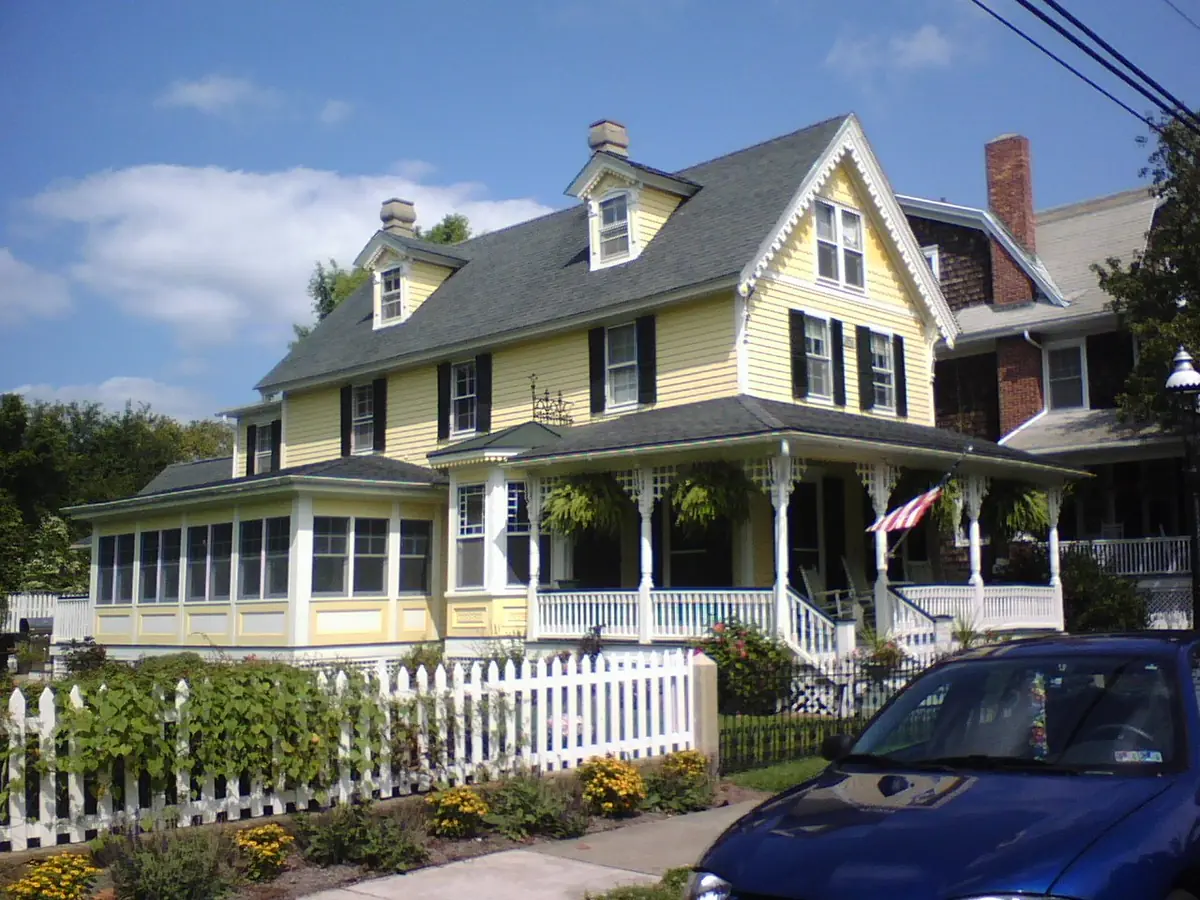
Cape May is the honest wildcard. Its historic district preserves about 600 Victorian buildings, and the off-season quiet is the whole appeal — no summer traffic, no waits, low rates. The trade-off is real: shops on the Washington Street Mall are independently owned and set their own hours, so many close for winter or open weekends only, and seasonal restaurants shut down entirely. Locals call it the off-off season.
Here’s the upside of the closures. The fine-dining rooms that need a reservation months ahead in summer become bookable on short notice — the Ebbitt Room at the Virginia Hotel, Peter Shields, The Blue Pig, Sapore. The Lobster House stays open year-round. Note the one gap: the Washington Inn, arguably the town’s marquee dining room, closes for the deep winter and reopens in early February. Plan around that if it’s on your list.
Come for a slow, cheap coastal weekend, not a full slate of open attractions.
- Location: Cape May, NJ, at the southern tip of the Jersey Shore
- January temps: ~45°F / ~32°F high-low (~7°C / ~0°C)
- Cost: among the cheapest picks here at off-season rates
- What’s open: fine dining and the historic district; most shops are weekends-only or closed
- What’s closed: the Washington Inn until early February
- Drive from Philadelphia: about 2.5 hours
- Best for: Couples who want quiet, cheap, and Victorian over lively
Where Are the Best-Value and Family Winter Trips?
Asheville, North Carolina, is the value standout: off-season hotel rates, the Biltmore Estate dressed for Christmas, and mountain views that sharpen once winter haze clears. For families who want snow without a full ski budget, New Hampshire’s White Mountains pair the seasonal Ice Castles — tickets around $15 to $32 — with sledding and low-key winter towns.
Asheville, North Carolina — Off-Season Rates and Biltmore
Asheville does double duty as a budget pick and a couples pick. Winter is off-season, so hotels drop to roughly $120–$200/night, and the bare trees actually open up long-range Blue Ridge views that summer haze hides.
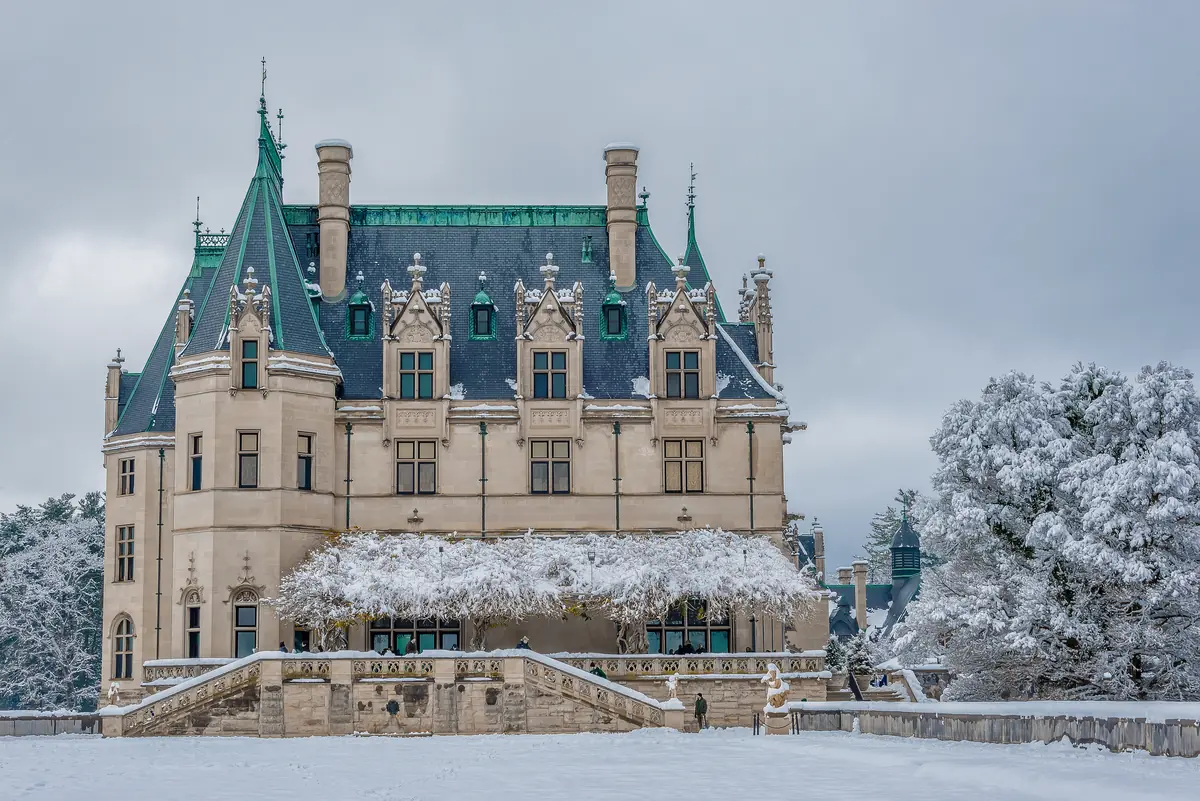
The Biltmore Estate is the one place the “budget” framing breaks down, and it’s worth being blunt about it. The 250-room Vanderbilt mansion decks out for Christmas from early November to early January, and daytime tickets during the holiday season now start around $105 per adult. Grounds-only admission — gardens, Antler Hill Village, the winery, no house — runs about $85. Candlelight Christmas Evenings start higher still. Booking online at least seven days out saves $10 a ticket, and prime evening slots sell out weeks ahead.
If that’s more than you want to spend, skip the house and put the money into the town. The South Slope breweries (Burial, Hi-Wire, Wicked Weed) keep the evenings busy, and the Omni Grove Park Inn spa is the splurge for a cold afternoon. Short winter hikes still work too — Moore Cove Falls is a 0.7-mile (1.1 km) round trip.
- Location: Asheville, NC, in the Blue Ridge Mountains
- January temps: 44°F / 27°F high-low (7°C / −3°C)
- Hotels: roughly $120–$200/night at off-season rates
- Biltmore: holiday daytime admission from about $105 adult; grounds-only about $85
- Biltmore Christmas: early November to early January
- Drive from Charlotte: ~130 miles (209 km), about 2 hours
- Best for: Budget travelers, couples, and mountain-town lovers
The White Mountains, New Hampshire — Ice Castles and Big Snow
This is the family snow trip that doesn’t require lift tickets. The Ice Castles in North Woodstock — hand-built tunnels, slides, and towers of ice — open when the weather allows and usually run into February. In a cold December they can open the week after Christmas; in a mild year, not until mid-January. Off-peak tickets are about $15–$21, peak $23–$32.
Budget past the ticket, though. Travelers consistently flag the same thing: the entry fee is the floor, not the ceiling. The sleigh ride is a separate charge of roughly $25 per person, including kids. Souvenir photos run about $29. A drink at the ice bar is around $17.50, and hot chocolate is $5 a cup. A family of four can walk in on a $60 ticket buy and walk out having spent triple that.
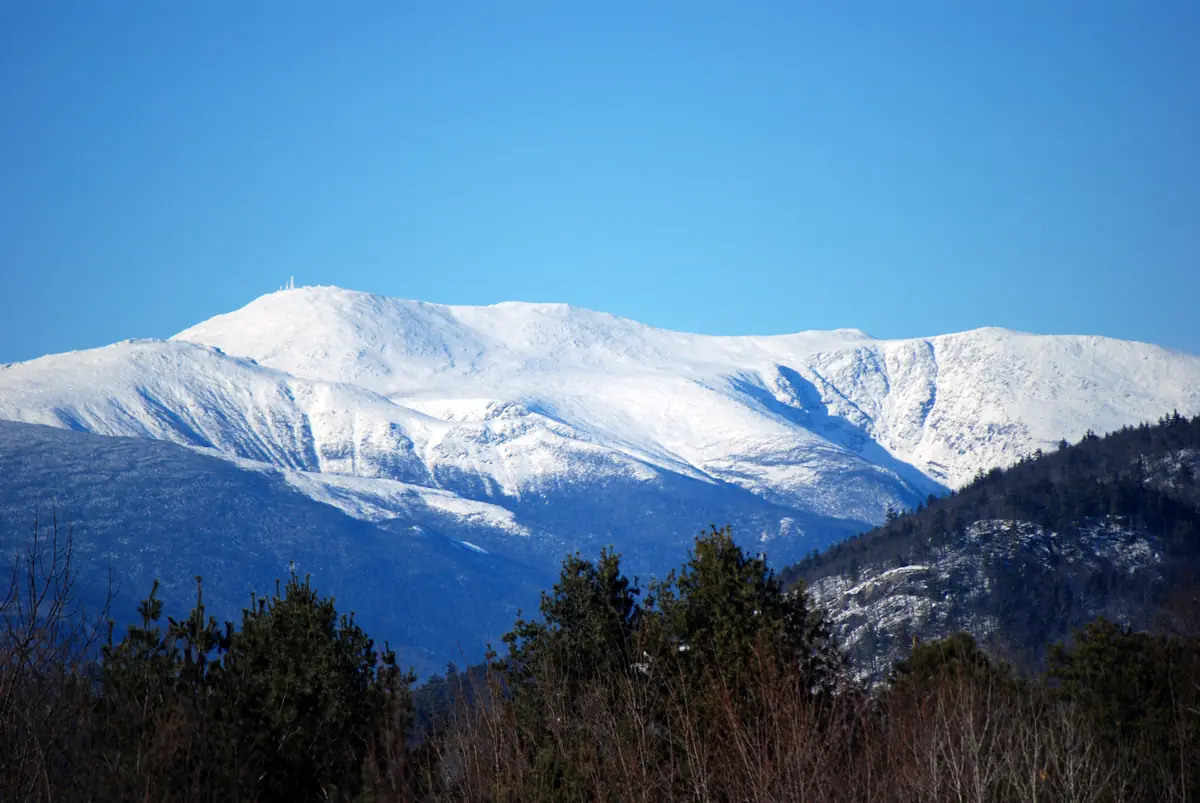
Around it, the White Mountains give you sledding, easy snowshoe trails, and the grand old Omni Mount Washington hotel for a warm-up. Valley towns sit around 30°F (−1°C) by day; the exposed summits are far colder and windier, so save the auto road and the higher peaks for a calm, clear day.
- Location: North Woodstock and the surrounding White Mountains, NH
- Ice Castles: opens late December to mid-January depending on cold, runs into February
- Cost: ~$15–$21 off-peak, ~$23–$32 peak, plus paid add-ons
- Drive from Boston: about 2.5 hours
- Best for: Families who want snow play without a ski-resort budget
When Is the Best Time for an East Coast Winter Trip?
December is best for holiday lights and festivals. January and February bring the most reliable snow and the smallest crowds almost everywhere, with one clear exception: those are Key West’s most expensive and most crowded months.
The dividing line is sharper than most guides admit. Charleston’s Holiday Festival of Lights ends December 31. Newport’s mansion decorations come down January 1. Biltmore’s Christmas display closes in early January. St. Augustine’s Nights of Lights is the outlier that runs to mid-January.
So: if the holiday-lights version of this trip is what you’re picturing, you are booking December, not winter. If you want snow, empty streets, and cheap hotels, you are booking January and February — and you are not getting the lights.
How to Get There: Drive, Fly, or Take the Auto Train
Most of these trips are drivable, but the distances vary a lot — Stowe is about 3 hours from Boston, while Charleston is closer to 8 hours from DC. For the Florida runs, flying usually beats a two-day drive, or you can load your car onto Amtrak’s Auto Train and skip the I-95 grind entirely.
By car, the honest drive times from major hubs:
- Boston → Stowe, VT: ~199 miles (320 km), about 3 hours 10 minutes
- NYC → Stowe, VT: ~336 miles (541 km), about 5.5 hours
- NYC → Lake Placid, NY: ~288 miles (463 km), about 5 hours
- Boston → Newport, RI: about 1.5 hours
- Charlotte → Asheville, NC: ~130 miles (209 km), about 2 hours
- DC → Charleston, SC: ~531 miles (855 km), about 8 hours
- NYC → Charleston, SC: ~758 miles (1,220 km), about 11.5 hours
- Miami → Key West, FL: ~160 miles (260 km), about 4 hours
By train, the Auto Train is the Florida shortcut. Amtrak runs it overnight between Lorton, Virginia (near DC) and Sanford, Florida (near Orlando) — about 855 miles (1,376 km) in roughly 17.5 hours, with your vehicle loaded on the same train.
Two things about the price. Coach fares start around $95, and a private room runs $400 or more. But the car is the bigger line item and the one people underestimate: budget roughly $310 for a motorcycle, about $570 for a standard car, and around $650 for an extended vehicle. A couple in coach with one car is realistically looking at $750 and up one way, not the $95 headline.
The other thing is the clock. Vehicle check-in closes at 2:00 p.m. for motorcycles and 2:30 p.m. for standard vehicles, and there are no exceptions. Miss it and you are driving to Florida. Priority offloading — first 30 cars off the train — is an optional add-on of about $125, which matters more than it sounds like when 300 vehicles are queued behind you at 9 a.m. in Sanford.
By air, the useful airports are MIA (Miami), EYW (Key West), JAX (for St. Augustine), CHS (Charleston), SAV (Savannah), AVL (Asheville), BTV (for Stowe), and BOS plus the NYC airports for the Northeast. The main driving spines are I-95 down the coast, I-89 from Boston toward Stowe, and I-91 up the Connecticut River valley into Vermont.
Quick Answers: East Coast Winter Trip FAQ
Which East Coast City Stays Warmest in January?
Key West, Florida — January averages a 75°F (24°C) high and 65°F (18°C) low, with swimmable water near 74°F (23°C). Cold fronts occasionally drop it into the 60s or 50s, so it’s the warmest bet, not a guarantee.
What Are the Best Ski Mountains on the East Coast?
Stowe, Vermont (485 acres, 314 inches / 798 cm of snow, window tickets ~$169–$239) and Whiteface at Lake Placid, New York (3,430 feet / 1,046 m of continuous vertical, ~$79–$109 a day) lead the field. Whiteface has more vertical; Stowe has far more natural snow. New Hampshire’s White Mountains and Pennsylvania’s Poconos add more options.
What’s the Best Month for an East Coast Winter Trip?
December for holiday lights. Every major display except St. Augustine’s shuts down within days of New Year’s. January and February for skiing and the smallest crowds — but those are also the priciest months in Key West.
Can You Swim at East Coast Beaches in Winter?
Only in South Florida, where the water sits around 70–75°F (21–24°C) — think Miami and Key West. North Florida, Georgia, and the Carolinas run 55–65°F (13–18°C), too cold for most people to swim.
How Much Does an East Coast Winter Getaway Cost?
It’s a wide range. Charleston and Asheville hotels run about $120–$200/night; Key West in peak winter is $200–$600+; Stowe is $150–$400+ plus lift tickets. Amtrak’s Auto Train starts around $95 for a coach seat, but add roughly $570 to bring a standard car.
Pick the Weather First, Then the Town
The East Coast in winter is really two trips, and the failure mode is trying to split the difference. For guaranteed warmth, only South Florida delivers — Key West, Miami, Palm Beach — and it costs the most in January and February. For snow, Stowe and Lake Placid lead, with the White Mountains as the family-budget version. For a mild, cheaper middle ground, Charleston and Asheville win on value.
The mistakes are predictable. Assuming “beach town” means swimming north of Orlando. Assuming “warm” Key West can’t turn cold and windy for a weekend. Booking Newport in February expecting Christmas trees, or Charleston in January expecting the lights. Every one of those is avoidable with a calendar and the numbers above.
Get those two things right — the weather you actually want, and the week the thing you came for is actually open — and any of these twelve pays off.