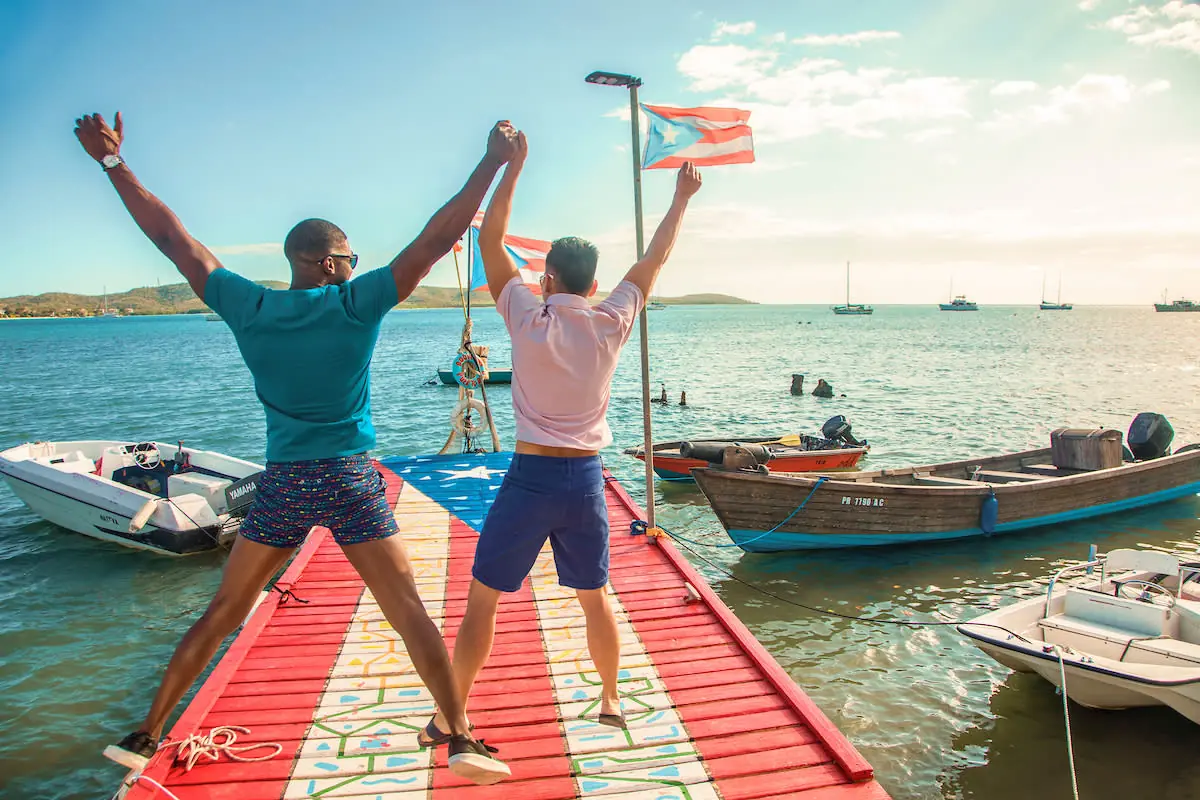
Scuba diving in Puerto Rico sounds simple until you realize San Juan sits on the wrong ocean. This guide cuts through the geography, transit options, and costs so you can stop cross-referencing Reddit threads and start booking. You will learn exactly where to stay, what each region delivers, and which sites match your certification level.
Why does location matter so much for scuba diving in Puerto Rico?
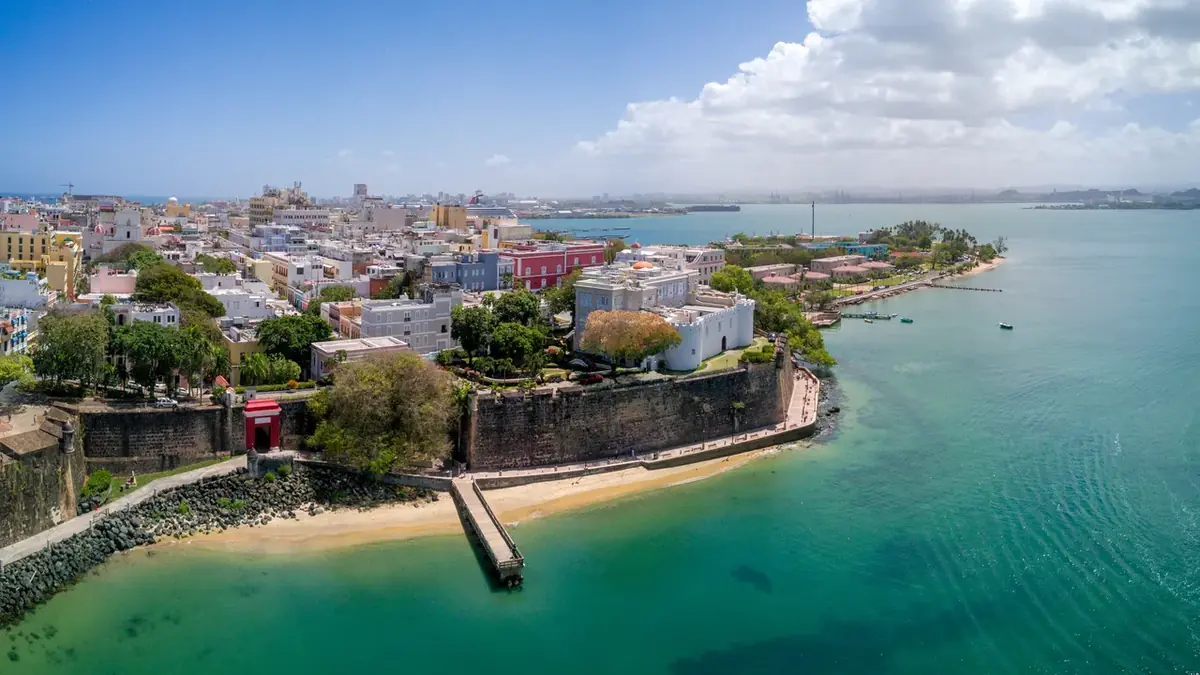
Puerto Rico‘s best reefs are nowhere near San Juan. The island stretches over 100 miles (160 km) wide, split down the middle by a steep mountain spine that turns cross-island drives into three-hour ordeals. San Juan faces the rough Atlantic; the calm, clear Caribbean water is on the opposite coast. Book your hotel in the region where you plan to dive.
The north shore faces the deep, choppy Atlantic. That is exactly where San Juan and the cruise terminals sit. The calm reefs lie on the complete opposite side.
The practical consequence is that the best reefs are hours from the capital. You will find them in La Parguera on the south coast, Crash Boat Beach on the west, and the satellite islands of Culebra and Vieques to the east.
Driving from a San Juan hotel to a morning boat dive in Guánica is a grueling two-hour commute each way. That is not a vacation, that is a logistics emergency.
Pro Tip: US citizens do not need a passport to visit Puerto Rico. It is a US territory, which means you arrive at a domestic terminal and skip international customs lines on your return flight.
How do you get to Culebra and Vieques — ferry or flight?
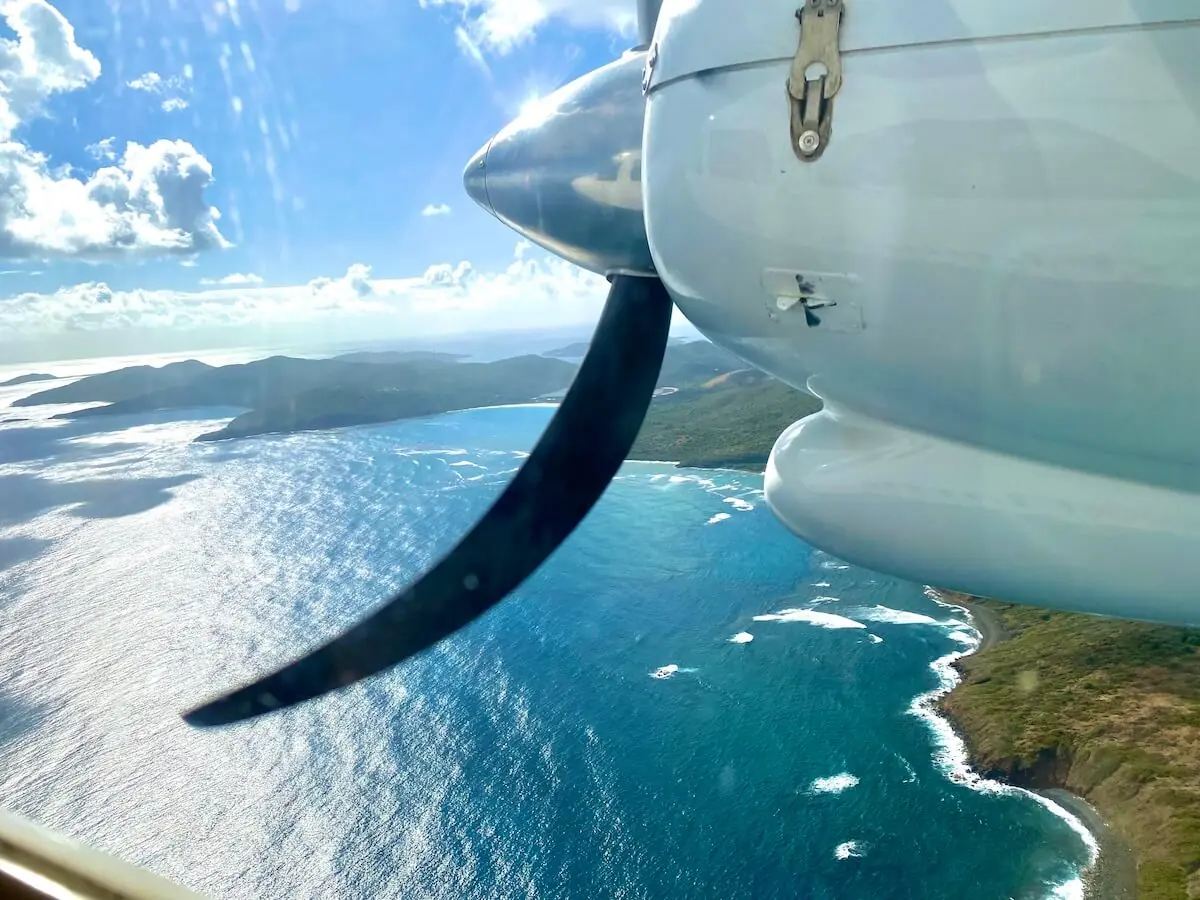
Flying is faster and more reliable, but the ferry is cheaper. A regional flight from San Juan reaches Culebra or Vieques in under 30 minutes for roughly $70 to $115 one-way. The Ceiba ferry now costs $11.25 per adult each way for non-residents (rates restructured in early 2026) and takes 45 minutes to 1.5 hours, plus the drive to Ceiba.
The ferry departs from the Ceiba terminal on the eastern coast, about 75 to 90 minutes from San Juan airport. You drive to Ceiba, pay to park your rental car, and queue. During peak travel, that wait can stretch into hours.
The old $2 ticket era is over. Puerto Rico Ferry (operated by Hornblower under Regulation 9682) rolled out the new non-resident fare in early 2026, and $11.25 one-way is now standard for adults between 11 and 59. Rental cars still cannot be taken on the ferry — only residents with valid registration can bring vehicles.
Flights with Cape Air and Vieques Air Link depart from Isla Grande (SIG) or San Juan International (SJU). For a group splitting costs, the flight math often wins once you factor in parking at Ceiba and the risk of a missed morning dive.
| Transit method | Departure | Destination | Duration | Est. cost (one way) | Friction |
|---|---|---|---|---|---|
| Passenger ferry | Ceiba Terminal | Culebra | ~1 hr | $11.25 | High — drive to Ceiba, possible delays |
| Passenger ferry | Ceiba Terminal | Vieques | 40–45 min | $11.25 | High — drive to Ceiba, possible delays |
| Regional flight | Isla Grande (SIG) | Vieques | 17 min | $72+ | Low — 10 min from downtown San Juan |
| Regional flight | San Juan Int. (SJU) | Culebra | 30 min | $89–$114+ | Low — direct from mainland US flights |
Pro Tip: Book the first ferry of the day and arrive at the Ceiba terminal at least 90 minutes early. Non-resident seats are limited and ticket releases sell out within hours for weekends and holidays.
How much does scuba diving in Puerto Rico cost?
Scuba diving in Puerto Rico costs between $69 and $235 per outing depending on format. A guided single-tank shore dive for certified divers runs $69 to $75 — one of the cheaper rates in the Caribbean. Two-tank boat dives average $150 to $235. Uncertified Discovery Scuba programs average $140 to $160, and a full PADI or SSI Open Water certification runs around $1,054.
Two-tank boat dives are the standard half-day format across the island. Prices vary by shop and destination site.
Discovery Scuba programs include full gear rental, a safety briefing, and one-on-one instructor guidance capped at 40 feet (12 m). If the intro trip convinces you to get certified, upgrading to a multi-day Open Water course costs roughly $1,054.
| Experience | Target diver | Duration | Est. cost | Included |
|---|---|---|---|---|
| Discovery Scuba | Uncertified / families | 2–4 hrs | $140–$160 | Briefing, full gear, guide, max 40 ft |
| 1-tank shore dive | Certified (budget) | Half-day | $69–$75 | Guide, weights, tank |
| 2-tank boat dive | Certified (standard) | Half-day | $150–$235 | Boat, guide, weights, 2 tanks, snack |
| PADI / SSI Open Water | Uncertified seeking license | 3–5 days | ~$1,054 | E-learning, pool, 4 open water dives, gear |
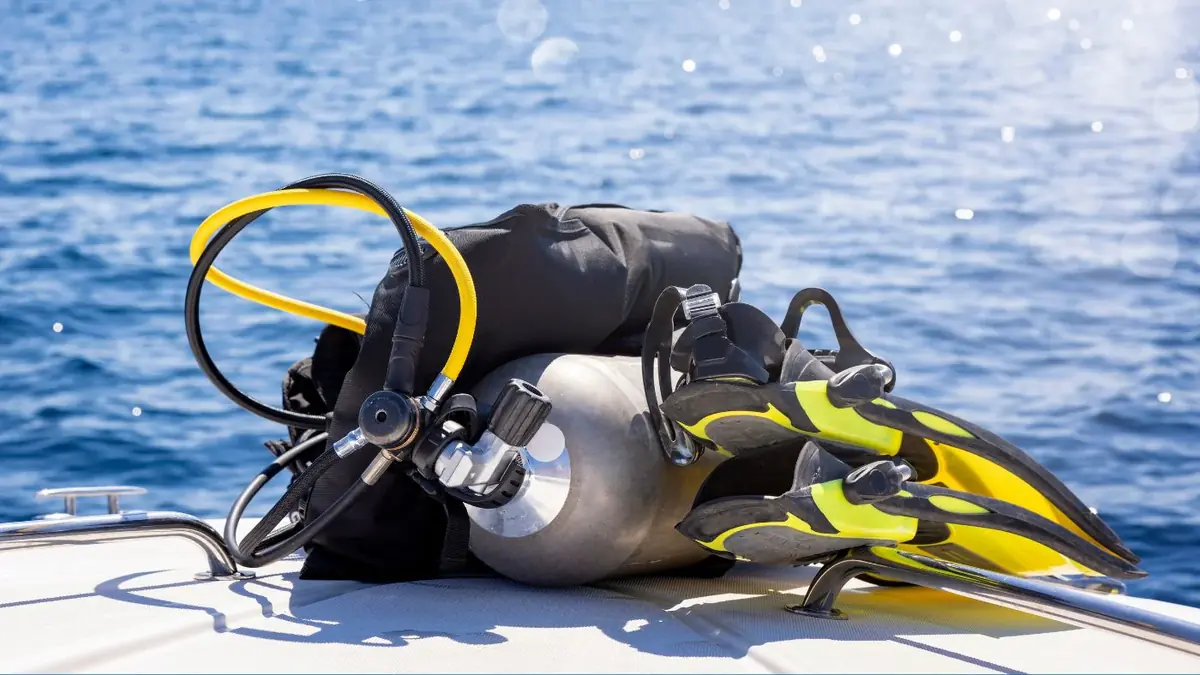
Gear rental for certified divers typically adds $20 to $40 per day if you did not bring your own BCD and regulator. Build that into your broader Puerto Rico travel cost and budget planning.
When is the best time for scuba diving in Puerto Rico?
The dry season from December through May delivers the best overall conditions for scuba diving in Puerto Rico. Visibility regularly hits 100 feet (30 m), water temperatures sit at 78 to 82°F (26 to 28°C), and humpback whales migrate through the Mona Passage. The June-to-November wet season brings warmer water up to 84°F (29°C) but carries real hurricane risk — check seasonal Puerto Rico weather patterns before committing to dates.
Dry season water is manageable in a standard 3mm wetsuit. The wet season offers nutrient-rich conditions and more diverse marine life, but storms can shut down operators for days and churn up visibility.
If you dive during wet season, build schedule flexibility into your trip. A one-day reschedule window can save a trip.
Pro Tip: The south coast wall system at La Parguera is far more sheltered from trade winds than the north or east shores. It is a reliable fallback when heavy swells close down exposed sites.
Where should you dive based on your region?
Eastern satellite islands — Culebra and Vieques
These islands are the right starting point for beginners, families, and underwater photographers. The water is Caribbean-calm with gradual sandy entries, and marine life stays consistent year-round.
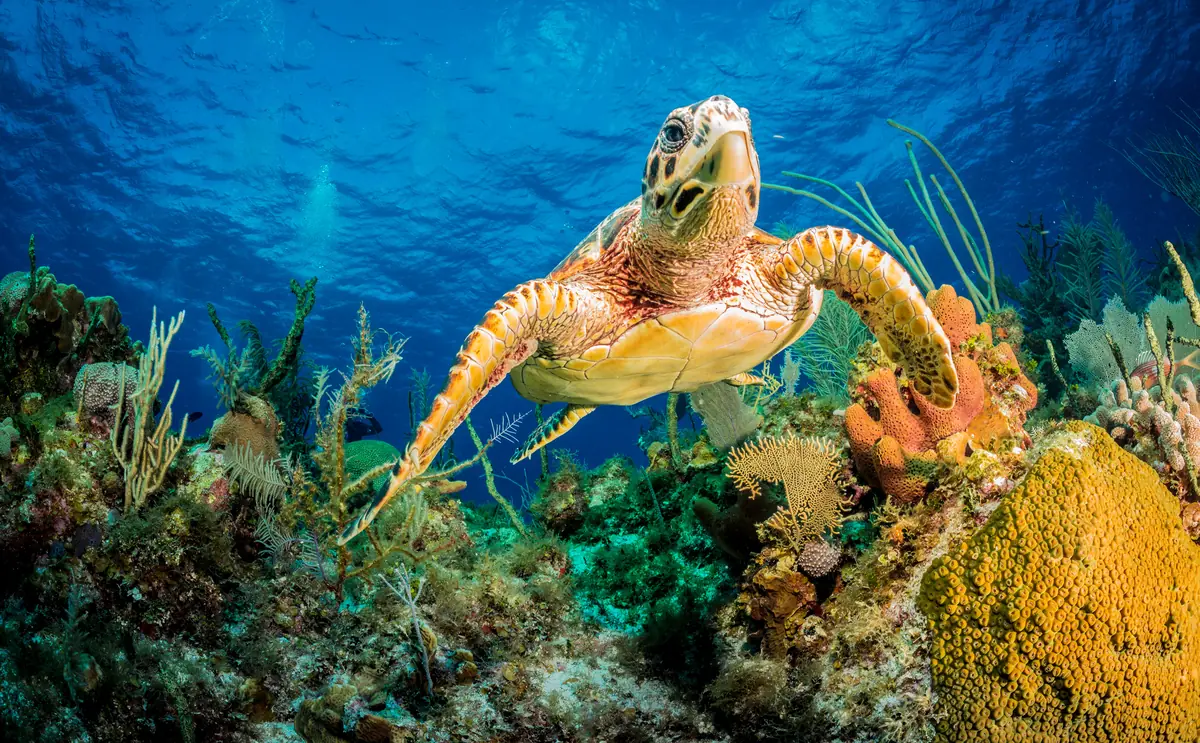
Mosquito Pier on Vieques functions as an artificial reef. Hawksbill turtles patrol the structure at 40 feet (12 m) with a regularity that borders on theatrical. Sea Ventures runs guided dives here.
Cayo Lobito near Culebra features a sloping reef that drops to 75 feet (22 m) and hosts one of the thickest nurse shark populations in the territory. They rest on the sand in clusters of five or more — alarming at first glance, then the best photo op of your trip. Culebra Divers is the go-to operator.
- Location: Culebra and Vieques, Spanish Virgin Islands (eastern Puerto Rico)
- Cost: $150 to $235 for 2-tank boat dive; ferry passage $11.25 each way
- Best for: Beginners, families, photographers, turtle and nurse shark encounters
- Time needed: 2 to 3 days minimum
Southern coast — La Parguera and the walls
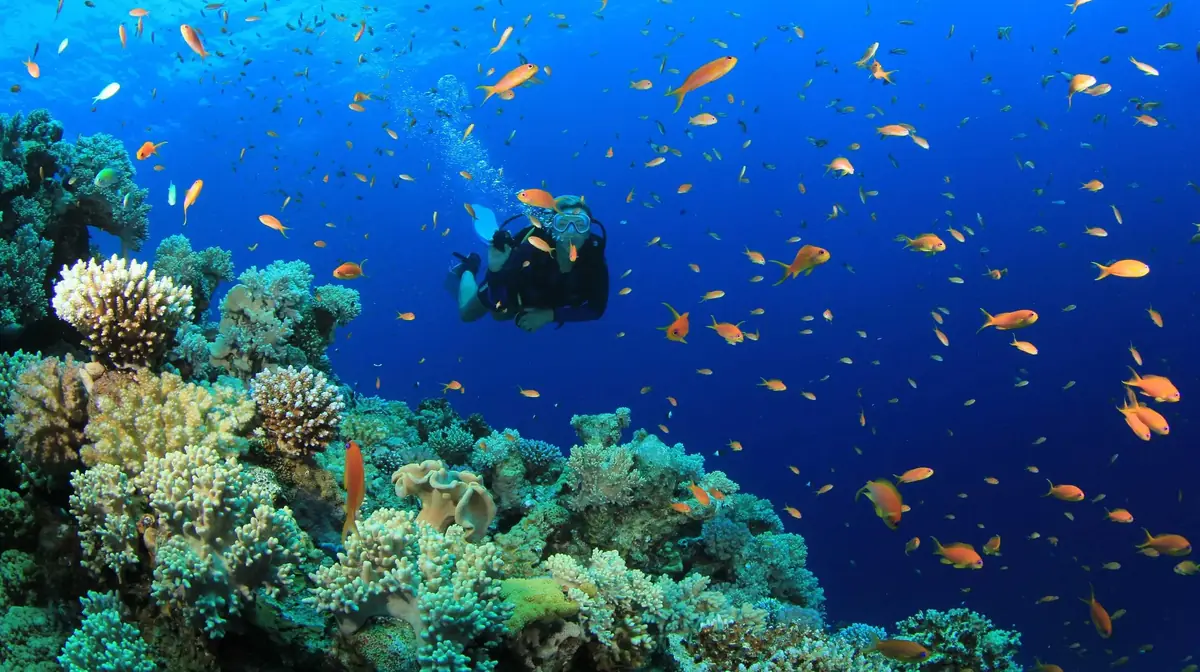
This is where certified divers come to be humbled. La Pared is a 22-mile (35 km) barrier reef that begins near La Parguera and drops from 65 feet (20 m) straight past the 130-foot (40 m) recreational limit into darkness.
Black Wall is the headliner — a vertical face encrusted with black coral forests and purple tube sponges. Fallen Rock (accessed via Island Scuba or Paradise Scuba) sits past 130 feet (40 m) and delivers spotted eagle ray encounters that experienced divers describe as disorienting in the best way.
Efra’s Wall runs 55 to 100 feet (16 to 30 m) with a carved-canyon layout. It suits Advanced Open Water divers who want the wall experience without pushing recreational depth limits.
- Location: La Parguera and Guánica, southwest Puerto Rico
- Cost: $150 to $235 for 2-tank boat dive
- Best for: Advanced Open Water divers; wall diving, eagle rays, black coral
- Time needed: 2 days minimum
Western coast — Crash Boat Beach and Desecheo Island
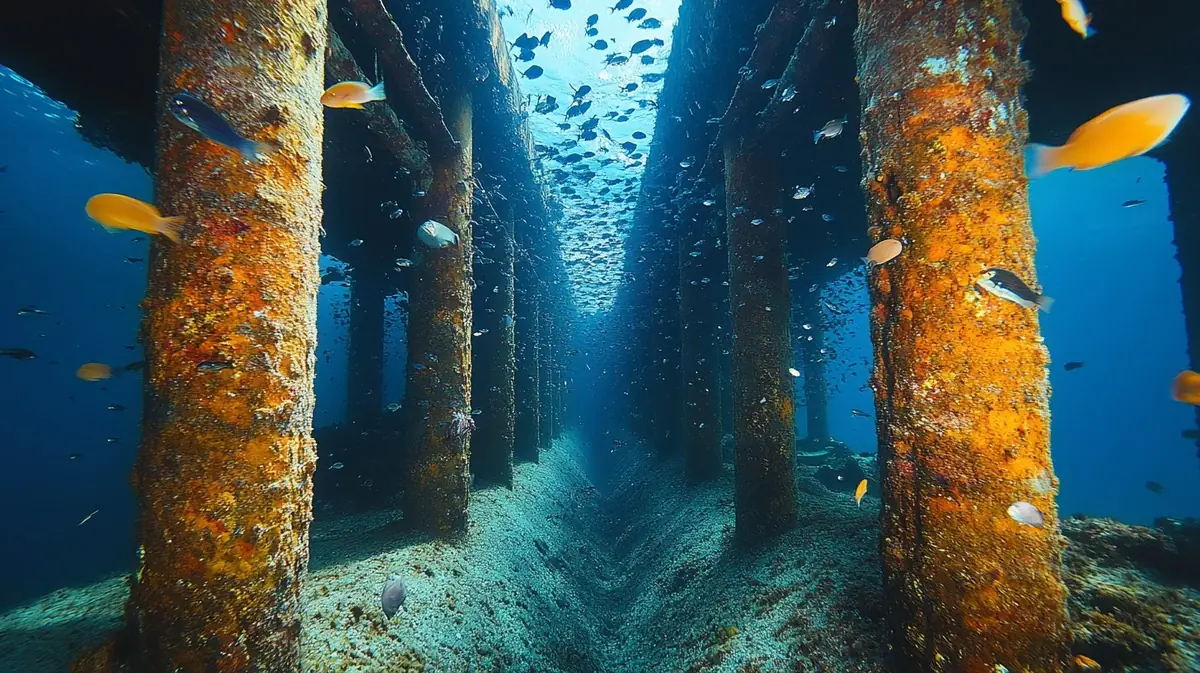
Crash Boat Beach in Aguadilla is one of the best shore dives on the island and easily the cheapest. Walk in from the sand and navigate the rusted, collapsed pylons of an old navy pier. The steel structures jut from turquoise water at depths maxing around 40 feet (12 m).
Deep shadows and tight crevices shelter camouflaged frogfish and seahorses. You would walk past them at 100 paces above water. Aquatica Dive & Surf runs guided entries right from the public beach.
A 35-minute boat ride from Rincón reaches Desecheo Island National Wildlife Refuge. Federal protection has let the reef recover dramatically. Candyland offers coral mounds and sea fans at 60 feet (18 m); Las Cuevas delivers tight swim-throughs for divers comfortable with overhead environments. Taino Divers is the primary operator.
- Location: Aguadilla (shore) / Rincón (boat to Desecheo), northwest Puerto Rico
- Cost: $69 to $75 shore dive; $150 to $235 boat dive to Desecheo
- Best for: Budget-conscious certified divers, macro photographers, reef enthusiasts
- Time needed: 2 days
Pro Tip: Rincón’s hills mean you will get an early alarm whether you want one or not. Feral roosters are not optional. Pack your dive bag the night before.
Mona Island — the expedition you earn
Mona Island sits 50 miles (80 km) offshore in the Mona Passage. Access requires booking a liveaboard charter, and the crossing demands an experienced captain to handle serious ocean swells.
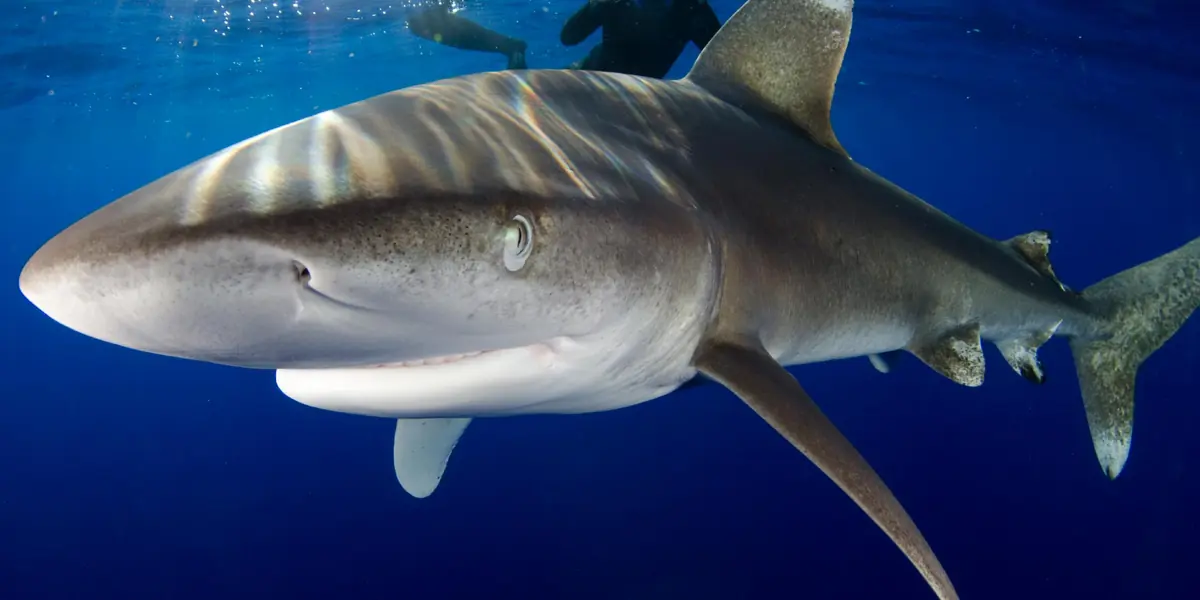
Carabinero Wall drops from 20 feet (6 m) past 500 feet (152 m). Visibility regularly touches 165 feet (50 m). Oceanic whitetip sharks work the current lines, and humpbacks pass through during winter migration. Divers call it the Galapagos of the Caribbean, and for once the label fits.
This site is for experienced Advanced-certified divers only. If you have fewer than 50 logged dives, the wall will still be there when you are ready.
- Location: Mona Island, 50 miles (80 km) west of Mayagüez
- Cost: Liveaboard charter only; multi-day commitment at premium pricing
- Best for: Expert and technical divers; pelagic encounters
- Time needed: 3 to 5 days
Metropolitan San Juan — Escambrón and beyond
Escambrón Marine Park is the city’s most accessible option — protected coves, sandy entries, depths capping at 15 to 40 feet (4.5 to 12 m). Green turtles and small squid are reliable sightings. Scuba Dogs and Caribe Aquatic are the established metro operators.
Honest assessment: San Juan diving is convenient but rarely exceptional. It serves complete beginners well and works as a warm-up before heading to the better sites elsewhere.
Which dive sites match your certification level?
| Dive site | Region | Max depth | What you’ll see | Level required |
|---|---|---|---|---|
| Crash Boat Pier | Aguadilla (NW) | 40 ft (12 m) | Frogfish, seahorses | Beginner / Discovery |
| Mosquito Pier | Vieques (E) | 40 ft (12 m) | Hawksbill turtles | Beginner / Family |
| Escambrón Marine Park | San Juan (N) | 15–40 ft (5–12 m) | Green turtles, sergeant majors | Beginner |
| Candyland | Desecheo (W) | 60 ft (18 m) | Sea fans, parrotfish | Beginner–Intermediate |
| Cayo Lobito | Culebra (E) | 75 ft (22 m) | Nurse sharks | Intermediate |
| Efra’s Wall | La Parguera (S) | 55–100 ft (16–30 m) | Slipper lobsters, canyons | Advanced |
| Black Wall | La Parguera (S) | 100+ ft (30+ m) | Black coral, tube sponges | Intermediate–Advanced |
| Fallen Rock | La Parguera (S) | 130+ ft (40+ m) | Spotted eagle rays | Advanced |
| Carabinero Wall | Mona Island | 150+ ft (45+ m) | Oceanic whitetips, humpbacks | Expert / Technical |
Is scuba diving in Puerto Rico safe for beginners?
Yes, as long as beginners pick the right sites and respect their limits. Escambrón Marine Park in San Juan and Mosquito Pier in Vieques both offer calm, shallow conditions ideal for first-timers. Discovery Scuba programs cap depth at 40 feet (12 m), use sandy beach entries instead of boat rolls, and keep instructors within arm’s reach.
Sites that are unsafe for beginners are flagged in the table above. La Parguera’s walls, Mona Island, and any drift scenario demand formal certification and logged experience. The sport is accessible here, but only if you respect the entry requirements for each site.
Can cruise ship passengers go scuba diving in San Juan?
Yes, but only at sites within immediate reach of the port. As our San Juan cruise port guide explains, the terminals sit on the north coast facing the Atlantic. Caribbean dive sites in Fajardo, Guánica, or La Parguera require two-hour drives each way — incompatible with a six-to-eight-hour port window. The practical option is a Discovery Scuba or Snuba session at Escambrón Marine Park, minutes from Old San Juan.
Scuba Dogs and similar operators run programs calibrated for tight port windows, delivering reliable green turtle and squid sightings without any risk of missing departure. Do not book a non-refundable tour in Fajardo or Guánica from a cruise port unless your ship is docked overnight. The travel math does not work.
Pro Tip: Confirm your exact departure time with guest services before booking any shore excursion. Port schedules occasionally shift by 30 to 60 minutes, which can collapse your dive window without warning.
What safety protocols and reef etiquette should you follow?
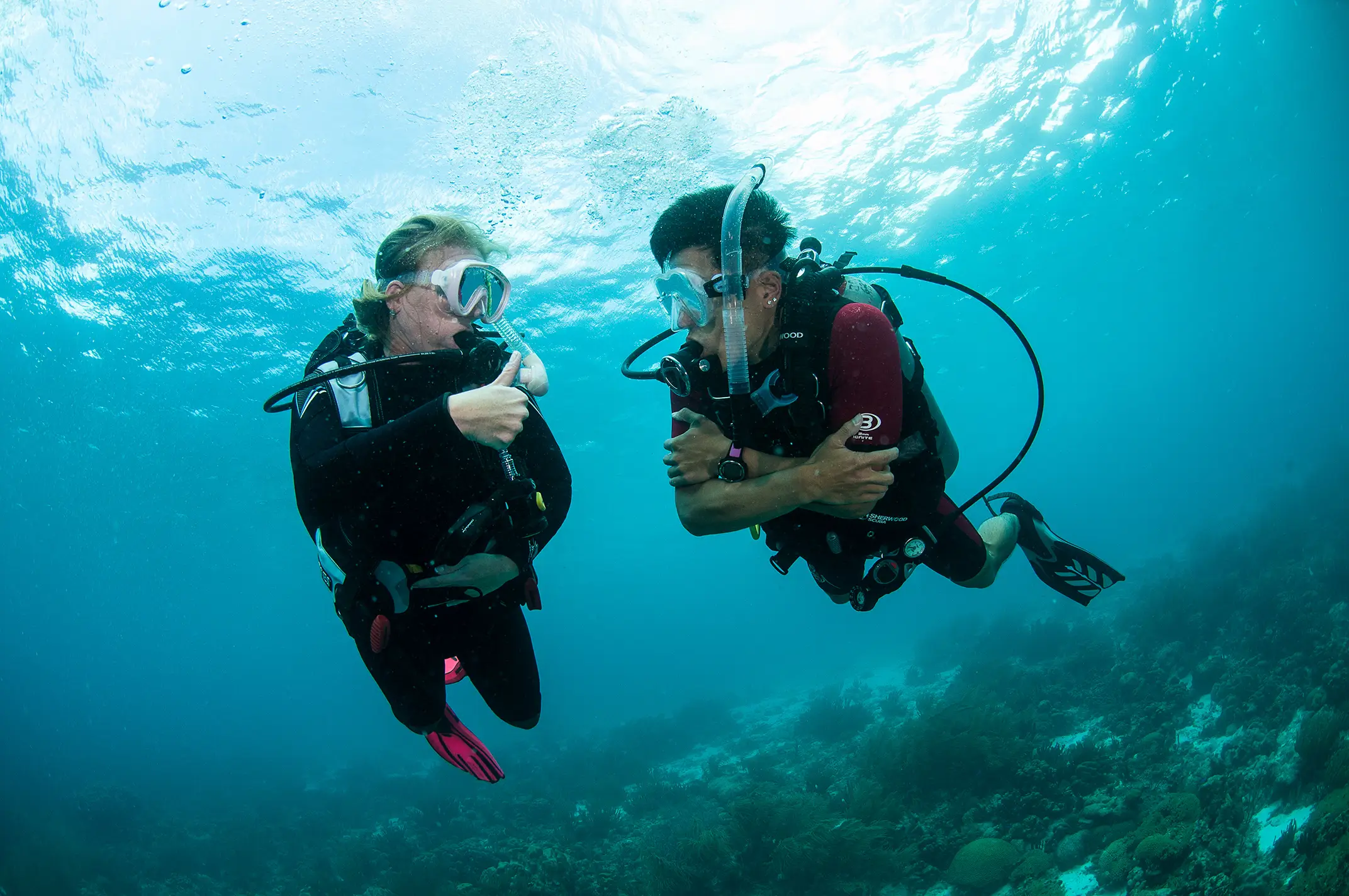
The most dangerous thing divers do here is ignore their own air gauge. Puerto Rico’s marine life is engaging enough to distract you from essential equipment — nurse sharks in clusters, eagle rays banking through blue water, seahorses clinging to pier pylons. Check your gauge every five minutes. Never use coral as a handhold. And memorize the difference between “thumbs up” (ascend now) and the OK signal (index finger to thumb).
Poor weighting and buoyancy control cause the most reef damage. An uncontrolled descent can wreck centuries-old elkhorn and staghorn coral in seconds. Confirm your weighting in shallow water before approaching any reef.
Misreading the thumbs-up-vs-OK distinction has caused preventable emergency ascents and decompression incidents. Thumbs-up means ascend immediately. The OK signal is the index finger touched to the thumb in a circle. Confirm signals with your buddy before entering the water.
Pro Tip: Run a full buddy check before rolling in — BCD, weights, releases, air supply, final OK. Rushing this step to beat another group to the site is exactly how dive trips end early.
Where should you eat after a day underwater?
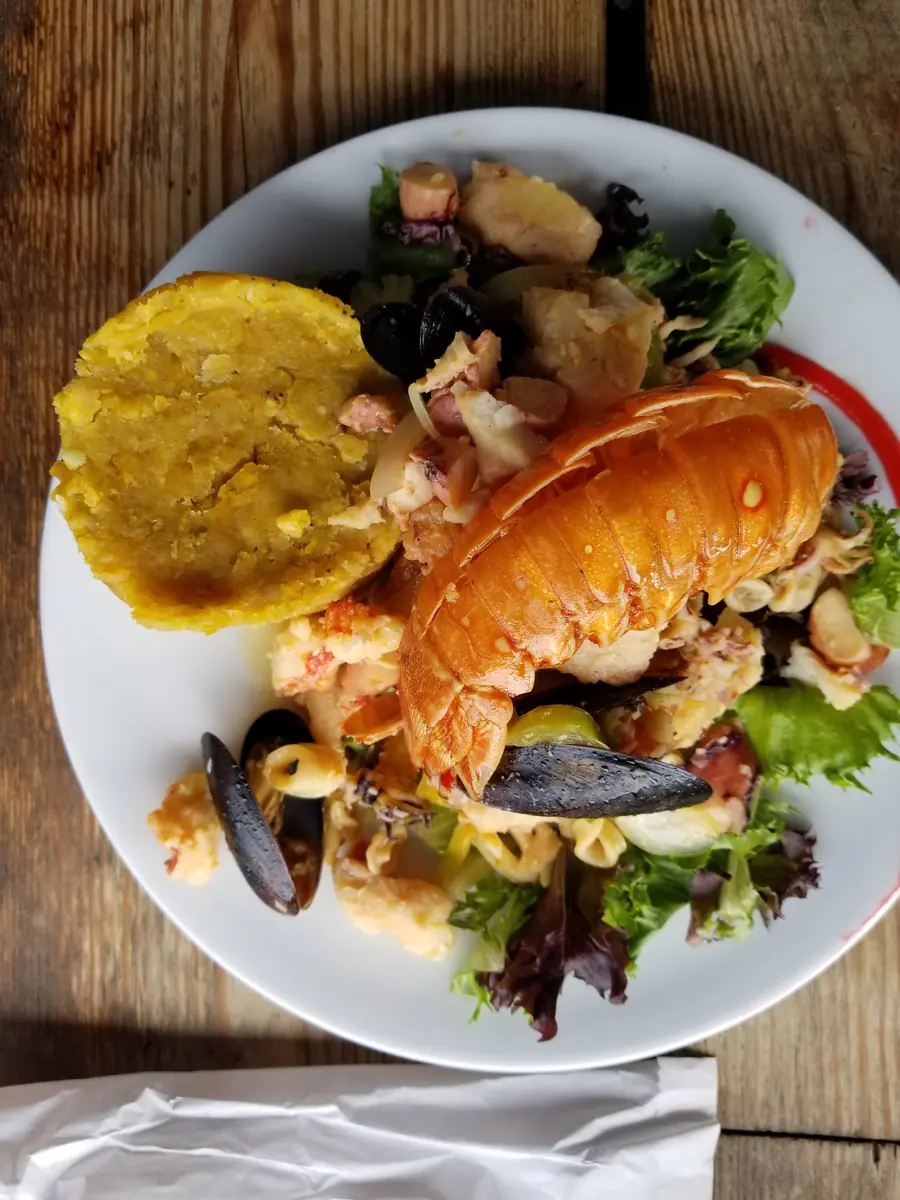
Post-dive hunger is not regular hunger. It is an urgent physical event demanding calories immediately.
Pasión Por El Fogón in Fajardo holds a mesón gastronómico designation — a Puerto Rican government mark reserved for authentic regional cuisine. The shrimp-stuffed lobster is the mandatory order after Sea Ventures trips in the east.
For the western crew finishing a Desecheo boat dive, La Estación in Rincón serves barbecue in an open-air setting calibrated for a group still half-damp from the ocean. Las Vistas Café handles pre-dive mornings — their coconut French toast has earned its reputation honestly.
Before you book
TL;DR: Scuba diving in Puerto Rico rewards travelers who do the logistical work upfront. Pick your region before you book a hotel, factor in the new $11.25 ferry fare or spring for a short flight, and match sites to your actual certification — not your ambition.
The reefs along the southern walls, the sleepy nurse sharks of Culebra, the frogfish hiding in Crash Boat’s rusted pylons, and the pelagic encounters at Mona Island cover a genuinely wide range of underwater experiences. Best of all, you get all of this inside a US territory — no passport checks, no currency exchange.
Which region are you targeting first: the calm eastern islands, the dramatic southern walls, or the cheap western shore dives?