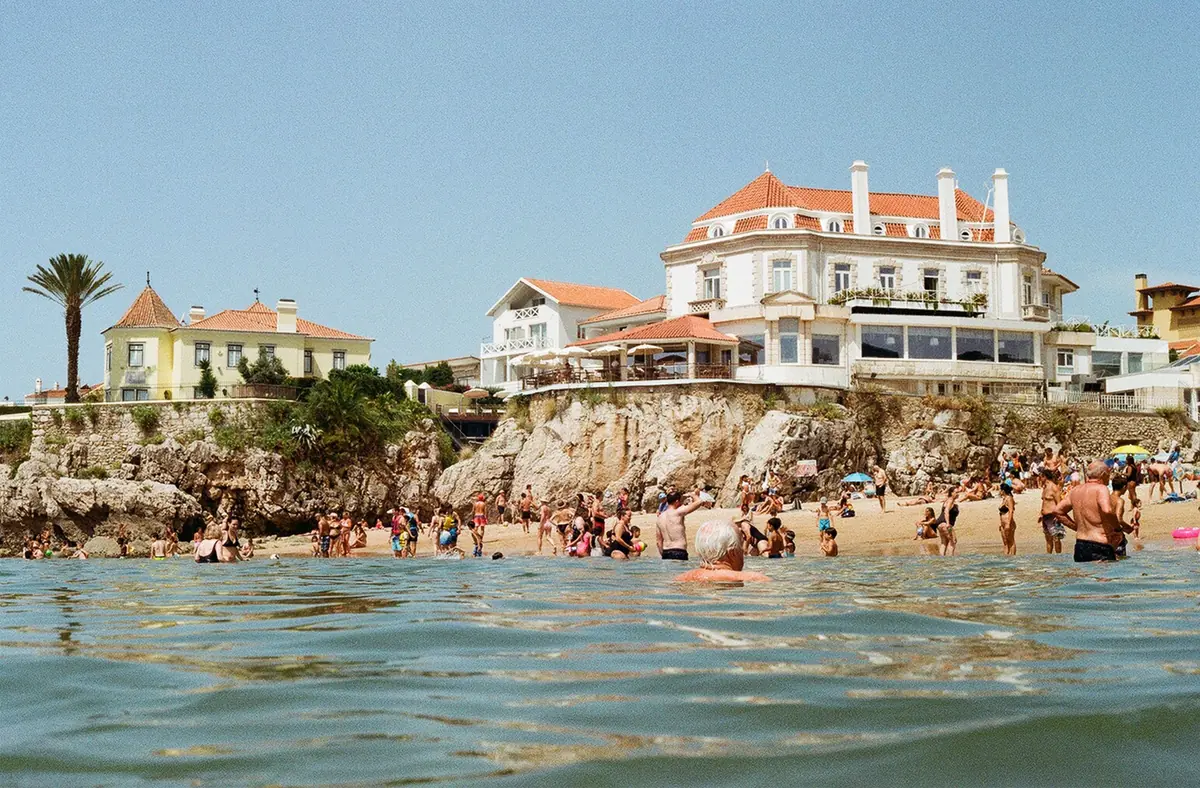
Cascais, Portugal is where Lisbon goes to exhale — a former fishing village turned royal summer resort, 40 minutes west by train. You get calm swimming coves, one wild surf beach, a cobbled old town, and seafood worth the ride out. Here’s how to do it, what it costs, and when to go.
Cascais is a coastal resort town on the Portuguese Riviera, about 19 miles (30 km) west of Lisbon and a 40-minute train ride from Cais do Sodré station. It’s known for calm beaches, a historic center, and the Boca do Inferno sea cliffs. Treat it as a half-day trip or a multi-day base for the coast.
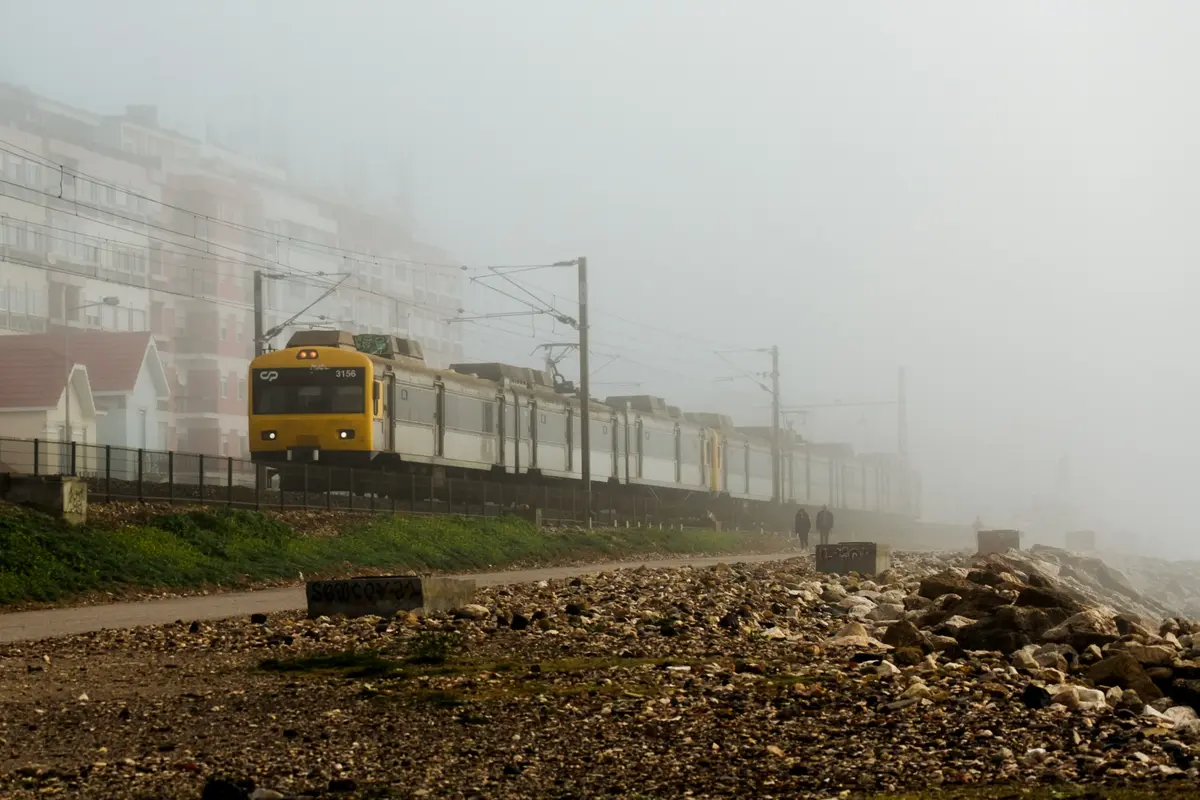
Pro Tip: Sit on the left side of the train leaving Lisbon. The Linha de Cascais hugs the water for most of the route, so you get the Atlantic out your window the whole way.
Is Cascais Worth Visiting?
Yes — Cascais is worth visiting if you have at least three days in the Lisbon area as part of a wider Portugal trip. With only one or two days, give those to Lisbon itself and skip the coast. Cascais rewards travelers who want beaches, seafood, and a slower pace; it underwhelms anyone expecting blockbuster monuments like Sintra’s palaces.
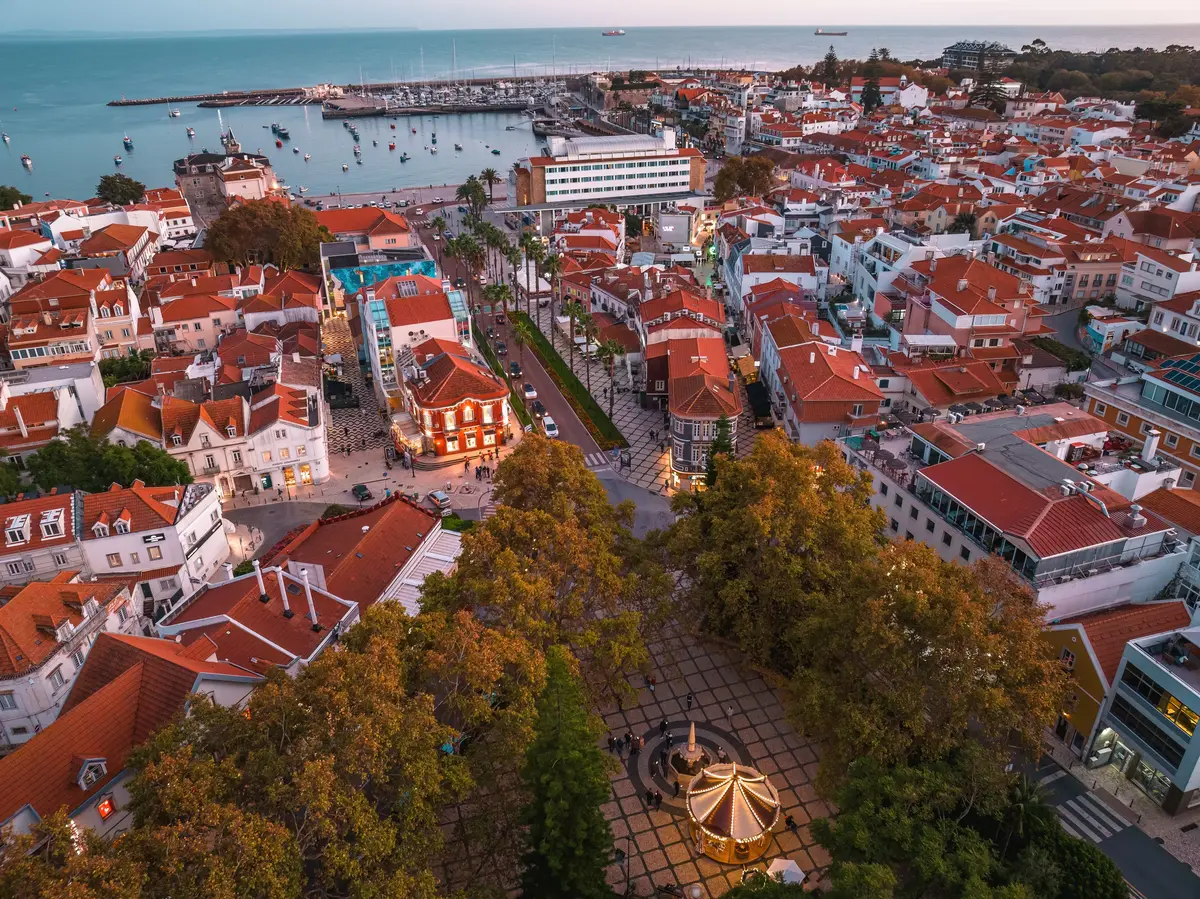
The town’s appeal is that it asks very little of you. It’s flat, walkable, and clean, with the polish of one of Portugal’s wealthiest municipalities. You can step off the train, swim before lunch, eat grilled fish by the harbor, and be back in Lisbon for dinner without ever touching a map.
The honest caveat: by day, the old town fills with cruise excursions and Lisbon day-trippers, and the main town beach is small and overlooks a working fishing harbor. If you’re chasing monuments, Sintra delivers more in a day.
What most guides won’t tell you is when the town is actually best. By dinnertime the day-trippers stream back to Lisbon, and the old town empties out to locals on their evening walk. That’s the best two hours of the day to be here, and you only get them if you stay overnight.
How to Get From Lisbon to Cascais (Train, Uber, or Driving)
Take the Lisbon to Cascais train from Cais do Sodré station on the Linha de Cascais. The ride runs about 40 minutes (33 on the express), trains leave every 20 minutes during the day, and a single fare is around €2.55 (about $2.90) on a reusable Navegante card. Cascais is the last stop, a short walk from the beaches and old town.
Here’s the full logistics breakdown:
- Departure station: Cais do Sodré, on Lisbon’s riverfront (red metro line)
- Line: Linha de Cascais, final stop is Cascais
- Journey time: about 40 minutes, or 33 on the limited-stop express
- Frequency: roughly every 20 minutes during daylight hours
- First and last trains: from around 5:30 a.m. to about 1:30 a.m.
- Single fare: about €2.55 (roughly $2.90); child fare around €1.30
- Return fare: about €5.10 (roughly $5.80)
- Navegante card: around €0.50 to issue, reusable on all Lisbon transit
- Zapping balance: drops the single fare to about €2.00 (roughly $2.30)
- Uber or Bolt from central Lisbon: around €25–28 ($28–32), rising up to 50% at peak
- Lisbon airport taxi: roughly €50–60 ($57–68); the airport sits about 22 miles (36 km) away
Driving is the option I’d talk you out of. The A5 toll road gets you there in 30 to 40 minutes, but summer parking in central Cascais is brutal. I’ve burned a full hour circling for a space in August. Unless you’re continuing up the coast to Guincho or Sintra the same day, leave the car behind.
Pro Tip: On summer weekends the ticket line at Cais do Sodré can run 20 to 30 minutes. Load a Zapping balance onto a Navegante card at any metro machine first — it takes under a minute — and walk straight to the platform.
Train vs. Uber vs. Driving: Which to Pick
| Option | Cost one way | Time | Frequency | Best for |
|---|---|---|---|---|
| Train | ~€2.55 / $2.90 (€2.00 / $2.30 on Zapping) | ~40 min (33 express) | every 20 min | almost everyone |
| Uber or Bolt | ~€25–28 / $28–32 (up to +50% at peak) | ~30–40 min | on demand | late nights, groups, luggage |
| Driving | fuel + A5 toll + a parking hunt | ~30–40 min | n/a | only if continuing up the coast |
What Is Cascais Known For?
Cascais is known as a 19th-century royal summer retreat that grew into the upscale “Portuguese Riviera.” It’s famous for sheltered Atlantic beaches, the Boca do Inferno sea cliffs, a cobbled fishing-village old town, fresh seafood, and its closeness to Sintra and Cabo da Roca — the westernmost point of mainland Europe.
The royal story is specific, not vague marketing. King Luís I turned the governor’s house inside the Citadel into a summer palace in 1870, and the court summered here each September until King Carlos I was assassinated in 1908. Later, exiled royals — the Duke of Windsor, Italy’s King Umberto II, Spain’s King Juan Carlos I — washed up along this coast, which is part of why the area still carries a quiet aristocratic air.
The royal connection isn’t abstract, either. The Citadel they summered in is now a hotel and an art district you can walk straight into without booking a room.
Pro Tip: It’s pronounced roughly “kush-KYESH,” not “kass-kayes.” Saying it right at a café counter earns you a faster smile.
The Best Things to Do in Cascais
The essential Cascais experiences are Boca do Inferno (a 20-minute coastal walk from town), the blue-and-white Santa Marta Lighthouse, Marechal Carmona Park, the Cidadela Art District, and the Casa das Histórias Paula Rego museum. Almost all of them sit within a flat, walkable mile of the train station.
Boca do Inferno (Hell’s Mouth)
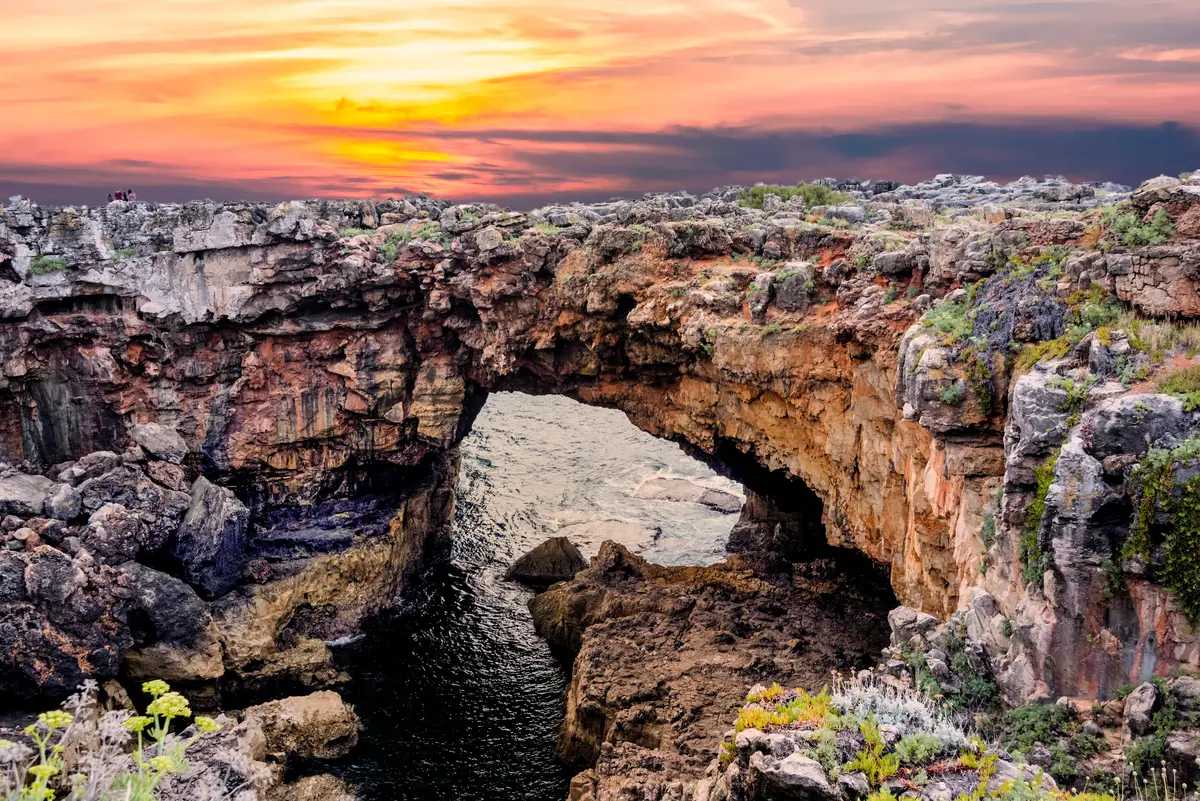
A sea-carved arch and chasm where the Atlantic punches into the cliffs. On a calm August afternoon it’s a tame photo stop, and you’ll see locals fishing off the flat rocks below. Come on a stormy winter day to understand the name — the spray clears the railings.
- Location: Avenida Rei Humberto II de Itália, about 1.2 miles (2 km) west of the center
- Cost: Free
- Best for: Anyone; a quick coastal walk from town
- Time needed: 20 to 30 minutes, plus the 20-minute flat walk each way
Santa Marta Lighthouse and Casa de Santa Maria
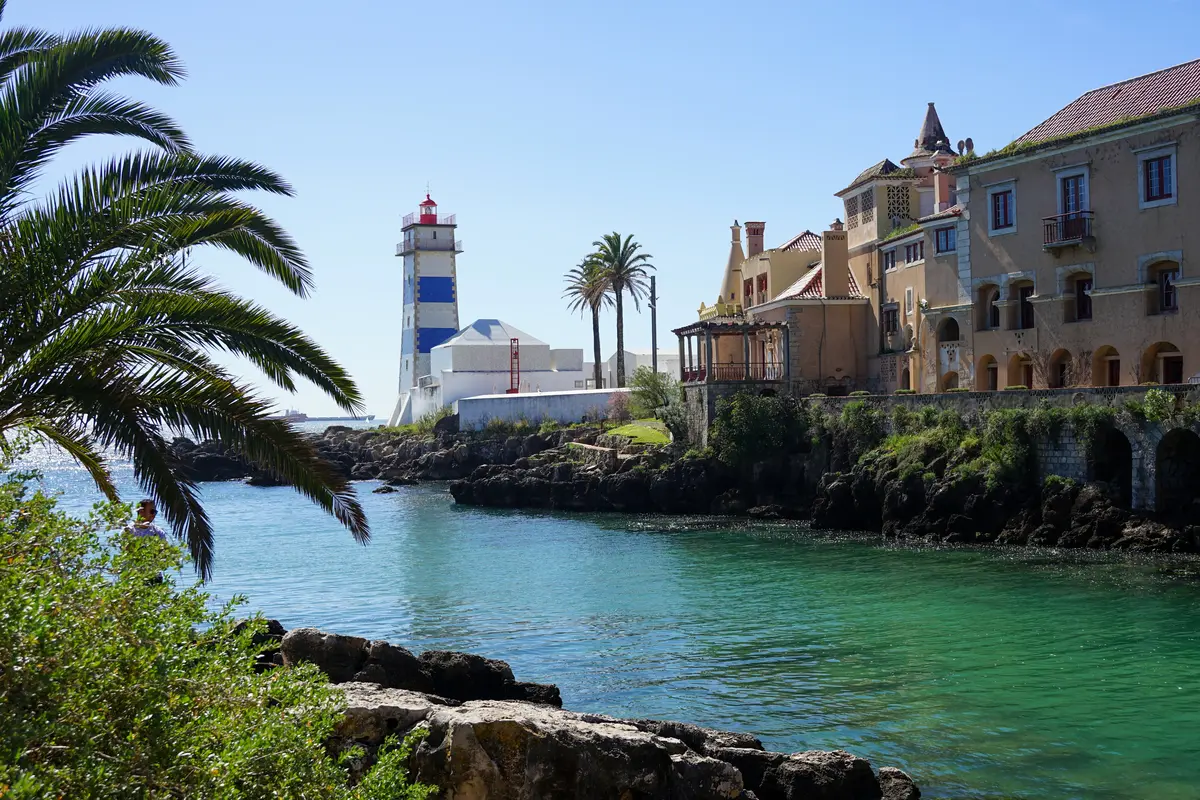
A short, striped blue-and-white lighthouse with a small museum, sitting right at the water beside the Casa de Santa Maria, a tiled early-1900s mansion. The ocean-facing café is free to walk into even if you skip the museum.
Pro Tip: Shoot the lighthouse from the small rocky outcrop by the footbridge. The palms there frame the stripes far better than the head-on angle everyone else uses.
- Location: Santa Marta point, on the coastal path west of the marina
- Cost: Museum around €5 ($5.70); café free to enter
- Best for: Photographers, families with a short attention span
- Time needed: 30 to 45 minutes
Marechal Carmona Park and the Museums
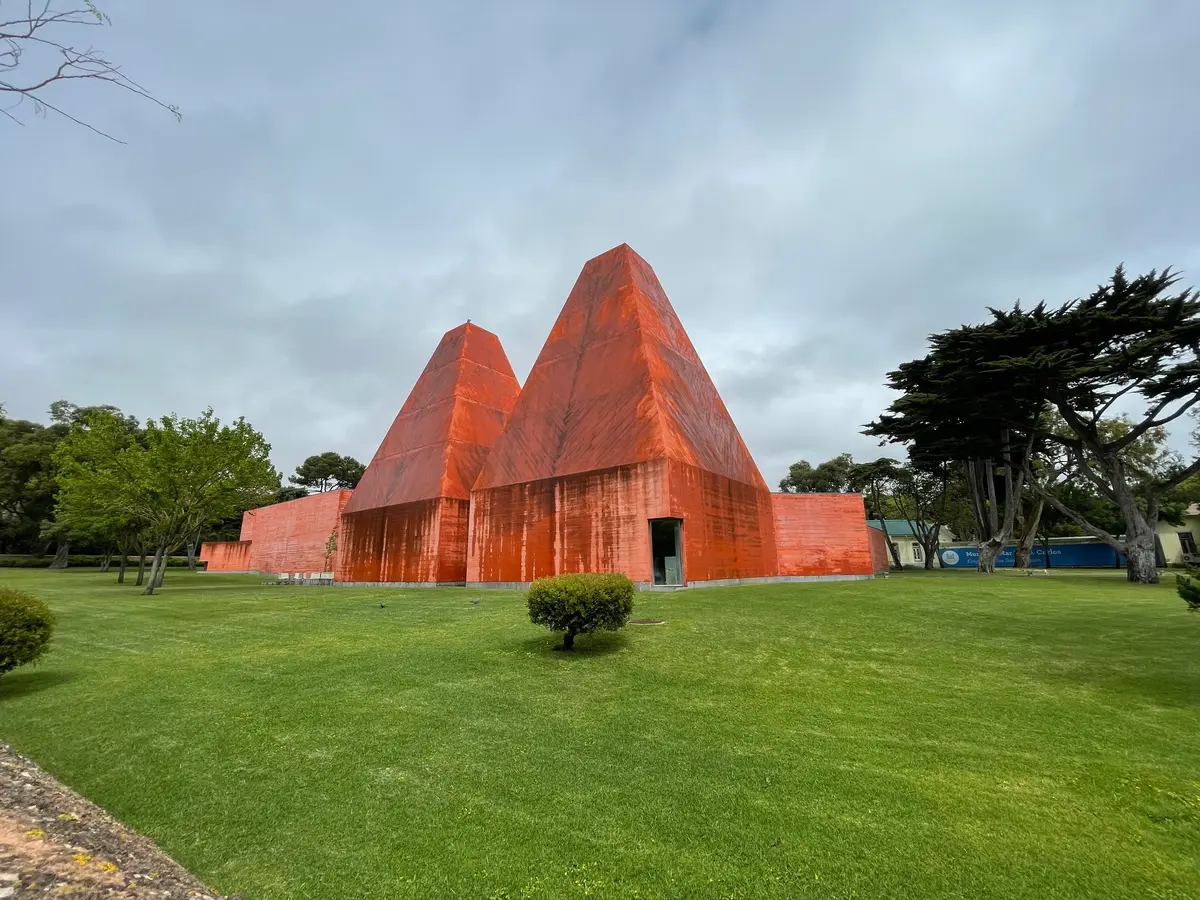
A free, shaded park with peacocks and a duck pond, flanked by two museums: the Museu Condes de Castro Guimarães in a tile-and-turret mansion, and the Casa das Histórias Paula Rego, a museum of the artist’s work in a building of red pyramid towers by Pritzker winner Eduardo Souto de Moura.
- Location: Avenida da República, a 10-minute walk from the station
- Cost: Park free; Castro Guimarães around €5 ($5.70), under-18s free; Casa das Histórias often free, sometimes a €5 ($5.70) ticket; closed Mondays
- Best for: Rainy afternoons, art and architecture fans
- Time needed: 1.5 to 2.5 hours for the park and both museums
Cidadela Art District and Marina
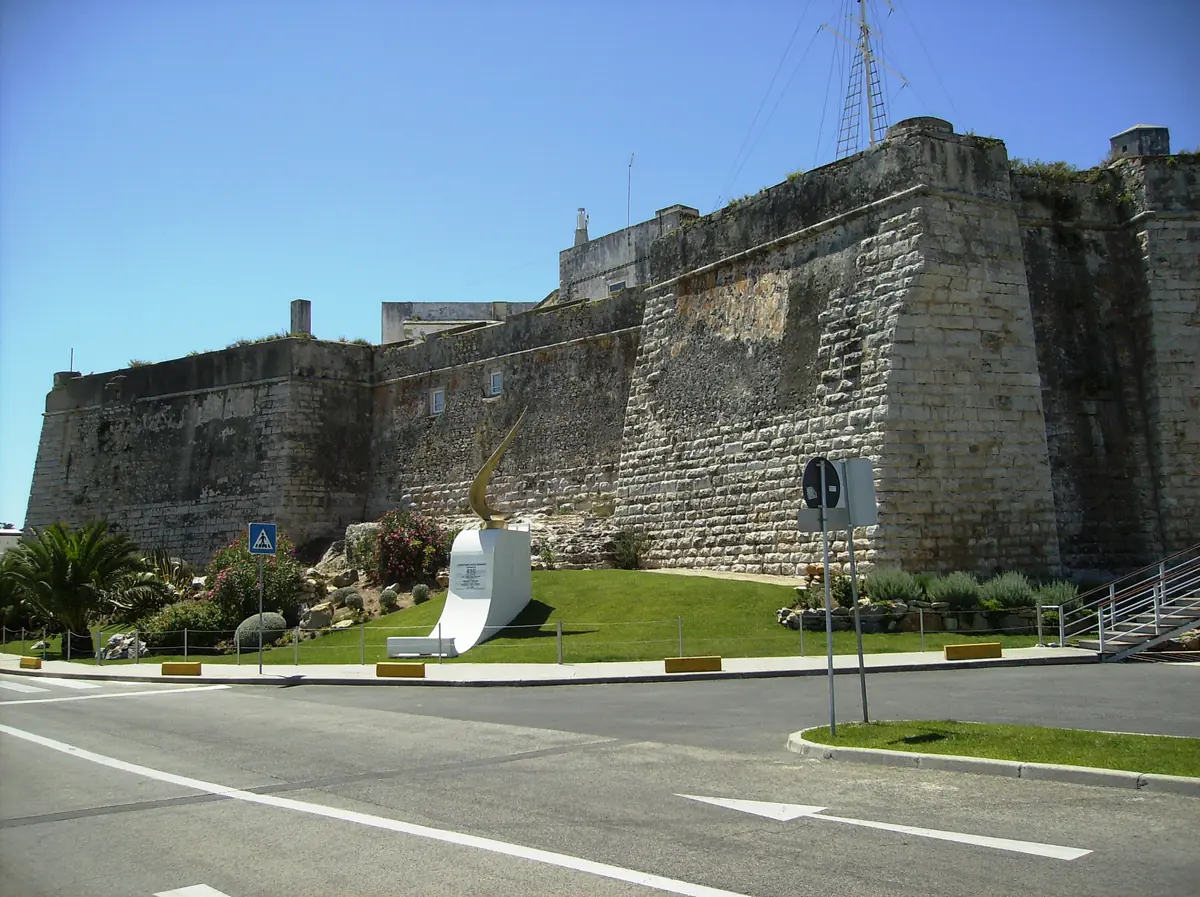
The 16th-century fortress that once served as the royal summer palace now holds artist studios, galleries, and the Pestana Cidadela hotel, all around courtyards you can roam for free. The marina sits just below, lined with boats and casual terraces.
Pro Tip: Walk the fort walls at golden hour for the marina and open Atlantic — the same view the hotel guests pay for, with no room key required.
- Location: Cidadela de Cascais, beside the marina
- Cost: Free to roam the courtyards and walls
- Best for: Sunset wandering, browsing studios
- Time needed: 45 to 90 minutes
Cascais Beaches: Calm Coves vs. Wild Guincho
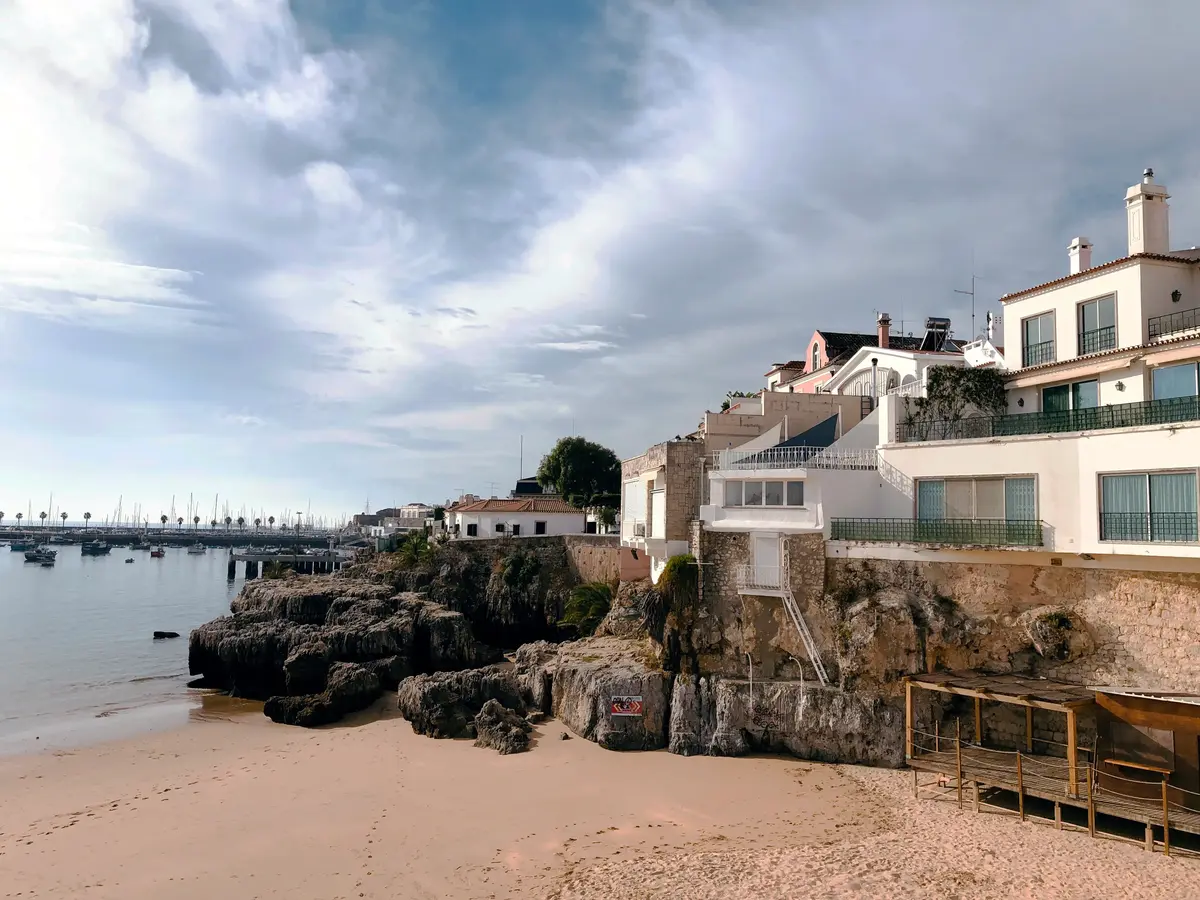
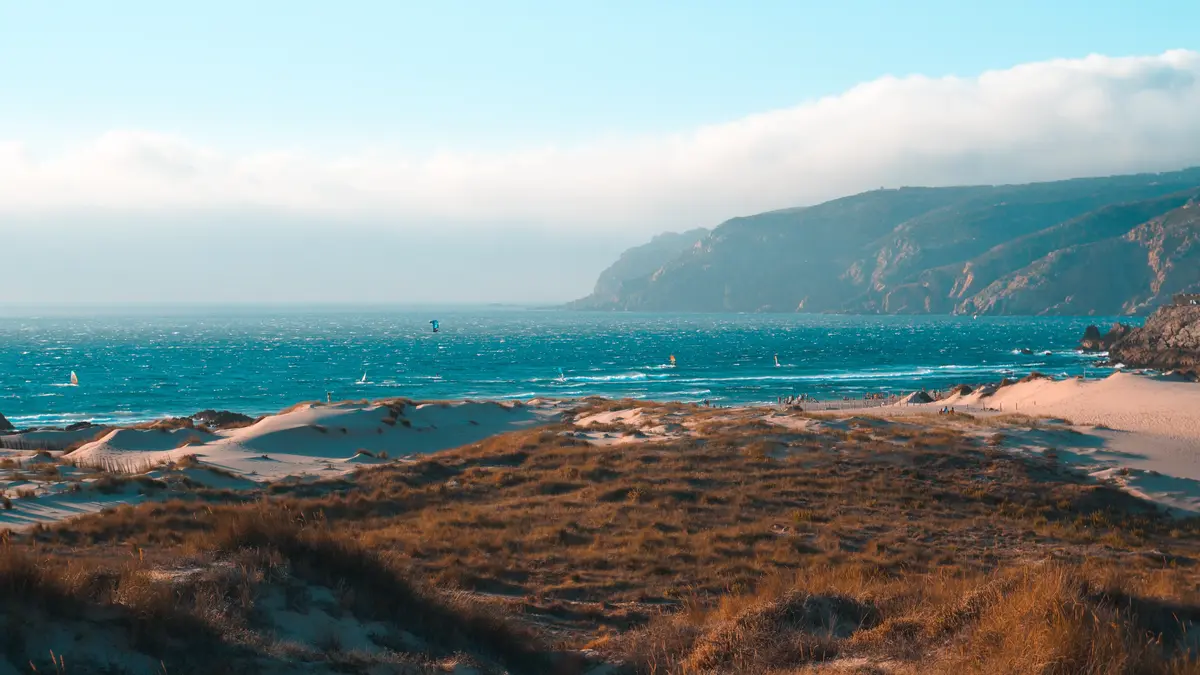
Cascais’s town beaches — Praia da Rainha, Conceição, and Duquesa — are small, sheltered, and calm, good for families and quick swims. Praia do Guincho, 3 miles (5 km) northwest, is a wild, wind-blasted surf beach: beautiful to watch, but unsafe for casual swimming. Even at its warmest the Atlantic here only reaches about 68°F (20°C).
That water temperature is the detail most guides get wrong. The sea off Cascais sits around 61°F (16°C) in February and peaks near 68°F (20°C) in September — cool enough that surfers wear full wetsuits even in July. Anyone promising “warm Mediterranean swimming” hasn’t put a foot in.
| Beach | Distance from town | Water | Sunbeds | Best for |
|---|---|---|---|---|
| Praia da Rainha | in town, 5-min walk | calm, tiny cove | limited | a fast, pretty swim |
| Conceição / Duquesa | in town | calm, full facilities | ~$23–46 / pair | families, easy swims |
| Praia da Ribeira | in town, by the harbor | calm but plain | limited | convenience, not looks |
| Praia do Tamariz, Estoril | 2 mi (3 km) | calm, lively | yes | pairing with the promenade |
| Praia de Carcavelos | a few train stops east | bigger, beginner surf | yes | learning to surf, space |
| Praia do Guincho | 3 mi (5 km) NW | wild, windy, cold currents | some | surf, kite, scenery only |
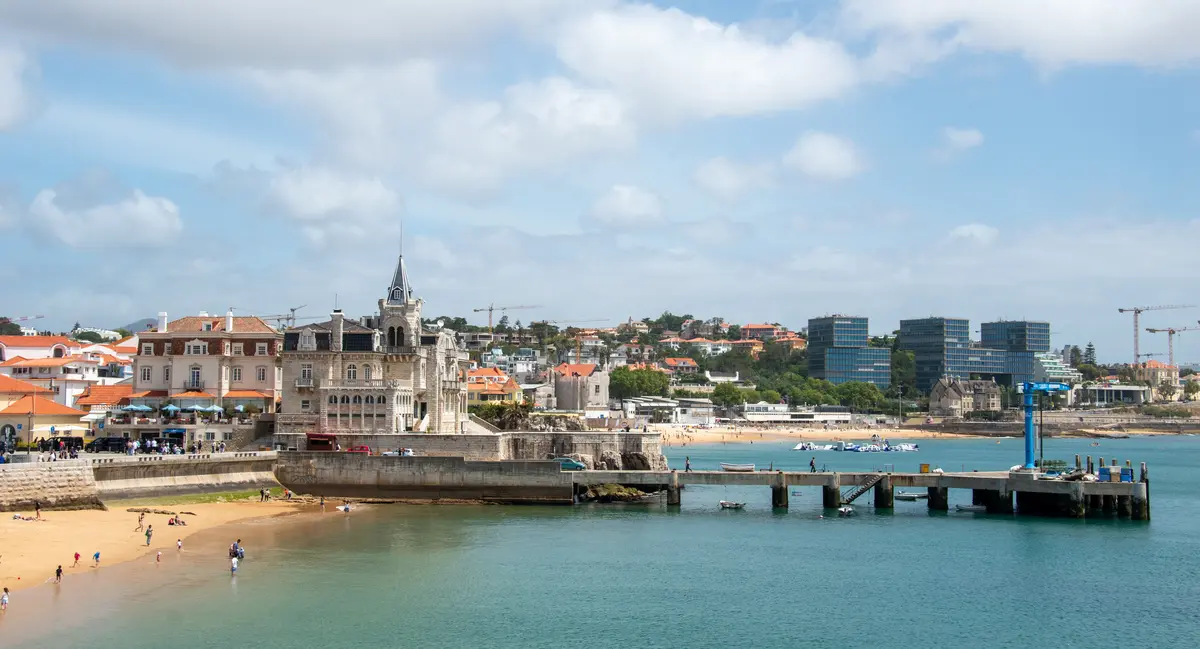
The main town beach, Praia da Ribeira, overlooks the fishing harbor and isn’t the prettiest stretch. Walk five minutes to tiny Praia da Rainha — once Queen Amelia’s private cove — and you trade the harbor view for clear water against the rocks.
At Guincho the wind sandblasts your shins by midday, and the currents are strong enough that lifeguards keep swimmers close. Go for the scenery and the surfers; for an actual swim, stay at Conceição or Duquesa, or take the train east to family-friendly Carcavelos.
Lifeguards staff the main beaches through the bathing season, roughly May through September.
When Is the Best Time to Visit Cascais?
The best time to visit Cascais is June or September — warm, dry, and calmer than the July and August peak. Beach weather runs mid-May to late September, with summer highs near 82°F (28°C). Winter is mild, with highs around 61°F (16°C), but many beach businesses close and the town goes quiet.
This resolves a contradiction you’ll see across other guides, where Cascais is called both “dead in winter” and a “great shoulder-season pick.” Both are true at different times. Here’s the year at a glance:
| Season | Air high | Sea temp | Crowds | Verdict |
|---|---|---|---|---|
| Winter (Dec–Feb) | ~61°F (16°C) | ~61°F (16°C) | low | mild but quiet; some beach spots shut |
| Early spring (Mar–Apr) | warming | cool | low | mixed; April runs notably wet |
| Late spring (May–Jun) | warm and rising | warming | medium | sweet spot begins; beaches open |
| Peak (Jul–Aug) | ~82°F (28°C) | ~66–68°F (19–20°C) | high | hot, lively, fully booked |
| Early fall (Sep) | warm | ~68°F (20°C), warmest | medium | the best all-round month |
| Late fall (Oct–Nov) | cooling | cooling | low | shoulder fading into quiet |
Arrive before the first week of July and weekends are busy but manageable — you can still grab a beach spot and a restaurant table without booking ahead. After that, reserve dinner.
Is Cascais Expensive? Costs and Where to Stay
Cascais is one of Portugal’s pricier towns, but travel costs here still land below most of Western Europe. Budget travelers manage on about $50–80 a day; mid-range runs $100–200. A casual seafood meal is roughly €15–25 ($17–28), and hotels span comfortable mid-range rooms near $130–200 up to five-star suites past $470.
Here’s how the daily math shakes out by traveler type:
| Traveler type | Daily spend (USD) | Where they sleep | Typical splurge |
|---|---|---|---|
| Day-tripper | $30–60 | (sleeps in Lisbon) | a long seafood lunch |
| Budget / backpacker | $50–80 | guesthouse or hostel | gelato and a sunbed |
| Family of four | $200–350 | mid-range hotel ($130–200) | sunbeds plus meals out |
| Luxury | $500+ | Albatroz ($470+) or Farol ($295–344) | a Michelin dinner |
| Nomad / retiree couple | ~$2,100–2,470 / month | a longer-stay rental | café culture, slow days |
On the hotels specifically, the spread is wide and named:
- Mid-range: Vila Galé Cascais or Hotel Baia, roughly $130–200
- Upper-mid: Pestana Cidadela Cascais, inside the old fortress, around $250–290
- Top end: Grande Real Villa Itália around $280, Farol around $295–344, and the Albatroz from $470 and up
On food, a casual grilled-fish lunch runs €15–25 ($17–28), weekday lunch specials start near €8.50 ($9.70), and a Santini gelato — the parlor’s been scooping along this coast since the 1940s — costs a few euros.
Pro Tip: Skip the marina-front splurge for a glass of Alvarinho at a hotel terrace bar. You get the same Atlantic view for a fraction of the dinner bill.
How Many Days Do You Need in Cascais?
A half-day covers the old town and one beach; a full day adds Boca do Inferno and the lighthouse. To do Cascais properly — beaches, museums, and the Estoril promenade — give it two to three days, especially if you’ll also day-trip to Sintra or Cabo da Roca from here.
The tiers, plainly:
- Half-day: old town, one town beach, a seafood lunch
- One full day: add Boca do Inferno and the Santa Marta Lighthouse
- Two to three days: add the museums, the Paredão walk to Estoril, and a day trip to Sintra or Cabo da Roca
Two nights is the sweet spot. One beach-and-town day, one day-trip day, with sunset dinners both evenings after the crowds clear out.
Cascais vs. Sintra: Which Day Trip Should You Choose?
Choose Sintra for fairy-tale palaces and forested hills; choose Cascais for beaches, seafood, and a relaxed, flat town. If you can only pick one and you love history, do Sintra — but it’s crowded and physically tiring, while Cascais is the easier, breezier half-day. Plenty of visitors manage both, even in a single day.
The trade-off comes down to energy. Sintra means timed tickets, steep hills, and shuttle queues for Pena Palace and Quinta da Regaleira; you’ll come back footsore. Cascais means flat streets, a swim, and a table by the water. They’re a 30-to-40-minute bus ride apart on the Scotturb 403, so doing both in one long day is realistic if you start early.
If you’d rather not race, pair them by car or driver along the coast road through the Sintra-Cascais Natural Park, stopping at Cabo da Roca — the cliff-edge “end of Europe” — between the two.
Day Trips and Nearby: Estoril, Cabo da Roca, and James Bond’s Casino
From Cascais, a flat 2-mile (3 km) promenade — the Paredão — leads to Estoril and the casino that helped inspire Ian Fleming’s Casino Royale. Cabo da Roca, the westernmost point of mainland Europe, sits about 25 miles (40 km) west of Lisbon, a short bus or drive from town. Both pair easily with a Cascais base.
The spy story is real and underplayed everywhere else. According to official Ian Fleming Publications, Fleming spent time around the Casino Estoril during World War II, when neutral Portugal was thick with agents from both sides — including the famous double agent Dušan Popov. The documented account is that an evening watching gamblers there in the early 1940s planted the idea that later became Casino Royale. No Bond scene was ever filmed in that casino; the link is Fleming’s imagination, not a movie set, and most guides get that wrong.
Here’s my contrarian take: skip the casino itself unless you’re a die-hard Bond fan. It feels dated inside. The real payoff is the free Paredão walk to reach it and a Santini gelato when you arrive.
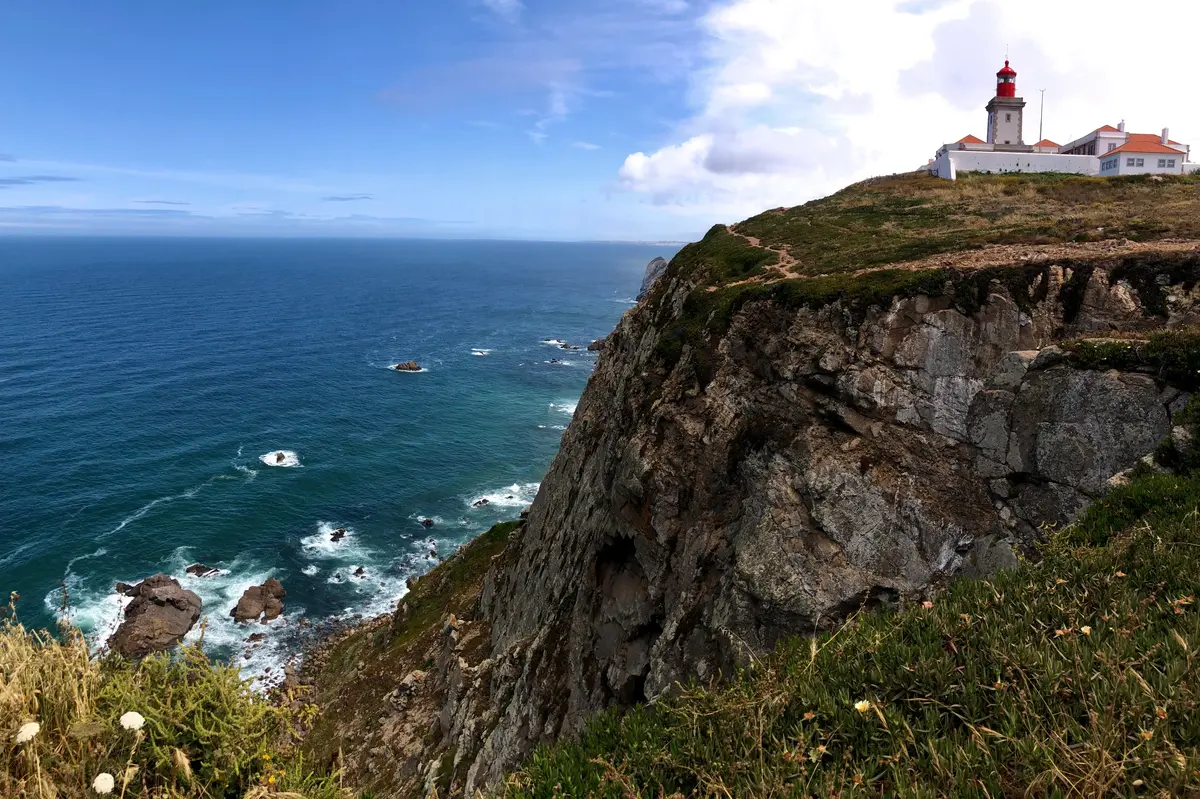
Cabo da Roca is the more dramatic side trip — cliffs dropping about 472 feet (144 m) to the Atlantic, with a lighthouse that’s run since 1772. The Scotturb 403 bus reaches it in roughly 25 to 40 minutes.
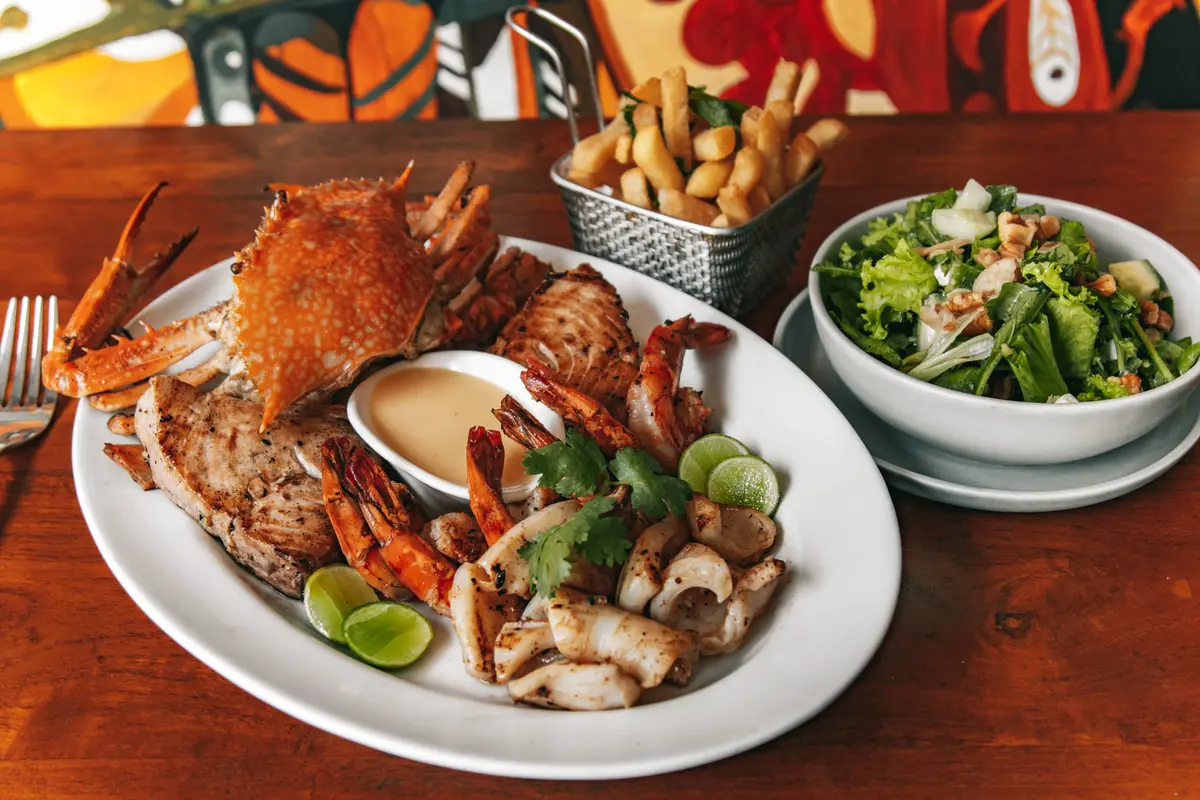
And the seafood is its own reason to base here. Most Cascais kitchens grill the Atlantic catch and price it by weight, so the bill swings with what you order and how big it is.
Is Cascais Walkable and Safe?
Yes. Cascais is compact, flat, and easy to walk — most beaches, the old town, and the marina sit within a mile of the train station, with ramps and even elevators where the ground rises. It’s one of Portugal’s safest, wealthiest towns; the main risk is pickpocketing on the crowded Lisbon train, so keep your bag in front.
This matters for specific travelers. Unlike hilly Lisbon or Porto, Cascais won’t punish older knees or stroller wheels with constant climbs, and the old town is largely pedestrianized. Violent crime is very low. The realistic dangers are a packed train at rush hour and the cobblestones underfoot.
Pro Tip: The traditional Portuguese “calçada” cobblestone is beautiful and slick after rain — and rough on stroller wheels. Flat, grippy shoes beat sandals here.
The Bottom Line on Cascais
TL;DR: Cascais is the easiest, most rewarding coastal escape from Lisbon — 40 minutes by train, flat and walkable, with calm beaches, good seafood, and royal-resort polish. Give it two to three days, visit in June or September, and base here if you’d rather have a relaxed coast than a busy city.
Take the train, not the car. Stay overnight if you can, because the town belongs to you after the day-trippers leave. Swim at the calm town coves, watch the surf at Guincho rather than fighting it, and walk the Paredão to Estoril for a gelato. That’s Cascais done right.
What’s pulling you toward Cascais — the beaches, the seafood, or trading the Lisbon crowds for a few slower days on the coast? Tell me in the comments, and I’ll point you to the right place to stay.