
Puerto Rico with kids is the most logistically forgiving Caribbean trip a US family can run — no passport, no currency exchange, same phone plan. What separates a smooth week from a stressful one is knowing the logistics before you land: which beaches are genuinely safe for toddlers, whether your stroller survives Old San Juan, and exactly how to reach Culebra without getting stranded. For broader trip planning beyond the family-specific advice below, our Puerto Rico travel guide covers the island end to end.
Do kids need a passport to visit Puerto Rico?
No, US citizens — adults and children — do not need a passport for Puerto Rico travel. As a US territory, domestic travel rules apply entirely. Adults need only a valid state-issued ID or driver’s license, the US dollar is the standard currency, and major US cell carriers operate with no international roaming charges.
This is the single biggest logistical advantage Puerto Rico holds over every other Caribbean destination. Booking is faster, packing is lighter, and the mental overhead of managing international travel documents with kids disappears before the trip starts.
Pro Tip: AT&T, T-Mobile and Verizon all operate normally across most of the island — see our breakdown of US cell service in Puerto Rico for carrier-specific notes. Coverage drops near La Coca Falls inside El Yunque National Forest — plan for that before you go off-grid.
What is the best way to get around Puerto Rico with a family?
Renting a car in Puerto Rico is mandatory for families. Public transportation outside San Juan is effectively nonexistent, and rideshare coverage becomes unreliable the moment you leave the metro area. National and Enterprise operate inside Luis Muñoz Marín International Airport (SJU); local providers like Flagship sit just off-site. Child safety seats run roughly $7.95 to $10.00 per day.
Book the car seat at the same time as the vehicle. Inventory disappears quickly during school holiday periods.
There is one critical warning most guides miss: do not use Uber or any rideshare app to reach El Yunque National Forest. Getting a car there is easy. Getting one back is the problem. Cellular service drops completely near La Coca Falls, leaving you with no way to summon a return vehicle. Families who arrive in a rideshare have ended up waiting roadside for hours until another tourist stopped to help.
Pro Tip: If your credit card includes rental car insurance, bring printed documentation to the counter. Agents routinely push collision damage waivers that double the daily rate — declining without proof of coverage turns into a slow negotiation.
- Child safety seat rental: approx. $7.95–$10.00/day
- Best airport agencies: National, Enterprise (inside SJU terminal), Flagship (local, off-site)
- Critical warning: Zero reliable rideshare service for the return trip from El Yunque

Should you bring a stroller or a baby carrier to Puerto Rico?
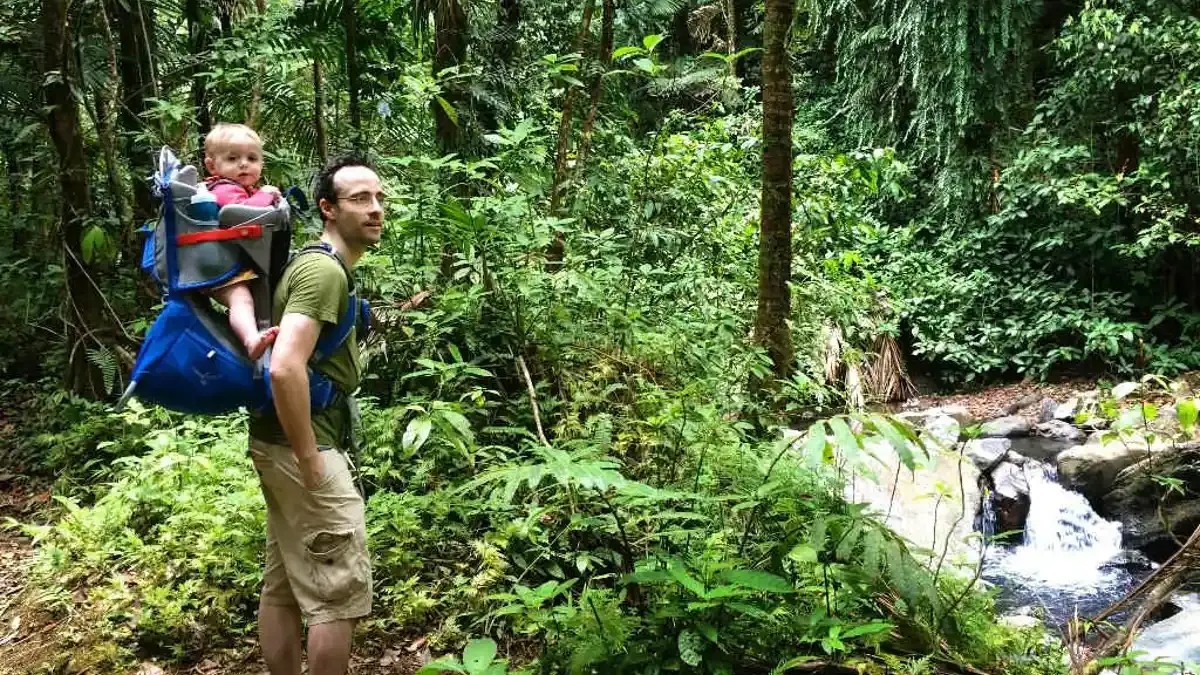
Leave the stroller at home. A wearable baby carrier is the superior choice for nearly every situation Puerto Rico presents. The blue adoquine cobblestones of Old San Juan are not charming-bumpy — they are wheel-destroying, wrist-numbing rough. El Yunque’s trails involve mud, exposed roots and stairways a stroller simply cannot pass.
The incline from Paseo de la Princesa up toward Castillo San Felipe del Morro is steeper than maps suggest. On my last visit, I watched three families attempt that grade with full-size strollers. All three eventually folded them and carried both the stroller and the child uphill. That is not a vacation — that is a voluntary cardio workout nobody signed up for.
An umbrella stroller is marginally acceptable on resort grounds, along Luquillo Beach’s flat boardwalk, and inside shopping centers. Everywhere else, the carrier wins without debate.
| Location | Stroller Viable? | Carrier Recommended? |
|---|---|---|
| Old San Juan cobblestones | No | Yes |
| El Yunque hiking trails | No | Yes |
| Castillo San Felipe del Morro approach | No | Yes |
| Culebra ferry boarding | No | Yes |
| Luquillo Beach boardwalk | Yes | Optional |
| Resort grounds (Caribe Hilton, Rio Mar) | Yes | Optional |
Pro Tip: A structured carrier with a hip belt — Ergobaby, Lillebaby or similar — distributes weight across your hips rather than your shoulders. You will walk significantly more than you expect on this trip. Shoulder-only carriers destroy adults by the second day.
Where are the best places to stay with kids in Puerto Rico?
The best accommodation depends entirely on your children’s ages. Families with toddlers and infants do best at calm, amenity-rich resorts close to San Juan. Teenagers need genuine physical stimulation — waterparks, snorkeling or beaches with real waves. Multi-generational groups often do best in vacation rentals with full kitchens and enough space for adults to decompress after children sleep. For a wider comparison of family-friendly properties across the island, see our roundup of the best resorts in Puerto Rico.
Caribe Hilton — best for toddlers and infants
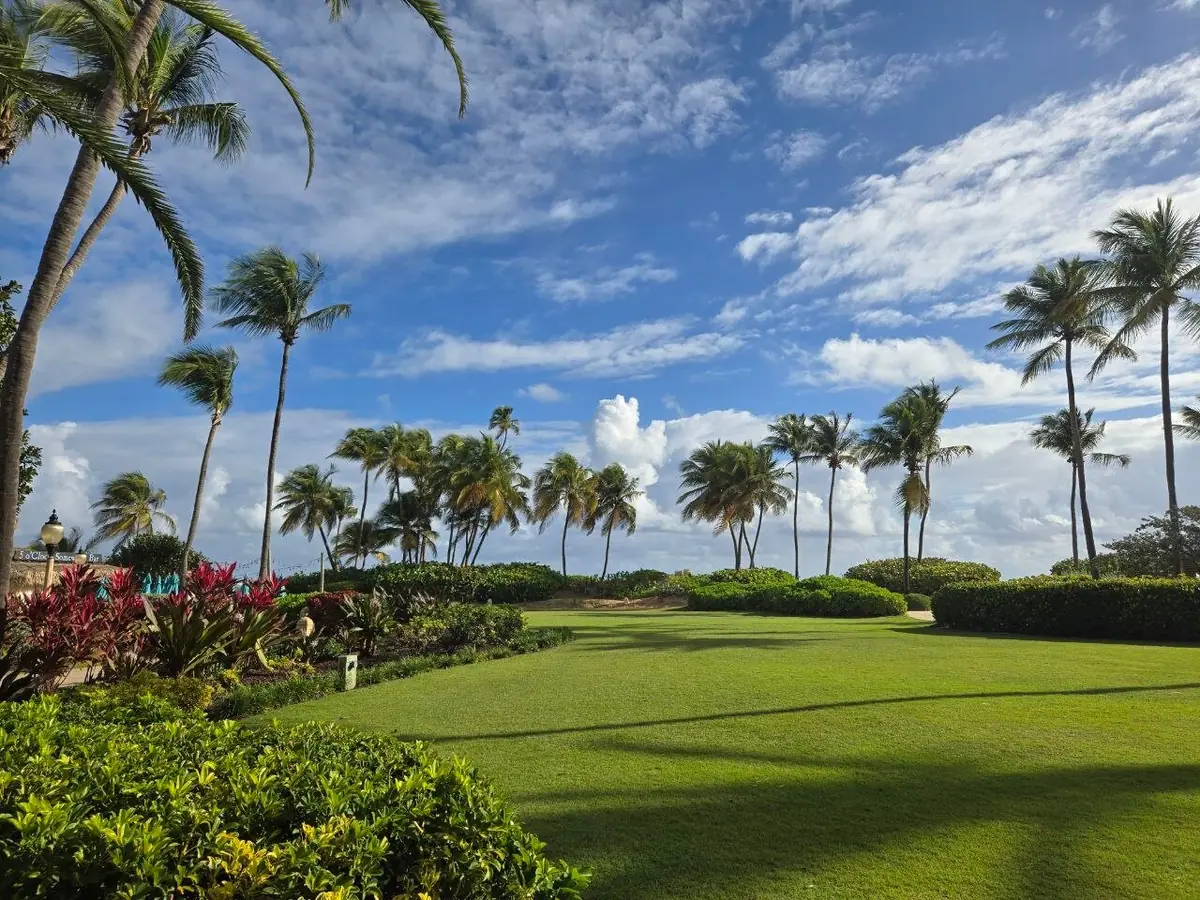
The Caribe Hilton occupies its own private peninsula in San Juan, which means calm lagoon water on one side and ocean access on the other. The zero-entry splash pad is sized correctly for children under five, and in-room babysitting is available through the concierge. The lagoon beach is calm enough for toddlers to wade without the surf anxiety that plagues the Condado and Isla Verde hotel strips.
- Location: Puerta de Tierra, San Juan (10 minutes from SJU)
- Cost: from $320/night
- Best for: Families with infants and toddlers
- Time needed: 3+ nights to justify the pool and beach setup

El Conquistador Resort — best for older kids and teenagers
El Conquistador sits on a dramatic cliff on the northeast coast, about 30 miles (48 km) east of San Juan in Fajardo. The Coqui Water Park is the main event — water slides, a lazy river and a wave pool capable of occupying teenagers for an entire day. Palomino Island, accessed by a free resort ferry, adds snorkeling and horseback riding.
- Location: Las Croabas, Fajardo (45 minutes from SJU)
- Cost: from $380/night
- Best for: Families with children ages 8 and up
- Time needed: 3–5 nights
Wyndham Grand Rio Mar — best for multi-generational groups
The Wyndham Grand Rio Mar is the sleeper pick among Puerto Rico’s family resorts. The grounds are sprawling enough that the resort never feels crowded, and the daily iguana feeding at 11:00 AM is the most genuinely entertaining free activity available anywhere on the island. Full-grown iguanas — some reaching 5 feet (1.5 m) tip-to-tail — emerge from the golf course tree line as children stand two feet away in absolute fascination.
The Rio Grande location also puts you within a 30-minute drive of El Yunque, making this the most strategically positioned base for families planning a rainforest day.
- Location: Rio Grande (30 minutes from SJU; 30 minutes from El Yunque)
- Cost: from $280/night
- Best for: Multi-generational groups; families with mixed ages
- Time needed: 3+ nights
Pro Tip: The iguana feeding at the Wyndham is not a scheduled resort activity — it happens regardless. Walk toward the golf course tree line at 11:00 AM and you will find a crowd of small children already assembled.
Hyatt Regency Grand Reserve — best for pool-focused families
The Hyatt Regency Grand Reserve sits adjacent to the Wyndham and offers an expansive lagoon pool complex with a swim-up bar for adults and enough shallow zones for younger children. For families who want a true resort experience without managing waterpark logistics, this is the cleaner choice.
- Location: Rio Grande (30 minutes from SJU)
- Cost: from $340/night
- Best for: Families prioritizing pool space over waterpark facilities
- Time needed: 2–4 nights
How do you buy groceries for a family vacation rental in Puerto Rico?
Families in vacation rentals can stock a full kitchen without difficulty across most of the island. SuperMax and Pueblo are the two local supermarket chains worth knowing — well-organized, reliably stocked with fresh produce and deli options, and dramatically calmer than the alternatives. Costco and Super Walmart locations operate near the capital and along the main east-west highway corridor.
Avoid the Santurce Walmart specifically. The parking situation alone tests patience, and the narrow, crowded aisles inside create a sensory environment small children handle poorly — not in a charming, lively-market way, but in an overwhelming, meltdown-risk way.
The best grocery discovery on the island is the local panadería. These bakeries open early and sell Pan Sobao by the loaf — a soft, sweet bread with a texture somewhere between a Hawaiian roll and brioche. It makes structurally sound beach sandwiches that do not collapse inside a cooler. Pan de Agua is crustier and better with dinner. For beach lunches with kids, Pan Sobao is the answer every time.
Pro Tip: Famcoop supermarkets operate throughout the island at slightly lower prices than SuperMax. Far less known to tourists, which means shorter checkout lines and calmer parking lots.
- Best supermarkets: SuperMax, Pueblo, Famcoop
- Bulk shopping: Costco (Caguas, Bayamón), Super Walmart (multiple highway locations)
- Avoid: Santurce Walmart — crowded aisles, chaotic parking
- Best bread find: Pan Sobao from any local panadería

Which Puerto Rico beaches have the calmest water for kids?
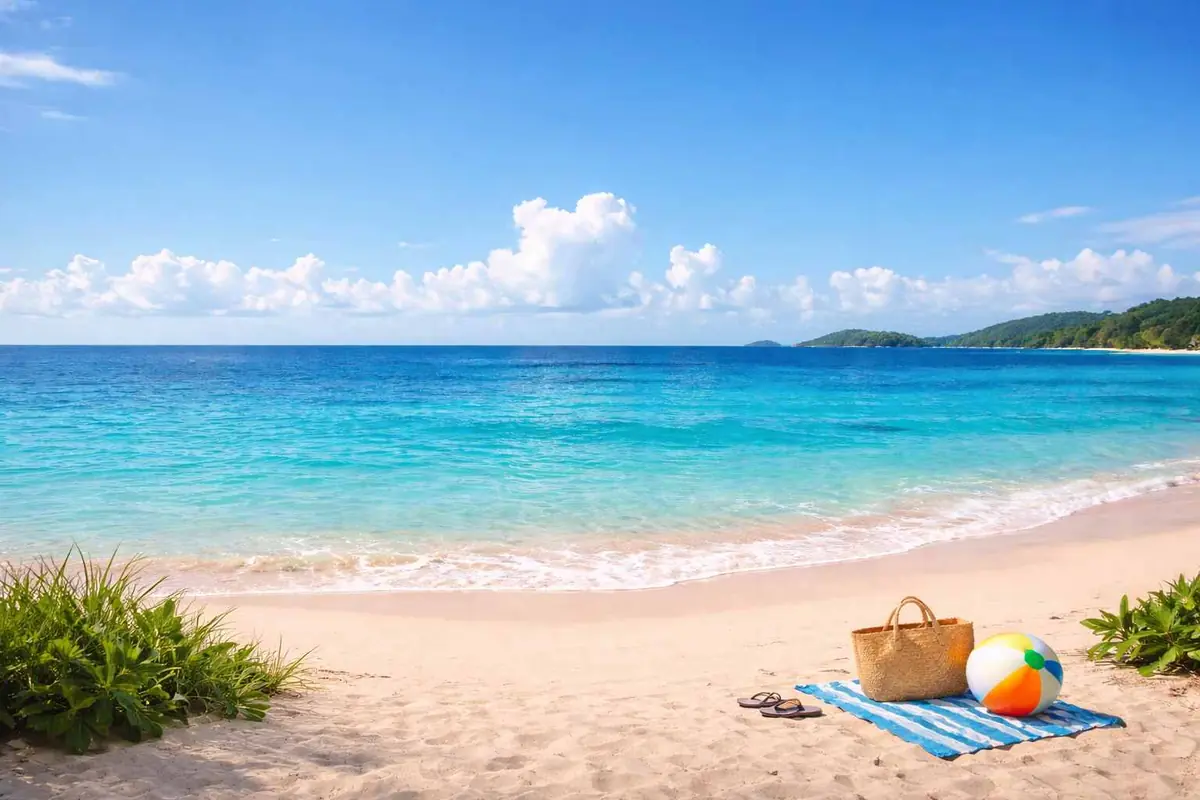
Balneario Monserrate in Luquillo is the best family beach in Puerto Rico by a significant margin. Its crescent bay is protected by offshore reefs that absorb Atlantic swell before it reaches shore, producing calm, shallow water appropriate for toddlers. Lifeguards are on duty, and the Luquillo Kiosks just outside the park entrance serve fresh food all day at low prices. Other strong options across the best Puerto Rico beaches include Pozo Teodoro in Isabela and Flamenco Beach on Culebra for older children.
Do not take young children into the ocean at Condado or Isla Verde beaches. They look perfect in photographs — white sand, clear water, San Juan skyline as a backdrop. The northern Atlantic swell generates heavy chop and fast-moving riptides that create genuine danger for children. Save the ocean for Luquillo and reserve the San Juan hotel pools for the city stay.
Balneario Monserrate, Luquillo — the benchmark
- Location: Route 3, Luquillo (35 miles / 56 km east of San Juan)
- Cost: $5 parking; beach entry free
- Best for: All ages, including infants and toddlers
- Time needed: Half day to full day
Pozo Teodoro, Isabela — the natural wading pool
Natural rock formations on the northwest coast near Isabela create a sheltered tidal pool approximately 2 feet (60 cm) deep at peak tide — genuinely still water, more swimming hole than ocean beach. The drive is 90 miles (145 km) from San Juan, but for families with toddlers who need zero wave anxiety, the payoff is high. Our Aguadilla and Isabela travel guide covers what else to combine with the trip.
- Location: Near Isabela, northwest coast (90 miles / 145 km from San Juan)
- Cost: Free
- Best for: Toddlers and infants — zero surf action
- Time needed: 2–3 hours
Flamenco Beach, Culebra — best for older children
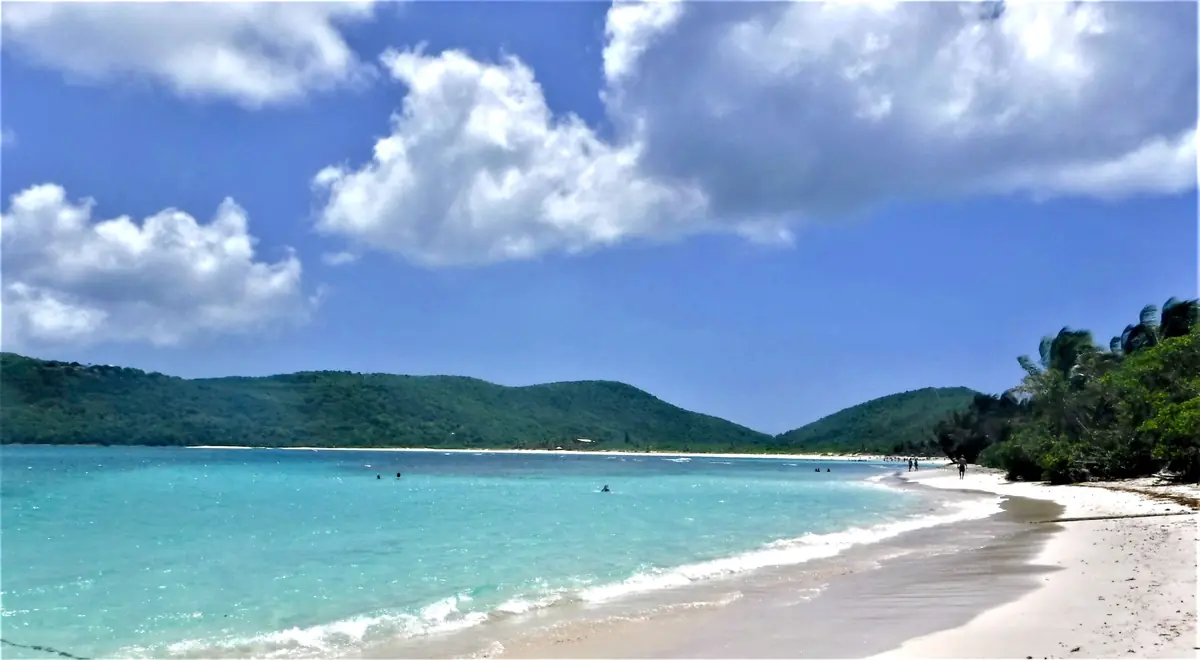
Flamenco Beach delivers powder-white sand, water that shifts from turquoise to deep blue in gradients, and a half-moon shape that creates calm swimming conditions. Getting there requires the Ceiba Ferry and planning (see the Culebra Puerto Rico section below). Appropriate for families with children ages 6 and up who can handle the logistics.
- Location: Culebra Island (via Ceiba Ferry Terminal)
- Best for: Older children and teenagers
- Time needed: Full day minimum
How do you visit El Yunque National Forest with kids?
El Yunque National Forest is the only tropical rainforest in the United States National Forest System and earns a full day on any family itinerary. Entry to the main recreational corridor is free, and vehicle reservations are no longer required — access runs strictly first-come, first-served. Arriving by 8:00 AM is not early; it is necessary. Parking fills quickly on weekends and during school holidays.
The El Portal Visitor Center charges $8.00 per adult; children are free. The Junior Ranger program runs through the visitor center and gives school-aged children a structured activity with a badge at the end — worth doing before heading to the trails.
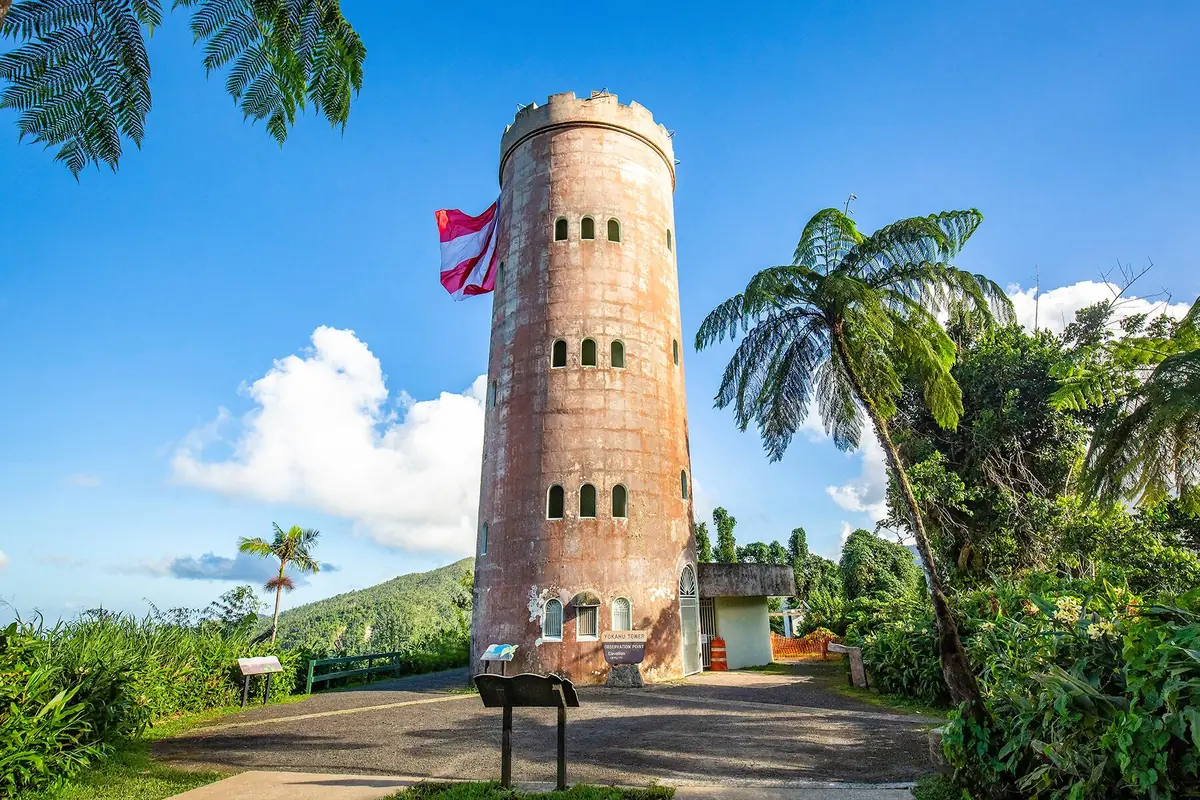
The most accessible trail system runs near La Coca Falls and the Yokahu Tower, a stone observation structure with 360-degree views over the forest canopy and the Atlantic coast. The tower involves a short stair climb appropriate for confident five-year-olds. Further into the forest, trails turn muddy and rooted quickly — closed-toe shoes are not optional.
El Yunque’s operating hours run from 8:00 AM to 5:00 PM. Do not stay until closing expecting to be the last car out; rangers begin clearing the main road well before the posted closing time.
Pro Tip: Stop at the Luquillo Kiosks on Route 3 immediately after leaving the forest. Empanadillas and bacalaitos — fried turnovers and salted codfish fritters — come fresh from the vendors for under $3 each. It is the most satisfying post-hike meal available within 10 minutes of El Yunque’s exit.
- Location: Route 191, Luquillo (45 minutes from San Juan)
- Hours: 8:00 AM – 5:00 PM
- Cost: $8/adult for El Portal Visitor Center; forest trail access free; children free
- Time needed: 4–6 hours including the Luquillo Kiosks stop
Are the bioluminescent bays safe for toddlers?
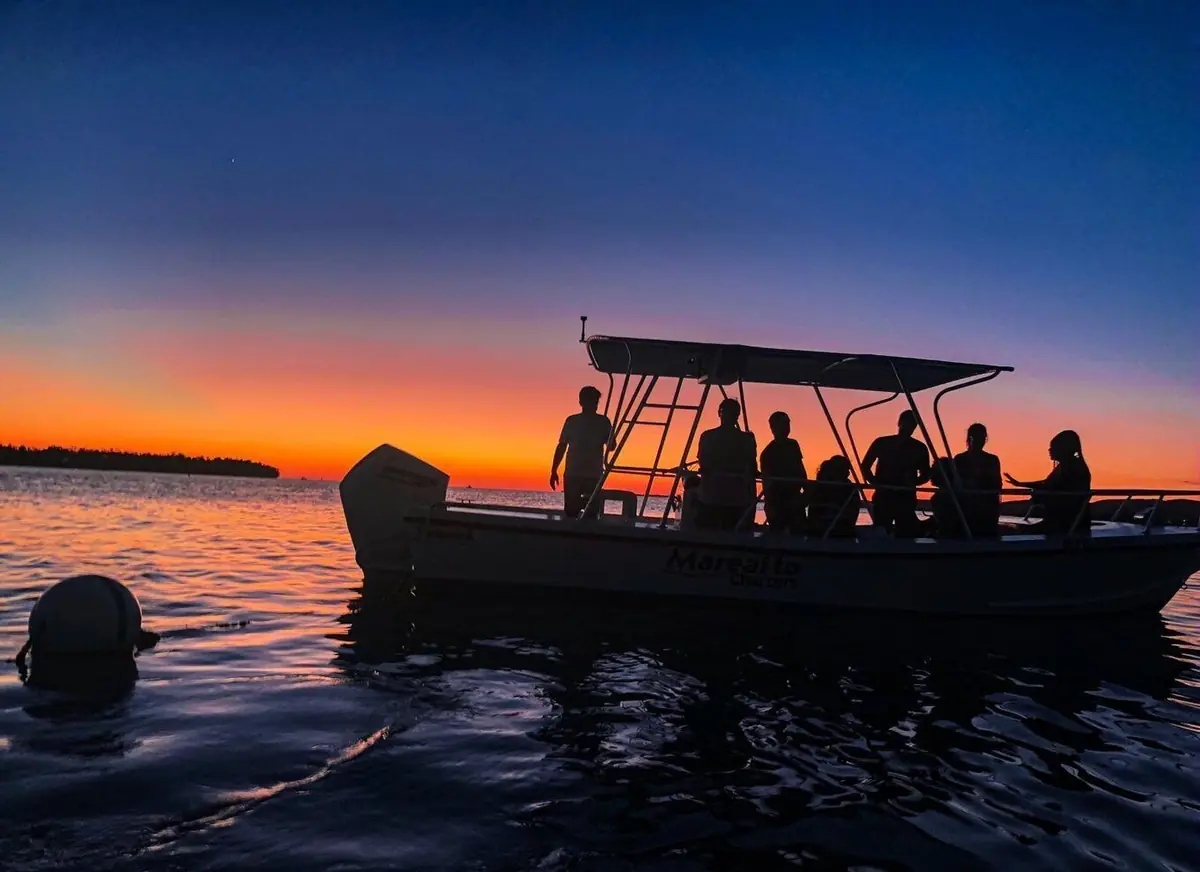
Most bioluminescent bay tours in Puerto Rico impose strict minimum age requirements and are not appropriate for young children. The Laguna Grande channels near Fajardo involve a 3.5-mile (5.6-km) paddle through narrow, dark mangrove tunnels — demanding even for fit adults traveling without a child in the boat. Families with toddlers should skip the kayak entirely and book a motorized pontoon boat charter in La Parguera instead, where all ages are welcome.
Here is what most guides refuse to say clearly: paddling a tandem kayak through pitch-dark mangrove channels with a squirming three-year-old in your lap is not a magical experience. It is exhausting, frequently damp, and ends with parents wondering why they drove two hours for it. La Parguera’s motorized boat option delivers the same glowing-water effect — dinoflagellates illuminating with every movement — with everyone seated and dry.
Mosquito Bay on Vieques is widely considered the most luminous bioluminescent bay in the world. Getting there requires a flight or ferry to Vieques, adding significant logistical complexity. For families without toddlers who prioritize the experience over ease, it is worth the effort.
| Bay | Location | Brightness | Family Suitability |
|---|---|---|---|
| Mosquito Bay | Vieques | Highest | Motorized boat; requires ferry or flight to Vieques |
| Laguna Grande | Fajardo | High | Kayak only; minimum age restrictions apply |
| La Parguera | Lajas | Moderate | Motorized pontoon; all ages welcome |
Pro Tip: La Parguera charters typically run 45–60 minutes and depart from the town dock in Lajas. Spots fill within 48 hours during peak holiday periods — book before you leave home.
How do you plan a family day trip to Culebra Island?
A day trip to Culebra is logistically demanding but rewards families with Flamenco Beach — one of the great stretches of sand in the Caribbean. The passenger ferry departs from the Ceiba Ferry Terminal on Puerto Rico’s east coast and crosses in 55 minutes. Tickets cost $2.25 per person one-way and must be booked in advance through the City Experiences app, as crossings sell out to residents and tourists combined.
The Ceiba terminal sits about 60 minutes east of San Juan. Budget two full hours from your hotel door to the Culebra ferry dock.
Once you arrive in Culebra, take the $5 public shuttle from the ferry dock directly to Flamenco Beach. It runs regularly and eliminates the need to rent a golf cart for a single-day visit — golf cart rentals run $50–$80 for the day, appropriate only if you plan to visit multiple beaches rather than making Flamenco the sole stop.
Flamenco Beach has no shade structures on the sand. Bring a beach umbrella or pop-up tent, apply sunscreen before leaving the hotel, and pack more water and snacks than seems necessary. The on-beach vendors operate seasonally and run out of supplies by early afternoon on busy days.
Pro Tip: The earliest ferry crossing gives the most time on the beach before afternoon crowds build. Check the Ceiba departure schedule at least a week out — it shifts seasonally and the difference between the first and second crossing can be 90 minutes.
- Ferry terminal: Ceiba Ferry Terminal (60 minutes east of San Juan)
- Ticket cost: $2.25 one-way per person
- Booking: City Experiences app — advance reservation essential
- Crossing time: 55 minutes
- Shuttle from Culebra dock to Flamenco Beach: $5/person
- Best for: Families with children ages 5 and up
Is Puerto Rico safe for a family vacation?
Puerto Rico is safe for families. Tourist corridors including Condado, Isla Verde and the Rio Grande resort strip see low crime rates relative to most US mainland cities, and those areas are actively monitored. The relevant safety concerns for families are environmental rather than criminal: riptides along the northern coast, intense UV exposure, and dehydration risk that comes from underestimating heat at this latitude.
Average temperatures across the island stay between 70°F and 90°F (21°C and 32°C) year-round. The sun from roughly 11:00 AM to 2:00 PM is stronger than most mainland visitors expect, and children burn faster than adults at this intensity. Reapply sunscreen at the two-hour mark, not just at the start of beach time.
Mosquitoes are present near El Yunque and in densely vegetated areas across the island. Standard DEET-based bug spray manages them effectively. This is not a destination requiring anti-malarial medication or specialized tropical vaccines — preparation is proportional and familiar.
Pro Tip: The most consistent riptide risk runs along the north coast from San Juan west toward Arecibo. At any unguarded beach on that stretch, keep young children entirely out of the ocean regardless of how calm the water looks from shore.
How do you navigate Old San Juan with kids?
Old San Juan with kids works best as a half-day excursion rather than a full-day commitment. The Paseo de la Princesa along the waterfront is flat, wide and genuinely pleasant — manageable even with an umbrella stroller. Once you leave that corridor and move uphill toward the forts, the blue adoquine cobblestones begin and the stroller becomes a burden rather than a convenience.
Parque de las Palomas — the small plaza where wild pigeons descend on visitors offering bread crumbs — costs nothing and delivers 20 minutes of pure child engagement while adults sit and rest. It is an underrated stop that most guides skip entirely.
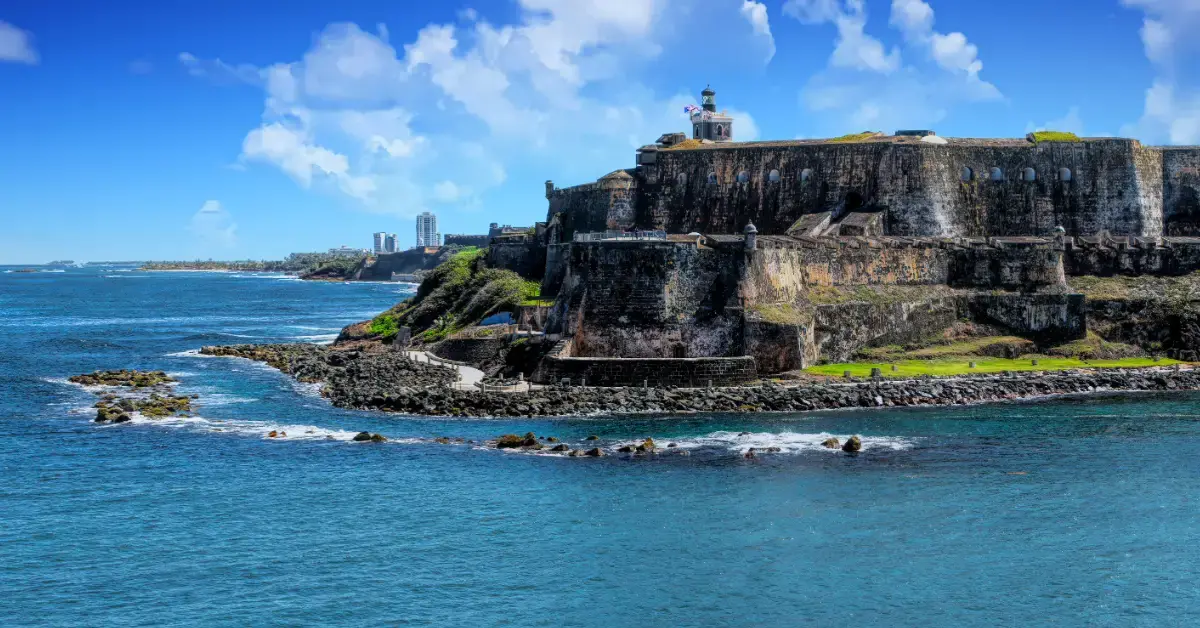
Castillo San Felipe del Morro (El Morro) charges $10.00 per adult; children ages 15 and under are free, and that single ticket also covers admission to Castillo San Cristóbal within 24 hours. The fort is cashless — bring a credit or debit card. The open green lawn outside the fort walls — freely accessible — offers the same dramatic Atlantic views without admission. For families with toddlers who will not absorb the interior military history, the lawn visit is the right call.
The walk from the waterfront up to El Morro takes 15–20 minutes on foot. It is uphill, on cobblestones, in humidity. Leave the stroller at the hotel.
- El Morro admission: $10.00/adult; ages 15 and under free (cashless — card only)
- Hours: 9:00 AM – 5:00 PM daily (closed Thanksgiving, Christmas, New Year’s Day)
- Parque de las Palomas: Free
- Paseo de la Princesa: Free; flat and stroller-accessible
- Best timing: Morning visit before heat builds; arrive by 9:00 AM
The bottom line
TL;DR: Puerto Rico with kids is the most logistically forgiving Caribbean trip available to US families — no passport, no currency exchange, same cell plan. Rent a car from SJU, pack a baby carrier instead of a stroller, swim at Luquillo rather than the San Juan hotel beaches, and skip the bio bay kayak if you’re traveling with toddlers — book the La Parguera pontoon instead. Eat Pan Sobao every chance you get.
The most common mistake families make here is underestimating how much driving the best experiences require. The island stretches approximately 100 miles (161 km) east to west and 35 miles (56 km) north to south, and the highlights — Pozo Teodoro, El Yunque, La Parguera, the Ceiba Ferry — sit at opposite ends of the map. Build buffer into the daily schedule and accept that driving is part of the trip rather than a detour from it.
What surprised your family most about traveling to Puerto Rico with kids? Drop your experience in the comments — especially if you’ve found a beach, kiosk, or logistics trick that isn’t covered here.