Choosing where to stay in Algarve determines everything — your beach access, your daily commute, whether you hear the ocean or a nightclub at midnight. This 100-mile (160 km) stretch of the Algarve coastline is not one destination. It is seven distinct ones, and picking the wrong base is the most common mistake American visitors make.
After months bouncing between surf towns, golf resorts, and medieval walled cities, I can tell you exactly which town matches which traveler — and which ones to avoid entirely depending on your priorities.
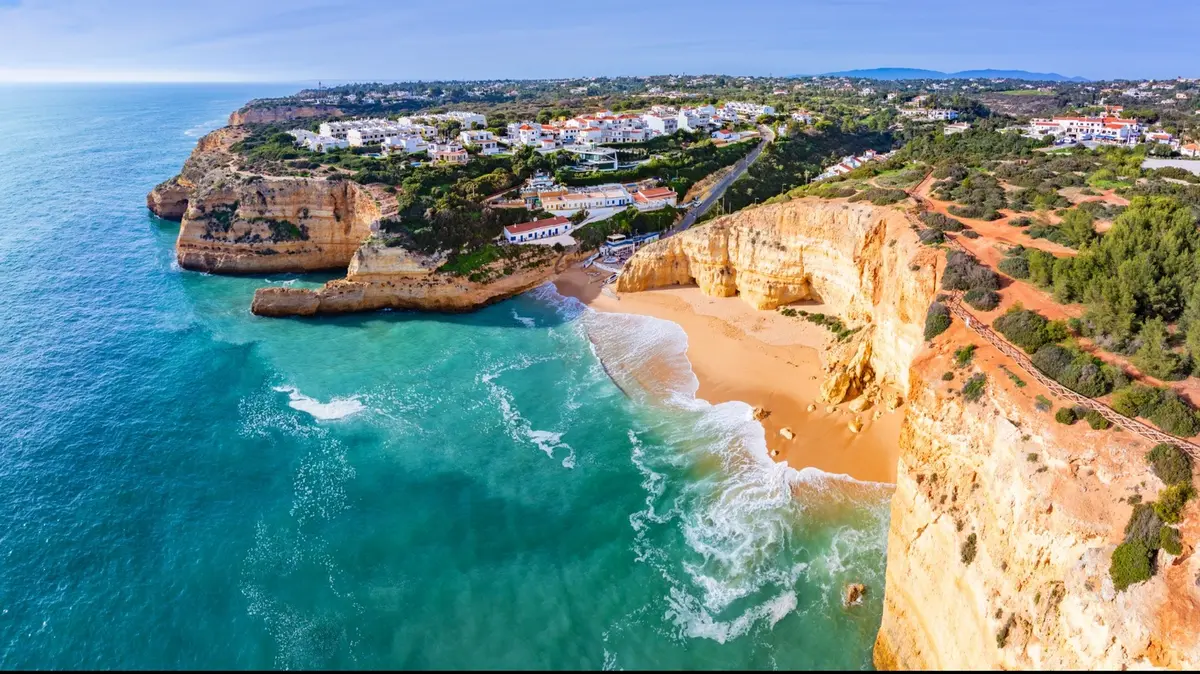
Is Lagos the right base for a first trip to the Algarve?
Lagos hits the sweet spot between a real town and a coastal playground. It has a 14th-century walled historic center with working cafes and local plazas, plus some of the most photographed limestone cliff formations in Europe within walking distance. For first-time visitors who want equal parts culture and coast, Lagos is the correct answer.
What makes Lagos feel real, not resort-fabricated
The calçada portuguesa pavement runs through plazas where musicians play and locals eat lunch — not just tourists. The historic center sits inside those medieval walls, creating a pedestrian zone where you can wander without traffic anxiety.
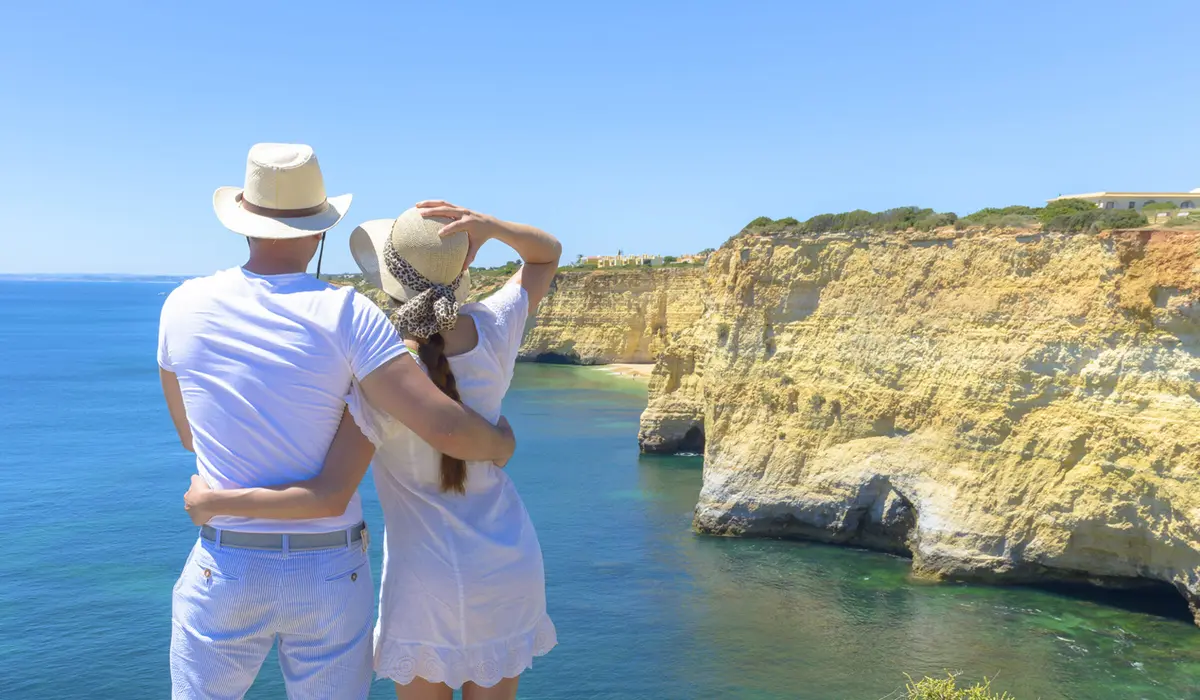
From the old town, you can book boat tours through the sea caves carved into the amber cliffs, or kayak right up to rock formations that rise 60 feet (18 m) overhead. The limestone formations at Ponta da Piedade — grottos, arches, isolated sea stacks — are what you came for.
Pro Tip: Kayak tours depart from the beach at Praia do Camilo, not the marina. The independent operators at the beach are roughly 30% cheaper than the tour desks in town, and the guides are closer to the water.
How brutal is the beach situation in peak season?
Praia Dona Ana and Praia do Camilo are among the most celebrated beaches in Portugal, and they earn the attention — sheltered coves, honey-colored cliffs, turquoise water that earns the color in photographs. But Praia do Camilo requires descending around 200 wooden steps to reach the sand.
In 90°F (32°C) July heat, that climb back up is no joke, particularly with kids or any mobility concerns. Praia do Porto de Mós offers wider sand and far easier access — it sacrifices the drama of the cliff formations for the convenience of a conventional beach. On my last visit in late June, I was at Praia do Camilo by 8:30 a.m. and had the place nearly to myself for an hour. By 10:00 a.m., it was packed.
Parking in summer is a genuine problem. The historic center effectively bans cars, which means peripheral lots that fill by 9:00 a.m. on a hot day. If you are staying inside the walls, you do not need a car for dinner — the walkable dining scene is one of Lagos’s best qualities.
Where to stay in Lagos
Casa Mãe sets the benchmark for modern boutique style, tucked just inside the city walls, with an organic farm supplying the on-site restaurant, Orta. Villas D. Dinis on the road to Ponta da Piedade gives couples the villa-residence feel away from the center’s evening noise. Families who want resort amenities should look at Belmar Spa & Beach Resort near Porto de Mós, with full-kitchen apartments and direct beach access.
Lagos is the western terminus of the regional railway line — ideal if you are prioritizing train travel in Portugal.
- Location: Lagos Old Town and surroundings, western Algarve
- Cost: from €100/night mid-range; boutique properties like Casa Mãe from €260/night
- Best for: Couples aged 25-55 and families with older children
- Time needed: 3-5 nights as a base for the western Algarve
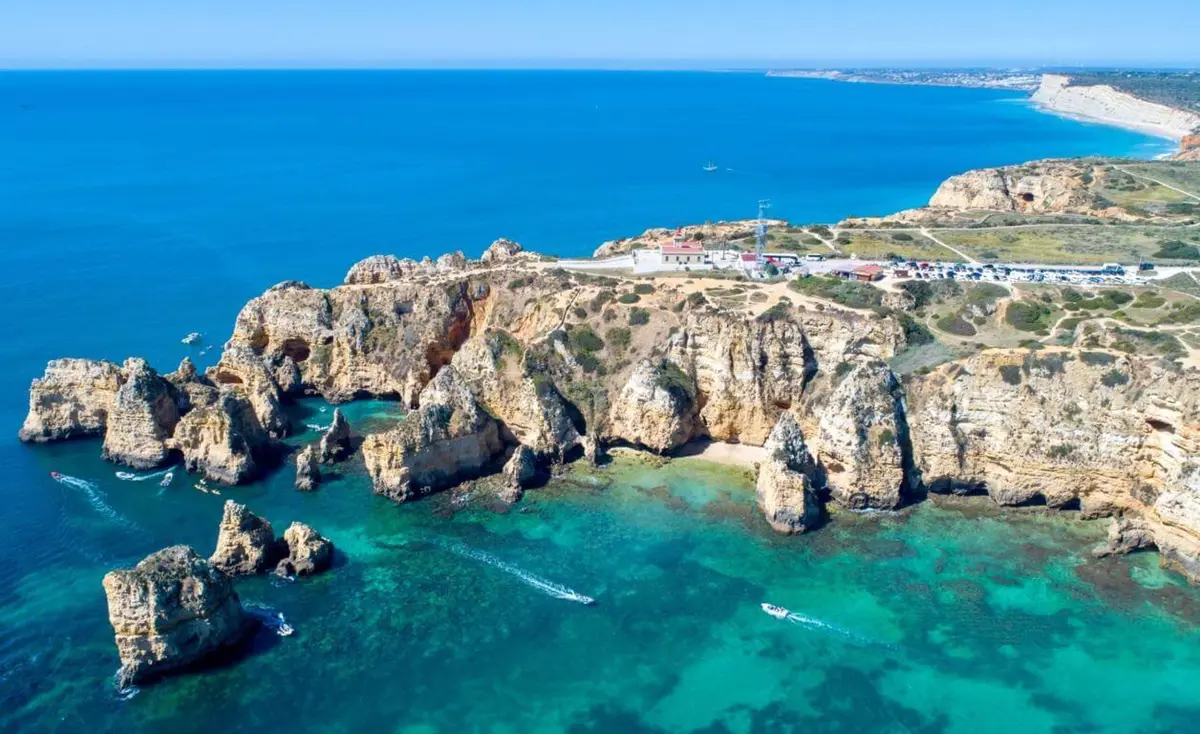
Is Sagres too remote for a relaxing beach vacation?
Sagres is not for everyone, and the town makes no effort to pretend otherwise. Located at the extreme southwestern tip of continental Europe, it is defined by the Nortada north wind, which shapes everything from the plant life to the sport you can do on any given afternoon. If your version of a good vacation involves wide, wind-swept beaches, surf lessons, and a cliff walk that ends at the edge of the known world, this is the best place in the Algarve. If you want still water and umbrella service, go east.
Even in July, you will need a windbreaker by 7:00 p.m. The upside of that same wind system: the interior Algarve can reach 104°F (40°C) in August, and Sagres stays 10-15°F cooler.
What kind of traveler belongs in Sagres
The fortress at Sagres sits on a windswept promontory with the Atlantic on three sides. Wide beaches like Praia do Tonel and Praia da Mareta have powerful shore break that excites surfers and frustrates casual swimmers. The town itself has a few surf shops and excellent seafood restaurants. That is about it. There is no marina scene, no casino, no late-night tourist strip. The absence is the point.
Sagres is for active travelers. You can surf Portugal’s Atlantic coast every morning, hike the coastal path to Cabo de São Vicente, and eat grilled fish at a table 30 feet from the water. The isolation is what draws people — but it is real isolation. Uber coverage drops significantly here, making a rental car essential if you want to explore beyond town.
Pro Tip: The first boat tour of the sea caves departs from Lagos, not Sagres. If Benagil Cave and the cliff formations are on your list, basing yourself in Sagres means a 90-minute round trip each time. Consider whether that trade-off suits your itinerary before committing.
Where to stay in Sagres
Martinhal Sagres Beach Family Resort is the gold standard for families in this area. The low-rise architecture blends timber and glass into the protected natural park landscape, and the service level — kids’ club, multiple pools, activity programming — eliminates the logistical friction of traveling with children in a remote location. It operates at a service tier comparable to refined Disney properties. Memmo Baleeira caters to a younger crowd with surf-lifestyle positioning: board storage, yoga decks, a clean minimalist aesthetic, and a salt-pool that faces the cliffs.
- Location: Sagres, at the southwestern tip of continental Europe
- Cost: from €100/night (Memmo Baleeira) to €300/night and above (Martinhal villas)
- Best for: Surfers, active couples, and families willing to pay a premium for isolation
- Time needed: 3-4 nights minimum; shorter stays rarely justify the drive
Getting there: 1.5 hours from Faro Airport by car.
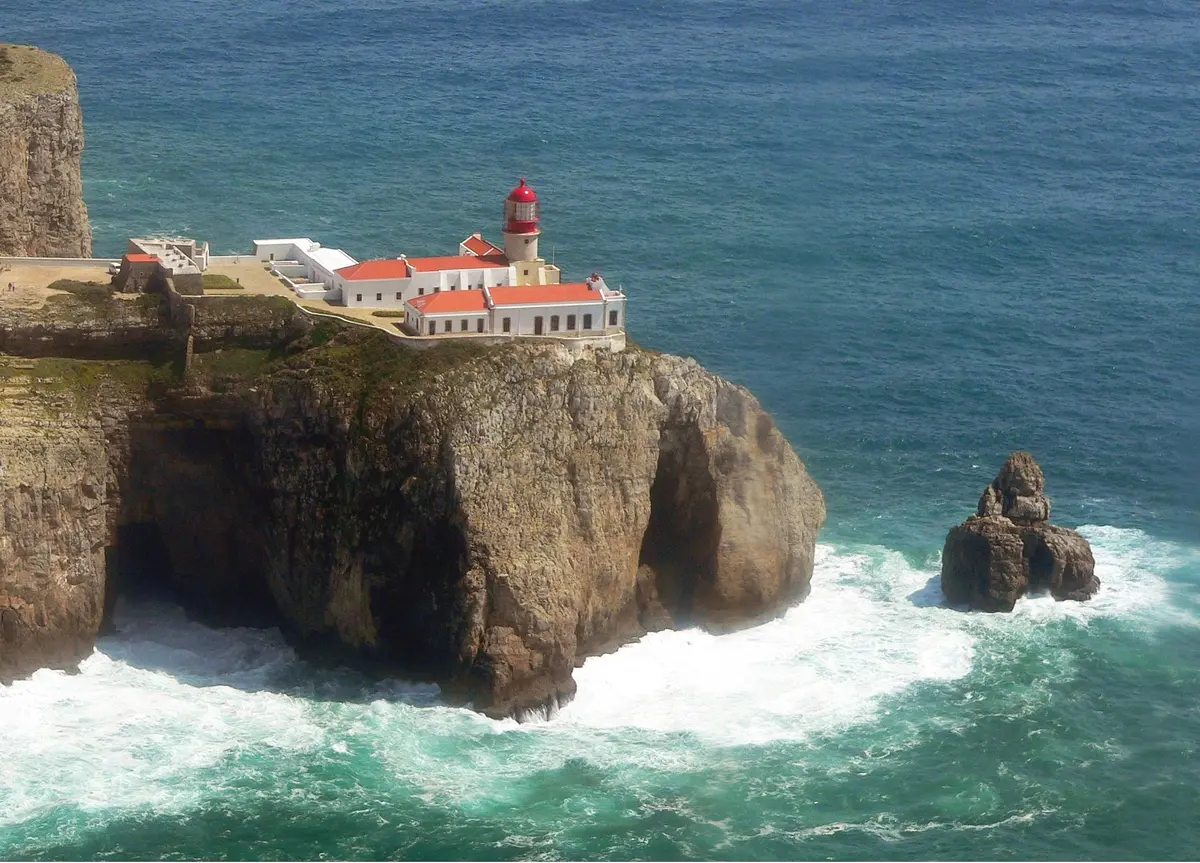
What’s the truth about staying in Albufeira?
Albufeira is the region’s largest resort town, and it is the most misunderstood. The municipality contains two completely different experiences separated by a 15-minute drive. Getting your exact location right is not a preference — it is the difference between a trip you remember fondly and one you spend trying to recover from.
The Strip: skip it entirely
The Areias de São João and Montechoro zone — known as The Strip — is dominated by all-inclusive packages, bachelor parties, neon-lit pub crawls, and fast food outlets in the rough shape of Portuguese restaurants. There is no authentic local life within walking distance. If you are under 25 and looking specifically for that scene, fine. If you are not, and you accidentally book here, you will spend the first two days trying to figure out how far the nearest normal restaurant is.
Travel advisories consistently flag this zone as unsuitable for families. If a hotel’s street address contains “Montechoro,” look elsewhere before booking.
Where should you actually stay in Albufeira?
The Old Town is a genuinely different proposition. The main square fills with open-air dining and live music through the evening, and the beach access is solved by public elevators that connect the cliff-top streets directly to the sand — a legitimate convenience, especially with children or mobility concerns.
Moving east toward Falésia, the scale transforms entirely. Pine Cliffs Resort sits atop 230-foot (70 m) red sandstone cliffs with a private elevator descending to an exclusive beach club. At this end of the municipality, you are in high-end resort territory with little of the package-holiday chaos to the west.
Pro Tip: Falésia Beach itself is publicly accessible without staying at Pine Cliffs. Park at the free lot near the Sheraton Algarve and walk the 10-minute cliff-top path. It is one of the longest uninterrupted stretches of beach in the central Algarve.
- Location: Old Town or eastern Falésia zone (avoid Montechoro/The Strip)
- Cost: from €250/night in luxury zones
- Best for: Families with young children and resort-loyalists
- Time needed: 4-7 nights if using Albufeira as a central hub
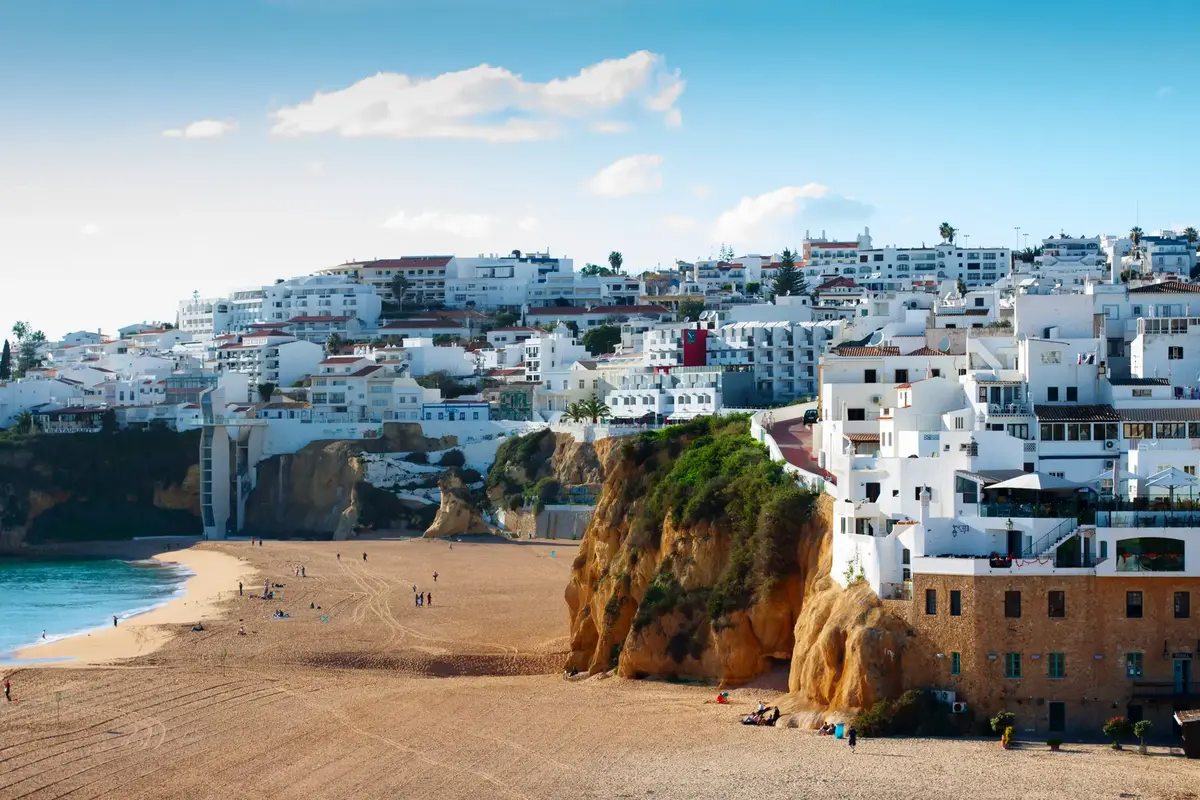
Why do photographers and hikers keep choosing Carvoeiro?
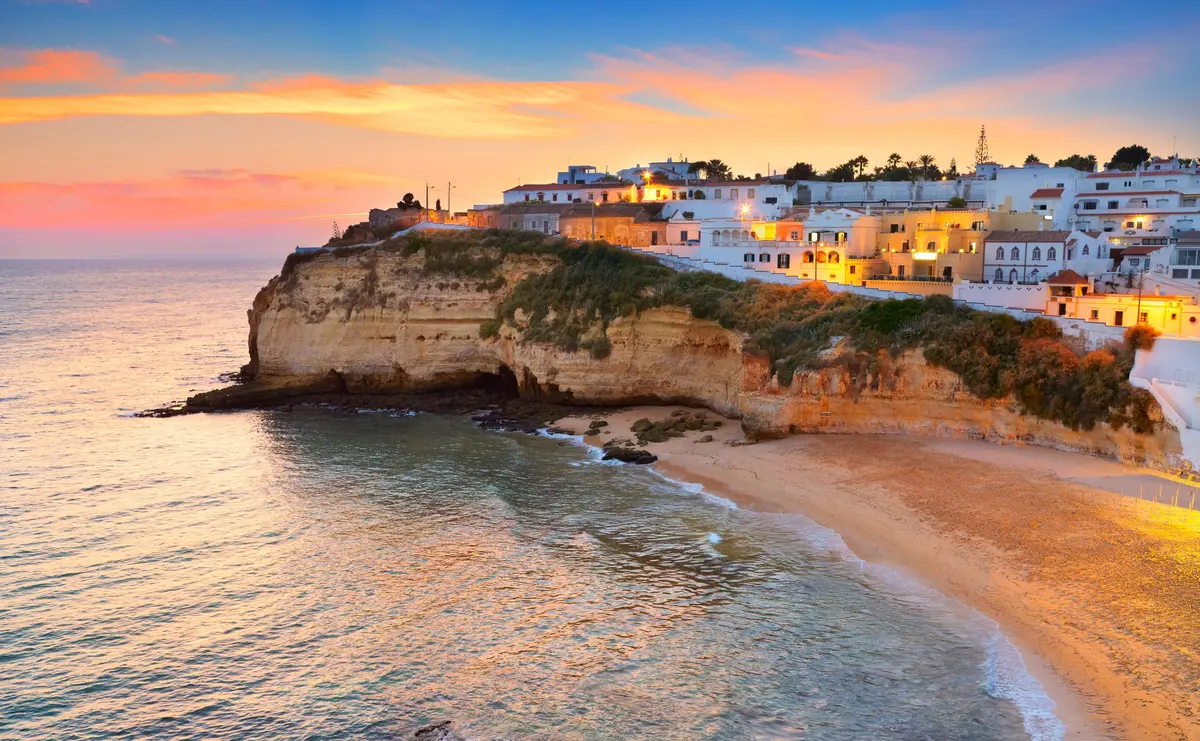
Carvoeiro is sized exactly right — substantial enough to have restaurants and a pharmacy, small enough that you can walk from your hotel to the trailhead in 10 minutes. The town is built into a notch in the cliffs, creating a natural amphitheater setting that looks better in person than in any photograph. For visitors planning their trip around hiking in Portugal or any outdoor activity on the coast, Carvoeiro beats every other town in the Algarve for proximity to the best of it.
The Seven Hanging Valleys Trail, which connects Praia da Marinha to Vale de Centeanes along clifftop paths, starts effectively at the edge of town. Voted repeatedly among the best coastal hikes in Europe, it runs roughly 7 miles (11 km) round trip with 350-500 feet (100-150 m) of elevation change — manageable for most fit adults, but steep in sections.
What is the best strategy for seeing Benagil Cave?
Benagil Cave is the Algarve’s most Instagrammed attraction, and the crowds are genuinely a problem between 10:00 a.m. and 3:00 p.m. Basing yourself in Carvoeiro solves this. You can reach the boat tour departure point at Benagil Beach in under 10 minutes by car. The first tour of the day departs around 9:00 a.m., before the coach tours arrive. The difference in crowd density between that first departure and a midday boat is significant — the cave holds roughly 20 people comfortably and can feel genuinely overwhelming at peak hours.
You can also kayak to Benagil Cave from Benagil Beach on calm days, though the return paddle against the afternoon wind is harder than operators sometimes acknowledge.
Pro Tip: Carvoeiro attracts a noticeably older, calmer demographic than Albufeira. If you are 35 or above and want a town that quiets down by 11:00 p.m., this is where you belong.
Where to stay in Carvoeiro
Tivoli Carvoeiro is a 248-room, 5-star hotel built into the Vale Covo cliffside, with multiple restaurants including a rooftop Sky Bar open April through October. Rooms on the upper floors facing the ocean deliver one of the best sea-view balcony experiences in the western Algarve. Note that the hotel sits slightly uphill from the town center — the walk in is a gentle 12 minutes downhill, but it’s uphill on the way back, which matters after dinner in 85°F (29°C) heat. Algar Seco Parque offers solid apartment-style living near the famous tidal rock formations.
- Location: Carvoeiro, central-western Algarve
- Cost: from €80/night for apartments; from €150/night for hotels
- Best for: Hikers, photographers, and couples
- Time needed: 3-4 nights
Getting there: 40 minutes from Faro Airport.
Is Vilamoura worth the premium price for golfers?
Vilamoura is the right answer for one specific traveler: someone whose vacation is organized around golf in the Algarve. For everyone else, the trade-off is real — you pay a 30-40% premium over neighboring towns for a level of manicured predictability that some people find reassuring and others find hollow.
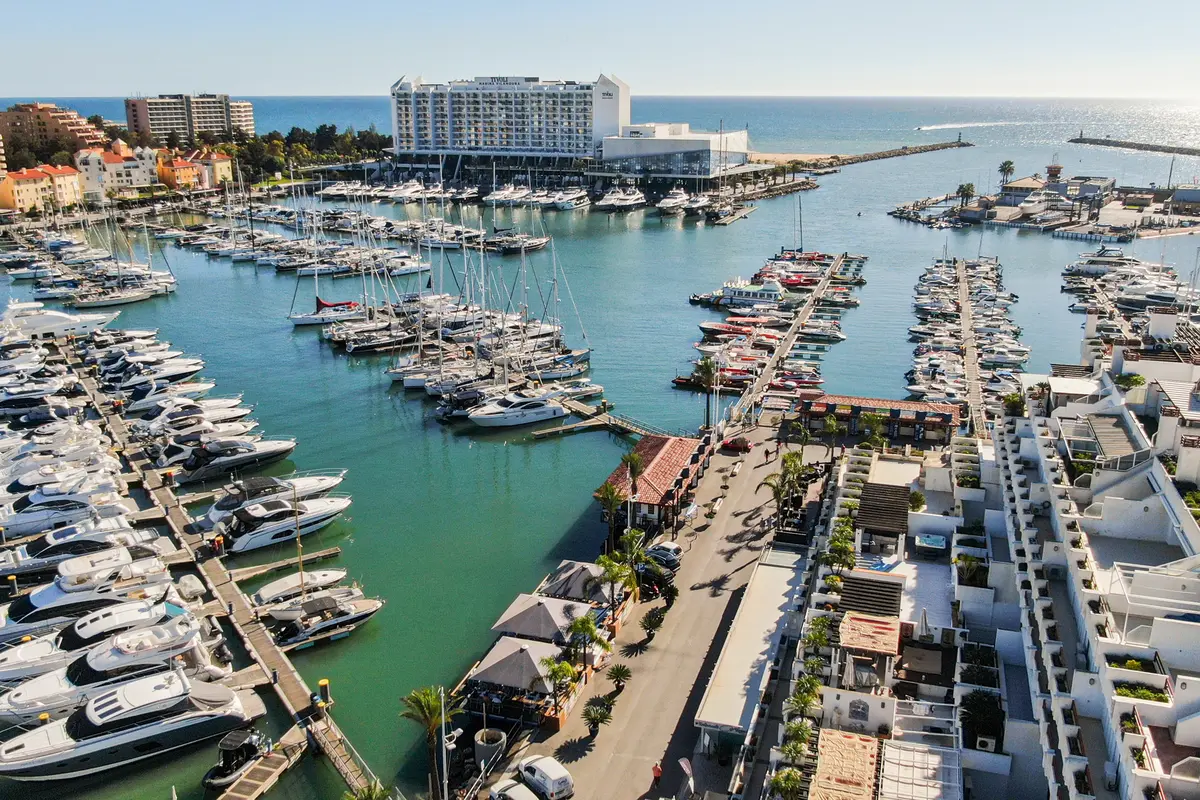
The town was built from scratch as a resort complex, starting in the 1960s, and it shows. There is no historic center, no fishing village, no street market. What you get instead is Europe’s largest privately operated marina, five championship golf courses within 5 minutes by shuttle, flat sidewalks that are fully accessible, and a consistently safe, organized environment.
What is Vilamoura actually like to stay in?
The marina acts as the social center, lined with upscale seafood restaurants and bars that stay active until midnight in summer. The Dom Pedro golf courses — five of them, with the Victoria course hosting the Portugal Masters — are the main event. The resort is completely flat, which makes it genuinely excellent for families with strollers, guests with mobility limitations, or anyone who does not want to navigate hills after dinner.
The tradeoff is honest: you will not eat at a place where the owner’s grandmother works the kitchen. Every restaurant here is calibrated to international tourism. Authenticity was not part of the brief.
Pro Tip: The free shuttle from Anantara Vilamoura to PuroBeach club runs every 15 minutes in summer. The beach club is significantly more impressive than anything accessible directly from the marina. Book a sun lounger in advance — they sell out by 10:00 a.m. in July.
Where to stay in Vilamoura
Anantara Vilamoura Algarve Resort is the headline option: 280 rooms and suites, four pools (including adults-only), the Anantara Spa, and direct access to the Dom Pedro golf circuit. The resort recently added 30 swim-up family rooms with direct pool access. For longer stays, apartment complexes near the marina offer full kitchens at lower nightly rates than the major resorts.
- Location: Vilamoura marina and resort complex, central Algarve
- Cost: from €120/night for apartments; from €200/night for the Anantara
- Best for: Golfers, families needing flat, accessible terrain
- Time needed: 4-7 nights
What makes Tavira the Algarve’s most authentic town?
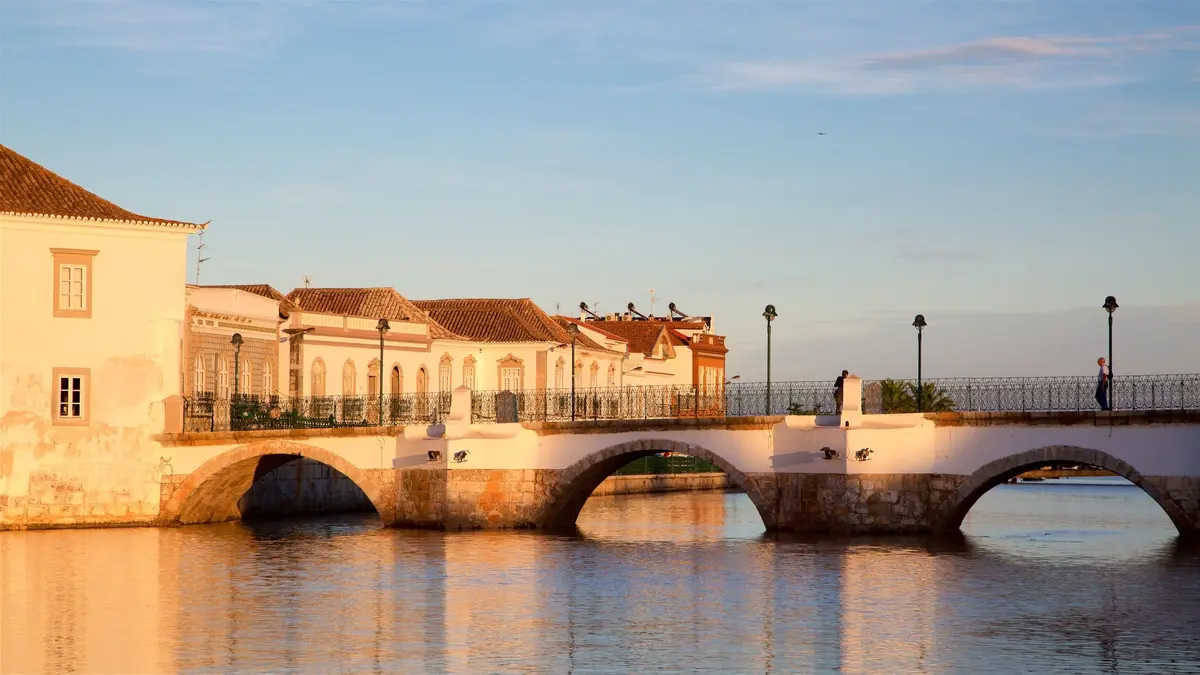
Tavira consistently earns the label of most genuinely Portuguese town in the Algarve, and the designation is deserved. It sits on the Gilão River in the eastern Algarve, connected by a Roman-style stone bridge that has been in use for centuries. The town has Moorish-influenced architecture, azulejo-tiled churches, and a pace of life that feels like the rest of the Algarve did before mass tourism reshaped it. If experiencing Southern Portugal on its own terms is the priority, Tavira is the correct base.
The town has no large resort complexes and no Strip equivalent. That absence is the point.
What is the beach logistics situation in Tavira?
You cannot walk to the beach from Tavira. The town is separated from the ocean by the Ria Formosa Natural Park, a protected lagoon system that spans 37 miles (60 km) of coastline. To reach the beach on Ilha de Tavira, you take a short ferry from Quatro Águas — a 5-minute boat ride that runs from roughly April through October with departures every 15-30 minutes.
This logistics step is a genuine filter. Tavira works best for travelers who are not planning to beach-hop every day. The reward is vast, largely uncrowded stretches of barrier island sand with no commercial development. On a Tuesday in June, you can find 100 meters of empty beach within a 15-minute walk of the ferry dock.
Pro Tip: The last ferry back from Ilha de Tavira runs around sunset in high season. Check the schedule before committing to an afternoon there — missing it means a water taxi at roughly €5 per person each way.
Where to stay in Tavira
Pousada Convento de Tavira, set in a beautifully restored 16th-century Augustinian convent with a colonnaded courtyard and outdoor pool, is the standout hotel in the eastern Algarve — note that it is temporarily closed for structural works and scheduled to reopen in May. In the meantime, Colégio Charm House is the best alternative in town for modern boutique luxury, and the growing collection of restored guesthouses in the historic center offers some of the best value in the entire region, with rooms from €70/night.
- Location: Tavira, eastern Algarve
- Cost: from €70/night (guesthouses) to €150/night (boutique hotels)
- Best for: Culture-seekers and couples prioritizing authenticity over beach access
- Time needed: 2-3 nights
Getting there: 35 minutes from Faro Airport.
Is Faro actually worth staying in, or just passing through?
Most travelers use Faro as a transit point and move on within hours of landing. That is a genuine waste. As the regional capital, Faro operates year-round with a full urban economy — restaurants that cater to residents, not just vacationers, a compact and walkable historic center, and a 10-minute door-to-door distance from the airport. In January, when Lagos feels like a ghost town and Carvoeiro has closed half its restaurants, Faro is fully operational.
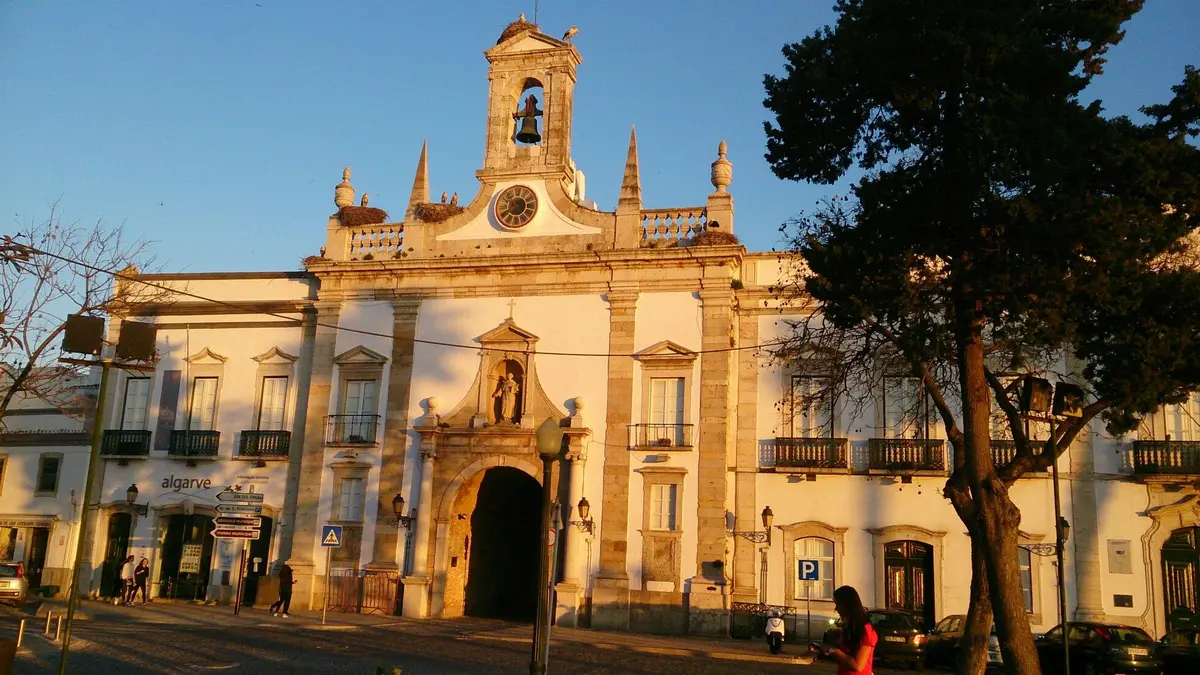
The old town is surrounded by intact Roman walls and contains a cathedral with rooftop access that gives you an uninterrupted view over the Ria Formosa wetlands. The wetlands themselves are a working natural park with boat tours into the lagoon system, flamingos in winter, and barrier island beaches accessible by ferry.
What does staying in Faro actually give you?
Faro is a real city. The city market on Largo do Mercado sells fish, vegetables, and local ceramics to people who actually cook. The restaurant scene covers everything from tuna-based petiscos to proper fine dining without the tourist markup you pay in the resort towns. As a hub for day trips, the location is unbeatable — the entire coastline is reachable by train or car, and you are not committing a 90-minute drive to reach the western beaches.
The strategic calculation is clear: if you are visiting off-season, staying more than 10 days, or combining the Algarve with Faro’s Old Town itself as a destination, base yourself here.
Pro Tip: The ferry from Faro to Ilha de Faro beach runs from around May through September. The island beach is 6 miles (10 km) long and nearly empty west of the ferry dock — unlike any other beach you can reach from a city this easily.
Where to stay in Faro
3HB Faro is the city’s headline hotel: a 5-star property in the pedestrian center with a rooftop infinity pool overlooking the Ria Formosa, an indoor spa pool, and two restaurants including the rooftop Hábito. The hotel earned a Michelin Key in its most recent guide cycle — a designation given to a small number of hotels across Europe for the overall quality of the stay experience. Rooms start around €180/night in shoulder season. The central location means you are 40 meters on foot from the best restaurants in town.
- Location: Faro city center, 4 miles (6.5 km) from Faro Airport
- Cost: from €80/night (mid-range); from €180/night (3HB Faro)
- Best for: Off-season travelers, food-focused visitors, city break travelers
- Time needed: 2-4 nights; excellent as a start or end to a longer Algarve trip
Which Algarve town matches your travel style?
TL;DR: Lagos is the right first stop for most American visitors — historic core, cliff beaches, walkable dining, and easy rail connections. Sagres is for active travelers who want wind, surf, and zero resort polish. Stick to Albufeira’s Old Town or Falésia if you go to Albufeira at all — The Strip is worth avoiding entirely. Carvoeiro is the best base for the Seven Hanging Valleys Trail and Benagil Cave. Vilamoura works specifically for golfers and families who want predictability over authenticity. Tavira offers the most genuine Portuguese experience in the region. Faro is the only town that makes sense year-round, including in winter.
The one piece of advice that does not vary: if you are visiting in the off-season, stay in established hotels rather than private rentals. Many vacation homes in the Algarve lack proper central heating, and the region gets cold and damp between November and March. If you are combining the Algarve with time elsewhere in the country, the Portugal travel guide covers seasonal timing, transport, and what to budget across the full trip.
Which of these towns fits the kind of traveler you are — and which one did someone else talk you into?