If you’re flying into Beirut expecting hummus and kebabs, you’re selling the trip short. Lebanon traditional food is built on a small-plate ritual called mezze, a parsley-forward salad that has nothing in common with the grain-heavy tabbouleh at your local deli, and street bakeries that predate Italian pizza. This is the honest, order-this-not-that guide.
What is mezze, and why does it run for two hours?
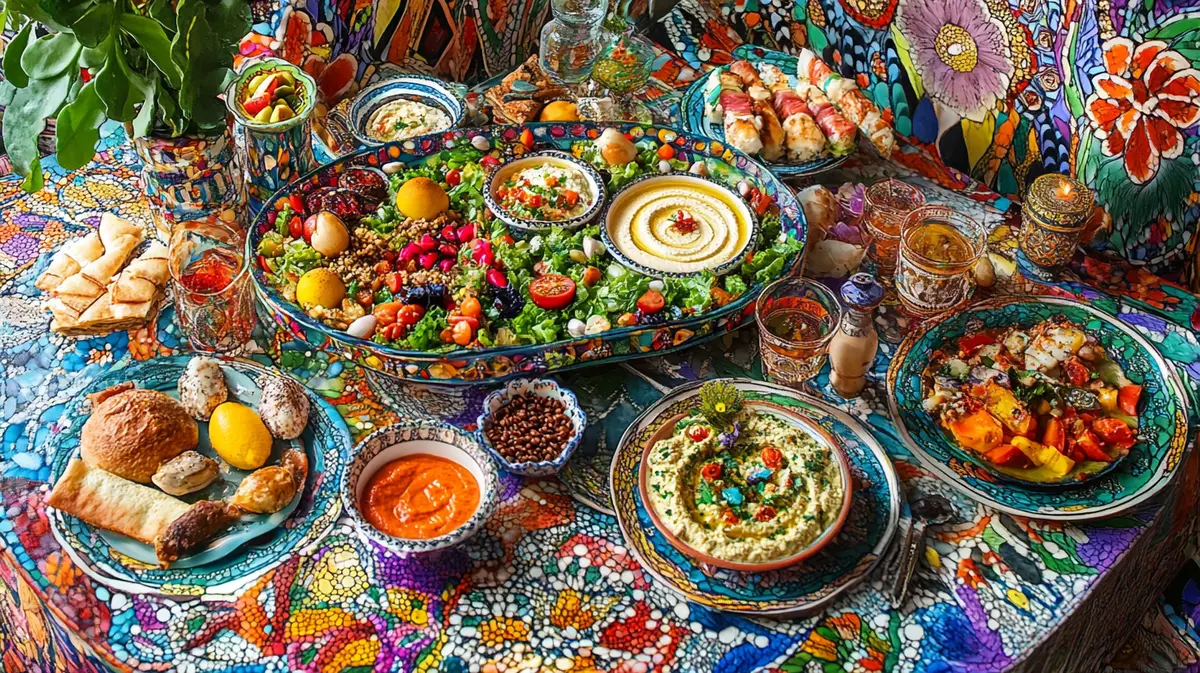
Mezze is a dining format, not an appetizer course. A full spread is 30 to 40 small plates that arrive in waves — cold dishes first, hot dishes in staggered rounds — designed to stretch the meal past the two-hour mark and keep the conversation going. You are not meant to clear each plate; you are meant to graze, argue, and pace yourself.
Hospitality in this culture is measured by abundance, so a table for four routinely arrives with more food than six people could finish. That’s the point.
Pro Tip: Leave a visible portion on your plate when you’re done. A clean plate is read as “still hungry” and triggers another round. A few bites left behind is the polite signal to stop.
What a full mezze actually costs
- Mid-range Beirut restaurant: $20 to $35 per person for a shared mezze spread
- Neighborhood spot or family-run place: $10 to $18 per person
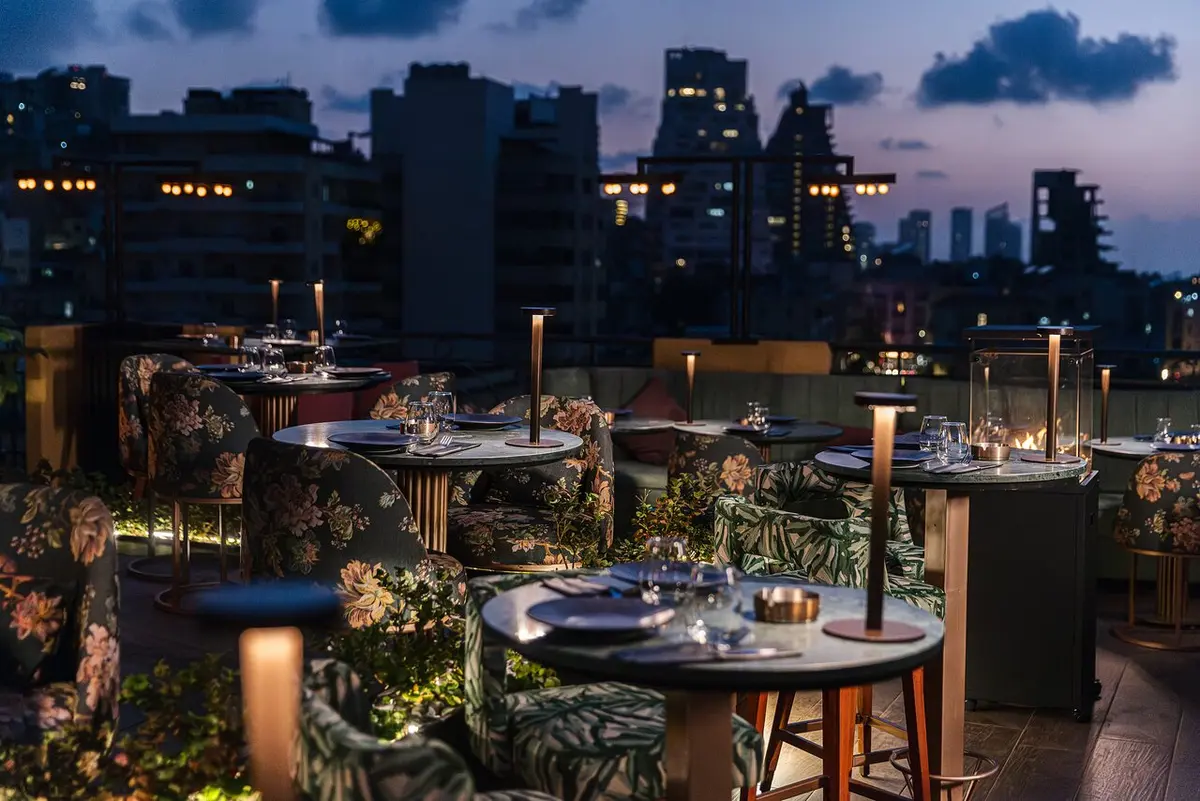
- Upscale venues (Mar Mikhael, Gemmayzeh): $40 to $60 per person with arak
- What you order last: the grilled meats (shish taouk, kafta, lamb chops) — if you order them first, you’ll be stuffed before the hot mezze arrives
What are the three dips every Lebanese table starts with?
The holy trinity is hummus, baba ganoush, and moutabal. Tabbouleh is a salad, not a dip, and locals will correct you on that. The quality of a kitchen can be read from the texture of its hummus alone — if it arrives grainy or cold-from-the-fridge, the rest of the meal will disappoint.
Hummus — the texture test
Properly made, it has the density of soft-serve and leaves a sheen of good olive oil when you drag a spoon through it. Nothing like the grainy supermarket tubs in the US. At Al Soussi in Mar Elias — our pick for the best breakfast in Beirut, a narrow, plastic-chair-and-shouting-orders kind of place — hummus arrives topped with awarma (preserved shredded lamb in its own fat) and turns the dip into a full meal. The foul (fava beans) and fatteh here are the reason CNN put them on a world-best breakfast list years ago.
- Location: Chehade Street, Mar Elias, Beirut
- Cost: $8 to $15 per person for a full breakfast spread
- Best for: First-timers who want breakfast to be the most memorable meal of the trip
- Time needed: 45 to 75 minutes; open roughly 8 a.m. to 1:30 p.m., closed in the afternoon
Baba ganoush vs. moutabal — they are not the same
Americans call both dishes “baba ganoush,” and every Lebanese cook I’ve eaten with will stop you mid-sentence to explain the difference. Baba ganoush is chunky — smoky eggplant hand-chopped with tomato, onion, and parsley. Moutabal is the creamy one: grilled eggplant blended with tahini, garlic, and lemon until it looks like a pale dip. Order both and taste them back to back; the contrast is the lesson.
How do you pace yourself through a 30-plate meal?
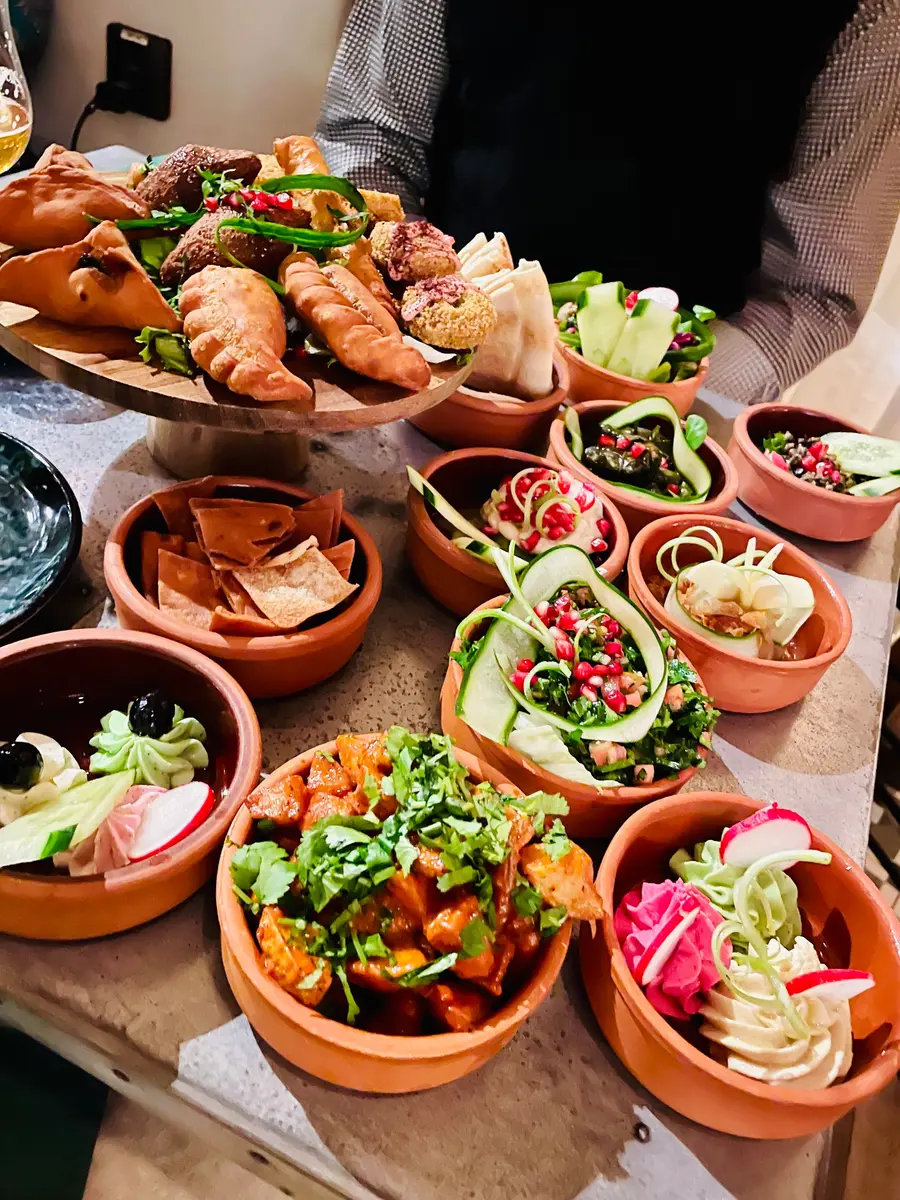
Eat half of what your instinct tells you in the first 20 minutes. Cold mezze alone — hummus, moutabal, tabbouleh, fattoush, labneh, stuffed grape leaves, muhammara — can finish you off before a single skewer hits the table. Sip arak or water between bites to reset the palate, and save room for what arrives last.
- Cold rounds: fill a quarter of your stomach, no more
- Hot mezze (kibbeh, sambousek, fried cauliflower): another quarter
- Grilled mains: the final stretch — this is where most tourists tap out too early
- Dessert and coffee: fruit platter first, then sweets, then Arabic coffee
Which salads actually define the Lebanese table?
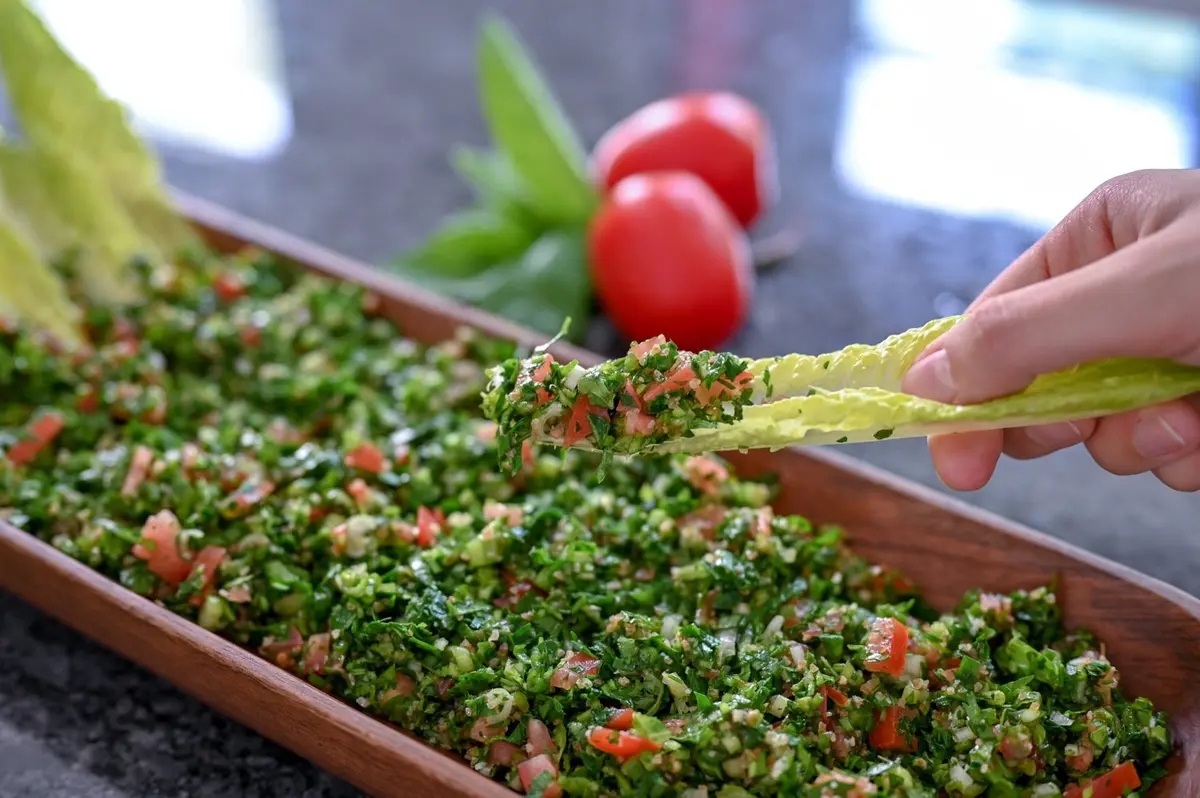
Two: tabbouleh and fattoush. Both are served at room temperature, never chilled, because cold flattens the herbs. And tabbouleh in Beirut is not the pale bulgur-heavy version you find in American grocery stores — it’s a parsley salad that just happens to include a small amount of grain.
Tabbouleh — parsley first, grain last
The ratio locals consider correct is roughly 85% flat-leaf parsley, 10% mint, and 5% combined tomato, onion, and fine bulgur. The parsley must be hand-chopped with a sharp knife; a food processor bruises the leaves and turns the salad bitter within minutes. It’s dressed with olive oil and lemon juice immediately before serving — never in advance — and it’s meant to act as a palate cleanser between the heavier meat and dip courses.
First-time American tasters usually describe it as “almost aggressively fresh.” That’s the correct reaction.
Fattoush — the pita-chip salad with sumac
Fattoush is a stale-bread salad: toasted or fried pita shards mixed with romaine, radishes, tomatoes, cucumbers, and purslane. The ingredient that separates a good fattoush from a mediocre one is sumac — a tart, magenta berry powder — paired with pomegranate molasses in the dressing. If the dressing isn’t visibly dark pink and doesn’t taste sweet-sour, the kitchen cut corners.
Pro Tip: If a restaurant offers “fattoush with no sumac” or dresses it with a lemon-only vinaigrette, walk out. That’s a tourist-menu tell.
Why do Lebanese cooks call kibbeh the national dish?
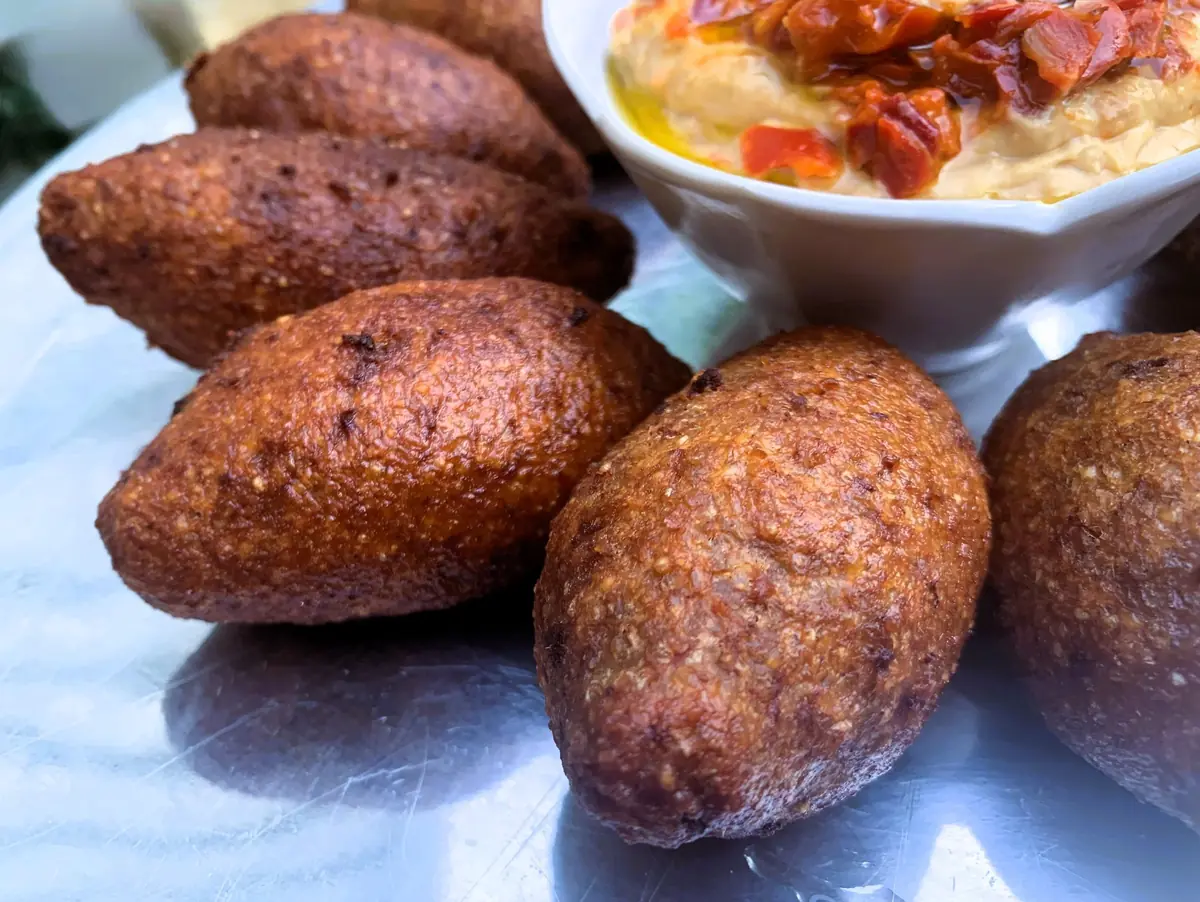
Kibbeh is the one dish every region, every village, and every grandmother claims a definitive version of. The base is always the same — lean lamb or beef pounded with fine bulgur and spices into a smooth paste — but from there, preparations split into dozens of forms.
- Kibbeh rass: football-shaped fried croquettes stuffed with ground meat, onion, and pine nuts
- Kibbeh bil saniyeh: the baked “tray” version, layered like a casserole, cut into diamonds
- Kibbeh labanieh: simmered in hot yogurt — unusual for American palates, excellent in winter
- Kibbeh nayyeh: the raw version, the one foreign visitors fixate on
Should you try kibbeh nayyeh?
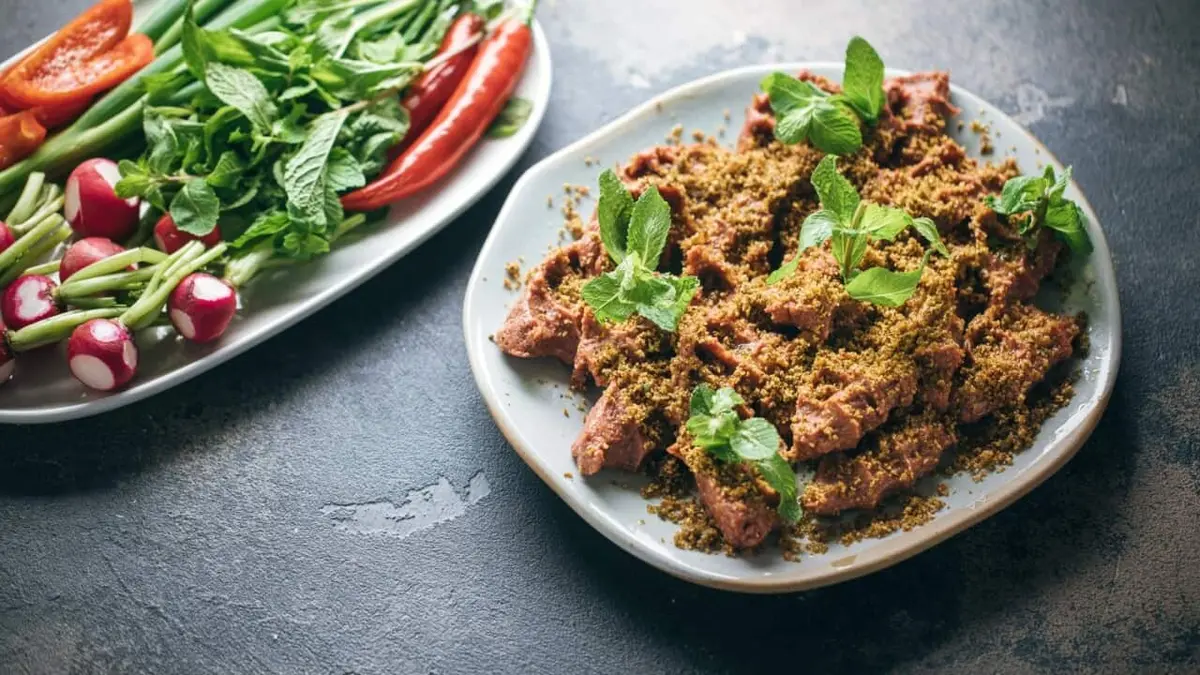
Yes, but only at places that move serious volume. Kibbeh nayyeh is ultra-fresh raw lamb pounded with bulgur, white onion, and warm spices. Food safety depends entirely on turnover — the meat should be butchered and served the same morning. Stick to established butcher-restaurants and long-standing family spots in Bourj Hammoud or Achrafieh where the lunch crowd churns through kilos before noon. Skip it at hotels, at dinner service, and on Sundays when deliveries slow down.
The texture surprises people: it’s silky, almost mousse-like, not meaty in the way American tartare is. Eat it with raw onion, fresh mint, and a shot of arak.
What should you order from a Lebanese street bakery?
Three Lebanese street food staples: manousheh, falafel, and shawarma — each with its own set of rules that locals will enforce whether you ask or not.
Manousheh — the original pizza
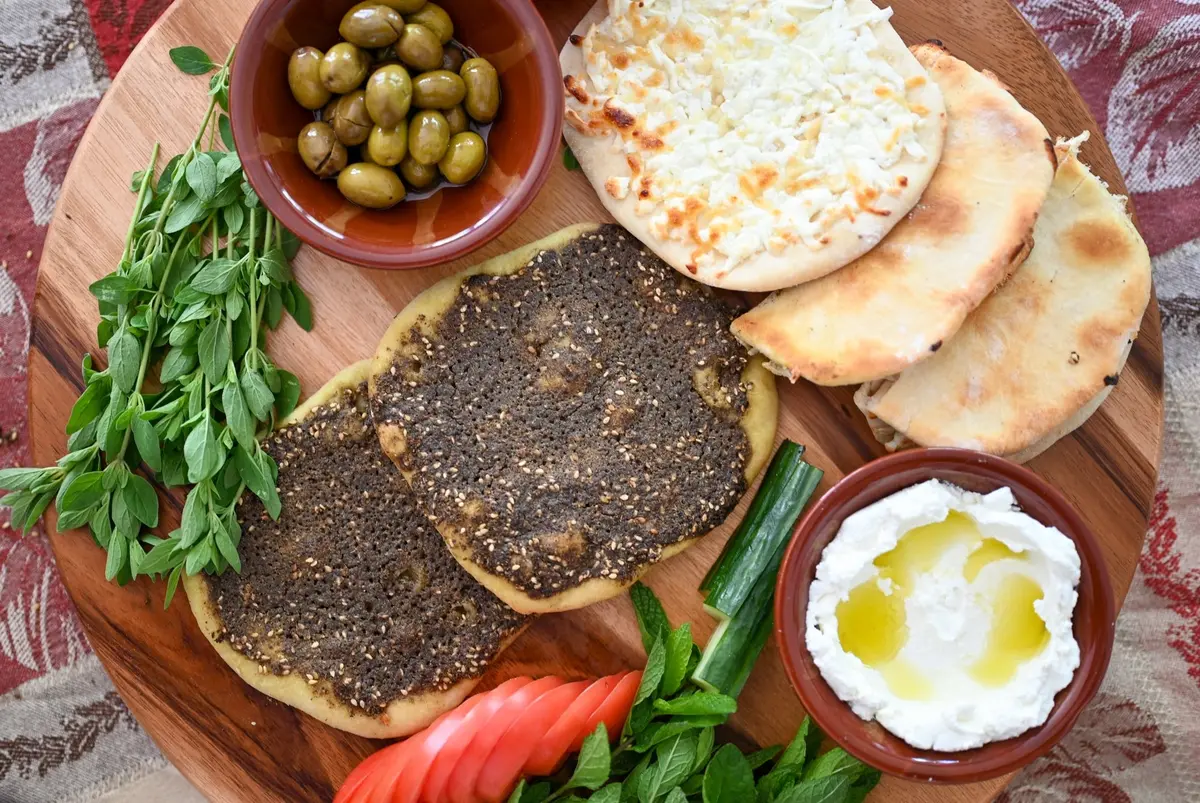
A manousheh is a disc of dough topped before baking on a convex metal griddle called a saj or in a wood-fired brick oven. It predates Italian pizza by centuries and functions as the default Lebanese breakfast. Every neighborhood has a bakery where the line forms before 8 a.m. and the owner knows half the customers by name.
- Za’atar manousheh: wild thyme, sumac, and sesame seeds mixed with olive oil — the classic, order this first
- Jibneh manousheh: a mix of salty akkawi and melting kashkaval cheese
- Kishek manousheh: fermented bulgur-yogurt paste with onion and tomato; an acquired taste, deeply savory, worth the try
- Lahm bi ajin: the meat version, spiced ground lamb with pomegranate molasses
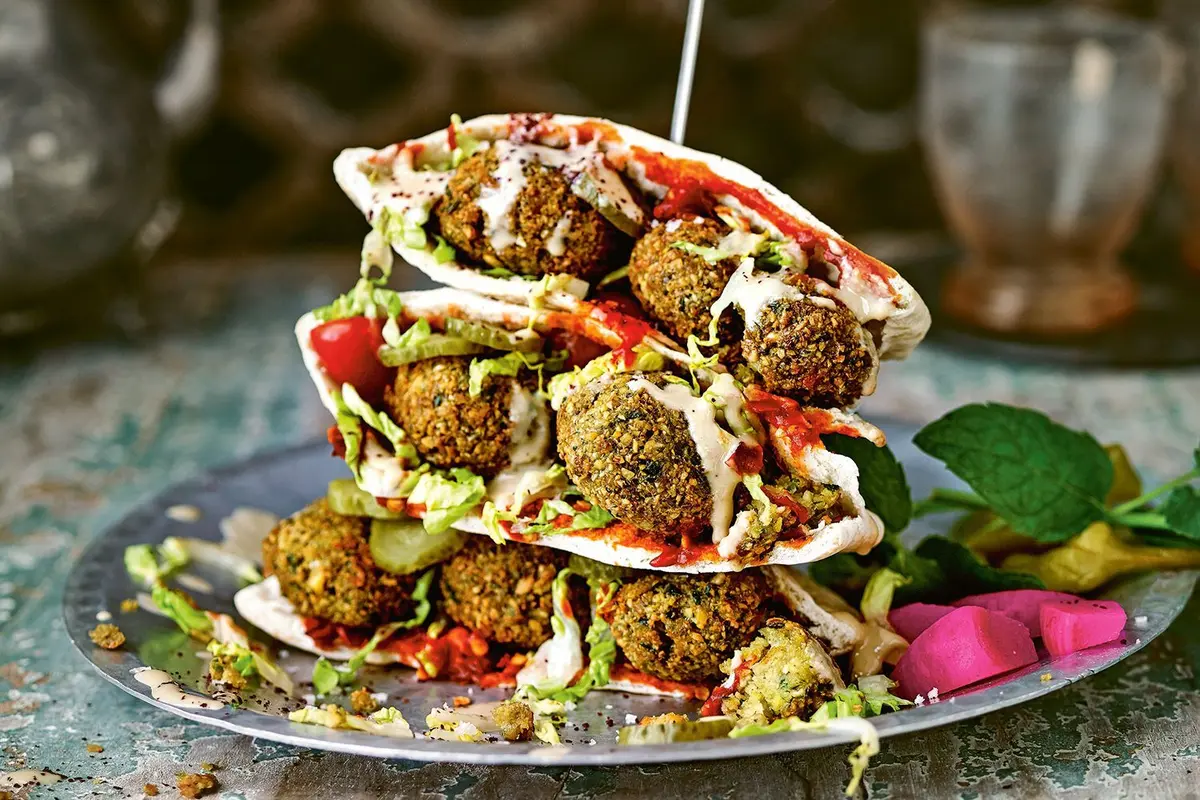
Falafel — and why the sandwich ritual matters
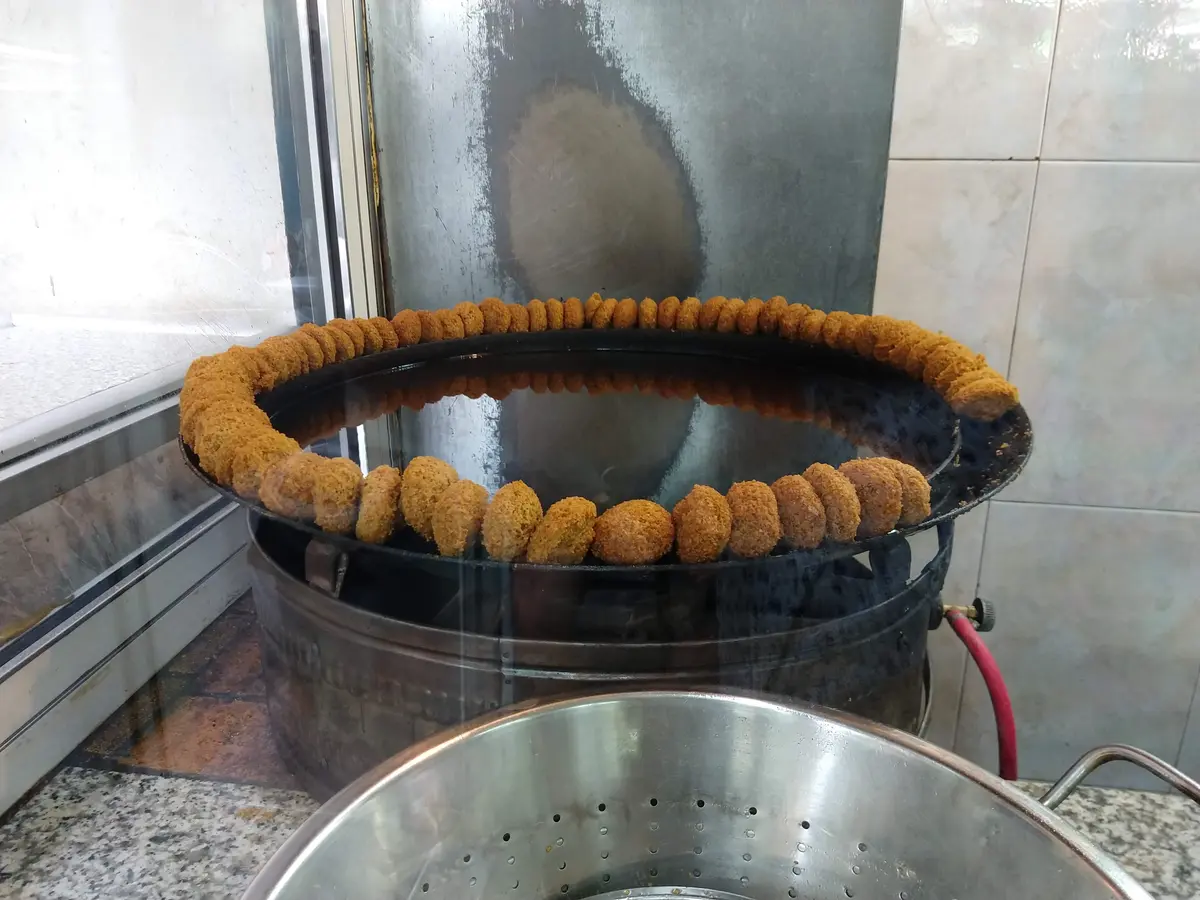
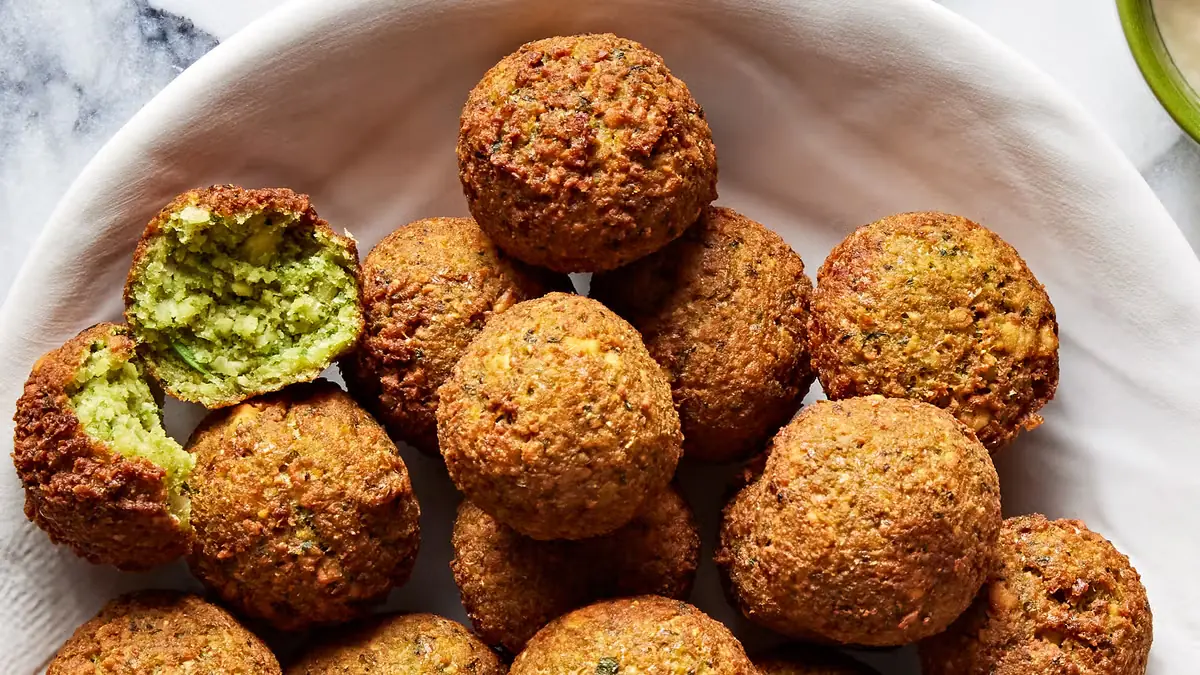
Lebanese falafel uses a mix of chickpeas and fava beans (not chickpeas alone, which is the Egyptian style) ground with cilantro, garlic, and onion. The best falafel in Beirut comes out greener on the inside and lighter in the mouth. The sandwich assembly is fixed: the falafel balls get crushed inside the pita so the interior absorbs the sauce, then layered with tomato, pickled turnip (the pink one), fresh parsley, and tarator (tahini-lemon sauce). Never toum on falafel.
Shawarma — the sauce rule you must not break
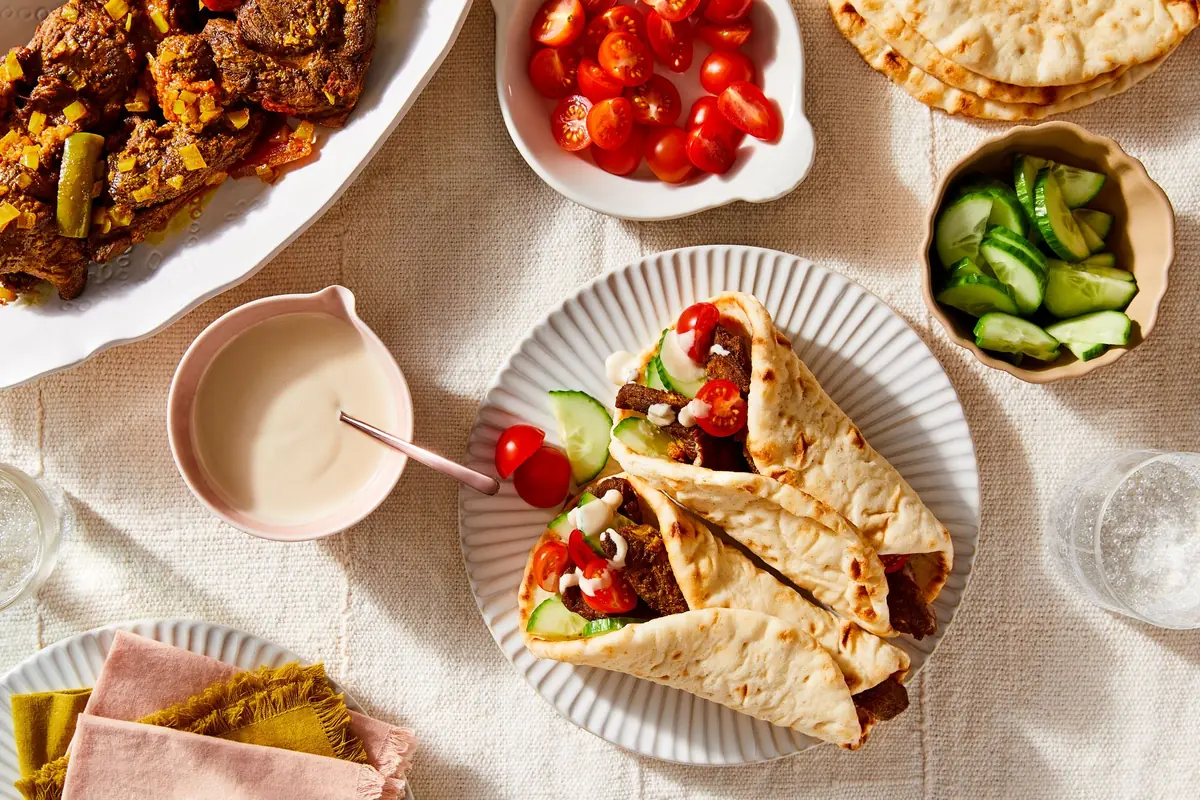
This is where tourists get corrected. Chicken shawarma is served with toum (whipped garlic sauce). Beef or lamb shawarma is served with tarator and a dusting of sumac. Asking for garlic sauce on beef shawarma is the equivalent of ordering ketchup on a steak at a French bistro — it marks you instantly.
Barbar in Hamra is the benchmark: open 24/7, running since 1979, and consistent at 3 a.m. as at noon. Two of us ate platters with sides for $25 total on a recent visit, drinks included.
- Location: Omar Ben Abdel Aziz Street, Hamra, Beirut
- Cost: $5 to $8 per sandwich; $12 to $18 per platter
- Best for: Late-night eaters, solo travelers, anyone who wants a reliable benchmark meal
- Time needed: 20 to 40 minutes (mostly takeaway; limited seating)
Where should you eat outside Beirut?
Beirut gets the attention, but the regional kitchens are where the cuisine shows its range. Three trips worth making from the capital:
Tripoli — the sweet capital and Hallab 1881
Tripoli, about 50 miles (80 km) north of Beirut, is the undisputed center of Lebanese pastry. Hallab 1881, near Riad El Solh Square, has been operating since — yes — 1881, and the knefeh here is the reference standard: a base of stretchy white cheese under a crust of orange semolina threads, soaked in orange-blossom syrup, served warm in a sesame-seed bun. Order it for breakfast, not dessert. The znoud el sit (rolled pastry stuffed with clotted cream) is the second thing to order. Skip the full lunch menu; come for the sweets, coffee, and maybe one lahm bi ajin.
- Location: Gemayzat Street / Riad El Solh Square, Tripoli
- Cost: $6 to $12 per person for knefeh and coffee; around $35 per kilo for baklava to take home
- Best for: Dessert-first eaters, day-trippers from Beirut
- Time needed: 45 minutes on-site, plus 90 minutes each way from Beirut by car or shared taxi
Pro Tip: Order one knefeh in a bun to eat on the bench outside and one slice on a plate inside. The eating context changes the experience — the street version is what locals actually do.
Byblos — seafood with a harbor view
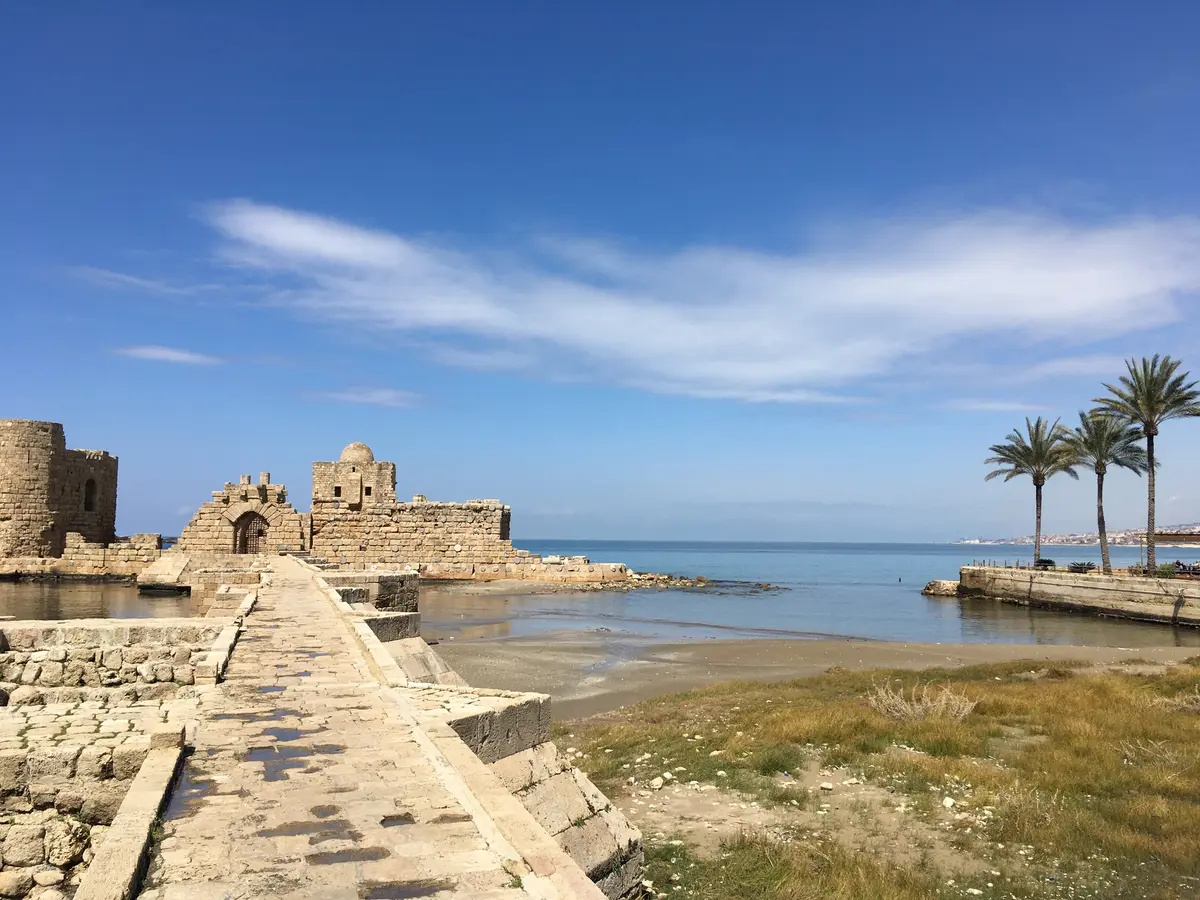
Byblos, 25 miles (40 km) north of Beirut, is one of the oldest continuously inhabited cities in the world, and its restaurants lean seafood. Chez Pepe overlooks the old harbor and serves a solid mezze spread followed by the catch of the day grilled whole. The fish itself is not cheap, but the view of the Crusader castle from the terrace justifies it once per trip.
Bekaa Valley — wine country cooking at Tawlet Ammiq
The Bekaa Valley, an hour and a half east of Beirut over Mount Lebanon, is wine country — home to the best wineries in the Bekaa Valley, including Chateau Ksara, Chateau Musar, and Domaine des Tourelles. Dining shifts toward heartier, earthier food: lentil stews, stuffed vine leaves, wild mountain greens. Tawlet Ammiq is a sustainable restaurant where local women cook a rotating daily menu using ingredients sourced within a few miles of the kitchen. The menu isn’t fixed — you eat what was grown that week — and that’s exactly why it’s worth the drive.
What is arak and how are you supposed to drink it?
Arak is a clear, grape-based spirit flavored with green aniseed, bottled at around 100 proof (50% ABV), and the near-mandatory drink for a mezze meal. The ritual is fixed and non-negotiable: pour about one part arak into a small glass, add two parts cold water (it turns milky white — this is the anethole reacting), then add ice last. Never pour arak over ice first; the temperature shock ruins the emulsion.
Its job at the table is to cut through the fat and garlic of a heavy mezze spread — lemon and licorice against lamb and tahini. One small glass per hour is the local pace; tourists who treat it like a shot regret it by dessert.
Which Lebanese desserts are actually worth ordering?
Lebanese sweets are intensely sweet, nut-heavy, and often built around sugar syrup or clotted cream (ashta). Three to prioritize:
- Baklava: drier and crispier than the Greek version, with more layers of phyllo and less syrup. Pistachio-filled is standard; cashew is the underrated pick.
- Maamoul: shortbread-style semolina cookies stuffed with dates, pistachios, or walnuts. Best during Eid, but good year-round.
- Halawet el jibn: a thin sheet of sweetened melted cheese rolled around ashta and topped with orange-blossom syrup. Unusual for American palates — sweet cheese confuses people — but the texture is the reason Lebanese sweets are a category of their own.
Skip muhalabia (milk pudding) unless you love rosewater. It’s a grandma dish, and not in a good way for most first-time visitors.
What should American travelers know before going?
Lebanon is one of the most rewarding food destinations in the Mediterranean, but the practical side requires more planning than Italy or Greece. Four things to sort before you board.
Water and ice
Do not drink tap water anywhere in the country, including Beirut. Bottled water is cheap and everywhere. Reputable restaurants use filtered water for ice, but at street stalls or small neighborhood spots, skip the ice and the raw salads if you have a sensitive stomach. See our guide on whether you can drink tap water in Lebanon.
Cash, currency, and tipping
Bring clean, undamaged US dollar bills — small denominations ($1, $5, $10, $20). The economy has been effectively dollarized and fresh US bills are accepted everywhere, often preferred over cards. ATMs are unreliable. Tipping is 10% at sit-down restaurants; $1-2 at a bakery or shawarma counter is generous. More detail in our guide to Lebanon currency.
Vegetarian and vegan options
Lebanon may be the single best Mediterranean country for plant-based eaters. The phrase to learn is “bi zeit” (بزيت) — “with olive oil” — which signals a dish is made without dairy or meat. Easy vegan orders: hummus, moutabal, tabbouleh, fattoush, hindbeh (sauteed wild chicory with caramelized onion), mujadara (lentils and rice), stuffed grape leaves, and foul. Full list in our guide to vegetarian and vegan food in Lebanon.
When to go for the food specifically
- Spring (April-May): wild herbs and greens are at their peak — akkoub, hindbeh, wild thyme
- Fall (October-November): olive harvest, new-press oil arrives at markets, grapes for arak
- Summer (June-August): hot, crowded, prices climb, but mountain restaurants (Broumana, Faraya) come alive
- Winter (December-February): slower, some mountain spots close, but Beirut dining is at its most affordable
Before you book
TL;DR: Eat breakfast at Al Soussi in Mar Elias, a full mezze with arak at least once in Achrafieh or Mar Mikhael, shawarma at Barbar after midnight, and make the day trip to Tripoli for knefeh at Hallab 1881. Learn two words — “bi zeit” for vegan dishes and “sahtein” (to your health) when someone hands you a plate. Bring clean dollars, skip the tap water, and leave a few bites on every plate unless you want another round.
What’s the one Lebanese dish you’ve been hesitating to try — and what’s stopping you? Drop it in the comments and I’ll tell you whether it’s worth the leap.