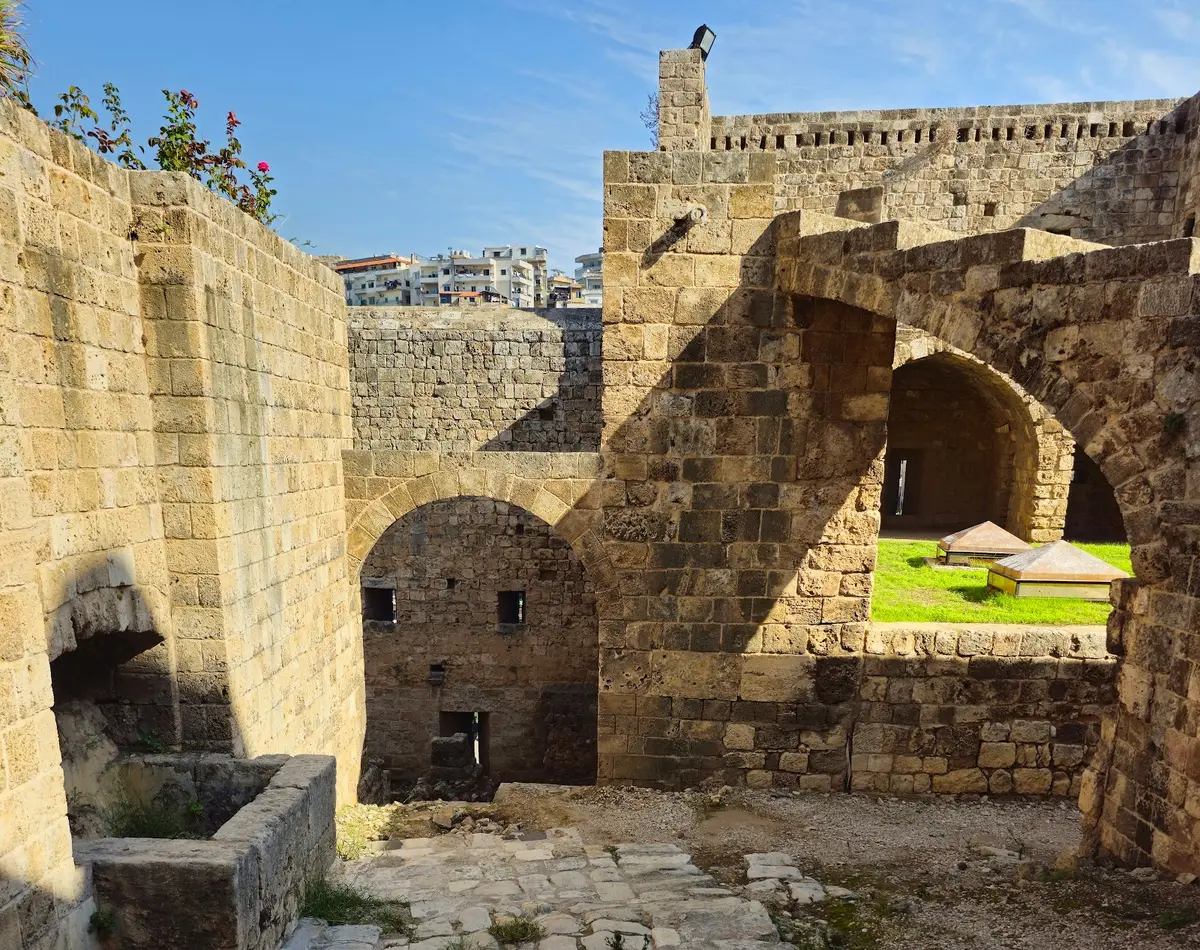
The Lebanon visa for US citizens is free and issued on arrival at Beirut — but that’s the easy part. The hard part is the paperwork officers actually check, the Israel-stamp rule that gets people turned around at the desk, and the Level 4 “Do Not Travel” advisory that changes the calculation entirely. Here’s what the embassy websites leave out.
Is the Lebanon visa for US citizens really free on arrival?
Yes. US passport holders sit in Lebanon’s “Group 1” visa category and receive a free, 30-day Visa on Arrival at Rafic Hariri International Airport in Beirut. There is no fee, no online pre-approval, and no printed sticker — just a red entry stamp. The catch: it is valid for one month, not 90 days, and the “automatic extension” you’ll read about online does not exist.
Here is what you actually get at the desk:
- Visa fee: $0
- Initial validity: 30 days from entry
- Extension available: Up to 3 months total, with paperwork
- Processing time: Immediate, at the immigration counter
- Passport validity required: 6 months beyond your arrival date
- Blank passport pages: At least one visa-designated page
The one-month rule and the extension myth
Plenty of travel blogs repeat the line that the 30-day stamp “automatically extends” for another month. It does not. Your entry stamp will show “One Month” in Arabic and English, and that is the entire validity. An extension is a separate administrative process at a General Security office or Liban Post counter. Counting on a grace period you read about on Reddit is how people end up at the airport on departure day being told they need to go downtown first.
Pro Tip: Photograph your entry stamp the moment you clear immigration. If the ink is faint or the date is smudged — which happens — you want evidence of the actual entry date before you leave the airport.
Why does any evidence of Israel travel get you denied?
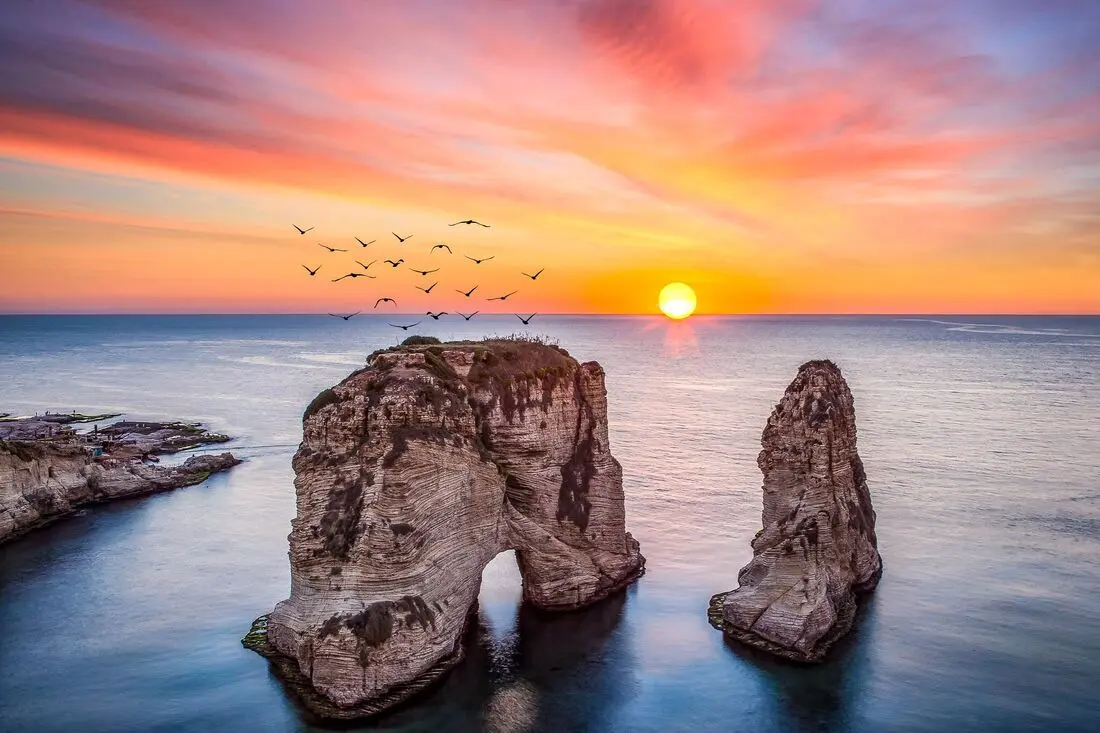
Any sign of prior travel to Israel — a stamp, a residency sticker, an exit card tucked between pages, a printout of an electronic authorization — results in refused entry. This is enforced by the General Directorate of General Security and overrides your US passport. The rule applies to current and previous passports, digital records found during a phone search, and even secondary evidence like a Jordanian or Egyptian land-border stamp from a crossing that only leads to Israel.
Stamps that flag you at land borders
Ben Gurion Airport mostly stops stamping passports, but the overland crossings do not. Three stamps act as de facto proof of Israeli entry:
- King Hussein Bridge (Jordanian side): the crossing only leads to the West Bank.
- Taba (Egyptian side): the crossing only leads to Eilat.
- Arava / Wadi Araba (Jordanian side): same logic.
If any of these sit in your passport, request a new one from the State Department before you fly. It costs $130 and takes 6-8 weeks standard, 2-3 weeks expedited. It is cheaper than the flight home after a refusal.
What happens in secondary screening
Officers pull travelers with “patterns” — visa stickers from the Gulf, frequent Middle East stamps, Arabic surnames — into a side room for questioning. Typical questions include why you are traveling now, whether you know anyone in Israel, and whether you have visited the Occupied Territories. Admitting to an Israel visit, even one from a decade ago, is grounds for denial. If refused, you wait in the transit zone for a return flight at your own expense.
Pro Tip: Before you land, clear your phone of anything tied to Israel — Gett or Rider taxi apps, Waze map history, photos geotagged in Tel Aviv, WhatsApp chats with Israeli numbers. A phone check during secondary screening is not routine, but it happens, and there is no appeal once it does.
What documents do you actually need at Beirut immigration?
Free does not mean unconditional. Officers issuing the Lebanon visa for US citizens check for four things: a passport valid at least 6 months with a blank page, a specific accommodation address with a working phone number, a non-refundable return ticket, and sufficient funds. The regulation technically requires $2,000 USD in cash. It is rarely counted for US passport holders, but showing up empty-handed with no hotel confirmation is a fast way to end up in secondary.
Accommodation: a phone number they can dial
“A hotel in Beirut” is not an answer. Officers want a specific property and a telephone number they can call from the desk. A printed Booking.com or Expedia confirmation works if the hotel’s phone is visible on the page, which is why most travelers default to a vetted hotel in Beirut rather than ad-hoc rentals. An Airbnb is where people get delayed — Lebanese streets often lack numbered addresses, and “Airbnb in Mar Mikhael” with no building name or host contact triggers extra questioning. Officers will sometimes dial the host while you wait. If the host doesn’t pick up, you wait longer.
Return ticket: non-negotiable
A one-way ticket is the single biggest red flag at the counter. You need a confirmed onward or return flight, and US airlines — Delta code-shares, Turkish, MEA — will often refuse boarding at the US departure gate if your reservation doesn’t show one. Airlines bear repatriation costs if Lebanon refuses you, so they check before the passenger manifest closes.
Cash requirement: $2,000 on paper, different in practice
The written rule says $2,000 USD in cash or certified check. For US passport holders it is almost never counted. That does not mean you should travel empty-handed. Lebanon’s banking sector collapsed in 2019 and never recovered — international credit cards work only at four- and five-star hotels and a handful of restaurants in Beirut’s Mar Mikhael and Gemmayzeh districts. Everywhere else runs on US dollar cash. Bring at least $500-800 in clean bills for a short trip, more for anything longer — real Lebanon travel costs run higher than the headline “cheap country” reputation suggests.
What is the arrival process at Rafic Hariri airport?
Beirut’s airport is compact — one terminal, one immigration hall — but the flow is chaotic, especially when two wide-bodies land within 20 minutes of each other. You’ll go from jet bridge to immigration in under five minutes on a quiet day, or wait 45 in a single line on a Friday evening. Bring your own pen, fill out the arrival card before you queue, and head to the “General Security / Foreigners” counters — not the Lebanese Nationals lane.
Step-by-step through immigration
The sequence is predictable:
- Deplane and follow signs to Arrivals / Immigration.
- Pick up the pink-and-white arrival card from the free-standing rack before the queue. The rack is often out of pens.
- Fill in name, passport details, flight number, and your exact accommodation address and phone.
- Queue at “General Security / Foreigners” — the lanes on the far right as you face the desks.
- Hand over passport and arrival card. The officer types into the terminal, cross-checks against security blacklists, and stamps in red.
- Collect your bag. All bags are X-rayed on exit, not entry.
Customs and the drone rule
One item trips people up consistently: drones. Bringing any drone — DJI Mini, Autel, GoPro Karma — without a pre-approved military permit from the Lebanese Armed Forces results in confiscation at the X-ray belt. Retrieval, if even possible, means a full day at the cargo terminal in Dekwaneh with a filed request and a fee. Leave it home.
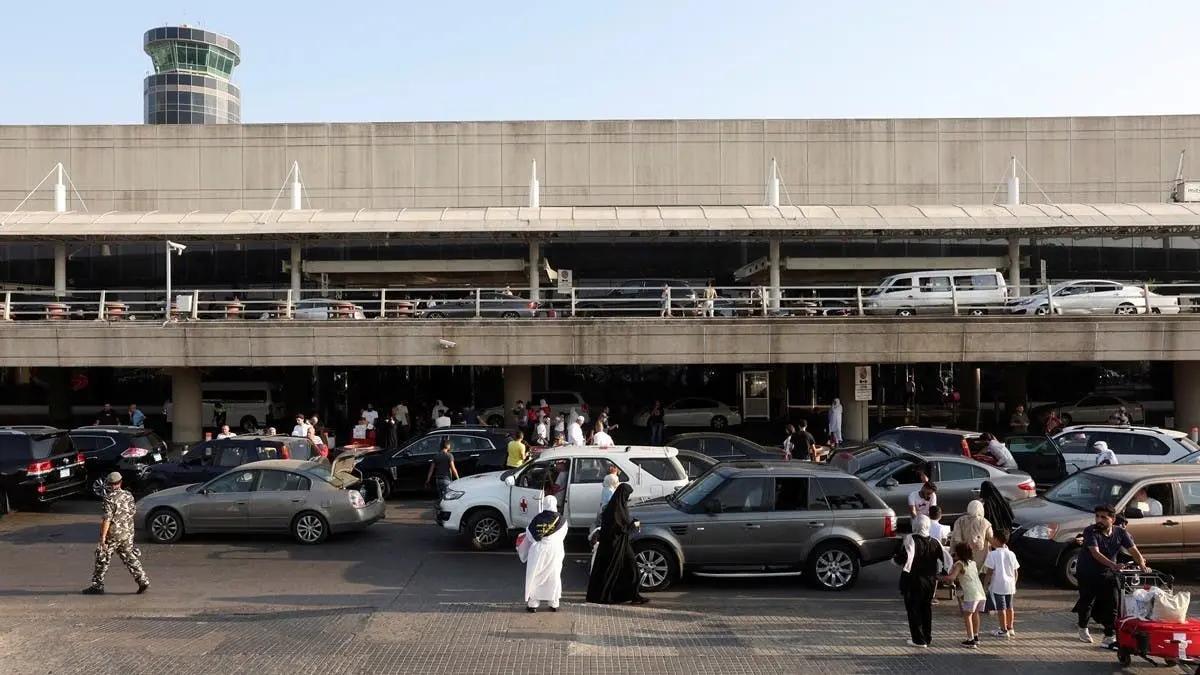
How do you get from Beirut airport to the city?
The airport exit curb is controlled by an entrenched taxi cartel, and the standard price for a 15-20 minute ride to central Beirut ranges from $10 on the low-risk end to $50 if you accept the first driver who grabs your bag. Four real options, in order of how I’d use them:
- Allo Taxi: $20-25 fixed rate. Desk inside Arrivals, regulated app, trackable ride, English-speaking dispatch. The default pick.
- Uber: $18-25 metered. Cannot pick up at the curb — drivers meet passengers at Departures one level up. Works, but adds friction with luggage.
- Bolt: $10-18 metered. Cheapest and the highest scam risk. Unlicensed cars and cancelled rides are common. Skip.
- Curbside taxi: $30-50 after haggling. Safe but overpriced, and the driver will not use a meter regardless of what the sticker on the dash says.
Pro Tip: The Allo Taxi desk is immediately past customs on the left before you hit the exit doors. Book there, pay the dispatcher, and wait inside — the driver comes to you. It’s the only option where you avoid the curb entirely.
How do you extend your visa beyond 30 days?
An extension of the Lebanon visa for US citizens is not automatic. You must apply in person at a General Security Regional Office, or submit through Liban Post, before your 30-day stamp expires. The extension is free for the first two-month renewal and takes anywhere from same-day to a week, depending on the office. Miss the deadline and the extension is no longer an option — you pay an overstay fine at the airport instead.
General Security offices
The main foreigners’ office is at Adlieh in Beirut, with regional offices in Tripoli, Zahle, and Tyre. Bring:
- US passport plus a photocopy of the bio page and entry stamp
- Two passport-size photos (white background, recent)
- A completed extension form, available at the office
- A hotel letter or notarized housing pledge from your host confirming your extended stay
- A pen (yes, really)
Arrive at opening — 8 AM on weekdays — and expect to wait 2-4 hours. Some offices return the passport same-day; others keep it for 2-7 working days and issue a receipt in Arabic.
The Liban Post alternative
Liban Post offices across the country accept extension applications and handle the back-and-forth with General Security for a small service fee (around $10-15). The trade-off: you hand over your passport and are without it until processing finishes, typically 3-5 business days. Lebanon has active security checkpoints, and traveling without a passport — even with a photocopy — is a problem if stopped.
Pro Tip: If you use Liban Post, ask them for a stamped receipt in Arabic and carry a high-quality color photocopy of your passport bio page and entry stamp at all times. Army checkpoints will usually accept the photocopy plus the receipt; ISF checkpoints are less predictable.
Overstay fines and the exit visa trap
Overstaying by less than a month means a fine at departure, paid in USD cash at the airport counter. The fine runs roughly $35-70 depending on the number of days. Overstay by more than a month and the airport cannot clear you on the spot — General Security will refuse to let you board your flight and send you to the Adlieh immigration department for an Exit Visa. That process takes 2-4 working days. People miss flights over it.
Should you actually travel to Lebanon right now?
This is where the honest answer matters more than the visa logistics. The US State Department has maintained Lebanon at Level 4 — “Do Not Travel” — since October 2023, and on February 23, 2026 it ordered the departure of non-emergency US government personnel and their family members from the Embassy in Beirut. A follow-up alert on February 28 urged US citizens already in Lebanon to depart “while commercial options remain available.” US Embassy Beirut has suspended routine consular services; only emergency passport appointments are being processed.
Translation: if something goes wrong, the usual safety net is thin. Travel insurance may not cover a destination under a Level 4 advisory. Check the small print before you book.
Which areas to avoid entirely
Three zones are under active “depart now” guidance from the US Embassy, not just general warnings:
- Dahiyeh (southern suburbs of Beirut)
- Bekaa Valley, including the area around Baalbek
- Southern Lebanon, especially anywhere south of the Litani River
- The Lebanon-Syria border region
- All Palestinian refugee camps, without exception
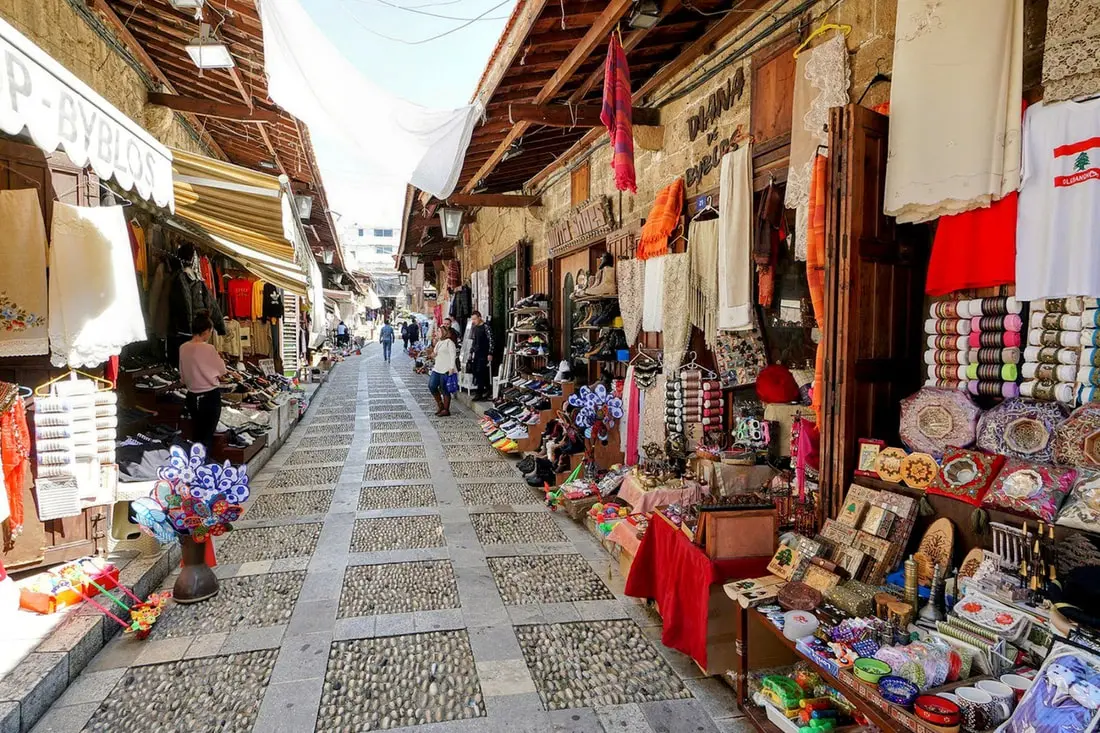
Greater Beirut north of Dahiyeh, Mount Lebanon, Byblos, Batroun, and the northern coast have a more stable security posture and see the bulk of diaspora and foreign visitors — but “more stable” is relative to the rest of the country, not to Europe. Airstrikes on Dahiyeh and the Bekaa have occurred with minimal warning.
Dual nationals: the US passport won’t protect you
If you hold Lebanese-American citizenship, Lebanon treats you as Lebanese, full stop. Entering on a US passport does not change this in practice. US Embassy consular access for dual nationals is severely limited if you are detained, and Lebanese family law applies — a custody dispute or a filed complaint can trigger an immediate travel ban preventing you from leaving the country, regardless of which passport you used to enter.
What should you know once you’re in?
The visa is the formality. A full Lebanon travel guide takes over once you land — living inside Lebanon’s economy for even a week requires adjustments most travelers don’t anticipate.
The “Fresh Dollars” cash economy
Lebanon runs on “Fresh Dollars” — physical US currency, post-2013 series with the blue security ribbon, in clean condition. Torn bills, ink marks, or anything printed before 2013 gets refused at the register. Taxis, restaurants outside luxury tiers, pharmacies, grocery stores, and gas stations all expect cash. ATMs dispense Lebanese Lira at a disadvantageous rate, if they dispense at all.
- Bring: clean $100s, $50s, $20s
- Budget: $50-80/day for mid-range travel, $100-150/day in central Beirut
- Avoid: pre-2013 bills, any bill with a tear, any bill marked with pen
Power and connectivity
State electricity — Électricité du Liban — delivers 2-4 hours per day in most areas. Every hotel, Airbnb, and apartment building runs a diesel generator to cover the daily power cuts, billed to residents by the amp. Before you book accommodation, ask a single question: “Is generator power 24/7?” If the answer is anything other than yes, book elsewhere.
For connectivity, hotel Wi-Fi drops with every generator handover. An eSIM from Alfa or Touch (the two Lebanese carriers) or a reputable regional eSIM provider gives you stable 4G across Greater Beirut and the coastal cities. Expect weaker coverage in the Bekaa and the mountains.
Before you book
TL;DR: The Lebanon visa for US citizens is free at Beirut airport for 30 days, extendable to three months with paperwork. Your passport must be completely clean of Israeli travel evidence, you need a return ticket and a specific accommodation address with a phone number, and you should carry clean post-2013 US dollar cash. Before booking anything, read the current US State Department Level 4 advisory and the February 2026 ordered-departure alert — the security picture has shifted, and the visa being easy doesn’t mean the trip is.
Have you entered Lebanon recently, or are you weighing a trip now? Which question at the immigration desk caught you most off guard?