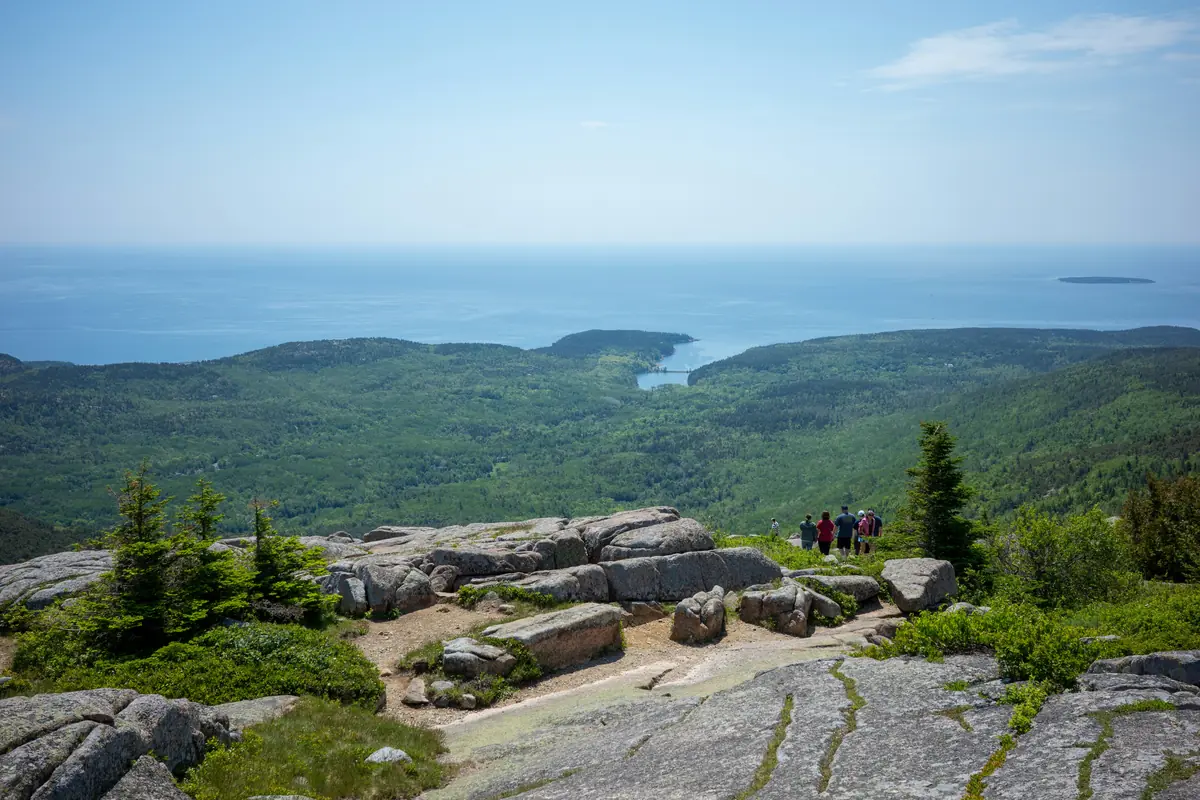
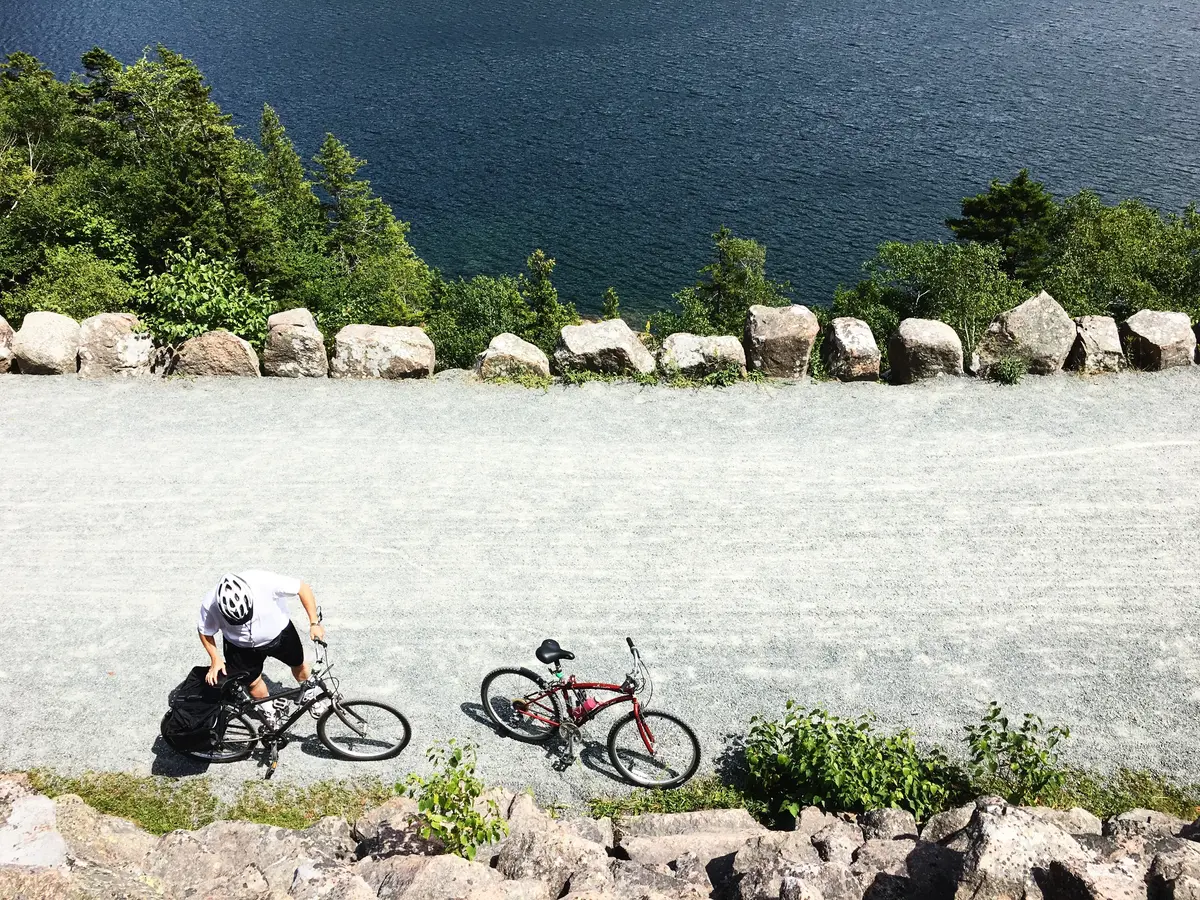
The Atlantic Coast Trail isn’t one trail — it’s two ways to ride the US East Coast from Maine to Florida. One is Adventure Cycling’s fully mapped 2,615-mile route; the other is the car-free East Coast Greenway, still being built. This guide covers which one fits your trip, what it costs, and the stretch to skip.
“Atlantic Coast Trail” usually points to a long-distance bike or walk route down the US East Coast, and two options dominate: Adventure Cycling’s Atlantic Coast Route (Bar Harbor, ME to Key West, FL — 2,615 miles, fully mapped) and the East Coast Greenway (Calais, ME to Key West — 3,000 miles, about 65% complete or in advanced development). One quick clarification before you plan: the same search term also surfaces the East Coast Trail in Newfoundland, Canada — a coastal hiking path with nothing to do with the US routes below. If that’s what you want, you’re on the wrong page.
Which Atlantic Coast Trail Route Is Right for You?
Choose the East Coast Greenway if car-free riding matters most — it links more than 1,100 traffic-free miles, with an interim on-road route bridging the gaps. Choose Adventure Cycling’s Atlantic Coast Route if you want a finished, road-tested tour with turn-by-turn cues and service notes for every mile. Same coast, opposite trade-offs.
The Greenway runs through 15 states and roughly 450 communities, and its planning maps are free online at map.greenway.org. The honest part is what the Alliance admits about the route’s state: the off-road trail still has real gaps you’ll ride on roads.
Adventure Cycling’s route is the opposite bargain — it’s finished and tested, but most of it follows low-traffic roads rather than dedicated path. You buy a seven-section waterproof map set (about $16 a section) and get cue sheets, elevation profiles, and where to find water and a bike shop.
| Feature | East Coast Greenway | Adventure Cycling Route |
|---|---|---|
| Distance | 3,000 miles (4,828 km) | 2,615 miles (4,208 km) |
| Termini | Calais, ME → Key West, FL | Bar Harbor, ME → Key West, FL |
| Surface | Car-free trail + interim roads | Mostly low-traffic roads |
| Car-free miles | 1,100+ off-road | Limited |
| Navigation | Free maps online | Print/digital map set (~$16/section) |
| Best for | Section riders, families, car-free miles | Self-supported road tourers |
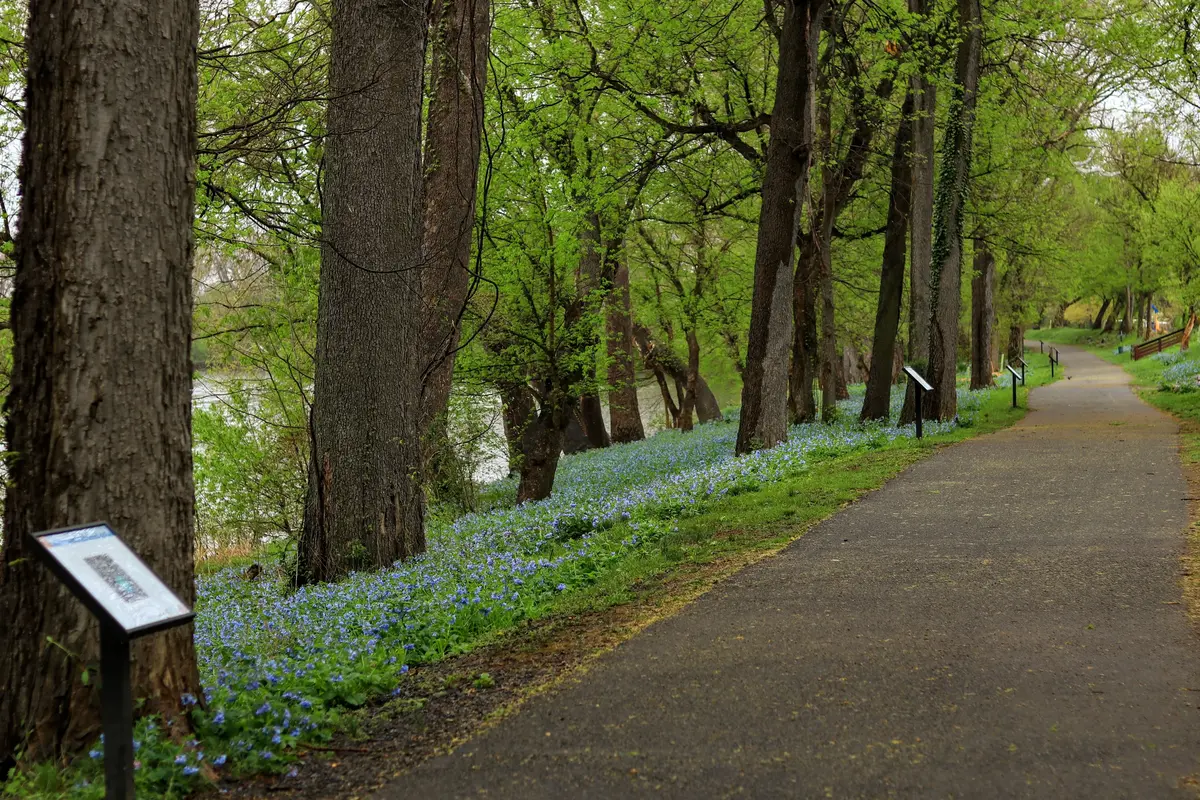
On the Virginia Capital Trail, one of the Greenway’s finished segments, riders routinely cover the first 20 miles out of Richmond without meeting a car. That’s the Greenway’s whole case in one stretch: where it’s done, nothing else on the coast compares.
How Long Does It Take to Bike the Full Route?
Most cyclists ride the full route in two to four months, at a comfortable 40 to 65 miles (64 to 105 km) a day with a rest day every five to seven days — enough to actually see the towns and beaches instead of grinding through them. Walkers of the entire Greenway have taken about six months.
Push hard and the numbers shrink fast. The current cycling speed record belongs to Maine’s Jeremy Chapman, who rode the entire Greenway in 24 days. Regina Yan set the earlier mark at 29 days, which stands out for a different reason: she’d been cycling barely a year when she did it, and now sits on the Greenway Alliance’s board. Both averaged over 100 miles a day, every day, for a month. That’s a different sport than touring.
Pro Tip: Leave a buffer week. Hurricane remnants, a broken spoke in a town with no bike shop, or a stretch of trail closed for construction will eat days you didn’t plan for.
A relaxed pace and real mileage aren’t mutually exclusive. Riders who roll out around 8 a.m., break for a long lunch, and finish by 5 p.m. still log about 50 miles a day.
Where Are the Best Car-Free Segments and Trailheads?
The finished, car-free standouts are the 52-mile Virginia Capital Trail (Richmond to Williamsburg), Maine’s roughly 87-mile Down East Sunrise Trail, Manhattan’s 13-mile Hudson River Greenway, Connecticut’s Farmington Canal Heritage Trail, and Boston’s Charles River path. All are paved or firm-surface and beginner-friendly — except the sandy Down East Sunrise Trail. Even if you never thru-ride, each is worth a weekend on its own.
Virginia Capital Trail — Richmond to Williamsburg
This is the segment that converts skeptics. It’s flat, fully paved, and runs parallel to historic Route 5, past Great Shiplock Park on the Richmond end and Shirley Plantation in the middle. The surface is smooth enough that families on hybrids and serious roadies share it without friction.
The one catch travelers flag again and again: shade is patchy in the open farm sections, and Virginia summer humidity is no joke. Ride early.
- Location: Richmond to Williamsburg, VA (parallels Route 5)
- Cost: Free to ride; bike rentals from about $45/day
- Best for: Families, first-time tourers, history stops
- Time needed: One full day one-way, or a relaxed weekend round trip
Pro Tip: Spoke + Art Provisions Co. near Jamestown rents full-day cruisers for $45 with a helmet included — worth it if you’re flying in and don’t want to box a bike.
Down East Sunrise Trail — Maine’s Sandy Outlier
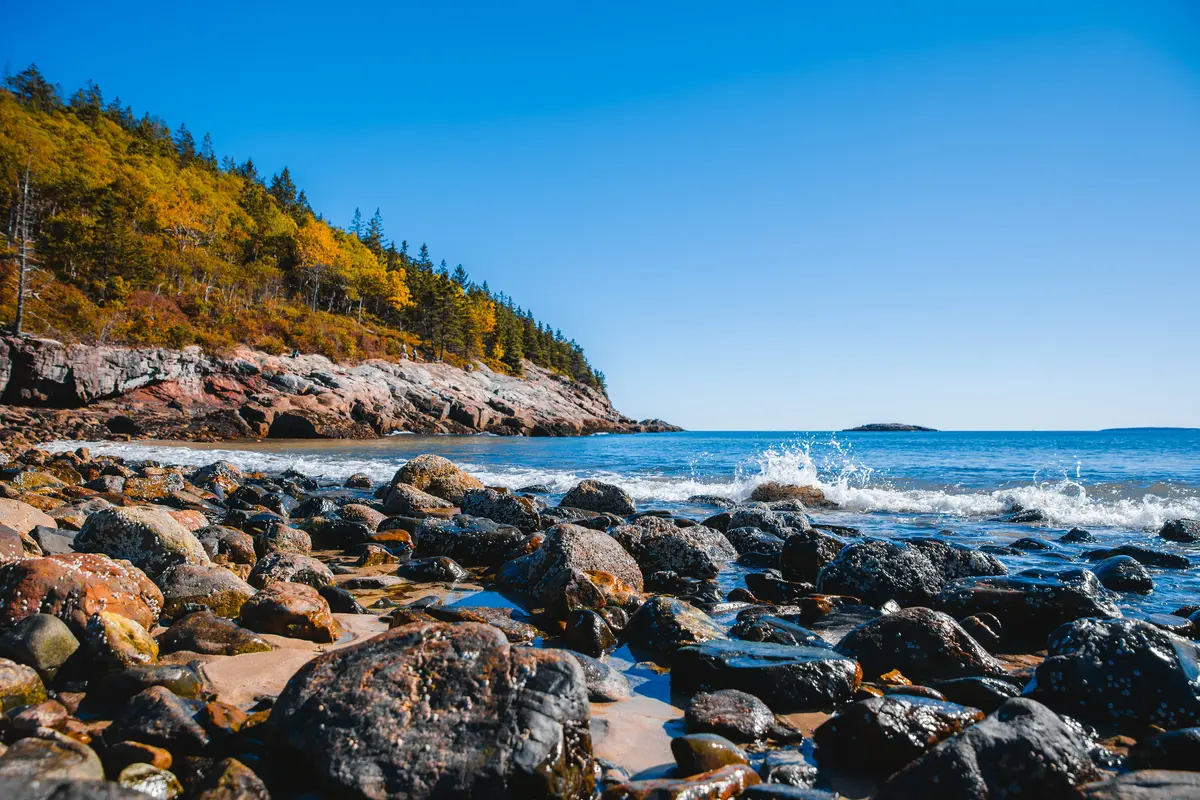
This one is the exception to the “beginner-friendly” rule. The Down East Sunrise Trail is a former rail bed running through remote Washington and Hancock counties, and its surface stays loose and sandy for long stretches. ATVs share it on summer and fall weekends, so don’t expect quiet solitude every mile.
The sand slows you down more than any hill on the whole coast. It’s beautiful and empty, but it earns the effort.
- Location: Washington and Hancock counties, Maine (east from the Ellsworth area)
- Cost: Free
- Best for: Riders on 2.0-inch-plus tires who want solitude
- Time needed: One to two days for the roughly 87 miles

Hudson River Greenway — Manhattan’s Car-Free Spine
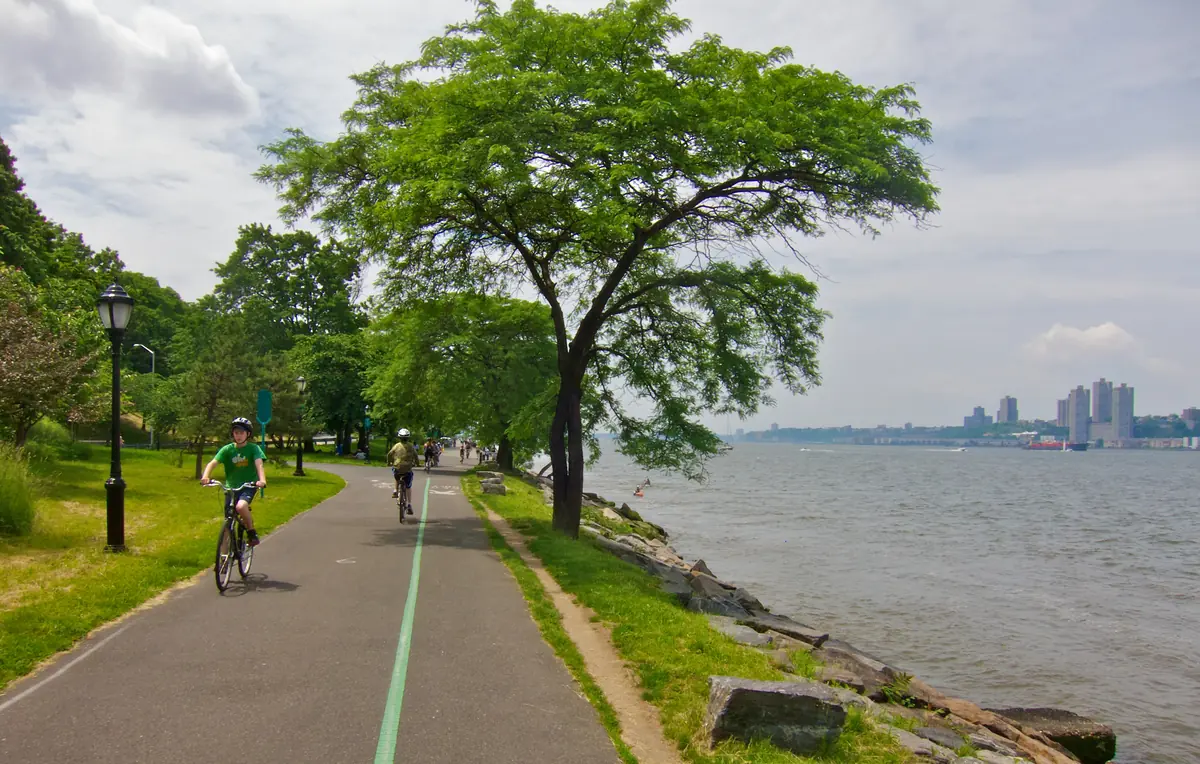
For a car-free ride in the middle of a major city, nothing on the East Coast beats this. The Hudson River Greenway runs about 13 miles up Manhattan’s west side, separated from traffic almost the entire way, with the river on one side and the city on the other.
It’s flat, fast, and genuinely useful — locals commute on it. The friction point is weekend congestion near the southern tourist zone.
- Location: Battery Park to Dyckman Street, Manhattan (about 13 miles)
- Cost: Free
- Best for: Car-free city riding, beginners, commuters
- Time needed: One to two hours end to end
Pro Tip: Start at Pier 25 in Tribeca, not Battery Park, to skip the weekend rental-bike crush at the southern tip.
Two More Segments Worth a Detour
Neither is a full day’s destination, but both are easy car-free add-ons if you’re nearby.
Farmington Canal Heritage Trail (Connecticut) carries the Greenway on a paved, firm surface well away from the coast, part of a corridor headed toward roughly 80 miles when the gaps close.
- Location: Simsbury to New Haven, Connecticut
- Cost: Free
- Best for: A car-free inland day ride
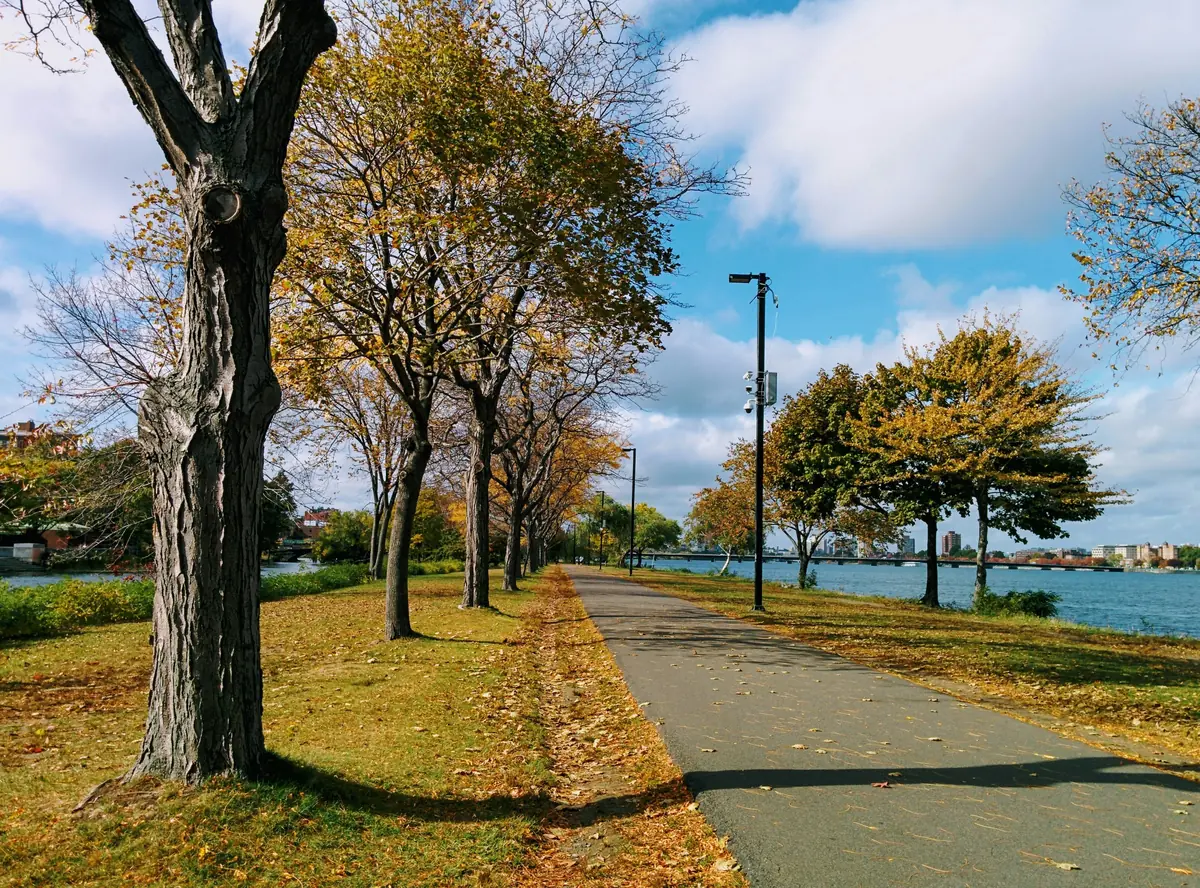
Boston’s Charles River path threads both banks of the river through the city, mostly separated from traffic.
- Location: Both banks of the Charles, Boston and Cambridge
- Distance: About 13 miles
- Best for: Early-morning runs and flat city riding
How Much Does an Atlantic Coast Trail Tour Cost?
A self-supported tour runs roughly $20 to $45 per person per day for food and camping. Cook your own meals and stay with Warmshowers hosts and you can drop to $7 to $10 a day. On top sit a few fixed costs: Adventure Cycling maps, a per-leg Amtrak bike fee, and campsites from $10 to $40 a night.
Here’s where the money actually goes:
- Food and camping: $20–$45 per day; as low as $7–$10 cooking your own meals plus Warmshowers stays
- ACA map sections: about $16 each (currently $15.75–$16.75); roughly $115 for the full seven-section set
- Amtrak bike fee: $0 to $20 per leg depending on the route; a boxed bike checks as baggage for $10
- Campsites: $10–$40 per night; hiker-biker sites are the cheapest option
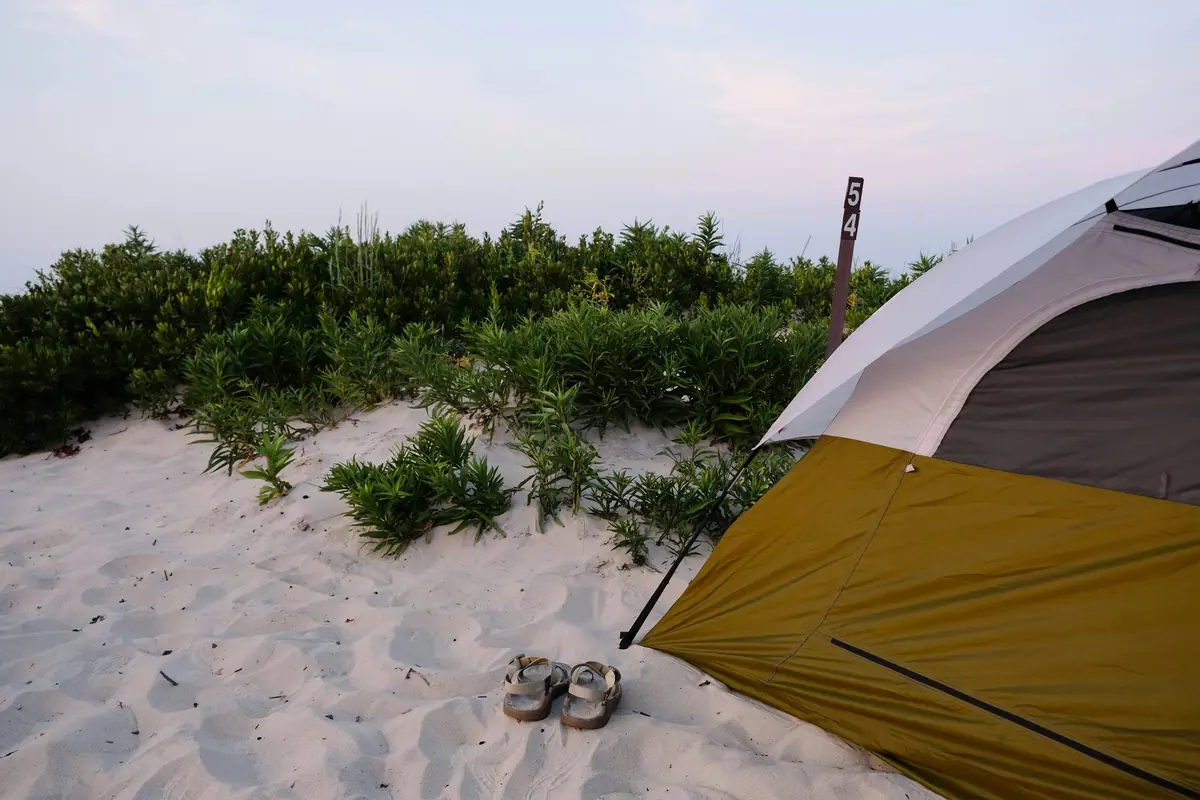
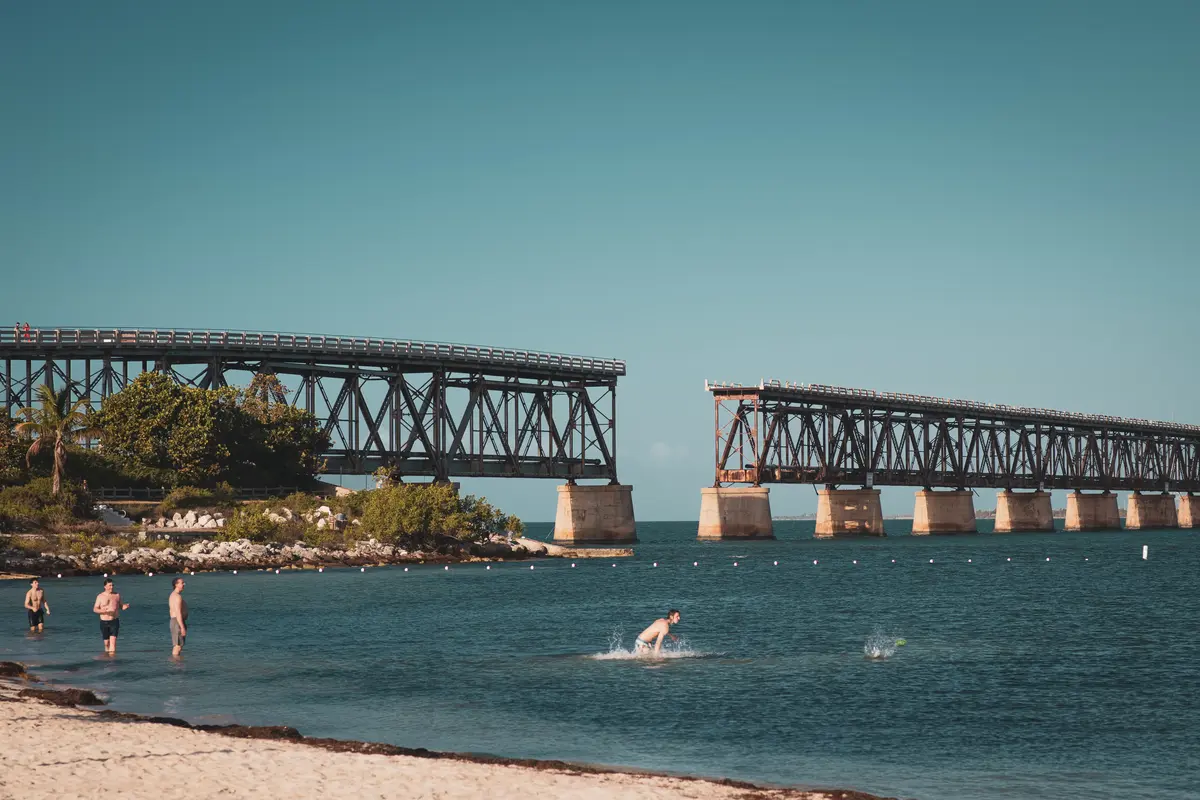
- Bahia Honda State Park tent site: $36 a night plus tax and a nonrefundable $6.70 reservation fee (no utility fee on tent sites); cyclists and walkers pay $2.50 park admission
One warning campers repeat about the Bahia Honda oceanfront sites: the water views are the best in the park, but there’s almost no shade, and the ground is packed coral — hard enough that a thin sleeping pad won’t cut it. Bring a real air mattress. On the transit side, Amtrak’s own bike policy is worth reading before you book, because bike fees and rack space vary by route and sell out.
When to Go — and Is the Atlantic Coast Trail Safe?
Ride the northern half from late spring through fall and the southern half year-round; leaving Maine in late summer drops you into Florida as it cools. Hurricane season runs July through November. Finished segments are car-free and safe; the interim on-road links — above all US-17 through the Carolinas and Georgia — are high-stress and best skipped.
Timing the season matters more than people expect. Florida summer highs sit near 90°F (32°C) with heavy humidity, so a north-to-south rider who starts in late summer lands in the Keys during the pleasant months instead of the swamp.
The safety picture is honest but manageable. On the completed off-road segments you’re separated from cars. On the interim links you’re on roads, and some are genuinely bad. The Greenway Alliance flags 185 of the 437 interim miles in South Carolina and Georgia — more than 40% — as high-stress, strongly advises against riding them, and recommends vehicle support or Amtrak to bypass the stretch. If you still want good riding in that region, the Alliance points to two finished pieces: the Spanish Moss Trail in Beaufort and the West Ashley Greenway south of Charleston. A protected fix is coming, too — the Ashley River Crossing bike-and-pedestrian bridge under construction in Charleston will remove one of the most dangerous crossings on the whole route.
On US-17 through the South Carolina Lowcountry, the shoulder vanishes for miles while trucks move fast beside you. Ten minutes of it makes the “skip this” advice obvious.
Pro Tip: Maryland’s Hatem Bridge over the Susquehanna allows bikes only on weekends and state holidays, dawn to dusk, and maintenance closures can narrow that window further — it’s an extremely high-stress crossing with no shoulder. Skip it. The Harford Transit LINK bus carries up to two bikes between Havre de Grace and Perryville, or you can detour via the Conowingo Dam, which adds about 25 miles.
Can You Walk or Run It?
Yes. The East Coast Greenway is a multi-use route open to walkers, runners, and wheelchair users. Ultrarunner Shan Riggs became the first person to run the entire 3,000 miles, covering it in 78 days with a bike-supported partner hauling the gear. On foot the full route takes about six months, and most walkers stick to finished off-road segments like the Virginia Capital Trail rather than the on-road links.
This is the audience nearly every guide forgets. The completed segments are some of the best long walks in the country, and you don’t need a bike or a two-month leave to enjoy them. On the Charles River path before 8 a.m., you rarely have to brake or dodge walkers — that early window feels like a runner’s trail rather than a city park.
How Much of the East Coast Greenway Is Finished?
About 65% of the East Coast Greenway is complete or in advanced development — but only about 1,100 of 3,000 miles, close to 40%, is actual finished off-road trail. New York leads at 62% off-road (around 90% in Manhattan); coastal Georgia trails near 6%. The gap between “in development” and “ridable car-free” is the number that matters for planning.
This is the most misread statistic on the whole project. “65% complete or in development” sounds nearly done. The car-free reality — closer to 40% — means you should plan for real road riding, not a continuous protected path.
For context, the Greenway already draws over 50 million visits a year, and more than 100 cyclists — plus a handful of walkers and a lone runner — have logged the full route end to end. So it’s absolutely doable, just not yet as a pure car-free ribbon from Maine to Florida.
Signage gets thin south of DC, and through-riders lean on a downloaded GPX file rather than painted arrows or trail markers. The Alliance itself notes that directional signage may or may not be present. Don’t count on the route to sign itself.
What Bike and Gear Do You Need?
A road bike handles many paved sections, but 32-to-38 mm tires roll better across the Greenway’s stone-dust, gravel, and boardwalk stretches. Maine’s sandy Down East Sunrise Trail needs at least 2.0-inch (51 mm) tires. If you’re carrying full camping gear, a loaded touring bike is steadier and safer than a lightweight road frame.
The surfaces shift constantly — smooth asphalt, then boardwalk, then loose stone-dust within a single day. A tire that’s comfortable on all three beats a fast tire that’s miserable on two of them.
Pro Tip: If you’re buying one tire for the whole route, 38 mm is the sweet spot — fast enough on pavement, forgiving enough on stone-dust.
Gravel with loaded panniers is harder than it looks, especially on the sandy Maine sections. Experienced tourers wear high-visibility clothing the whole way, on-road and off — on the interim road links, the Greenway itself calls it essential.
The Route That Matches Your Trip
It comes down to two routes. Ride the East Coast Greenway for car-free miles you can tackle in pieces, or ride Adventure Cycling’s Atlantic Coast Route for a finished, fully mapped 2,615-mile tour. Either way, budget two to four months for the whole coast, skip the US-17 stretch through the Carolinas and Georgia, and lean on Amtrak for the worst gaps.
The Greenway rewards riders who want protected trail and don’t mind planning around road gaps and thin signage — and it’s the only choice if a car-free weekend on the Virginia Capital Trail is all you’re after. The Adventure Cycling route suits self-supported tourers who are comfortable on low-traffic roads and would rather have every mile mapped. Match the route to how much road riding you can stomach, build in the buffer days, and start with one finished segment before you commit to the whole coast.