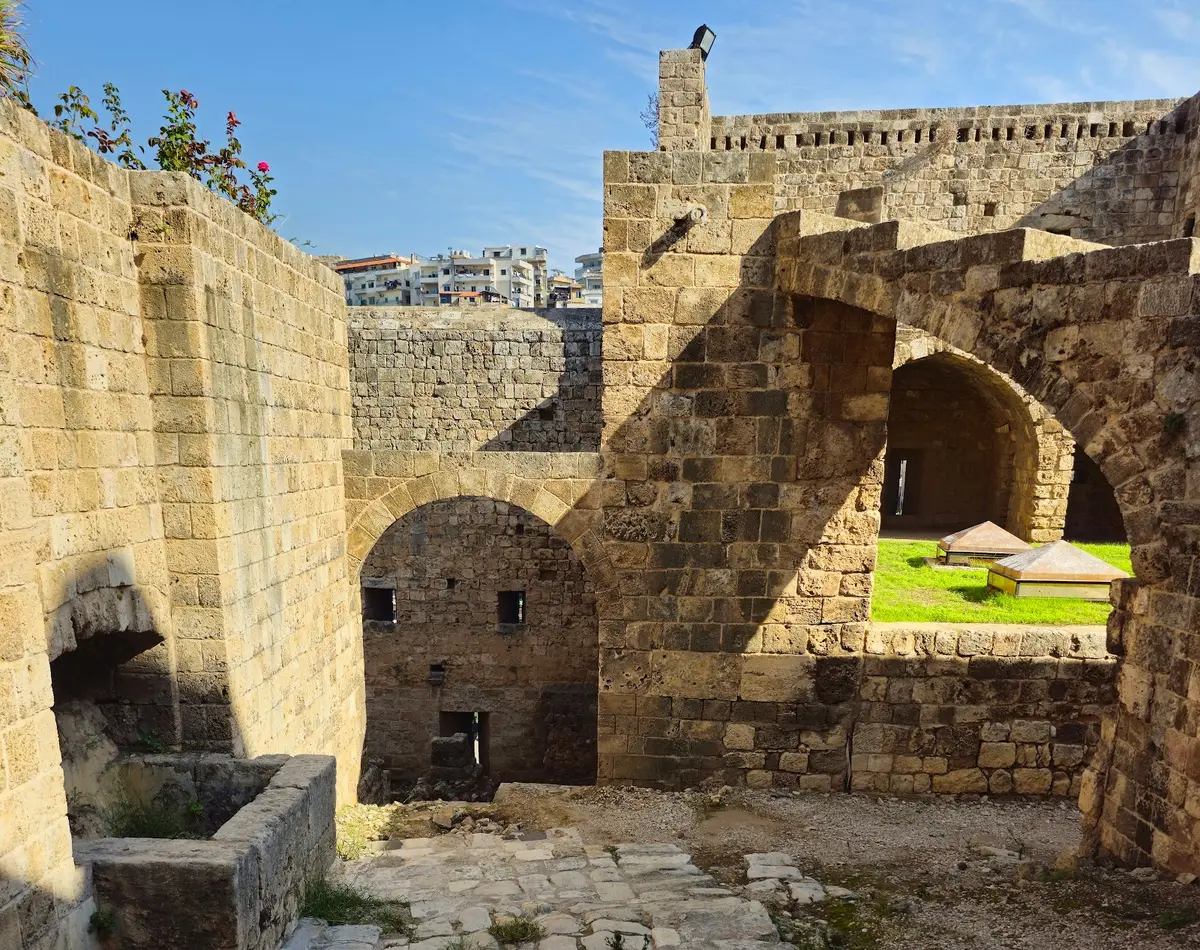
The Sidon Sea Castle rises from the Mediterranean on Roman columns wedged horizontally into sandstone walls like structural rebar. It’s 800 years of Phoenician, Crusader, Mamluk and Ottoman history packed into two crumbling towers on a rocky islet off the Lebanese coast. This guide covers what you actually see, what it costs, and the safety reality most guides skip.
What’s the layered history of the Sidon Sea Castle?
The Sidon Sea Castle was built by Crusaders in 1228 on the site of a Phoenician temple to the god Melqart, partially destroyed by the Mamluks in 1291, then rebuilt with the 262-foot causeway you still walk in on today. Each occupying power — Phoenician, Roman, Crusader, Mamluk, Ottoman — left a distinct layer of Lebanese history in the masonry, and you can read the whole timeline in the stonework.
The Phoenician foundation
Before a single Crusader stone was laid, this rocky islet was sacred ground — the presumed site of the Temple of Melqart, the Phoenician god of the sea and commerce. Melqart was the local equivalent of Heracles, and this was likely the spiritual heart of one of antiquity’s most powerful maritime civilizations, with roots dating back to around 4000 BC.
The real payoff of this foundation is what’s underwater. When the Mediterranean is calm — usually early morning — you can pick out the outlines of walls and rose-granite column drums buried beneath the seabed. These structures were likely toppled by the Assyrian king Esarhaddon’s 7th-century BC conquest, or by the massive earthquakes that repeatedly battered the Levantine coast.
The Crusaders’ desperate gambit (1228)
The fortress you see today is primarily the shell of a structure thrown up in the winter of 1228 — one of the last gasps of the Crusader presence in the Levant. This was not a leisurely architectural project. The Crusaders were under pressure, racing to fortify coastal strongholds to keep their supply lines to Europe alive.
Look at the outer walls and you’ll see Roman columns inserted horizontally as reinforcements. The Crusaders did not have time to quarry new stone, so they repurposed ruins from Roman Sidon. Those protruding column-ends act as structural ties, binding the sandstone walls against siege engines and waves. It’s one of the most honest pieces of military architecture on the Lebanese coast — pragmatic, ugly, and it worked.
Mamluk destruction and rebirth (1291)
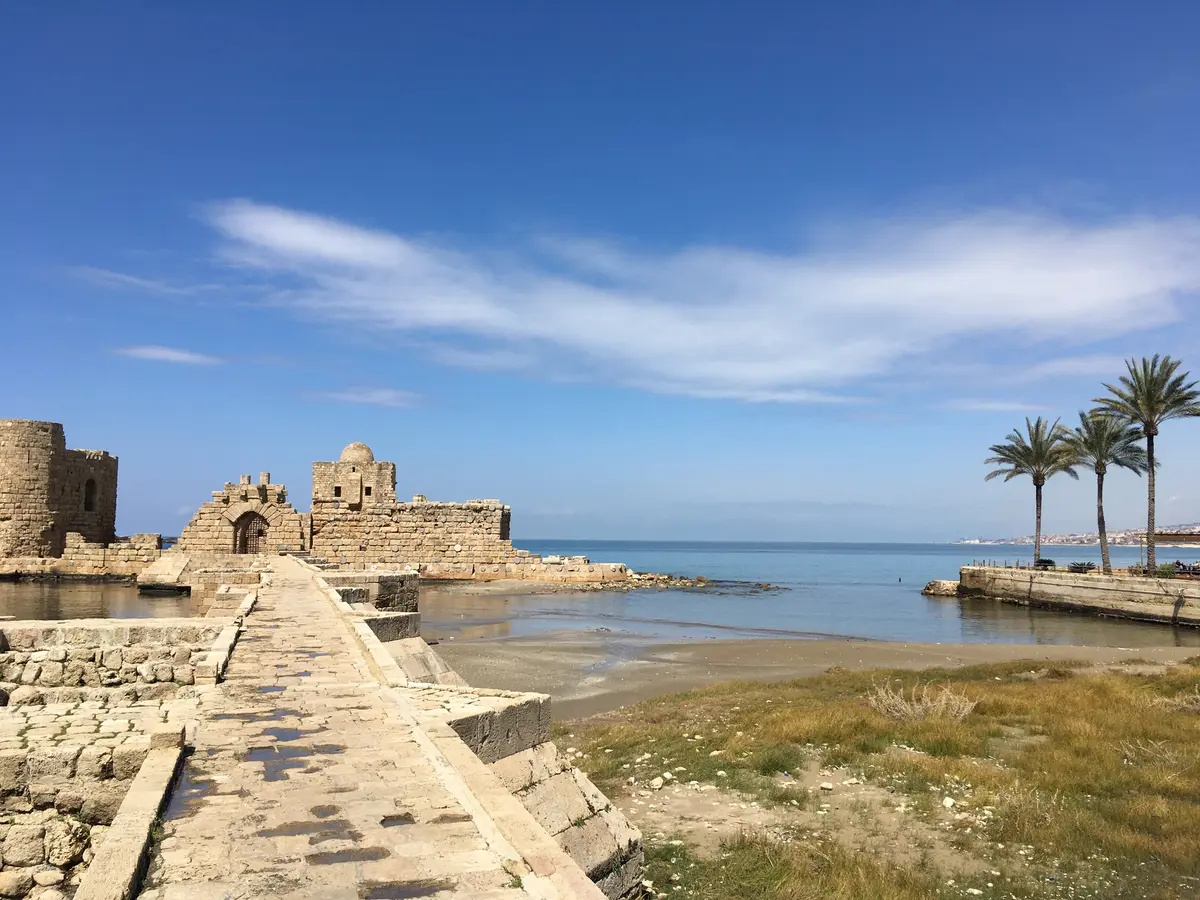
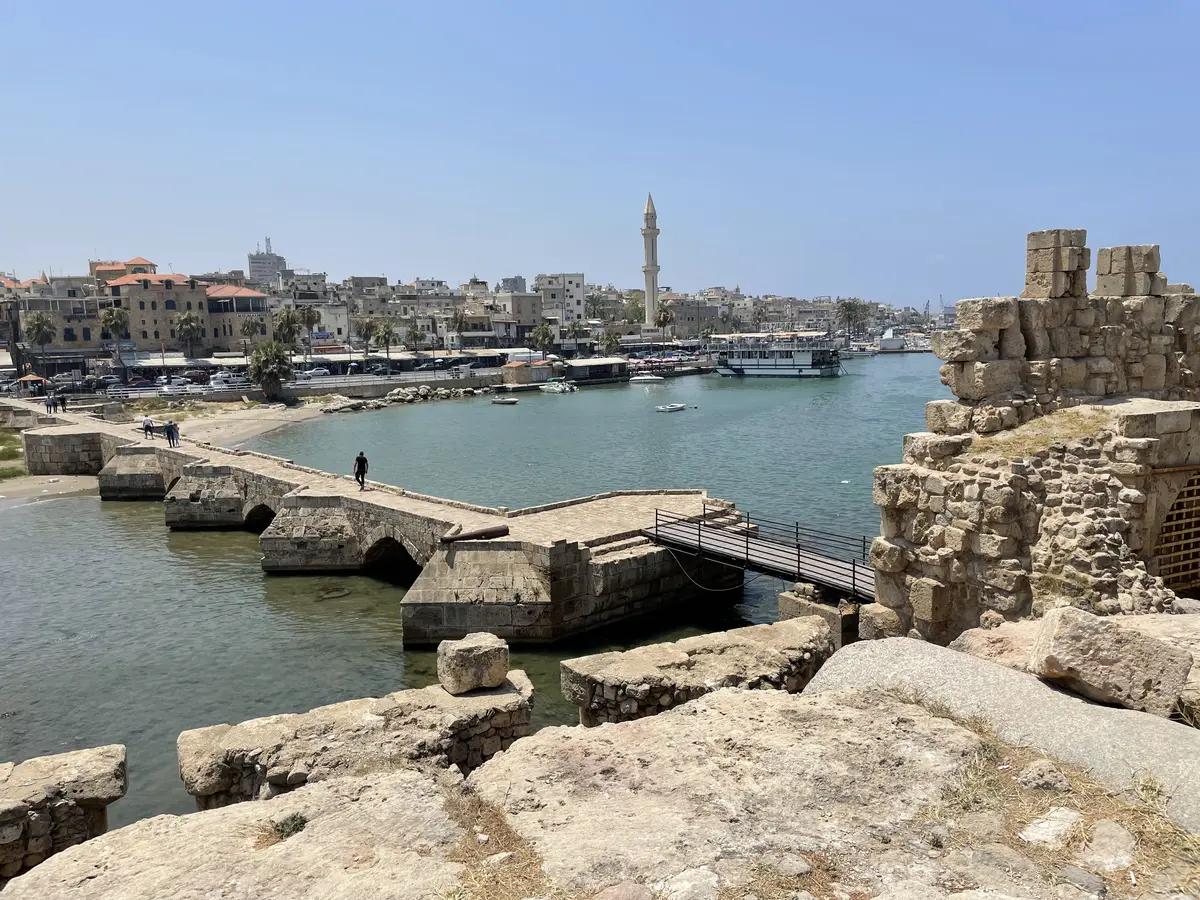
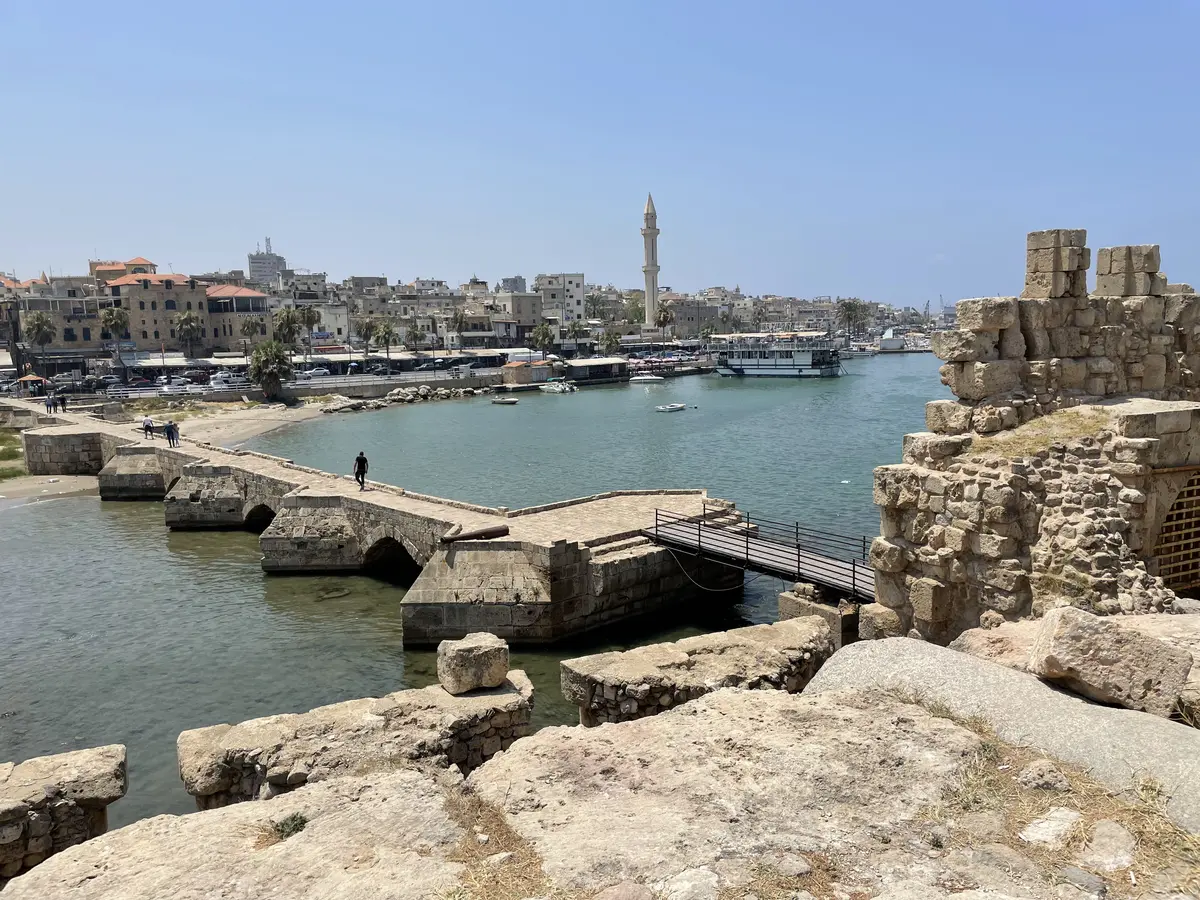
The Crusader era ended violently in 1291 when the Mamluks captured Sidon. Their policy was scorched earth. They partially destroyed the castle to ensure the Crusaders could never return and use it as a beachhead. Later, the Mamluks recognized the strategic value of the site and rebuilt — they are responsible for the castle’s most recognizable feature: the 262-foot (80-meter) causeway on nine arches.
Before this stone bridge existed, access was by wooden drawbridge or boat. The Mamluk reconstruction turned the site into a permanent defensive fixture rather than a strictly naval one.
The Ottoman flourish (17th century)
In the 17th century, Emir Fakhreddine II restored the crumbling fortress. He was a Druze leader and Lebanese national hero who pushed to modernize the country. His most visible addition is the small, domed mosque perched atop the West Tower — a cubic prayer hall grafted onto a machine of war. The mosque survived even when the military walls crumbled under naval bombardment in 1840. The whole site has been on Lebanon’s national heritage list since 1935.
What will you see inside the fortress?
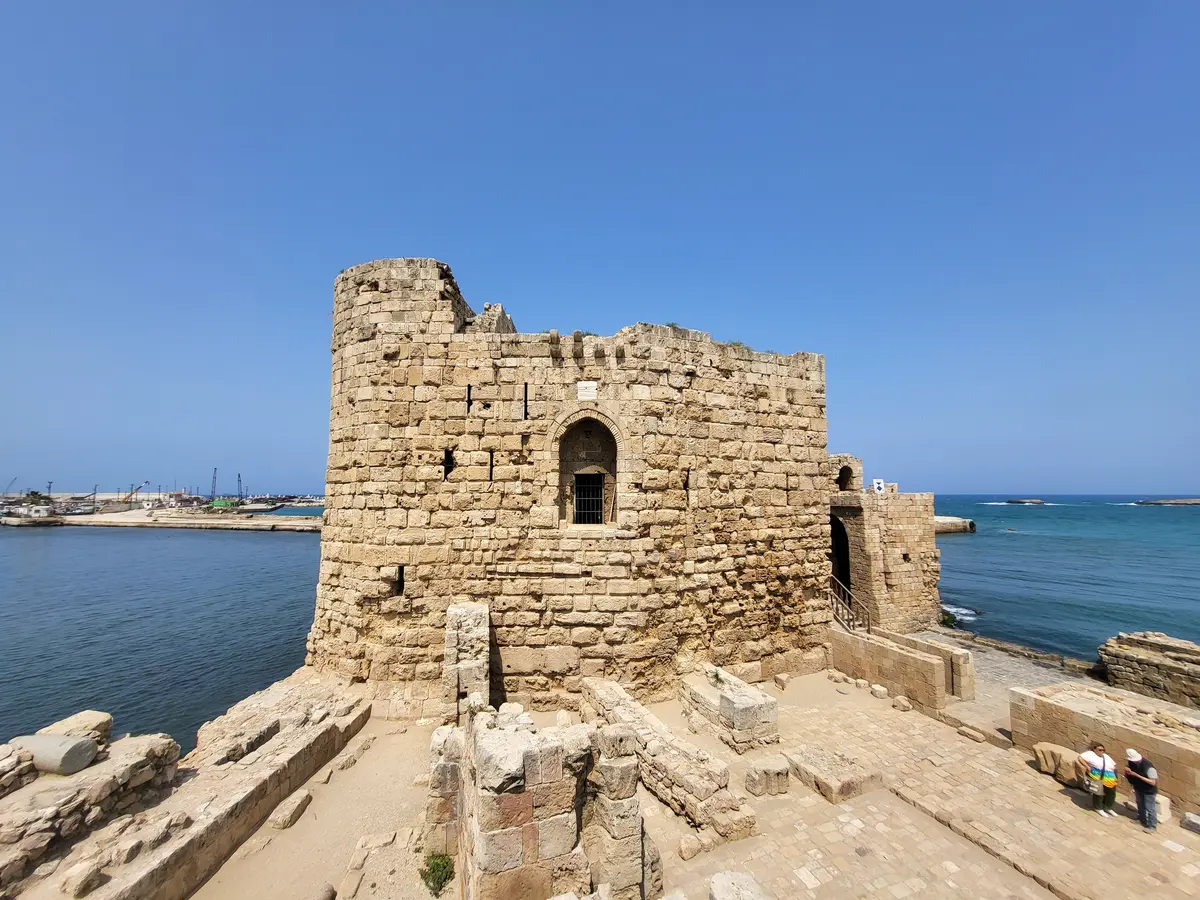
The Sidon Sea Castle is two stone towers connected by a wall, sitting on an islet 262 feet offshore. You approach over the nine-arch Mamluk causeway, climb a spiral staircase inside the West Tower to a rooftop Ottoman mosque, and on calm days spot submerged Phoenician column drums through the shallows. Plan on 45 minutes to an hour inside.
The causeway entrance
The approach is the most memorable part of the visit. You leave the noise of the Corniche and walk the stone causeway with the Mediterranean flowing through the arches beneath your feet. Salt air replaces exhaust fumes within 20 paces. This is your prime photo spot — the castle framed against open sea with fishing boats bobbing in the foreground, best shot an hour before sunset when the sandstone goes gold.
One thing most guidebooks don’t mention: you will see plastic litter floating in the harbor. Visitor reviews consistently call this out. It’s not deal-breaking, but knowing about it in advance matters if you’re expecting a pristine Mediterranean postcard.
Pro Tip: Shoot the causeway from the Corniche side first, before walking over. Once you’re on the bridge itself, you can’t get the wide shot of the castle as a whole.
The West Tower and the rooftop mosque
The West Tower is the better-preserved section and the main event. The rectangular keep opens into a large vaulted ground-floor chamber that feels like a medieval crypt — more than 150 feet long, scattered with old carved capitals and rusting cannonballs. A winding, uneven staircase leads up to the roof where the Ottoman mosque sits.
The view from the rooftop is the whole reason you came. You can see the open Mediterranean stretching west and the dense urban grain of Old Sidon spreading east, with the fishing harbor between. On-site maintenance is minimal — some darker corners of the ruins carry an unpleasant odor, and the recesses and basements are barred off for visitor safety.
Pro Tip: The ground-floor vault is dark and damp-smelling. Don’t linger downstairs — the rooftop is the payoff.
The East Tower masonry
The East Tower is less preserved but more interesting if you care about architectural archaeology. The lower courses are large, rough Crusader stones from the 13th century. The upper sections switch to smaller, more uniform Mamluk and Ottoman stones. You can read the timeline like tree rings. This is also the best spot to examine the Roman spolia — those embedded columns — up close.
The submerged Phoenician city
Most visitors never look down. When you’re on the ramparts, lean over and scan the water on the seaward side. You can pick out wall lines and column drums scattered across the shallow seabed through roughly 10 feet of water. These are the remains of the old Phoenician and Roman city — among the more unusual of Lebanon’s archaeological sites, visible only through the Mediterranean itself. Portions sank during the earthquake of 551 AD; others were deliberately toppled. You’re looking at civilization from before the Common Era, visible through the water.
This is the most underrated thing at the site, and the single detail that separates a rushed 20-minute visit from a full 60-minute one.
How much does it cost and when is it open?
The Sidon Sea Castle is open daily from 9 a.m. to 6 p.m., including weekends and holidays. The entrance fee for foreign visitors runs approximately $3 USD, paid in Lebanese lira or often directly in US dollars — Lebanon’s currency crisis has made the lira unstable and dollars widely accepted. Budget 45 minutes to an hour for the visit.
- Hours: 9 a.m. to 6 p.m., every day of the week
- Entrance fee: approximately $3 USD for foreign visitors (fluctuates with the exchange rate)
- Payment: small US dollar notes widely accepted; Lebanese lira also fine
- Time needed: 45 minutes to 1 hour
- Best arrival window: before 10 a.m. (cooler, quieter) or the hour before closing
- Tickets: on-site only, no advance booking needed
Pro Tip: Bring small US dollar bills — $1, $5, $10. Ticket sellers often prefer them over lira and won’t argue over the exchange rate.
How do you get from Beirut to Sidon?
Sidon sits 28 miles (45 km) south of Beirut and most travelers make it a day trip. Your fastest option is a private taxi (35-45 minutes, around $55-70 one-way); the cheapest is a minibus from Beirut’s Cola intersection (60-90 minutes, roughly $3-4 one-way). Organized tours bundle Sidon with Tyre for a longer southern day.
- Public minibus: Cheapest option. Leaves every 10-15 minutes from Cola intersection in Beirut. Roughly $3-4. Crowded, no air conditioning. Drops you on the Saida highway, a 5-minute walk from the castle.
- Service (shared taxi): Also from Cola. Faster than the minibus, shared with other passengers. Roughly $5-8. Bring exact change.
- Private taxi: Most comfortable. $55-70 one-way. Agree the fare before getting in.
- Express coach: The Zantout/LTC bus runs from Cola to Saida’s Nijmeh Square in around 45 minutes. Cheaper than a taxi, more comfortable than a minibus, fewer stops.
- Organized tour: Typically combines Sidon with Tyre (Sour) in one long day. Includes guide, transport, logistics — and a driver with local awareness, which matters given current conditions.
- Self-drive: Rental cars are available in Beirut, but I’d skip this one. Lebanese traffic is chaotic, signage is inconsistent, and checkpoints on the coastal highway are routine. The savings aren’t worth it.
Pro Tip: Ask the minibus driver to drop you at “Qala’a” (the castle). There’s an informal stop on the highway a few minutes from the causeway. Otherwise you end up at Nijmeh Square with a 15-minute walk back.
Is the Sidon Sea Castle wheelchair accessible?
The Sidon Sea Castle is not wheelchair accessible. The causeway is paved but uneven, and the interior requires climbing rough medieval stone steps and a tight spiral staircase to reach the rooftop. Visitors with mobility issues can enjoy the external view from the Corniche but cannot access the towers or mosque.
Other practical notes:
- Wear shoes with grip. Worn stone stairs are slippery and flip-flops are a genuine injury risk.
- There is almost no shade inside the site. Bring a hat, sunscreen and water.
- No official guides, audio tours, or information panels. Download background reading before you arrive.
- Toilets on site are minimal and poorly maintained. Use facilities at a café before walking over.
Is it safe to visit the Sidon Sea Castle?
This is the section most other guides skip. The U.S. State Department rates Lebanon Level 4 — Do Not Travel — due to crime, terrorism, civil unrest, kidnapping, and the risk of armed conflict. All of Lebanon south of Saida (Sidon) is specifically flagged at Level 4 with a “depart if you are there” advisory. The U.S. Embassy in Beirut has ordered departure of non-emergency personnel and suspended routine consular services.
What that means in practice:
- Check the current U.S. State Department advisory immediately before travel. Conditions change week to week.
- The Sea Castle and Old Souks sit in the northern waterfront area of Sidon, geographically separate from the Ain al-Hilweh refugee camp on the southeastern edge of the city, which is a recurring site of armed clashes. Do not wander inland from the harbor.
- Many prospective visitors ask whether Lebanon is safe for American tourists. The honest answer: the U.S. government officially says no, and consular services at the embassy have been suspended. If you travel anyway, you are on your own in an emergency.
- Use local drivers rather than rental cars. They have real-time awareness of checkpoints, closures, and local flashpoints.
- Monitor Lebanese news sources (L’Orient Today, The Daily Star, Al Jazeera) in the days before and during your visit. If there is active conflict in the south, do not go.
- Enroll in the Smart Traveler Enrollment Program (STEP) before arrival so the embassy can reach you.
Direct incidents at the castle itself are rare — petty theft is the main on-site risk, not violent crime. But the regional picture matters more than the site-level picture, and the regional picture is volatile.
Pro Tip: Hire a licensed local driver for the Beirut-Sidon day trip and keep them with you. The $80-100 you spend buys a person with a phone, a car, and local knowledge if anything shifts.
What else is worth seeing in Old Sidon?
The castle is a 45-minute stop, not a full day. Pair it with the rest of Sidon‘s old quarter — the Old Souks, Khan el-Franj, and the Soap Museum, all within a 5-minute walk of each other and of the Sea Castle causeway. Plan half a day total for all four.
Khan el-Franj
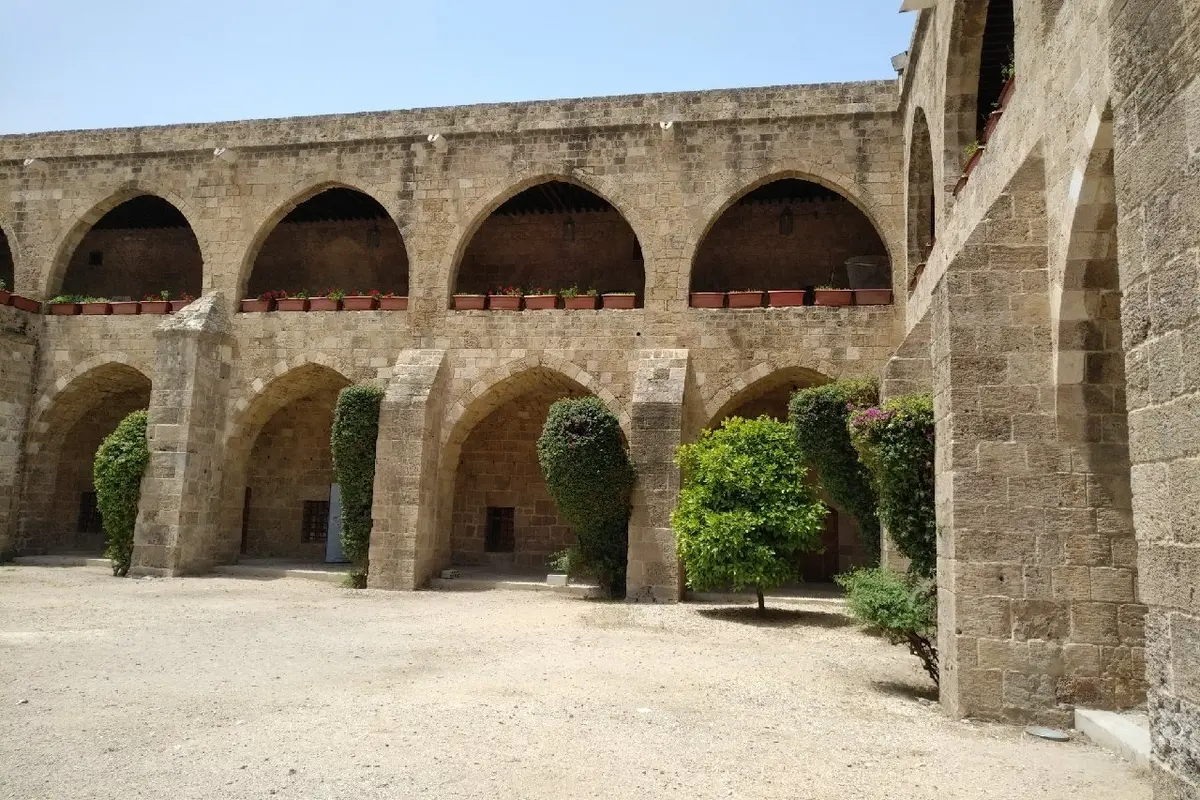
A 17th-century limestone caravanserai built to house French merchants — one of the cleanest, best-preserved Ottoman buildings in the city. The courtyard is quiet, the vaulted arcades are free to wander, and it frequently hosts art exhibitions and craft workshops.
- Location: inside the Old Souks, 5-minute walk east of the Sea Castle
- Cost: free
- Best for: architecture fans, anyone wanting 20 minutes of calm between markets
- Time needed: 20-30 minutes
The Soap Museum
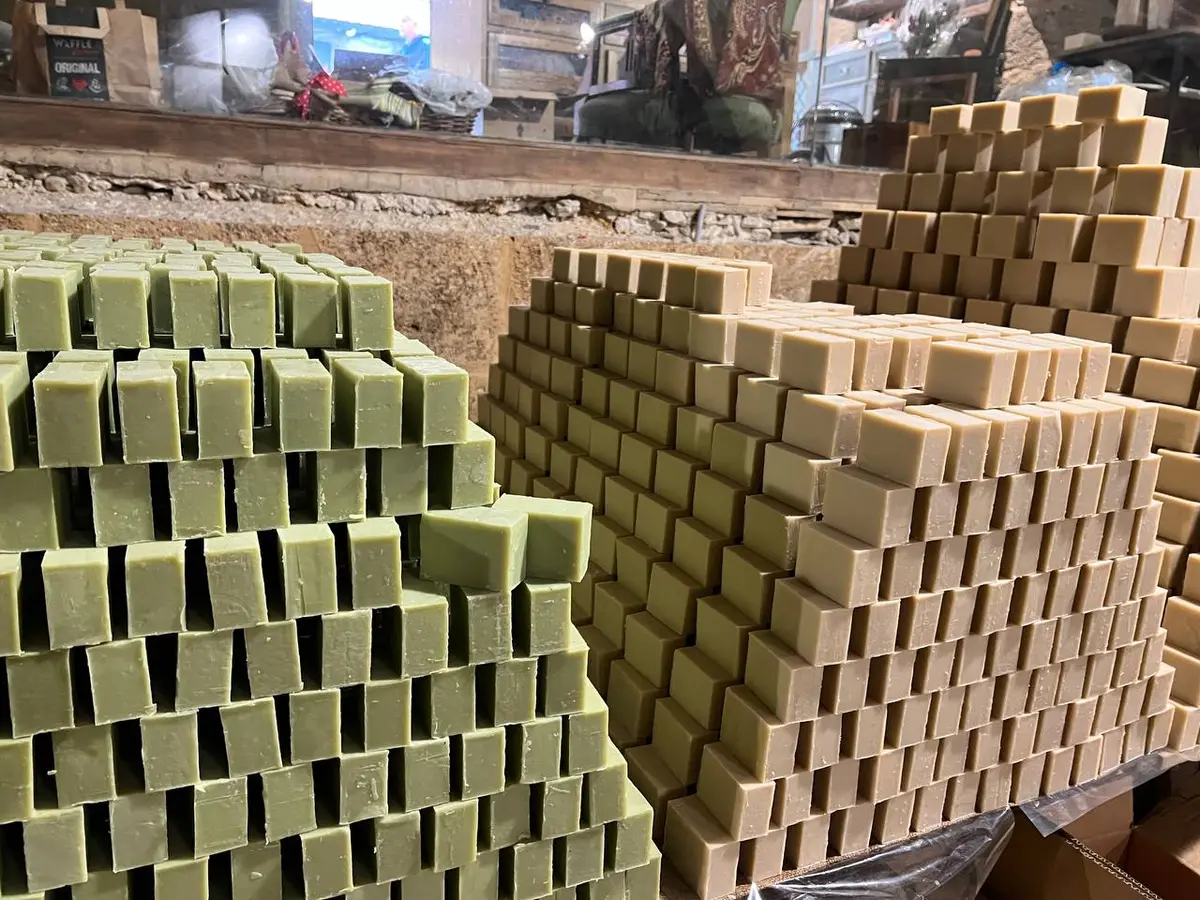
A restored Audi family soap factory tucked into the souks — and, along with Tripoli’s, one of the two Lebanese soap museums worth the detour. You walk through the drying towers, the cutting floor, and the cellar press room, with explanations well-labeled in English and Arabic. The gift shop sells the olive-oil soap produced on site, and the café is the best place in Old Sidon to sit for 20 minutes.
- Location: inside the Old Souks, 5-minute walk from the Sea Castle
- Cost: approximately $3 USD entry
- Best for: families, first-time visitors to the souks
- Time needed: 45 minutes
The Old Souks
Medieval vaulted passageways and a working local market — not a tourist strip. Expect vendors shouting prices in Arabic, motorbikes squeezing through alleys, and the smell of fresh fish, bread, and coffee layered on top of each other. Embrace getting lost. Keep valuables in a zipped front pocket.
- Location: behind the Corniche, starting 2 minutes from the Sea Castle causeway
- Cost: free to wander
- Best for: photographers, anyone wanting a real Lebanese market
- Time needed: 45 minutes to 1.5 hours depending on appetite
What should you eat in Sidon?
Sidon is the capital of traditional Lebanese sweets and one of the best cities in the country for cheap, fast Arabic food — especially Lebanese street food. Two things to try, plus one if you’re feeling adventurous.
Al Baba Sweets and the sanyoura cookie
Al Baba is the historic name you’ll see on every second shopfront in Sidon, and sanyoura is the local specialty — a diamond-shaped, crumbly cookie originally baked dry for sailors, now filled with pistachio or dates. Also order knafeh in kaak: a warm sweet-cheese pastry stuffed into a sesame bread pocket and eaten hot on the street. Items run roughly $1-3 each.
The adventurous option: sheep brain sandwiches
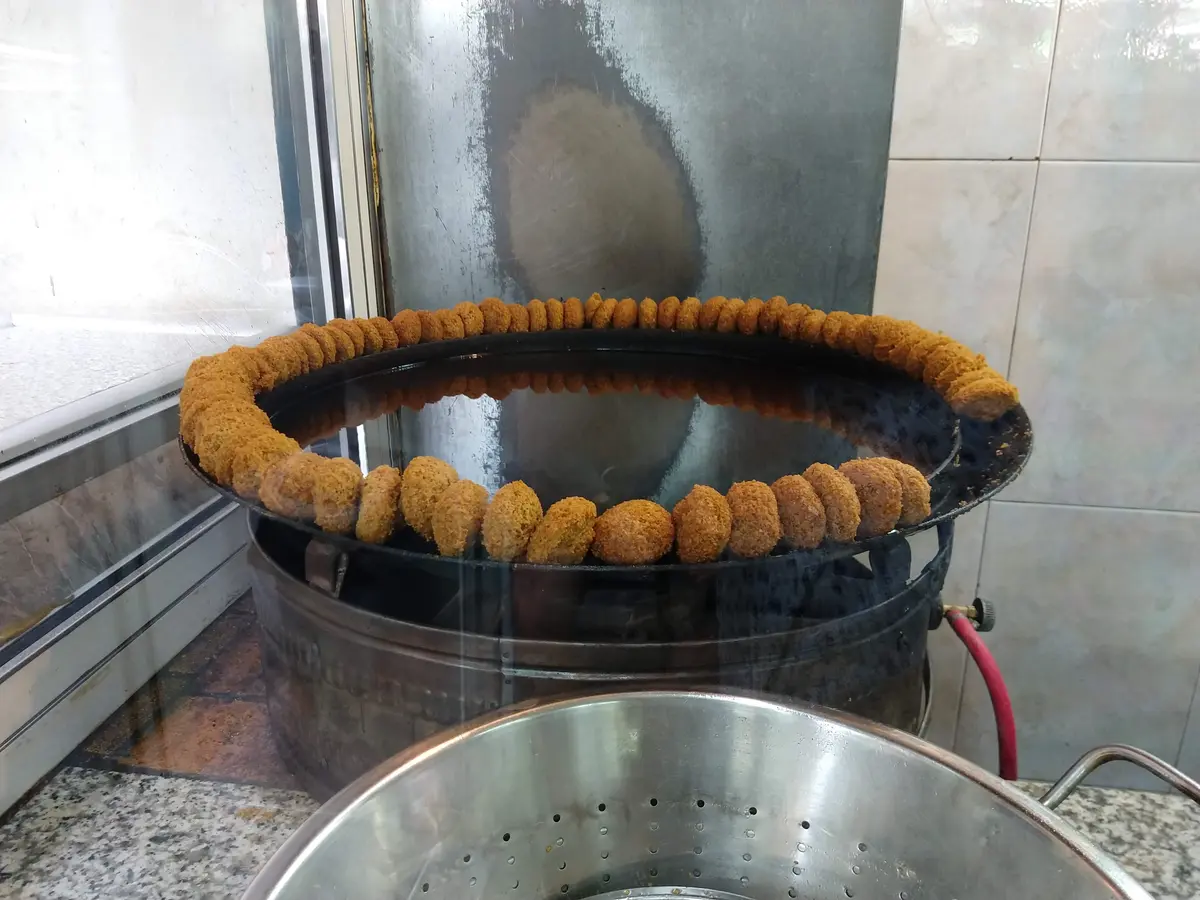
Old Sidon still has sandwich counters serving cooked sheep brain — creamy, mild, served with garlic sauce, tahini, and pickles. If that’s too far, hit any falafel counter in the souks for herb-flecked chickpea balls fried to order and rolled in warm flatbread for under $3. Either way, eat standing at the counter with the locals.
Pro Tip: Skip the restaurants on the Corniche aimed at tourists. The sandwich counters and sweet shops deep in the souks are cheaper, faster, and better.
Before you book
The Sidon Sea Castle is a 45-minute payoff with 800 years of weight behind it — Phoenician temples, Crusader desperation, Mamluk vengeance, Ottoman prayer halls, all stacked on a small rocky island off the Lebanese coast. It is not polished, it is not pristine, and it sits at the edge of a country your government is actively telling you not to visit. If you go, go with clear eyes, a local driver, the news open on your phone, and a broader Lebanon travel guide to frame the rest of the country.
TL;DR: The Sidon Sea Castle is a layered 13th-century fortress on a Mediterranean islet — entry around $3 USD, open 9 a.m. to 6 p.m. daily, 28 miles south of Beirut. The ruins are authentic and atmospheric, the harbor has litter, and the country-level safety picture changes fast. Pair the visit with the Old Souks, Khan el-Franj, and the Soap Museum for a complete half-day.
Have you been to Sidon recently, or are you weighing a trip? Which detail above would change your mind, one way or the other — the layered history, the harbor conditions, or the current safety reality?