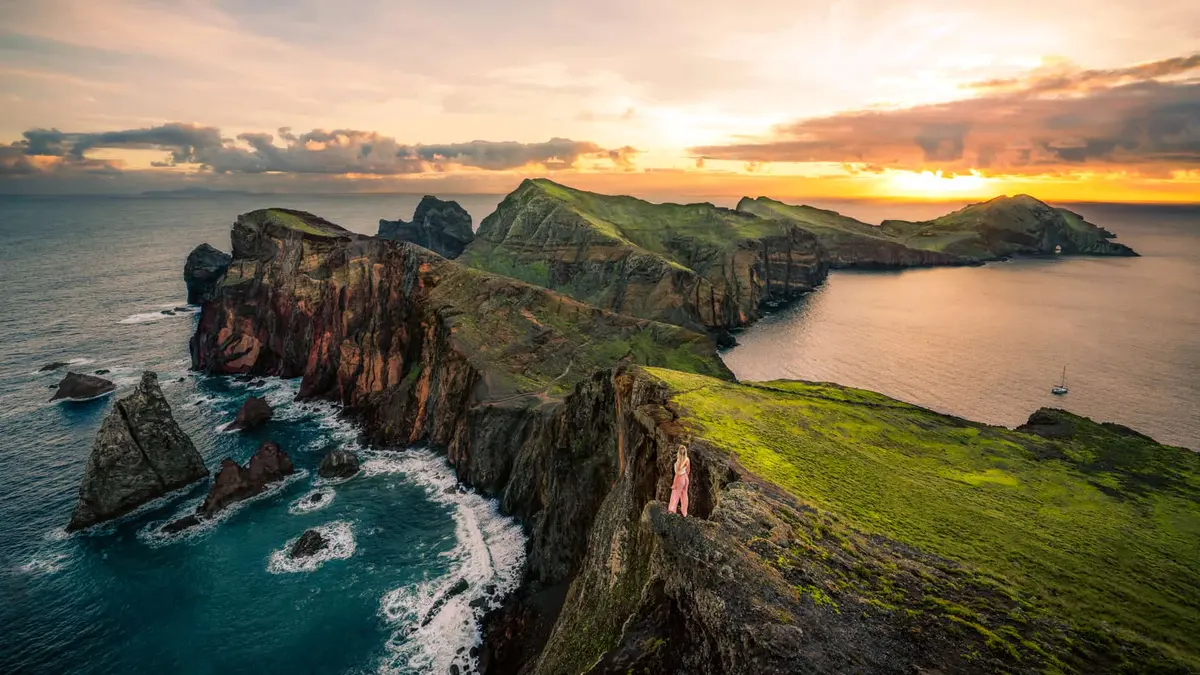
Choosing between Portugal’s two Atlantic island chains doesn’t have to be paralyzing. This Azores vs Madeira guide cuts through the logistics, driving realities, and on-the-ground experiences so you can pick the right fit and stop second-guessing your itinerary.
How do you fly from the US to the Azores vs Madeira?
Both archipelagos now have direct transatlantic service from the US East Coast, removing the Lisbon connection bottleneck. The Azores have more year-round options and shorter flight times. Madeira’s direct service is newer and strictly summer-seasonal. Either way, you’re looking at a red-eye and waking up on a volcano.
Newark to Madeira (Funchal) runs seasonally on United Airlines — three flights per week on the 737 MAX 8. The overnight flight departs around 8:55 PM and lands at approximately 8:45 AM local time, putting you at your hotel by late morning. The aircraft lacks lie-flat seats, so pack a neck pillow and sleep aggressively.
New York JFK and Newark to Ponta Delgada operate on Delta and United during peak season. The 5.5-hour flight is shorter because the Azores sit mid-Atlantic, roughly 900 miles closer to the US than Madeira. Boston also runs year-round service via Azores Airlines, often at lower fares but on older aircraft.
Pro Tip: Azores Airlines offers a free stopover program letting you spend up to 7 nights in the Azores when booking tickets to mainland Europe at no extra airfare cost. Spend 4-5 days in São Miguel’s volcanic backcountry, then continue to Europe — or reverse the logic on the way home. It’s the closest thing to two trips for the price of one flight.
What is driving actually like in Azores vs Madeira?
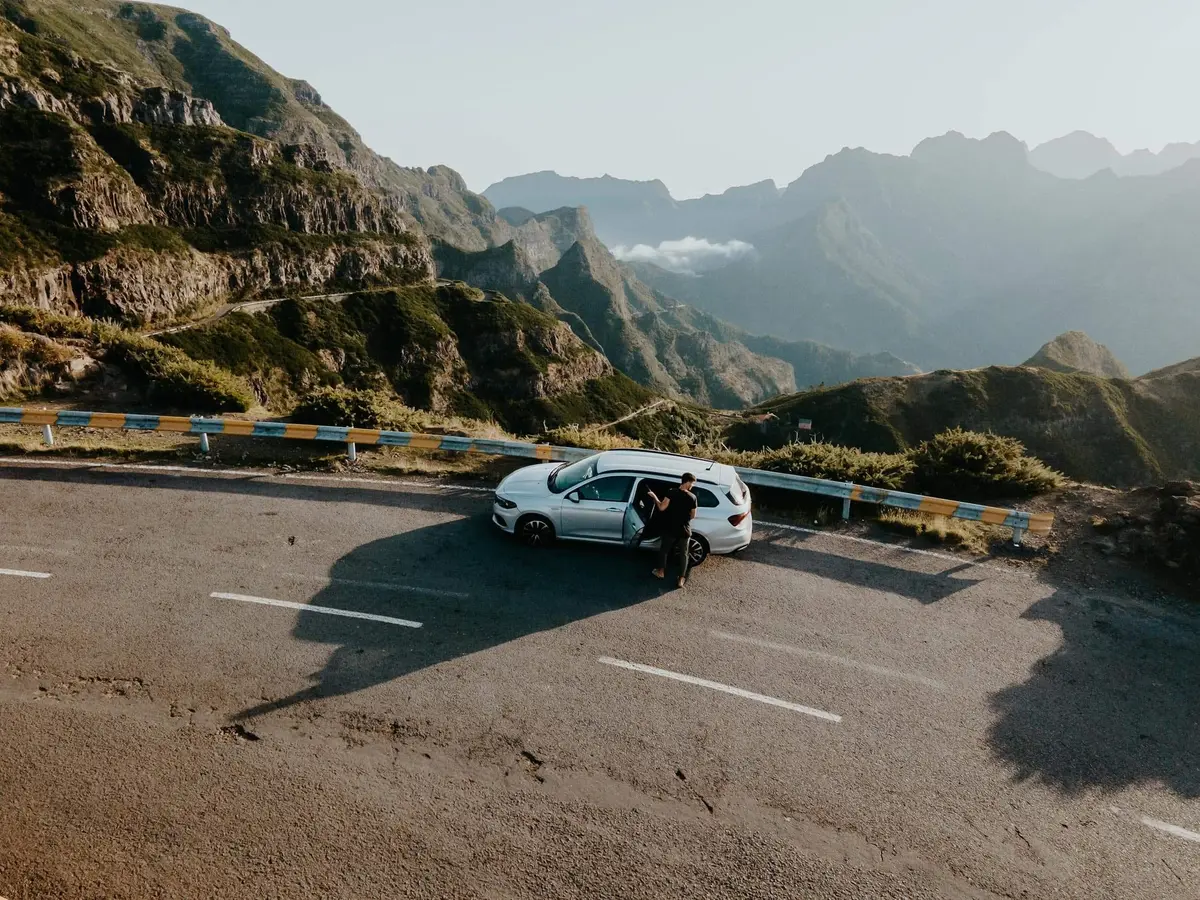
The two islands present completely different challenges behind the wheel — both distinct from what most visitors expect after driving in Portugal on the mainland. Madeira is technically demanding and will unnerve most North American drivers. The Azores are forgiving on the main roads but require patience with fog, livestock, and multi-island logistics. Your comfort level with mountain driving should be the deciding factor here.
Madeira demands technical skill behind the wheel
Madeira rises 6,100 feet (1,860 meters) straight from the ocean. The island’s main highway (Via Rápida) threads through more than 80 tunnels, creating a disorienting strobe effect as you alternate between bright Atlantic sun and pitch darkness every 30 seconds.
Secondary roads climb gradients of 25-30%. On-ramps force you to merge from a dead stop into 55 mph (90 km/h) traffic with inches of clearance. Google Maps regularly routes tourists down single-lane goat paths instead of the signed regional roads. The first time a local in a battered hatchback overtakes you on a hairpin with a sheer 200-foot drop on the passenger side, your palms will get wet.
Automatic transmission is non-negotiable for most US drivers here. Starting a manual on a 30-degree incline with traffic stacking behind you is a liability, not a skill you’ll develop on vacation.
- Location: ER mountain road network; main highway Via Rápida
- Cost: Automatic rental adds $15-25/day over manual rate
- Best for: Confident drivers comfortable with Alpine-style exposure
The Azores offer easier but messier roads
São Miguel’s main road hazard isn’t elevation — it’s livestock. Cows cross major roads without warning, and in the fog that blankets the island’s functioning dairy farms, a 1,000-pound obstruction appears with very little notice. Treat every rural stretch like school-zone driving.
The roads wind through rolling hills but lack Madeira’s cliff-edge terror. The SCUT highway connects major towns efficiently. Compact cars handle the terrain without issue, and manual transmission works fine for drivers who know how to use one.
The friction comes from island-hopping logistics. Visiting three Azorean islands means three separate rental contracts — a complexity worth understanding before you rent a car in Portugal for a multi-island trip — three deposits, and coordinating ferry or inter-island flight schedules with each pickup. Budget an extra half-day per island transition.
- Location: SCUT highway and coastal roads; gravel on rural tracks
- Cost: Standard compact $25-40/day
- Best for: Drivers comfortable with country roads and the occasional gravel diversion
Do you need an International Driving Permit?
US licenses are legally valid in Portugal for short stays, but smaller local rental agencies — often your only option during peak summer — sometimes demand an International Driving Permit. Get one from AAA for $20 before departure. It takes five minutes at a branch and eliminates the risk of standing at a rental counter in Funchal while your travel day evaporates.
When is the best time to visit Azores vs Madeira?
Madeira’s south coast is protected by mountains, giving Funchal a microclimate that stays mild and relatively dry from November through April — making it one of the stronger winter destinations if you’re weighing the best time to visit Portugal overall. The Azores sit under an Atlantic weather system that is genuinely unstable — “four seasons in one day” is a cliché that happens literally. For winter sun, Madeira wins outright. For summer escape from US heat, the Azores are the better call.
| Season | Madeira (South Coast) | Azores (São Miguel) | Verdict |
|---|---|---|---|
| Winter (Jan-Mar) | 65°F (18°C), sunny intervals | 58°F (14°C), stormy, grey | Madeira wins |
| Spring (Apr-Jun) | 70°F (21°C), flower festival | 65°F (18°C), blooms, fog | Both peak |
| Summer (Jul-Sep) | 78°F (26°C), humid, busy | 75°F (24°C), hydrangeas | Azores for escape |
| Fall (Oct-Dec) | 72°F (22°C), warm ocean | 65°F (18°C), increasing rain | Madeira extends summer |
Rain in the Azores isn’t necessarily a dealbreaker. The thermal pools, waterfalls, and volcanic lakes are just as accessible — and often more atmospheric — in drizzle. Soaking in 102°F (39°C) mineral water while cool Atlantic rain falls on your head is one of those experiences that sounds miserable until you’re doing it.
Where are the best hikes in Azores vs Madeira?
Madeira’s trails are engineered spectacles: carved tunnels, metal staircases bolted into knife-edge ridges, and queues on narrow paths in peak season. The Azores offer raw geological immersion — mud, mist, and solitude — without the infrastructure or the crowd management. Both island groups require advance trail reservations and fees for classified routes.
1. Pico do Arieiro to Pico Ruivo (Madeira)
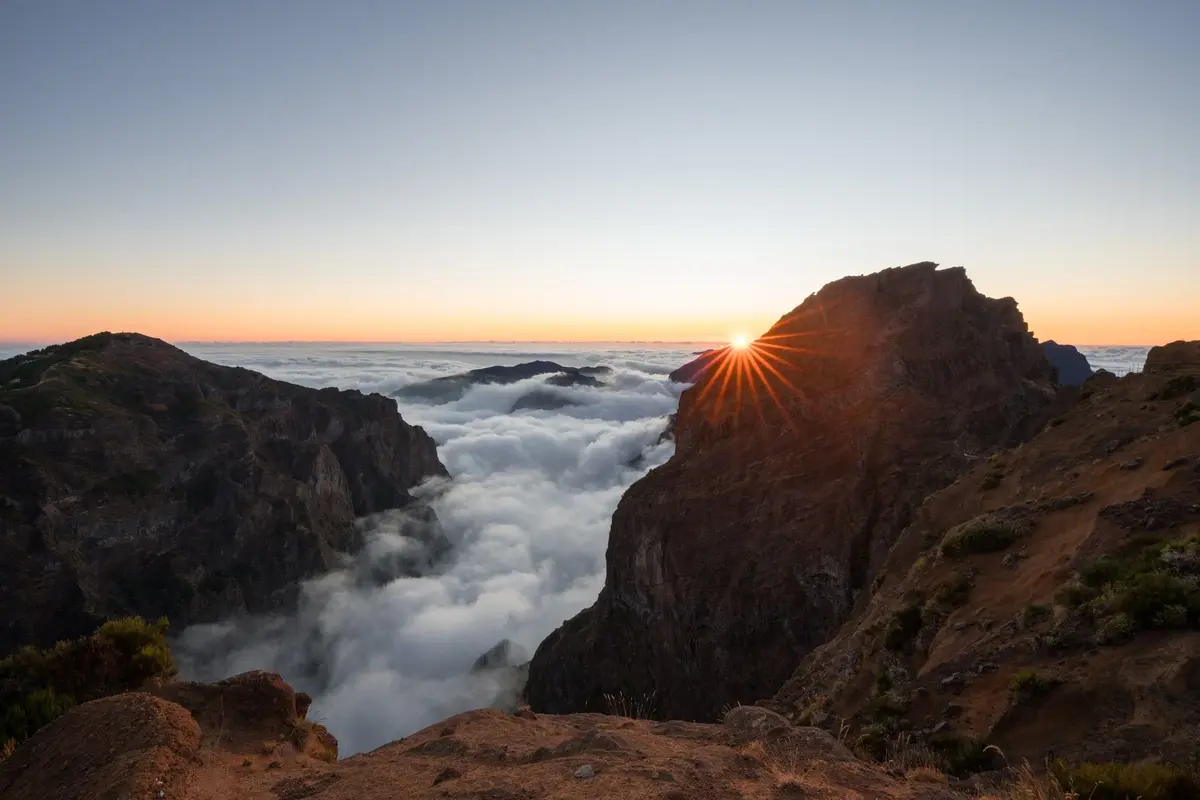
The air at 5,900 feet (1,800 meters) is noticeably thinner and cooler than Funchal — pack a layer even in July. The 7-mile (11 km) traverse connects Madeira’s highest peaks through hand-carved tunnels that smell of damp rock, climbing metal staircases bolted to ridge faces where one wrong step means a very long fall. Most mornings, the trail sits above the cloud layer. Looking down at a sea of white cotton that hides the entire island below you is genuinely disorienting.
By 10 a.m. on summer weekends, the trail entrance at Pico do Arieiro is at capacity and latecomers are turned away at the SIMplifica checkpoint. Show up at 7 a.m. or book your timed slot at least three days ahead online.
- Location: Central mountain range; start from Pico do Arieiro parking (Pico do Areeiro)
- Cost: €4.50 trail fee (pre-booking required through simplifica.madeira.gov.pt; fee increases to €10.50 from April 2026)
- Best for: Experienced hikers comfortable with heights and exposure
- Time needed: 4-6 hours point-to-point
2. Caldeirão Verde Levada (Madeira)
This 8-mile (13 km) out-and-back follows a centuries-old irrigation channel carved directly into sheer cliff faces. The path itself is nearly flat concrete — no cardiovascular demand — but it hugs walls with minimal guardrails where a single stumble means falling a long way. That tension keeps you focused for the full three hours each way.
Four pitch-black tunnels cut through the rock before you reach the 330-foot (100-meter) waterfall. Bring a headlamp — not a phone light. The Laurisilva forest drips year-round and prehistoric ferns grow shoulder-high along the channel edges. The smell is deep moss and cold stone.
- Location: Northern coast; Queimadas Forest Park trailhead
- Cost: €4.50 trail fee (advance booking required through simplifica.madeira.gov.pt)
- Best for: Moderate hikers who don’t mind tunnel claustrophobia and cliff exposure
- Time needed: 6-7 hours round trip
3. Sete Cidades Crater Rim (Azores)
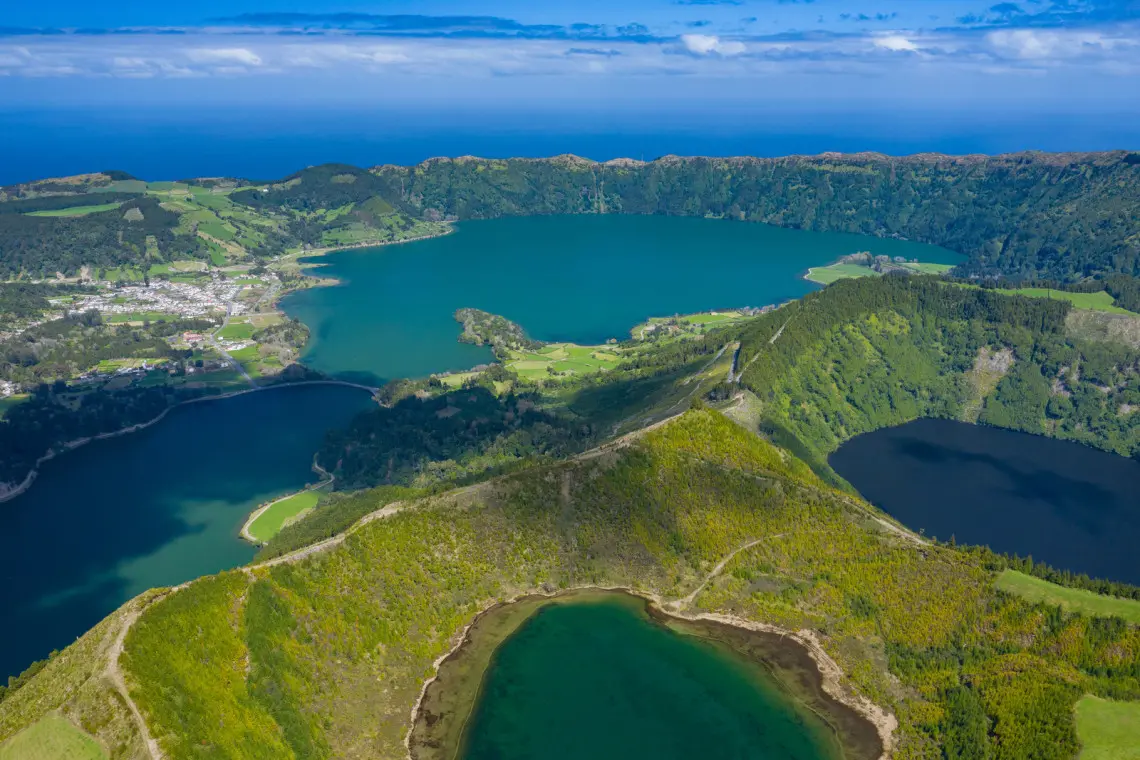
The Vista do Rei viewpoint anchors a 5-mile (8 km) rim walk around one of the largest volcanic calderas in the Atlantic. Two lakes fill the crater floor 1,600 feet (500 meters) below — one unmistakably green, one closer to sapphire. The color difference has no geological consensus behind it, which makes standing at the rim feel appropriately mysterious.
Trails are mud, dirt, and gravel, frequently shrouded in mist that gives the whole plateau a Jurassic atmosphere. On my last visit in shoulder season, I hiked the full rim without seeing another person after the first quarter mile. No trail queues, no checkpoint, no fee — the Azores simply haven’t monetized this yet, making it one of the most accessible entries in the broader landscape of hiking in Portugal.
- Location: Western São Miguel; 30 minutes from Ponta Delgada
- Cost: Free
- Best for: Hikers seeking solitude and raw geological scale
- Time needed: 3-4 hours
Where can you swim in Azores vs Madeira?
Madeira offers ocean swimming in volcanic rock formations filled by Atlantic tides — cool, bracing, and wave-powered. The Azores offer geothermal soaking in iron-rich mineral water that sits at near-bath temperatures year-round. These are fundamentally different experiences. Many travelers end up preferring whichever one they tried first.
Porto Moniz Lava Pools (Madeira)
Natural basalt formations create a series of protected pools — some of the most distinctive coastal swimming spots in Portugal — that fill with Atlantic tide. The water runs cool at 68-72°F (20-22°C) — refreshing in the heat, sharp and clarifying any other time of year. Waves break over the outer walls during high tide, sending spray across the sunbathing terraces and occasionally over the swimmers closest to the edge.
Arrive before 9 a.m. or after 4 p.m. When two or three cruise ships dock simultaneously in Funchal, tour buses reach Porto Moniz by mid-morning and the deck space disappears fast. The pools are still accessible, but the experience changes character.
- Location: Northwest coast, Porto Moniz village
- Cost: €3 entrance (adults)
- Best for: Ocean swimmers wanting wave action without undertow danger
- Time needed: 2-4 hours
Terra Nostra Park Thermal Pool (Azores)
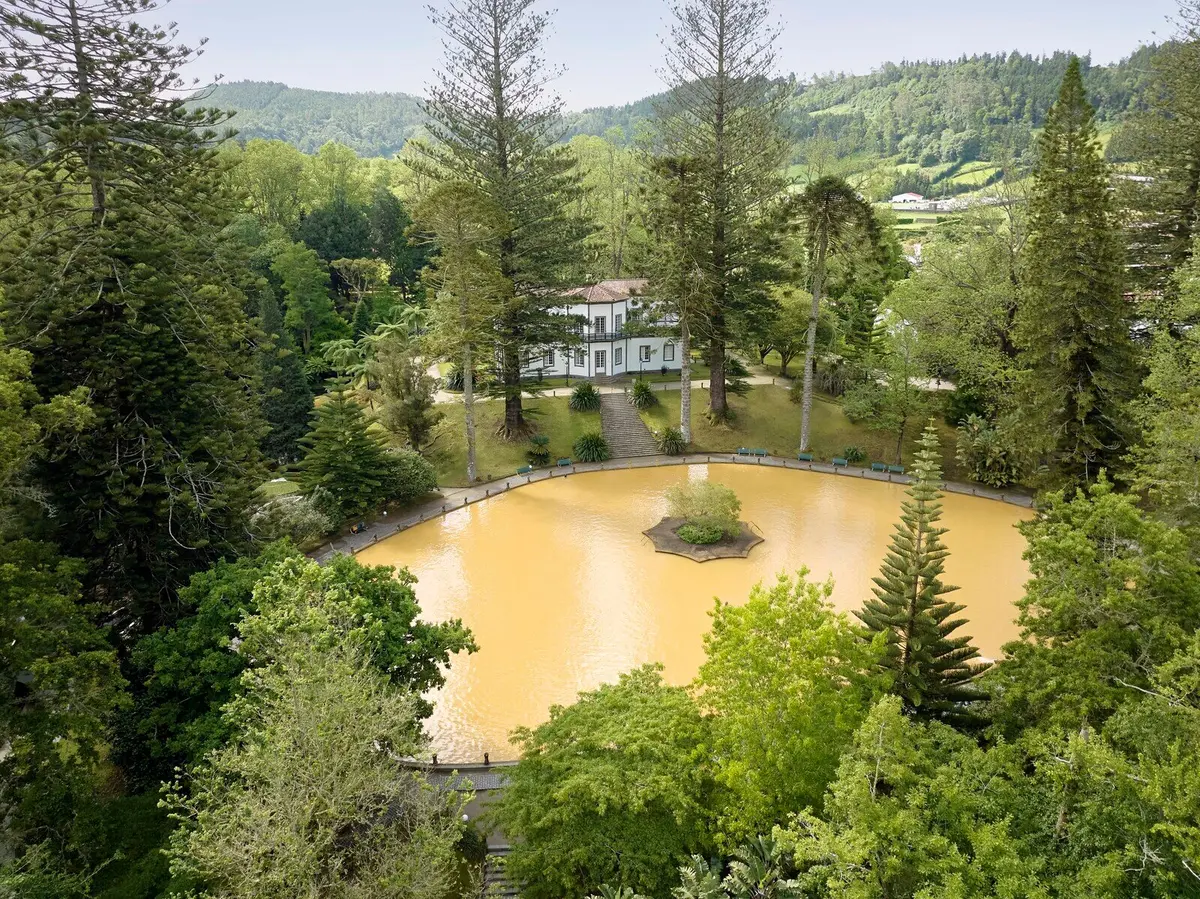
A single massive geothermal pool sits at 100-104°F (38-40°C) year-round, fed by volcanic springs beneath Furnas valley. The iron-rich water is visibly rust-brown and will permanently stain any light-colored swimwear within an hour. Wear dark colors you don’t care about — this is non-negotiable.
The surrounding botanical garden covers 30 acres of species from five continents. Giant tree ferns tower over camellias and bamboo groves. Steam rises off the water even on warm days, and the araucaria trees ringing the pool are over a century old. Rain makes the whole setting more dramatic, not less. Admission currently runs approximately €16-17 per adult; check the official website at parqueterranostra.com before visiting as prices have risen significantly in recent years.
- Location: Furnas village center, eastern São Miguel
- Cost: Approx €16-17 per adult (verify current price online before visiting)
- Best for: Anyone seeking therapeutic soaking and a full garden experience
- Time needed: 3-5 hours
Poça da Dona Beija (Azores)
Four cascading thermal pools in the heart of Furnas run at 98-102°F (37-39°C), surrounded by lush vegetation that closes in overhead and muffles the sound of anything happening beyond the fence line. The upper pool is the hottest and the quietest because most visitors settle into the lower ones.
The facility stays open until 11 p.m. with functioning pool lighting, making the evening soak under a clear Azorean sky the better choice over the afternoon rush. Book your 1.5-hour timed slot in advance at pocadadonabeija.com — walk-up availability is unreliable, especially on weekends. Adult admission currently runs €12 per the most recent published rates, though prices should be confirmed directly.
- Location: Furnas village center, adjacent to the caldeiras geysers
- Cost: €12 per adult (verify current price online; advance booking required)
- Best for: Evening relaxation; rain-proof activity; post-hike recovery
- Time needed: 2 hours including transition time
How different are the food scenes in Azores vs Madeira?
Madeira’s dining is more cosmopolitan, concentrated in Funchal, and built for a European clientele with serious culinary expectations. The Azores serve dairy-heavy, beef-centered meals at rural restaurants where the atmosphere is secondary to portion size. Both scenes have their own clear identity within the broader landscape of Portuguese cuisine, and neither is trying to be the other.
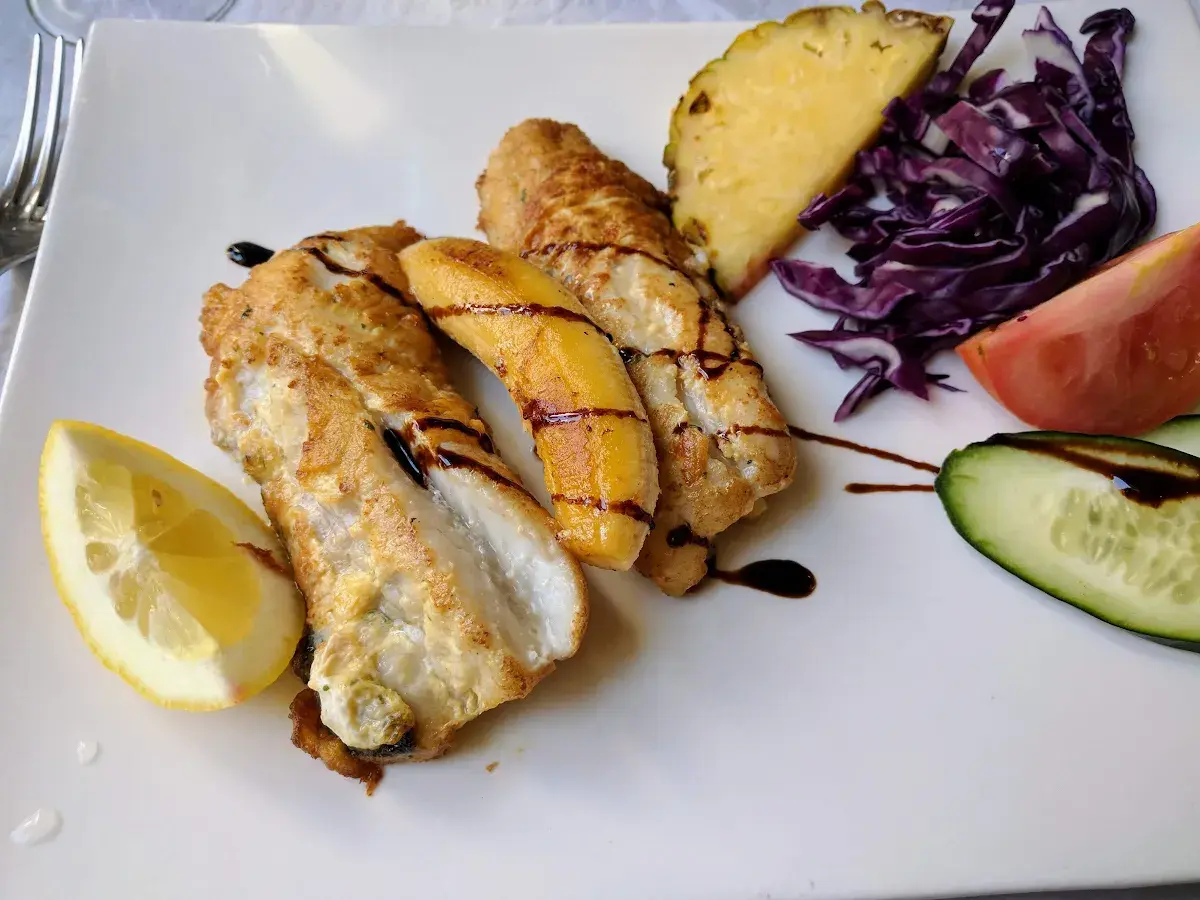
Madeira’s signature dish is Espada com Banana — black scabbard fish with fried banana — which sounds wrong and tastes like it was always right. Poncha, made from sugar cane rum, honey, and lemon, is served at outdoor bars throughout Funchal and poured generously. Top Funchal restaurants like Kampo and Ákua by Chef Júlio Pereira run €30-40 per person for creative meat and seafood menus that earn comparisons to mainland Portugal’s best. Reservations at both are needed at least a week ahead in summer.
In the Azores, the famous Cozido das Furnas is the experience the island is built around. The stew — beef, chicken, chorizo, blood sausage, and root vegetables — cooks underground at Lagoa das Furnas for 6-8 hours using geothermal heat. The result picks up a faint sulfur and earth undertone that distinguishes it from any mainland version. Bife à Regional showcases Azorean beef from cows that graze on coastal saltgrass, served with a fried egg and a sharp pepper sauce that ties everything together. Dinner at traditional spots like Tony’s or Alcides runs €15-25 per person with wine.
Pro Tip: Reserve Tony’s in Furnas at least a day ahead to guarantee the Cozido — they cook it by order and portions sell out daily. If you want to watch the pots come out of the ground, drive to the lakeside at Lagoa das Furnas around noon and you’ll see the full extraction process.
What will you actually spend in Azores vs Madeira?
When it comes to Portugal travel costs, the Azores run noticeably cheaper than Madeira across every major category — accommodation, meals, and activities — but the gap narrows when you account for multi-island logistics. Madeira costs more upfront and delivers a more polished infrastructure. The Azores require more planning for the same level of access.
Accommodation shows the biggest gap. Madeira’s 4-star hotel average runs $140-200 per night, concentrated in Funchal’s hotel corridor. The Azores lean on guesthouses and rural tourism properties at $70-110 per night, with more personality and fewer amenities.
Meals cost 25-30% less in the Azores. Dinner for two with wine: Madeira $55-90, Azores $40-65. Supermarket staples price similarly across both islands.
Car rentals balance out differently than you’d expect. Madeira charges a premium for automatic transmission ($15-25/day more) but requires only one rental contract for the whole stay. The Azores base rates are lower, but island-hopping multiplies rental contracts, deposits, and pickup logistics, which erodes the savings fast.
Activities: Madeira trail fees now run €4.50 per trail for most PR routes (advance online booking required; no cash accepted). The Pico do Arieiro to Pico Ruivo route specifically moves to €10.50 from April 2026. Azores hiking trails remain free. Both islands price whale watching tours similarly at $60-70 per person.
You can save $40-50 per night staying in the Azores, but you’ll spend more time managing logistics and less time simply being on an island.
How crowded does each island actually get?
Funchal is a working cruise port — Madeira accommodation matters more than most guides admit when it comes to planning around cruise days. On days when two or three ships dock simultaneously — a regular occurrence from May through October — cable cars stop moving efficiently, Monte Palace becomes a slow queue, and the downtown restaurant terraces fill by noon. The island feels polished in a way that crowds confirm rather than contradict.
Skip the Monte Cable Car on peak cruise days. The 10-minute gondola ride isn’t worth 45 minutes in line when the same mountain view is accessible by car in 20 minutes. The locals drive.
The Azores maintain what feels like a frontier atmosphere. Once you leave the main viewpoints — Vista do Rei at Sete Cidades, Lagoa do Fogo’s parking lot — crowds vanish entirely. No cruise infrastructure funnels thousands of day-trippers onto the island’s trails. Restaurants in Furnas and the island’s eastern villages still hand you menus in Portuguese and seem genuinely puzzled when an American asks for the Wi-Fi password.
That authenticity comes with friction. Fewer services means less predictability. English-only travelers will hit more walls in the Azores than in tourist-mapped Funchal.
The bottom line on Azores vs Madeira
The Azores vs Madeira decision comes down to which friction points you’re willing to accept.
TL;DR: Choose Madeira for reliable winter warmth, single-base logistics, and engineered mountain spectacle. Choose the Azores for geothermal swimming, empty trails, lower costs, and a travel experience that still surprises you.
Choose Madeira if you want guaranteed sun from November through April. If you hate unpacking multiple times, one Funchal base gives you access to everything the island offers. If vertical drama — cable cars, cliff hikes, levada tunnels — excites rather than terrifies you, Madeira delivers it efficiently. Just budget more, book restaurants weeks ahead, and avoid the main attractions on cruise ship mornings.
Choose the Azores if you’d rather wear mud on your boots than wristbands from a tour operator. If hot springs, volcanic craters, and coastal waterfalls interest you more than polished restaurants, the Azores make bad weather irrelevant. If you have 10-14 days and the patience for multi-island logistics, the reward is a travel experience that still feels undiscovered in ways Madeira no longer does.
The Azores Airlines stopover program solves the either/or framing entirely for travelers planning a two-week Portugal itinerary — spend 4-5 days in São Miguel’s volcanic terrain, continue to Europe or Madeira, and pay for one transatlantic fare.
Have you done one and not the other — or both back to back? Which part of the comparison surprised you most?