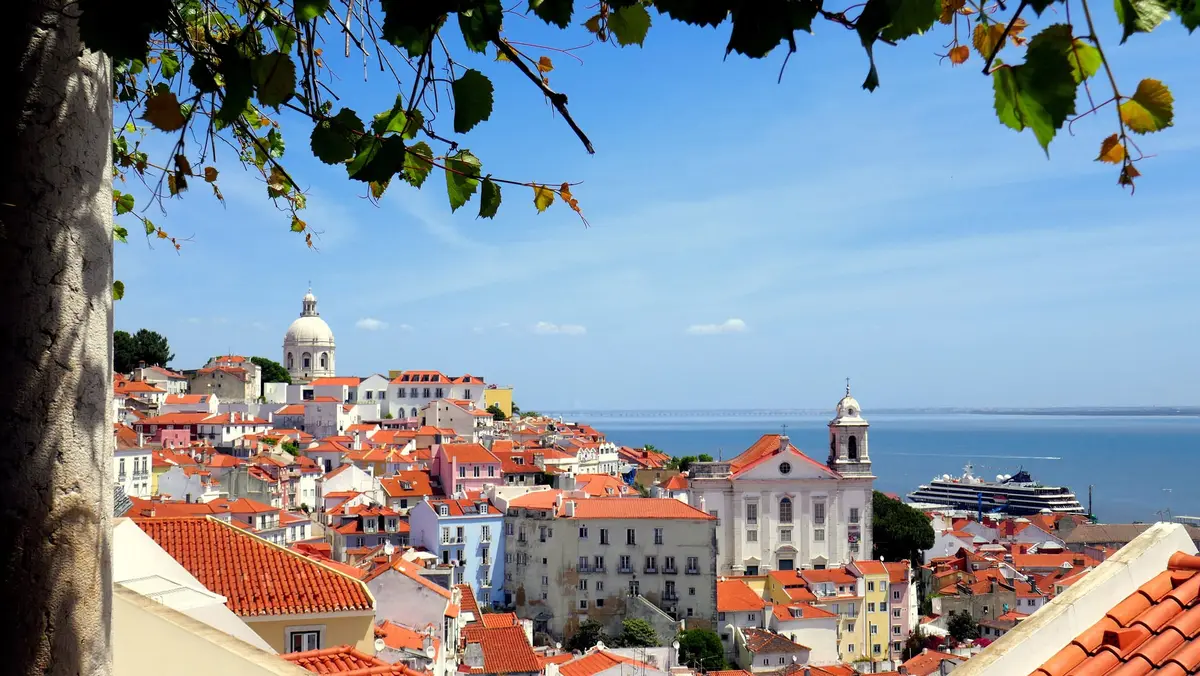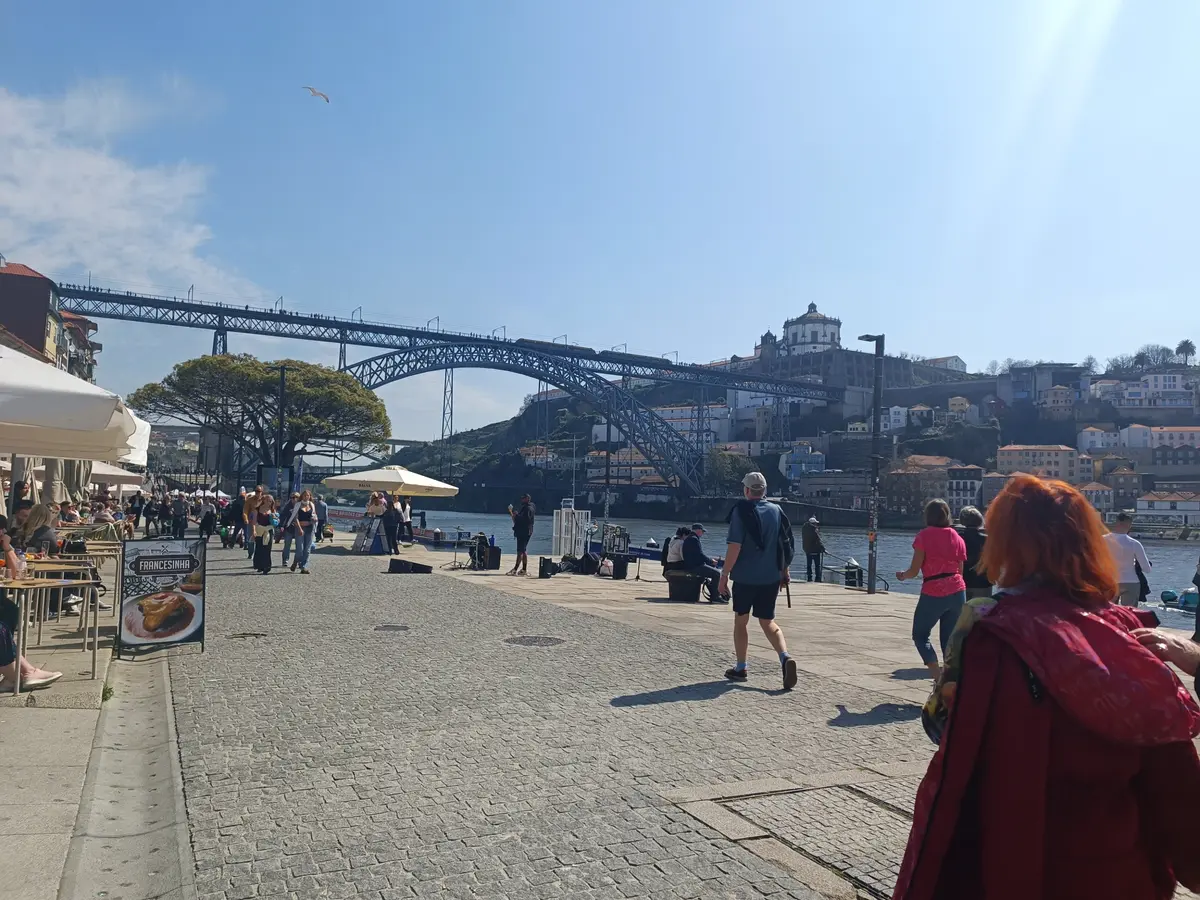
A good Lisbon travel guide should tell you which famous tram to skip, what a day actually costs in dollars, and why your big meal belongs at lunch. This city rewards travelers who plan around its hills and crowds. Here’s what’s worth knowing before you go — real prices, honest verdicts, no filler.
Is Lisbon Worth Visiting?
Yes. Lisbon delivers more per dollar than almost any Western European capital — walkable medieval neighborhoods, river views from free hilltop terraces, famous custard tarts for about $1.65, and day trips to palaces and beaches within an hour. The main downsides are steep hills, cobblestones, and pickpockets on tourist trams.
The pitch is simple. You get the architecture, food, and history of a major European capital at noticeably lower prices than Paris, Rome, or Barcelona — and it makes the easiest first stop on a wider Portugal trip. A sit-down lunch runs around $9-13, and a glass of house wine is $2-4.
The catch is the terrain. This is a city built on seven hills and paved in slick limestone cobbles called calçada, which turn treacherous after rain. It also gets genuinely crowded in summer, and its most photographed tram is a pickpocket magnet. Plan for the friction and it’s one of Europe’s best-value city breaks.
Pro Tip: Pack shoes with grip. The calçada cobbles are beautiful and brutally slippery, and locals in smooth-soled shoes go down regularly after a shower.
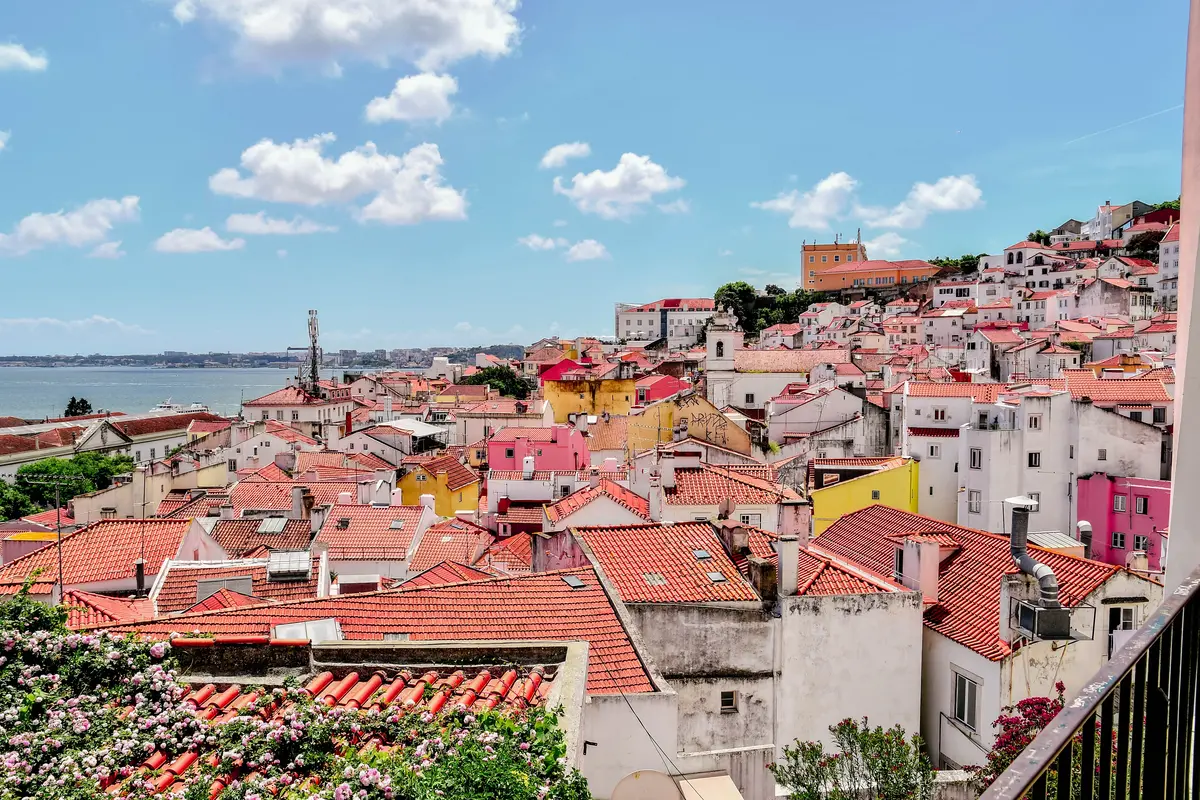
How Many Days Do You Need in Lisbon?
Three days is the sweet spot for a first visit. A well-paced three-day Lisbon itinerary covers the historic core (Alfama, Baixa, Chiado), the monuments at Belém, and one day trip to Sintra or the coast. Two days works if you skip the day trip; five lets you slow down and add beaches or a second excursion.
Here’s how the standard three days break down:
- Day 1: Alfama, Castelo de São Jorge, and the free miradouros at sunset
- Day 2: Belém — Jerónimos Monastery, Belém Tower, and the original custard tarts
- Day 3: A day trip to Sintra, or the Cascais beaches if you’d rather have sand
Add a fourth or fifth day and you can fit both Sintra and the coast, plus time to actually sit at a café instead of marching between sights.
When Is the Best Time to Visit Lisbon?
Spring (mid-April to mid-June) and fall (mid-September to early October) are the best times to visit Lisbon, and the best time to visit Portugal lands in the same shoulder seasons. You get warm days around 67-81°F (19-27°C), thinner crowds, and lower hotel prices than peak summer. July and August are hot and packed; winter is mild and cheap but wetter, with highs near 59°F (15°C).
The seasonal trade-offs, briefly:
- Spring and fall: ~67-81°F (19-27°C), the best balance of weather, crowds, and price
- Summer (July-August): highs around 82°F (28°C), occasionally spiking past 100°F (38°C); busiest and most expensive
- Winter (December-February): highs near 59°F (15°C), mild but with the wettest stretch around November
- Driest months: July and August see almost no rain at all
Pro Tip: Skip the first half of June if crowds bother you. The Santo António street festivals fill Alfama with grilled-sardine smoke and all-night parties — a great time if you want it, miserable if you wanted a quiet dinner.
How Do You Get From the Airport to Central Lisbon?
Take the Metro Red line from Humberto Delgado Airport (LIS) straight into the city for about €1.90 ($2), a 20-25 minute ride with one transfer. A taxi or Uber/Bolt runs roughly €10-20 ($11-22) and takes 15-20 minutes. The airport sits just 4.5 miles (7 km) north of downtown, so no airport transfer into the city takes long.
Your options, with real numbers:
- Metro (Red line): ~€1.90 ($2), or ~€1.65 ($1.80) with a Zapping balance; 20-25 minutes, usually one transfer at Alameda or São Sebastião
- Taxi: metered, ~€10-20 ($11-22) plus a €1.60 ($1.75) luggage charge; 15-20 minutes off-peak
- Uber/Bolt: ~€5-12 ($5.50-13); pick up at the P2 parking garage, not the curb out front
Two things every arrival should know. Ignore any guide that tells you to take the AeroBus airport shuttle — that service was discontinued and the route is gone. And never accept a ride from anyone who approaches you inside the terminal; the legal taxis wait at the official rank outside, and by law the meter is mandatory.
Pro Tip: For the metro, buy a reusable Navegante card from the machine for €0.50 (about $0.55) and load a single ticket or a 24-hour pass onto it — don’t pay per paper ticket. Or skip the card and tap a contactless bank card at the gate.
How Do You Get Around Lisbon?
Lisbon’s center is walkable but hilly, so pair walking with the four-line Metro, the vintage trams, and three funiculars for the steep climbs. A single ride is about €1.80 ($2); a 24-hour pass is €6.80 ($7.50). Load fares onto a €0.50 ($0.55) Navegante card, use pay-as-you-go Zapping, or just tap a contactless bank card.
The Metro
The Metro is the fastest way across town and the cheapest link to and from the airport. Four color-coded lines run from roughly 6:30 a.m. to 1 a.m.
What it doesn’t do matters. The Metro doesn’t reach Belém, the top of Alfama, or Graça — for those you’ll walk, take a tram, or grab an Uber or Bolt.
- Lines: Blue, Yellow, Green, and Red, running ~6:30 a.m. to 1 a.m.
- The Red line connects the airport; the Green and Blue lines cover most central stops
- No service to Belém, upper Alfama, or Graça
Trams and Funiculars
The yellow vintage trams are transport and attraction in one. Line 28E is the famous scenic route, and also the most pickpocketed (more on that below). The modern 15E runs out to Belém along the river.
For the steepest streets, three funiculars do the climbing for you — Glória, Bica, and Lavra — each covered by a normal ticket.

Transport Cards: Navegante, Zapping and Contactless
You don’t need the Lisboa Card just to ride transit. A reusable Navegante card costs €0.50 ($0.55) and holds single tickets, a 24-hour pass, or Zapping pay-as-you-go credit. Or skip the card entirely and tap a contactless bank card at the metro gates.
Here’s how the everyday options compare:
| Option | Cost per ride | Best for |
|---|---|---|
| Single ticket (on Navegante) | ~€1.80 ($2) | Occasional rides |
| 24-hour pass | €6.80 ($7.50) flat | Four or more rides in a day |
| Zapping (pay-as-you-go) | ~€1.61-1.66 ($1.80) | Flexible, multi-day trips |
| Contactless bank card | ~€1.92 ($2.10) | Skipping the ticket machine |
Pro Tip: One Navegante card per person — it’s personal and can’t be passed back through the gate. Traveling as a couple? Buy two, or just tap two separate contactless cards.
Is the Lisboa Card Worth It?
The Lisboa Card pays off if you sightsee hard. At about €31/$34 (24 hours), €51/$56 (48 hours), or €62/$68 (72 hours), it bundles unlimited transit plus free entry to Jerónimos, Belém Tower, São Jorge Castle, and 50-plus sights, plus free trains to Sintra and Cascais. Two or three big monuments a day and it beats paying separately.
Run the math. Here are the card’s headline freebies, paid separately:
- Jerónimos Monastery: ~€10 ($11)
- Belém Tower: ~€8 ($9)
- São Jorge Castle: ~€15 ($16.50)
- A day of transit: ~€6.80 ($7.50)
That’s roughly €40 ($44) before you’ve added a Sintra train or any of the 50-plus smaller sights — already past the 24-hour price. Kids aged 4-15 pay less (around €21/€28/€35, or $23/$31/$38), and under-fours generally ride and enter free.
If you’re museum-hopping, it’s an easy yes. If you mostly want to wander neighborhoods, eat, and photograph viewpoints — all free — skip it and pay per entry. One catch either way: even with the card, Belém Tower and Jerónimos Monastery require a free timed-entry reservation booked in advance. The card covers admission, not the slot.
Pro Tip: The card includes the free CP train to Sintra and Cascais, which alone can justify the 48- or 72-hour version on a day-trip-heavy itinerary.
Where Should You Stay in Lisbon?
Where to base yourself matters more here than in flatter cities: stay in Baixa or Chiado for your first visit — central, fairly flat, and walkable to most sights. Pick Alfama for medieval charm (but expect to haul bags uphill), Cais do Sodré or Bairro Alto for nightlife, Príncipe Real for upscale calm, and Parque das Nações for modern, family-friendly hotels near the airport.
Baixa and Chiado — Best for First-Timers
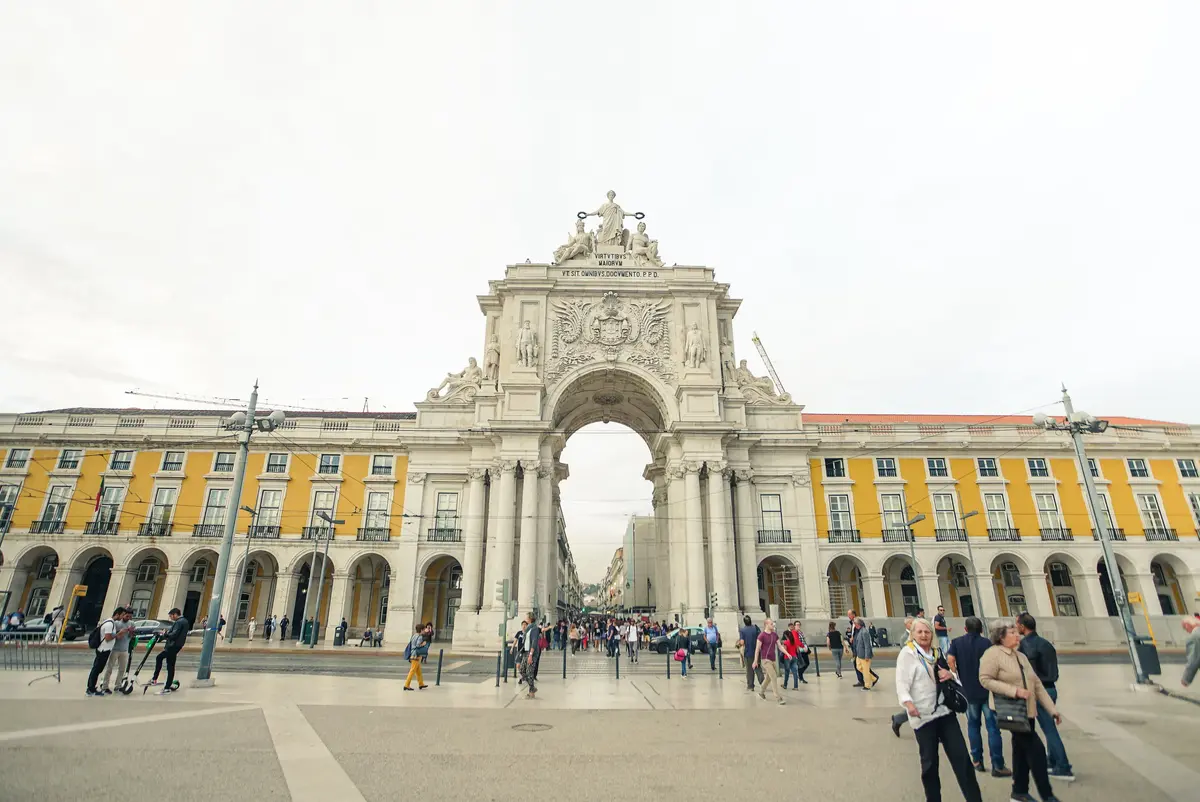
Baixa is the flat downtown grid rebuilt after the 18th-century earthquake, anchored by the riverfront Praça do Comércio and the pedestrian Rua Augusta. Chiado climbs gently uphill into elegant shopping and café territory.
You can walk almost everywhere from here, which on a hilly first trip is worth a lot.
- Best for: First-timers, walkers, short stays
- Vibe: Central, polished, busy with day-trippers
- Watch for: Higher prices and some street noise at night
Alfama — Best for Atmosphere
Alfama is the medieval maze that survived the earthquake — the traditional home of fado, with the castle crowning the hill above. It’s the most atmospheric place to sleep in the city.
The trade-off is logistics: lanes too narrow for cars, staircases instead of sidewalks, and luggage you’ll be dragging up the slope.
- Best for: Romance, photographers, fado fans
- Vibe: Ancient, tangled, lantern-lit
- Watch for: Hills and stairs with bags, and very few elevators
Cais do Sodré and Bairro Alto — Best for Nightlife
These neighboring districts are the night out. Bairro Alto packs more than 100 small bars into a few blocks that come alive around 10:30 p.m. Cais do Sodré has Pink Street, the Time Out Market, and the riverfront ferries.
Great if you want to stumble home; rough if you want to sleep before 2 a.m.
- Best for: Nightlife, younger travelers, foodies
- Vibe: Loud, late, lively
- Watch for: Street noise running into the early hours
Príncipe Real and Parque das Nações — Upscale and Family Bases
Príncipe Real is a leafy, upscale pocket of boutiques and design hotels with a strong LGBTQ+ scene and a calmer pace just uphill from the center. Parque das Nações is the modern waterfront near the airport — wide flat promenades, the Oceanarium, and business-class hotels.
Parque das Nações is the rare part of Lisbon with no cobblestones, which makes it the practical pick for families pushing strollers.
- Best for: Príncipe Real — design lovers and couples; Parque das Nações — families and longer stays
- Vibe: Príncipe Real polished and quiet; Parque das Nações modern and spacious
- Watch for: Parque das Nações feels removed from the historic core
What Are the Best Things to Do in Lisbon?
The essentials: climb to Castelo de São Jorge for the citywide view, wander Alfama and its free miradouros, and ride out to Belém for the Jerónimos Monastery and Belém Tower. Add the original Pastéis de Belém, a fado night in a tiny Alfama tavern, and at least one rooftop or hilltop sunset.
Castelo de São Jorge
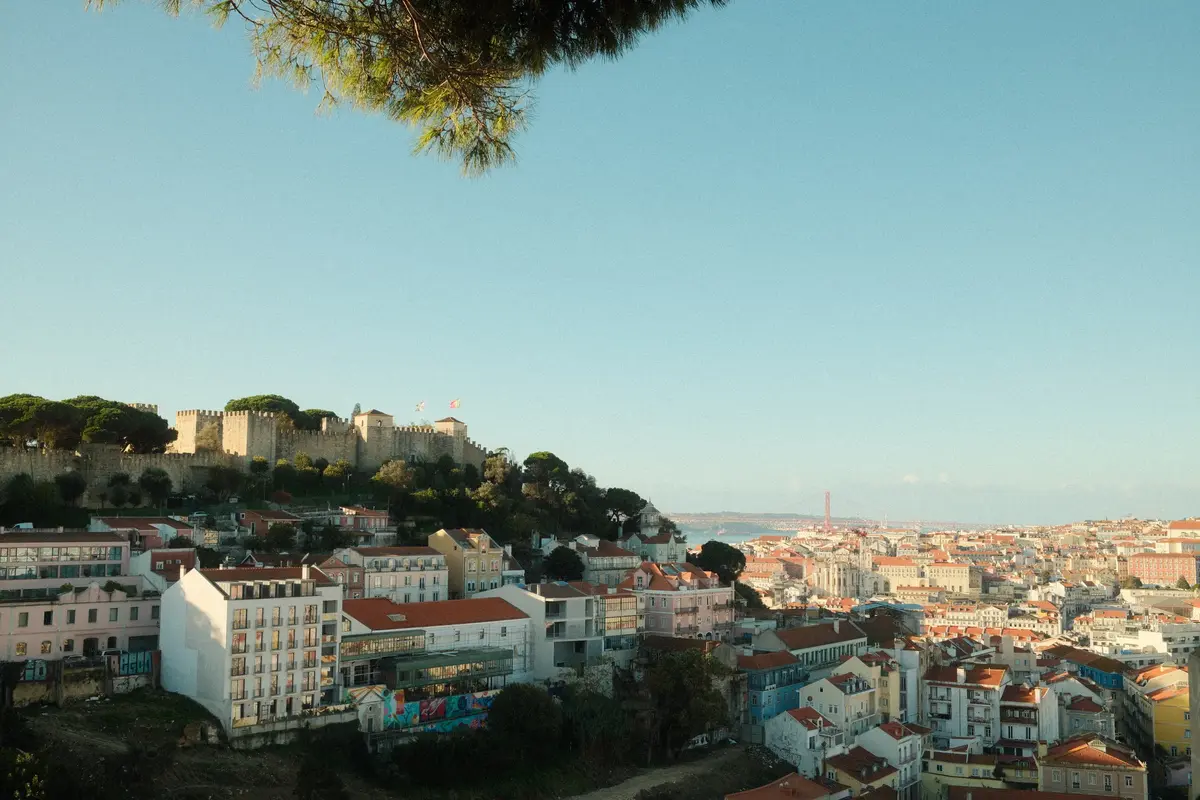
The Moorish castle sits on the city’s highest hill, ringed by resident peacocks and stone ramparts you can walk. The payoff is the wall-walk view: the whole red-tiled city spilling down to the Tagus.
Here’s the contrarian truth. Much of what you see was rebuilt in the 20th century, and at about €15 ($16.50) some travelers find it steep for what’s actually inside the walls. The view is the real product — and the free miradouros just below (Santa Luzia, Portas do Sol) deliver a similar panorama with a coffee in hand.
- Location: Castelo de São Jorge, Alfama (signposted uphill walk from Baixa)
- Cost: ~€15 ($16.50) adult; under-12 free; included with the Lisboa Card
- Best for: First-timers who want the definitive view and the ramparts
- Time needed: 1 to 1.5 hours
Belém: Jerónimos, the Tower and the Original Pastéis
Belém is the riverside monument district about 4 miles (6-7 km) west of center, reached by the 15E tram or a short rideshare. Two Manueline masterpieces anchor it: the vast Jerónimos Monastery, where Vasco da Gama is entombed, and the early-16th-century Belém Tower out on the river.
A few logistics save the day. Belém Tower runs on timed entry, capping visitors per slot, so book ahead — lines at both monuments are long by late morning. And yes, this is where Pastéis de Belém has baked the patented original custard tart for nearly two centuries, selling around 20,000 a day from its tiled rooms.
- Location: Belém, ~4 miles (6-7 km) west; tram 15E or rideshare
- Cost: Jerónimos ~€10 ($11); Belém Tower ~€8 ($9); both free with the Lisboa Card (timed slot still required)
- Best for: History, architecture, and your first custard tart
- Time needed: Half a day with the pastries
I’ve walked straight past the long takeaway queue at Pastéis de Belém and into the back rooms, where there’s almost always a free table and the same tart, served warm with cinnamon and powdered sugar on the side.

Alfama and the Free Miradouros
Alfama is best experienced on foot and at random — lanes barely wider than your shoulders, laundry strung overhead, fado drifting out of tiny taverns after dark. The miradouros, the city’s open-air viewpoints, are the free reward for climbing.
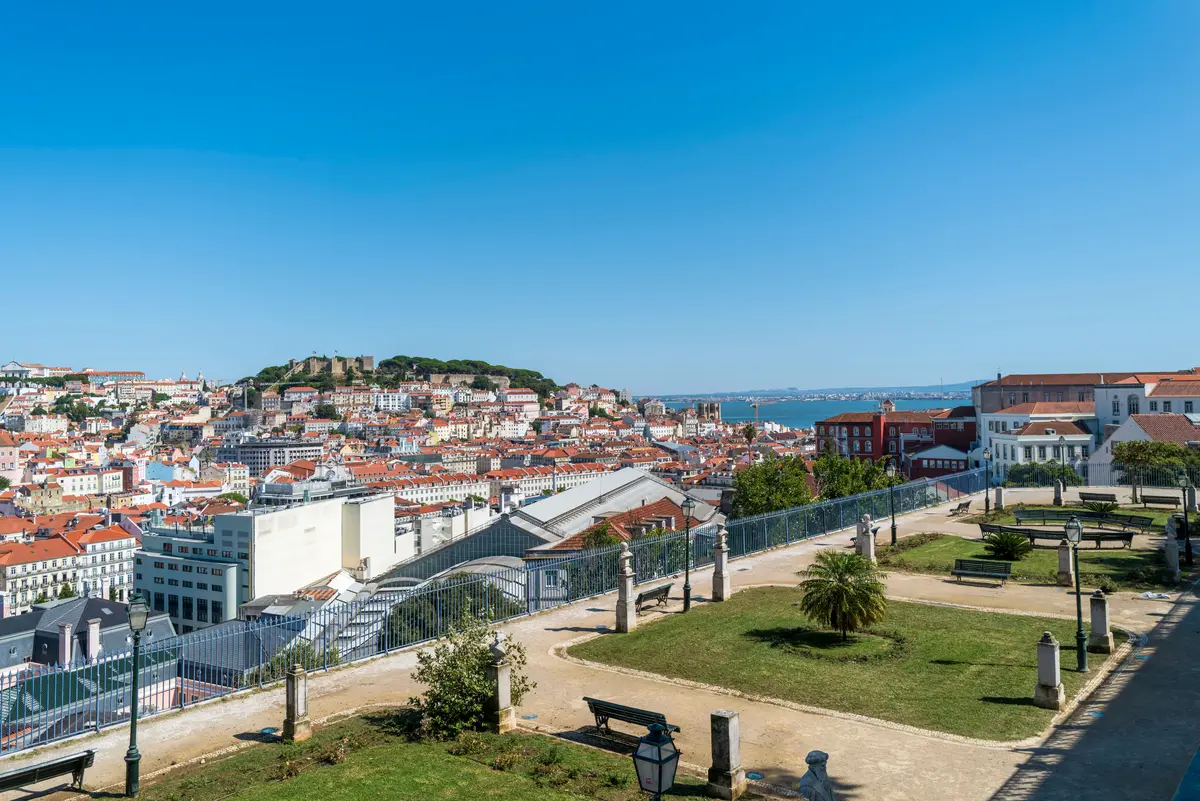
Don’t pay for a single rooftop bar when you can string the terraces together. Santa Luzia and Portas do Sol give the postcard angle over Alfama, São Pedro de Alcântara overlooks Bairro Alto, and Senhora do Monte is the highest and least crowded of the lot. The bigger ones usually have a kiosk pouring beer.
- Location: Alfama and Graça hillsides (free, open-air)
- Cost: Free; drinks ~€2-4 ($2-4.50) at viewpoint kiosks
- Best for: Sunset, photographers, budget travelers
- Time needed: A slow half day, or one good sunset
Time Out Market
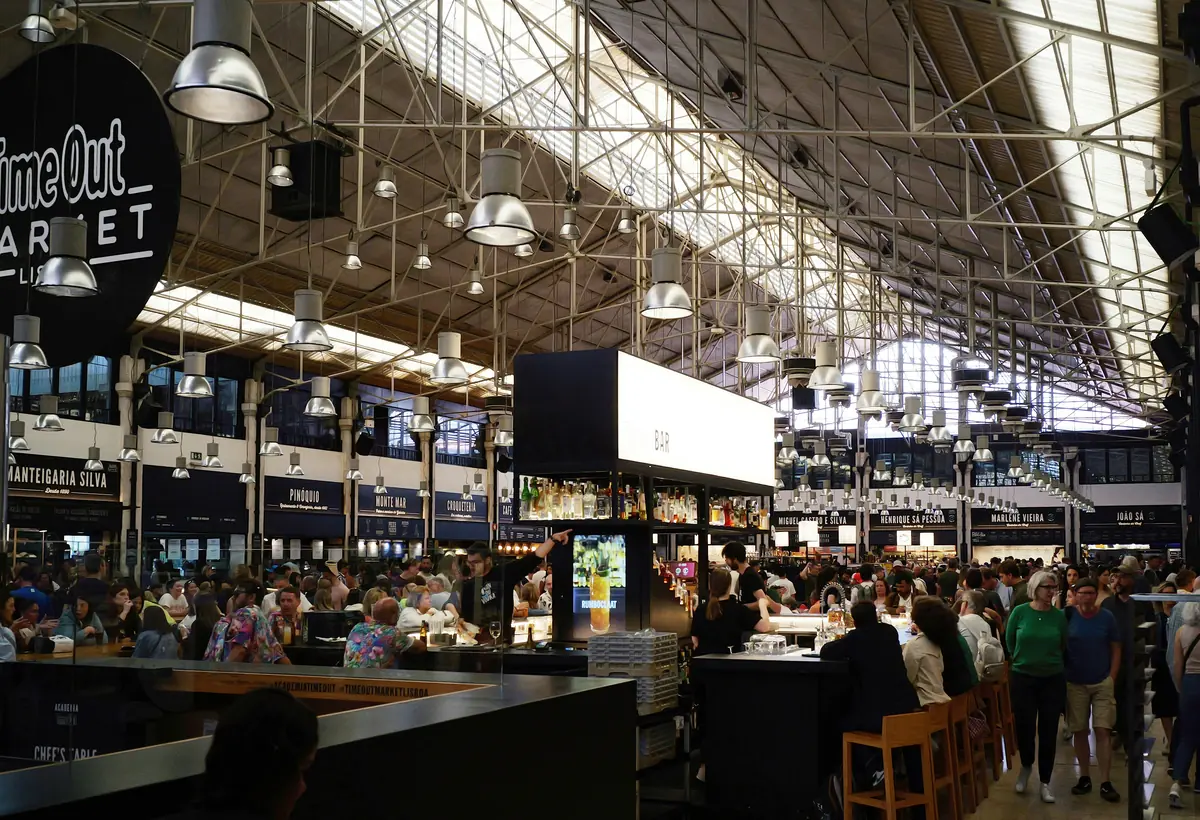
The Time Out Market gathers stalls from well-known Lisbon chefs under one roof at Cais do Sodré. It’s busy, photogenic, and genuinely useful when your group can’t agree on dinner.
But it’s divisive for a reason. Prices run higher than the same chefs charge in their own restaurants across town, and at peak hours you’ll circle for a seat. Go mid-afternoon or early evening, or treat it as a one-time sampler rather than your default for every meal.
- Location: Mercado da Ribeira, Cais do Sodré
- Cost: ~€10-18 ($11-20) per dish
- Best for: Indecisive groups and a quick variety meal
- Time needed: About 1 hour (longer when it’s packed)
Is Tram 28 Worth It?
Tram 28 is famous but overrated for most visitors. It’s the single most pickpocketed line in Portugal and often so jammed you can’t see out the windows or get a seat. Ride it early or late, board at the Martim Moniz terminus to start with a seat, or take the near-identical, far quieter Tram 24E or 12E instead.
The route itself is genuinely scenic. It grinds up through Alfama, Graça, and Estrela on tracks the modern trams can’t follow. The problem is that everyone knows it. By mid-morning the line at Martim Moniz is long and the cars are standing-room sardine tins — exactly the environment pickpockets want.
The first time I rode the 28E at midday, I stood shoulder-to-shoulder the entire way and saw more elbows than rooftops. The fix is simple: board at the Martim Moniz terminus and you’ll get a seat; join three stops later and you’ll stand the whole ride.
If you just want the views without the circus, the 24E covers a quieter stretch and the 12E loops much of the same hill, both with room to breathe.
Pro Tip: Keep your phone and wallet in a zipped front pocket on any vintage tram, and don’t stand wedged by the doors — that’s where bags get opened during stops.
What Should You Eat in Lisbon?
Start with a pastel de nata, the warm custard tart that costs about $1.65. Then work through bifana (a marinated pork sandwich), bacalhau (salt cod, cooked a hundred ways), grilled sardines in summer, and ginjinha, a sour-cherry liqueur sold by the shot. Wash it all down with vinho verde, a light, slightly fizzy young white.
Pastel de Nata: Belém vs Manteigaria
Two names dominate. Pastéis de Belém is the patented original, baking the same secret recipe near the Jerónimos Monastery for nearly two centuries and selling roughly 20,000 tarts a day. Manteigaria is the locals’ favorite challenger, with an open kitchen in Chiado and tarts that travel better in a box.
- Belém: the historic original; go inside past the takeaway line, where the back rooms have plenty of seating and rarely a wait
- Manteigaria: the rival most locals rank first; watch the bakers pull trays straight from the oven
- Both: about €1.50 ($1.65) each, with a box of six around €9 ($10)
Insider move: walk the “pastel promenade” around Rua Garrett and Praça Luís de Camões, where Manteigaria, Castro, and Alcôa sit within about 200 yards (180 m) of each other. You can run your own taste test in a single afternoon.

Savory Plates and Where to Find Them
For salt cod, look for bacalhau à brás — shredded cod with eggs and matchstick potatoes — on lunch menus across the city. The bifana, thin marinated pork in a soft roll, is the great cheap street lunch at roughly €3-5 ($3.50-5.50). In summer, grilled sardines (sardinhas assadas) turn up on every corner, smoke and all. For a sit-down splurge, order polvo à lagareiro, octopus roasted with olive oil and potatoes.
Two money-savers locals actually use:
- Eat your big meal at lunch. The prato do dia (dish of the day) runs €8-12 ($9-13) for soup, a main, and a drink — the same kitchen charges close to double at dinner.
- The couvert isn’t free. The bread, olives, and cheese that land on your table cost money, so wave them off if you don’t want them.
What to Drink in Lisbon
Ginjinha is the ritual aperitif — a sour-cherry liqueur poured at hole-in-the-wall counters like the one at Largo São Domingos that’s been at it for generations. It runs about €1.40-1.50 ($1.55-1.65) a shot, served in a small plastic cup with or without a boozy cherry at the bottom.
With meals, order vinho verde: a young, lightly sparkling white that’s cheap and made for the heat, at roughly €12-18 ($13-20) a bottle in restaurants or €2-4 ($2-4.50) a glass.
Pro Tip: Order it “com ginja” if you want the soaked cherry in the cup, “sem” if you don’t. Most counters pour it standing — there’s nowhere to sit, and that’s part of the ritual.
What Are the Best Day Trips From Lisbon?
Sintra is the essential day trip — a hilltop town of fairy-tale palaces 40 minutes by train (about €2.50 / $2.75 each way) from Rossio station. For beaches, Cascais is a 40-minute train ride along the coast. Both are easy without a car, and you don’t need to drive in or around Lisbon at all.
Sintra
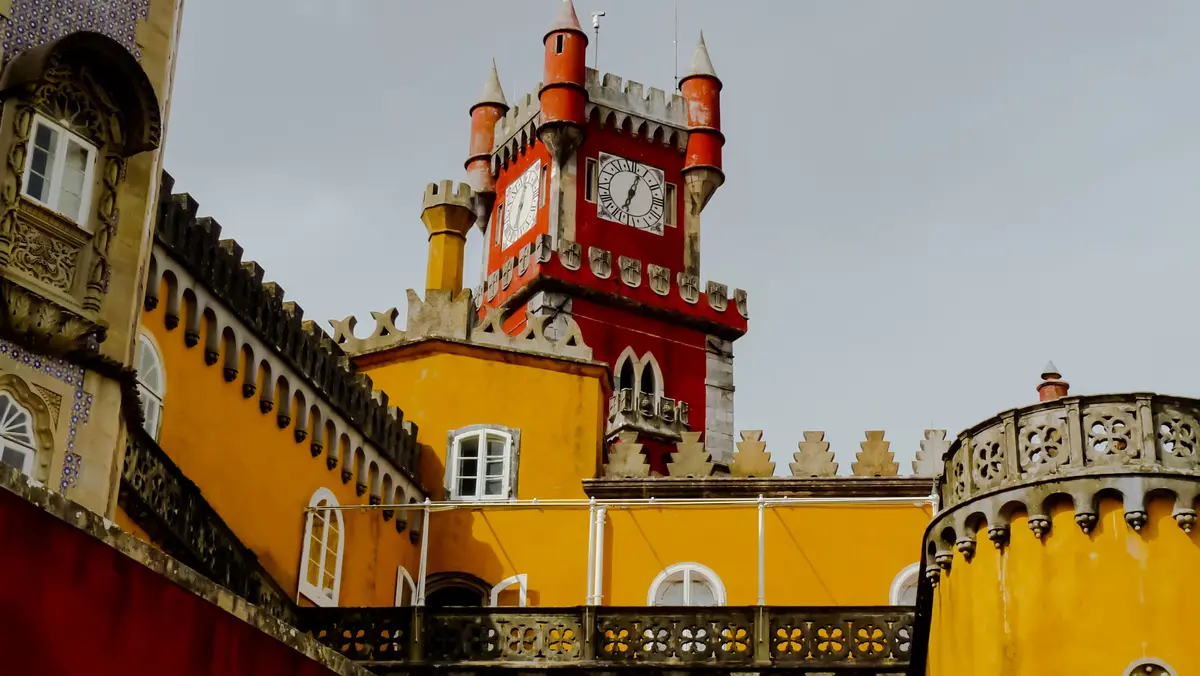
Sintra is a UNESCO hill town stuffed with palaces — the multicolored Pena Palace up top, the mysterious Quinta da Regaleira with its initiation well, and the ruined Moorish Castle along the ridge. Trains leave central Lisbon every 15-20 minutes, and the Rossio departure is the most central.
- Getting there: ~40 minutes from Rossio (47 from Oriente), about €2.30-2.55 ($2.55-2.80) one-way, every 15-20 minutes
- Once there: take Bus 434 up to the palaces — the walk is steep and long
- Book ahead: Pena Palace uses timed entry, so buy tickets online before you go
The mistake everyone makes is trying to see three palaces in one day, then spending it in ticket lines and on the shuttle bus. Pick two, go early, and reserve timed tickets in advance.
Cascais and the Beaches
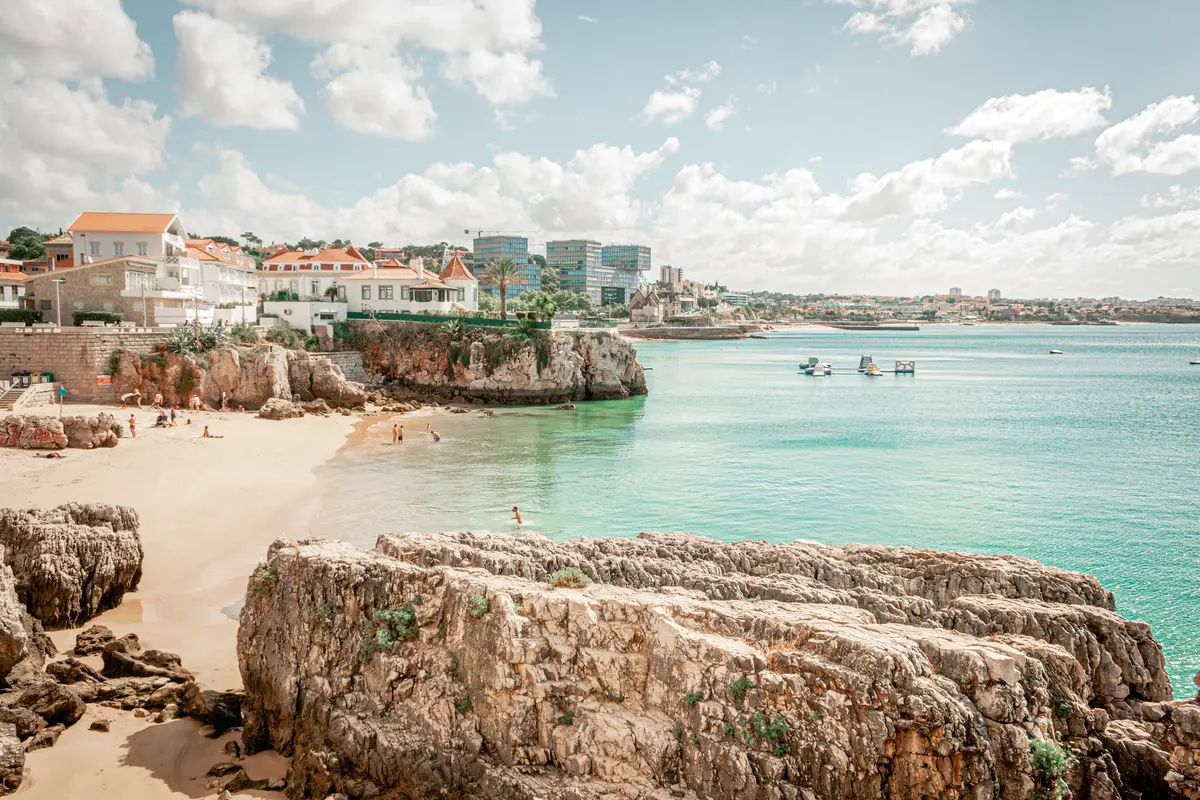
You don’t need to fly south to the Algarve for sand. Cascais is a polished seaside town 40 minutes west by train from Cais do Sodré, with beaches a short walk from the station. Closer in, Carcavelos has the biggest beach on the line, and across the river Costa da Caparica runs for miles of open Atlantic coast.
- Cascais: ~40 minutes from Cais do Sodré; town beaches and a walkable center
- Carcavelos: ~20-30 minutes; the largest and most popular beach near the city
- Costa da Caparica: ferry plus bus; long, wide, surf-friendly sand
Is Lisbon Safe for Tourists?
Yes — Lisbon is one of Europe’s safest capital cities, with very low violent crime, and Portugal’s strong safety record holds up nationwide. The real risk is pickpocketing, concentrated on crowded Tram 28, the 15E to Belém, and busy miradouros at sunset. Keep valuables zipped and in front pockets, stay aware in tram crowds, and you’ll almost certainly have no trouble.
Solo travelers, including solo women, generally find the city comfortable, including at night in busy central areas like Baixa, Chiado, and Cais do Sodré. Stick to lit main streets late, and use Uber or Bolt for longer distances after dark — rides are cheap, around €5-10 ($5.50-11). The tap water is safe to drink, so there’s no need to buy bottled.
Pro Tip: The classic distraction is a stranger asking for help or trying to sell you something while an accomplice works your bag. A firm “não, obrigado” and a step back ends most of it.
How Much Does Lisbon Cost per Day?
Lisbon costs less than most Western European capitals, but it isn’t a budget destination — and the same goes for travel costs across Portugal. Plan roughly $55-100 a day as a budget traveler, $120-185 mid-range, and $385 and up for luxury, per person. Accommodation is the biggest variable; cheap lunches, low transit fares, and free viewpoints keep daily costs down compared with Paris or Barcelona.
Here’s what a day looks like by style:
| Style | Per person, per day | Where it goes |
|---|---|---|
| Budget | ~€50-90 ($55-100) | Hostel dorm, lunch specials, public transit |
| Mid-range | ~€110-167 ($120-185) | Three-star hotel, sit-down dinners, a few paid sights |
| Luxury | €350+ ($385+) | Five-star hotel, fine dining, private day trips |
The building blocks behind those numbers:
- Hostel dorm: ~€18-40 ($20-44)/night; mid-range hotel ~€110-180 ($120-200); luxury €480+ ($530+)
- Lunch prato do dia: ~€8-12 ($9-13); mid-range three-course dinner ~€25-30 ($28-33)
- Espresso (bica) standing at the counter: ~€0.80-1.20 ($0.90-1.30)
- A 24-hour transit pass: €6.80 ($7.50)
One charge first-timers miss: a tourist tax of about €4 ($4.40) per person, per night, added at checkout. It’s capped at seven nights and charged to guests aged 13 and up, so budget for it on top of the room rate.
Pro Tip: Pull cash from a Multibanco bank ATM, not the bright-blue Euronet machines that tack on €4-5 ($4.50-5.50) in fees. And always decline “conversion to dollars” at any card terminal — the euro rate is better every time.
What Should US Travelers Check Before Booking?
A few Lisbon facts change often enough to verify right before you book: entry requirements, the tourist tax, monument reservations, and transit-card prices. US visitors should confirm passport rules and the new ETIAS travel authorization on the official EU portal, reserve timed slots for Belém Tower and Jerónimos, and re-check the Lisboa Card price for their dates.
Re-check these close to your trip, because they shift:
- Entry for US travelers: A US passport valid for your stay is the baseline, under the Schengen 90-days-in-180 rule. A new EU travel authorization, ETIAS, is being phased in for visa-exempt visitors — expect a fee around €20 ($22) and confirm status and timing on the official EU ETIAS portal.
- Tourist tax: about €4 ($4.40) per person, per night, capped at seven nights, paid at your accommodation.
- Belém Tower and Jerónimos: both require a free advance timed-entry reservation, even with a Lisboa Card.
- Transit and card prices: the Lisboa Card and single fares are adjusted periodically, so confirm current rates when you buy.
Pro Tip: Book the Belém Tower, Jerónimos, and Pena Palace slots the moment your dates are set. They’re free or cheap to reserve but sell out in peak season, and turning up without a slot can mean no entry at all.
Before You Book
TL;DR: Give Lisbon three days, base yourself in Baixa or Chiado, eat your big meal at lunch, and string together free miradouros instead of paying for views. Skip the Tram 28 scrum for the quieter 24E, reserve Belém and Sintra slots ahead, and pull cash from Multibanco ATMs rather than Euronet.
This Lisbon travel guide covers the decisions that actually shape a trip here: where to sleep, what to skip, and what a day really costs in dollars. Get those right and the hills, the cobbles, and the custard tarts take care of themselves.
What’s the one thing you most want nailed down before you go — the Lisboa Card math, the perfect three-day route, or the best nata in the city? Tell me in the comments.