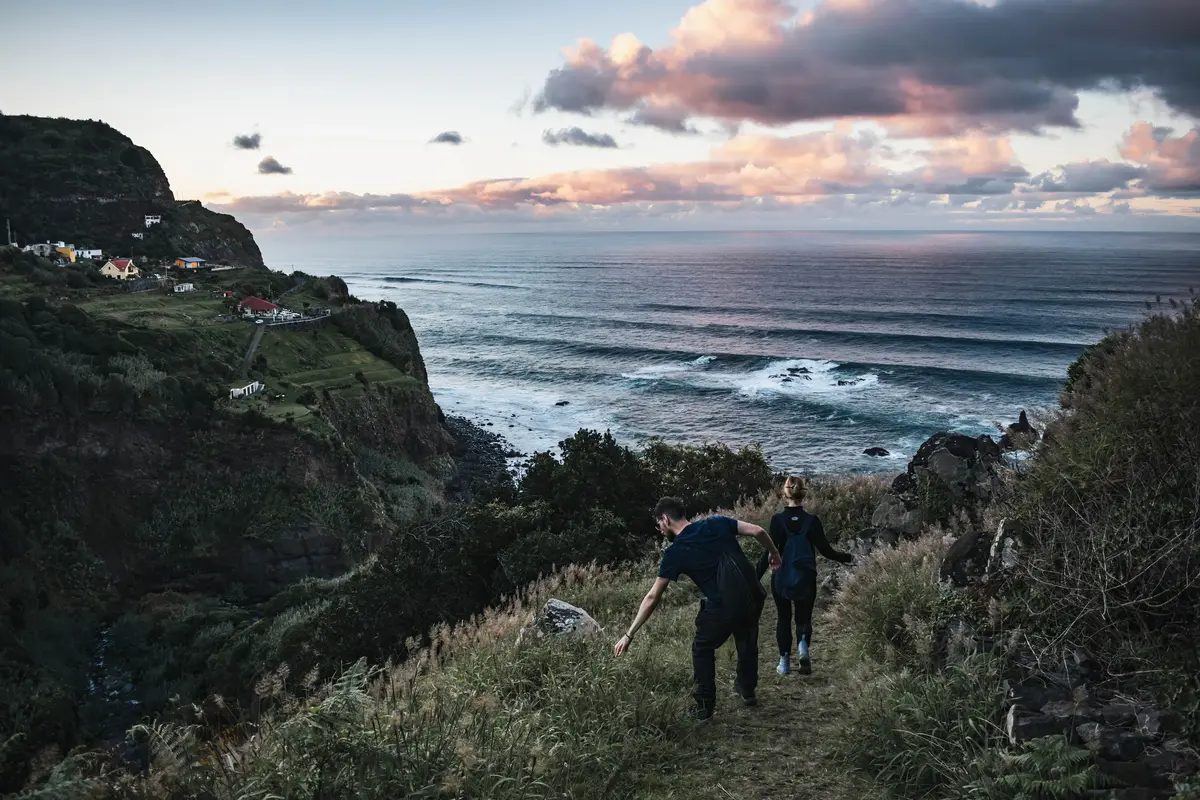
After logging over 100 miles on Portuguese trails — from the volcanic ridges of Madeira to the red cliffs of the Algarve — I can say this: Portugal hiking rewards the prepared and punishes the casual. The country packs five genuinely different landscapes into one compact nation, each demanding different gear, different timing, and different expectations.
A study by health coaching company MyBodyTutor ranked Portugal’s GR22 Historical Villages trail — 363 miles (584 km) linking 12 medieval fortified villages — as the most rewarding hiking route in Europe, scoring 98.59 out of 100 against routes across the continent. That result surprises exactly nobody who has spent time here.
When is the best time to hike in Portugal?
Portugal hiking conditions vary dramatically by region — exactly the kind of variation a best time to visit Portugal guide helps you plan around. On the mainland, spring (March to May) and fall (September to November) offer the ideal mix of mild temperatures, wildflowers, and manageable crowds. The islands operate on a different calendar: Madeira is walkable year-round, while the Azores are driest and clearest in summer.
Mainland Portugal
Spring and fall temperatures across mainland Portugal run 60–75°F (15–24°C) — comfortable for full days on trail. Spring brings the countryside alive with flowers and running water; trails that are parched in August look completely different in April.
Summer hiking is workable on the coast where Atlantic breezes keep conditions bearable, but inland regions like the Alentejo regularly hit 95°F (35°C) by midday. That is not hiking weather. Winter is mild but rainy, particularly in the north. If you plan to hike the Rota Vicentina or Peneda-Gerês trails between December and February, pack real waterproof gear — not a light shell.
Pro Tip: Fall is consistently underrated for Portugal hiking on the mainland. The light is better for photography, the coastal trails are far less crowded than in spring, and accommodation is easier to book without planning weeks ahead.
Madeira
Madeira’s subtropical climate earns the “Island of Eternal Spring” reputation. Temperatures hold between 65–75°F (18–24°C) year-round, and even summer heat is checked by altitude and ocean wind. Spring and fall bring the most stable visibility for high-altitude routes like the PR1 traverse between the peaks.
The Azores
The Azores‘ maritime climate means mild temperatures — around 70–77°F (21–25°C) in summer — but serious weather unpredictability year-round. Summer is the best bet for clear conditions at the crater viewpoints essential to routes like the Sete Cidades rim hike. Before driving out, check the live webcam at Miradouro da Boca do Inferno. If the crater is socked in, wait or drive elsewhere. It can clear within an hour or stay closed all day.
What gear do you actually need for hiking in Portugal?
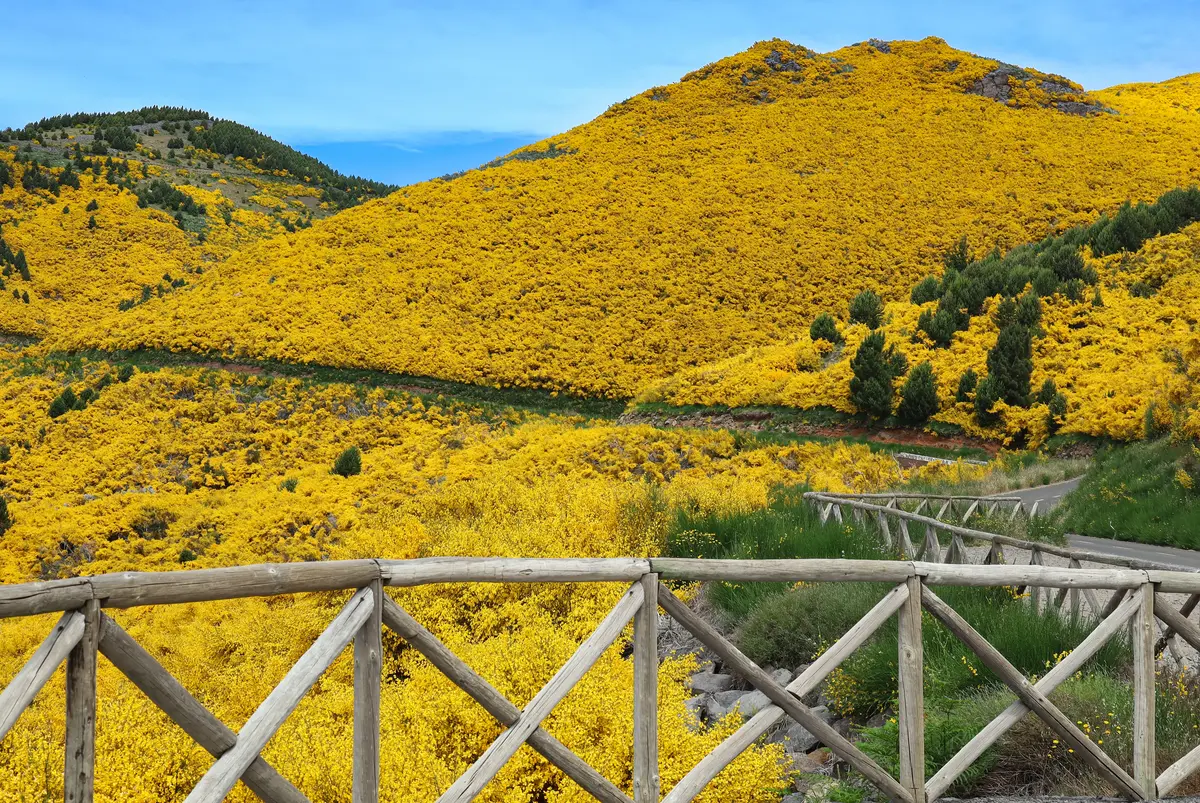
Standard day-hike gear gets you into trouble in Portugal. The terrain is specific: deep coastal sand, slick levada channel paths, and steep volcanic staircases all require targeted decisions that most Portugal packing lists don’t cover. The non-negotiables:
- Well broken-in hiking boots or trail shoes with aggressive grip
- Wool or synthetic hiking socks — cotton creates blisters fast in sand
- Synthetic or merino base layers plus a lightweight fleece
- A waterproof and breathable shell (not optional, even in spring)
- A 20–30 liter daypack with a hip belt to transfer load off your shoulders
- At least 2 liters (68 oz) of water carrying capacity; more in summer
Beyond the basics, four trail-specific items make a genuine difference:
Trekking poles are essential on the Fishermen’s Trail for balance in deep sand and on Madeira’s levada staircases where your knees will feel every step down. Short gaiters are the difference between comfortable hiking and stopping every 200 meters to empty sand from your boots on the Rota Vicentina. A headlamp — not just a phone torch — matters for Madeira’s levada tunnels, some of which run 300–400 feet (90–120 m) of pitch-black, wet, uneven ground. A water flavor enhancer makes staying hydrated easier when rural tap water runs strongly mineral over multi-day treks.
Pro Tip: Trekking poles on the Fishermen’s Trail get used differently than in the mountains — you’re driving them into soft sand for propulsion and lateral stability, not braking on descents. Wider baskets help. Borrow or buy a pair before the trip, not at the trailhead.
Is it safe to hike in Portugal?
Portugal’s trails are generally well-maintained, well-marked, and carry near-zero violent crime risk. The genuine hazards are environmental, and two of them are serious.
On coastal routes — especially in the Algarve and Alentejo — limestone cliffs are actively eroding. Warning signs here are not suggestions. Hikers die on these cliffs regularly; rock that looks solid breaks without notice. Obey the fencing. Ignore the photo opportunity.
From April through October, wildfire risk across the mainland is real. Check the daily fire risk index before heading into any inland or forested trail area. If you spot smoke, call 112 immediately — do not wait to confirm what you are seeing.
On the island routes, paths turn genuinely dangerous after rain. What looks like a muddy levada walk can slide. Check trail conditions with your accommodation the evening before, and leave your planned route with hotel staff before heading out.
Navigation note: GPS apps work well on mainland trails, but cell coverage drops to nothing on mountain routes in Gerês and on the Azorean crater rims. Download full offline maps before you leave the car park.
How do you get to Portugal’s best trailheads?
Several US carriers fly direct to Lisbon. For the Azores, seasonal direct service connects Boston to Ponta Delgada on São Miguel. Porto serves as a more direct gateway for Peneda-Gerês.
On the ground, renting a car in Portugal unlocks the most trail options — particularly for Gerês, where the best trailheads sit 20–30 minutes down single-track roads with no public transport. For the Rota Vicentina, the Rede Expressos bus network connects coastal towns efficiently; the Lisbon–Sines route reaches Porto Covo, the main Fishermen’s Trail hub, in under two hours for around €14 ($15).
For point-to-point hikes where your start and end are different locations — the PR1 in Madeira being the clearest example — pre-booking a transfer service is standard. Taxi hailing at remote trailheads is unreliable.
Pro Tip: For the Fishermen’s Trail, skip the first 5 miles (8 km) of road walking out of Sines and take a cab directly to Praia São Torpes. You start hiking immediately on the good terrain and save 90 minutes of pavement.
Is the Rota Vicentina’s Fishermen’s Trail worth the effort?
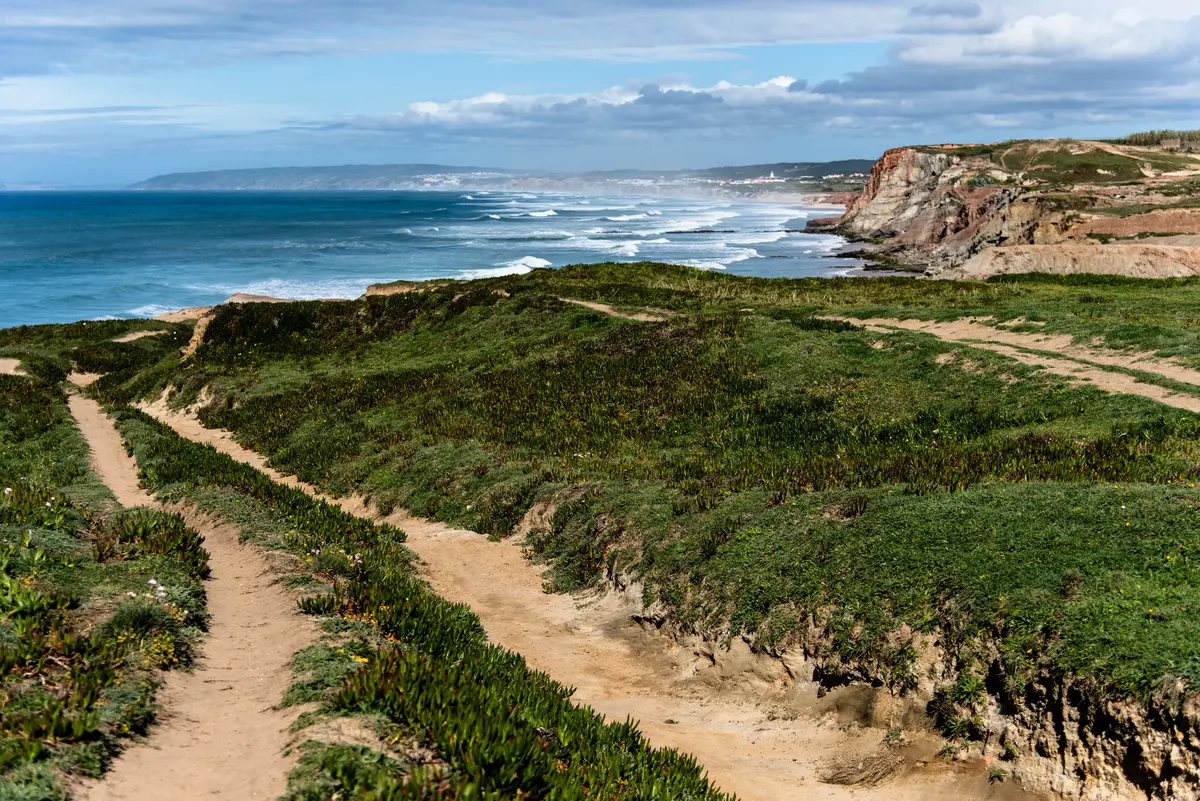
Yes — but not for the reasons most guides suggest. The Fishermen’s Trail is not a casual coastal walk. It covers 140 miles (226 km) through the protected Southwest Alentejo and Vicentine Coast Natural Park, certified by the European Ramblers Association as one of Europe’s best long-distance walking routes. The scenery is extraordinary. The sand is relentless.
The single most underestimated element is terrain. Much of the trail — particularly sections north of Porto Covo — runs through deep, soft sand that drains energy at roughly twice the rate of firm ground. One hiking couple reported taking three full hours to cover 3.4 miles (5.4 km) on a particularly soft stretch between Sines and Porto Covo. Trekking poles are essential here for propulsion and lateral balance in the dunes, not for elevation management.
What makes the effort worthwhile is access. The Fishermen’s Trail reaches beaches and headlands with no other entry point. White storks nest on sea stacks just offshore — this is the only coastline in Europe where they breed on ocean cliffs. You walk through ecosystems containing plant species found nowhere else on earth.
The most popular section runs Porto Covo to Odeceixe — roughly 53 miles (85 km) — and takes most hikers four to six days. Tackling this stretch rather than the full 140-mile route is the standard approach.
- Total trail distance: 140 miles (226 km), São Torpes to Lagos
- Popular section: Porto Covo to Odeceixe, approximately 53 miles (85 km), 4–6 days
- Difficulty: Moderate — the sand terrain makes it significantly harder than the elevation profile suggests
- Best for: Experienced walkers comfortable with 12–18 miles (19–29 km) per day
- Best season: September to May; summer heat makes the exposed coastal sections genuinely unpleasant
- Getting there: Rede Expressos bus to Sines, then a short cab to Praia São Torpes
Pro Tip: Sand gaiters are not optional on the northern sections. Blisters from sand rubbing inside your boots will end your hike before the cliffs do.
What is hiking like on Madeira and in the Azores?
Island hiking in Portugal occupies its own category. These are volcanic landscapes shaped by eruption and ocean erosion over millions of years — the trail types, logistics, and weather patterns share nothing with the mainland. For those weighing up the two destinations, our Azores vs Madeira guide breaks down the key differences beyond headline trail counts.
Madeira — PR1 Pico do Arieiro to Pico Ruivo
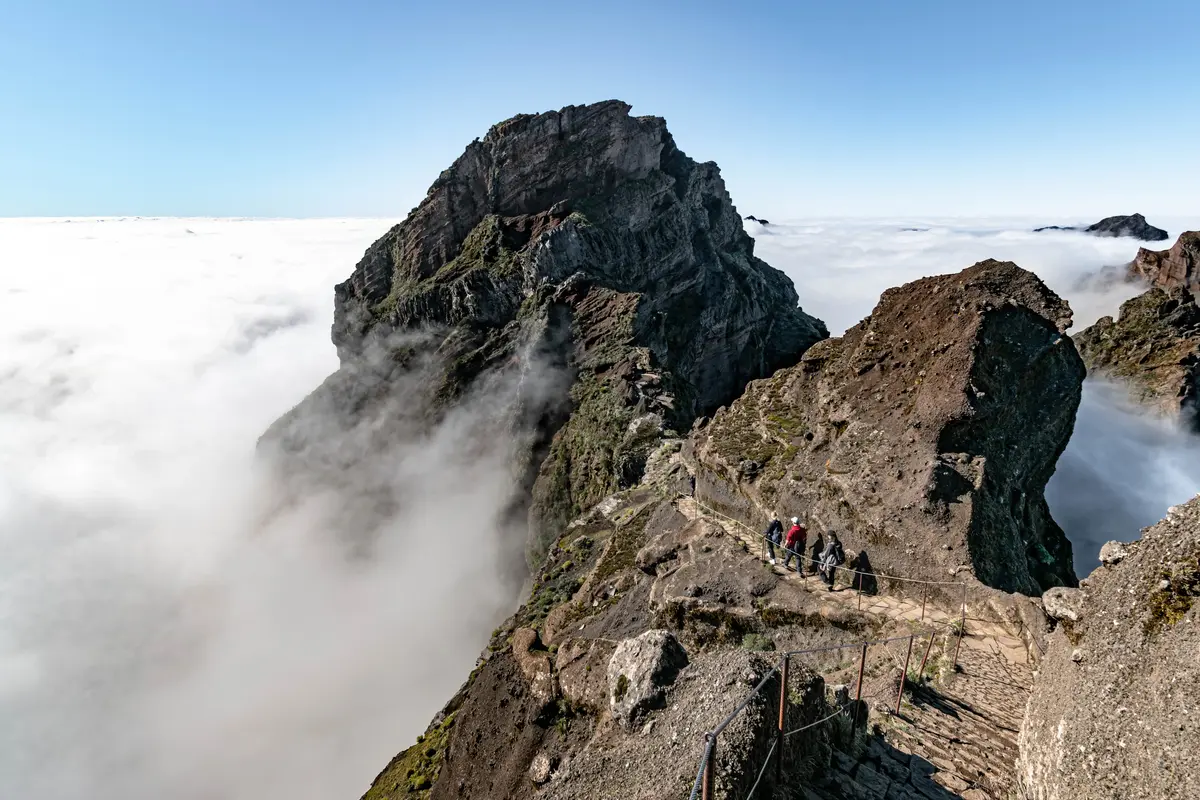
The PR1 connects two of Madeira’s highest peaks over 4.3 miles (7 km) one-way, with approximately 2,590 feet (790 m) of elevation gain composed almost entirely of staircases carved directly into volcanic rock. You pass through tunnels drilled through mountain ridges and cross exposed metal staircases bolted to cliff faces at altitude. One long section has earned the nickname “Staircase to Hell” from hikers who have had the experience.
The trail has emerged from a significant closure following wildfire damage and now requires advance booking through Madeira’s SIMplifica permit portal before you hike. Permits cost €4.50 ($5) and access is timed. Showing up without a reservation means turning around.
At over 5,900 feet (1,800 m), the trail sits above the cloud layer on clear mornings. The view down through the cloud layer to the Atlantic is unlike anything on the mainland. The risk: conditions change fast. I started the PR1 in clear sun and arrived at Pico Ruivo in zero-visibility fog.
- Distance: 4.3 miles (7 km) one-way, Pico do Arieiro to Pico Ruivo
- Elevation gain: approximately 2,590 feet (790 m)
- Difficulty: Challenging — steep stairs, exposed sections, significant drops
- Permit: Required in advance via SIMplifica portal; €4.50 ($5)
- Best for: Fit hikers comfortable with heights; not suitable for vertigo sufferers
Madeira’s levada network is the entry point for most hikers and deserves its own mention. Over 1,350 miles (2,172 km) of irrigation-channel maintenance paths crisscross the island — some perfectly flat, some involving ankle-deep water and long dark tunnels. The Levada das 25 Fontes is flat enough for families and leads to a waterfall lagoon worth the walk. Bring a headlamp for any levada section with tunnels; the darkness is total and the footing is wet and uneven.
Pro Tip: On Madeira’s levada walks, some tunnels are long enough that your eyes never fully adjust before the far end appears. I spent a full 10 minutes blind in one tunnel near Rabaçal, feeling my way along the concrete channel edge with my hand. A headlamp is not optional — it is the difference between a story you tell later and a serious fall.
The Azores — Sete Cidades Crater Hike
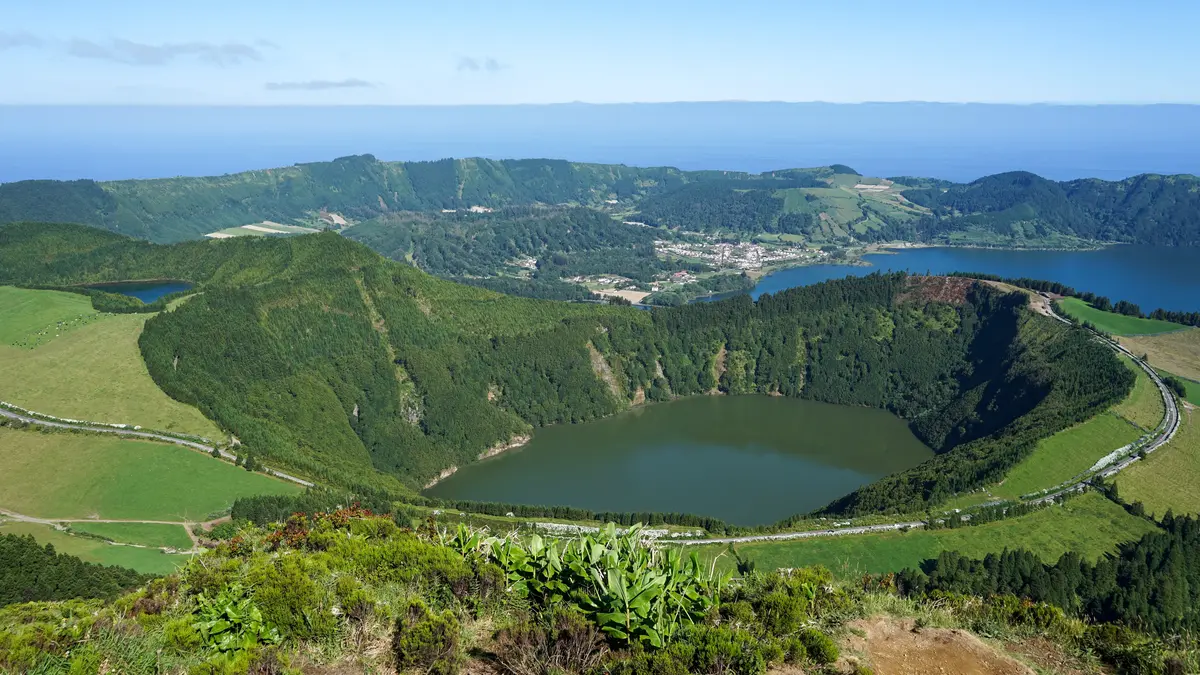
The Sete Cidades crater hike on São Miguel follows 7.5 miles (12 km) of volcanic caldera rim above twin lakes — one blue, one green — that look from the viewpoints like two separate bodies of water. They are actually one connected lake. The color difference is a product of light refraction at different angles.
Views are entirely dependent on cloud cover, and the Azores make no promises on that front. Check the live webcam at Miradouro da Boca do Inferno before driving out. If the crater is socked in, wait.
- Distance: 7.5 miles (12 km) point-to-point, Mata do Canário to Sete Cidades village
- Difficulty: Moderate — steep sections at start and finish; flat rim in between
- Best for: Hikers willing to time their day around clear weather
- Getting back: Arrange a taxi from Sete Cidades village in advance; no regular bus returns to the trailhead
Is the Seven Hanging Valleys Trail the best day hike in the Algarve?
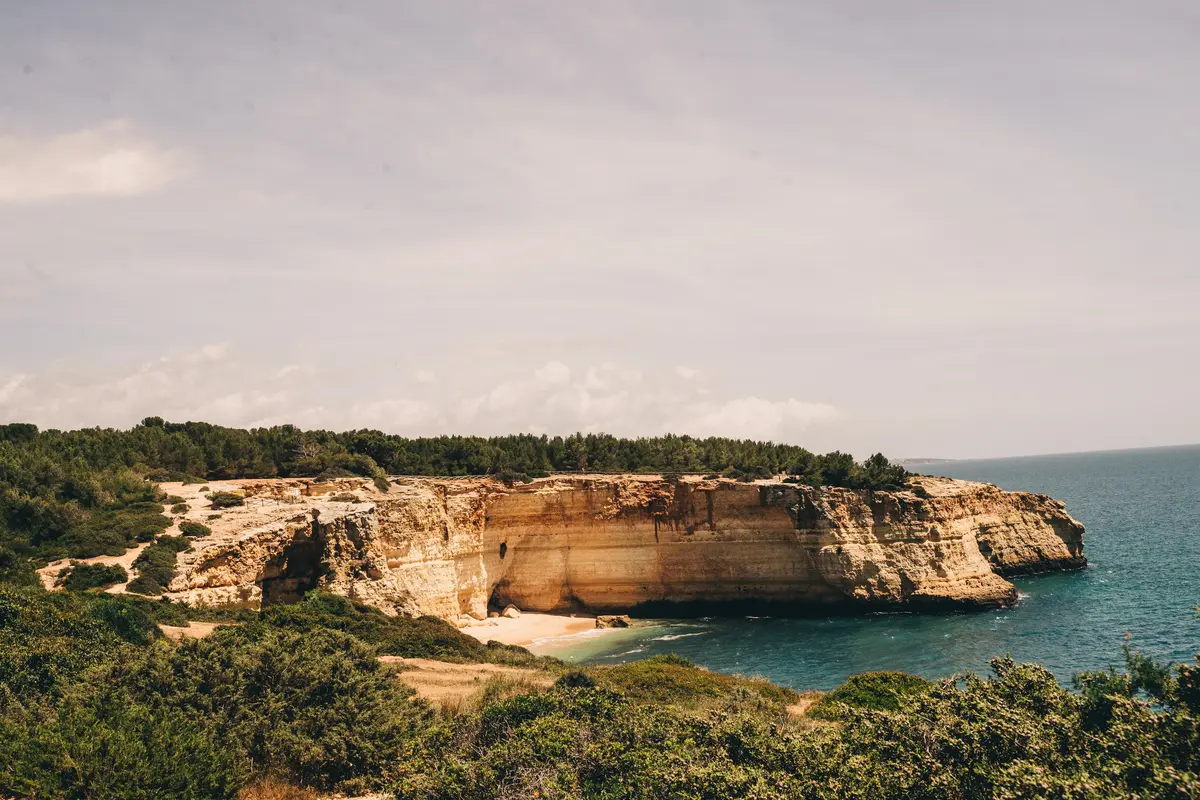
The Seven Hanging Valleys Trail is the best coastal day hike in the Algarve — with one caveat. The trail covers 3.5 miles (5.7 km) one-way between Praia da Marinha and Praia do Vale de Centeanes along limestone cliffs above rock formations that took over 20 million years of ocean erosion to create. It consistently ranks among Europe’s finest coastal walks. The ranking is deserved.
The caveat: the Praia da Marinha parking lot fills completely by mid-morning in peak season. Arrive before 9 a.m. if you are driving. The section between Marinha and Benagil — roughly 1.2 miles (2 km) — gets genuinely crowded by 10 a.m. Start early, hike east to west with the sun behind you, and you will have the best portion of the trail mostly to yourself.
The “hanging valleys” are dry stream valleys that now sit above sea level — the coastline has eroded away from under their mouths, leaving them suspended on the cliff face. You can look directly down into Benagil Cave from the clifftop without a boat ticket, though the cave is far more impressive from water level. The double sea arch at Praia da Marinha is visible from several points on the first mile.
The limestone path is uneven throughout. Shoes with real grip matter. There is no shade on the entire route and no water sources after you leave the car park. Carry at least 1.5 liters (50 oz) from the start.
- Location: Praia da Marinha to Praia do Vale de Centeanes, Lagoa municipality
- Distance: 3.5 miles (5.7 km) one-way; 7 miles (11.4 km) round trip
- Difficulty: Easy to moderate — uneven limestone, some steep descents to viewpoints
- Best for: All fitness levels with appropriate footwear; the cliff edges are not fenced
- Time needed: 2.5–3 hours one-way; 5–6 hours round trip
Pro Tip: The section from Marinha to Benagil is the best on the trail, not the worst — do not turn around at Benagil thinking you have seen the highlight and head for a boat tour. The stretch past Benagil to Praia do Carvalho, accessed through a tunnel in the cliff face, is quieter and arguably more interesting. Most day-trippers stop at Benagil.
What is hiking like in Peneda-Gerês, Portugal’s only national park?
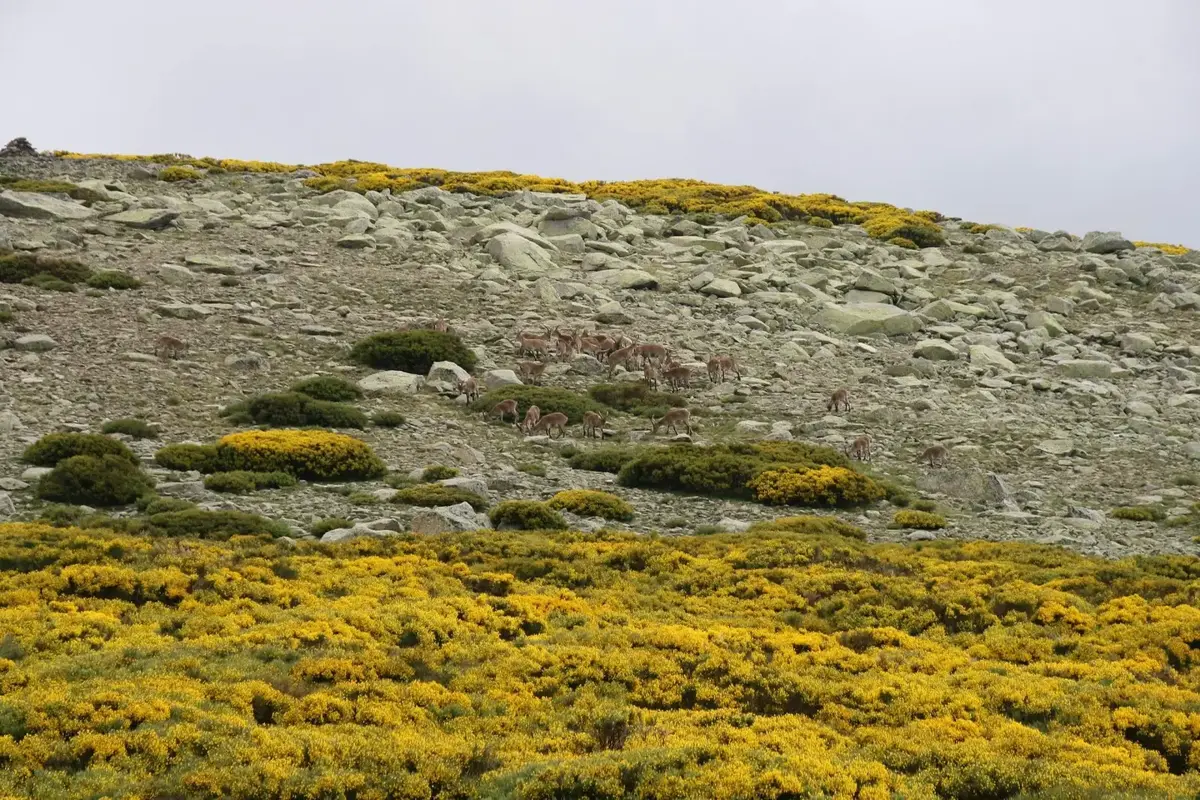
Peneda-Gerês is the outlier in Portugal hiking. This is a genuine wilderness reserve where trails are less frequently marked, terrain is more demanding, and the landscape feels ancient rather than scenic. The park protects granite peaks, dense oak forest, and stone villages where shepherds still move long-horned Cachena cattle along routes unchanged for centuries.
You walk past Roman milestones on paths that legionnaires used 2,000 years ago. Rivers run cold and clear through natural pools that reward a hot morning on the trail. Wild Garrano horses graze on high pasture above the treeline.
Navigation here is not the relaxed GPS-following experience of the Rota Vicentina or the Algarve. Trails in more remote sections can lose their markings; hikers report missing turns on less-traveled routes and adding an unplanned hour to their day. Download complete offline maps before entering the park.
The Mata da Albergaria Boardwalk is the exception — 1.5 miles (2.5 km) of flat walking through ancient oak forest alongside a river, suitable for all ages including young children. The more demanding trails require a car to reach their trailheads.
- Location: Northeast Portugal, approximately 90 minutes from Porto by car
- Best trails: Tahiti Waterfall, Sete Lagoas loop, Mata da Albergaria Boardwalk (family-friendly)
- Difficulty: Variable — easy boardwalk trails to unmarked mountain routes requiring navigation skills
- Best for: Hikers who prefer solitude and wilderness over scenic infrastructure
- Getting there: Car essential — no public transport to trailheads
Pro Tip: Skip the park’s main western gateway towns and drive 20 minutes into the interior toward trailheads near Soajo or Lindoso. Crowds disappear entirely and the granite plateaus above the villages offer the best long views in the park.
What are the best day hikes from Lisbon and Porto?
Both cities sit within 90 minutes of genuinely good trail country that most visitors flying in and out completely miss.
From Lisbon: Sintra-Cascais and Arrábida
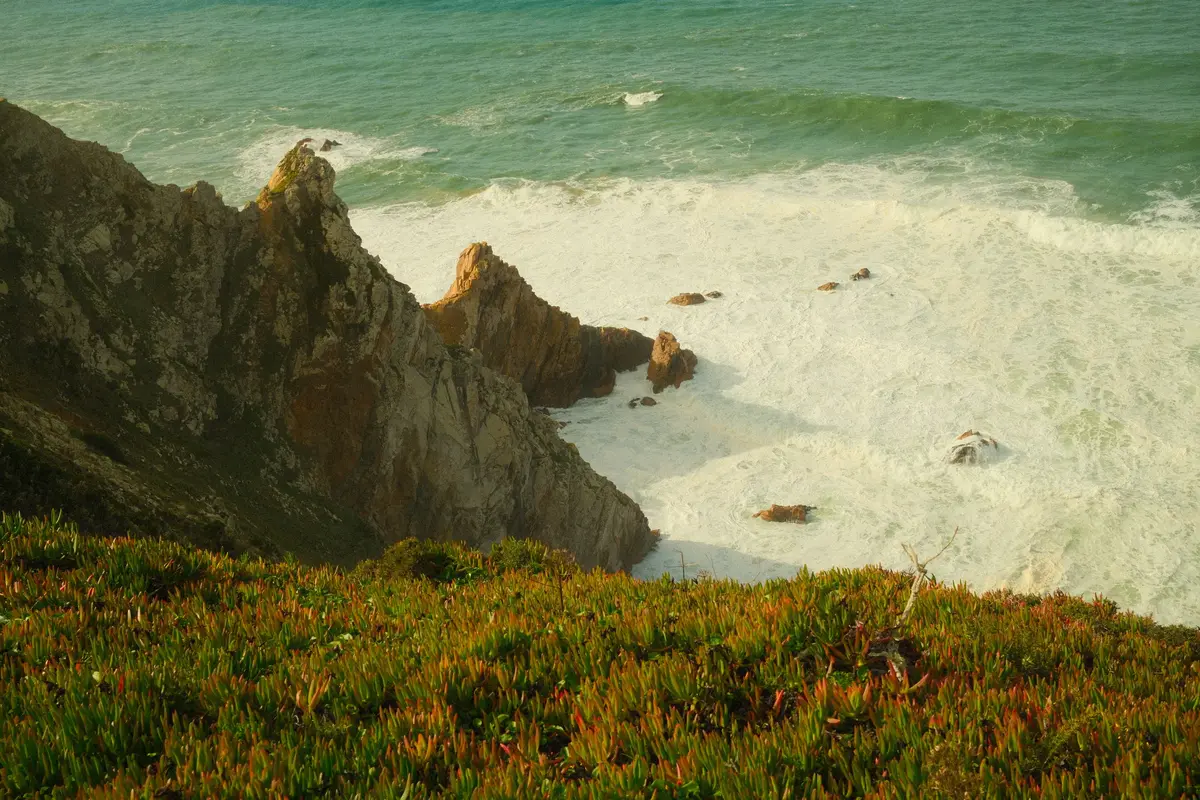
Sintra-Cascais Natural Park offers the most accessible Portugal hiking day trip from Lisbon. The coastal trail from Azenhas do Mar to Cabo da Roca covers 6.8 miles (10.9 km) of Atlantic-facing cliffs and bluffs — Cabo da Roca being the westernmost point of mainland Europe. The trail is well-marked and moderate.
Arrábida Natural Park, 45 minutes south of Lisbon, is the stronger option for hikers who have already done Sintra. Mediterranean vegetation — pine, cork, wild herbs — drops into turquoise coves that rival anything in the Algarve. Praia dos Galapinhos, accessible only on foot or by boat, ranks among Portugal’s cleanest beaches. The clifftop trails above it deliver wide oceanic views without the August crowds you would face farther south.
If you consult a Sintra Portugal travel guide, you will also find routes through the mystical forest trails above Pena Palace — shorter walks but with a completely different atmosphere.
From Porto: Peneda-Gerês and the Douro Valley
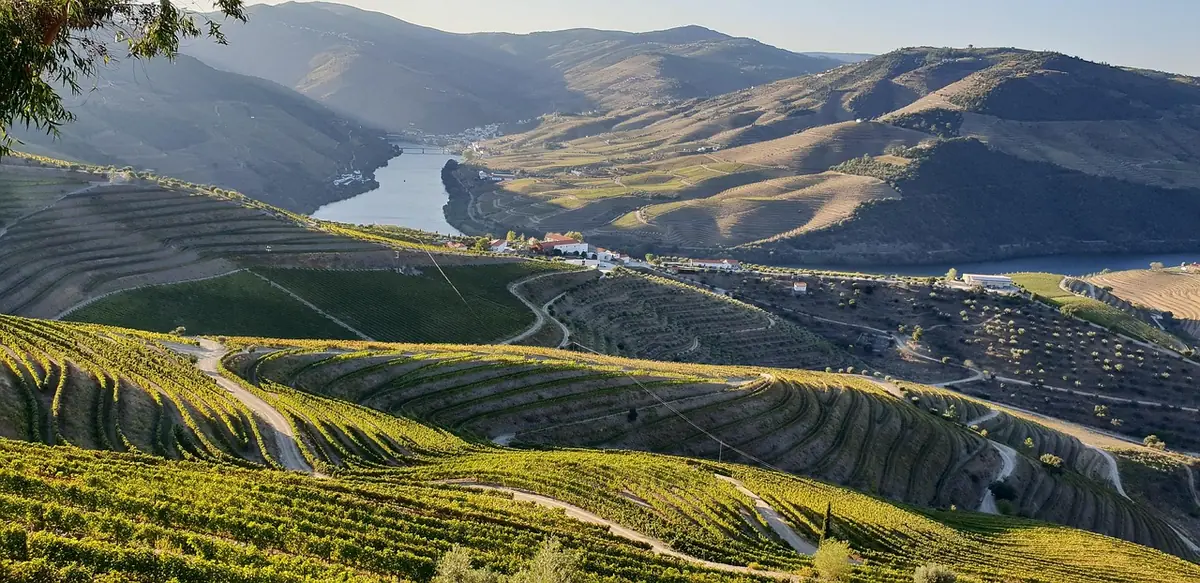
Peneda-Gerês makes a full day trip from Porto — 90 minutes each way by car, or manageable on a guided tour if you would rather skip the drive. The Tahiti Waterfall and Sete Lagoas routes are accessible without overnight stays. Alternatively, consult a Douro Valley Travel Guide for the terraced vineyard trails around Pinhão. These routes combine three to four hours of walking through UNESCO-listed landscape with a logical and reasonable conclusion: a quinta visit for Port wine tasting.
The Douro trails are not technically demanding. They are narrow, they switchback steeply through the terraces, and the sun exposure makes them moderate in warm weather. They are also some of the most visually compelling walks in the country.
Are there family-friendly hikes in Portugal?
Portugal hiking works well for families, but trail selection matters more here than anywhere else in Europe. The difference between a great family day out and a miserable slog is usually one wrong trail choice.
In Peneda-Gerês, the Mata da Albergaria Boardwalk is the benchmark for accessibility: flat, shaded, 1.5 miles (2.5 km) alongside a river, with no significant elevation change. Toddlers manage it without a carrier.
On Madeira, two levada trails stand out. The Vereda dos Balcões is a 0.9-mile (1.5 km) walk to a panoramic viewpoint of the island’s highest peaks — short enough to hold children’s attention, dramatic enough to justify the effort. The Levada das 25 Fontes leads through relatively flat terrain to a waterfall lagoon that works perfectly as a destination for children. Start before 8 a.m. if you go. Tour groups arrive by 9:30 a.m. and the trail experience degrades quickly.
For families based in Lisbon who want something immediate, Monsanto Forest Park sits inside the city with maintained paths, playgrounds, and picnic areas. A short bus ride from the center, no planning required. For family-specific recommendations beyond the trails — accommodation, activities, and logistics — the Portugal with Kids guide covers the full picture.
The bottom line on Portugal hiking
TL;DR: Spring and fall are the reliable windows for mainland Portugal hiking — 60–75°F (15–24°C), light crowds, manageable logistics. Madeira is fair game year-round. The Azores are best in summer for clear crater views. Bring trekking poles for the Fishermen’s Trail sand and Madeira’s staircases. Wear real grip shoes everywhere. Build your layering system around wind rather than cold — Portugal is consistently windier than first-time visitors expect, especially on the coastal routes.
The country’s variety is the real argument for coming. You can walk from volcanic crater edges to Roman stone paths to Atlantic sand dunes in the same week, in the same country, with genuinely different trail experiences at each stop. That is not something many places in Europe offer. For everything beyond the trails — regions, culture, logistics, and where to stay — the complete Portugal travel guide covers the full picture.
Have you hiked the Fishermen’s Trail, or tackled the PR1 traverse on Madeira? Which section left the biggest mark on you?