
Portugal’s history is etched into hilltop fortresses and painted onto royal palace walls. From the mist-wrapped mountains of Sintra to the sun-baked plains of the Alentejo, the country reads like an open-air history of medieval conflict.
I spent weeks on a dedicated Portugal castles road trip — navigating backroads and climbing ancient battlements across five regions. This guide covers what to see, what to skip, and how to plan it without wasting a day.
What do you need to plan a Portugal castles road trip?
Logistics will define your trip before you ever leave home. Portugal castles are spread across five distinct regions, from Lisbon’s suburbs to the Spanish border — and how you approach them determines whether you spend your time inside historic walls or stuck in Sintra traffic. Here’s what actually matters.
When is the best time to visit Portugal castles?
The shoulder seasons — May and late September through October — are consistently the best time to visit Portugal for castle hopping: manageable crowds, lower prices, and the kind of soft light that makes ancient stone look its best. High season runs late June through August, when tourist volume at Sintra’s palaces hits its peak. Visiting Pena Palace on a weekday in May is a completely different experience from a July weekend: the morning mist hangs in the trees, the light works for photos, and you are not fighting for a spot on the tourist bus.
Pro Tip: Weekday mornings in May are the sweet spot for Sintra. The 8:30am train from Rossio fills up fast — arrive at least 15 minutes early to guarantee a seat.
Do you need a car to reach Portugal’s castles?
Whether you rent a car depends entirely on your itinerary. A vehicle is essential for reaching remote strongholds across the vast Alentejo plains or for building a Knights Templar route through the central districts. In Lisbon and Porto, a rental becomes a liability — narrow, winding streets, aggressive traffic, and limited, expensive parking make it more trouble than it is worth.
The smart approach: use Train Travel in Portugal to move efficiently between major hubs, then pick up a rental from those hubs for countryside explorations.
US travelers: a valid US driver’s license covers you in Portugal for up to 185 days. An International Driving Permit is not legally required by Portuguese law, though some rental agencies may ask for one at the counter — getting one from AAA before you leave ($20) removes any friction. The vast majority of rental cars here have manual transmission; book an automatic well in advance if you need one, and expect to pay a premium.
Is the Lisboa Card worth it for castle hopping?
Yes — if your focus is Lisbon and the day trips radiating from it. You can read a full Lisbon Card Review to see exactly what’s covered, but the headline benefits are free, unlimited public transport and free admission to São Jorge Castle, which normally costs €15 per adult. The card also gets you 10% off Pena Palace tickets and 10% off Quinta da Regaleira.
- 24-hour card: €31
- 48-hour card: €51
- 72-hour card: €62
Once you factor in entry fees, transport, and included attractions, the 24-hour card pays for itself within a single morning.
1. Pena Palace, Sintra — the palace that still delivers
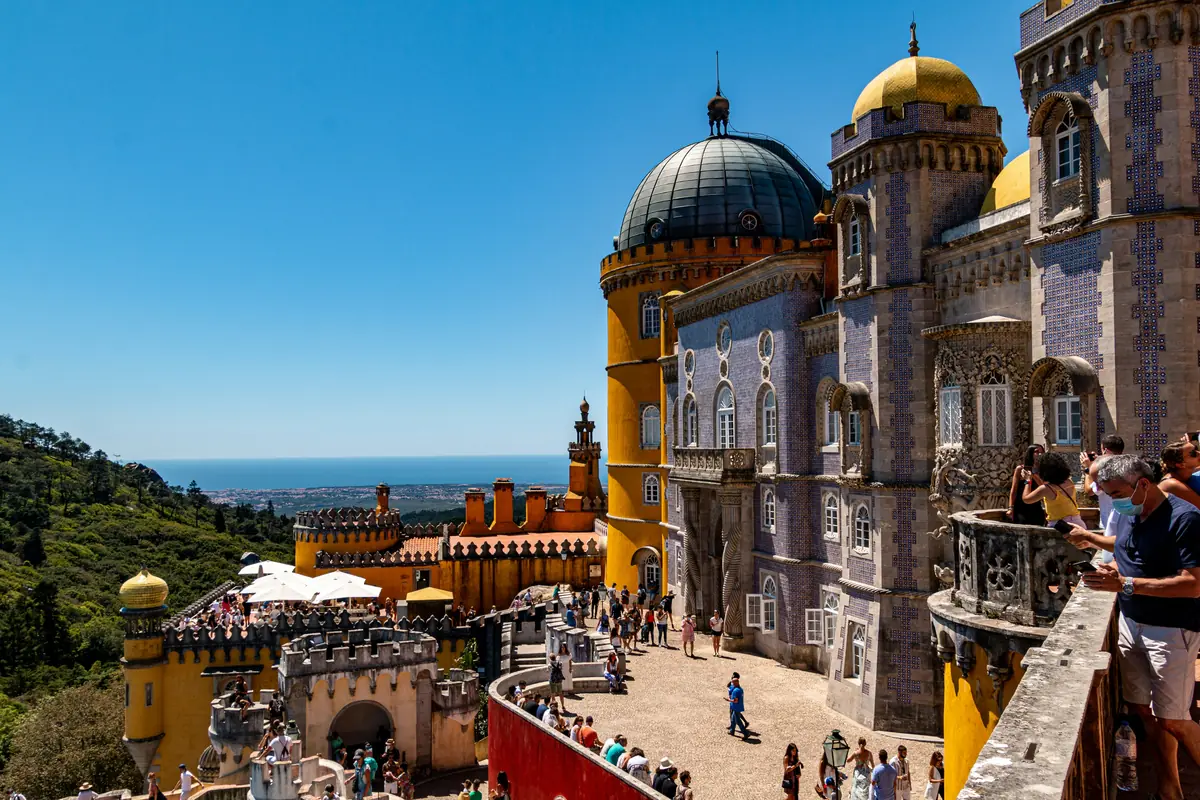
Perched high above the Serra de Sintra, Pena Palace is the most-photographed Portugal castle for good reason. The red, yellow, and purple facades — a collision of Gothic, Moorish, and Manueline motifs — look exactly like the photos. That is also the problem: every other visitor has seen those same photos, and the summer crowds make the interior feel like a theme park queue.
The palace’s origins trace to a medieval chapel dedicated to Our Lady of Pena, later expanded into a monastery that fell into ruin after the 1755 earthquake. In 1836, Ferdinand of Saxe-Coburg-Gotha — the German prince who married Queen Maria II — acquired the ruins and transformed them into a fantastical summer palace. As a UNESCO World Heritage Site, it is rightfully counted as one of the Seven Wonders of Portugal.
Is the interior of Pena Palace worth the ticket price?
Going inside is worth it only if you appreciate decorative arts and can secure the first time slot of the day. Peak-hour entry is a long, slow, single-file shuffle through furnished royal apartments. The case for going: history enthusiasts genuinely love the preserved royal quarters, the opulent ballroom, and the private chambers. The case against: if you are short on time or patience, the park alone is excellent value.
Book your Pena Palace Tickets online several weeks in advance for a specific date and time slot. Arrive at the main park entrance at least 45 minutes before your entry time — the uphill walk from the park gate to the palace entrance takes a full 30 minutes, not the five minutes suggested on some booking sites. Miss your slot and your ticket is forfeit with no refund.
Pro Tip: If early slots are sold out, buy the Park Only ticket and explore the 210-acre (85-hectare) grounds. The Chalet of the Countess of Edla alone warrants 45 minutes, and the park’s viewpoints put the palace facade in full frame without the queue.
- Location: Serra de Sintra, 40 minutes from Lisbon by train
- Cost: Palace + Park €20 adults; Park Only €10
- Best for: First-time visitors, architecture enthusiasts, families with older kids
- Time needed: 2 hours minimum; 4–5 hours for the full park experience
- Getting there: CP train from Rossio station (40-minute journey), then Scotturb Bus #434 up the hill
2. São Jorge Castle, Lisbon — the best sunset spot in the city
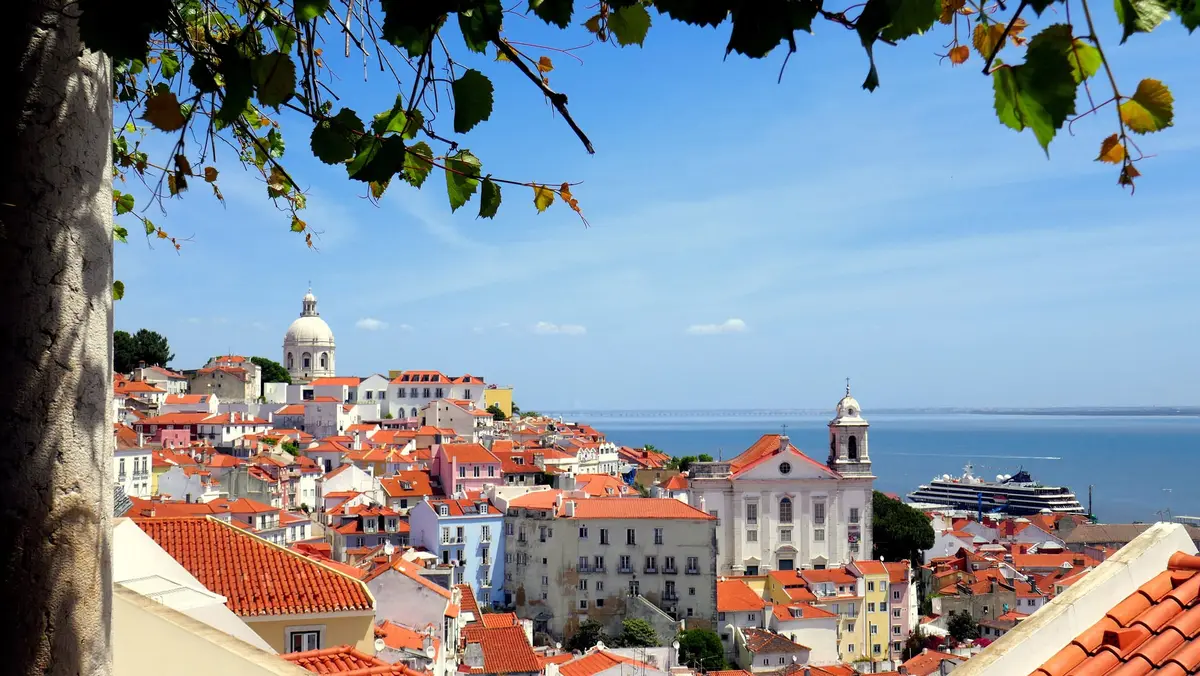
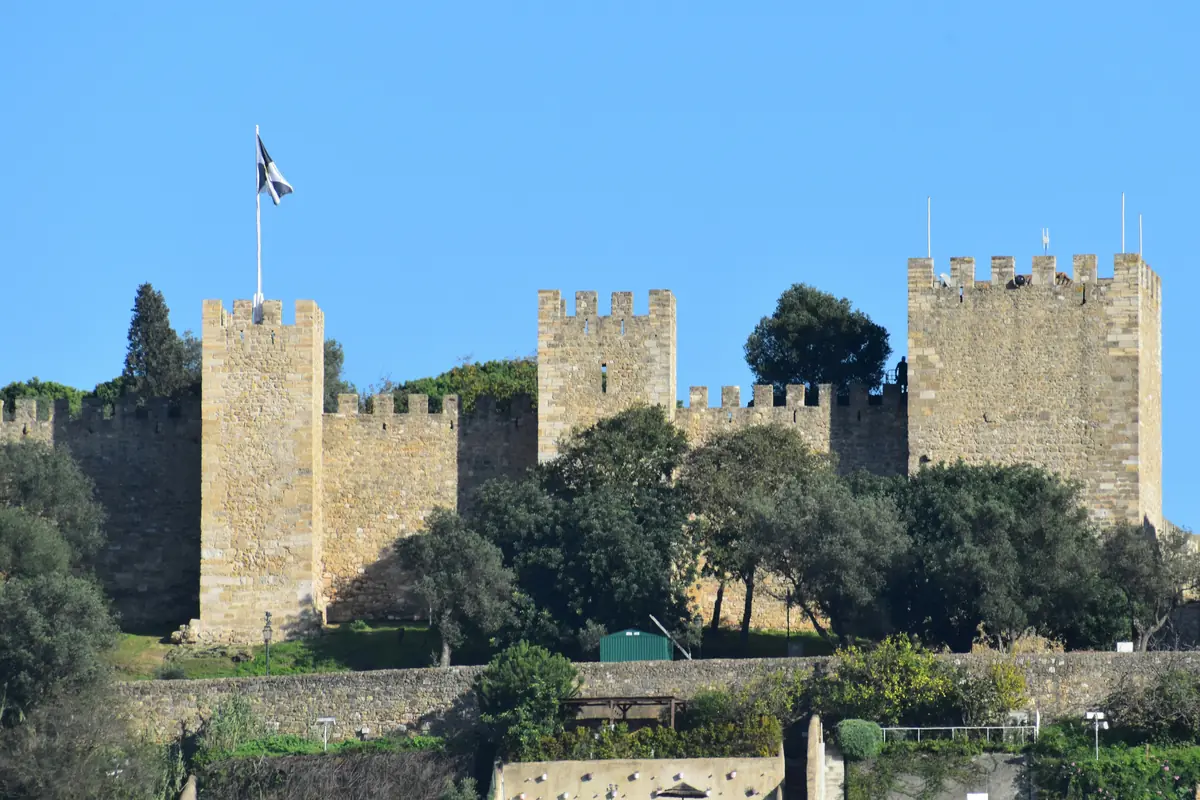
São Jorge is less a fairytale palace and more a working fortress — thick walls, eleven preserved towers, and views across Lisbon‘s terracotta rooftops straight to the Tagus River. The hilltop has been fortified since at least the 2nd century BC. The Moors expanded it into a major citadel in the 11th century; its most famous chapter came in 1147 when Portugal’s first king, Afonso Henriques, captured it during the dramatic Siege of Lisbon, a turning point in the Christian Reconquista.
The real joy here is freedom. On my last visit, I spent an entire afternoon wandering the ramparts and climbing all eleven towers, with resident peacocks strutting through the courtyards below. Do not miss the Camera Obscura in the Ulysses Tower — this optical device projects a live, 360-degree view of the city onto a large concave surface, and it is included in the standard admission price.
Pro Tip: Go about two hours before closing. Tour bus crowds thin out by late afternoon, which lets you claim a prime spot on the western battlements. Watching the light drop over the Alfama district from up there is a scene worth planning around.
- Location: Rua de Santa Cruz do Castelo, Alfama, Lisbon
- Cost: €15 adults; free with Lisboa Card
- Best for: View-chasers, history buffs, photography
- Time needed: 2–3 hours
- Hours: March–October 9am–9pm; November–February 9am–6pm
- Getting there: Historic Tram 28 or a steep walk through the Alfama neighborhood
3. Óbidos — an entire medieval walled town, not just a castle
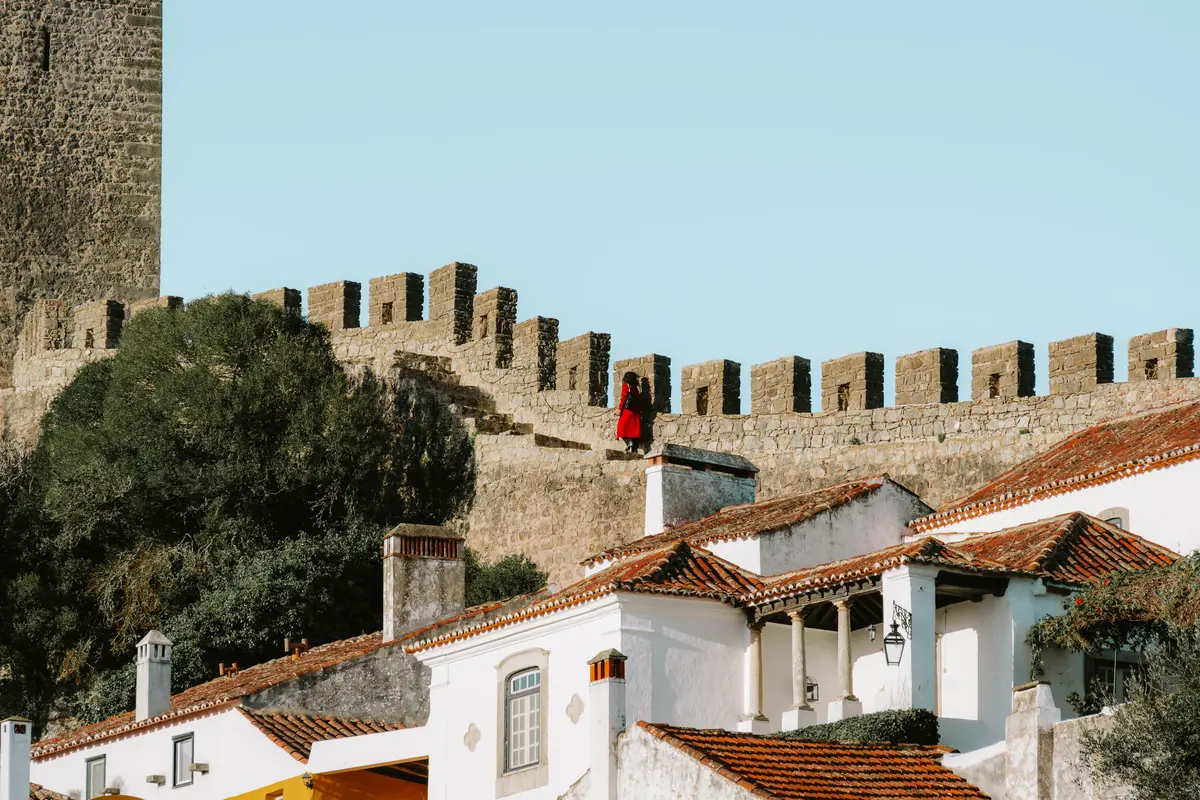
To visit Obidos Portugal is to step into an entire preserved medieval town, not just a monument. The experience starts the moment you pass through the Porta da Vila — an ornate main gate lined with 18th-century azulejo tiles — into a labyrinth of cobblestone streets and whitewashed houses draped in bougainvillea.
The site traces its origins to a Roman settlement, though the fortress we see today was primarily established by the Moors. After Portuguese forces took control in 1148, it gained a romantic new identity: in 1282, King Dinis gifted the entire town to his new bride, Queen Isabel of Aragon, establishing it as the Town of the Queens.
What is it like to walk the walls at Óbidos?
The 0.9-mile (1.5 km) circuit along the top of the 42-foot-high (13 m) walls that encircle the town offers sweeping views over the surrounding countryside. Come prepared: the path is heavily worn from centuries of foot traffic, with no handrails for most of its length. Anyone with a fear of heights will find stretches genuinely uncomfortable.
Pro Tip: Arrive before 10am to beat the tour buses. Better yet, stay overnight at the Pousada hotel inside the castle walls — the town after dark, once day-trippers have gone, is a completely different place.
- Location: Óbidos, Central Portugal
- Cost: Town and walls are free
- Best for: History lovers, couples, overnight stays
- Time needed: Half a day minimum; full day if staying overnight
- Getting there: Direct bus from Lisbon, approximately one hour
Before you leave, grab a shot of Ginja — local sour cherry liqueur served in an edible chocolate cup.
Portugal’s castles at a glance
| Castle | Location | Best for | Must-see | Crowd level |
|---|---|---|---|---|
| Pena Palace | Sintra | Fairytale photos | Colorful terraces | Very high |
| São Jorge Castle | Lisbon | Panoramic views | Sunset ramparts | High |
| Óbidos Castle | Central | Medieval experience | Town wall walk | High |
| Almourol Castle | Santarém | Romance | Boat approach | Moderate |
| Guimarães Castle | North | National history | Birthplace of Portugal | Moderate |
| Silves Castle | Algarve | Moorish architecture | Red sandstone walls | Moderate–low |
| Marvão Castle | Alentejo | Epic views | 360-degree panoramas | Low |
Which Portugal castles go beyond the obvious three?
Sintra, Lisbon, and Óbidos absorb 90% of the tourist traffic. The sites below have fewer visitors, lower prices, and in several cases, more architectural substance than the headliners. If you have more than three days in the country, build your route outward from here.
Sintra: two sites worth adding to your day
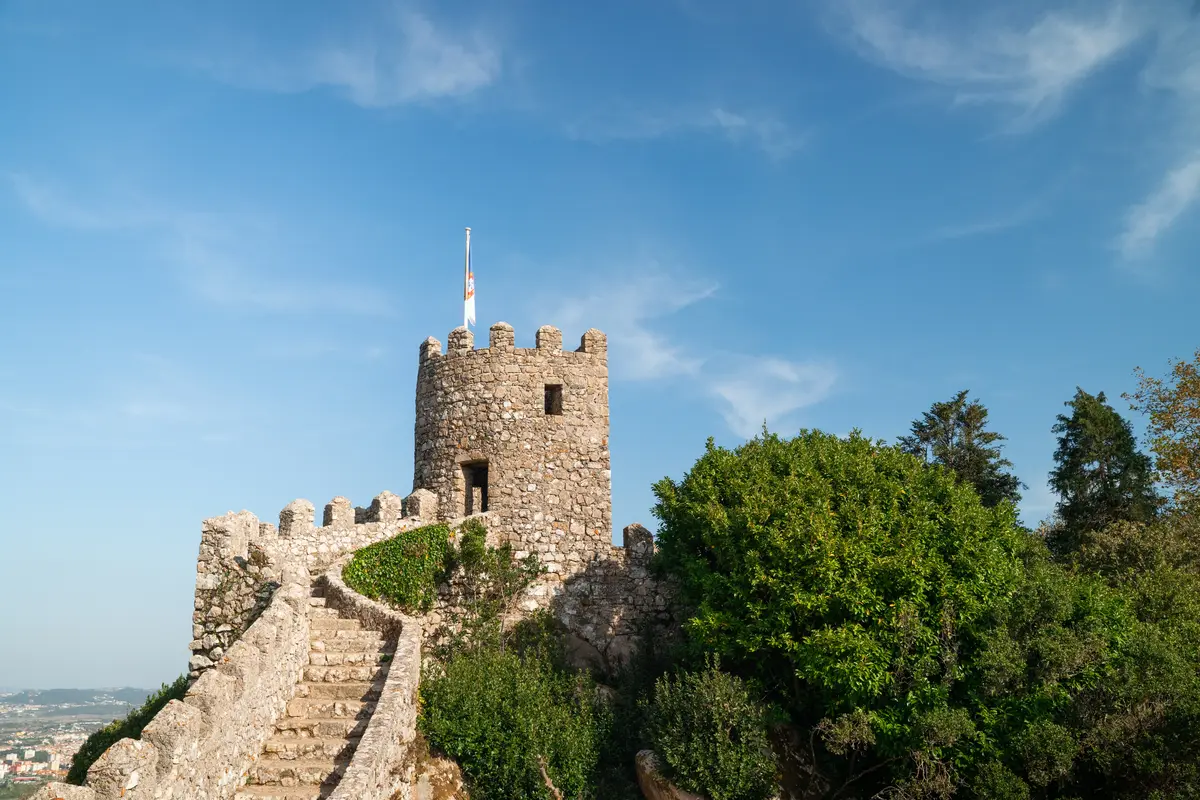
Castle of the Moors (Castelo dos Mouros) is the oldest site in the area — a raw, atmospheric ruin whose stone walls snake along a mountain ridge like a miniature version of the Great Wall. Dating to the 8th century, these fortifications were built purely for defense. The climb to the top battlements delivers the most commanding views in the Sintra region: looking straight down over treetops to Pena Palace below, with the Atlantic visible on clear days.
- Location: Serra de Sintra, a short walk from Pena Palace
- Cost: ~€8 adults; Lisboa Card holders receive a discount
- Best for: Walkers, photographers, anyone who prefers ruins over restored rooms
- Time needed: 1.5–2 hours
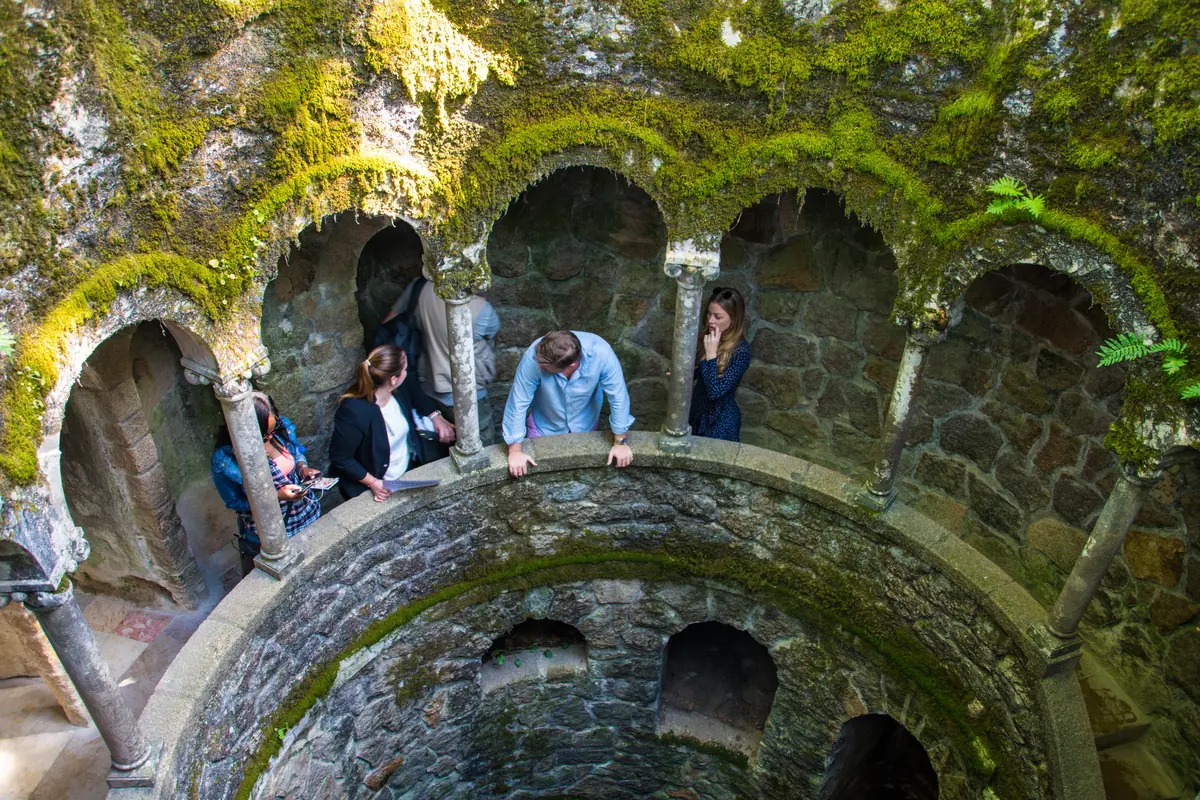
Quinta da Regaleira is less a traditional fortress and more a mystical private estate, filled with esoteric symbols referencing alchemy, the Knights Templar, and Freemasonry. The star attraction is the Initiation Well — a subterranean tower that plunges 88 feet (27 m) into the earth via a damp, moss-covered spiral staircase. The gardens above are a puzzle of grottoes, hidden tunnels, waterfalls, and ornate fountains.
- Location: Rua Barbosa du Bocage, Sintra
- Cost: ~€12 adults; 10% off with Lisboa Card
- Best for: Architecture enthusiasts, families, those who find standard palaces dull
- Time needed: 2 hours
Northern Portugal — the birthplace of a nation
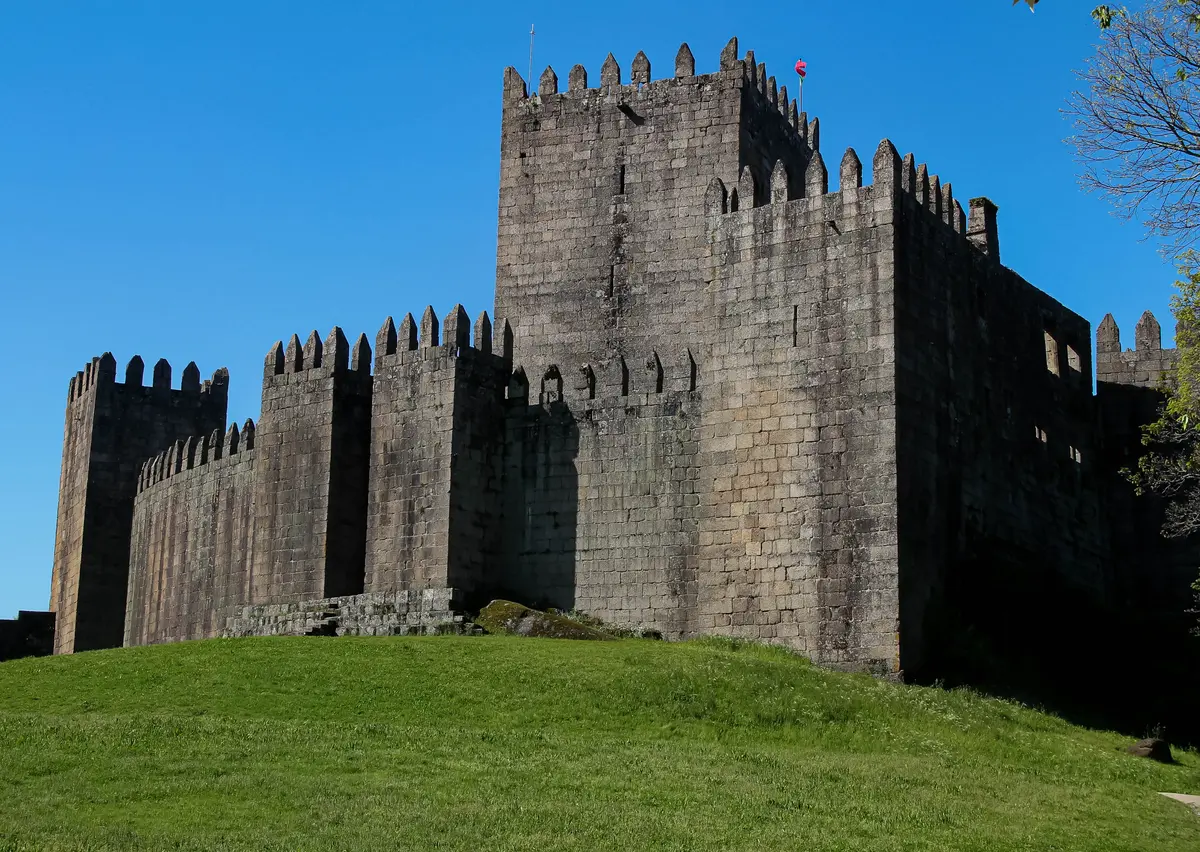
Guimarães Castle (Castelo de Guimarães) is universally known as the Birthplace of Portugal, and it earns that designation. The fortress is widely believed to be the birthplace of the nation’s first king, Afonso Henriques. The nearby Battle of São Mamede in 1128 was the turning point in founding the independent kingdom. The architecture is textbook medieval military design: a massive central keep protected by a shield-shaped outer wall fortified with eight rectangular towers.
- Location: Largo Martins Sarmento, Guimarães
- Best for: National history, architecture enthusiasts, first-time visitors to northern Portugal
- Time needed: 1.5–2 hours
Bragança Castle (Castelo de Bragança) stands in the tranquil far northeast and ranks among the most complete medieval fortifications in the country. Its massive walls and keep are genuinely impressive at ground level. What makes it unusual is the Domus Municipalis resting within its grounds — a strange, pentagonal building that is the only surviving example of Romanesque civil architecture in all of Portugal.
- Location: Cidadela de Bragança, Bragança
- Best for: Architecture enthusiasts, travelers who want the road less traveled
- Time needed: 1.5–2 hours
Central Portugal — Knights Templar country
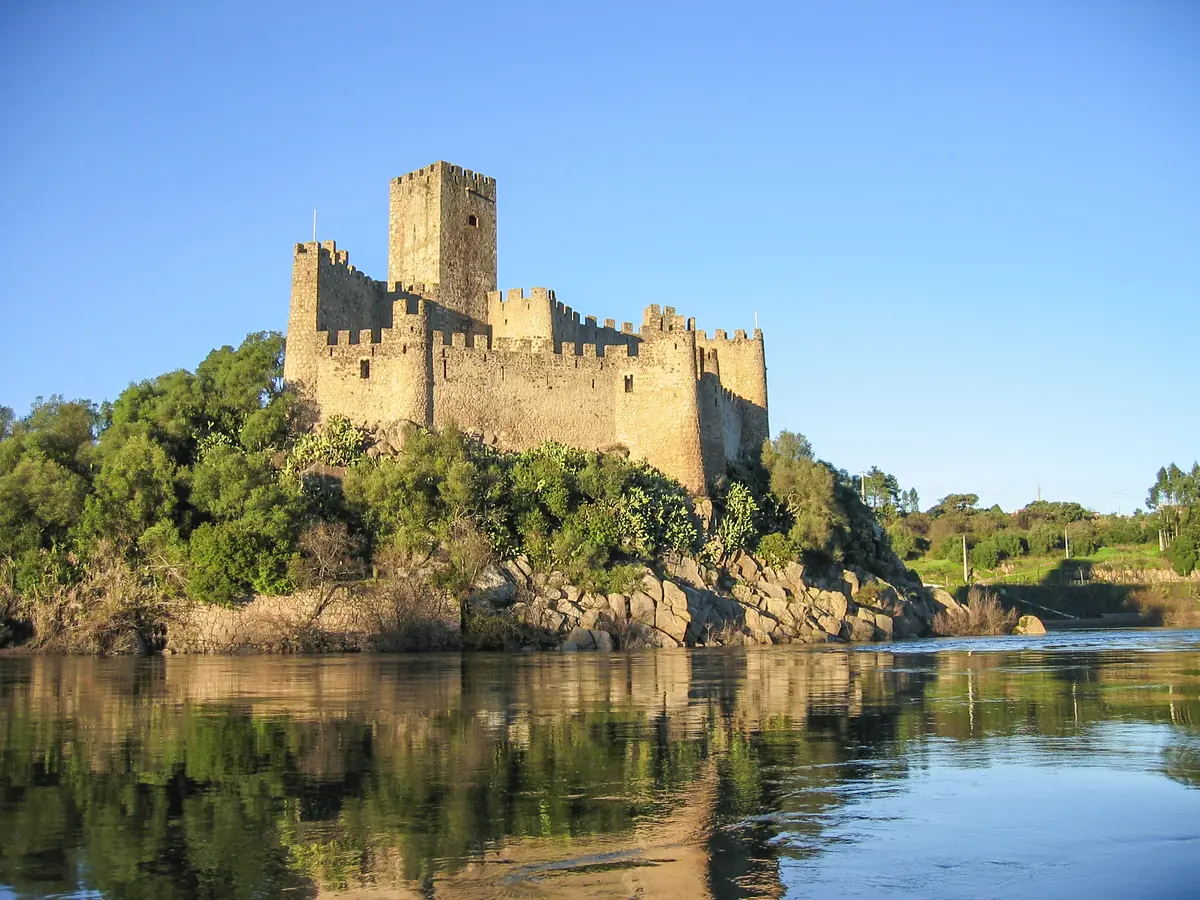
Almourol Castle (Castelo de Almourol) is the most romantic military structure in the country, and the approach is the whole point. The 12th-century fortress rises from a tiny granite island sitting in the middle of the Tagus River — the only way to reach it is a short boat ride to the islet. Rebuilt in 1171 by Gualdim Pais, Grand Master of the Knights Templar, it served as a key defensive line during the Reconquista. Arriving by boat at sunset, with the tower reflecting off the water, is genuinely hard to forget.
- Location: Tancos, Santarém district — island in the Tagus River
- Best for: Couples, history buffs, photographers
- Time needed: 1.5 hours including the boat trip
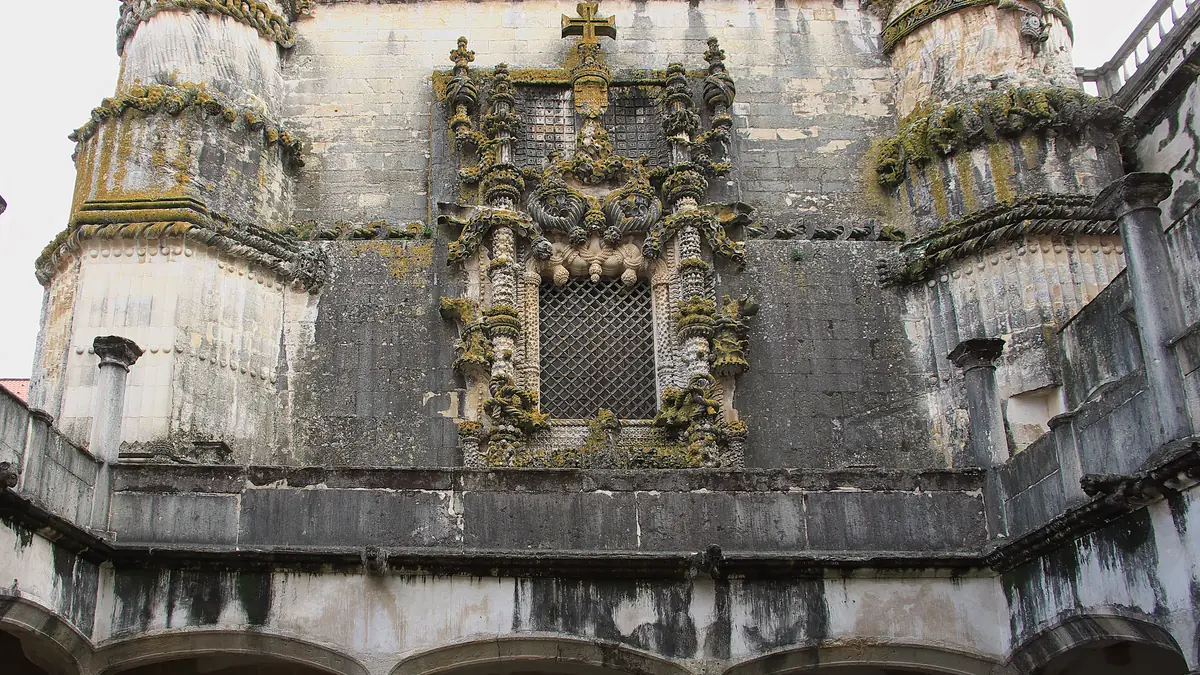
Castle of Tomar (Castelo de Tomar) is far more than a defensive wall. Located in Tomar Portugal, it is the monumental headquarters of the Knights Templar and later the Order of Christ. The vast UNESCO World Heritage complex is dominated by the Convent of Christ. The centerpiece is the 12th-century Charola — a 16-sided rotunda that served as the Templars’ private oratory, modeled after the Church of the Holy Sepulchre in Jerusalem. Budget a full half-day here.
- Location: Estrada de Santa Iria, Tomar
- Best for: Medieval history, religious architecture, Templar enthusiasts
- Time needed: 3–4 hours
The Alentejo — hilltop sentinels near Spain
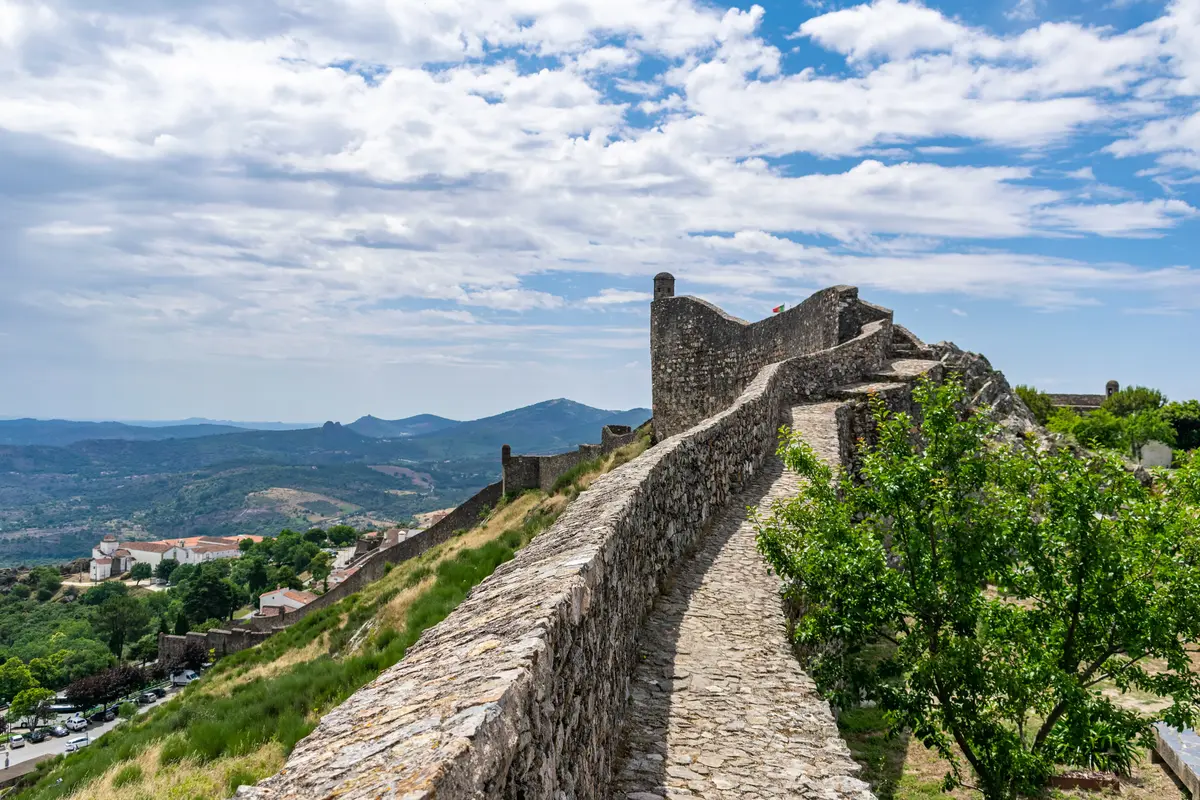
Marvão Castle (Castelo de Marvão) sits atop a massive granite escarpment near the Spanish border. From the well-preserved battlements, you are rewarded with 360-degree panoramas over the rolling Alentejo plains, stretching uninterrupted into Spain. In the early morning, thick mist often curls around the valley floor below the granite walls — the kind of scene that makes a 6am start worth it.
- Location: Castelo de Marvão, Marvão village, Alentejo
- Best for: Hikers, photographers, those chasing genuinely low-crowd experiences
- Time needed: 2 hours
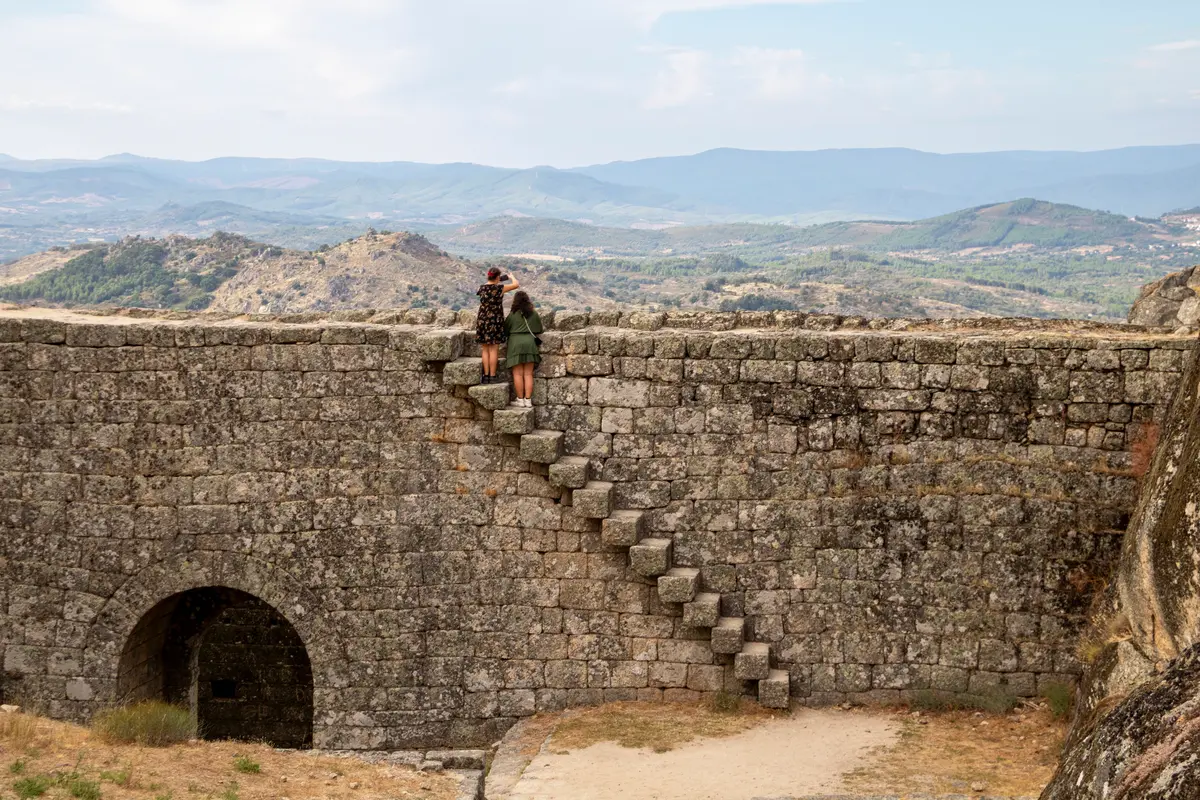
Monsanto Castle (Castelo de Monsanto) is one of the most distinctive historical sites in Portugal. The fortress of Monsanto Portugal was built around, between, and on top of colossal granite boulders — the walls grow directly out of the rock itself. The village below was once voted the most Portuguese village in the country. You will find local houses wedged under giant stones, with the castle growing out of the ridge above them.
- Location: Monsanto, Castelo Branco district
- Best for: Architecture enthusiasts, photographers, unusual experiences
- Time needed: 2 hours
The Algarve — Silves and its red sandstone walls
Silves Castle (Castelo de Silves) is the best-preserved example of Islamic military architecture in southern Portugal and the largest historical stronghold in the Algarve. When Silves operated as the prosperous capital of the Moorish Kingdom, this structure was its center of power. The red sandstone walls glow in the late afternoon sun, and the eleven fortified towers stand as a clear record of the region’s complex Moorish past.
- Location: Rua do Castelo, Silves, Algarve
- Best for: Anyone already in the Algarve, Moorish architecture enthusiasts
- Time needed: 1.5–2 hours
How should you plan your Portugal castles itinerary?
The two routes below cover the most visited sites (3-day) and the full historical heartland (7-day). Both assume Lisbon as a base for at least the first two nights.
The 3-day Lisbon and Sintra castle blitz
Day 1 — Heart of Lisbon: Spend the morning at São Jorge, buying tickets online to skip the queue at the castle ticket office. In the afternoon, get purposely lost in the narrow streets of Alfama that tumble down from the castle walls.
Day 2 — The Sintra day: Take an early train from Rossio straight to Sintra. Head directly to Pena Palace for your pre-booked first time slot. Afterward, take the short walk to the Castle of the Moors and climb its ancient walls. Finish the afternoon in the grounds of Quinta da Regaleira.
Day 3 — Medieval day trip: Take a morning bus to Óbidos. Walk the walls, explore cobblestone streets, and return to Lisbon in the late afternoon.
The 7-day “Knights and Nobles” road trip
This route is designed for a comprehensive Portugal 7 days vacation through the historical heartland.
Days 1–2 — Lisbon base: Arrive in the city, settle in, and visit São Jorge. Pick up your rental car at the end of Day 2 to prepare for regional explorations.
Day 3 — Óbidos and Tomar: Drive north early to beat the inbound crowds at Óbidos. Continue inland to the heart of Templar country for an afternoon at the Convent of Christ.
Day 4 — The Templar trail: Dedicate the full day to exploring the vast complex at Tomar. Drive to nearby Almourol in the late afternoon for the boat trip and a sunset view from the islet.
Day 5 — Journey north: Enjoy the scenic drive through the central districts on your Portugal road trip itinerary, heading toward the northern strongholds.
Day 6 — Birthplace of a nation: Spend the day exploring the Palace of the Dukes of Braganza and the well-preserved medieval town center of Guimarães.
Day 7 — Departure: Take the relatively short drive to Porto’s international airport to drop the car and catch your flight home.
The bottom line
After weeks on the road between these walls, here is the honest summary: Sintra will impress you and exhaust you in equal measure. The further you travel from Lisbon — toward Marvão, Bragança, Almourol — the fewer crowds you face and the more time you spend actually looking at the stones rather than other visitors.
The one contrarian recommendation worth repeating: if you are short on time at Sintra, buy the Pena Palace park-only ticket and skip the interior entirely. You get the same remarkable facade shots, 200 acres of grounds, and the Chalet of the Countess of Edla — without the single-file shuffle through furnished rooms.
TL;DR: Book Pena Palace and São Jorge weeks in advance. Almourol and Marvão are the best Portugal castles almost nobody plans for. The Alentejo castles are worth building a full road trip around, not just a day trip.
For more on planning the broader trip, check out our Portugal travel guide.
Which castle on this list surprised you most — and which one are you planning to skip?