Beirut for history buffs is not a polished museum tour — it is a confrontation. A single street corner here can reveal a Roman column, a Mamluk mosque, a French Mandate mansion, and the bullet-scarred walls of the Civil War, all within a few paces of each other. No velvet ropes. No sanitized plaques. Just raw, layered, contested history erupting through the concrete.
From the ancient Phoenician port of Berytus to the devastation of ongoing conflict, this capital offers a vertical history that few cities on earth can match. Ancient ruins are not cordoned off in sterile environments but are woven into daily life, making the experience of exploring Beirut an immersion into resilience and survival.
Why does Beirut stand out for history lovers?
Beirut operates as a living archaeological site where history is not just preserved — it is actively argued over, rebuilt, and reinterpreted by its inhabitants. Roman bathhouses host concerts. Crusader-era foundations anchor active markets. Civil War ruins stand as silent markers among waterfront developments. For history travelers, this combination of deep antiquity and visible modern trauma is unmatched.
The city’s history stacks vertically like a layer cake, with each civilization building on top of the last. The modern street level sits meters above ancient thoroughfares, creating a subterranean narrative that erupts into the present through construction sites and archaeological digs. This is not passive monument-gazing; it is active archaeological interpretation where you become part of the ongoing story.
What sets Beirut apart is its refusal to sanitize history. The National Museum’s artifacts survived the Civil War encased in concrete while militias fought in the building above. Beit Beirut preserves bullet holes and sniper graffiti rather than erasing them. The towering Holiday Inn ruin looms over downtown as a constant reminder of unfinished business. This rawness creates an urgency you will not find anywhere else.
You need to come prepared for complexity, though. The economic situation means you will need crisp USD cash, and the security situation for American tourists demands constant monitoring — especially given the active conflict between Israel and Hezbollah. But for any history enthusiast willing to navigate these realities, Beirut rewards you with one of the world’s most compelling historical narratives.
Pro Tip: Before booking any trip to Lebanon, check the U.S. State Department travel advisory (currently rated Level 4: Do Not Travel) and your home country’s equivalent. The security landscape changes rapidly. If you do travel, register with your embassy and maintain a departure plan at all times.
What makes the National Museum of Beirut so significant?
The National Museum is the most powerful symbol of Lebanon’s cultural survival, and its story is as gripping as its collection. Located directly on the former Green Line that divided East and West Beirut during the Civil War, the museum building itself became a combatant — occupied by militias, its walls pierced for sniper fire, its basement flooded.
What makes this museum extraordinary is how it survived. Under curator Emir Maurice Chehab’s leadership, the staff executed a desperate preservation plan. Small artifacts were hidden behind false basement walls, while massive pieces like sarcophagi and Roman mosaics were literally encased in concrete tombs. For fifteen years, these treasures remained entombed while the building burned around them.
The Sarcophagus of Ahiram and the Phoenician collection
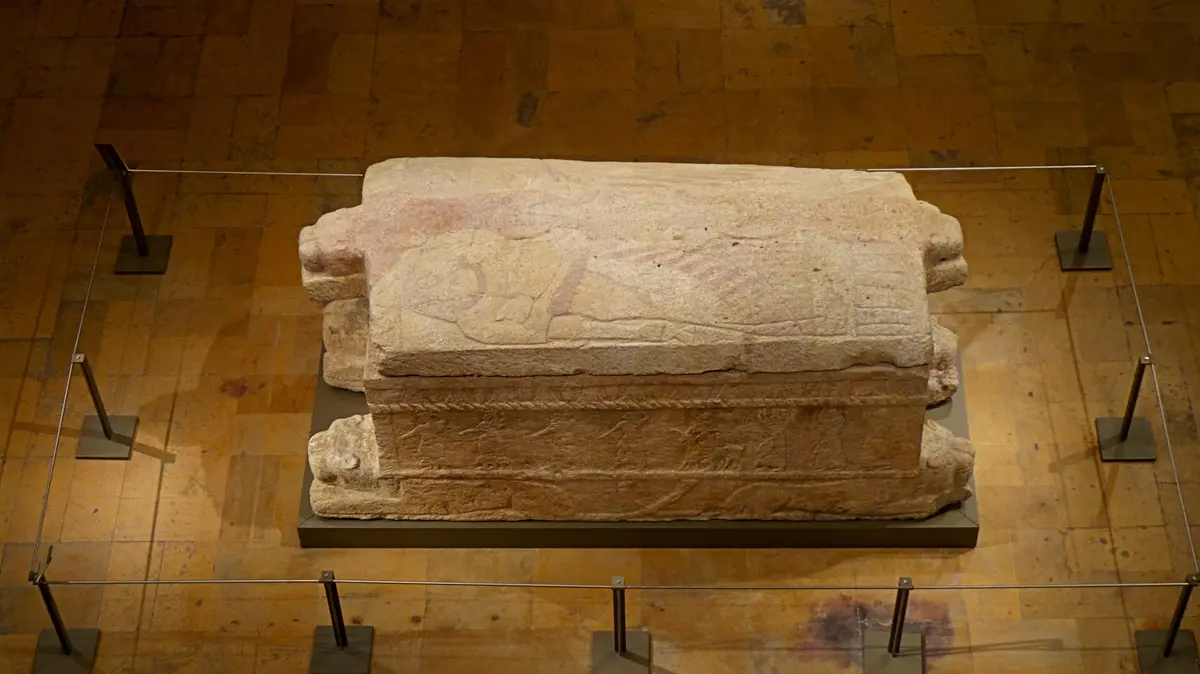
The star of the collection is the Sarcophagus of Ahiram from Byblos, dating to the 10th century BC. This limestone sarcophagus bears the oldest known inscription of the Phoenician alphabet — essentially the genesis of modern Western writing systems. You are looking at the ancestor of the letters you are reading right now.
The basement retains an atmospheric, tomb-like quality perfect for the anthropoid sarcophagi collection from Sidon (4th century BC). These marble sarcophagi show a fusion of Egyptian and Greek artistic styles, reflecting ancient Phoenicia’s cosmopolitan nature.
The Roman funerary collection
The reconstructed Tomb of Tyre, complete with frescoes depicting Greek mythology, offers an immersive look at funerary practices and the religious syncretism of the Roman era. The museum does an excellent job of contextualizing artifacts within Lebanon’s broader history, with clear English labels and well-organized exhibitions. On my last visit, the ground floor’s 83 large objects — displayed under soft lighting — could hold you for well over an hour before you even reach the upper galleries.
- Location: Museum Street (Abdallah El Yafi Avenue), Beirut
- Hours: Tuesday–Sunday, 9:00 AM–5:00 PM (closed Mondays)
- Cost: approximately $1–5 USD (the LBP entrance fee is negligible at current exchange rates)
- Best for: archaeology enthusiasts, anyone interested in Phoenician civilization
- Time needed: 2–3 hours for a thorough visit
Pro Tip: Arrive when the museum opens at 9 AM to avoid tour groups and get the best natural light on the mosaics. Borrow one of the complimentary iPads at the front desk (leave your passport) — scanning artifact labels gives you a commentary that replaces a guide. Bring your own headphones.
Why is Beit Beirut unlike any museum you have visited?
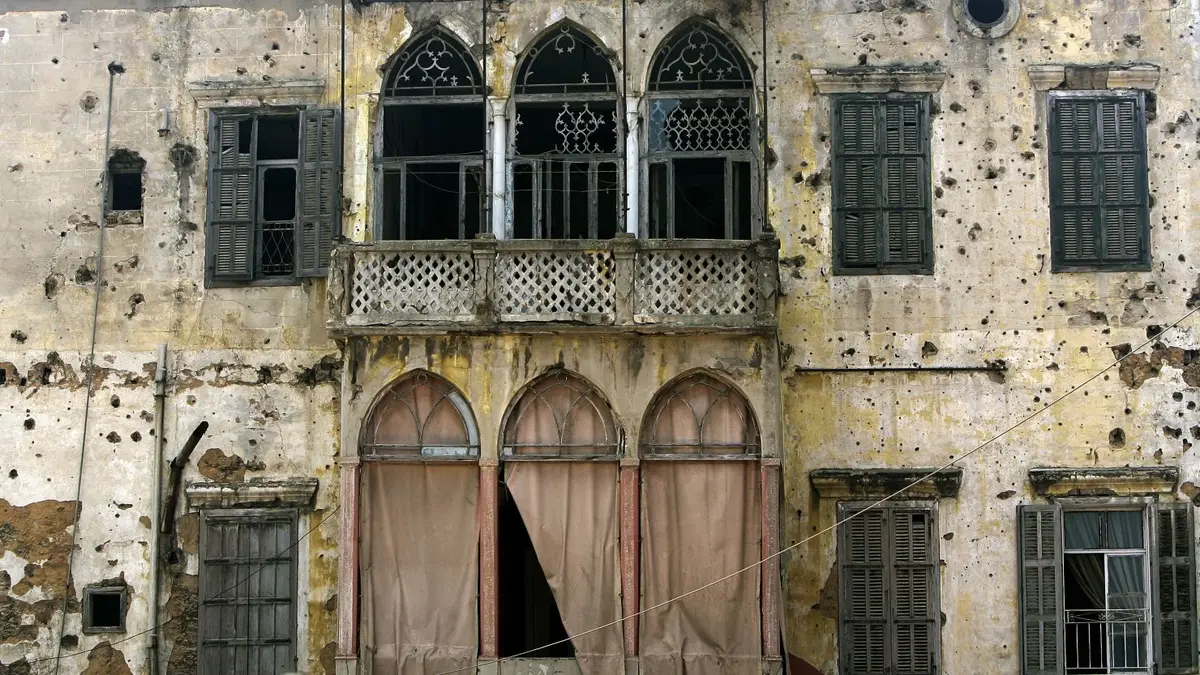
Beit Beirut represents the raw, unhealed memory of Lebanon’s Civil War — and it is unlike any museum you have ever visited. Built in 1924 by architect Youssef Aftimus as a neo-Ottoman mansion for the Barakat family, its location on the Sodeco crossroads placed it directly on the Green Line dividing the city. This makes it an essential stop among Beirut’s most important historical sites.
What makes Beit Beirut unique is that it was not restored in the traditional sense. Architect Youssef Haidar and activist Mona El Hallak fought to preserve it as a ruin. The building was stabilized, but the bullet holes, sandbags, and snipers’ graffiti remain intact. The original architecture — designed for transparency and light with a central void — became perversely perfect for urban warfare, giving snipers commanding views of multiple streets while remaining protected.
You can stand in these “killing rooms” and see the city through the same sightlines used by militiamen during the war. The preserved graffiti offers a haunting glimpse into the combatants’ mindset. It is chilling, powerful, and brutally honest — a monument to the terrifying efficiency of urban combat and the fragility of civilian life. I spent forty minutes just standing on the upper floors, tracing the sniper angles through the window frames, and it was one of the most unsettling experiences of any trip I have taken.
- Location: Sodeco, Damascus Street, Beirut
- Hours: check locally before visiting; hours can be irregular, often open on weekends
- Cost: free or minimal donation
- Best for: modern conflict historians, architecture enthusiasts, dark tourism travelers
- Time needed: 1–1.5 hours
Pro Tip: Combine this with the National Museum — they are about a 10-minute walk apart, and together they tell the complete narrative arc from ancient Beirut to the Civil War.
Which other Beirut museums should history travelers visit?
While the National Museum takes center stage, several other institutions fill critical gaps for anyone exploring Beirut for history buffs.
The Sursock Museum
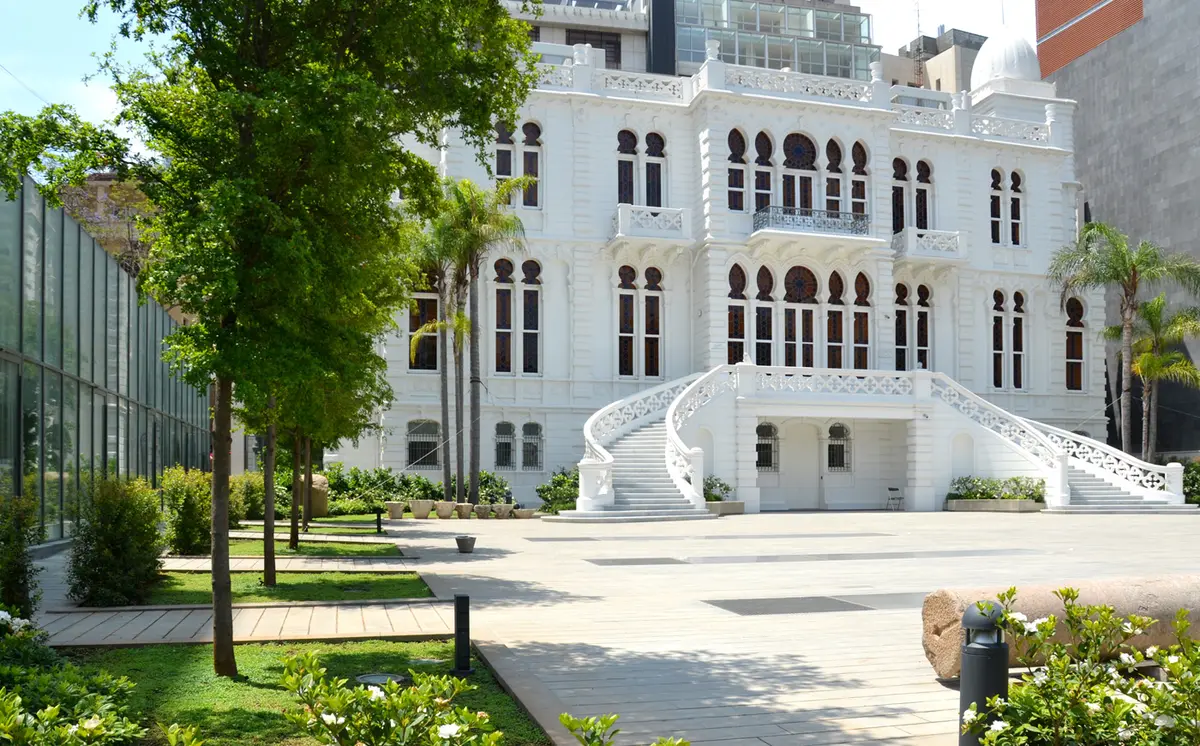
Housed in a Venetian-Ottoman villa built in 1912 by aristocrat Nicolas Ibrahim Sursock, this museum is a window into Beirut’s 19th-century high society. The museum was devastated by the Beirut port explosion — its stained glass shattered, its facade wrecked. After a $2.4 million restoration backed by UNESCO and Italian government funding, it reopened. During the Israeli invasion of Lebanon, UNESCO gave it enhanced protection alongside 33 other cultural sites. The collection focuses on modern and contemporary Lebanese art, offering a window into Lebanon’s intellectual and cultural currents.
- Location: Rue Sursock, Ashrafieh, Beirut
- Cost: free admission
- Best for: art history enthusiasts, anyone interested in post-Ottoman Lebanese culture
- Time needed: 1.5–2 hours
The AUB Archaeological Museum
Located on the American University of Beirut campus, this is the third-oldest museum in the Near East (founded 1868). Often overlooked by casual tourists, it is a concentrated collection of scientifically arranged artifacts. The Cesnola Collection of Cypriot pottery and the Ksar Akil excavations provide evidence of some of the earliest modern humans in the Levant.
The Ford Mandible (5th century BC) demonstrates ancient Phoenician dentistry with loose teeth bound by gold wire — a rare glimpse into ancient medical practices. The museum’s collection of Phoenician glass illustrates the transition from core-formed to blown glass, a technology revolutionized in this region.
- Location: American University of Beirut campus, Ras Beirut
- Hours: Monday–Friday, 9:00 AM–5:00 PM
- Cost: free
- Best for: serious archaeology enthusiasts and academic travelers
- Time needed: 1–1.5 hours
The Robert Mouawad Private Museum
Housed in the neo-Gothic residence of Henri Pharaon, a framer of Lebanon’s independence, this museum showcases Islamic pottery, Byzantine icons, and an eclectic mix of gemstones. The building itself is a masterpiece of 19th-century Lebanese design incorporating wooden panels from Damascus.
- Location: Near Serail, Downtown Beirut
- Cost: approximately $7–10 USD
- Best for: decorative arts enthusiasts, anyone interested in Ottoman-era craftsmanship
- Time needed: 1–1.5 hours
How do you walk through 5,000 years of history in downtown Beirut?
Beirut reveals itself best on foot, despite the chaotic traffic. Walking allows you to experience the abrupt juxtapositions of different eras that make this city so remarkable for history travelers. The milder spring or autumn months are the best time to visit — summer heat in Beirut can hit 90°F (32°C) with heavy humidity, making long walking days punishing.
The Beirut Heritage Trail
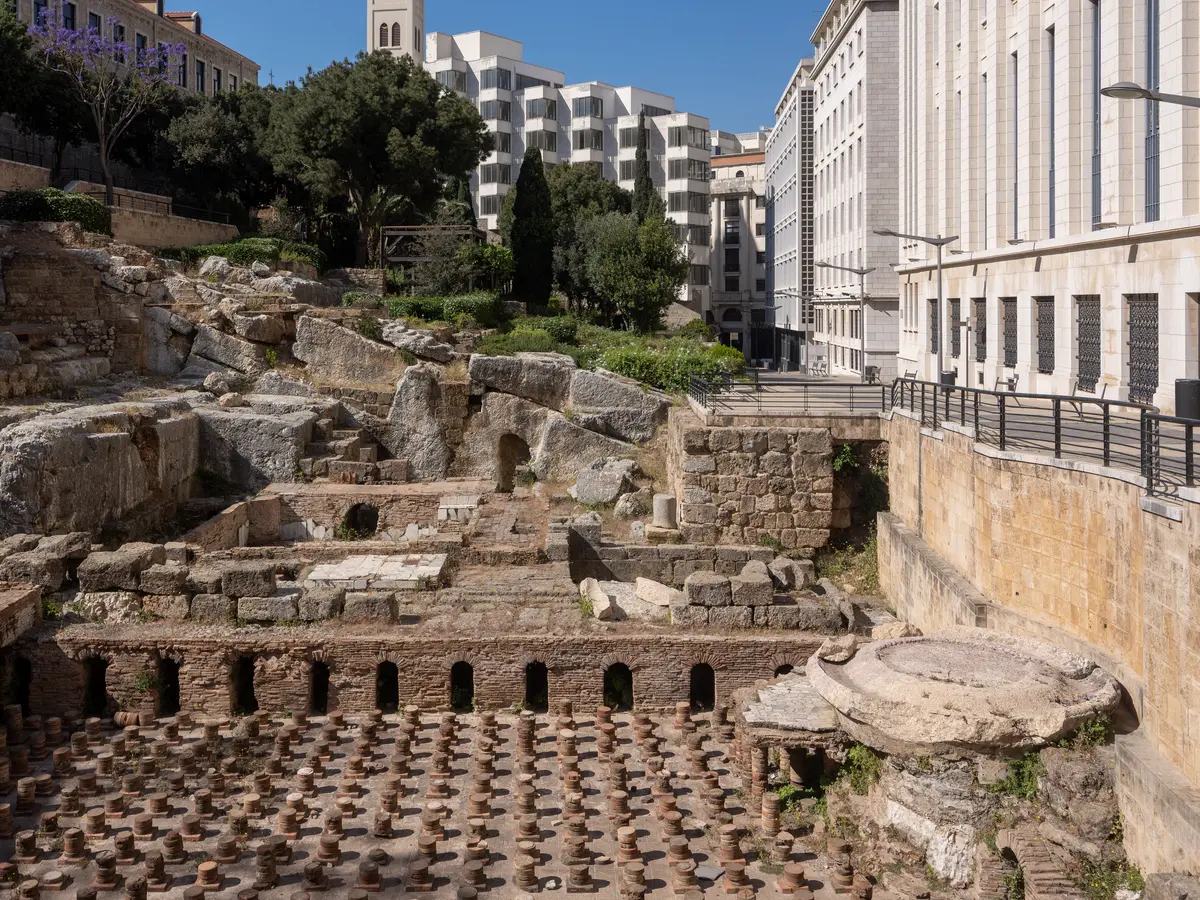
This 1.5-mile (2.5 km) circuit through downtown connects the major historical highlights. You will encounter the Roman Baths — a preserved complex revealing sophisticated hypocaust heating systems, now a public space that occasionally hosts concerts. This blending of ancient leisure with modern culture is quintessentially Beirut.
The Garden of Forgiveness sits between three cathedrals and two mosques, atop layers of the Roman Cardo and Decumanus. Designed as a space for contemplation and reconciliation, it represents the city’s ongoing attempt to heal sectarian divisions.
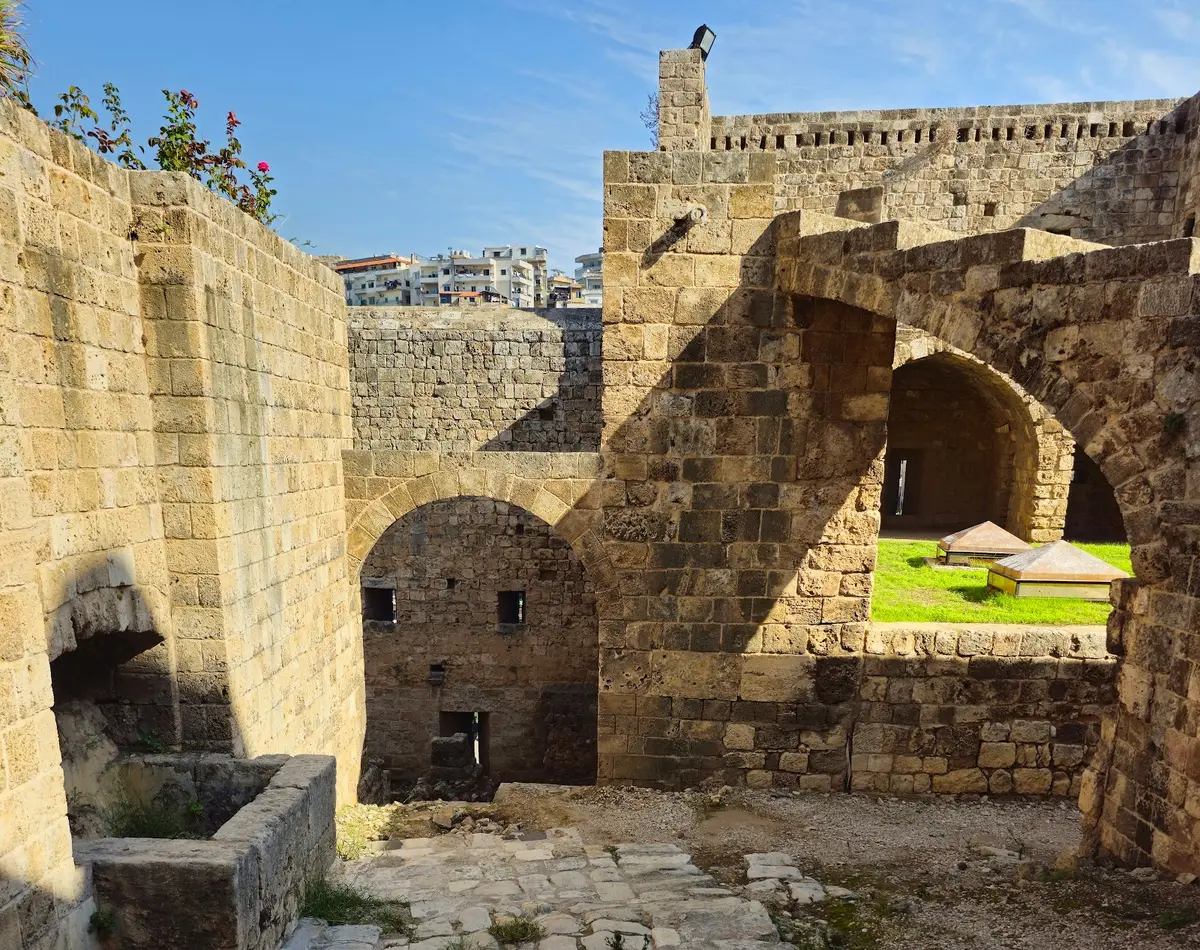
Al-Omari Grand Mosque is a living timeline of conquest: a Roman temple turned Byzantine church turned Crusader cathedral turned Mamluk mosque. The Romanesque arches and Crusader masonry are unmistakable, serving as a physical record of every power that claimed this city.
The modern ruins: Holiday Inn and The Egg
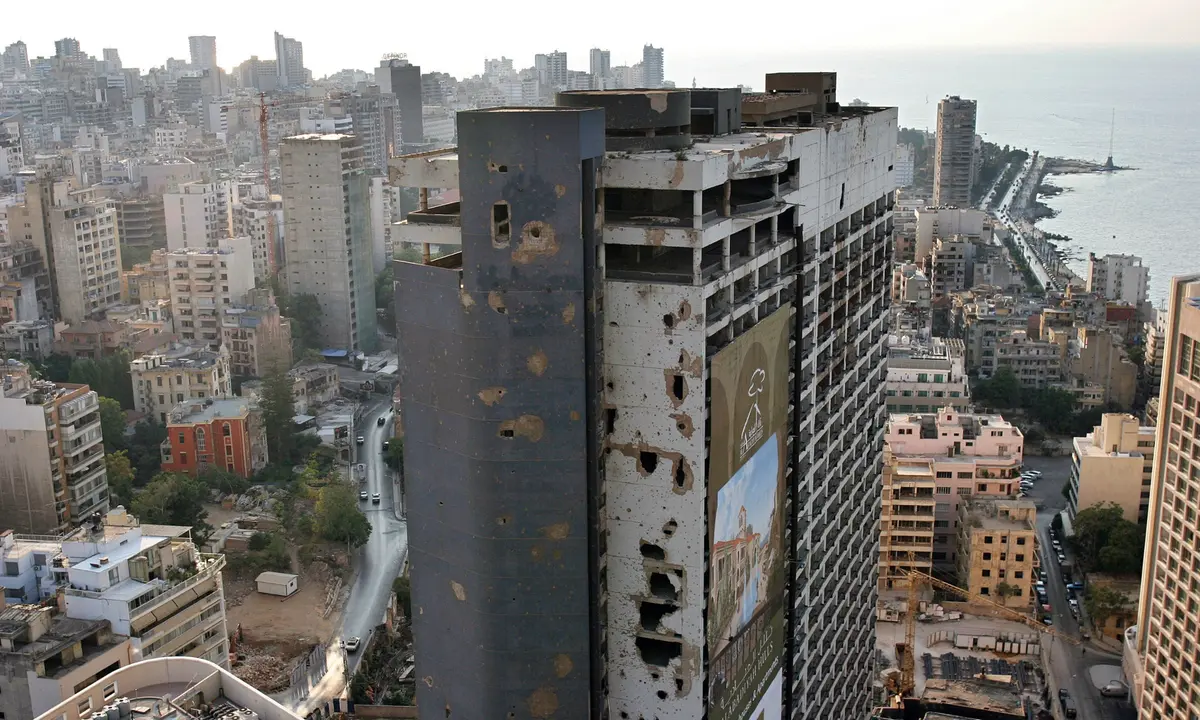
For Beirut history buffs interested in dark tourism and modern conflict, the Holiday Inn ruin towers over the seafront district. Once a symbol of pre-war glamour — it opened in 1974 with 400 rooms and a revolving rooftop restaurant — it became the epicenter of the “Battle of the Hotels” in 1975–76. It remains a hollowed-out concrete shell, riddled with heavy artillery damage. Ownership is contested between a Lebanese firm and a Kuwaiti investment group, which has frozen the building in time for decades. The site is a declared military zone under Lebanese Army control, so you can only view it from street level.
Similarly, The Egg — a brutalist unfinished cinema complex — became a symbol of revolution when protesters held lectures inside its concrete shell. While access is restricted, it represents Lebanon’s interrupted modernity and is a key site when documenting Beirut’s conflict-era heritage.
Pro Tip: The best vantage point for photographing the Holiday Inn is from the Corniche seafront promenade, roughly a 5-minute walk west. Late afternoon light catches the shell damage in sharp relief.
What day trips from Beirut take you deeper into antiquity?
Beirut serves as the natural basecamp for exploring Lebanon’s World Heritage sites, with several within a two-hour drive that rival anything in Italy or Greece. However, the security situation for several of these destinations has changed dramatically, and some are currently inaccessible.
Baalbek: the Heliopolis
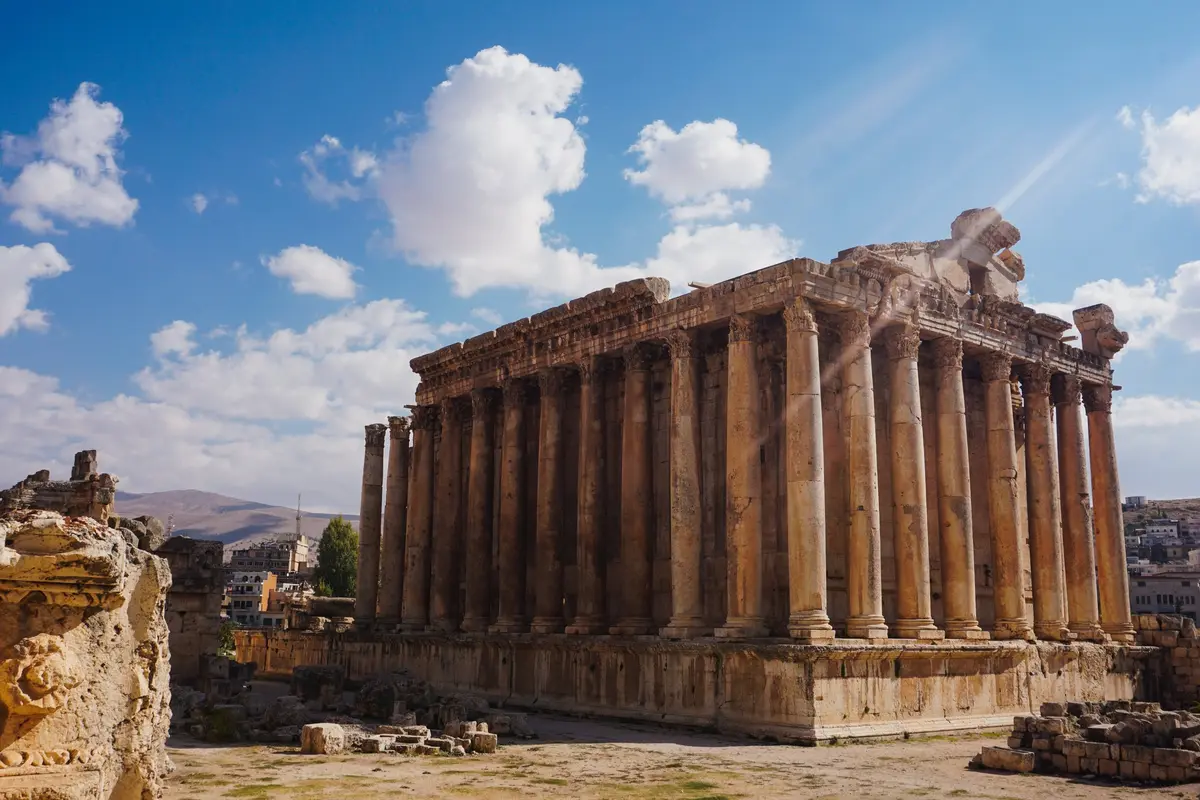
Baalbek is non-negotiable for history lovers — when security permits access. The Temple of Jupiter is one of the largest Roman temples ever built, sitting atop the mysterious “Trilithon” — three massive stones weighing 800 tons each that engineers still debate how ancient builders moved. The Temple of Bacchus is one of the best-preserved Roman temples in the world, with intricate interior carvings largely intact. The site is about 53 miles (85 km) northeast of Beirut, roughly a 1.5-hour drive through the Bekaa Valley.
- Location: Baalbek, Bekaa Valley (53 miles / 85 km northeast of Beirut)
- Cost: approximately $5–10 USD entrance
- Best for: Roman history enthusiasts, architecture and engineering devotees
- Time needed: 3–4 hours at the site, plus travel
Critical safety warning: Baalbek is in the Bekaa Valley, a Hezbollah stronghold that experienced intense Israeli airstrikes during recent escalations. The surrounding city sustained significant damage, though the temple complex itself was not directly struck — UNESCO granted it enhanced protection. The U.S. Embassy urges citizens to avoid the Bekaa Valley entirely. Before attempting this trip, verify conditions with your embassy, hire a reputable local guide with current ground knowledge, and have an exit plan.
Byblos (Jbeil): the cradle of the alphabet
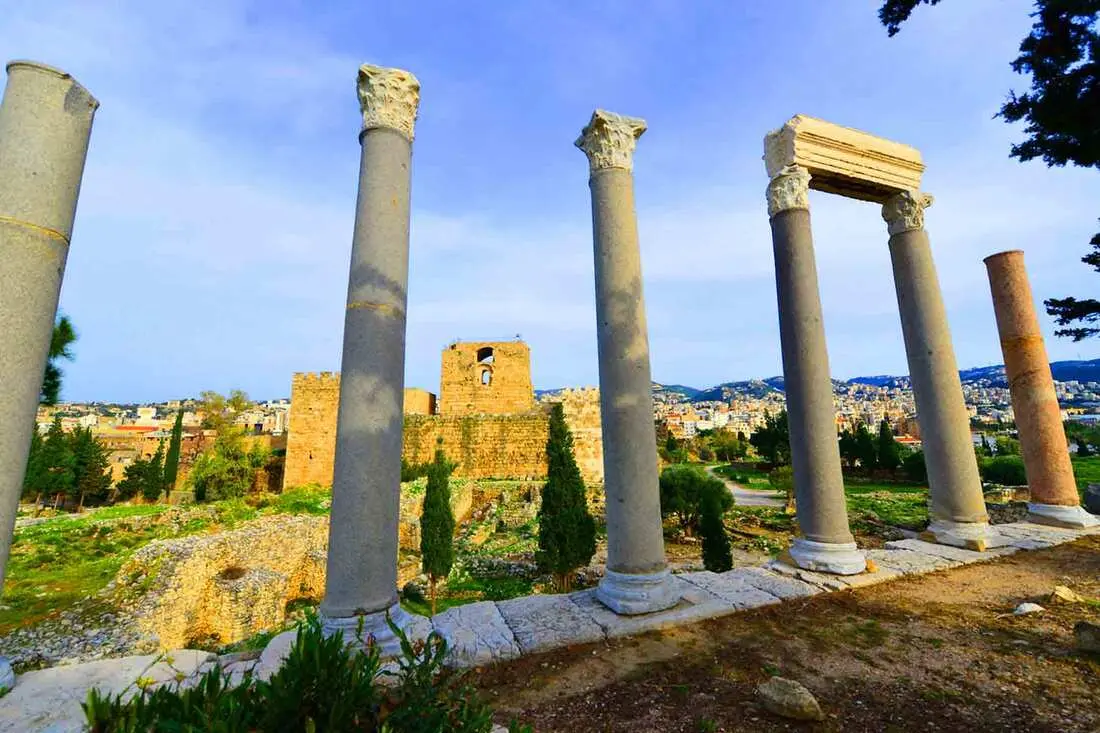
Byblos claims to be one of the oldest continuously inhabited cities in the world, roughly 26 miles (42 km) north of Beirut along the coast. The archaeological site compresses Mediterranean history into a compact space: Neolithic huts, the Temple of the Obelisks, Persian fortifications, and a massive Crusader castle built from recycled Roman stones.
The harbor is the highlight — walking along medieval sea walls where Phoenician cedars were shipped to Egypt’s pharaohs brings the ancient trade routes to life in a way no textbook can. As a Beirut to Byblos day trip, the contrast between the ancient ruins and the modern town’s fish restaurants and souvenir shops is part of the experience.
- Location: Jbeil, Mount Lebanon Governorate (26 miles / 42 km north of Beirut)
- Cost: approximately $5–8 USD entrance to the archaeological site
- Best for: Phoenician history enthusiasts, families, casual history travelers
- Time needed: 3–4 hours at the site
Pro Tip: Byblos is the most accessible day trip from Beirut and generally the safest of the major archaeological excursions. The drive north along the coast takes about 40 minutes. Eat lunch at one of the harborside fish restaurants — the grilled Sultan Ibrahim (red mullet) at Pepe Abed’s is the local benchmark.
Tyre and Sidon: the southern giants
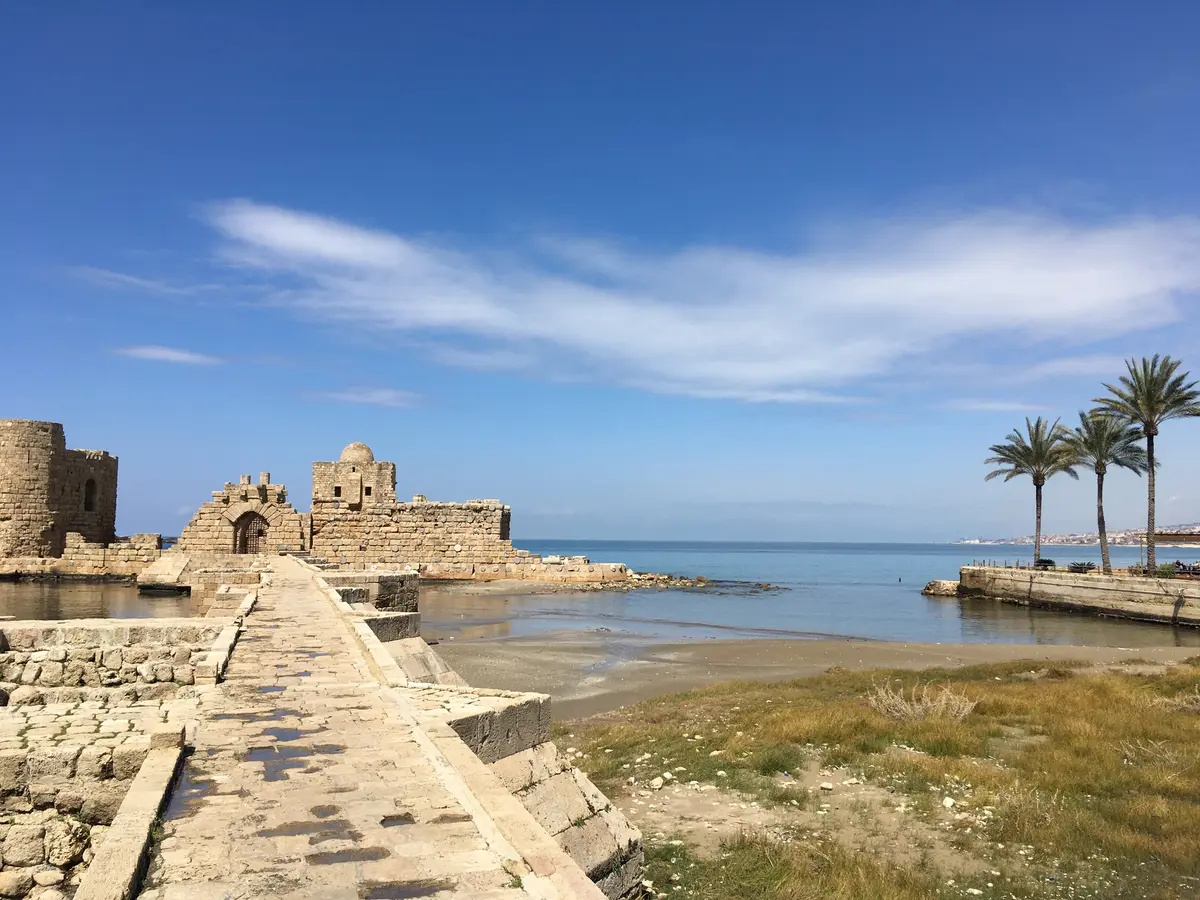
Tyre is famous for Alexander the Great’s siege. The site features a massive Roman Hippodrome and the Al-Mina ruins, where Roman roads lead directly into the sea. Nearby, you can explore the Sidon Sea Castle, which sits on a small island connected by a causeway.
Critical safety warning: Tyre and Sidon are in southern Lebanon, which is an active conflict zone. Israeli ground forces have been operating south of the Litani River, and airstrikes have struck areas around both cities. Travel to this region is extremely dangerous and is strongly discouraged by all Western governments. Do not attempt this trip without verifying the latest conditions through your embassy and local contacts.
The Qadisha Valley and Cedars of God
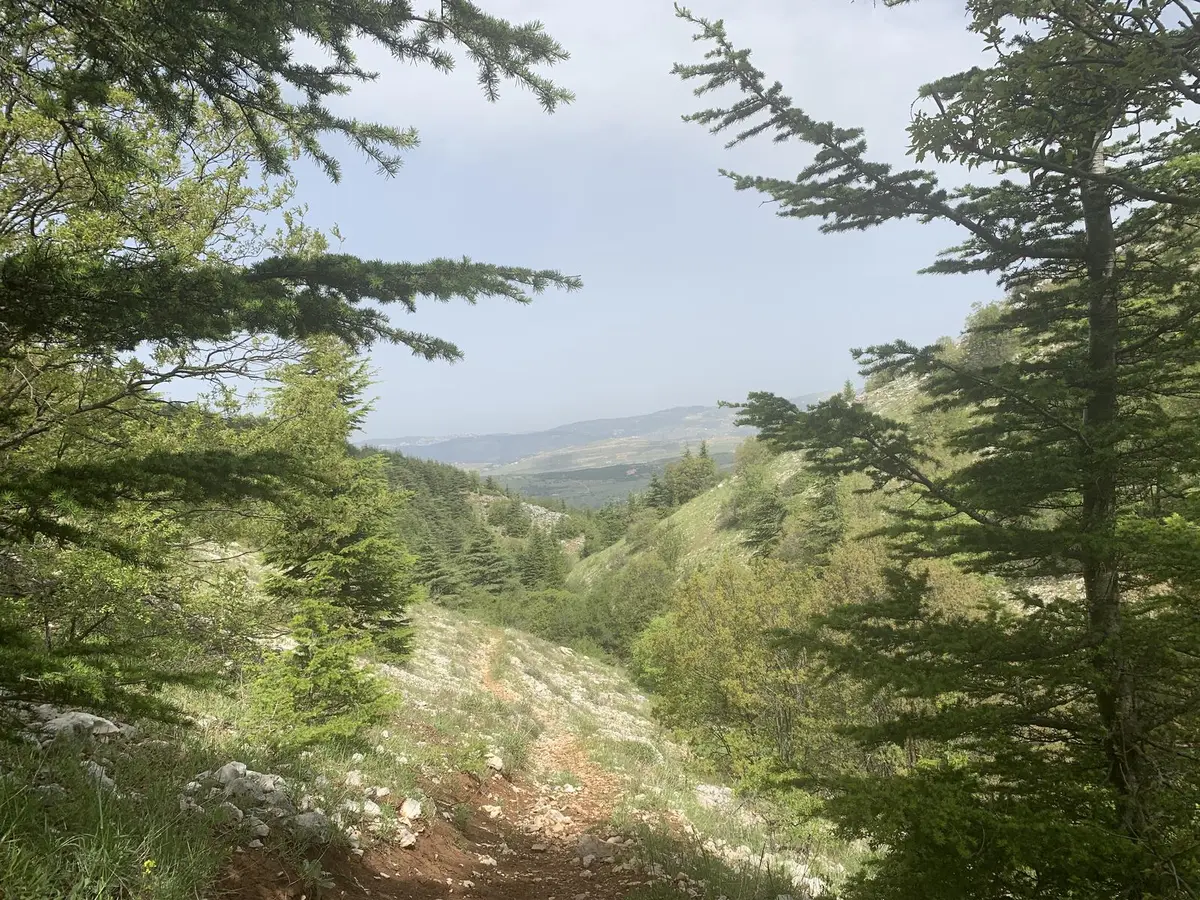
For a shift from political to religious history, the Qadisha Valley offers ancient monasteries carved into cliffs, historically serving as refuge for Maronite Christians. High above lies the forest of the Cedars of God — remnants of the ancient forests that supplied wood for Solomon’s Temple. This region is in northern Lebanon, generally considered safer than the south or the Bekaa, though conditions should always be verified.
- Location: Bsharri District, North Lebanon (about 75 miles / 120 km from Beirut)
- Best for: religious history, nature lovers, hikers
- Time needed: full day trip
What do history travelers need to know before visiting Lebanon?
Navigating Lebanon requires specific knowledge of the current economic and security landscape. This is not a destination you can approach casually — it rewards the prepared and punishes the uninformed.
How does the cash economy work?
Lebanon’s banking sector has effectively collapsed. Do not rely on credit cards — most international cards are either rejected or charged at an unfavorable rate. Bring USD cash, and this is important: bills must be new, crisp, and unblemished. Vendors and hotels will refuse worn or marked bills. The USD functions as a parallel currency alongside the Lebanese Lira (LBP), which trades at roughly 89,500 LBP per dollar. Most prices in tourist areas are quoted in USD. You will likely pay in dollars and receive change in Lira.
Is Lebanon safe for American tourists?
The honest answer is complicated and depends entirely on when you read this. The U.S. State Department has issued a Level 4 “Do Not Travel” advisory for Lebanon, citing crime, terrorism, civil unrest, kidnapping, unexploded landmines, and the risk of armed conflict. Active hostilities between Israel and Hezbollah have resumed, with Israeli airstrikes occurring across parts of the country, including areas in and around Beirut’s southern suburbs.
If you do travel despite these advisories, some general principles apply. Avoid Beirut’s southern suburbs (Dahieh), Palestinian refugee camps, the Bekaa Valley, and all areas south of the Litani River. Carry your passport at all times — you will encounter army checkpoints. Register with your embassy. Keep your phone charged with local SIM connectivity for maps, translation, and emergency contacts. Monitor local news daily.
Beirut’s central and northern neighborhoods — Ashrafieh, Gemmayzeh, Hamra, and the downtown area — have historically been the safest zones for tourists regarding street crime. The primary risk is geopolitical, not criminal.
Why should you hire a driver or guide?
Driving in Lebanon requires nerves of steel — do not self-drive unless you are experienced with chaotic driving cultures where lane markings are suggestions and right-of-way is negotiated by horn. Hiring a driver or guide is the single best investment for exploring Beirut for history buffs. A knowledgeable driver acts as fixer, translator, and real-time security consultant. They will know which roads are open, which checkpoints to expect, and which areas to avoid on any given day.
How does Beirut’s living culture connect to its history?
To truly understand Beirut, engage with its living culture, which is deeply rooted in history.
Culinary heritage as historical archive
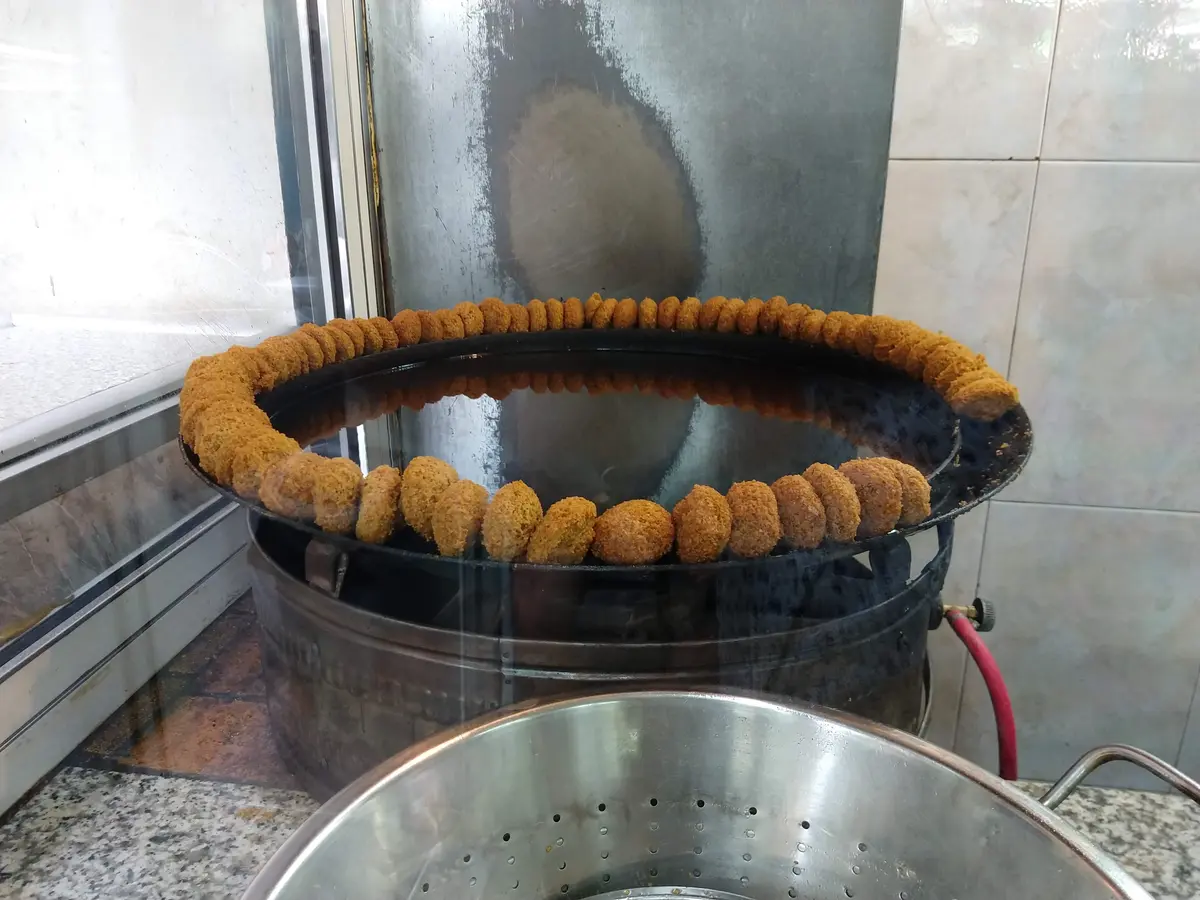
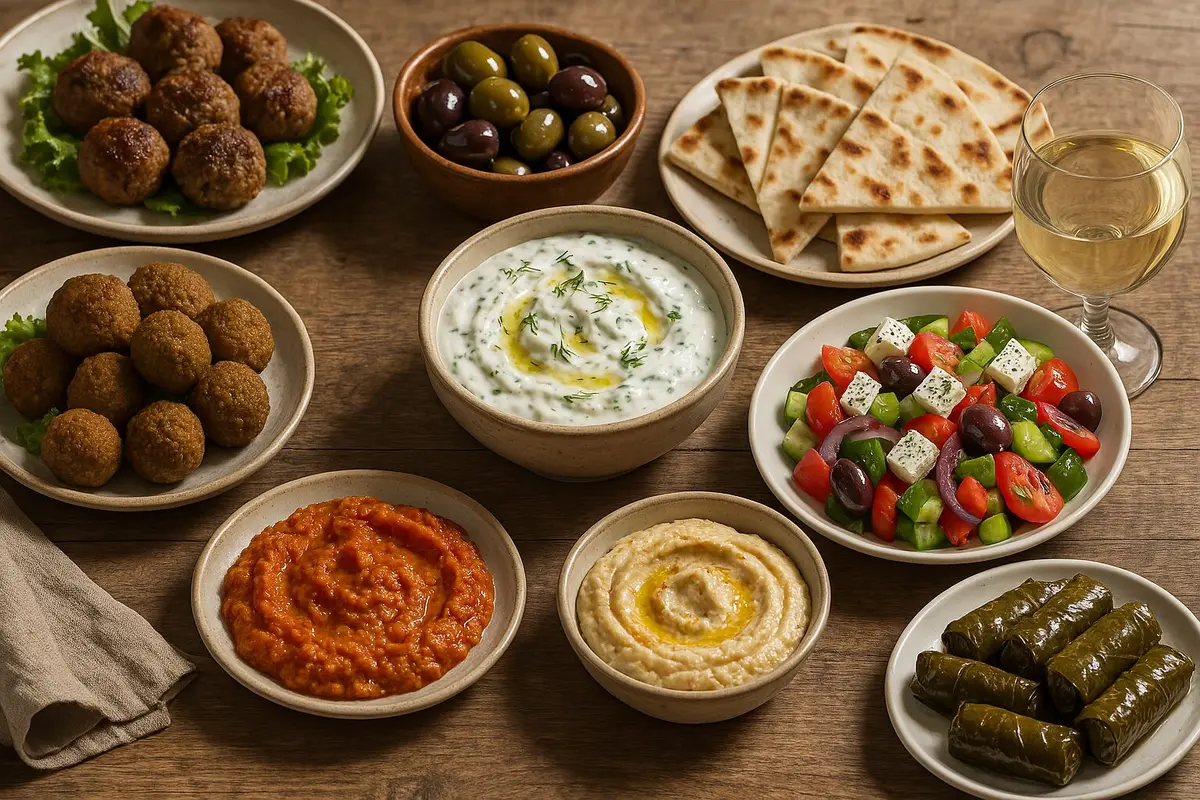
Lebanese cuisine is a living history lesson. The meze tradition is Levantine; the use of yogurt and lamb shows Ottoman influence; the prevalence of pastries and crème caramel nods to the French Mandate. Ottoman dishes like Sfiha (meat pies) and Baklava are served as direct legacies of imperial kitchens. Skip the tourist-priced restaurants near Martyrs’ Square and eat where university students eat along Hamra Street — the kibbeh and fattoush are better and cost a fraction.
The intellectual history of Hamra
Hamra Street was the Arab world’s intellectual incubator in the 1960s and 70s — a place where poets, journalists, and revolutionaries debated over cardamom coffee. While many original haunts are gone, places like Café Younes maintain the tradition of the coffeehouse as a debate space. The aroma of cardamom coffee mixes with ghosts of political discourse, offering a taste of the Beirut that drew intellectuals from across the Arab world.
Before you book a trip to Beirut
TL;DR: Beirut offers one of the most intense, layered historical experiences on earth — a city where 5,000 years of civilization are not preserved behind glass but actively collide in daily life. The National Museum, Beit Beirut, and the downtown Heritage Trail form the essential core. Day trips to Byblos are the most accessible excursion; Baalbek and the southern sites require serious security planning. Bring crisp USD cash, hire a local guide, and check your embassy’s travel advisory before every decision.
Why visit a city that is difficult, scarred, and economically broken? Because nowhere else does history feel this urgent. In Rome or Paris, history is settled. In Beirut, history is an active argument playing out in bullet holes on café walls and Phoenician foundations protecting modern parking lots. The city challenges the very notion of what a historical site is, forcing you to confront the cycle of destruction and rebirth not as an academic concept but as lived reality.
What is the one historical experience in Beirut that surprised you most — or what is keeping you from visiting?